




Abstract
Agrotourism has emerged as a compelling strategy to bridge rural economic development with sustainable development. But how has the extant literature on agrotourism discussed the ways in which ‘agrotourism development’ shapes sustainable local economies? This article addresses this research question by undertaking a comprehensive review of the literature, including both a traditional literature review and a systematic review of 77 peer-reviewed articles published between 1994 and 2024. Both the qualitative and quantitative analyses of the literature return similar findings, namely: ‘agrotourism development’ shapes sustainable local economies through economic growth, poverty reduction and sustainable development. The timelines for these linkages established in the qualitative review also cohere with those in the quantitative review, although the quantitative analysis shows that the trends are not linear. Economic growth remains a recurrent theme, but increasingly sustainable development receives considerable attention, too. Both are deemed constitutive of the sustainable development process. Crucially, there are variations across space with some regions in the world emphasising some themes more than others and, even then, at different times. Overall, it seems that the agrotourism-development nexus is continent rather than categorical.
Keywords
Introduction
Sustainable development has become the centre of global attention. In response to the ecological crises, the amount of research and literature on economic growth and sustainability has increased rapidly. So have the variety of studies. Tourism, previously regarded only as a recreational activity or ‘service industry’, is increasingly seen as a catalyst to sustainable development (World Bank Group, 2021). Numerous existing literature frequently highlights the potential of tourism to generate multiplier effects through the integration of economy and sustainability goals: this potential is exceptionally significant in creating new income streams, alleviating poverty, and preserving biodiversity and local culture in rural, agricultural, and urban settings (see e.g. Butler and Rogerson, 2016; Rogerson et al., 2022). Furthermore, the diversification in tourism, notably, agrotourism and ecotourism, serves as both a marketing tool and a development instrument that could economically empower local communities and promote environmental stewardship of the destination area (Sitikarn, 2008). A substantial body of relevant literature of tourism highlights (e.g. Pearson et al., 2024; Rana et al., 2024; Sun et al., 2023) these diverse themes. Surprisingly, more research has produced less insight. This paradox feeds into a wider pattern: research in the humanities and social sciences is increasing, but our comprehension of social phenomena seems to be decreasing (Economist, 2024). There are a myriad of reasons for this paradox. Liu (2003) explains it in terms of verbose and gobbledygook prose. This obtuse state-of-knowledge makes it harder for the world to find ways of addressing the pressing ecological crises (Budiasa and Ambarawati, 2014).
Agrotourism is one critical example. A pressing question is how has the extant literature on agrotourism discussed the ways in which ‘agrotourism development’ shapes sustainable local economy? This article addresses this research question by undertaking a comprehensive review of the literature, including both a traditional literature review and a systematic review of 77 peer-reviewed articles published between 1994 and 2024. Both the qualitative and quantitative analyses of the literature return similar findings, namely: ‘agrotourism development’ shapes sustainable local economies through economic growth, poverty reduction, and sustainable development. The timelines for these linkages established in the qualitative review also cohere with those in the quantitative review, although the quantitative analysis shows that the trends are not linear. Economic growth remains a recurrent theme, but increasingly sustainable development receives considerable attention, too. Both are deemed constitutive of the sustainable development process. Crucially, there are variations across space with some regions in the world emphasising some themes more than others and, even then, at different times. Overall, it seems that the agrotourism-development nexus is continent rather than categorical. The rest of this article is organised as follows: The methods for conducting of the relevant literature in the field, followed by the literature review, Then the details of results and discussion presented, before the conclusions are drawn and outlined in the last section.
Methods
Reviews in sustainability science have tended to be solely quantitative. These reviews have been defended for being ‘systematic’. Yet, notwithstanding its notable strengths, proponents of this method must acknowledge several methodological limitations. First, the sole reliance on Scopus database articles, may overlook recent publications, cross-sectional studies, and other indexed publications – even those written in English, which notably come from the Global South. Similar comments apply to books generally, and book chapter written in the Global South in particular (Obeng-Odoom, 2019). Of course, some of the Global South countries (e.g. Indonesia, China, Chile, India, Pakistan, and South Africa) have adopted policies that incentivise academics to publish in Scopus-indexed journals (Abritis and McCook, 2017; Chen and Lien, 2023; Troncoso et al., 2022), but many papers continue to be published elsewhere. Therefore, studies based on such quantitative methods reflect only a partial view of existing literature. In development studies, there is a reverse problem: most reviews are qualitative and traditional. These can be more comprehensive, but they also risk being unsystematic, may over-represent results and, hence, may affect the depth of analysis and reproducibility.
Recognising these limitations, the present article seeks to be comprehensive by combining the quantitative and the qualitative approaches to reviews. Comprehensive reviews are stronger analytically because of their methodological transparency, and the triangulation procedure employed to ensure the establishment the generalisability, validity, and reliability of the findings. The method is centred on two techniques, qualitative and traditional literature review and quantitative systematic reviews. The former entails carefully engaging books and studies conducted on agrotourism over the years. It is a technique that is contextual and involves carefully reading key works across space and time. This technique has been used successfully by Julius Kotir (2011) in his widely cited work on ‘Climate change and variability in Sub-Saharan Africa: a review of current and future trends and impacts on agriculture and food security’. In this method, themes are mapped out over time, using relevant studies regardless of where they were published.
The Systematic Literature Review (SLR) method, which has been recognized as a rigorous framework for conducting literature reviews (Abbass et al., 2022; Kim et al., 2022), must also be explained. As a tool in social science research, SLR enables the synthesis of information from numerous sources in a structured and transparent manner (Lund and Pieper, 2024). SLR consists of a five-step methodology: (1) evaluating information resources; (2) searching literature and locating information resources; (3) developing a conceptual framework; (4) drawing together the literature review; and (5) conclusion (Rauniyar et al., 2021).
This study exclusively extracts English-language research articles and literature reviews from the Scopus database. Scopus-indexed articles are considered reliable bibliometric sources due to their rigorous blind peer-review process, comprehensive coverage, and high-quality metadata. These advantages are not consistently found in databases such as Google Scholar, Semantic, or Directory of Open Access Journals (DOAJ) (Baas et al., 2020; Pranckutė, 2021). Moreover, pooling data from multiple databases risks duplication and hindering the data analysis process. Thus, this study follows Gusenbauer and Haddaway’s (2020) procedure by relying exclusively on ‘Scopus’ as a database, which is known for consistent structure of methodological, analytical tools, comprehensive multidisciplinary coverage, and reproducibility compared to other databases.
To ensure the study retrieves relevant literature, the keyword parameter is selected, which also reflects the research question and aim (Cooper et al., 2018), that is, ‘economic growth’, ‘sustainable development’, and ‘agricultural tourism’. The selected keywords were entered into the Publish or Perish software, which generated 212 articles published between 1998 and 2024. PRISMA flow is adopted to identify the most relevant and reliable sources for this study. The process consisted of four stages, resulting in 77 articles to be systematically analysed for this study (Rauniyar et al., 2021), as illustrated in Figure 1, that is, (1) evaluating information resources; (2) searching literature and locating information resources; (3) developing a conceptual framework; (4) drawing together the literature review; and (5) conclusion. PRISMA flow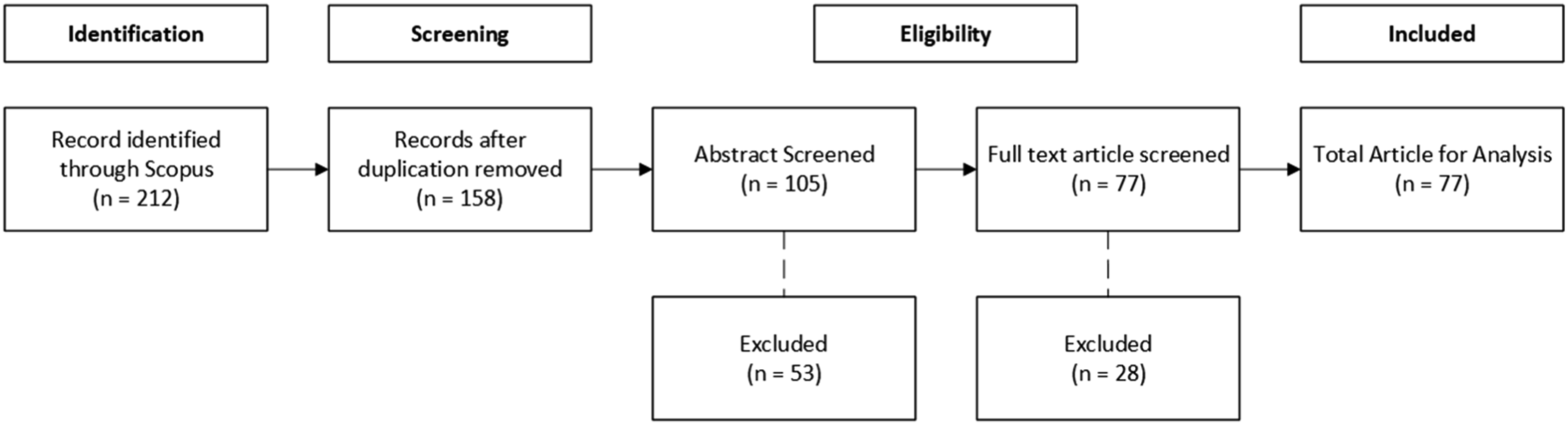
Following the SLR steps, to develop a conceptual framework, the selected article is read carefully to identify major themes and keywords, which result in data statistics for bibliographic analysis. By focussing on theme density and maintaining methodological transparency, the study ensures that its findings are both trustworthy and meaningful (Braun et al., 2019). Lastly, to produce the research findings and conclusion, Thematic Network Analysis (TNA) was employed to systematically organize themes into hierarchical networks, distinguishing between basic themes, organizing themes, and global themes (Braun et al., 2019; Naeem et al., 2023). A central focus of the analysis was on theme density, with frequently occurring codes considered especially significant as they revealed common patterns or concerns across the literature (Gupta, 2023). Analysis and visualization of this study result are using several tools. First, Atlas.ti. is used for this step to identify and code the meaningful segments of text based on their relevance to this study. Second, VOS viewer software is used to establish and visualising the bibliography overview. Lastly, Tableau is used to produce geographical and thematic maps.
Literature review
Tourism and economic growth
Since the 1960s, tourism has been promoted as an engine of economic growth and development. Advanced transportation, internet and social media uses, global desire for international experience, and consumer demand towards ecological friendly development and planning have facilitated this trend. tourism relies heavily on external investment and the market liberalism system to rise economic growth and deliver the promised benefits for the Indigenous community (Brown and Hall, 2008; Copeland, 1991; Copeland and Taylor, 2003; Rostow, 1959).
One of the key differences between tourism and traditional export-import activities is that tourism moves people, rather than goods, within and between cities, counties, and countries. Owen et al. (1993) argue that those movements will eventually affect the purchasing power parity of the local industry and regional investment, to elevate the local community’s way of living in an autonomous way. This outcome is theoretically plausible through tax-based profit distribution, and sustainable trade liberalization, as discussed in the modified Environment Kuznets Curve (EKC) models by Copeland (1991) and Copeland and Taylor (2003). The EKC hypothesising that as the income raise, people will moving frequently and raising pollution level, thus the movement will trading the environment towards dirty sector when is prosperous. Therefore, an intervention such as tax and retribution and sustainable policy is imply to reduce pollution despite the rise of natural income.
Empirical research ascertained this link. For instance, Yoon et al. (2001) confirm that the development of ecotourism attracts investors who build hotels and restaurants with minimal local employment hiring, and negatively affect the environment and Indigenous culture, by destruction of natural resources, pollution, and deterioration of cultural or historical resources. Another study from Bali, Indonesia, by MacRae (2005) shows evidence that cultural tourism and ecotourism developed in this island drive the terrorist attacks, led to the local economy being disabled, and the rise of environmental and social issues. Thus, most of the tourism developed within the period cannot be sustained in the long term and is unbound to drive change in spatial patterns and cause unfair treatment for Indigenous people, as argued by Brown and Hall (2008) and Pratiwi (2009: 41). Nevertheless, despite this issue, tourism still drives economic growth through a myriad of channels, including financialisation of natural resources and cheap labour (Hall and Brown, 2008; Lee, 2008).
Poverty reduction
Poverty reduction has been another theme in the research on tourism. This was particularly prevalent in the 2010–2020 period. Tourism research began to focus more and more on how tourism contributed substantially towards poverty reduction in several countries of the Global South. The International Labour Organisation (ILO) report written by Weinz and Lucie (2013) presented compelling statistical data to show remarkable trends: tourism was driving poverty reduction by contributing 9% of global Gross Domestic Product (GDP) in 2012, creating 1.5 additional jobs with regards to supply chain in tourism, and increasing revenue from 1 to 5.3 billion USD between 2008 and 2012. Others, Riyanto et al. (2020) showed that, in Indonesia, tourism reduced the depth of poverty from 2.04 to 1.21, as well as lessened the severity of poverty from 0.37 to 0.29 in 2016. By ‘unlocking potential’, contended Rogerson (2017), tourism served as an industry that created numerous economic activities (e.g. hospitality, accommodation, food & beverage, education, transportation, telecommunication, finance, and entertainment) which led to much-needed poverty reduction. Additionally, tourism also plays a crucial role in supporting local pro-poor initiatives by utilizing local potential (i.e. natural and social capital) and developing sustainable systems to distribute tourism’s economic value to improve the lives of the poor (Torabi et al., 2019).
There was some disquiet in the literature. Godfrey et al. (2023) and Kovač (2015) strongly argued that tourism research was prioritising economic value and poverty alleviation over environmental stresses. Hirsch et al. (2016) concurred, pointing out that, in the face of claims by governments that there was pervasive ‘land scarcity’, tourism had received substantial support, often at the expense of other land uses and industries. It is not that tourism did not come with its own problems. Many of the problems linked with tourism were quite serious. The evidence can be seen in ‘slum tourism’, which has become highly controversial because the activity involves monetizing poverty and local daily struggles as tourism attractions (Iranmanesh and Kamalipour, 2025). These practices raise concerns towards voyeurism, exploitation, and the dignity of local residents, and are frequently being criticised for often failing to fulfil pro-poor intentions.
Sustainable development
It would be a stretch to claim that these criticisms changed the course of tourism research. But they certainly fed into a wider interest in sustainable development. According to the Report of the World Commission on Environment and Development: ‘Our Common Future’, sustainable development is ‘a process of change in which the exploitation of resources, the direction of investments, the orientation of technological development; and institutional change are all in harmony and enhance both current and future potential to meet human needs and aspirations’ (Brundtland, 1987). It is, perhaps, nature-based activity studies that have most consistently examined the nexus between agrotourism and sustainability. Godfrey et al.’s (2023) study in Indonesia shows that agrotourism expansion poses an ecological and food justice disruption in exchange for economic growth. Similarly, Pearson et al. (2024) research, examining vineyard and wine industry – agrotourism, finds that regenerative and sustainable practices within the destination is unlikely to withstand, despite the theoretical claim. Thus, the development of sustainable tourism is not always favourable (Pratiwi, 2009: 19 & 24).
Some studies have, accordingly, investigated how to make agrotourism sustainable. Torabi et al. (2019) assert, local communities and their livelihood should be taken into consideration (see also Lee, 2008). This may include empowerment, partnership, and/or involvement of local people in the business. Karimi et al. (2018) contend that such a type of engagement holds an important role in establishing effective monitoring and evaluation systems, ensuring the activity aligns with sustainability intention, and avoiding the loss of cultural deterioration and welfare disparity. Agrotourism emerges as promising, but its contribution to sustainable development is not assured.
The expansion of agrotourism, primarily reliant on the market liberalisation system, presents a structural paradox against sustainability. Disruption caused by tourism highlights the limitations of agrotourism as a singular strategy and underscores the need for evaluation and review within the sustainable development and economic growth dimensions. These patterns are largely borne out in the quantitative analysis of the literature.
Results and discussion
Bibliometric analysis
Descriptive statistics of the literature.
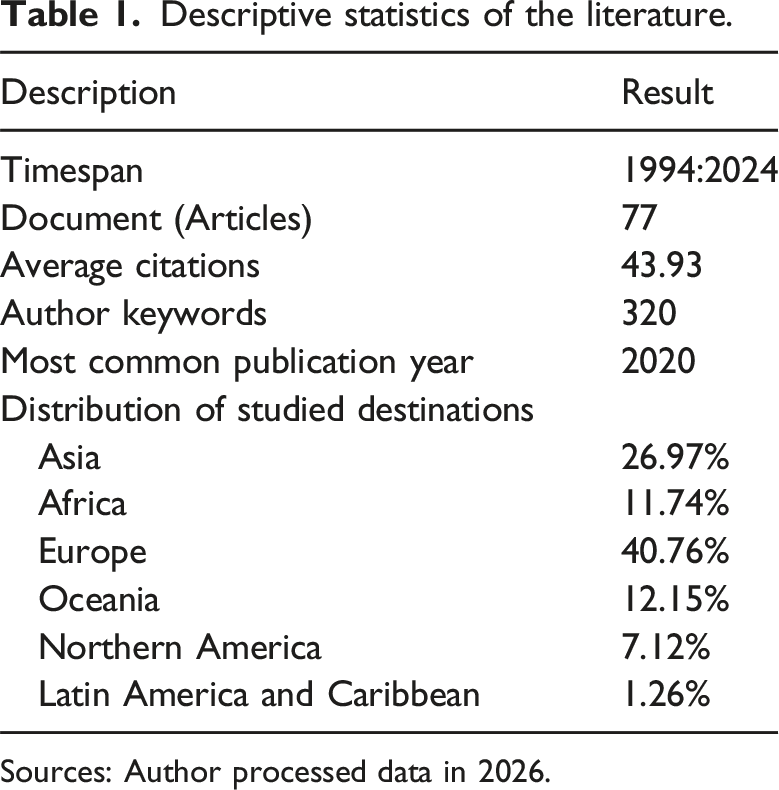
Sources: Author processed data in 2026.
While the most common publication year of relevant literature is 2020, the highest cited article is from 2005, as shown in Figure 2. Works entitled ‘Enclave tourism and its socio-economic impacts in the Okavango Delta, Botswana’ by Mbaiwa (2005), on average, cited by 15 articles every year. Lastly, the distribution of the studied destination is categorized based on Standard country or area codes for statistical use (M49) by United Nation (1999) cover six regions, consisting of: Northern America, Latin America and Caribbean, Asia, Africa, Europe, and Oceania. The publishing trend and citation per year of literature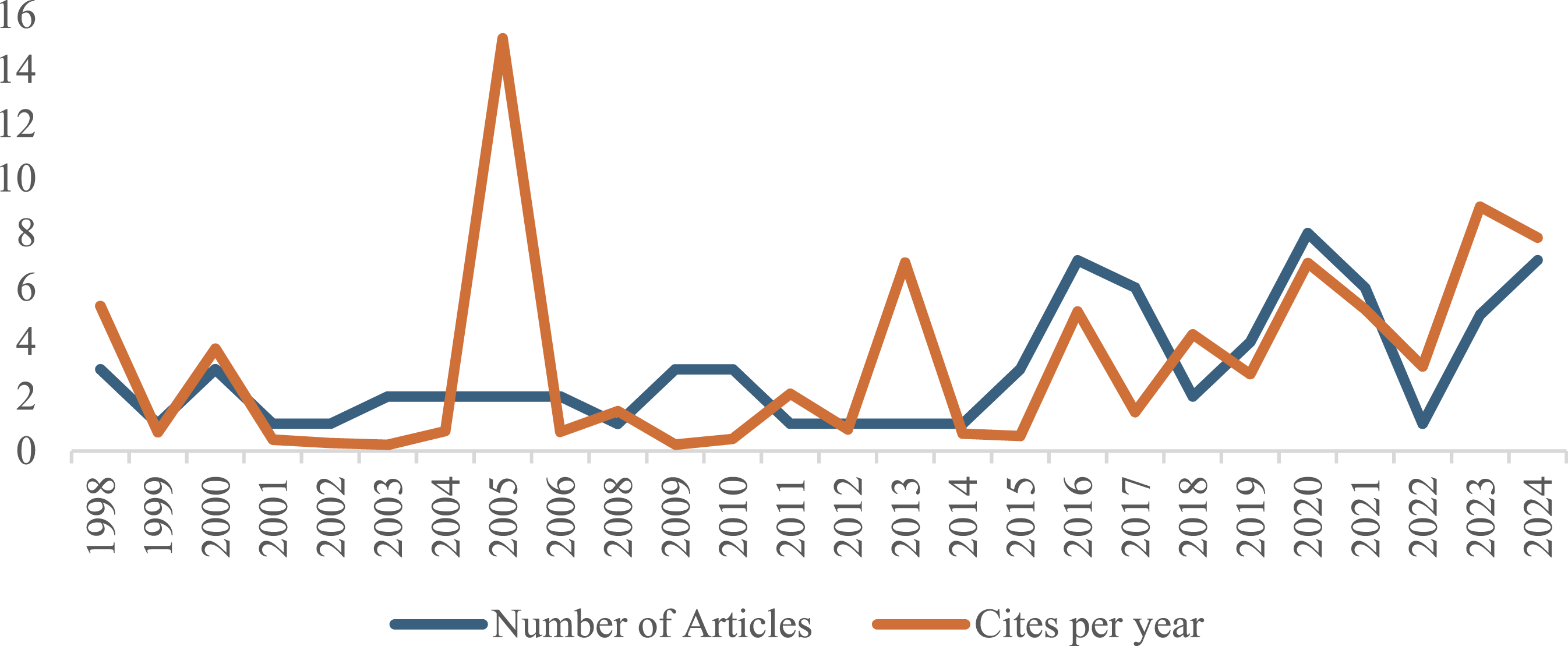
Top 10 Journals that publish articles on agrotourism.
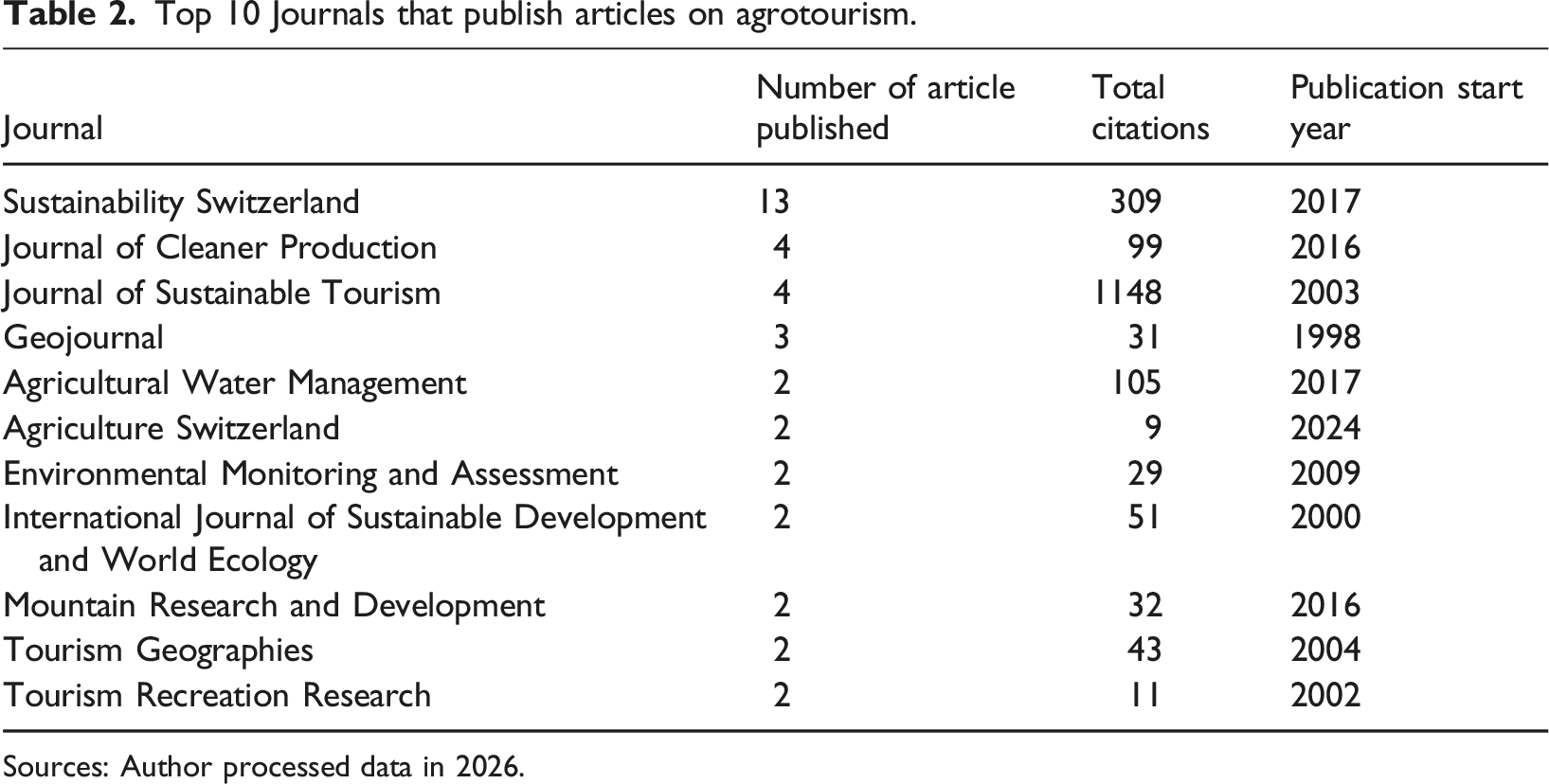
Sources: Author processed data in 2026.
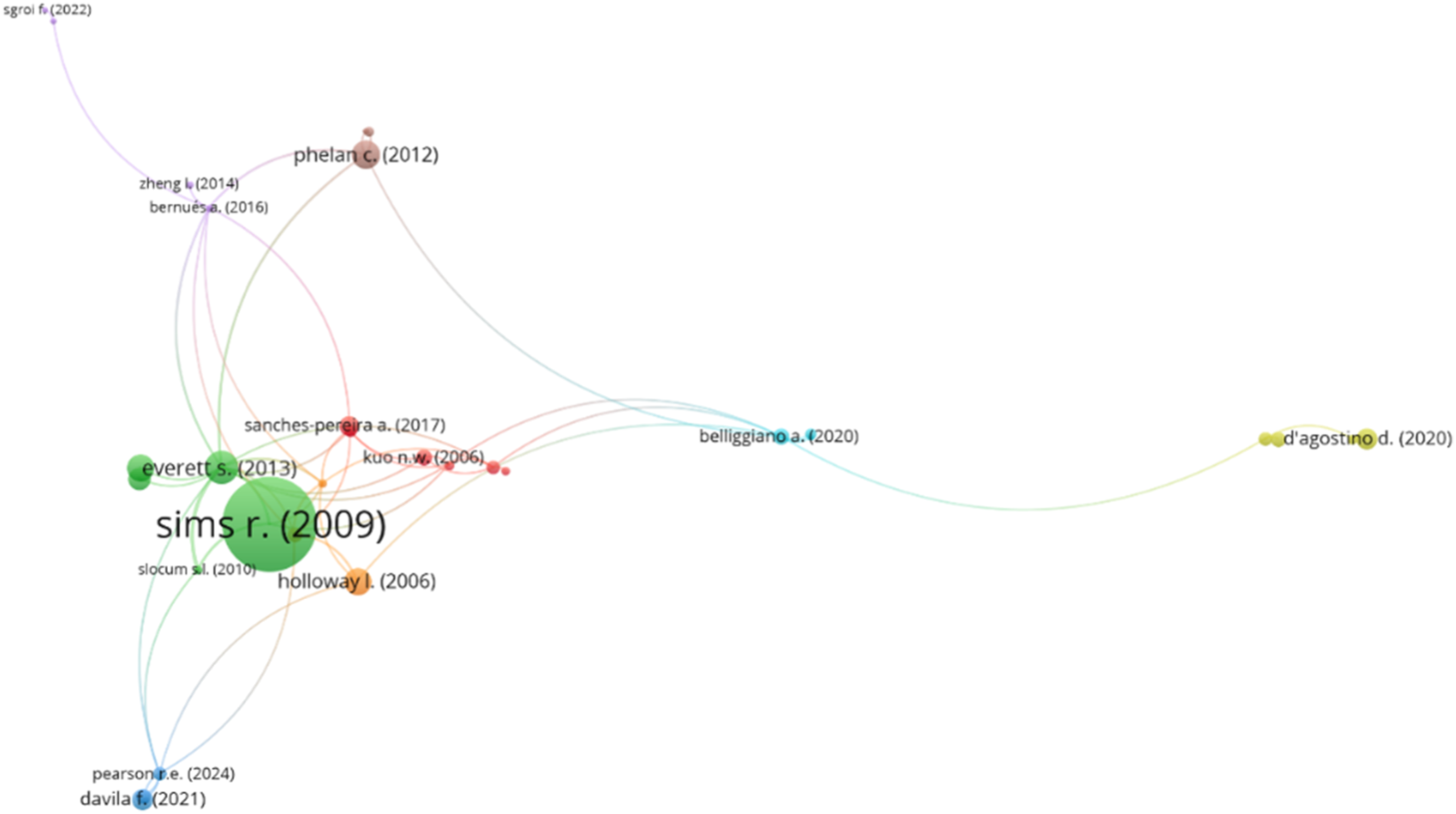
Bibliography coupling network
Bibliography copling
An analysis of the timeline view of a research article shows a spatial pattern of conceptual similarities in citing a document. Out of 77 documents, only 32 research articles share connections. Figure 2 manifests that the higher the influence of a document, the bigger the node size. The respective number of line reveal the link strength of research articles. Works by Sims (2009) coupled by Everett and Slocum (2013) and Holloway et al. (2006). Followed by Belliggiano et al. (2020), Pearson et al. (2024), Sanches-Pereira et al. (2017) respectively.
Co-citation by author
An analysis of the timeline view of a research article shows a spatial pattern of conceptual similarities in citing a document. Out of 77 documents, only 32 research articles share the connections. Figure 4 shows that the higher the influence of a document, the bigger the node size. The respective number of line reveal the link strength of research articles. Co-citation network by Author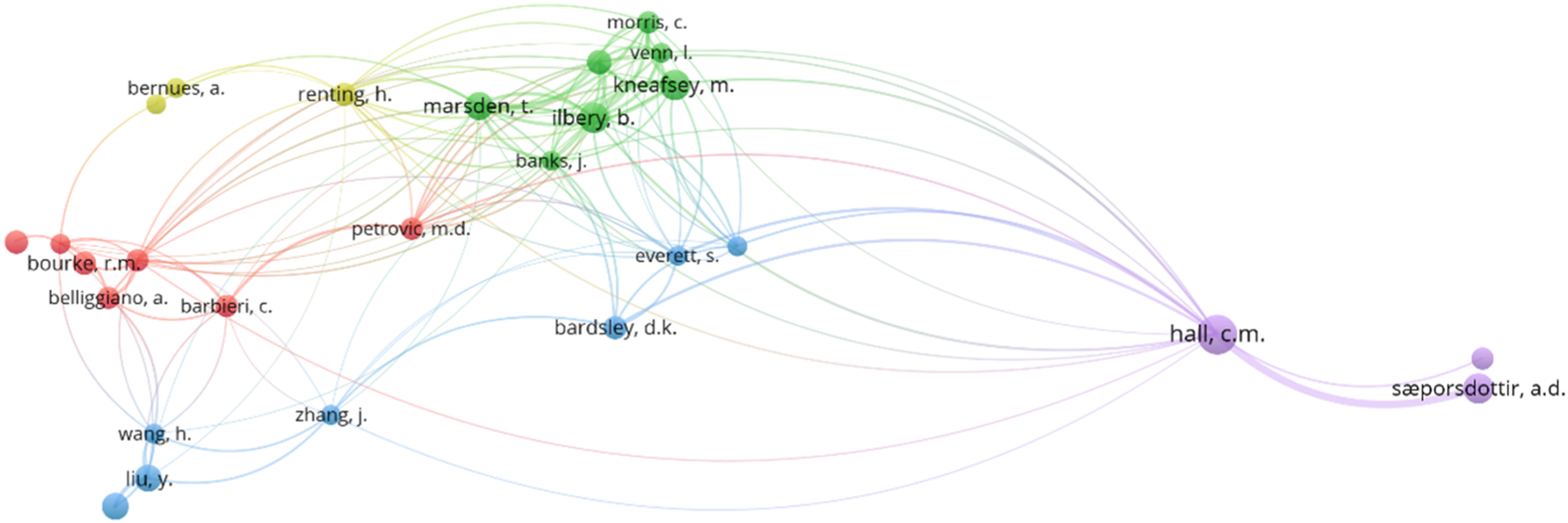
Co-occurrence by keywords
The co-citation analysis indicates the intellectual structure of the literature in the agrotourism, sustainable development, and economic growth. Figure 5 presents the co-citation network by index, which was clustered into 3 clusters based on 20 nodes. The keywords network is centred on ‘sustainable development’ implied as the central concept. Its emergence with other keywords, that is, ‘agriculture’, ‘sustainability’, ‘tourism development’, and ‘rural development’. All of these keywords also present the possible scenarios of the theme from the literature. Co-occurrence network by index keywords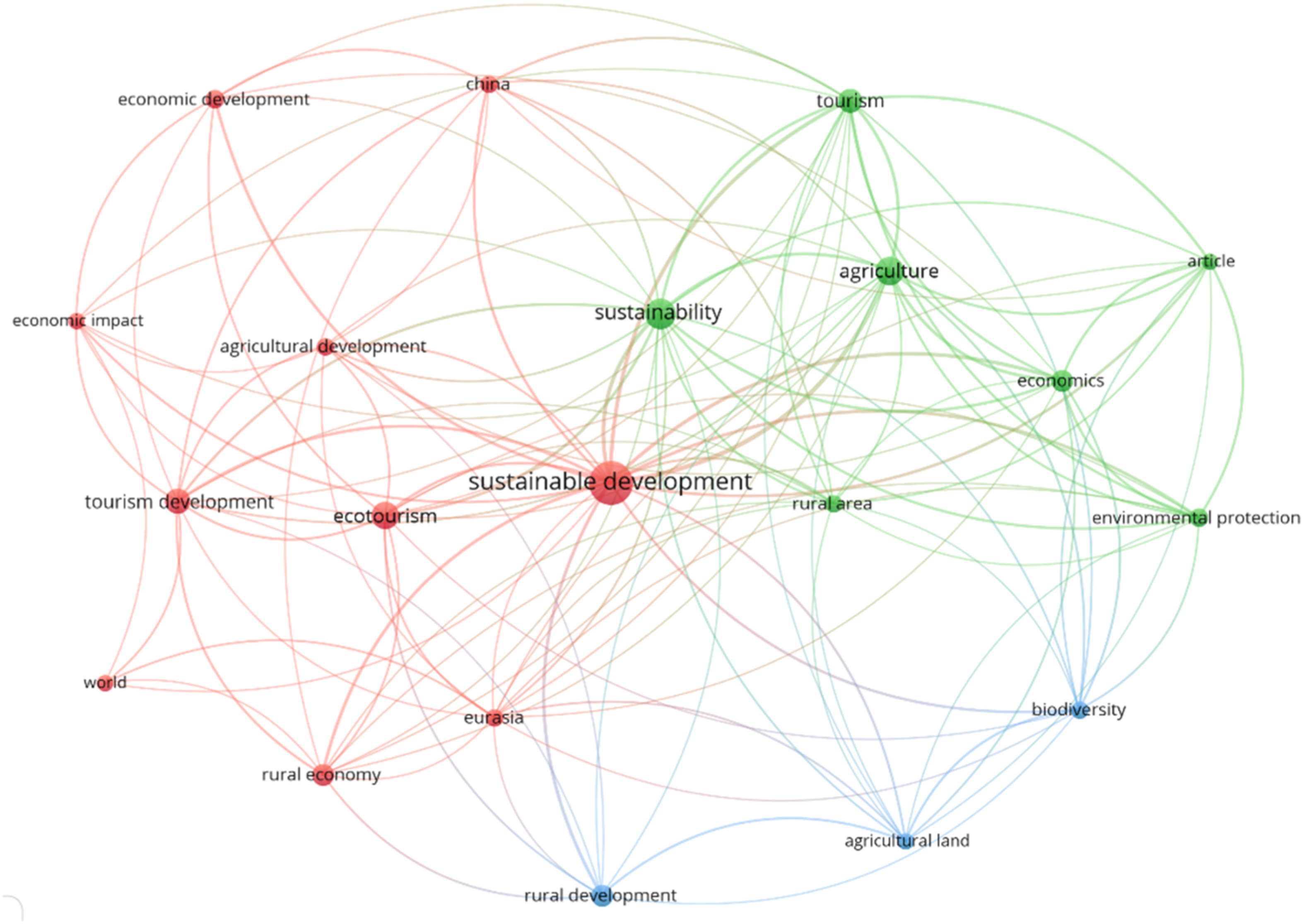
Case study analysis
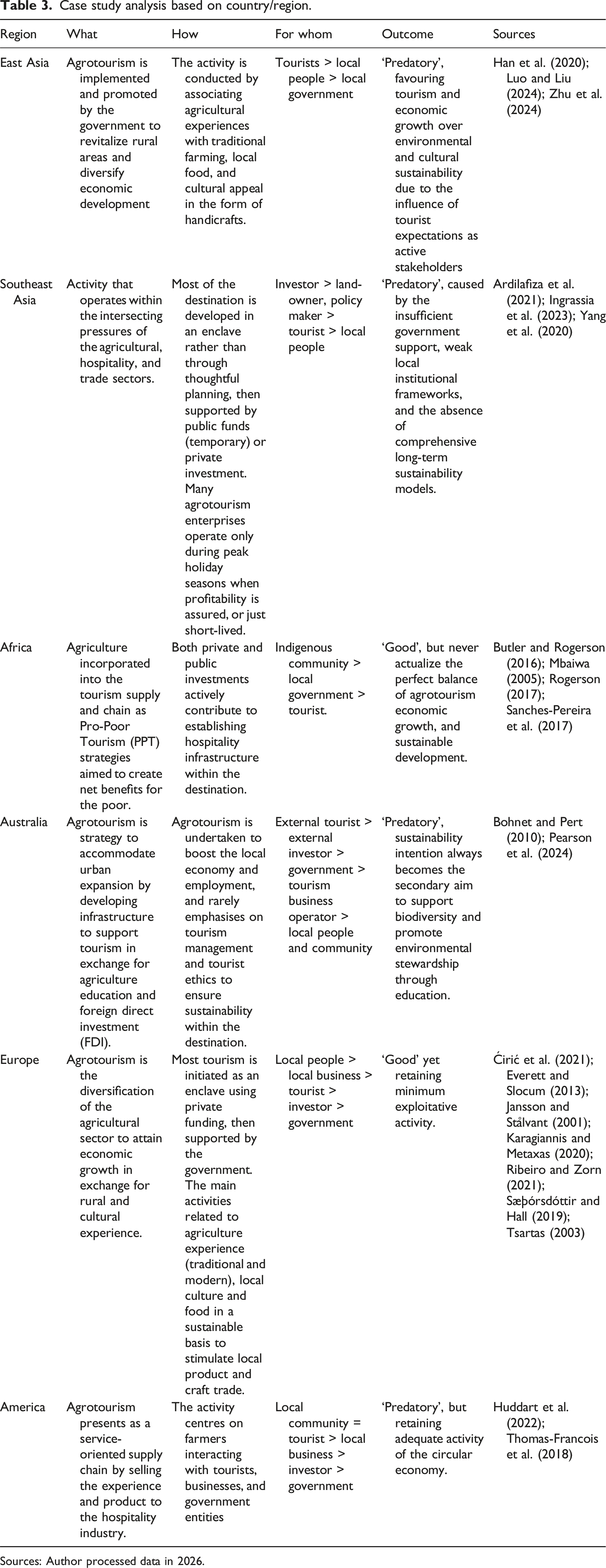
The spatial analysis of the systematic review reveals the fundamental theoretical promise and the practical implications in balancing the intersection between agrotourism, sustainable development, and economic growth. Figure 6 demonstrates that the spatial characteristics of rural agrotourism represent a crucial determinant of long-term success. This highlights the often-overlooked spatial sensitivity of agrotourism driven by economic and sustainable development intentions. Tourism may emerge as ‘good’ or ‘predatory’, creating the only unique spatial system driven by economic intention in the destination. Atta-Mills (1973) advise to critically examine the strategies using the essential question of ‘what’, ‘how’, and ‘for whom’, as a means to expose the meaningful outcome of tourism as development strategies. Spatial distribution of tourism case studies by country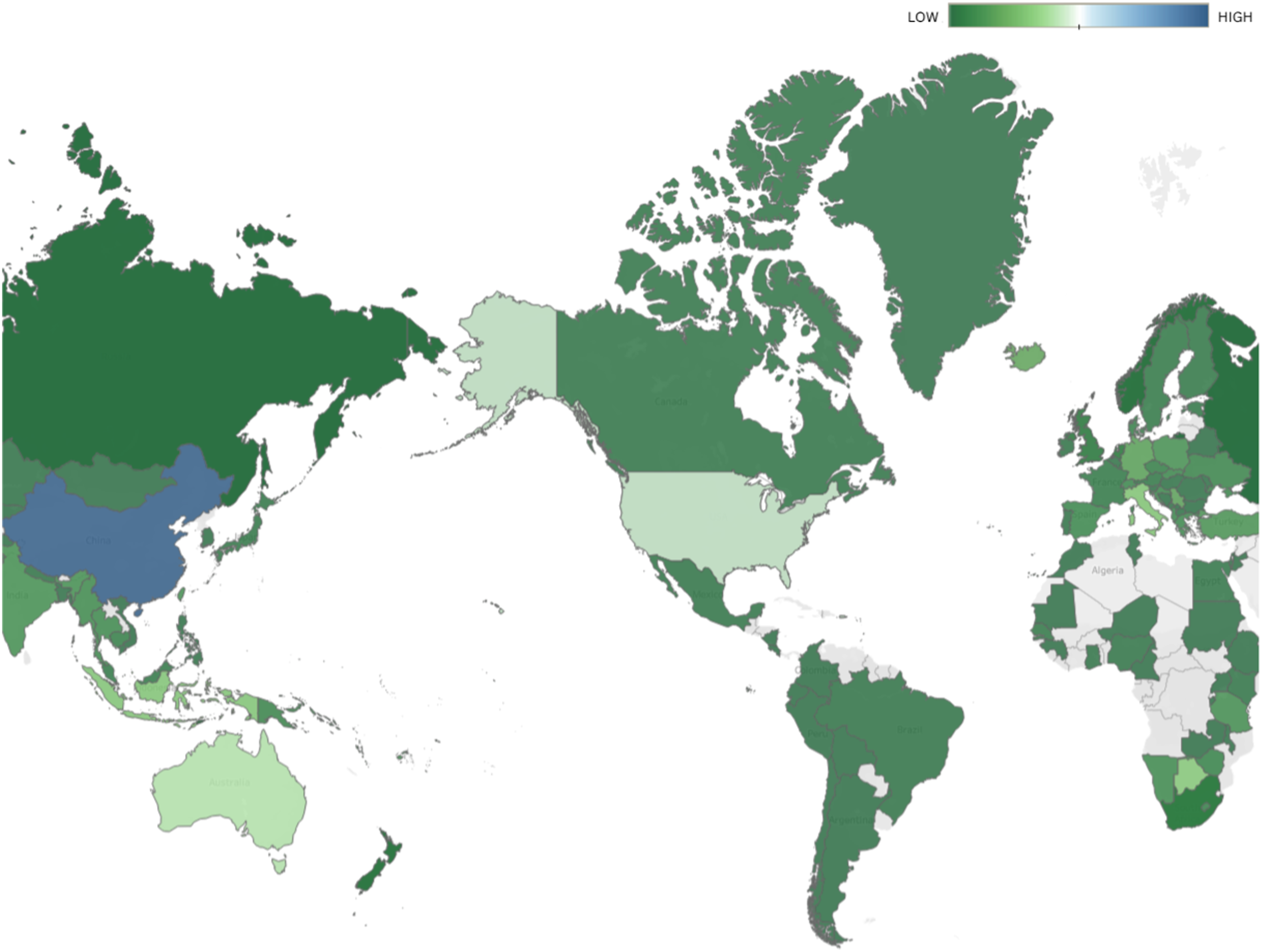
Case study analysis based on country/region.
Sources: Author processed data in 2026.
An agrotourism destination reflects a comprehensive, distinctive spatial pattern far from pro-poor tourism and autonomous development to support poverty alleviation and support independent urbanisation (see e.g. Guo, 2020; Han et al., 2020; Surhayadi and Izzati, 2019; Torabi et al., 2019). However, the involvement of agrotourism as a path towards sustainable development is seen as a potential step to leverage the environmental ethics, local agricultural systems, and community social structures. This event demands a fundamental shift from a rigid theoretical model to adopt a more flexible approach, ‘institutional evolutionary approach’. So the destination can be more adaptive by arranging and applying place-based strategies that respond to the multifaceted realities of local contexts and acknowledge the intricate relationships between space, community, and sustainable development practices.
Further analysis of agrotourism case studies, over time, conveys a distinct trajectory. Figure 7 presents the heatmap by year and follow United Nations M49 region, the green colour indicates the share of publications for each year, where darker shades represent a larger share and pale or blank cells indicate a value of zero. The data result shows Europe leads the earliest phase of the literature, dominating the period from 1994 to 2006, when agrotourism scholarship was taking shape. Within Africa, the literature publication displays a clear peak around 2003 to 2005, followed by a thinner stream of publications in later years. In Asia, activity and studies on agrotourism intensified between 2008 and 2014, eased in the following years, and then gained momentum again in 2023 and 2024. In Oceania, the publication pattern is more intermittent, with a pronounced surge in 2010 and smaller, scattered waves around 2015 and from 2020 to 2024. Finally, Latin America and the Caribbean and Northern America began to specifically study agrotourism after 2017, and their contributions tend to be irregular rather than continuous, which suggests pockets of interest rather than a sustained presence from year to year. Publication heatmap trend in agrotourism literature – UN 49 classification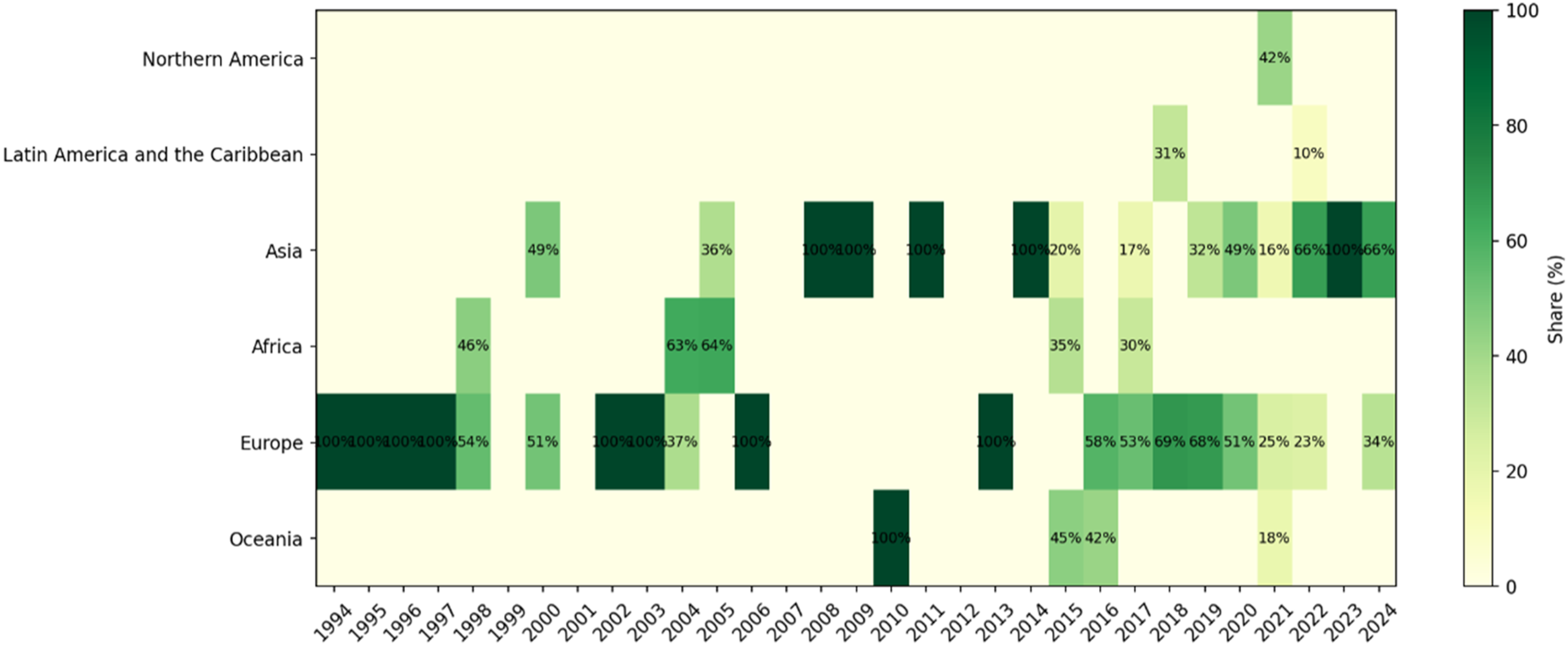
Thematic network analysis
Thematic Network Analysis (TNA) is conducted to understand and identify networks of words to be analysed in terms of centrality and density of the networks. The identified networks led to the possible emerging data-driven theme synthesized from the literature review. Figure 8 shows the thematic network occurrence in four dimensions. Every dimension is connected with others, implying the review can’t be analysed from one dimension only, that is, agrotourism, economic growth, or sustainable development. The theme is generated based on the association with other dimensions, resulting in four themes. Thematic network occurrence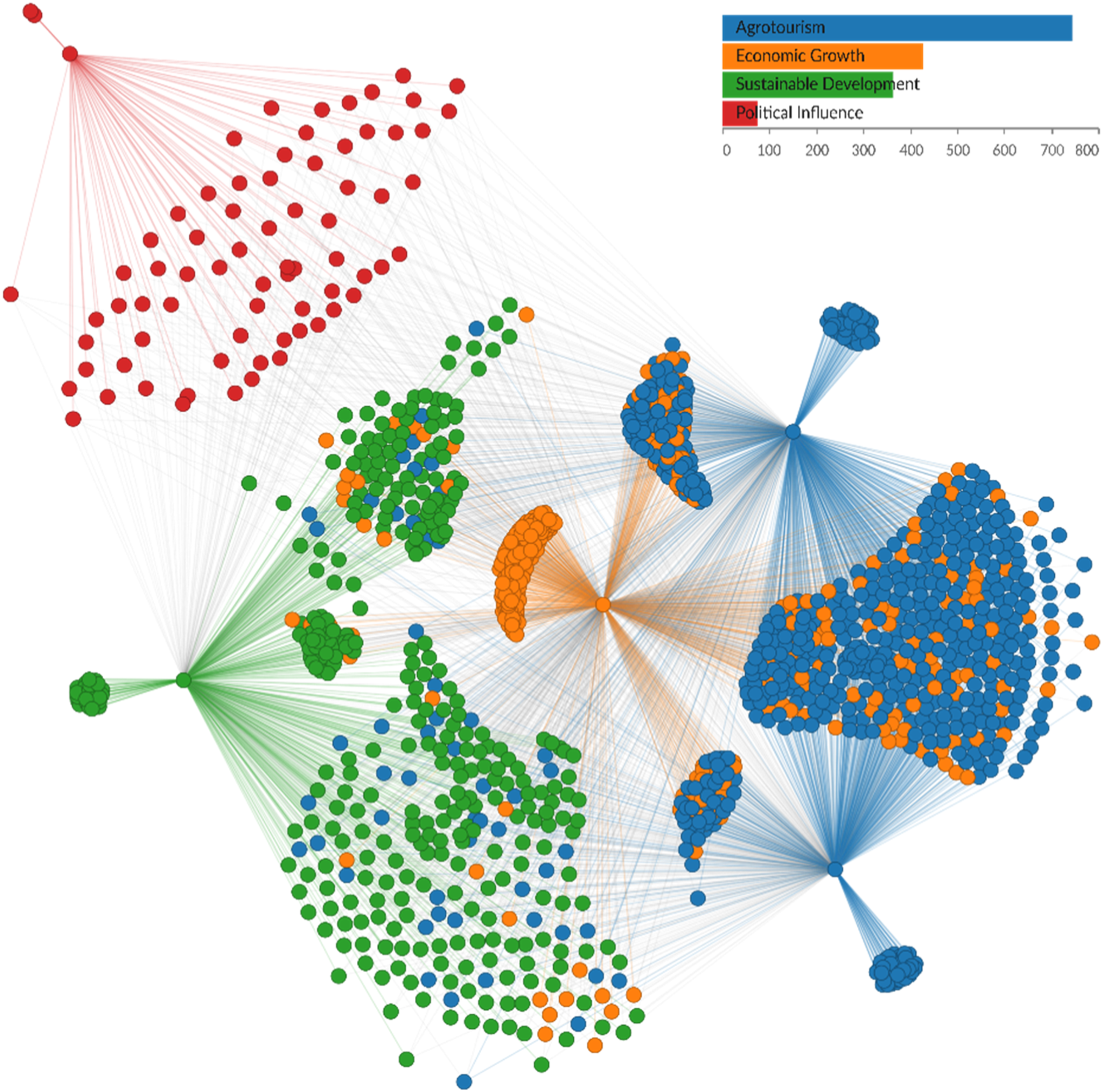
Theme 1. Agrotourism impact on economic growth
‘Agriculture’ and ‘Tourism’ are closely associated with economic growth, the integration is particularly constructive in supporting both sectors in rural and underdeveloped societies (Buday et al., 2009). Agrotourism, in this regard, plays a significant role in stimulating local economies, by increase the industry productivity and creating new economic streams, for example, local culinary industry, hospitality, transportation, and handicraft (Hung et al., 2023; Kuo et al., 2006; Mbaiwa, 2005). This diversification stimulates the local economy by generating new job opportunities, expanding the agricultural production market, and preserving local heritage through Micro, Small, and Medium Enterprises (MSME) activity (Wezel and Weizenegger, 2016).
The initiation of agrotourism frequently occurs as an enclave (Kuleli, 2015; Star et al., 2020; Ćirić et al., 2021), or a government strategy to stimulate economic activity and development in a peripheral area, with minimum investment (Dezio, 2021). Consequently, the transformation of agriculture as a tourism industry is not always able to generate income in a sustainable way. The economic impact of agrotourism is considered as context-dependent, as argued by Harrison (2008) and Rogerson (2017). Despite the potential towards economic growth, numerous factors can undermine its activity, particularly when profit maximization takes precedence under the rhetoric of economic growth. In conclusion, this theme positioning agrotourism as an instrument to deliver meaningful socio-economic upliftment and autonomous development system construction for marginalised communities, strives towards a circular economic growth and poverty alleviation by diversifying income sources, fostering sustainable land use, and initiating new economic activities.
Theme 2. Sustainable development paradox within agrotourism
Agrotourism is a form of multisector development strategies from modernisation, which inherently plays a role in delivering ’commons’ by emphasizing resource efficiency, waste reduction, and closed-loop systems, as underscored by Ingrassia et al. (2023). Within the sustainable development dimensions, agrotourism serves as an ecological initiative that offers recreational experiences while pursuing long-term objectives, for example, sustainable infrastructure development, community empowerment, environmental regeneration, and the promotion of ethical consumption practices (Ingrassia et al., 2023; Pearson et al., 2024)
Several literature, focussing on agrotourism case studies in the Global North and the Global South, reveals that the sustainable practice within destinations diverges from the original intention. The implication of agrotourism often fails to fully integrate the dimensions of environmental sustainability, economic viability, and social equity as proposed by development theory (Cerutti et al., 2016; Ducros, 2017; Rupérez-Moreno et al., 2017; Sgroi, 2022; Sæþórsdóttir and Hall, 2019; Tsartas, 2003; Yang et al., 2020). There are predominant arguments identified, that is, poor management and excessive focus on sustainability, which are faulted as the closed-loop cause of economic benefit that inconsistently supports local. Resulting in short-lived projects that lack continuity and sustainability, stimulated by the disinterest of the Indigenous community and investors (Luo and Liu, 2024; Zhang et al., 2022). Buday et al. (2009), Hajilo et al. (2017), Scheyvens et al. (2020), and Vuksanović et al. (2024) contend, such enforcement is presumed to eliminate the harmonious link between the sustainable development dimension and agrotourism drive towards predatory and unsustainable practices. These paradoxes create the illusion of agrotourism as inherently sustainable, despite the significant gap in practical implementation.
Theme 3. Political influence in shaping sustainable agrotourism
Figure 9 shows theme 3 to be the least remarkable of the bar graphs. But, political influence is still an important theme. The development of agrotourism is predominantly designed as an alternative to agricultural activity to support rural development in a multisectoral way. Throughout its emergence, the activity is often ridden by other intentions, that is, ecotourism, green tourism, pro-poor tourism, and rural tourism (Ingrassia et al., 2023). In order to address the arising issue from agrotourism, a couple of studies have associated agrotourism with government and political influence to reduce the struggle. Government in this theme is present as a symbol of key regulatory, policy maker, mediator, and strategic actor, which play an important role in influencing and being influenced of ‘how tourism is developed and managed’. It emphasizes an institutional evolutionary approach way of thinking to sustainable agrotourism, which should not be present as an isolated activity but as a central force shaped by the interactions among tourism, ecology, economy, and governance (Star et al., 2020). Sustainable agrotourism conceptual diagram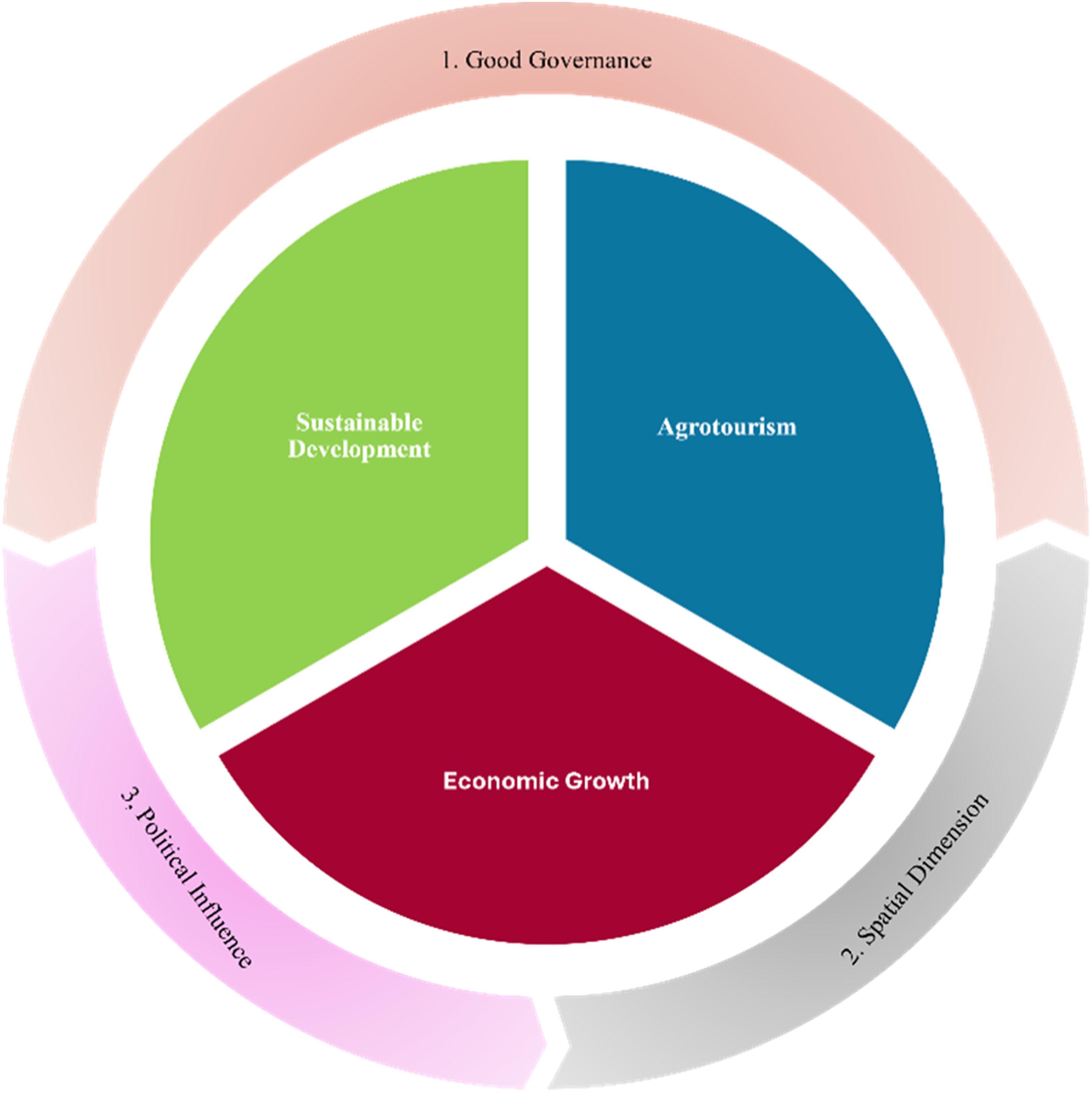
Studies by Ndhlovu and Dube (2024) show that agrotourism also posed the risks of shaping institutional and spatial structure in a negative way, due to economic dominance, minimum local benefits distribution, and ecological and cultural extractivism. The role of public institution, along with sustainable intention, presents as the constraints towards economic growth and business profit generated by tourism activity. The legal instrument i.e, tax, regional levies, and land use decree of agricultural land, protected region, and local heritage, is implemented by the local government to avoid exploitation and extractivism within destination. Thus, the capability of government to ensure tourism benefits are retained locally to realise sustainable development intentions is indispensable.
That aside, despite the existence of government institutions and political frameworks, numerous case studies of agrotourism have proven, agrotourism tends to adopt a ‘predatory’ approach rather than prioritize sustainability and welfare goals within the local community. Especially, several case studies from the Global South prove that such intention is usually driven by local or national government and policy abuse within the destination, contend by D’Agostino et al. (2020) and Tsartas (2003). Government influence on agrotourism development can be both positive and negative, depending on institutional conditions. Agrotourism supported with a robust governance system and comprehensive policy frameworks is often capable of shaping the outcomes to deliver pro-poor objectives, green initiatives, equitable profit distribution, economic growth, and community empowerment in a responsible way (Ohorodnyk and Finger, 2024; Shevchenko et al., 2016). Conversely, as affirmed by Dijk et al. (2016), Hall (1998), MacRae (2005) and Mbaiwa (2005), weak governance without a clear aim towards sustainable development or circular economy intentions can deprioritize environmental protection and community well-being, leading to broader negative impacts such as revenue leakage and minimal tax contributions.
Taken together, the political influence and government role play a part in sustainable practice and economic growth to shape agrotourism. The lack of coordination among government institutions and the implication of policy with a hidden agenda, leading agrotourism to the struggles of inefficiencies, hampered by challenges in community engagement, organization, and governance, rather than fostering community empowerment, rural development, and ecological recovery – as intended.
Theme 4. Sustainable development as economic growth catalyst
Agrotourism plays a pivotal role in stimulating rural economies and sustainability by creating demand for local goods and services. This hybrid approach supports food security, preserves traditional practices, and strengthens local supply chains, as underscored by Kuleli (2015). Additionally, it contributes to shaping new livelihoods and economic systems with the ability to retain, circulate, and stimulate local activity (Maikhuri et al., 2000). In this theme, the majority of literature discusses their attempt to harmonise the environment, economy, and society within sustainability. It’s emphasized that green development is recognized as an alternative pathway of economic growth catalyst, but does not necessarily by mean of agrotourism alone (Evseev et al., 2017). Within the destination, its activity and development are burdened with multifaceted roles, that is, biodiversity conservation, water purification, and recreation to foster sustainability, resulting in inequal treatment between the dimensions. Over time, such development led to the negative transformation, due to the shift focus from sustainability to economic dominance, as proven by Acreman et al. (2022), Hung et al. (2023), and Lin et al. (2023).
In spite of that, the literature provides valuable insight to guide the development of thoughtful management and planning processes that respect ecological integrity and stimulate local economic growth. First, the relevant stakeholder, especially the government and the Indigenous community, should recognise their unique circumstances and potential to ensure the intervention and spatial change enhance agricultural productivity, natural resources leverage, and strengthen regional identity, resulting in local economic viability (Evseev et al., 2017). Second, a transparent funding mechanism. Although sustainable development activity is often considered a low-investment venture, especially in the Global South countries (Dezio, 2021), it still requires financial support. Further, Ingrassia et al. (2023) and Wezel and Weizenegger (2016) assert should be accompanied by governance mechanisms that ensure financial support advances sustainability objectives. Study from Ukraine by Ohorodnyk and Finger (2024) and Shevchenko et al. (2016) affirm that comprehensive governance and institutional mechanisms are indispensable for enabling sustainability in development activity. Overall, sustainable development by means of agrotourism and green tourism activity can serve as a powerful catalyst for economic growth and pro-poor intention in an autonomous way.
Discussion
So how has the extant literature on agrotourism discussed the ways in which ‘agrotourism development’ shapes sustainable local economies? Both the qualitative and quantitative analyses of the literature return similar findings. ‘agrotourism development’ shapes sustainable local economy through economic growth, poverty reduction and sustainable development. The time lines for these linkages established in the qualitative review also cohere with those in the quantitative review, although the quantitative analysis shows that the trends are not linear. Economic growth remains a recurrent theme, although increasingly sustainable development receives considerable attention. Both are deemed constitutive of the process of pro-poor sustainable development. Crucially, there variations across space, too, with some regions in the world emphasising some themes more than others and, even then, at different times.
A range of theories of development claims that the relationship between agrotourism, economic growth, and sustainable development offers promising alternative to ensure resource efficiency and equitable benefit sharing for the Indigenous community. The results show that agrotourism is quite path-dependent. Yet, the traditional literature review and the results of bibliography literature analysis (spatial analysis, and thematic network analysis) reveal that agrotourism can fail to deliver on these ideals (see e.g. Cerutti et al., 2016; Ducros, 2017; Rupérez-Moreno et al., 2017; Sgroi, 2022; Sæþórsdóttir and Hall, 2019; Tsartas, 2003; Yang et al., 2020).
Examining the global empirical evidence in Table 3, reveals that unsustainable agrotourism practices are not geographically constrained within the Global South region, but also manifest in some of the Global North countries, for example, Europe and Australia. This result aligns with TNA themes 2 and 3 findings, anomalies of unsustainable agrotourism exist in the Global North, despite the frequently assumed that sustainable agrotourism is more feasible in these regions.
Rigorous analysis on TNA demonstrates interdependencies between sustainability elements, in connection with political influence, within the predicament discourse. Theme 1 confirm the agrotourism attempt to achieve sustainability, are poorly aligned with circular economy model (see, Canwat and Onakuse, 2022; Ingrassia et al., 2023). This confirms, the majority of agrotourism in the Global South and Global North are poorly aligned with sustainability goals due the economic growth pressures. Economic growth pressures create a disconnect between sustainability and tourism activity, wherein tourism revenues provide limited support for local welfare improvement and poverty reduction (Lee, 2008; Mbaiwa, 2005; Rogerson, 2017; Torabi et al., 2019). Such event erodes the economic growth distribution within agrotourism destinations, as highlighted by several case studies (Belliggiano et al., 2020; Han et al., 2020; Kuo et al., 2006; Rupérez-Moreno et al., 2017; Sun et al., 2023).
Theme 2 reflects and re-evaluates agrotourism from a sustainable development lens and is positioned as efficient strategies with future purposes of modernisation, livelihood breach, environment and culture preservation, and stability of the local food system. The relevant literature in this area demonstrates that agrotourism is consistently portrayed as a sustainable activity. Yet this perception persists, echoing with the third theme. Theme 3 proves agrotourism is proven to be partially influenced by political efforts to label it as a green activity, despite inconsistencies with core principles, fragmented implementation, and deviation from original objectives (Hajilo et al., 2017; Nautiyal and Kaechele, 2009; Zhu et al., 2024). The government’s role, from an institutional evolutionary way, acts as a predominant force in the marketisation of the sustainability perceived. However, contrary to this narrative, the actual implications manifest viable disparities between agrotourism in the Global North and the Global South countries. Each country is enforcing its own standard of sustainable agrotourism, and some are only partially implementing the principle. These acts create bias, allowing room for hidden agendas influenced by patronage politics and weak regulatory systems, which frequently happen in the Global South destination.
The last theme particularly echoed with the result of the bibliography analysis. Within this theme, agrotourism is symbolised as an economic catalyst through agriculture, tourism, and rural development in a sustainable way. The emergence of green activity burdens agricultural activity and its field with abundant sustainable and economic responsibility. Over time, these circumstances hindered the establishment of an autonomous system to sustain the tourism within the agriculture sector and alleviate poverty, as originally intended. Further, the short-term economic gains will predominate over long-term sustainability and equity, driving the failure of executing the circular bioeconomy utopia in the real world, as contended by Ingrassia et al., (2023), Ivona et al., (2021), Maikhuri et al. (2000), and Sitikarn (2008).
Achieving sustainability within agrotourism relies heavily on economic growth and equitable benefit distribution among the Indigenous community in peripheral destinations. In spite of that, the majority of agrotourism is missing the fair enforcement regulation and policy which should be prepared and supervised by the nation government as underscored in the Environmental Kuznets Curve (EKC) models (Copeland and Taylor, 2003) and Pro-Poor intention (Butler and Rogerson, 2016). Yet, the absence of such a system and a comprehensive governance – free from patronage politics, led to inadequate management; agricultural decline and food insecurity; and ultimately leaving Indigenous communities who remain marginalized despite their region’s capability for economic growth, as argued by Brown and Hall (2008). Such dynamics resulted in neglected development initiatives and abandoned destinations despite the spatial modification, as agrotourism has proven unable to deliver substantive socio-economic advancement or establish autonomous development frameworks.
Addressing this issue requires a reframing of agrotourism not only as an economic tool but also as a socially embedded concept that must be governed and spatially designed to include and empower the poor and promote sustainability. Therefore, my future research will explicitly examine these trajectories and investigate agrotourism directly. The study will provide the literature review with empirical observations to complement the underlying existed theory that remains insufficiently understood in existing scholarship.
Finally, in this study, I proposed a conceptual diagram encompassing those new possibilities, based on the analysis in the results and discussion section as shown in Figure 9.
Figure 9 presents a conceptual framework encompassing new elements that deserve to be considered when exploring studies about agriculture, sustainable development, tourism, and economic growth. The concepts reflect multiple dimensions encountered in the broad spectrum of themes, meaning it is more than three traditional triad dimensions (agriculture, sustainability, and economic growth) to be influenced, and get influenced to pursue sustainable agrotourism as an autonomous sustainable alternative for local economic development. It incorporates political influence, spatial dimensions, and good governance practices, which emerged as critical but often overlooked in the present literature.
Conclusion
This study has sought to address the question, how has the extant literature on agrotourism discussed the ways in which ‘agrotourism development’ shapes sustainable local economies? By doing both a traditional and systematic review, the study addresses this question. The evidence suggests that economic growth, pro-poor development, and sustainable development are key themes about how agrotourism drives sustainable local economic development. But these themes evolve over time and space. Thus, asserting a structural trade-off between agrotourism and economic growth may be unavoidable at a particular point, but not so clear in others within some regions. While agrotourism functions as a primary catalyst for local and national economic growth, critical elements, including sustainability and inclusive growth, remain peripheralized across regions and times. There is a persistent misalignment between dimensions of economic growth and sustainability within agrotourism. Surprisingly, ‘political influence’, while apparent, is not dominant.
Agrotourism holds significant potential to contribute meaningfully to sustainable development, if approached with greater sensitivity to local contexts and long-term ecological resilience. But, the current implication of agrotourism still risks reinforcing inequality, poor governance, and sustainable spatial exclusion rather than providing a beneficial inclusive sustainable development. Ultimately, sustainable agrotourism implication relies heavily on transcending reductionist economic paradigms and embracing multidimensional frameworks that prioritize distributive justice, ecological resilience, and cultural integrity. A value-grounded approach of agrotourism requires shifting attention from profit-driven motives toward collaborative approaches that integrate local knowledge systems, prowess in institutional management, and foster equal profit distribution for locals in rural, poor, and underdeveloped region. In addition, by situating tourism within broader socio-economic and environmental contexts, policymakers and practitioners can mitigate negative externalities and advance development pathways that are equitable, inclusive, and ecologically sound. Such reorientation is necessary to fulfil agrotourism’s multiple objectives of economic growth, poverty alleviation, inclusion, and sustainable development in the present era marked by social vulnerability and environmental fragility.
Footnotes

Ethical considerations
This study was performed in line with the principles of the General Data Protection Regulation (GDPR) and Indonesia’s National Research and Innovation Regulation Number 22 of 2022 regarding research ethic clearance. Ethical approval was granted by the University of Helsinki Ethical Review Board in Humanities and Social and Behavioural Sciences Statement 82/2025.
Funding
The authors disclosed receipt of the following financial support for the research, authorship, and/or publication of this article: This study was supported by Indonesia Endowment Fund for Education (Lembaga Pengelola Dana Pendidikan/LPDP) grant number 202407221805268.
Declaration of conflicting interests
The authors declared no potential conflicts of interest with respect to the research, authorship, and/or publication of this article.