




Abstract
This article demonstrates how Generative Artificial Intelligence (GenAI) produces incomplete and relational images, directing our attention and senses to imagine what has been and may become. I argue that qualitative researchers can use GenAI images to investigate futures and foreground participants’ priorities and values. This approach allows participants and researchers to move with images and immerse themselves in possible futures. I show this methodological possibility, positioning this discussion in visual and futures anthropology and drawing on my future ethnographic fieldwork focused on Aging-Technology futures. In this fieldwork, I used GenAI images reproducing undesired scenarios during video-ethnographic household visits with older adults.
Keywords
Introduction
In this article, I demonstrate how Generative Artificial Intelligence (GenAI) images are visual devices that qualitative researchers can use as a method to access futures if GenAI images are understood as incomplete, relational, and future-oriented devices. I discuss this method through my fieldwork examples, researching Aging-Technology futures. This method affords qualitative researchers a closer understanding of people’s priorities, values, and future everyday life.
GenAI is not free from legitimate critiques that question its emergence and hype. Critiques to GenAI include its large environmental impact (Butler & Lupton, 2024), coupled with challenges to people’s privacy (Novelli et al., 2024) and biases that make researchers interrogate the validity of this technology (Fang et al., 2024). Similarly, Fenwick and Jurcys (2023, pp. 10–12) point to the simplistic and misleading notion that there is an “AI-generated work,” emphasizing that AI lacks creativity and that human authorship remains always in the loop. While I acknowledge these critiques, my article shows how qualitative researchers can use GenAI in ways that extend beyond its biases, fixed meanings, lack of creativity, and ordinary links to pasts and presents, offering a productive realm of creative possibilities for research practice. In particular, I propose how qualitative researchers can use GenAI images with participants to explore people’s visions of their futures and analyze how futures are made. This analysis helps me argue that GenAI images—when researchers approach them as futures-oriented, incomplete, indefinite, moving, contingent, and relational—can serve as tools that intersect with people’s temporalities, values, and priorities, enabling qualitative researchers to access and engage with futures.
To support this argument, I situate my discussion within visual and futures anthropology literature—the first in relation to a theorization of images and the second concerns a methodological and theoretical emphasis on people’s everyday futures. These fields guide my focus on the methodological and epistemic qualities of GenAI images for reimagining and accessing futures through qualitative inquiry. My contribution to these two interconnected fields foregrounds a visual and qualitative method involving GenAI images to investigate people’s futures, grounding this methodological discussion in my fieldwork with older adults investigating AgeTech futures.
Devoted to find alternative futures, my aim was to understand how the participants might feel living “in” those possible GenAI imagined futures. These immersed approaches “in” futures collaborating “with” people are reflected in Pink and Salazar (2017) and Pink (2022a, pp. 21–23). This approach required me not to extract people’s perspectives as tangible units, but follow a processual and collaborative approach with engaging conversations. The realistic appeal and large mediating role of technology engaged the research participants and me in rewriting the meanings of the images, suggesting better futures, and allowing me to better understand their priorities.
The inaccurate and incomplete nature of GenAI images is evident in the five examples provided in this article, reflecting uncanny futures in the space of aging and technology, which I intentionally chose so participants had an opportunity to critique and suggest alternatives. The examples provided often adopt a patronizing approach largely focused on older adults’ bodies, equating age with frailty, and neglecting that age is another social construct—as critical scholars of aging discuss (Cozza & Wanka, 2024, pp. 1–2). Embedded within these GenAI images lies a strong ideological component depicting “successful aging” futures for older people: living independently through care technology, while emotionally and economically relieving carers and taxpayers—as critiqued by Gallistl et al. (2024) and Jarke and Manchester (2025) in aging and datafication. A thorough analysis of such normative visions falls outside the scope of this article, so my focus instead rests in exploring how GenAI images as incomplete and relational devices can open productive methodological avenues for qualitative research.
From a methodological perspective, the use of GenAI images in this fieldwork illustrates older participants’ capacity to go beyond conventional visual prompts—in this article, I understand conventional visuals as photographs, comic scenarios, or any visual that is not AI-generated. My definition of “conventional” is not framed as a critique in this article, and I recognize the value of those devices, yet this distinction helps me make the case for GenAI images. I argue that, although qualitative researchers can approach any images as futures-oriented devices, GenAI reinforced the “futures” space of images in my research. The emergence and unknowability of GenAI’s inner workings added a layer of novelty, encouraging participants to approach the images with curiosity and skepticism compared to a conventional image. I found that its emergent, incomplete, and biased nature had a distinctive impact on the research process, helping participants disagree, engage, and think about what alternative futures could be, look, and feel. I now turn to how images and futures have been theorized, followed by the methods section, which describes how I applied the qualitative method in practice with participants, discussion, and conclusion.
Images Mobilizing Futures: Perspectives From Visual and Futures Anthropology
This article is situated at the intersection of futures anthropology and visual anthropology—two distinct but interconnected fields rooted in similar traditions and approaches whose intersections have been discussed in Pink (2022b, p. 789), for example, through the design ethnographic documentary “Smart Homes for Seniors.” This documentary—also situated in the AgeTech futures space—involved teamwork, had a theoretical and ethnographic dialogue, and became interventional, participatory, and reflexive, making the research roles explicit. In the same spirit, I used GenAI images proactively and reflectively with the older participants and situated my method in a methodological and theoretical dialogue across visual and futures anthropology. In relation to futures anthropology, I want to understand how older people and industry imagine futures with technology, immersing myself in their visions through an innovative qualitative agenda. Drawing on visual anthropology, I engage with a theorization on images showing how images shape people’s visions of futures, which I then extend to GenAI images portraying AgeTech scenarios.
Recent social science scholarship has shown a growing interest in immersing researchers in futures with people (Akama et al., 2018; Pink, 2022a; Pink & Salazar, 2017). This methodological and theoretical move diverges from conventional approaches that attempt to operationalize futures from a distance—and instead suggest immersing ethnographically and interventionally with people in their emergent and possible futures (Pink, 2022a, pp. 21–23). Pink (2022a, p. 19) remarks that immersing in futures demonstrates their uncertain, experiential, contingent, plural, and emerging nature. She further argues that experienced futures are constructed in collaboration with people, not premised on innovation or nation-state agendas. Futures anthropology is rooted in phenomenological anthropology traditions in Ingold’s work (2011) focused on movement, attuned experiences, entanglement, and uncertainty that practices anthropology with people rather than about people. This field highlights the unknowability of futures, their connection to our presents, and people’s capacity to deliberate and change them (Pink & Salazar, 2017). These anthropologists approach futures through collaborative, experimental, ethical, intense, direct, and interventional encounters with people (Pink, 2022b). The agenda of researching futures is evident in previous methodological contributions in the Qualitative Inquiry journal (De Freitas & Truman, 2021; Lupton & Watson, 2022). Situating my work in this futures anthropology scholarship provides the basis for me to bring an innovative visual method using GenAI images, understand futures—and images—as uncertain and unended, and collaborate with participants through interventional methods.
Visual scholars, following a phenomenological tradition, agree that images are central to the formation of meaning in the social world (Grady et al., 2023, p. 227). However, images are not things out there awaiting description by researchers, as an image has no specific message to be read, rather we must attend to their internal and external narratives and social relations (Banks & Morphy, 1997, pp. 11–12). Images exist in the “in-between,” resisting dualities and bridging gaps between the inner and the outer, ideas and things, the personal and the collective, the sayable and the visible, cause and effect, before and after (Favero, 2023a, p. 197). GenAI images are shaped by how people trained these systems through feedback and prompts, and how it extracted data from outside sources (datasets, public texts, etc.). Following these visual anthropologists, GenAI images can be also understood as entangled with the people who perceive them, temporalities, political economy, and spatial contexts in which they emerge and inhabit.
Beyond interpreting the meanings of images, Favero (2021, p. 106) emphasizes their performativity, exploring what images “do” rather than what they represent. Images do much more than portraying and documenting, they actively participate in our social relationships (Favero, 2023b). Beyond representational visuals, MC Cambre refrains from conceptualizing an image as a fixed thing or visual, and instead asks “how” an image is, focusing on the relationships, times and spaces of images (Grady et al., 2023, p. 229), as such extends the definition of images. Images then emerge at that middle point between perception and expression of an image, which reshapes how we understand things happening and being in the world (Stevenson, 2022, p. 10). This is particularly evident in how participants and I discussed how our values and priorities intersect with the GenAI images, prompting us to think about our futures instead of evaluating the prompts or visual representations of images.
The connection between images and futures is also reflected among visual anthropologists. In contrast to studies of visual culture that analyze what images represent, Ingold (2010, p. 16) views the example of a drawing or painting as not final artifacts to be inspected, rather as placeholders which help us find things, orienting us to futures. Ingold (2010, p. 18) uses the example of the mappa mundi—medieval European map of the world—to explain the connection between images and futures: while the “mappa mundi” is a prescriptive and imprecise model of the world, the “mappa mundi” is a window to revelation directing our attention to “what could be.” Thus, images should not be conceptualized as fixed outer objects but as imaginaries that engage and orient our senses to futures (Pieta, 2021, p. 12).
A recent roundtable discussion among visual social scientists (Grady et al., 2023) further highlights the temporal and relational dimensions of images. In this discussion, Paolo Favero shifts the question from “what” is an image, to “when” is an image ascribing its temporality and the moments of perception they evoke (Grady et al., 2023, p. 229). He suggests that perceiving an image involves a progressive interplay of presence and absence, building on the overlapping senses and temporalities.
Connecting images and temporalities, an image is taken “in” an environment, inviting the researcher to imagine what the route ahead is like (Pink, 2011, p. 438). Pink et al. (2018, pp. 196–199) defined “anticipatory images” as representing uncertainty and suggesting different possibilities, which do not have the predictive authority imbued in government and industry’s narratives of technological futures. Canals (2022, p. 5) further conceptualized images as not only mirror representations of the present and past or not solely being things, images instead help imagine what has been and what may become in the future. Leaha and Canals (2024, p. 534)—analyzing political images in the Brazilian context—demonstrate how images are “less representations of the world than what we call ‘anticipatory devices’” to foresee future events. Argudo-Portal and Canals (2025, pp. 12–13) argue for the relevance of anticipatory images to understand how we think with images, which serve to craft the future by anticipating it through individual and collective acts. Given the ephemeral nature of images, a new temporality is attributed to the practice of perceiving images (Favero, 2021, p. 22). In this sense, I am more concerned about the futures-orientation of images, rather than the visual biases they might represent—although these biases were useful for participants to propose alternative futures.
Such prescriptive and normative futures embedded in images have been discussed in research contexts with older adults. Focused on care, Stevenson (2014, pp. 11–12) discusses the “imagistic qualities” of images, which can implicitly express meanings without the need to formulate them. The imagistic approach allows anthropologists to attend to people’s “contradictory experiences,” which would be hard to articulate through words (p. 10). Building on the “imagistic qualities” as a mode for approaching the world, Mattingly and Grøn (2022, p. 3) examine the human experience of aging when it is marked by social and physical precarity and use “imagistic inquiries” to convey ethnographic stories of aging that destabilize dominant narratives, focusing instead on the uncertainties intrinsic to suffering. For them, images do more than document or represent reality, as the sensory richness and materiality of images convey unexpected and overlooked dimensions of everyday life. In studies of dementia, Pieta (2023) argues that positive images of dementia can contribute to the marginalization of people with this condition by replacing the caring role of the community or state with the family. These arguments intersecting aging studies and images demonstrate that images of later life are not summaries of realities, rather help people imagine and inquire what may be next—be it precarity, marginalization, hopeful futures, or other innumerable factors—through their imagistic qualities.
Taken together, visual anthropology and futures anthropology deliver a theoretical framework approaching images and futures as unended things, ambiguous, related with the outer world and temporalities, incomplete, inaccurate, and opening imaginaries. I then mobilize these subdisciplines to understand the role of GenAI in qualitative research practice through my research on AgeTech futures. The ambiguity and relatedness of images are relevant to my research, as it would be impossible to fully disentangle my role as a researcher from the participants, place, contexts, and images. From a temporal perspective, my use of GenAI images transcended the present or past, enabling the research participants to blend temporalities and engage with images in the formation of their futures.
Accessing AgeTech Futures Through GenAI Images: Methodological Overview
Futures and design anthropologists suggested using innovative ethnographic methods to be able to access futures, for example, through discussions around comic-strips, reviews of industry reports, filmmaking, and more as they move beyond studies of the past and present (Pink, 2022b; Strengers et al., 2022). They have mobilized these methods by approaching people’s everyday imaginations to contest dominant narratives. These narratives were first reviewed in industry reports in sectors spanning automation, energy, and mobility. Building on them, I transitioned from using AgeTech comic scenarios to incorporating GenAI images to explore futures with older adults in Melbourne. I first employed comic scenarios as prompts in interviews with industry experts to understand professionals’ visions of aging technology (Gomez-Hernandez, 2024b), following Strengers et al. (2022). These comic scenarios, which were derived from my review of industry reports, felt somewhat cartoonish representations of later life. In other words, the aesthetics looked too distant from a realistic approach to everyday life. Then I visited 25 older adults in their homes in Melbourne, where I replaced the comics with GenAI scenarios. I began experimenting with GenAI images—made through Microsoft Bing powered by OpenAI’s DALL-E—to analyze how GenAI anticipates future older people’s lives. I incorporated prompts into Microsoft Bing—the prompts can be found in the written captions below each figure in the article, which made the older characters and technologies follow dominant discourses of aging associated with frailty, health needs, individualism, and techno-solutionism.
I sometimes laid a set of printed GenAI scenarios on a table for participants to choose from, while other times I used a tablet to show the scenarios. These discussions with GenAI scenarios were followed by video-ethnographic tours that I undertook to immerse myself with participants more in their futures—however this method is not the main article’s focus. These video-ethnographic tours follow and document people’s everyday lives visually using collaborative approaches with participants (Pink, 2020). Some characteristics of the participants that are important to understand how they make futures—yet relational and unended as the participants are not strictly boxed into these—were that 13 lived alone (while 2 lived with children and 10 with a partner); 22 were homeowners; 17 lived in houses (while 5 lived in units and 3 in aged care); 9 still worked; 12 were aged 65 to 74 (10 aged 75 to 84 and three 85+).
My method builds on other similar social methods. “Photo-elicitation” is a technique that incorporates photographs in interviews, triggering participants’ perspectives to evoke reflections (Harper, 2002). This method elicits memories, emotional responses, and alleviates interview fatigue. Images also serve as a model of collaboration, guiding the interview dialogue (Harper, 1994, p. 410; 2002, p. 23). In the photo-elicitation method, two primary variations have existed: researcher-generated or participant-generated photographs (Richard & Lahman, 2015, p. 5). If researcher-generated, Richard and Lahman highlight four formats: current photos of the research setting, previously taken photos of the research setting, archival photos, and decontextualized photos (p. 5). In the same spirit, my method using GenAI images seeks to elicit memories, reflections, bridge gaps between participant and researcher, and guide our conversation. I build on this method, which I extend to GenAI images oriented to futures. This approach also allows me to move beyond the four formats oriented to photographs of the past and presents that Richard and Lahman highlight.
For clarification, my use of prompts and images used in this project are not neutral, rather, they are deeply influencing the generation of images, shaped by my ethnographic hunches, theoretical interests, and positionality. While I acknowledge that different prompts would have generated different images, the participants and I did not specifically assess the prompts or the algorithmic biases of the GenAI images, as I was more interested in what images do and the temporalities invoked rather than what images represent. As Savage (2013) argues, methods have a “social life”—they carry politics and values shaping the knowledge produced. This is particularly relevant in relation to digital devices, which are not passive tools but active agents reshaping social science methods, changing and taking part of the way we undertake research (Ruppert et al., 2013), whose argument can be applied to GenAI. In this sense, my aim is not to demonstrate the newness of a GenAI method but to discuss it in relation to a broader methods biography, departing from previous design anthropology methods. In addition, concerning the distinction between images and scenarios, I treat GenAI images as visual examples of AgeTech futures, not as representations of futures, because images are not fixed containers of meanings or portrayals of the world. I also use the notion AgeTech industry to refer to stakeholders who fund, research, design, manufacture, commercialize, and distribute technologies relationally for older people, spanning governments, technology and health companies, consultancies, and academic institutions (Gomez-Hernandez, 2024b).
GenAI Images Mobilizing Futures in Qualitative Research Practice
GenAI images are not just representations of existing things but dynamic participants in the research process. I hereby discuss five images and participants’ perspectives emerging from the image discussions, which are central to understanding the role of GenAI in opening futures within a qualitative research context. One particular image of future AgeTech for older adults—a portrayal of an aged care living room in Figure 1—does not carry a singular or static meaning. It instead varied across all participants who actively contested the meanings relating to their own values, fears, hopes, priorities, and experiences. Rather than framing the image with a detailed introduction, I chose to let the participants attune to the image on their own terms. They initially focused on the material and affective dimensions of the scenario: objects (lights, curtains, etc.), aesthetics, and more. Most of them noted they would not like to live in such a future-aged care living room, given that the aesthetics look sterile, the lights would increase their migraines, and the character seemed to be lonely and in need of care. They claimed that the technology shown in the scenario is also replacing the warmth and touch of human care that they would like to feel in the future. The living room does not have either meaningful, creative and personal decoration or objects: pictures, paintings, memories. Participants frequently contrasted the image with the decoration of their own homes, containing carpets rich with color and refrigerators adorned with pictures of loved ones. I previously argued that this type of far-fetched scenario—being too distinct from people’s everyday life—enabled participants and me to avoid hyper-realistic scenarios attached to presents and pasts (Gomez-Hernandez, 2024a, p. 4).
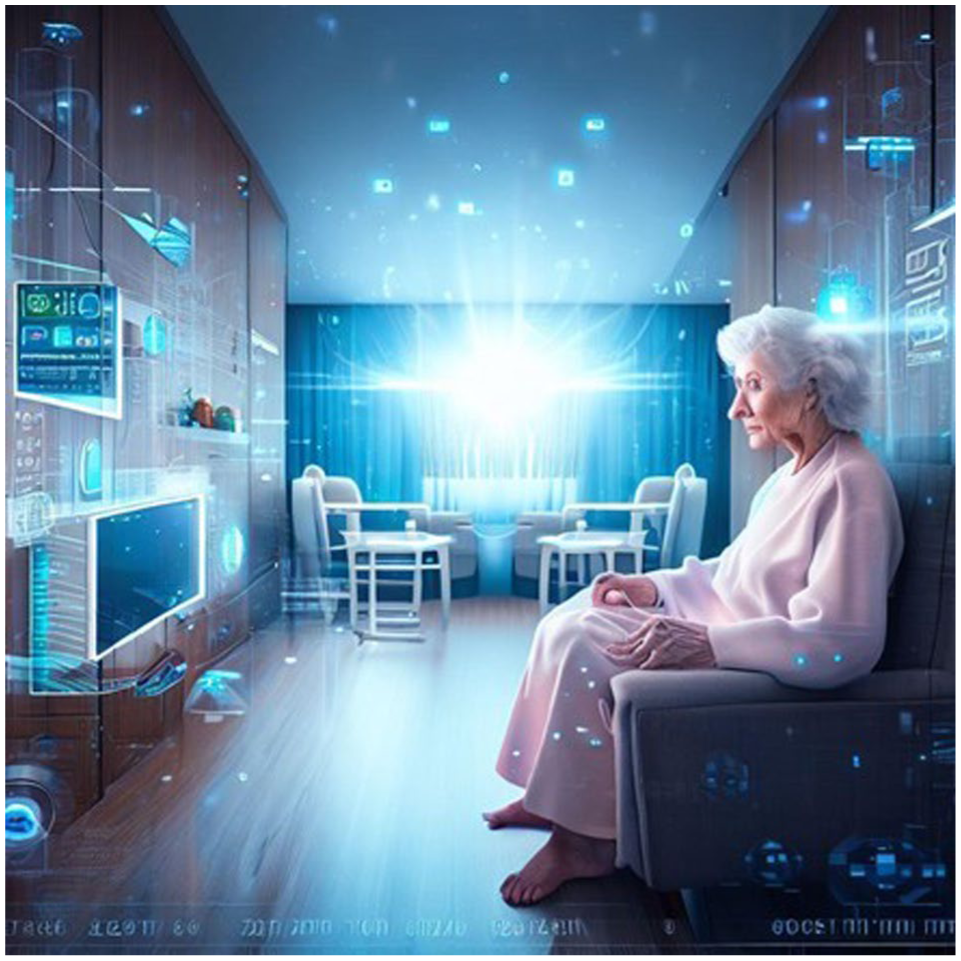
GenAI Image, Whose Prompt Was “Older Woman Living in an Aged Care Facility Surrounded by Data-Driven Technology.”
We were not confined to discussing the images, meaning that the artifact did not have the most prominent role in this qualitative research. Images rather served as placeholders to let ourselves imagine diverse futures and explore shifting priorities (Ingold, 2010, p. 16). The previous scenario (Figure 1) of an aged care living room initially steered the discussion on their reluctance and anxiety about moving into aged care—a common theme rooted in the fear of losing independence. Many participants expressed that they would choose to die before experiencing such a loss. These visions are often tethered to the concept of “aging in place,” situated in social and political norms for older people to remain active and healthy, where being a cared person is shallowly seen as an economic and emotional “burden” to caregivers. However, this univocal vision of successful aging is progressively being critiqued by social scientists. For example, anthropologist Sarah Lamb (2014, p. 50) asserts that aging in place is an overly narrow conceptualization of success culture tied to individualism, productivity, and self-maintenance which deeply hinges on culture.
Yet, our conversations did not only remain anchored to negative interpretations of technology as I decided not to use pre-made scripts but follow a more open and processual approach in my research encounters. The images also created space for reimagining futures with affective and emotional possibilities. For example, I met Joshua (names are invented henceforth). Joshua is a proud gay and progressive activist. He told me that he participated actively in community organizations and events. He lived alone in a small rented apartment within a modern building near the city. He also had some important family members living overseas, and voiced concerns about his current and future health conditions. When discussing the previous GenAI scenario, Joshua and I rewrote its meanings, imagining affective and sensory futures. Sensory futures put senses at the center and consider questions of what possible futures might feel like using engaged and interventional approaches (Pink, 2023, p. 93). In particular, this image evoked a longing for his late loved ones—he would love to speak to them again through the holograms, hear the voices of his late mother and friends:
When you say holograms, do they speak to you?
What if they speak?
Will it be holograms of people I know?
Okay, that’s a good point. Would you like to see, for example, friends, relatives in holograms?
Dead ones?
Oh, that’s very scary. Okay. Yeah. Why not?
That would be nice.
Yeah, like an old relative. For example, imagine a friend is dead now. And you are able to get him back and be able to speak.
Well, who wouldn’t? Who wouldn’t want that? Yeah, I think it’s a lovely thing.
Even if it’s a recording of his words or appearance. You know it isn’t real, but it’s a recording of the things he likes most?
I think so. I think it’d be lovely. Okay, that sort of thing. Like my mother, my mother could come back. And I’ve lost friends. Just see them again. And just hear their voices. Yeah. I think it’d be nice. If that’s what you use it for.
The previous example remarks a methodological aspect, which is how we moved beyond the previous image to discuss affective and sensory futures. GenAI images helped us redefine the meaning of a conventional image and acted as an open door for us to imagine possibilities and his preferred futures.
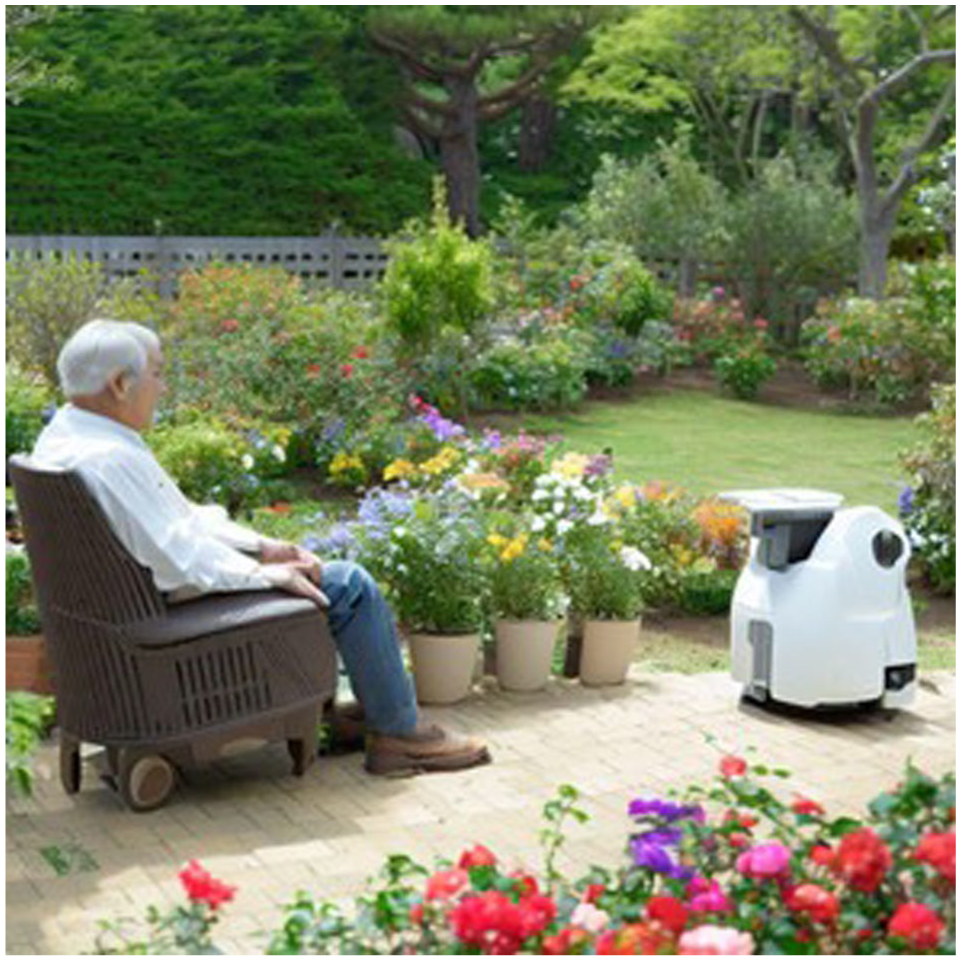
I next turn to two other GenAI scenarios that sparked similar debates. These debates contrasted values such as freedom versus activity. The first GenAI scenario depicted a future garden with a person sitting and relaxing while a robot diligently tended to the garden—pruning, watering, mowing, and other tasks. This image led us to imagine diverse ideological futures, particularly around notions of how we want to live and our priorities. This scenario was inspired by a previous comic scenario that I developed, which had already sparked controversy among industry participants (Gomez-Hernandez, 2024b, p. 7). While some industry experts advocated for the freedom enabled by automated technology, others claimed that a successful later life should instead involve physical activities that keep the older person healthy and busy.
The ideological debate about activity versus freedom was taken up by the older participants, who extended what successful later life looks like for them—some also remained skeptical of the unrealistic size of the robot for gardening. For most of the participants, gardening represented a necessary activity to feel engaged and remain healthy—being a practice tied to satisfaction, restoration, and relaxation. Many felt that life should not simply consist of passively watching technology take over, but instead involve active participation in meaningful activities. Most of the participants would not see this robot in their futures, unless it is meant for somebody with limited physical capacities. A successful later life is then about physical activities for them, which they also connected to nature.
The emphasis on physical activity and engagement with nature was particularly notorious. I observed nature is pronounced in the context of Melbourne where 17 of the older participants lived in a house with a backyard garden—traditionally known as the Australian dream. Many participants had windows and doors left open—secured with mosquito nets—to allow their pets to wander freely and to let in fresh breezes. However, these stances should also be understood in a context where there are social norms for older people to remain engaged and autonomous, while refrain from needing institutional and family care. At the same time, gardening was not a preferred activity for everybody; other participants would rather cook or engage in intellectual activities. In short, this GenAI image was useful to open ideological debates on definitions of successful aging being especially relevant to the housing context of Melbourne. Such a definition implies that the image itself would have no methodological value without the participants and researcher, ideas, and material conditions.
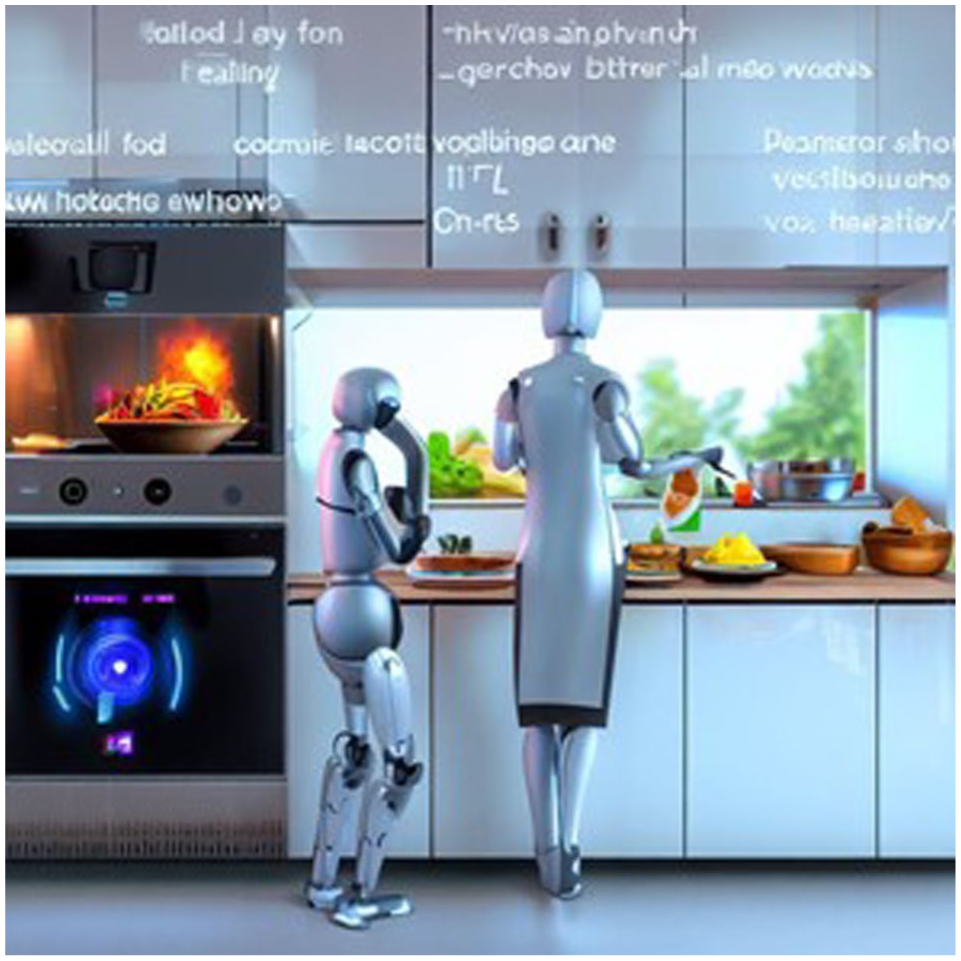
Figure 2 presents a scenario of two humanoid robots cooking and controlling the stove, which also sparked ideological debates. In parallel to gardening (Figure 3), participants viewed cooking as an activity that fosters engagement, creativity, and health. I often suggested that these robots would control the diet for them, yet they generally claimed they desire to control what they eat and how. This was also reflected in how some would like to keep tweaking their meals, emphasizing their improvisatory capacity: adding species, changing recipes, and so forth.
GenAI Images, Whose Prompts Was “Smart Kitchen With Smart Cooks That Make Healthy Meals for You, and Automated Stoves That Avoid Risks of Fire.”
GenAI Images, Whose Prompts Were “Automated Robot That Looks After the Garden of an Older Person While the Older Person Relaxes.”
Another central aspect in Figure 3 lies in the gender of the tall robotic cook, which follows female and patriarchal standards. As in other scenarios, we did not only assess the visual specifics of the image. We instead jumped into larger debates—gender in this instance. Among the couples I met, women often held the responsibility of cooking. Several male participants claimed that they would not like to replace their wives with a robotic cook. Franck, for instance, thought that his wife Laura loves cooking, especially at Christmas dinners when she prepares food with other female relatives. However, in a conversation I had with both, Laura admitted she would welcome robots to take over cooking tasks and finally have a break. After complaining about her home responsibilities, Franck questioned her comments so Laura retreated, aligning her response with his expectations:
I’m very happy to keep busy. I enjoy cooking, cleaning, and doing things. It’s great.
If you get sick of cooking you should say.
I am just making that comment. In a woman’s whole life, I don’t know how many meals I have cooked. Sometimes I’m like, “Oh, I don’t know what I’m going to cook for dinner tonight.” No, I like it.
The last example demonstrates that we did not anchor to the visual specifics of the image, neither was sight the only sense. The image rather acted as a methodological avenue to reimagine central aspects of our futures—in this case gender roles. This instance emerged as we had an unpredicted conversation with Franck’s wife. We got back to this image as I was video-touring their home and following the participants in their everyday circumstances. In sum, different qualitative methods and debates blended in a processual and improvisatory way.
The next two scenarios prompted participants to imagine datafied futures, where lives will presumably be reduced to metrics under the guise of care provision. The datafication of aging has been critically explored in socio-gerontechnology and material gerontology literature (Gallistl et al., 2024; Peine et al., 2021). This also includes recent orientations to investigate possible datafied aging futures (Jarke & Manchester, 2025). These strands of literature highlight that the AgeTech industry, including prevalent academic domains, is predominantly focused on the bodies of older adults, associating age with frailty, and developing an amalgam of surveillance technology. Aging demographics and older people’s bodies are often instrumentalized with commercial interests competing, for instance, for government funding and embracing patronizing approaches that neglect the agency of older adults and that their lives extend beyond medical needs (Gomez-Hernandez, 2024b, p. 9). I asked GenAI to mirror this industry tendency, generating scenarios of a toilet (Figure 4) and bedroom (Figure 5) where their bodies are monitored, equipped with data being displayed and alerted of any unanticipated behavior or event. In regards to methods, the incompleteness and relatedness of the images were central components that made us find alternative futures in relation to care.
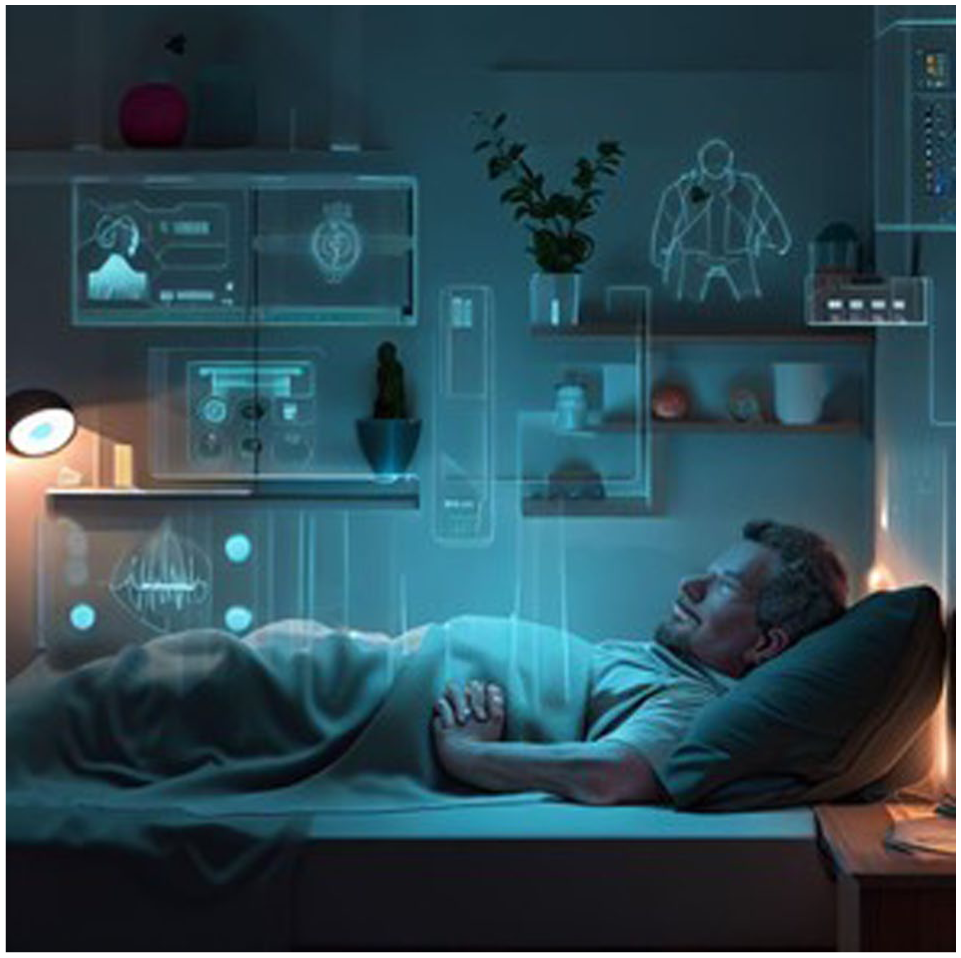
GenAI Images Whose Prompts Was “A Smart Bed That Monitors Sleep Quality and Vitals of an Older Person.”
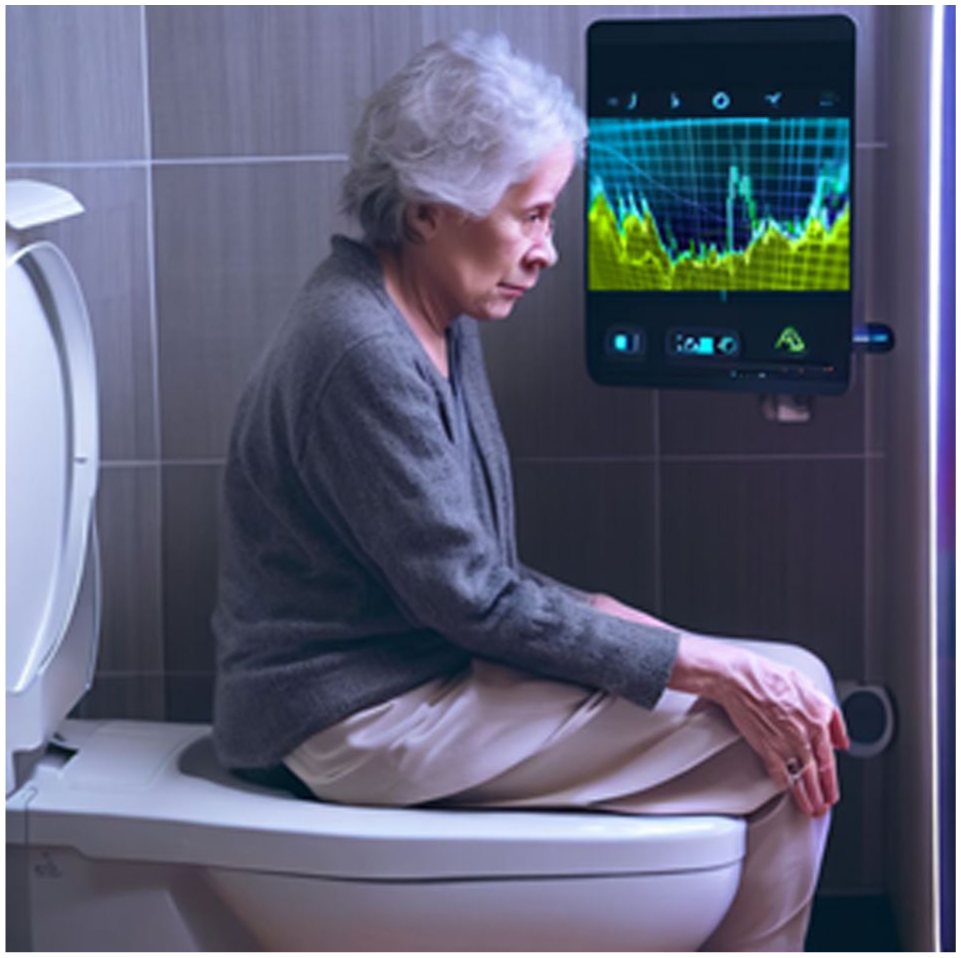
GenAI Images Whose Prompts Was “A Toilet That Checks Older Adults’ Biometric Data and Sends It to the Doctor.”
Participants were generally concerned about their health and appreciated some supervision as long as the technology shown in the GenAI images focused on their health. For instance, I met various participants with sleep deprivation who would be open to integrating that technology. Yet they critiqued that technology information cannot appear so “in your face,” being that invasive, and envisioned that so much inward focus would get them anxious. Also, they would not defer the whole responsibility of doctors’ care to this technology. They also claimed that we live in a time of data obsession, enslaving our lives to overcoming metrics as we sleep, walk, do sports, eat, etc. I also observed other instances where the divide between people and expert perspectives blurred, with older adults having expert knowledge on care. For instance, Yolande, living in a residential village, had previously worked with people with dementia and aged care. She claimed that people with dementia would get scared of this modern technology as they tend to live in the past and are not used to this. Yolande also unpacked an example of sensory futures. Yolande believed that the human warmth of touch would never be replaced by technology. So does Lucy, having a therapy background, who thinks that as she ages, she would never replace a human carer for assisted showers—which was strongly confronted by her husband valuing the role of care technology.
Other alternative futures—we did not discuss but I believe they complicate the GenAI images—are if this data-driven technology and holograms would work with windows open, breeze running in their homes, pets wandering around, or climate change events. This demonstrates that, as we pay attention to images in our qualitative research practice, we also need to attune to the environment, and senses.
To conclude these GenAI examples, I next provide a snapshot in Figure 6 of two participants—Phil and Susan—with whom I discussed GenAI images and other futures over several meetings and dinners. During one encounter, as I assisted Phil in setting up his wireless headphone, our conversation shifted back to the GenAI scenarios. Intrigued, I asked them to capture our discussion on video. This visual snapshot highlights the main methodological premise of this article: GenAI images do not exist in isolation, rather they are incomplete and relational devices useful to access futures. Their meanings and implications emerge relationally, being impossible to analyze them as single units.
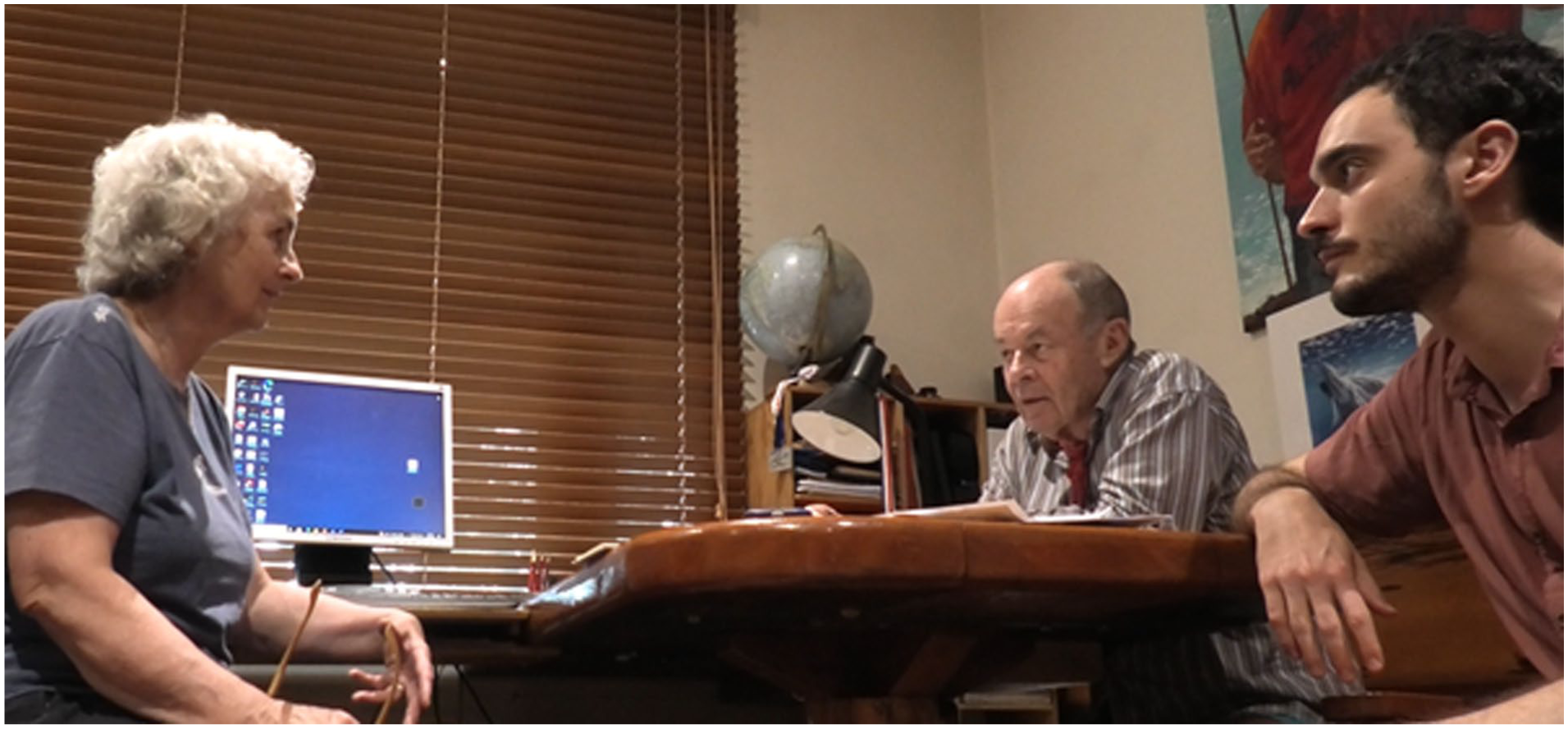
Discussing GenAI Futures With Phil and Susan in Their Home.
Images, Futures, and GenAI: Discussion
Visual anthropology scholars—theorizing images (Canals, 2022; Favero, 2023a; Ingold, 2010; Pieta, 2021), remind us that images should not only be analyzed as distant representations of the world, but how they participate “in” the world with us. GenAI images, as other visuals, are ambiguous devices that relate to places, people, concerns, temporalities, different qualitative methods, senses, prompts, information extracted from outside sources, and other innumerable factors. Images then inhabit that in-betweenness (Favero, 2023a), not being fixed containers of representation. Following Ingold’s (2010) critique to visual studies that primarily analyze what images represent, my focus extends beyond the textual prompts incorporated into GenAI, technical inner workings, biases and other inaccurate representations, and visual specifics—they are inherently part of any image. I have instead demonstrated the participatory role of images that shaped the relations built with the participants, evoking different and shifting meanings that were rewritten and unwritten by the participants who perceived and used them—as discussed by Favero (2021). The GenAI images used in my AgeTech fieldwork followed too narrow and incomplete versions of future older people’s lives. Such incompleteness allowed us to envision alternative futures working as avenues to “what could be” (Ingold, 2010, p. 18). I then find it vital to surface the temporalities and “when” of GenAI images: they orient us to futures.
The imagistic qualities (Stevenson, 2014) of the AgeTech images I used helped us surface the contradictions of GenAI and propose alternative futures. In particular, the imagistic qualities steered discussions on the participants’ reluctance about moving into aged care, visions in which they imagined themselves speaking to deceased relatives, debates about successful aging involving freedom or physical activities, gender roles and expectations in households, control over our bodies and health, and critiques to data obsession in AgeTech. The GenAI images then allowed us to move beyond the images, sparking spontaneous conversations and imaginations of futures, and blended with different qualitative methods such as video-tours. In this way, these imagistic qualities helped destabilize the dominant narratives often imbued in AgeTech, as Mattingly and Grøn (2022) discuss in their aging research.
My method also builds on and extends the photo-elicitation method (Harper, 1994, 2002) as my GenAI images helped evoke reflections, feelings, and emotions. By orienting my GenAI images to futures, I also extend the four conventional formats of photo-elicitations highlighted by Richard and Lahman (2015)—which are primarily oriented to pasts and presents. GenAI helped reinforce the “futures” orientation of conventional images, encouraging people to approach the images with curiosity, critique, and skepticism. These images are then anticipatory (Argudo-Portal & Canals, 2025; Pink et al., 2018), enabling people to imagine and craft possible futures.
Following future anthropologists, I engage with their move to immerse ethnographically, collaboratively and interventionally with people in the imagination of possible futures (Pink, 2022a; Pink & Salazar, 2017). In doing so, I also join calls to develop new qualitative methods that move beyond conventional interviews and/or ethnographic observation confined to the present and the past as Pink (2022b) suggests. The move creating qualitative futures methods provided the ground for me to innovate methodologically through the use of GenAI images in futures-oriented research. My contribution to visual and futures anthropology then foregrounds a new visual qualitative method that employs GenAI images as future-oriented devices to explore AgeTech futures, while advancing a visual anthropological theorization of images.
Conclusion
The previous methodological and theoretical discussion of GenAI images presents relevant opportunities for qualitative research practice, namely devoted to social research on futures and design. I demonstrate how the inaccuracy and incompleteness of GenAI images helped my participants and I access our imagined futures and present alternatives in the space of aging technology. This was accomplished by using a bidirectional, processual, improvisatory, and collaborative approach with participants. I therefore suggest that an innovative methodological agenda can be advanced through the use of GenAI in qualitative research.
Footnotes
Acknowledgements
I thank the voluntary, active, and unpaid participation of the people that took part in this research. They opened their home, despite me coming from a different country, age, and/or gender. I am also grateful to my colleague and main PhD advisor, Prof. Sarah Pink, for her multiple reviews and inspiration to innovate methodologically and theoretically in anthropology, as well as Dr. Minna Vigren and the anonymous reviewers for their revisions of this article. The research was undertaken within the PhD project of Miguel Gomez-Hernandez and was approved by Monash University’s Human Research Ethics Committee.

Ethical Approval and Informed Consent Statements
All participants have provided their written consent to participate and be represented in the publication.
Funding
The author disclosed receipt of the following financial support for the research, authorship, and/or publication of this article: The research discussed in this article was supported through a PhD Scholarship funded through the Faculty of Information Technology at Monash University in the Emerging Technologies Research Lab.
Declaration of Conflicting Interests
The author declared no potential conflicts of interest with respect to the research, authorship, and/or publication of this article.
Data availability statement
Not available publicly.