




Abstract
News visibility is central to political success, shaping how citizens evaluate political actors. While previous research emphasizes institutional power as the main driver of media coverage, less is known about how elite personalities influence visibility across countries. This study combines personality profiles (Big Five and Dark Core) and media appearances of 159 candidates in 85 national elections across 52 countries (2016–2022). Stable politicians receive greater visibility overall, whereas dark traits—particularly narcissism and Machiavellianism—increase coverage in media systems emphasizing personalization and negativity. These findings reveal how media logic amplifies manipulative and antagonistic leaders, often linked to democratic backsliding.
News media visibility is a crucial pathway for politicians to achieve their political goals. While social media has expanded politicians’ ability to communicate directly with citizens in recent years, traditional media coverage continues to play a vital role in building public familiarity and persuading potential voters (Bos et al., 2011; De Vreese et al., 2018; Esser et al., 2017; Hopmann et al., 2010; Noble & Carlson, 2024). Politicians view news outlets as an effective tool for informing the public about their initiatives and gathering citizen feedback (Soontjens, 2021; Walgrave & Soontjens, 2023), treating social media as a complementary channel rather than a replacement for traditional media coverage (Larsson & Skogerbø, 2018).
While studies often emphasize political power as the key determinant of politicians’ media visibility (Hopmann et al., 2012; Vos, 2014), such explanations offer only a partial picture of today’s political landscape for two reasons. First, the growing prominence of political outsiders shows that substantial media attention is not limited to those in established positions of power (Aalberg et al., 2017; Bos et al., 2011; De Vreese et al., 2018). Second, research indicates that citizens increasingly rely on politicians’ personal characteristics in their political decision-making (Caprara et al., 2002; Caprara & Zimbardo, 2004; Nai & Maier, 2024). Both trends might be linked to the personality of politicians: extreme, antagonistic, and aggressive personality traits can attract journalistic attention because such characteristics carry news value. This heightened exposure, in turn, makes these personalities more salient to the public and increases the likelihood that citizens take them into account in their political decisions.
In the current study, we move beyond existing power-based explanations to examine how politicians’ personality traits shape their media visibility. We draw on the concept of media logic—how journalists organize, present, and give meaning to events and people (Altheide & Snow, 1979; Strömbäck, 2008). Within this logic, journalists often adhere to news values that guide what they deem relevant to cover, such as an emphasis on drama and conflict, unexpectedness, and persona-driven stories (De Vreese et al., 2017; Galtung & Ruge, 1965; Harcup & O’Neill, 2001). We argue that these news values align naturally with certain personality traits, making some politicians inherently more newsworthy than others.
We examine the relationship between personality and media visibility using a unique dataset that combines personality profiles and media appearances of 159 political candidates who competed in 85 national election campaigns across 52 countries between 2016 and 2022. We evaluated politicians’ personalities—that is, stable, inherent characteristics that shape how political actors think and act across different domains—using three meta-traits. The first, stability, captures agreeableness, conscientiousness, and emotional stability. The second, plasticity, reflects extraversion and openness to experience. Both traits originate from the Big Five framework commonly used in personality psychology. Finally, the Dark Core—narcissism, psychopathy, and Machiavellianism—represents socially aversive aspects of personality.
Our findings show that, contrary to expectations, more stable politicians—particularly those high in conscientiousness—tend to receive greater media visibility overall. In addition, our cross-country analysis sheds light on how media systems’ adherence to media logic moderates the relationship between elite personality and media visibility. We find that in media systems that strongly emphasize news values of negativity and personalization, politicians scoring high on dark traits, especially narcissism and Machiavellianism, attract more media attention.
This study offers several contributions. First, it challenges traditional explanations of politicians’ media visibility that focus mainly on institutional power. We show that politicians’ personalities also shape their media presence, extending prior evidence (Amsalem et al., 2020; Nai & Maier, 2024) to a broader cross-national setting using objective visibility measures. Second, we extend research on elite personality by showing that media system characteristics moderate the link between personality and visibility: dark traits attract more coverage primarily in systems that emphasize negativity and personalization. This highlights how structural media conditions may intensify the prominence of politicians with darker personalities. Finally, we advance research on democratic backsliding by demonstrating how traditional media may systematically amplify political actors who are manipulative and lacking moral restraint. While journalists may not intend to promote political hostility, their news production logic often favors confrontational rhetoric and aggressive behavior, inadvertently normalizing such conduct.
Media Attention and Political Success
While political actors today can communicate with the public through multiple channels, including social media, visibility in traditional news media remains crucial for their electoral success (Bos et al., 2011; Geiß & Schäfer, 2017). First, news coverage significantly enhances politicians’ name recognition and policy reputation, with effects lasting both in the short and long-term (Van Remoortere et al., 2023; Walgrave et al., 2009). The mere presence in the news often matters more than the tone of coverage (Esser et al., 2017; Hopmann et al., 2010; Noble & Carlson, 2024). Second, media visibility strengthens politicians’ influence among their peers, helping them draw attention to their policy initiatives (Sellers, 2000). Third, although political communication increasingly takes place on social media and other digital platforms, especially among younger citizens, legacy media remain a central source of political information for the public (Amsalem & Zoizner, 2023; Newman et al., 2025). Maintaining visibility in traditional news outlets, therefore, remains important for politicians seeking recognition and influence in the broader public.
Research on politicians’ media visibility often focuses on political power (e.g., incumbency, ministerial positions, or party leadership) as a key explanation for increased media attention (Hopmann et al., 2012; Van Remoortere et al., 2023; Vos, 2014; Wolfsfeld, 2022). However, these power-based explanations might not fully capture today’s political and media landscape, for two reasons. First, recent years have seen the rise of politicians who gained extensive media visibility despite their initial distance from traditional leadership positions. These charismatic leaders built their appeal by positioning themselves as outsiders to the political establishment, challenging conventional power-related explanations of visibility. Their success in gaining disproportionate news attention (Aalberg et al., 2017; Bos et al., 2011; De Vreese et al., 2018) suggests that certain inherent characteristics, particularly personality traits, might make some politicians more newsworthy regardless of their institutional position (see also Amsalem et al., 2020; Nai & Maier, 2024).
Second, understanding media visibility through the lens of personality is particularly important in today’s information-rich environment, where citizens increasingly rely on politicians’ personal characteristics as cognitive shortcuts for political decisions (Caprara et al., 2002; Caprara & Zimbardo, 2004; Nai & Maier, 2024). Media attention determines which personalities become most salient to the public, shaping the cues citizens use when forming political judgments. In this context, repeated exposure to confrontational and aggressive personalities may gradually normalize such styles of leadership within the public sphere.
While previous studies have examined the impact of other individual-level characteristics—for example, gender, communication skills, or physical attractiveness—on media visibility (Sheafer, 2001; Thesen & Yildirim, 2023; Tsfati et al., 2010; Van Der Pas & Aaldering, 2020; Waismel-Manor & Tsfati, 2011), the literature often overlooks elites’ personality in shaping the level of attention they get from journalists (but see Amsalem et al., 2020; Nai & Maier, 2024). We argue that such actor-level characteristics can translate into media visibility, in part, through journalistic routines and news selection criteria. Accordingly, we discuss below how media attention is allocated according to media logic and news values, which constitute core features of political news coverage.
Media Logic and News Values
Media logic refers to the formal and informal rules, routines, and guiding principles that structure how journalists think, act, and make decisions within the media sphere (Altheide & Snow, 1979; Strömbäck, 2008). It reflects shared professional norms and standards regarding what constitutes newsworthiness and how political reality should be organized and presented to audiences (Strömbäck & Esser, 2014). It indicates how journalists prioritize content that attracts public interest and entertainment over traditional informative roles (Brants & Van Praag, 2017). Media logic thus provides a framework for understanding why certain political events and actors receive great attention while others remain marginal.
A central component of media logic is the use of news values, that is, criteria that guide journalistic judgments about what is considered newsworthy (De Vreese et al., 2017; Galtung & Ruge, 1965; Harcup & O’Neill, 2001). Elites’ political power is deeply embedded in these criteria, as incumbents, party leaders, and officeholders are more likely to attract media attention because they are perceived as consequential actors (Hopmann et al., 2012; Wolfsfeld, 2022). At the same time, news values extend beyond formal political power. Scholars also highlight values such as novelty and unexpectedness, which capture journalists’ preference for developments that deviate from routine patterns.
Specifically, research on political news coverage has identified several additional dimensions that are particularly salient in contemporary journalism. First, personalization refers to a shift in focus from parties and institutions toward individual political actors, their personal characteristics, and leadership styles (Balmas et al., 2014; Van Aelst et al., 2012). Second, negativity captures journalists’ tendency to prioritize conflict, criticism, and adverse developments, which constitute powerful storytelling devices and are known to attract audience attention (Lengauer et al., 2012; Soroka, 2014). Third, strategy framing reflects an emphasis on political actors’ campaign tactics and strategic considerations rather than substantive policy issues (Aalberg et al., 2012; Cappella & Jamieson, 1997; Zoizner, 2021). Increasing competition for audience attention has encouraged journalists to adapt their practices in ways that further reinforce these news values (De Vreese et al., 2017; Strömbäck & Esser, 2014).
These news selection criteria imply that media visibility is shaped not only by politicians’ institutional positions, but also by how well they fit journalistic expectations of newsworthiness within a given media context. News values that emphasize personalization, negativity, and strategic political competition may create structural affinities between media logic and certain types of political actors. As we argue below, certain personality traits of political elites can therefore translate into systematic visibility advantages under these news values.
Personality Traits as Drivers of Media Visibility
Personality traits have increasingly been recognized as important determinants of elites’ attitudes and behavior (Mondak, 2010; Nai & Maier, 2024). Research typically employs the Big Five model (Gerber et al., 2011; John et al., 2008), measuring agreeableness, extraversion, conscientiousness, openness to experiences, and emotional stability—traits that yield significant outcomes. For example, openness correlates with liberal positions and with sponsoring more bills, while conscientiousness often predicts conservative stances (Amsalem & Sheffer, 2023; Ramey et al., 2017; Rice et al., 2021). Other studies have expanded beyond the Big Five to examine the Dark Core, a set of traits comprising narcissism, psychopathy, and Machiavellianism (Moshagen et al., 2018; Rauthmann, 2012). These darker yet non-pathological personality traits have been associated with stronger political ambition (Blais & Pruysers, 2017; Peterson & Palmer, 2022), engagement in questionable behaviors (Watts et al., 2013), and broader societal consequences such as heightened affective polarization (Nai et al., 2025).
Despite the rising scholarly interest in elite personality, its impact on politicians’ media visibility remains understudied—a crucial gap given the importance of visibility for political success. We address this gap by focusing on the role of broader meta-traits that capture overarching patterns across personality dimensions, rather than on individual traits. Prior research shows that both the Big Five and the Dark Core can be organized into a smaller set of higher-order constructs (DeYoung, 2006; Paulhus & Williams, 2002). Focusing on these meta-traits provides a more parsimonious and theoretically coherent approach, particularly suitable for large-scale comparative research. In the following sections, we examine three such meta-traits—stability, plasticity, and the Dark Core—and their effects on media visibility.
Drawing on prior research, we distinguish two pathways linking these meta-traits to media visibility: journalists’ selection criteria and politicians’ media-seeking behavior (Amsalem et al., 2020). The first explanation focuses on media logic, specifically on news values, as a crucial aspect of what gets into the news. Journalistic news values prioritize personalization, conflict, negativity, unexpectedness, and drama (De Vreese et al., 2017; Galtung & Ruge, 1965; Harcup & O’Neill, 2001)—thus making certain personality types of elites more newsworthy regardless of their political power. Second, since news production involves a reciprocal relationship between politicians and journalists (Wolfsfeld, 2022), we argue that politicians with certain personality traits may be more motivated to pursue media attention, investing greater effort in media relations (Cohen et al., 2008; Sheafer, 2001) to achieve both short- and long-term political goals (Geiß & Schäfer, 2017; Van Remoortere et al., 2023; Walgrave et al., 2009).
Stability
The first meta-trait, stability, is characterized by high levels of agreeableness, conscientiousness, and emotional stability (DeYoung, 2006; Silvia et al., 2009). Agreeable individuals are warm and cooperative, striving for harmonious relationships—in contrast to those low in agreeableness, who tend to be competitive and confrontational. Those high in conscientiousness are self-disciplined and cautious, carefully weighing outcomes, though this trait can also manifest in rigidity, perfectionism, and resistance to change (Gerber et al., 2011; Mondak, 2010). Emotionally stable individuals are calm and even-tempered, managing impulses effectively, while those lower in emotional stability are more prone to distress (Gerber et al., 2012).
We expect politicians scoring lower on stability to exhibit behaviors that attract media attention. For example, those low in agreeableness frequently engage in conflicts with rivals and use contentious rhetoric, often challenging party lines in favor of personalized politics (Amsalem et al., 2020; Bøggild et al., 2021; Nai & Maier, 2024). Politicians with lower conscientiousness employ simpler, more accessible language, which is in line with the journalistic tendency toward simplicity (Amsalem et al., 2017; Nai & Maier, 2024). In contrast, highly conscientious actors are characterized by rigidity and slower reactions, leading them to potentially miss fast-paced media opportunities (Nettle, 2006; Wolfsfeld & Sheafer, 2006). From the politicians’ perspective, those high in agreeableness and conscientiousness are more likely to focus on legislative cooperation and policy work rather than media-driven conflicts, reducing their motivation to seek coverage. Empirical studies indicate that an emphasis on policymaking does not increase media visibility and may even reduce it (Ramey et al., 2017; Tsfati et al., 2010; Vos, 2014).
While we do not have clear theoretical expectations regarding emotional stability, politicians low on this trait may avoid seeking coverage due to difficulties with unexpected situations (Amsalem et al., 2020; Mondak, 2010). Yet their unpredictable reactions under pressure may also increase their newsworthiness. Nevertheless, consistent with our expectations for other stability components, we expect politicians lower in the stability meta-trait to receive more media coverage.
Plasticity
Extraversion and openness to experience are conceptually and empirically linked in the meta-trait plasticity (DeYoung, 2006; Silvia et al., 2009), with individuals scoring high on these traits exhibiting higher levels of plasticity. Extraverted individuals are socially oriented, energetic, and expressive, thriving in social settings—in contrast to introverts, who are more reserved and prefer less social stimulation (Gerber et al., 2011; Mondak, 2010). Those high in openness are curious and imaginative, readily engaging with novel experiences and unconventional ideas—unlike those low in openness, who prefer familiar, established patterns (Kim et al., 2013).
From a journalistic perspective, politicians high on plasticity can draw media attention by exhibiting behaviors that match key news values. Those high in extraversion and openness engage in personalized politics and frequently clash with their party’s positions (Bøggild et al., 2021). They also readily engage in confrontational politics, employing negative rhetoric and personal attacks (Nai & Maier, 2024). Moreover, extraverted politicians particularly appeal to journalists by performing well in front of audiences and providing energetic public performances, while also engaging in high-profile legislation that attracts media attention (Amsalem et al., 2020; Gallagher & Blackstone, 2015). Similarly, politicians high in openness draw journalistic attention through their original initiatives (Goldberg, 1992) and willingness to engage with, and even confront, those who disagree with them (Kim et al., 2013). From the politicians’ perspective, extraverted actors actively seek broad exposure and interaction with diverse groups (Dietrich et al., 2012), making media coverage an ideal platform. Those high in openness are expected to employ more creative strategies to attract journalists’ attention, potentially increasing their success in gaining coverage.
Dark Core
While research often relies on the Big Five model, recent studies highlight its limitations in capturing aggressive and antagonistic personality traits (Moshagen et al., 2018; Visser et al., 2017). The Dark Core framework addresses this gap by focusing on three interrelated traits—narcissism, psychopathy, and Machiavellianism—which together form the darker side of personality (Paulhus & Williams, 2002). These traits have been shown to shape elites’ attitudes and behavior (Nai & Maier, 2024; Rauthmann, 2012).
Narcissism is characterized by a strong sense of self-importance and a constant need for attention and admiration, often manifesting in overconfidence and aggressive reactions when one’s self-esteem is challenged (Campbell et al., 2004; Rauthmann, 2012). Psychopathy involves emotional coldness and antisocial behavior, typically expressed through antagonistic and confrontational competitive styles (Jonason, 2014; Lynam et al., 2011; Rauthmann, 2012). Machiavellianism reflects a strategic, manipulative approach to achieving power, with individuals high in this trait willing to engage in deceptive or aggressive behaviors to serve their interests (Pilch & Turska, 2015; Wisse & Sleebos, 2016).
News values that guide journalists’ selection decisions—such as negativity, conflict, controversies, and unexpectedness—align naturally with dark personality traits. For example, psychopathy is associated with verbal aggression (Goodboy & Martin, 2015; Plouffe et al., 2017), narcissism drives high levels of competitiveness (Watson et al., 1998), and narcissism and Machiavellianism lead to hostile and aggressive behaviors (Penney & Spector, 2002; Plouffe et al., 2017). Recent studies show that politicians scoring high on the Dark Core not only exhibit heightened negative and uncivil rhetoric in their campaigns but also tend to use more popular and informal language (Nai & Maier, 2024), behaviors that are known to attract greater news attention (Amsalem et al., 2017; Poljak, 2024). Machiavellianism also leads to strategic manipulations that attract journalists who are increasingly focused on exposing hidden motivations and campaign tactics (Aalberg et al., 2012).
Beyond attracting journalists’ attention, dark personality traits are also expected to shape politicians’ own motivations to seek media coverage. Narcissistic politicians are expected to seek news coverage to satisfy their craving for admiration and to signal their importance to both the public and their peers. Those high in psychopathy and Machiavellianism are also expected to view media visibility as a tool to project power and control narratives to their advantage. Psychopathic politicians, being naturally impulsive and sensation-seeking (Rauthmann, 2012), may also deliberately provoke controversy to maximize journalistic attention. Moreover, because narcissistic and psychopathic politicians are psychologically resilient to criticism and negative coverage, they are well-positioned to benefit from media attention. For such actors, any publicity can be advantageous for maintaining or expanding political power—a pattern supported by studies showing that visibility enhances political influence regardless of tone (Esser et al., 2017; Hopmann et al., 2010; Noble & Carlson, 2024).
The Moderating Role of Media Systems’ Adherence to Media Logic
Comparative research has demonstrated how macro-level factors moderate the relationship between politicians’ characteristics and their media visibility. For example, powerful elites receive more coverage in centralized political systems and competitive media markets (Vos & Van Aelst, 2018). Others find that incumbents enjoy more coverage in regions with greater geographic overlap between media markets and electoral districts (Huber & Tucker, 2024; Snyder & Strömberg, 2010).
While these studies provide important comparative insights, the relationship between politicians’ personality and media visibility across different contexts remains largely unexplored. Amsalem et al. (2020) offered initial evidence by examining Big Five personality traits and media visibility in Belgium, Canada, and Israel, finding broadly similar patterns—particularly a relationship between extraversion and openness and increased visibility. However, their focus on developed parliamentary democracies with relatively similar journalistic cultures (Hanitzsch et al., 2019) leaves open questions about how this relationship varies in more diverse contexts.
We adopt a comparative approach to examine the personality-visibility relationship across multiple countries, focusing on media systems’ adherence to media logic as our key moderating factor. The emphasis on media logic represents a fundamental characteristic that differentiates media systems (Hallin & Mancini, 2004). We focus on media systems’ adherence to media logic, rather than its underlying drivers like commercialism (Strömbäck & Esser, 2014) or media competition (Dunaway, 2008; Vos & Van Aelst, 2018), as our key moderator. This direct focus on journalistic practices allows us to examine how news values shape personality-visibility relationships across diverse media systems, regardless of what drives these practices in different contexts.
We expect that in media systems that strongly adhere to media logic and news values—particularly personalization, negativity, and the emphasis of political strategies—journalists will prioritize certain elite personalities. For instance, media systems that adhere more to media logic will favor politicians low on stability and high on plasticity since, as discussed above, these actors present behaviors that are in line with news values. Similarly, the behavior of dark politicians—which encompasses campaign negativity, uncivil expressions, and the use of fear appeals—is also highly newsworthy in media systems that strongly adhere to media logic. Moreover, in such media systems, politicians with personality traits that are in line with media logic may be especially motivated to seek media attention, knowing that their natural tendencies toward negativity and conflicts will be rewarded with coverage.
Method
We adopted a comparative approach to examine the relationship between politicians’ personality traits and their media visibility. Our dataset combines information on the personality profiles of more than 300 top political candidates worldwide—covering both the Big Five traits and the Dark Core (Nai & Maier, 2024)—with novel data on their appearances in national newspapers. After accounting for all predictors and controls, the analyses include 159 candidates who competed in 85 national election campaigns across 52 countries between June 2016 and May 2022. The country sample spans a wide range of regimes, from liberal and electoral democracies to electoral autocracies (Coppedge et al., 2024). The Supplemental Information (SI) includes full details about the countries and elections (Table A1), politicians (Table A2), and newspapers (Table A3) in our sample.
Dependent Variable: Politicians’ Media Visibility
We measured politicians’ media visibility using LexisNexis searches of newspaper coverage. For each candidate in each national election in which they competed within a given country, a human coder searched for articles containing the candidate’s full name in both the native language and English. The coding followed a pre-specified search protocol, which restricted coverage to nationally distributed newspapers, defined the publication window as articles published during the 1-month period prior to Election Day, and removed duplicate articles before counting appearances.
Following established practices in the media visibility literature (Amsalem et al., 2020; Hopmann et al., 2012; Van Remoortere et al., 2023), multiple mentions of a given candidate within the same article were treated as a single appearance. By capturing the number of distinct news articles in which candidates appear, our measure reflects how often political actors are selected by news organizations as newsworthy and deserving of public attention. Rather than measuring the intensity of coverage within individual articles—which may depend on journalists’ writing style, narrative structure, or article length—our media visibility measure captures journalistic decisions that signal political actors’ public relevance and legitimacy across different domains and articles. As such, variation in media visibility corresponds to real-world differences in the opportunities political actors have to shape public perceptions, influence political discourse, and gain recognition among voters.
To assess reliability, a second human coder independently replicated the same search procedure for 10% of the dataset, yielding near-perfect intercoder reliability (Krippendorff’s α = .995). In total, our analysis covered 262 newspapers, with an average of 5 newspapers per country (Standard deviation [SD] = 3.6; Min = 1, Max = 10). 1
Because the number of newspapers varied across countries and election periods, we could not directly compare raw counts of media appearances between contexts (see also Amsalem et al., 2020). For example, two candidates may each receive 50 article mentions, yet one competes in a country with ten nationally distributed newspapers and the other in a country with only five. In this case, the candidate covered by fewer newspapers is relatively more visible, having achieved the same level of coverage with fewer outlets.
Therefore, to enable cross-country comparison that takes into account the varying number of newspapers per country, we standardized the media visibility measure by dividing each candidate’s total number of newspaper appearances by the number of newspapers coded for that country’s election campaign. The resulting variable was highly skewed: 99% of candidates ranged between 0 and 360 appearances, while the top 1% ranged between 361 and more than 770 (M = 47.0, SD = 83.9). After removing the top 1% and rescaling the variable to a 0 to 100 range, the adjusted measure had a mean of 24.5 (SD = 24.4). This measure correlated positively and relatively strongly with an expert-based assessment of candidate media visibility from the NEGex dataset (r = 0.42, p < .001), which is described below. Descriptive statistics for media visibility and all independent and control variables are reported in SI Section B.
Independent Variable: Politicians’ Personality Traits
To measure politicians’ personality traits, we used version 3.0 of the NEGex dataset (Nai et al., 2025; Nai & Maier, 2024), which includes expert ratings collected in the aftermath of most national elections that have taken place across the world between June 2016 and May 2022 (see Table A1 in the SI for details about all elections covered). After every election covered, a sample of experts was invited to rate the personality of the main candidates under investigation. Experts are scholars identified through their publications or personal or institutional webpages as being affiliated with a university or academic research center and possessing clear expertise in electoral politics or political communication in the country under investigation. Within the NEGex project, such expertise is determined based on their scholarly publications on the topic and descriptions provided on their personal or institutional webpages. Experts (and the institutions with which they are affiliated) do not have to be located in the country under investigation, although they often are (in about 80% of the cases; see below). The determining criterion is demonstrated expertise regarding the country under study, regardless of the expert’s country of affiliation.
An average of 98 experts were invited via email per election for all elections investigated in version 3.0 of the NEGex dataset (Min = 30, Max = 708, SD = 76.7). Out of those invitations, an average of 6.2 emails went undelivered (SD = 11.4), and an average of 9.8 experts voluntarily opted out of answering the survey (SD = 7.0). Average response rate across all elections in the 3.0 version of NEGex is 15% (SD = 11.8%). Among the experts who responded to the survey, 79.1% are citizens of the country they were asked to evaluate, 70.5% are men, and 88.3% hold a PhD. The average expert is born around 1970, is ideologically oriented toward the center-left (M = 4.4, SD = 1.8; on a 1–10 self-assessed scale for left–right), and is very familiar with elections in the country they were asked to rate (M = 8.1, SD = 1.7, on a 1–10 self-assessed scale of familiarity).
Experts were asked to rate the personality of candidates using two standardized survey instruments: the Big Five (Ten Items Personality Inventory; Gosling et al., 2003) and the Dark Core (a simplified version of the “Dirty Dozen,” D12; Jonason & Webster, 2010). The resulting measures of the eight personality traits range from 0 (very low) to 4 (very high). Only candidates with at least three expert ratings on both the Big Five and the Dark Core were included in the analyses.
For our main analyses, we focus on three meta-traits: the “Huge Two” (Silvia et al., 2009)—stability (average of agreeableness, conscientiousness, and emotional stability; M = 2.2, SD = 0.7, α = .82), plasticity (average of extraversion and openness; M = 2.1, SD = 0.6, α = .60)—and the Dark Core (average of psychopathy, narcissism, and Machiavellianism; M = 2.5, SD = 0.6, α = .87). Descriptive statistics for the eight individual traits are reported in SI Section B.
Media System Moderators: Adherence to Media Logic
To assess media systems’ adherence to media logic, we relied on expert evaluations from the NEGex dataset of the extent to which national news outlets in each country emphasize three key aspects of political news coverage (De Vreese et al., 2017; Esser et al., 2017). We first measured media systems’ adherence to personalization using the following item: “Consider all national news media in [COUNTRY] (that is, newspapers, television, radio, and online-only media). How much attention do the news media as a whole provide to individual candidates, their characters, and motivations?” (0 = No attention; 4 = A great deal of attention).
Second, to measure media systems’ adherence to negativity, we relied on the same introductory question, followed by the item: “Attacks and negative campaigning between parties and candidates.” Third, we measured adherence to strategy framing as the average of two items: media attention to “campaigning by parties and candidates in general” and to “policy differences between competing parties and candidates” (reverse-coded; α = .49). All items were again measured on a scale from 0 (No attention) to 4 (A great deal of attention). Across countries, scores were relatively high for negativity (M = 3.0, SD = 0.5) and personalization (M = 2.9, SD = 0.4), followed by strategy framing (M = 2.6, SD = 0.2).
Control Variables
Our analyses include a series of covariates at both the candidate and country level. At the candidate level, we control for gender—a known driver of media coverage (Van Der Pas & Aaldering, 2020)—and year of birth (the average candidate was born in 1963). We also account for incumbency, given that incumbents typically possess greater political power, which translates into increased media visibility (Hopmann et al., 2012), as well as for a proxy for candidate position in the race (whether the candidate won the election or not), ideology on a 1 to 10 left–right scale (M = 4.5, SD = 1.7), and political extremism, measured as how far each candidate’s ideology is from the center of the left–right scale (M = 2.7, SD = 1.6). In addition, we control for candidates’ use of “dark” campaign strategies, an expert-assessed measure based on the average of candidates’ use of a negative tone, incivility, and fear appeals (Nai, 2020), which has been shown to increase media attention (Maier & Nai, 2020).
At the country level, the models control for the electoral system (proportional representation [PR] vs. majoritarian), the type of election (presidential vs. legislative), and the country’s Democracy Index score, as reported by the Economist Intelligence Unit 2 for the year following the election. We also controlled for the effective number of candidates (M = 4.3, SD = 1.6) as a proxy for electoral competitiveness—since more competitive races typically attract greater media coverage of both incumbents and challengers (Huber & Tucker, 2024)—and for geographical region (Western vs. non-Western countries). 3
Results
We present results from a series of hierarchical linear models in which candidates are nested within elections. In these models, candidates’ media visibility is regressed on their personality profiles, along with controls at both the candidate and country level. Table 1 and Figure 1 report the results for main effects only, whereas Table 2 and Figures 2 to 4 present the results when modeling interactions between personality traits and media system factors. All variables are standardized (M = 0, SD = 1), allowing direct comparison of effect sizes across predictors.
Main Effects of Candidate- and Country-Level Characteristics on Media Visibility.
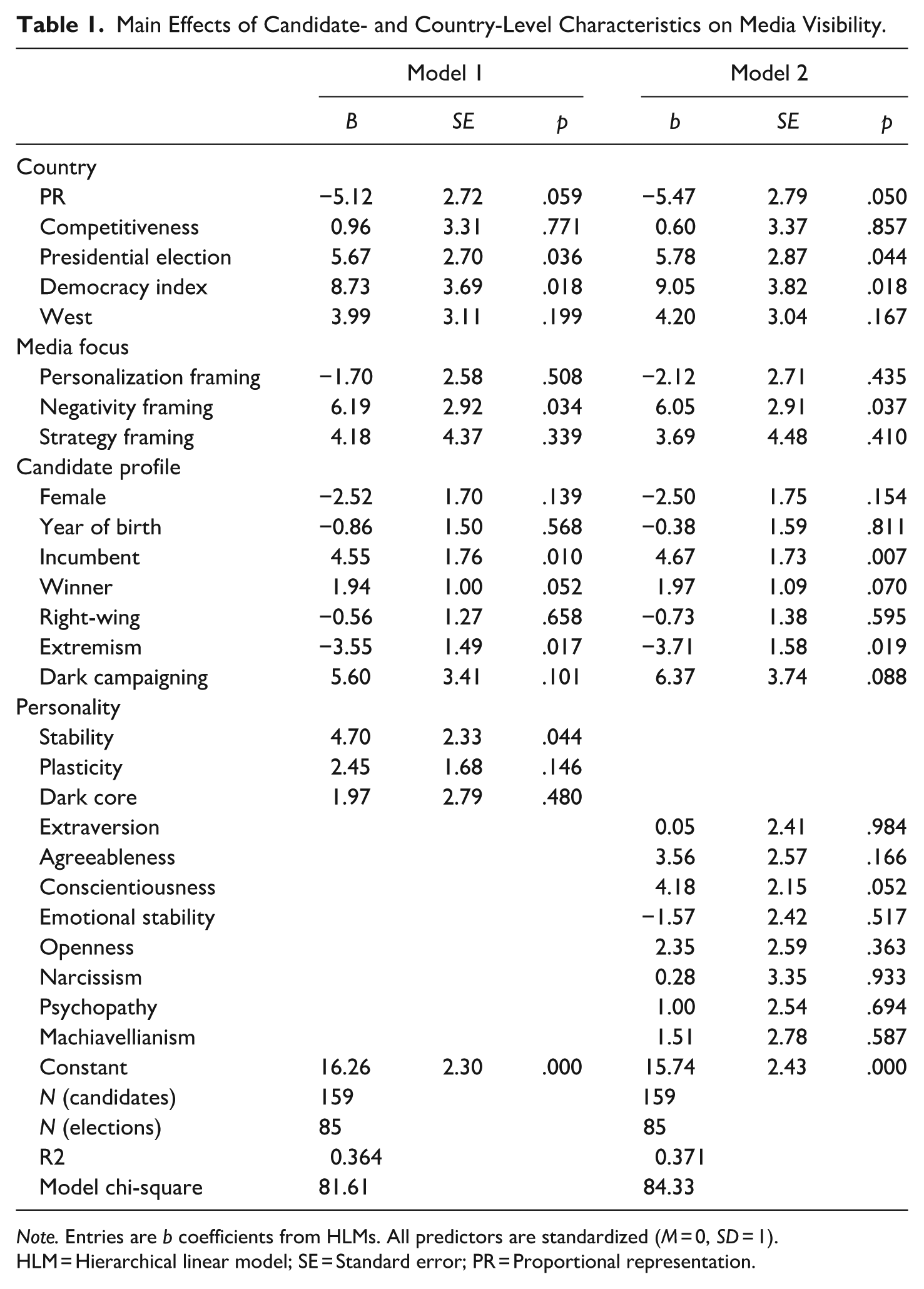
Note. Entries are b coefficients from HLMs. All predictors are standardized (M = 0, SD = 1). HLM = Hierarchical linear model; SE = Standard error; PR = Proportional representation.
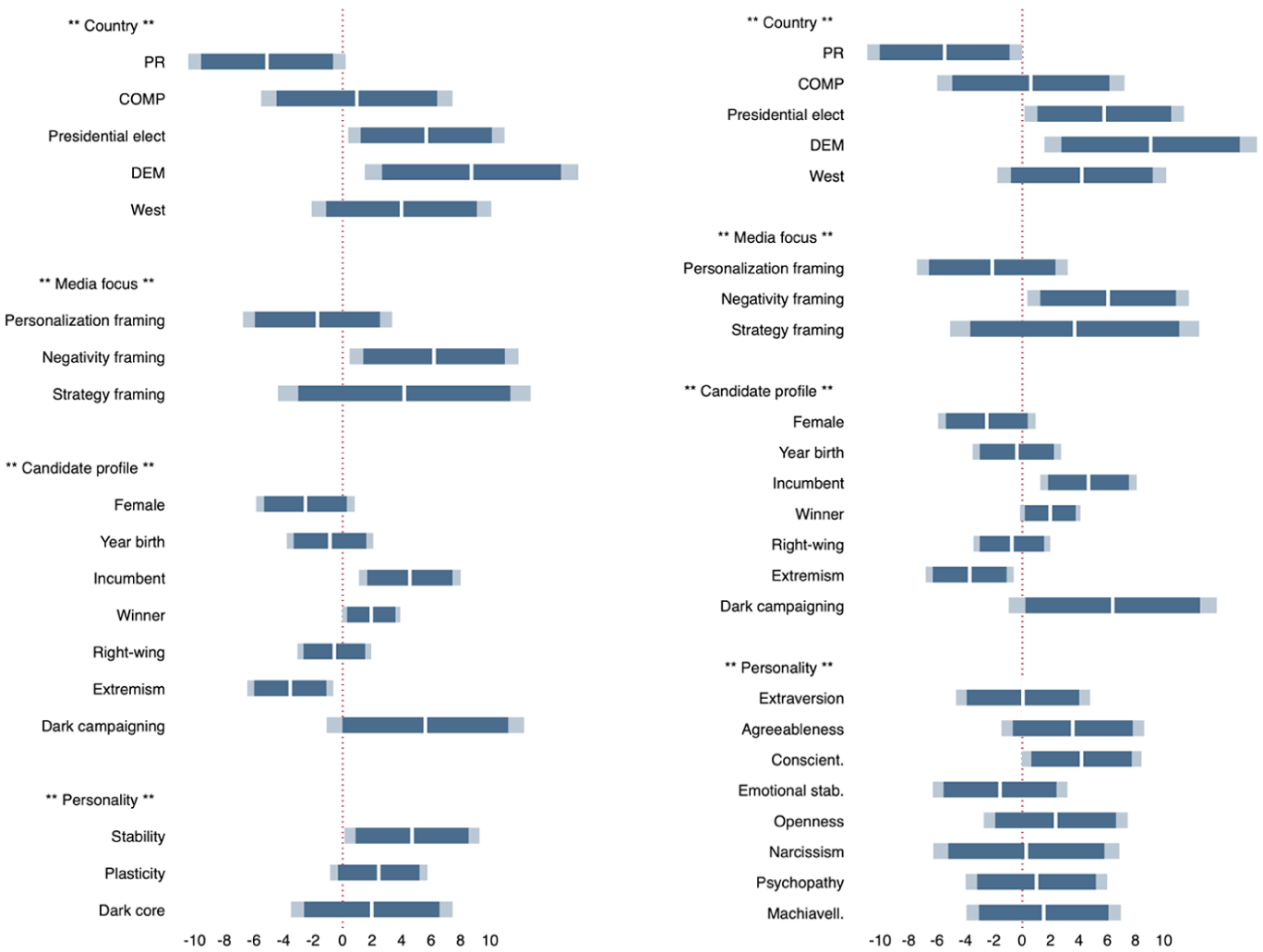
Effects of candidate- and country-level characteristics on media visibility, displayed separately for meta-traits (left panel) and individual traits (right panel).
Interactions Between Candidate Personality Traits and Media Systems’ Adherence to News Values in Predicting Media Visibility.
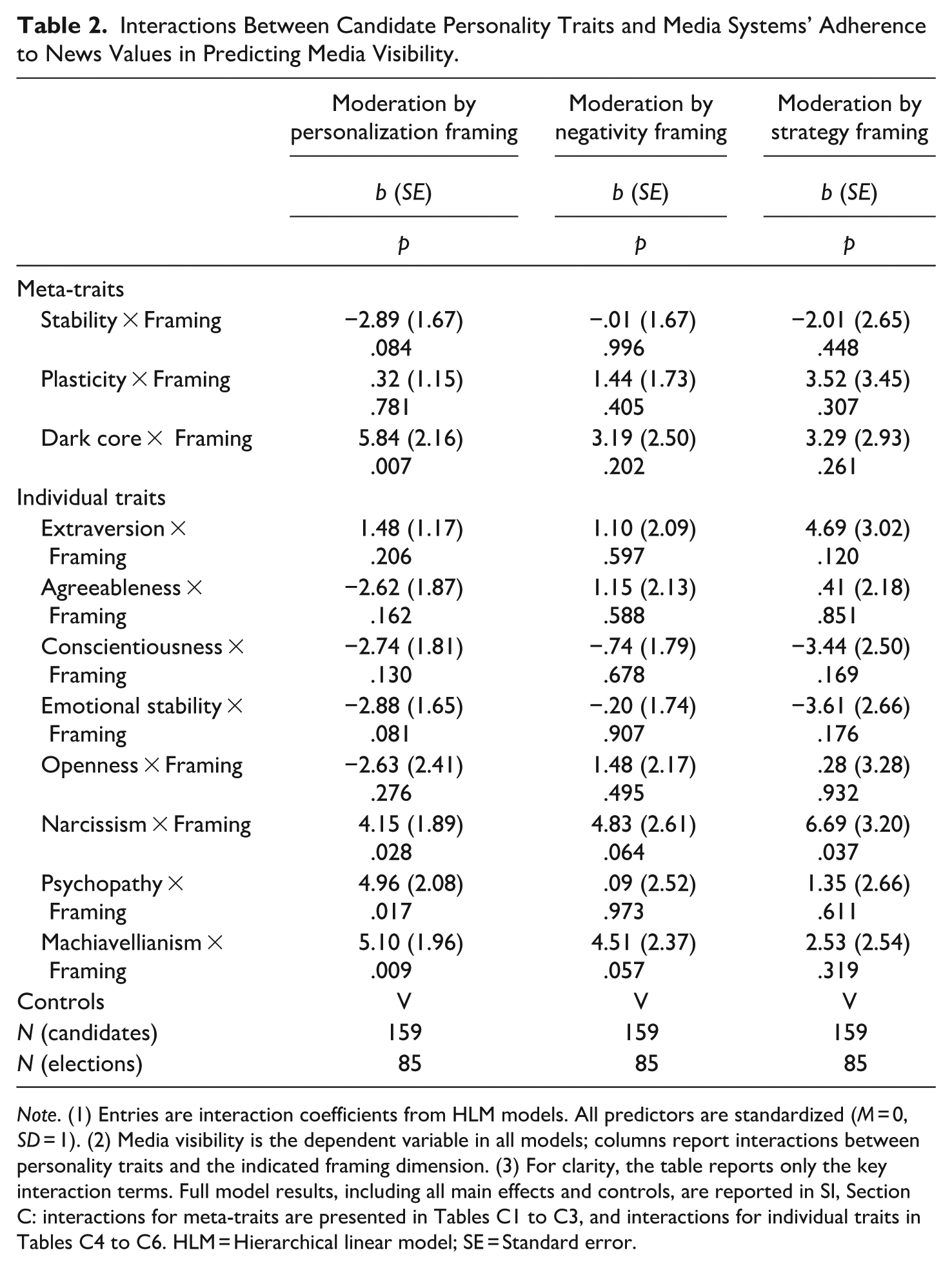
Note. (1) Entries are interaction coefficients from HLM models. All predictors are standardized (M = 0, SD = 1). (2) Media visibility is the dependent variable in all models; columns report interactions between personality traits and the indicated framing dimension. (3) For clarity, the table reports only the key interaction terms. Full model results, including all main effects and controls, are reported in SI, Section C: interactions for meta-traits are presented in Tables C1 to C3, and interactions for individual traits in Tables C4 to C6. HLM = Hierarchical linear model; SE = Standard error.
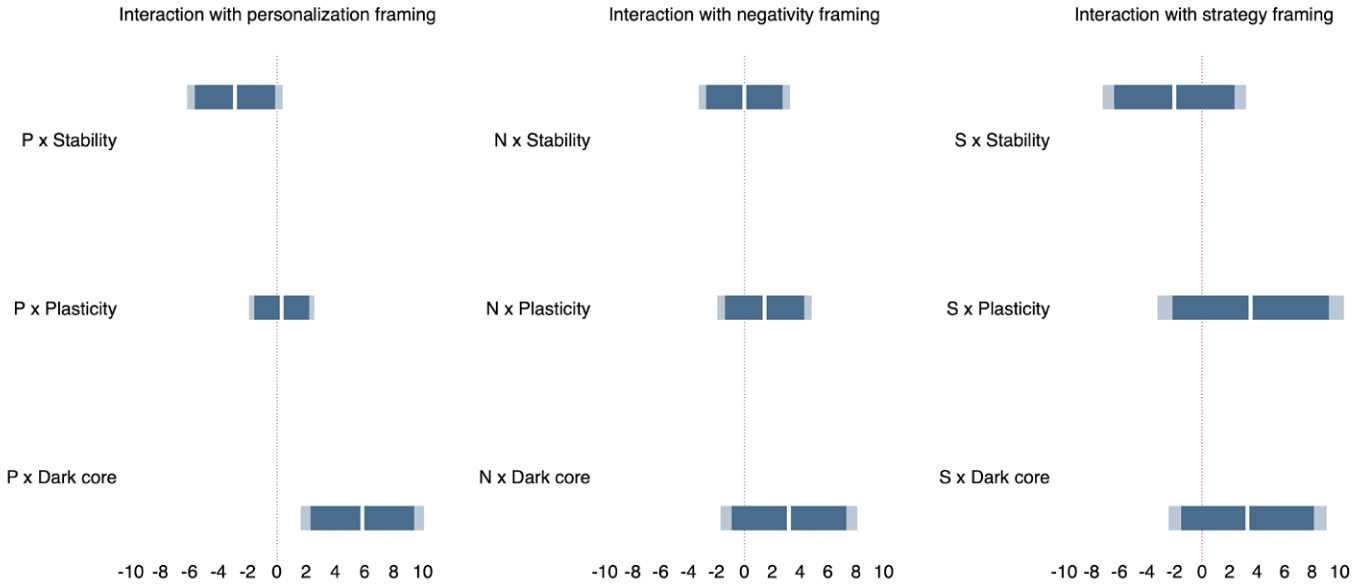
Interaction between candidate personality meta-traits and media systems’ adherence to news values in predicting media visibility.
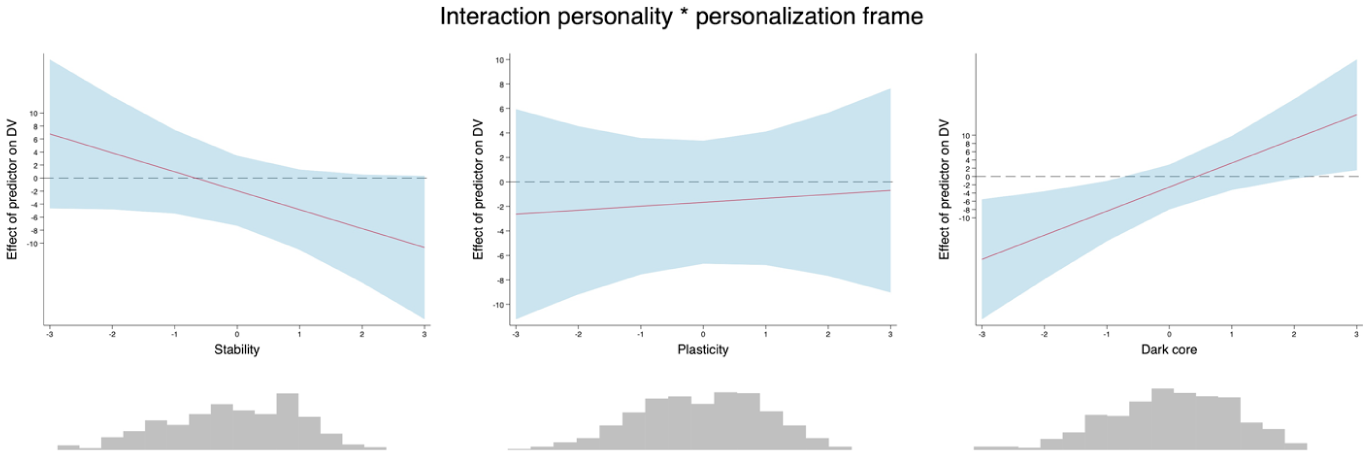
Marginal effects of media systems’ adherence to the personalization news value across levels of candidate personality meta-traits.
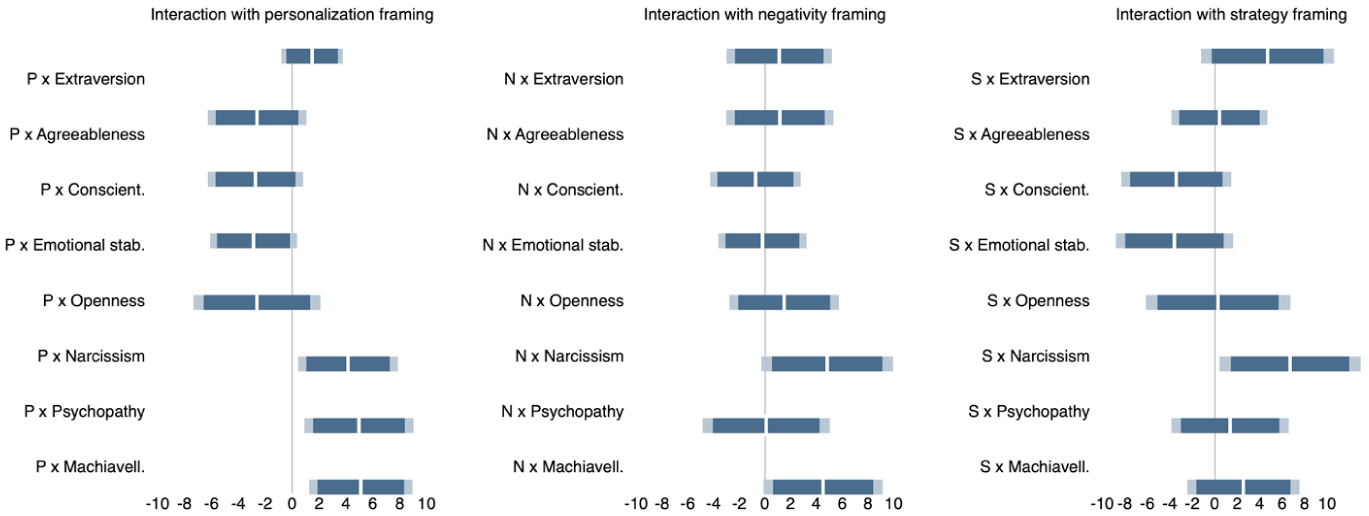
Interaction between individual personality traits and media systems’ adherence to news values in predicting media visibility.
Focusing on Model 1 in Table 1 and the left panel of Figure 1, politicians scoring high on stability are more visible in the media overall (b = 4.70, p = .044), contrary to our expectation in H1. Model 2 in Table 1, as well as the right panel of Figure 1, indicate that this effect appears to be primarily driven by the positive effect of conscientiousness (b = 4.18, p = .052). Moreover, we find no evidence of a main effect of plasticity on media visibility (b = 2.45, p = .146), thus rejecting H2. Finally, contrary to our expectation in H3, there is no evidence that candidates with higher Dark Core scores receive greater media attention overall (b = 1.97, p = .480). This pattern is also evident when examining the effects of the individual dark personality traits (Model 2 in Table 1, right panel of Figure 2).
Examining the covariates reveals familiar patterns in media coverage of political candidates. Incumbents and electoral winners, as well as ideologically moderate candidates, receive greater media attention. At the system level, candidates in presidential elections obtain more coverage than those in parliamentary elections, as do candidates competing in majoritarian (rather than PR) systems and in countries with higher democracy scores. Finally, media systems that place greater emphasis on negative portrayals of politics tend to grant significantly more visibility to candidates.
We now turn to examine how the relationships between elite personality and media visibility are potentially moderated by media systems’ adherence to several news values (H4). Results are presented in Table 2 and are further illustrated in Figures 2 to 4. The left panel of Figure 2 presents the interactions between each meta-trait and media systems’ adherence to personalized political coverage. Findings show that more stable politicians tend to be penalized in media systems that strongly emphasize personalization, as the interaction term is negative (b = −2.89) and statistically significant at the 90% confidence level (p = .084). While we find no evidence of a significant interaction between personalization and plasticity (b = 0.32; p = .781), candidates with darker personalities receive greater media attention in media systems that strongly adhere to personalized coverage (b = 5.84; p = .007). Figure 3 visualizes these interactions by plotting the marginal effects of adherence to personalization across levels of each meta-trait. The results show a negative slope for stability, indicating that highly stable politicians receive less coverage in more personalized media systems, whereas the slope for the Dark Core is positive, suggesting that darker personalities attract greater visibility under such conditions. Finally, focusing on the interactions with media systems’ emphasis on negativity (middle panel of Figure 2) and on strategy framing (right panel of Figure 2), we find no significant moderating effects for any of the three meta-traits.
Figure 4 presents the interactions between individual personality traits and media systems’ adherence to different news values, providing more nuanced insights. The most consistent patterns emerge for the interactions involving dark traits and media systems’ adherence to news values. Focusing first on personalized coverage (left panel), the interactions between personalization and all three dark traits are positive and statistically significant. In other words, in media systems that prioritize personalized political coverage, candidates high on each dark trait receive greater media visibility (Narcissism: b = 4.15, p = .028; Psychopathy: b = 4.96, p = .017; Machiavellianism: b = 5.10, p = .009). Similar patterns appear when media systems emphasize negativity in the political coverage (middle panel), with candidates scoring higher on narcissism (b = 4.83, p = .064) and Machiavellianism (b = 4.51, p = .057) tend to gain more media attention in such contexts. When focusing on media systems’ emphasis on strategy framing (right panel), only the interaction with narcissism is positive and significant (b = 6.69, p = .037), indicating that narcissistic candidates receive greater coverage in such contexts. In contrast to the dark personality traits, interactions involving the individual Big Five traits are much weaker and largely nonsignificant.
Overall, these interaction results offer mixed support for H4. Candidates with dark personality traits are especially visible in media systems that prioritize personalized and negative political coverage. In contrast, we find no consistent evidence of moderating effects across media systems for stability and plasticity.
Robustness Tests
We conducted several robustness tests, reported in SI Section D. First, since our media sample included newspapers published in both the countries’ native languages and in English, we controlled for the number of newspapers coded in nonnative languages in the regressions (Figures D1–D3). The results lead to the same overall conclusions.
Second, we replicated all models using an adjusted measure of personality traits designed to filter out potential bias stemming from experts’ ideological orientations. This adjustment follows previous critiques of expert-based measures in social and political research (Wright & Tomlinson, 2018). Following the procedure proposed by Walter and Van der Eijk (2019) for campaign negativity, each personality score was regressed on the ideological distance between the candidate and the average expert, and the model residuals were used as adjusted measures of personality. By definition, these residualized variables are independent of experts’ ideological bias. The adjusted and original measures are highly correlated (e.g., r = 0.94, p < .001 for the dark core). Figures D4 to D6 replicate all analyses using the adjusted measures, and the results remain substantively unchanged.
Third, we extended the time frame for media visibility to cover the 3 months prior to the election (instead of the 1-month period used in the main analyses). Results, shown in Figures D7 to D9, generally confirm the original findings regarding the interaction between media logic and dark traits, although the main effect of stability is not statistically significant.
Finally, we ran additional models testing the moderating role of several political-system factors, allowing us to compare their influence with that of media system characteristics identified in the main analyses. Specifically, we tested whether election competitiveness, the strength of democratic institutions (measured by the Democracy Index scores), and issue and affective polarization 4 condition the relationship between candidate personality and media visibility. Figure D10 shows that election competitiveness does not moderate this relationship (left panel). However, darker candidates are marginally more likely to receive coverage in countries with weaker democratic institutions, whereas more stable candidates are slightly more visible in stronger democracies (right panel). Figure D11 shows that issue polarization at the country-level does not moderate personality effects (left panel), whereas affective polarization does: politicians with darker traits receive greater coverage in more affectively polarized environments, reinforcing the association between dark personality and affective polarization found elsewhere (Nai et al., 2025). 5
Discussion
Politicians’ media visibility plays a decisive role in shaping electoral success, making it essential to understand what drives differences in media coverage. Traditional explanations have emphasized institutional power, such as ministerial roles, party leadership, and incumbency (Hopmann et al., 2012; Vos, 2014) as predictors of news visibility. However, the global rise of leaders with unusual personalities who achieved significant media attention despite their distance from traditional power centers challenges such explanations (Aalberg et al., 2017; De Vreese et al., 2018). Furthermore, since the information-rich environment leads citizens to increasingly rely on politicians’ personal characteristics as cognitive shortcuts for political decision-making (Caprara et al., 2002; Caprara & Zimbardo, 2004; Nai & Maier, 2024), it is particularly important in today’s politics to understand the influence of elite personality on media reporting practices.
This study therefore examines how politicians’ personality traits influence their media visibility. We utilized a comprehensive dataset that combines personality profiles (measuring the Big Five traits and the Dark Core) and media appearances of 159 political candidates who competed in 85 national election campaigns across 52 countries between 2016 and 2022. This cross-country approach reveals two types of patterns: consistent relationships between certain personality traits and media visibility that hold across countries, as well as systematic variations in personality-visibility relationships that depend on media system characteristics.
Stable Political Elites and News Visibility
Our analysis shows that elites high on the meta-trait of stability are, contrary to our expectations, more visible in the news overall, an effect primarily driven by politicians scoring high on conscientiousness. In contrast, we find no direct effect of plasticity and dark personality. One possible explanation for this finding relates to the nature of today’s mediatized politics, where media success has become inseparable from political success (Strömbäck, 2008; Strömbäck & Esser, 2014). Conscientious politicians, known for being hard-working and persistent in their pursuit of goals (Judge et al., 1999; Seibert & Kraimer, 2001), may actively work to increase their media visibility in two ways. First, they make themselves more newsworthy by diverging from party positions (Bundi et al., 2023), delivering more parliamentary speeches (Bäck & Debus, 2016), and maintaining high social media activity (Ramey et al., 2017)—behaviors that attract journalists’ attention (De Vreese et al., 2017; Yildirim et al., 2023). Second, their persistence likely leads them to invest more time in cultivating relationships with journalists and seizing media opportunities that increase their visibility (Wolfsfeld & Sheafer, 2006).
Dark Personalities and Media Visibility across Media Systems
Our comparative perspective highlights that the relationship between elite personalities and media visibility cannot be fully understood without considering the context. Specifically, our findings indicate that media systems’ adherence to media logic moderates the relationship between personality and visibility. In media systems that strongly emphasize news values of personalization and negativity, politicians scoring high on dark traits—particularly narcissism and Machiavellianism—gain greater media visibility. These effects persist regardless of other individual-level characteristics of politicians and are more pronounced than the limited moderating effect of political-system factors, such as election competitiveness or country-level issue polarization.
Overall, these comparative findings suggest that the manipulative, aggressive, and hostile behaviors of dark politicians align naturally with journalistic selection criteria in media environments that focus more on personas than on institutions and that highlight negativity in the political coverage. Such environments make dark political actors inherently more newsworthy than their counterparts. These results are in line with previous studies that observe an increasing congruence between the goals of commercial media logic and the behavior of extreme political actors, whose behavior attracts larger audiences (Esser et al., 2017; Mazzoleni, 2008).
Implications for Research on Media Visibility, Elite Personality, and Democracy
The current study contributes to the existing literature in several ways. First, we move beyond traditional explanations that attribute politicians’ media visibility mainly to institutional power. Our findings demonstrate that personal characteristics also play a meaningful role in shaping media attention, adding a psychological explanation to this outcome. We establish this relationship across a broad range of contexts, candidates, and countries, relying on objective measures of news visibility.
Second, we advance the research on elite personality and media visibility by adding a comparative perspective. While previous research suggests that personality traits provide stable advantages in securing coverage (Amsalem et al., 2020; Nai & Maier, 2024), our cross-country analysis reveals that personality effects can vary systematically with media system characteristics. Specifically, dark personality traits lead to greater visibility in contexts where journalistic norms prioritize negativity and personalization. If news organizations continue to become more profit-driven and commercialized, these dynamics may intensify, further legitimizing dark politicians and amplifying intolerant, populist messages. Moreover, as politicians recognize this mechanism, they may strategically adapt their public image and communication style to meet media expectations—thus adding fuel to the fire.
Finally, we advance research on democratic backsliding by highlighting the role of traditional media in this process. Recent studies document a global erosion of public support for democratic institutions (Claassen et al., 2024; Druckman, 2024), fueled in part by the rise of populist leaders and extreme politicians. Our findings show that traditional media systematically amplify certain political actors, particularly those with dark personality traits. This pattern is especially troubling given its global scope, suggesting that media organizations may inadvertently elevate leaders who are manipulative, non-empathetic, and lacking moral standards. This dynamic may also undermine the long-term legitimacy of traditional journalism, as amplifying leaders prone to manipulative and misleading rhetoric can further erode trust in, and willingness to consume, traditional media (Egelhofer et al., 2022; Rasul et al., 2025).
While this does not mean media outlets intentionally promote political hostility or institutional mistrust, their news production logic favors politicians who use confrontational rhetoric and aggressive behaviors, shaping what is deemed socially and politically acceptable. Although many citizens disapprove of dark politicians (Nai & Maier, 2024) and hostile elite communication (Amsalem & Zoizner, 2024; Frimer & Skitka, 2018), persistent media exposure to such leaders may gradually normalize their behavior, further deepening polarization and eroding institutional trust.
Limitations of the Study
This research has several limitations. First, to test politicians’ visibility in the news, we relied on their appearances solely in newspapers, which provide a systematic and comparable proxy across different contexts for studying media visibility (Hayes & Lawless, 2015; Thesen & Yildirim, 2023). As newspaper consumption has been declining over the past years relative to other traditional media outlets such as TV and news websites (Newman et al., 2022), this may limit the generalizability of our findings. However, previous research suggests that elite personalities affect visibility similarly across media types (Amsalem et al., 2020). Moreover, since other media types, particularly commercial TV, tend to rely more heavily on media logic than newspapers (De Vreese et al., 2017; Vos & Van Aelst, 2018), our results likely represent conservative estimates of personality’s impact on media visibility.
A second limitation is that we did not examine politicians’ visibility on social media platforms, which have become a primary news source (Newman et al., 2023) and an important channel for extreme and populist politicians to bypass traditional media (De Vreese et al., 2018). However, one might expect similar effects of elite personality on increased attention on social media for two reasons. First, the hostile and negative messages that characterize dark politicians often gain more traction on social media, as platform algorithms tend to amplify provocative and emotionally charged content (Brady et al., 2021; Frimer et al., 2022). Second, empirical evidence shows that news visibility is often reflected in social media visibility (Kruikemeier et al., 2018), and that journalistic news values are also predictive of higher social media engagement (Trilling et al., 2017). We encourage future research to directly examine how personality traits shape politicians’ social media reach.
A third limitation concerns our measurements of personality and media system factors, which relied on expert assessments. Although personality is frequently measured through self-assessments, this approach is often not feasible for political figures, particularly senior ones. Expert ratings, therefore, represent a well-established and validated alternative (Lilienfeld et al., 2012; Visser et al., 2017), with strong correlations between self-assessments and expert evaluations (Colbert et al., 2012). Previous research also demonstrates high consistency between professional personality assessors and experts similar to those in this study’s dataset (Nai & Maier, 2018; Visser et al., 2017). Similarly, expert evaluations have been previously used to capture contextual factors such as campaign negativity and have been shown to be reliable and valid for these purposes (Maier et al., 2025), supporting their use for assessing other contextual features such as media system characteristics.
Despite these limitations, we believe our cross-country comparative approach provides important insights into how politicians’ personality traits shape their media visibility across diverse contexts and media environments.
Supplemental Material
sj-docx-1-jmq-10.1177_10776990261436064 – Supplemental material for Unique Personalities in the Limelight? A Cross-National Analysis of Politicians’ Personality and Media Visibility during Elections
Supplemental material, sj-docx-1-jmq-10.1177_10776990261436064 for Unique Personalities in the Limelight? A Cross-National Analysis of Politicians’ Personality and Media Visibility during Elections by Alon Zoizner, Alessandro Nai and Jürgen Maier in Journalism & Mass Communication Quarterly
Footnotes
Correction (April 2026):
Article updated to replace Figure 3 to ensure the shaded areas for the 95% confidence intervals are displayed.
Declaration of Conflicting Interests
The authors declared no potential conflicts of interest with respect to the research, authorship, and/or publication of this article.
Funding
The authors disclosed receipt of the following financial support for the research, authorship, and/or publication of this article: Alessandro Nai acknowledges the generous financial support from the Swiss National Science Foundation (SNSF Ref. P300P1_161163) that made data collection for the NEGex project possible.

Supplemental Material
Supplemental material for this article is available online.
Notes
Author Biographies
References
Supplementary Material
Please find the following supplemental material available below.
For Open Access articles published under a Creative Commons License, all supplemental material carries the same license as the article it is associated with.
For non-Open Access articles published, all supplemental material carries a non-exclusive license, and permission requests for re-use of supplemental material or any part of supplemental material shall be sent directly to the copyright owner as specified in the copyright notice associated with the article.
