



Abstract
We explore the link between social media news consumption and belief in misinformation about women politicians in India. In addition, we investigate the roles of sexism, with cognitive ability (individual factor) and gender inequality status (of the state where respondents reside) as structural-level moderating factors. Results indicate a positive association between social media news use and belief in misinformation, mediated by hostile and benevolent sexism. Furthermore, we find that low-cognitive individuals in states with high structural gender inequality are most vulnerable to misinformation. The results emphasize the need to create more gender equality structurally, to reduce susceptibility to gendered misinformation.
Introduction
With millions of people relying on social media to share and receive political information, herein referred to as “political social media use,” it has become a crucial part of contemporary societies. However, users are also vulnerable to misinformation on social media (Allcott & Gentzkow, 2017). This is because social media platforms offer limited content moderation practices and fact-checking tools compared with legacy media, which has a stricter editorial oversight (Chan, 2024; Flanagin & Metzger, 2000). This aggravates the concerns about how people assess, perceive, and react to misinformation on social media (e.g., Ahmed et al., 2024; Kozyreva et al., 2020; Metzger & Flanagin, 2015).
Much of the existing literature on belief in misinformation has explored its psychological (Kalsnes, 2018; Murphy et al., 2019; Pennycook & Rand, 2019, 2021) and demographic antecedents (Allcott & Gentzkow, 2017; Pennycook & Rand, 2019) . For instance, studies show that individuals with specific personality and cognitive traits are more susceptible to misinformation (Calvillo et al., 2021; Pennycook & Rand, 2021). Moreover, time spent on social media, partisanship, and education, among others, are vital factors for predicting one’s ability to discern misinformation (Allcott & Gentzkow, 2017; Osmundsen et al., 2021). However, while the literature on public engagement with misinformation as a result of their social media use continues to grow, it suffers from some critical drawbacks.
First, prior research has paid little attention to belief in sexist or gendered misinformation—a specific type of misinformation—and the importance of sexist prejudices as an antecedent of such belief. Malicious actors often resort to coordinating anti-women fake news campaigns and sustaining illegitimate and unfair opinions to discredit and harm their participation in political and social life. This is especially so among women politicians from minority groups (Ahmed & Gil-Lopez, 2022; Pintak et al., 2019). For example, in India, supporters of the ruling party use an army of far-right trolls on social media to undermine women politicians’ participation in politics (Mackintosh & Gupta, 2022). Glick and Fiske (1997, 2001) argue that sexist attitudes uphold patriarchy and traditional gender roles in society. It is, therefore, timely to conduct a detailed systematic investigation of sexism and its role in spreading misinformation against women in public spheres, including women politicians.
Second, while numerous scholars have examined the impact of multiple individual-level factors on belief in misinformation, the role of structural factors remains largely unexplored. Belief in misinformation targeting women politicians may differ for individuals because of different macro aspects. For example, in the case of misinformation against women politicians, the status of gender inequality in the region where individuals reside may play a vital role. As such, the relationship between social media and belief in gendered misinformation could depend on the level of gender equality in the state in which individuals live. Therefore, examining how both individual and structural factors shape the influence of political social media use on belief in misinformation against women politicians will expand our current understanding of the topic.
Third, despite a considerable number of studies that have established the critical factors (e.g., education, partisanship, political knowledge) predictive of misinformation engagement, what is lacking is an understanding of how these factors interact with social media use. Therefore, there is a need to explore the mechanisms in which political social media use combined with individuals’ traits predict belief in gendered misinformation through sexist biases.
To address these research gaps, we conducted a survey to test the relationship between political social media use and belief in misinformation targeting women politicians. We then examine the supplementary role of two forms of sexism (i.e., hostile and benevolent) in facilitating this relationship. Finally, the moderating roles of cognitive ability as an individual trait and gender inequality status (of the state where respondents reside) as a structural level factor are examined. As such this study explores the important role of gender-equal environments especially among individuals with poorer discernment abilities in combatting gendered misinformation facilitated by their political social media use and sexism.
The study is situated in India, where gender trolling has recently turned ugly, with mischievous and offensive social media posts transforming into real-life threats (Pillai & Ghosh, 2022). Prior scholarly evidence also suggests that women politicians in India face high levels of harassment, including hateful and sexist abuse, and social media is to be blamed (Mackintosh & Gupta, 2022) (see more about the context of India in the following section). The confluence of these theoretical and contextual motivations calls for our attention.
Study Background
With one of the highest numbers of social media users, India is home to Facebook and WhatsApp’s largest market (Datta, 2019). These platforms play a primary role in facilitating public discourse and constructing narratives about sociopolitical issues in Indian society. Although previous studies have shown that having access to a wide range of information on social media has an optimistic association with civic engagement in India (e.g., Darshan & Suresh, 2019), it also presents a potential for misinformation propagation. The country is already witnessing the real-world impact of misinformation, such as violent mob attacks and killings (Samuels, 2020).
Misinformation in India is often highly politicized and valorizes the ruling party while demeaning opposition politicians, including women political figures (e.g., Guha, 2018; Mackintosh & Gupta, 2022). Female journalists have also been the target of massive misinformation campaigns in India. This has even resulted in the murder of a veteran journalist—Gauri Lankesh (Rueckert, 2023). In addition, scholars have raised concerns about the widespread sexist discourse and misinformation targeting women in the Indian online public sphere (Mackintosh & Gupta, 2022; Pillai & Ghosh, 2022). More specifically, reports show that women politicians from opposition camps regularly become the subject of fake information and trolling online based on sexist and patriarchal content (Mackintosh & Gupta, 2022). It was also found that around 2% of tweets from India included some form of misogyny in the form of sexual objectification and sexist abusive content, which demeaned women and shamed them for their presumed sexual activity (Dehingia et al., 2023).
Furthermore, gender equality in India continues to face significant challenges, shaped by entrenched patriarchal norms and cultural practices. Despite constitutional guarantees and government initiatives aimed at promoting gender equality, such as reserved seats for women in governance and campaigns for girls’ education, women remain underrepresented in leadership positions and continue to face significant barriers in the workforce (Marois et al., 2022; Sahai, 2021). Gender-based violence also remains pervasive, with many incidents going unreported due to social stigma and weak legal enforcement (Ghosh & Choudhuri, 2015; Sahu, 2020). These factors severely limit women’s autonomy and participation in different spheres of life.
In sum, in a traditionally patriarchal society like India with deep-rooted gender inequalities (Batra & Reio, 2016), women politicians and journalists are easy targets of misinformation. Therefore, the question of exposure to and belief in misinformation about women, including women politicians, has prime significance due to its potential to translate into in-person harassment, abuse, and life-threatening experiences of women in India.
Political Social Media Use and Belief in Misinformation
Misinformation is information that is false, inaccurate, or misleading (Chan, 2024; Treen et al., 2020), and the likelihood that people would accept such information as a fact is referred to as a belief in misinformation. Social media is critical in disseminating misinformation (Enders et al., 2021; Guess et al., 2019). In contrast to traditional news media, which favors fact-checking through the gatekeeping process in newsrooms, social media is conducive to gathering and disseminating a variety of information without being constrained by editing or cross-checking customs (Kozyreva et al., 2020; Metzger & Flanagin, 2015). In other words, social media facilitates the spread of misinformation and misleading messages to the general public because they give unrestricted access to information creation and sharing. Thus, more frequent social media use, especially political use, is more likely to expose netizens to misinformation (Rossini & Kalogeropoulos, 2023). They are also ultimately more susceptible to believing misinformation when exposed to a barrage of misinformation. For example, Enders et al. (2021) found across two studies that individuals who get their news from social media more frequently are more likely to believe in misinformation. Likewise, Michael and Breaux (2021) showed that misinformation belief depends on individuals’ news sources, including social media. Ahmed and Rasul (2022) also showed that those who feature social media heavily in their news diets are more likely to believe COVID-19 misinformation.
This expectation is consistent with the illusory truth effect, a cognitive bias that highlights the tendency to believe the information to be correct after repeated exposure (Alter & Oppenheimer, 2009; Hassan & Barber, 2021; Whittlesea, 1993). It is a popular tactic used in advertising and political campaigns (Hassan & Barber, 2021). When people are exposed to a particular piece of information, their cognitive ease of processing information becomes more fluent, and they start to believe it to be true. With repeated exposure, the brain associates lies with the truth because it is easier for the brain to process familiar statements compared with new statements, a process known as “processing fluency” (Alter & Oppenheimer, 2009; Hassan & Barber, 2021; Whittlesea, 1993). Another possible explanation of the illusory truth effect is the deficit processing hypothesis (e.g., Shaughnessy et al., 1972; Udry et al., 2022), meaning repetition increases the total quantity or quality of processing that the item receives during cognitive encoding. Recent scholarship shows how the illusory truth effect can explain why people believe misinformation to be true (Hassan & Barber, 2021; Pennycook et al., 2018).
It is also plausible to argue that the illusory truth effect would be stronger on social media platforms due to the repetition of information in echo chambers. With nearly half a billion social media users in India (Kemp, 2024), the perception and response of individuals to current sociopolitical issues can be influenced by the information they encounter on social media platforms. Thus, given the women unfriendly context and existing evidence on social media and misinformation, it is conceivable to argue that individuals’ frequent reliance on social media for political purposes is likely associated with a greater belief in misinformation about women politicians in the country. Therefore, based on extant research on social media misinformation, we state our first hypothesis as follows:
The Role of Sexism in Belief in Misinformation
Sexism has pervaded regions, societies, and cultures for generations, and, unsurprisingly, it is also manifested online (Pedersen & Macafee, 2007). Because of the ubiquity of moralistic and political agendas on social media, netizens are often inundated by a barrage of value-laden information on important sociopolitical issues. These often carry divisive and polarizing overtones colored by sexist prejudices and biases (e.g., Fox et al., 2015). Specifically, women are frequently sexually objectified online (Guha, 2018; Morahan-Martin, 2000). Research suggests that online communities treat women with greater hostility than men (Duggan, 2014). For instance, some women-targeted negative and sexist hashtags on Twitter have gained notable attention in the past like #LiesToldByFemales, #IHateFemalesWho, #RulesForGirls, and #MyGirlfriendNotAllowedTo (Fox et al., 2015). Fox et al. (2015) argue that the affordance of anonymity on social media facilitates sexist attitudes and behaviors online. Social media platforms, by offering anonymity and limited accountability may foster the expression of sexist content. In addition, it facilitates the creation of echo chambers and networks of like-minded individuals that may reinforce and propagate sexist ideas. The amplification effect, where gendered misinformation is spread more broadly through these communities, can play a significant role in legitimizing gender biases in society. Therefore, the use of social media is likely to reinvigorate existing socio-cultural stereotypes and prejudices like sexism. For instance, Marwick (2013) states that online sexism “reinforces male entitlement and conventional gender stereotypes while normalizing egregiously sexist behavior” (p. 12). Moreover, sexism may be couched in the subtext, making it difficult to identify and reject. Content analyses and machine learning research reveal that demeaning discourses such as feminity-as-frail, victim blaming, and policing, especially of women’s bodies, voice, and agency, still dominate online spaces (Barratt, 2018; Rodríguez-Sánchez et al., 2020).
While sexism online is likely to be particularly amplified by echo chamber and filter bubble characteristics of social media networks, scholars have also noted the potential of using social media to “shout back” and challenge the hegemony, misogyny, and inequalities (Boynton, 2012; Turley & Fisher, 2018). In other words, social media is generally violent, unforgiving, and a means of gender-based violence, but it is complex and can also be turned into a mobilizing power for good (Boynton, 2012). In addition, researchers have proposed various strategies, including using hashtags to “retrain” the algorithm or using machine learning techniques to detect and automatically classify sexism (Boynton, 2012; Rodríguez-Sánchez et al., 2020).
In the Indian context, female political candidates are often subject to feminine stereotyping, even in leading Indian newspapers’ social media accounts (Guha, 2018). Amnesty International (2020) reports that Indian female political figures face nearly two times more abusive comments on Twitter than female politicians in the United Kingdom and the United States (based on Twitter data analysis). It is noteworthy that women from India’s ruling party receive less abusive trolling on social media than women from opposition parties (Mackintosh & Gupta, 2022). Sexism on social media in India is also likely to prevail due to the lack of women’s representation in the digital sphere (Datta, 2019; Guha, 2018; Press Trust of India, 2017) as women have fewer opportunities to represent themselves, debunk sexism, and interact with men online. The digital gender divide, especially in developing countries, is still large and tightly related to unfavorable conditions concerning employment, education, and income (Hilbert, 2011; Kemp, 2024; Samudra, 2022). Recent stats show that only 33% of women in India have ever had a chance to use the internet (Chandola, 2022).
To summarize, we argue that sexism is widespread on social media. Netizens who frequently use social media, especially for political purposes like consuming and sharing information, risk persistent exposure to content with implicit sexist prejudices or even explicit sexism, which legitimizes and reinforces sexist attitudes. The support for the relationship between political social media use and sexism is also consistent with the illusory truth effect perspective discussed earlier, which argues that individuals tend to adopt claims they were previously exposed to (Pennycook et al., 2018), which also explains why with repeated exposure people believe in misinformation, fake news, and conspiracy theories (Speckmann & Unkelbach, 2021; Unkelbach et al., 2019).
Furthermore, it is also important to note that existing research distinguishes sexism into two types, namely hostile and benevolent sexism (Glick & Fiske, 1997, 2001). Hostile sexism “seeks to justify male power, traditional gender roles, and men’s exploitation of women as sexual objects through derogatory characterizations of women” (Glick & Fiske, 1997, p. 121). However, the latter “relies on kinder and gentler justifications of male dominance and prescribed gender roles; it recognizes men’s dependence on women (i.e., women’s dyadic power) and embraces a romanticized view of sexual relationships with women” (Glick & Fiske, 1997, p. 121). In short, sexist attitudes often underlie hostile and benevolent forms of sexism, where women are either derogated or protected based on perceived gender roles. We argue that social media hosts a plethora of content on both forms of sexism, and frequent exposure to such may normalize both hostile and benevolent sexist attitudes among undiscerning social media users. This is especially so for those who rely on social media indiscriminately and without careful consideration. As such, we postulate our second set of hypotheses:
Next, sexism may fuel the acceptance of gendered misinformation, especially in the context of women in politics. Given the ubiquity of sexist content and misinformation on social media, we anticipate that sexism may drive the impact of political social media use on belief in gendered misinformation presented in H1. Such that frequent social media use for political purposes could lead to sexist prejudices, which in turn may predispose individuals to believe misinformation targeting women politicians. In other words, the relationship between political social media use and belief in misinformation is likely to be mediated by sexism.
Sexism is likely to predispose the belief in sexually biased misinformation. The theory of motivated reasoning states that people are rarely objective in evaluating information but more eager to accept belief-congruent information and more critical toward belief-incongruent information (Gaines et al., 2007; Swire et al., 2017; Taber & Lodge, 2006; Weeks, 2015). Previous studies show consistent results on motivated reasoning across topics ranging from affirmative action, gun control, free speech, and illegal immigration to racial discrimination (Taber & Lodge, 2006; Weeks, 2015). This highlights the highly probable relationship between sexism and believing in gendered misinformation where sexism is the antecedent.
Hence, given how social media is increasingly saturated with careless and malicious gendered misinformation, we expect netizens to be introduced to sexist content, which in turn sustains belief-congruent attitudes, like readily believing sexist misinformation through motivated reasoning. In the same line of reasoning, Ahmed and Gil-Lopez (2022) found that higher news consumption via YouTube algorithmic searches was associated with increased belief in misinformation targeting minority U.S. Congresswomen. Investigating the mechanism of why people who use social media are more likely to believe in misinformation about women politicians is important because studies show that social media is likely to increase prejudices against women (e.g., Fox et al., 2015; Morahan-Martin, 2000). Integrating prejudices in misinformation research would simplify understanding of why people believe in misinformation. Furthermore, the rapid increase in misinformation has become a significant crisis, hurting the democratic health of societies (Kalsnes, 2018). Thus, understanding the mechanism could aid in fully comprehending the phenomenon and taking required specific action to lessen its occurrence and spread. Therefore, we expand the relationship between social media and belief in misinformation by introducing the mediating function of sexism (Glick & Fiske, 1997, 2001).
Based on the above discussion, we argue that the social media sphere contains sexist content, and heavy use of social media means greater exposure to sexist content, which may result in legitimizing and reinforcing sexist attitudes, which is then likely to increase one’s probability of believing in misinformation about women, including women politicians.
Thus, we present our mediation hypothesis as follows:
The Role of Cognitive Ability and Structural Gender Inequality in Belief in Misinformation
Finally, we explore how individual-level cognitive ability and state-level gender inequality may moderate the proposed relationships. We argue that a key individual factor in identifying and rejecting misinformation is cognitive ability, and an important situational determinant that affects how impressionable or receptive one is to gendered misinformation is the extent of prevailing levels of gender inequality in the region in which an individual lives. Cognitive ability is understood as the “general intelligence” (Huang & Hauser, 1998) and refers to an individual’s mental capability “to reason, plan, solve problems, think abstractly, comprehend complex ideas, learn quickly and learn from experience” (Gottfredson, 1997, p. 13). Gender inequality level of the state as a structural factor is defined as unequal access to resources and opportunities for different genders. A more gender-equal environment is specifically related to the “rise of women in public life” (Inglehart et al., 2002, p. 343). Thus, we theorize that conditional factors predispose individuals to form prejudiced views and biases, including belief in misinformation targeting women politicians. This study looks specifically at their collective impact on misinformation targeting women politicians.
First, as mentioned above, while frequent political social media use is likely to lead to belief in misinformation targeting women through sexism, it remains uncertain how individual cognitive differences moderates this relationship. On the individual level, greater cognitive ability has been shown to help in processing and filtering misinformation and agendas on social media. Multiple studies reveal that individuals with greater cognitive ability are less prone to believing misinformation (e.g., Murphy et al., 2019; Pennycook & Rand, 2019). For example, it was found that weaker cognitive ability and poorer analytical reasoning are associated with an inability to identify fake news because of a failure to deliberate (Bago et al., 2020; Pennycook & Rand, 2019). Murphy et al. (2019) found that those with poorer analytical abilities tend to form false memories of fake news and are ultimately more likely to endorse fake news due to the illusory truth effect (see also Greene & Murphy, 2020). This is a heuristic processing style in which individuals mistake familiarity for truth (Hassan & Barber, 2021; Vellani et al., 2023). Therefore, it is likely that greater cognitive ability will play a moderating role, weakening the relationships between social media, sexism, and belief in misinformation. This is notwithstanding the fact that other researchers have found limits to cognitive ability (e.g., De keersmaecker et al., 2019).
Second, situational factors also play a contingent role in how social media use translates into a belief in gendered misinformation. Nayak and colleagues (2003) found that sociocultural factors (e.g., nationality) may play a more substantial role in influencing attitudes regarding the assault of women. Similarly, Bergh (2006), in exploring gender attitudes and the modernization process, argues that situational factors determine individuals’ gender attitudes to a greater degree than personal values. At the macro level, the country’s level of development has also been considered to influence gender attitudes such that gains in development lead to more liberal gender attitudes (Wilensky, 2002). Based on these expectations, we argue that the effect of individuals’ online behaviors and sexism on belief in misinformation would also be influenced by the level of gender inequality (e.g., the unequal economic, social, and political opportunity for women) in the community in which individuals live. One might anticipate that the relationship between political social media use and belief misinformation targeting women through sexism is stronger in environments with greater structural gender inequality.
Thus, this study accounts for the conditional role of cognitive ability and gender inequality in reflecting individuals’ nuances and states’ contexts, respectively. Because the set of relationships being discussed here has not been evidenced and explored in previous literature, we postulate the following research question instead of a hypothesis.
The final conceptual model of the study is illustrated in Figure 1.
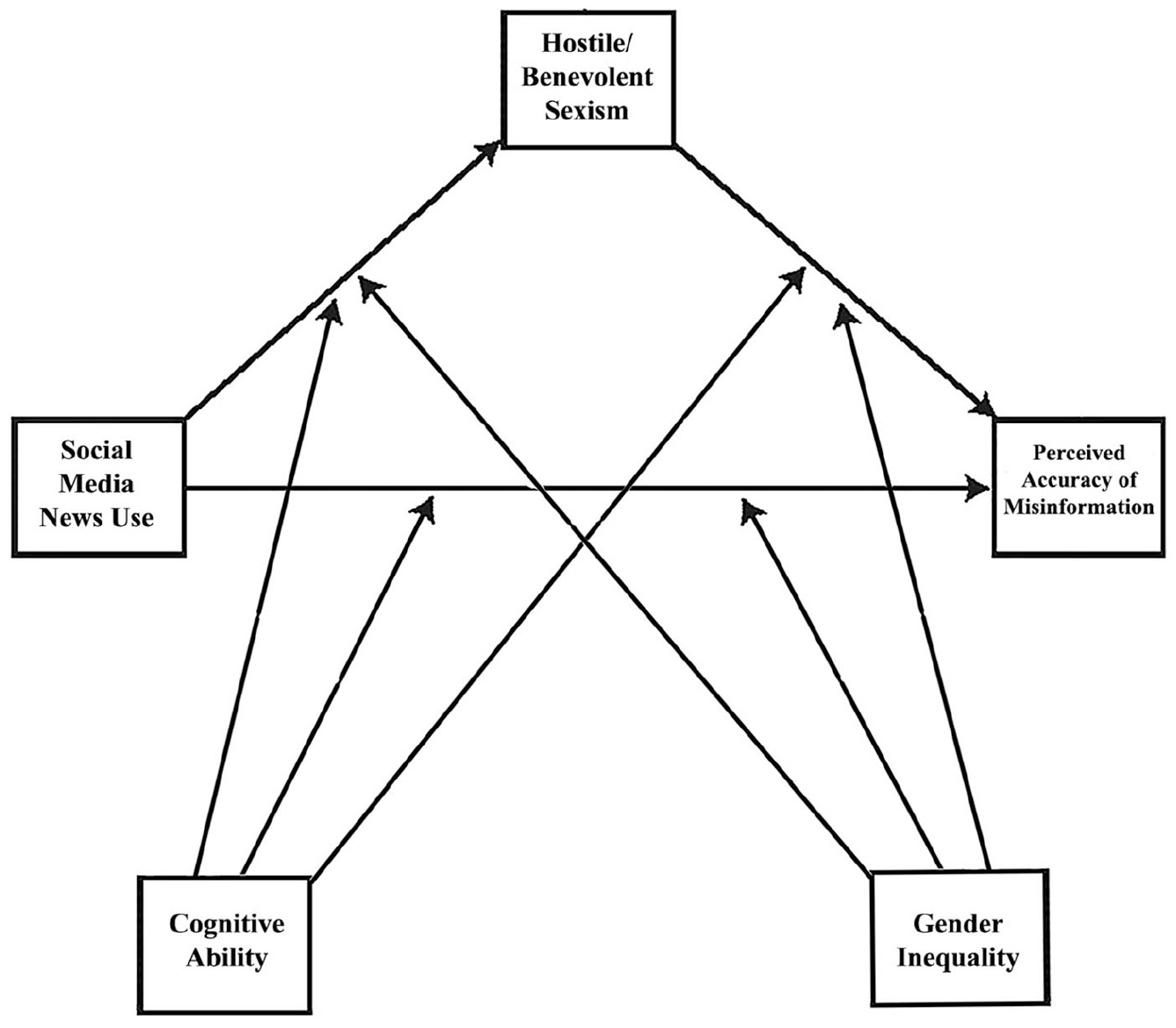
The Conceptual Model.
Method
Sample
The study uses data from an online panel survey administered in India by survey agency Dynata LLC (previously SSI). The survey was fielded in June 2022, and 3372 respondents were recruited to be a part of this study. A quota sampling strategy (focusing on age, gender, and state) was used to match the sample parameters to population characteristics. Multiple studies have adopted similar quota sampling strategies to generalize the findings to the larger population (e.g., Enders et al., 2021; Groshek & Koc-Michalska, 2017). Specifically, recruitment efforts also ensured that the sample was geographically diverse and that the respondents covered multiple states in India. The study was approved by the Institutional Review Board at Nanyang Technological Univeristy. All participants provided their consent prior to taking part in the study.
Measures
Dependent Variable
Belief in misinformation targeting women politicians: Participants were presented with six news headlines, which were edited to be similar in presentation and resemble a social media post. Each news headline targeting a female politician was fact-checked by multiple agencies to be misinformation. The respondents were asked to rate the perceived accuracy (1 = not at all accurate to 5 = extremely accurate) of the headlines (e.g., “Mamata Banerjee faked her leg injury during the 2022 West Bengal election campaigns?” and “Sonia Gandhi owned a book titled ‘How to Convert India into a Christian Nation’?”). An index of perceived claim accuracy was created by averaging the responses to the six news headlines (M = 3.17; SD = 1.26, α = .91). A higher score indicated that the respondents were more likely to mistakenly believe the misleading news headlines were factual information. This approach has been commonly adopted in previous research (e.g., Ahmed & Gil-Lopez, 2022; Pennycook et al., 2020).
Independent Variable
Political social media use: It was measured by six items asking respondents how frequently (1 = never to 5 = daily) they engage in the following activities on social media particularly concerned with political news (a) post on their timeline, (b) comments on posts, (c) share posts, (d) read their own social media newsfeed, (e) read friends’ timeline, and (f) search via the search bar on the social media site (M = 3.41, SD = 1.14, α = .90).
Mediating Variables
Hostile sexism: It was measured using 11 items developed by Glick and Fiske (1997, 2001). The items asked respondents to rate their level of agreement (1 = strongly disagree to 6 = strongly agree) regarding statements concerning men and women and their relationships. Sample items include “most women interpret innocent remarks or act as being sexist” and “women seek to gain power by getting control over men.” The responses to 11 items were averaged to create a scale for hostile sexism (M = 4.39, SD = 1.14, α = .93).
Benevolent sexism: It was also measured using 11 items developed by Glick and Fiske (1997, 2001). Respondents rated their level of agreement (1 = strongly disagree to 6 = strongly agree) for the statements. Sample items include “in a disaster, women ought to be rescued before men” and “women should be cherished and protected by men.” The responses were averaged to create a scale for ambivalent sexism (M = 4.58, SD = 1.03, α = .89).
Moderating Variables
Cognitive ability: It was measured by the 10-item Wordsum Test. The test involves the participant matching the given word with a target word (out of a list of five choices). The correct response to each question (0 = incorrect and 1 = correct) was added to create a scale of cognitive ability (M = 4.14, SD = 2.69, α = .77). The test has been frequently adopted to measure the cognitive ability of respondents and is commonly adopted in misinformation research (e.g., Murphy et al., 2019; Pennycook & Rand, 2019).
Gender equality: It was measured by a “gender equality score” (0–100) assigned to each state/union by NITI Aayog—a public policy think-tank of the Government of India. The country has 28 states and 8 unions in total. The score is calculated by considering six criteria (a) average female to male ratio of average wages, (b) percentage of seats won by women in the general elections (state legislative assembly), (c) percentage of married women between 15 and 49 years who have ever experienced spousal violence, (d) ratio of female to male labor force participation rate, (e) sex ratio at birth (female per 1,000 males in the state), and (f) percentage of women between the age of 15 and 49 years using methods of family planning. A lower score means less gender-equal state (M = 38.44, SD = 6.36, the lowest value is Bihar = 24, and the highest value is Kerala = 50).
Control Variables
We also control for a number of demographic and motivational factors in our statistical models. Demographics included age (M = 38.44; SD = 14.48), gender (57.3% males), education (Median = undergraduate degree), income (Median = Rs 45,000 to Rs 59,999), and religion (majority = 67.4% Hinduism). Motivational ones included political interest (M = 3.60, SD = 1.22; 1 = not at all to 5 = extremely), partisanship (majority = 60.7 % BJP supporters), traditional media news use (M = 3.49, SD = 1.10, α = .79), which was measured by averaging how frequently respondents use television, radio and (print) newspaper for news on a 5-point scale (1 = never to 5 = always).
Analytical Strategy
We employ ordinary least squares (OLS) regression analyses to test our three hypotheses and the research question. In the first step, we employ regression models with a belief in misinformation targeting women politicians and hostile and benevolent sexism as outcome variables to test H1 and H2. Next, we employ a mediation model to test the mechanism of how political social media use relates to belief in misinformation, with sexism (hostile and benevolent) being considered mediating variables (H3). Finally, we run a moderated mediation model to test if the effects of political social media use on belief in misinformation via sexism factors depend on levels of cognitive ability and gender equality status of states where the residents stay (RQ1).
Results
First, Table 1 results suggest that political social media use is positively associated with the perceived accuracy of misinformation targeting women politicians (b = .147, SE = .019, p < .001). Therefore, H1 is supported. In addition, we find that those with higher political interest (b = .212, SE= .017, p < .001), traditional media news use (b = .054, SE= .019, p < .001), partisanship (b = .189, SE= .032, p < .001), religious affiliation (b = –.152, SE= .033, p < .001) and females (b = .212, SE= .031, p < .001) were more likely to perceive the fake claims about women politicians to be accurate. Those with higher cognitive ability were less likely to perceive the fake claims as accurate (b = –.082, SE= .006, p < .001). Gender equality was negatively associated with the perceived accuracy of misinformation (b = –.007, SE= .002, p < .001).
Predicting Perceived Accuracy of Misinformation Targeting Women Politicians.
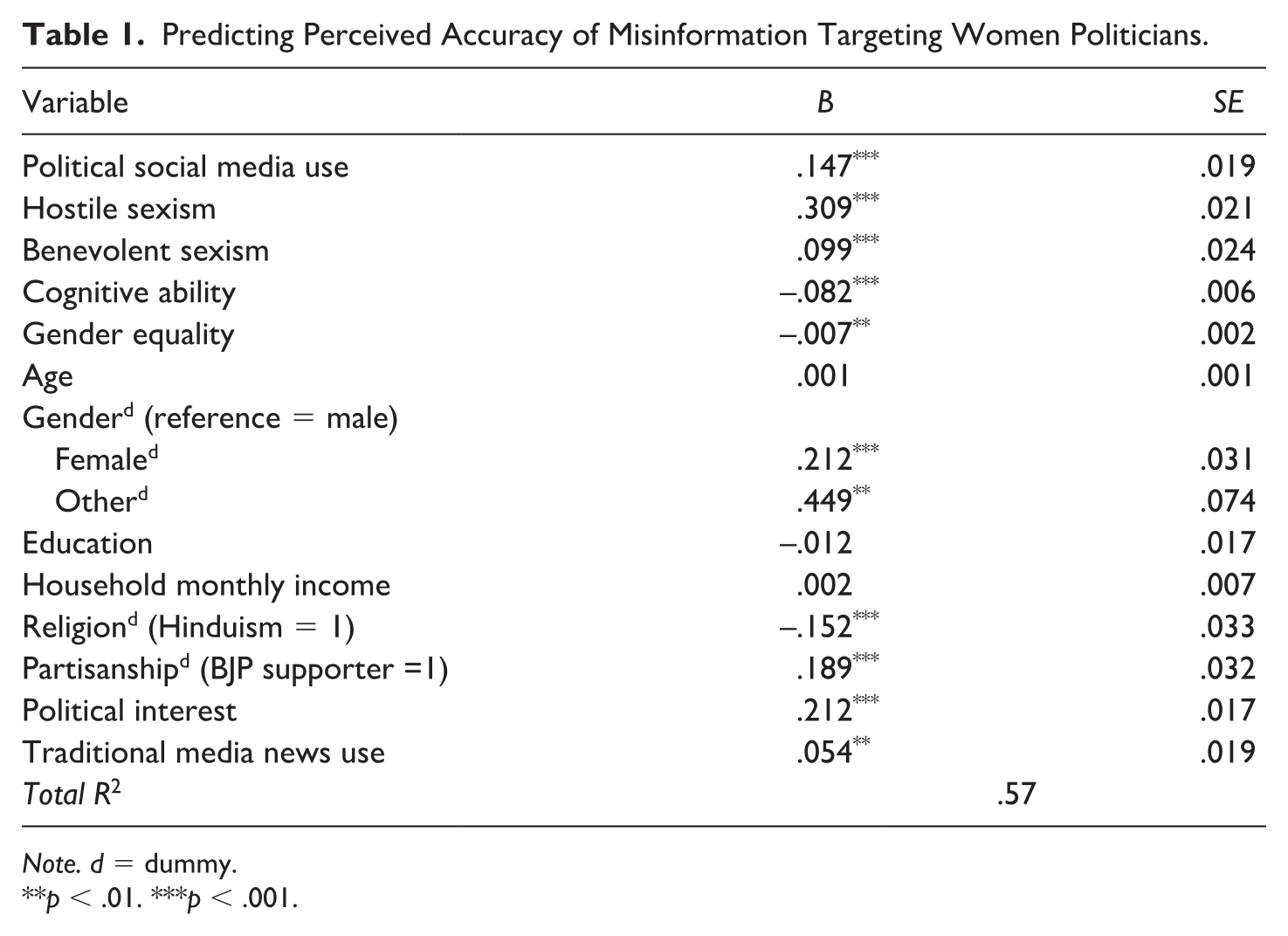
Note. d = dummy.
p < .01. ***p < .001.
Second, Table 2 results suggest that political social media use is positively associated with both hostile (b = .188, SE= .021, p = .001) and benevolent sexism (b = .186, SE= .019, p < .001). Therefore, H2a and H2b are also supported. In addition, we find that cognitive ability is negatively associated with both hostile (b = –.070, SE= .007, p < .001) and benevolent sexism (b = –.046, SE= .006, p = .001). Females were found to have lower levels of hostile sexism compared with males (b = –.164, SE= .034, p < .001), but no differences were found for benevolent sexism (b = –.018, SE= .031, p = .14). Political interest (hostile: b = .172, SE= .018, p < .001; benevolent: b = .119, SE= .016, p < .001) and partisanship (support for BJP; hostile: b = .176, SE= .036, p < .001; benevolent: b = .175, SE= .032, p < .001) were positively associated with both forms of sexism. Older individuals were also likely to report higher levels of hostility (b = .004, SE= .0011, p < .001) and benevolent sexism (b = .008, SE= .001, p < .001).
Predicting Hostile and Benevolent Sexism.
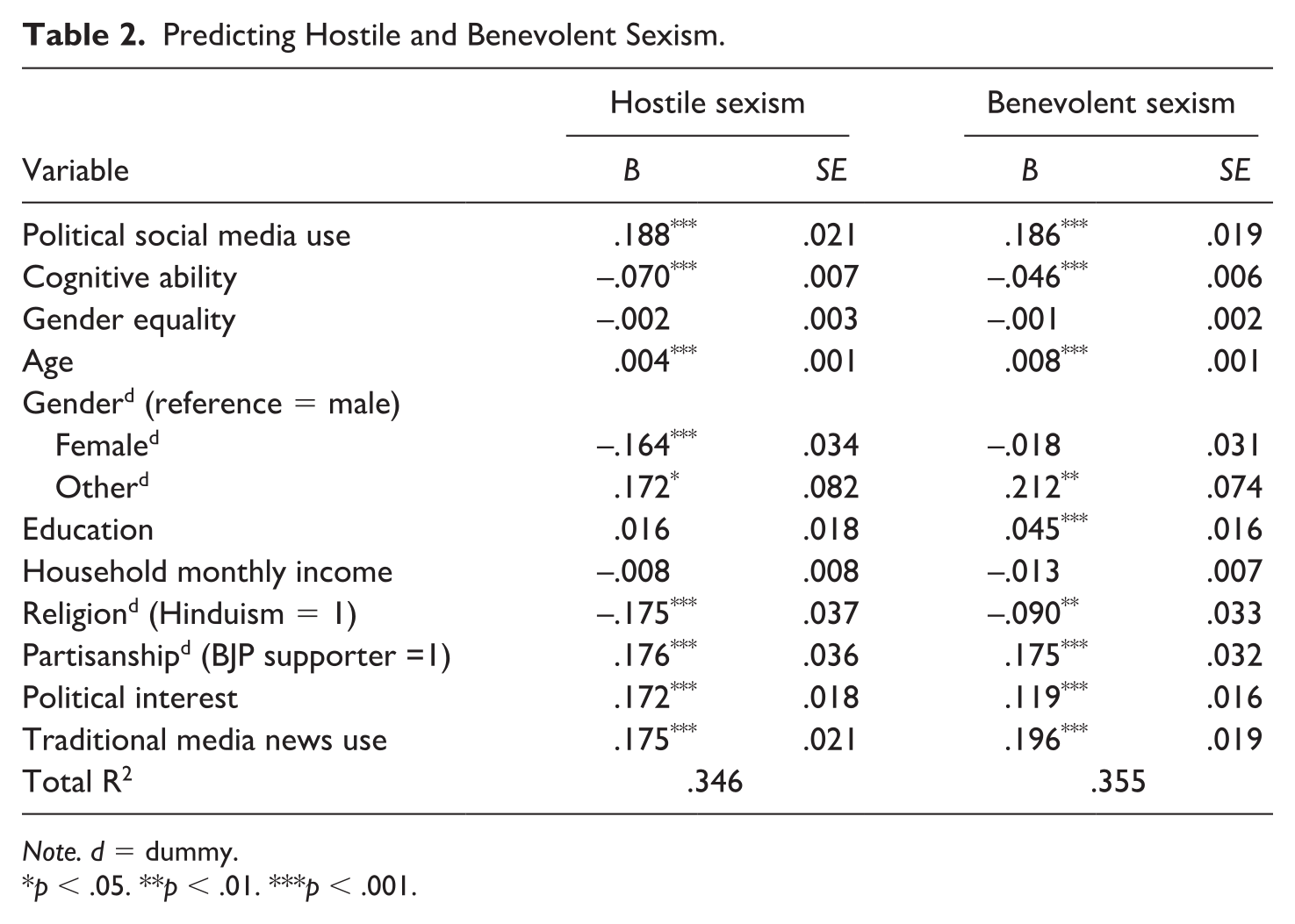
Note. d = dummy.
p < .05. **p < .01. ***p < .001.
Figure 2 shows the overall relationships between political social media use, sexism, and perceived accuracy of misinformation targeting women politicians.
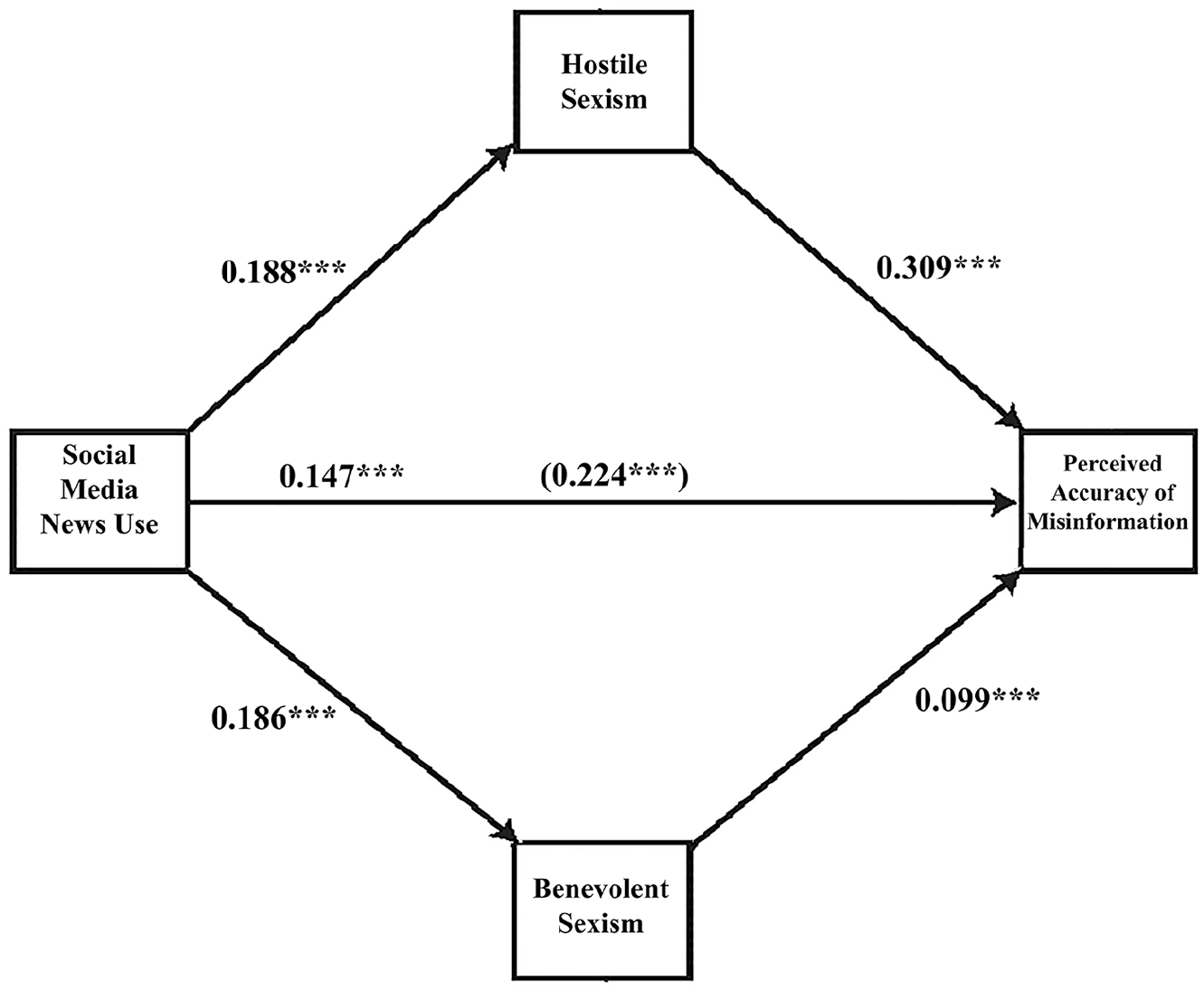
The Relationship Between Social Media News Use, Sexism, and Belief in Misinformation Targeting Women Politicians
Next, we used SPSS macro-PROCESS with the bootstrapping method (Model 4, Hayes, 2018) to test the mediating relationship between political social media use and the perceived accuracy of misinformation targeting women politicians through sexism (hostile and benevolent). Formal statistical testing of the mediated process suggests that the indirect effects are statistically significant (hostile sexism: b = .058, SE= .008, bootstrapping CI =.042 to .076 and benevolent sexism: b = .019, SE= .005, bootstrapping CI =.009 to .030). Therefore, H3a and H3b are also supported.
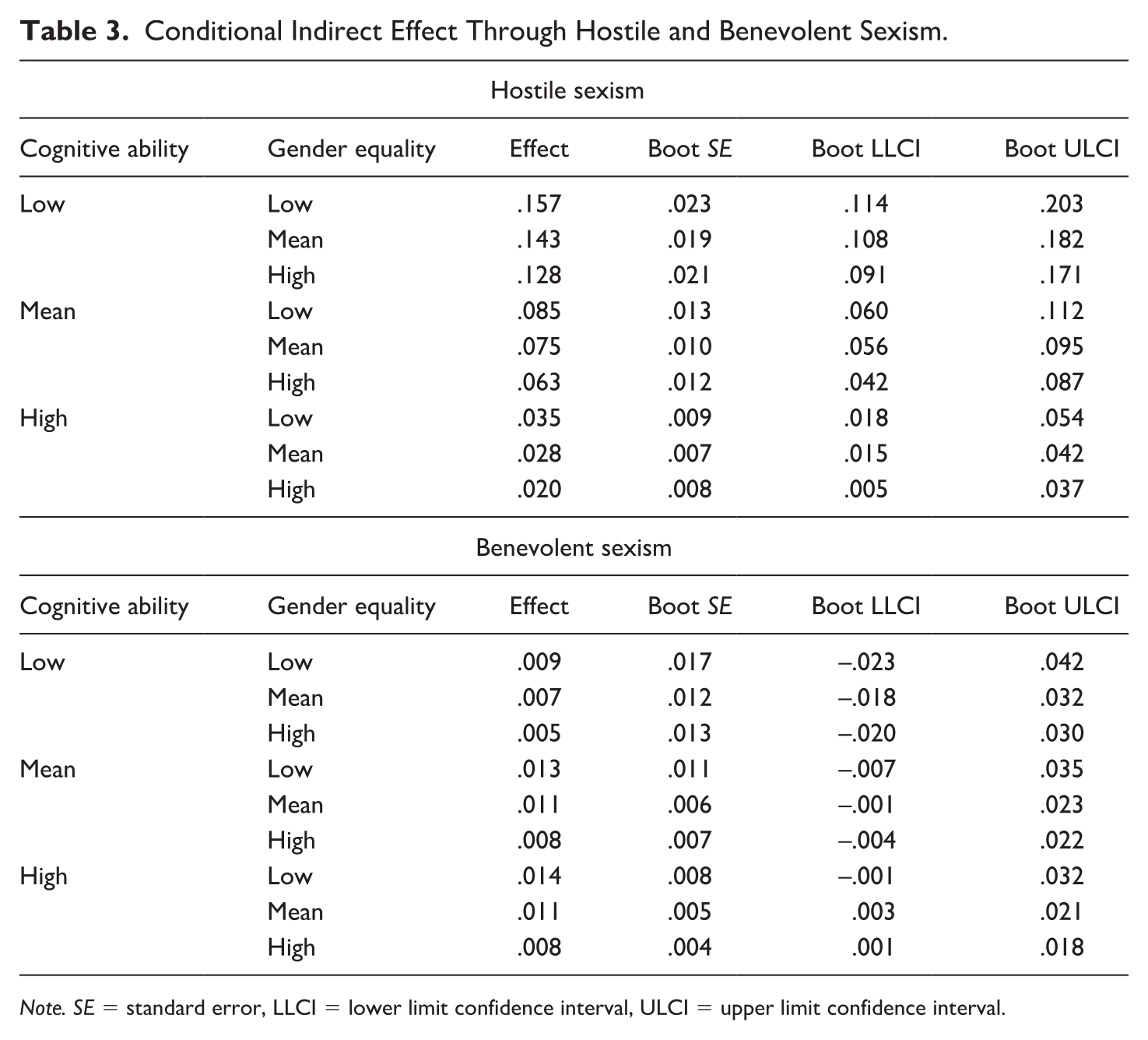
To examine how cognitive ability and gender inequality as conditional moderators influence the discussed mediated relationship, we employed a conditional process analysis using PROCESS (Model 76, Hayes, 2018). The beta estimates, standard errors, and significance are presented in Table 3. The effects are estimated at the mean value and one standard deviation below and above the mean values of the moderators.
Conditional Indirect Effect Through Hostile and Benevolent Sexism.
Note. SE = standard error, LLCI = lower limit confidence interval, ULCI = upper limit confidence interval.
It is suggested that we can assume moderated mediation when the strength of the indirect effects depends on the levels of the moderators. As witnessed in this case, the strength of the indirect effects (for both hostile and benevolent mediations) is found to vary with the levels of cognitive ability and gender inequality values. For the conditional indirect effect through hostile sexism, we observe the greatest effects for low cognitive individuals in the least gender-equal states (b = .157, SE= .023, LLCI = .114 ULCI = .203) to weakest effects for high cognitive individuals in most gender-equal states (b = .020, SE= .008, LLCI = .005 ULCI = .037).
However, for the conditional indirect effects through benevolent sexism, we observe that the effects are only significant for high cognitive individuals in average (b = .011, SE= .005, LLCI = .003 ULCI = .021) and high (+1SD) gender-equal states (b = .008, SE= .004, LLCI = .001 ULCI = .018).
Overall, the pattern of the strength of the indirect effects decreases among those with greater cognitive ability and in states that are more gender equal when mediated by hostile and benevolent sexism. Nevertheless, unlike hostile sexism, which has a significant mediating effect across all three levels of gender equality at all three levels of cognitive ability, benevolent sexism has only a significant mediating effect when the cognitive ability is high at an average and low level of gender equality in a region.
We also include the conditional direct effects as additional findings in the appendix (Table A1).
Discussion
This study aimed to expand our theoretical and contextual understanding of belief in misinformation targeting women politicians in non-Western democracies by focusing on both the role of individual and structural level determinants. The findings suggest that those who frequently use social media for political purposes are more likely to believe misinformation regarding women politicians in India, and this relationship is also mediated by hostile and benevolent sexism. However, the moderated mediation findings suggest that the mediation process is contingent upon cognitive ability and gender equality level of the state where individuals reside, such that the effects are more substantial for low-cognitive ability individuals living in less gender-equal states. The overall implications of the findings are discussed below.
First, the findings concerning the relationship between political social media use and belief in misinformation targeting women politicians expand the current understanding regarding the effects of social media use for political purposes in misinformation engagement. It highlights that the adverse consequences of heavy reliance on social media platforms for political activities are not limited to mainstream partisan political misinformation but are also detrimental for misinformation targeting specific political minorities, in this case, women politicians in the context of India. The results add to the robustness of the similar patterns usually observed in Western democratic contexts (Pennycook & Rand, 2019, 2021) by offering scholarship from a much-needed global perspective in the field of politics and media (Valenzuela et al., 2023).
Second, hostile and benevolent sexism mediated the relationship between political social media use and belief in misinformation targeting women politicians. These results show how previously observed effects of social media use for political purposes shape perceptions of political misinformation. As observed, greater political social media use is associated with heightened hostile and benevolent sexism levels. In particular, the association between political social media use and sexism can also be explained through the lens of political coverage offered by Indian news media on social media. Guha (2018) reported that social media pages of Indian news media often glamorize and sexualize women politicians in their reporting. They are visually framed as insensitive, juvenile, and needing guidance and support from men. Such coverage also reflects the gender imbalance in the Indian news media industry itself (Singh, 2021). Moreover, stereotypical news framing runs the risk of voters associating power and efficiency with male political candidates and sexist attitudes toward women political candidates (Guha, 2018). Because of these gender imbalances and prevailing sexism in Indian news media coverage, it can eventually translate individuals’ political social media use into belief in gendered misinformation. Besides, the online sexism observed here can also be understood as an extension of offline gender ideologies. The country’s existing patriarchal values endorse the subdued status of women, often driven by religious or cultural standpoints (Batra & Reio, 2016). If anything, social media platforms have reinforced sexism and misogyny (Barratt, 2018), which may facilitate belief in misinformation targeting women, including women politicians, in the country.
Third, the findings of the direct effects of cognitive ability confirm and expand the existing scholarship. The relationship between cognitive ability and belief in misinformation is aligned with multiple studies suggesting that individuals with high cognitive ability are less likely to fall for general and partisan misinformation (Pennycook & Rand, 2019, 2021). We add to this scholarship by exhibiting the patterns held even for misinformation targeting political minorities, especially from a non-Western democratic context. Next, the negative relationship between cognitive ability and sexism also adds a novel understanding of the relevance of cognitive factors in explaining sexist attitudes. The findings confirm that being egalitarian (e.g., non-sexist) is not only driven by “willingness but is also a matter of ability” (West & Eaton, 2019). While some empirical evidence confirms that lower cognitive ability predicts greater prejudice (Dhont & Hodson, 2014; Onraet et al., 2015), our findings add to the relevance of cognitive ability to explain sexism, an area unexplored in previous research.
Fourth and importantly, the results of this study provide support that the effect of social media use for political purposes on misinformation engagement should not be explored in silos of individual traits. The question of whether cognitive ability and structural gender inequality moderated the relationship between political social media use and belief in misinformation through sexism showed that the indirect effects were contingent upon the individual-level (i.e., cognitive ability) and structural-level (i.e., gender inequality) determinants. Overall, the conditional effects are stronger for hostile sexism, such that the most significant effects are found for low-cognitive individuals in states with high levels of structural gender inequality. In regions (states) with high structural gender equality, the indirect effects of political social media use on belief in misinformation were weaker for individuals across all levels of cognitive ability compared with regions with average structural gender equality followed by low structural gender equality. This may be because regions or states with comparatively higher levels of gender equality may offer an environment that softens sexist attitudes, weakening its effect on misinformation perceptions. For example, increased exposure to female political leaders in Kerala (the state with the lowest gender inequality score) India has led to more favorable gender equality attitudes (Tresse, 2019). Overall, the results show that while regional boundaries may not restrict social media, environmental factors shape social media’s effects on misinformation engagement. Future scholars should consider individual and structural factors when examining citizens’ perceptions and engagement with political (mis)information.
However, for the conditional indirect effect through benevolent sexism, in most conditions, the strength of the mediation between political social media use and belief in misinformation does not change across the levels of gender equality in a region and the cognitive abilities of individuals. Only at high cognitive ability, the indirect effect of political social media use on belief in misinformation is significant for individuals residing in regions with average and high levels of gender equality. One possible explanation is that the level of gender equality in the regions (states) is only meaningful for individuals with high cognitive ability individuals when it comes to explaining the conditional mediating role of benevolent sexism in the relationship between social media use and belief in misinformation targeting women politicians.
Finally, although not formally proposed, our results revealed notable patterns related to gender and religion that warrant attention. We found that while females tend to believe in misinformation targeting women politicians more compared with males, those who identify as Hindus are less likely than non-Hindus to believe in such misinformation. We offer the following possible explanations. The tendency of women to believe misinformation targeting female politicians may be influenced by the context in which gender-based biases are ingrained. In India, women often face heightened scrutiny in political and social life. Misinformation about female politicians may tap into existing stereotypes and biases, making such narratives more plausible to both males and females. However, women might internalize them more, because of their gender-based experiences. This could lead them to a greater acceptance of gendered-misinformation narratives, even though overall they may also be more aware of gender-related biases. Although, this is a conjecture and more detailed analytical frameworks are required to assess the validity of these suggestions.
The second observation underscores the intricate relationship between religion and politics in India. In a context where political affiliations are deeply intertwined with religious identities, the engagement with misinformation is often influenced by the religious framework in which it circulates. As the religious majority, Hindus—aligned with the dominant political-religious narrative—may be less vulnerable to misinformation that manipulates issues presented here. Conversely, for non-Hindus, who may feel marginalized by the dominant discourse, specific types of misinformation may resonate more strongly, reflecting their unique social and political positioning.
These findings suggest that gender and religion are critical factors in shaping the ways individuals interpret and respond to political misinformation, particularly in contexts where identity politics plays a role. Future research should look into how different demographic groups are more (or less) targeted and influenced by misinformation in different societies.
Moreover, the Indian context presents a unique society for studying misinformation targeting women politicians due to its historical patriarchal traditions and hostility toward women in public life. These factors create an environment where gender biases are more overtly expressed, and misinformation can exploit these existing societal attitudes. Given this backdrop, we anticipated that gender-based misinformation would resonate more strongly, particularly against female politicians, who challenge traditional gender roles in the public sphere. Regarding generalizability, we recognize that India’s socio-political context differs from societies with greater gender equality and higher social media penetration. However, the mechanisms of how gender-based misinformation operates—exploiting societal biases and reinforcing stereotypes—are not unique to India. In other societies, particularly those with lower levels of overt sexism or more gender-equal norms, misinformation may still target women politicians, yet specific content and the degree of susceptibility may vary based on the socio-cultural context. The findings of this study, therefore, could provide valuable insights into how misinformation spreads in other democratic contexts, though with different cultural dynamics.
Given these findings, what can be done? To mitigate the detrimental impact of misinformation targeting women politicians, we must address both individual and structural determinants. At the individual level, educational initiatives that focus on enhancing critical thinking skills and media literacy are essential. Programs should be tailored to improve cognitive abilities, particularly among those who are more susceptible to believing misinformation due to lower cognitive skills. These initiatives could include targeted workshops, digital literacy courses, and interactive online modules designed to help individuals critically evaluate information and recognize biased or false content. In addition, specific interventions should focus on addressing sexist attitudes by promoting egalitarian values and fostering awareness of the harms of hostile and benevolent sexism.
At the structural level, fostering an environment that promotes gender equality is crucial in reducing susceptibility to gendered misinformation. Policymakers should focus on creating and enforcing policies that encourage equal representation of women in political, social, and media spheres. This could involve implementing gender-sensitive guidelines in media reporting, increasing the visibility of women leaders, and promoting unbiased political discourse. Furthermore, states with high levels of gender inequality should invest in community-based programs to challenge prevailing gender norms and stereotypes. By addressing these structural inequalities, we can create a more equitable society that resists the spread of gendered misinformation and supports informed political engagement.
Before we conclude, it is essential to acknowledge the study’s limitations. First, while this study offers rich insights into the relationship between political social media use and belief in misinformation targeting women politicians from a non-Western context, it is not possible to make any causal assertions due to the nature of the data (cross-sectional). In other words, we acknowledge that our propositions are not tested using a longitudinal design, which limits our inference to the correlational nature of the findings. However, the patterns of the findings are consistent with related research, adding credibility to the implications offered here. Next, although we use a (online) quota-based approach to match the sample characteristics to population parameters, our findings should not be generalized to the entire Indian population. For example, only 32% of the population is connected to social media (Kemp, 2024). Therefore, our findings are limited explicitly to the population that uses social media. Finally, our study is focused on India, a context marred with deep-rooted gender inequality issues across social and political spheres. How the mechanisms would play out in contexts with different socio-cultural issues remains untested. Nevertheless, future scholars can replicate the framework offered here to advance this area of political misinformation research.
In sum, our findings contribute to the literature by highlighting the adverse role of social media use for political purposes in facilitating belief in misinformation about women politicians in a non-Western context. It raises alarming concerns about the quality of social media discourse and its impact on women’s engagement in political affairs in India. Furthermore, while exploring sexism as a predictor of misinformation is vital in the Indian context, the findings relate to how women are often targeted in political processes in other societies (ACLED, 2021). However, additional moderating findings offer that if we create more gender equality structurally, we can reduce susceptibility to misinformation even in people with low cognitive abilities. A more gender-equal environment is protective against gendered misinformation, and this is most beneficial for those with lower cognitive abilities. Therefore, public policies addressing the issues highlighted in this study should be introduced in India and similar contexts.
Footnotes
Appendix
The Conditional Direct Effect of Political Social Media Use at Values of Cognitive Ability and Gender Equality.

| Conditional direct effect of political social media use | |||||
|---|---|---|---|---|---|
| Cognitive ability | Gender equality | Effect | Boot SE | Boot LLCI | Boot ULCI |
| Low | Low | .200 | .031 | .140 | .260 |
| Mean | .200 | .027 | .147 | .252 | |
| High | .199 | .031 | .138 | .260 | |
| Mean | Low | .156 | .025 | .107 | .206 |
| Mean | .156 | .019 | .118 | .194 | |
| High | .155 | .025 | .107 | .203 | |
| High | Low | .112 | .028 | .058 | .167 |
| Mean | .112 | .022 | .069 | .155 | |
| High | .111 | .026 | .061 | .162 | |
Declaration of Conflicting Interests
The author(s) declared no potential conflicts of interest with respect to the research, authorship, and/or publication of this article.
Funding
The author(s) disclosed receipt of the following financial support for the research, authorship, and/or publication of this article: The authors received support from Nanyang Technological University for the research and publication of this article.
