




Abstract
Media and Information Literacy (MIL) education can combat online misinformation by enhancing users’ fact-checking skills. This action research study designed and implemented a problem-based learning MIL project for journalism undergraduates. The objectives are (a) to design a MIL project by using a problem-based learning methodology; (b) to implement the MIL project and to assess its effectiveness in improving students’ fact-checking skills; and (c) to identify the challenges and limitations of implementing the project. Analysis shows that the MIL project successfully improved students’ MIL skills, including critical analysis, media production, and personal growth. Despite facing challenges like time constraint and limited generalizability, the study suggests that the MIL project could be replicated in other journalism programs to enhance MIL skills and cultivate critical thinking to fight misinformation.
Introduction
Media and information literacy (MIL) is crucial in this digital age, where individuals are bombarded with information from various sources, often with conflicting views (Zou’bi, 2021). The ability to critically analyze and evaluate the information is essential for making informed decisions in the post-truth era (Friesem, 2019). Journalism undergraduates play a critical role in this context, as they are future journalists and content creators in various forms, responsible for informing the public about various issues (Evans, 2019; Tamam & Abdullah, 2015). It is crucial to involve them in MIL education to make their audiences aware of this phenomenon and help them develop the skills needed to determine reliable sources (Dame Adjin-Tettey, 2022). Therefore, this action research article aims to design and implement an MIL project that combats online misinformation among Malaysian journalism undergraduates, using a problem-based learning approach.
Background and Importance
Fake News and Disinformation Phenomena
With the growth of social media, the transmission of misleading information and fake news online has accelerated (Moonyati Mohd Yatid, 2019). Online users who frequently consume fake news may become confused and misled by its skewed facts (Zhang & Ghorbani, 2020). Fake news is defined as intentionally false news articles that have the potential to mislead readers (Allcott & Gentzkow, 2017). Wardle and Derakhshan (2017) elucidated the concept of “Information Disorder,” which encompasses three distinct types:
Misinformation: False information without the intention of causing harm.
Disinformation: False information deliberately created to harm a person, social group, organization or country.
Mal-information: Real information deliberately caused harm to a person, organization or country.
Fake news is not an isolated phenomenon and not straightforward to eradicate and is a symptom of much broader tendencies in the worlds of politics and media (Posetti & Matthews, 2018), especially when it comes to epistemology, people tend to believe what they believe and filter out things dislike or do not agree, which is called “filter bubble” or “echo chamber effect” in the social media world (Buckingham, 2019). As young generations tend to rely on the internet and social media for information, they may be exposed to unreliable and harmful content which places them at risk (Wascher, 2021).
Information Landscape in Malaysia
Since 2016, Southeast Asia has emerged as one of the world’s most active laboratories for exploring governmental news correction practices and anti-fake news regulations (Schuldt, 2021). An example of such efforts can be seen in Malaysia, where the government launched Sebenarnya.my in 2017, a fully state-operated fact-checking website aimed at combating fake news. Operated by the Malaysian Communications and Multimedia Commission (MCMC) under the Ministry of Communications and Multimedia, the website, whose name means “actually” or “the truth is,” primarily gathers debunking of news information from other governmental agencies and also publishes public warnings and official announcements. In November 2019, the government announced that the website and smartphone application had received more than 70 million views since its inception (Carvalho et al., 2019).
In April 2018, the Malaysian parliament enacted the Anti-Fake News Act, which received criticism from human rights activists who saw it as an attempt to suppress reports related to the infamous 1 Malaysia Development Berhad (1MDB) 1 corruption scandal. Under the Act, fake news was broadly defined as “any news, information, data, and reports, which is or are wholly or partly false,” without requiring proof of its impact on public interest (Schuldt, 2021). However, the Act’s existence was short-lived, as it was repealed by a new ruling coalition just one year later following the general election.
Despite these measures to address fake news, the information landscape in Malaysia remains restrictive, lacking a guarantee of freedom of information at the federal level. This situation is reinforced by the enactment of the Official Secrets Act 1972, which denies public access to government documents and grants the government the power to prosecute both the public and journalists for revealing and publishing information classified as “official secret” without authorization (Official Secrets Act, 1972). As a result, this Act fosters a culture of secrecy, hindering transparency and open access to information in the country.
MIL Education and Its Importance in Current Digital Landscape
Media and Information Literacy (MIL) education has gained momentum as a global movement in recent years due to its crucial role in combating online risk and information disorders (Cernicova-Buca & Ciurel, 2022; Fedorov & Mikhaleva, 2020; Luo et al., 2022). United Nations Educational, Scientific and Cultural Organization (UNESCO, 2019, 2021) has integrated media literacy and information literacy into a set of competencies necessary for modern life in the digital world, which has led to the increasing popularity of MIL education to address the challenges posed by the digital age, worked to integrate both.
MIL education empowers young people to evaluate, analyze, and process mass media content actively and critically, reducing the risk of consuming misinformation and disinformation (Luo et al., 2022; Zou’bi, 2021). MIL education covers various aspects such as identifying the author, purpose, and point of view, examining construction techniques and genres, examining patterns of media representation, and detecting propaganda, censorship, and bias in news and public affairs programming (Zou’bi, 2021). MIL education aims to educate informed, thoughtful, and conscientious citizens about the ethical issues involved in their behavior, as consumers, communicators, and producers (Pinto da Mota Matos et al., 2016).
In today’s digital media landscape, students can both consume and produce content, known as “prosuming” (Lang et al., 2021). Producing media empowers people to make their own views heard, especially if their opinions have been overlooked by mainstream media channels (Lim & Nekmat, 2008). In accordance with the “participatory culture” (Jenkins et al., 2006), MIL education should involve various social affiliations, collaborative problem-solving activities such as project work and group work, as well as practice-based activities like collaborative media text production, structured discussion, peer teaching, and research work (Lim & Nekmat, 2008).
In Malaysia, there is no MIL education in formal education curriculum or syllabus across all education levels—from the primary schools to the tertiary education system—regardless of the urgent need for this competency (Hasan et al., 2022; Hasrul Hashim et al., 2022; Pandian et al., 2020; Shin & Zanuddin, 2019). A study by Zanuddin and Ying Shin (2020) found that most students at a Malaysian private university had a moderate level of new media literacy. The study also revealed a positive relationship between media use with functional presumption and critical presumption. This means that individuals who use media less frequently have limited access to media content, which may result in a lack of motivation to seek the truth or evaluate information. The study highlighted the need for further research and suggested that media literacy can combat misinformation and fake news and help individuals critically analyze media content.
Despite efforts to combat fake news through MIL training (Dame Adjin-Tettey, 2022; Zanuddin & Ying Shin, 2020), there is still a lack of MIL education that actively involves students in media production. This kind of education can help develop their critical analytical, creative, and argumentation skills while promoting tolerance in society (Fedorov & Mikhaleva, 2020). Dame Adjin-Tettey (2022) suggests that future media participants, including journalists and editors, develop their skills in fake news detection to avoid unintentionally spreading misinformation to their audiences when using sources, particularly online sources, for news content production.
Hence, there is a need to design and implement a MIL project that aids students in cultivating critical thinking skills and evaluating information from different sources. This issue impacts the quality of journalism produced by students and their capacity to interact with media content responsibly and knowledgeably, verifying the authenticity of news and information (Schilder et al., 2016).
Objectives and Question
The main objective of this research paper is to combat online misinformation by designing and implementing a MIL project for journalism undergraduates using a problem-based learning approach. The specific objectives (RO) include:
RO1: To design a MIL project by using a problem-based learning methodology.
RO2: To implement the MIL project and assess its effectiveness in improving fact-checking skills.
RO3: To identify the challenges and limitations of implementing the MIL project.
The research question (RQ) are:
Literature Review
Media and Information Literacy education stands as a critical component in navigating the complex landscape of misinformation and fake news which is prevalent in contemporary society. While the existing literature extensively covers the phenomena of misinformation and its impacts, there is a gap in understanding and exploring the most effective teaching and learning strategies within the realm of MIL education.
Traditional approaches like teacher-centered courses and tech-driven have proven to be ineffective in this Education 4.0 Era (Wascher, 2021). In contrast, learner-centered approaches that promote dynamic and autonomous learning are more suitable for creating a better learning experience (Baasanjav, 2013; Siti Fatimah, 2022). The learner-centered approach not only improves knowledge acquisition but also encourages creative learning (Buckingham, 2007), participatory learning (Jenkins et al., 2006), collaborative learning (Hunsapun et al., 2021; Lim & Nekmat, 2008), and hands-on learning (Lim & Nekmat, 2008). While the direct-instruction teaching approach has its place, integrating the abovementioned innovative approaches can substantially improve MIL education (Dame Adjin-Tettey, 2022).
To equip future communication professionals with essential MIL skills, educators are turning to constructivist pedagogical strategies such as problem-based learning (PBL; Lim & Nekmat, 2008; Lin et al., 2015; Mokhtar & Majid, 2008) and project-based learning (Flores Michel et al., 2019; Garcia & Spikes, 2020; Jamil et al., 2022; Lim & Nekmat, 2008; Sousa & Costa, 2019), which prioritizes critical thinking and fact-checking skill.
Problem-Based Learning
Problem-based learning (PBL) is a student-centered approach that enhances learning outcomes by requiring students to solve real-world problems and apply their knowledge, skills, and higher-order thinking abilities (Yeen-Ju et al., 2015). Barrows (1996) identified six key characteristics of PBL, including (a) student-centered learning, (b) small group work, (c) facilitator guidance, (d) problem-based core learning, (e) inquire-based problem-solving skills, and (f) self-direct learning. PBL has shown positive outcomes in various fields like medical, art, and communication education, proving its effectiveness in MIL education to foster critical thinking and problem-solving abilities (Erdem, 2018; Fedorov & Mikhaleva, 2020; Yeen-Ju et al., 2015; Zanuddin & Ying Shin, 2020).
Project-Based Learning
Project-based learning has its roots in the ideas of constructivist philosopher John Dewey (1959) and was later expanded upon by Krajcik and Blumenfeld (2012) who emphasized four key elements: active construction, situated learning, social interaction, and cognitive tools (Flores Michel et al., 2019; Garcia & Spikes, 2020; Jamil et al., 2022; Lim & Nekmat, 2008; Sousa & Costa, 2019). To create an effective project-based learning environment, it is important to (a) select driving questions that align with learning goals, (b) integrate technology, (c) support teachers with explicit strategies, and (d) develop materials that foster understanding of key concepts (Burks, 2022; Friesem, 2019; Goldman et al., 2020; Sanger & Ziyatdinova, 2014).
While the literature provides valuable insights into MIL pedagogical methods, further exploration into the efficacy and implementation of these strategies within MIL education contexts is necessary to initiate more robust discussions and practical applications.
Method
Based on the literature review, this MIL project involves a problem-based learning approach that aims to develop practical fact-checking skills by applying knowledge to real-world problems (Figure 1). To achieve this, the project employed an action research model as proposed by O’Leary (2004), which consists of the following steps:
Identifying a real-world problem related to MIL: the students identify a problem related to MIL, such as misinformation, disinformation, biased reporting, or sensationalism.
Research and analysis: the students conduct research and analyze the problem using various sources, such as scholarly articles, news reports, and social media.
Development of solutions: based on the research and analysis, the students develop solutions to the problem.
Implementation: the students implement the solutions, such as creating a media platform to share knowledge such as “fact-checking 101” and producing some educational videos to increase the awareness of media literacy.
Evaluation: the effectiveness of the MIL project would be evaluated using various criteria, such as social media content, quality of video content students’ execution, and their learning outcomes.
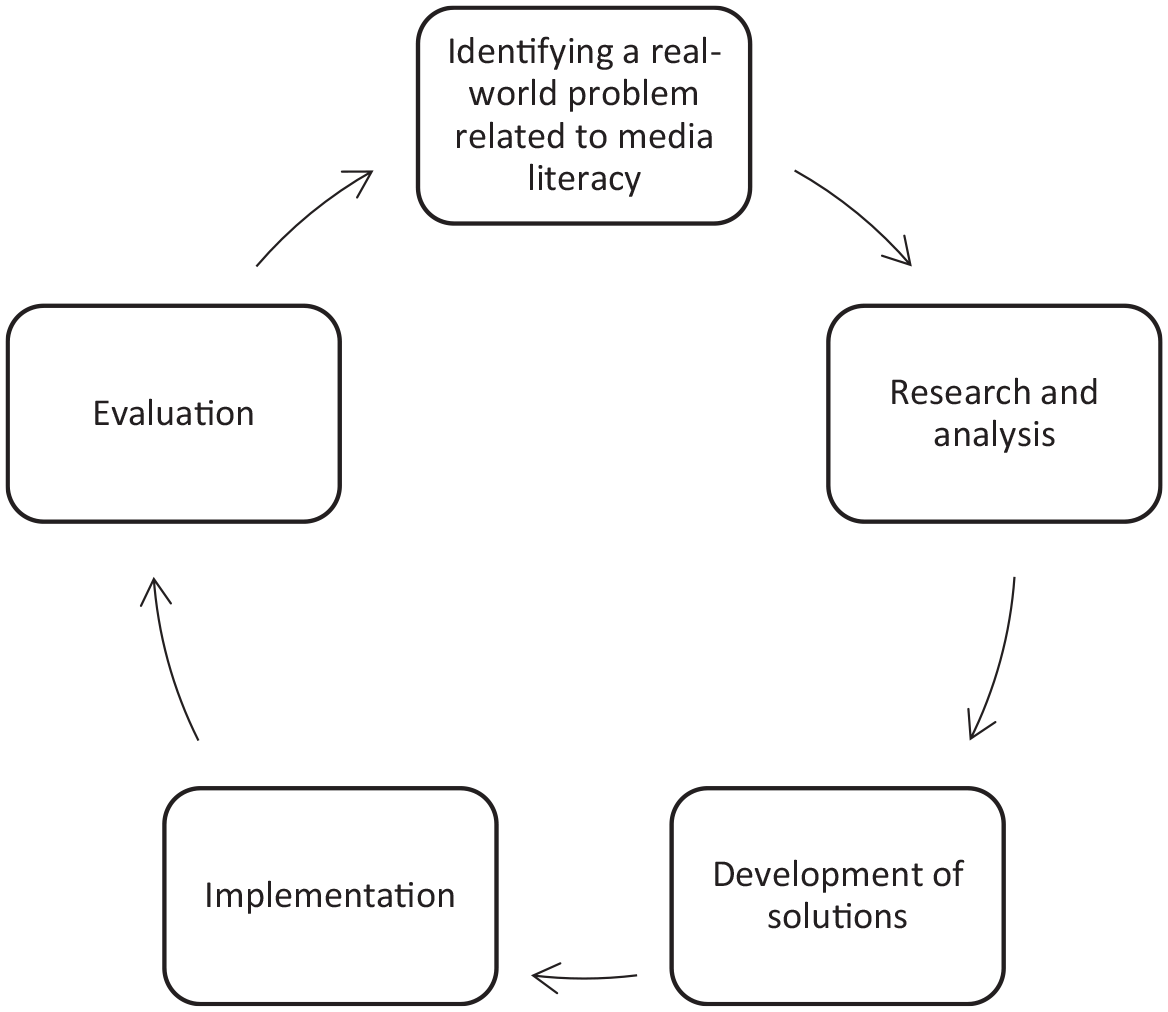
MIL Project Implemented Using Problem-Based Learning Approach Action Research Model O’Leary (2004).
Sample and Demographic
The study involved 14 final-year journalism undergraduates from a Malaysian urban private university located in an urban area in Malaysia. The students, who had diverse backgrounds and different levels of MIL proficiency, undertook a subject called Citizen Journalism and Participatory Culture. The university considers MIL as a key skill for its journalism program, with related topics incorporated into the curriculum. Approximately 80% of the class consists of female students, the majority of whom are pursuing majors in journalism and communication studies. Only three students remain undecided about their academic interests.
MIL Project Design and Procedure
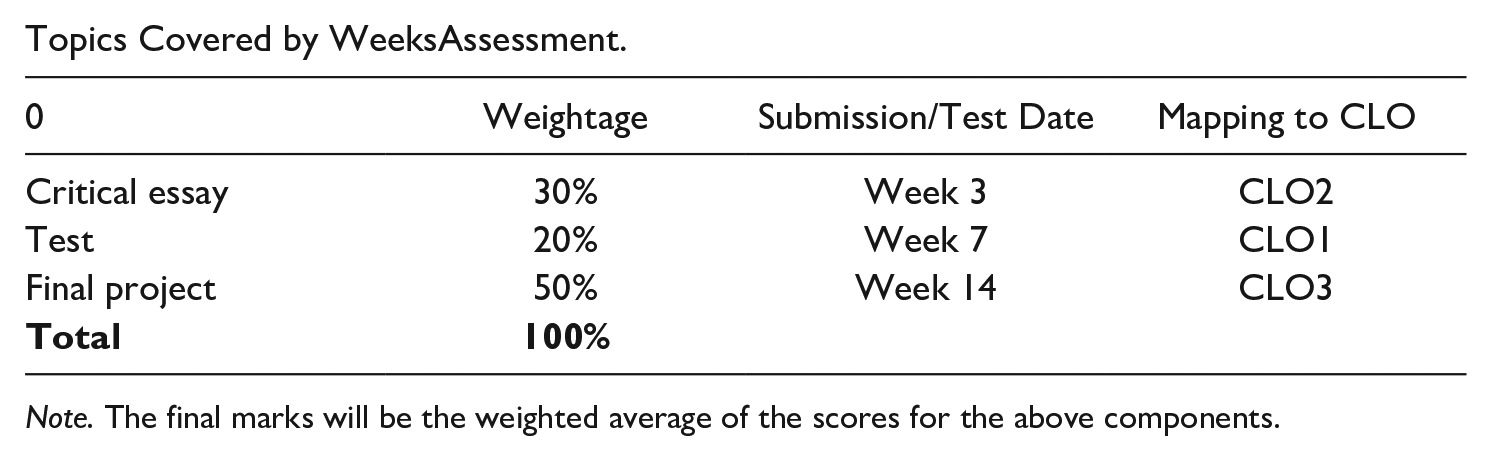
The educator spent 14 weeks (see Appendix B for a full course outline) conducting the MIL project by employing PBL with five systematic implementation stages.
First Stage: Identifying a Real-World Problem Related to MIL
At the beginning of the course, the educator initiated an ice-breaking session with the students to get to know their career interests. This session was crucial as it allowed the students to familiarize themselves with one another, a vital aspect of working together effectively as a team for the MIL project. The students were able to establish an organizational structure for their project, dividing themselves into teams that aligned with their interests, including journalism, research, social media, and video production.
Second Stage: Research and Analysis
During the first month of the course, the students were taught the fundamentals of journalism, including news writing formats, online and mobile journalism, data journalism, and social media management. There was a tutorial session where the students were tasked to discuss high-profile case studies of misinformation, such as the Cambridge Analytica scandals, Brexit campaigns on social media, and the 2016 presidential election in the United States (Brown, 2020). These case studies helped the students understand the detrimental impact of misinformation and disinformation on democratic society (Posetti & Matthews, 2018).
Third Stage: Development of Solutions
The students had to acquire fact-checking and verification skills before embarking on their group project. To address this need, the educator conducted a fact-checking workshop with the students, utilizing verification materials and free journalism resources provided by the Google News Initiative (GNI). The workshop enabled the students to learn practical methods of verifying the authenticity and accuracy of images, videos, reports, and information found on social media and other online platforms. The verification techniques covered in the workshop included reverse image search and checking website domain using free tools like ICANN Lookup and Domain Tools. The students also learned to be critical about information posted on all types of digital platforms. The workshop emphasized the importance of being critical about information posted on digital platforms and encouraged students to ask five critical questions before processing information online:
Are you emotionally triggered by this information?
Is the main intention of this information being to instigate fear or anger?
Is this information published by credible websites?
What is the specific claim or message from this information?
Do you need to invest time and effort to debunk this information? (Clarification sometimes amplifies the circulation of fake news)
To ensure that the students could apply verification skills, the educator provided case studies involving misinformation that had been widely shared by Malaysian communities during the COVID-19 pandemic. For example, footage captured by a closed-circuit television (CCTV) showing a gang robbery case in a local grocery shop went viral on Facebook in 2020, and the uploader claimed that it happened during the lockdown period. After applying the reverse image search method, the students found out that the robbery had occurred one year before the pandemic, as they managed to identify news articles published by some credible mainstream media organizations (Iskandar Shah Mohamed, 2019). The students had to apply the reverse image search method to verify the authenticity of the information. From the exercise, the students concluded that misinformation could be taken out of context and misrepresented, highlighting the importance of verification skills.
In the second month of the course, a professional fact-checker was invited to conduct two training sessions with the students to further enhance their verification skills and media information literacy level. The speaker established a start-up called Faqcheck Lab, 2 focused on providing practical media literacy training in Malaysia. The sessions enabled the students to learn more advanced research skills using various digital tools, as well as guidance on verifying suspicious claims, finding reliable resources, and identifying professional experts to debunk misinformation. Overall, the course was designed to better equip the students with the necessary MIL skills so that they were able to address the issues of misinformation and disinformation in the post-truth era. This also fulfilled the course learning outcome, which was to analyze the meanings and debates surrounding new media theories and the emergence of citizen journalism and participatory culture in digital age.
Fourth Stage: Implementation
As the students gained more confidence in their fact-checking skills, they began to explore topics and stories that interested them. Shortly after attending training sessions, some students began collecting misinformation from their family WhatsApp groups, while others conducted research on false information circulating on social media platforms. After several rounds of discussion, the students decided to divide their project into two parts: debunking misinformation and increasing awareness on MIL. They aimed to communicate their message to their target group of undergraduates on social media using multimedia presentations, such as infographics and short videos. The students identified Instagram as their primary platform for publication due to its popularity among the younger generation and its ability to share visual content with followers. Ultimately, they chose the Voicelah! 3 campus newsroom Instagram account, which had more than 200 followers, primarily comprising undergraduates.
Over the next 4 weeks, the students worked on their MIL project in class, enhancing their skills in accessing, exploring, analyzing, evaluating, and verifying information. They applied the fact-checking techniques they had learned during the training, emphasizing the credibility of information and the trustworthiness of sources. During this time, the former prime minister of Japan, Shinzo Abe, was assassinated while speaking at a political event, which dominated the online news cycle that week (Greenall, 2022). Alongside accurate reporting from mainstream media outlets, misinformation and rumors were also disseminated on social media. The real-time event enabled the student to apply their fact-checking skills to debunk misinformation and disinformation promptly, fulfilling the timely element emphasized by principles of news values.
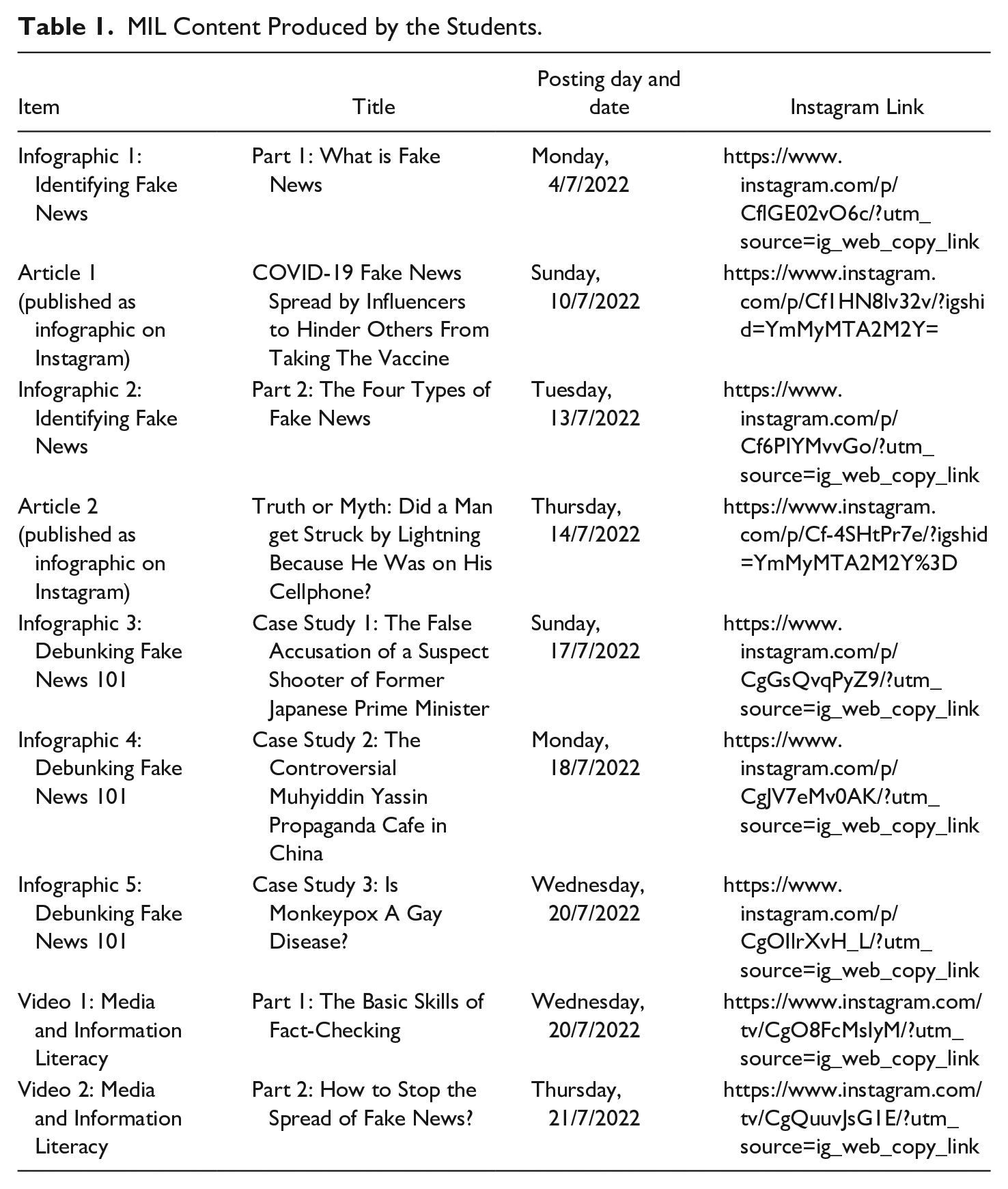
By the 10th week of the semester, the students had set a 2-week timetable to post their MIL content on Instagram (see Figure 2). In total, they produced five infographics, two articles, and two videos, as detailed in Table 1.
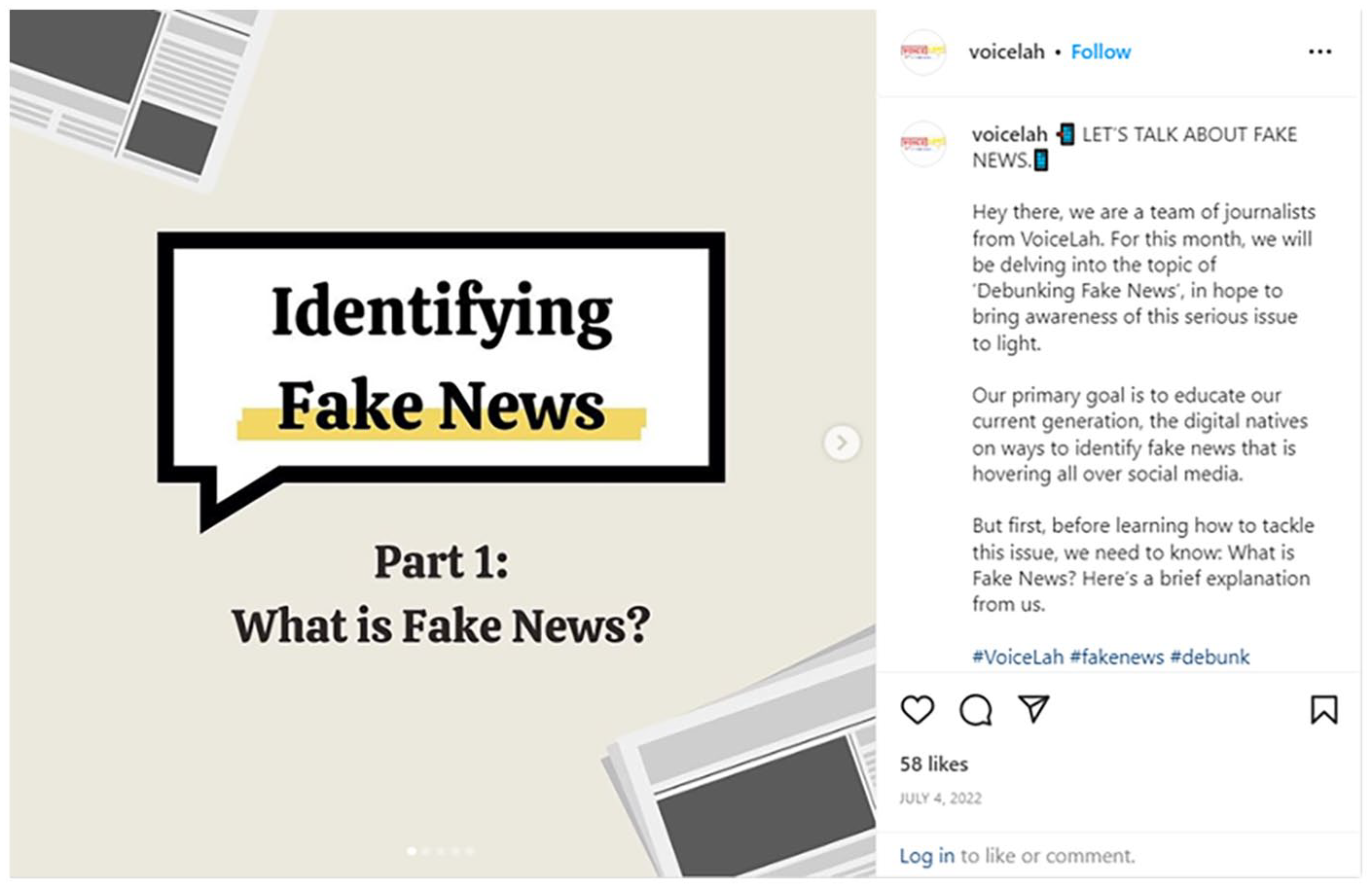
Example of Students’ Work.
MIL Content Produced by the Students.
Fifth Stage: Evaluation
After completing the 14-week program, students are required to write a reflective essay. This essay allows students to reflect on their experiences, challenges, and learnings throughout the MIL project. The reflective essay serves as a valuable tool to evaluate the effectiveness of the MIL project in improving students’ fact-checking skills (Wong et al., 2013). The analysis of the reflective essay will provide insights into the students’ perceptions of the MIL project, its impact on their skills and knowledge, and suggestions for future improvements. By analyzing the reflective essay, researchers can assess the effectiveness of the MIL project and identify the challenges and limitations that need improvement.
Result Analysis
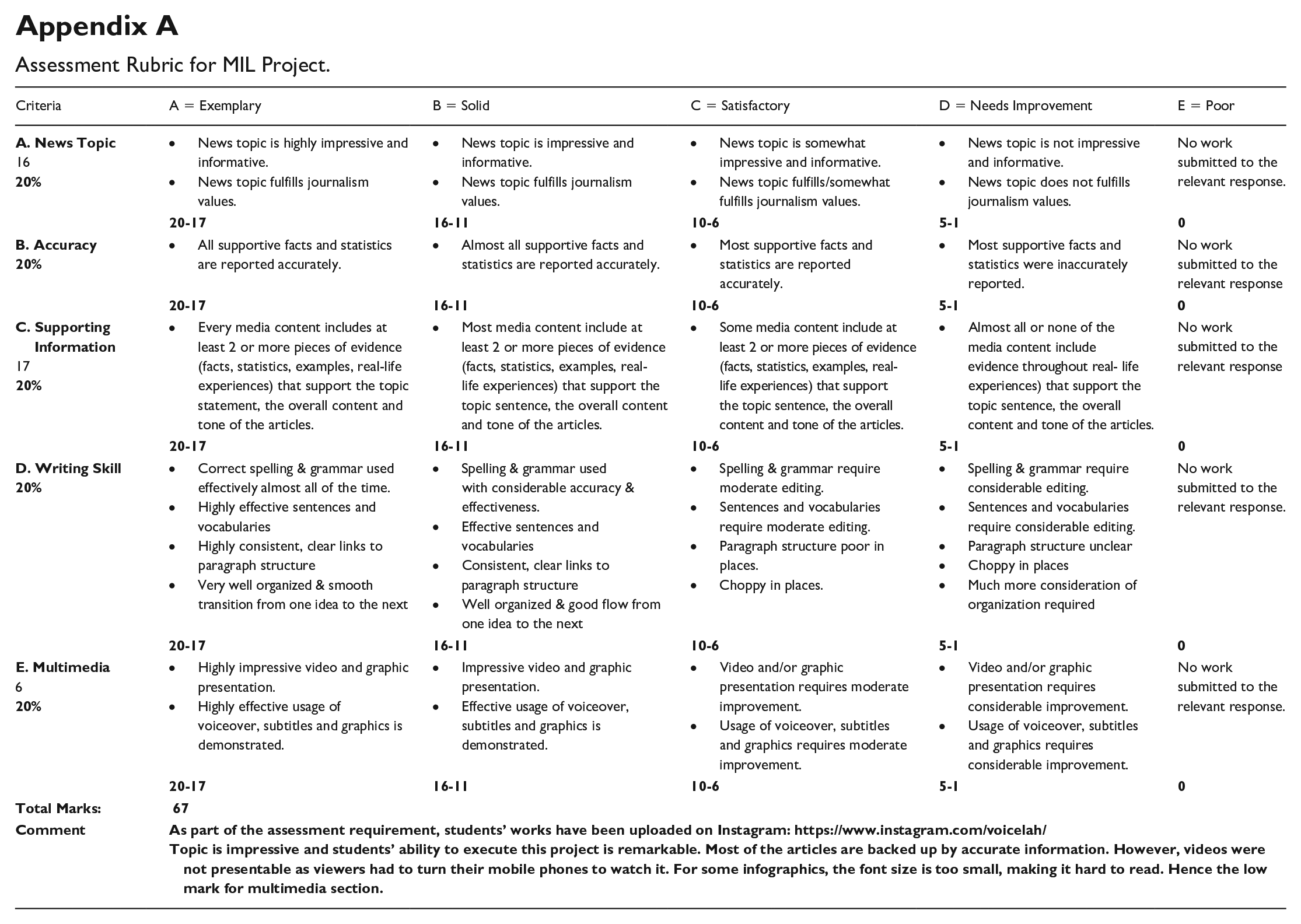
To answer RQ2 and RQ3, a marking rubric (see Appendix A) and a reflective essay were utilized to evaluate the effectiveness of the MIL project in enhancing students’ fact-checking abilities, identifying the challenges and limitations of implementation, and self-reflecting on personal learning and growth.
Marking Rubric
Prior to beginning their MIL project, students were informed of the evaluation process by the educator. The marking rubric was shared and discussed in class, outlining the expectations for achieving the desired learning outcome. Despite the rubrics being somewhat general, the educator and students engaged in a comprehensive dialogue to clarify each section’s meaning. This process ensured that students had a clear understanding of how their project would be evaluated, and what was required to achieve their learning objectives.
Reflective Essay
Upon completion of the MIL project, students were tasked with an additional assessment component: writing an individual reflective essay to provide a critical analysis of the project management process. In their essays, students discussed the skills they learned, challenges they faced, solutions they utilized to overcome those challenges, best practices they referred to, possible areas for improvement, and recommendations for similar projects in the future. Through their essays, students were able to reflect on their own learning and growth as well as provide valuable feedback for future iterations of the MIL project.
Findings and Discussion
The marking rubric was initially employed to evaluate the quality of students’ work immediately after the submission due date. The components included in the rubric were the topic of the MIL content, the accuracy of information used, the availability of credible supporting information, overall writing skill, and proficiency in multimedia presentation, such as video and graphic editing.
Throughout the assessment process, the educator primarily focused on evaluating the quality of MIL content uploaded on social media platforms. Upon reviewing all the MIL content produced by the students, the educator expressed positive feedback, noting that the chosen topics were impressive and the students demonstrated remarkable ability in executing the MIL project. Furthermore, most of the MIL content was supported by accurate and credible information.
However, there was room for improvement identified during the evaluation. Some videos were deemed inconvenient to watch due to the layout, and certain infographics had font sizes that were too small to read comfortably. As a result, a relatively low mark was assigned to the multimedia section.
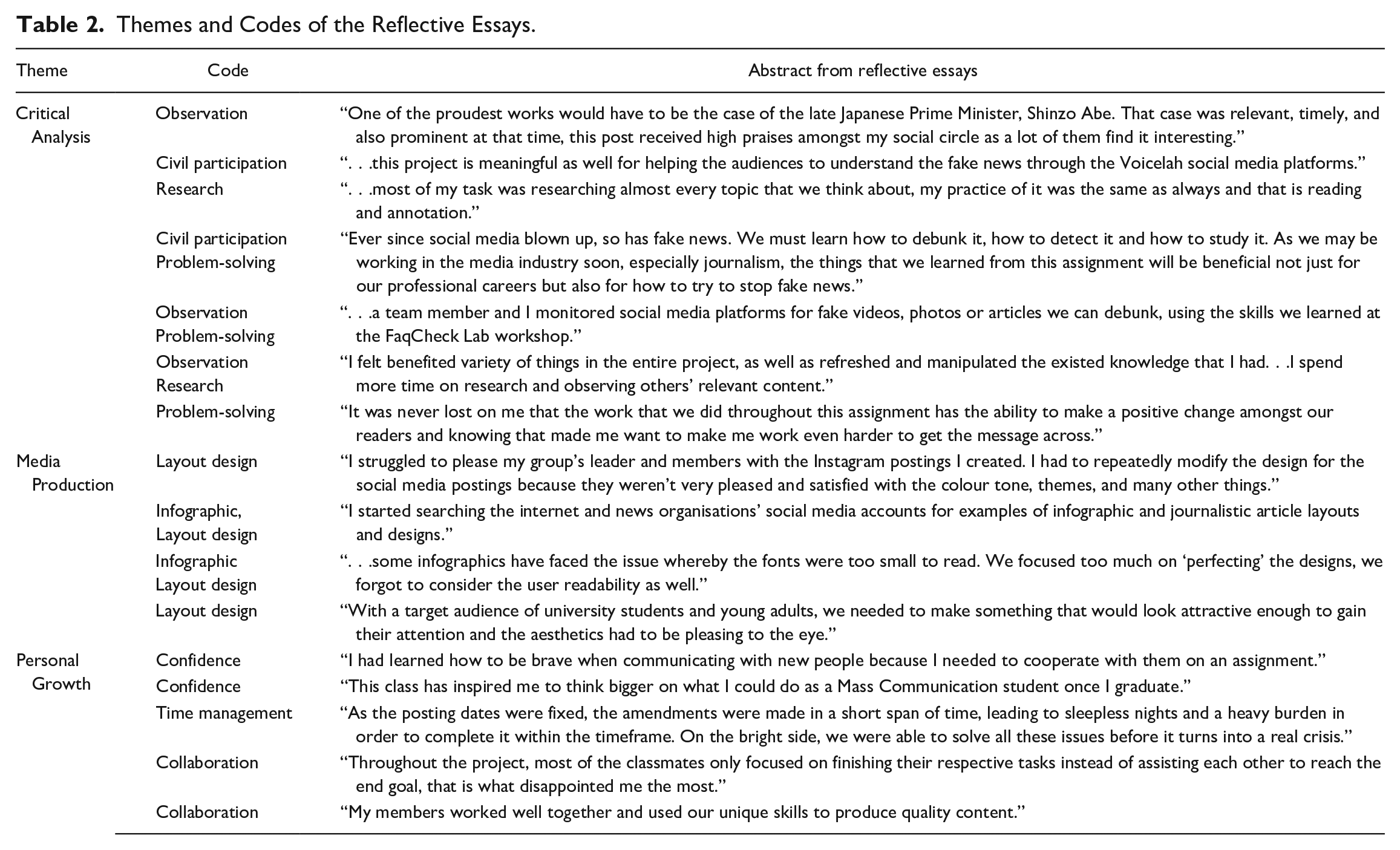
Subsequently, there were nine reflective essays selected for analysis. Keywords such as “learn,” “skill,” and “communication” were searched and highlighted using a digital tool developed by Google called Pinpoint. Once all essays were compared and analyzed, the essays were then transcribed into codes: Research and Observation, Problem-solving, Civil participation, Layout design, Infographic, Confidence, Time management, and Collaboration. Finally, they are further categorized into three themes: Critical Analysis, Media Production, and Personal Growth (refer to Table 2).
Themes and Codes of the Reflective Essays.
Critical Analysis
Throughout the course, a prevalent theme among the students was the acquisition of critical analysis skills. Specifically, they learned to deconstruct media messages that are disseminated online, with an emphasis on identifying bias, stereotyping, and misinformation. The students described how the course enabled them to scrutinize media from various viewpoints and to inquire about the underlying intentions behind media messages. One student wrote:
A team member and I monitored social media platforms for fake videos, photos or articles we can debunk, using the skills we learned at the FaqCheck Lab workshop.
This reflection also proved that students, in general, were able to initiate autonomous learning under this PBL approach as mentioned by Baasanjav (2013) and Siti Fatimah (2022).
Moreover, some students also opined that the course also imparted knowledge about the digital landscape, including strategies for navigating social media and online communities, thereby bolstering their overall digital literacy. Another student noted:
Ever since social media blown up, so has fake news. We must learn how to debunk it, how to detect it and how to study it. As we may be working in the media industry soon, especially journalism, the things that we learned from this assignment will be beneficial not just for our professional careers but also for how to try to stop fake news.
Media Production
Students discussed how the course taught them how to create media, including videos, podcasts, and blogs. They reflected on how they learned to use media production tools and techniques to effectively communicate their ideas. This is aligned with hands-on learning as what Lim and Nekmat (2008) described, that students tend to focus on a specific learning objective when they were given practical tasks to complete as part of the assessment. One student discussed how the team had specifically considered the needs of undergraduates:
With a target audience of university students and young adults, we needed to make something that would look attractive enough to gain their attention and the aesthetics had to be pleasing to the eye.
However, some students also highlighted the challenges of designing good and appealing visual material due to different expectations within the team members. Hence, the editing process became tedious work for them. One student wrote:
I struggled to please my group’s leader and members with the Instagram postings I created. I had to repeatedly modify the design for the social media postings because they weren’t very pleased and satisfied with the colour tone, themes, and many other things.
In addition, the students also realized that there were many aspects to consider to migrate text-based content to infographics so that it was more feasible to be presented on Instagram. They referred to how some local mainstream media organizations manage their social media pages, but they still missed some of the details. One of them pointed out:
[. . .] some infographics have faced the issue whereby the fonts were too small to read. We focused too much on “perfecting” the designs, we forgot to consider the user readability as well.
Personal Growth
At the beginning of course planning, the two assessment tools used for this project were not intended to measure the personal growth and development of soft skills in students within the PBL approach. This theme emerged after a systematic review of the students’ reflective essays and the findings were substantial. This research outcome requires more attention in pedagogical studies, as many educators tend to prioritize the outcomes of students’ coursework over their subjective experiences and feelings about the learning process.
Many students wrote about how the course helped them to grow personally. They elaborated on acquiring traits such as confidence, resilience, and adaptability. In addition, through deliberating the challenges and restrictions faced during the project, they also examined how they improved their time management skills and ability to work independently. Some of them mentioned how they learned the importance of time management:
As the posting dates were fixed, the amendments were made in a short span of time, leading to sleepless nights and a heavy burden in order to complete it within the timeframe. On the bright side, we were able to solve all these issues before it turns into a real crisis.
Some students also shared how they became better at communicating with others and improved their problem-solving skills. In general, students also discussed how this MIL project inspired them to think about their career interests. One student wrote:
I had learned how to be brave when communicating with new people because I needed to cooperate with them on an assignment.
This section of the students’ reflections also demonstrated that the PBL approach effectively facilitated participatory learning (Jenkins et al., 2006) and collaborative learning (Hunsapun et al., 2021) throughout the MIL project. Additional pertinent quotes from the students’ reflections have been organized in Table 2 below:
In conclusion, these common themes reflect the diverse range of skills and knowledge that students gained from their media and information literacy classes. The development of critical analysis, media production, and personal growth was crucial for students to become media-literate individuals in the modern world. These themes provided an insight into the value of media literacy education, which allowed students to critically analyze media messages and to become responsible producers and consumers of media.
Conclusion
The MIL project was successful in enhancing the media literacy skills of journalism undergraduates. students participating in this collaborative process experienced personal growth, including increased confidence, enhanced time management skills, and improved teamwork capabilities. This aspect merits further attention in research on MIL education.
The project used a variety of teaching strategies, including lectures, discussions, workshops, training, and hands-on activities, to engage the students and help them develop critical thinking and analytical skills. The project could be replicated in other journalism programs to enhance media literacy skills among students and prepare them for a career in journalism.
However, the MIL project faced some challenges and limitations during its implementation. One of the main challenges was the limited time available to complete the project, which impacted the student’s ability to conduct comprehensive research and analysis. The limited time also affected the quality of the deliverables, with some students struggling to produce high-quality content due to time constraints. Another challenge was the students’ varying levels of media and information literacy proficiency, which required the educator to provide additional support and guidance to some students.
Furthermore, the MIL project’s implementation was limited to a small group of students from a single university, which reduced its generalizability to other contexts and populations. In addition, the MIL project’s effectiveness in enhancing students’ media and information literacy skills was evaluated using a single method (reflective essays), which may not have captured all aspects of the student’s learning outcomes.
Overall, these challenges and limitations highlight the need for future research to address the issues of limited time, varying levels of media and information literacy proficiency, and the generalizability of MIL projects to other contexts and populations. Future research should also consider using multiple evaluation methods to assess the effectiveness of MIL projects comprehensively.
Despite the challenges and limitations, a well-designed MIL project stands out as one of the pertinent ways to combat misinformation. This approach has been proven to equip individuals, particularly undergraduates who are future communicators in this case, with the skills and knowledge necessary for critical analysis, evaluation, and navigation of media and information. It is also imperative for the education community to prioritize empowering the younger generation to critically engage with media, make informed decisions, and actively contribute to building a more informed and resilient society in the face of misinformation.
Footnotes
Appendix A
Assessment Rubric for MIL Project.
| Criteria | A = Exemplary | B = Solid | C = Satisfactory | D = Needs Improvement | E = Poor |
|---|---|---|---|---|---|
16 |
• News topic is highly impressive and informative. • News topic fulfills journalism values. |
• News topic is impressive and informative. • News topic fulfills journalism values. |
• News topic is somewhat impressive and informative. • News topic fulfills/somewhat fulfills journalism values. |
• News topic is not impressive and informative. • News topic does not fulfills journalism values. |
No work submitted to the relevant response. |
|
|
|
|
|
|
|
|
|
• All supportive facts and statistics are reported accurately. | • Almost all supportive facts and statistics are reported accurately. | • Most supportive facts and statistics are reported accurately. | • Most supportive facts and statistics were inaccurately reported. | No work submitted to the relevant response |
|
|
|
|
|
|
|
17 |
• Every media content includes at least 2 or more pieces of evidence (facts, statistics, examples, real-life experiences) that support the topic statement, the overall content and tone of the articles. | • Most media content include at least 2 or more pieces of evidence (facts, statistics, examples, real- life experiences) that support the topic sentence, the overall content and tone of the articles. | • Some media content include at least 2 or more pieces of evidence (facts, statistics, examples, real- life experiences) that support the topic sentence, the overall content and tone of the articles. | • Almost all or none of the media content include evidence throughout real- life experiences) that support the topic sentence, the overall content and tone of the articles. | No work submitted to the relevant response |
|
|
|
|
|
|
|
|
|
• Correct spelling & grammar used effectively almost all of the time. • Highly effective sentences and vocabularies • Highly consistent, clear links to paragraph structure • Very well organized & smooth transition from one idea to the next |
• Spelling & grammar used with considerable accuracy & effectiveness. • Effective sentences and vocabularies • Consistent, clear links to paragraph structure • Well organized & good flow from one idea to the next |
• Spelling & grammar require moderate editing. • Sentences and vocabularies require moderate editing. • Paragraph structure poor in places. • Choppy in places. |
• Spelling & grammar require considerable editing. • Sentences and vocabularies require considerable editing. • Paragraph structure unclear • Choppy in places • Much more consideration of organization required |
No work submitted to the relevant response. |
|
|
|
|
|
|
|
6 |
• Highly impressive video and graphic presentation. • Highly effective usage of voiceover, subtitles and graphics is demonstrated. |
• Impressive video and graphic presentation. • Effective usage of voiceover, subtitles and graphics is demonstrated. |
• Video and/or graphic presentation requires moderate improvement. • Usage of voiceover, subtitles and graphics requires moderate improvement. |
• Video and/or graphic presentation requires considerable improvement. • Usage of voiceover, subtitles and graphics requires considerable improvement. |
No work submitted to the relevant response. |
|
|
|
|
|
|
|
|
|
|
||||
|
|
|
||||
Appendix B
Topics Covered by WeeksAssessment.
| 0 | Weightage | Submission/Test Date | Mapping to CLO |
|---|---|---|---|
| Critical essay | 30% | Week 3 | CLO2 |
| Test | 20% | Week 7 | CLO1 |
| Final project | 50% | Week 14 | CLO3 |
|
|
|
Note. The final marks will be the weighted average of the scores for the above components.
Declaration of Conflicting Interests
The author(s) declared no potential conflicts of interest with respect to the research, authorship, and/or publication of this article.
Funding
The author(s) received no financial support for the research, authorship, and/or publication of this article.
