



Abstract
Objective
We aimed to explore the development status, turning and key points, and emerging trends of the cerebral venous thrombosis (CVT).
Methods
Literature pertaining to CVT published from 2014 to 2023 in the Web of Science Core Collection database was searched. The 6.3.R1 version of CiteSpace software was used to conduct a bibliometric analysis.
Results
A total of 2421 articles were ultimately retained. The annual publication volume exhibited a general trend of gradual growth, culminating in 2022. In terms of both publication volume and citation frequency, the journal “Stroke” emerges as the preeminent publication with high quantity and quality. The United States, China and India have become the foremost contributors while Pakistan and England exhibit a strong international collaboration. Ferro JM from Universidade de Lisboa, Coutinho JM from University of Amsterdam and Ji XM from Capital Medical University from are identified as the leading scholars. Burst analyses of keyword and co-cited references reveal that prior to 2021, the predominant research topics in the field of CVT were epidemiology, diagnosis and management, with increased attention to endovascular therapies and novel imaging modalities. From 2021 to 2023, the focus has shifted primarily to COVID-19 and vaccine-induced immune thrombotic thrombocytopenia (VITT).
Conclusion
Over the past decade, research on CVT has demonstrated continuous growth. The most influential institutions and scholars were from Europe and China. Our analysis showed that core research priorities in CVT centered on epidemiology, diagnosis and management while the COVID-19 pandemic temporarily shifted focus toward COVID-19 and VITT associated CVT.
Keywords
Introduction
Cerebral venous thrombosis (CVT) is characterized by the thrombosis of cerebral veins or the dural venous sinus, resulting from various etiological factors. This condition impedes venous drainage and cerebrospinal fluid (CSF) circulation, culminating in intracranial hypertension and focal brain damage. 1 The condition was first comprehensively described and confirmed through autopsy in 1825 by the French physician Ribes. 2 CVT represents a distinct form of stroke, comprising 0.5% to 3% of all stroke cases, predominantly affecting individuals under 55 years of age, with two-thirds of cases occurring in females. 3 Over the past decade, there has been a significant advancement in our comprehension of various facets of CVT. Novel susceptibility factors, including obesity, coronavirus disease 2019 (COVID-19), and vaccine-induced immune thrombotic thrombocytopenia (VITT), have been identified.4–6 Additionally, innovative diagnostic techniques, such as MR black-blood thrombus imaging (BTI), have been developed. 7 Furthermore, management strategies for CVT, including the use of direct oral anticoagulants, endovascular treatment, and decompressive craniectomy (DC), have been subjected to further investigation.8–13
Although cerebral venous thrombosis (CVT) has received increasing research attention over the past decade, no comprehensive bibliometric analysis has been conducted to capture evolving research landscapes, knowledge structures, and influential contributors in this field, particularly over the transformative period marked by the COVID-19 pandemic. Previous reviews have largely focused on clinical aspects such as diagnosis, treatment and prognosis, but lack a macroscopic and systematic exploration of publication patterns, collaboration networks, and keyword/research frontier evolution. Our study fills this gap by applying CiteSpace, a Java-based bibliometric tool, 14 to analyze 10 years of literature from 2014 to 2023 in Web of Science database, thereby enabling identification of core contributors, hotspots, turning points and emerging trends in CVT research. This work aims to guide future research priorities, foster international collaboration, and provide scholars and policymakers with a panoramic overview of the CVT research landscape.
Data Sources and Analysis Methods
Data Sources
The data for analysis came from Web of Science Core Collection database. To explore the latest research progress in CVT, we searched the literature with “cerebral venous thrombosis”, “cerebral venous sinus thrombosis”, “cerebral sinus venous thrombosis” and “dural sinus thrombosis” as the index term between January 1, 2014, and December 31, 2023, and a total of 2443 records were found. The following articles were manually excluded: (1) unofficial published articles; (2) conference abstracts and proceedings; and (3) duplicate or irrelevant articles. Finally, 2421 articles were obtained, including 1919 original articles and 502 reviews. This study is approved by the Ethnic Committee of Xuanwu Hospital Capital Medical University and conducted in accordance with the Declaration of Helsinki.
Analysis Methods
The 6.3.R1 version of CiteSpace software was used to conduct a bibliometric analysis of the selected articles. About data processing, the selection time was 2014-2023; the time slice was 1 year; node types were author, institution, country, keyword, and reference, and the selection criteria top N was set to 50. The output results include the annual publication analysis, cooperation analysis, co-occurrence analysis, cluster analysis, and burst analysis. In cooperation networks and co-occurrence networks, nodes represent corresponding objects, such as authors, institutions, countries, keywords, or co-cited references. The size of nodes increases with the frequency of occurrence or citation. The color and thickness of the inner ring of the nodes indicate the year and frequency of occurrence or citation, respectively. 15 A key metric that measures the importance of a node in a network is centrality, which indicates the extent to which a node lies on the shortest paths between other nodes. A centrality value of ≥0.1 is considered as high centrality. High centrality nodes, shown as purple rims surrounding the nodes, are regarded as key points or turning points. 15 The links between the nodes indicate a cooperation or co-occurrence relationship, and the thickness of the links indicates the strength of cooperation or co-occurrence. The more and thicker the links, the closer the relationship between the nodes. 15 In the clustering view, module value (Q value) and average silhouette value (S value) are used to evaluate the network structure and network homogeneity, respectively. Generally speaking, a Q value greater than 0.3 indicates that the cluster structure is significant, an S value greater than 0.5 indicates that the cluster is generally reasonable, and an S value greater than 0.7 indicates that the cluster is convincing. 16 In burst analysis, “Year” indicates the year in which the keyword first appeared or the earliest time in the study setting. “Begin” and “End” indicate the start and the end year when the keyword became a hot topic. “Strength” indicates the burst intensity of the keyword. The blue line represents the time axis, where the lighter blue part indicates that the keyword has not yet appeared, and the red part represents the time interval of keyword burst. 17
Results of Bibliometric Analysis
Annual Publication
We conducted a quantitative analysis of articles published in the field of CVT over the last ten years (2014-2023). As shown in Figure 1, the annual publication volume exhibited a gradual upward trend from 2014 to 2020. Notably, in 2021 and 2022, there was a marked increase in the number of publications, surpassing 400 articles annually. Although the number of papers published in 2023 decreased compared to the previous year, it remained substantial at 368. These findings suggest that CVT continues to be a dynamic area of research, garnering significant scholarly attention.
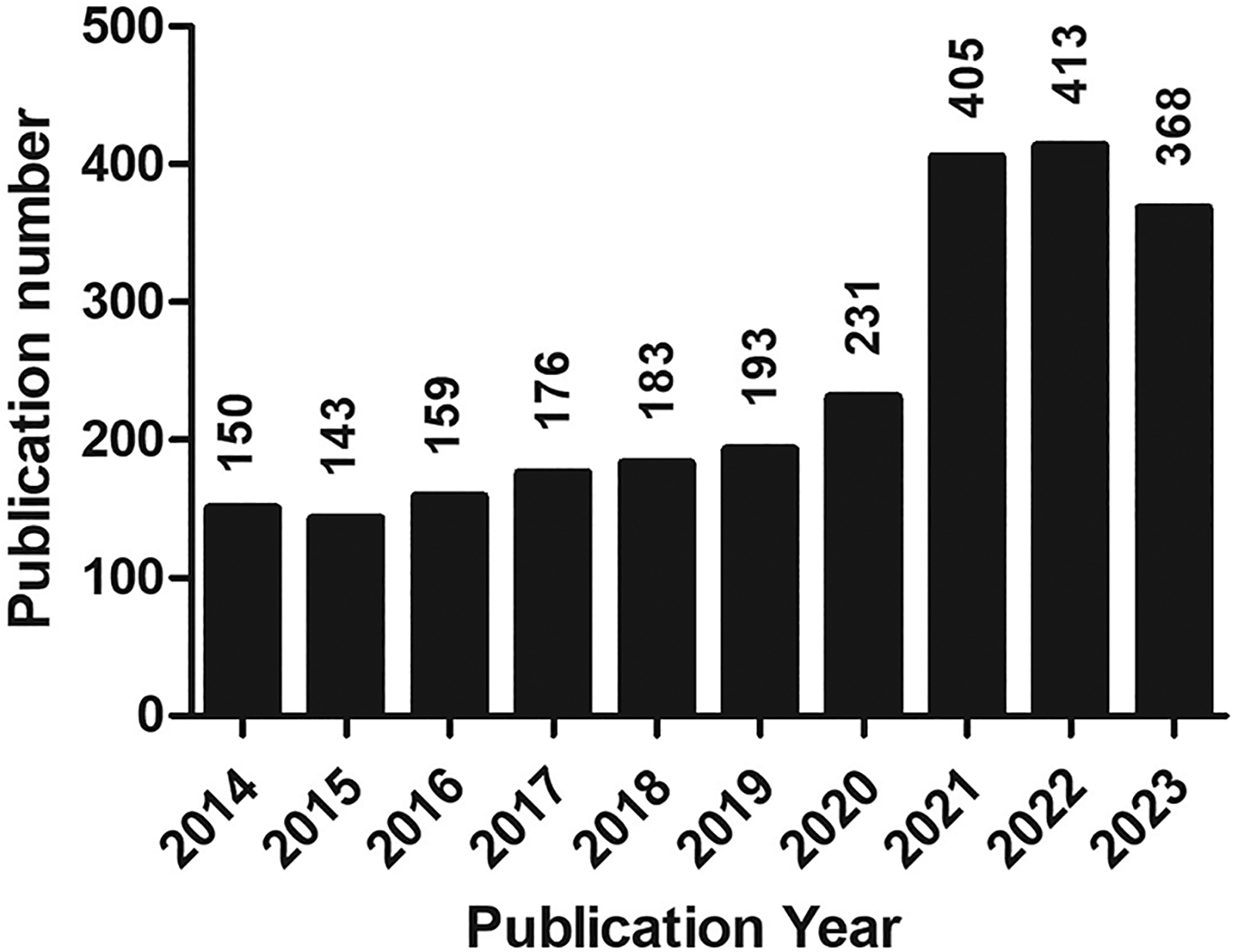
The Annual Publication Number in the Field of CVT Over the Last ten Years.
Published Journals
We identified the top 10 journals publishing research on CVT based on citation counts (Table 1). The journal Stroke ranked first with 1630 citations, followed by the New England Journal of Medicine with 1175 citations, and the Journal of Neurology occupied the tenth position with 631 citations. Among the top 10 most cited journals, except for the Journal of Stroke and Cerebrovascular Diseases (Q3) and the American Journal of Neuroradiology (Q2), other journals have a Journal Citation Report (JCR) category of Q1. Additionally, we identified the top 10 journals with the highest number of publications in the field of CVT. As shown in Table 1, the Cureus Journal of Medical Science has the largest number of publications (N = 113), followed by the Journal of Stroke and Cerebrovascular Diseases (N = 80) and Stroke (N = 60). Notably, it is worth noting that among the top ten journals by publication volume, only Stroke is classified as Q1, boasting an impact factor of 8.3 in 2023. In contrast, the majority of the journals are categorized as Q3 or Q4, or even without a JCR category. The serious mismatch between the number of publications and the number of citations to some extent indicates the poor quality of the publications in the CVT field and the urgent need for high-quality research.
Top 10 Journals Publishing Research on CVT with the Highest Citations and Publications.

Cooperative Relationship
Through an analysis of the publication output by countries, institutions and scholars, it is possible to identify the principal contributors with significant publication volumes and influence within the field of CVT. This analysis also facilitates the examination of collaborative relationships among these entities.
Cooperation Between Countries
As illustrated in Table 2 and Figure 2A, the United States emerges as the leading nation in terms of the number of published papers (N = 624), with a publication count nearly double that of China, which ranks second. Pakistan and England have a relatively small number of publications but a high centrality (0.19 and 0.1 respectively), which means that they have a strong international collaboration.

Cooperative Network Diagram of Nations (A), Institutions (B) and Authors (C) in the Field of CVT.
Top 10 Countries Publishing Research on CVT with the Highest Frequency and Centrality.

Cooperation Between Institutions
The top 10 institutions exhibiting the highest frequency and centrality were listed in Table 3. The data reveal that Capital Medical University in China leads with the greatest number of published articles (N = 82), followed by the University of Amsterdam in Netherlands (N = 72) and Universidade de Lisboa (N = 71). Notably, the centrality values for Istanbul University, University of Amsterdam, University of California System, and Harvard University are equal to or exceed 0.1, indicating their significant roles in the field of CVT research. Furthermore, as shown in Figure 2B, the cooperative relationships among various institutions are intricate and complex, as well.
Top 10 Institutes Publishing Research on CVT with the Highest Frequency and Centrality.

Cooperation Between Scholars
In addition, we conducted an analysis of the authors with the highest citations and publications in the field of CVT. As depicted in Table 4, it was observed that Ferro JM and Coutinho JM are leading figures in terms of both publication volume and citation count. Over the past decade, Ferro JM has published 46 papers (ranked second) and received 1016 citations (ranked first), with an average of 22 citations per paper. Meanwhile, Coutinho JM has published 59 papers (ranked first), which have garnered 620 citations (ranked third), with an average of 10.5 citations per paper. Among the top 10 most prolific authors, Ji XM (ranked third), Meng R (ranked fourth) and Duan JG (ranked seventh) are all affiliated with Capital Medical University. Authors’ collaboration network (Figure 2C) revealed that the cooperative relationships among these three Chinese scholars are relatively strong, while their international cooperations appeared to be limited.
Top 10 Authors Publishing Research on CVT with the Highest Citations and Publications.

Keyword
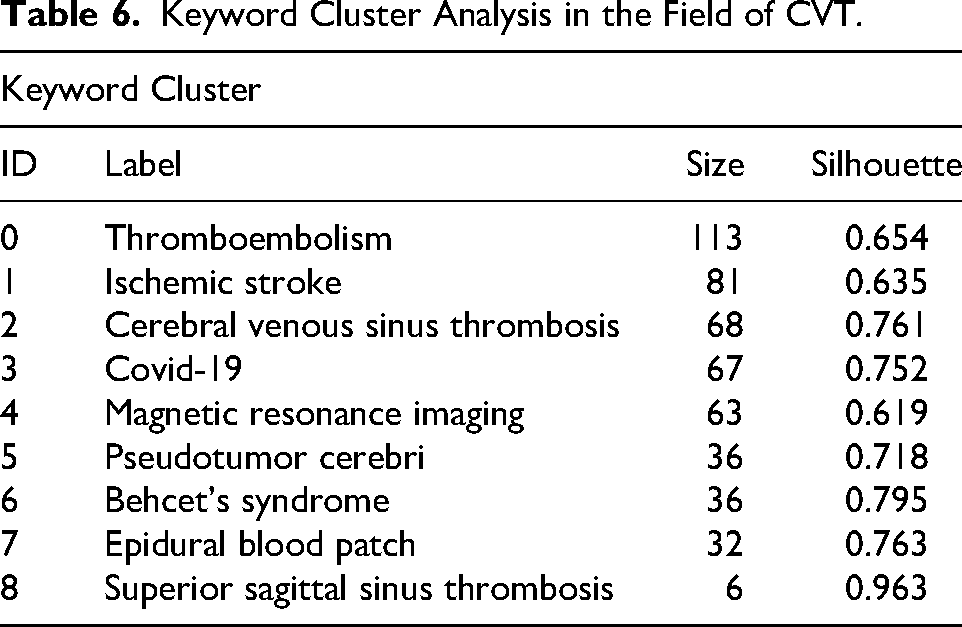
To explore the prominent research areas within the domain of CVT, a keyword co-occurrence analysis and a keyword cluster analysis were conducted. As demonstrated in Table 5 and Figure 3A, the ten most frequently occurring keywords in the CVT field include risk factors, diagnosis, management, stroke, ischemic stroke, children, prognosis, thromboembolism, mechanical thrombectomy and thrombolysis. The top ten occurring keywords in centrality include low molecular weight heparin, superior sagittal sinus, anticoagulation, patient, multiple sclerosis, case series, angiography, pregnancy, prevalence and complications. However, none of these keywords exhibits a centrality equal to or exceeding 0.1. Furthermore, the co-occurrence keywords can be categorized into nine sub-clusters, as illustrated in Table 6 and Figure 3B. These sub-clusters include #0 thromboembolism, #1 ischemic stroke, #2 cerebral venous sinus thrombosis, #3 COVID-19, #4 magnetic resonance imaging, #5 pseudotumor cerebri, #6 Behcet's syndrome, #7 epidural blood patch, #8 superior sagittal sinus thrombosis.
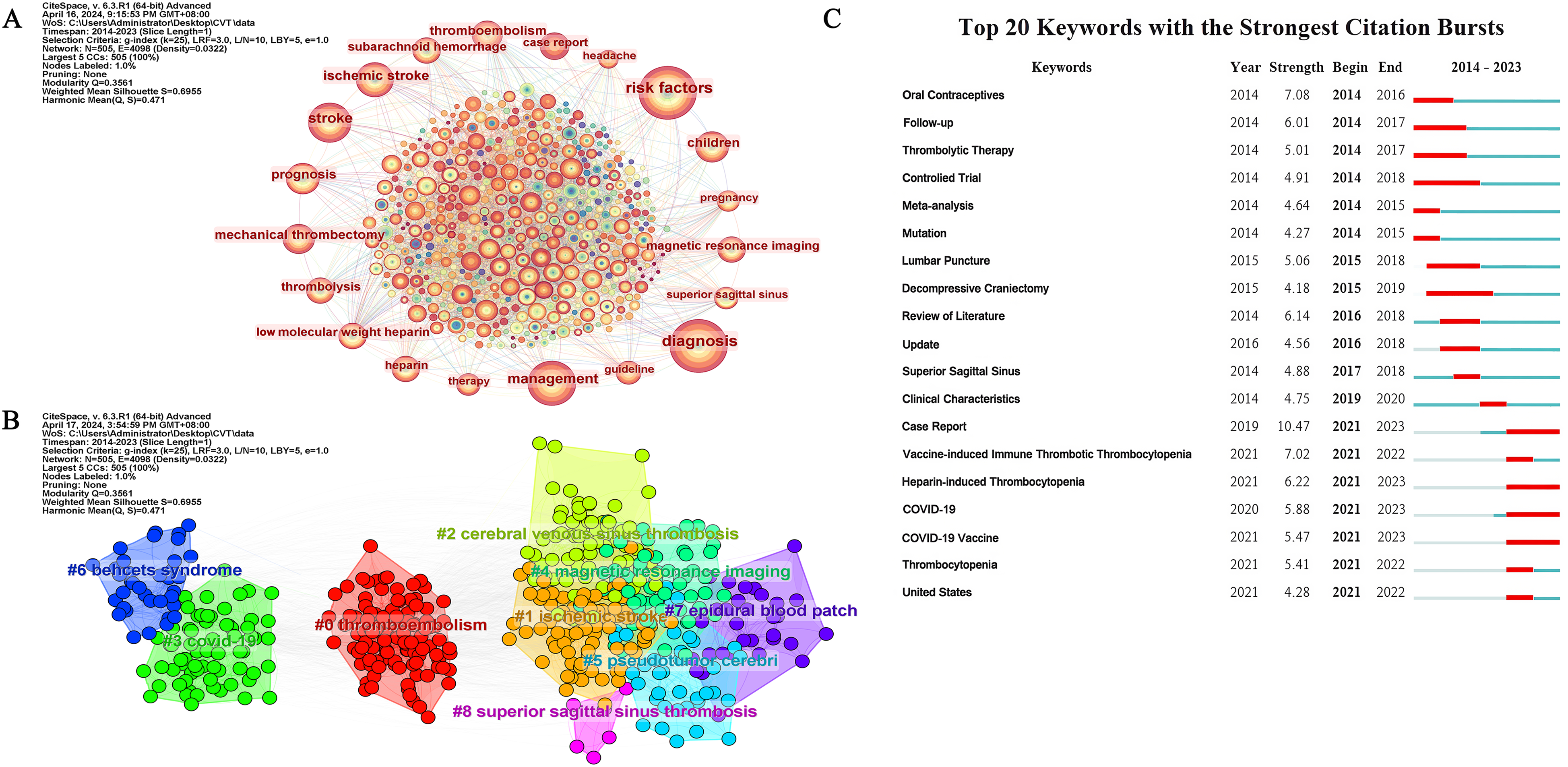
Keyword Map of Co-Occurrence Network (A), Clustering Network (B) and Citation Bursts (C) in the Field of CVT.
Top 10 Keywords with the Highest Frequency and Centrality in the Field of CVT.

Keyword Cluster Analysis in the Field of CVT.
To investigate the forefront topics in the CVT field, we conducted an analysis of the burst keywords. As shown in the Figure 3C, twenty burst keywords were obtained. These 20 keywords can be categorized into three phases. The initial phase, spanning 2014 to 2019, keywords such as oral contraceptives, follow up, thrombolytic therapy, controlled trial, meta-analysis, mutation, lumbar puncture, DC, review of literature, update, superior sagittal sinus and clinical characteristics became the outbreak keywords. In the second phase (2020 to 2023), case report, VITT, heparin-induced thrombocytopenia, COVID-19, COVID-19 vaccine, thrombocytopenia, United States and ChAdOx1 nCoV-19 became newly explosive keywords.
Co-Cited References
The results of co-cited reference analysis are shown in Figure 4A and Table 7. Among the top 10 co-cited references in frequency, the citation count ranged from 179 to 86. The articles by Greinacher et al (2021), 18 Schultz et al (2021),19,20 Scully et al (2021),19,20 and See et al (2021) 21 reported VITT and thrombosis after ChAdOx1 nCov-1918–20 or Ad26.COV2.S 21 vaccination. Articles by Ferro et al (2017),22,23 Saposnik et al (2011), 24 and Silvis et al (2017) 2 are guidelines or reviews of the diagnosis and treatment of CVT. The article by Ferro et al (2019) 8 is a multicenter randomized clinical trial and reveals for the first time that both dabigatran etexilate and dose-adjusted warfarin are safe and effective in the prevention of recurrent venous thrombotic events in CVT patients. The article by Devasagayam et al (2016) 25 indicates that the incidence of CVT in Adelaide is 15.7 per million per year, higher than previously documented. Among the top 10 co-cited references in terms of centrality, 8 references exhibit a centrality of 0.1 or greater. The articles by Ferro et al (2017) and Ferro et al (2019) 8 were mentioned above. The article by Connor et al (2020), was the inaugural study which demonstrated both rivaroxaban and standard anticoagulants were associated with low risks of recurrent thrombosis and major bleeding in pediatric CVT patients. 26 The articles by Baldini et al (2021) 27 and Cavalcanti et al (2020) 28 revealed the association between COVID-19 and CVT. The articles by Aveneli et al (2019) 29 and Pizzi et al (2016) 30 demonstrated that DC is a life-saving intervention for malignant CVT and the timing for anticoagulation after DC lacks of data support. Coutinho et al (2014) 31 reported a declining trend in mortality among CVT patients over time.
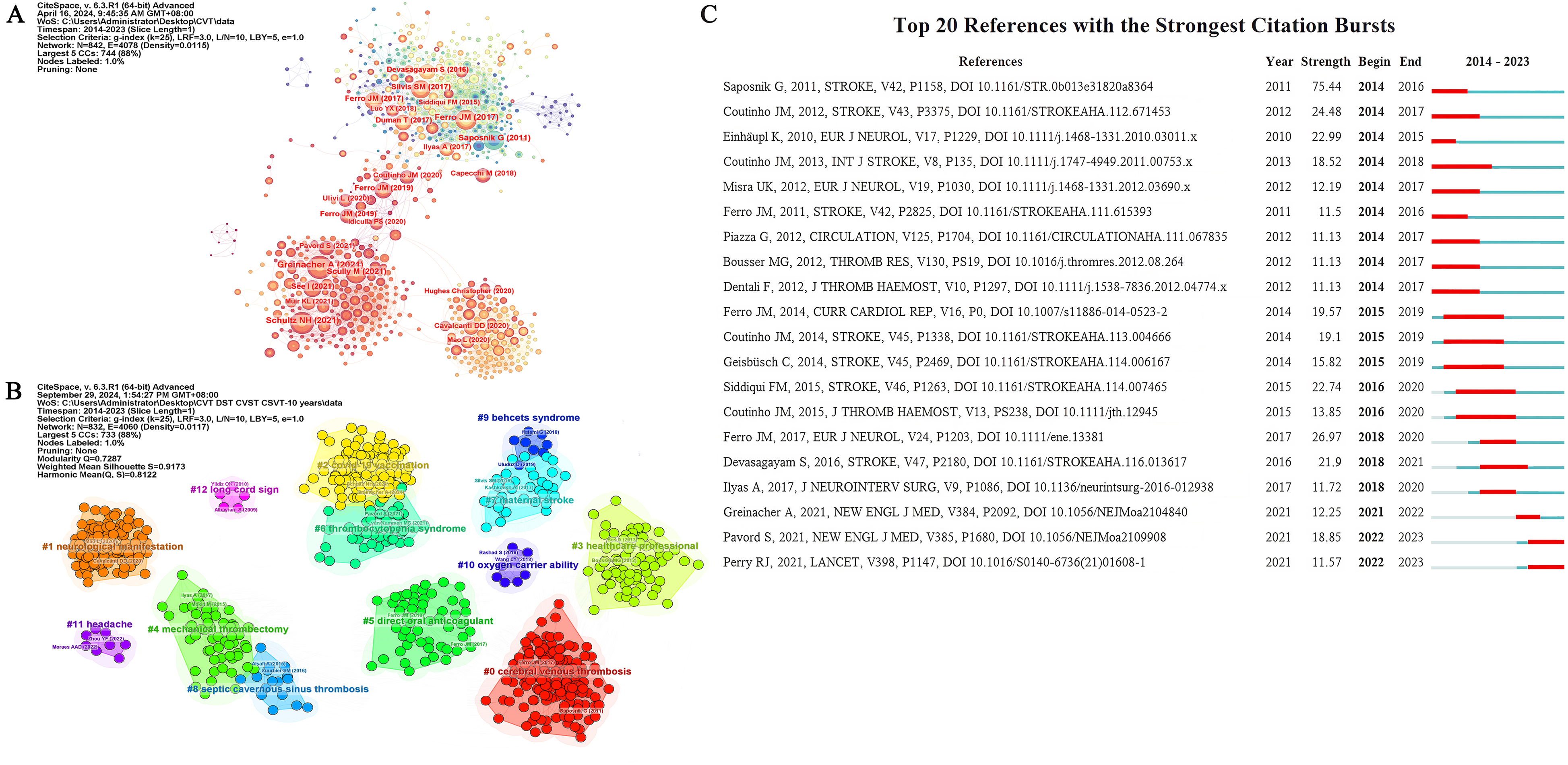
Co-Citation Map of Co-Occurrence Network (A), Clustering Network (B) and Citation Bursts (C) in the Field of CVT.
Top 10 co-Cited References with the Highest Frequency and Centrality in the Field of CVT.

To elucidate the research themes in the CVT field over the past decade, we performed a co-citation reference cluster analysis (Figure 4B and Table 8). The co-cited reference can be summarized into 13 sub-clusters, which include #0 cerebral venous thrombosis, #1 neurological manifestation, #2 COVID-19 vaccination, #3 healthcare professional, #4 mechanical thrombectomy, #5 direct oral anticoagulant, #6 thrombocytopenia syndrome, #7 maternal stroke, #8 septic cavernous sinus thrombosis, #9 Behcet's syndrome, #10 oxygen carrier ability, #11 headache, and #12 long cord sign.
Co-Cited Reference Cluster Analysis in the Field of CVT.

The result of co-citation burst analysis is shown in Figure 4C. In the initial phase from 2014 to 2020, co-cited references focused on the epidemiology, diagnosis, management and prognosis of CVT. Coutinho et al (2012) 32 and Devasagayam et al (2016) 25 reported an increase in the incidence of CVT while Dentali et al (2012) 33 and Coutinho et al (2014) 31 reported a favorable prognosis and a decrease in the mortality, respectively. Articles by Misra et al (2012) 34 and Geisbusch et al (2014) 35 examined the safety and therapeutic efficacy of low molecular weight heparin and rivaroxaban, respectively. Furthermore, articles by Coutinho et al (2013), 36 Siddiqui et al (2015) 37 and Ilyas A et al (2017) 38 investigated the safety and therapeutic efficacy of endovascular treatment. The article by Ferro et al (2011) 39 showed that DC led to good functional outcomes in patients with malignant CVT. Articles by Saposnik et al (2011), 24 Einhäupl et al (2010) 40 and Ferro et al (2017), 22 are statements or guidelines for the diagnosis and treatment of CVT. In the second phase from 2021 to 2023, articles by Greinacher et al (2021), 18 Pavord et al (2021) 41 and Perry et al (2021) 42 that documented thrombosis and VITT following COVID-19 vaccination were constantly mentioned. The findings by Greinacher et al (2021) 18 indicated that VITT is mediated by platelet-activating antibodies against platelet factor 4. Pavord et al (2021) 41 found that the overall mortality of VITT was 22% and that low baseline platelet count and intracranial hemorrhage were independent risk factors for death. Perry et al (2021) 42 also supported that CVT patients with low baseline platelet count had a worse prognosis and the use of non-heparin anticoagulants and immunoglobulin may be beneficial.
Discussion
Results of this study offer an extensive examination of the research landscape concerning CVT over the past decade, highlighting prominent contributors, elucidating emerging topics and research trends. Notably, this bibliometric study on CVT employed CiteSpace, a sophisticated tool designed for the visualization and analysis of large datasets, thereby facilitating a thorough investigation of historical trends and prospective research trajectories.
Growing Research Volume in the CVT Field
There has been a steady increase in publications related to CVT from 2014 to 2022, with significant surges observed in 2021 and 2022. This trend has been largely driven by the emergence of COVID-19 and its associated CVT. 43 The volume of publications over this time span demonstrated the importance of CVT in public health issues. Although a slight decline in publication volume in 2023 suggests that research related to COVID-19 associated CVT had reached its zenith, scholarly interest in CVT continues to be robust. The journal with the most citations in the field of CVT was “Stroke”. Among top 10 productive journals, only the journal “Stroke” maintained a JCR category of Q1. The journal “Stroke” is crucial to CVT publishing due to its high impact and large number of publications. On one hand, the serious mismatch between the number of publications and the number of citations indicates the poor quality of the publications in the CVT field and the urgent need for high-quality research. On the other hand, a high volume in lower-tier or unranked journals might also indicate increased accessibility for authors. These journals have provided a specific niche for emerging research areas that have not attracted much attention.
Collaborative Networks and Prominent Contributors
The United States, China and India have become the foremost contributors to research on CVT. Pakistan and England were characterized by robust collaborations and these collaborations underscore their pivotal roles in field of CVT. Ferro JM from Universidade de Lisboa and Coutinho JM from University of Amsterdam have established their leadership in CVT through a substantial volume of publications and high centrality scores. Among top 10 articles with the most citations, only Ferro et al (2017) 23 and Ferro et al (2019) 8 exhibit a centrality greater than 0.1, confirming Ferro JM's dominance in the CVT area. Despite their tremendous output, Ji XM, Meng R, and Duan JG from Capital Medical University had few foreign collaborations. Scholars from China may benefit from more international collaborations.
Research Hotspots and Emerging Topics
Keyword and co-citation analysis have indicated that CVT researches from 2014 to 2020 have primarily focused on epidemiology, diagnostic approaches, and therapeutic strategies. Anticoagulation, mechanical thrombectomy and thrombolysis are hotspots in CVT management. The COVID-19 pandemic has introduced new hotspots, as evidenced by the emergence of keywords such as “COVID-19”, “COVID-19 vaccine” and “VITT” showing strong bursts in the years from 2021 to 2023. Strong citations to articles concerning “COVID-19,” “COVID-19 vaccine,” and “VITT” were also identified by the co-citation burst. This shift reflected a growing focus on understanding the relationship between COVID-19 infection, vaccination, thrombocytopenia and CVT events. Further investigations on the impact and mechanism of COVID-19 on CVT may help to find out the preventive and therapeutic strategies for COVID-19 associated CVT. Additional researches into the mechanisms underlying VITT will help to improve the present COVID-19 vaccine and reduce its side effects. The number of articles linked to COVID-19 may decline as the pandemic subsides, and the focus may progressively return to CVT diagnosis and treatment.
Strengths and Limitations
This study also had several limitations. First, the analysis relied exclusively on articles indexed within the Web of Science Core Collection, potentially limiting its representation of the global scope of CVT research, especially in regions where alternative databases are more prevalently utilized. Second, the bibliometric analyses were restricted by the availability and precision of citation data, which may not consistently represent the actual impact or innovative nature of the research. Despite these limitations, this study offered valuable insights into the current state and prospective evolution of CVT research, thereby establishing a robust foundation for further investigation and collaboration.
Conclusions
The annual publication volume exhibited a general trend of gradual growth from 2014 to 2023. The journal “Stroke” emerges as the preeminent publication with high quantity and quality. The United States, China and India have become the foremost contributors while Pakistan and England exhibit a strong international collaboration. Ferro JM from Universidade de Lisboa, Coutinho JM from University of Amsterdam and Ji XM from Capital Medical University are identified as the leading scholars. There is less collaboration between Chinese and foreign academics. Scholars from China may benefit from more international collaborations. The predominant topics in the field of CVT were risk factors, diagnostic approaches, and treatment strategies, with increased attention to endovascular therapies and novel imaging modalities from 2014 to 2020. Due to the outbreak of the COVID-19 epidemic at the end of 2019, researchers specializing in CVT intensified their focus on COVID-19 and VITT associated CVT from 2021 to 2023. As the COVID-19 pandemic gradually subsides, scholarly attention is likely to shift back towards epidemiology, diagnosis and management of CVT.
Footnotes

Funding
The authors disclosed receipt of the following financial support for the research, authorship, and/or publication of this article: This work was supported by the National Natural Science Foundation of China (grant number 81371289, 82101390 and 82401527) and Natural Science Foundation of Beijing Municipality (grant number 7212047).
Declaration of Conflicting Interests
The authors declared no potential conflicts of interest with respect to the research, authorship, and/or publication of this article.