




Abstract
Background and objective:
There is little report concerning risk characteristics of Chinese patients with venous thromboembolism (VTE). The present study was designed to investigate the risk characteristics in Chinese patients with VTE through a retrospective study.
Methods:
A total of 1048 registry patients with VTE in the recent 10 years were analyzed retrospectively with respect to underlying diseases or predisposing factors.
Results:
The incidence of VTE in both male and female has been increasing in the recent 10 years. A total of 885 patients were aged more than 50 years, and the mean age of the patients at diagnosis was 58.8 ± 15.7 years. Main risk factors were a prolonged immobilization and malignant tumors, which were different from Western patients.
Conclusions:
This registry demonstrated the different risk characteristics in Chinese patients compared to Western patients. Our results will be available for establishing the prevention of VTE in China.
Introduction
The diagnosis and prophylaxis of venous thromboembolism (VTE), which includes pulmonary embolism (PE) and deep venous thrombosis (DVT), have been improving in China over the years. 1,2 However, the risk factors for men and women with VTE haven’t been investigated in China. Although there have been a lot of epidemiologic studies about it in Western countries, 3 –5 some ethnic differences seem to exist between the Chinese and Western people with regard to risk factors for VTE. 6 We therefore undertook a study of risk factors in Chinese patients with VTE in our hospital through a retrospective study.
Materials and Methods
Study Population and Data Collection
The registry in the present study was conducted between 2004 and 2013 in our hospital. During this period, a total of 1048 patients with a history of hospitalization for VTE were enrolled into our retrospective study. Of all registered patients with VTE, 229 patients had PE without DVT, 552 DVT without PE, and 194 with PE and DVT. These patients were diagnosed by computed tomogram pulmonary angiogram and deep venous color ultrasonic imaging which indicated vessel occlusions or intraluminal filling defects. Clinical data detailing VTE and contributing VTE risk factors (ie, gender, age, surgery, immobilization, inflammation, cancer, hormonal treatment, and pregnancy) were obtained by means of retrospective study. The registry has been approved by the local ethics committee of the Hangzhou First People’s Hospital, Zhejiang Province, China.
Data Analysis
Categorical data were expressed as absolute values and in terms of the percentage of the population. Quantitative data were expressed in terms of the mean ± standard deviation. Statistical analysis was performed using Pearson chi-square test to compare proportions and independent samples t test to compare means between men and women. A 5% level of significance was accepted for all statistical tests. Data were analyzed with SPSS version 16.0 statistical software package.
Results
Deep venous thrombosis of the lower limbs and PE were the most common manifestations of VTE in our patients. The integrated prevalence of VTE has been increasing for both male and female over the recent 10 years (Figure 1), and its prevalence in men was more than in women (57.5% vs 43.0%, Pearson chi-square test, P < .05). A total of 885 (73.0%) patients were aged more than 50 years (Figure 2). The mean age at diagnosis was 58.8 ± 15.7 years (range, 15-96 years), with 57.1 ± 15.4 years for male (n = 603) and 59.7 ± 15.5 years for female (n = 445, independent samples t test, P = .007). The prevalence of risk factors for VTE in our patients stratified by gender is shown in Table 1. Main risk factors were a prolonged immobilization (11.9%), malignant tumors (10.4%), and infections (4.1%), which were different from Western patients. Lung (23.9%), liver (12.8%), and uterus (10.1%) were the most frequent sources among all the tumors (Table 2), and there existed significant difference in incidences between male and female (Pearson chi-square test, P < .05), of which lung (31.1%) and liver (19.7%) cancers were the dominant malignant tumors in male patients with VTE, while uterus (22.9%) and lung (14.6%) cancers in females.
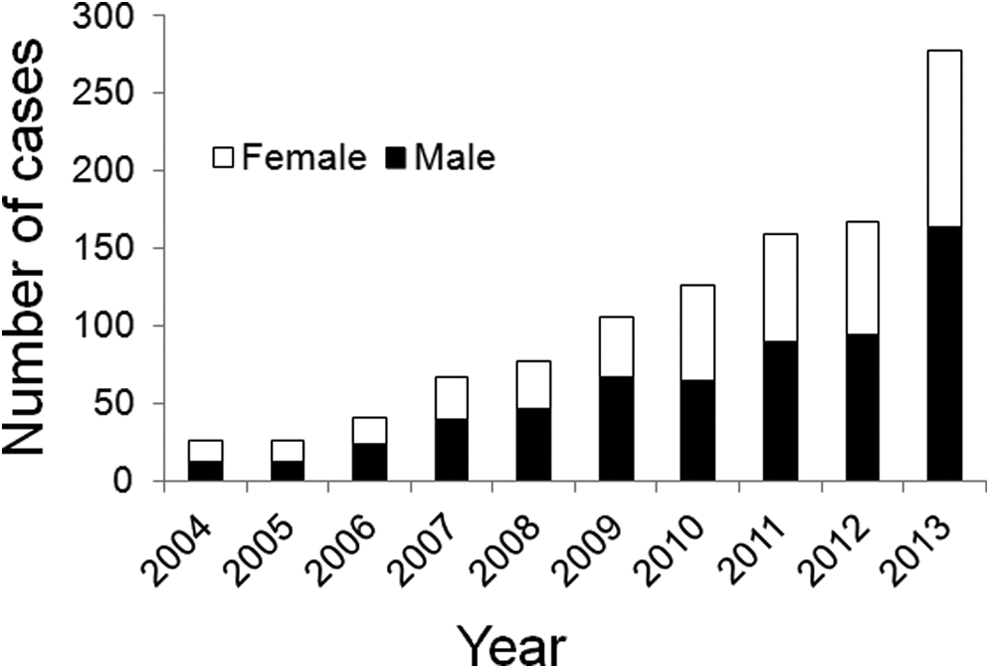
The incidence of VTE in the recent 10 years. The integrated prevalence has been increasing over 10 years.
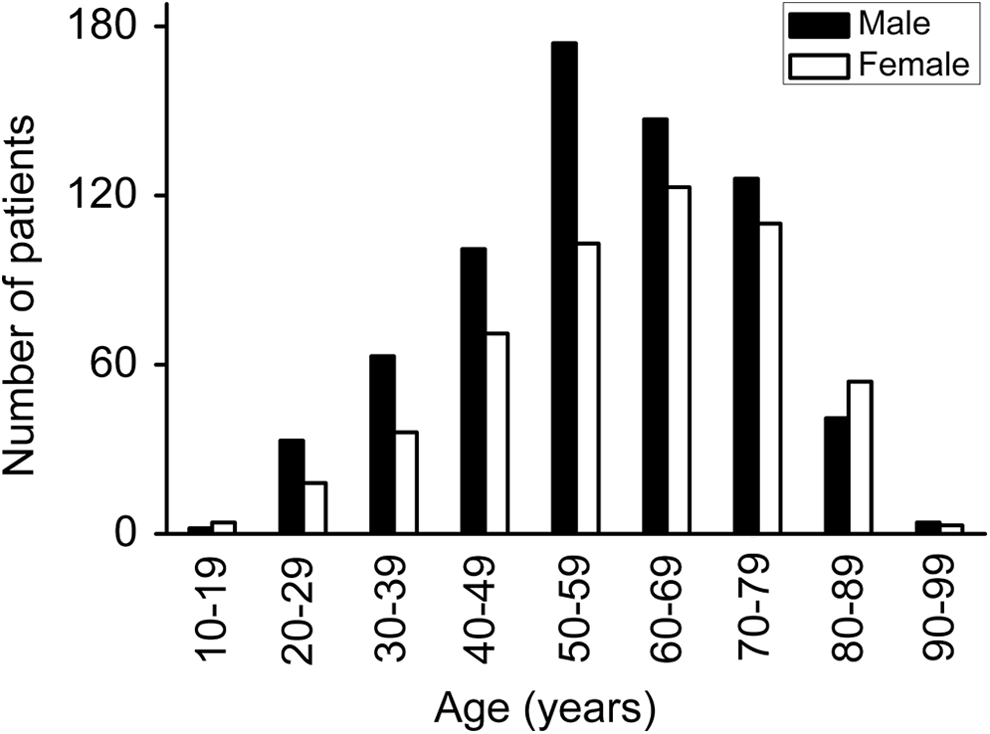
Age and sex distribution in 1048 patients with VTE. Most of the patients were in their 50s and females were more than males.
Prevalence of Risk Factors for VTE in Our Patients Stratified by Gender.
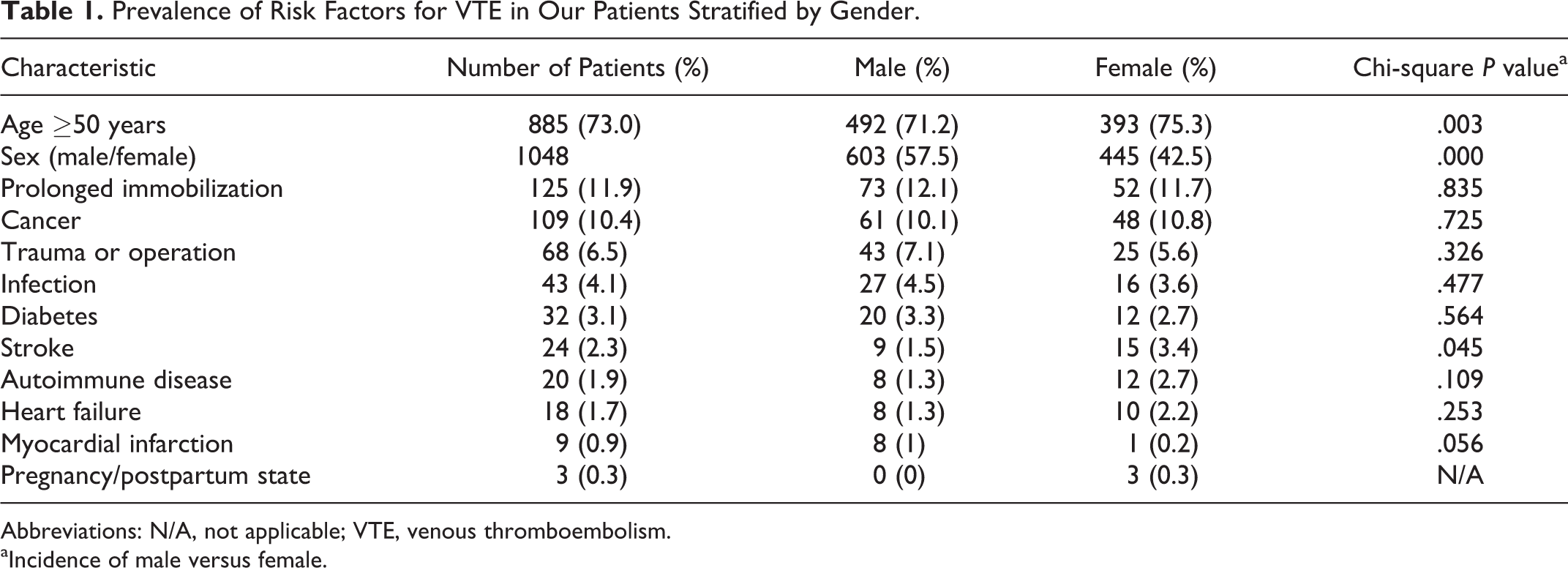
Abbreviations: N/A, not applicable; VTE, venous thromboembolism.
a Incidence of male versus female.
Distribution of Primary Sites of Tumors Stratified by Gender.
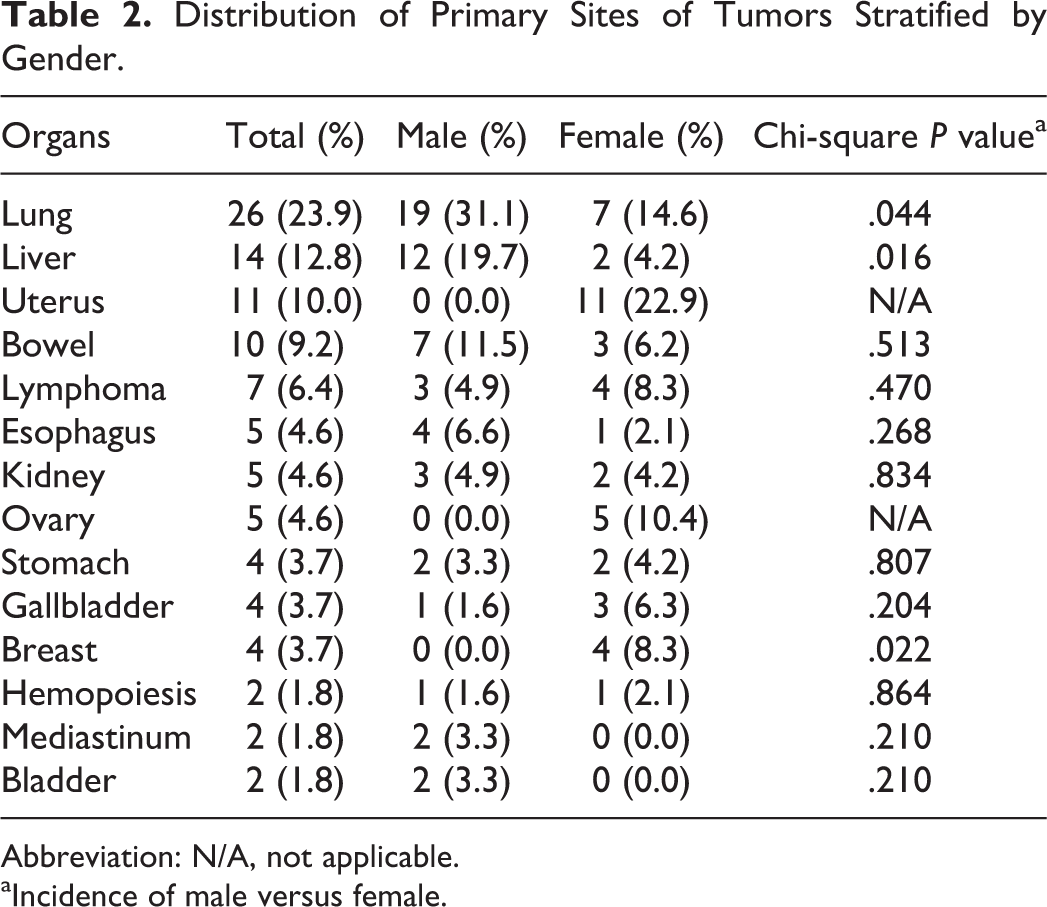
Abbreviation: N/A, not applicable.
a Incidence of male versus female.
Discussion
Only patients with acute VTE having a high level of
The Different Characters Between Chinese and Western Patients With VTE.
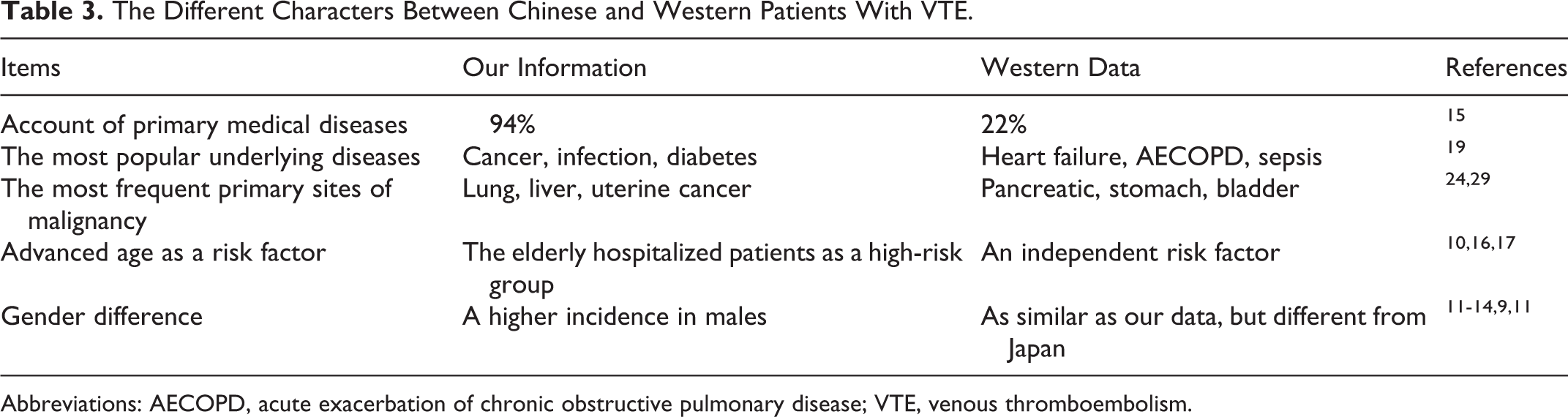
Abbreviations: AECOPD, acute exacerbation of chronic obstructive pulmonary disease; VTE, venous thromboembolism.
Uncertainties regarding potential sex-related differences in risk of VTE have long been a matter for discussion. Several studies point toward an increased risk in women with estrogen hyperactivity, such as those receiving hormone replacement therapy 7 or contraceptive pills, 8 and during pregnancy. Additionally, many Japanese studies identified a slightly higher risk in females. 9,10 However, our study identified a higher incidence of VTE among males, as many Western studies. 11 –14
In general, VTE is commonly attributed to the concomitance of risk factors such as venous stasis, vessel wall abnormalities, and plasma hypercoagulability. Hypercoagulability may in turn be due to increased levels of procoagulants, decreased levels of anticoagulants, or both. The incidence of VTE has been increasing in our 10-year registry study, partly attributing to clinicians’ awareness and diagnosis of VTE which have been increasingly improving in China. Our patients with VTE caused by medical illness comprised 94% of all our registered patients, far more than that in Western countries. 15 In Western patients, the incidence of VTE is very high in orthopedic patients, especially those of hip fracture surgery, total knee arthroplasty, and total hip arthroplasty in elderly women. An explanation could be that the risk of VTE in medical patients is substantially underestimated and prophylaxis is used far less than in surgical patients, reflecting the scarcity of evidence supporting antithrombotic therapy in nonsurgical settings in China.
Advanced age is a well-accepted independent risk factor for VTE. 16 Similar to many investigations, 10,17 the present study also showed that VTE was more frequently encountered in elderly hospitalized patients than in others, especially considering the underpopulation in their 80s or 90s. The physiological changes of homeostasis due to age and the increasing underlying diseases are likely to modify the risk of VTE in older adults. 18
Prolonged immobilization was the most frequent risk factor in this study. A case–control study showed that immobilization was associated with a 5.6-fold increase in DVT. 17 We should pay more attention to the risk of VTE in patients with bed rest. In female patients with VTE, the prevalence of prolonged immobilization was much less than in male because of the smaller number of fractures or myocardial infarction in female. However, the incidence of stroke in women was more than that in men.
In hospitalized medical patients in Western countries, heart failure with New York Heart Association class III and IV, exacerbation of chronic obstructive pulmonary disease, and sepsis are considered to be major risk factors. 19 Whereas, our investigation revealed that cancer, infection, and diabetes were the most popular underlying diseases in Chinese patients.
Patients with cancer are at high risk of thrombosis. 20 Although the rates of VTE vary depending on the types of patients studied, estimates suggest that the annual incidence of VTE increases from 0.1% in the general population to 0.5% in patients with cancer. 21 As shown in our study, patients with cancer have become the most population in medical patients with VTE. Cancer is a prothrombotic state, and cancer treatments are often complicated by thromboembolism. 22 The incidence of VTE in cancer is on the rise. 23,24 Novel anticancer drugs, particularly antiangiogenic agents, may be contributing to this increase. 25 Venous thromboembolism is the second leading cause of death in patients with cancer 26 and the most common cause of death in the postoperative period. 27 The pathophysiology of cancer-associated thrombosis is not entirely understood. Rather than 1 unifying mechanism, the etiology is likely multifactorial, with tumor biology, disrupted homeostasis, the use of central venous catheters, surgery, patient immobility, concomitant medications, and systemic cancer therapy all contributing. 28 Additionally, the risk of VTE is not uniform across cancer subgroups. Certain sites of cancer are associated with higher rates of VTE in multiple studies. 24 Among all the patients having VTE with malignancy in the present study, lung, liver, and uterine cancer were the most frequent primary sites of malignancy, different from that in other studies, 24,29 while uterus and lung took up the prominent in women.
Infection was the second major underlying disease in our study. A massive localized or generalized inflammatory response with release of proteases, cytokines, and hormones from multiple tissue and circulatory cells caused extensive damage to the vascular endothelium which played an important role in the pathophysiology of intravascular coagulation. 30,31 Inflammation as a response to various infections, such as sepsis, mediated thrombin generation. 32
As shown in our study, diabetes was the third major risk factor among all the underlying medical diseases. Recent studies have suggested that diabetes may be associated with an increased risk of cardiovascular diseases and VTE. 33 According to the results of a meta-analysis, there is a 1.4-fold increased risk of VTE in diabetic patients, 6 suggesting that diabetes may also play a role in the pathogenesis of VTE. 34
There were limitations in our study. The incidence of VTE in each medical illness was unknown because the data source of our study was only patients diagnosed as having VTE. Additionally, our patients mainly came from East China, not representative of the whole Chinese patients.
Footnotes
Declaration of Conflicting Interests
The author(s) declared no potential conflicts of interest with respect to the research, authorship, and/or publication of this article.
Funding
The author(s) disclosed receipt of the following financial support for the research, authorship, and/or publication of this article: This material is based upon work funded by Zhejiang Provincial Natural Science Foundation of China under Grant No. LY13H010002 and Zhejiang Provincial Medical and Health Science and Technology Plan NO. 201353248.