




Abstract
Introduction:
Apolipoprotein E (ApoE) 4 isoform has been associated with elevated levels of cholesterol, low-density lipoprotein cholesterol (LDL-C), and triglycerides (TGs), meanwhile several polymorphisms in the LDL receptor (LDLR) gene have been associated with increased levels of total cholesterol and LDL-C.
Material and Methods:
We studied 400 women from Southwest Mexico. Anthropometric features and biochemical profile were evaluated, and genotyping of single nucleotide polymorphisms rs429358 and rs7412 in the APOE gene and rs688 in the LDLR gene was determined by TaqMan assays.
Results:
We found significant association between LDL-C (odds ratio [OR] = 3.3, 95% confidence interval [CI]: 1.9-5.7) and marginal association with TG (OR = 1.7, 95% CI: 1.0-2.9) of atherogenic risk in women carriers of the ApoE4 isoform compared to ApoE3. The TT genotype of rs688 in the LDLR gene was not found to be associated with elevated levels of total cholesterol or LDL-C.
Conclusion:
Our results show that carrier women of the ApoE4 isoform are more likely to have elevated levels of LDL-C and therefore increased risk of developing atherosclerosis.
Introduction
Cardiovascular diseases (CVDs) remain the leading cause of deaths worldwide. Deaths from CVDs have been declining in high-income countries but have increased in a fast rate in the low- and middle-income countries. The underlying disease process in the blood vessels that result in coronary heart disease (CHD), known as atherosclerosis, is responsible for a large proportion of CVDs. Coronary heart disease is multifactorial, involving both genetic and environmental factors as well as their possible interactions. Forms of hypercholesterolemia indicate that elevated low-density lipoprotein cholesterol (LDL-C) is the major cause of CHD. 1,2
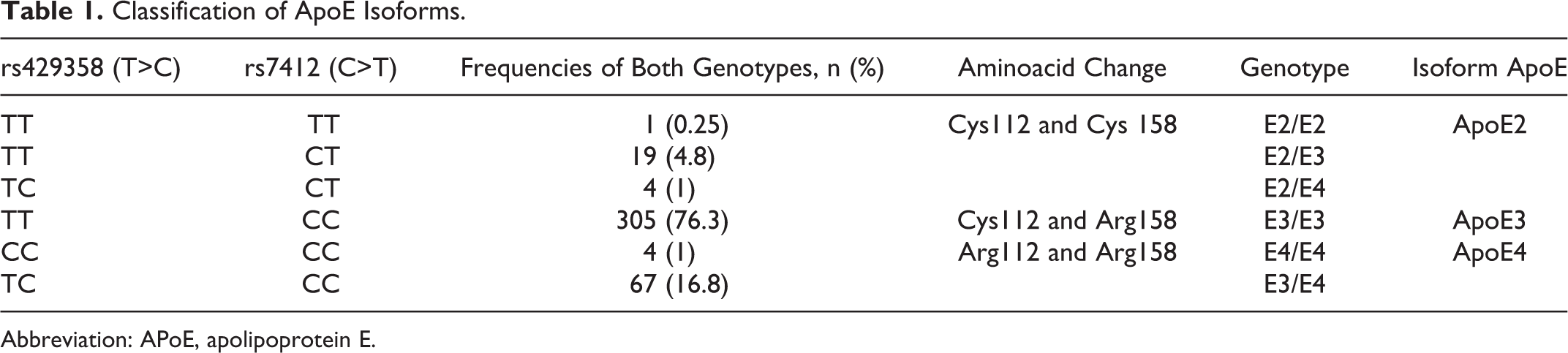
Apolipoprotein E (ApoE) plays an important role in lipid metabolism which is involved in lipoprotein uptake through interaction with low-density lipoprotein (LDL) receptors (LDLRs). The association of several metabolic disorders with various single-nucleotide polymorphisms (SNPs) in the APOE gene has been reported. The SNP rs429358 causes the change in cysteine for arginine at position 112 (Cys112Arg), whereas the SNP rs7412 changes the arginine for cysteine at position 158 (Arg158Cys), giving rise to the 3 most common isoforms of ApoE, that is, ApoE2 (Cys112 and Cys158), ApoE3 (Cys112 and Arg158), and ApoE4 (Arg112 and Arg158). 3 –5 Moreover, it has been found that the LDLR gene polymorphisms are associated with increased blood levels of total cholesterol and LDL-C, therefore increasing the risk of developing atherosclerosis, which can lead to ischemic heart disease. The rs688 SNP has been associated with increased blood cholesterol levels in different populations. 6
The ApoE isoforms differ in their affinity of LDLR binding, the ApoE4 binds with slightly higher affinity than ApoE3, whereas ApoE2 presents much lower binding affinity in comparison to the other isoforms. 7 Despite the low LDLR binding of the ApoE2, most ApoE2-carriying individuals have low levels of LDL-C and a low risk of atherosclerosis. 8 A study made in a Chinese population reported an association between ApoE4 isoforms with the prevalence of metabolic syndrome and individuals with this isoform had higher blood pressure (BP) and glucose levels. 9 Notably, it has been reported that individuals who only carry the ApoE3 isoform have 20% lower risk of CHD compared with carriers of isoform ApoE2, whereas the ApoE4 carriers have the highest risk. 10 Other reports have associated the ApoE4 with high levels of triglyceride (TG) and decreased high-density lipoprotein cholesterol (HDL-C). 11 This study was aimed to evaluate the association between ApoE isoforms and the SNP rs688 in the LDLR gene with CHD risk factors in women from Guerrero State, Mexico.
Materials and Methods
A total of 400 women, genetically unrelated, of the state of Guerrero, Mexico, whose parents and grandparents were also born in Guerrero State, were studied. Sociodemographic data were obtained through a questionnaire. The project was approved by The Ethics Committee of the Autonomous University of Guerrero. All women agreed to participate in the study by means of written informed consent.
For each woman, weight, height, waist circumference (WC), and BP were measured. Weight was measured with the body composition monitor BC554 (Tanita, Japan), height with mobile stadiometer m-217 (Seca, Germany), WC with anthropometric tape m-201 (Seca, Germany), and BP with BP monitor 3AC1-PC (Microlife, Switzerland). Venous blood sample was obtained after fasting for 12 hours for biochemical measurements and DNA extraction. The concentrations of glucose, total cholesterol, HDL-C, LDL-C, and TGs were measured using conventional enzymatic methods with commercially available kits (Spinreact, Spain).
In order to evaluate the risk of coronary disease, we used the criteria from the Third Report of the National Cholesterol Education Program Expert Panel on Detection, Evaluation, and Treatment of High Blood Cholesterol in Adults (ATP III), 12 defining the following major risk factors for women: abdominal obesity ≥88 cm, BP ≥130/85 mm Hg, and serum levels of cholesterol ≥ 200 mg/dL, TGs ≥150 mg/dL, LDL-C ≥160 mg/dL, and HDL-C < 50 mg/dL.
Genotyping
Genomic DNA was extracted from peripheral blood leukocytes using the nonenzymatic rapid technique. 13 Genotyping of the SNPs rs429358 and rs7412 in APOE gene and rs688 in LDLR gene was based on the 5′-nuclease assay, using polymerase chain reaction with specific TaqMan assay for each SNP (7500HT Real-Time, Life Technology, Applied Biosystems, USA). In 10% of randomly selected samples, genotyping was performed in duplicate and 100% concordance was found.
Classification of ApoE Isoforms
Weisgraber et al 14 classified the different isoforms of ApoE, based on combinations of different genotypes of the rs429358 (388T>C) and rs7412 (526C>T) polymorphisms and the reason why some combinations result in the same isoform is heterozygosity and homozygosity that can be given. For example, combinations of TT/TT and TT/CT give rise to the isoform ApoE2 by the aforementioned reason (Table 1). 15
Classification of ApoE Isoforms.
Abbreviation: APoE, apolipoprotein E.
Statistical Analysis
The chi-square (χ2) test or Fisher exact test was used for comparison between strata of LDL-C and TG with the genotype frequencies of the SNPs rs429358 (388T>C) and rs7412 (526C>T) in the APOE gene and the rs688 (1773C>T) in the LDLR gene. Hardy-Weinberg equilibrium was verified using the χ2 test with 1 degree of freedom. The Kruskal-Wallis test was required for comparison of medians between CHD risk factors and the ApoE isoforms. Logistic and linear regression models, both adjusted and unadjusted, were constructed to assess the association between CHD risk factors with the ApoE isoforms. Statistical analysis was performed using STATA software (v.11.1). All statistical tests were 2-sided and a value of P < .05 was considered statistically significant.
Results
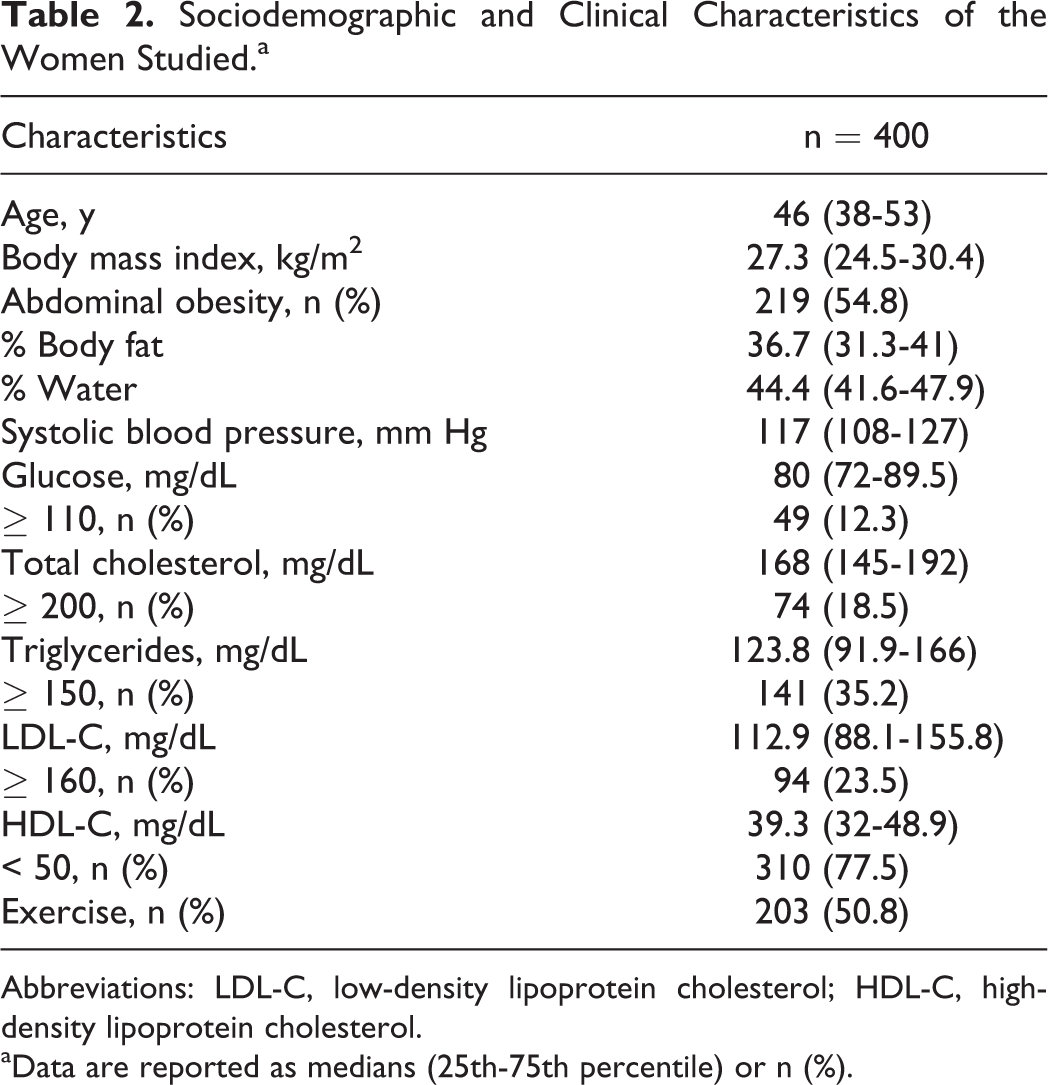
The median age of women was 46 years (38-53), 54.8% had abdominal adiposity, serum glucose levels were 80 mg/dL, and more than 77% of women had decreased levels of HDL-C. Of all women, 23.5% had serum levels of LDL-C ≥160 mg/dL and 35.2% had TGs ≥150 mg/dL (Table 2).
Sociodemographic and Clinical Characteristics of the Women Studied.a
Abbreviations: LDL-C, low-density lipoprotein cholesterol; HDL-C, high-density lipoprotein cholesterol.
aData are reported as medians (25th-75th percentile) or n (%).
The women studied were classified at high atherogenic risk using blood levels of LDL-C ≥160 mg/dL and TG ≥150 mg/dL and low risk (LDL-C <160 mg/dL and TG <150 mg/dL). The SNPs evaluated were in Hardy-Weinberg equilibrium.
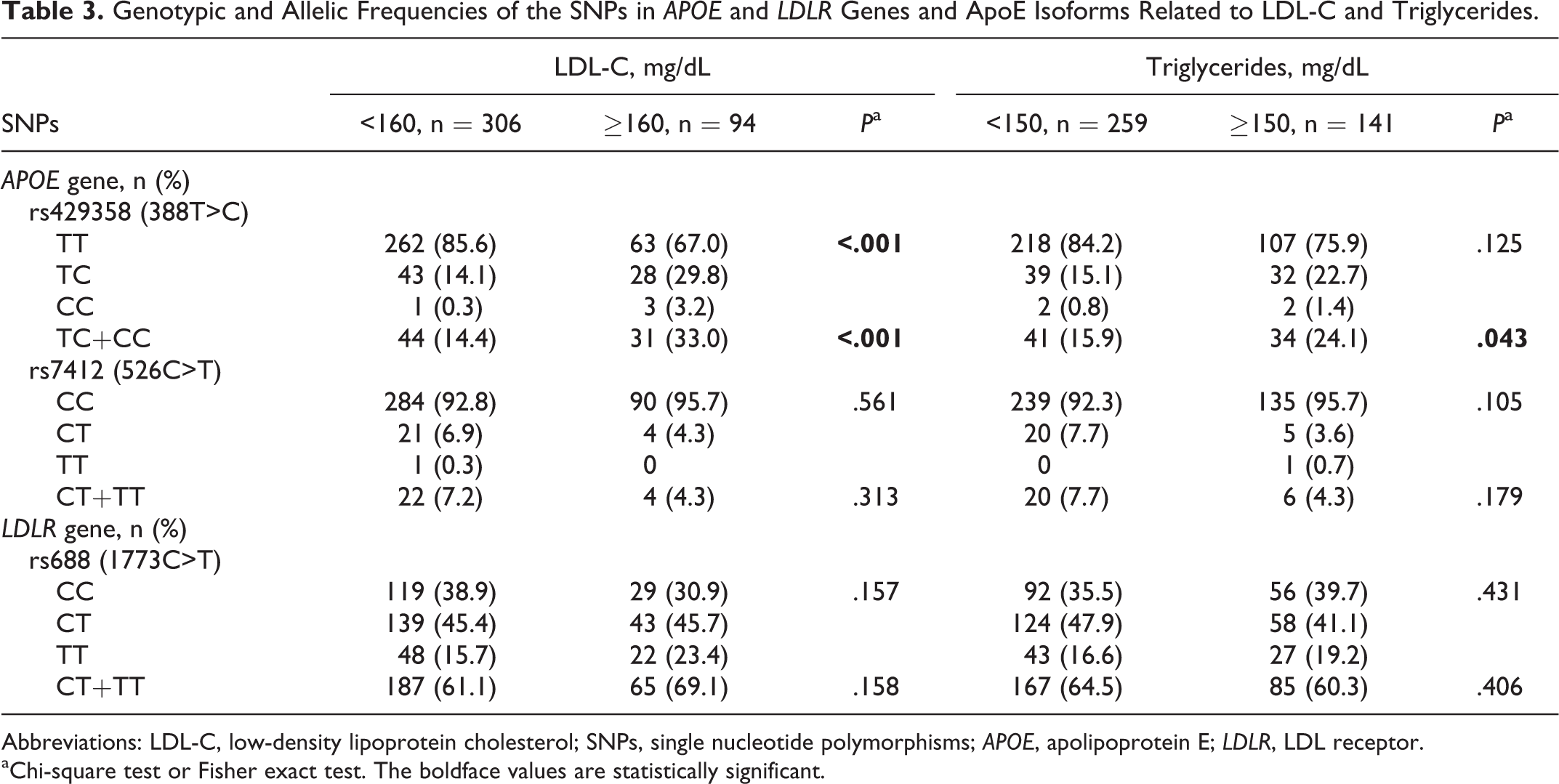
The ApoE3 was the most frequently found (76.2%) followed by ApoE4 (17.8%) and the ApoE2 (6%). We observed that in women with LDL-C ≥160 mg/dL and/or TG ≥150 mg/dL, the frequency of TC or CC genotype (dominant inheritance model) of SNP rs429358 in the APOE gene was higher (33% vs 14.4% for LDL-C and 24.1 vs 15.9 for TG), and the frequency of the ApoE4 isoform was significantly higher compared to women who had low levels of LDL-C and/or TG. Moreover, the CT genotype of SNP rs688 in the LDLR gene was the most prevalent (45.5%), followed by CC (37%) and TT (17.5%). We found no significant differences between the rs688 SNP in the LDLR gene and the rs7412 in the APOE gene with elevated serum levels of LDL-C or other risk factors for CHD (Table 3).
Genotypic and Allelic Frequencies of the SNPs in APOE and LDLR Genes and ApoE Isoforms Related to LDL-C and Triglycerides.
Abbreviations: LDL-C, low-density lipoprotein cholesterol; SNPs, single nucleotide polymorphisms; APOE, apolipoprotein E; LDLR, LDL receptor.
aChi-square test or Fisher exact test. The boldface values are statistically significant.
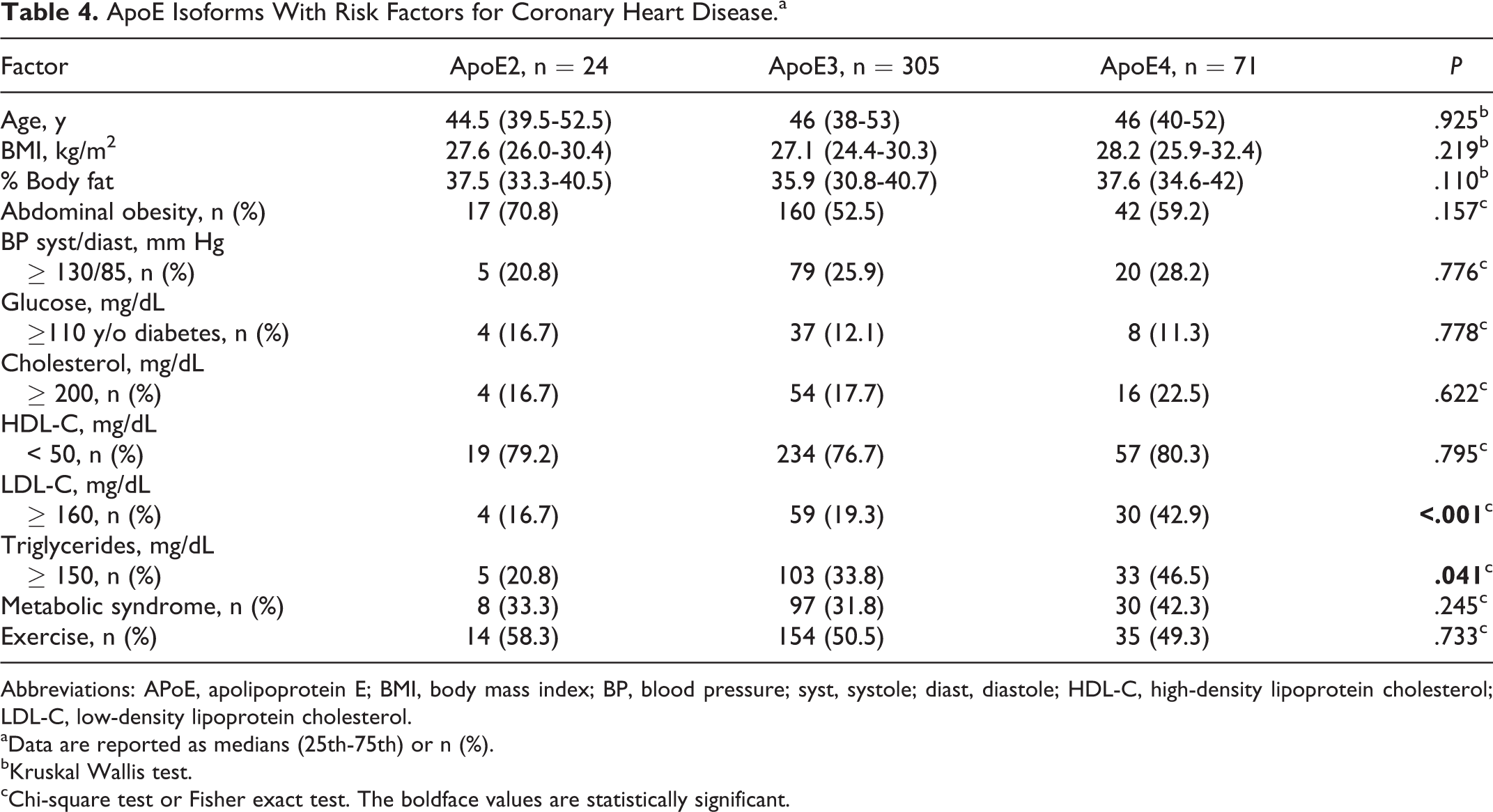
We found significant differences in women who had high levels of LDL-C (≥160 mg/dL) and TG (≥150 mg/dL) when comparing ApoE isoforms (Table 4). Notably, women who are carriers of the ApoE4 isoform had 3.3 times more risk to have LDL-C (1.9-5.7) and 1.7 times the risk of having TG (1.0-2.9) of atherogenic risk compared to carriers of the ApoE3 isoform (Table 5). Multiple linear regression models were used to evaluate the effect of ApoE isoforms on risk factors for CHD. Significant increase in LDL-C was found in carriers of the ApoE4 (β = 20; 95% confidence interval [CI]: 6.6-33.4; P = .003) compared with carriers of the ApoE3 isoform. Although it was found that the ApoE4 was associated with increased levels of TG, this effect was not significant through multiple linear regression (β = 4.8; 95% CI: −24.3-33.9; P = .746).
ApoE Isoforms With Risk Factors for Coronary Heart Disease.a
Abbreviations: APoE, apolipoprotein E; BMI, body mass index; BP, blood pressure; syst, systole; diast, diastole; HDL-C, high-density lipoprotein cholesterol; LDL-C, low-density lipoprotein cholesterol.
aData are reported as medians (25th-75th) or n (%).
bKruskal Wallis test.
cChi-square test or Fisher exact test. The boldface values are statistically significant.
Association of ApoE Isoforms With the Atherogenic Risk Factors.
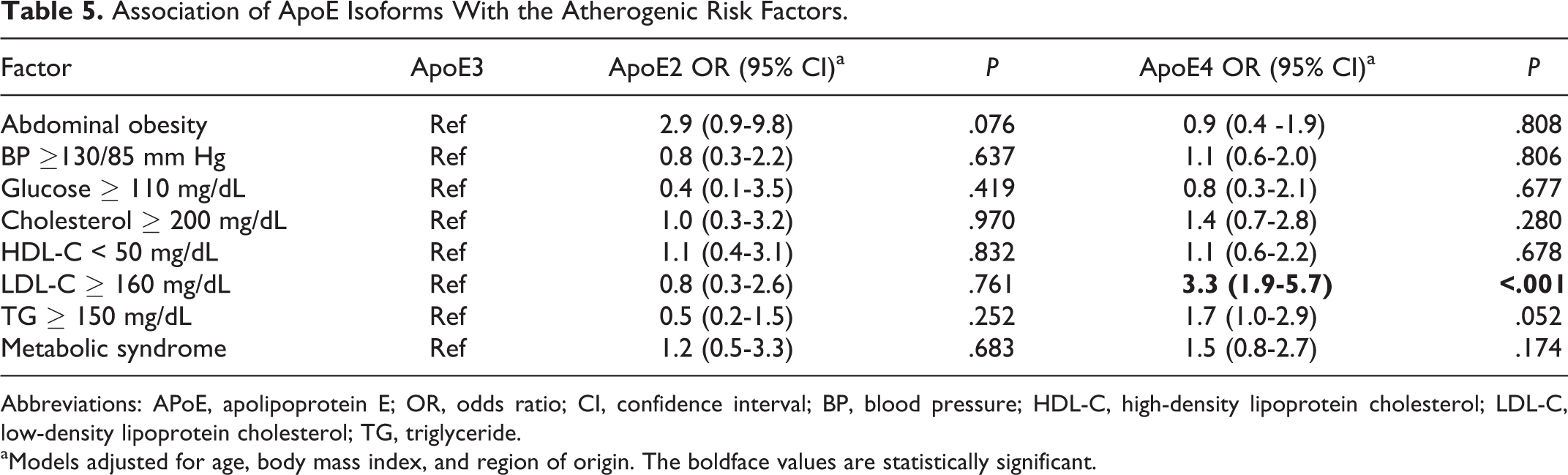
Abbreviations: APoE, apolipoprotein E; OR, odds ratio; CI, confidence interval; BP, blood pressure; HDL-C, high-density lipoprotein cholesterol; LDL-C, low-density lipoprotein cholesterol; TG, triglyceride.
aModels adjusted for age, body mass index, and region of origin. The boldface values are statistically significant.
When evaluating the joint effect between ApoE isoforms with rs688 polymorphism in the LDLR gene on the levels of LDL-C ≥160 mg/dL, we found significant association between the ApoE4 isoform and the CT/TT genotypes in the rs688 polymorphism on elevated levels of LDL-C (odds ratio [OR] = 5.7, 95% CI: 2.5-13.2; P < .001) compared to women who had both ApoE3 isoform and CC genotype. However, the joint effect of the ApoE4 with the CC genotype on the elevated levels of LDL-C was also found significant (OR = 4.0, 95% CI: 1.6-10; P = 0.003), which could be explained by the higher effect of the ApoE4 isoform on the levels of LDL-C and not by the combined effect between the ApoE4 and T allele (CT/TT; Table 6).
Joint Effect of ApoE Isoforms and rs688 Polymorphism in the LDLR Gene on Elevated levels in LDL-C.
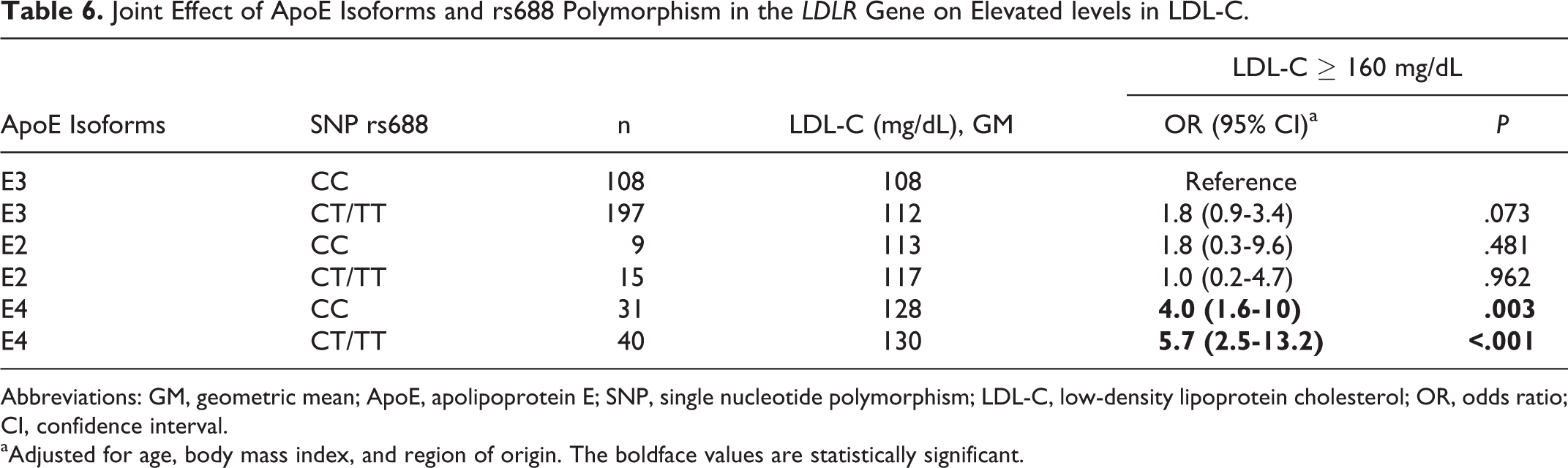
Abbreviations: GM, geometric mean; ApoE, apolipoprotein E; SNP, single nucleotide polymorphism; LDL-C, low-density lipoprotein cholesterol; OR, odds ratio; CI, confidence interval.
aAdjusted for age, body mass index, and region of origin. The boldface values are statistically significant.
Discussion
It is widely known that dyslipidemia contributes significantly to the development of CHD, mainly elevated blood levels of LDL-C and TG and decreased HDL-C. Various genes involved in the development of CHD have been proposed in genetic association studies, such as the APOE gene and the risk of CVD. In Mexico, ischemic heart disease is the second cause of mortality, with a slightly higher rate in women (10.9%) compared to men (10.4%), 16 probably due to changes in eating habits, lifestyles, and greater accumulation of fat in women than in men, which led our team to conduct a specific study in women.
In this study, it was found that all 3 isoforms of ApoE are present in women of Southwestern Mexico, and as in other studies, the most frequently found isoform was ApoE3, considered as the wild form of the protein, followed by ApoE4. The frequencies of ApoE isoforms were similar to ours in populations of countries like Ireland, 17 Germany, 18 United States 19 (P > .05), and ApoE4 isoform was significantly different in populations from France, Portugal, Spaind, 17 and Lebanon 20 (P < .05). These differences can be explained by the genetic diversity among populations. It is noteworthy that only mestizo women were included in this study, it was also ensured that they were born in the state of Guerrero, Mexico, as well as their parents and grandparents. Patients belonging to ethnic groups that exist in the region were not included, nor migrants from other regions of the country, avoiding where possible bias by population stratification. In addition, statistical models of logistic or linear regression were adjusted for region of origin.
Moreover, women who have the ApoE4 isoform showed elevated levels of LDL-C (P < .001) and TG (P = .041) compared to E2 and E3 isoforms; similar results were reported in the Indian population, in which the authors conclude that the E4 allele is a major factor for high occurrence of dyslipidemia. 21 Another study found that patients with CVD without diabetes and lipid-lowering therapy had a positive association between ApoE4 and the prevalence of metabolic syndrome and high BP. 22 A report in Canada showed that ApoE4 isoform was associated with elevated LDL-C, ApoB, ApoB/ApoA, and decreased ApoA as well as with decreased levels of HDL-C. 23 Several studies have found that the ApoE4 increased the risk of deep vein thrombosis, coronary artery disease, and type 2 diabetes. 24 –26 Furthermore, it has been reported that the increase in carotid artery intima–media thickness (CA-IMT) is a predictor of atherosclerosis and that the increase in CA-IMT has been associated with the ApoE4 isoform. 20 In our study, we found that women who carry the ApoE4 isoform were associated with atherogenic risk levels of LDL-C and TG compared to women carrying the ApoE3.
We found association between ApoE4 isoform with the TT or CT genotype of SNP rs688 in the LDLR gene and high levels of LDL-C ≥160 mg/dL. Probably a possible gene–gene interaction is involved in the development of metabolic disorders. However, the effect could result only by the presence of ApoE4 isoform because no association was found between rs688 genotypes with the risk factors of CHD. Further studies to clarify this possible relationship are required.
The mechanism by which the ApoE isoforms contribute to the risk of CVD is still poorly understood and is attributed to the structural differences in isoforms producing differences in the affinity for LDLR in the following order: ApoE4 > ApoE3 > ApoE2, which significantly impact plasma cholesterol levels in an inverse order in humans and in mouse models. 8 The ApoE4 has a somewhat higher affinity for the LDLR than ApoE3, and cholesterol efflux from cells expressing ApoE4, such as macrophages and neurons, is less efficient than cells expressing other isoforms. In addition, ApoE4 has a reduced ability to protect cells from oxidative stress compared with ApoE3. These characteristics of ApoE4 could alter lipid metabolism of adipocytes and render them more susceptible to dysfunction than ApoE3. 27
Contrary to the described, the study performed by Versmissen et al conclude that an LDLR mutation is protective in patients with familial hypercholesterolemia (FH) having the ApoE4 genotype and that this genotype even seems to reduce CHD risk in patients with FH having an LDLR mutation. However, the authors recognize the limitations of their study, as all patients had hypercholesterolemia, which means that patients in this cohort without an LDLR mutation cannot be considered as healthy controls; in fact, they are individuals having another primary lipid disorder, most likely familial combined hyperlipidemia. The authors suggest further studies to establish the biological basis of their findings. 28
In summary, our results suggest that women carrying the ApoE4 isoform present high levels of LDL-C and/or TG, have a higher risk of developing atherosclerosis, and consequently CHD. And the SNP rs688 in the LDLR gene does not confer greater susceptibility of atherogenic risk in the women studied. These findings also suggest that ApoE4 can significantly influence the metabolism of lipids and possibly retard the removal of blood lipoproteins. We suggest performing studies to establish the biological basis of this hypothesis.
Footnotes
Acknowledgments
We thank Crisalde Ramirez Celis for their assistance in reviewing the English translation of the manuscript.
Declaration of Conflicting Interests
The author(s) declared no potential conflicts of interest with respect to the research, authorship, and/or publication of this article.
Funding
The author(s) disclosed receipt of the following financial support for the research, authorship, and/or publication of this article: This work was supported by the National Council for Science and Technology (CONACyT-I010/455/2013 C-677/2013).