



Abstract
This longitudinal study examined bidirectional associations between special education pupils’ teacher–child relationship characteristics (quality, satisfaction, and conflict), classroom structure, and behavioral problems (externalizing and attention-hyperactivity). A secondary goal was to investigate the extent to which severity of behavioral problems moderated the prospective associations. Participants were 586 pupils (86% boys) in Grades 4 to 6 (Mage time 1 = 10.82 years, SD = 0.86) from 13 special education schools in the Netherlands and their teachers. Findings indicated that primarily teacher–child conflict was related to increased externalizing problems. More classroom structure was related to decreased attention-hyperactivity problems, but higher teacher–child relationship quality was linked to increases in attention-hyperactivity problems. Moreover, both types of problems were related to increases in conflict. Severity of behavior problems did not moderate these associations. Although findings were not consistent in both school years, they suggested that particularly reducing conflict and instilling more classroom structure were the most effective strategies in reducing behavioral problems. Furthermore, disrupting negative transactional associations between conflict and externalizing behavior is important to reduce externalizing behavior.
Keywords
In many European countries, a proportion of pupils with emotional and behavioral disorders (EBD) still attend segregated special education schools (Europe: 2.3% including separate classes in mainstream schools; World Health Organization & World Bank, 2011), although national educational policies encourage placement in inclusive classrooms. In these segregated settings, specialized teachers aim to provide pupils with a supportive environment that reduces behavioral problems and improves learning outcomes (Lane et al., 2005). Teachers provide emotional support via teacher–child relationships, and behavioral support via a structured classroom environment. Studies mainly conducted in regular education settings suggest that both types of support are linked to improvements in behavioral problems (Breeman et al., 2015; Hamre et al., 2013; Rimm-Kaufman et al., 2009). Although teachers’ investment in supportive teacher–child relationships and a clear classroom structure might foster adaptive behavior of pupils, teachers of pupils with EBD often find this difficult due to the behavioral problems that pupils display. Consequently, teachers and pupils experience more negative teacher–pupil interactions in segregated settings than in regular education settings (Little & Kobak, 2003; Maggin et al., 2011). Longitudinal studies concerning bidirectional links between teacher–child relationships, structure, and behavioral problems in segregated settings are scarce, however, and studies often target small samples (e.g., Sutherland & Wehby, 2001; Zweers et al., 2021). Due to characteristics of the classroom context in segregated settings (e.g., smaller classrooms, different pupils-staff ratio, overrepresentation of boys), regular education research is not generalizable to segregated settings. Thus, the primary aim of our study was to examine bidirectional associations between aspects of teacher–child relationships (quality, satisfaction, and conflict), classroom structure, and behavioral problems (externalizing and attention-hyperactivity problems) in segregated special education settings for pupils with EBD. We also investigated whether the severity of behavioral problems moderated these prospective associations.
Teachers’ Role in Decreasing Behavioral Problems
The special education literature describing teacher–child interactions highlights the importance of both the emotional support that teachers provide via teacher–child relationships and the instrumental support teachers provide by structuring classroom activities (Breeman et al., 2015; Little & Kobak, 2003; Wehby et al., 1995). Teacher–child relationships are often described as attachment-like relationships that provide pupils with a safe environment (e.g., Verschueren & Koomen, 2012). Not unlike other close relationships, teacher–child relationships can be defined in terms of positive and negative aspects (e.g., Sabol & Pianta, 2012). Positive aspects include positive affective attitudes, such as satisfaction, warmth, and closeness (e.g., Ang, 2005; Verschueren & Koomen, 2012). Negative aspects concern negative affective attitudes, such as conflict or a lack of rapport.
It is well documented in the regular education literature that supportive teacher–child relationships are beneficial (e.g., Sabol & Pianta, 2012; Verschueren & Koomen, 2012) and conflictual teacher–child relationships are detrimental to pupils’ behavioral outcomes (De Laet et al., 2014; Doumen et al., 2009). However, research suggests that in segregated special education settings conflict is more closely linked to behavioral problems than positive relationship qualities, such as support or closeness (Breeman et al., 2015). Specifically, this study reported that higher levels of teacher–child conflict were related to more behavioral problems in boys later in the school year, whereas higher levels of closeness were not related to lower levels of problems (Breeman et al., 2015). One possible explanation for this is that there is an increased prevalence of conflict and negative interactions between teachers and pupils in special education classrooms (Little & Kobak, 2003; Zweers et al., 2021). Furthermore, views of teachers and pupils of their relationship often differ, so assessments of pupils’ and teachers’ perspectives provide unique and overlapping information (Hughes, 2011; Sabol & Pianta, 2012). Thus, for special education teachers to effectively provide students with emotional support, specific knowledge about whether to increase positive or reduce negative relationship characteristics perceived by pupils and/or teachers is essential. We focus on three important aspects of teacher–child relationships: pupils’ perceptions of the overall quality of their relationship with the teacher, and teachers’ reports describing the degree to which they experience the relationships with their pupils as satisfactory and conflictual.
Another way that teachers can affect pupils’ behavioral outcomes is by providing a structured educational environment (Oliver & Reschly, 2010; Oliver et al., 2011; Rimm-Kaufman et al., 2009). Structure is a broad concept linked to teachers’ classroom management practices and incorporates classroom organization practices, as well as behavioral management. Classroom organization concerns the establishment of stable routines and clear rules and expectations, which contribute to a predictable and orderly environment. Proactive behavioral management focuses on prevention by identifying and correcting problematic behaviors in an early stage (Buyse et al., 2008; Emmer & Stough, 2001; Rimm-Kaufman et al., 2009). In this study, we focus on the classroom organization, which we further address as structure. In segregated special education schools, the classroom organization is more structured than in regular education. Structure is provided in the physical space of the classroom (e.g., only necessary material on walls to reduce sensory input, screens where pupils can work behind) and in time (e.g., clear routines, schedules with pictograms; Mesibov & Shea, 2010; Oliver et al., 2011). This preventive structure is important for pupils with EBD in special education settings to decrease challenging behaviors (Oliver & Reschly, 2010).
Much of our insight into effective classroom management comes from studies into intervention programs that incorporate components of organizational structure and behavioral management (Oliver et al., 2011). Although most of these studies were conducted in regular settings, there are some studies in special education settings that show that such programs may also be effective in special education (e.g., Kehle et al., 2000). Furthermore, classroom treatment programs (e.g., TEACCH) that enhance structure as part of the program (e.g., next to communication), seem to be effective in increasing adaptive behavior in specific groups of pupils with EBD (e.g., autism) as well (Panerai et al., 2009). These special education studies, with mostly smaller samples, display the importance of classroom management practices to decrease behavioral problems of pupils with EBD in these segregated settings. Furthermore, there is ample evidence that not providing sufficient organizational structure and behavioral management may exacerbate behavioral problems of pupils in segregated settings (Oliver & Reschly, 2010; Wehby et al., 1995). These findings are in line with regular education research showing that the teachers’ application of structure contributes to pupils’ capacity to control their behavior, leading to less aggressive and disruptive behavior and better on-task behavior (Cadima et al., 2016; Rimm-Kaufman et al., 2009). Researchers acknowledge that organizational structure and behavioral management uniquely contribute to behavior of pupils (Oliver & Reschly, 2010). However, studies that separately examine organizational structure are scarce compared with studies into behavioral management techniques (e.g., Oliver & Reschly, 2010). Because organizational structure might be equally important as behavioral management, this study addresses interrelations between structure and pupils’ behavioral problems. Furthermore, we add to existing special education literature by simultaneously investigating teacher–child relationships and structure as predictors of behavioral problems, and by utilizing teacher and self-reports of relationships and pupil reports of structure.
Reciprocal Associations Between Behavior, Teacher–Child Relationships, and Structure
It is commonly acknowledged that not only do teachers play an important role in the behavioral problems that pupils display, but teachers themselves are also affected by these problems (e.g., Doumen et al., 2009; Wehby et al., 1995). In general, teachers often feel stressed and incompetent in dealing with behavioral problems. This increases negative interpretations of the pupils’ behavior and hinders establishing and maintaining supportive teacher–child relationships (Chang & Davis, 2009). Pupils in turn may experience teacher–child relationships as similarly conflictual, as a result of receiving relatively more corrections and fewer praises in response to their behavior (Wehby et al., 1995). Therefore, higher levels of behavioral problems of pupils may lead to both teachers and pupils experiencing teacher–child relationships as more conflictual and less satisfactory.
Pupils in segregated settings have on average more conflictual relationships with teachers than pupils in regular education (Zweers et al., 2021). During special education, over time conflict in the teacher–child relationship seems to decline (Zweers et al., 2021). It is not completely clear whether pupils with the most severe problems in special education also have the lowest quality teacher–child relationships. While regular education research shows that severity of problems is positively related to prospective levels of relationship conflict and satisfaction (Doumen et al., 2009; Sabol & Pianta, 2012), evidence for these associations in segregated settings is less clear (Breeman et al., 2015). Furthermore, it is not clear whether pupils’ and teachers’ perspectives on the teacher–child relationship are equally affected by pupils’ levels of behavioral problems. Therefore, we investigate prospective relationships between externalizing and attention-hyperactivity problems, and pupil and teacher reports of the teacher–child relationship.
Although rarely researched, there are indications that pupils’ behavioral problems also affect the classroom structure that pupils experience. Studies in segregated settings suggest that teachers adjust their classroom management practices to pupils’ behavioral problems but mainly focus on behavioral management and not on organizational structure (e.g., Wehby et al.,1998, 1995). Therefore, pupils may also have different experiences depending on the severity of their behavioral problems. Furthermore, even when actual teaching practices are similar, pupils’ perceptions of teacher practices may still differ (e.g., Evans et al., 2009). A study in regular education provides some initial evidence that behavioral problems are also related to the organizational structure in classrooms. This study linked pupils’ behavioral problems to experiencing a more disorderly school structure, with less clear rules and discipline (Fan et al., 2011). Altogether, to get a complete view of the dynamics between teachers and pupils’ behaviors, it seems to be important to also get a more clear idea of the extent to which behavioral problems affect teacher–child relationships and teachers’ classroom management practices.
Severity of Behavioral Problems as a Moderator
Multiple regular education studies claim that high-quality teacher–child relationships and more structured classrooms might be more beneficial for pupils with high levels of behavioral problems than for pupils with low levels of behavioral problems (Hamre & Pianta, 2005; Rimm-Kaufman et al., 2009; Sabol & Pianta, 2012). On average, in regular education relatively few pupils display clinical levels of problems, while in special education most pupils display clinical problem levels. Therefore, it is not clear whether in special education teacher–child relationships and structure also provide a buffer for pupils with more severe problems compared with pupils with less severe problems. Regular education studies provide some initial evidence for these interaction effects between behavior and teacher–child relationships on academic, behavioral, and relational outcomes (Baker, 2006; Hamre & Pianta, 2005; Meehan et al., 2003; Silver et al., 2005). For example, findings show that pupils with higher externalizing problems showed stronger decreases in externalizing problems than pupils with low problems when they had high-quality teacher–child relationships (Silver et al., 2005). The few studies regarding interactions between behavior and structure yield less support for this idea (Buyse et al., 2008; Rimm-Kaufman et al., 2009). Our study therefore investigates whether in special education teacher–child relationships and structure contribute more to later behavioral and relational functioning of pupils with higher behavioral problems than that of pupils with lower behavioral problems.
Present Study
In this study, we investigate bidirectional relationships between teacher–child relationship characteristics (quality, satisfaction, and conflict), classroom structure, and behavioral problems (externalizing and attention-hyperactivity problems) in segregated special education for pupils with EBD within two consecutive school years. The following research questions were examined:
Method
Participants
A total of 586 pupils from 13 special education schools in the Netherlands participated in the study: in the first school year, 441 pupils (Time 1: Mage = 10.82, SD = 0.86, 88% boys), and in the second school year 503 pupils (Time 3: Mage = 11.56, SD = 0.84, 88% boys). All schools targeted a population of pupils with emotional and behavioral disturbances. The assessments were done semi-annually, in February and June, in two consecutive school years. Pupils were in Grades 4 and 5 (Dutch Grades 6 and 7) in the first school year. Pupils who participated the first school year were followed into their new classroom in the next school year. In the second school year, pupils started in newly formed classrooms, with (partly) different classroom compositions (including new starting pupils) and new teachers (85% had a new teacher). The classrooms consisted of four to 14 pupils (M = 10.69, SD = 2.01). On average, 77% of the pupils in each classroom participated in the study.
Of the 441 pupils who participated (from 44 classrooms) in the first school year, approximately 5% (5% at Time 1 and 4.3% at Time 2) had missing data on the pupil-reported variables (structure and quality) and 6% (5.7% at Time 1 and 7.3% at Time 2) were missing teacher-reported measures (satisfaction, conflict, and behavior problems). In the second school year, 358 pupils from School Year 1 participated, as well as 145 new pupils. Of the 503 pupils (from 53 classrooms) who participated in the second school year, roughly 4% (3.2% at Time 3 and 5.4% at Time 4) of the pupils had missing pupil-reported data and 16.5% (18.7% at Time 3 and 15.5% at Time 4) had missing information for the teacher-reported variables.
Setting
In the Netherlands, there are different types of special education schools that each target specific problems. One type targets pupils with EBD. Within these special education schools, there is often access to school psychologists, speech therapists, and remedial teachers. Pupils placed in these segregated settings often started out in regular education or regular child care. When special educational needs cannot be provided in a regular setting, pupils may be eligible for a segregated setting. Since 2014, this has been judged by local committees based on locally formulated criteria, and Diagnostic and Statistical Manual of Mental Disorders (DSM) classifications are not obligated. Committees weigh the necessary support (extent and type) against the options of (regular) schools to provide this support. Previous studies in the Netherlands suggest that a large proportion of pupils in segregated settings are classified with Autism Spectrum Disorder (43%), Attention-Deficit/Hyperactivity Disorder (40%), and Oppositional Defiant or Conduct Disorder (28%; Breeman et al., 2015). Furthermore, there is high comorbidity with specific learning disorders such as dyslexia. We did not gather additional demographic information (family characteristics, disciplinary actions, etc.) due to ethical guidelines. Schools in our sample targeted pupils with EBD with typical intellectual abilities. Classrooms in these schools generally include eight to 14 pupils, one teacher, and a (part-time) teaching assistant.
Procedure
Researchers initially contacted school administrators of special education schools for pupils with EBD to inquire about participation in the study. When schools were interested, they were visited by one of the researchers to inform the school officials and teams about the design and purpose of the study. Letters with information about the study and a consent form were distributed to parents. Only pupils who had consent to participate were included in the study (85%). In consultation with the schools, dates were set for the administration of the digital surveys to the pupils. Researchers visited the schools for this purpose. Pupils from each participating classroom were informed about the anonymous handling of the data. In consultation with the teacher, researchers then escorted groups of three to four pupils to a separate room to administer the surveys. Support and behavioral guidance (e.g., keep pupils’ attention on the task) were provided when necessary. When pupils had severe reading difficulties the survey items were read out loud. Around the same time that researchers visited the schools, teachers completed digital surveys.
Measures
Teacher–child relationships
Three teacher–child relationship characteristics were assessed: quality, satisfaction, and conflict. Quality was assessed utilizing pupil reports on the Quality Interaction Teacher–Pupil subscale of the Climate Scale, which was developed to assess aspects of classroom climate in Dutch regular and special education classrooms (Donkers & Vermulst, 2014). Satisfaction and conflict were measured with two subscales from the Teacher Student Relationship Inventory (TSRI; Ang, 2005). The pupil-reported measure of Quality included 11 items scored on a 4-point Likert-type scale, 1 = (almost) never, 2 = sometimes, 3 = regularly, 4 = often. Examples are “I like this teacher” and “I can approach this teacher with my problems.” Internal reliability of the scale was good at all four assessments (α = .88–.91). The teacher-reported measure of Satisfaction consisted of five items assessing a positive relationship dimension with items such as “I enjoy having this student in my class.” The Conflict measure consisted of four items assessing a negative relationship dimension (e.g., “This student frustrates me more often than most other pupils in my class”). Items on these subscales were scored on a 5-point Likert-type scale (1 = almost never true to 5 = almost always true). The subscales demonstrated good internal consistency at each of the four assessments: satisfaction (α = .84–.86), and conflict (α = .85–.88).
Structure
Structure was assessed with pupil reports of six items from the Climate Scale (Donkers & Vermulst, 2014). Examples of questions are “The teacher needs much time to get everyone quiet” and “I think lessons from this teacher are disorderly.” All items were assessed with a 4-point Likert-type scale, 1 = (almost) never, 2 = sometimes, 3 = regularly, 4 = often. Internal reliability of the subscale was adequate (α = .73–.80).
Behavioral problems
To assess behavioral problems, teachers filled out two subscales of the Brief Problem Monitor–Teacher (BPM-T) version (Achenbach et al., 2011): Externalizing Problems and Attention-Hyperactivity Problems. Both these measures consisted of six items, which were rated on a scale from 0 = not true, to 2 = very true. The Externalizing Problems scale consists of items such as “argues a lot” and “is disobedient at school.” Internal reliability was high (α = .84–.86). The scale measuring attention-hyperactivity problems included items such as “cannot concentrate, can’t pay attention for long” and “cannot sit still, is restless, or hyperactive” (α = .80–.82).
Data Analyses
Longitudinal cross-lagged autoregressive models were estimated separately for each school year with the lavaan package (Rosseel, 2012) of the R statistical program version 3.6.1 (R Core Team, 2020) to examine bidirectional relationships between the four teacher variables (quality, satisfaction, conflict, and structure) and indicators of both behavioral problems (externalizing and attention-hyperactivity problems). The regression paths involving teacher measures as predictors of changes in behavior problems addressed the first research question and the regression paths involving behavior problems as predictors of changes in teacher–child relationships and classroom structure addressed the second research question. To address the third research question, two additional models were performed that also included interactions between the centered scores of each behavior and teacher variable. This resulted in the inclusion of 16 interactions in each school year: eight interactions between teacher and behavioral measures in the prediction of each behavior and eight interactions between teacher and behavior measures in the prediction of each teacher measure. To correct for nonindependence in the data (pupils nested in classrooms), we utilized the “clustering” option in lavaan, which provides robust standard errors and a scaled chi-square test statistic (Brosseau-Liard & Savalei, 2014; Brosseau-Liard et al., 2012). The bidirectional models without interactions were saturated models, and therefore model fit could not be assessed. For the models with interactions, the comparative fit index (CFI), Tucker–Lewis index (TLI), standardized root mean residual (SRMR), and root mean square error of approximation (RMSEA) were used as indicators of model fit (Hu & Bentler, 1999). For CFI and TLI, a cut-off of .90 and above, for SRMR a value of .06 or less (Hu & Bentler, 1999), and for RMSEA a cut-off of .08 or less were deemed adequate fit (Browne & Cudeck, 1993). Missing values were accounted for with Full Information Maximum Likelihood (FIML).
Results
Concurrent Relations Between the Variables
Table 1 displays means and standard deviations of all study measures. Bivariate correlations between the teacher variables and behavioral problems are reported in Table 2. Quality, satisfaction, and structure were negatively correlated with both behaviors and conflict was positively related to the behaviors. Correlations of satisfaction and conflict with both behavioral problems (respectively, −.19 to −.52 and .30 to .67) were more robust than those involving structure and quality (−.05 to −.25). Correlations between externalizing problems and attention-hyperactivity problems ranged between r = .43 and .51.
Means and Standard Deviations of the Variables at Times 1 and 2 in School Year 1 and Times 3 and 4 in School Year 2.
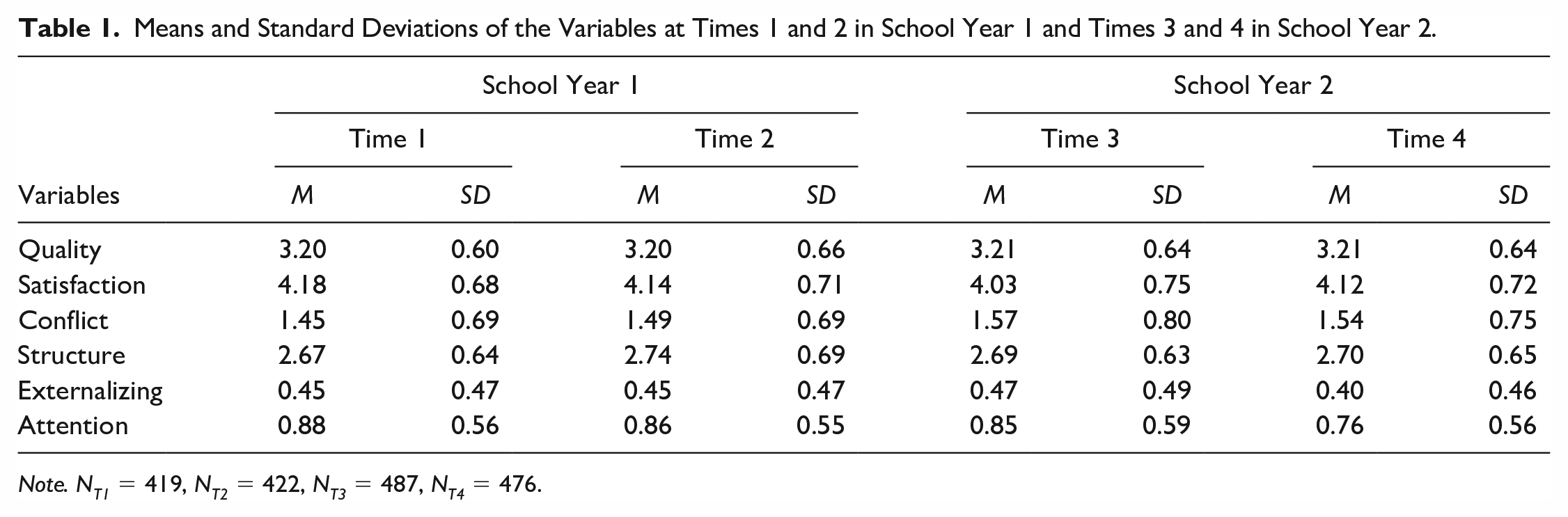
Note. NT1 = 419, NT2 = 422, NT3 = 487, NT4 = 476.
Concurrent Correlations Between Quality, Satisfaction, Conflict, Structure, and Externalizing and Attention-Hyperactivity Problems in School Year 1 (Times 1 and 2) and School Year 2 (Times 3 and 4).
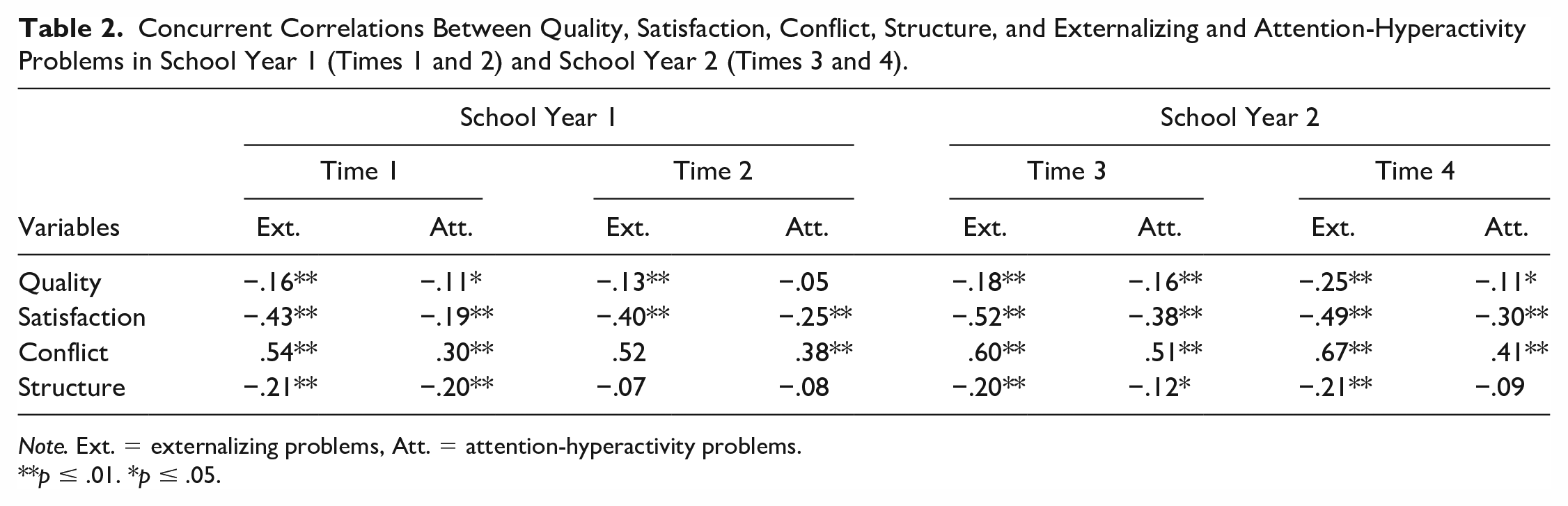
Note. Ext. = externalizing problems, Att. = attention-hyperactivity problems.
p ≤ .01. *p ≤ .05.
Models With Bidirectional Associations
The (saturated) main effect model estimating bidirectional associations in the first school year explained approximately 60% of the variance of the behavioral problems (62% of attention-hyperactivity problems, 59% of externalizing problems). Variance explained of the three aspects of teacher–child relationships and of structure ranged between 40% and 44%. The model for the second school year explained roughly 66% of the variance on behavioral problems (68% for attention-hyperactivity problems, 65% of externalizing problems). This model explained between 44% and 56% of the variance of the teacher–child relationship measures and structure. All interindividual stability paths in both models were statistically significant (p ≤ .001).
Teacher–Child Relationships and Structure Predicting Behavioral Problems
Table 3 displays the beta weights of teacher–child relationship characteristics and classroom structure predicting externalizing behavior and attention-hyperactivity problems. The regression paths that emerged as statistically significant were different in both school years. In the first school year, teacher–child relationship quality and structure predicted attention-hyperactivity problems. Higher teacher–child relationship quality was related to increases of attention-hyperactivity problems, while higher levels of structure were related to decreases of attention-hyperactivity problems. In the second school year, conflict was positively related to externalizing problems, indicating that higher levels of conflict in the teacher–child relationship predicted higher levels of externalizing problems later in the school year.
Bidirectional Models Predicting Behaviors (Externalizing Problems, Attention-Hyperactivity Problems) and Predicting Teacher Variables (Quality, Satisfaction, Conflict, Structure).
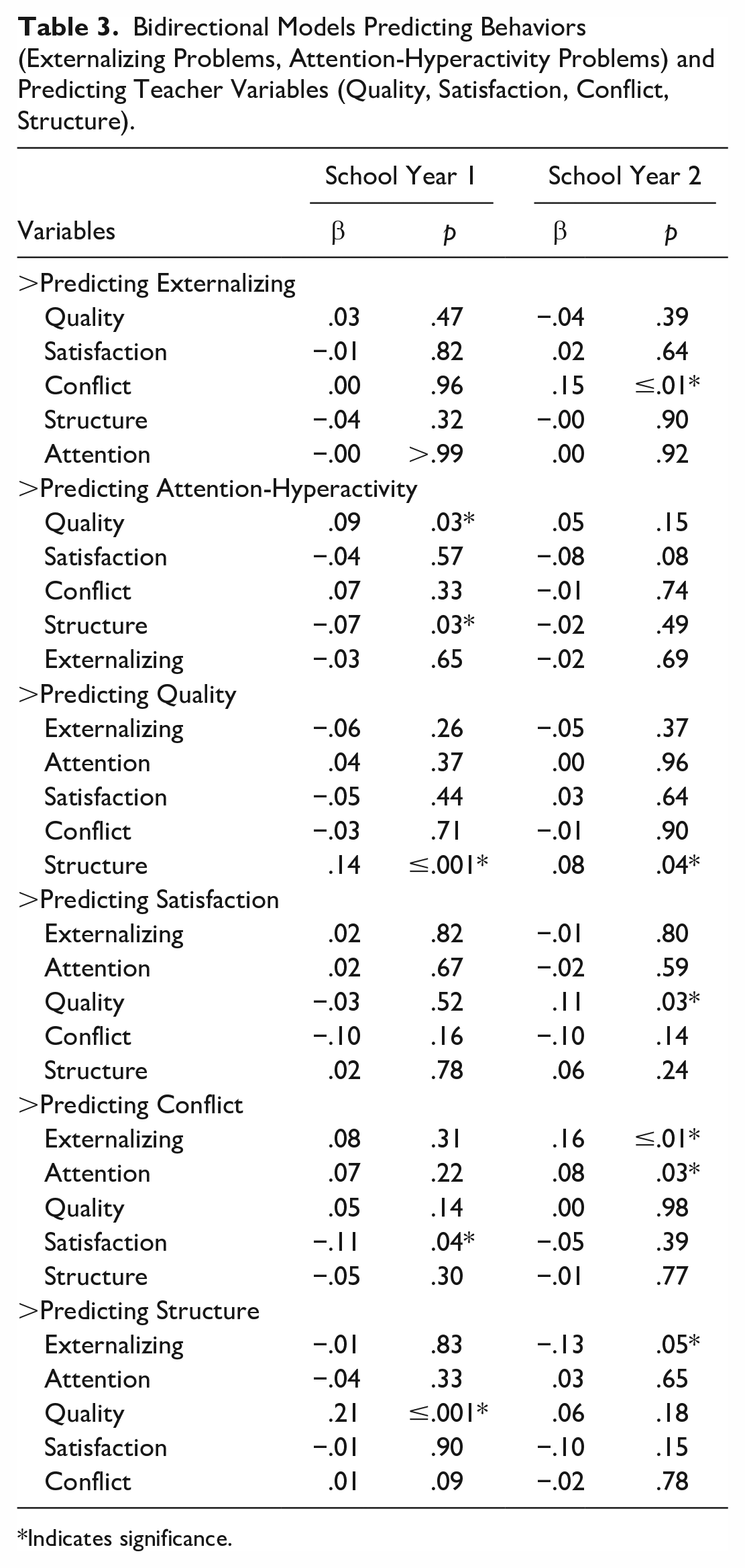
Indicates significance.
Behavioral Problems Predicting Structure and Teacher–Child Relationships
Table 4 displays the beta weights of externalizing problems and attention-hyperactivity problems predicting teacher–child relationship characteristics and classroom structure. In the first school year, no statistically significant paths emerged from behaviors to teacher–child relationship aspects and structure. In the second school year, both behavioral problems were related to changes in conflict and externalizing behavior was related to changes in structure. So, higher levels of both types of problem behaviors predicted increases in teacher-reported conflict and higher externalizing problems predicted decreases in pupil-reported classroom structure. Associations between externalizing behavior and conflict were bidirectional, with higher levels of externalizing behaviors predicting increases in conflict and higher levels of conflict predicting increases in externalizing behaviors.
Interactions Predicting Behaviors (Externalizing Problems, Attention-Hyperactivity Problems) and Predicting Teacher Variables (Quality, Satisfaction, Conflict, Structure).
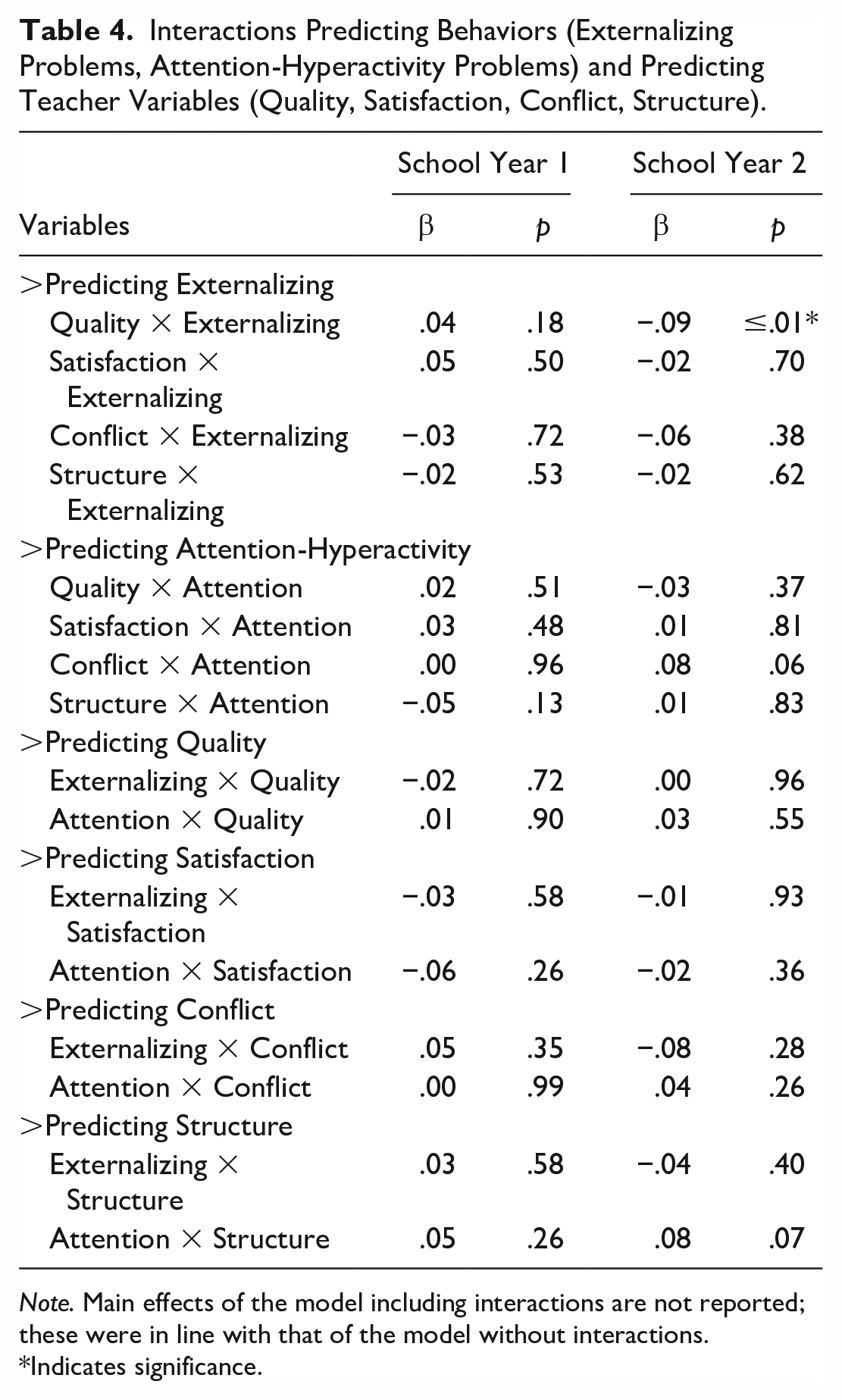
Note. Main effects of the model including interactions are not reported; these were in line with that of the model without interactions.
Indicates significance.
Models Including Interactions
Table 4 presents the interactions between initial levels of behaviors, with teacher–child relationship aspects and structure predicting prospective behaviors and the four teacher variables. The model including interactions for each school year fit the observed data: model fit indices for School Year 1: χ2(32) = 29.52, p = .59, CFI = 1.00, TLI = 1.00, SRMR = 0.01, RMSEA = .00 [0.00, 0.03]; model fit indices for School Year 2: χ2(32) = 35.17, p = .32, CFI = 1.00, TLI = 1.00, SRMR = 0.01, RMSEA = .01 [0.00, 0.04]. The amount of explained variance on each outcome measure was similar to that of the models without interactions included. Of the 16 interactions predicting prospective behavioral problems (two behaviors × four teacher variables × two models), only one interaction emerged as statistically significant (Figure 1). The effect of teacher–child relationship quality on later externalizing problems depended on initial levels of externalizing problems. Simple slopes analyses were used to interpret this interaction. Specifically, the slope for pupils with high levels (+1 SD) of externalizing problems was negative but not statistically significant (b = −.48, SE = .26, p = .07), the slope for pupils with low levels (−1 SD) of externalizing problems was positive and not statistically significant (b = .21, SE = .17, p = .22). The other 16 interactions predicting structure and the three teacher–child relationship aspects did not yield any statistically significant results. So, the effect of behavioral problems on later satisfaction, conflict, and structure did not depend on the severity of the behavior problems.
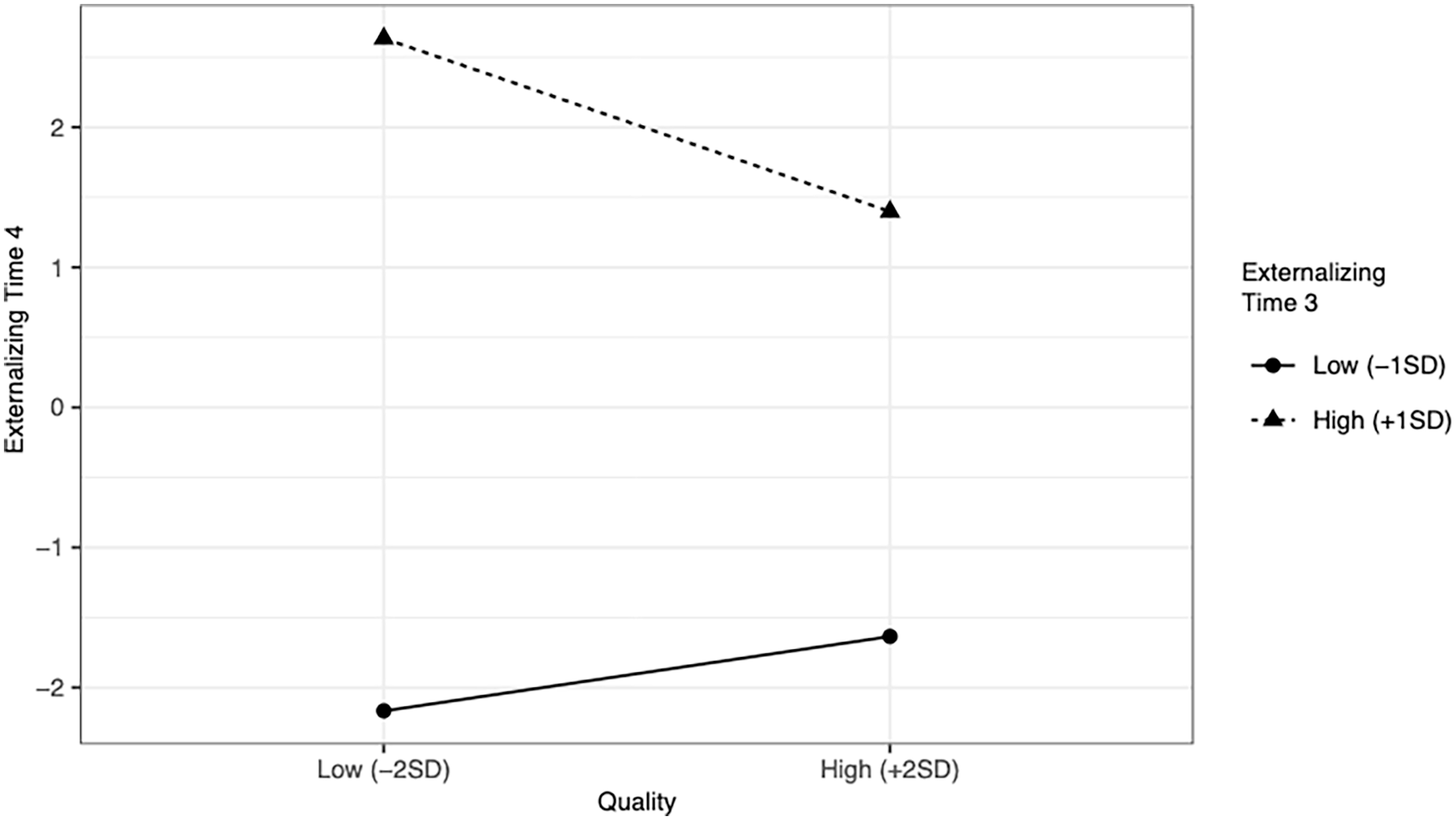
Interaction effect between levels of externalizing problems and relationship quality at Time 3 on externalizing problems at Time 4.
Discussion
The primary aim of our study was to examine the role of three aspects of teacher–child relationships (quality, satisfaction, and conflict) and structure for two indicators of behavioral problems (externalizing and attention-hyperactivity problems) in two years of segregated special education. Second, we were interested whether behavioral problems affected teacher–child relationship aspects and structure, and whether pupils with high levels of problems profited more from high-quality teacher–child relationships and high structure than pupils with low levels of problems. Findings indicated teacher–child conflict was an important factor in increasing externalizing problems (School Year 2). High structure was primarily important in the reduction of attention-hyperactivity problems, while pupils experiencing high-quality teacher–child relationships showed exacerbation of these problems (School Year 1). Both types of problems were related to increases of teacher–child conflict (School Year 2). Pupils with externalizing problems experienced not only increases in conflict but also a decreasing classroom structure as the year progressed (School Year 2). We found no evidence that severity of behavior problems moderated these associations, with one exception: Quality was related to higher decreases of externalizing problems for pupils with initial higher levels of problems (School Year 2).
The Teachers’ Role for Behavioral Problems
Our first question involved whether teacher–child relationships and classroom structure were related to pupils’ behavioral problems. Our expectation that primarily teacher–child conflict and structure would predict prospective behavioral problems was partly confirmed. In line with other special education literature (Breeman et al., 2015), we found that of the positive and negative aspects of teacher–child relationships (satisfaction and conflict), only conflict was related to increased externalizing behavior. On one hand, this may be explained by the fact that in special education there are more negative interactions between teachers and peers, due to the behavioral problems of pupils (Little & Kobak, 2003), which may increase the prominence of conflict versus satisfaction in special education classrooms (Breeman et al., 2015; de Swart et al., 2019). On the other hand, we also found that levels of conflict were on average quite low and there seemed to be only a small percentage of pupils in special education classrooms with whom teachers experience highly conflictual relationships. So, particularly these pupils with high levels of conflict in special education might be the most at risk for increases of externalizing behaviors. We did not find associations between conflict and attention-hyperactivity problems. To our knowledge, this association has not been addressed in previous studies. However, intuitively it makes sense that angry reactions from teachers would instigate more angry and oppositional behavior, than attention problems and hyperactive behavior. More research is needed to get a more conclusive idea about associations of teacher–child conflict with different types of behavioral problems. Somewhat unexpectedly, higher relationship quality reported by pupils was related to increases in prospective attention-hyperactivity problems. So, while concurrently pupils reporting high-quality relationships showed slightly fewer attention-hyperactivity problems, pupils with high-quality relationships showed higher attention problems at the end of the school year than pupils with low-quality relationships when corrected for baseline levels. It may be that these findings reflect the fact that we utilized pupil reports of the relationship, while most research utilizes teacher reports of teacher–child relationships. However, Hughes (2011) already showed that there is little concordance between teachers and pupils on their appraisals of teacher–child relationships, and in particular regarding the positive aspects. Furthermore, in line with our findings Hughes also reported that higher pupil reports of supportive teacher–child relationships were prospectively (but not significantly) related to lower (teacher reported) on-task behavior and concentration, whereas teacher reports of support were positively related to more on-task behavior. Although this explanation is speculative, it might be that when pupils view their relationship with the teacher to be positive, they also feel less need to focus and put an effort into tasks. It makes intuitive sense that when pupils do not expect to get negative responses from their teacher when they diverge from tasks, they might be more inclined to talk to friends, or let themselves be distracted otherwise during learning activities. Altogether, these findings make clear that pupil and teacher views on teacher–child relationships may be related to pupils’ behavior by different mechanisms and that including pupils’ perspectives may shed an important light on these.
More structure experienced by pupils was related to decreases of attention-hyperactivity problems later in the school year, which is in line with literature addressing the importance of structure for regulating pupils’ task-related behavior (Rimm-Kaufman et al., 2009). As special education literature did not study organizational structure separate from behavioral management, this insight adds to our understanding of how preventive organizational structure in segregated special education classroom affects pupils’ behavioral problems. The finding that only attention-hyperactivity problems and not externalizing problems were affected may be explained by the operationalization of the structure construct, which is more related to the classroom organization component than to the behavioral management component of structure. An organized classroom may reduce stimuli that divert attention of pupils from their work and that trigger pupils’ hyperactivity. For the reduction of externalizing behavior, such as aggression, behavioral management, which was not explicitly assessed in this study, might be more important.
The Effect of Behavioral Problems on Teacher–Child Relationships and Structure
Our second research question involved whether indicators of both behavioral problems were related to changes in teacher–child relationships and structure. Based on the previous work in regular and special education, we tentatively expected that structure would be more affected than teacher–child relationships. Our expectation was not confirmed. In contrast to previous special education studies (Breeman et al., 2015), and our tentative expectations, we found that higher levels of both types of behavioral problems were related to increases in teacher–child conflict later in the school year (in School Year 2). This association was bidirectional in nature for externalizing problems. Our assessments of behavioral problems involved teacher reports, while the study of Breeman and colleagues utilized peer reports. This might explain the different findings in the two special education studies. While our finding contradicts the suggestion that teachers in special education might not be as much affected by negative behaviors of pupils as teachers in regular education (Breeman et al., 2015), it confirms other special education literature stressing the far-reaching negative effects of problem behaviors of pupils with EBD on their interpersonal relationships and negative interaction patterns between pupil behavior and teacher responses (Maggin et al., 2011; Wehby et al., 1995).
In addition, externalizing behavior was related to changes in classroom structure, but the valence of the association differed from our expectations. Whereas we expected that higher externalizing behavior would be related to increased structure, we found that it was related to decreases in the structure experienced by pupils (in the second school year). Concurrently, higher externalizing problems were related to experiencing lower structure. It seems that pupils with higher levels of problems judge the structure as too disorderly for them and that the structure pupils with more problem levels experience at the end of the school year is lower, compared with pupils with fewer problems (when corrected for baseline measures). While pupils with attention-hyperactivity problems experience increased conflicts with teachers during the school year, the findings indicate that pupils with high levels of externalizing problems are the most at risk of negative interaction patterns with teachers in which their behavior is related to increases in conflicts with the teacher, as well as a less adequate classroom structure.
Severity of Behavioral Problems as a Moderator
Our third research question involved whether effects of structure and aspects of teacher–child relationships on later outcomes would depend on initial levels of behavioral problems. Based on previous literature, we tentatively expected that teacher–child relationship aspects might be better predictors of outcomes (behaviors, teacher–child relationships) for pupils with higher levels of behavioral problems compared with pupils with lower levels. These expectations were not confirmed, with one exception: only high teacher–child relationship quality was related to decreases in externalizing problems for pupils with initial higher levels of problems, and not for pupils with fewer problems (in School Year 2). Apart from this one interaction effect, the other findings suggested that severity of behavioral problems did not moderate prospective associations. Although this is not in line with previous regular education research (e.g., Buyse et al., 2008), this might be explained by the special education context. Theoretically, it is argued that the most vulnerable pupils in the population benefit the most from high-quality relationships. However, in special education schools these vulnerable pupils are all placed together. In that context, the difference in behavioral severity may not matter that much for the effects of quality of relationships on later behavioral problems in self-contained special education classrooms.
Strengths and Limitations
This study has several strengths. First, our findings are based on a large longitudinal sample of special education pupils and teachers. This design provided an opportunity to assess teacher–child relationship characteristics from the perspectives of both relationship partners. Second, we assessed multiple aspects of the ways in which teachers can impact students, namely, through interactions with individual children (teacher–child relationships) and the degree to which they provide a structured classroom environment. Furthermore, structure was assessed on the individual level, which adds to existing research that generally assesses structure on the classroom level (Evans et al., 2009). We also included two indicators of behavioral problems that are common in special education pupils with EBD. Finally, we investigated changes in our study measures within school years, with semi-annual measurements, while many studies assess changes between school years.
There were also limitations. First, our findings are based on a specific sample of primarily boys in Dutch elementary schools for special education. Therefore, it is not clear whether our results are generalizable to other contexts. Second, assessments of satisfaction, conflict, and behavior problems relied on teachers. Teachers might have the same tendency evaluating pupils on multiple characteristics, leading to a reporter bias, which might be an explanation for the bidirectional effects between externalizing behavior and conflict (Doumen et al., 2009). However, even then findings indicate that as the school year progresses these pupils with high maladaptive behaviors are judged in an increasingly negative manner by their teachers. Third, due to the lack of stability in our sample in the two school years we had to resort to separate analyses in the two school years. Findings were not consistent in the two years, which might reflect the instability of the Dutch special education context across school years (see de Swart et al., 2019). Insight in between-classroom differences may help to understand these inconsistencies. Fourth, we assessed the emotional component of the teachers’ role only by reports of the teacher–child relationships, while there might also be a global classroom-level component regarding emotional support of teachers (Hamre et al., 2013).
Implications
Our finding that teacher–child conflict is more closely related to behavioral problems than positive relationship qualities has implications for programs that target teacher–child relationships. It seems that an important challenge for teachers in segregated special education is to avoid a negative interaction cycle with pupils in which conflicts increase externalizing behavioral problems, which in turn further increase conflicts. Although teachers in special education are often specialized to deal with behavioral problems, training teachers might still be important so that they feel capable to deal with pupils with severe behavioral problems (see Doumen et al., 2009) and obtain the skills to apply sufficient structure, and behavioral management, without creating a harsh, punitive, and conflictual environment (Maggin et al., 2011; Wehby et al., 1995). To break existing negative interaction cycles, coaching might be needed, for example, addressing responses to undesired and desired behaviors through extinction and reinforcement.
Conclusion
Our study demonstrates that in segregated special education, reducing teacher–child conflict is important for the reduction of externalizing problems, while for the reduction of attention-hyperactivity problems a well-organized classroom structure is important. In addition, specialized teachers in special education are also affected by maladaptive behaviors of pupils, not only by externalizing problems but also by attention-hyperactivity problems as well. Our study provides some initial insight into the processes between teachers and pupils’ behavior in special education, but more research is still needed.
Footnotes
Acknowledgements
We would like to thank all teachers and pupils in special education who participated in the study.
Declaration of Conflicting Interests
The author(s) declared no potential conflicts of interest with respect to the research, authorship, and/or publication of this article.
Funding
This research was supported by Entrea Lindenhout and Pi7 Consortium.
