




Abstract
This longitudinal study investigated bidirectional associations between pupils’ social competence and their interpersonal relationships and classroom climate in segregated special education schools for pupils with emotional and behavioral disorders in the Netherlands. Participants were in Grade 4 and 5 in School Year 1 (N = 441) and Grade 5 and 6 in School Year 2 (N = 504) (Mage Time1 = 10.82, SD = 0.86). Digital surveys were administered to pupils and teachers twice each school year to gather information about pupils’ relationships with teachers and peers, classroom climate (structure, atmosphere), and social competence. Structural path models were estimated separately for each school year. Altogether, classroom structure and peer relations were inconsistently linked with teacher and self-reported social competence. Peer relationships (first school year) and structure (second school year) predicted teacher-reported social competence. Self-reported social competence predicted peer relationships, while teacher-reported social competence predicted structure (second school year). Explanations and implications of the findings are discussed.
Keywords
Children and adolescents with emotional and behavioral disturbances (EBD; including developmental disorders such as autism) experience difficulties in educational and social contexts, which is partly due to their inability to behave in a socially competent manner (Bradley et al., 2008; Lane et al., 2004). Social competence is defined as the ability to function effectively in a social environment. Pupils with low social competence find it difficult to cooperate, behave friendly and assertively in interpersonal interactions (Joosten, 2007; Warnes et al., 2005). Because low social competence has far reaching consequences for school adjustment and later job success, enhancing social competence of pupils with EBD is particularly important. Although studies of regular education classrooms stress the dynamic interplay between various aspects of classroom context (Buyse et al., 2008; Howes, 2000; Rimm-Kaufman et al., 2009) and reports of social competence, it remains unclear how different aspects of segregated special education classrooms are associated with pupils’ social competence.
Worldwide, there are still many pupils with EBD who receive education in segregated special education settings (Europe: 2.3% including separate classes in mainstream schools; United States 3%; De Brey et al., 2021; World Health Organization & World Bank, 2011). Although percentages of pupils who are enrolled in special education schools differ based on inclusive practices within countries (European Commission et al., 2019; World Health Organization & World Bank, 2011), these settings share some common features that hamper generalizability of findings from regular education. Special education schools typically have a smaller staff-to-pupil ratio, overrepresentation of boys, and higher levels of behavioral problems among pupils. To date, the special education literature has focused on specific interventions or the teachers’ use of behavioral management strategies (e.g., Maggin et al., 2011), yet the special education context also consists of other aspects that might contribute to pupils’ social competence. For example, the classroom context is characterized by higher levels of structure but also increased negative interactions with teachers and peers (Breeman, van Lier, et al., 2015; Breeman, Wubbels, et al., 2015; Lane et al., 2005; Little & Kobak, 2003). The goal of our longitudinal study was to clarify prospective associations between several aspects of the special education context and social competence. Specifically, we examine bidirectional associations between quality of teacher–child and peer relationships, the organizational structure, and the atmosphere in special education classrooms, and teacher- and self-reported social competence.
Teacher–Child and Peer Relationships as Predictors of Social Competence
Within the classroom context, pupils have relationships with their teachers and peers. The affective characteristics of these relationships are described in terms of relationship quality (Bukowski et al., 2018; Hughes & Chen, 2011; Verschueren & Koomen, 2012). High-quality relationships with teachers and peers are both important in the development of social competence of pupils but serve different functions (Hartup, 1989).
Teacher–child relationships are often considered extended attachment-like relationships that can either encourage or discourage socially competent behaviors (Sabol & Pianta, 2012; Verschueren & Koomen, 2012). Longitudinal studies of regular education elementary school children indicate that positive teacher–child relationships are associated with increases in pupils’ social competence (e.g., more cooperation, prosocial behavior, friendliness), whereas negative relationships with teachers are related to lower competence (e.g., Howes, 2000; Zhang & Nurmi, 2012). High quality teacher–child relationships might be particularly important for at-risk groups, such as pupils with EBD, because they may mitigate negative outcomes and promote positive functioning (Sabol & Pianta, 2012). Although longitudinal associations between teacher–child relationships and social competence have not been explicitly examined in special education classrooms, cross-sectional studies have reported links between high quality teacher–child relationships and more prosocial behavior and fewer behavioral problems (Breeman, Wubbels, et al., 2015). Thus, high-quality teacher–child relationships seem to be important predictors of socially competent behaviors for pupils in regular and special education.
Relationships among peers provide opportunities for learning and practicing social behaviors, and they have been found to contribute to pupils’ sense of relatedness and belonging (Bukowski et al., 2018; Furrer & Skinner, 2003). Pupils in regular education who have supportive peer relationships (e.g., reciprocated friendships, feeling supported by peers) are more likely to cooperate and share with others (Wentzel et al., 2004). Regular education pupils that do not have supportive peer relationships (e.g., feeling socially isolated or excluded) have been found to display fewer socially competent behaviors in correlational and experimental studies (e.g., Twenge et al., 2007). However, less is known about the link between the quality of peer relations and social competence in special education. Although peer relations in special education might provide pupils with a sense of relatedness and belonging, just as in regular education, they might provide fewer opportunities for learning adaptive social behaviors (Hartup, 1989; Little & Kobak, 2003). Therefore, while both teacher–child and peer relationships collectively contribute to regular education pupils’ social competence, in special education the quality of teacher–child relationships might be more important for pupils’ social competence.
Classroom Climate as a Predictor of Social Competence
Teachers and peers also contribute to the organizational and social-emotional climate of the classroom (Hamre et al., 2013; Howes, 2000). The classroom organization concerns the structure that the teacher establishes in the classroom; whereas the social-emotional climate describes the atmosphere in the group, resulting from the way that pupils in the classroom interact with each other (Donkers & Vermulst, 2014; Howes, 2000). These aspects of the classroom climate are both thought to affect pupils’ social competence.
Teachers provide structure by applying classroom management techniques. In a well-managed classroom, routines are predictable, rules and expectations are clear, and pupils’ social interactions, such as working or playing together, are managed (Buyse et al., 2008; Rimm-Kaufman et al., 2009). In regular education, highly structured classrooms encourage pupils’ socially competent behaviors (Elias & Schwab, 2006; Jennings & Greenberg, 2009; Rimm-Kaufman et al., 2009). Researchers agree that for pupils with EBD in segregated settings, classroom structure is particularly important for promoting healthy adaptive behaviors (Lane et al., 2005; Meadan & Monda-Amaya, 2008). However, studies in these settings have generally focused on the inverse associations between structure and behavioral problems (e.g., Wehby et al., 1998), but links between structure and social competence have not been explicitly addressed.
Atmosphere represents the peer interactions in the classroom, such as levels of peer cooperation or conflict, bullying, or gossiping (Breeman, Wubbels, et al., 2015; Brophy-Herb et al., 2007). The atmosphere in regular education classrooms has also been found to be associated with pupils’ socially competence. For example, regular education pupils attending classrooms with a more positive atmosphere have been found to display more prosocial and cooperative interactions (Hoglund & Leadbeater, 2004; Jennings & Greenberg, 2009). The only study investigating the atmosphere of special education classrooms did not observe that classroom atmosphere was related to pupils’ social competence (Breeman, Wubbels, et al., 2015). In summary, classroom structure and atmosphere are related to regular education pupils’ social competence, and there is some indication that structure may be more closely related to pupils’ social competence than the atmosphere in special education classrooms.
Social Competence Predicting Relationships and Climate
Within a transactional framework (Bronfenbrenner & Morris, 2006), classroom context predicts social competence, but pupils’ social competence also affects the classroom context. In fact, it is commonly acknowledged that social competence is a prerequisite to establishing high-quality teacher–child and peer relationships (Bukowski et al., 2018; Hartup, 1989; Nurmi, 2012). Teachers respond more positively to socially competent pupils (Nurmi, 2012) and peers are more inclined to befriend and interact with classmates who behave in a socially competent manner than with pupils who are less competent (Woodhouse et al., 2012). Studies in special education report that pupils with lower levels of social competence are often hindered in their interpersonal relationships with teachers and peers (Bradley et al., 2008).
Since pupils’ social competence affects the experiences they have with teachers and peers, it may also affect their perceptions of the classroom as a whole. Although associations between reports of social competence and the classroom climate have not been explicitly investigated, there is some evidence that suggests that perceptions of the classroom climate differ as a function of pupils’ gender, ethnic background, and behavioral problems (e.g., Fan et al., 2011; Koth et al., 2008). For instance, pupils’ behavioral problems affect pupils’ experience of peer interactions in schools, with pupils who report higher levels of problems also reporting their peers at school as more disruptive and the school environment as less safe (Fan et al., 2011). Therefore, less social competent pupils might experience the classroom as more negative (i.e. having fewer positive experiences with peers) compared with pupils with more competence. In sum, social competence seems to be an important condition for high-quality interpersonal relationships but may also affect the way that pupils experience the organization and atmosphere of the classroom.
Present Study
In the current study, we investigated associations between classroom climate (i.e., structure and atmosphere) and teacher–child and peer relationships, and teacher and self-reports of social competence. Two research questions were addressed:
Method
Participants
Data were gathered in two school years at 13 segregated special education schools in the Netherlands attended by pupils with EBD. In the first school year, pupils were in Grade 4 and 5 pupils (Dutch Grades 6 and 7), and in the second school year, pupils were in Grades 5 and 6. In total, 586 pupils (88% boys) participated in the study with 441 pupils participating in the first school year (Mage Time1 = 10.82, SD = 0.86) and 504 pupils participating in the second year (Mage Time3 = 11.56, SD = 0.84). A total of 314 pupils participated in all four assessments. Researchers gathered data in February and June of each school year. The number of pupils in each classroom ranged from 4 to 13 pupils at each assessment (M = 10.69, SD = 2.01).
Setting
In the Netherlands, there are four types of special education schools (total N = 264; Centraal Bureau voor de Statistiek, 2022) that address pupils with different needs (e.g., visual impairment; deafness and speech-language deficit; intellectual and physical disability; and EBD). Our study targets segregated schools for pupils with EBD. Special schools across the Netherlands in urban and rural areas were represented in the sample. Due to changes in the educational system in 2014, DSM classifications are not necessary for eligibility. Previous studies on similar Dutch samples indicate that most EBD pupils are diagnosed with Autism Spectrum Disorder (43%), Attention-Deficit/Hyperactivity Disorder (40%), and Oppositional Defiant or Conduct Disorder (28 %; Breeman, Wubbels, et al., 2015).
Procedure
Initially, researchers contacted school administrators of special education schools that collaborated in a research consortium to inquire about their interest in participation in the study. Meetings with interested school officials and teams were held, to share information about research design and purpose. An information letter was distributed to all parents in participating classrooms, in which they could sign their consent for participation. Consent was obtained for 85% of the pupils in participating classrooms.
Researchers visited schools to administer digital surveys to small groups of pupils. First, each classroom was informed about the handling of the data. Groups of three or four pupils filled out the surveys separately in the classroom, so researchers could provide behavioral guidance when necessary (e.g., to keep their attention on the survey or reduce frustration). In case of severe reading difficulties (dyslexia), questions were read out loud by the researchers.
In the first school year, there were 441 participants (369 with complete data) from 44 classes. Roughly 5% of pupils did not complete all study measures (5% at Time 1 and 4.3% at Time 2) and 6% missed teacher-reported competence (5.7% at Time 1 and 7.3% at Time 2). In the second school year, there were 504 participants from 53 classes (374 with complete data). Roughly 4% of the pupil-reported measures had missing values (3.2% at time 3% and 5.4% at Time 4) and missingness on teacher-reported competence was, respectively, 18.7% at Time 3 and 15.7 % at Time 4. We compared participants at all four assessments and non-participants (pupils who were not enrolled on all assessments) at baseline measures in Year 1 and Year 2 with independent sample t-tests. Pupils who participated at all four assessments reported higher levels of some aspects of classroom context in both years than pupils who were not enrolled on all assessments. For Year 1, this concerned peer relations t(417) = −2.09, p = .04, atmosphere t(417) = −2.76, p ≤.01, and teacher–child relations t(417) = −2.15, p =.03. In Year 2, this concerned peer relations t(308.38) = −2.80, p = .006 and structure t(486) = −2.52, p = .01. Pupils who were enrolled at all four assessments also reported higher social competence (self-report) at baseline in Year 2, than pupils who were not enrolled on all assessments t(286.18) = −2.18, p = .03. Participants did not differ in gender.
Measures
Classroom context
Teacher–child and peer relationships, structure, and atmosphere were measured by pupil reports on subscales of the Climate Scale (Donkers & Vermulst, 2014). The Climate Scale is constructed for the Dutch educational context and can be utilized to assess classroom climate in primary (second grade and higher) and secondary education. It is tested in special- and regular education samples. Construct validity is satisfactory. Items are scored on a 4-point Likert scale, 1 = (almost) never, 4 = often. The quality of teacher–child relationships was measured with 11 items, such as “I like this teacher” and “I can approach this teacher with my problems.” Internal reliability was adequate (α = .88–.91). The quality of peer relationships was assessed with eight items, such as “I can get along well with most classmates,” and “I like working with a classmate at an assignment.” Internal reliability was satisfactory (α = .79–.87). Structure was assessed with six items. For example, “The teacher needs much time to get everyone quiet” and “I think lessons from this teacher are disorderly.” Internal reliability was satisfactory (α = .73–.80). Atmosphere included eight items, such as “In this classroom pupils gossip about each other” and “Pupils in this classroom get conflicts with each other.” Internal reliability was satisfactory (α = .77–.82).
Social competence
Social competence was assessed with teacher and self-reports using a selection of items from the Social Competence Observation List (Joosten, 2007). Specifically, social competence was assessed using 11 items describing being nice, working together, and standing up for oneself (see Lane et al., 2004). Items were scored on a 5-point Likert scale ranging from 1 (never) to 5 (often). Examples of the items were: “I help others,” and “When I do something bad I say sorry.” Formulation of the teacher-reported items was similar to that of the self-reported items (e.g., “Helps others,” “Apologizes when he does something bad”). Internal reliability of the measures was high (teacher-report: α = . 81–.85, self-report: α = .75–.83).
Design and Data Analyses
Two structural path models (one for each school year) were estimated with the lavaan package (Rosseel, 2012) of the R statistical program (version 4.1.2; R Core Team, 2021), to assess bidirectional associations between teacher–child relationships, peer relationships, structure, atmosphere, and teacher and self-reported social competence. Both models included stability and cross-paths between the measures of relationships (teacher–child and peer), classroom climate (structure and atmosphere), and social competence (teacher and self-reports). Specifically, each model included all four contextual measures (quality of teacher–child and peer relationships, structure, and atmosphere) as predictors of changes in (teacher- and self-reports of) social competence. Each model also included teacher- and self-reported social competence as predictors of changes in each of the contextual measures. Robust standard errors were employed to account for statistical nonindependence due to pupils being nested within classrooms (clustering option in lavaan). Full information maximum likelihood was used to account for missing values. Each model was evaluated using scaled chi-square test statistics and three robust goodness-of-fit indices (Brosseau-Liard et al., 2012; Brosseau-Liard & Savalei, 2014), with comparative fit index (CFI) and Tucker–Lewis Index (TLI) values of .90 and above, standardized root mean residual (SRMR) values of .06 or less (Hu & Bentler, 1999), and root mean square error of approximation (RMSEA) values of .08 or less (Browne & Cudeck, 1993), indicating appropriate fit to the observed data. Each model was also estimated for pupils with complete information, using listwise deletion.
Results
Descriptive statistics and correlations are presented in Tables 1 and 2, respectively. Teacher–child relationships, peer relationships, structure, and atmosphere were all positively associated with teacher and self-reported social competence. Correlations involving self-reported social competence seemed to be of higher magnitude than those involving teacher-reported social competence. Furthermore, the magnitude of correlations between both relationship measures and social competence was somewhat higher than the correlations involving the two climate measures.
Means and Standard Deviations of the Variables at Times 1 and 2 in School Year 1 and Times 3 and 4 in School Year 2.
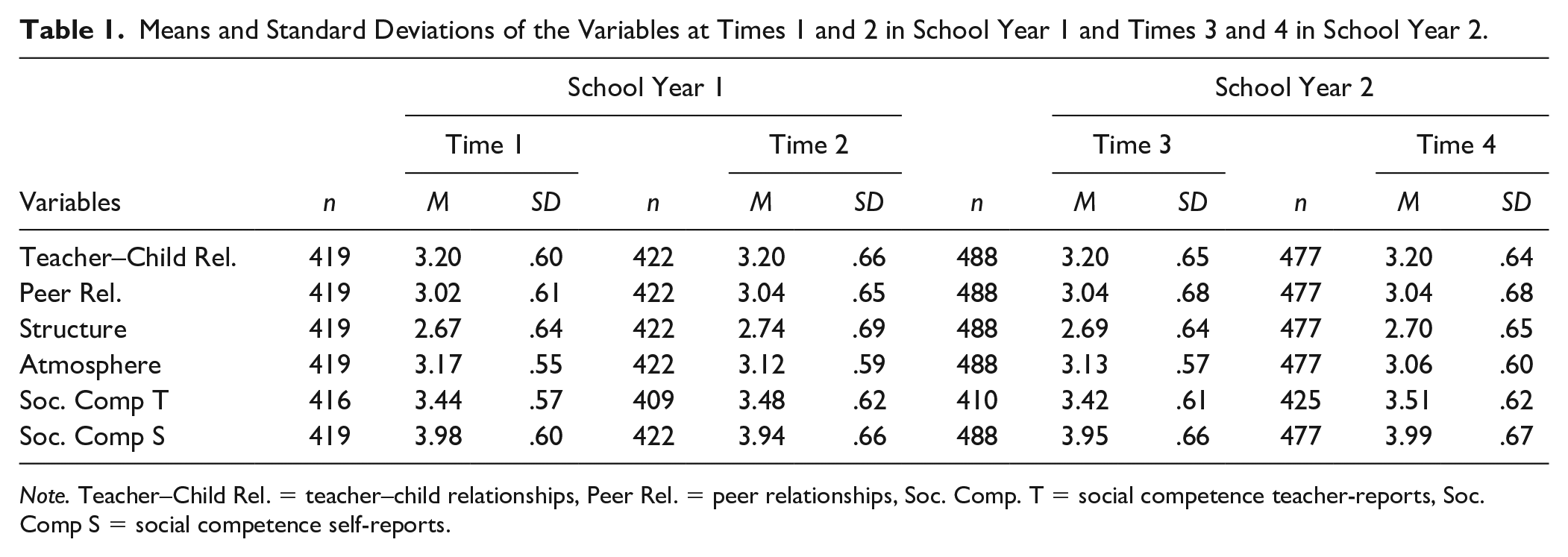
Note. Teacher–Child Rel. = teacher–child relationships, Peer Rel. = peer relationships, Soc. Comp. T = social competence teacher-reports, Soc. Comp S = social competence self-reports.
Correlations Between Relationships, Climate Aspects, and Social Competence (Teacher and Self-Reports) in School Year 1 (Times 1 and 2) and School Year 2 (Times 3 and 4).
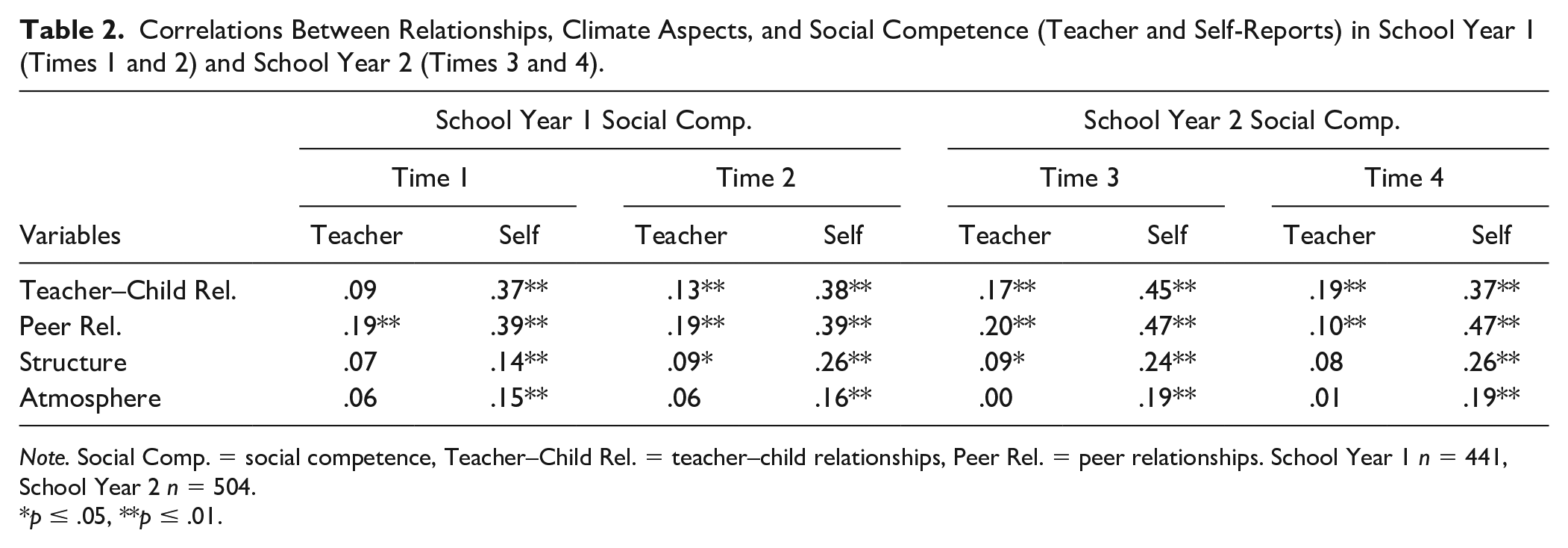
Note. Social Comp. = social competence, Teacher–Child Rel. = teacher–child relationships, Peer Rel. = peer relationships. School Year 1 n = 441, School Year 2 n = 504.
p ≤ .05, **p ≤ .01.
Predicting Changes in Social Competence
The structural path models for each school year demonstrated appropriate model fit. Specifically, the fit indices for School Year 1 were: χ2(10) = 23.36, p < .01, CFI = .99, TLI = .94, SRMR = .03, RMSEA = .06 [.029, .095]. This model explained roughly 40% of the variance on each of the study measures, ranging from 32% of pupil reported social competence to 47% of peer relationships. The fit indices for School Year 2 were: χ2(10) = 31.30, p ≤ .001, CFI = .99, TLI = .94, SRMR = .03, RMSEA = .07 [.043, .097]. This model explained similar amounts of variance (between 39% and 54%) on each study measure. In both models, all inter-individual stability paths were statistically significant (p ≤ .001), indicating a high degree of inter-individual stability of the measured constructs within school years.
Figure 1 displays studied associations. Standardized regression weights of relationships and climate aspects predicting changes in social competence are presented in Table 3. In the first model (School Year 1), quality of peer relationships predicted changes in teacher-reported social competence, with higher quality relationships with peers being related to increases in social competence. In the second model (School Year 2), structure predicted changes in teacher-reported social competence, with more structure being associated with increases in social competence. No statistically significant predictors of self-reported competence emerged in either model. So, quality of peer relations and structure was positively related to changes in teacher reports of social competence, but neither of these effects was consistently detected in both statistical models. Models with complete cases yielded similar results (see online supplement A). In these models, only associations between structure and self-reported competence reached statistical significance.
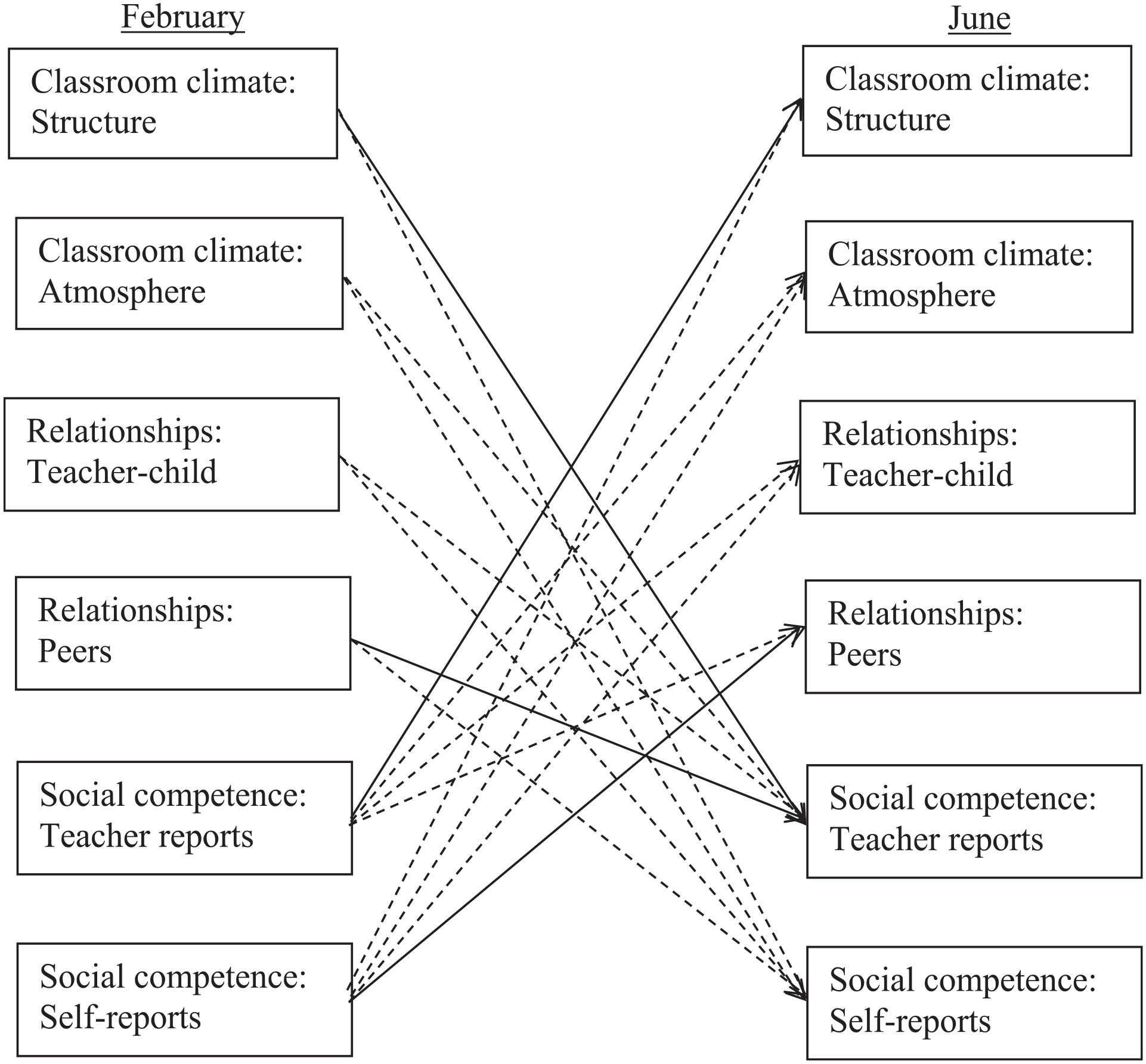
Model of the studied associations within school years.
Relationships and Climate Aspects Predicting Social Competence (Teacher and Self-Reported) in School Year 1 and 2.
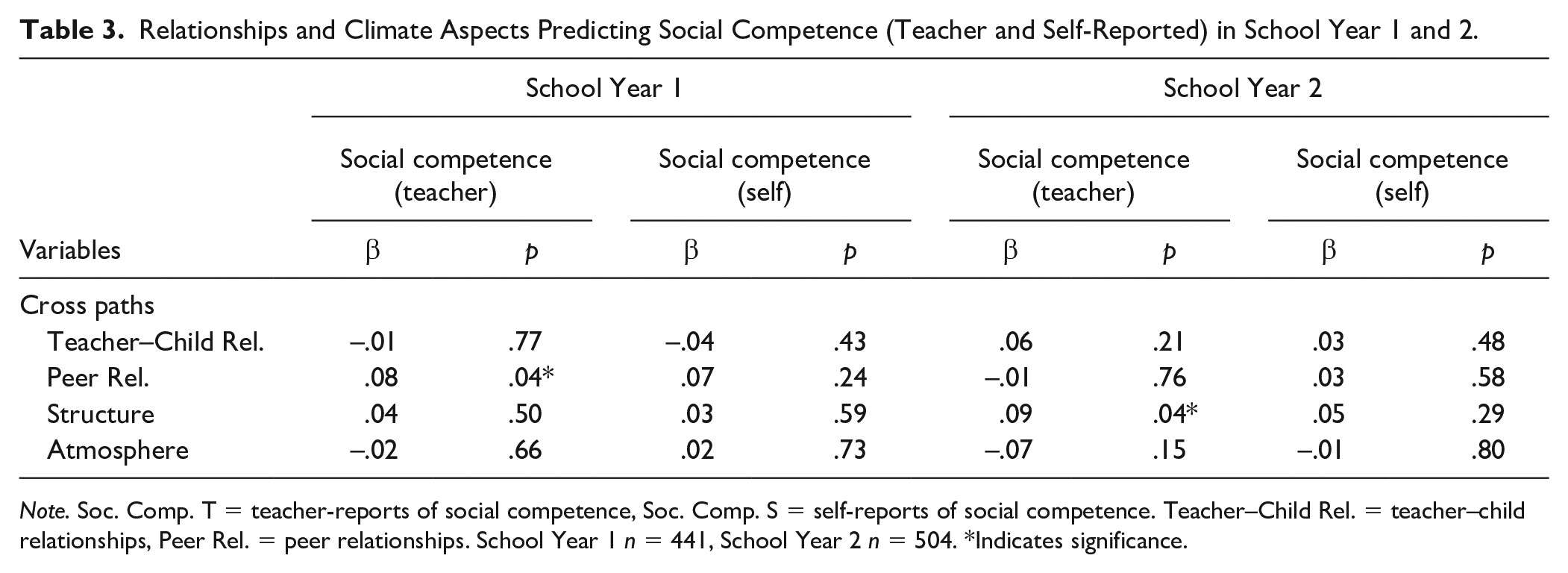
Note. Soc. Comp. T = teacher-reports of social competence, Soc. Comp. S = self-reports of social competence. Teacher–Child Rel. = teacher–child relationships, Peer Rel. = peer relationships. School Year 1 n = 441, School Year 2 n = 504. *Indicates significance.
Predicting Changes in Relationships and Climate
Model fit indices are presented in the previous paragraph. Figure 1 displays the studied associations. Table 4 presents standardized regression weights of teacher- and self-reported competence as predictors of relationships and climate. In the first model (School Year 1), neither teacher- nor self-reported competence predicted changes in relationships or climate. In the second model (School Year 2), teacher-reported social competence was negatively linked to changes in structure, and self-reported competence was positively linked to changes in the quality of peer relationships. Specifically, higher competence reported by teachers was related to pupils experiencing less structure later in the school year. Pupils that reported higher social competence also experienced enhanced relationships with peers at the end of the school year, compared with pupils with lower social competence.
Social Competence (Teacher and Self-Report) Predicting Relationships and Climate.
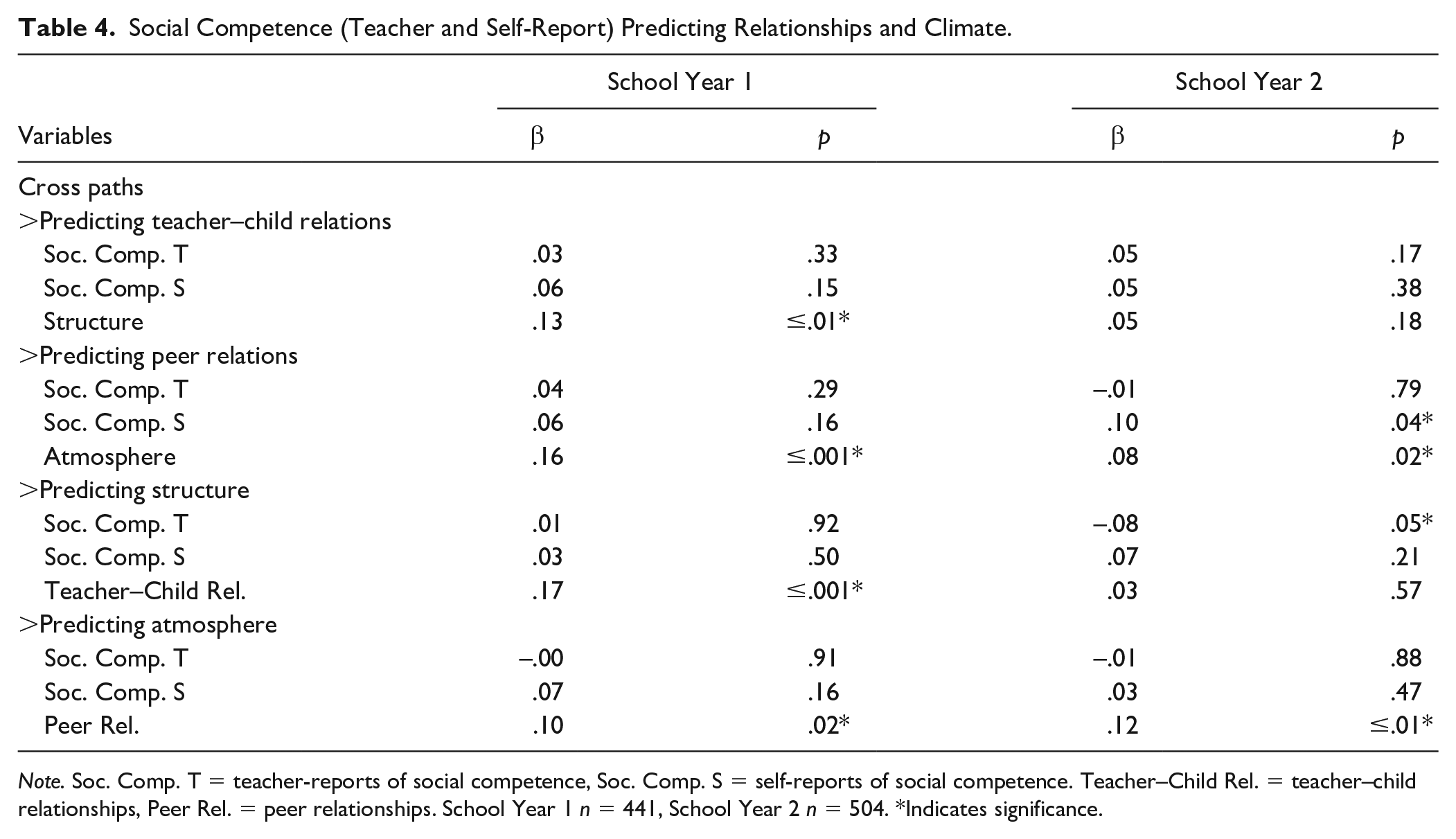
Note. Soc. Comp. T = teacher-reports of social competence, Soc. Comp. S = self-reports of social competence. Teacher–Child Rel. = teacher–child relationships, Peer Rel. = peer relationships. School Year 1 n = 441, School Year 2 n = 504. *Indicates significance.
Furthermore, quality of peer relationships and atmosphere in the classroom were bidirectionally related in both school years. This means that more positive peer relationships were related to enhanced atmosphere and vice versa. Teacher–child relationships and classroom structure were also bidirectionally associated, but only in School Year 1. More positive relationships with teachers were associated with increases in pupil reported structure, and vice versa. In sum, teacher-reported social competence was bidirectionally associated with structure in the second school year, while self-reported social competence only predicted changes in the quality of peer relationships. Models with complete cases yielded largely similar results, with only associations between teacher-reported competence and structure reaching statistical significance (see online supplemental materials).
Discussion
In the Netherlands, pupils with EBD attend segregated schools of special education that are intended to provide pupils with an environment that fosters their development and increases their social competence. Research in special settings often focuses on how targeted interventions and behavioral management foster social competence. Insights in how other aspects of the classroom context contributes to social competence are limited. Thus, the aim of our study was to identify specific aspects of the special education classroom context (teacher–child and peer relationships, classroom structure, and atmosphere) that are (transactionally) associated with pupils’ social competence. Findings were partly in line with our expectations. Peer relationships (first school year) and structure (second school year) predicted teacher-reported social competence. Social competence reported by pupils predicted increases in the quality of peer relationships, and social competence reported by teachers predicted decreases in reported structure in the second school year. We did not detect any statistically significant associations between social competence and teacher–child relationships or atmosphere.
Our RQ1 involved measures of classroom context as predictors of pupils’ social competence. Although the special education literature highlights the importance of teachers, our study provides evidence that both teachers and peers contribute to pupils’ social competence. Concurrently, interpersonal relationships with teachers and peers were more robustly related to competence than aspects of climate. Prospective associations indicated that structure (second school year), and quality of peer relationships (first school year) were the most robust predictors of increases in pupils’ social competence reported by teachers. These associations were not detected for social competence reported by pupils.
Our finding suggests that pupils who report more structure display improved social competence later that school year. In segregated settings, the preventive organizational structure seems to be important to help pupils with EBD gain social competence. This is in line with research investigating other classroom-based strategies used by teachers to improve social competence (e.g., Lane et al., 2004; Maggin et al., 2011). A structured climate is safe and predictable for pupils. In a predictable climate, pupils can more easily regulate themselves (Cadima et al., 2016), and this can increase their capacity to behave in a socially competent manner (Rimm-Kaufman et al., 2009; Valiente et al., 2011).
Somewhat unexpectedly, quality of peer relationships was also related to an increase in social competence in our study. Even in a setting in which many pupils lack skills with regard to cooperation, friendliness, and assertion, which might make it difficult to learn these skills from each other, peer relationships uniquely contribute to social competence. The main explanation for this might be that not learning from others but rather feeling relatedness and support are important for gaining social competence (e.g., Furrer & Skinner, 2003). This might be a particularly important aspect of segregated settings, since pupils with EBD are at an increased risk to be rejected by peers in mainstream educational settings (Zweers et al., 2021).
Although concurrent measures of teacher–child relationships and social competence were consistently related to one another, teacher–child relationships did not predict changes in social competence over time. This finding is not consistent with research in regular and special education. There might be two explanations for this result. First, many studies utilize teacher reports and not pupil reports of teacher–child relationships (e.g., Breeman, Wubbels, et al., 2015; Sabol & Pianta, 2012). Studies show that teacher and pupil reports of teacher–child relationships tap into different aspects of the relationship (Hughes, 2011; Sabol & Pianta, 2012). Second, most studies that examine teacher–child relationships do not take other aspects of the classroom environment into consideration. Our findings suggest that pupils who report high-quality teacher–child relationships also report more structure. Including measures of interpersonal relationships and classroom climate allowed us to examine their unique contribution to social competence, and may partly explain why no links between teacher–child relationships and social competence were found. When examining the unique contribution of multiple aspects of the educational environment, classroom structure and quality of peer relationships were the most important for enhancing pupils’ social competence.
Our RQ2 involved whether social competence predicted changes in the classroom context. Our expectations were partly confirmed. Social competence (self-reports) was prospectively related to increased quality of peer relationships (second school year) and not to changes in the quality of teacher–child relationships. Somewhat unexpectedly, social competence reported by teachers was also prospectively associated to changes in the structure that pupils experienced (second school year).
The finding that social competence contributes to increase in reported quality of peer relationships later in the school year fits studies showing that social competence is an important prerequisite to establish and maintain relationships with peers, and that peers might be more inclined to befriend pupils that are socially skilled (Hartup, 1989; Woodhouse et al., 2012). In line with these findings, studies in segregated special education also suggest that pupils who show the most adjustment problems, are at the highest risk to be rejected by peers (Breeman, van Lier, et al., 2015; Breeman, Wubbels, et al., 2015; de Swart et al., 2019). Contrary to our expectations and previous studies (e.g., Eisenhower et al., 2007), social competence did not predict changes in the quality of teacher–child relationships. Another special education study (Breeman, van Lier, et al., 2015) suggests that teachers in special education might be less affected by their pupils’ behavioral problems, since teachers in special education are trained (and chose) to work with a population of pupils that is characterized by these problems. However, other literature into segregated settings contradicts this by pointing out that problematic sequences of teacher–child interactions depend on levels of pupils’ behavioral problems (e.g., Maggin et al., 2011).
The other (unexpected) finding suggests that higher social competence (teacher-reported) was related to decreased structure experienced by pupils later in the school year. In general, studies evaluate a more structured classroom as more favorable (e.g., Rimm-Kaufmann et al., 2009). However, these findings do not contradict that supposition. Teachers may adjust the amount of structure depending on their pupils’ social competence. Whereas more competent pupils may need less structure as the school year progresses, teachers may apply more structure with pupils that show low competence. In sum, social competence affects relationships with peers, but not relationships with teachers, but teachers do apply structure depending on levels of social competence.
Limitations
This study has several strengths as well as limitations. Strengths of the study are the relatively large sample and longitudinal nature of the data regarding a special population of pupils with EBD in segregated special education. Furthermore, we included multiple elements (e.g., relationships and climate) of the classroom context in the study. We added to existing research by utilizing pupils’ appraisals of both relationships and climate, and pupil and teacher reports of social competence. Different sources of information may provide additive insights in the classroom relationships and climate and how they contribute to adjustment (Evans et al., 2009; Sabol & Pianta, 2012). Another strength is that we utilized bi-annual assessments to capture change within school years, whereas many studies assess annual change. At the same time this limits the study in some ways. For example, our assessments took place in the second half of the school year, while there might be more dynamics (e.g., establishing relationships, habituating to the new context) in the first half of the year. Another study of transactional processes within school years also confirmed that most effects occurred in the first half of the school year (Roorda et al., 2014).
The study also has limitations. First, our sample consisted of Dutch pupils, mainly boys, in late elementary school. Our findings may not generalize to other populations, such as younger pupils in special education, girls, different types of special education or special education schools in other countries. Second, the lack of stability in classroom composition did not allow us to examine all four time points in a single analysis. The analyses in two separate school years yielded inconsistent findings, so conclusions are not robust and replication is necessary. Third, we did not differentiate between positive and negative relationship qualities, while research in special education suggests that negative qualities (e.g., conflict) might be more prominently related to pupil outcomes (see Breeman, van Lier, et al., 2015; de Swart et al., 2021). Fourth, we focused on selected measures of the classroom environment, while other teacher practices, or peer experiences might produce a different pattern of results.
Implications for Research and Practice
Our findings have implications for practice, for example with regard to the additive value of utilizing self-reports to assess aspects of the classroom context in special education. Although pupils with EBD who are placed in special education may be hindered by a variety of impairments related to their diagnoses, they are able to evaluate their interpersonal relationships in the classroom, and the overall classroom climate. Furthermore, also pupils in the same classroom have different classroom experiences because they look at the classroom from their own perspectives and teacher- and peer responses to each pupil are different (de Swart et al., 2019; Wehby et al., 1998). Taking the pupils’ perspective into account may give teachers valuable suggestions for the direction of their interventions to improve pupils’ classroom experiences. Furthermore, policymakers could use pupil reports of classroom context to optimize elements of the special education context that are most relevant for pupils’ needs. Since interpersonal relationships and climate are related, working on one aspect may enhance the other. Although all of these aspects have been found to be important, for social competence the emphasis seems to be on the structure that the teacher provides, in clear routines, rules and expectations about (social) behaviors, as well as on the relationships pupils experience with peers. A next step for future research might be to identify the elements of classroom structure (e.g., what does the structure look like and how is the structure provided) and the dynamics of peer relations (e.g., alliances versus animosities) that are particularly important within classrooms and add to social competence of pupils in special education. Furthermore, it is important to better understand how social competence is related to the way that pupils experience the classroom context.
Conclusion
The aim of our study was to gain more insight into associations between aspects of the special education classroom context and social competence of pupils with EBD. Our study demonstrates that in segregated special education, structure provided by teachers and the quality of relationships with peers are particularly important for enhancing pupils’ social competence. In sum, our study adds to the existing special education literature by providing more insights into prospective links between pupils’ classroom relationships and climate experiences and their adjustment based on pupils’ evaluations of the classroom context. Pupil reports might be utilized by teachers and policymakers to improve special education classroom experiences that are the most relevant for (social) development.
Supplemental Material
sj-docx-1-sed-10.1177_00224669221105838 – Supplemental material for Social Competence and Relationships for Students With Emotional and Behavioral Disorders
Supplemental material, sj-docx-1-sed-10.1177_00224669221105838 for Social Competence and Relationships for Students With Emotional and Behavioral Disorders by Fanny de Swart, William J. Burk, Wendy B. L. Nelen, Esther van Efferen, Heleen van der Stege and Ron H. J. Scholte in The Journal of Special Education
Footnotes
Acknowledgements
We would like to thank all teachers and pupils in special education who participated in the study.
Declaration of Conflicting Interests
The author(s) declared no potential conflicts of interest with respect to the research, authorship, and/or publication of this article.
Funding
This research was supported by Entrea Lindenhout Youth Care, Special Education and Research and PI7 Consortium.

Supplemental Material
Supplemental material is available on The Journal of Special Education website with the online version of the article.
References
Supplementary Material
Please find the following supplemental material available below.
For Open Access articles published under a Creative Commons License, all supplemental material carries the same license as the article it is associated with.
For non-Open Access articles published, all supplemental material carries a non-exclusive license, and permission requests for re-use of supplemental material or any part of supplemental material shall be sent directly to the copyright owner as specified in the copyright notice associated with the article.
