



Abstract
This article provides a qualitative analysis of Kenya's competency-based curriculum (CBC), drawing on curriculum reform concepts and Bernstein's theory. Based on pedagogic studies, recommendations are made for institutionalized collaborative efforts in teacher training, availing (government) adequate financing to boost teachers’ training and teaching quality, and standardizing training, especially for continuous teacher professional development, which aligns with global citizenship proponents and the sustainable development goals (SDGs) educational frameworks. On the way forward for the CBC's full implementation, in(pre) service teacher training, aligning the curriculum with the evolving global workforce, and addressing the partial lock-ins of indigenous knowledge systems form core tenets of a solid, relevant education experience. The article highlights CBC's transformative potential and offers actionable insights for policymakers and educators to shape a holistic, skill-oriented education system in Kenya and beyond.
Keywords
Introduction
Education reforms are a global response to the imperative of enhancing the accessibility, quality, and relevance of education. The global focus of these reforms is the transition to competency-based education (CBC), designed to furnish learners with problem-solving, collaboration, and critical thinking skills (Owidi & Lyanda, 2023). Katiba and Ji (2017) conceptualized competency as adequately applying learning resources and outcomes (knowledge, skills, values, and attitudes) in a defined context. From these conceptions of competency, it appears that competency manifests when one uses an integrated combination of knowledge, attitudes, values, and skills (Ongowo, 2022) acquired in the context that demands it. Therefore, a CBC is characterized by developing clearly defined competencies and emphasizing what the learners are expected to do rather than what they are expected to know.
In response to advancements in digital technologies, educational reforms are also addressing integrating technology in education to enrich teaching and learning, provide access to educational resources, and promote digital literacy skills (Cheptoo & Ramdas, 2019). Additionally, particularly for disabled learners, there is a global emphasis on equitable access to quality and inclusive education(s) for all learners. For example, Australia has implemented a national framework for inclusive education to enhance access and participation for disabled students (Australian Institute of Health and Welfare, 2023). In the United Kingdom, the government has introduced measures to support students with Special Educational Needs and Disabilities (SEND), including increased funding for SEND provision and a new inspection framework to ensure that schools provide high-quality support for these students (Weale, 2023; Whetsell-Mitchell, 2022).
Education reforms are initiated and implemented globally to enhance education systems’ quality, equity, and relevance. These reforms seek to prepare students for the challenges of the modern world, promote inclusive practices, and harness the potential of technology in education. By focusing on these key themes, education systems strive to achieve improved learning outcomes, increased educational opportunities, and better alignment with the needs of individuals and societies in the twenty-first century (Organisation for Economic Co-operation and Development, 2018; Wang, 2023).
In the African context, the African Union's Agenda 2063 goal on education emphasizes the need for significant investments in education reforms to develop human and social capital through science, technology, and innovations (African Union, 2015). The African Union's Continental Education Strategy for Africa (CESA) aligns with Agenda 2063 and emphasizes critical priorities for education on the continent. African countries, immediately after independence, inherited a colonial education system, which was discriminative and demanded realignment to the societal and cultural demands of the nations (Abraham, 2020).
However, the historical adoption of knowledge-based or content-based curriculums 1 in most African nations has led to dissatisfaction, as its end goals were too academic and lacked knowledge and skills in the applicability required by the workplace demands (Cheptoo & Ramdas, 2019). For example, Kenya and Tanzania adopted curriculums with the philosophy of education for self-reliance. However, due to the inadequately trained teachers and insufficient resources, it became too examinable. It lost its initial goal of equipping learners with skills for the job market (Cheptoo & Ramdas, 2020). That led to unemployment, increased vices, and rampant dropouts. Due to technological advancement, most countries have opted for a CBC, which appears to be a worldwide trend in offering skills that match the requirements of companies’ employers. However, this begs the question: Is there a balance or an alignment between the employer (job markets) and the educational curriculum reforms?
The implementations of CBC in Africa have been imposed on countries following government(s) directives or as support from Western non-governmental organizations. In East Africa, for instance, they had to sign the East Africa harmonization policies, which require the countries to adopt CBC. However, the adoption has been done amid challenges like lack of expertise in the African classrooms, owing to the large number of students per class. Despite the widespread adoption of CBC in Africa, scholars have highlighted its shortcomings in implementation (Atuhura & Nambi, 2024; Isaboke et al., 2021), necessitating further attention to ensure its effectiveness.
Prior research predominantly focuses on adopting CBC in developed countries, the challenges encountered, and the perceptions (government(s) and policy stakeholders) toward CBC. Nonetheless, there remains a need for a comprehensive examination of the intrinsic nature and significance of CBC as articulated by educators (teachers), a critical assessment of educational reforms, and prospective recommendations for the newly adopted CBC in developing nations, especially within the Kenyan educational context. Therefore, in the subsequent subsections, using a qualitative analysis of published literature from reports, books, and journal articles, this article provides a vivid understanding of the Kenyan education sector and the educational reforms (pre- and post-independence). Further, it delves into the voices of teachers regarding CBC implementation while examining its implication on their training, using Bernstein's Theory, and offers recommendations. The last section looks at the CBC implementation opportunities and challenges and finalizes them by providing recommendations to tackle them.
Kenyan Education Sector
The economy and education are closely intertwined, and Kenya recognizes this relationship by aligning its developmental goals with those of education (Akala, 2021). The country's education reform system aims to develop critical human capital to transform the country sustainably, with 75% of its population aged 15 to 24 (Kenya National Bureau of Statistics [KNBS], 2019). However, statistics show that only 25.9% (563,000) of all students (881,416) in the Kenya Certificate of Secondary Education (KCSE) qualified for admission to public universities (grade above C+), with only 17,000 admitted because of limited spaces (Newsblaze, 2023). Additionally, there is a significant gap in the completion of secondary school between children from the poorest households (<10%) and those from the wealthiest households (>70%) (United Nations Educational Scientific and Cultural Organization [UNESCO], 2018), because of factors such as family resources, high living and tuition costs and inaccessible quality education (Kobia, 2022). Furthermore, the current 100% transition policy 2 (100% T.P.) has led to congestion in secondary school classrooms, with many class sizes exceeding the UNESCO-recommended 45 students per class (UNESCO, 2018).
The primary education sector in Kenya faces a notable challenge in maintaining educational quality. A 2018 report by the World Bank revealed that proficiency levels among Kenyan students in Mathematics and reading were alarmingly low, with only 25% demonstrating proficiency in Mathematics and 20% in reading (World Bank, 2018). This predicament is attributed to insufficient teacher training, inadequate resources, and deficiencies in curriculum design. Transitioning to secondary education and implementing the 100% T.P. has exacerbated challenges by causing congestion and straining the existing infrastructure and human resources.
Aligned with Kenya's Vision 2030 (RoK, 2007), which identifies access to quality education and training as crucial for transformation into a middle-income state, the prevailing low levels of employment adversely impact economic growth and hinder the realization of the potential benefits derived from nurturing skills and creativity (Osei-Kusi et al., 2024). This employment deficit underscores the necessity for reevaluating the education approach to enhance the employability of the youth population. In response to these challenges, the Government of Kenya (GoK) has initiated substantial reforms at the primary and tertiary levels of education.
Noteworthy implementations include the CBC 3 at the basic education level, a substantial increase in enrollment figures across all levels, and a concurrent rise in teaching and training institutions. Financial commitment to the education sector remains a governmental priority, with an allocation (approximately 4.1% of the country's GDP, as of 2022) that surpasses the averages of regions in South Asia (1.97%), Latin America and the Caribbean (3.82%), and even the sub-Saharan Africa with 3.22% (see Figure 1; UNESCO Institute for Statistics (UIS), 2023).
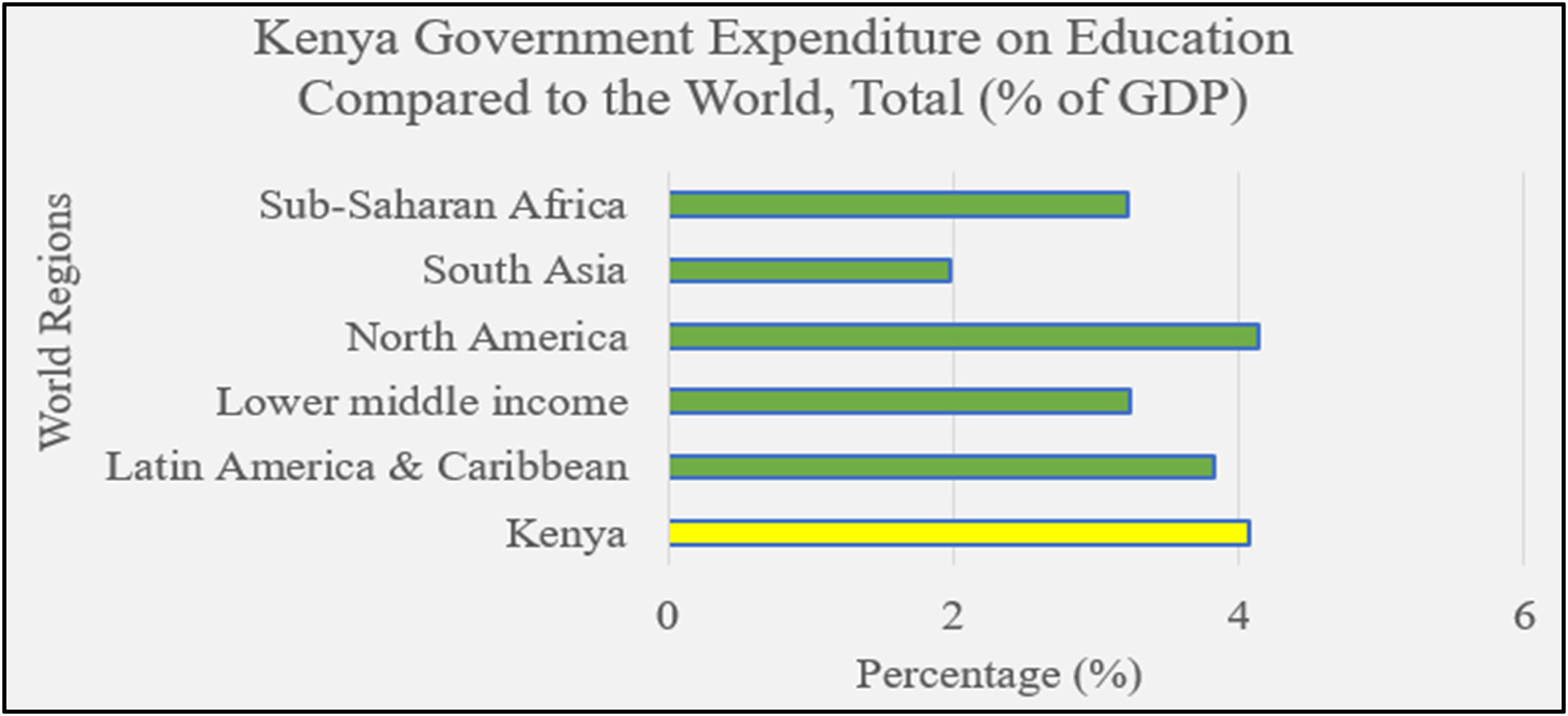
Kenyan education expenditure (% of the GDP) compared to the world.
Notably, the bulk of this expenditure is directed toward primary education, accounting for an average of 74%, while tertiary education receives an average of 21.9%. The remaining funds are allocated to administration and related activities. Over the 4 years (2019/2020–2022/2023), annual expenditure in preprimary to secondary education increased, while expenditure in tertiary education experienced a decline in 2020/2021 before subsequently rising (KNBS, 2023).
Against the backdrop of SDGs, Kenya's critical education plans, policies, and strategies are embedded in its Vision 2030, 5-year rolling medium-term plan(s), County Integrated Development Plans (CIDPs), and national education sector plans (see Table 1). Further, the Constitution of Kenya (2010) 4 asserts the right of all citizens to access quality primary education up to secondary education (RoK, 2010b). Additionally, the government actively supports revitalizing technical and vocational education and training (TVET) and expanding university education, notably in science, technology, and innovation. At the same time, enrollment levels in all education levels have steadily grown from 2014 to 2021 (RoK, 2022), as depicted in Table 2.
Strategic Policies for the Kenyan Training and Education Sector.
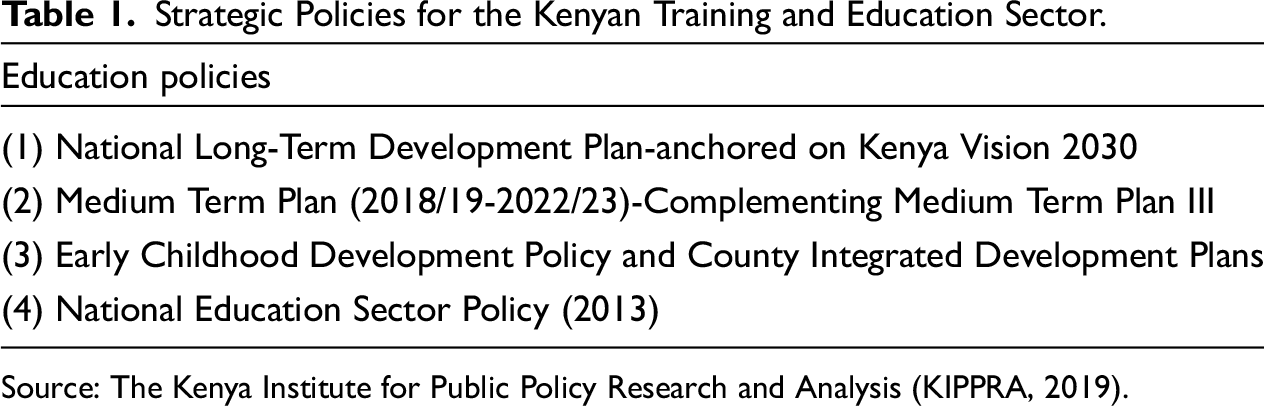
Source: The Kenya Institute for Public Policy Research and Analysis (KIPPRA, 2019).
The Gross Enrolment Rates (GER) and General Enrolments for Secondary Schools, TVETs, and Universities (2018–2021).
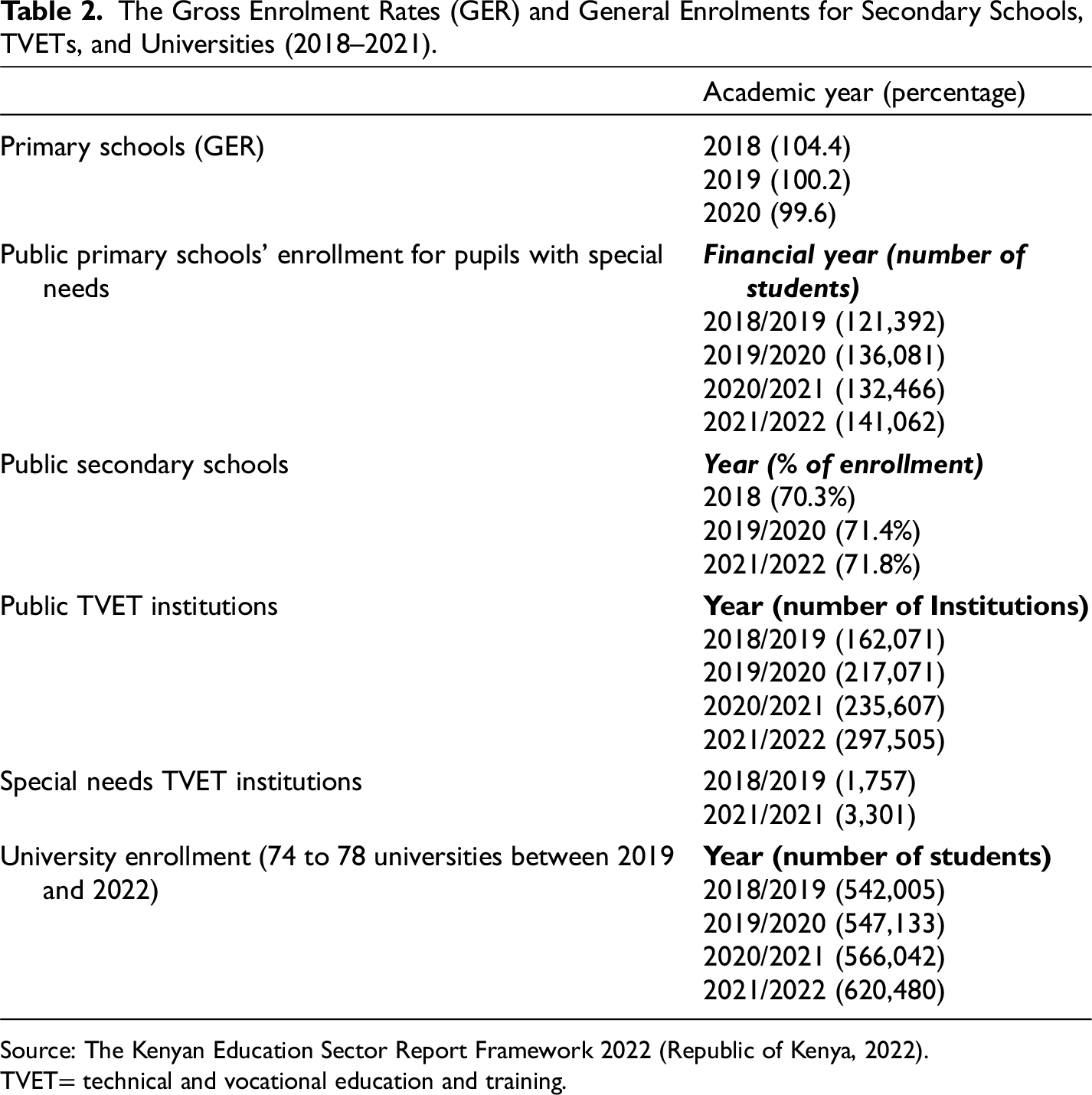
Source: The Kenyan Education Sector Report Framework 2022 (Republic of Kenya, 2022).
TVET= technical and vocational education and training.
The adoption of the CBC in Kenya can be congruent with the goals outlined in Kenya Vision 2030, providing a framework to equip young Kenyans with vital skills in demand by employers (Rios et al., 2020). Given the substantial dependence of the Kenyan economy on the education sector, the effective implementation of the CBC is of considerable importance. This is essential for fostering economic development in terms of real GDP per capita (Bah, 2023) by enhancing human and technological resources.
Methodology
This study adopts a qualitative approach, utilizing a systematic review of published literature to analyze Kenya's CBC critically. The methodology followed a structured framework for identifying, screening, and selecting relevant studies to ensure transparency and rigor in the selection process. The process began with a comprehensive search of academic databases, including African Journals Online [AJOL], Kenya Education Network [KENET], Research Africa platform, institutional repositories [government and universities], and grey sources from Google Scholar. The keywords used were “Competency-Based Curriculum,” “Kenya education reforms,” “teacher training,” and “Bernstein's Theory of Pedagogic Discourse.” The initial search yielded 132 publications (from the databases and Google Scholar), including journal articles, books, reports, and policy documents, from the 1980s to 2023.
A two-stage screening process was employed to refine the selection. In the first stage, the titles, abstracts, and keywords of the identified publications were reviewed to assess their relevance to the study's objectives. Publications were excluded if they did not directly address curriculum reforms, teacher training, or the implementation of competency-based education in Kenya or comparable contexts. This initial screening narrowed the pool to 89 potentially relevant articles. In the second stage, the full texts of these articles were reviewed to evaluate their alignment with the study's thematic focus. Articles were included if they provided substantive insights into the historical, theoretical, or practical dimensions of Kenya's CBC, particularly its alignment with global frameworks such as the SDGs and Bernstein's theory of pedagogic discourse. This rigorous screening process resulted in the final selection of 36 articles deemed most representative of the study's scope (see Figure 2).
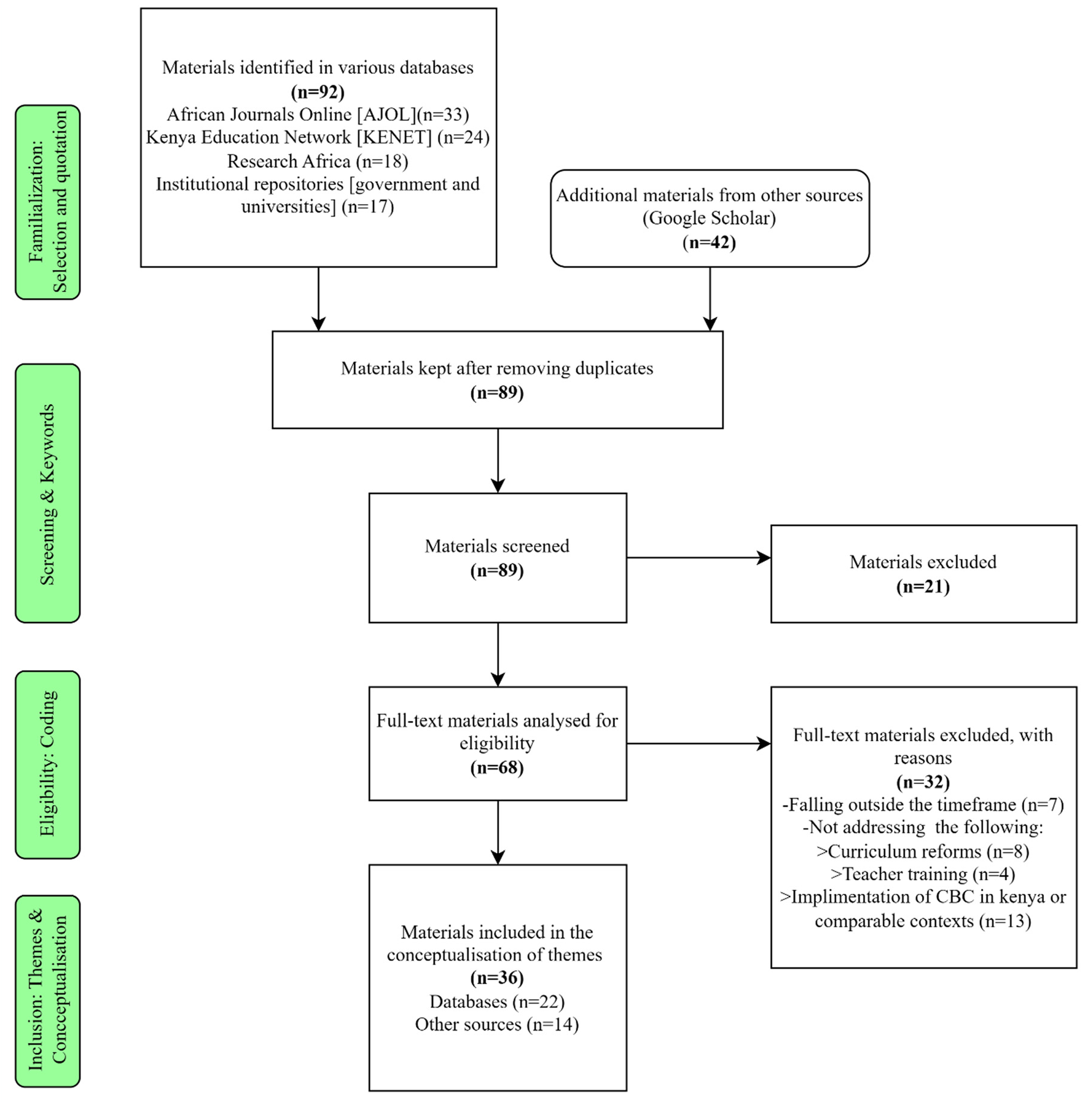
Flow chart of methodology process.
The selected articles were chosen based on several criteria: (1) their relevance to the Kenyan educational context, (2) their contribution to understanding the challenges and opportunities of CBC implementation, (3) their alignment with global trends in curriculum reform, and (4) their inclusion of diverse perspectives, such as those of policymakers, educators, and researchers. These articles were further categorized into four thematic areas: the evolution of education reforms in Kenya, the development of the CBC framework, teacher involvement and training, and the opportunities and challenges of CBC implementation. This thematic organization ensured a comprehensive and balanced analysis of the topic.
To manage and analyze the selected literature, the study employed Naeem et al.’s (2023) five of six steps thematic analysis method, as the study did not intend to develop a conceptual framework. This involved (i) familiarization with the data, (ii) keyword(s) selection, (iii) codifying the core message, (iv) theme(s) development, and (v) conceptualization and interpretation, which involved the discussion of the identified themes, to provide a coherent narrative of Kenya's transition to the CBC.
Using thematic analysis allowed for a systematic exploration of the literature, ensuring that the findings were grounded in the evidence while highlighting gaps and areas for further research. By adhering to this structured approach, the study enhances its transparency and credibility, providing a clear rationale for selecting the 36 articles and demonstrating their representativeness in addressing the research objectives. The themes are discussed in the findings section below.
Findings
Genesis and Chronology of Kenyan Education Reforms Journey
The examination of Kenya's education system by the Koech Commission 5 (2000) highlighted the historical precedent of the government's establishment of Committees, Commissions, and Task Forces to evaluate education structure and curriculum, a practice dating back to the preindependence era. In 1909, under colonial rule, a committee led by Nelson Fraser was formed to assess education in the colony (Kenya), contributing to racial segregation by proposing distinct academic curricula for Europeans, Indians, and Africans. This segregation persisted until independence, reinforced by subsequent commissions like the Phelps-Stokes Commission (1924) and Beecher Commission (1948), serving the interests of the colonial government and settlers who relied on cheap African labor. Until the late 1950s, the Kenyan curriculum for the Africans, mainly the local inhabitants in Kenya, focused on vocational education, as the white settlers viewed Africans as a source of cheap labor for the vast farms/ranches they had forcefully acquired from the locals.
Upon gaining (Kenya) independence, the Ominde Commission (1964) was established to eradicate racial segregation in education and develop a system aligning with the country's socioeconomic needs and national goals. By the early 1970s, criticisms emerged regarding the elitism of the education system, resulting in low transition rates (primary to secondary education) and challenges in the nongovernmental labor market for secondary graduates. The Gachathi Report (1976) was commissioned to address these issues, responding to rising unemployment rates and education's costly, elitist nature. While recommending an overhaul of the education structure and the adoption of the mother tongue(s) as the medium of instruction from primary class 1 to 3, only the language in education policy was implemented, with persistent challenges.
The MacKay Commission of 1981, a seminal educational advisory body, was instrumental in recommending the establishment of a second public university and proposed a transition from the existing 7-4-2-3 education framework to an 8-4-4 system. This latter system, with its focus on fostering practical skills conducive to self-employment, is now the subject of contemporary educational reforms. However, the implementation of this system has been fraught with challenges. These include issues such as insufficient infrastructure, an inadequately trained teaching workforce, overpopulated classrooms, a surplus of under-skilled graduates, and elevated dropout rates (Popov et al., 2021).
In response to these challenges, reviews and reports have been commissioned over the years to address the shortcomings and refine the educational landscape. Notable among these are the curriculum revisions of 1985, the Kamunge Report of 1988, the Koech Report of 1999, the Odhiambo and Some Report of 2012, and the Fatuma Chege Report of 2020. A comprehensive summary of these reviews is provided in Table 3.
Summary of Education Reforms in Kenya (1919–2020).
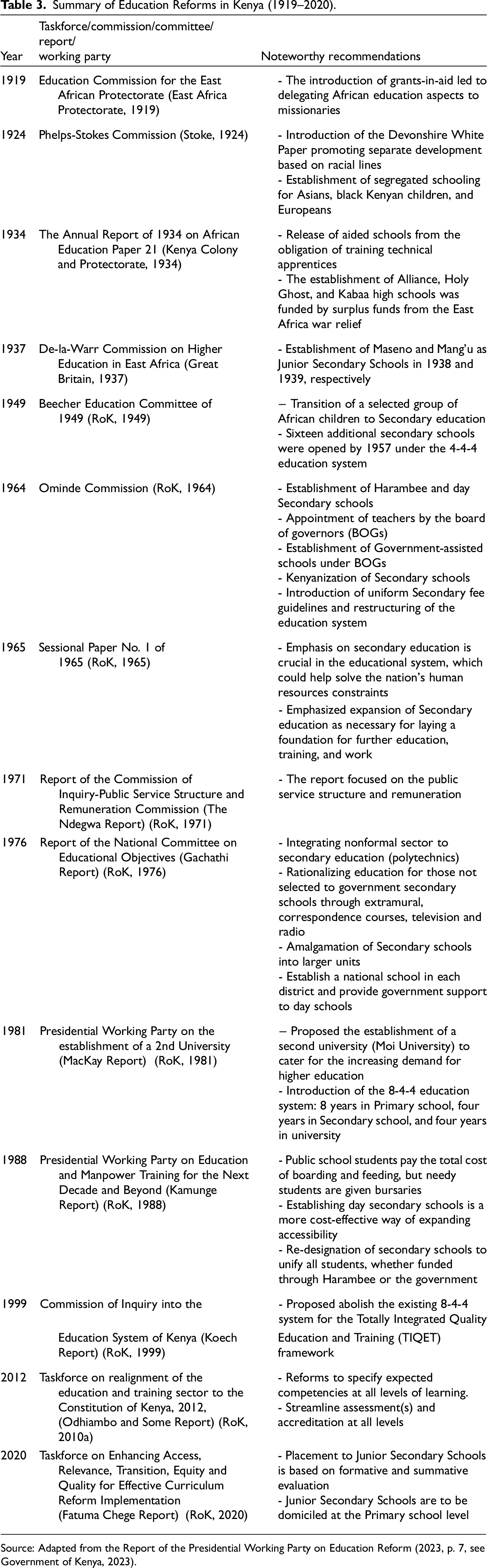
Source: Adapted from the Report of the Presidential Working Party on Education Reform (2023, p. 7, see Government of Kenya, 2023).
The evolution of (educational) reform objectives over the years has been multifaceted. They have encompassed concerns about the alignment of education with societal and vocational imperatives for national development (International Commission on the Futures of Education, 2021), the imperative of skills development in catering to a burgeoning population of unemployed youths (Ahmad et al., 2023), the cultivation of contented youth embodying national values and preparedness for national service, as well as the imperative to broaden access to higher education through the establishment of additional universities (Kubow & Jin, 2023).
From 8-4-4 to CBC Framework
The imperative reform of Kenya's education system to empower all citizens, optimize their potential, and contribute meaningfully to individual and national development is essential to realizing these ambitions. The 8-4-4 education system 6 instituted in 1985 aimed at fostering “education for self-reliance.” However, subsequent curriculum reviews in 1992, 1995, and 2002 primarily addressed content issues, overloads, and overlaps, neglecting fundamental societal transformation. The system's emphasis on academic excellence, particularly in pure sciences and selected humanities, resulted in a lack of recognition for diverse talents and creative abilities among learners, leading to demotivation and underutilization.
In response to the Vision 2030 goals and the 2010 constitution (Government of Kenya, 2010), the (Kenyan) government, guided by the Odhiambo and Some report (2012), introduced Sessional Paper No. 2 of 2015, 7 advocating a shift from the 8-4-4 system to 2-6-6-3. This reformation aimed to provide learners with diverse pathways in senior secondary school, aligning education with constitutional, regional and developmental objectives while producing emotionally, physically, and intellectually balanced citizens. In addition, the primary impetus for educational reforms in Kenya stemmed from the imperative to align the sector with the provisions of the Constitution (2010), the East Africa community agreement, 8 and the goals outlined in Vision 2030.
A pertinent recommendation from the Kenya Institute of Curriculum Development Report (KICD) report was developing the CBC design and implementation process (RoK, 2018). Defined by KICD as a holistic system encompassing instructions/assessment, academic reporting, and grading, CBC is founded on students demonstrating the acquisition of competencies, focusing on specific skills, knowledge, values, and attitudes conducive to successful academic performance (KICD, 2019). This pivotal decision led to the phased adoption of CBC in grades I–VI, with its pilot initiated in 2017 and subsequent implementation in lower primary grades. CBC's implementation was grounded in summative evaluations of Sessional Paper (2015), and the East Africa Community treaty. However, a notable absence of research supporting the efficacy of the CBC framework over the previous teacher-centred 8-4-4 system (KICD, 2019) was apparent.
The core competencies integral to the CBC framework encompass a range of essential skills, including communication and collaboration, problem-solving, imagination, critical thinking, and digital literacy. These competencies are imparted to learners through subjects (learning areas). In the early years’ curriculum (grades 1–3), these subjects include Kiswahili (language and literacy) and Indigenous Language(s), English, Environmental Studies, Mathematics, and Religious Education. The CBC framework is guided by principles that underscore the importance of excellence, diversity, parental empowerment and engagement, differentiated curriculum and learning, and communication service learning. Collectively, these principles strive to improve the accessibility of education and minimize learner wastage. Notably, the emphasis on excellence and inclusivity ensures that learners are equipped with a comprehensive skill set, fostering holistic development and preparing them for various aspects of life. Furthermore, parental empowerment and engagement principles contribute to a collaborative educational environment, fostering a partnership between educators and parents to benefit the learners.
The implementation of CBC in Kenya constitutes the third major education reform in the country. To assess the CBC implementation, President Ruto appointed members to the Fatuma Chege Report on September 30, 2022 (GoK, 2023). Among the report's terms of reference crucial for enhancing primary education is the assessment and recommendation of an appropriate structure(s) for the continued CBC implementation, with critical aspects such as value-based learning, parental empowerment, and student engagement (GoK, 2023) in mind. The decision by Kenya to adopt an internationally aligned reform (CBC) reflects a strategic choice to empower its citizens toward attaining global competence.
Alignment of (Educational) Reforms With Development Education Frameworks
The contemporary curriculum in Kenya, as advocated by the CBC, encompasses six key areas, with a particular emphasis on global citizenship and education for sustainable development (KICD, 2019, p. 110). These areas encompass ethnic relations, peace education, integrity, social cohesion, human rights and responsibilities, patriotism, children's rights, educational gender issues, and childcare and protection. The RoK report (2022) supports these priorities, specifically in recommendation no. 8, which underscores the importance of global citizenship and peace education, calling for collaborative efforts with relevant state agencies to address security threats, child abuse, and radicalization within and outside learning institutions (RoK, 2022, p. 179)
These educational recommendations align with the Kenyan Constitution's principles, emphasizing the values of trustworthiness, honesty, understanding, tolerance, ethics, trust, respect, care, and compassion (RoK, 2010b). Implementing these principles is crucial for addressing societal issues such as terrorism, corruption, and tribalism and promoting peaceful coexistence in response to societal needs. The CBC approach reflects a global vision congruent with evolving global trends, aiming to produce globally competent citizens equipped with essential educational skills and societal virtues for successful interaction in the global society (Cheruiyot, 2024).
Furthermore, the CBC aligns with the vision of SDGs, specifically SDG4, which commits countries to achieve a state of comprehensive and fair access to high-quality education and continuous learning for all individuals by the year 2030 (United Nations, 2021). Emphasizing knowledge, attitudes, values, and skills for a sustainable future, SDG4 Target 4.7 underscores the importance of education beyond reading and mathematics and links it to SDG's agendas (Munyasia & Olel, 2020).
The above analogy corresponds with the CBC's alignment with the “education for sustainable development” framework (RoK, 2021), which envisions achieving “Quality and inclusive education, training and research for sustainable development” through seven strategic objectives. These include enhancing access, equity, quality, and relevance in education; establishing and managing professional teaching and learning services for all educational levels; enhancing development capacities for Science, Technology, and Innovation; promoting vibrant industry-institutional linkages for employability; and integrating information communication technology (ICT) in education, training, and research (Amakoh, 2022; Barasa, 2023). Consequently, developing and implementing a well-designed curriculum, such as the CBC in Kenya, is a significant milestone in educational reform, especially when aligned with the principles of SDGs and the discourse on global citizenship.
Teachers’ Involvement and Training: A Lense Using Bernstein Theory
The teacher's role in CBC's implementation is dissected into three distinct forms: curriculum writers, members of advisory Committee (s), and implementers in the classroom(s) (Bernstein, 2000; D’Angelo, 2022). In the specific context of Kenya, the KICD, entrusted with curriculum development and execution, ensures active stakeholder engagement in pedagogic development and implementation (Sakaue et al., 2021). Hence, teachers are part of these stakeholders, and their roles align with “Bernstein's Theory of pedagogic discourse” (Bernstein, 1995, 1996).
According to Bernstein, the construction of a pedagogic discourse is governed by three interrelated rules: recontextualizing, evaluative, and distributive. These rules are hierarchically interconnected, with distributive rules regulating power relationships between social groups, recontextualizing rules overseeing the formation of specific discourses, and evaluative rules recognizing valid acquisition of instructional and regulative text(s) (Bernstein, 1996). Bernstein advocates for teachers’ involvement during the pilot stage and in producing new pedagogy, recontextualizing context and reproducing the curriculum at the secondary level (Bernstein, 1996; Owidi & Lyanda, 2023). Figure 3 provides a summary of Bernstein's theory.
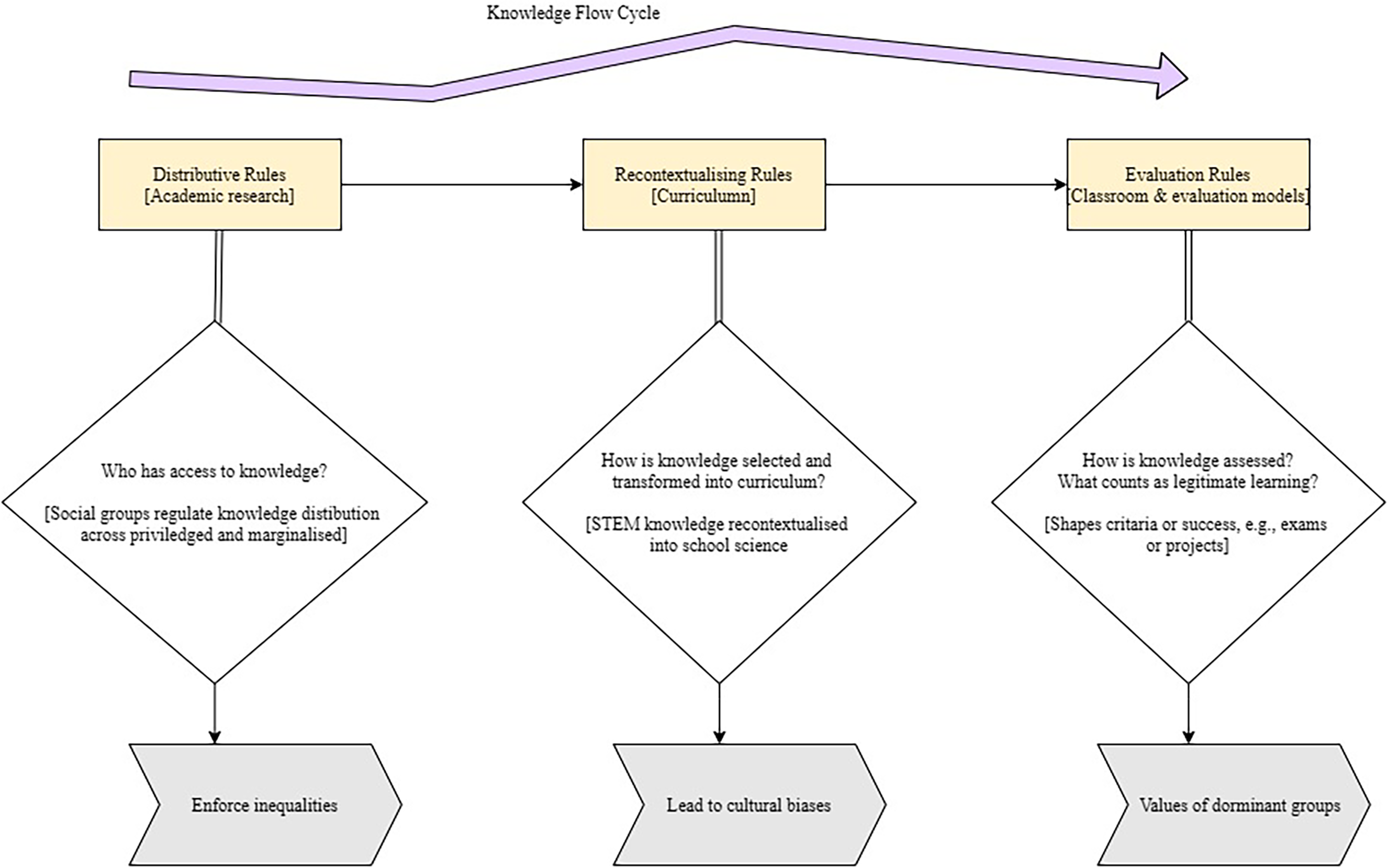
Bernstein's construction of discourses across fields.
The representation of teachers through the Kenya National Union of Teachers (KNUT), as reported in 2019, highlights their noninvolvement, in which their participation in the new curriculum's development process was overlooked throughout (Oduor, 2019). As per the report, the CBC relied on a summative evaluation conducted by a team predominantly comprising “alien” consultants with limited knowledge of the context of Kenyan education. Bernstein contends that such a production field necessitates teachers’ input, as teachers are the actual implementers of the curriculum (Bernstein, 2000).
The 8-4-4 curriculum in Kenya, with its heavy reliance on examinations, fostered unhealthy competition and corruption, shifting the learning paradigm from holistic understanding to mere exam success, which often caused anxiety and trauma for both teachers and learners (Kiptiony, 2024). In contrast, the CBC advocates for an approach centered on learner competencies, ensuring placement based on individual skills and talents to better prepare students for the “World of Work/Life.” However, this transition echoes historical patterns: colonial educational reforms, as reflected in the 1934 Annual Report on African Education (see Table 3), operationalized a pedagogic device that distributed basic literacy and manual skills to African students (distributive rules), recontextualized knowledge to prioritize colonial goals like obedience over critical thinking (recontextualizing rules), and evaluated students through pass/fail exams to reinforce subordination (evaluative rules).While the CBC’s progression from “Pre-Vocational Skills” to “Vocational Skills” reflects a modern pedagogic device prioritizing practical skills (Okeyo & Kanake, 2021), there is a greater emphasis needed on equity and access to challenge these historical rules and ensure broader knowledge production, thereby empowering students’ voices in the new curriculum.
Training Implications and Recommendations
In light of the preceding discussions, I therefore make three suggestions: Firstly, collaboration among teacher training institutions is essential to scrutinize course outcomes for education courses and align them with desired competencies. Given that the Basic Education Curriculum Framework (BECF) pertains to primary education, higher education institutions must regularly update their curricula to reflect societal changes, as stipulated by the Commission for University Education (CUE) every 5 years with stakeholder involvement (CUE, 2014). Building on the CUE's directive, enhancing teacher educators necessitates sharing data on practices and peer review of teacher preparation programs (Riera et al., 2023). Efforts should be directed toward incorporating critical CBC technology elements into teacher training institutions, including insights for teacher trainees to facilitate learning. This includes resources such as teaching-learning materials, management, ICT infrastructure, system software, and the knowledge base supporting the system.
Secondly, adequate funding is essential for teacher preparation in CBC. Despite potential constraints resulting from decreased funding for primary education, the research underscores that teacher quality and preparation significantly influence educational quality (Qingyan et al., 2023; Zickafoose et al., 2024). Resources must be allocated to support activities in preservice teacher education programs. Further, policymakers should consider supporting student teachers through particular loans, facilitating timely completion of their studies and funding their teaching practicum 9 (T.P.) (Odundo et al., 2018).
Finally, teacher education institutions should engage partners from the Teachers Service Commission (TSC) and its affiliate bodies, such as the Centre for Mathematics Science and Technology in Africa, to contribute to teacher training standards; their involvement matters in graduate employability. Within T.P., a predominant approach observed is teacher-centric instruction, mirroring the pedagogical methods employed in university settings for student teachers. Contemporary practices must align with the guidelines established by the TSC, the overseeing body for teachers’ employment. Sole reliance on universities and teacher training institutions for the planning and implementing the CBC is insufficient. These institutions necessitate adequate funding from program allocations to effectively oversee teacher practicum experiences, cultivate a contextual understanding of the specific student population, assess the efficacy of teacher preparation initiatives, and facilitate symposia to foster pedagogically relevant skills (Chanponna, 2024). These recommendations should be anchored in a T.P. policy, ensuring continuous capacity development for teacher education beyond graduation and aligning with emerging trends in education.
Navigating CBC: Potential and Pitfalls
Within the CBC framework, the explicit role of parents in nurturing children's talent(s) is emphasized, addressing the long-debated issue of the undue stress caused by national examinations (Syomwene, 2022), which are regarded as determinants of life chances. Samson et al. (2020), although not directly advocating the use of national rankings as tools for teachers’ accountability, see the rankings as diluting the quality of learning and teaching. The CBC, aiming to facilitate talent identification and nurturing, proposes reducing subjects by replacing national examinations with Continuous Assessment Tests (CATs). Despite the envisioned shift to progressive and constructive teaching principles, some countries implementing CBC have not witnessed significant changes. Similarly, Mulenga and Kabombwe (2019) highlight challenges in conceptualizing assessment criteria and competencies, emphasizing the need for differentiated modes of instruction and evaluation.
As highlighted in a 2017 Institute of Basic Education (IBE) report, the implementation of CBC has exposed teacher misconceptions and challenges in adopting learner-centred approaches. Notably, CBC thrives in smaller classroom settings, raising concerns about its efficacy in the context of the substantial student populations in Kenyan classrooms, which may compromise the implementation process. This curriculum model inherently demands smaller classes, where teachers can provide customized attention to each learner. However, the surge in enrollment to achieve the 100% transition in Kenya, without proper infrastructural adjustments and hiring enough teachers, has led to overcrowded classrooms.
Moreover, a pronounced scarcity of teachers exists, resulting in some schools having fewer educators, thereby presenting a formidable obstacle to the effective implementation of the CBC (Ondimu, 2018). In addition, Isaboke et al. (2021) observed that teachers encountered challenges in assessing learning progress due to the unclear guidelines within the assessment rubrics. These ambiguous guidelines make assigning tasks to learners a complex undertaking for educators.
The new curriculum has unavoidable fiscal demands regarding the cost of learning/teaching materials, the cost of professional development of teachers and the cost of monitoring and evaluation (Akala, 2021). Various scholars observe that a nation's economy determines the success of curriculum implementation. For example, schools in affluent socioeconomic environments, equipped with adequate resources, can implement curricula more effectively than those in economically disadvantaged areas, translating into student performance (Munir et al., 2023). To some extent, parents from such affluent areas, primarily from higher socioeconomic status, tend to be more engaged in school-related activities (Vadivel et al., 2023), making the implementation of curriculum-related smooth.
According to the African Development Bank (2022), Kenya has not experienced steady economic growth as an agro-based economy due to unpredictable weather patterns. This implies that curriculum implementation becomes costly and complex. Given that digital literacy is necessary for CBC, there would be logical reasons to acquire digital infrastructure for this competency 10 to become a reality. Large-scale acquisition of digital infrastructure would require a considerable capital outlay and concomitant maintenance costs. The challenge of cost can be surmounted by the government recognizing the returns from education to the economy's growth and, therefore, channeling resources in that direction.
Finally, recent studies underscore two critical points of contention in the ongoing discourse on curriculum reform. These issues revolve around the dual conceptualization of curriculum: first, as intention, plan, or prescription, and second, as the existing reality in schools, capturing the actual unfolding of events (Mohamed & Mohamud, 2024). This analysis reveals a discrepancy between Kenya's pursuit of curriculum changes and the perspectives of developed nations like Singapore, who have adopted the same system, where their aspirations are driven by labor demands and not skill production, as with Kenya (Tahir et al., 2023). Consequently, amid the evolving landscape of curriculum reform, the overarching objective persists in cultivating skills conducive to economic competitiveness and individual prosperity.
Recommendations Going Forward
It becomes imperative for the Kenyan government and its stakeholders to identify effective strategies employed by nations like Singapore and the USA, which have successfully embraced the CBC. However, using the experiences of such case studies to inform CBC implementation in Kenya has inherent limitations. For example, in Singapore, CBC implementation is marked by fragmentation and decentralization, with states, local communities, and school districts independently responsible for curriculum design, assessment administration, resource evaluation, standard establishment, and enrollment criteria (Muchira et al., 2023). This decentralized approach contrasts with Kenya's centralized implementation, necessitating careful consideration of governance disparities when contemplating the adoption of the Singapore model.
Therefore, I propose the following: First, advocating for in(pre)-service teacher training emerges as a pivotal strategy. Addressing the challenge of teacher preparedness for effective CBC execution is crucial, warranting substantial investment in early-stage teacher training. Moreover, teacher training assessment is a dependable data repository on the effectiveness of suggested methodologies, pedagogical strategies, and immediate educational achievements. A proficient implementation of CBC necessitates a concerted effort involving the TSC and teacher training institutions. Such collaboration is essential for formulating efficacious programs for the professional development of (pre)-service educators.
Consequently, Kenya should align the curriculum system(s) with the evolving demands of the global workforce. To foster a demand-driven approach for the successful implementation of the CBC, the KICD should establish a strategic partnership with the national human resource planning department(s) within the Ministries of Labour and Education. Through this collaboration, the pedagogical strategies employed and the assessment criteria utilized can be directly influenced by the needs of the labor workforce, ensuring that students engage in practical learning processes tailored to real-world demands (Munna & Kalam, 2021).
Further, there is a need to focus on adapting new models for CBC practice-based frameworks. It is suggested that the KICD collaborate with the KNEC to oversee curriculum reform implementation in the Ministry of Education. Transitioning from a content-based to a CBC approach necessitates a fundamental shift in methodologies for developing milestones, objectives, and assessment methods. Assessment criteria should incorporate alternative, practice-based techniques to implement CBC in Kenya to measure learners’ achievement effectively (Angrist et al., 2020). Importantly, these concepts should be tailored to account for variations in career aspirations, learners’ grade levels, and the practical requirements of the professional world where these competencies will be applied.
Finally, in Kenya, indigenous communities have historically placed significant value on their local forms of knowledge. Despite historical perceptions by curriculum developers and pre-/postcolonial administrations viewing Indigenous Knowledge Systems (IKS) 11 as antidevelopment, ungodly, unscientific, or illogical, Lumonya’s (2020) study reveals that the CBC recommends the teaching of Indigenous Language Activities (ILA) a subset of IKS. However, integration of IKS into the Kenyan CBC is still lacking. Considering this, the recommendation is to center the curriculum on IKS to deracialise the educational systems. Such a focus is crucial for providing a foundation for innovative thinking strategies and promoting interaction and the development of different cultural dimensions in Kenya. This emphasis on IKS is a means to bridge historical gaps and offer a more inclusive and culturally relevant educational experience.
Limitations and Prospects for Future Research
This study provides a detailed qualitative analysis of Kenya's CBC and its alignment with global educational frameworks, such as the SDGs and Bernstein's theory of pedagogic discourse. However, several limitations need to be acknowledged. First, the study relies mainly on secondary data, including published literature, reports, and policy documents, which may not fully reflect the practical realities of CBC implementation. While this approach offers a broad overview of the curriculum reform, it may lack the depth that could be achieved through primary data collection, such as interviews or surveys with teachers, students, and parents. Future research could use mixed methods approaches to address this gap, combining qualitative insights with quantitative data to better understand the CBC's impact.
Second, the study's focus on Kenya's educational context limits its applicability to other regions or countries undergoing similar curriculum reforms. While the findings offer valuable insights for policymakers and educators in Kenya, the unique socioeconomic, cultural, and political factors influencing CBC implementation may not directly apply elsewhere. Comparative studies across multiple countries, particularly within sub-Saharan Africa, could provide a broader perspective on the challenges and opportunities associated with transitioning to competency-based education systems. Such research could also highlight effective strategies and lessons learned from other nations, offering a more comprehensive framework for addressing common implementation challenges.
Finally, the study emphasizes the importance of teacher training and professional development in successfully implementing the CBC but does not extensively explore the long-term outcomes of these initiatives. While recommendations are made for institutional collaboration and funding, there is a need for long-term studies to assess the effectiveness of these strategies over time. Future research could track the progress of in-service and preservice teacher training programs, evaluating their impact on teaching quality, student outcomes, and overall curriculum success. Additionally, exploring the integration of Indigenous Knowledge Systems into the CBC could provide valuable insights into how culturally relevant education can improve learner engagement and achievement. By addressing these limitations, future studies can contribute to a more practical and actionable understanding of curriculum reforms in Kenya and beyond.
Conclusion
The transition from Kenya's 8-4-4 to the CBC signifies a substantial stride toward nurturing and fostering global competence within the Kenya education sector. The emphasis within the CBC framework on problem-solving, critical thinking, and digital literacy aligns with the principles of global citizenship and the objectives of SDG No. 4, emphasizing Kenya's commitment to providing high-quality education that effectively prepares students for future opportunities and challenges. Furthermore, the significance of teacher training and involvement in curriculum reforms, addressing their professional development before and during CBC implementation, becomes essential. Considering the prevailing challenges, the eventual implementation of CBC in Kenya is anticipated to become economically accessible, adaptable, proficiency-oriented, self-paced, and intellectually stimulating. This implementation is poised to eliminate persistent superfluous competition among students and educators in a sustained manner.
Substantial evidence supports aligning the curriculum with workforce demands, adapting assessment frameworks, and incorporating IKSs into the educational structure. These recommendations, supported by Kenyan curriculum reforms, collectively present a comprehensive roadmap for enhancing teacher participation and training in CBC implementation, thereby contributing significantly to the continual improvement of the education sector in Kenya. Therefore, I can conclude that the CBC education system will be a pie for Kenya in the bid to align its education sector with global citizenship and SDG frameworks.
Footnotes
Declaration of Conflicting Interests
The author declared no potential conflicts of interest with respect to the research, authorship, and/or publication of this article.
Funding
The author received no financial support for the research and authorship, however, this article is published under the Portugal (B-on) agreement for open access.
