




Abstract
Background
Socialization during gaming is an important aspect of gaming for people with and without disabilities. However, we know little about how
Aim
This study investigated the
Method
We conducted a survey study which focused on experiences of gaming with disabilities. In total 92 responses were analyzed.
Results
The results suggest that
Discussion
The results align with previous research indicating that people with disabilities engage in gaming with friends, family, and strangers similar to any other gamer. However, there is a lack of studies on how people generally communicate in games, nonetheless, as speech and text communication methods are most commonly seen in games, we can assume that they are the most used communication methods for all gamers.
Limitations and Future Research
This study has limitations both related to the survey questions and the survey participants. We cannot be sure if all understood the questions in the same way, furthermore, most of the participants were experienced Finnish gamers with physical disabilities which could have skewed the results. Further research is necessary to address these limitations and broaden the scope of the study's findings.
Conclusions
Based on the results, we argue that games should provide multiple means of communication to make social gaming more accessible.
Introduction
Throughout history people have played together. We play with our family, friends, and strangers. (Eklund, 2015) Hence, playing games can be a social experience (Ducheneaut & Moore, 2004), games can support social interaction (Ryan, Rigby, & Przybylski, 2006), and help us create shared experiences (Depping & Mandryk, 2017). There are various reasons why people play online multiplayer games, or multiplayer games overall, social experiences being only one of the reasons. Gamers might want to achieve something, compete, build relationships, immerse themselves in imagined worlds, or escape from real life’s problems (Siitonen, 2007; Yee, 2006). 44% of gamers with disabilities played games to socialize amongst other reasons, according to one survey study (Baltzar, Hassan, & Turunen, 2023a).
The global number of active gamers is estimated to be approximately 3.09 billion individuals (Howard, 2022). Furthermore, there are different estimates of how many people with disabilities play video games. In the US, around 75% play video games (Statista, 2023), while 45.9% of individuals with disabilities engage in gaming (Mosely, Anderson, Usmanov, & Morris, 2022). Microsoft, Xbox, has estimated there are over 427 million gamers with disabilities (Nelson, 2023), from which a large number can be expected to play multiplayer games, since commonly the majority of gamers plays with others (Entertainment Software Association, 2021). Even though there is a significant number of gamers with disabilities, according to these estimates, 62% of game developers do not take accessibility into account when designing games (Elderkin, 2023).
To facilitate socialization and gameplay for all gamers, it is essential for multiplayer games to be accessible. Gamers with disabilities want to play games as any other gamer (Baltzar et al., 2023a; Beeston, Power, Cairns, & Barlet, 2018a; Cairns et al., 2021), with others, and they will try to find a way to do that (Beeston et al., 2018a). Furthermore, people with disabilities want to play mainstream games (Ellis & Kao, 2019; Hassan & Baltzar, 2022), so that they can share experiences with fellow gamers (Hassan & Baltzar, 2022), and be a part of the gaming community. Making games accessible can typically be achieved through two approaches: developing separate games designed specifically for gamers with disabilities, such as audio games, or they can be made accessible by including a range of accessibility features into mainstream games (Gonçalves, Rodrigues, & Guerreiro, 2020; Mangiron & Zhang, 2016). Of these options making a mainstream game accessible would offer broader opportunities for social gaming for people with disabilities.
The primary goal of this article is to examine the social gaming experiences of individuals with disabilities in digital multiplayer games, covering both computer and console games played locally and online, based on the collected survey data. The research questions addressed in this study are as follows: 1) Who do people with disabilities play with?, and 2) How do people with disabilities communicate while gaming? The results suggest that gamers with disabilities play with friends, family, strangers, and people they know. The most used communication methods were speech, text, and built-in features; however, 28% of the participants were not communicating at all partly due to a lack of suitable communication methods.
Background
Social Gaming
According to Isbister (2010) social play refers to active engagement with a game by more than one person at a time. This includes both people gaming in the same room locally as well as online. The game itself can be multiplayer, or gamers can take turns playing single-player games by passing a controller. Additionally, social play can include spectating other gamers (Isbister, 2010). Furthermore, social gaming can be understood based on 1) the game’s intent to promote social interaction, 2) interactions during and outside of the game, where social play is the interaction between gamers and possibly the audience, or 3) social gaming can refer to any gaming experience which has social outcomes (Gonçalves, Pais, Gerling, Guerreiro, & Rodrigues, 2023). Furthermore, it has been stated that all games are inherently social, implying that there are no games that could not be social in one way or another (Paavilainen, Alha, & Korhonen, 2016). However, in most cases, social gaming is understood as co-playing (Gonçalves et al., 2023).
Based on Eklund’s research (2015), of gamers who took part in their survey (n=1120), more than half were social gamers. Social gamers primarily play with their friends, followed by family and strangers (Eklund, 2015). Sociability is an integral part of the gaming experience for some gamers, as it fosters meaningful communication between players. The social connections formed in games can endure even long after the gamers stop playing the specific multiplayer game (Siitonen, 2007). However, social factors are not commonly the only reason why games are played (Siitonen, 2007). Some might play multiplayer games alone without engaging in social interaction (Baltzar et al., 2023a; Ducheneaut, Yee, Nickell, & Moore, 2006), hence, they do not identify as social gamers. In this study, we focus on the social aspects of gaming, such as playing with others and communicating while playing.
While we agree that both single- and multiplayer games can serve as a basis for social interaction, this study focuses on multiplayer games. Both co-operative and competitive multiplayer games can have the potential to foster relationship-building and strengthen social connections (Depping & Mandryk, 2017). In this study, we defined multiplayer games as video games that more than one person can play at the same time, or in turns, in the same environment either locally or online using a game console or a computer.
Communication in Games
Interaction Process Analysis (IPA) categorizes communication according to its goal, such as to communicate social information and emotions (Bales, 1950), which is called socioemotional communication in this context. The primary goal of socioemotional communication is to provide comfort and uplift others (Oliveira et al., 2018). Socioemotional communication can occur through face-to-face interaction or via computer-mediated communication.
In today’s society, a significant part of activities is facilitated through various digital technologies, so is communication. Computer-mediated communication can be defined as “the process by which people create, exchange, and perceive information using networked telecommunications systems that facilitate encoding, transmitting, and decoding messages” (December, 1996). Furthermore, computer-mediated or digitally-mediated communication encompasses all forms of communication facilitated by technology, such as email, social media, internet usage (Yao & Ling, 2020), and in this context, online gaming. Task communication, in this context, refers to communications related to game missions such as reviving other gamers, or making decisions on how to proceed in-game.
There are various ways to communicate within games, communication can happen commonly via text, speech, and non-verbal communication (Leavitt, Keegan, & Clark, 2016). Games serve as a platform for interpersonal communication, allowing individuals to share experiences with friends, engage in collaborative play rather than playing alone, establish new relationships, and even foster parasocial relationships for the player (Lucas & Sherry, 2004).
In this study communication in games refers to communication that occurs during the gaming session itself, excluding communication after or before the gaming session. Communication can include text, speech, sign language, and non-verbal communication. Built-in features in the context of this research refer to the features that the game offers without the need for using separate software or other solutions for communication. Examples of such features include different communication wheels, which allow sending short, predetermined messages.
We see that communication is an integral part of social gaming, especially in online gaming. However, it is worth noting that some individuals may consider themselves social gamers in both local and online gaming even if they play with others but do not actively communicate with fellow gamers.
Social Gaming and Communication with a Disability
Social inclusion can be defined as the possibility to have full and fair access to activities, social roles, places, and relationships (Kelly, 2011). It is essential to ensure that people with disabilities have an equal chance to participate in the activities that they desire. As stated, people with disabilities want to play games like any other gamer. However, gamers with disabilities may have different conditions that affect their gaming with others. Gamers with disabilities can have, for example, vision, hearing, cognitive and neuropsychiatric disabilities, often overlapping with one another. The range of disabilities is diverse, with vision disabilities, for example, encompassing conditions such as color blindness, tunnel vision, and blindness. Since there is no singular experience of disability and such a variety in its conditions (Shakespeare, 2005), we need to develop diverse solutions that cater to as many gamers as possible, regardless of their abilities.
It seems that people with disabilities play less multiplayer games than single player games, due to challenges in finding gaming companions at their own level, insecurity about their own skills and fear of being a burden, lack of game accessibility, difficulties in relaxing with the social situation acting as a pressure, and because multiplayer games are simply not seen as interesting to a person (Baltzar et al., 2023a). However, we believe that these challenges can be addressed, outside of simple lack of interest to play multiplayer games. From a game accessibility standpoint, different features can provide support and inclusion for different gamers with disabilities. For example, specific game features may be necessary for some but not be necessary for others with different disabilities, for example, gamers with hearing loss may not benefit from audio description but they could benefit from auto-captioning features that turn speech communications into text. Nonetheless, in some cases, those “unneeded” features by one group can enable social gaming for others, for example, gamers with blindness would benefit from voice chat or text-to-speech features that enable communication with fellow gamers.
The challenges related to finding gaming companions or insecurity about one’s own skills could be addressed by creating dedicated servers specifically designed for individuals who utilize the same accessibility features (Baltzar, Hassan, & Turunen, 2023b) or communication methods, if it is not possible to allow using the features with other game modes. To summarize, social gaming does not only need suitable features for accessible communication and gaming but also a community of gamers who are open to playing with individuals at different skill levels.
Method
The primary goal of this paper is to examine the social gaming experiences of individuals with disabilities based on collected survey data. The research questions addressed in this study were as follows: 1) Who do people with disabilities play with?, and 2) How do people with disabilities communicate while gaming? The study was carried out as a survey, in total 95 responses were collected. Surveys are commonly used to assess attitudes, perceptions, and experiences among a large sample of individuals (Fransella, 1981). Surveys offer valuable insights into respondents' personal perspectives of their own experiences, which is essential for our objective of understanding individuals' gaming experiences. While interviews could have provided more opportunities for in-depth exploration, qualitative research often lacks the wide scope of investigation that surveys afford (Mugenda & Mugenda, 1999). This research has been conducted following the ethical guidelines established by Finnish advisory board of ethics, which did not require approval from an Institutional Review Board (IRB) as the research did not deal with minors, (younger than 14 years old) nor involve the administration of significant stimuli. In the following sections, we provide a brief overview of the survey conducted, including information about the participants and the data analysis.
Survey Implementation
The survey was conducted through Microsoft Forms from February 25, 2022, to April 25, 2022, in English and Finnish. To ensure a broad reach, the study was distributed to several disability organizations via email, Twitter, and shared within various Facebook groups dedicated to accessibility matters. Subsequently, a snowball sampling method was employed to augment the survey responses. In total, 95 responses were collected, of which three were excluded due to the participants' reporting lack of engagement with multiplayer and single-player games.
The survey consisted of multiple-choice questions and open-ended questions, all of which were formulated in alignment with the research objectives. The development of these questions stemmed from iterative discussions among three researchers with expertise in gaming and accessibility domains. Furthermore, to inform the survey construction process, similar studies conducted with people with and without disabilities, by other researchers were consulted.
The final version of the survey was comprised of a total of 34 questions covering background information, such as age, country, and disability, gaming habits, and experiences of accessibility in gaming. On average, participants spent 26.4 minutes completing the survey. The main questions related to background information that are analyzed here are: “Who do you play multiplayer games with locally?”, “Who do you play multiplayer games with online?”, “How do you communicate while playing multiplayer games?”, “Does your communication differ depending on whether you are playing online or locally? If so, how?”, and “How do other players treat you in multiplayer games?”
Survey Data Analysis
The data analysis was carried out using computer-assisted qualitative data analysis software ATLAS.ti (version 22) and Microsoft Excel . The data analysis process started with collecting and combining the data from both survey versions, English and Finnish. An initial close reading of the data was conducted, resulting in the exclusion of three participants who reported that they do not play any games, as the survey specifically targeted individuals with disabilities who engage in gaming. Quantitative data was predominantly analyzed using Microsoft Excel.
The qualitative data analysis started with modifying the data to the right format for ATLAS.ti. While adding the survey data to the program key demographic variables (e.g., gender, playing experience, age) were used by ATLAS.ti to automatically create document groups that combined answers across demographic groups under one variable (e.g., combined answers from males, females, or non-binary people based on the variable “gender.”) This allowed us to perform data comparison based on demographic variables. Additionally, the program generated a separate document for each participant and automatically assigned codes to each survey question. Since the data consisted of both Finnish and English responses, document groups were merged across languages.
The next step in the analysis process involved another round of close reading to further familiarize the researcher conducting the analysis with the material. Data-driven coding was conducted guided by the research objectives of this study, such as to elucidate if there are any differences in communication online or locally, or how the player communicates while gaming with others, and whether players are able to communicate with others if they so desire. Throughout this process, new and interesting perspectives emerged, leading to additional codes. Finally, the coded data was analyzed using the tools provided by ATLAS.ti, resulting in the creation of various themes as presented in section 4.
Results
Background information
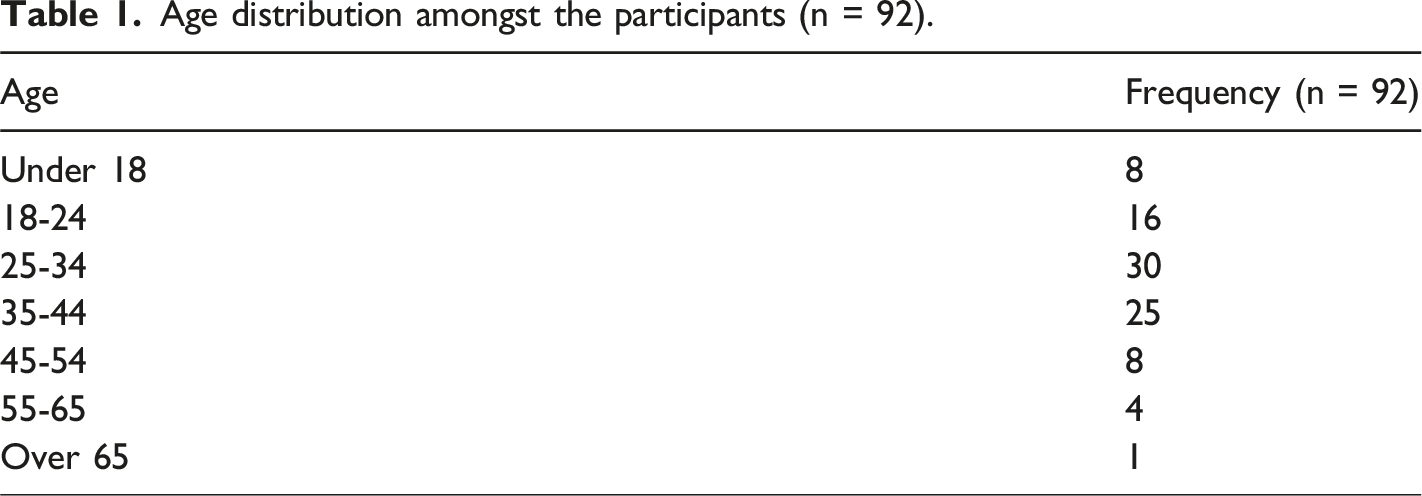
Age distribution amongst the participants (n = 92).
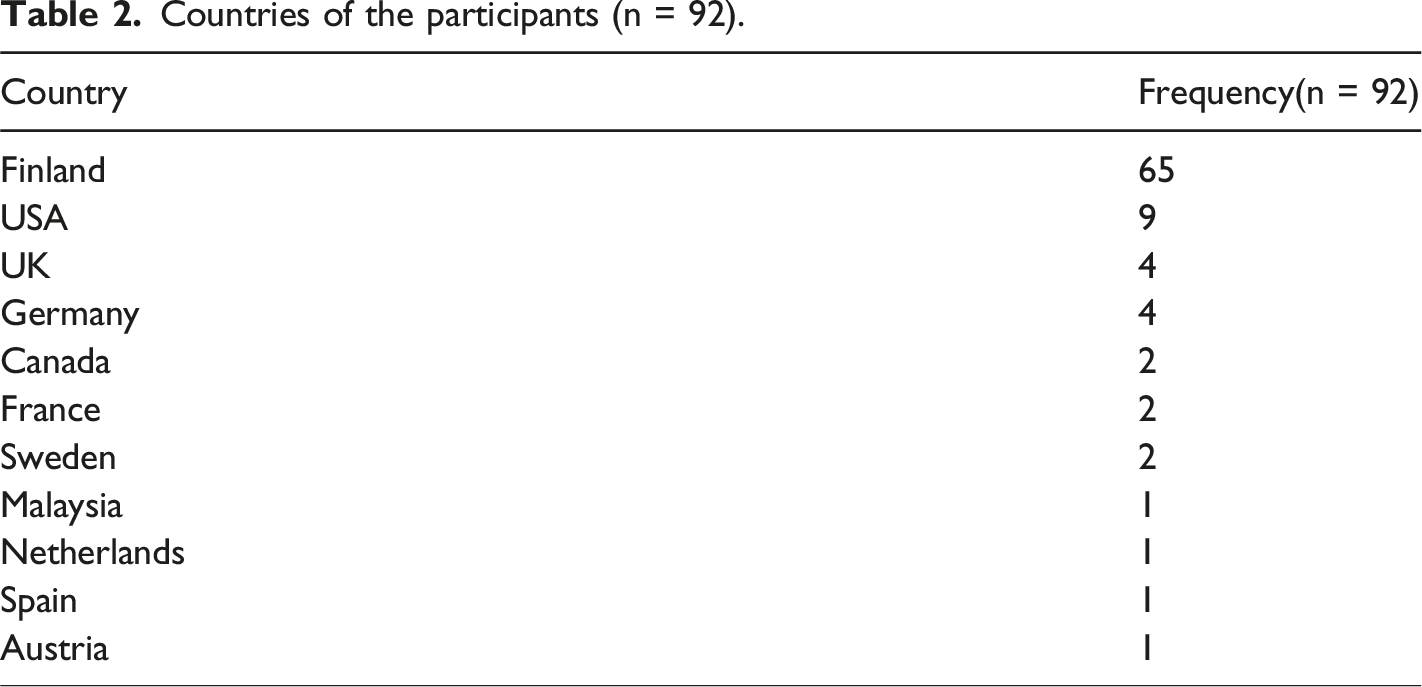
Countries of the participants (n = 92).
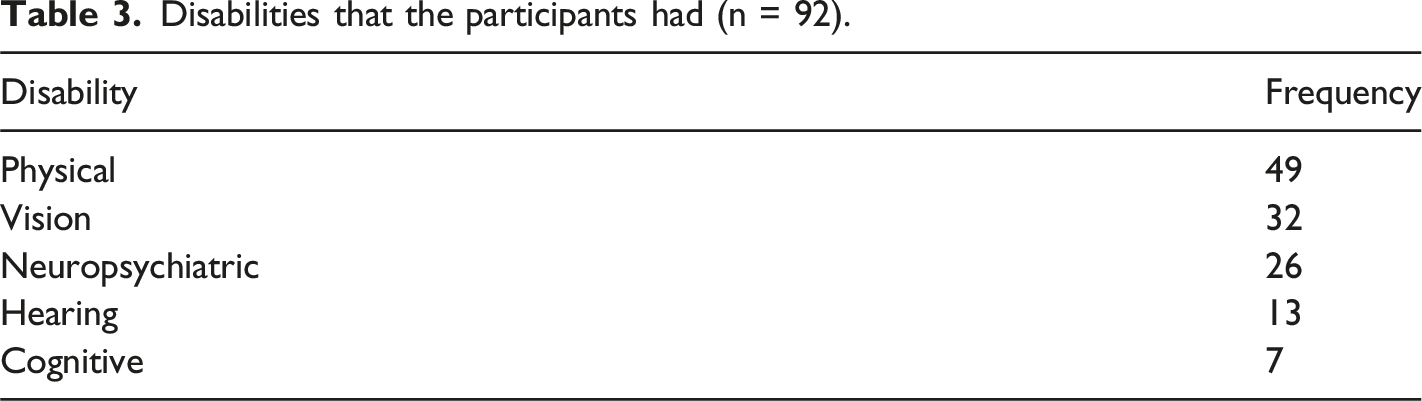
Disabilities that the participants had (n = 92).
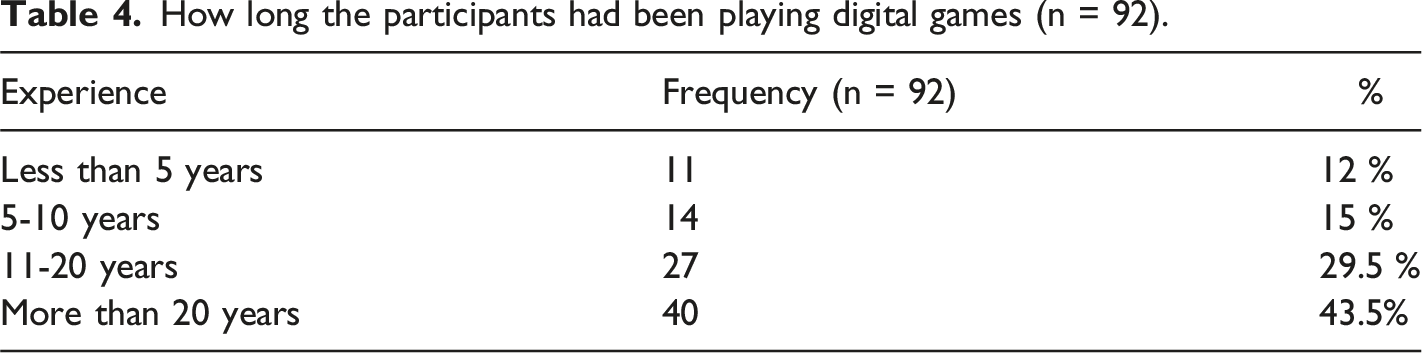
How long the participants had been playing digital games (n = 92).
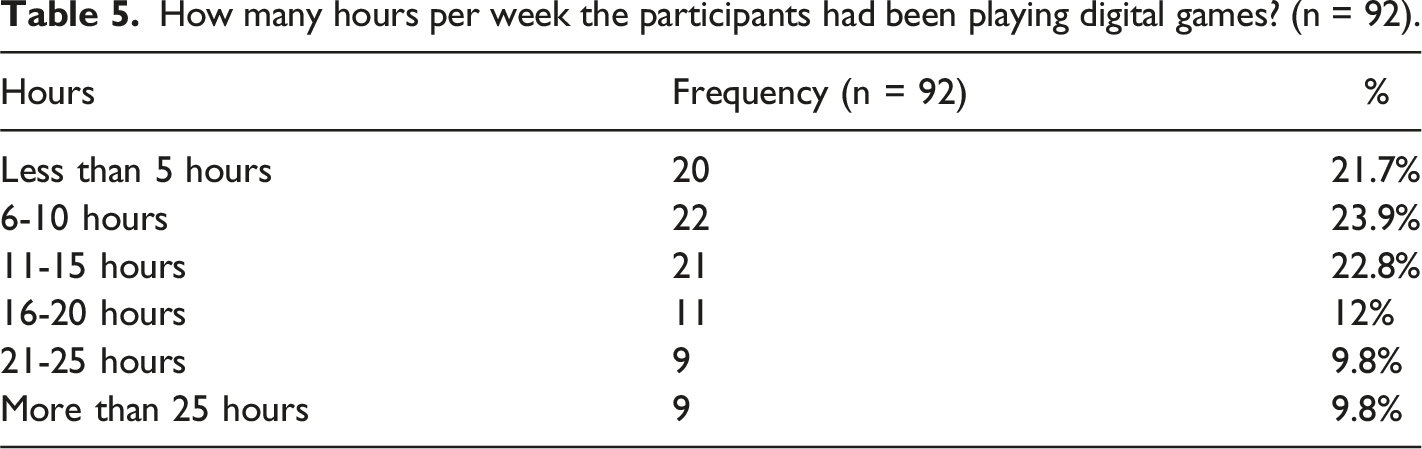
How many hours per week the participants had been playing digital games? (n = 92).
Playing with Others
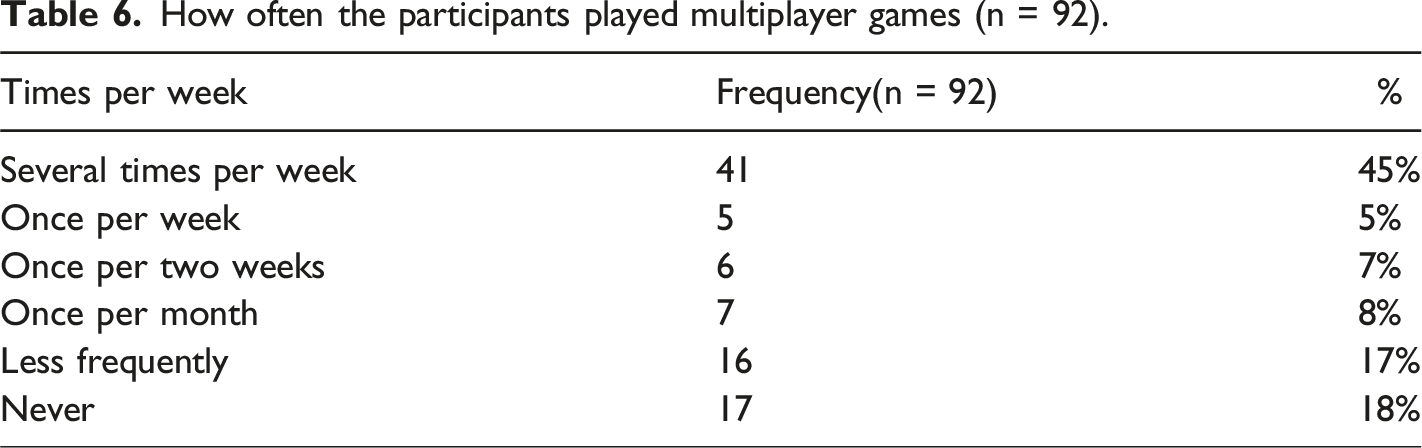
Based on our analysis, 44% (n=41) of the participants played multiplayer games several times per week, while 18% (n=17) claimed that they never play multiplayer games. Of the respondents who never play multiplayer games, 35% (n=6) had a physical disability, 18% (n=3) had a visual disability, 18% (n=3) had a neuropsychiatric disability, and 29% (n=5) had multiple disabilities.
How often the participants played multiplayer games (n = 92).
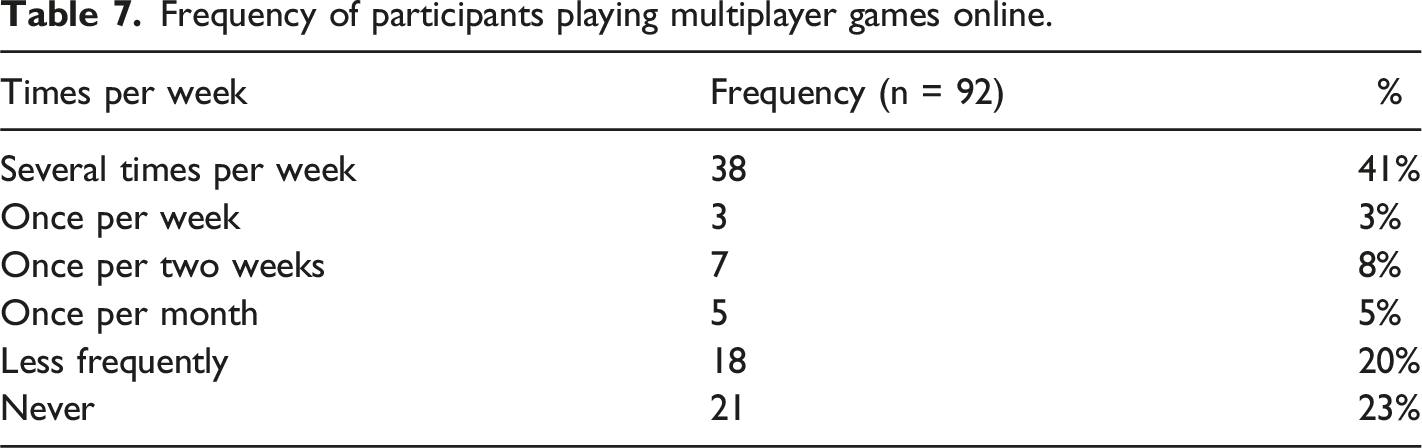
Frequency of participants playing multiplayer games online.
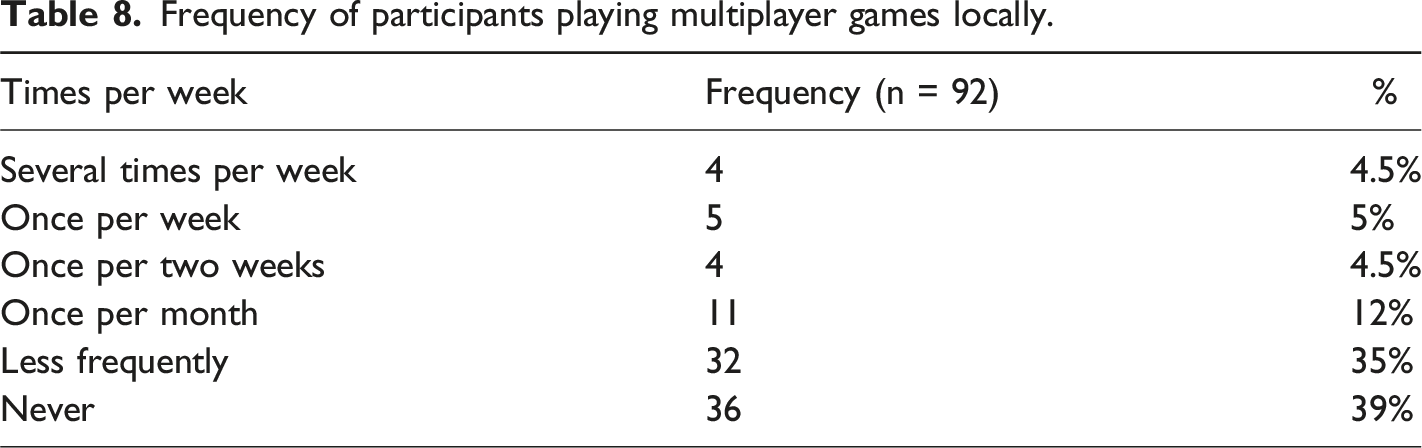
Frequency of participants playing multiplayer games locally.
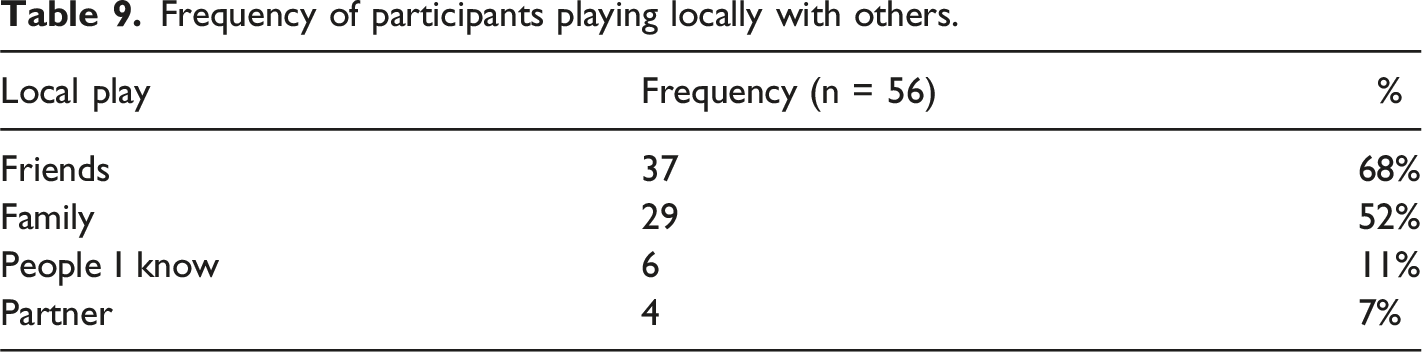
Frequency of participants playing locally with others.
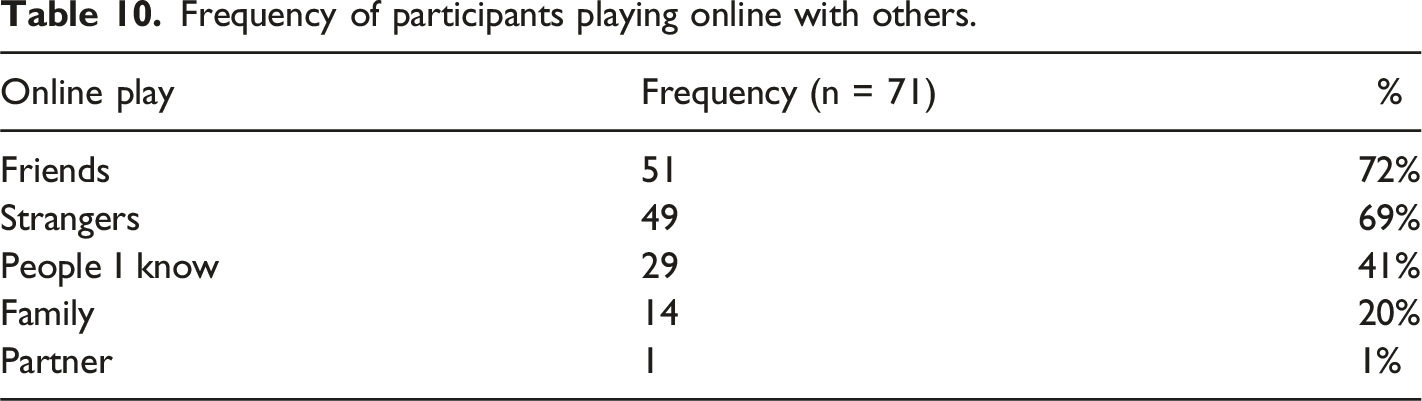
Frequency of participants playing online with others.
Communicating in Multiplayer Games
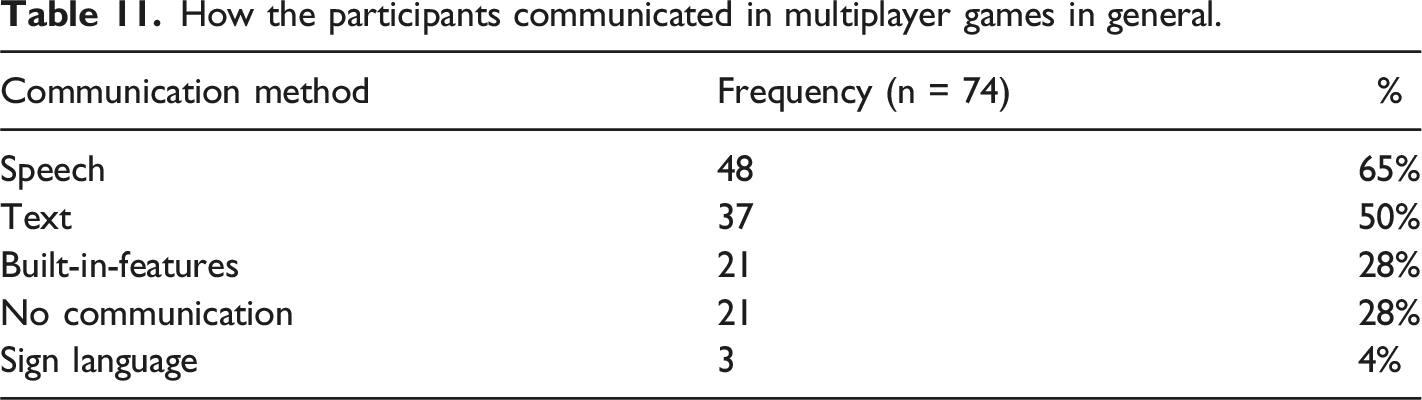
How the participants communicated in multiplayer games in general.
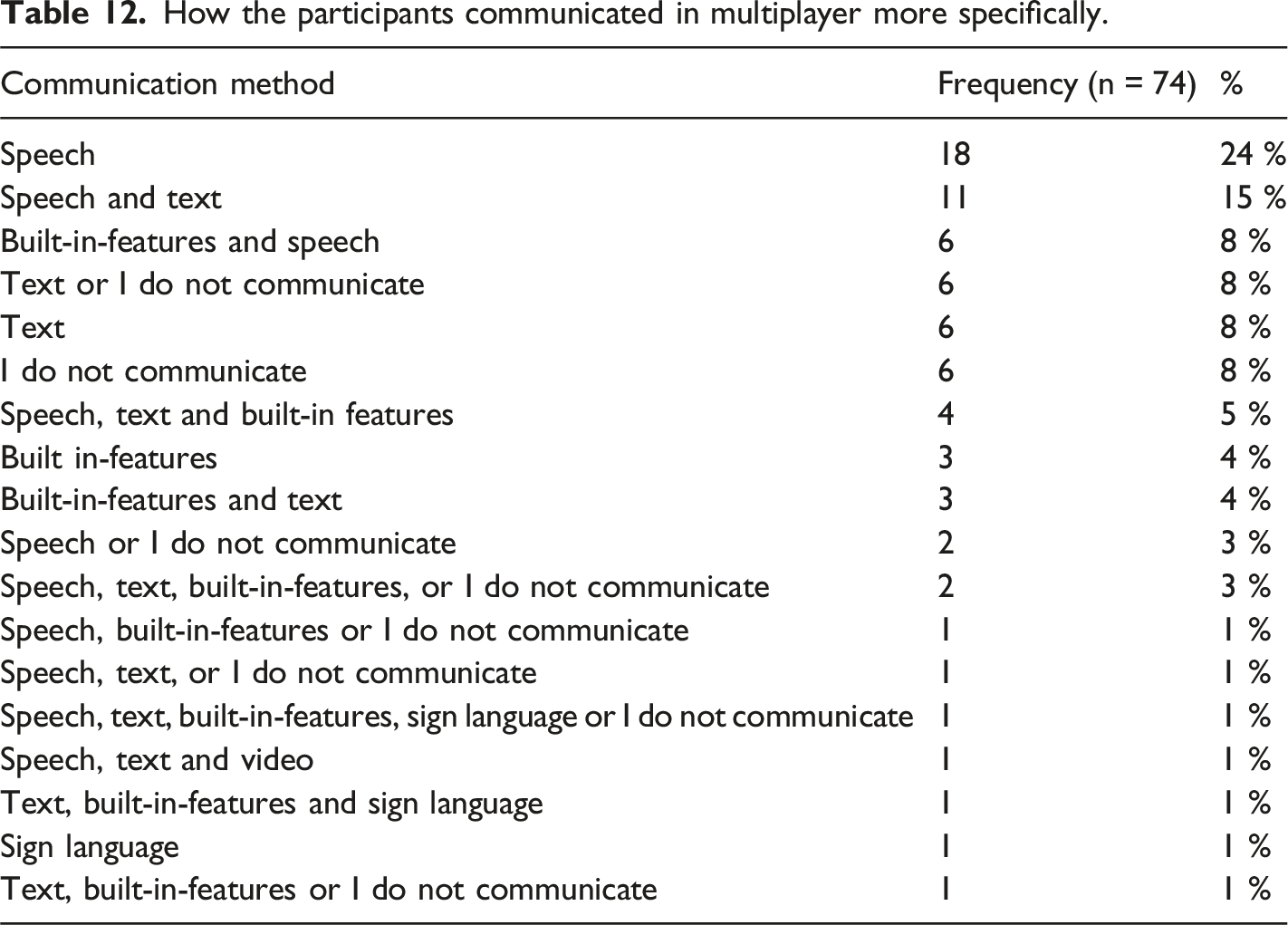
How the participants communicated in multiplayer more specifically.
Differences in communication methods between participants across disabilities.
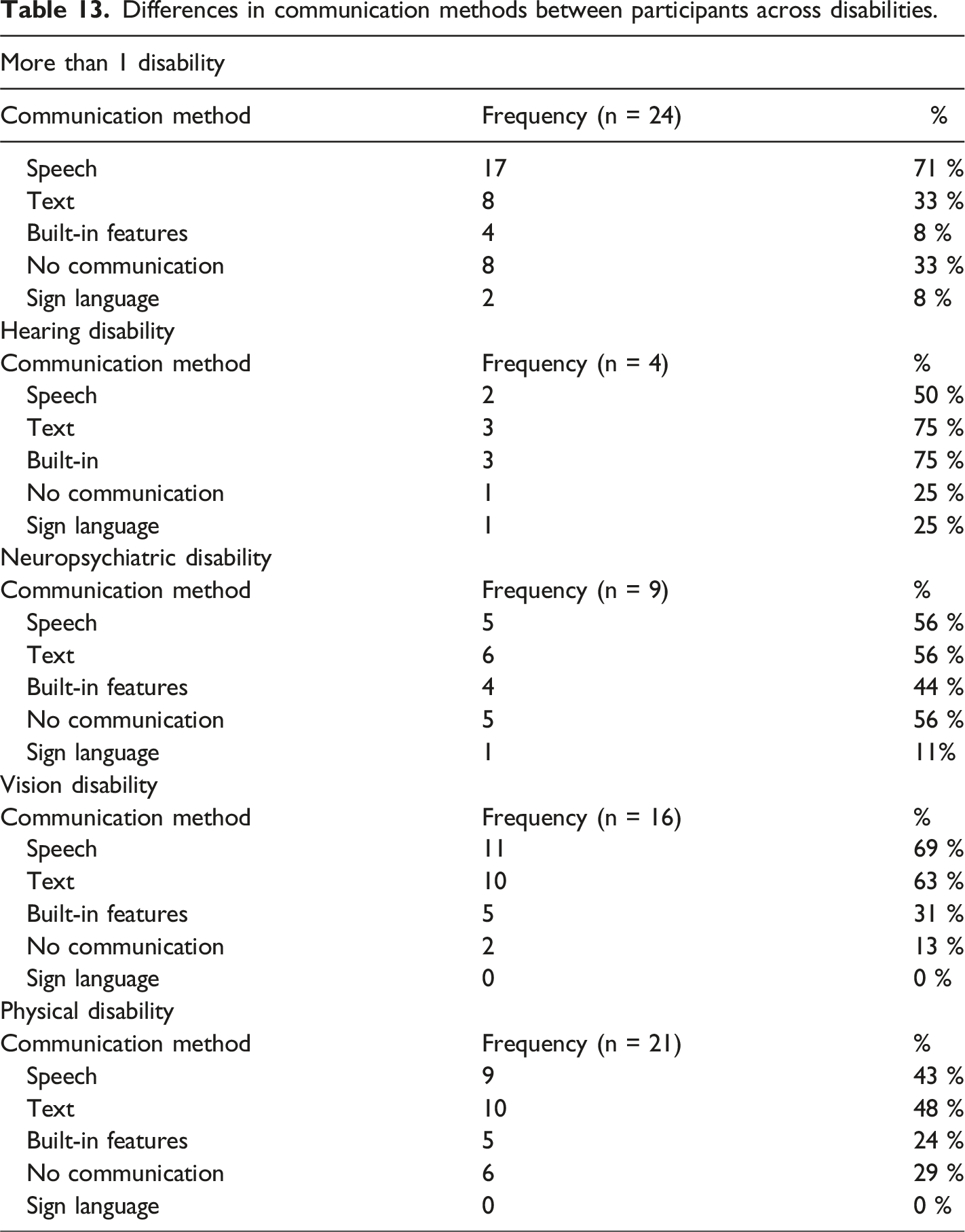
Gender and Disability Differences in Communication
Differences in communication methods between participants across genders.
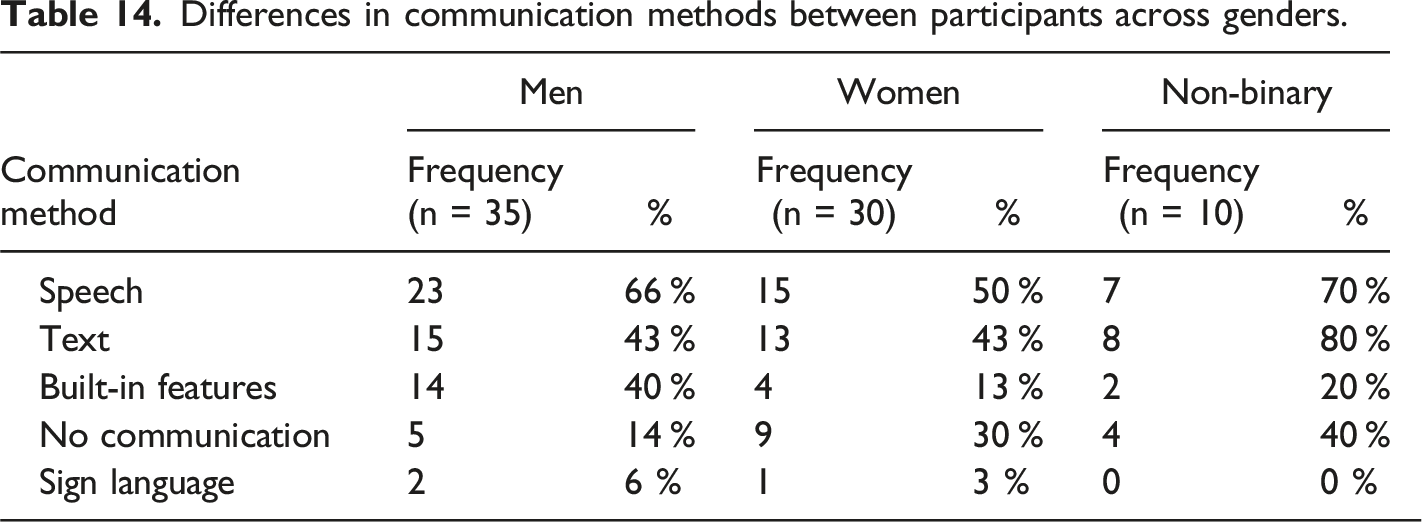
When comparing women and men, there is a significant difference between those who do not communicate in games. Approximately 14% of men (n=5/35) reported not communicating at all or if there was no suitable method available, whereas 30% of women (n=9/30) did not communicate if there was no suitable method available. Individuals who did not communicate at all using any method included non-binary individuals (n=1), men (n=2), and women (n=3), showing no significant difference between genders in this regard.
Differences Across Local and Online Gaming
Of the participants 71% (n=20/28) stated that communication differs somewhat between playing online and locally. Communication can be also different when one was playing with friends compared to strangers. Communication was described to be more limited in online gaming, while more relaxed in local gaming, which can be also related to playing with familiar people. “In local play, I can speak more casually because I do it only with socially familiar or 'safe' individuals, so communication is not as difficult.” (Participant 65, non-binary, neuropsychiatric disability [translated from Finnish]).
It was common that people would communicate locally with speech, but online they preferred using text chat. However, for some, there were no differences in communication. “Online depending on if voice is available or not I will communicate. I mess up wheel communication frequently do [due] to tremors so I don't utilize it so if no voice chat I am a silent player. In person does not change I communicate through voice.” (Participant 3, female, vision, physical, cognitive, neuropsychiatric, and neuromuscular disabilities).
Furthermore, some stated that their communication does not differ based on who they play with, or in local versus online playing, but rather depending on the game genre, whether it is cooperative or competitive. “I don't play locally but communication differs in co-op and multiplayer games. In co-op play, I always use a speech and a communication wheel, but in multiplayer games, I usually don't prefer communication due to multiple reasons. For example, many players don't use microphones so I don't want to be the odd one who uses them, I can't type or type extremely slowly compared to others, and I'm afraid of the toxicity and vile attitude.” (Participant 5, non-binary, vision, physical, hearing, and cognitive disabilities).
Inclusion and Toxicity
As we wanted to know widely about experiences of playing with others, we asked the survey participants to describe how other gamers treat them. Most of the respondents perceived that they were treated positively in the games or the same way as any other gamer is treated. “For the most part, people are very nice. When I play with strangers, they don't seem to care that I'm blind, they just want to play which is really nice.” (Participant 2, male, vision disability).
However, it seemed that many gamers had experienced both positive and negative attitudes, most commonly friends were seen to be more supportive, while with strangers, some toxic behavior had been noted . “It depends. Some people are rude, and can get very angry when my performance is not up to their expectations, or they use my disability as a way to reject me. Playing with friends is better.” (Participant 7, male, physical disability).
Furthermore, some of the respondents had consciously decided not to tell their gaming company about their disability, and some participants communicated that other gamers do not know about the disability since their disability is not visible in a way that other gamers could spot it. “It's hard to say [how other players treat me]. If I play poorly, they wouldn't know why. Generally, I manage decently.” (Participant 58, non-binary, physical disability [translated from Finnish]).
Discussion
While previous research shows that gamers with disabilities play multiplayer games like any other gamers, disability can and does impose challenges on communication with other gamers online and offline as well as create inclusion challenges with toxicity in gamer community. Therefore, this study aimed to explore how people with disabilities communicate while gaming and with whom did they play. Furthermore, this study examined differences in communication based on disability and gaming companions, as well as how gamers with disabilities are received in gaming communities.
Our participants appeared to be more active with playing multiplayer games online, 41% reported playing such games weekly. This percentage is higher compared to a previous study that focused on gamers with visual disabilities (Gonçalves et al., 2020), where only 12% played digital games with others on a weekly basis. This might be explained by the larger focus group of our study. Or this could possibly be due to the earlier study focusing on visual disability, which can impose challenges on playing multiplayer games; however, no significant differences were noted in our sample between participants from different disability groups regarding the frequency of playing games online, specifically for those who played several times per week.
Based on our results, people with disabilities mostly play online with friends and family. While we did not specify whether these friends were real-life or online friends, some participants seemed to answer “people I know” if they were referring to playing with people who they had met online. This aligns with findings of a previous study by Gonçalves et. al, (2020) where their survey participants played mostly with real-life friends, online friends, and after those, strangers. Similarly, in Beeston (2020) people with disabilities played with real-life friends, friends of friends, online friends, guild members and strangers. In addition, according to Eklund (2015), generally people play with their friends, family, and strangers.
Gamers with disabilities used various communication methods, with text and speech being the most used, in addition, 28% used built-in features for communicating. There were some differences observed between disability groups and genders in terms of preferred communication methods. Gender differences playing games have been extensively researched (Kuznekoff & Rose, 2013; Souza, Pegorini, Yada, Costa, & Souza, 2021; Veltri, Krasnova, Baumann, & Kalayamthanam, 2014; Wohn, Ratan, & Cherchiglia, 2020), and these studies have identified some variations in preferred communication methods across genders, such as female gamers preferring text-based communication while male gamers use both text and voice communication. However, we did not manage to find extensive statistics focusing on how people generally communicate within multiplayer games, so we cannot be sure how used communication methods would differ between women and men.
Another study also stated that text and voice chats were commonly used either within the game or through additional communication platforms (Beeston, Power, Cairns, & Barlet, 2018b). Our results suggest that 30% of women while only 14% of men would not communicate in games at all or would not do so if they did not find a suitable communication method. This finding can be related to existing literature suggesting that female gamers may face toxic behavior [e.g., (Vella, Klarkowski, Turkay &Johnson, 2020); (McLean &Griffiths 2019] or be afraid of potential toxicity, leading them to avoid communication [e.g.,(Souza, Pegorini, Yada, Costa, Souza, 2021)], this applies also to gamers with disabilities (Beeston, 2020). Furthermore, generally it appears that male gamers tend to be more social gamers compared to female gamers (Eklund, 2015).
Regarding communication styles, based on previous research (Peña & Hancock, 2006) it appears that the majority of gamers, at least in one study, focused more on socioemotional communication rather than task-related communication. However, it is possible that this dynamic has changed over the years, and based on our results, communication styles may differ for gamers depending on who they are playing with. This finding aligns with previous research indicating that the relational status of game companions influences players' engagement with games: “The main conclusion of this study is that both the practices and meanings of digital gaming are dependent on the relational status of game companions: whom people play digital games with, be they family, friends or strangers, clearly affects how players engage with games.” (Eklund, 2015).
In terms of socioemotional communication, experienced gamers tended to be more positive towards other gamers while less-experienced gamers were more negative and used specialized language (Peña & Hancock, 2006). As most of our participants were highly experienced gamers, it is likely that their gaming companions were also experienced, which may explain why our results suggest that the participants perceived that most people did not treat them differently compared to other gamers. However, it is also unclear whether this perceived positive treatment could have been because the participants were not disclosing their disabilities to their gaming companions or because gamers with disabilities are genuinely being treated respectfully. According to Beeston (2020) people with disabilities prefer to disclose their disability to trusted groups of friends, followers, or communities where they feel safe. Nonetheless, some participants still reported experiencing toxicity, and fear of toxic behavior may have contributed to gamers with disabilities playing less multiplayer games than single player games (Baltzar et al., 2023a).
What is important to note is that many challenges faced by people with disabilities might not be solely due to the disability itself but could arise from other reasons as well. For instance, many novice players might encounter inappropriate behavior due to their performance in games. It is also worth mentioning that gamers without disabilities may require different communication methods; for example, speech might not be the most convenient way to communicate when a baby is sleeping in the next room.
“Designers want to promote interactions among the players, as they recognize that these encounters are essential to the success of their virtual worlds (Ducheneaut & Moore, 2004)”. However, do designers support and consider a wide enough range of options for communication? Our results emphasize the significance of offering and finding suitable communication methods. As stated, the lack of suitable communication methods prevents gamers with disabilities from communicating as they may wish. Overall, the limited availability of communication options diminishes the accessibility of games. Therefore, it is essential to incorporate as many communication methods as possible in game design and support social accessibility in various ways (Baltzar et al., 2023b). We argue that with a wide range of communication methods, more people with disabilities could engage in social gaming.
This study has limitations both with regards to the survey questions and the survey participants. In the survey questions, we did not ask participants to specify if they play cooperative or competitive multiplayer games. This information could have provided deeper insights into potential communication differences and their underlying factors. Further, we did not directly ask participants about their reasons for communicating in games, such as whether they focused more on task-related communication or socioemotional communication. However, both forms of communication could be identified from the data. Thus, future studies should consider observing communication methods in actual gaming situations, as group-based communication in games can present accessibility challenges (Crabb & Heron, 2023), such observation may provide a more accurate understanding than relying solely on self-reported recollections in survey formats. In addition, future research should focus on finding out which communication methods people without disabilities prefer and compare preferred communication methods between people with and without disabilities.
Most of the participants were experienced Finnish gamers with physical disabilities, which might have skewed the results, however, the dataset included variation between all disability groups and multiple nationalities. However, it is worth noting that most research primarily focuses on English-speaking populations, making this research unique in terms of its participant pool. Furthermore, one limitation is the rather small sample size of this study, however, the number of participants is significant considering the study target group being hard to access. Finally, based on this data we cannot establish generalizable statistics; however, these results show us that there are people with disabilities in social digital gaming spaces, who cannot communicate due to lack of suitable communication methods. Future research is encouraged to establish statistical evidence through purposeful, representative sampling, as well as to delve deeper in characterizing the communication difficulties identified by this research. Likewise, the future research could delve into analyzing currently most popular multiplayer games and see if they have wide enough communication options and accessibility features overall. Additionally, we encourage further research to explore in greater depth the disclosure of the disability and its impact on how gamers with disabilities are treated by fellow gamers.
Conclusions
This study aimed to investigate how people with disabilities communicate while gaming and who do they game with. The research questions were: 1) Who do people with disabilities play with?, and 2) How do people with disabilities communicate while gaming?
This study has shown that people with disabilities play with friends (71%), strangers (69%), people they know (41%), and family (20%) online. Locally, people with disabilities played with family (68%), friends (52%), people they know (11%), and partners (7%). Most commonly gamers with disabilities communicated with speech (65%), text (50%), built-in features (28%), or they did not communicate (28%).
The results indicated that there were some differences in communicating online and locally, however, the more relevant factor was the gaming companion. Communication with friends tended to be more relaxed and focused on socioemotional aspects, while communication with strangers was more limited and task oriented. Additionally, the study highlighted that disabilities and gender could impact the preferred communication methods.
This study suggests that we need more research on communication in multiplayer games in general, and on gamers with disabilities and their communication preferences. We argue that games should have a wide range of communication methods available for gamers so that everyone can choose the most suitable communication method for their usage.
Footnotes
Declaration of Conflicting Interests
The author(s) declared no potential conflicts of interest with respect to the research, authorship, and/or publication of this article.
Funding
The author(s) disclosed receipt of the following financial support for the research, authorship, and/or publication of this article: This work was supported by the Liikesivistysrahasto, 22-12430.
Author Biographies
 .
.
.