




Abstract
Background
Individuals choose to engage in multiple types of online team-based video games. Gameplay options allow for player preferences to shape their gaming experience. Within the multiplayer online battle arena (MOBA) genre, players can decide whether to play matches with familiar or random teammates and whether their performance impacts their skill rating. Individual differences in video game engagement and genre preferences have been connected with player motivations and uses of video games and psychological traits that influence social interactions. The present study examined the extent to which the match preferences of MOBA players related to these factors.
Methods
Individuals attending an international MOBA tournament were recruited for the present research. Player MOBA match selection history was collected along with questionnaires measuring video game uses and gratifications, preference for solitude, tolerance of disagreement, and a test of theory of mind ability.
Results
Three main findings were observed. First, the highest-rated video game motivation was to socially interact with others. Second, players that displayed different preferences for types of MOBA matches varied in social interaction and competition video gameplay motivation scales. Third, although individual differences in fantasy video game motivation were correlated with theory of mind ability and preference for solitude, they did not vary by MOBA match preferences.
Conclusion
The results of the present study indicated that MOBA players were more strongly motivated by social aspects of video gameplay and variations in video game motivation to compete correlated with the extent to which they engaged in different types of MOBA play.
Background
Multiplayer competitive electronic sports (esports) gaming has seen a surge in popularity and is set to become a billion-dollar industry (Gough, 2021). Reviews of video game research have noted several differences in modern games compared those that were studied in the 1990s and 2000s (Dale and Green, 2017). Much of the research pre-dated the surge in popularity around multiplayer games that include different combinations of game mechanics, such as Multiplayer Online Battle Arenas (MOBAs), warranting more in-depth investigations into motivations for gameplay and psychological traits of players (Johnson et al., 2015). The present study examined the gameplay preferences of MOBA players and connections to individual differences in video gaming motivations and psychological factors related to social interaction behaviors.
Multiplayer Online Battle Arenas
The present study focused on Multiplayer Online Battle Arenas (MOBA) players due to the popularity of the genre (Super Data Research, 2017b), gameplay options, and complexity of gameplay. MOBAs are team-based online games where players strategize to secure the base of the opposing team and defeat them using virtual heroes. The current top three MOBAs by number of players, online viewers, and market share are League of Legends (Riot Games, Inc.), Dota 2 (Valve Corporation), and Heroes of the Storm (Blizzard Entertainment, Inc.; Gamasutra, 2015; Super Data Research, 2017a; TwitchTracker, 2021). For this study, Dota 2 was selected as a genre-defining example of a MOBA (Yee, 2017) as it is one of the most popular MOBAs and it contains key MOBA game mechanics, such as a three-lane map, cooperative gameplay, and match selection processes (Chen et al., 2018; Johansson et al., 2015; Kokkinakis et al., 2017; Wu et al., 2017). MOBAs offer opportunities for players to engage in different categories of matches. Players have the choice of playing competitive or non-competitive matches that do or do not impact their player ratings (ranked versus unranked matches), and, deciding whether they want to select their teammates (party matches) or play with randomly-assigned teammates (solo matches). The factors that influence match choices and preferences remain to be investigated.
Uses and Gratification Theory of Video Game Play
Uses and gratification theory (UGT) was developed to account for variations in print and electronic media consumption and has been applied to video games to predict player usage (Greenberg et al., 2010; Sherry et al., 2006). This theory may also account for individual differences in video game player preferences. In line with UGT, individuals are motivated to seek different types of experiences to satisfy basic needs, such as entertainment, sensation, and learning. Gratification is achieved when the experiences successfully meet these needs. The video game uses and gratifications (VGUG) scale was developed to assess different motivations for video game play (Greenberg et al., 2010; Sherry et al., 2006). It is composed of six motivation categories: arousal (playing for stimulation), challenge (playing to achieve a difficult goal), competition (playing to test skills against other players), diversion (playing to escape from stressors and relax), fantasy (engage in play that is not possible in real life), and social interaction (playing to interact with friends and other individuals). Using the scale, individual differences have been observed in the types of motivations reported by video game players (Sherry et al., 2006) and variations across different genres (Greenberg et al., 2010; Scharkow et al., 2015).
The amount of video gameplay of players has been observed to correlate with specific VGUG scales (Sherry et al., 2006). Cross-genre differences in such connections have also been observed using VGUG and other motivations scales. Greater time spent playing online first-person shooter games was found to be related to higher social interaction, enjoyment and competition motivations (Jansz and Tanis, 2007) whereas for a massive multiplayer online role-playing game (MMORPG) motivations included progressing through the game, competition, social interaction, escapism, game mechanics, and avatar customization (Billieux et al., 2013). These differences call for additional research to examine whether previously observed patterns of connections between motivations to engage with video games extend to different genres (Sherry et al., 2006).
A key question is to what extent within-, in addition to between-, genre preferences relate to video game motivations. Although modern video games are advertised to consumers as belonging to specific genres (e.g. action, first-person shooter), publishers frequently include multiple types of gameplay within a single title (e.g. different win conditions; Dale and Green, 2017). This allows players to tailor their gameplay experience. As such, two players of the same video game title that includes multiple options may engage in substantially different gameplay. Individual differences in video game motivations and psychological factors may influence these within-genre preferences. Indeed, past research has observed evidence of correlations between in-game behaviors and player motivations (e.g. MMORPG; Yee, 2006). Differences in MOBA player match preferences offer the opportunity to investigate the factors that influence within-genre gameplay preferences.
Social Interaction Traits, Theory of Mind, and Video Game Play
Psychological factors associated with behaviors during social interactions may predict MOBA player motivations and gameplay preferences. For example, video game players higher in the assessed personality trait extraversion reported greater motivation to play online video games in order to form and maintain social relationships (Park et al., 2011) as well as MMORPGs to socialize (Graham and Gosling, 2013). Connections have been observed with MMORPG player in-game behaviors, such as character selection choices and achievements (Yee et al., 2011). Variations in theory of mind (ToM), the ability to distinguish and identify the mental states of one’s self and another person’s (Baron-Cohen et al., 2001), have been linked with video games and social activities. Players who were instructed to focus on the story narrative when playing a video game displayed higher performance on a ToM test compared to those instructed to ignore the game story (Bormann and Greitemeyer, 2015) and teams with greater ToM ability performed better on team-based tasks (e.g. solving a number puzzle; Engel et al., 2014; Woolley et al., 2010). These studies suggest that individual differences in social interaction traits and ToM may predict gameplay preferences.
Research with non-video game social activities highlight preference for solitude and tolerance for disagreement as traits that may predict gameplay preferences. Individuals who report a greater preference for solitude tend to spend more time by themselves than in groups and engage in fewer social activities, such as group sports (Burger, 1995); this may extend to match preferences. During interpersonal communication, tolerance for disagreement refers to the extent to which an individual can engage in debate and discussion without perceiving the conversation as a conflict (Teven et al., 1998). For competitive team-based video games, such as MOBAs, the prevalence of toxic players increases the chance that players may encounter argumentative teammates (Kwak et al., 2015). Indeed, esports players believe they are more likely to encounter toxic players in certain types of matches than others (Türkay et al., 2020). Players lower in tolerance of disagreement may avoid specific types of matches to reduce the chance of encountering potential conflict with other players. This may affect the types of matches players choose to join and the motivations for doing so.
Present Study
The extent to which video game motivations, social interaction traits, and ToM were associated with MOBA match preferences was investigated in the present research. Using Dota 2 as an exemplar MOBA, player match selection history was accessed to record the number of ranked solo, ranked party, and unranked matches completed. The VGUG scale was administered to assess MOBA player uses and motivations, along with a ToM test and ratings scale measures of preference for solitude and tolerance for disagreement.
Materials and Methods
Research Objective
The research questions for this study included: how would the VGUG ratings of MOBA players vary by motivation scale (RQ1), what individual differences in gaming motivation scales, ToM, and social interaction traits were connected to MOBA matches preferences (RQ2), and how would MOBA players categorized by preferred types of matches vary in VGUG motivations (RQ3). To collect data from MOBA players, attendees of an international tournament for the MOBA game Dota 2 that took place in the United States, were recruited for the present in-person study.
Sample
A total of 370 participants were included in the present study. Based on an estimated effect size of Cohen’s d = 0.22 (calculated using pairwise VGUG scale comparisons reported in (Sherry et al., 2006; Lakens, 2013), a sample size of 273 was required to achieve 0.95 statistical power. The present study examined unique portions of a larger multi-study MOBA player project; a previous study from the project examined connections between cognitive ability and player skill (Bonny et al., 2020). To be included in the present study, participants must have played a minimum of one ranked solo match and one ranked party match in the video game, Dota 2 (of the 450 individuals recruited for the present study, 77 did not meet the ranked match criteria and three were not included for missing responses). Of the participants who provided gender information, 341 identified as male, 25 as female, 3 as gender non-conforming, and 1 as none-of-the-above. Participants varied in age (M = 23.5 years, SD = 4.1) and racial and ethnic backgrounds: Asian = 123 (Latino = 2), Black = 4 (Latino = 2), White = 174 (Latino = 16), multiracial = 23 (Latino = 1). For participants 18 years of age or older, written informed consent was collected; for those younger, written parental informed consent and written informed assent was collected. The research protocol was approved by an independent review board and abided by the Declaration of Helsinki.
Instruments
Hardware and Software
All measures for the present study were administered via a custom set of Python scripts coded using OpenSesame (Mathôt et al., 2012) running on a set of laptops (33.8 cm screen diagonal, 1920 by 1080-pixel resolution) running Windows 10.
Match History
Participants were asked to provide their Dota 2 usernames to collect the number of game matches they had played from account inception until September 2016. Three types of match history statistics were used in the present study: the total number of solo ranked matches, party ranked matches, and unranked matches. In contrast to unranked matches, player performance during ranked matches would impact the rating used to group players of similar skill when creating matches. One type of ranked match was a solo match, where players decided to join randomly selected teammates of a similar skill rating. The second type of ranked match was a party match, where a set of players selected to play a match together against a randomly assigned opponent team of similar skill rating.
Video Game Uses and Gratifications (VGUG) Questionnaire
The motivations for video gameplay were assessed using the 20-item VGUG questionnaire that has previously been observed to be correlated with video game usage with acceptable reliability (Cronbach’s alpha for scales > 0.80; Sherry et al., 2006). For each item, participants indicated the extent to which they agreed with a statement using a seven-point Likert-type scale (see Supplementary Material for sample scale items). Scores for each scale were calculated as the mean of ratings, with higher scores indicating a greater motivation.
Reading the Mind in the Eyes (RME) Task
For this task, participants viewed images of human faces and were asked to judge which of four emotion words best reflected the emotion displayed. The images were cropped such that the areas around the eyes were displayed. High reliability (test-retest reliability = 0.83) and validity have been observed previously with the task (Baron-Cohen et al., 1997, Baron-Cohen et al., 2001). After a practice trial, a total of 36 trials were presented with performance measured as the proportion of trials that the correct word was selected.
Preference for Solitude Questionnaire
Participants judged which of a pair of items that reflected a social versus solitary preference best matched themselves to assess their preference to engage in solitary activities (test-retest reliability = 0.72; Burger, 1995). Participants completed a total of 12 items (sample paired-statement: “I enjoy being around people,” with, “I enjoy being by myself”) with scores calculated as the number of items where the solitary statement was selected (higher scores indicating a higher preference for solitude).
Tolerance for Disagreement Questionnaire
This questionnaire was used to assess the extent to which individuals tolerated disagreement with a person without it rising to a conflict (Teven et al., 1998). For each of the 15 items, participants judged the extent to which a statement applied to themselves (e.g. “It is more fun to be involved in a discussion where there is a lot of disagreement.”) using a five-point Likert-type scale. Scores were calculated as the sum of ratings with higher values indicate higher tolerance for disagreement (Cronbach’s alpha = 0.86; Teven et al., 1998).
Research Protocol
After providing written informed consent or assent, participants were then seated in front of a computer and were electronically presented with the measures (see Supplementary Materials for additional details). Post-completion, participants received a debriefing statement and selected an incentive for participation (t-shirt, pins, or plush doll).
Statistical Analysis
Scores for the VGUG social scale had substantial skew (−1.60). For comparisons across VGUG scales, non-parametric statistics were used; for correlational analyses a rank-based inverse normal (RIN; Bishara and Hittner, 2012) transformation was applied to social scores. A latent profile analysis (LPA) was run using Mplus software (version 8.3) via the “mixture” analysis with within-class covariance set to zero. A cube-root transform was applied to each match measure prior to running the analysis, to reduce the size of values during statistical calculations. When controlling for multiple comparisons, p-values were adjusted using false discovery rate (FDR; Benjamini and Hochberg, 1995). For non-parametric tests, the effect size Cohen’s d was estimated by calculating r from test statistics (Field et al., 2012) and transforming to d using the ‘effectsize’ R package (Ben-Shachar et al., 2020). The Bayesian Information Criterion (BIC) fit statistic was used to evaluate whether adding an additional class (K + 1) improved the LPA model (indicated by a lower BIC) and bootstrap likelihood ratio tests were used to determine whether this was a significant improvement (Nylund et al., 2007; Williams and Kibowski, 2016).
Results
Differences in VGUG Scores
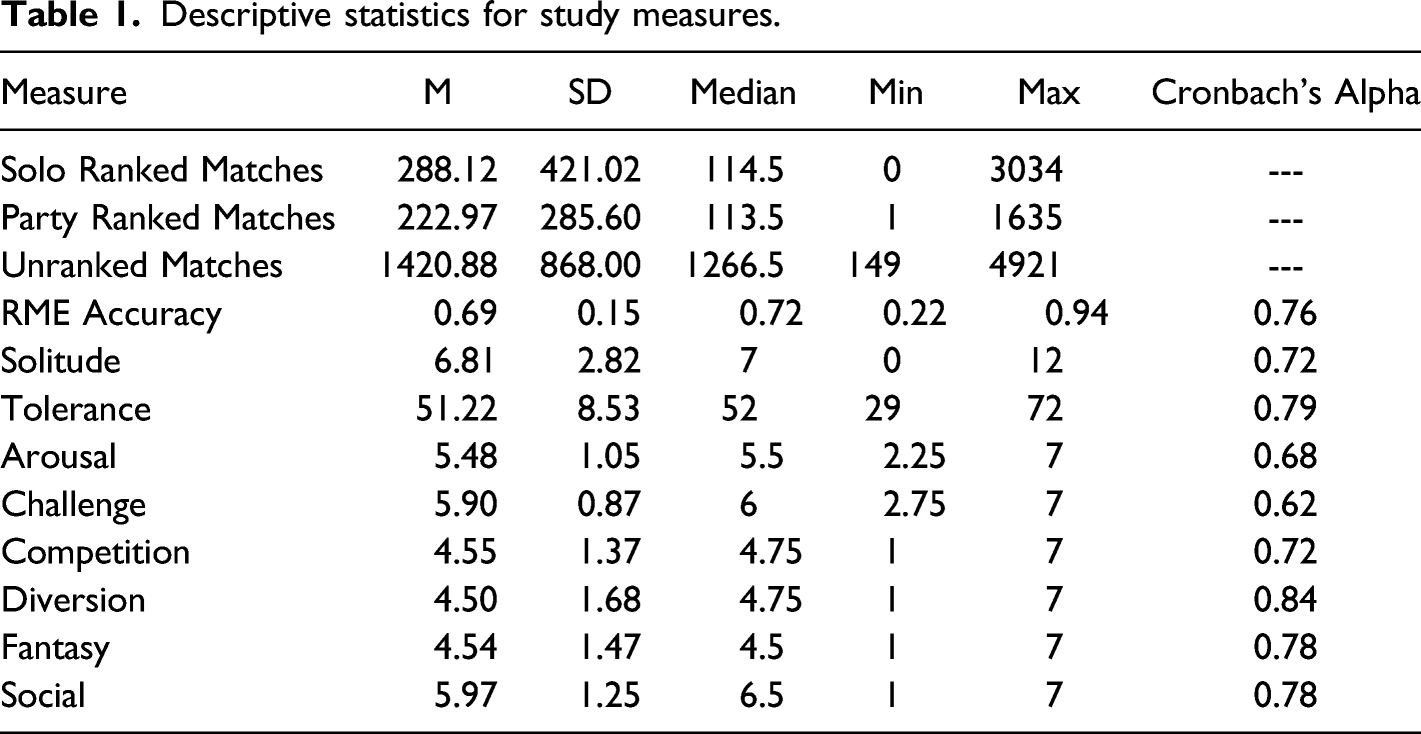
Descriptive statistics for study measures.
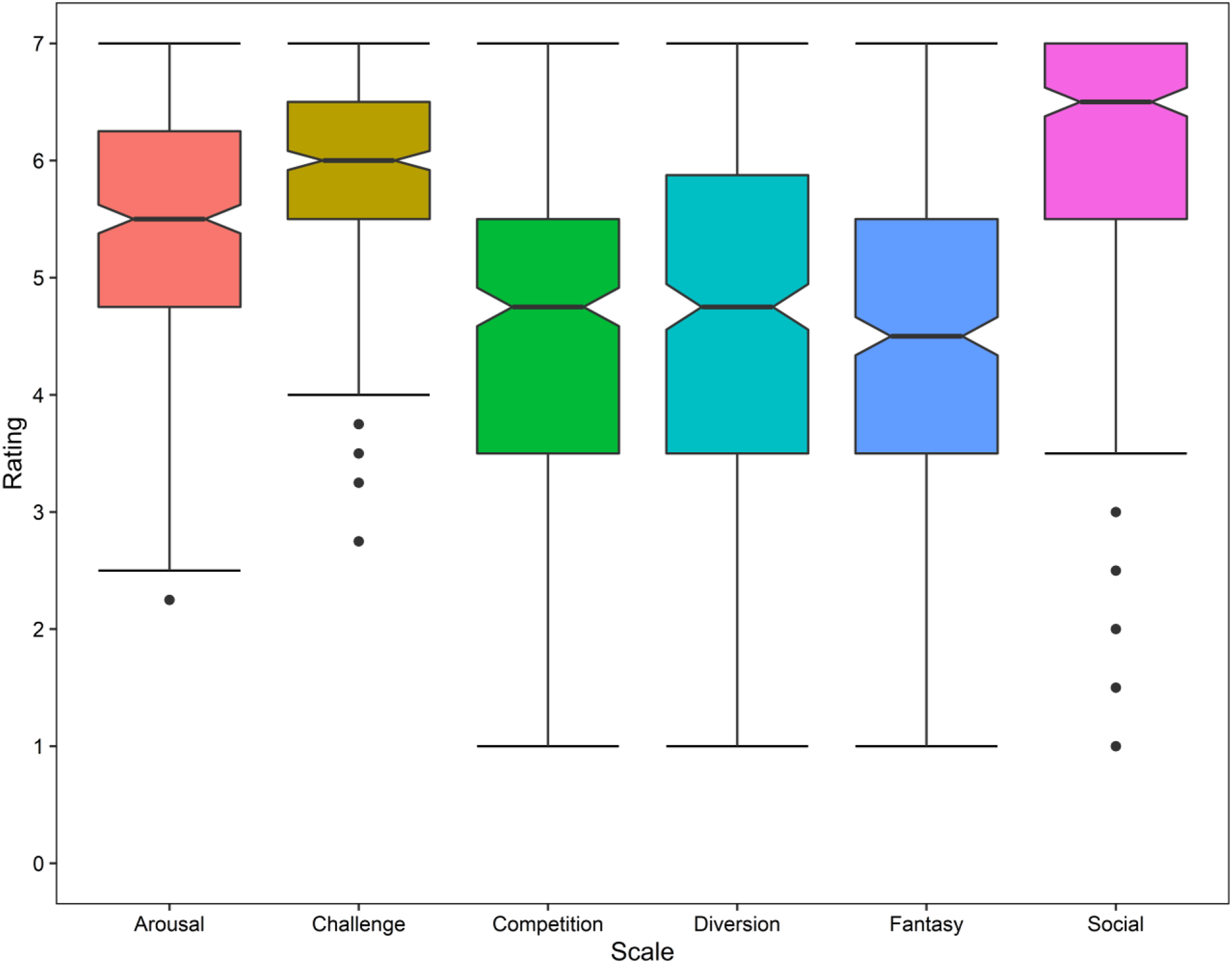
Box plot graphs for video game uses and gratifications (VGUG) scales (notches indicate the median score for each scale).
Relations Across Measures
Pearson r correlation coefficients between study measures (df = 368).
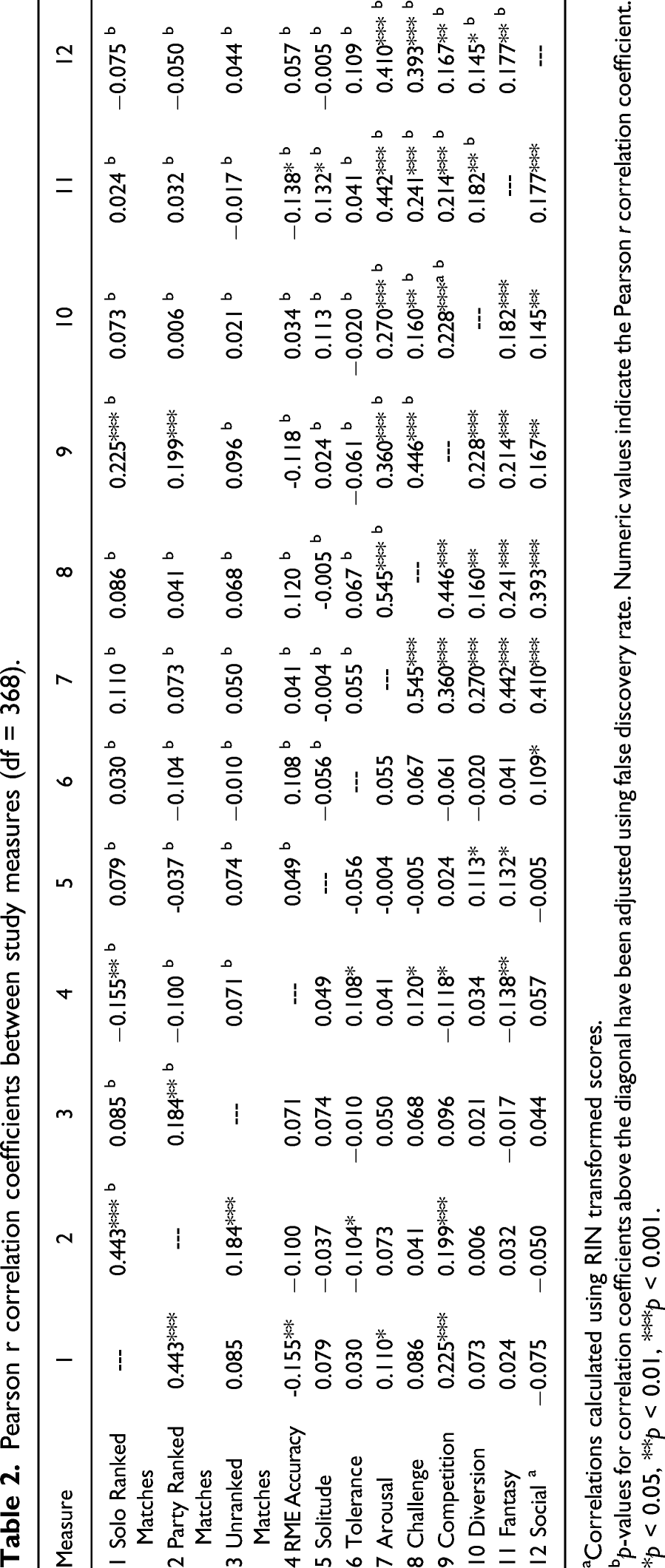
aCorrelations calculated using RIN transformed scores.
bp-values for correlation coefficients above the diagonal have been adjusted using false discovery rate. Numeric values indicate the Pearson r correlation coefficient.
*p < 0.05, **p < 0.01, ***p < 0.001.
Latent Profile Analysis of Match Measures
A model with three classes was found to provide the best fit of the number and types of matches completed. Although the ratio test for a four- versus three- class model was significant, BIC was lower for the three-class model (1-class model: BIC = 5189.65; 2-class model: BIC = 5055.99, bootstrapped p < 0.001; 3-class model: BIC = 5054.21, bootstrapped p < 0.001; 4-class model: BIC = 5060.31, bootstrapped p < 0.001).
Measures were compared across the three classes of participants: class C1 (N = 143), class C2 (N = 151), and class C3 (N = 76; see Supplementary Material for descriptive statistics). Non-parametric multiple analysis of variance tests were implemented using the “npmv” R package (Ellis et al., 2017). Post hoc pairwise Wilcox tests examining a significant effect for match measures, Wilks λ (6, 730) = 170.03, p < 0.001, revealed that C3 participants played the most (d: vs. C1 = 1.46, vs. C2 = 1.65), and C2 participants the least (d: vs. C1 = 1.39), solo ranked matches (adj. ps < 0.001) and party ranked matches (ds: C1 vs. C2 = 1.34, C1 vs. C3 = 0.81, C2 vs. C3 = 1.51; adj. ps < 0.001), and that C1 and C3 participants played more unranked matches than C2 participants (ds: C1 vs. C2 = 0.98, C2 vs. C3 = 0.56; adj. ps < 0.001; no significant difference between C1 and C3, d = 0.13, adj. p = 0.22). When comparing ranked match measures within each class, although participants in C3 played significantly more solo compared to party matches (d = 0.43, adj. p < 0.001), no significant effects were observed for C1 or C2 participants (ds < 0.13; adj. ps > 0.3). Classes were given the following labels based on match completion measures: moderate ranked matches, higher unranked matches (C1: MR/HU), lower ranked matches, lower unranked matches (C2: LR/LU), higher ranked matches, higher unranked matches (C3: HR/HU).
No significant differences by class were observed with social interaction trait and ToM measures (RME accuracy, solitude, tolerance), Wilks λ (6, 730) = 1.77, p = 0.102. A significant effect was observed with VGUG scales, Wilks λ (12, 724) = 3.10, p = < 0.001, driven by higher competition ratings for HR/HU compared to MR/HU (d = 0.25; adj. p = 0.049), MR/HU compared to LR/LU (d = 0.32; adj. p = 0.007), and HR/HU compared to LR/LU (d = 0.51; adj. p < 0.001), and lower social ratings for HR/HU compared to MR/HU (d = 0.25; adj. p = 0.048; all other adj. ps > 0.05; see Figure 2). Ratings of video game uses and gratification (VGUG) scales by each class of participants: moderate ranked matches and higher unranked matches (C1, MR/HU), lower ranked and lower unranked matches (C2, LR/LU), and higher ranked and higher unranked matches (C3, HR/HU; notches indicate median ratings).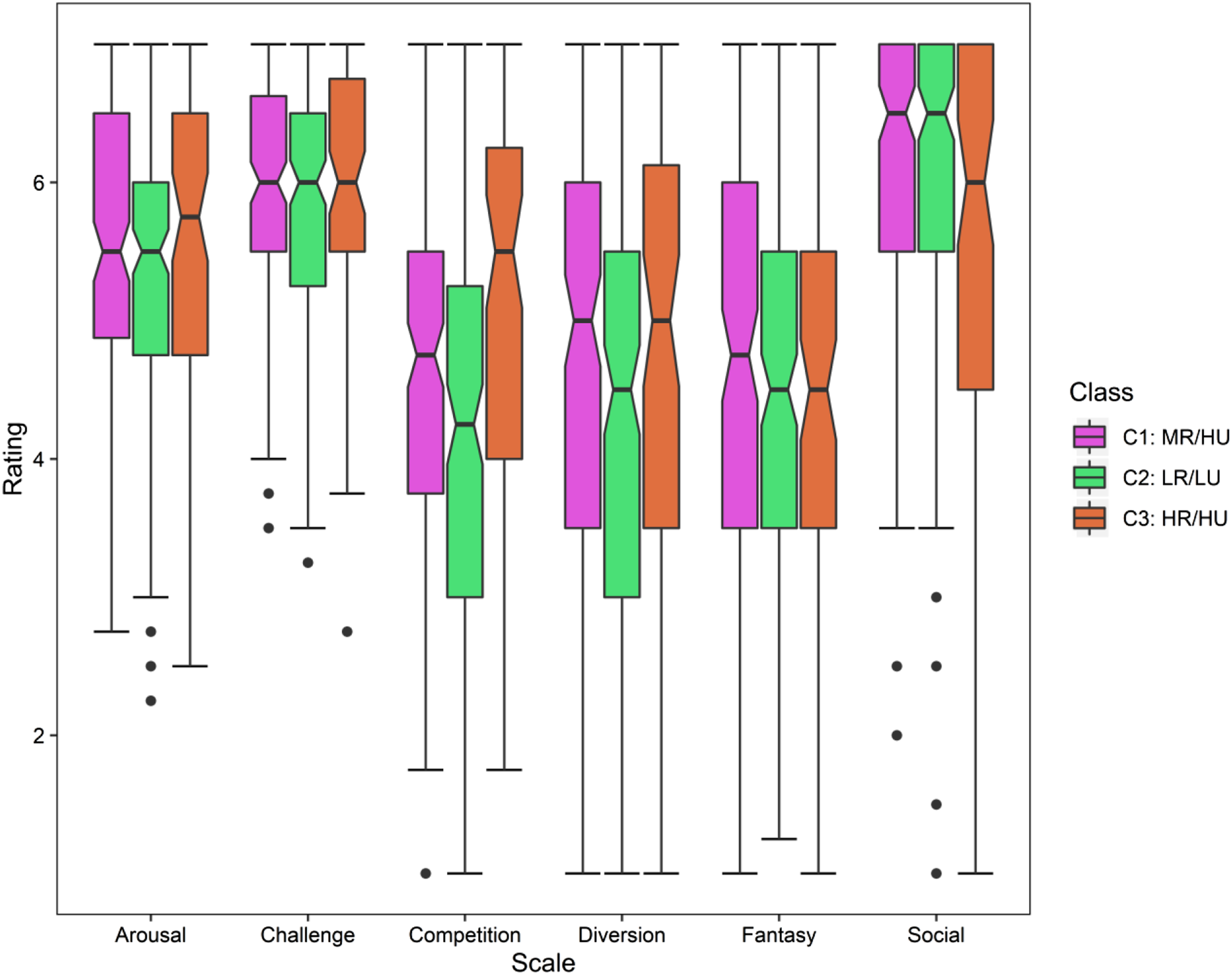
Discussion
Motivations for Video Gameplay and MOBA Match Preferences
The study objective was to examine factors associated with MOBA player match preferences, specifically motivations and psychological traits. The self-reported motivations for playing video games by MOBA players varied by VGUG scale and correlated with the number and types of matches completed (Figure 1). The motivation scale with the highest ratings in the present study was social interaction (RQ1). Correlations between motivations and match preferences were observed with higher ratings of competition associated with a greater number of ranked solo and party matches played, though these were small to moderate in effect size (RQ2). Evidence of subgroups of players was observed when players were classified based on MOBA match type preferences, with corresponding different patterns of VGUG scores (RQ3). Players who preferred ranked solo matches over ranked party matches (HR/HU) also had the highest competition ratings and had lower social interaction ratings. This suggests the motivations of MOBA players to compete, versus socially interact, varied by subgroups of players based on their match preferences.
The high ratings for the social motivation of video games by MOBA players differs from other genres. Social motivation has been observed to be lower than challenge and competition across genres (Sherry et al., 2006), enjoyment and challenge in first-person shooters (Jansz and Tanis, 2007), and enjoyment and control of the game for Sims 2 players (Jansz et al., 2010). The specific correlations between MOBA match preferences and the competition scale are similar to previous research that observed connections between the motivation to compete and within-game behaviors and achievements of MMORPG players (Yee, 2006). These findings extend and support research that observed video game motivations were connected with player genre preference (Scharkow et al., 2015). Like past studies that focused on cross-genre preferences, the present research suggests that player motivations may also be associated with within-genre preferences, such as the type of MOBA match to play. However, since the present study focused on a single genre, future research should examine cross-genre video game preferences and player motivations at the same time point.
ToM, Social Interaction Traits, Motivations for Video Gameplay, and MOBA Usage
Limited connections were observed between ToM, social interaction traits, and MOBA match preferences with small effect sizes. After classifying MOBA players by match preferences, classes did not significantly vary in ToM and social interaction trait measures. This suggested that these psychological factors had a weaker connection to MOBA gameplay preferences than those observed with VGUG scales.
When examining connections with VGUG scales, variations in ToM and solitude measures were significantly correlated with fantasy scores, after adjusting for multiple comparisons. The correlations were in opposite directions, with lower ToM scores and higher solitude scores associated with greater fantasy motivation to play video games. That solitude and VGUG fantasy measures were not significantly correlated with MOBA usage suggests that players higher in preference for solitude may have played other video games, in addition to MOBAs, to fulfill desires to engage in fantasy play.
MOBA Match Preferences and Theories of Video Gameplay Motivations
The present research raises questions regarding how theories of video game motivations can account for match preferences. Models of video game engagement have also been developed based on self-determination theory (SDT), which focuses on the contextual factors that influence the intrinsic and extrinsic motivations to fulfill basic psychological needs (Ryan and Deci, 2000). Research has investigated the extent to which individual differences in video game genre enjoyment were connected to fulfilling basic needs proposed by SDT (Ryan et al., 2006). An important distinction from UGT as it relates to video game engagement was made by Przybylski and colleagues (2010). UGT focuses on sustained player engagement with video games as a function of motivation to seek gratification from video games. In contrast, SDT posits that gaining gratification from activities does not necessarily fulfill basic needs. As such, gratification from playing may not be as strong of a predictor of video game engagement compared to individual differences in SDT basic needs (Przybylski et al., 2010).
The present study provided mixed evidence regarding the connections between MOBA match type engagement and UGT-informed motivations scales. The number of unranked matches, which on average players completed two-times as many than ranked matches, lacked significant connections with VGUG scales. The inclusion of SDT-measures of MOBA video game player motivations may address this gap in future research. For example, the extent to which MOBA players reported video games met their needs, using a SDT-informed measure, was correlated with video game playtime (Hulaj et al., 2020). Future research that collects UGT and SDT motivation scales can bring greater clarity to which frameworks account for MOBA match preferences.
Variations in Match Preferences: Genre or Gameplay Options
Player differences in MOBA match preferences raises questions about using genre categories to examine gaming motivations. A single video game may contain multiple types of game mechanics (Dale and Green, 2017). This has led to calls to study video games based on featured game mechanics instead of genres (Dale and Green, 2017). The connection between within-genre preferences and video game motivations in the present study is relevant to this question. Players of different game genres, with common game mechanic preferences, may have more similar gaming motivations than players of the same games who prefer different within-game mechanics. For example, the gaming motivations of a MOBA player who prefers ranked solo matches may be more like first-person shooter players who prefer ranked solo matches than fellow MOBA players who prefer party matches. Future research that compares player motivations who display similar game mechanic preferences in games from different genres using qualitative and quantitative measures can address this question.
Limitations and Future Directions
Recruiting at a tournament yielded participants with a range of MOBA experience, but raises questions about the representativeness of the sample. The demographics were similar to what has been reported for esport fans in the United States, specifically more male than female viewers (Super Data Research, 2017a) and race of esport fans being predominately white (Nielsen, 2015). International attendees were present at the U.S.-based tournament, which may account for the large proportion of participants reporting their race as Asian, similar to those nations accounting for the majority of the global share of esport viewers (Newzoo, 2019). The recruitment strategy may have affected responses on the VGUG scales. For example, players who were more, compared to less, likely to attend a social event may have higher VGUG social interaction scale ratings. This may have contributed to lower inter-item reliability observed with VGUG arousal and challenge scales, compared to previous research (Sherry et al., 2006). Recruiting at a tournament provided a sample of gamers with a range of Dota 2 experience, but was limited regarding other MOBA titles and genres. Although Dota 2 shares many similarities with other popular MOBAs, future research that recruits gamers from other MOBA and cross-genre tournaments can assess the extent to which connections with game motivations vary across genres and player populations.
Supplemental Material
sj-pdf-1-sag-10.1177_10468781211070624 – Supplemental Material for To Triumph or to Socialize? The Role of Gaming Motivations in Multiplayer Online Battle Arena Gameplay Preferences
Supplemental Material, sj-pdf-1-sag-10.1177_10468781211070624 for To Triumph or to Socialize? The Role of Gaming Motivations in Multiplayer Online Battle Arena Gameplay Preferences by Justin W. Bonny and Lisa M. Castaneda in Simulation & Gaming
Footnotes
Acknowledgements
The authors would like to thank foundry10 staff for their assistance with data collection and Valve Corporation for providing testing space and participant incentives.
Declaration of Conflicting Interests
The author(s) declared no potential conflicts of interest with respect to the research, authorship, and/or publication of this article.
Funding
The author(s) received no financial support for the research, authorship, and/or publication of this article.

References
Supplementary Material
Please find the following supplemental material available below.
For Open Access articles published under a Creative Commons License, all supplemental material carries the same license as the article it is associated with.
For non-Open Access articles published, all supplemental material carries a non-exclusive license, and permission requests for re-use of supplemental material or any part of supplemental material shall be sent directly to the copyright owner as specified in the copyright notice associated with the article.
