



Abstract
The Tsushima leopard cat (TLC) Prionailurus bengalensis euptilurus, a subspecies of P. bengalensis, is designated a National Natural Monument of Japan, and lives only on Tsushima Island, Nagasaki Prefecture, Japan. TLCs are threatened by various infectious diseases. Feline leukemia virus (FeLV) causes a serious infectious disease with a poor prognosis in cats. Therefore, the transmission of FeLV from Tsushima domestic cats (TDCs) to TLCs may threaten the TLC population. We investigated the FeLV infection status of both TDCs and TLCs on Tsushima Island by screening blood samples for FeLV p27 antigen and using PCR to amplify the full-length FeLV env gene. The prevalence of FeLV was 6.4% in TDCs and 0% in TLCs. We also demonstrated that the virus can replicate in the cells of TLCs, suggesting its potential cross-species transmission. The viruses in TDCs were classified as genotype I/clade 3, which is prevalent on a nearby island, based on previous studies of FeLV genotypes and FeLV epidemiology. The FeLV viruses identified on Tsushima Island can be further divided into 2 lineages within genotype I/clade 3, which are geographically separated in Kamijima and Shimojima, indicating that FeLV may have been transmitted to Tsushima Island at least twice. Monitoring FeLV infection in the TDC and TLC populations is highly recommended as part of the TLC surveillance and management strategy.
The Tsushima leopard cat (TLC; Prionailurus bengalensis euptilurus; family Felidae) is only found on Tsushima Island, Nagasaki, Japan. Tsushima Island is part of the Japanese archipelago, situated in the north of the Tsushima Strait between the Japanese mainland and the Korean Peninsula (Fig. 1, box). TLC is considered a subspecies of P. bengalensis, which migrated from the Eurasian continent to the Japanese archipelago when the archipelago was part of the continent. Most TLCs live in Kamijima (north Tsushima), but a few live in Shimojima (south Tsushima). Kamijima is composed of 4 boroughs—Kamitsushima, Kamiagata, Mine, and Toyotama—and Shimojima is made up of 2 boroughs—Mitsushima and Mine (Fig. 1). TLC was designated a National Natural Monument of Japan in 1971 and an endangered species in 1994. In 2015, TLC was specified a critically endangered species on the Japanese Red List.
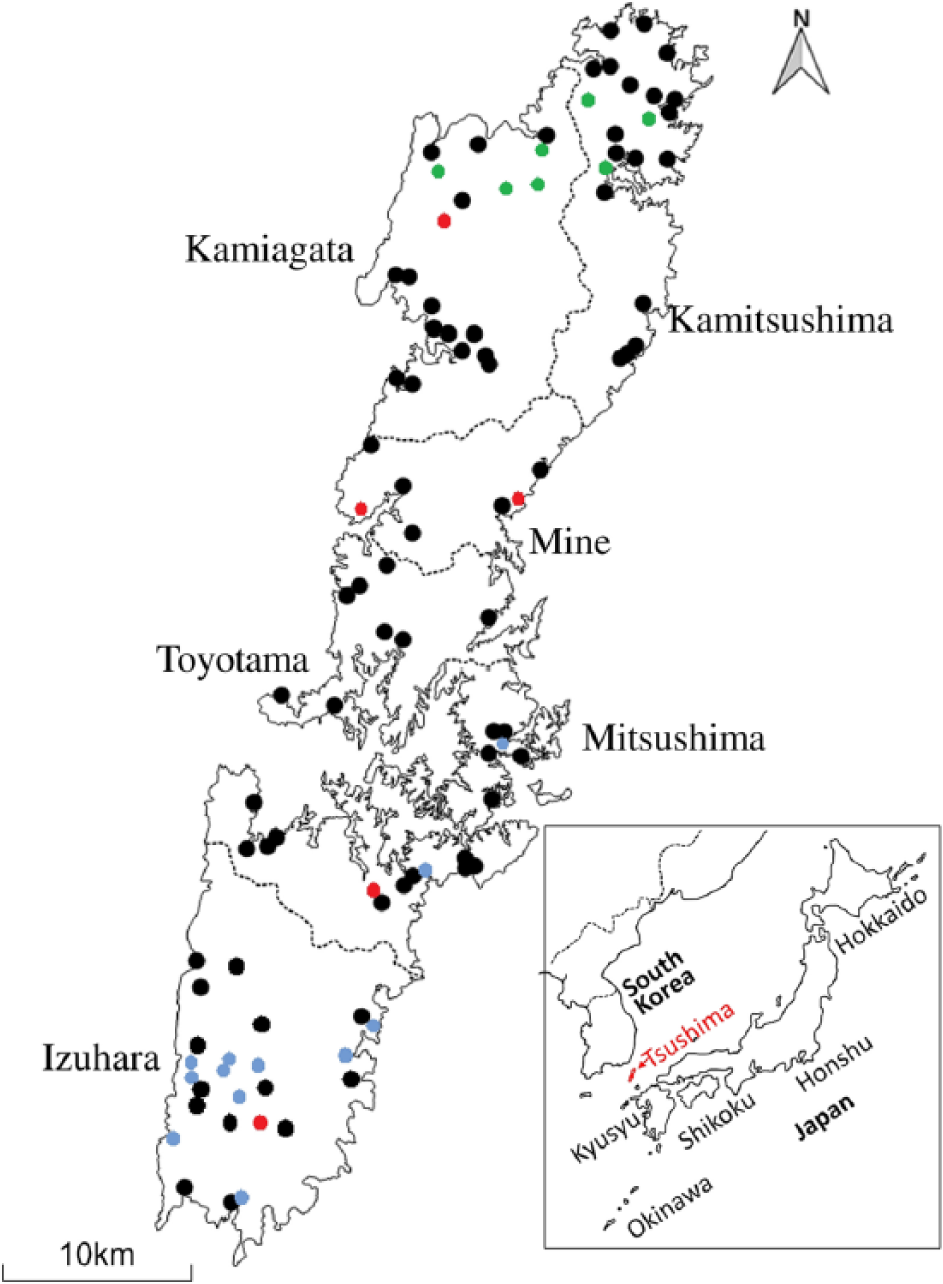
Map of Tsushima Island and sites of blood sampling from Tsushima domestic cats (TDCs). Black dots indicate the sites of blood sampling from TDCs. Sites of detection of feline leukemia virus (FeLV)-positive domestic cats with undetermined FeLV genotypes are shown in red; sites of TDCs with FeLV genotype I/clade 3-1 are shown in green; sites of TDCs with FeLV genotype I/clade 3-2 are shown in blue. Location of Tsushima Island is shown in the box.
Several factors increase the extinction risk for endangered species, including habitat loss, overexploitation, and infectious diseases. 10 The interspecies transmission of disease-causing organisms from feral domestic cats to TLCs has previously been reported. For example, TLCs have been shown to be infected with Bartonella clarridgeiae, Anaplasma bovis, and Hepatozoon felis, with prevalences of 8%, 15%, and 100%, respectively.25,26 TLCs have also been infected by feline immunodeficiency virus (FIV), derived from Tsushima domestic cats (TDCs).9,17
Species Feline leukemia virus (FeLV; family Retroviridae, subfamily Orthoretrovirinae, genus Gammaretrovirus) is transmitted horizontally among domestic cats. FeLV can cause lymphoma, leukemia, myelodysplastic syndrome, aplastic anemia, and immunodeficiency in domestic cats, and FeLV-infected cats have a poor prognosis. 8 FeLV has been reported to infect wildlife.2 –5,7,15,19,20,22,24
We investigated the FeLV infection in domestic cats and the TLCs on Tsushima Island and established a management strategy to avoid FeLV infection of TLCs. We used a cell-culture infection assay to determine the potential cross-species transmission of FeLV from domestic cats to TLCs. There have been no reports of the incidence of FeLV infection in this region. Understanding the FeLV infection status of domestic cats on Tsushima Island is a necessary part of the current ongoing strategy for the surveillance and management of TLCs.
Animal studies were conducted in accordance with the guidelines for the Care and Use of Laboratory Animals of the Ministry of Education, Culture, Sports, Science and Technology, Japan. We obtained 438 blood samples from domestic cats that were collected by the Tsushima Animal Medical Center, a nonprofit animal hospital on the island. Domestic cats living indoors and outdoors were brought by their owners to the center between 2009 and 2015. Samples were screened for FeLV infections (SNAP FeLV/FIV combo kit, IDEXX Laboratories, Westbrook, ME). FeLV antigen was detected in 28 of 438 domestic cats (Table 1), with a prevalence of 3.1% (10 of 327) in the Kamijima region and 16.2% (18 of 111) in the Shimojima region. Age, sex, and other basic background data of the FeLV-positive cats are given in Table 2. Most of the FeLV-positive cats were strays or had access to the outdoors.
Detection of feline leukemia virus in various regions of Tsushima Island, Japan.

Age, sex, and other basic background data for the FeLV-positive cats.
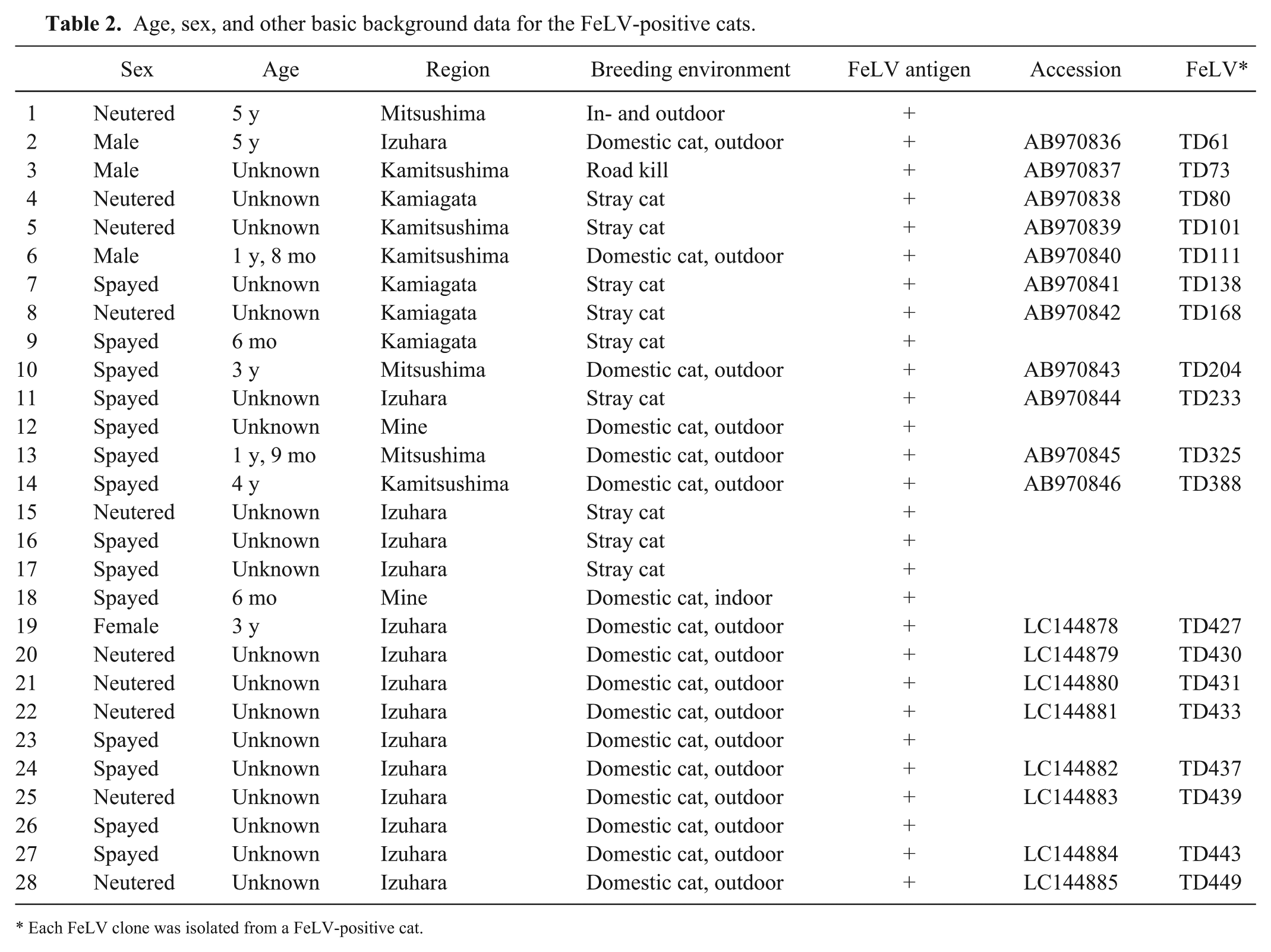
Each FeLV clone was isolated from a FeLV-positive cat.
To determine the FeLV genotypes in the FeLV-infected domestic cats, the FeLV env gene was amplified with PCR using specific primers (Supplementary Table 1) from the chromosomal DNA extracted from the blood samples. 27 DNA was extracted with commercial kits (Dr. GenTLE System, Takara Bio, Kyoto, Japan; DNAzol reagent, Life Technologies Japan, Tokyo, Japan). The env gene was amplified in 19 of the 28 FeLV-positive cats (Table 2). The PCR amplicon, ~1.9 kb in length, was cloned into vectors (pBlueScript II KS(-), Agilent Technologies, Santa Clara, CA; pCR4Blunt or pCR-Blunt, Invitrogen, Carlsbad, CA) and sequenced. A phylogenetic analysis of the env gene classified the FeLV isolates found on Tsushima Island as genotype I/clade 3 (GI/3; Fig. 2A), and the isolates were closely related to the prevalent strains on nearby Kyushu, the third largest island of Japan and the most southwesterly of the 4 main Japanese islands. A phylogenetic tree was constructed with the GI/3 strains that are prevalent in Kyushu. We found that the 7 isolates from the Kamijima area of Tsushima Island were closely related to the epidemic strain in Saga and Fukuoka Prefectures, whereas the 12 isolates from the Shimojima area of Tsushima Island were closely related to the epidemic strain in Nagasaki and Fukuoka Prefectures (Fig. 2B). These results indicate that the viral strains on Tsushima Island form 2 lineages (clade 3-1 and clade 3-2 within FeLV GI/3) and that these 2 lineages are geographically separated in Kamijima and Shimojima, respectively.
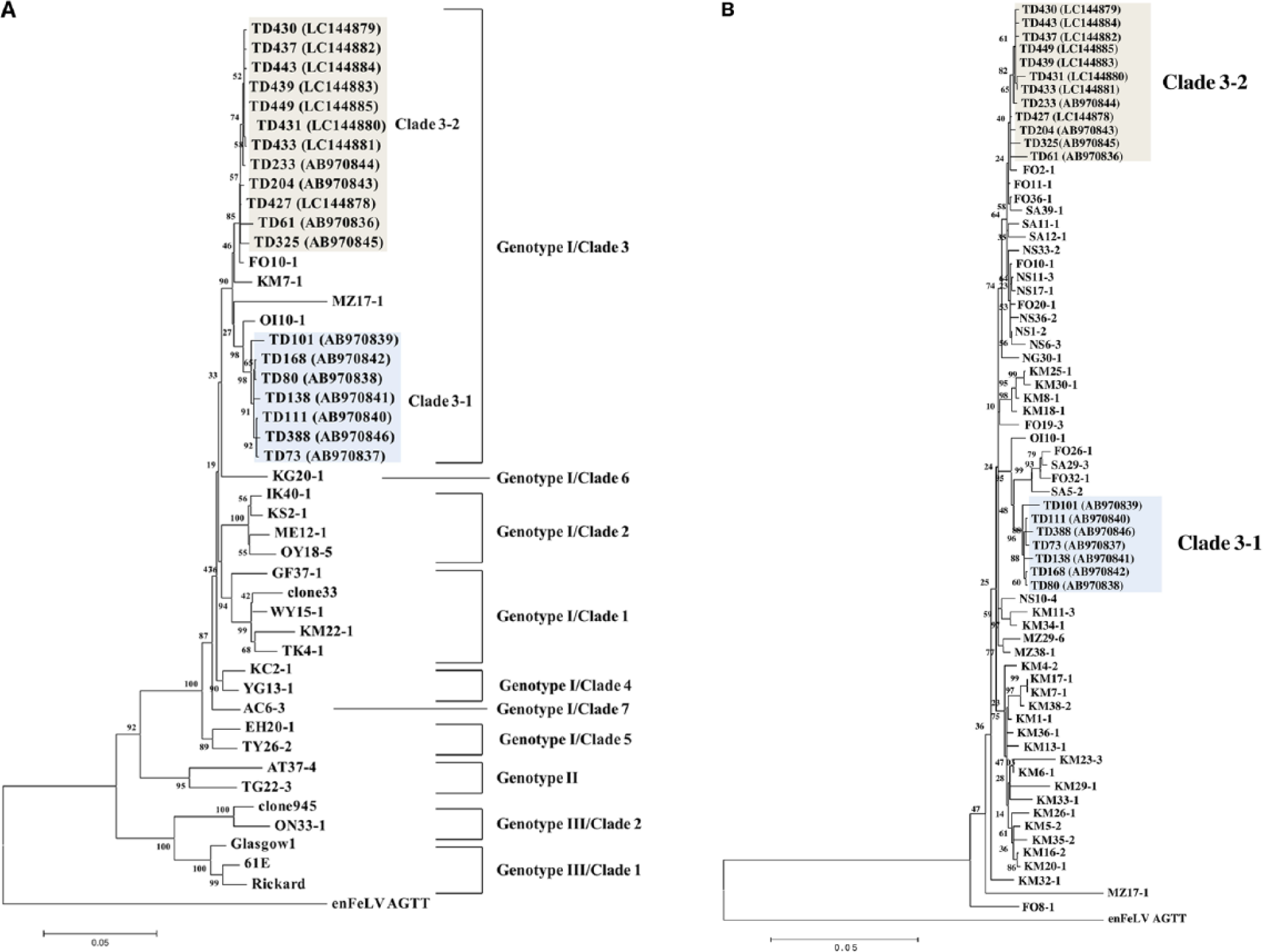
Maximum likelihood tree constructed from a phylogenetic analysis of near-full-length feline leukemia virus (FeLV) env nucleotide sequences encoding the surface and transmembrane regions of the protein (FeLV-A 61E, positions 6080–7885; DNA accession M18247). Phylogenetic trees were constructed with the maximum likelihood method
6
with the best-fit model (TN93+G, Fig. 2A; GTR+G, Fig. 2B) and 1,000 bootstrap replicates in MEGA5.13,23
We then investigated FeLV infection rates in TLCs (90 cats in total) collected between 1999 and 2014. The majority of TLCs had been hit by vehicles (road kills), and FeLV infections were detected with a blood test (SNAP FeLV/FIV combo kit, IDEXX Laboratories) and PCR12,27 using the chromosomal DNA from blood, spleen, and kidney samples. No FeLV antigen or gag or env gene was detected in any TLC sample with the commercial kit or PCR. When a different commercial kit was used to detect FeLV antigen in blood samples from the TLCs, only one TLC was positive for FeLV antigen. However, no FeLV was isolated from this TLC, and no FeLV provirus or anti-FeLV antibodies were detected (data not shown).
To determine whether FeLV potentially infects TLCs, we tested cultured cells for FeLV infection in vitro. Primary skin fibroblasts from TLCs were cultured in Dulbecco modified Eagle medium (Wako Pure Chemical Industries, Osaka, Japan) supplemented with 10% fetal calf serum (MP Biomedicals, Illkirch Cedex, France). The supernatants of 293Lac cells carrying a lacZ-encoding retroviral vector 14 and infected with FeLV-A/clone 33 16 or FeLV-B/Gardner–Arnstein 18 were used as the sources of replication-competent viruses carrying the lacZ gene. Skin fibroblast cells from TLCs were infected with the viruses for ~48 h, and viral infectivity was calculated as described previously. 1 The TLC fibroblast cells were susceptible to both viral strains at similar relatively high viral titers (Fig. 3A). PCR primers Fe-23S and Fe-48R (Supplementary Table 1) amplified a fragment of ~2.4 kb (i.e., the entire FeLV gag gene) 12 from the TLC skin fibroblasts infected with FeLV-A/clone 33 or FeLV-B/Gardner–Arnstein, but not from uninfected TLC skin fibroblasts (Fig. 3B). DNA sequencing confirmed that this primer pair amplified the exogenous FeLV gag sequence. To assess the viral replication in these cells, the supernatants of 293T cells infected with FeLV-A/clone 33 or FeLV-B/Gardner–Arnstein were used to infect skin fibroblast cells from TLCs. The FeLV envelope glycoprotein, gp70, was detected on days 3 and 7 postinfection by immune staining with an anti-FeLV-gp70 antibody (FeLV gp85/70 (C11D8), Santa Cruz Biotechnology, Dallas, TX; Fig. 3C), indicating that both FeLV-A and FeLV-B replicate in skin fibroblast cells.
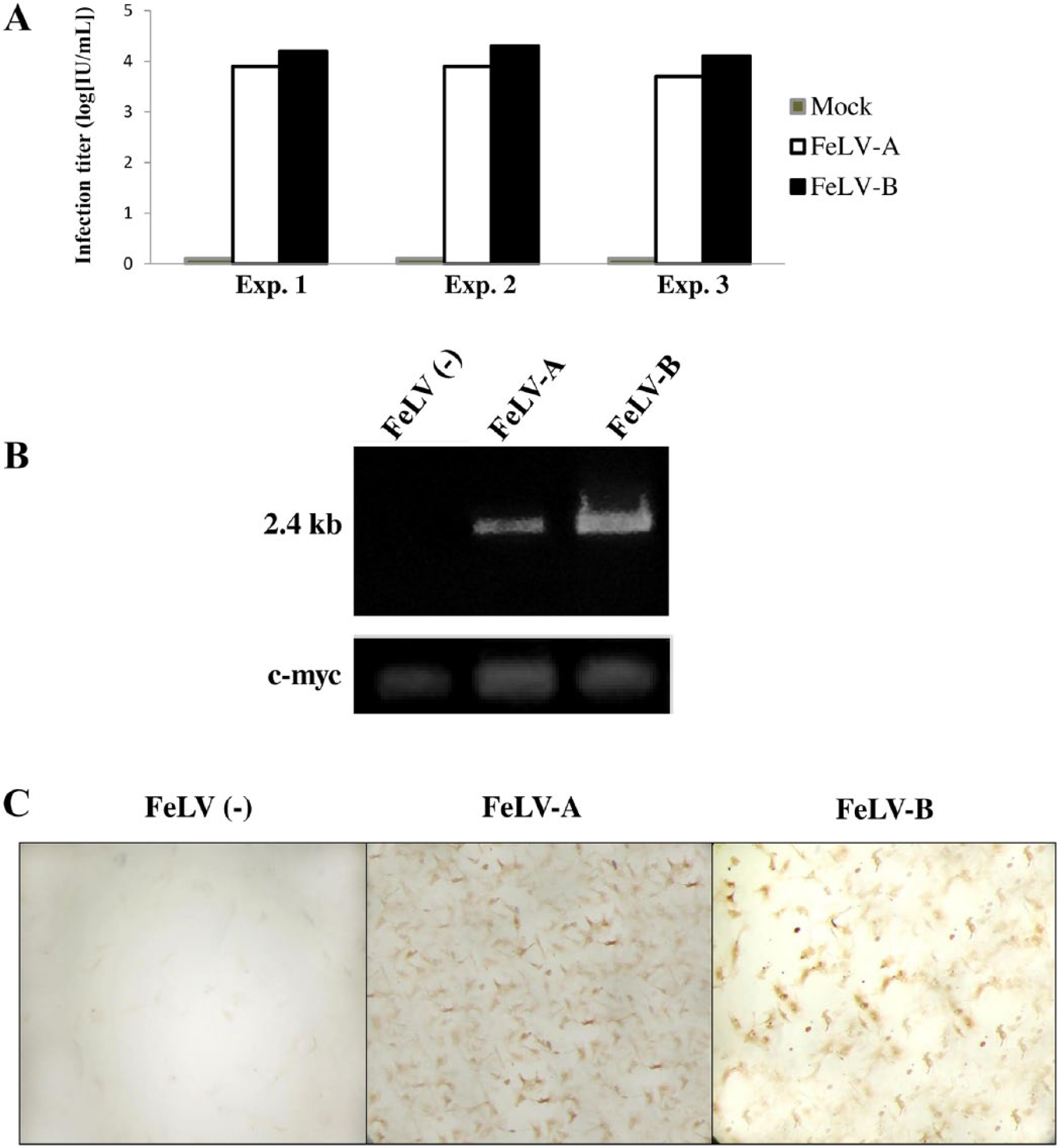
Feline leukemia virus (FeLV) infection of fibroblast cells from Tsushima leopard cats (TLCs).
The FeLV infections identified in domestic cats on Tsushima Island were all FeLV GI/3, which is widespread on Kyushu in Japan, indicating that the FeLV strains on Tsushima Island may have originated in Kyushu. The FeLV strains on Tsushima Island were clearly separated into 2 areas, Kamijima and Shimojima. GI/3-1 was found in Kamijima and GI/3-2 in Shimojima, suggesting that FeLV has been transmitted to Tsushima Island at least twice in the past. After the arrival of FeLV on Tsushima Island, the virus may have spread in each area. However, the exact time of arrival and the origins of these FeLV strains are unknown. Transportation to Tsushima Island is by ship and airplane. Air transport moves between Tsushima airport and Fukuoka and Nagasaki airports, and sea routes link the ports of Hitakatsu and Izuhara on Tsushima to the port of Hakata in Fukuoka. The viruses isolated from some cats on Tsushima Island are the same genotype and clade as those observed in the nearby Kyushu region, which together with the available means of transportation, suggests the transmission of FeLV between Kyushu and Tsushima Island.
The FeLV strains currently present on Tsushima Island are of 2 types, located in different geographic regions. This observation extends our understanding of the epidemiology of FeLV infection on Tsushima Island. In particular, our analysis of the FeLV genotypes suggests that the virus originated outside the island. It is important to continue monitoring FeLV infections and to determine the viral genotypes.
The possibility of FeLV transmission from South Korea must also be considered because ferries operate between the 2 regions. Although the transportation of pets and live animals via ferry is subject to restrictions, such as the international certification of animal movements, the possibility of FeLV transmission cannot be ruled out. To date, the molecular epidemiology and characterization of FeLV in South Korea have not been reported.
We demonstrated in our study that FeLV can replicate in TLC cells, suggesting potential cross-species transmission (Fig. 3). We used the prototype FeLV-A for the cell-culture infection assay because this virus has been detected in all naturally infected cats and because FeLV-A is considered the most transmissible form of FeLV. 8 In contrast, FeLV-B displays a broader host range in vitro. 11 We also investigated FeLV infections (based on antigen and PCR detection) in TLCs in our laboratory, but found no positive cases. However, the maintenance of this virus in domestic cats significantly endangers the health and survival of TLCs on the island.
The close proximity of households with domestic animals to the local wildlife can facilitate the transmission of disease both from domestic animals to wildlife and vice versa. Domestic dogs and cats are known to be susceptible to many infectious agents, including canine distemper virus (CDV), canine parvovirus, Echinococcus granulosus, Toxoplasma gondii, and rabies virus. In 1994, a CDV epidemic in Tanzania’s Serengeti ecosystem not only caused the death of ~30% of Serengeti lions, but also affected other free-ranging canids and felids. The domestic dogs of local villages living near the National Park were implicated as the source of this deadly virus. 21
Because most of Tsushima Island is private land, the cooperation of landowners is essential in preventing the spread of FeLV. In particular, cat owners keeping their cats indoors will reduce the possibility of contact between infected domestic cats and TLCs. Cat owners are also advised to adhere to feline vaccination programs and should consider routine FeLV tests. Monitoring the TLC population for FeLV is highly recommended as part of the surveillance and management strategy for TLCs. This study extends our awareness of factors involved in the transmission and spread of FeLV, which is important because the measures required to control disease in wild populations can be challenging.
The nucleotide sequences newly reported in our study are available in the DDBJ, EMBL, and GenBank nucleotide sequence databases under accessions AB970836–AB970846, and LC144878–LC144885. The nucleotide sequences used to construct the phylogenetic trees are listed in Supplementary Table 2.
Footnotes
Declaration of conflicting interests
The authors declared no potential conflicts of interest with respect to the research, authorship, and/or publication of this article.
Funding
This study was supported by the Japanese Society for the Promotion of Science, KAKENHI, grant 15H04602.
References
Supplementary Material
Please find the following supplemental material available below.
For Open Access articles published under a Creative Commons License, all supplemental material carries the same license as the article it is associated with.
For non-Open Access articles published, all supplemental material carries a non-exclusive license, and permission requests for re-use of supplemental material or any part of supplemental material shall be sent directly to the copyright owner as specified in the copyright notice associated with the article.
