




Abstract
Due to relatively high concentrations of immunoglobulins, colostrum has the potential to improve the sensitivity of diagnostic tests for diseases in pigs when compared with serum. It is possible that colostrum could improve the sensitivity of the antibody enzyme-linked immunosorbent assay (ELISA) compared with serum. Colostrum is also essential for piglets, providing protection against infections in the first few weeks and months of life. The sensitivity of 2 commercially available ELISAs, one for the detection of Erysipelothrix rhusiopathiae and the second for Mycoplasma hyopneumoniae antibodies, when used with sow colostrum in comparison with serum was investigated. The correlation of maternal E. rhusiopathiae– and M. hyopneumoniae–specific antibody levels with specific-antibody serum levels in the piglet was also determined. The sensitivity was defined as the proportion of vaccinated sows that were correctly identified as vaccinated at a given cutoff point. The true disease status of the sows with regard to the 2 infections was unknown. Blood and colostrum samples were collected from 20 sows, 10 primiparous and 10 multiparous, and blood samples were also collected from the piglets of each sow, 48–72 hr post-farrowing. The sensitivities of both ELISAs were significantly improved when using colostrum compared with serum. Sow serum and colostrum optical density (OD) values were significantly correlated. The mean sow OD values for serum for E. rhusiopathiae and M. hyopneumoniae and colostrum for E. rhusiopathiae were significantly correlated with piglet serum OD levels. If the improved sensitivity of colostrum can be demonstrated in infected animals, this will increase the ability of the test to identify infected animals using both individual and pooled colostrum. Testing serum and/or colostrum using ELISA can be useful predictors of piglet disease–specific OD values.
Erysipelothrix rhusiopathiae and Mycoplasma hyopneumoniae are 2 infections of swine that can cause significant production losses to the pig industry worldwide.2,4 Infection with E. rhusiopathiae causes urticarial lesions, septicemia, and chronic endocarditis, 1 while infection with M. hyopneumoniae causes retarded growth and a predisposition to other bacterial pulmonary infections. 5 The sensitivity of enzyme-linked immunosorbent assays (ELISAs) for the detection of antibodies specific for E. rhusiopathiae and M. hyopneumoniae may be improved by testing colostrum rather than serum or milk samples, as immunoglobulin G (IgG) concentrations in sow colostrum can be 2.5–3 times higher compared with serum, and 5 times higher compared with milk. 3 As the absorption of colostral Igs in the piglet is nonspecific, 1 the concentrations of Igs in the piglet circulation resemble those of the sow. Hence, sow serum and/or colostrum may be useful predictors of piglet disease–specific antibody concentrations. There were 2 aims to the current study: 1) to measure and compare the relative sensitivities of ELISA to determine the vaccination status of a group of sows when using serum and colostrum and 2) to determine if maternal ELISA optical density (OD) values for serum and colostrum were correlated, as well as being correlated with ELISA OD values in piglet serum.
The piggery was a commercial, intensive pig herd that housed breeding sows, weaners, growers, and finishers on a single site. The vaccination protocol for the herd was as follows. A M. hyopneumoniae vaccine a was administered to all piglets at 3 days of age. An E. rhusiopathiae vaccine b was administered to primiparous (PP) sows at 23 weeks old followed by a booster at 27 weeks of age. The same E. rhusiopathiae vaccine was also administered to all PP and multiparous (MP) sows at 12 weeks gestation. Ten PP and 10 MP sows were selected from the herd based on sequential farrowing dates. The disease status of the herd was unknown at the time of sampling.
The sow colostrum samples were collected from randomly selected teats within 12 hr of farrowing, and the sow blood samples were collected from the jugular vein at weaning (28 days post-farrowing). All of the blood samples were centrifuged to separate the serum. The serum and colostrum samples were stored at −80°C until testing could be performed.
The serum and colostrum samples were tested using 2 commercially available ELISA kits that detect E. rhusiopathiae c – and M. hyopneumoniae d –specific antibodies. The sow samples tested using the E. rhusiopathiae ELISA were diluted 1:200, 1:400, and 1:800, and the piglet serum samples were diluted 1:200 using the diluent supplied with the ELISA kit. The sow samples tested using the M. hyopneumoniae ELISA (a blocking ELISA) were diluted 1:2, 1:50, and 1:100, and the piglet serum samples were diluted 1:2 using the diluent supplied with the ELISA kit. All samples were tested in triplicate and results expressed as corrected OD.
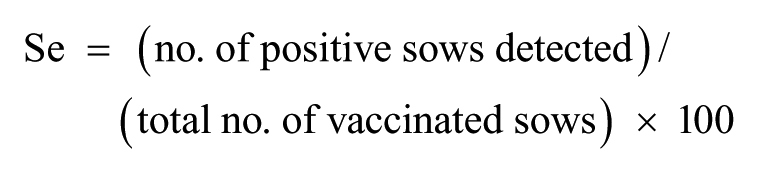
Sensitivity (Se) ± 95% confidence intervals was determined for each sample type (serum and colostrum) at each of 15 OD threshold values, using the following equation:
Descriptive statistics were performed to determine whether data was normally distributed. A Student’s paired t-test was used to identify any significant differences between samples and dilutions. Sensitivity and 95% confidence intervals were calculated for each sow sample (serum and colostrum), at each dilution. The variables of sow serum OD and sow colostrum OD were assessed for significance in relation to piglet serum OD using a multi-variable linear regression analysis with a backward stepwise elimination of nonsignificant factors (P > 0.05). Predictive models for piglet serum OD concentrations were developed using the results of the regression analysis. All statistical analyses were performed using the statistics program R (version 3.0.2; www.R-project.org/).
The median OD values for serum and colostrum for each ELISA are presented in Tables 1 and 2.The Se of both serum and colostrum, when using the E. rhusiopathiae ELISA, decreased with an increase in OD threshold. Using the recommended dilution for serum (1:200), the Se for colostrum (PP and MP sows) was significantly higher compared with serum (PP and MP sows), from an OD threshold of 0.2 (Fig. 1A). The Se of serum reached 0% by an OD threshold of 0.8. At this same threshold, the Se of colostrum was 25%, and did not reach 0% until an OD threshold of 1.4 (Fig. 1A). While PP sow colostrum reached 0% Se at an OD threshold of 1.2, the MP sow colostrum reached 0% Se at an OD threshold of 1.4 (Fig. 1B). The MP sow colostrum Se was significantly higher compared with PP sow colostrum Se, but only at OD thresholds of 0.3, 0.5, 0.6, 0.7, 1.1, 1.2, 1.3, and 1.4 (Fig. 1B). The largest difference in Se between MP sow colostrum and PP sow colostrum was at an OD threshold of 0.3, where there were observed Se values of 90% and 60%, respectively (Fig. 1B). The PP sow serum reached 0% Se at an OD threshold of 0.6, while MP sow serum reached 0% Se at an OD threshold of 0.8. MP sow serum Se was significantly higher compared with PP sow serum Se for all thresholds except for an OD threshold of 0.4 (Fig. 1B).
Comparisons between mean ± standard error optical density results, in an enzyme-linked immunosorbent assay for Erysipelothrix rhusiopathiae antibodies for serum and colostrum collected from primiparous and multiparous sows vaccinated against E. rhusiopathiae using a Student paired t-test.†
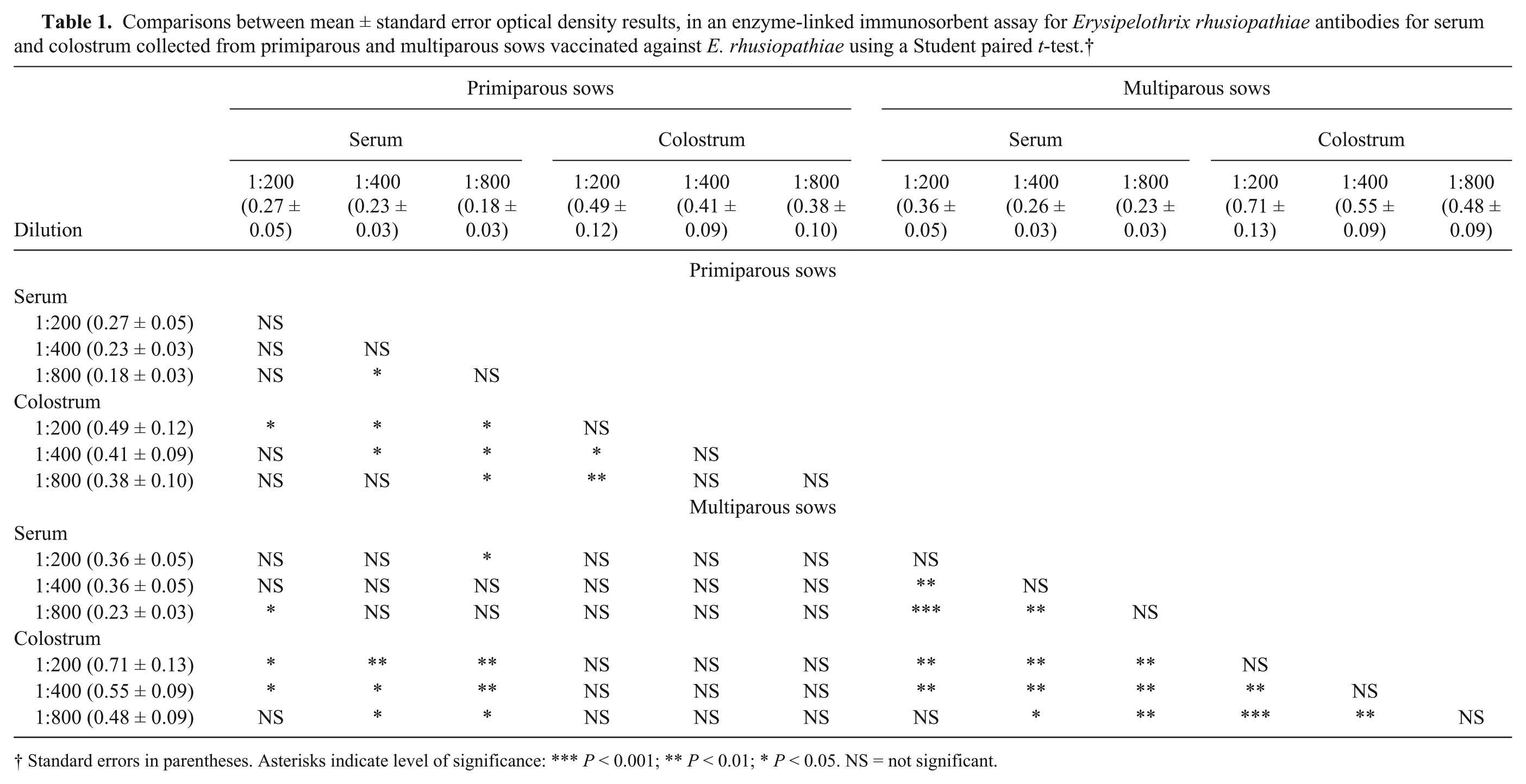
Standard errors in parentheses. Asterisks indicate level of significance: *** P < 0.001; ** P < 0.01; * P < 0.05. NS = not significant.
Comparisons between mean ± standard error optical density results, in an enzyme-linked immunosorbent assay for Mycoplasma hyopneumoniae antibodies for serum and colostrum collected from primiparous and multiparous sows vaccinated against M. hyopneumoniae using a Student paired t-test.†
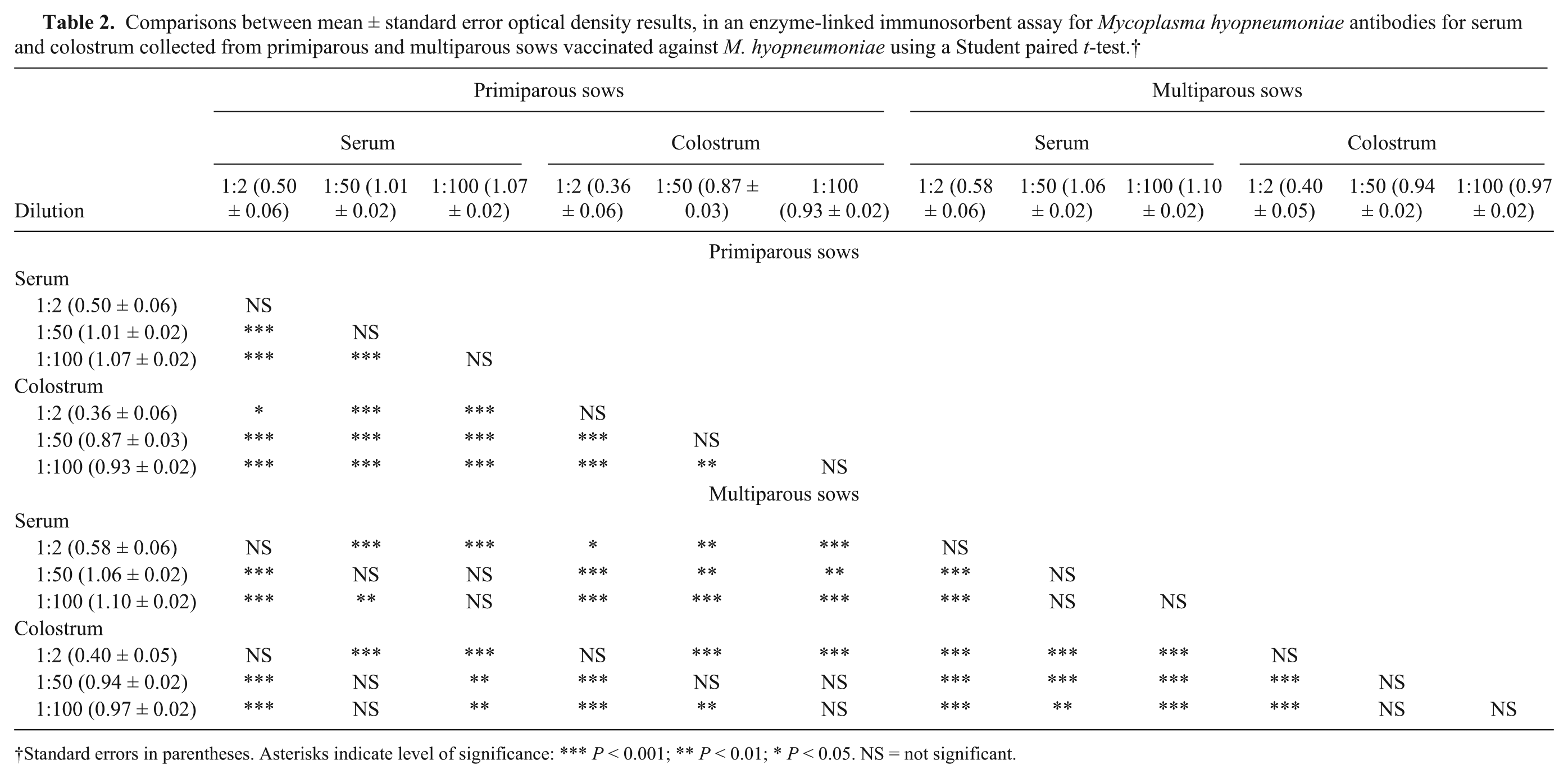
Standard errors in parentheses. Asterisks indicate level of significance: *** P < 0.001; ** P < 0.01; * P < 0.05. NS = not significant.
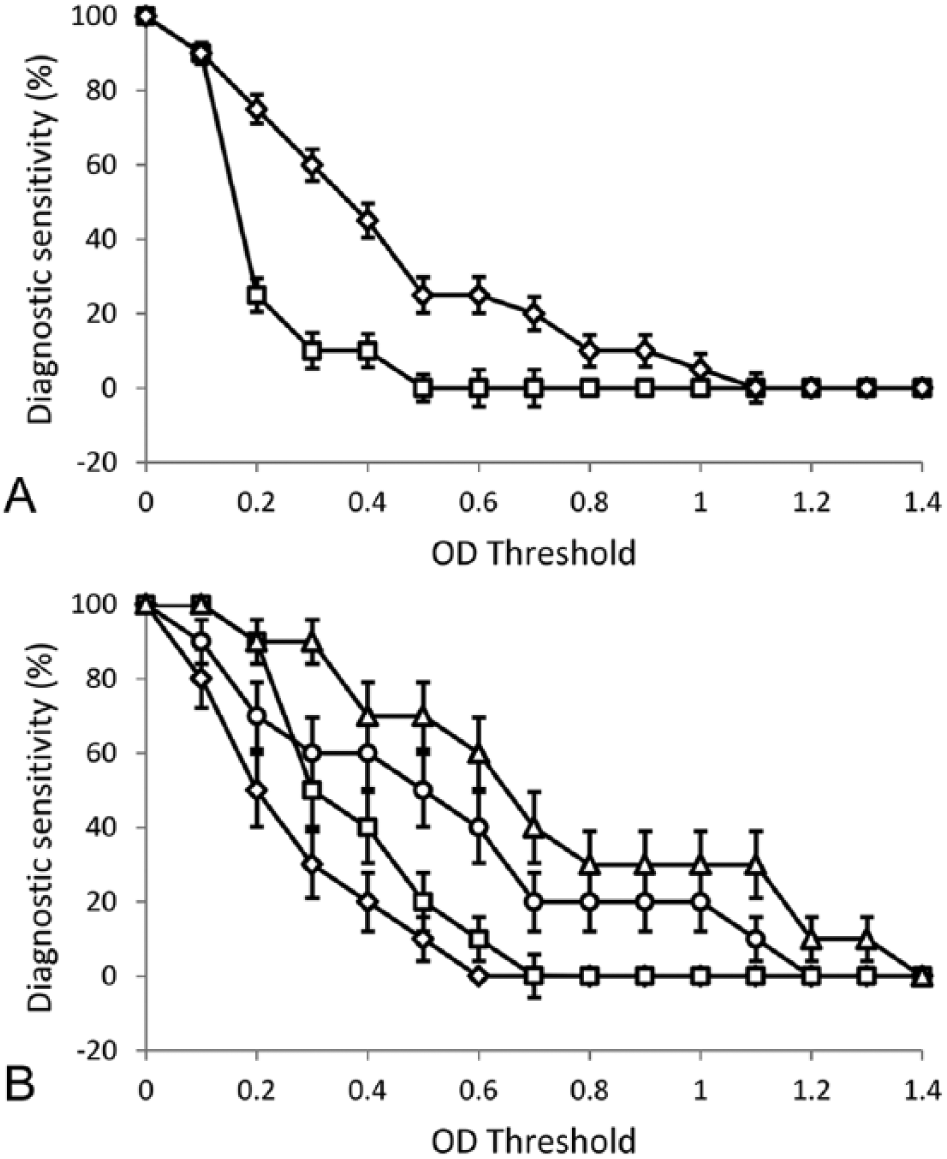
Sensitivity ± 95% confidence intervals for (
The Se of both serum and colostrum, when using the M. hyopneumoniae ELISA, increased with an increase in OD threshold. Using the recommended dilution for serum (1:2), the Se for sow colostrum (PP and MP sows) was significantly higher compared with sow serum (PP and MP sows) for all OD thresholds from a OD threshold of 0.2 (Fig. 2A). The Se of colostrum reached 100% at an OD threshold of 0.7, while the Se of serum reached 100% at an OD threshold of 0.9 (Fig. 2A). The largest difference in Se between sow serum and sow colostrum was at an OD threshold of 0.4, where the observed Se was 20% and 55%, respectively (Fig. 2A). Both PP sow serum and MP sow serum reached 100% Se at an OD threshold of 0.9. The PP sow colostrum reached 100% Se at an OD threshold of 0.6, while MP sow colostrum reached 100% Se at an OD threshold of 0.7 (Fig. 2B). The PP sow colostrum had a significantly higher Se compared with MP sow colostrum only at OD thresholds of 0.2 and 0.6, while MP sow serum had a significantly higher Se compared with PP sow serum at OD thresholds of 0.4 and 0.6 (Fig. 2B).
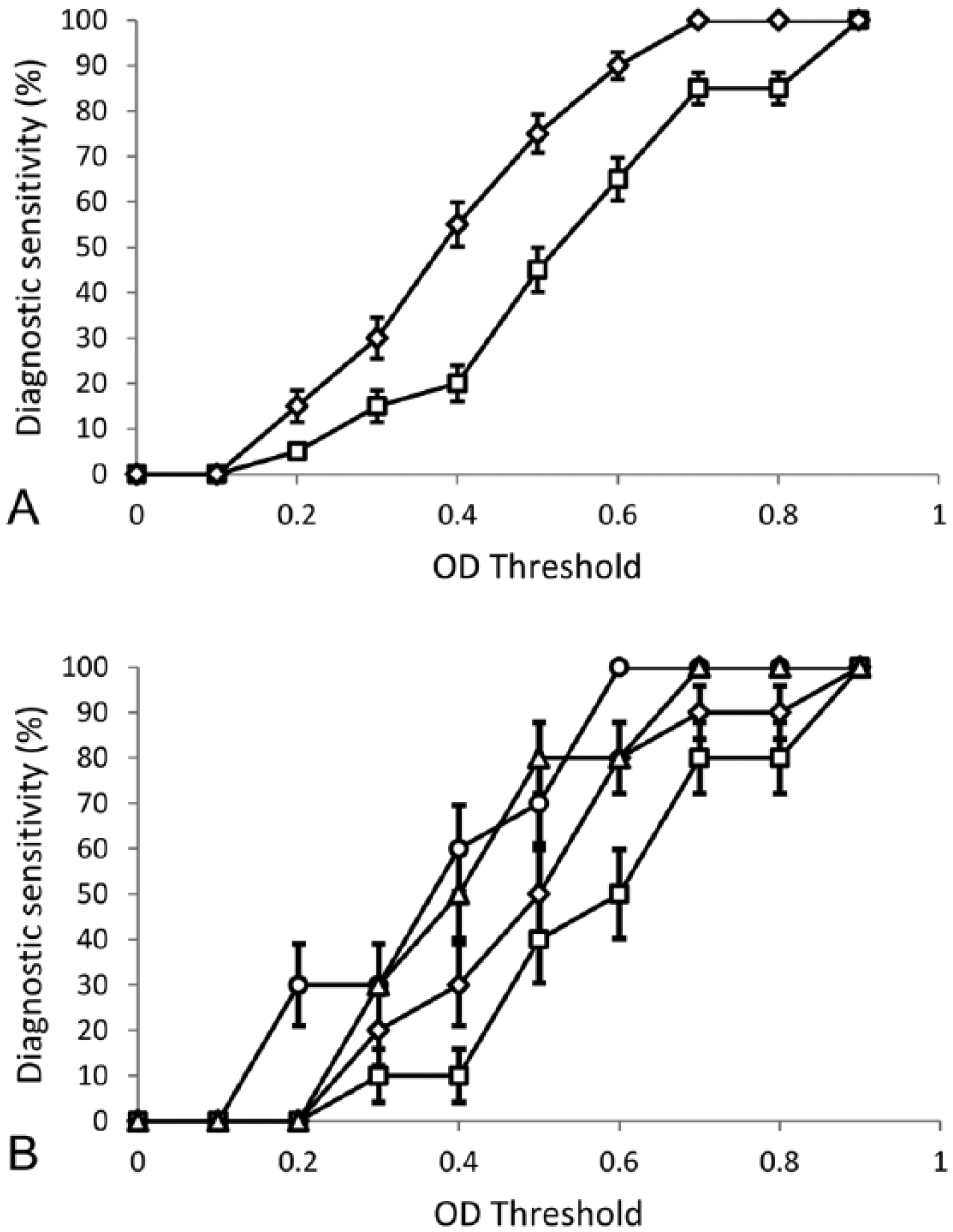
Sensitivity ± 95% confidence intervals for (
In the correlation analysis, sow colostrum OD values were significantly different and moderately correlated with sow serum OD values, for both diseases and all dilutions (Table 3). Using the E. rhusiopathiae ELISA, sow colostrum OD (P < 0.001) and sow serum OD (P < 0.05) were both significantly associated with piglet serum OD. The multiple R2 and P values for the model were 0.64 and <0.001, respectively. The linear regression analysis was used to develop a model to predict piglet serum OD, using the equations:
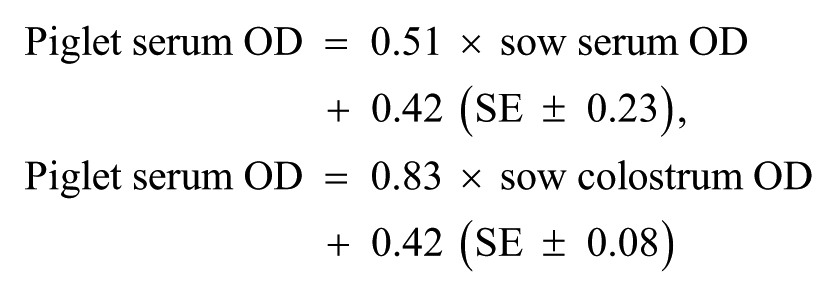
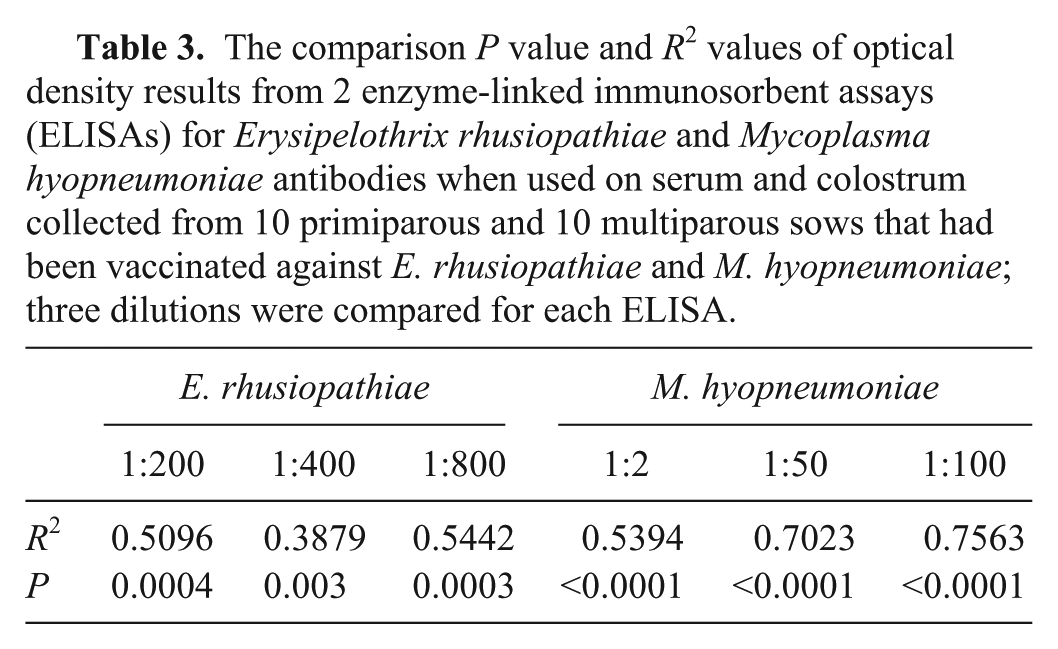
For a combined increase in sow serum and colostrum of 0.2 OD, the model predicted an increase of 0.69 OD in piglet serum (Fig. 3A).
The comparison P value and R2 values of optical density results from 2 enzyme-linked immunosorbent assays (ELISAs) for Erysipelothrix rhusiopathiae and Mycoplasma hyopneumoniae antibodies when used on serum and colostrum collected from 10 primiparous and 10 multiparous sows that had been vaccinated against E. rhusiopathiae and M. hyopneumoniae; three dilutions were compared for each ELISA.
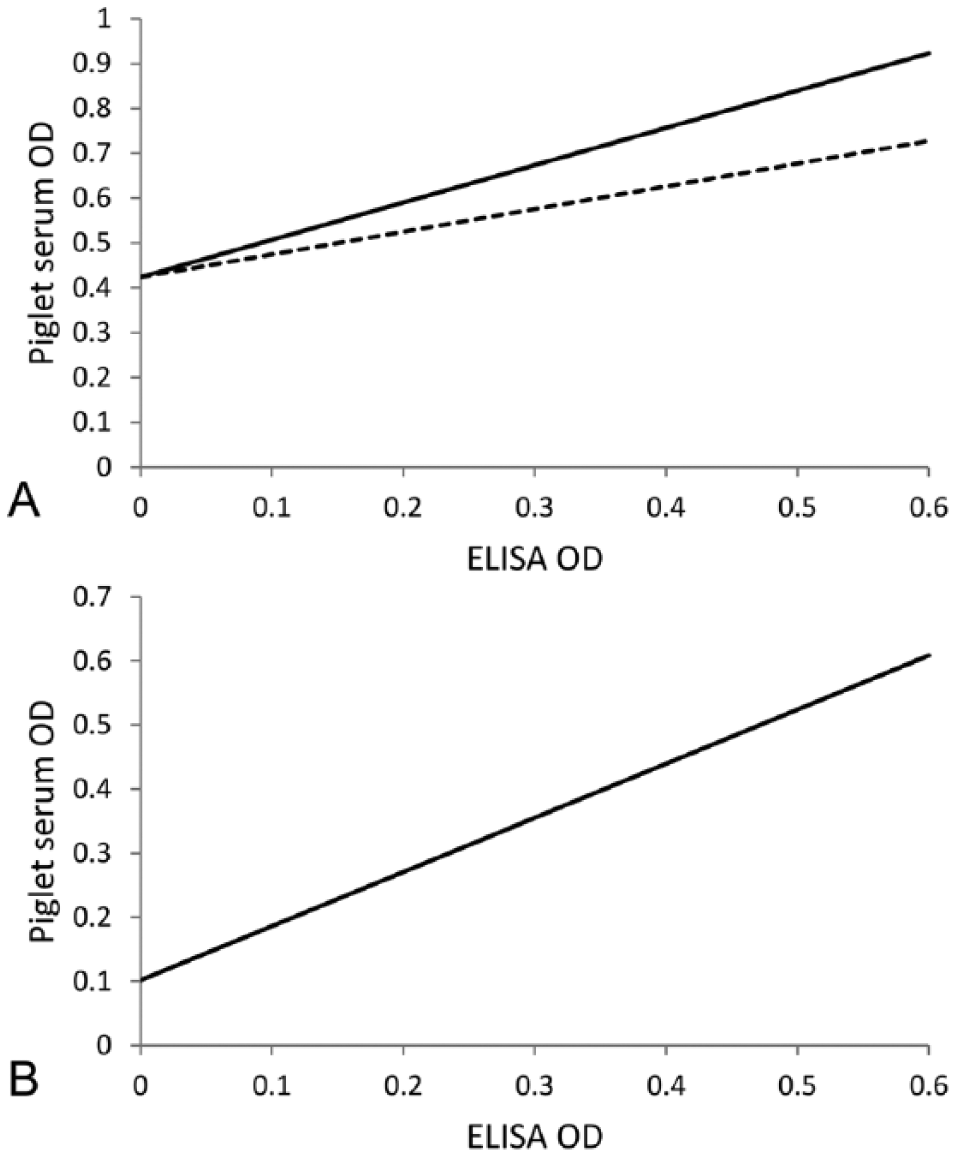
Using the M. hyopneumoniae ELISA, sow colostrum OD (P < 0.001) was significantly associated with piglet serum OD. The multiple R2 and P values for the model were 0.53 and <0.001, respectively. The linear regression analysis was used to develop a model to predict piglet serum OD, using the following equation:

For an increase in sow colostrum of 0.2 OD, the model predicted an increase of 0.27 OD in piglet serum (Fig. 3B).
The Se of both ELISAs in this study was increased when using colostrum compared with serum for all sows. The Se was also increased when the sows were split by parity (PP and MP sows). In the current study, the observed Se of the ELISA (recommended positive OD threshold 0.5) when testing colostrum for M. hyopneumoniae–specific antibodies was 75%, and was significantly higher compared with the Se for serum (45%). When testing the same samples for E. rhusiopathiae–specific antibodies in the current study, the observed Se of the ELISA (recommended positive OD threshold 0.3) when testing colostrum was 60%, which was also significantly higher compared with serum (10%).
Piglet serum OD was significantly associated with sow serum OD and sow colostrum OD (E. rhusiopathiae), and with sow colostrum OD (M. hyopneumoniae). During colostrogenesis, concentrations of Igs in colostrum are significantly higher than what can be found in circulating maternal blood. 2 The significant association between piglet serum OD and sow colostrum OD in this study was consistent with a previous study. 1
The improved detection of vaccinated animals by examination of colostrum as compared with serum indicates that there is potential to improve the detection of infected animals within a population, or increase the assurance of absence of disease, by using colostrum. As this study was conducted on a herd of unknown disease status, follow-up studies should investigate whether similar results can be achieved when using confirmed infected animals. The specificity of the ELISA when using colostrum also still needs to be investigated. The current study also demonstrated that testing serum and/or colostrum using ELISA can be useful predictors of piglet disease–specific OD values. These results also highlighted the importance of optimizing vaccination protocols to achieve high disease-specific antibody levels in the sow colostrum at parturition, which will enhance piglet serum levels.
Footnotes
Acknowledgements
The authors would like to thank staff at the Roseworthy Piggery and Michael Zalunardo of Asure Quality for their technical assistance.
a.
Respisure One, Zoetis, Rhodes, New South Wales, Australia.
b.
Eryvac, Zoetis, Rhodes, New South Wales, Australia.
c.
Ingezim Mal Rojo Indirect ELISA, Ingenasa, Madrid, Spain.
d.
Ingezim M.Hyo Compac Blocking ELISA, Ingenasa, Madrid, Spain.
Declaration of conflicting interests
The author(s) declared no potential conflicts of interest with respect to the research, authorship, and/or publication of this article.
Funding
The author(s) disclosed receipt of the following financial support for the research, authorship, and/or publication of this article: This research was funded by the Pork CRC.