




Abstract
The poisoning of wildlife with fly-bait containing the active ingredient methomyl is an intentional and illegal act in many jurisdictions. A case of 2 animals poisoned by methomyl through consumption of tainted bait at multiple stations is described. Although thermally and ultraviolet-labile, methomyl can be identified by gas chromatography–mass spectrometry and is detected in abundance in bait samples; however, it is not readily observed in tissues, owing to its rapid metabolism and elimination. The application of derivatizing functionalities, such as trimethylsilyl groups, stabilizes the methomyl-oxime metabolite to facilitate its detectability during exposure to the relatively harsh conditions of gas chromatography. This brief communication reports on the analytical detection of methomyl in baits and biological samples from poisoned wildlife. Essential to the case were the added determination of a fly-bait coactive ingredient, (Z)-9-tricosene, and identification of a chemical indicator, caffeine, to confirm both the type of pesticide product involved in the poisoning incident and the vehicle used to perpetrate its delivery.
Methomyl (S-methyl-N-[(methylcarbamyl)oxythioacetamide]) is a broad-spectrum carbamate insecticide that has been used in production agriculture since the mid-1960s.4,13 According to the National Pesticide Information Retrieval System, there are currently 9 products containing the active ingredient methomyl registered for use in the State of Michigan for the year 2013. The 1998 Environmental Protection Agency Reregistration Eligibility Decision for Methomyl classified products with greater than 1% active ingredient labeled for crop use as restricted-use pesticides (i.e., for professional use only), whereas methomyl products labeled for noncrop use (i.e., fly-baits) with 1% active ingredient concentrations were classified as general use. Fly-bait products are labeled for use in specific nonresidential locations both as “scatter bait,” where users scatter loose bait on the ground in areas where children and pets will not be present, and in bait stations. All registered fly-bait products are formulated with the coactive ingredient muscamone [(Z)-9-tricosene], an insect pheromone, irrespective of the primary active ingredient.
Carbamate pesticides are generally considered less toxic than organophosphate insecticides because they bind less strongly to, and only reversibly inhibit, acetylcholinesterase enzymes. Additionally, carbamate pesticides are rapidly metabolized and excreted, and hence do not accumulate in organ tissues. 1 However, acute poisonings do occur and may be accompanied by symptoms including drowsiness, sialorrhea, diarrhea, tremors, and death due to paralysis of respiratory muscles. 3 Methomyl is considered a highly toxic compound with an oral median lethal dose (LD50) of 12–48 mg/kg in rats. 1
Carbamates are the most common class of pesticides involved in animal poisonings in Europe and the United States.2,14 Animals such as birds of prey and predatory mammals are exposed to carbamate pesticides primarily through the consumption of contaminated carcasses, whereas nuisance wildlife and companion animals are generally exposed through the ingestion of pesticide-treated bait.4,7,9,12,14,15 It is important to state that intentional baiting of nuisance wildlife with pesticide products, unless clearly defined as an intended use by the label, is considered an off-label misuse and carries legal consequences.
In methomyl-poisoning events, the deceased animal is usually discovered in close proximity to the source. For this reason, baiting stations or carcasses may be readily identified and sampled by law enforcement and animal control officials for analytical toxicology screening. Equally important from a visual perspective is the coloring agent formulated into methomyl-containing fly-baits for aiding in identification. 11 Diagnostically, the bluish color imparted to stomach contents (Fig. 1) observed at necropsy is an informative clue to request analytical confirmation of either an acute pesticide or fertilizer poisoning. Because there are potential legal ramifications, it is imperative for the diagnostic laboratory to provide an approach that confirms and distinguishes methomyl in biological fluids and tissues from the deceased animal with that in bait material collected at the scene. The current report describes the diagnostic investigation of 2 fatal methomyl poisonings, with confirmation of exposures in stomach contents and bait by gas chromatography–mass spectrometry (GC-MS).
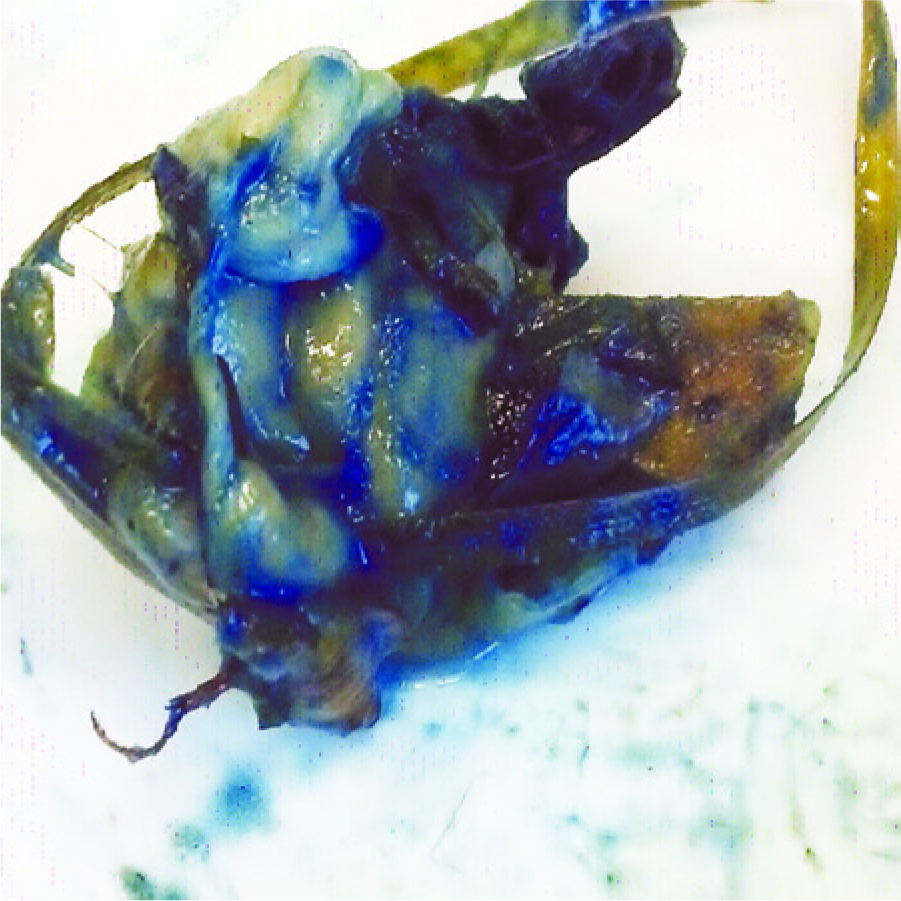
Overall blue coloration of stomach contents from the feral cat.
In June 2012, the death of an opossum and a feral cat were reported to local animal control officials by a concerned neighbor residing near a recently abandoned home. The deceased animals were discovered in the proximity of 3 bait stations in the abandoned home’s yard. One of the baits had the consistency of meat while the other 2 were bread-like. The carcasses and bait were submitted to the local animal hospital where the animals were each necropsied by the attending veterinarian. The individual baits as well as the stomach contents from each animal were all observed to have a bluish coloration. Accordingly, these samples were submitted for toxicological evaluation.
Based on the relative position of the deceased animals with respect to the bait stations, and the marked coloration of the bait and stomach contents, samples were broadly screened by GC-MS for toxicants, which included carbamate pesticides. 3 Specifically, 20 g of sample, 2 ml of a 20 µg/ml diphenylamine internal standard, and 300 ml of acetonitrile were combined, blended to homogeneity, and then filtered. The filtrate was transferred to a separatory funnel containing 10 ml of saturated sodium chloride solution, 600 ml of ultrapure water, and 100 ml of methylene chloride; extraction was performed by shaking and allowing the phases to separate. The organic phase (methylene chloride layer) was removed, and the extraction process was repeated with the remaining aqueous phase. The organic phases were combined and subsequently reduced to 1 ml prior to the addition of 3 ml of methylene chloride-to-cyclohexane solution (50:50) and subsequent filtering. Extracts were passed through a gel permeation chromatography column and reduced to 100 µl. An aliquot of 50 µl was transferred to an autosampler vial for direct analysis and the other 50-µl portion was transferred to a second autosampler vial with 25 µl of N,O-bis(trimethylsilyl) trifluoroacetamide (BSTFA) + trimethylchlorosilane (TMCS; 99:1) added for trimethylsilyl (TMS) derivatization. The derivative was heated to 70°C for 30 min prior to analysis. As the parent compound is thermally labile, methomyl was indirectly evaluated by analyzing methomyl-oxime, an alkaline hydrolysis product. Accordingly, a standard was created.5,10 Briefly, 1 ml of 100 µg/ml methomyl standard was added to 1 ml of 2 M sodium hydroxide and left at room temperature for 60 min. This was followed by the addition of 1.5 ml of 2 M hydrochloric acid to neutralize the solution. Derivatized and nonderivatized extracts were qualitatively analyzed by GC-MS on a 30 m × 0.25 mm × 0.25 µm column a in full-scan mode. Gas chromatography conditions were as described previously. 3
The methomyl parent compound was detected by GC-MS with a retention time of 12.1 min in a bait sample visually identified as “meat” (Fig. 2A) and another identified as “bread” (Fig. 2B). The meat had blue granules spread throughout, whereas it was inferred on visual inspection that the fly-bait had been first solubilized and then allowed to soak into the bread. The comparative mass spectral analysis of bait (Fig. 3A) to the library entry for methomyl (Fig. 3B) revealed consistent, and readily discernible, small molecular ions (M+) at mass-to-charge ratio (m/z) of 162, the reported base peak ion (m/z 105), and additional fragment ions (m/z 88 and 58). Paradoxically, focus on the underivatized molecular ions for methomyl (m/z 162; Fig. 4A, 4B) and its principal metabolite methomyl-oxime (m/z 105; Fig. 4C, 4D) revealed both of these compounds in the baits, but not in the animals’ stomach contents. There was clearly a disconnect between visual observations and the analytical findings.
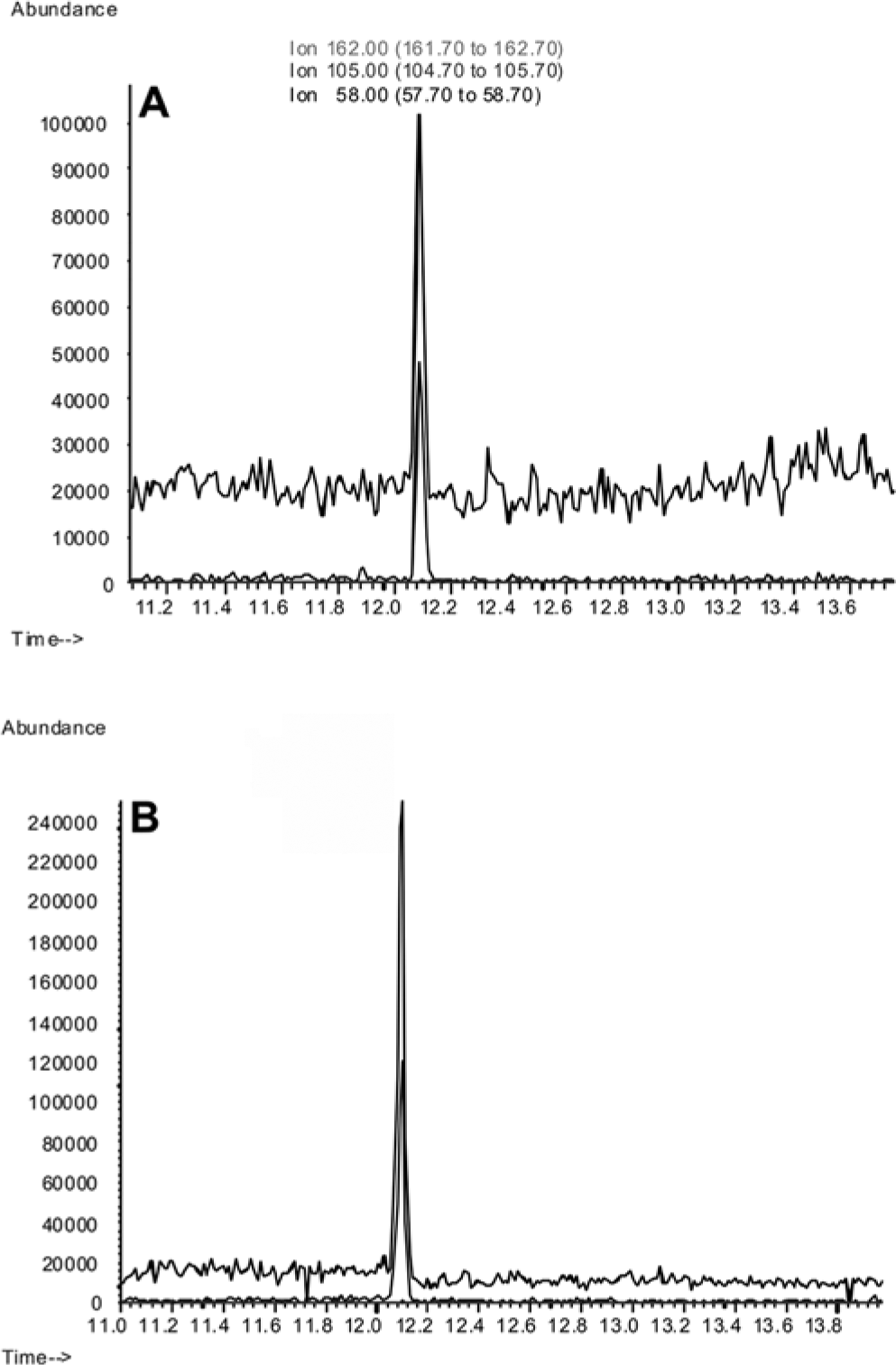
Gas chromatography–mass spectrometry ion chromatographic traces in the absence of trimethylsilyl derivatization of (
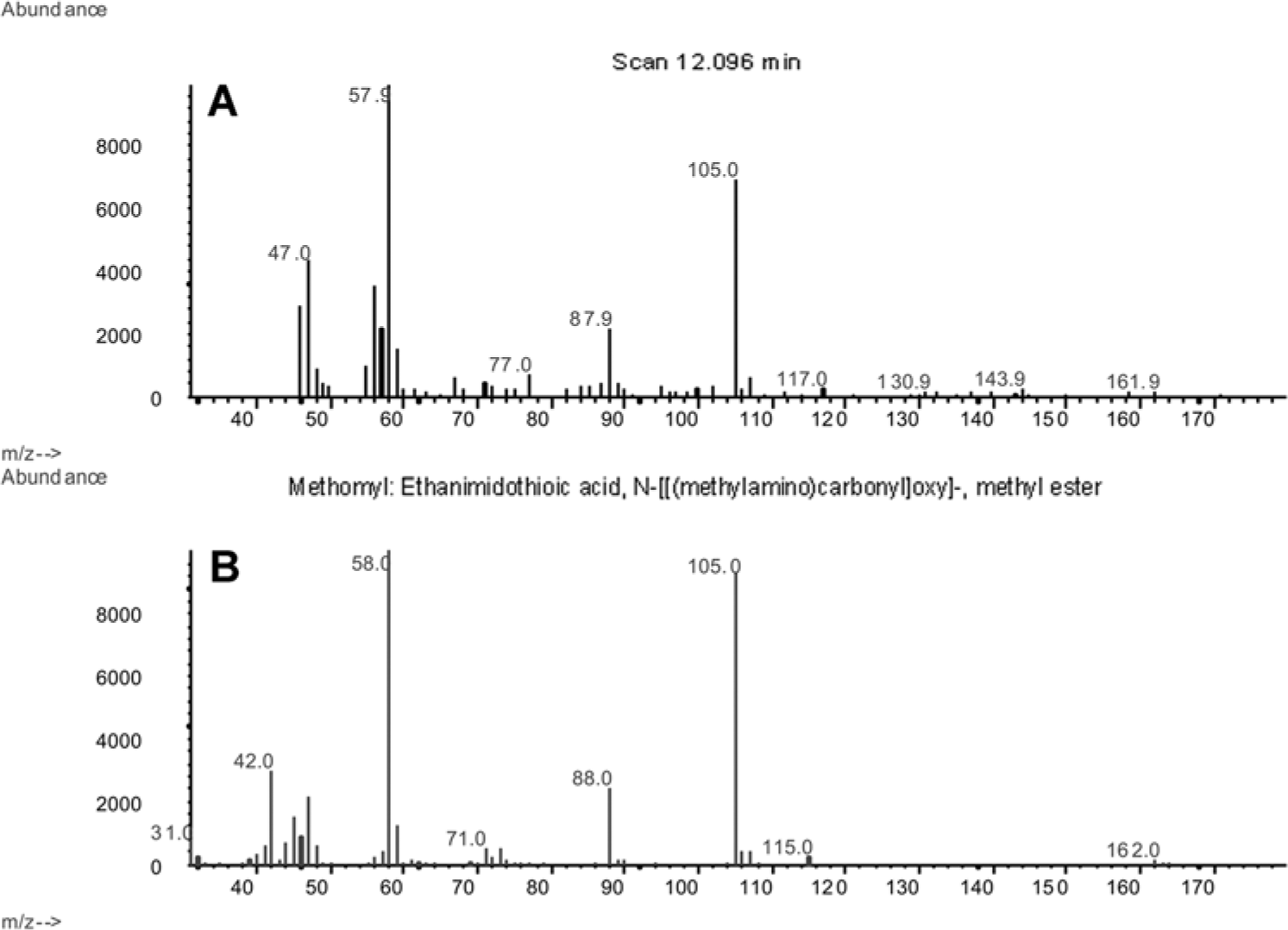
Library match of the background subtracted mass spectrum of the 12.1-min compound seen in the bread-like bait (Fig. 2B).
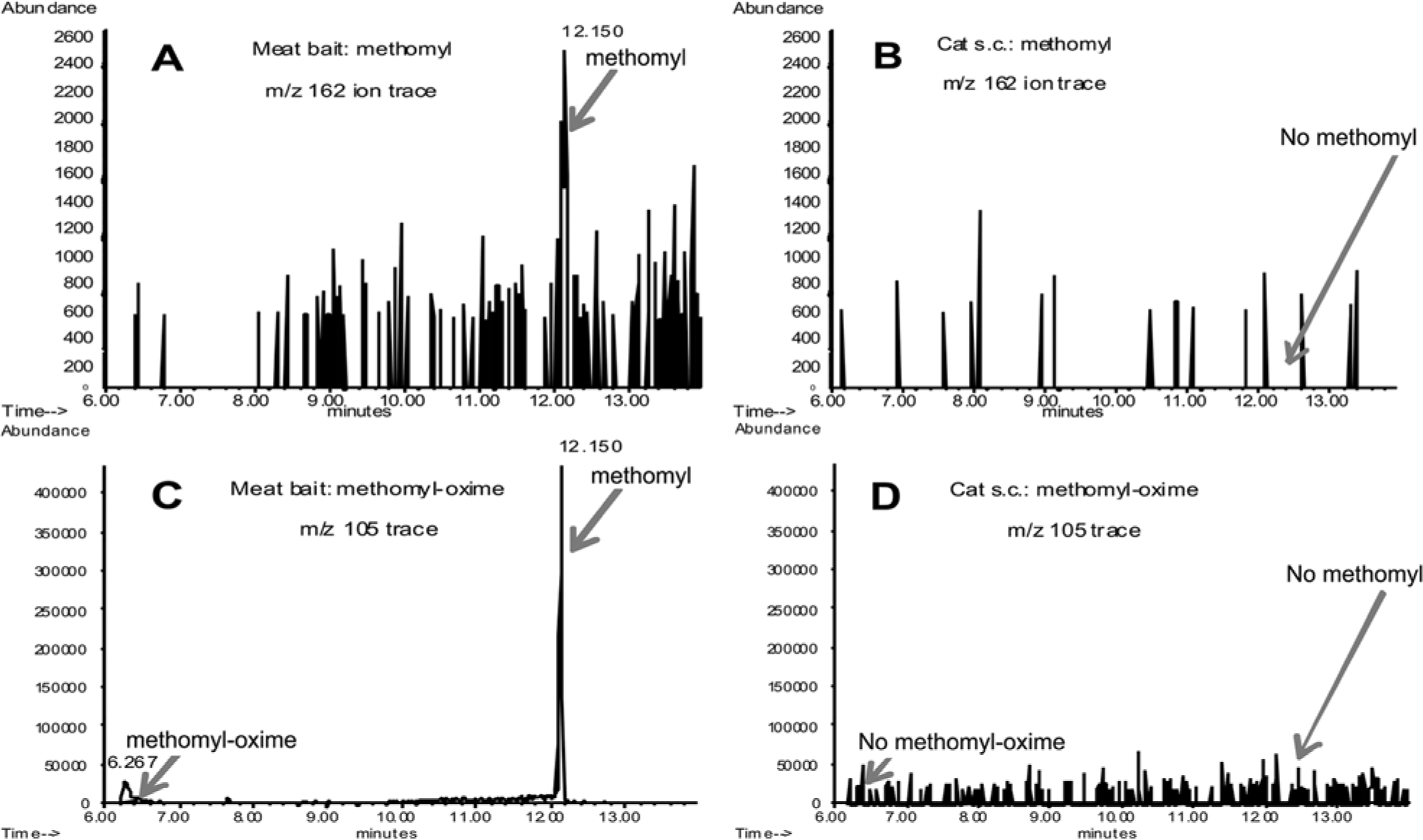
Gas chromatography–mass spectrometry ion chromatography revealed methomyl with m/z 162 trace (
Recognition that all fly-baits are formulated with the same coactive ingredient provided an additional analytical tool to assist in identifying the presence of the bait in the stomach contents. (Z)-9-tricosene, also known as muscalure or muscamone, is a sex pheromone used to attract male house flies. (Z)-9-tricosene was identified with a combination of distinguishing features, specifically a retention time of 19.8 min, a M+ (m/z 322) and additional fragment ion (m/z 57). Both bait types, as well as the stomach contents from opossum and feral cat, were found to contain (Z)-9-tricosene. This strongly suggested that the bluish coloration of the bait and that found throughout the stomach contents were related.
Unique to the bread bait was an additional finding of caffeine, which helped address the question of how the fly-bait was solubilized. The use of carbonated beverages that contain caffeine to solubilize fly-bait is a common practice in the preparation of this toxicant for unsuspecting animals as sweetened bait (Michigan Department of Agriculture and Rural Development, unpublished observation). This finding further supported the suspected intentional misuse of the fly-bait product. The stomach content of the feral cat and not the opossum was found to contain a spectral match for caffeine, hence helping to distinguish which bait was consumed by each animal.
Because methomyl is rapidly metabolized in mammalian tissues to yield methomyl-oxime, a different approach was considered for the analysis of stomach contents. Derivatization of methomyl-oxime with silylating agents has been shown to stabilize the metabolite for GC-MS analysis in other forensic cases.6,8 Trimethylsilyl derivatization of methomyl-oxime standard yields a chromatographic peak with retention time of 6.9 min and mass spectrum with M+ (m/z 177) and base peak (m/z 75; Fig. 5A, 5B). These spectra were consistent with those seen in previous forensic cases. 8 Methomyl-oxime-TMS was confirmed in the stomach contents of both animals (Fig. 6A, 6B).
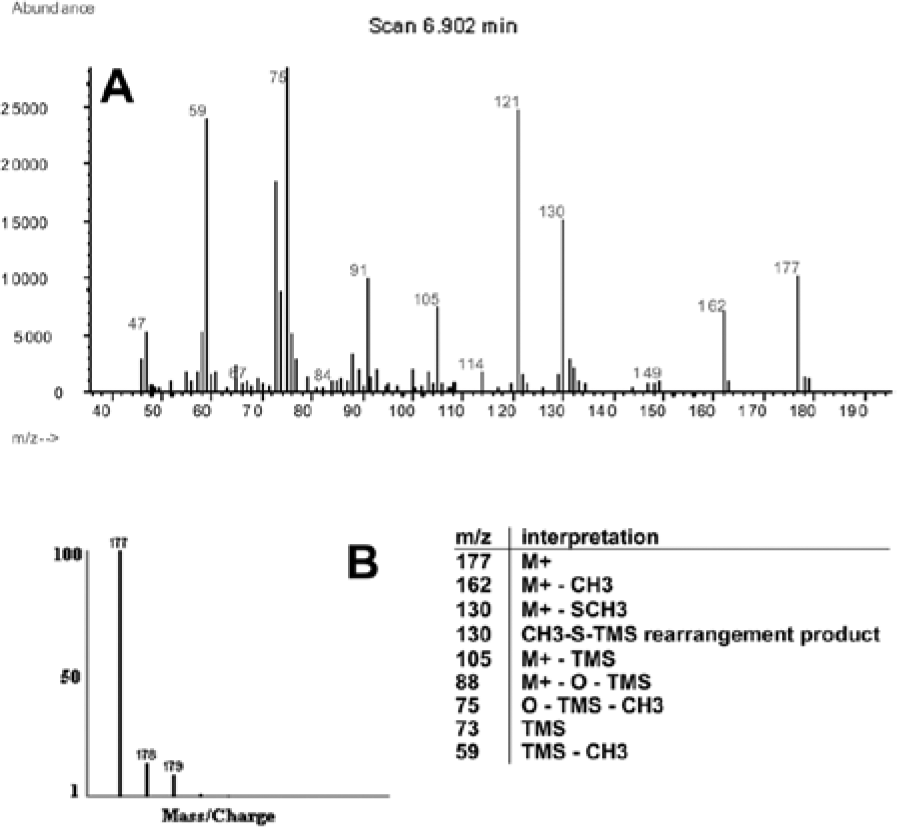
Mass spectrum of the 6.9-min trimethylsilyl (TMS)-derivatized compound seen in the opossum stomach contents (
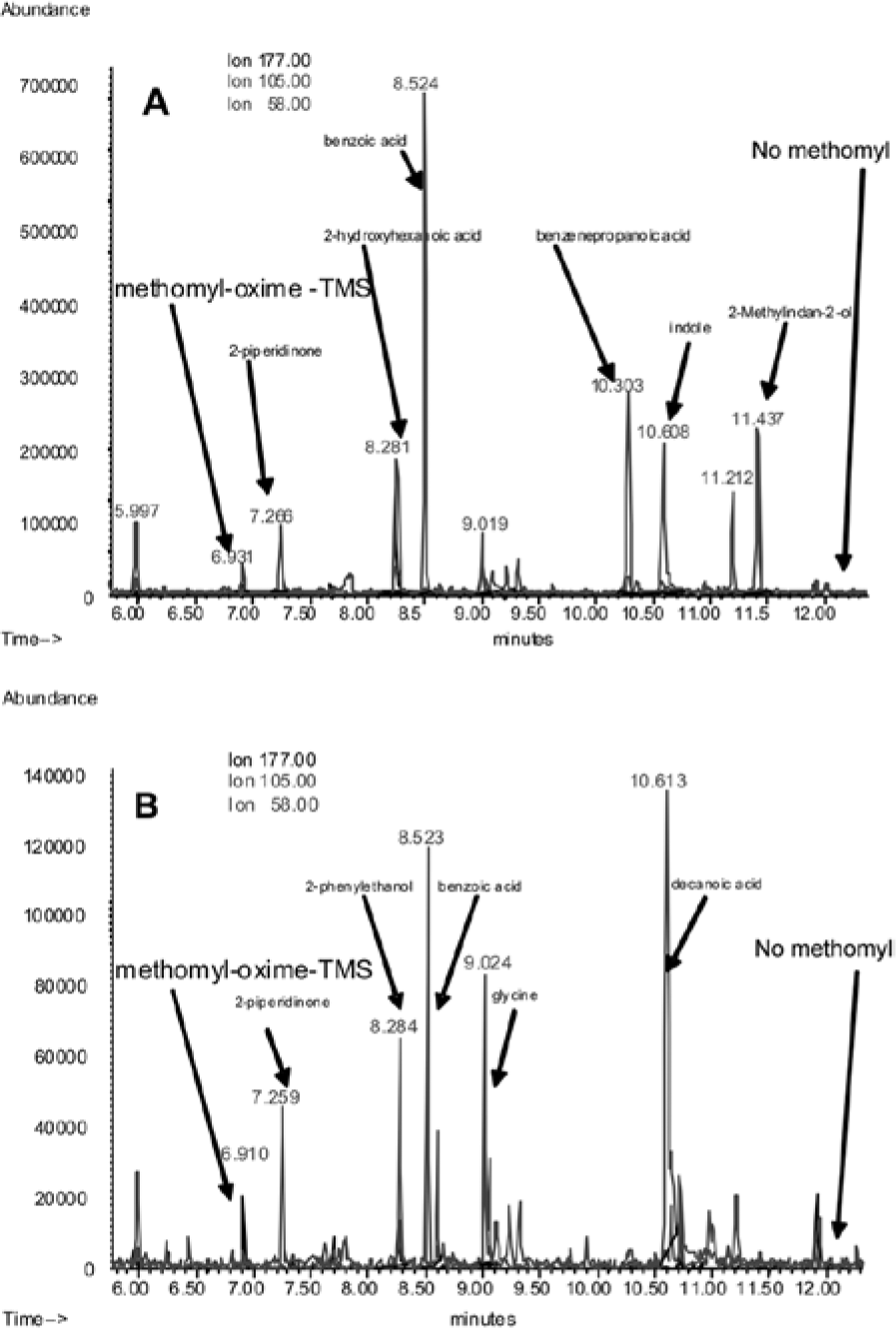
Gas chromatography–mass spectrometry chromatographic trace of derivatized stomach content extracts from the deceased opossum (
The current case is just one of many handled by a veterinary diagnostic laboratory that illustrates how pesticide label use directions are subverted to kill nontarget species by illegal means. Concerns range from topics of human safety (e.g., mixtures with sweetened beverages) to the impact of deaths of beneficial, harmless species or companion animals. The extent of the misuse has not been fully enumerated either in the scientific literature or by regulatory agencies, but known anecdotes and numerous websites (not provided) that include illegal “recipes” and off-label recommendations illustrate widespread, flagrant misuse and disregard for label use directions. Information gathered by state pesticide regulatory programs indicate that the use of fly-bait products for nuisance animal control is an inured practice that reflects word-of-mouth recommendations, retailer recommendations, and readily available information through the internet.
In conclusion, the identification of the coactive ingredient (Z)-9-tricosene was a valuable diagnostic indicator to the present case. Not all pesticide products contain a class-specific coactive ingredient, or otherwise inert chemical indicator, whose presence can aid veterinary diagnostic laboratories in the detection of the principle pesticide active ingredient. This type of strategy, if considered for adoption by the Environmental Protection Agency in cooperation with pesticide manufacturers, would further help improve diagnostic detection of other chemical agents recognized for their toxicity to wildlife and companion animals. This would be particularly useful for rodenticides (e.g., zinc or aluminum phosphide, bromethalin, and anticoagulants) that, despite the use of visual coloring agents, lack an analytical indicator amenable to GC screening of biological matrices from deceased animals. The current case additionally highlighted the value of finding caffeine in the bread bait, a finding that matched the stomach content of the cat but not that of the opossum, thus helping to distinguish which bait was consumed by each animal. This finding was of paramount importance in distinguishing between the act of intentional baiting and accidental exposure through promiscuous behavior. Most important in solving this case, the use of the derivatizing agent TMS, was instrumental in demonstrating the presence of methomyl-oxime in the stomach contents of the deceased animals. The finding confirmed the necessity for diagnostic laboratories to be vigilant in their evaluation of breakdown products from parent compounds, either with or without derivatization, in all tissues, including the ingesta of the poisoned animal.
Footnotes
Acknowledgements
The authors would like to thank Mr. Brian Rowe of the Michigan Department of Agriculture and Rural Development for his contributions and expertise with the regulatory aspects of pesticide misuse.
a.
DB 5MS column, Agilent Technologies Inc., Santa Clara, CA.
b.
Mass Spec Calculator Pro, Scientific Instrument Services Inc., Ringoes, NJ.
Declaration of conflicting interests
The author(s) declared no potential conflicts of interest with respect to the research, authorship, and/or publication of this article.
Funding
The author(s) received no financial support for the research, authorship, and/or publication of this article.