



Abstract
Hypocalcemia is a well known cause of dystocia in animals, including elephants in captivity. In order to study calcium metabolism in elephants, it is of utmost importance to use properly validated assays, as these might be prone to specific matrix effects in elephant blood. The aim of the current study was to conduct preliminary work for validation of various parameters involved in calcium metabolism in both blood and urine of captive elephants. Basal values of these parameters were compared between Asian elephants (Elephas maximus) and African elephants (Loxodonta africana). Preliminary testing of total calcium, inorganic phosphorus, and creatinine appeared valid for use in plasma and creatinine in urine in both species. Furthermore, measurements of bone alkaline phosphatase and N-terminal telopeptide of type I collagen appeared valid for use in Asian elephants. Mean heparinized plasma ionized calcium concentration and pH were not significantly affected by 3 cycles of freezing and thawing. Storage at 4°C, room temperature, and 37°C for 6, 12, and 24 hr did not alter the heparinized plasma ionized calcium concentration in Asian elephants. The following linear regression equation using pH (range: 6.858–7.887) and ionized calcium concentration in heparinized plasma was utilized: iCa7.4 (mmol/l) = –2.1075 + 0.3130·pHactual + 0.8296·iCaactual (mmol/l). Mean basal values for pH and plasma in Asian elephant whole blood were 7.40 ± 0.048 and 7.49 ± 0.077, respectively. The urinary specific gravity and creatinine concentrations in both Asian and African elephants were significantly correlated and both were significantly lower in Asian elephants.
To study calcium metabolism in elephants, it is important to use validated assays, as these might be prone to specific matrix effects in elephant blood. The same might be true for matrix effects in urine. The aim of the current study was to conduct preliminary work for validation of various parameters that play a role in calcium metabolism in both blood and urine of captive elephants. Several basal parameters were compared between Asian elephants (Elephas maximus) and African elephants (Loxodonta africana). The reason for undertaking this study is the occurrence of dystocia in captive elephants. The exact cause of dystocia is unknown, but it may be related to hypocalcemia. 6,19 To the authors’ knowledge, no validation studies are available for analyzing parameters of calcium metabolism in elephants. However, there are biochemical studies regarding calcium metabolism, including calcium, phosphorus, creatinine, and pH assessments, and one study described the use of bone markers. 1–5,7–16,18
The preliminary testing was performed using samples predominantly obtained from 2 healthy female Asian elephants (a 48 year old nonpregnant elephant and a 22 year old pregnant elephant weighing approximately 3,800 and 3,000 kg, respectively) belonging to the Rotterdam Zoo, The Netherlands. In addition, basal values of various parameters of calcium metabolism were assessed in 10 female captive Asian and 6 African elephants from 4 different zoos (Hannover Zoo, Germany; Antwerp Zoo, Belgium; Hilvarenbeek Zoo, The Netherlands, and Rhenen Zoo, The Netherlands). The female Asian elephants were 24.7 ± 12.9 years of age (range: 5–47 years) and weighed 3,028 ± 860 kg (range: 1,400–4,444 kg). The female African elephants were 22.2 ± 7.6 years of age (range: 11–37 years) and weighed 3,167 ± 236 kg (range: 3,000–3,500 kg). Water was provided ad libitum, and it was not possible to estimate individual water intake.
The estimated mean daily intake of calcium and phosphorus were 94 ± 31 and 45 ± 19 mg/kg body weight (BW), respectively, in Asian elephants, and 59 ± 17 mg/kg BW and 45 ± 16 mg/kg BW, respectively, in African elephants. The estimated daily cholecalciferol intake was 0–2 IU/kg BW for both species.
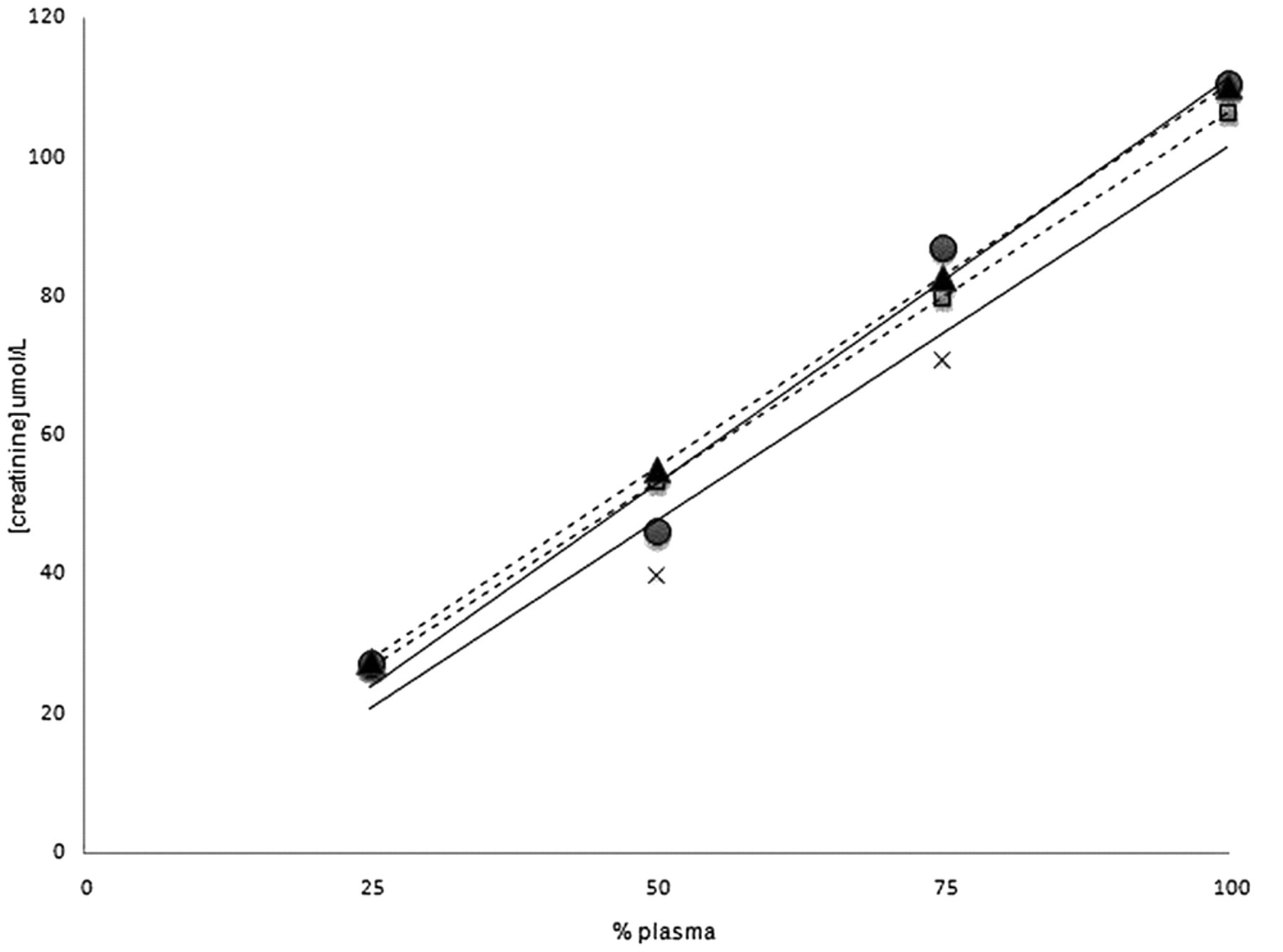
Dilution series of heparinized plasma creatinine in Asian (Elephas maximus) and African (Loxodonta africana) elephants (n = 4). Gray squares represents the expected measured values and “×” the measured values of Asian elephants; black triangles represent the expected measured value and gray circles the measured values of African elephants. Solid lines indicate the course of measured values, whereas dotted lines indicate the expected values.
Because the current study is preliminary, insufficient repeats were done to test repeatability and parallelism reliably. Despite of the low numbers, it can give an indication of assay validity. Creatinine, total calcium, and phosphorus (total calcium: 0 cresolphthalein complexone, range: 0.75–4.99 mmol/l; inorganic phosphorus: ammonium molybdate tetrahydrate L(+)–ascorbine acid, range: 0.16–6.46 mmol/l; creatinine: 3,5 dinitrobenzoic acid, range: 27–3,536 µmol/l) in heparinized plasma and creatinine (colorimetry/alkaline picrate; time rate, 520 nm) in urine were tested accordingly. a,b Total calcium and inorganic phosphorus in urine, as well as the specific gravity, were measured a,c (total calcium: indirect ISE/Ca ionophore membrane, endpoint; inorganic phosphorus: phosphomolybdate, endpoint 2, 340 nm; protein 0–12 g/dl automatic temperature compensation). Blood was collected from the ear vein using a heparinized syringe d and centrifuged for 5 min at RCF of 12,470s to separate plasma and erythrocyte fractions, and analyzed within 30 min after collection. Approximately 10 ml of spontaneous midstream urine was collected during the morning and stored in aliquots at –20°C until assayed. For the assessment of parallelism, urine samples were diluted with 0.9% sodium chloride to a 100%, 75%, 50%, and 25% solution; assay repeatability was assessed based on 6–8 determinations. The bone markers (N-terminal telopeptide of type I, e N terminal propeptide of type 1 procollagen, f and bone alkaline phosphatase g ) were also tested on parallelism and repeatability. Blood was collected and processed similarly. For the preliminary assessment of parallelism, heparinized plasma samples were diluted with 0.9% sodium chloride to a 100%, 50%, 33%, 25%, and 20% solution; assay repeatability was assessed based on 10 determinations.
For the pH assay, samples collected with a heparinized syringe were stored in plastic containers and processed within 30 min of collection in triplicate. The plastic containers were then sealed again for storage. Heparinized whole blood samples were stored in plastic containers at 3 different temperatures (4°C, room temperature, and 37°C) for 72 hr and assayed for ionized calcium and pH within 30 min of collection and after 3, 6, 12, 24, 48, and 72 hr (ionized calcium: silver/silver chloride electrode; pH: ISE technology, silver/silver chloride inner conductor). h Because of the strong relationship between ionized calcium concentration and pH in un manipulated elephant heparinized plasma in vitro at room temperature, the data were used to calculate the regression equation for the prediction of the initial ionized calcium concentration. In addition, heparinized venous plasma from each elephant was submitted to freezing at –20°C and thawing 3 times and analyzed during each thaw cycle.
Commercial immunoradiometric assay kits designed for the measurement of 25 hydroxy cholecalciferol i (25 (OH)D3; intra assay coefficient of variation [CV]: 5.7% interassay CV: 11.6%) and 1,25 dihydroxycholecalciferol j (1,25 [OH]2D3; intra assay CV: 12.2%, interassay CV: 14.8%) were used to analyze vitamin D concentrations in plasma of 10 Asian and 5 African elephant females. It should be noted that it was not possible to find an appropriate parathyroid hormone (PTH) assay, given the reduction in commercially available PTH kits. In all assays, 2 identical samples with a known low and high value were included for assay quality.
The test results were processed k,l and presented as mean ± standard deviation. To determine whether the data were normally distributed, a Kolmogorov–Smirnov test was applied on each data set. Changes over time were analyzed using the Paired t-test. The strength of a linear relationship was assessed by obtaining the correlation coefficient (r) and testing whether it was different from zero by using the Pearson (two-tailed). The difference between heparinized whole blood and heparinized plasma was tested with the Wilcoxon signed rank test. The significance of differences between the 2 elephant species was assessed by the Mann–Whitney test (two-tailed). Curve fitting was performed. m P values < 0.05 were considered significant. Table 1 summarizes the results of the preliminary data, whereas Table 2 compares basal values for the tested calcium parameters in both elephant species.
Preliminary validation of assays to measure parameters of calcium metabolism in captive Asian and African elephants.*
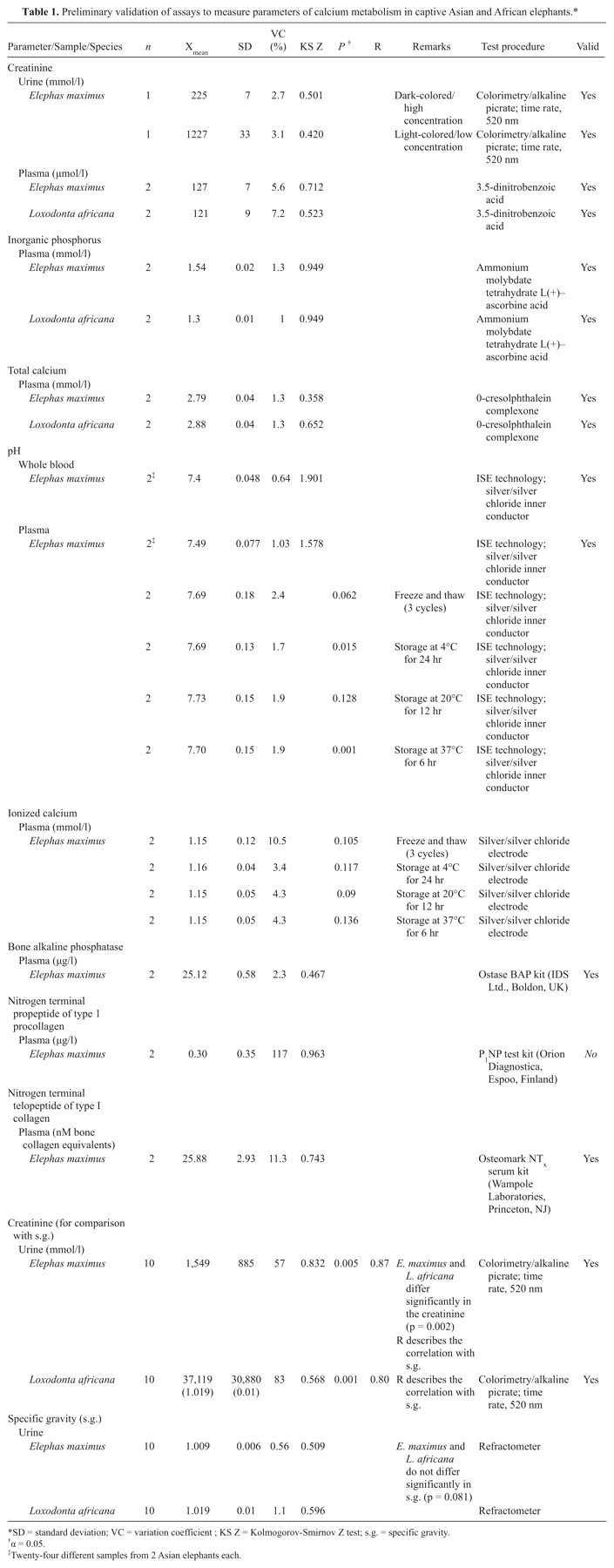
SD = standard deviation; VC = variation coefficient ; KS Z = Kolmogorov Smirnov Z test; s.g. = specific gravity.
α = 0.05.
Twenty four different samples from 2 Asian elephants each.
Comparison of basal values for the tested calcium parameters in Asian (Elephas maximus) and African (Loxodonta africana) elephants.
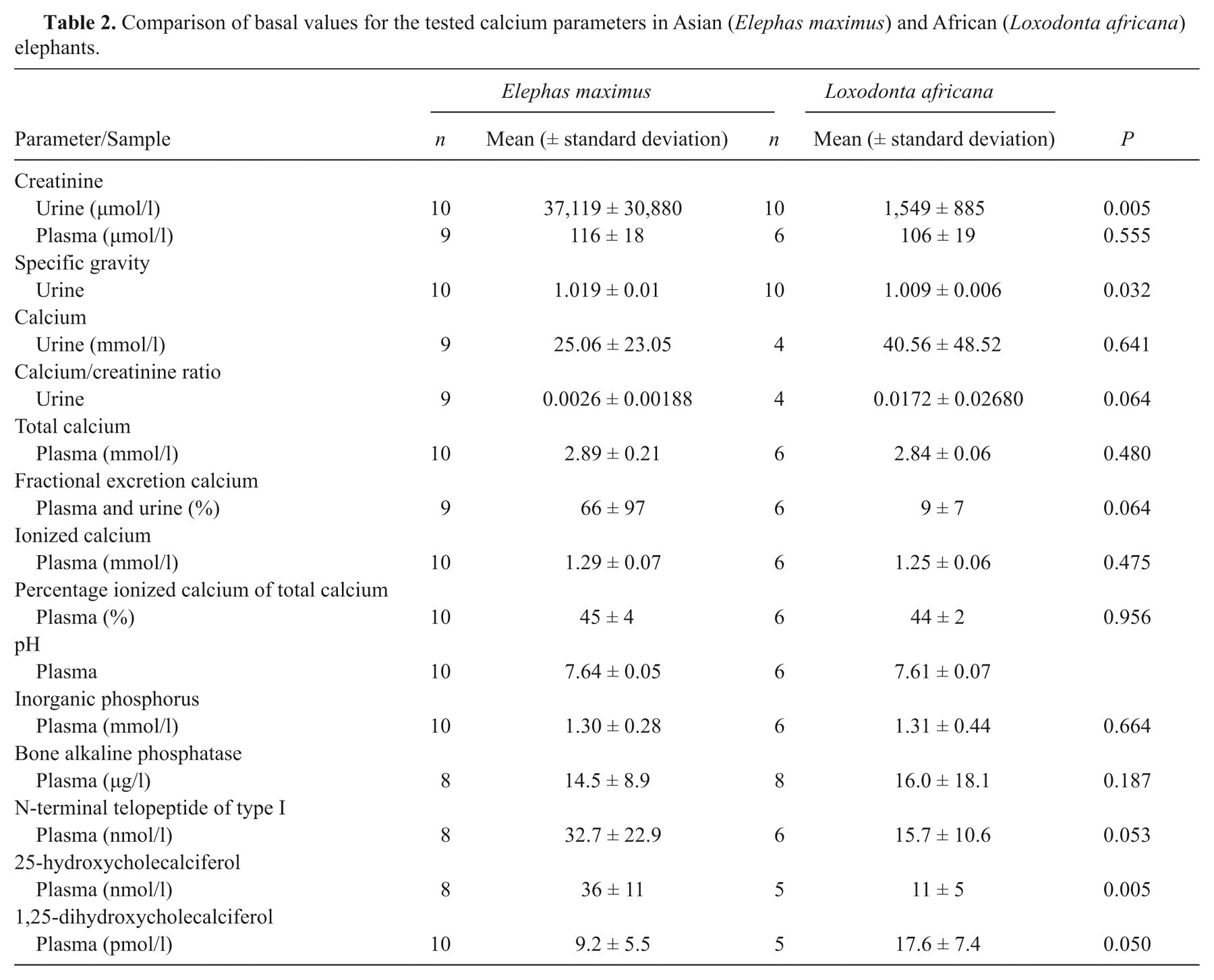
Microscopic urinalysis revealed amorphic phosphates as the predominant crystal in both African and Asian elephant urine. The average pH in heparinized plasma was 0.09 higher than in heparinized whole blood (P = 0.000) in Asian elephants. The mean plasma ionized calcium concentration and pH (n = 2) did not differ significantly during a 12 hr storage at room temperature (P = 0.09 and P = 0.128, respectively). In addition, mean plasma ionized calcium concentration (n = 2) did not differ significantly during a 24 hr storage period at 4°C (P = 0.117) or 6 hr at 37°C (P = 0.136) in contrast to pH (P = 0.015 and P = 0.001, respectively).
Both mean heparinized plasma ionized calcium concentration and pH were not significantly affected by 3 cycles of freezing and thawing (P = 0.105 and P = 0.062, respectively). The following linear regression equation using pH (range: 6.858–7.887) and ionized calcium in heparinized plasma was utilized: iCa7.4 (mmol/l)= –2.1075 + 0.3130·pHactual + 0.8296·iCaactual (mmol/l).
The reason for the remarkable species-specific difference in mean urinary creatinine concentration and specific gravity might be habitat related (African elephant living in dry savanna and Asian elephant in woodland). As a consequence, it could be hypothesized that African elephants maintain their water balance more efficiently associated with higher basal urinary creatinine concentrations and specific gravity. In the current study, amorphic phosphates were the predominant crystals in both African and Asian elephant urine perhaps due to diets containing grass rather than alfalfa haylage in Europe. Urinary calcium excretion did not differ significantly between the 2 species, which could be due to the similar diets provided in European zoos in contrast to that found in natural habitats. However, it cannot be excluded that the large standard deviation of the urinary calcium excretion affected the outcome between both species.
Curve fitting revealed a significant linear regression equation between pH and ionized calcium in heparinized Asian elephant blood different from the default equation generated by the automated computerized analyzer for human blood. An explanation for this difference might be the different albumin/total protein ratio between elephants and human beings, with lower and higher values, respectively, in elephants. 1,4,5,9,10,12–15
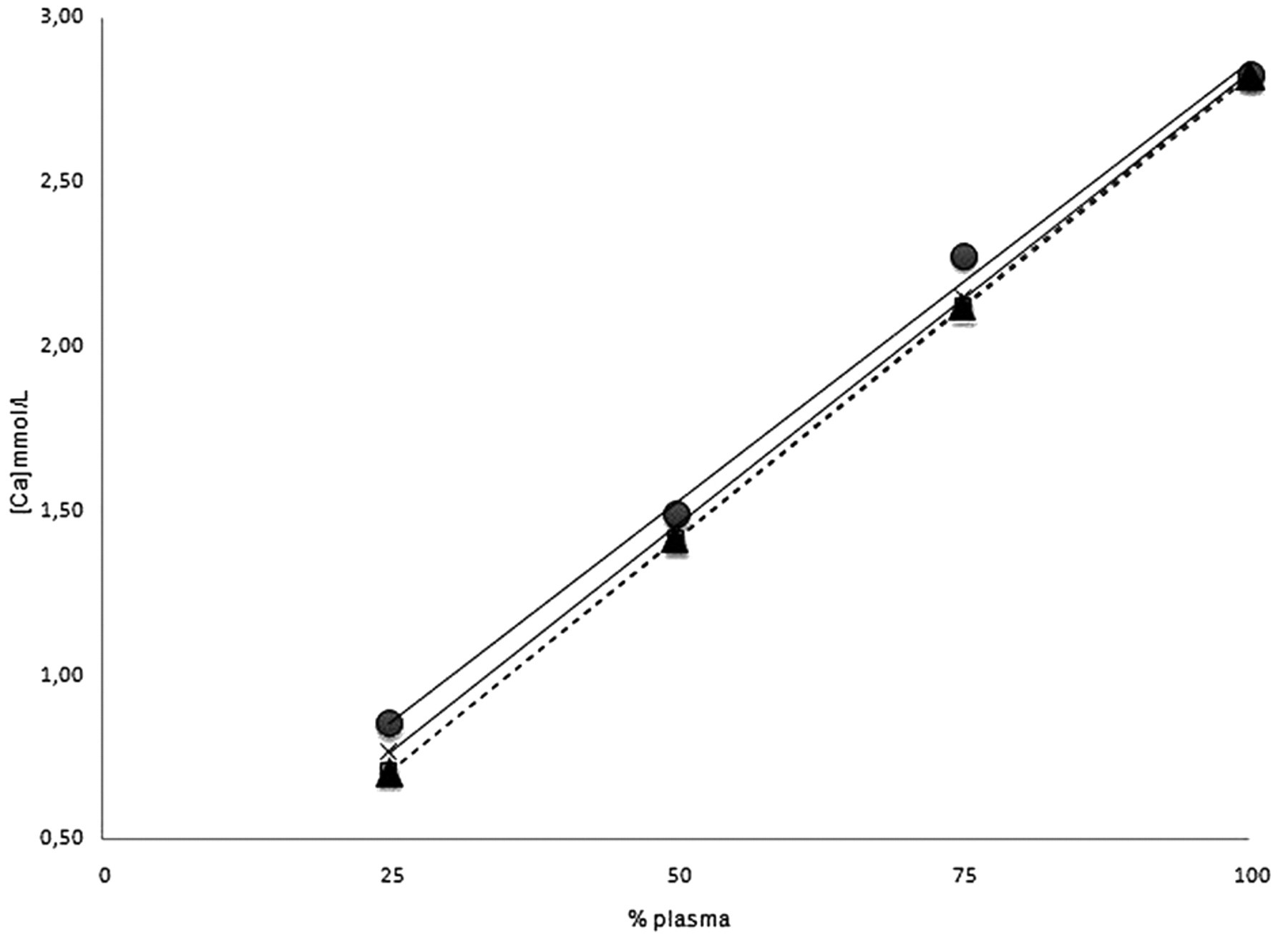
Dilution series of heparinized plasma total calcium concentration in Asian (Elephas maximus; n = 4) and African (Loxodonta africana; n = 4) elephants. Gray squares represent the expected measured values and “×” the measured values of Asian elephants; black triangles represent the expected measured values and gray circles the measured values of African elephants. Solid lines indicate the course of measured values, whereas dotted lines indicate the expected values.
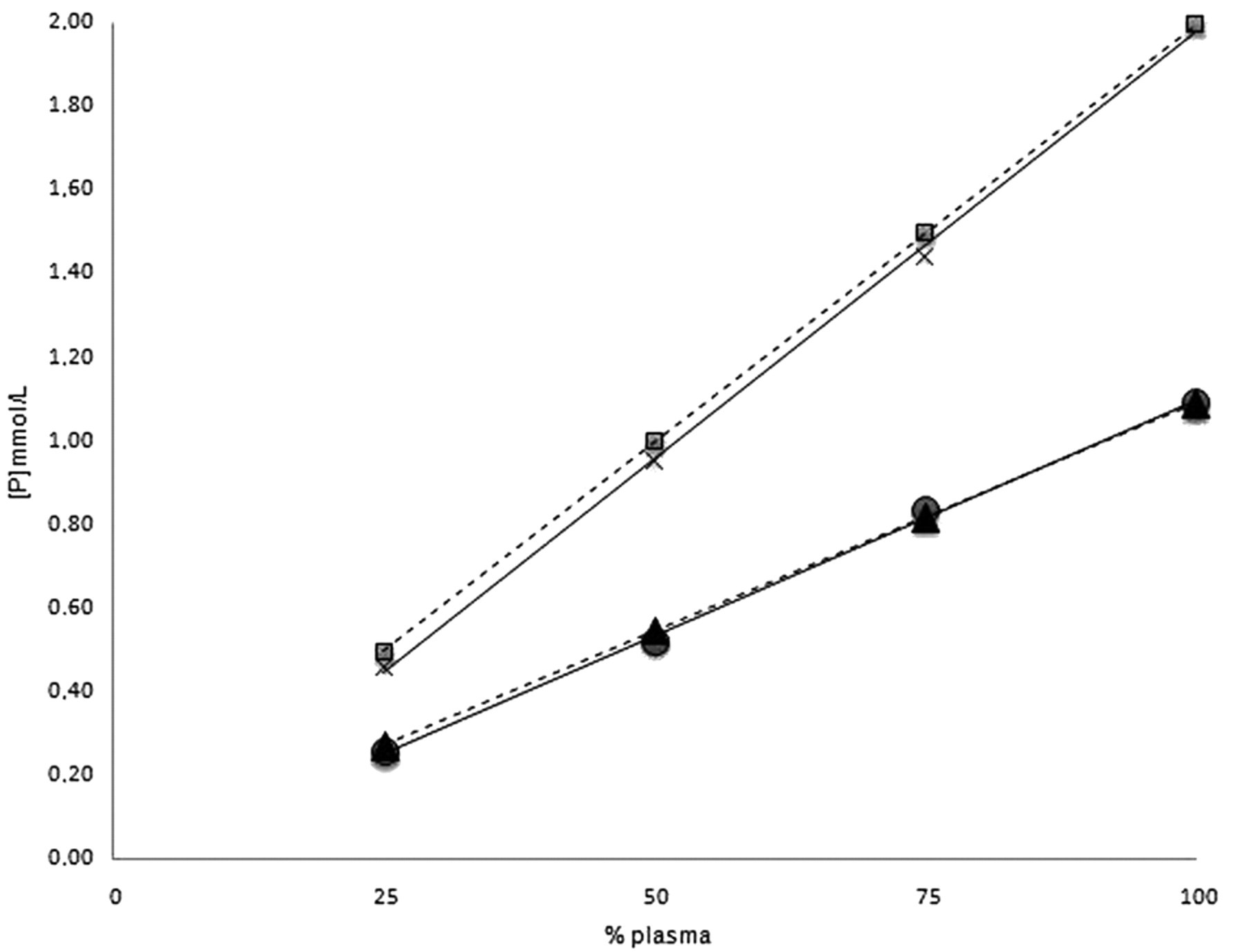
Dilution series of heparinized plasma inorganic phosphorus concentration in Asian (Elephas maximus; n = 4) and African (Loxodonta africana; n = 4) elephants. Gray squares represent the expected measured values and “×” the measured values of Asian elephants; black triangles represent the expected measured values and gray circles the measured values of African elephants. Solid lines indicate the course of measured values, whereas dotted lines indicate the expected values.
These data indicate that the assays used for preliminary validity testing of total calcium, inorganic phosphorus, and creatinine appear valid for use in heparinized plasma and urine both in captive Asian and African elephants as well as assessment of bone alkaline phosphatase and N-terminal telopeptide of type I collagen in heparinized plasma of Asian elephants, taking into account that most strive to keep the intra-assay CVs less than 10% to maintain assay validity. 17
Footnotes
Acknowledgements
The authors greatly appreciate the support of the various zookeepers, the veterinary technicians Aryanna Herscheid and Mark de Boer of Rotterdam Zoo, and the staff members of Antwerpen Zoo, Rhenen Zoo, Hilvarenbeek Zoo, Hannover Zoo, and Amsterdam Zoo. The authors also thank Menarini for providing the strips for the Spotchem for the measurement of total calcium, creatinine, and inorganic phosphorus. Furthermore, the authors thank Siemens for lending the apparatus for measuring the ionized calcium and the staff members of the Erasmus University Rotterdam for measuring the bone markers and vitamin D.
a.
SpotchemTM SP-4410 auto dry-chemistry analyzer, Menarini Diagnostics BENELUX NV, Valkenswaard, The Netherlands.
b.
BeckmanTM DXC-600 chemistry analyzer, Beckman Coulter, Woerden, The Netherlands.
c.
Euromex Holland, Holland, The Netherlands.
d.
Rapid Lite® heparinized 3-ml syringe, Bayer HealthCare, Leverkusen, Germany.
e.
Osteomark® NTx serum kit, Wampole Laboratories, Princeton, NJ.
f.
P1NP kit, Orion Diagnostica, Espoo, Finland.
g.
Ostase® BAP kit, IDS Ltd., Boldon, United Kingdom.
h.
Rapid Lab 850TM blood gasses analyzer, Siemens Medical Solutions, Breda, The Netherlands.
i.
LIAISON®, DiaSorin Inc., Stillwater, MN.
j.
Boldon, NE35 9PD, IDS Ltd., Boldon, United Kingdom.
k.
Microsoft Excel®, Microsoft Corp., Redmond, WA.
l.
SPSS Inc.,® version 16.0 Chicago, IL.

The authors declared that they had no conflicts of interest with respect to their authorship or the publication of this article.
The authors declared that they received no financial support for their research and/or authorship of this article.