




Abstract
Respiratory swab samples were collected from 5 pet ferrets (Mustela putorius furo) exhibiting influenza-like illness. The ferrets represented 3 households in 2 states. In each case, the owners reported influenza-like illness in themselves or family members prior to the onset of a similar illness in the ferrets. Realtime reverse transcription polymerase chain reaction assays designed for the detection of the 2009 H1N1 Influenza A virus were conducted in the state animal health laboratories. The assays included detection of the matrix gene of Influenza A virus and neuraminidase gene specific for 2009 H1N1 virus. Samples were positive for both screening assays. The samples were confirmed positive by the National Veterinary Services Laboratories. The history of illness in family members prior to illness in the ferrets suggests that Influenza A virus was transmitted from humans to the ferrets.
Keywords
During October 2009, 5 pet ferrets (Mustela putorius furo) with influenza-like illness (ILI) representing 3 households in 2 states (Oregon and Nebraska) were sampled and tested for the 2009 H1N1 Influenza A virus that was first reported in humans in April 2009. 2 Case 1 was a 4-year-old ferret exhibiting sneezing, coughing, inappetence, nasal discharge, fever of 40.2°C, and general depression. The owner reported having ILI that started 6 days prior to the ferret's exhibiting clinical signs. Respiratory discharge was collected from the ferret using a polyester swab by the referring veterinarian and was placed in saline for transport to the Oregon State University Veterinary Diagnostic Laboratory (OSUVDL; Corvallis, Oregon) for testing. The ferret was treated with subcutaneous fluids and antibiotics and was force fed by syringe for 3 days. The ferret exhibited general weakness throughout the recovery period and slept unless awakened by the owner. The ferret recovered without complications. The OSUVDL is a member of the National Animal Health Laboratory Network and conducted real-time reverse transcription polymerase chain reaction (real-time RT-PCR) assays for the 2009 H1N1 virus matrix (M) and neuraminidase (NA) genes using the standardized protocol provided by the National Veterinary Services Laboratories (NVSL). The matrix assay is based on an assay developed for detection of Avian influenza virus. 10 The modified matrix assay includes an additional reverse primer that is sequence specific for the 2009 H1N1 matrix nucleic acid. 11 The NA real-time RT-PCR is a differential assay that specifically detects the N1 viral RNA of the 2009 H1N1 virus. 11 Both the M and NA real-time RT-PCR assays were positive with threshold cycle (Ct) values of 29.2 and 31.0, respectively.
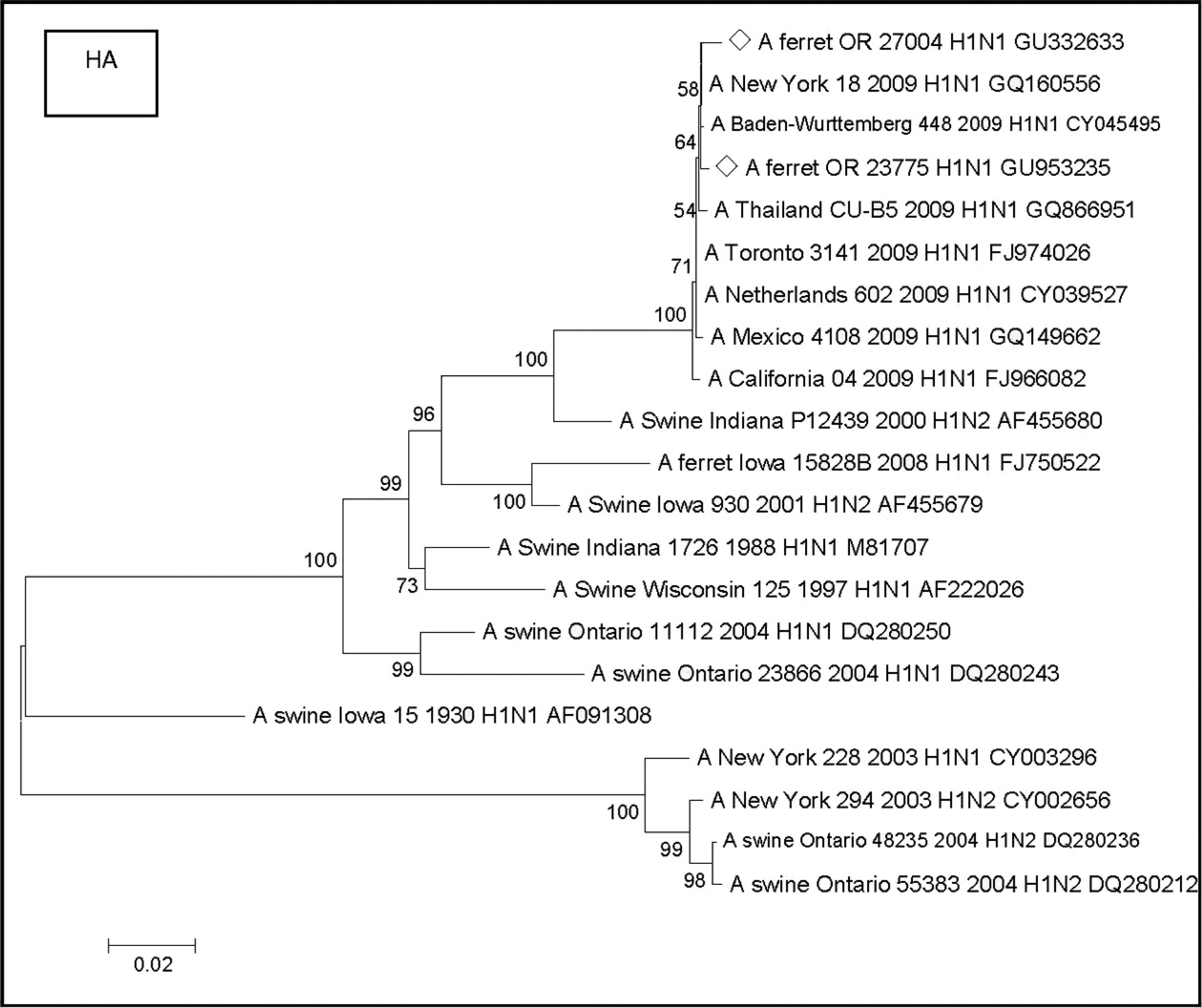
Phylogenetic relationship of the hemagglutinin gene of 2 pandemic 2009 H1N1 Influenza A virus isolates from ferrets in Oregon (A/ferret/OR/23775/2009, A/ferret/OR/27004/2009) with other phylogenetic lineages of H1 influenza virus.
The original specimen was forwarded to NVSL (Ames, Iowa) for confirmatory testing, where the sample was confirmed by real-time RT-PCR to be positive for both the M and NA (N1) genes. An aliquot of the original specimen was cultured on Madin–Darby canine kidney (MDCK) cells per NVSL protocol. Briefly, cell culture flasks of MDCK cells at 70–90% confluency were rinsed with cell culture medium containing trypsin. Inoculum was added, and the flask was incubated at 37°C for 50–90 min. At the end of the incubation period, the flask was rinsed with cell culture medium, and replacement medium containing trypsin was added. The flask was incubated at 37°C until cytopathic effects were observed. The flask was frozen at −70°C and thawed, and virus was harvested for further testing. The virus isolate was positive on both the M and NA real-time RT-PCR assays. The entire gene sequence of the hemagglutinin (HA), M, and NA genes was acquired bidirectionally with 100% gene coverage. Briefly, RNA was extracted with a commercial kit a in accordance with manufacturer's instructions. Individual influenza viral genes were amplified by RT-PCR as previously described. 12 The amplicons were purified directly or from agarose gels using commercial kits. b The purified PCR products were sequenced at the NVSL using an automated system. a Sequences were aligned with the ClustalW method. Phylogenetic and molecular evolutionary analyses were conducted using MEGA version 4 using the neighbor-joining tree-building method, 13 with 1,000 bootstrap replicates. Analysis of the HA, NA, and M genes was done with genes from viruses that were phylogenetically representative of other lineages and included genes from viruses from multiple sources (wild birds, poultry, and mammals) and from multiple geographical regions including North America, Europe, and Asia (National Center for Biotechnology Information Influenza Virus Resource, http://www.ncbi.nlm.nih.gov/genomes/FLU/FLU.html). Phylogenetic analyses of the 3 gene segments indicated that the virus was most closely related to the 2009 H1N1 virus compared with other swine, avian, and human viruses (Figs. 1–3; GU953235, GU953236, GU953237).
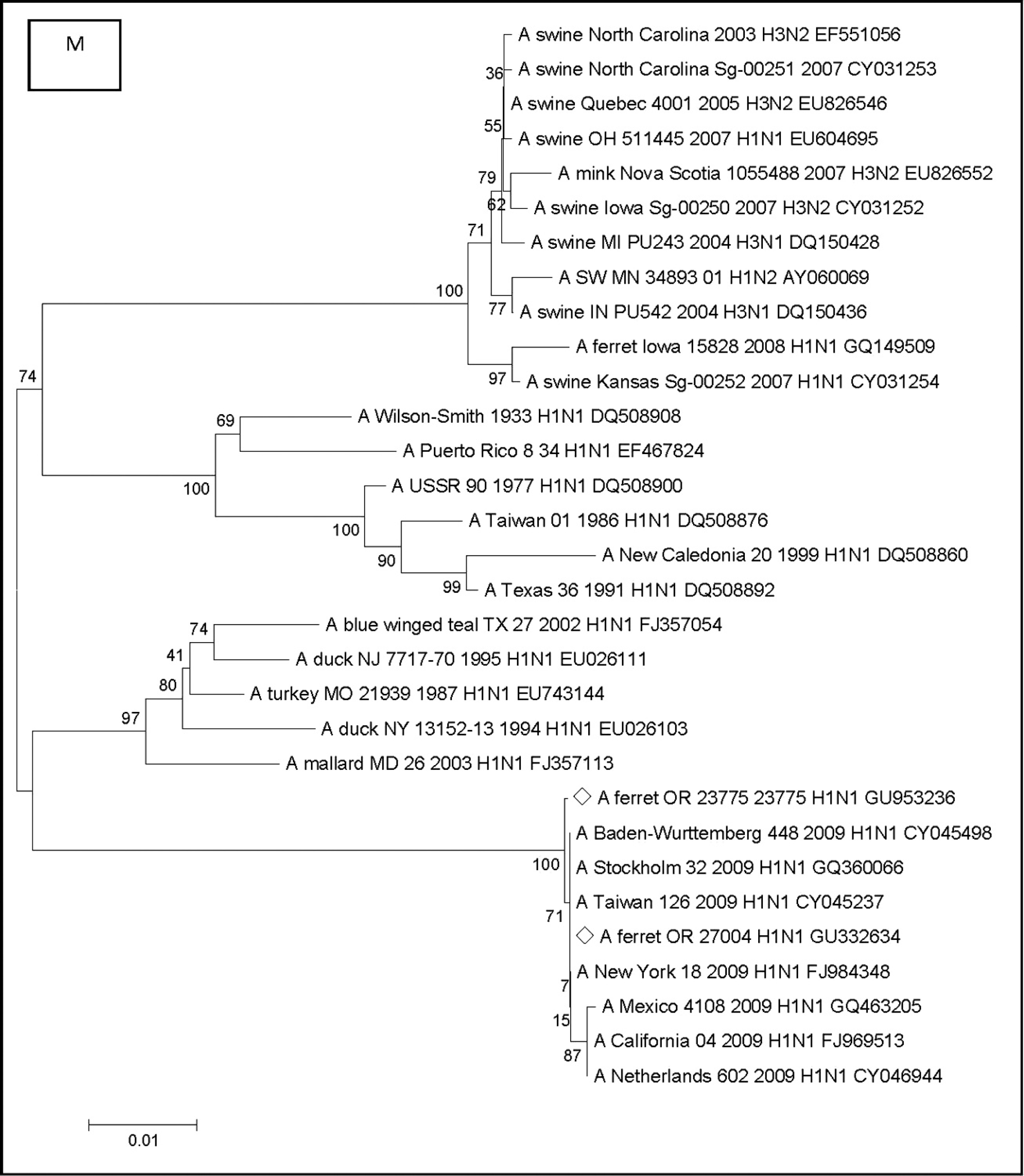
Phylogenetic relationship of the matrix gene of 2 pandemic 2009 H1N1 Influenza A virus isolates from ferrets in Oregon (A/ferret/OR/23775/2009, A/ferret/OR/27004/2009) with other phylogenetic lineages of influenza virus.
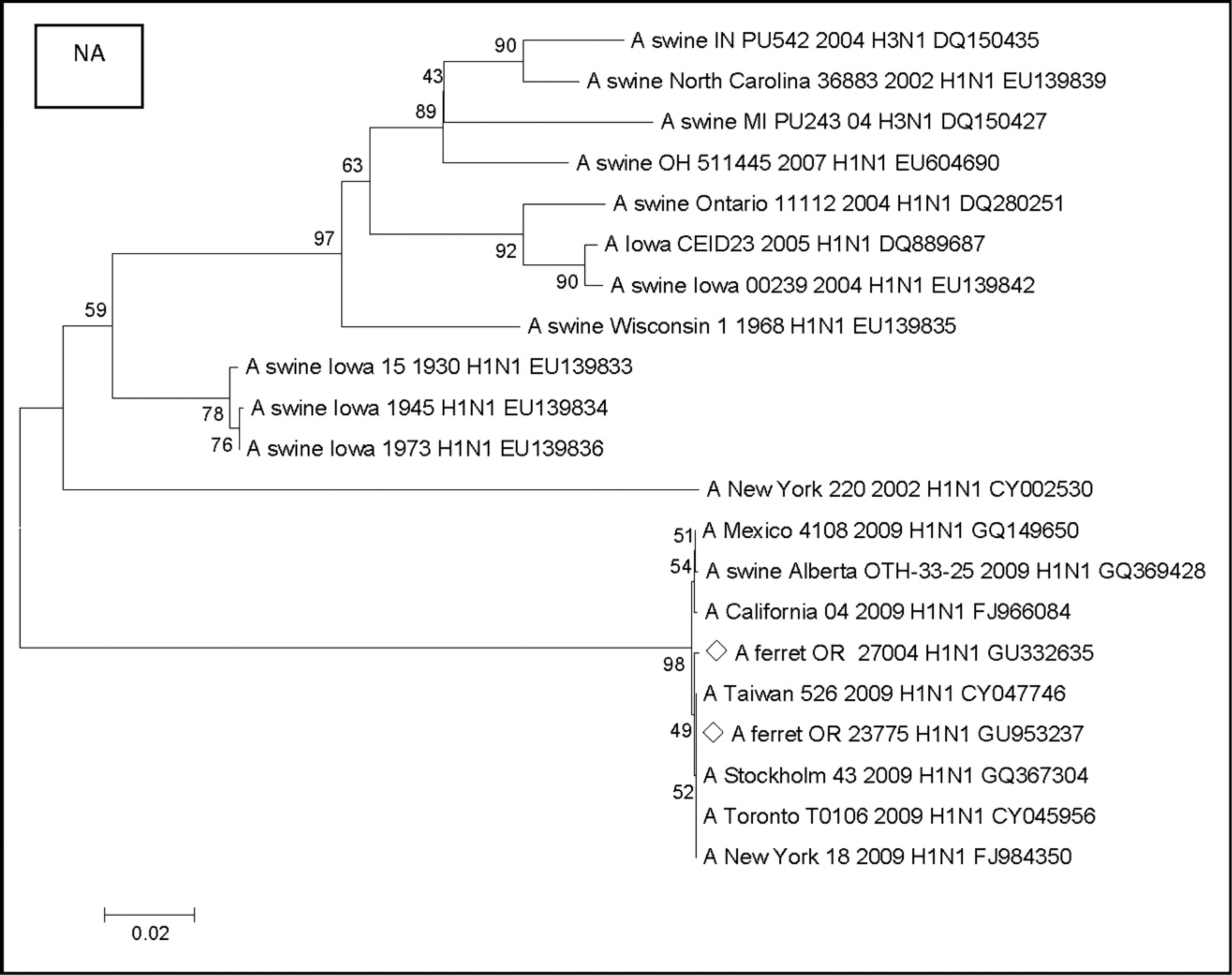
Phylogenetic relationship of the neuraminidase gene of 2 pandemic 2009 H1N1 Influenza A virus isolates from ferrets in Oregon (A/ferret/OR/23775/2009, A/ferret/OR/27004/2009) with other phylogenetic lineages of N1 influenza virus.
Case 2 involved a household of 9 ferrets. Family members of the household reported ILI approximately 1 week before the ferrets became ill. Affected family members reportedly did not have direct contact with the ferrets. The household also contained 2 cats and 1 dog. No ILI was noted in these companion animals. Three of the ferrets aged 5–6 years were examined by a veterinarian. Two ferrets exhibited sneezing, coughing, nasal discharge, and fevers >39.4°C. The third ferret exhibited a fever of 39.3°C. The remaining 6 ferrets became ill over a 2–3 day time period after the first ferret exhibited clinical signs. All 9 ferrets recovered uneventfully from the ILI. Nasal swabs were collected from the 3 ferrets examined by the referring veterinarian and placed in saline for transport to the OSUVDL. Samples were tested as noted above with all 3 swabs identified as positive on the matrix (Ct values of 22.9, 26.5, and 23.1) and NA (Ct values of 25.9, 29.5, and 26.0) assays. The original specimens were forwarded to NVSL for confirmatory testing. All 3 clinical specimens were confirmed positive on the M and NA real-time RT-PCR assays and were inoculated on MDCK cells. Virus was isolated from all 3 clinical specimens. Two of the 3 isolates obtained underwent HA, M, and NA sequencing and were confirmed to be the 2009 H1N1 virus (Figs. 1–3; GU332633, GU332634, GU332635; not shown GU979208, GU979209, GU979210).
Case 3 involved a household of 4 ferrets. Three children and the father reported sequential symptoms of ILI (ferrets repeatedly exposed as family members became ill) beginning approximately 9 days prior to ILI in the ferrets. The ILI in the children included coughing, nasal discharge, chills, and fever >39.4°C. The father also experienced body aches, diarrhea, and difficult breathing. The father visited a physician and tested positive on a rapid Influenza A virus test 4 days prior to the ferrets becoming ill. The asymptomatic mother was the primary caretaker of the ferrets while the family members were ill, but it was noted that the children cuddled the ferrets during this time period. The ages of the 4 ferrets were 1 year (n = 2), 6 years, and 8 years. All 4 ferrets exhibited bilateral nasal discharge with coughing and/or sneezing. The 8-year-old neutered male experienced severe symptoms and was presented to a veterinarian for examination and treatment 4 days after the ILI first appeared in the ferrets. This ferret had extensive bilateral nasal discharge, was dehydrated, and had a low normal temperature (37.8°C). The ferret was treated with subcutaneous fluids, antibiotics, and supportive care but died 6 days after being presented to the veterinarian for treatment. A nasal swab collected by the veterinarian was submitted to the University of Nebraska Veterinary Diagnostic Center (Lincoln, Nebraska) and tested as reported above. Both the M and NA assays were positive with Ct values of 36.9 and 36.3, respectively. The original specimen was submitted to NVSL and confirmed positive on the M and NA real-time RT-PCR assays. Virus was not isolated from the original clinical specimen, and direct sequencing from the clinical specimen was unsuccessful.
While it cannot be conclusively proven that people were the source of influenza for the ferrets, the ILI in family members prior to ILI in the ferrets and a positive Influenza A virus rapid test in 1 family member of case 3 prior to clinical symptoms in the family ferrets are strongly suggestive that people were the source of infection in each case. The fact that ferrets are known to become infected with human influenza viruses and are routinely used as models in human influenza studies supports a conclusion of humans as a source of influenza for ferrets. 5,6 Ferrets experimentally infected with the 2009 H1N1 virus demonstrated clinical signs compatible with what was reported in the ferrets from the 3 households. 7 The 3 gene segments sequenced from each of the 2009 H1N1 viruses examined from the ferrets were clustered in the same region as the Mexico, California, and New York 2009 H1N1 human isolates that were obtained early in the pandemic influenza outbreak in the spring of 2009 and were distinct from a previously reported naturally occurring influenza infection of ferrets. 8 To the authors' knowledge, these are the first reports of natural infection of pet ferrets with the 2009 H1N1 virus and also the first reports of probable transmission from humans to ferrets. Transmission of the 2009 H1N1 virus also has been observed between people and a pet cat. 11 The movement of influenza from one species to another is not unusual although not demonstrated previously for the 2009 H1N1 virus until the recent report in the cat and the ferrets in the current study. Equine influenza virus subtype H3N8 has been found to infect dogs, and both cats and dogs have been infected with Avian influenza virus subtype H5N1. 1,3,4,9,14 The potential for the 2009 H1N1 Influenza A virus to move between species, especially companion animals with close human contacts, demonstrates the need for strong interactions between animal health and human health.
Acknowledgements
The authors thank the following veterinarians for submission of samples and histories to the state diagnostic laboratories: Drs. Ross Weinstein (Oregon), Christy Cutting (Oregon), and Tammy Craig (Nebraska). The authors also wish to thank the following technicians for diagnostic support in the labs: Annette Olson (Iowa), Marlys Rodamaker (Iowa), Stephanie Lex (Iowa), and Julia Russ (Nebraska).
Footnotes
a.
MagMAX™ AI/ND Viral RNA Isolation Kit, 3130xl Genetic Analyzer Applied Biosystems, Austin, TX.
b.
QIAquick® PCR Purification Kit, QIAquick® Gel Extraction Kit, Qiagen Inc., Valencia, CA.