



Abstract
Fourteen cattle on a Kansas pasture died from ingestion of a wood preservative compound containing sodium fluoride and copper naphthenate. Clinical signs included depression, anorexia, ataxia, diarrhea, and recumbency. Grossly visible lesions included perirenal edema, pale kidneys, and forestomach ulceration. All 3 cows that had postmortem evaluations had extensive renal cortical tubular necrosis. Tissue concentrations of fluoride were slightly elevated above expected background levels, while copper tissue concentrations were not elevated. The findings indicated that the sodium fluoride caused renal tubular necrosis leading to renal failure. Copper naphthenate may have contributed to abomasal ulceration; however, tissue copper concentrations indicated that copper from the formulation was not appreciably absorbed from the gastrointestinal tract.
Fluoride poisoning of livestock is reported most commonly to occur via chronic exposure to environmental sources. The most frequently encountered sources of excessive fluoride in the diet are forages contaminated by industrially emitted fluoride, water with naturally high fluoride concentrations, feed supplements and mineral mixtures with excessive fluoride, and forages contaminated by soil with a high fluoride content. 18 Chronic fluoride poisoning primarily manifests as osteo-fluorosis and dental fluorosis. 18 Sodium fluoride in higher doses can cause acute death in cattle, 2 , 4 although there are few reports of acute sodium fluoride toxicosis in the veterinary literature.
In May and June of 2005, a cattle herd of 83 adult cows with calves on pasture experienced deaths of cows and calves. Fourteen cattle (11 adult cows and 3 calves) died or became moribund and were euthanatized over a 4-week period. Clinical signs included depression, anorexia, ataxia, excessive salivation, watery diarrhea, and recumbency. Bright blue-green material was observed on the muzzles of 2 of the affected cows while they were in the pasture. Serum chemistry revealed hyponatremia, hypokalemia, hypochloridemia, and hypocalcemia in 2 of 2 cows tested and azotemia in 3 of 3 cows tested (Table 1).
Three cows were submitted for necropsy. Cows 1 and 2 were euthanatized within 24 hours of onset of clinical signs, while Cow 3 was euthanatized 3 weeks after onset of clinical signs as a result of progressive weight loss. All 3 cows had diffusely pale renal cortices. Cows 1 and 2 had perirenal edema and intermuscular edema of the abdominal wall. Cow 1 had a focal 2.5-cm-diameter ulcer in the omasal mucosa; Cow 2 had intraluminal hemorrhage in the abomasum, with extensive ulceration of the abomasal mucosa (Fig. 1). Cows 1 and 2 both had blue-green pasty material with a petroleum odor in the omasum. All 3 cows were pregnant and in the second trimester of gestation. Histopathologic examination of tissues revealed extensive necrosis of cortical tubular epithelium in all 3 cows (Fig. 2).
Prior to initiation of toxicology testing, the owner of the cattle herd found blue-green pasty material in the pasture, leaking from a broken package of Cop-R-Plastic®. This blue-green pasty material was very similar in appearance to the material found in the omasum at necropsy. Cop-R-Plastic® is a wood preservative compound that is composed of 44.4% sodium fluoride, 17.7% copper naphthenate, and 17.3% petroleum distillates.
Tissues and the wood preservative were analyzed for fluoride and copper. 20 Tissues were prepared by ashing and fusion before being diluted with citrate buffer for fluoride analysis. Fluoride determinations were performed using an ion-specific fluoride electrode. a Quantification of fluoride was determined based upon a standard curve. As a result of sample size only 2 tissue samples were spiked at 10 ppm; recoveries were 48% and 83%. Bone controls were also analyzed and were within 88% of the historical average. Digested fluoride standards give >95% recovery with this method. Copper determinations were performed by flame atomic absorption using a Unicam 989. b Copper samples were dry-ashed, and copper was quantified against a standard curve. Control samples were spiked at 20 ppm, with recoveries of 84% and 94%. Control livers were also analyzed and were within 92% of the historical average. Kidney fluoride concentrations were elevated above an expected background concentration of 2.5 mg/kg or less (Table 2). 7 , 16 Tissue copper concentrations were not elevated above the normal ranges of 25–100 mg/kg (liver) or 4.0–6.0 mg/kg (kidney) (Table 2). 16
Clinical signs of acute fluoride poisoning include restlessness, sweating, anorexia, excessive salivation, dyspnea, cyanosis of mucous membranes, reduced milk production, nausea, fecal and urinary incontinence, clonic convulsions, weakness, and severe depression followed by respiratory and cardiac failure. 4 Many of these clinical signs were observed in the cows that had apparently ingested the wood preservative in this case.
Serum chemistry values for 3 cows, with values denoted as low (L) or high (H) compared to reference ranges.
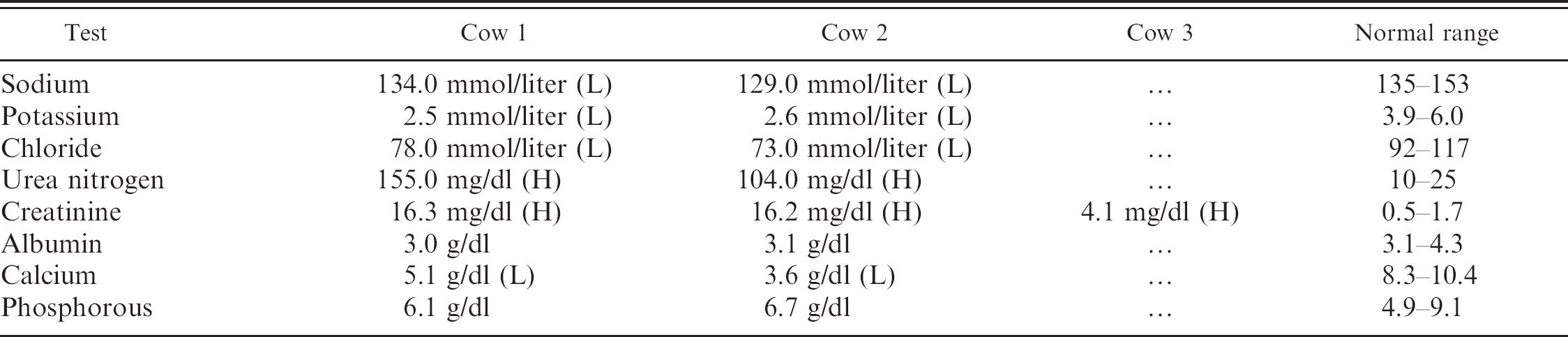
Both cows tested had hypocalcemia and hyponatremia, electrolyte disturbances that have been attributed to acute fluoride toxicosis in sheep. 10 Hypocalcemia is a consequence of complexing of calcium with fluoride to form fluoroapa-tite. 3 Hypochloridemia often parallels hyponatremia. 6 Ulceration of the abomasal or omasal mucosa was present in Cows 1 and 2; this ulceration may have been directly caused by sodium fluoride. 15 , 18 , 21 In the stomach, sodium fluoride dissociates into fluoride ions and combines with hydrogen ions to form hydrofluoric acid, which causes gastric mucosal lesions. 13 It is possible that copper naphthenate in the wood preservative contributed to the omasal and abomasal ulceration; however, little information regarding the toxicity of copper naphthenate was found in the published literature. Tissue copper concentrations in the cows in this study were not elevated above the normal range. The half-life of copper in the liver of sheep experimentally poisoned with copper by oral dosing is estimated to be 175 ± 91 days. 1 Assuming a similar half-life in cattle, and assuming that the cows in this study were probably euthanatized within a few days of exposure to the compound, there likely was negligible absorption of copper from the wood preservative compound.
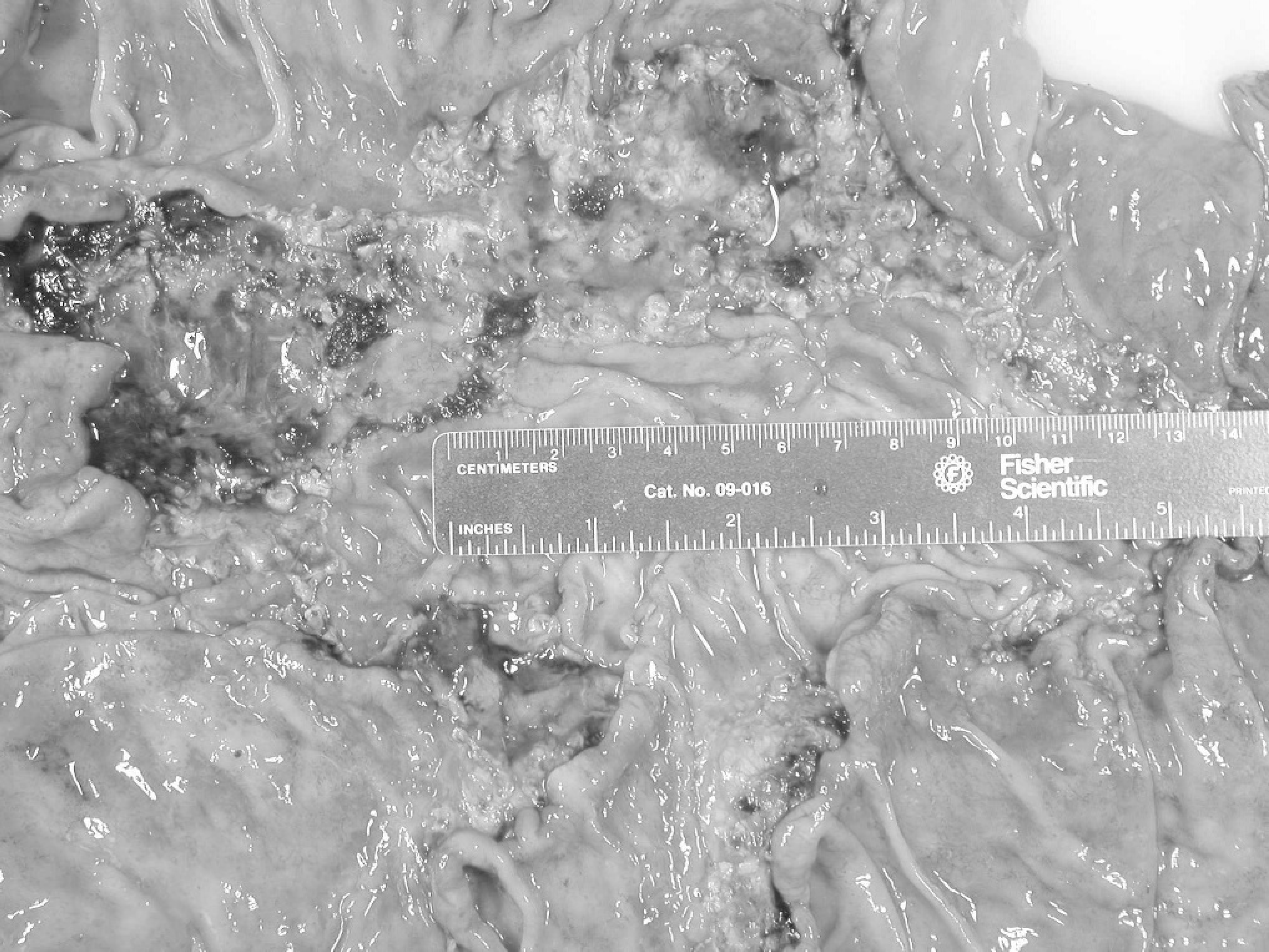
Abomasum of cow with sodium fluoride/copper naphthenate toxicosis. Large area of mucosal ulceration.
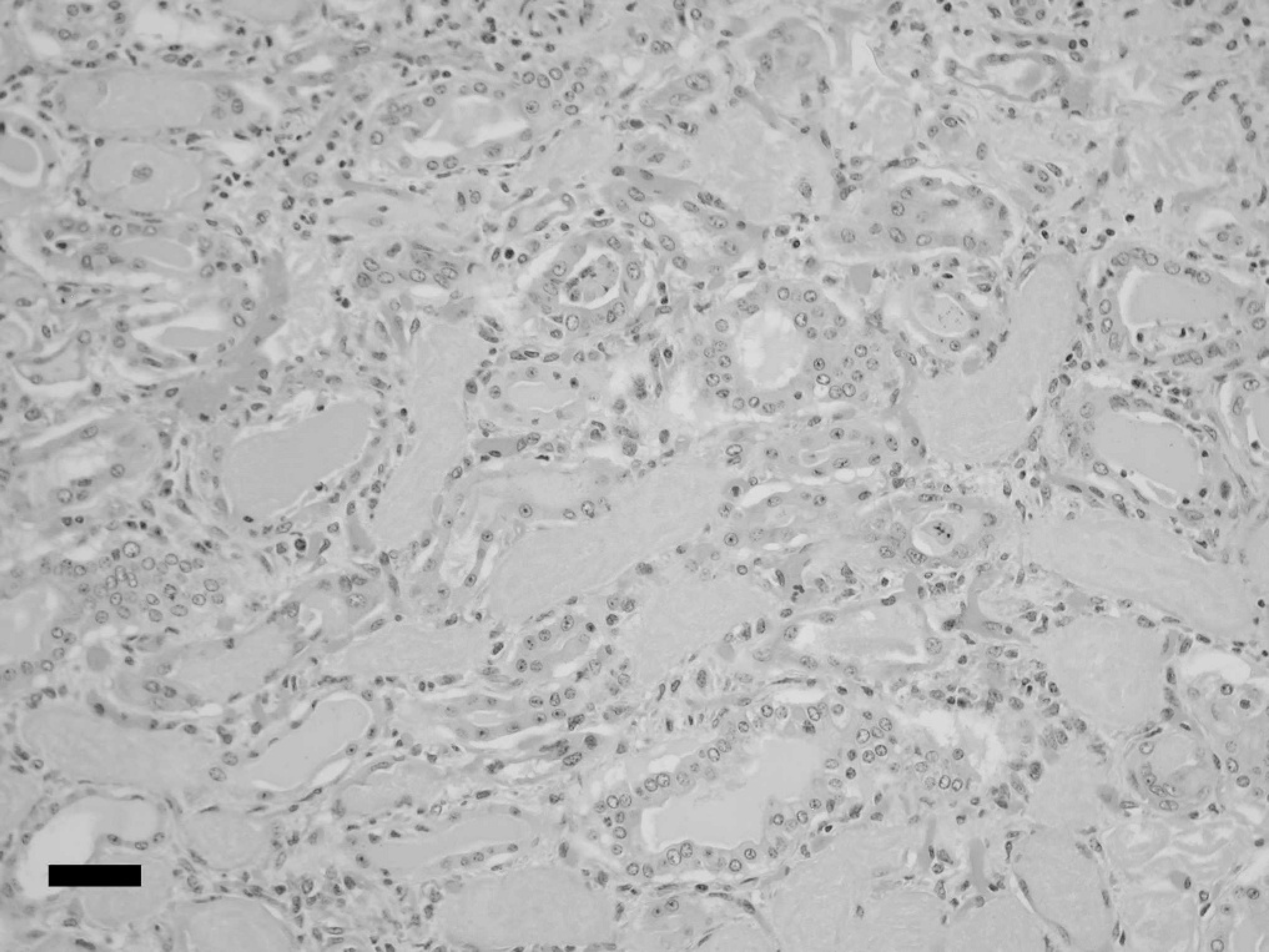
Photomicrograph of kidney from a cow with sodium fluoride/copper naphthenate toxicosis. Tubular lumens are dilated and filled with proteinaceous material. hematoxylin and eosin (HE) stain. Bar = 50 μm.
Tissue and wood preservative concentrations of copper and fluoride.
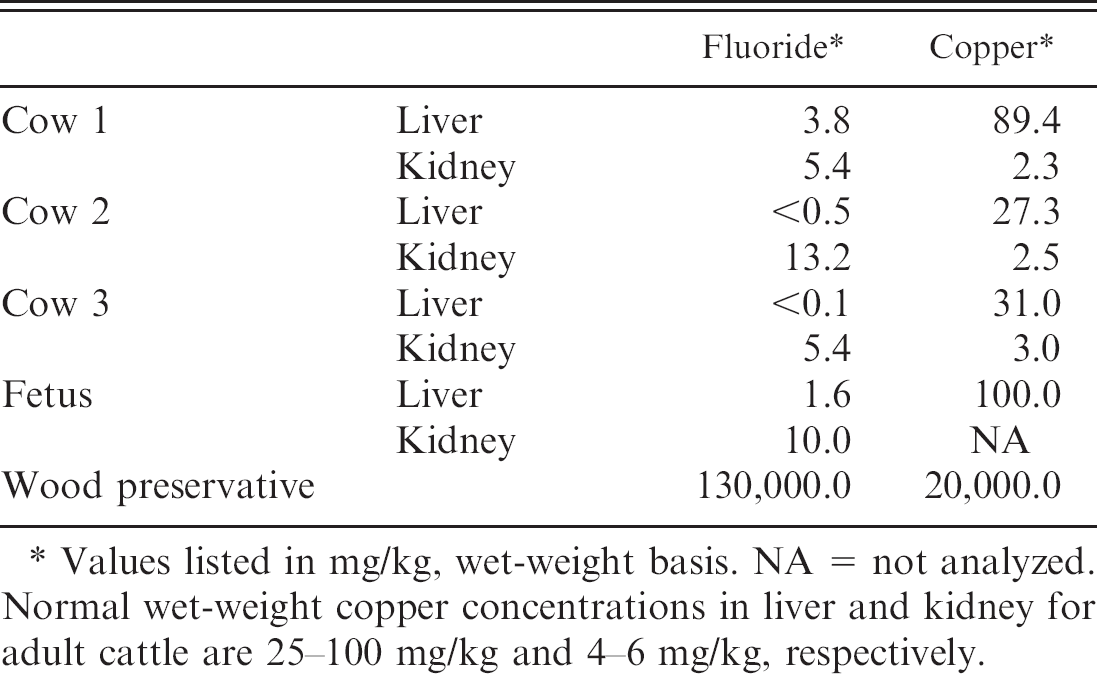
Values listed in mg/kg, wet-weight basis. NA = not analyzed. Normal wet-weight copper concentrations in liver and kidney for adult cattle are 25–100 mg/kg and 4–6 mg/kg, respectively.
The serum chemistry data and lesions in the examined animals indicate that renal failure was the major contributing factor to the morbidity and mortality in this exposure to the wood preservative. Two of the 3 cows examined had perirenal edema, a consequence of renal acute tubular necrosis that also occurs with oak poisoning in cattle. 12 Sodium fluoride has been described to cause necrosis or degeneration of renal proximal tubular epithelium in experimental studies and under natural conditions. 12 , 14 , 15 , 17 , 19 Other agents that cause tubular necrosis or degeneration include antimicrobials (aminoglycosides, tetracyclines, sulfonamides), heavy metals, ethylene glycol, nephrotoxic mycotoxins (ochratoxin, citrinin), and specific plant toxins (Amaranthus sp., Isotropis sp., Lantana sp.). 12
In a report very similar to this report, cattle were intoxicated by a wood preservative compound containing sodium fluoride, creosote, and sodium dichromate. 2 Toxicity was attributed to the fluoride in the preservative in that study. Renal tubular necrosis in that case was not described; however, the authors did not mention if kidneys were examined microscopically or if other testing evaluated whether renal failure was present.
Tissue fluoride levels were not greatly elevated in the cattle in this study, even though the wood preservative compound was found in the forestomachs at necropsy. Fluoride concentrations in the soft tissues of animals raised on normal diets are generally less than 2.5 ppm16; acute fluoride poisoning can be established if soft tissues have >20 ppm of fluoride. 7 However, because ingested fluoride is rapidly excreted by the kidney, 9 significant accumulation in soft tissues is not expected. 5 , 8 , 11 In chronic poisoning, only small amounts of fluoride (less than 2.5 ppm) were retained in the soft tissues of cattle receiving up to 93 ppm sodium fluoride for 7.5 years; kidneys had more fluoride than other soft tissues. 18 Although fluoride does pass into the placenta, 18 high concentrations of fluoride were not found in tissues from the single fetus that was analyzed in this study.
Cop-R-Plastic® is a wood preservative compound that is used for treatment of wooden utility poles. It is intended to be used on wood placed beneath the soil surface. Workers treating utility poles in the pasture the autumn preceding the cattle illnesses reported accidentally left a large container of the material in the pasture. The herd was exposed to the wood preservative the following summer after being introduced to the pasture. The lethal fluoride dose for ruminants following a single oral administration is 50–70 mg/kg of body weight, 7 which would be equivalent to 56–77 g of the Cop-R-Plastic® formulation for a 500-kg cow. It is conceivable that many other cows in this herd could potentially have been poisoned by the large amount of the wood preservative compound that was left in the pasture.
Footnotes
a.
Thermo Electron Corp., Orion Research Products, Beverly, MA.
b.
Thermo Electron Corp., Madison, WI.