



Abstract
This mixed-methods study explored the experiences of high performers who experienced disruptions in training and performance during the Covid-19 pandemic. Twenty participants included university-level opera singers (n = 7), pianists (n = 6), and athletes (n = 7), who completed an online survey at three timepoints consisting of demographic information, the BBC Subjective Well-being Scale, the Brief Daily Stressors Screening Tool, and the Coping Self-Efficacy Scale. At each timepoint, participants also completed individual semi-structured interviews regarding stressors, coping strategies, and their overall well-being. Opera singers and pianists had lower global well-being scores across the three timepoints compared to athletes. Pianists demonstrated a decrease in well-being over time, along with decreases in quality of social relationships and physical health. All three groups of performers reported high scores for problem-focused coping self-efficacy, although athletes had higher scores for coping self-efficacy in seeking support, and for stopping unpleasant thoughts. Analysis of the qualitative data indicated similarities in challenges across performers; however, there were differences in the impact of the pandemic on social opportunities, inability to train and perform, concerns about identity disruption, and impacts on career prospects. Opera singers and pianists appeared to reflect more on their identities and the role of performing arts in society during the pandemic. These results shed light on the ways that high performers in different domains were impacted by disruptions due to the Covid-19 pandemic.
Introduction
Four years after the onset of the Covid-19 pandemic, there has been considerable scientific investigation of the physiological, social, and psychological impacts for society and cultures. Specifically in performance contexts, early research efforts documented how athletes and music performers experienced increased psychological stress (Czeisler et al., 2020), while follow-up studies have recently reported the long-term psychological impacts of the pandemic (Washif et al., 2022). Several studies have examined the experiences of musicians throughout the pandemic (e.g., Cohen & Ginsborg, 2021; Musgrave, 2022; Vance et al., 2023); however, there is limited investigation on the impact of the pandemic on performers’ identity. Identities are described as “self-meanings developed in the context of roles” (Stryker & Burke, 2000); the roles that people hold and the abilities they develop in those roles serve as a context wherein they develop a sense of self and meaning about their unique place in the world (Mitchell et al., 2020; Syed & McLean, 2016). The Covid-19 pandemic presented multiple stressors for individuals that impacted health and well-being, and it presented challenges for the ways that high-performers were able to engage in activities and roles that formed a context for their identities. The pandemic, then, was a disruptive event with the potential for identity disruption where individuals’ identities (related to their performance abilities and opportunities) were called into question (Mitchell et al., 2020). The purpose of the current research was to explore the experiences of different performers—specifically opera singers, pianists, and athletes—during the pandemic over 9 months spanning October 2020 to April 2021.
Experiences during the pandemic
The Covid-19 pandemic posed challenges to many individuals, introducing newfound stress of social isolation due to mass quarantine, fear for ones’ own and others’ health, and economic and employment concerns (Czeisler et al., 2020; Usher et al., 2020). Consequently, symptoms of mental health issues (including depression, anxiety, and self-harm) were reported more frequently by individuals within the first 6 months of the pandemic (Czeisler et al., 2020). Younger adults seemed to be particularly vulnerable to the risk of psychological distress during the pandemic, as Czeisler and colleagues (2020) reported individuals between the ages of 18 and 24 were among the highest of those who had seriously considered suicide within the 30 days prior to completing the survey. Similarly, Kar and colleagues (2021) reported university-educated students between the ages 20 and 30 had significantly higher levels of anxiety and depression compared to individuals who were employed. While the structured nature of the questionnaire limited further exploration into the specific sources of these stressors, researchers suggested that these findings may be due to young adults’ fears of career disruption and decreased job prospects (Kar et al., 2021).
Societal changes due to Covid-19 had considerable impacts on those within performance-based careers. Pre-Covid-19 challenges, including anxiety due to concerns over their futures and financial stability (Maxwell et al., 2015), were reported to increase for music-based performers, as Covid-19 restrictions caused cancellations of musical performances and unexpected loss of income (Spiro et al., 2021). These stressors may pose threats to performers’ well-being, as indicated by Spiro and colleagues (2021), where perceptions of performers’ financial issues were associated with higher depression and loneliness scores. In sport, athletes faced substantial changes to daily routines, as government-regulated lockdowns significantly reduced and/or halted training and competitions (Haan et al., 2021; Washif et al., 2022). Athletes have reported significant increases in stress and dysfunctional psychobiosocial states (di Fronso et al., 2022), reduced sleep due to increased anxiety (Mon-López et al., 2020), feelings of isolation from teammates and coaches (Haan et al., 2021; Taku & Arai, 2020), and concerns over their financial situation (Taku & Arai, 2020). Many of these studies were survey-based and cross-sectional in design conducted at the beginning of the Covid-19 period (see Haan et al., 2021 and Carnevale Pellino et al., 2022 for a review), and few studies to date have explored the new challenges presented and the longer-lasting effects that have occurred as a result of the Covid-19 pandemic.
There is an emerging body of research examining performers’ experiences during the constraints of the pandemic, with many researchers highlighting the importance of musicians’ (e.g., Cohen & Ginsborg, 2021; Spiro et al., 2021), vocalists’ (Lewis & Hendricks, 2022), and athletes’ (e.g., Håkansson et al., 2020; Samuel et al., 2020; Schary & Lundqvist, 2021) coping abilities for the protection of performers’ mental health. Cohen and Ginsborg (2021) interviewed a range of musicians to explore how they experienced the first few months of their country’s lockdown, with the results highlighting how musicians in the United Kingdom struggled to cope with the uncertainty of their careers. Early in the pandemic, musicians described how they had begun to cope with the demands of the pandemic, relying on networks of support and cognitive strategies to reduce their anxiety (Cohen & Ginsborg, 2021). Follow-up research with the participants later in the pandemic demonstrated how later-career musicians were exploring non-performing work opportunities and interests, with some grappling with the decision to retire. On the other hand, mid-career musicians indicated they were committed to their musical performance careers. Across the two studies, it appeared that concerns about identity as a musician were more salient for mid-career performers at the earlier point of the pandemic, whereas these concerns became more prominent for later-career musicians as the pandemic continued over multiple years. Financial impacts and future career concerns have been noted as key contributors to arts performers’ mental health and well-being during the pandemic (Spiro et al., 2023), particularly among early career arts professionals (Shaughnessy et al., 2022). To date, however, there has been limited research examining the experiences of early career musicians (e.g., students in performance degree programs) during the pandemic. These individuals may have experienced different stressors or concerns given that they were not employed full-time as a performer before or during the pandemic; hence, the current study addresses this gap in the literature.
There is some longitudinal research among athletes during the pandemic examining the frequency of coping strategies used among professional athletes in Poland, Romania, and Slovakia (Makarowski et al., 2022). The athletes indicated greater use of dysfunctional coping strategies during the fourth wave of the pandemic (late 2021), when compared to the first wave (early 2020). The authors suggested this trend was due to long term exposure to stress depleting athletes’ personal resources and their ability to apply appropriate coping strategies (Makarowski et al., 2022). However, perceived stress levels varied across countries throughout the duration of the pandemic, therefore further exploration is needed to understand how athletes coped during this time (Makarowski et al., 2022). Not all athletes returned to sport after the initial waves of the pandemic, with some athletes even citing cancellation or postponement of competitions as triggers for retirement (Taku & Arai, 2020). Therefore, examining how performers experienced and coped with stress throughout the waves of the Covid-19 pandemic may provide further insight into how performers’ careers were affected during this time.
Identity and the pandemic
Circumstances of Covid-19, including isolation from social groups and friends, cancellation of events, and career transitions, may deprive many young adults of personal and social experiences that are salient to the development of their identities as performers (Eriksson et al., 2020). Moreover, individuals who have a centralized performer identity may be severely impacted by these unexpected changes, experiencing feelings of loss and decreased motivation during this period of transition (Henriksen et al., 2020). Early evidence has demonstrated that the impacts of the pandemic as a disruptive event for musicians’ identities seemed to change for mid-career versus later-career individuals as the pandemic continued (Cohen & Ginsborg, 2021, 2023). Similarly, previous research in career transitions found athletes with a high athletic identity were more likely to report incidences of depression and loneliness in cases where they retired due to unexpected and involuntary conditions (Alfermann et al., 2004). Thus, the present study explored the effects of Covid-19 on performers in early adulthood due to the risk of psychological distress (Czeisler et al., 2020), and the potential impacts for identity disruption (Henriksen et al., 2020) that may threaten young performers’ well-being.
The present study
Historically, there is a greater body of research dedicated to the exploration of performance psychology and coping with stressors for performance and well-being among athlete populations (e.g., Holt & Hogg, 2002; Kaiseler et al., 2009; Nicholls et al., 2016; Tamminen & Holt, 2010). While there is some existing literature on coping with performance anxiety among musical performers (e.g., Halleland et al., 2009; Nogaj, 2020), these topics have been explored to a much lesser extent regarding coping efficacy and well-being, and there is even less research on these topics among opera singers. However, many studies in musical performance have begun adapting concepts from the sport psychology literature (Matei & Ginsborg, 2017; Osborne et al., 2014), indicating there is opportunity for findings from sport research to translate to other performance-based domains. Given that Covid-19 has impacted all types of performers (e.g., Mon-López et al., 2020; Spiro et al., 2021), the pandemic provided a unique opportunity to explore how different groups of performers were impacted by a common event and explore coping and well-being across groups of performers. Therefore, the purposes of this study were to address: (a) what stressors performers (opera singers, pianists, and athletes) experienced during the pandemic, (b) how the pandemic impacted performers’ experiences and ability to train and perform, and (c) how performers coped during the pandemic.
Methods
Methodology
The current research adopted a mixed-methods approach by collecting quantitative and qualitative data at three timepoints throughout the study period, known as parallel data collection (Tashakkori & Teddlie, 2003). In the present study, we adopted a pragmatic approach (Gibson, 2019) to understand the experiences of three performance groups (athletes, pianists, opera singers) as they traversed a defined time in their lives: navigating university while trying to maintain their performance activities during a global pandemic. As such, by collecting quantitative data (surveys), the research team were able to determine how stress and well-being compared between groups and over time, while qualitative data (interviews) provided important contextual nuances that accompanied those changes (Bergman, 2008). To successfully integrate these multiple methods, the research team first examined the quantitative data, and then analyzed the qualitative interviews to determine whether there were key experiences in participants’ lives that may give insight into changes (or lack thereof) in their stress, well-being, and ability to cope with the unfolding management of the pandemic.
Participants and recruitment
We purposefully sampled a group of 20 high performers including seven opera singers, six pianists, and seven varsity/collegiate athletes. These groups of individuals were purposefully sampled because they shared several characteristics: they typically engage in substantial amounts of time devoted to training, practicing, and rehearsing for their performances or competitions; they receive instruction from coaches or teachers and they often (but not always) practice and perform with others (e.g., teammates and other musicians); and some may be anticipating pursuing a sport- or music-related career post-university. As such, we assumed they would be likely to hold strong identities as athletes, musicians, or performers more generally, and that the impact of the pandemic restrictions would pose significant limitations on their activities and represent a potentially disruptive event for their identity.
The pianists and opera singers were students in a Bachelor of Music Program in Ontario, Canada; athletes participated in basketball, hockey, and volleyball at the varsity level in Ontario, Canada. Participants’ ages ranged from 18 to 35 years of age (M = 22.75 years) and their self-identified race/ethnicity was Black (n = 1), Chinese (n = 3), Korean (n = 1), White/Caucasian (n = 12), and Other/Prefer not to answer (n = 3). Two athletes self-identified as having an injury during the first interview. All pianists and opera singers, at the time of their first interview, must have experienced a disruption (i.e., performances canceled or temporarily postponed) in their abilities to perform due to the Covid-19 pandemic, and athletes must have experienced a disruption to their sport season (i.e., sport season canceled 2020/2021, or temporarily postponed until 2021) due to the Covid-19 pandemic. For the pianists and opera singers, this meant cessation of all in-person instruction and rehearsals with other individuals; for athletes, this meant cessation of all in-person training and competition activities. Participants continued practicing or training on their own at home if possible (e.g., if they had the appropriate equipment and space available), but in most cases this meant their practicing, performing, and interactions with others were significantly curtailed.
After approval was obtained from the University’s Research Ethics Board, information about the study was disseminated to athletes via the athletic director and coaches of varsity sport teams. Information was disseminated to opera singers and pianists via instructors within the Faculty of Music who were asked to share study information with students who were enrolled in the Bachelor of Music program. Interested students were then able to contact the researchers via email to schedule a time for their first interview.
Data collection
Due to the pandemic, all data were collected remotely. Participants received an information letter and completed a consent form via email prior to participating in the study. Questionnaires were provided to participants as form-fillable PDF files to be completed online and returned via email to the research team. Questionnaires were sent to participants to complete at each timepoint when interviews were conducted. Participants were compensated with a $10 CAD gift card at each time point of data collection (maximum of $30 CAD if they completed all three time points).
Interviews
Interviews were conducted by graduate student research assistants using Microsoft Teams and were audio recorded using a physical audio recorder. At the start of the interview, the researcher confirmed that the participant had experienced a disruption to their training or performing due to the Covid-19 pandemic. The interviews consisted of open-ended and clarifying questions to help direct discussion, but still maintain a flexible structure to each interview (Sparkes & Smith, 2014). The first interview began with questions to gather background information about the participants, including their history of involvement in sport, opera, and piano and their future career plans and aspirations in relation to these pursuits. At all three time points, the interviews asked participants about their experiences of the Covid-19 pandemic (e.g., “Tell me how the pandemic has impacted your ability to train and perform”), their experiences of stress (e.g., “Can you describe what types of stress, if any, you’ve experienced as a result of the pandemic?”), and positive aspects of the pandemic (e.g., “Are there any positive aspects you have experienced during the pandemic?”). The interview also included questions about the participants’ social and personal resources (e.g., “Is there anything that has been helpful for you in dealing with the pandemic?” and “What have you been doing to try and cope with stressful experiences during this time?”), as well as their general well-being, goals, and relationships with others (e.g., “at the moment, do you have a clear sense of your goals and a sense of direction regarding your sport/music pursuits?”). These questions were developed from the survey measures below to explore in more depth the participants’ stressors, coping, and well-being.
Data collection was conducted at three time points: Time 1 in October 2020, Time 2 in January 2021, and Time 3 in April 2021. Interview 1 ranged from 32 to 70 min (M = 46.35 min); interview 2 ranged between 19 and 57 min (M = 37.35 min); and interview 3 ranged from 21 to 46 min (M = 32.41 min). At Time 1, students were attending school remotely; closures were in place until 23 January 2021. The province then announced an emergency stay at home order on 8 April 2021. Throughout the duration of the study, the province was fluctuating between emergency stay-at-home orders and various closures.
Survey measures
Well-being
The BBC Subjective Well-being scale is a questionnaire designed to measure individual subjective experiences of well-being (Pontin et al., 2013). The questionnaire contains three subscales: “psychological well-being,” “physical health and well-being,” and “relationships and well-being.” A total of 24 items are included in the questionnaire; one of the 24 items are reverse scored. Responses to the questions are scored on a 5-point Likert-type scale, ranging from 1 = not at all to 5 = extremely; item scores are summed to calculate total scores for each subscale, as well as a total overall subjective well-being score. The psychological well-being subscale has 12 items, with higher scores indicating higher levels of psychological well-being. The physical health and well-being subscale has seven items, and higher scores indicate higher levels of physical health. Finally, the relationships and well-being subscale has five items, with higher scores indicating higher satisfaction with relationships.
Stressors
Participants also completed the Brief Daily Stressors Screening Tool (BDSST; Scholten et al., 2020); a 10-item tool that assesses general daily stressors across distinct life domains (i.e., health, family, job). This measure can be used to identify which life domains are perceived to cause stressful experiences. Items in the questionnaire were scored on a 5-point Likert-type scale, ranging from 0 = not at all to 4 = very much. Items are summed with higher scores indicated more stressors per domain.
Coping
The Coping Self-Efficacy Scale (Chesney et al., 2006) is comprised of 26 items and 3 factors: using problem focused coping (6 items), stopping unpleasant thoughts (4 items), and receiving social support from friends and family (3 items). This scale assesses an individual’s perception of their ability to cope effectively within the three domains. Participants are asked to rank on an 11-point Likert-type scale (0 = cannot do at all; 10 = certain can do) indicating the extent to which they believed they could perform effective coping behaviors (Chesney et al., 2006). The item scores are summed to calculate a total for each subscale.
Data analysis
Quantitative data from the questionnaires was analyzed using SPSS Statistics software (SPSS Inc., 2007). Data were analyzed using descriptive statistics, calculating mean scores for each group (athletes, pianists, opera singers); the small sample size precluded the use of inferential statistics to compare differences between groups, however the mean scores for the opera singers, pianists, and athletes are presented in Figures for visual inspection of the results. Interviews were audio recorded and transcribed verbatim by the graduate student research assistant who conducted the interview. After transcribing each interview, the research assistants removed all identifiable information (i.e., name, personal information) from the transcripts. The interview transcripts were analyzed using thematic content analysis (Anderson, 2007; Creswell, 1998). Each transcript was reviewed twice prior to the initial round of coding. Each transcript was then reviewed a third time and coded for topics of interest. Following the first round of coding, codes were organized into broader themes. From this round, themes were identified and reviewed to ensure they accurately represented the data collected. In the results, participants’ identities were removed, and each participant has been assigned an identity based on the performance group they belonged to, and a number. Pianists were identified using “P#”; opera singers by “O#”; and athletes by “A#”; each time point is denoted by T and 1, 2, or 3. For example, in the quotes are presented below, “O16, T1” references an opera singer who was Participant 16 at time point 1.
Results
Quantitative results
Due to the small sample size, inferential statistical analyses were not conducted. However, visual inspection of the survey data indicated that athletes rated their global subjective well-being higher across the three timepoints compared to the opera singers and pianists (see Figure 1(a)). Pianists appeared to report a decrease in subjective well-being across all three timepoints (Figure 1(a)). Opera singers’ subjective well-being also appeared to decrease from Time 1 to Time 2, however, by Time 3 their reported subjective well-being increased to higher than it was at Time 1 (Figure 1(a)). Additionally, examination of the subscale scores for relationships indicated that pianists’ subjective well-being in relationships seemed to decrease over the three timepoints, while opera singers’ ratings of subjective well-being in relationships seemed to increase at each time point (Figure 1(b)).
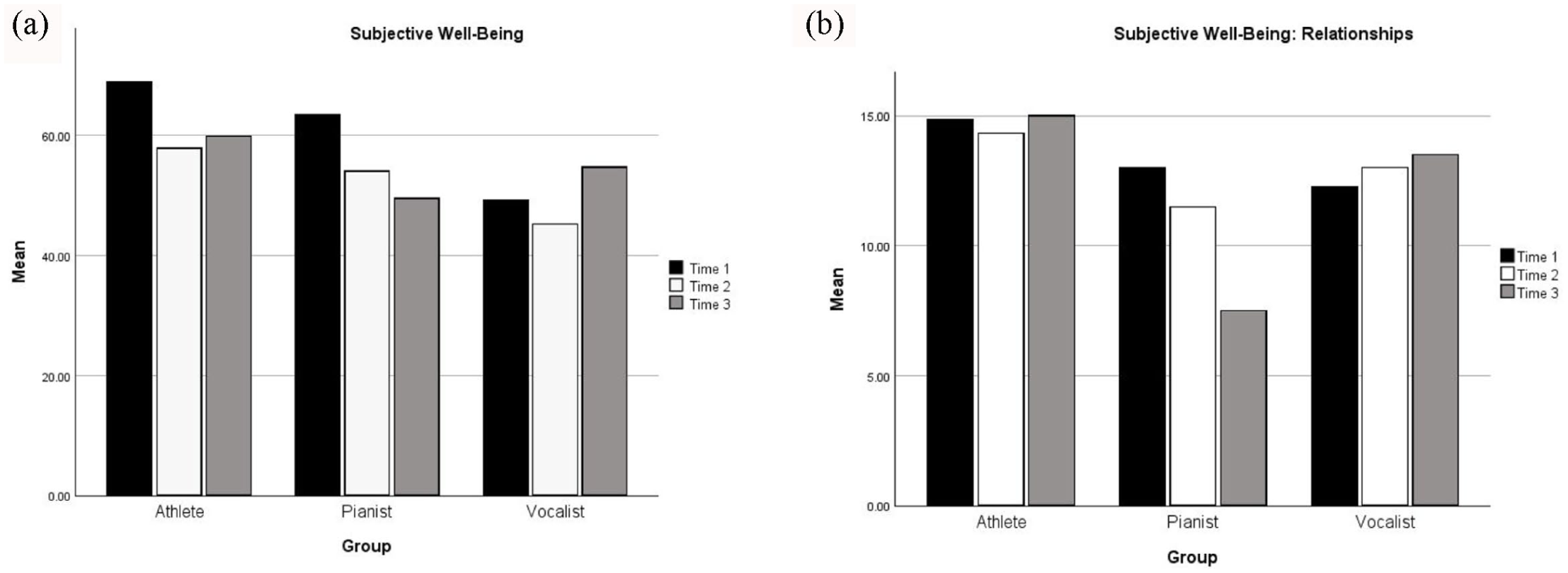
Participants’ scores for (a) global subjective well-being, and (b) well-being in relationships assessed by the BBC Subjective Wellbeing Scale across three time-points among athletes, pianists, and opera singers (vocalists).
Visual inspection of the data indicated that the opera singers reported a higher number of stressors compared to athletes and pianists, and their rating of stressors remained high across all points of the study (Figure 2). The athletes reported moderate and steady levels of stressors across all three time points, while the pianists had lower levels of stressors with an increase in the number of stressors reported by pianists at Time 2.
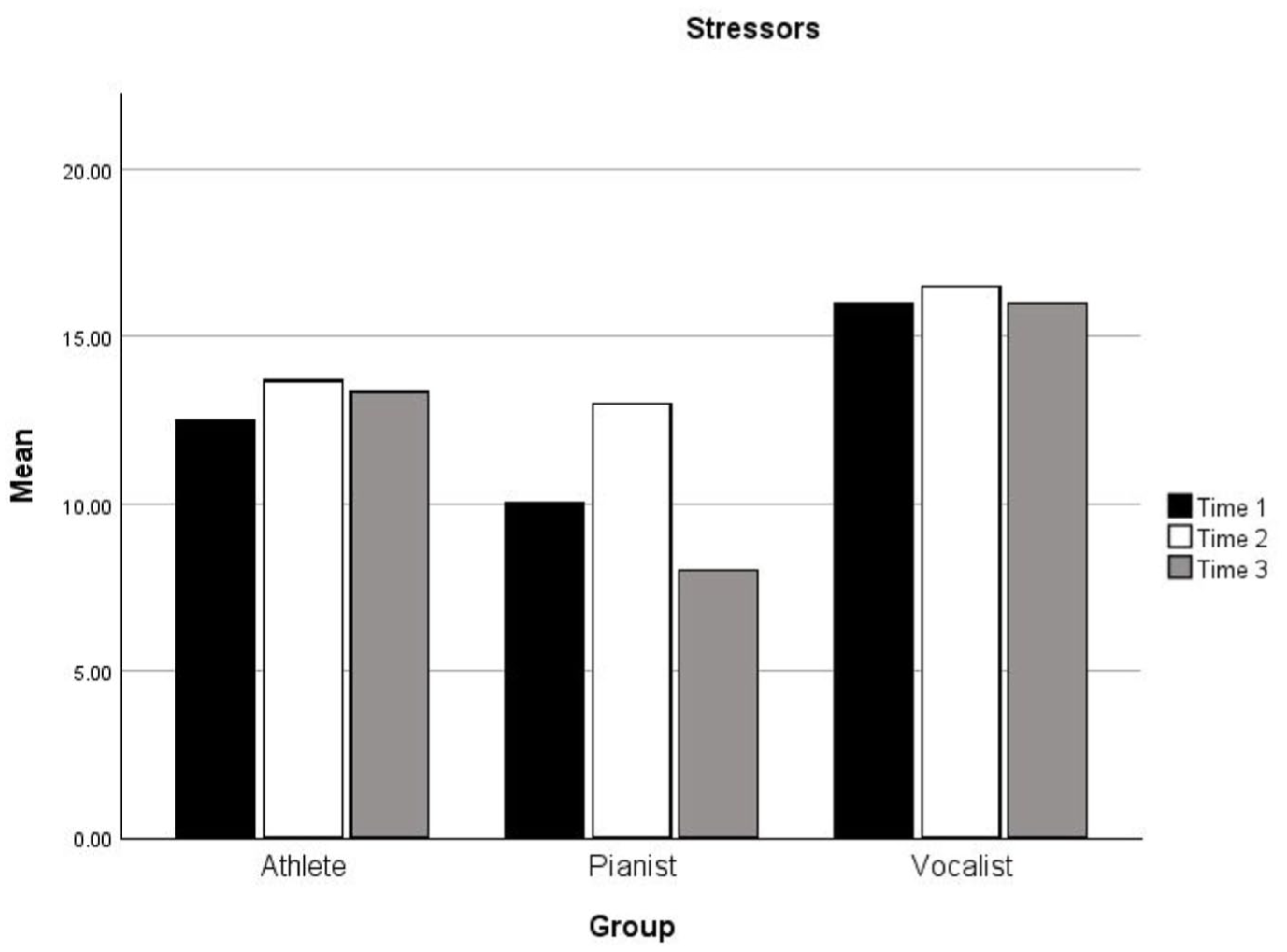
Global stressor scores assessed by the BDSST across three time points among athletes, pianists, and opera singers (vocalists).
All participants reported high scores for coping self-efficacy to engage in problem solving to deal with stressors (Figure 3(a)). However, athletes appeared to report greater self-efficacy to stop unpleasant thoughts and to seek support to deal with stressors (Figure 3(b) and (c)). Notably, pianists appeared to report lower scores concerning their self-efficacy to seek support and to stop unpleasant thoughts to cope with stressors.
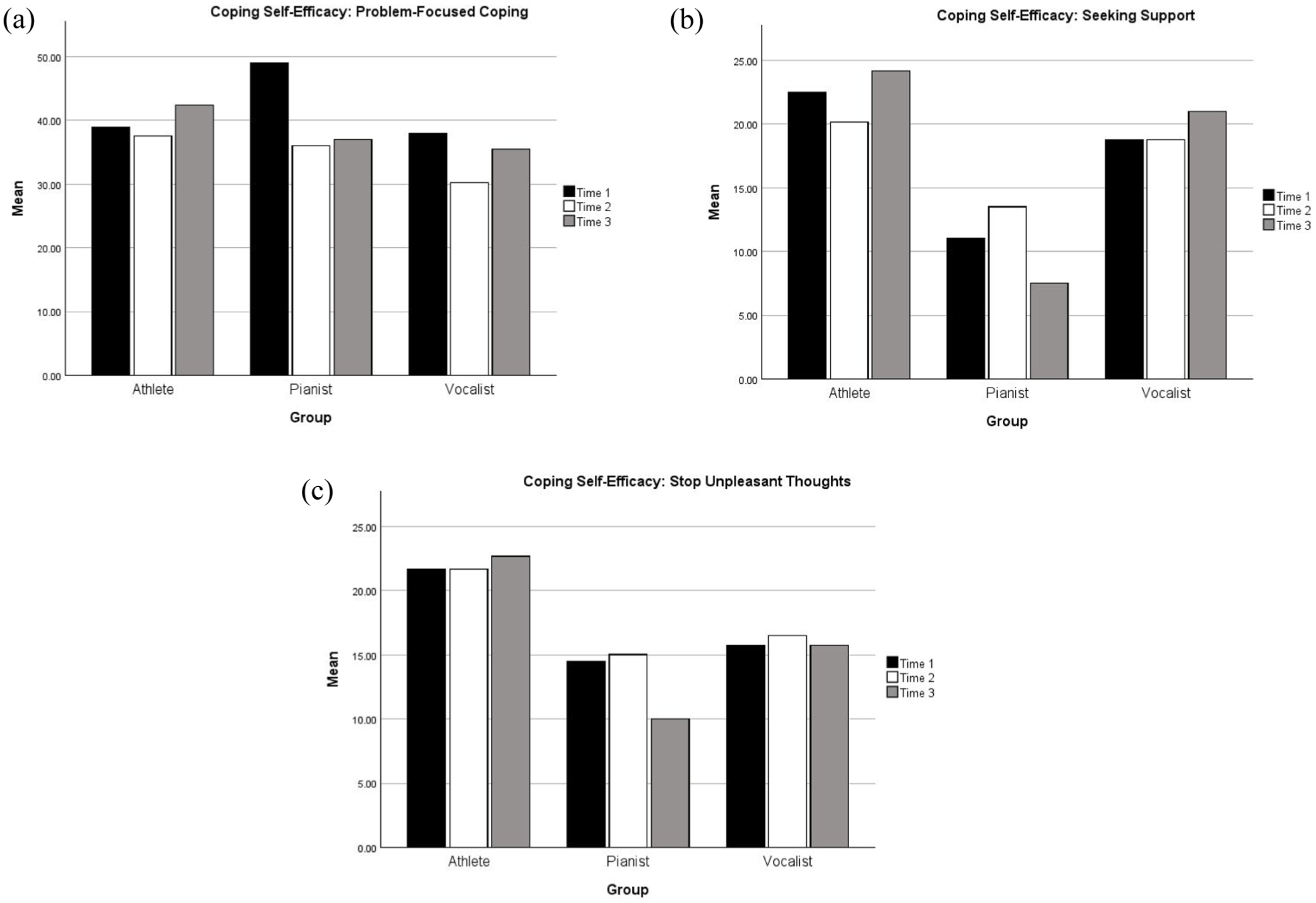
Coping self-efficacy assessed across three time points among athletes, pianists, and opera singers (vocalists). (a) Participants’ scores for coping self-efficacy to engage in problem solving; (b) scores for coping self-efficacy to seek support to deal with stressors; and (c) participants’ scores for coping self-efficacy to stop unpleasant thoughts.
Integration of quantitative and qualitative results
The performers discussed similar stressors throughout their interviews. The most discussed stressors were a lack of social opportunities, inability to train and perform, concerns about identity disruption, and impacts on career prospects.
Lack of social opportunities
All participants discussed that they missed social interactions and relationships, although the pianists’ scores for subjective well-being in relationships appeared to decline more noticeably across the three time points. For instance, pianists shared that their opportunities to collaborate with other performers were disrupted due to the pandemic:
Just not being able to play with colleagues and just friends, there’s a huge part of just social aspect of music faculty that you know we would just—if we’re just all, you know, at the lounge and with a bunch of pianists, we would just go to room and like start doing some sight reading or, you know, piano duets or stuff like that. (P6, T2)
Similarly, athletes primarily discussed missing out on interacting with their teammates: “Just sadness, too. So you, you miss being with the team, right? We didn’t get to connect the same way we used to” (A14, T2).
In addition to missing opportunities to interact with their peers, the opera singers and pianists also discussed missing the social aspect of an audience during their performances, which was a key difference in the social aspects of athletes’ experiences compared to the opera singers and pianists: “I’m pretty sure I’ve mentioned that multiple times in previous interviews, but like having that live interaction is really important for any kind of performance arts” (P1, T3). While the pianists and opera singers were still able to perform virtually, the lack of a physical audience negatively impacted their experience of performing: “It’s almost like real performance is not a thing, like you don’t have that feeling of being in front of an audience, so you’re not getting that feedback” (O16, T1). Thus, it seemed that the sense of connection that athletes missed during the pandemic restrictions was related to their lack of interactions with teammates, while the pianists and opera singers seemed to miss interactions with their fellow musicians as well as the connection they felt with audiences when performing. These distinctions in the restrictions on social opportunities may have contributed to the differences in the performers’ scores on their subjective well-being in relationships across the study period.
Inability to train and perform
Performers across all three groups discussed the inability to physically access training spaces (i.e., studio, gym) to continue training, and therefore had to adapt their home environments to their training needs:
I have no access to ice. I’ve been on the ice . . . two weeks in the last ten months, pretty much. I’m usually on the ice five days a week . . . and I’ve barely been in the gym. All around, I’d say my ability to be an athlete in my day-to-day life is pretty much non-existent. (A11, T2)
Other athletes were able to exercise with modification in their home setting: “Um, so the whole summer, like, we were doing like Zoom workouts and stuff. Um, not so much basketball wise, but strength and conditioning we did like, Zoom work outs” (A12, T1). Hence, both musicians and athletes missed vital aspects of their specialized training spaces, albeit for varied reasons: hockey and basketball players lacked access to ice rinks and gyms with basketball hoops, while pianists and opera singers lacked access to rehearsal rooms with pianos and soundproofing.
These adaptations may have proved especially difficult for pianists, as lack of access to a piano at home meant they could not practice at all during initial phases of lockdown, and for those who shared living space, whether they were living with roommates or in an apartment building, they described unique concerns regarding their ability to practice. The concern over noise when practicing was a stressor discussed most often by pianists and opera singers: “It has impacted my ability to practice . . . I did get noise complaints in my apartment, so that was another stress factor to deal with” (P2, T2). Once restrictions started to lift, pianists were able to book times to access shared student pianos at their school; however, having to schedule the sharing of equipment with other students may have posed another barrier for the pianists:
At first, I think everyone was panicking ’cause they put out this email that said you can only register for two hours a day. Um . . . and most serious musicians practice much more (than) that. That’s like six, seven hours a day. Something like that, right? (Interviewer: Yeah). Four at least maybe so, like everyone was like two hours, that’s like the end of this career basically. (P4, T1)
This quote illustrates amount of time spent practicing that this pianist perceived as necessary in order to develop the proficiency required for their long-term career. While opera singers and athletes shared the general concern about reductions in practice time, the magnitude of the reduction in training time was described more strongly by the pianists. The greater salience of the time reduction for pianists may be due to their expectations for typical practice times. Pianists may have been be accustomed to practicing for longer periods of time compared to opera singers or athletes without accumulating physiological training demands or fatigue at the same rate, due to the differences in the physical demands of their practice sessions. Hence, pianists being limited to 2 hr of practice time per day during the pandemic may have been a much larger relative reduction in practice time, and was therefore seen as a greater setback to one’s career as a pianist.
Identity disruption
Due to challenges caused by the pandemic, many of the participants discussed experiencing some kind of disruption to their identity, as they were unable to participate in activity that was a salient part of their identity:
You’re like, “well, this could be it, like maybe I’ll never play again.” And then you’re like, “oh, what, like what am I gonna do with my life?,” and really gets you thinking ’cause you got nothing else to do right? (A10, T3)
The pianists and opera singers discussed a greater disruption to their identity than athletes. The pianists’ and opera singers’ identities were also connected to their education and identity as university students pursuing a Bachelor of Music; most of the participants discussed the intention to pursue a career in music, whether that be continuing to a graduate level program, teaching music, or performing. Thus, the opera singers and pianists were in a unique position as both their educational and professional identities were called into question: “I think Covid really redefines what a performer means and like, an artist’s role is in um, like today’s society” (P1, T1). When asked about her experiences during the pandemic, an opera singer shared, “It’s pretty hard. I had a complete identity crisis because being a singer for so long, and being so serious about it, it’s a big part of who I am, and that made me have to take a look at who I am outside of music, which has been really scary” (O17, T1). Conversely, the athletes may have only experienced identity disruption for their athletic identity, as they were completing degrees that were outside of sport, providing an alternative identity to focus on (i.e., careers outside of sport): “I’m doing a double major in criminology and French, and a minor in sociology right now . . .” (A14, T1). Similarly, another athlete who was completing a Bachelor of Science in Medical Radiation Sciences degree said that they had been contemplating a sport career in Europe after graduating, although they acknowledged that if their sport career did not continue, “I’m going to graduate in April . . . so the idea is like, you know, to move on . . . wherever that is, I don’t know. But I feel like I have a good degree to land on” (O8, T1). Hence, it seemed the opera singers and pianists were experiencing a “double identity disruption” to their future careers as performers and for their educational pathways, whereas the athletes may have only been experiencing a “single identity disruption” during the pandemic.
For many opera singers and pianists, not having an audience made performing seem useless; if there was no live audience, then there was little point to performing:
I have nothing to be singing for other than what [it] feels like myself. Um, so why am I doing this, what is it that I’m trying to say? As an artist. And what am I trying to do with this thing that I [have] become very good at? Um, yeah like, what am I trying to do? (O17, T1)
The opera singers and pianists discussed whether they believed performing music was going to continue to be an important part of society post-pandemic; this was a reflection unique to these participants, as athletes did not discuss whether they thought sports were going to continue to be an essential component of society once the pandemic restrictions were lifted:
What the pandemic has caused me to do is reflect a lot on the, um, uh, I guess whether or not music is essential, right? Because we’re being told that a lot of things are not essential . . . it’s caused me to reflect on how much I want to be pianist or, uh, what roles I could see myself doing . . . when it comes down to it, like this is not what I want to be doing for the rest of my life, so I’ve been reflecting a lot more uh, in that regard, as like my role as a pianist and my role, I guess, in society. (P2, T2) I . . . feel like musicians have been left out of the. . . left out of the game. . . . I saw like some tweet recently . . . it was this governor thing, “if you’re a musician, you should retrain” [for a different career]. And I was like, “what the fuck? Are you kidding me?” (P3, T1)
Overall, it seemed that the pianists and opera singers felt that their educational and vocational paths were invalidated and diminished by broader messages about what were considered ‘essential’ roles and jobs in society, which may have been an underlying reason for the opera singers’ higher and stable scores for the stressors experienced across the three timepoints in this study. By comparison, most of the varsity athletes in this study had not exclusively focused on sporting careers post-graduation, and their education and university programs were not specifically linked to their athletic pursuits. Thus, the separation between athletes’ sport careers and their educational pathways may have minimized the potential threats they perceived the pandemic would have on their long-term engagement in sport.
Impacts on career prospects
Time is running out: Athletes’ careers are time-limited
One aspect that was unique to the athletes was the notion that they were running out of time for their athletic careers. Student athletes are typically limited to a 4- or 5-year career in varsity athletics, therefore there is an emphasis placed on taking full advantage of playing time at this level. At the start of the pandemic, it was unclear when athletes were going to return to play, and as time progressed, athletes seemed to move further from their ability to return to play: “I have potentially five years to play, like, probably the most competitive hockey in my life and I’m probably not going to play for two of those five years” (A11, T3). Given that most athletes do not continue to compete at high levels in their sports after the end of their varsity careers, this was a unique concern among the athletes.
Nowhere to play: Opera singers’ and pianists’ career opportunities disappearing
Due to pandemic closures, opportunities for in-person auditions and performances substantially decreased, if not disappeared, and this severely limited perceived career opportunities, which was a prominent stressor discussed by the opera singers and pianists:
You really need to build those experiences of performing live, like throughout your school period, and then just slowly evolve into being more professional, right? But right now everybody just, um doesn’t have that kind of opportunity to do that. So it really sucks. (P1, T2)
Participants discussed that having more in-person performances legitimized themselves as a professional performer; however, given that these opportunities were removed, they could not continue building a professional portfolio. When the pianists and opera singers were asked if they had a clear sense of their goals, their responses were often looking ahead to career prospects or potentially changing their career goals:
I think I have an idea of the sort of direction I want to go in but there’s so many unknowns that I have to just, yeah I think I’m just feeling my way right now. I think that so much has changed as a result of the pandemic in opera and in music that I have to figure out a way not just to educate myself right now but just put myself out into the world in creative ways. (O16, T2)
Relatedly, several of the opera singers and pianists mentioned that they worked as music teachers on a part-time basis, and discussed the option of pursuing a career in teaching music more seriously in the future: “I would definitely be interested in teaching piano . . . I do teach privately right now . . . I can’t really say that I have a concrete job that I have in mind, aside uh from teaching piano in academia” (P2, T1). However, only one athlete mentioned the possibility of pursuing a future career in coaching. Overall, the uncertainty that the opera singers and pianists noted regarding limited opportunities for in-person auditions appeared to compound their concerns about future career pathways, and also led them to have to consider alternative career options that could still be connected to their musical training in some way.
Discussion
These results shed light on the ways that performers in different domains were impacted by disruptions due to the Covid-19 pandemic. Pianists, opera singers, and athletes all experienced disruptions to their opportunities to practice and perform; however, each of the performance groups dealt with unique challenges. The greatest overall impact experienced by performers was on their identity and how they navigated closures of performance opportunities caused by the pandemic.
The quantitative data from the present study suggested that athletes’ higher and relatively stable scores for overall well-being and well-being in relationships may have protected them to some degree from the perceived impact of the pandemic. Additionally, the qualitative data indicated that individuals who identified more strongly with their role as a performer may have experienced a greater impact from the unexpected changes caused by the pandemic and may have felt a greater sense of loss and decreased motivation during this time (Henriksen et al., 2020). Furthermore, the pandemic and closure of opportunities to perform for others perpetuated a questioning of one’s identity when the opportunity to perform was no longer possible for opera singers and pianists. Disruptive events can call existing identities into question and require individuals to reconfigure their identities in light of new conditions (Habermas & Kober, 2015). Opera singers and pianists in the present study, but not athletes, discussed their uncertainty surrounding their pursuit of a performance-based career, citing that they were unsure if it would still be considered relevant in a post-pandemic world. Identity disruption can be associated with a loss of meaning and purpose in life, role disruption, and loss of self-worth (Mitchell et al., 2020). Athletes may have viewed restrictions as a temporary pause to one aspect of their lives, but musicians viewed it as a potential threat to their livelihood and future career, as many of the opera singers and pianists discussed anxiety about a career in the music industry and experienced uncertainty around future career prospects. This aligns with previous research in which participants discussed career uncertainty; many younger participants shared similar discussions of distress around losing career prospects (Cohen & Ginsborg, 2021). Cohen and Ginsborg (2021) reported that musicians discussed expanding their work to include areas outside of performance, such as teaching music. This was echoed in the present study, as multiple opera singers and pianists discussed the prospect of teaching music in addition to (or instead of) performing, which was not something they had previously considered. Uncertainty about future career prospects has been reported in multiple studies (Antonini Philippe et al., 2020; Spiro et al., 2021), demonstrating that this was a common experience for musicians as a result of pandemic-related closures and loss of performance opportunities.
The nature of athletes’ identity disruption in relation to their career prospects may be due to the different time spans over which athletes typically engage in high levels of competition compared to pianists and opera singers. Typically, varsity athletes exit their sport following their university career, and there is a small demographic of athletes that continue to play professionally; the NCAA reports that only 2% of athletes will do so, while the other 98% will transition out of sport at the end of university (Stokowski et al., 2019). Conversely, approximately 50% of music alumni are estimated to pursue careers in music-related fields following graduation (Brook & Fostaty Young, 2019). Given that fewer athletes likely anticipated pursuing sport after graduation compared to the musicians in the current study, the athletes’ perceptions of their future career span may have impacted their perceptions of the pandemic and missed training and competing opportunities, which was highlighted by the idea that time was ‘running out’ on their career as an athlete. Similar to results discussed by Whitcomb-Khan et al. (2021), athletes who found themselves close to retirement from sport reported feeling that their time as an athlete was being taken from them. Thus, the short-term impact of not playing sport may have had a more immediate impact on the athletes and contributed to a sense that the end of their career was “accelerated.”
Identity typically remains fairly stable across early adulthood, and most adults maintain a continuous sense of self that gradually adjusts in relation to their life experiences (Brandtstädter & Greve, 1994; Carlsson et al., 2015; McAdams, 2001). However, experiencing a disruptive event, like a pandemic, during formative years of a young performers’ career may cause them to reevaluate their identity. The opera singers and pianists were at a unique point in their careers, as many of them were establishing themselves as legitimate performers through their education. Once the ability to perform and grow their portfolio was removed, their identity was unstable. A disruption to this identity may have forced the performers to imagine a different future self, which can negatively impact well-being (Musgrave, 2022). The identity of being an opera singer or pianists seemed more salient to these performers, which may illustrate why they experienced such high degrees of identity disruption.
The differences in the pandemic experiences between high-performers may be related to broader responses to maintain or reduce the opportunities for performers in other settings, and efforts to support ongoing sport competitions (e.g., at higher levels of professional sport) may have influenced broader societal perceptions of the value of sports versus the performing arts. For example, whereas at the start of the pandemic, the National Basketball Association (NBA) suspended the remaining games of the 2019-2020 season, the league determined that NBA athletes could complete the remaining games of their season and playoffs in the “bubble” created for them at Walt Disney World (Alam & Abdurraheem, 2023). These types of efforts to ensure professional sports were able to continue despite lockdown restrictions were not matched by similar efforts to ensure professional musicians were able to continue performing. For instance, the act of singing was being stigmatized due to its potential to spread the Covid-19 virus and there had been multiple reports of choir practices spreading Covid-19 in the early stages of lockdown in America, which were being cited for the hospitalization and deaths of multiple musicians (Vance et al., 2023). The stigmatization of “super spreaders” not only created stress for opera singers, but also led to concerns about when they would return to performing in person. The concerns raised by opera singers and pianists in the current study about their professional and educational opportunities, their future career prospects, their identity as a performer, and about the role of music and performing arts in society may be reflective of these broader issues and the perception of a relative lack of support for musical performers at professional levels compared to athletes.
Limitations
The results of the study should be considered within some limitations. Due to a smaller sample size, we did not explore statistical significance for the quantitative measures. Additionally, the results of the current study are unique to the context of performers at a large university in Canada; sampling performers from other settings may have provided further insight into the impact of the pandemic for those involved in non-academic settings (i.e., professional opera singers, pianists, and athletes). Financial and work-related stressors (cf. Spiro et al., 2021) were not discussed by participants in the currents study, which may be due to the fact that they were all students at this time during the pandemic and not working full-time. Another limitation was that we did not explore differences in stressors between groups of athletes whose training and competitive environments may have been impacted differently by Covid-19 restrictions (e.g., athletes who trained indoors vs outdoors). Given that two of the athletes were injured at the time of the first interview and survey administration, it is possible that their experiences were different than the other performers in the study, as some injured athletes have reported feeling grateful for the pandemic restrictions as an opportunity to take more time to recover (Bennett et al., 2022). We also did not compare the experiences of students who were athletes, pianists, and opera singers to a control group of students to determine whether there were differences in their experiences during the pandemic. Furthermore, given that this study was completed in 2020/2021, participants’ experiences may have changed in the subsequent time as the pandemic restrictions lifted and as they continued to complete their academic degrees.
Conclusion
The present research adds to the existing literature on the impact of the Covid-19 pandemic for performers in North America. First, the findings confirm that the pandemic was a significant event that created stress for performers. It seemed that different performers fared better or worse during the pandemic, depending on how closely their identity was tied to their performance domain and the degree of disruption they experienced. While athletes noted benefits such as recovering from injury and focusing on other life pursuits, opera singers and pianists discussed greater concerns about disruptions to their identity, which had a negative impact on their well-being. Educators and administrators could implement vocational counseling and career planning for athletes, opera singers, and pianists to consider the various pathways they could pursue post-graduation. Additionally, efforts to foster supportive peer relationships in various ways (e.g., regular in-person and online gatherings) as well as implementing formal peer mentoring programs could also help to support high performers during their education and particularly during times of adversity. Future research should continue to investigate how performers manage their identity during disruptive events, and to investigate identity formation for university-level performers.
Footnotes
Acknowledgements
We would like to thank Morgan Reid and Pei-Chen Chen for their assistance with this project.

Funding
The authors received no financial support for the research, authorship, and/or publication of this article.
Declaration of conflicting interests
The authors declared no potential conflicts of interest with respect to the research, authorship, and/or publication of this article.