



Abstract
Live music events (including concerts, shows, and festivals) have been central to community gatherings for many years, but the extent to which audience members experience social benefits during these events is not yet clear. In this systematic review, we review research on shared live music experiences to understand the scope of these initiatives, the quality of the research, and their social impact across different genres and types of live music events. The pre-registered review was conducted using eight search engines, selecting for peer-reviewed papers published in English between 1990 and 2023. The 56 papers included in the review (comprising 59 studies) represented a range of live music event types and incorporated qualitative and quantitative methods. The studies represented data from over 17,991 participants and most were conducted in Western countries. The Critical Appraisal Skills Program (CASP) Checklist for qualitative research quality assessment showed that most studies were of high quality. The social impact of live music event participation was rich and diverse and could be broadly categorized into four broad themes: Opportunities for Connection; Shared Experiences and Values; An Empowering Community; and A Sustained Sense of Community. Live music was associated with an extensive range of social benefits, broadly independent of the event’s type or genre. The impact of live music events is interpreted through various theoretical lenses including Self-determination, Social capital, Social identity, Collective effervescence, Third place, and Belongingness theories. The evidence reviewed here demonstrates that live music events produce a range of important social benefits for participants and offer great potential for a community-based non-clinical solution to loneliness. Future studies should aim to include a diverse range of participants, ensuring the representation and inclusion of various equity-seeking or marginalized groups, to understand how they can also experience the social and community-building benefits of live music events.
Keywords
Music activities are inherently social, capable of fostering connections and nurturing a sense of belonging to a community. It is not surprising then that the social functions of music have been researched extensively. Evolutionary theorists, for example, have proposed that music’s universal presence across cultures and historical endurance may stem from its capacity to unite many members of a group, extending the bonding potential of language or physical interaction (S. Brown, 2000; Cross & Morley, 2008; Savage et al., 2020). The affective content of music contributes to social bonding, particularly when language is not available such as between mother and child (Weinstein et al., 2016). Sharing of emotions can create a sense of community through mechanisms of emotion contagion, empathy, and prosocial behavior (Clarke et al., 2015; Fraser et al., 2021; Páez et al., 2015). Socioemotional benefits of music have also been observed across the entire lifespan, including effects of music training on schoolchildren (Rickard et al., 2012; Schellenberg et al., 2015) to the effect of choir groups for older individuals (Dingle et al., 2021; Maury et al., 2022; Maury & Rickard, 2022).
It is not only music production (such as playing and singing), however, that yields positive social outcomes. Music reception (listening) can also create a sense of togetherness through shared experiences. Collective movement synchronized to a rhythm can be physiologically arousing, promoting action readiness and shared purpose across a large group (Huron, 2001; Koelsch, 2013; Tarr et al., 2014). Music preferences and fandom are well-established means of forming and maintaining a shared social or cultural identity (Bennett, 2000; Boer et al., 2011; Rickard & Chin, 2017). The role of music preference as a ‘badge of identity’ reflecting shared values and behaviors appears to be particularly important for adolescents who are at a critical stage of their identity development (Frith, 1981; Lamont & Hargreaves, 2019). In fact, a scoping review of 63 studies in which music activities were used for health and well-being found that social connection, identity formation, and emotion mechanisms were active ingredients in most studies across the eight categories of music activity which included music listening, dance, and sharing music (Dingle et al., 2021). However, the social outcomes of participating in live music events as an audience member has been subject to less systematic analysis.
Live music events—such as concerts, shows (or gigs), and music festivals—have the potential to amplify many of the social benefits of music. Sharing emotions, movement, and rituals on a large scale can trigger the intensely communal experience of ‘collective effervescence,’ binding a crowd together with a shared sense of purpose and excitement (Durkheim, 1912/1995; Kelly et al., 2014; Liebst, 2019; von Scheve & Salmela, 2014). Music experienced in the context of a live event is also more likely to elicit positive and intense emotions (Gabrielsson, 2011; Lamont, 2009) and emotional resonance (A. Brown & Novak, 2007), enhancing the potential for feelings of unity amongst attendees. The presence of large numbers of attendees at live music events also means that people from different demographics and cultures might interact, increasing the opportunities that interactions might bridge traditional social or cultural boundaries. Furthermore, the rituals and distinctiveness of music events can create ‘liminal spaces’ in which self and social identity is explored (Jaimangal-Jones et al., 2010; Wu et al., 2020). Interestingly, a correlational study found that people who attended live music events reported higher satisfaction with their relationships and community connection than those who did not attend live music events (Weinberg & Joseph, 2016). Live music events are not, however, homogenous, so demographics of attendees (e.g., age, equity group membership) and features of the events (e.g., event types, music genre, in-person vs online) may also moderate their social effects.
This systematic review therefore aimed to explore the evidence for social outcomes of participating in live music events for audience members. A broad range of synchronous live music events—ranging from festivals to concerts and shows, as well as online streaming events—were reviewed. To this end, two primary research questions were explored:
What is the scope of the evidence (in terms of representativeness of populations including equity groups, types of music events, study methodologies and quality) exploring social outcomes of live music events?
What types of social outcomes across various live music events are reported in the available research?
Method
A mixed-methods systematic review was conducted to review quantitative, qualitative, and mixed-methods studies. The PReferred Items for Systematic review and Meta-Analysis Protocols (PRISMA-P; Shamseer et al., 2015) was used to guide planning and reporting for this review. In accordance with these guidelines, this systematic review protocol was pre-registered with the International Prospective Register of Systematic Reviews (PROSPERO) on 8th January 2023 (Registration number CRD42024500209).
Search strategy
The search strategy was developed by two of the authors using the SPIDER conceptual framework; Sample (adult audience members), Phenomenon of Interest (live music events), Design (survey, interviews, observations, behavioral measures) and Evaluation (social well-being outcomes) and Research type (qualitative, quantitative, or mixed methods). An initial draft was developed and piloted, and then reviewed for its capacity to capture known relevant studies. Modifications were made to the search strategy to ensure relevant records were identified and to reduce false hits. The search strategy was adapted for each database (see Appendix 1 for full Search Strategy). Both quantitative and qualitative studies addressing the research question were sought. Records were restricted to English language publications, published (or in press) between 1990 and 2023, and published in peer-review journals. A systematic search was conducted using the following databases: EBSCO (incorporating Academic Search Complete, Medline, Music Index, RILM Abstracts of Music Literature, SocINDEX with Full Text databases), Web of Science, Ovid PsycInfo, and Scopus. Identified records were stored in Endnote with title, abstract, keywords and record administrative information, and sub-directories for each level of screening were created throughout the review process within the Endnote library. The final search run was conducted on 6th September 2023.
Eligibility criteria
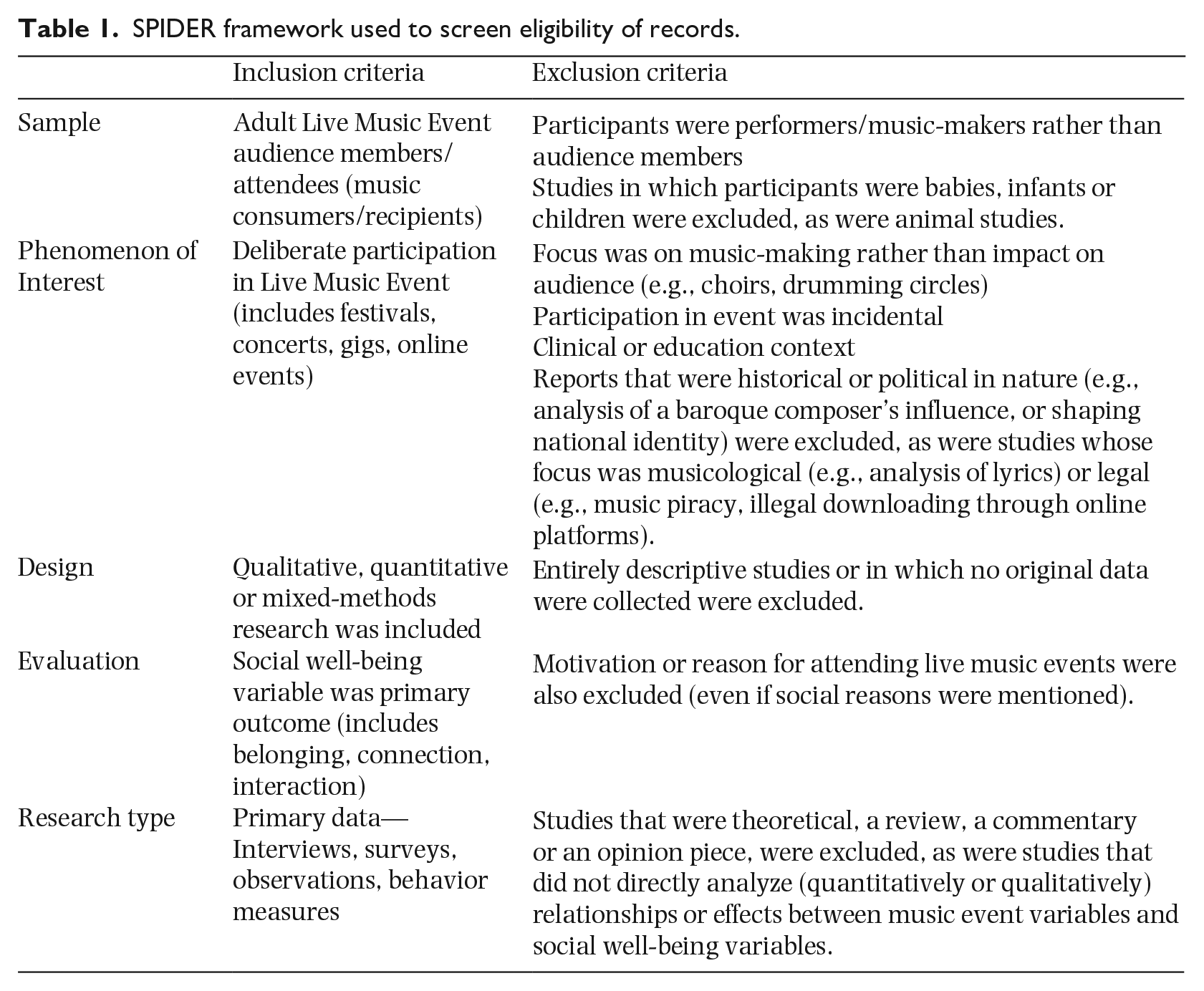
Studies were selected according to the criteria outlined in Table 1, which utilised the SPIDER framework due to the inclusion of quantitative, qualitative, and mixed-methods studies (Cooke et al., 2012).
SPIDER framework used to screen eligibility of records.
Pre-screening and screening
Articles were selected following two rounds of screening (see Figure 1). Titles and abstracts were pre-screened by two of the authors for all duplicates records and obvious exclusions. Screening of a subset of titles and abstracts was then performed by two independent raters against the inclusion/exclusion criteria. A small number of conflicts were identified, with discussion between the screeners and clarification of the inclusion criteria resolving disagreement in all cases. As 100% interrater agreement was then achieved, one author completed the remaining screening of titles and abstracts (McDonagh et al., 2013). Full-text reports were obtained for all titles that appeared to meet the inclusion criteria and were reviewed by one author to confirm inclusion criteria had been met. Reasons for exclusion were recorded. Due to the need to cross-check details across full-text versions of papers, neither author was blind to the study authors, affiliations or the report title.
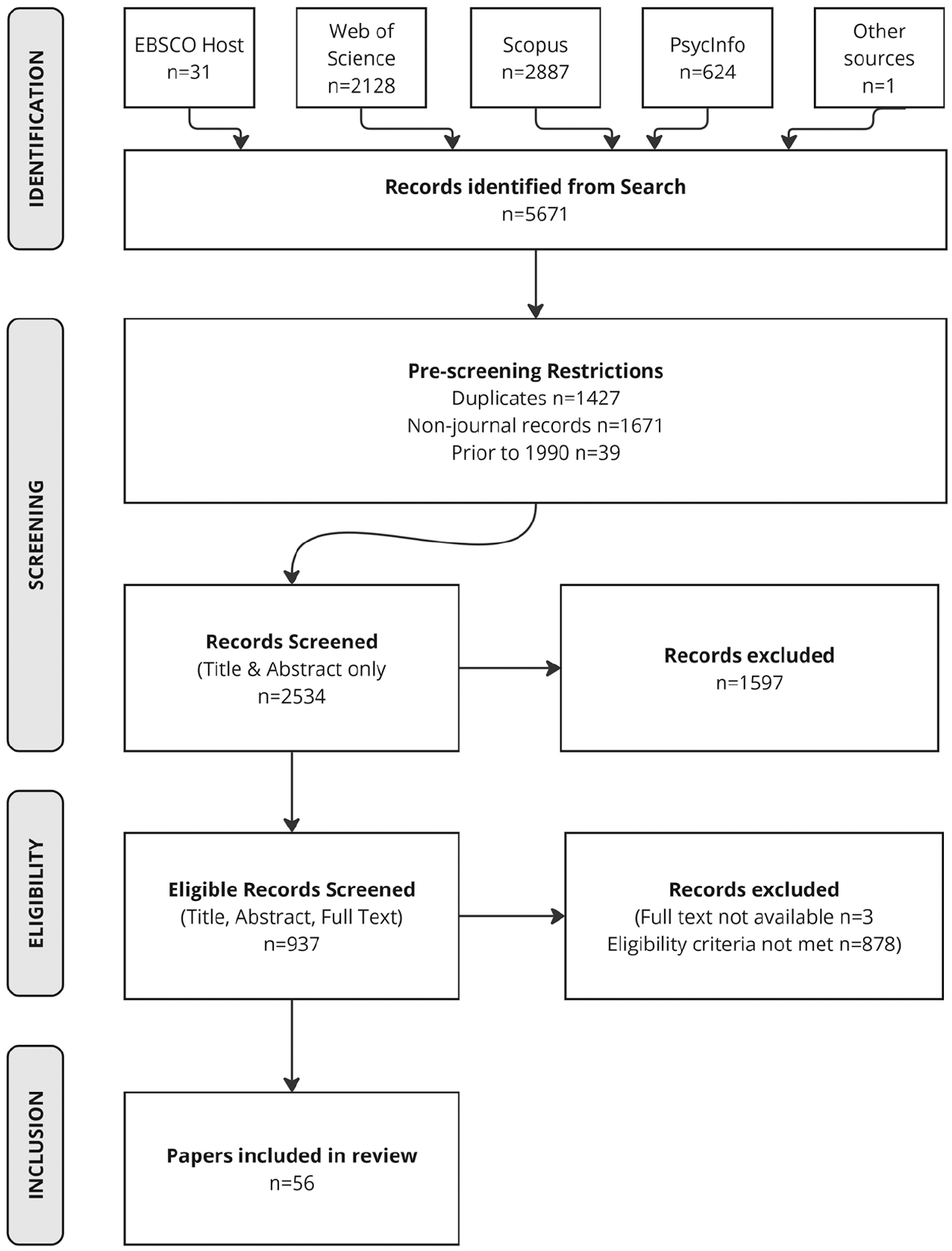
PRISMA flow diagram for systematic search of records.
Data coding
Data coding was performed primarily by one author who was experienced in extracting data for systematic reviews. A second author independently verified accuracy of data extraction for a subset of papers. As no differences in data extracted were noted, duplication of coding was deemed redundant. All extracted data were recorded in Excel software. Data extracted for coding included Authors, Year of publication, Population details (sample size, age, country/nationality, and membership of equity group if provided), Music event details (event type [e.g., festival, concert, livestream], and music genre), and Study details (study design [e.g., qualitative, quantitative], primary social outcome variables and key findings relating to social outcomes), and exemplar quotes (for qualitative studies only; see Supplementary Table 1).
Quality assessment
As the majority of studies contained qualitative data, the Critical Appraisal Skills Program (CASP) Checklist for qualitative research (CASP, 2018) was used to appraise the quality of each study. This checklist consists of 10 criteria to assess study quality, the first two of which (“Was there a clear statement of the aims of the research?” and “Is a qualitative methodology appropriate?”) act as screening items, beyond which no further assessment is done if not met. Question 2 which asks, “Is a qualitative methodology appropriate?” was adapted for quantitative, qualitative and mixed-methods studies by asking “Is the research methodology appropriate?”
Data synthesis
Frequency data were compiled to summarize the characteristics of the reports included in this review. The variables analyzed included frequency data for study publication date and country, participant age and gender, study design, event delivery (online/in person), event type, and music genre. Given the range of study designs, small sample sizes, diverse participant groups, and assessment tools used across studies, we approached data synthesis using a narrative approach (Campbell et al., 2018). Key effects emerging from the quantitative studies were described, and where possible effect sizes reported.
All studies except the three experimental studies were explored to identify the key social outcome themes or concepts relative to the review research question using an inductive approach, as well as identifying patterns across studies (Braun & Clarke, 2021; Popay et al., 2006). This involved two authors familiarizing themselves fully with the coded data and creating additional variables (including references to social theory, broader music genre, barriers, and enablers) which helped group similar studies together. Patterns across groups of studies were explored using various data filters from which similarities could be more easily recognized. Potential themes were identified from topics that recurred or were similar across studies, appeared to be important or transitional for participants, or were notable for their distinctiveness from other studies (G. W. Ryan & Bernard, 2003). While analysis was primarily inductive, content that related to social theory was also noted as important. The data were then again reviewed by the senior author to clarify broad themes and provide an informative name for each theme. Exemplar studies and illustrative quotes from qualitative studies were highlighted for each theme.
Results
In total, 56 papers, including three papers containing multiple studies with different methodologies, were included, yielding a final sample of 59 studies (see Supplementary Table 1). The total number of participants in these 59 included studies was 17,991.
Scope of evidence exploring social outcomes of live music events
The majority of studies reviewed were published in the past 5 years (see Figure 2), suggesting this topic is generating increasing research interest.
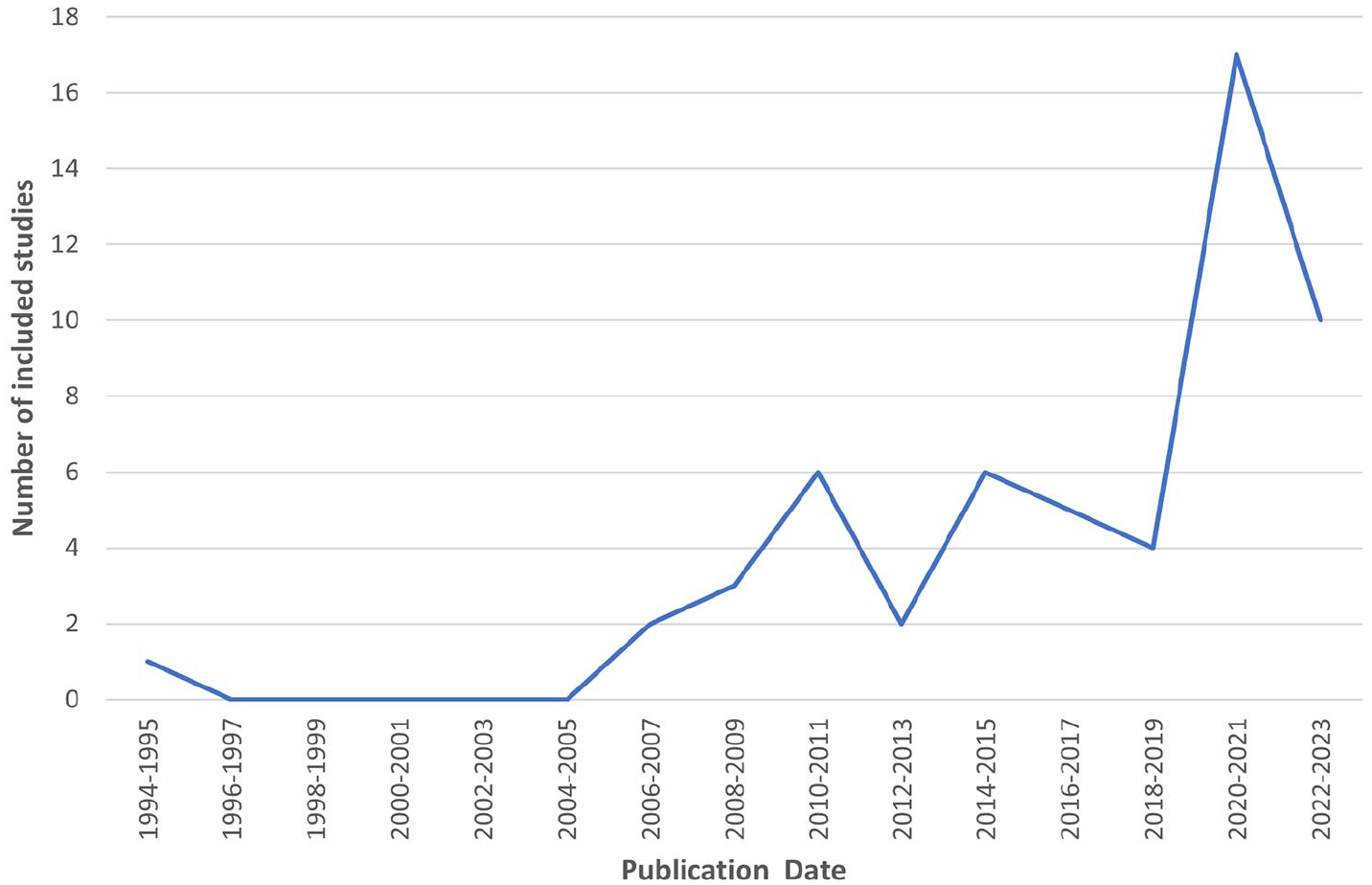
Publication dates of the reviewed studies.
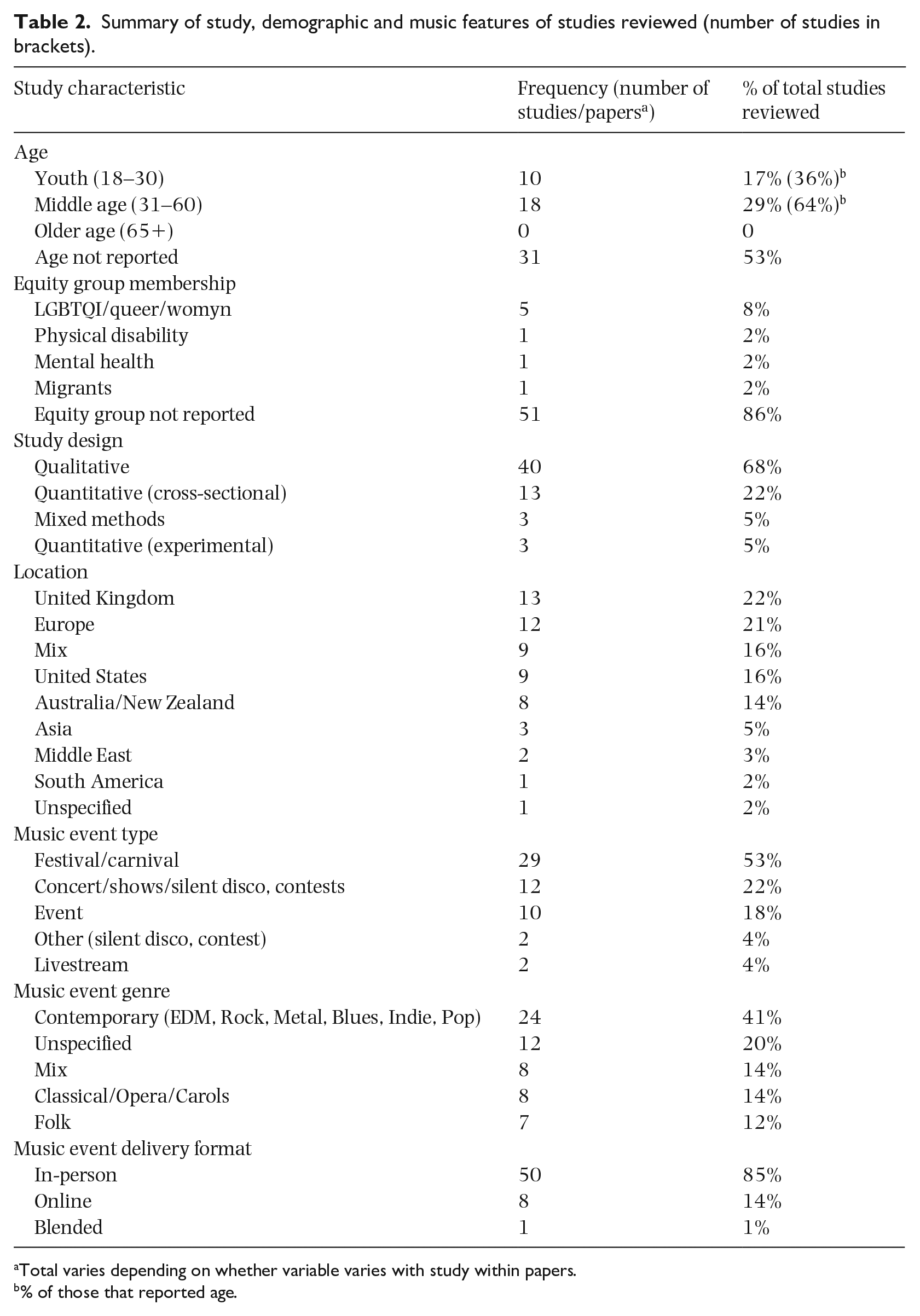
Half the studies (50%) did not report participants’ age while 44% did not report gender (see Table 2). Of the 28 studies that did report age, 64% of studies had a sample with median or mid-range (as some studies only reported an age range) between 31 and 60 years, and none had a mean age over 60 years. Of the 34 studies reporting gender, 54% of sample was female (although reporting of non-binary genders was limited). Only eight studies (14%) reported a focus on equity groups (LGBTQI, living with disability, migrants). Only 8% of studies which specified country in which they were conducted took place in non-Western locations.
Summary of study, demographic and music features of studies reviewed (number of studies in brackets).
Total varies depending on whether variable varies with study within papers.
% of those that reported age.
The majority of research study types were qualitative (68%), with most of the quantitative studies cross-sectional (22%) and only 5% of all studies experimental. Almost half (47%) of the live music events reviewed were festivals, with concerts/shows the next most researched event (22%). The vast majority of studies (85%) examined in-person (face-to-face) live music events, with only 14% of studies examining fully online (synchronous) events (and one study examining both). Over 40% of the studies explored music events of contemporary genres (41%), with only 14% researching classical music events.
Appraisal of study quality
The CASP quality assessment demonstrated that overall, the majority of studies were of high quality (see Figure 3). The quality of half the studies was rated as low for the item “Relationship between researcher and participants adequately considered,” with the researcher not demonstrably independent from the subject they were studying (for example, were fans or participants of the event being reported). While this is likely an unavoidable aspect of ecologically valid research in this context and was often noted in the limitations of the report, this lack of independence means these studies were more vulnerable to potential biases (such as experimenter influences). Nearly two thirds of the studies were rated low for the item “Ethical issues taken into consideration,” largely because issues such as informed consent, confidentiality and ethics board approval were not reported in the paper.
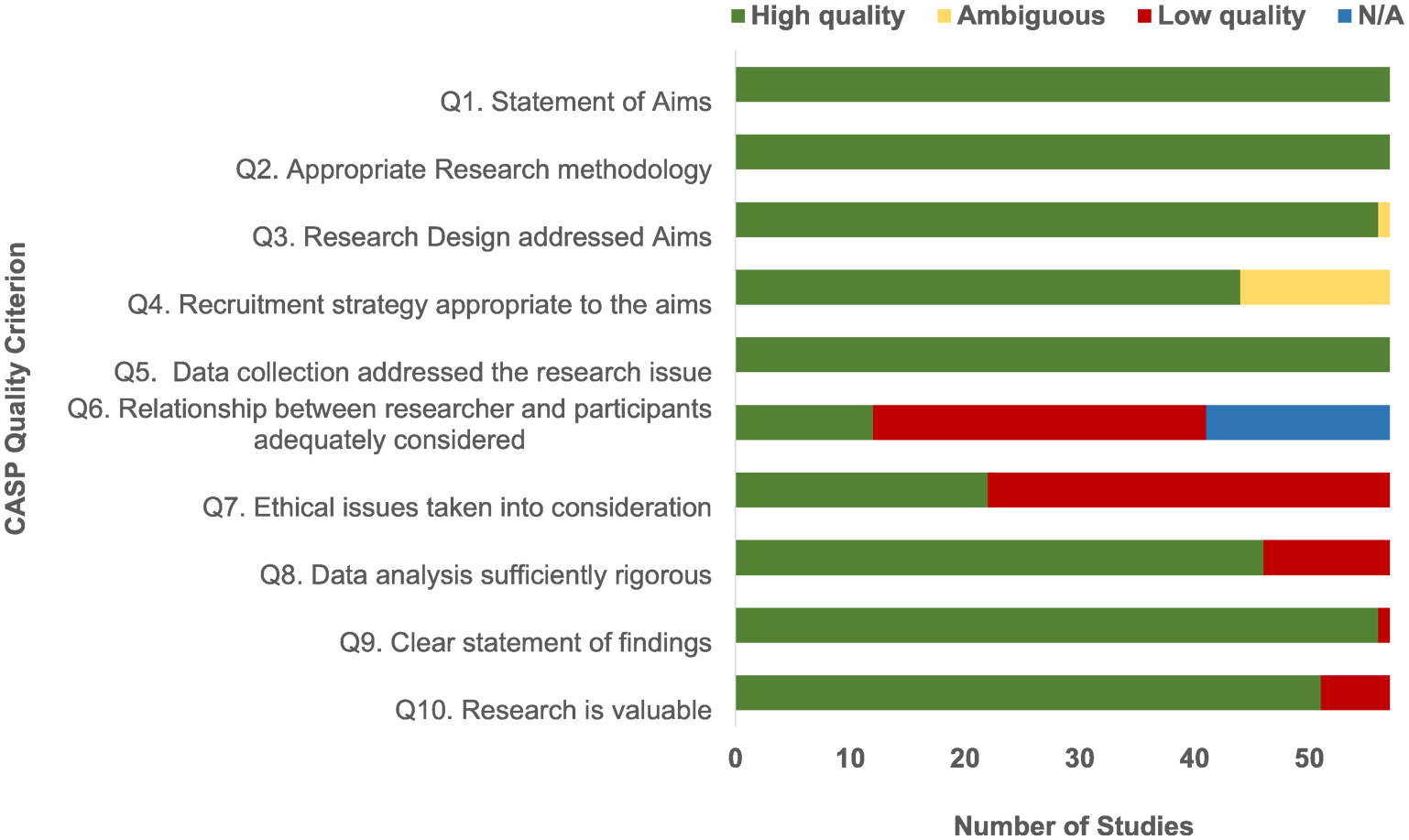
Quality assessment of included studies using the CASP framework.
Social outcomes of participating in live music events
The primary social outcome variables of each included study have been identified in Supplementary Table 1. The data are synthesized separately for quantitative (experimental, cross-sectional, and quantitative component of mixed-methods studies) and qualitative studies.
Quantitative studies
Only three of the included studies employed experimental designs (Bamford et al., 2023; Shin et al., 2019; Williams et al., 2023), providing insufficient data for any meaningful synthesis of effects or meta-analysis. The results of these studies, however, demonstrate small to large positive effects of live music event participation on social outcome variables. Two studies identified mechanisms underlying social outcomes, with Bamford et al. (2023) demonstrating that synchronization of movement enhanced behavioral and subjective measures of social connection during a silent disco, while Shin et al. (2019) found that audio and visual realism of online concerts enhanced audience’s sense of social presence, as well as their intimacy with the performer. Audience members in the experimental study by Williams et al. (2023) reported more positive affect toward amateur choristers (including one choir with singers experiencing mental health conditions) after watching short videos of them singing compared with a control activity (eating lunch; large effect size). There was also mixed evidence of positive affect mediating enhanced social connectedness and acceptance of choristers with mental health conditions (small effect sizes).
There were 17 cross-sectional (including mixed-methods studies). Compared to the whole sample, this sub-set of studies was similar in age and gender representation and event type although the classical music genre was represented slightly more (24% compared to 14% in the whole sample). Positive associations between experiences at live music events and social outcomes were observed across all of the 17 cross-sectional studies. Social well-being outcome variables primarily included social bonding with family relatives, friends, and neighbors (Ahn, 2021), community pride and social identity (Berselli et al., 2021; Perez & Bernal, 2017) and unity and safety (Drury et al., 2015). Regression analyses were the most common approach in the cross-sectional studies, providing insight into the relative importance of the music in predicting positive social outcomes compared to social or other elements of the live music event. Several studies found that the “social experience” of live music events was most critical to social outcomes of events. For example, Ballantyne et al. (2014) found that the social experience during festivals was more predictive of social well-being outcomes than the music, festival or separation from everyday life experiences, with benefits enhanced by the duration of attendance, interactiveness of workshops and younger age. Cannon and Greasley (2021) also found that the social experience was most predictive of social well-being, with music and shared values contributing much less.
Interestingly, Ozdemir et al. (2023) found that the festival place and atmosphere predicted young attendees’ social identity more than did the music. Packer and Ballantyne (2011) found that music was the foundation factor for wellbeing, with social experience and festival experience emerging from the music foundation, and Payini et al. (2021) found that music experience and separation from everyday life were stronger wellbeing predictors than the social experience. Lawendowski and Besta (2020) found that attendees who valued the social functions of music experienced stronger connections and self-growth during festivals, while pre-attendance events also enhanced social bonding (Garrido & MacRitchie, 2020). While more challenging to achieve in online events, increasing the social presence of other audience members through virtual reality headsets, Zoom visuals (Onderdijk et al., 2021), good audio quality (Swarbrick et al., 2021) and social media interactions (Ham & Lee, 2020; Swarbrick et al., 2021) also predicted enhanced social connectedness. Qualitative findings from these studies are also included in the analysis of qualitative studies below.
Qualitative studies
Four broad social outcome themes were identified in the synthesis of these data (Opportunities for Connection; Shared Experiences and Values; An Empowering Community; and A Sustained Sense of Community), with sub-themes appearing within each.
Theme 1: Opportunities for connection
Almost half the studies reviewed identified music events as creating opportunities for connection, including connections with known others, with strangers, with performers, across traditional cultural boundaries, and in online spaces. Live music events enabled attendees to spend quality time with family or friends, deepening existing bonds (Ballantyne et al., 2014; Cannon & Greasley, 2021; Rust, 2020). Kinnunen et al. (2020) found that for adolescents, bonding with friends and schoolmates was one of the most important features of attending live music events, which may reflect the importance of defining a social identity away from the family during this critical development stage. Strengthening of bonds was attributed in several studies to the long-lasting memories that were created with other attendees (Harmon, 2020; Harmon & Adams, 2018; Wood & Kinnunen, 2020). For example, an attendee of a country rock concert said, “It helps to strengthen bonds with those whom you are closest to . . . I mean, here we are, however many years later, still doing this, still doing this together, still loving being together, still loving this music” (Harmon, 2020, p. 609). Smartphones and social media were also identified as helping to continue the co-creation of collective memories with friends after the event (Wood & Kinnunen, 2020), with the music providing a scaffold to remember the associated feelings. Positive affect was another regularly cited element of bonding with known others (Wood & Kinnunen, 2020). Wilks (2011) found that strengthening of existing relational ties was, however, moderated by the event’s music genre, with bonding social capital reported by attendees of pop and folk but not of opera festivals.
Even more commonly reported than connecting with known friends and family, however, was making new friends or a more general feeling of unity with the community at the music event. Numerous studies identified music events as providing opportunities for encounters and interactions with others (Aubinet & Malay, 2021; Perkins et al., 2021; Pitts, 2020) even during isolation imposed by the COVID-19 pandemic (Swarbrick et al., 2021). Music was described as providing a “common ground” which made it easy to interact with people they did not know (Chaney & Goulding, 2016; Zhao, 2022). For example, an attendee of a heavy rock festival reflected that, “this is about enjoying yourself . . . mixing with friends you know and making new friends. You’re all here, listening to the same bands, so at least you have common ground with people” (Chaney & Goulding, 2016, p. 12). A shared interest in a band or a genre provided an easy but genuine opportunity to talk to a stranger (Cannon & Greasley, 2021; Lau, 2006). Several studies, however, revealed that personality, cognitive style, or motivation moderated this potential, with social connection greater for participants who valued the social functions of music (Lawendowski & Besta, 2020). Wilks (2011) however, claimed that pop and folk festival participants largely bonded with known others, with little evidence of interaction with larger groups.
Several studies reviewed demonstrated that online music events also fostered social connection opportunities. For example, in a study of YouTube live music broadcasts, the chat function afforded a bridging opportunity by providing a space where both audience and performer could interact (Fraser et al., 2021). The chat comments also revealed that viewers were providing social support to each other beyond the music itself; for example, “I know this is a hard time, on my own too” and “We are in this together from every corner of the world” (p. 7). A certain level of “realness” may, however, be necessary to enable social connections in online spaces. This theme is reflected in an experimental study which found that rendering of 3D sound at an online piano performance increased audience’s sense of social presence, as well as their intimacy with the performer (Shin et al., 2019). Similarly, while being able to “see” other audience members via Zoom during an online concert increased social presence, increasing physical presence through virtual reality further increased connectedness with the artist. Ham and Lee (2020) found that a larger and more enthusiastic fan base initiated a stronger feeling of social presence among K-pop fans at online events, such that the virtual space felt more like a physical space to fans, and the more fans were motivated to build relationships with other fans around them.
In addition to enabling opportunities to connect with new friends, some participants observed that music events facilitated inclusiveness across traditional barriers. Participants at festivals, in particular, cited the diversity of crowds as being one of the contributors to their enjoyment (Bohn & de Bernardi, 2022; Mackellar, 2009; Packer & Ballantyne, 2011; Wood & Kinnunen, 2020)—for example, with a festival participant stating, “All our inhibitions have been left at the camp entrance, we are all equal, there is no discrimination, everyone just wants to have fun!” (Wood & Kinnunen, 2020, p. 9). Boundaries that participants felt were transcended at music festivals included age (Perkins et al., 2021), nationality (Hawkins & Ryan, 2013), and disability (Eder et al., 1994). The non-verbal nature of music and dance contributed to interaction and acceptance of other cultures at multicultural festivals (Hassanli et al., 2021).
In contrast, several papers showed that participation in music events could also be quite exclusive. For example, a Dutch folk music festival appeared to reinforce in-group feelings of an idealized national superiority at the exclusion of other cultures (Vandenberg, 2022), while the pro-lesbian focus at an LGBTQI women’s music festival excluded non-lesbian women. Poor venue infrastructure was a contributor to exclusion of attendees living with disability, for instance with poor navigational support and information about support systems impairing participants with severe sight impairment from experiencing optimal inclusion (Castle et al., 2022). Wilks (2011) argued that festival attendees (from pop, opera and folk festivals) tended to be quite homogenous, offering limited opportunity for combating social exclusion or connecting across traditional cultural or social boundaries.
Music events also offer opportunities for connections with the performers, which could enhance the social experience further. Some participants described how a special bond was woven not only between audience members but also between the audience and the orchestra during a classical concert (Serra, 2015). Packer and Ballantyne (2011) attribute this connection to the audience perceiving themselves as active participants in the live music experience (rather than passive recipients), which enhances the connection experience for performers as well. As cited in a study on clubbing events, a performer noted that, “You’re not gonna get high unless the crowd are [high]. You’ve gotta connect to them. If you’re not dancing, the crowd are not gonna love you, you know what I mean” (Lau, 2006, p. 82).
Theme 2: Shared experiences and values
Participants in about a quarter of the studies reported a feeling of unity, or community, resulting from shared physical or emotional experiences. This unity was attributed to fusion of the individual into a larger entity (Perkins et al., 2021), was non-verbal (Zhao, 2022) and generated strong positive affect (Hill et al., 2022). For example, a participant at a “conscious clubbing” event (that is, an event with no drugs or alcohol) explained, “People come in in a very individuated state. And then gradually the inter-connectedness occurs, the openness. . . .at the end of the event—it’s an experience of euphoria. Because everybody collectively has opened themselves up, connected energetically” (Hill et al., 2022, p. 1727). Garrido and MacRitchie (2020) found that the degree to which people were likely to experience emotional “resonance” by sharing emotions of others was mediated by how connected they already felt to those around them. Synchronization to the music and with each other was identified as a key element of unity (Wood & Kinnunen, 2020). Synchronizing to a repetitive rhythm at an Electronic Dance Music event, for example, was described as a shared primeval-like experience, connecting with “the tribe” (Hill et al., 2022). Understanding that a song had the same meaning or generated the same feelings for other attendees as for oneself was also powerful in creating a sense of togetherness (Harmon, 2023; Perkins et al., 2021).
Audience members also often shared rituals, such as a particular dress code adopted by rock music festival attendees (Chaney & Goulding, 2016; Gardner, 2016), shared values, such as rejection of society by metal fans (Snell & Hodgetts, 2007; Venkatesh et al., 2015), or shared history and culture, such as that experienced by Finnish festival attendees (Hebert et al., 2012). These rituals were even found to be mimicked or even exaggerated through emojis and online chats during online events in an effort to preserve these ritualised social practices of the live music experience (Vandenberg & Berghman, 2023). More generally, however, participants tended to report a fusion with the entire community at the music festival or event, for example, stating that, “You will make a distinction in your heart. These being my music-lover friends, the friends I met in music” (Zhao, 2022, p. 8).
Theme 3: An empowering community
Another broad theme reported in about a quarter of the studies related to the empowering effects of being part of the music event community. Music events were described as creating “an idealized community,” which was inclusive and enabled safe and authentic expression of self (Cannon & Greasley, 2021). This theme was reported across different music event types, but was more likely to be a primary outcome of contemporary than classical music events, and was present in several studies focussed on the experiences of women and LGBTQI individuals (e.g., Browne, 2011; McConnell et al., 2016). A prominent enabler of self-expression identified in festival studies was the feeling of disconnection from everyday life. Attendees described the festival space as inclusive, very welcoming and accepting of everyone, and free of the constraints and expectations they experienced in their everyday “monotonous” life (Chaney & Goulding, 2016). Several studies found that the social connections experienced at live music events were compromised when everyday life imposed, including family members’ presence during online music events (Zhao, 2022) or the competing commitments of a 9-to-5 job (Riley, Morey, & Griffin, 2010).
This third space was also described as a “safe haven.” Many participants in the included studies reported associating this space (particularly at festivals) with pervasive feelings of safety, trust, and respect, as well as descriptions of “home” and “family” (Bohn & de Bernardi, 2022; Gardner, 2016; Harmon, 2020, 2023; McConnell et al., 2016; Serra, 2015). It was clear that for some participants, the live music event space was the only time they had access to this feeling of safety. For example, a participant of the Michigan Womens’ Music festival said, “It’s sad that we have to wait for a whole year to be free and respected for one week” (Browne, 2009, p. 546). Feelings of safety were generated by the venue and festival organizers, for example, in the form of chill-out spaces (Kinnunen & Haahti, 2015) or demographic-specific spaces, such as camping spaces for attendees with disabilities or childcare and family-friendly zones (McConnell et al., 2016), or support from facilitators during a conscious clubbing event (Hill et al., 2022). Safety was also generated by other attendees, suggesting that safety and inclusion are a collective responsibility. For example, at a potentially dangerous event at which attendance far exceeded the capacity anticipated by organizers, attendees spoke of crowd “self-organisation” and trusting others to look out for each other if needed as responsible for avoidance of a crowd disaster (Drury et al., 2015).
In turn, this accepting space enabled the exploration and expression of people’s true self-identities (Ballantyne et al., 2014; Cannon & Greasley, 2021; Chaney & Goulding, 2016; Harmon, 2023; Hassanli et al., 2021). For example, for attendees of a Womyns’ music festival, the space was “non-judgemental . . . totally safe, loving and tolerant” (Browne, 2009, p. 545) and the migrant “New Beginnings” festival was described as a “place to express yourself and everything that you want to do” (Hassanli et al., 2021, p. 8). Fans of the rock band Phish described this as, “fostering a sense of community, not caring about what people think about you, respecting people’s expressions of themselves, respecting people’s space, watching out for each other, and maintaining personal boundaries” (Harmon, 2023, p. 70). The participants in several studies reported music events being “transformational,” with immersion in the experience “awakening” or empowering them (Hill et al., 2022; Packer & Ballantyne, 2011). For others, growth at a music event occurred as a result of self-expansion with the group, particularly for people who valued social functions of music (Lawendowski & Besta, 2020).
Theme 4: A sustained sense of community
A rarer theme identified across only a handful of studies related to longer-term maintenance of connections made at live music events. Regularity and repetition were identified as important for building a sense of community and belonging among attendees at live music events. Individuals who attended festivals on multiple days were more likely to report “deeper” social benefits such as those relating to social well-being and social identity than those who attended on single days whose benefits were more contained to interpersonal relationships (Ballantyne et al., 2014). Repetition over time was also noted as beneficial. For example, while EDMC gatherings were described as brief, they are attended regularly, which Riley, Morey, and Griffin (2010) interpreted as reflecting shared values and the desire to build deeply meaningful communities. The importance of returning to the rock festival space annually or whenever their idols were touring was also cited by festival goers and serious fans as important for continuity of connection with the “family” or tribe of which they were part (Harmon, 2020). A folk music festival attendee in the study by Quinn and Wilks (2017) for instance said, “Quite often you’ll come to a folk festival (like Sidmouth) to reunite with people that you used to, in your youth, go out with over folk week and that’s pretty amazing ‘cos you see people that you haven’t seen for so many years and they always come back to folk week” (p.15).
Several studies reported social outcomes that extended beyond the event itself. For example, some participants described how meeting in carparks to talk about the event or afterparties sustained the connections with other attendees (Harmon, 2023; Riley, Griffin, & Morey, 2010). Digital platforms, including social media and smartphone photos, were often complementary to the event. They were used to keep the emotional connections and memories going (Wood & Kinnunen, 2020), but also as a means to deepen connections between others in between the live music events (Vandenberg, 2022). Continued conversations with livestream audience members between Twitch events was then thought to enhance the social connections during the subsequent online music events.
In a counterexample, it is notable that in their surveys of adolescents attending live music events, Kinnunen et al. (2020) concluded that the “sense of belonging was practically missing from the adolescents’ narratives” (p. 11). This conclusion was drawn due to the absence of any ongoing “culture” of DIY music production beyond the event itself, and a lack of interest in grassroots music culture dominant in previous youth music cultures such as punk or metal scenes.
Discussion
The aim of this systematic review was to explore the evidence for social outcomes for audience members of participating in live music events. This was explored through two primary research questions.
RQ1: Scope of the evidence exploring social outcomes of live music events
The scope of research identified in response to the first research question was broad, with 56 published articles (incorporating 59 studies) meeting the selection criteria and a notable growth in research over recent years. The studies represented nearly 18,000 participants, from most continents, although the majority was from Western countries, reflecting a bias in the cultural representativeness of the researchers in this field. In contrast with recent population surveys of live music attendance in which audiences are likely to be young and diverse with high representation across cultural and demographics strata (CM.com, 2022; Creative Australia, 2023), the median age of participants in the research reviewed was older (31–60 years) and very few studies represented non-Western cultures (8%) or equity and marginalized groups (14%). The scope of studies included in this review, therefore, may not generalize well to current live music scenes. The absence of focus on equity groups is particularly notable, given that live music events can provide opportunities for connection and inclusion that might otherwise be difficult to access for marginalized groups. Targeted quantitative studies to test outcomes of these studies would be beneficial, as would more representative samples, including younger participants and those from equity groups. Indeed, loneliness has been framed as a social justice issue (Barreto et al., 2024), and in efforts to ameliorate it, we must be cautious they we do not further entrench exclusion and inequity.
The studies reviewed primarily explored contemporary music (including pop, rock, electronic, dance, hip hop, country, jazz and blues) festivals. Surveys of live music attendance suggest that the highest consumption of live music is at contemporary live music events or shows across Australia (Creative Australia, 2023), the United States (YouGov, 2023) and the United Kingdom (Rozbicka et al., 2022). The bias toward research on festivals is therefore notable, particularly given evidence from Australia that smaller concerts and shows are becoming more popular (e.g., Creative Australia, 2023). It is notable that this may be partly due to a bias in how research on different music event types or genres is disseminated, with some important work on the social impact of attending classical concerts (for example, Bradley, 2017; Dingle & Powell, 2025; Radbourne et al., 2014; Walmsley, 2019) not included in this review because it is either unpublished, in technical reports or books. As part of the development of this field, it is imperative that researchers include peer-reviewed journal articles in their dissemination of results, increasing the chances that others can access and learn from their work. Post-pandemic, festivals have faced increasing insurance overheads, as well as a shift in consumer behavior toward cheaper, smaller gigs and more genre-specific events (Creative Australia, 2024). It will, therefore, be important for future research to focus more on the social well-being outcomes of these smaller event types. Also notable were findings from a few studies that social connection could be experienced through online music events, particularly if social presence and realism was optimized. The potential for increasing the social benefits of live music events through more accessible virtual events for those who cannot attend in person is significant, particularly given that cost and distance are major barriers to attending live arts (for example, see Creative Australia, 2023; Strong & The Push, 2024). The potential for live streaming to elicit social benefits for listeners is also encouraging given that streaming is such a prominent way for people to access music (Creative Australia, 2023).
In terms of study methodologies, most evidence was from qualitative studies, with inclusion of only three experimental studies (Bamford et al., 2023; Shin et al., 2019; Williams et al., 2023). The nature of live music events in these studies was not “traditional” live music, with two studies relating to online events, and one to a silent disco. This may reflect the challenges of maintaining ecological validity while conducting experimental studies in the live music context. The cross-sectional and mixed-methods quantitative findings included were, however, from more traditional live music events and demonstrated that social factors significantly predicted well-being outcomes. Overall, the quality of studies included in this review was high, although integrity was potentially impacted by a lack of researcher objectivity. In particular, several researchers acknowledged their positionality as an “insider researcher,” for example as a long-term fan of the music genre or band that was under study (Harmon, 2020, 2023; Snell & Hodgetts, 2007; Taylor, 2010). While these researchers’ lack of independence from their participants and the topic of study increased potential for bias, the benefits of the hybrid researcher in this context are clear in greater depth and authenticity in observation and analysis. It may nonetheless be timely for some well-designed, targeted controlled studies to test key conclusions arising from this systematic review.
RQ2: Types of social outcomes across various live music events
The second research question explored the type of social outcomes described in these studies across a range of contexts. On the whole, participation in live music events generated a range of positive social outcomes for audience members, which were summarized in four broad themes: Opportunities for connection; Shared experiences and values; An empowering community; and Sustaining the sense of community. These themes can be interpreted with reference to several key social theoretical frameworks, including Self Determination Theory (R. M. Ryan & Deci, 2000), Social Capital (Putnam, 2000), Social Identity theory (C. Haslam et al., 2018; Tajfel & Turner, 1986), Collective effervescence (Durkheim, 1912/1995), Third spaces (Oldenburg & Brissett, 1982; Turner, 1979), and Belongness Theory (Baumeister & Leary, 1995).
Bonding and bridging social capital
The first theme described how music events offered authentic but low stakes (due to already having a common reason for attending the event) opportunities to connect with others. Engaging in social activities has previously been found to expand participants’ social networks, satisfying their need for relatedness (Bhatti et al., 2021). In self-determination theory, relatedness (described as the need to feel connected to other people in a meaningful way) is one of the three basic psychological needs (along with competence and autonomy; R. M. Ryan & Deci, 2000). According to self-determination theory, home, educational, work, neighborhood, and recreational environments that satisfy these three basic needs help people to thrive. In this review, live music events facilitated connections with others who were already known (friends, family), although it was surprising how infrequently this was reported in the reviewed studies, across event types and genres. When it was reported, it was an important social interaction—in particular, for hedonic pleasures with known friends, or the unexpected pleasure of meeting up with old friends. A more common finding was that attending live music created ties with previously unknown individuals, sometimes across traditional cultural, demographic, or equity group boundaries. This capacity to foster new connections was surprisingly robust, crossing the divide between audience and performer (Fraser et al., 2021; Onderdijk et al., 2021; Serra, 2015) and—if sufficiently realistically rendered—in virtual or realistic online settings (Ham & Lee, 2020; Shin et al., 2019). Audience members’ positive affect toward choristers with mental health conditions was also found to be enhanced in the experimental study by Williams et al. (2023), showing the capacity of live music events to enhance inclusiveness and connection with individuals from marginalized groups.
These findings map on to two forms of social capital—bonding social capital (strengthening ties to people who are like you in some important way) and bridging social capital (creating ties to people who are unlike you in some important way). Putnam’s (2000) theory was developed from data collected from families, neighborhoods, workers’ unions, and community clubs in the United States; groups where people typically have regular meetings and participate in activities around shared place, interests, or goals. Putnam argued that cultural events were critical in bringing together diverse groups of people. In the context of live music events, the regularity of meetings and the existence of shared goals is less obvious, however, shared interest in a type of music and its associated values and culture, and sustained contact through social media or regular gig attendance, may help to explain its social capital. It is worth noting also that while pop and folk festival participants demonstrated bonding capital, Wilks (2011) claimed that she found little evidence of interaction with larger groups which was interpreted as an absence of bridging capital. More broadly however, this review offers promising insights into the potential for live music events to be leveraged by community and government groups to support social cohesion and inclusiveness in their diverse communities.
Considering the broad range of contexts explored in the reviewed studies, it is interesting that social capital themes were reported across diverse music genres and event types. Classical music events were at least as likely to generate themes of social bonding and bridging and inclusion, which was unexpected. This suggests that classical music events generated short-term opportunities to connect with others, including those from outside one’s usual social circle. Wilks (2011) cautioned, however, that audiences at live music events (with opera audiences notable as an example) can be quite homogenous, making true inclusiveness difficult to assess.
Collective effervescence
The importance of shared emotions, meaning and movement during live music events is consistent with the sociological notion of “collective effervescence” (Durkheim, 1912/1995). This refers to the feeling of energy and harmony that can emerge when people come together and simultaneously participate in the same activity. Collective effervescence can unify a group and create a sense of shared purpose, excitement and joy, with the intensity of the experience likely to be heightened in large crowds (Liebst, 2019). The social value of shared emotions is explained in theories of emotional synchrony (Wlodarczyk et al., 2020), emotional contagion (Juslin & Västfjäll, 2008), and positivity resonance (Fredrickson, 2016), in which shared positive emotions are intensified and can be unifying. The studies reviewed here suggest that live music events provide a potent catalyst for this phenomenon, and that social bonding, emotional contagion and intensity of emotions are intricately and positively related (Garrido & MacRitchie, 2020).
Synchronization of movement also enhanced the feeling of connection with others (Bamford et al., 2023; Hill et al., 2022; Wood & Kinnunen, 2020), further supporting the concept of collective effervescence. Bamford et al.’s (2023) experimental study confirmed that behavioral (e.g., head turning to partner) as well as subjective measures of social connections were enhanced with increased synchronization of movement. The feeling of being part of a collective, or something “bigger than oneself” may also be enhanced by audience members experiencing the transcendent emotion of awe. Awe tends to diminish the sense of self which can result in a heightened sense of connectedness with something larger than oneself, as well as collective engagement and prosocial behavior (Bai et al., 2017; Chen & Mongrain, 2020; Piff et al., 2015). These shared experiences may explain how strong connections were described in several studies despite encounters being non-verbal (Hassanli et al., 2021; Zhao, 2022). Through these mechanisms, being part of an audience can foster a strong sense of positive community without saying a word.
Social identity
Positive social outcomes also appeared in several studies to emerge from shared values, including the dress code and rituals of a particular fan group. This is consistent with social identity theory, which can create or consolidate a transient feeling of belonging in a within-group. This theory states that group memberships can profoundly affect people’s well-being to the extent that group members come to personally value or identify with the group, partly because this can satisfy psychological needs (such as support, self-esteem, and belonging; C. Haslam et al., 2018; Tajfel & Turner, 1986). Social identity theory has been used to explain the social and well-being benefits of other music group activities such as music making in prison (Kyprianides & Easterbrook, 2020), choir singing in diverse populations (Dingle et al., 2020; Forbes, 2021; Williams et al., 2019, 2020) and online dance classes with anxious young people during the COVID-19 pandemic lockdown (Finn et al., 2023). More broadly, social identity theory has been applied to explain how social prescribing to community group activities can address loneliness (S. A. Haslam et al., 2024).
It is important to note that social identity theory and social capital theory also describe negative effects of groups—sometimes referred to as “social curse” effects (Wakefield et al., 2019) or negative social capital (Putnam, 2000). For example, where there is a strong ingroup/outgroup boundary, members of the ingroup may exclude members of outgroups from participating in their event. This was relevant to culturally focussed festivals which heightened national pride (Vandenberg et al., 2021), and a study in which straight women felt excluded from a lesbian women’s event (McConnell et al., 2016). On the whole, however, the studies reviewed suggested self-identity tended to fuse with the music event community rather than any particular “in-group.” This is consistent with audience members developing a strong “musical identity,” which tends to be fluid, capable of at least temporarily crossing cultural boundaries and enhancing a sense of connection with others in that space (O’Neill, 2017).
Third place and liminal zones
Live music events also created a “third place,” defined by Oldenburg (1999) as sociable spaces away from home and work and which have been proposed to benefit well-being and the social fabric of a community. Packer and Ballantyne (2011) describe a “separation experience” as facilitating people to be free of their everyday self and to explore themes of meaning and identity in their own lives, while Cannon and Greasley (2021) suggest that they enable expression of participants’ true self. Due to their separation from the everyday, third spaces are described by Oldenburg and Brissett (1982) as supportive of diversity, sociality, and wholeness. The notion of “escaping” was a frequent theme in studies on festivals (Chaney & Goulding, 2016; Riley, Morey, & Griffin, 2010; Zhao, 2022), which is not surprising given festivals are often run over a series of days and located in distant locations requiring concertgoers to travel and stay away from home. Evidence was found that longer periods of time engaged in festivals (2 days or more) were likely to result in greater benefits for attendees due to the immersion experience (Ballantyne et al., 2014). This separation from everyday life in which the usual social hierarchy no longer exists is reminiscent of the concept of “liminal zones” found in environmental and sociological literature. Liminal places are described as “in-between” and transitional places from which transformation and personal growth can emerge (Oldenburg & Brissett, 1982; Turner, 1979).
It was also clear that many participants in the reviewed studies (particularly those who attended music festivals) reported that they felt that they were accessing “a safe haven” (Bohn & de Bernardi, 2022; Chaney & Goulding, 2016; Gardner, 2016; Harmon, 2020, 2023; McConnell et al., 2016; Serra, 2015). Participants in many of the reviewed papers identified the safety, non-judgemental and supportive environment of live music events (festivals in particular) as atypical in their everyday lives (Browne, 2009). Music events provided a safe place, with a trusted community of like-minded individuals, which enabled participants to explore who they were and wished to be. This could also facilitate self-growth and self-awareness, which some participants attributed to the music (Lawendowski & Besta, 2020).
Belongingness
Related to the emergence of the “safe haven” concept, people often described their live music event as feeling like “home” (Bohn & de Bernardi, 2022; Gardner, 2016; Harmon, 2020, 2023; Hawkins & Ryan, 2013; McConnell et al., 2016; Serra, 2015). This social outcome was sometimes experienced when people attended festivals over multiple days or attended the same event every year (Hawkins & Ryan, 2013). Potentially, different members of the broader group were attending on each occasion, but the repeated nature of gathering in the same space or attending the same band or music event type provided a sense of commitment and continuity of connection with the “family” or “tribe” of which they were a part (Harmon, 2020). Social media and digital platforms also appeared to contribute to sustaining a sense of community by enabling the re-living the event with others. Sharing of images and comments about the event has the potential to elicit positive feedback from other eventgoers, to develop a shared memory repository, and to prolong the sense of camaraderie beyond the event itself. Furthermore, some research shows that the use of social media allows musicians to communicate directly with their current and potential fans, which provides useful information about where concerts will be more successful (Cho et al., 2018). In this way, participants have some reciprocal influence on the live music events in their location.
The experience of an ongoing sense of connection and community that developed over time, or was experienced in the lead-up to and the aftermath of a live music event or festival, speaks to broader social psychological concepts of a more permanent sense of belonging in a community. According to the belongingness theory proposed by Baumeister and Leary (1995), human beings are driven to form and maintain a minimum number of lasting, positive, and significant relationships. Satisfying this need involves engagement in repeated, pleasant interactions with a few people in the context of “stable and enduring affective concern for each other’s welfare” (p. 497). Examples of this may include partners, family members, close friends, and social activities such as live music events where those criteria are met over time. Interestingly, a more sustained sense of belonging was infrequently reported in studies of classical live music events, despite a third of these events being festivals. There is clearly a need for further research to better understand the necessary and enabling conditions for belongingness to more consistently emerge across different types of live music events.
Limitations
Despite the volume of studies sourced in the initial search for this review, and the richness of findings which emerged, the 56 eligible papers for review were somewhat limited in scope. A potential cultural bias of primarily Western researchers conducting studies in Western countries means that the findings may not generalize to attendance at live music events in other cultures. The few studies which did include less Westernized samples (for example, Berselli et al., 2021; Staveˇlová & Kratochvíl, 2016; Zakic et al., 2009) did however tend to confirm that positive social outcomes of participating in live music events extend to diverse cultures. The median age of audience members in the studies reviewed was also older than the peak age attendance at live music events (for example, reported by Creative Australia, 2023). It is possible that the themes identified reflect the experiences of people at a more mature stage of development than younger audiences. For example, the role of social identity is a dominant theme of music engagement for adolescents (Frith, 1981; Lamont & Hargreaves, 2019) but emerged as a relatively minor theme in the current review. Loneliness is also more prevalent among young than middle-aged adults (Ending Loneliness Together, 2023), so belonging may emerge as a more prominent social outcome of attending live music events in younger participants. Further research on younger, more diverse samples is therefore strongly recommended. In particular, fewer than 15% of studies reviewed explored social outcomes of live music attendance for equity or marginalized groups. Given the increasing awareness of accessibility issues in the live music industry, and the role of the community in ensuring arts activities are equally available to all, the importance of identifying well-being benefits for equity groups such as LGBTQI individuals, indigenous people, culturally, and linguistically diverse individuals and those living with mental of physical health issues is a priority area for future research.
Understandably, the broad range of social outcome themes emerged primarily from qualitative studies, with interview or open-ended survey questions providing rich data on the social experience of live music events. In contrast, quantitative studies were more limited in their focus to assessment of variables primarily associated with social capital (bonding, bridging, and inclusion) and social identity theories. The absence of some of the potentially deeper social benefits (relating to sharing of emotions and meaning, escape, self-expression and transformation, and sustained sense of community) in quantitative studies may suggest an area for future research. Very few experimental studies have been performed to assess causal effects of participating in live music events on social outcomes, and this would be helpful in providing more robust evidence for governments and communities to act on the implications of this review. It is recognized that social outcomes in this context may be difficult to quantify or subject to controlled experimental studies, while retaining ecological validity. It may be useful in future research to explore some of the more recent and innovative measures used to capture the nuance of social interactions in real-world contexts, including mobile social experience sampling methodology (Stadel et al., 2024) and integrative questionnaires aimed at measuring collective experiences (for example, the Perceived Emotional Synchrony questionnaire; Wlodarczyk et al., 2020).
Implications
The outcomes of this review have implications for community-based initiatives to address loneliness and enhance social cohesion. Loneliness and social isolation are widespread, significantly impacting mental health, mortality, and productivity (Lim et al., 2020; Productivity Commission, 2020). With at least one in five people reporting loneliness (Ending Loneliness Together, 2023; Gallup, 2023), the demand on mental health services is exceeding capacity. Clinical efforts to address loneliness at an individual level (that is, as a personal deficit that requires intervention) have, however, been largely unsuccessful (Barreto et al., 2024). Researchers are increasingly recognizing that loneliness emerges from a social context, and globally, government policy is shifting toward efforts to strengthen social infrastructure to build social capital in the community (Mental Health Commission of NSW, 2023; Office of the Surgeon General [OSG], 2023). This review provides evidence that music-based events provide a highly scalable, engaging, and community-based approach to preventing loneliness. While further research is required in more diverse samples, the findings show promise also for the most vulnerable groups in our society, who are disproportionately impacted by loneliness and marginalized from other health and social services that could help to meet their needs. This review also provides support for social prescribing programs which connect people with community-based activities to alleviate social isolation and loneliness (Chatterjee et al., 2018; Jensen et al., 2024).
Conclusion
The capacity of live music events to contribute to social well-being are profound and diverse, encompassing connection, inclusiveness, temporary but empowering communities who share experiences, identity, and a safe third space which allows self-expression and growth, and belonging through a sustained sense of community beyond the event itself. This extensive range of social benefits appears to be broadly independent of the music event’s type or genre, although the biased study sample and nature of qualitative research limits the confidence with which these conclusions can be drawn. There is potential for increased representativeness of audiences in future research, particularly with respect to adequately reflecting the large youth audiences and attendees from various equity groups. The outcomes should provide guidance to government and the music industry as to how this community asset can be optimized for social well-being. In particular, this review highlights the important role that live music events and community spaces can play in bringing people together in meaningful ways to address feelings of isolation and marginalization. Synthesizing this evidence presents an opportunity for the music industry, government, and communities to curate live music events to optimize social benefits across the spectrum. In planning and delivering live music events, arts producers, and venue managers, audience members, and representatives from communities with lived experience of mental health, developmental, and disability experiences, can all contribute to the development of safe and well-being-enabling environments and systems. Recognizing and harnessing the transformative potency of live music events could help promote more inclusive and socially cohesive communities.
Supplemental Material
sj-docx-1-msx-10.1177_10298649251349703 – Supplemental material for The unifying power of live music events: A systematic review of social outcomes for audience members
Supplemental material, sj-docx-1-msx-10.1177_10298649251349703 for The unifying power of live music events: A systematic review of social outcomes for audience members by Nikki S Rickard, Kelsey Lewis, Julie Ballantyne and Genevieve Dingle in Musicae Scientiae
Footnotes
Appendix 1
Acknowledgements
The authors thank two anonymous reviewers for helpful comments that contributed to the final version of this paper.
Author contributions
N.R. was the primary author of this review, conceptualizing the idea, defining the initial search parameters, participating in all stages of screening and data extraction, conducting data synthesis, drafting the Introduction, Methods, and Results and refining the Discussion in response to reviewers’ comments. K.L. also contributed to the conceptualization of the search parameters and was the primary researcher involved in all stages of screening and data coding, and reviewed the final draft of the paper. G.D. and J.B. contributed to reviewing the first and final draft of the paper and wrote sections of the Discussion.
Funding
The authors disclosed receipt of the following financial support for the research, authorship, and/or publication of this article: This review was supported by a University of Melbourne Faculty of Education seed funding grant to the first author.
Registration
Registered with Prospero 8/1/24: Registration ID500209

Supplemental material
Supplemental material for this article is available online.
References
Supplementary Material
Please find the following supplemental material available below.
For Open Access articles published under a Creative Commons License, all supplemental material carries the same license as the article it is associated with.
For non-Open Access articles published, all supplemental material carries a non-exclusive license, and permission requests for re-use of supplemental material or any part of supplemental material shall be sent directly to the copyright owner as specified in the copyright notice associated with the article.
