




Abstract
The paper analyses an institutional approach and international faculty responses to implementation of social-distancing measures during COVID-19 on a residential campus of an international university in Kazakhstan. Terror-Management Theory is used to interpret the behavioral responses of the faculty. The theory predicts three types of international faculty responses to the conscious fear of death from COVID-19 – death avoidance, death acceptance, and death negation. These responses determine the extent of compliance with social distance-control measures. In addition three anxiety-buffering mechanisms proposed by the theory – commitment to particular worldviews, self-esteem enhancement and maintenance of social connections – serve as factors of variation in responses. Implications are drawn from the results about the relevance of the theory to the analysis of campus population responses to COVID-19-control measures on domestic and international campuses. Recommendations for university administrators at international universities are made about managing the three types of responses.
Keywords
Introduction
The coronavirus pandemic has shattered universities worldwide and will have a lasting impact on higher education. As I am writing this paper two years after the beginning of the pandemics, many higher education experts have already voiced their opinions about the impacts of the pandemic and the post-COVID-19 future of the sector. Notable concerns have been expressed about equity effects of the pandemic (Basset & Arnold, 2020; Ergin, 2020; Maloney & Kim, 2020), financial repercussions of the constraints on international mobility (International Consultants for Education and Fairs Monitor, 2020), emergency transitioning to online instruction (Amemado, 2020; Mitchell, 2020), and the implications of the pandemic for international higher education (Blanco & de Wit, 2020; Rumbley, 2020). Several analytical reports have been produced on the experiences of universities in various countries (e.g., Holliday & Postiglione, 2020; Marquina, 2020; Samoilovich, 2020; Tamrat & Teferra, 2020).
In addition to these expertise-based analyses, there is an on-going work across the world to collect empirical data. Examples of international-level studies include the Global Survey on the Impact of COVID-19 on Higher Education by the International Association of Universities (2020) and a survey of educational executives worldwide conducted by International Consultants for Education and Fairs (2020), which assessed the executives’ views on the effects of COVID-19 on various aspects of organization and leadership in higher education.
Some of the large-scale data collection efforts focused on understanding the effects of COVID-19 on international higher education. Examples include the globally administered questionnaires by QS Quacquarelli Symonds’ (2020), StudyPortals (2020a, 2020b) and Educations.com (2020a, 2020b). Erasmus Student Network (ESN) and European Association for International Education (2020) have implemented surveys to explore the experiences of international students in Europe (ESN, 2020). The Australian Educational Consulting Agency (Di Pietro et al., 2020) interviewed international university applicants in Australia, Canada, New Zealand, the UK, and the US about their post-COVID-19 international mobility plans. National-level data collection is being implemented in the UK (British Council, 2020), Netherlands (Nuffic, 2020), the USA (Institute for International Education, 2020), Australia (the Australian Population Research Institute, 2020), and China (BOSSA and COSSA, 2020).
The publication of empirical research-based journal articles on the effects of COVID-19 on higher education has been somewhat lagging behind the expert analyses and data collection efforts. The available papers are devoted to the analysis of institutional and national approaches to emergency transfer to online instruction (Abbasi et al., 2020; Ali, 2020; Bao, 2020; Crawford et al., 2020; Demuyakor, 2020; Mondol & Mohiuddin, 2020; Nabukeera, 2020; Skulmowski & Rey, 2020). The published papers explored leadership approaches to dealing with the pandemic (Fernandez & Shaw, 2020), the emergency response on campuses (Wendelboe et al., 2020; Zhang et al., 2020), university support for mental health (Odriozola-Gonzales et al., 2020; Sahu, 2020; Zhai & Du, 2020).
No studies have yet explored the experiences of faculty or looked at the way pandemic has been dealt with on campuses of international universities, which are for the purposes of this study understood as the first generation of international universities in Jane Knight's terms (2014), i.e. universities with a diversity of international partnerships, international students and staff and multiple collaborative activities Meanwhile, managing COVID-19 on campuses of such international universities, which are growing in numbers across the world, can be hypothesized as presenting unique challenges. These challenges are associated with the large share of their foreign-born faculty and student populations and a strong dependence of the operation of these universities on overseas partnerships inevitably affected by the pandemic-inflicted travel restrictions and financial shortages.
The purpose of this paper is to shed light on the pandemic experiences at international universities by exploring more specifically the attitudes and reactions of international faculty to social-distance control measures. To achieve the purpose, I conducted an exploratory inductive inquiry in the context of a residential international university in Kazakhstan, which allowed me to identify initial themes in the data. A further scan of the available literature on COVID-19 responses in various social spheres brought me to identification of Terror Management Theory (TMT) (Pyszczynski et al., 2021) as a useful framework for understanding the observed behavioral responses.
The paper is organized in the following way. First, I briefly present Terror Management Theory. Second, I describe the institutional context of the Kazakhstani university, Nazarbayev University (NU). Third, the methodology of the study is described. Fourth, a summary of the results is provided. Finally, the results are discussed in light of implications for future research, as well as practical relevance for administration of universities.
Theoretical Framework
TMT (Greenberg et al., 1986) is a theory increasingly used to explain behavioral responses to COVID-19 pandemic and associated control measures (e.g., Courtney et al., 2020; Li et al., 2021; Pyszczynski et al., 2021; Shao et al., 2021). This theory is concerned with how ourthe fear of death influences various aspects of our lives. It assumes that, unlike animals, humans have awareness of the terminality of their existence, which can produce a crippling existential terror.
TMT predicts how death salience shapes behavior (Greenberg et al., 1986), such that as death salience increases (e.g., being diagnosed with a life-threatening disease, being in a war or pandemic) one's focus of attention is driven towards death and individuals engage in proximal defenses in order to push thoughts about death out of consciousness. These defenses could be of three types: (1) suppressing thoughts about death (e.g, turning off a news report about COVID-19 death tolls), (2) denying one's vulnerability (e.g., ‘I’m not in a high risk group for COVID-19, so I’ll probably be fine’), or (3) trying to prevent death in health-destructive or health-protecting ways (e.g., drinking Pinasol vs. cleaning down all home surfaces with antibacterial wipes).
When an individual manages to push the thought of death out of consciousness, they engage in distal defenses. People deal with the lingering subconscious terror with an anxiety-buffering system consisting of cultural worldviews, self-esteem, and close relationships. These defenses are not directly addressing death, but they increase the sense of meaning of one's life and enhance the feeling of literal or symbolic immortality (Courtney et al., 2020). Cultural worldviews are a complex of shared beliefs about the world and life, as well as values, such as mutual help and communal existence, which create a promise of literal (via beliefs about afterlife) and symbolic immortality (via contribution to something greater than oneself, which will continue after one's death) (Mikulincer et al., 2003). Self-esteem is “a sense of personal value resulting from believing that one is living up to the standards of one's cultural worldview” (Pyszczynski et al., 2021, p. 174). Close relationships validate one's worldview and self-esteem and provide security in their own right (Mikulincer et al., 2003).
Some studies used the idea of proximal defenses to explain the unusual purchasing behaviors, which were observed at the beginning of the pandemic (Cable & Gino, 2020). These studies linked the hoarding of hydroxychloroquine, a drug falsely touted as a cure to the virus, as well as toilet paper, canned food and guns to the inability of individuals to deal with the fear of imminent death and interpreted them as death-preventative proximal defenses. In addition, denial strategy was revealed in the studies, which showed the relationship between the likelihood of the virus denial and engagement in risky behaviors, such as attendance of crowded beaches, resistance to mask-wearing, engagement in mass protests (Comerford & McCabe, 2020; Jong-Fast, 2020).
A few studies attempted to explore COVID-19-related behaviors using the concept of distal defenses. For example, some experts used TMT to explain a surge in charitable and volunteering behavior (e.g., sewing of face masks, cooking meals for front-line workers), which they explained by the effect of the behavior on self-esteem as a buffer helping an individual feel memorable when faced with a likelihood of COVID-19 death (Cable & Gino, 2020). In addition, distal defenses based on strengthening worldviews and increasing sense of in-group affiliation were cited in explanations of the increasing racism towards Asian individuals from certain countries (Lin, 2020), as well as avoidance of Chinese food and products (Lee, 2020).
I am not aware of any studies in higher education, which have applied TMT to the analysis of faculty and student behaviors during the pandemic. Our analysis of the institutional and individual responses to COVID-19 pandemic and associated control measures in the context of Nazarbayev University, revealed some faculty behaviors, which can be easily interpreted using TMT, thus showing the relevance of this theory for explaining crisis situations in higher education contexts.
Context of the Study
Nazarbayev University, a young organization founded by the President of Kazakhstan in 2010 with the vision to become a world-class university in Central Asia, presents an interesting case for understanding the dynamics of COVID-19 measures and responses at international universities. Like other international universities, NU is engaged in an impressive array of international partnerships. In fact, it was created, is managed via consolation with several top universities in the world, such as Duke, University of Pennsylvania, Cambridge University, University of Pittsburgh, National University of Singapore, and others. Being independent of the Ministry of Education, in terms of its organization of instructional processes, research, and administration, NU operates more like a Western university than a domestic one. The curriculum at the institution, unlike programs at domestic universities, is highly internationalized. In addition, compared with domestic universities in Kazakhstan, NU is more engaged in collaborative research with individuals and institutions abroad than with the ones inside the country. The is possible because the university has a high proportion of international faculty (nearly 90%). The university does not quite fit the descriptor of international with its modest share of international students (3%). However, this is likely to change as the institution has recently introduced specialized grants for international students in pursuit of international rankings.
Two features make NU unique compared with other international universities. First, despite its autonomy in governing academic and administrative matters, NU receives almost 100% of its funding from the government due to its highly important mission to educate the country's intellectual elite and to become a regional flagship. As a result, NU is subject to a high level of public accountability. In addition, the university is residential with most students and faculty living on a compact campus. The residential blocks have common areas, where the faculty can meet and interact, as well as various services, such as grocery shops, childcare centers, and pharmacy available to the residents. The campus is serviced by contracted maintenance staff and is protected with a gated and guarded access.
The features have affected the way the university has dealt with COVID-19. In the early stage of the pandemic, when the data was collected, Kazakhstan was doing fairly well in terms of its ability to control the spread of the virus. The government declared the state of emergency and introduced a strict lock down after appearance of the first case. No cases of coronavirus were recorded among the employees of NU during the first stage of the pandemic. This was achieved with a rapid response from the university administration, who were in close communication with the city authorities and enforced measures, which were stricter than city regulations in terms of prohibition of international travel, control over outdoor and workplace access for residents, and the rules for wearing protective equipment. The students were required to clear the university dorms early in the pandemic and the residential faculty were pretty much locked in their apartments on campus. The regime was strictly maintained by the campus guards and the rules were communicated to the faculty by email together with the updates on the situation in the country and on campus. In addition, the university conducted periodic online Townhall meetings for the campus community, where clarifications about the situation and institutional policies were provided. A hot line for mental health support was created. The university's centralized and highly coordinated approach was motivated largely by the desire to protect its special status in the country – having hundreds of foreign faculty members or most talented local students quarantined or hospitalized would have both reputational and financial repercussions for the institution.
Methods
Given the limited beginning understanding of possible faculty reactions to COVID-19 control measures at international universities, an inductive exploratory strategy was utilized to develop an in-depth understanding of the situation at NU. Because I started the study without a specific theory, which could guide the process of data collection, the research questions were general in nature:
What are faculty members’ attitudes towards the NU's COVID-19-control measures? How do faculty members behave in response to the measures? Which factors account for variation in the behaviors?
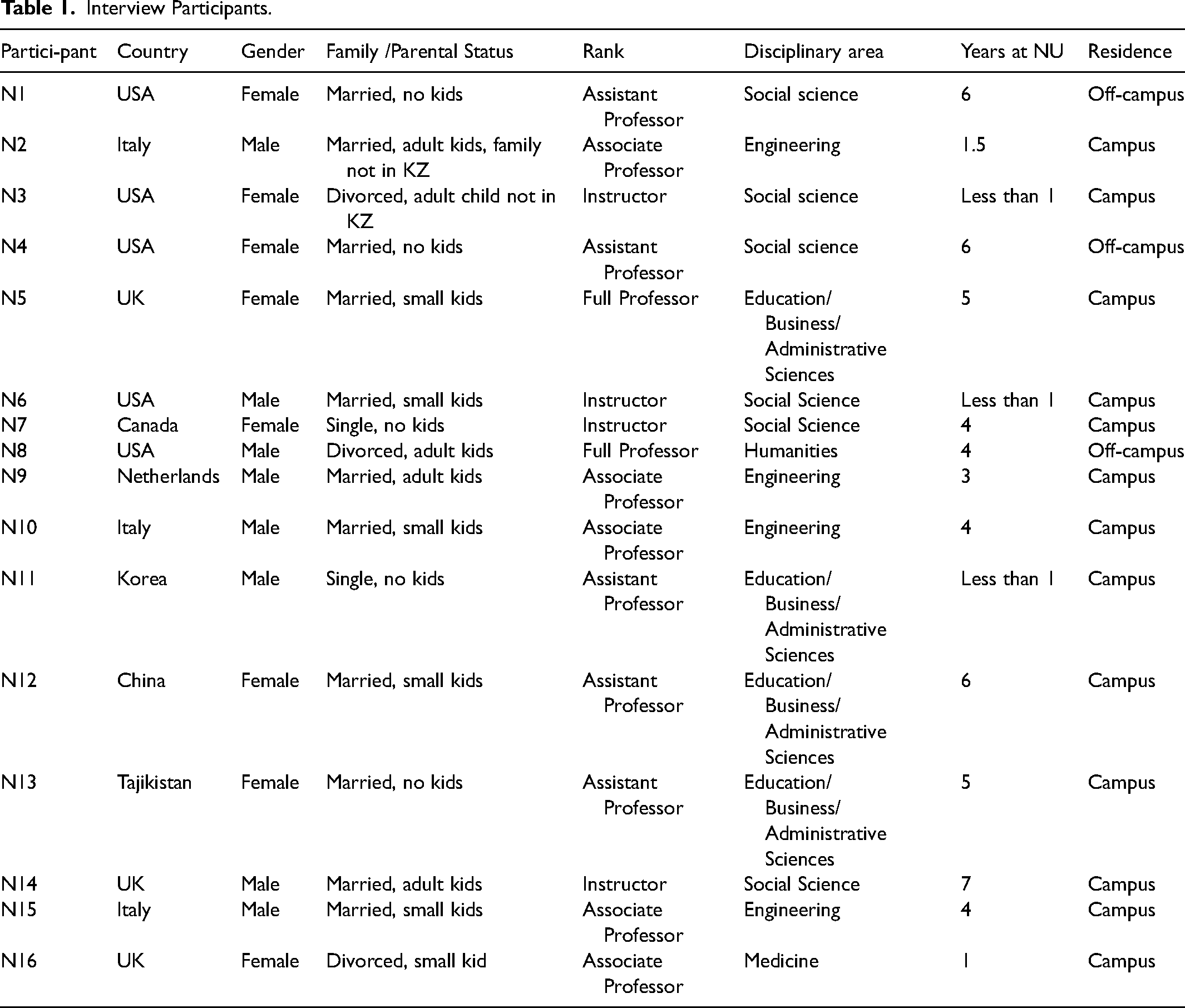
The data was collected by means of qualitative semi-structured interviews, which were conducted with 17 faculty volunteers. The participants were invited via a university mailing list and, upon agreement to participate, were explained the purposes of the study, the risks and benefits of participation, as well as were asked to sign a consent form for participation and recording prior to the beginning of the interview. The interviews were conducted in English via Zoom The goal of data collection was not to identify generalizable trends, but, instead, to capture the whole set of possible variations in attitudes and responses, so interviewing ended once I reached the point of data saturation and the two types of attitudes, and three typical responses started to clearly emerge. This allowed me to identify a potential theoretical framework from data collected from a small sample of participants.
The questionnaire included items about demographic characteristics (rank, marital and parental status, country of origin, length of employment, disciplinary area, place of residence),and an individual's personal situation in relation to coronavirus (COVID-19 affected, chronically ill, having relatives, who died from COVID-19, facing pandemic-related financial challenges). Other items assessed attitudes towards institutional emergency management measures, as well as individual responses to the measures.
The interview transcripts were first coded for common themes in relation to the research questions. Once the types of attitudes and responses started to emerge, I revisited the available literature on COVID-19 responses in a variety of organizational settings to search for a theory, which would capture the emerging themes. This literature review pointed in the direction of the Terror Management Theory, which I chose to use during the second, inductive stage of analysis.
During the second stage, I came up with a set of clarifying questions, which were asked to the participants via email or short follow up interviews. A second round of analysis was then implemented based on the theory to identify more specific themes.
Results
Participants
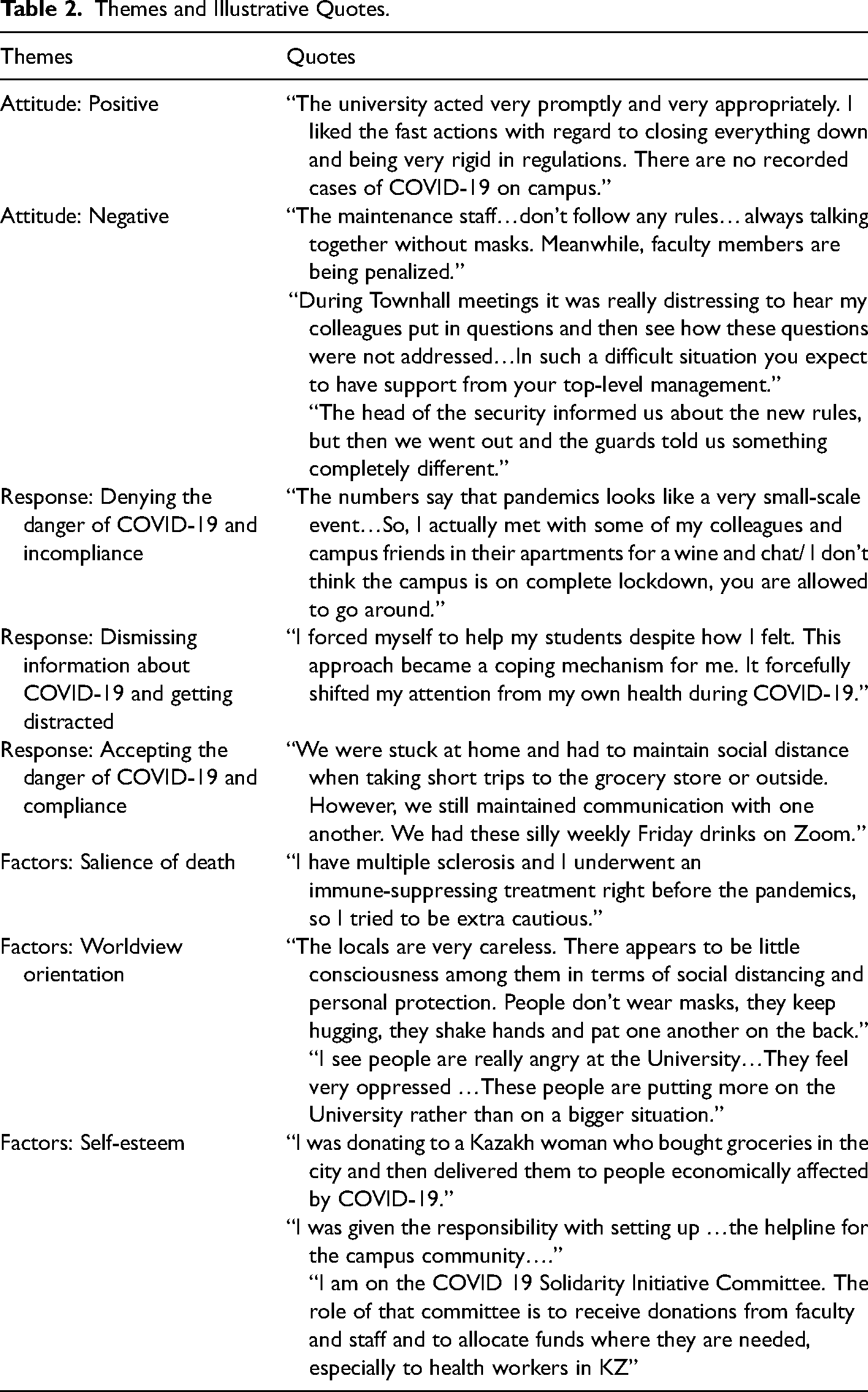
Table 1 provides a detailed list of the characteristics of the participants. As should be clear from the table, most of the faculty members were from Europe or North America, with several participants from Asia and post-Soviet Eurasia. The participants were well represented in terms of rank, length of employment at the university, marital and parental status. They came from a variety of disciplinary fields and the majority resided on campus. Hence, the participants provided rather diverse views from the university campus. Table 2, provides illustrative quotes for the themes emerging from the data.
Interview Participants.
Themes and Illustrative Quotes.
Views About Institutional Responses
Faculty did not agree about the effectiveness of institutional measures to avoid the spread of COVID-19 on campus. Some faculty were extremely satisfied, while others thought that the institutional response was highly ineffective.
Those, who felt that the institutional response was appropriate praised NU for the following:
Timeliness of restrictions on international mobility and campus lock down. Alignment of the response with the city's quarantine measures. Effective communication of the situation in the country and on campus via a newsletter. Effective faculty feedback collection during Town Hall meetings. Strict enforcement of quarantine measures, which prevented the spread ofCOVID-19 on campus. Good access to groceries at the shop, to medicines at the pharmacy, to the medical care at the clinic located on campus, as well as availability of free protective gear in residencies.
Positive attitudes were mostly held by individuals, who were: (1) older in age and higher in rank, (2) had small kids or vulnerable family members, (3) had serious health conditions, (4) specialized in social sciences, humanities, and medicine, (5) had been generally satisfied with NU as a place of employment prior to the pandemic, (6) closely interacted with the administrative team responsible for the development of quarantine policies on campus, (7) received individualized assistance during the pandemic (e.g., were provided with university assistance while being quarantined in a local health facility upon their return from abroad).
Those, who felt that the institutional response was inadequate, were critical of the following.
Paternalistic, directive, and policing approach to enforcing social distance measures stripping faculty of autonomy. Poor enforcement of the measures towards local employees (e.g., maintenance staff), which produced the feeling of discriminations and undermined trust in the effectiveness of the measures. Dry and bureaucratic communication style used in the official notifications and Town Hall meetings, where the faculty felt that the administration ignored faculty input and intentionally kept ambiguity to avoid responsibility. Orientation of the response measures towards the needs of students with simultaneous disregard of the needs of the faculty members, as well as orientation of the measures towards university's reputation management and financial concerns than the well-being of campus residents. Lack of thought and appropriate planning put in some measures instituted on campus, which affected the faculty morale.
Negative views were more commonly expressed by individuals who were: (1) younger in age and lower in rank, (2) single or lived away from their significant others in other countries, (3) had members of the family, who were sick or died during the pandemic, whom they could not reunite with due to the international travel restrictions, (4) specialized in sciences and engineering, (5) had been generally not satisfied with NU as a place of employment prior to the pandemic.
TMT and Faculty Responses to Institutional COVID-19 Measures
Consistently with the TMT, when faced with the salience of death, faculty members engaged in one of the proximal responses: (1) trying to prevent death; (2) suppressing thoughts about death; (3) denying one's vulnerability. Their attitudes and response to institutional measures varied depending on the type of their psychological response to the fear of death.
Trying to Avoid Death
Those, who recognized the danger of coronavirus tried to actively avoid death and engaged in the behaviors expected by the university administration by wearing masks, maintaining social distance, and reducing contacts with individuals on campus and outside of campus. This behavior was common for those who had chronic health conditions or young children. These individuals also remained largely positive about the situation with coronavirus on campus, holding favorable views of the institutional response and the situation in Kazakhstan in general. When they found issues with the institutional policies (e.g., vague nature of communication), they attributed the omissions to the novelty of the situation, as opposed to finding faults with the administration of the university/city/country.
Suppressing Thoughts About Death
The second group of faculty members were trying to dismiss any information about coronavirus. They tried to maintain their mental stability by following world or Kazakhstani news only to the minimal extent necessary, did not engage in much communication with their colleagues or discuss their views about institutional measures with others, and tried to get distracted from negative thoughts by engaging in charity, in the work of COVID-19 response teams on campus and in the city, by actively advising students, by putting much effort in research or developing new approaches to online teaching, or by helping colleagues, who were in psychological distress. These individuals frequently had a neutral or balanced view about the institutional approaches, noting some positive and some negative aspects, but generally attributing the omissions to the overall complexity of the situation in the world. They followed the restrictions imposed by the university, but not as strictly as the first group of faculty members, taking the risk of going off-campus for grocery shopping, allowing their children to interact with children from one other foreign faculty, and etc.
Denying One's Vulnerability.
The third faculty group were in active denial of the danger of death and engaged in behaviors, which the institution tried to discourage due to the risk of spreading the deadly infection. They attempted to find ways to bend the rules (e.g., only individuals, who had kids or dogs were allowed to go outside during lockdown, so these faculty borrowed the children and dogs of their neighbors to be able go outside) or were actively not complying with the rules by visiting one another's apartments, not wearing masks, or not maintaining social distance in the hallways. These individuals tended to have negative views of the institutional response finding it lacking thoughtful planning, concern for the faculty, hypocritical and inconsistent in implementation, and overly restrictive compared with the scale of the pandemic situation, which existed in the country at that point. They also actively discussed institutional responses with other dissatisfied colleagues and shared accurate and inaccurate information among one another, as well as reinforced one another's plans about leaving the institution when international mobility restrictions were lifted.
Factors of Variation in Responses
Three groups of factors seem to have the greatest influence on the response of the faculty to the institutional restrictions. These factors, as will be clear from the summary of the results, were linked to the three types of anxiety buffering mechanisms predicted by TMT.
Salience of Death
As has been mentioned above, the faculty, who were more concerned about their own health or their immediate family members were more likely to comply with the policies. This explains the prevalence of positive attitudes towards the institutional responses among those older in age, those with children, and those specializing in social sciences, humanities and medicine. Not only these individuals felt more likely to die of coronavirus due to their age or occupation or had to be concerned about the wellbeing of their dependents, but they also had a greater appreciation of the insurance benefits and were more aware of the worse employment and insurance prospects elsewhere. In comparison, single, young individuals in disciplines with alternative employment opportunities (e.g., in engineering and sciences) felt both less susceptible to the coronavirus and less concerned about the ability to procure medical benefits for themselves. Hence, they had a more critical stance to the university policies.
Worldview
The second factor, which determined both the attitudes of the faculty to the institutional measures and their response was related to the worldview of the individuals, more specifically to the extent of their tolerance to cultural differences. Many of the individuals, who were dissatisfied with the institutional response and did not follow the social contact restrictions, tended to view Kazakhstani society, people and culture as being inferior to the society, people, and culture they originated from. Some had viewed both the Kazakhstani government and the university administration as bureaucratic, corrupt, and dictatorial in approaches even prior to the pandemic. During the pandemic, the skepticism about the university administration seems to have transformed into the mistrust in the commitment of the government and of the university administration to protect the faculty and the assumption that many of the decisions were made out of the university leadership's concern about their reputation. The faculty attributed the failure of the government to ensure compliance of the city's population with social distancing measures to the inferior intellectual ability, carelessness and collectivist identity (crowd mentality) of the Kazakhstani people. The overall stance of the faculty was generally “us vs. them” and they tended to put the responsibility for controlling COVID-19-related risks not upon themselves, but upon others. Consistently with TMT predictions, individuals in this group managed their anxiety about the inevitability of death, by enhancing their self-esteem and the feeling of exclusivity via growing engagement in these cultural superiority-based worldviews, via maintaining social connections with peers sharing the views, and via mutual reinforcement of the in-group (faculty vs. university administration, foreigners vs. locals).
For comparison, those who were more likely to comply with the university policies were either culturally related to Kazakhstanis or came from similar political contexts (Central Asia) or held more cosmopolitan views, whereby they treated Kazakhstani government and university administration's responses as determined by the complexity of the overall situation in the world and comparable to the ones used in other countries. These individuals tended to be more committed to the university community in general due to the longevity of their employment experience at the institution or general satisfaction with the university prior to COVID-19 pandemic. During the pandemic, they tended to view the university administration as caring about the faculty, as proctors of the campus community and as contributors to the surrounding community of the country and of the city.
Self-Esteem
The third factor, which determined the difference in international faculty members’ attitudes towards and responses to the institutional COVID-19 control measures was the level and approach to maintenance of self-esteem. It seems that the faculty, who responded positively to the institutional control measures had an internal locus of control. This was evident from the ways they described other people's and their own responsibility to the university and the country's community. Despite the unknowns associated with COVID-19 they chose to focus on the use of the preventative strategies, which were clear. They thought that they needed to wear masks, follow regulations, and self-isolate to protect others. They understood the challenges faced by the city-authorities and the university management in developing policies in a timely manner and accepted that in the conditions of ambiguity they need to follow international and local news and make their own decisions on which set of recommendations to follow with respect to self-protection. They also tried to counteract the threat of death by boosting their self-esteem via community-serving actions, such as engagement in charity, helping out students and colleagues, and engaging in the work of campus/city/country emergency response teams. These activities allowed the faculty to get distracted from thoughts about death and made them more likely to follow healthy practices.
Meanwhile, individuals, who were not satisfied with the institutional response tended to have an external locus of control. In expressing their views about institutional responses, they tended to talk about what the university's obligations were in terms of protecting the members of the community. They also expected to be taken care of by the university during quarantines and when stuck in the airports on the way back to Kazakhstan from their home countries. They were more likely to put blame on others and seem to be reinforcing their self-esteem by engaging in in-group vs. out-group comparison, which made them feel more superior to others and entitled to special treatment. Part of this sense of superiority seem to be cultivated by intentional resistance to comply with the university's policy, which was viewed as inadequate.
Discussion and Conclusion
The exploratory study of the experiences of international faculty at NU in Kazakhstan suggests that TMT can be a useful framework to analyze potential attitudes and responses to administrative social-distance control measures on campuses of international universities. While even now, in January 2022, instruction at Nazarbayev University continues to take place completely online, the residential nature of the university did not allow for complete closure of the university campus and necessitated the relatively prolonged implementation of social distance control measures. This situation provided some insights about possible attitudes and responses to the measures from international faculty and, by extension, from other campus populations.
One of the main insights from the study is about the complexity of managing expectations and predicting behaviors on campuses of international universities. The populations working and studying at these universities come from a variety of cultural backgrounds and life circumstances and, in some sense, this variation is greater than among the populations coming from the same country. This variation creates various levels of anxiety about death and a range of possible individual and institutional approaches to managing it. Based on the range of attitudes and responses at NU, administration of international universities will find it hard to come up with a set of measures satisfying to everyone.
TMT accurately predicts three types of proximal responses to death-associated terror, which are aligned with three responses to distance-control measures at universities: (1) trying to prevent death and compliance with regulations, (2) suppressing thoughts about death and partial compliance, and (3) denying one's vulnerability and incompliance. These three responses present different challenges for administrators.
Individuals, who are trying to prevent death, are easy to manage in terms of social distance control, they are most anxious about their own and their relatives’ health. Hence, they are more likely to develop mental issues and need psychological support.
Individuals, who are trying to suppress thoughts about death, might not be fully compliant with the distance-control rules due to their avoidance of COVID-related information, including information about changes in policies and measures. One of the most important strategies with the group is reaching out and making sure that they receive necessary information while delivering this information in a way that does not increase the anxiety beyond the necessary level.
Individuals, who deny their vulnerability to death, might follow the news about changes in regulations, but are also least likely to observe the instituted social-distance control measures. Moreover, any increase in the enforcement of the measures and sanctions might be met with an increased level of resistance on their part. Engaging individuals from this group in decision-making in a consultative capacity may lead to the reinforcement of their sense of belonging and responsibility to the larger university community, may address cultural differences and may provide information to decision makers about any points of contention.
In addition, TMT provides some useful insights about the role of various anxiety-buffers in managing subconscious fear of death during pandemics and the way in which they act as factors differentiating international faculty responses to COVID-control measures. Cultural variability in worldviews, which is quintessential to international campuses, creates a possibility of emergence of subgroups of oppositional groups of faculty members sharing worldviews based on a strong sense of superiority over members of administration. This is particularly likely to happen at universities similar to NU, which are located in non-Western countries, and which hire a substantial number of Western faculty on the one hand and local administrators on the other. Brought to the country as experts whose mission is to create a new type of university, which will modernize the local educational system, some international faculty might view themselves as superior to locals even under normal conditions. As NU findings reveal, this worldview might strengthen as faculty experience an existential crisis. The group of disgruntled faculty members, who perceive any administrative actions as manifestation of incompetence, might be prone to protest, to sabotage controlling measures, or to try to escape the university for “greener pastures.” Counteracting this particular buffering mechanism might be challenging. One of the ways, as has been mentioned before, might be to engage disagreeable faculty in decision making. An alternative is to rely on alternative buffering mechanisms as a way to counteract the influence of the worldview-based buffer. Unit-level administrators might pay greater attention to individual meetings with faculty to provide positive esteem-enhancing feedback on their work and might also create opportunities to unify faculty at their departments/schools behind some unifying cause, such as philanthropic initiatives, to celebrate acts of good will, volunteering, charitable contributions, and activities associated with COVID-19 related community service.
One limitation of the study is the subjective nature of the researcher's judgement about the nature of faculty's responses to the fear of death. These responses are subconscious and cannot be straightforwardly asked about in the process of interviewing. The responses and factors predicted by the theory were labeled based on the researcher's interpretation of the attitudes and behaviors described by the participants. To address this limitation different methodological approaches might need to be applied in the future.
Despite the fact that the study was conducted on international faculty, one can expect similar responses from the student population of international universities, whereas students will most likely display a variety of culture- and individual anxiety tolerance levels and managing approaches. In addition, many contemporary universities display an increase level of diversity in their campus populations, which may lead to increasing complexity in designing effective and acceptable (by the majority) pandemic response measures. To determine the extent of applicability of the recommendations, which were provided in this study based on the declared results more studies on the interaction of campus control measures and the responses of various campus populations need to be conducted in the context of both international and domestic universities, on both faculty and student populations. As has been demonstrated by this study, TMT seem to have a high explanatory potential as a potential framework for such studies. This potential, however, needs to be supported by quantitative studies based on inferential approaches and larger and more diverse samples.
Footnotes
Ethics Approval
The study was approved by the Nazarbayev University Institutional Research Ethics Committee.
Declaration of Conflicting Interests
The author(s) declared no potential conflicts of interest with respect to the research, authorship, and/or publication of this article.
Funding
The author(s) received no financial support for the research, authorship, and/or publication of this article.
