




Abstract
The transition from school to work is typically unfavourable for the sports participation of young adults. However, receiving social support might help young adults maintain their involvement in sports during this transition. To test this proposition, we investigated whether social support from partners, family, friends and coworkers had a mitigating effect on the decline in sports frequency. Using quasi-longitudinal data on 1040 young adults from the TRansition Into Active Living survey, we find with fixed-effects panel regression models that the transition from full-time education to employment indeed negatively impacted weekly sports frequency. This decline is mitigated by frequent experiences of social support for sports. Social support from friends and coworkers seemed especially important in alleviating the drop in sports frequency. Policy implications and avenues for future research are discussed.
Keywords
Sports participation promotes physical and mental well-being and it also enhances social engagement and cohesion (Malm et al., 2019; Penedo and Dahn, 2005; Putnam, 1995; Seippel, 2006). Retention of young people in sports is therefore a focal point in many government policies and charters (Council of Europe, 2021). Yet, despite these efforts, sports participation rates decline from adolescence onwards, with the drop staying continuously sharp when young adults complete full-time education and enter the labour force (Lunn, 2010; Westerbeek and Eime, 2021). This makes the transition from school to work an important stage for understanding, monitoring and intervening in young adults’ sports participation.
The transition from school to work seems to particularly affect leisure-time activities, of which sports participation is one (Engberg et al., 2012; Gropper et al., 2020). In a Dutch sample, Van Houten et al. (2017; 2019) linked starting a job with reduced sports frequency and increased likelihood of quitting sports. Similar associations are found in other countries, with young adults’ sports involvement changing by starting or increasing but mainly in the form of stopping or decreasing their sports participation (for example, Brown and Trost, 2003; Larouche et al., 2012; Paluch et al., 2018). Quitting or lowering sports involvement is generally perceived as a negative development because maintaining the sporting habits and attitudes established in youth promotes lifelong active living (Engel and Nagel, 2011; Malina, 1996). Up until now, research has explained the decline in sports participation during the school-to-work transition mainly by individual resources and their effect on young adults’ level of motivation and opportunities to take part in sports (Kraaykamp et al., 2013; Van Houten et al., 2019). An additional explanation, put forward in theory and policy, relates to social support (Thoits, 2011; Umberson and Karas Montez, 2010). However, this has been less examined by prior studies, particularly in relation to the role of social support in upholding sports participation during the school-to-work transition.
Social support, for example, friends giving you advice or assistance, is one of the most important functions of interpersonal relationships and is connected to sports participation in all age groups (Beets et al., 2010; Carron et al., 1996; Smith et al., 2017; Wolbring et al., 2024). For decades, authors have investigated the consequences of receiving social support for maintaining sports involvement (Carron et al., 1996; Scarapicchia et al., 2017; Treiber et al., 1991). A lacuna remains, however, in this research regarding specific types and sources of social support and, especially, their role in maintaining sports participation during the transition from school to work. With this study, we aimed to address this gap. First, we conceptualized three forms of social support in regard to sports participation: encouragement to take part in sports, invitations to participate in sports together, and actually participating in a sport together (Sallis et al., 1987). Second, we distinguished between sources of social support, that is, the people who provide the support, because previous studies indicate that the impact of social support may vary depending on where it comes from (Sarkar et al., 2016; Scarapicchia et al., 2017; Silva et al., 2013; Smith et al., 2017; Treiber et al., 1991). For sources of social support, we included in our study the most influential people in young adults’ social networks, which are partners, family, friends and coworkers (Burt, 1984; Marsden, 1987). We sought to shed light on how social support from these sources relates to the declining sports participation typically observed in the school-to-work transition. Our research question was twofold: To what extent does social support for sports mitigate decreasing sports frequency during the school-to-work transition? And, to what extent does the source of social support matter, be it the partner, family, friends or coworkers?
Our study advances the literature in at least three ways. First, it focuses on young adults, specifically, in their transition to early-career workers and the changes that the transition introduces to their weekly sports frequency. This group is usually underrepresented in sports-related research, but the significant changes in daily life that young people experience during this transition may affect sports participation with lifelong consequences. Second, our study separately and simultaneously examines the impact of four sources of social support, namely, the partner, family, friends and coworkers, regarding support for weekly sports participation. Third, it combines theoretical insights from two kinds of literature, that on social support and that on life-course development, to gain a deeper understanding of changes in individuals’ sports habits during the school-to-work transition. Figure 1 presents the conceptual model for our study.
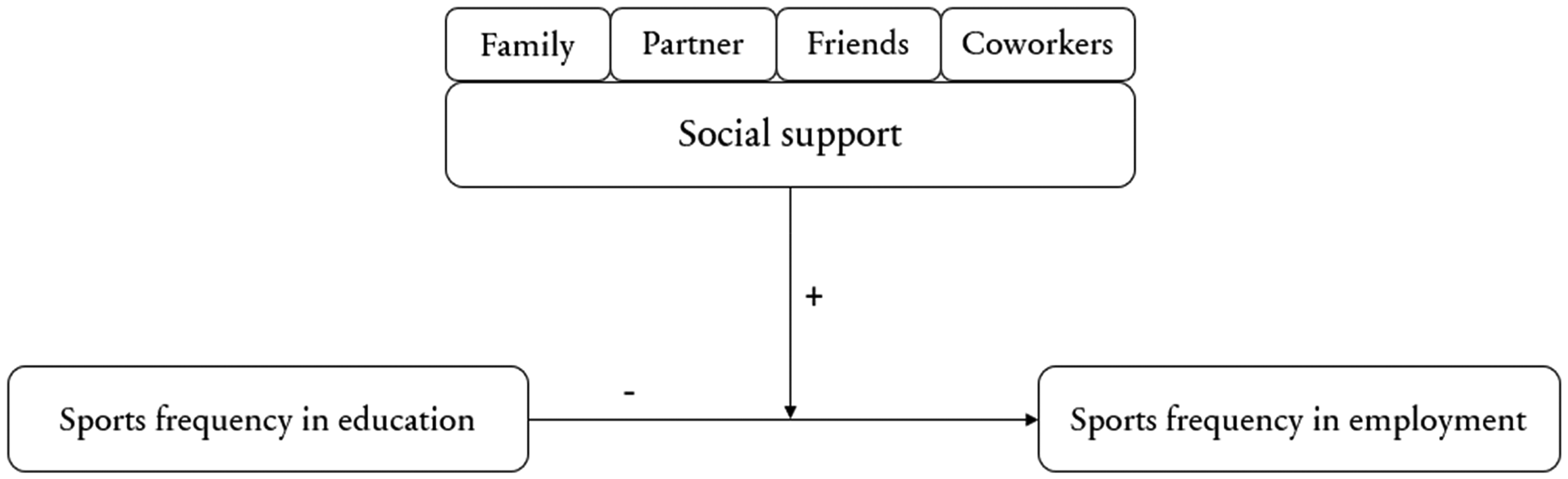
Conceptual model.
Background and theoretical notions
Sports participation and the transition from school to work
Sports participation is an interesting case when it comes to individuals’ overall level of physical activity. The European Sports Charter defines sport as all forms of physical activity which, through casual or organized participation, are aimed at maintaining or improving physical fitness and mental well-being, forming social relationships or obtaining results in competition at all levels (Council of Europe, 2021). This concept differs from general (leisure-time) physical activity which is often integrated into daily life through household chores, leisurely walking, biking and commuting, and is not primarily aimed at improving, for instance, physical fitness. Engaging in sports requires a deliberate choice and commitment, on top of ordinary daily affairs. Additionally, sports participation often carries a social element that is typically absent in the more general forms of physical activity (Scheerder et al., 2011). Research too convincingly shows that sports participation distinctly benefits one's physical and mental health, more so than general physical leisure pastimes (Coenders et al., 2017; Malm et al., 2019).
Yet, maintaining active involvement in sports throughout the life course requires an individual to be motivated and have the suitable resources and opportunities to engage in sports (Hirvensalo and Lintunen, 2011; Malina, 1996). Motivation to participate in sports is linked to the role sports can play in fulfilling intrinsic needs for self-efficacy, autonomy and relatedness (Bandura, 1997; Frederick and Ryan, 1993; Ryan and Deci, 2000). Opportunities to engage in sports refer to elements that facilitate sports participation, such as time, neighbourhood safety and flexibility in working hours. Resources denote personal assets, including income, social background and social capital (Van Houten et al., 2017). The combination of motivation, resources and opportunity determines whether an individual participates in sports, what sports they practise and with what frequency.
Over the life course, people's motivations, resources and opportunities for sports change. The transitionary period between ages 18 and 34 is deemed especially key in altering these factors (Super, 1980). Starting to work is one of the most important transitions in this period (Buchmann and Kriesi, 2011; Gauthier, 2007; Super, 1980). Before this transition, young adults were students, lived at home or with other students and spent most of their time at school, in student jobs and social activities (Thibodeaux et al., 2017). When they begin their working life, young adults generally become employees, start to live alone or with a partner and often commute to work. Subsequently, the transition from school to work introduces a new daily life routine, accompanied by daily commutes and fixed working times that change young adults’ schedules, alongside new responsibilities and obligations with more gravity compared to those of young adults in education (Arnett, 2007; Super, 1980). Because individuals perceive work and care tasks as more acute than leisure activities, individuals are likely to trade off leisure needs against work and family needs (Coenders et al., 2017; Van Houten et al., 2017). As such, more restrictions on time and higher priority tasks impede young adults’ motivation, resources and opportunities for sports participation in the transition from school to work. This leads us to expect that the weekly frequency of sports participation declines during the school-to-work transition (H1).
Social support as a buffer
Receiving social support during the school-to-work transition may counteract the anticipated drop in young adults’ sports participation. Social support for sports participation most clearly presents itself in the three forms introduced earlier: encouragement to take part in sports, invitations to participate in sports together, and actually participating in a sport together (Beets et al., 2010; Gruber, 2008; Sallis et al., 1987, 1992). With regard to motivation to be active in sports, several theoretical mechanisms could explain the role of these in buffering declining sports participation during the school-to-work transition (Thoits, 2011).
First, social support might strengthen autonomous motivation, which is key to remaining active in sports (Standage and Ryan, 2020; Teixeira et al., 2012). As such, interest and encouragement from social network members, such as peers and relatives, may make sports participation more personally satisfying and enjoyable, and also provide accountability (Caglar et al., 2009; Li et al., 2014; Ryan and Deci, 2000). Experiencing positive rewards from sports participation may lead young people to internalize motivation to continue their participation in sports throughout the school-to-work transition (Ryan and Deci, 2000).
The second theoretical mechanism is the effect of stimulation to stay active in sports on a young adult's self-efficacy or belief in their ability to accomplish a task (Bandura, 1997). Self-efficacy is one of the strongest psychological correlates of physical activity and exercise (Sherwood and Jeffery, 2000). Not only is self-efficacy itself enhanced by being active in sports (Ajzen, 1991; Bandura, 1997; Ryan and Deci, 2000), but encouragement from others to stay active in sports may also convey a sense of confidence in a young person's ability to maintain their engagement in sports during the school-to-work transition.
The third theoretical mechanism is social support's effect in promoting relatedness, which concerns positive involvement with others and inculcation in social norms, which are also factors that can promote sports participation (Caglar et al., 2009; Ryan and Deci, 2000). Social support may convey confirmation to young adults that sports participation is a behaviour that is valued by close social connections. For example, if sports is a recurring theme in conversations (e.g. if coworkers often talk about their sports participation and stimulate participation), this may serve as a signal that sports participation is appropriate behaviour. To belong to a certain group–a sporty family or group of colleagues, for instance–staying active in sports may even be considered a prerequisite or social norm (Bandura, 1977; Stok et al., 2014). Finally, when friends and relatives ask about and stimulate sports participation, this is likely to elicit a sense of responsibility to act on that encouragement (Dailey et al., 2018; Powell et al., 2015).
Next to its influence on motivation, social support may affect opportunities for young adults to participate in sports. Particularly, if social network members suggest taking part in sports together and creating opportunities to do sports together, this enhances opportunities for young adults to practise sports in a period when opportunities may be fewer than in education. In facilitating such opportunities, social support may have a lasting impact on young people's engagement in sports.
Overall, social support for sports is expected to inhibit young workers from drastically decreasing their sports participation during the transition from school to work. Social support, conceptualized here as encouragement to participate in sports, invitations to participate in sports together, and actually participating in a sport together, is likely to boost autonomous motivation, self-efficacy and relatedness, while also providing direct opportunities for sports. The result is to counteract the general diminishment of sports participation induced by the school-to-work transition. We therefore expect that more social support for sports participation from within one's network helps to maintain weekly sports frequency during the school-to-work transition (H2).
Heterogeneity in the sources of social support
The impact of social support on sports participation may be further specified by the source of origin (Bronfenbrenner, 2005; Carron et al., 1996; Thoits, 1995; Treiber et al., 1991). Here, we distinguish four prominent groups of social support providers for young adults, namely, partners, family, friends and coworkers. Though their importance differs from individual to individual, these network members can nonetheless be ranked in terms of proximity and influence. Research on core discussion networks among young adults suggests that the closest connections are those with the partner and family, followed by friends and lastly coworkers (Burt, 1984; Marsden, 1987). Regarding their relative importance, two contrasting theoretical views may be discerned: the similarity with others equals effective support perspective (Thoits, 1995) and the strength of weaker ties perspective (Granovetter, 1973). Below, we derive expectations from both.
First, close social network members, particularly the partner and family, tend to be very similar to a person in terms of socialization, social background, and in the case of family, genetics (McPherson et al., 2001). People who share similar family backgrounds and have experienced comparable stressors and situations are often effective supporters (Thoits, 1995). Thanks to these actors’ awareness of a young adult's previous and current situation, they are distinctly positioned to provide appropriate social support for sports participation. This means that longstanding and intimate social connections, such as partners and family, have a unique capability to provide effective support (Feeney and Collins, 2003; Gottlieb and Wagner, 1991). Life changes instigated by the transition from school to work can impair feelings of security and esteem, which may compel young adults to lean more heavily on social support from their closest network members (Arnett, 2007; Buchmann and Kriesi, 2011). This suggests the following hypothesis: More social support for sports participation from within one's network helps to maintain weekly sports frequency during the school-to-work transition, and this effect is stronger for support from partners and family than for support from friends and coworkers (H3a).
Second, the theoretical notion of the strength of weak ties suggests that young people might be especially influenced by dissimilar others within their social network (Granovetter, 1973; Thoits, 2011). This is because weaker or bridging ties introduce fresh perspectives and connections outside a young adult's immediate scope, which may instigate new and different options also regarding sports (Burt, 2000; Espedalen and Seippel, 2024; Ferlander, 2007). The distinction between strong and weak ties is not strictly dichotomous; rather, it exists on a continuum, ranging from less strong to more strong. The strongest ties are characterized by long durability, emotional intensity and (experienced) obligations (Burt, 2000). Family and partners align more closely with this definition compared to friends and coworkers, classifying them as relatively weaker ties, even though friendships are very important in young adulthood. This means that social support from friends and coworkers may be especially fruitful during the school-to-work transition, as these contacts offer stimulation, information and incentives that stronger ties with similar social characteristics to the young adult might lack (Ferlander, 2007). Such social support may prove essential for young adults navigating the unfamiliar and uncertain terrain of their transition to work and trying to keep up their sports participation. A contradicting expectation thus follows: More social support for sports participation from within one's network helps to maintain weekly sports frequency during the school-to-work transition, and this effect is stronger for support from friends and coworkers than for support from partners and family (H3b).
Data and methods
Data
To test our expectations, we employed one wave of cross-sectional data from the TRansition Into Active Living (TRIAL) panel study (Wiertsema et al., 2022). The TRIAL dataset consists of 16- to 40-year-olds in the Netherlands (I&O Research, 2023). The participants were selected by randomly sampling municipal population registers and comprehensive address files. Participants received points for completing a survey, and these points could be exchanged for gift cards. The focus of the TRIAL study is life-course transitions, physical (in)activity and the latter's causes and consequences. The survey was conducted in October 2021 in the form of an online questionnaire, which 4691 individuals completed (response 46%). The data was weighted by sex, age, educational attainment and region to reflect the Dutch population of 16 to 40-year-olds in 2021.
Respondents were asked retrospectively about their sports participation in education and during their transition from school to work. Among those who completed the online questionnaire, 75% (N = 3538) had transitioned from school to work. From these, we selected respondents who had made the transition in the past seven years, thus between 2014 and 2021 (N = 1743). 1 Next, we selected respondents who had participated in sports during their education (N = 1128). This enabled us to observe changes in sports participation during the school-to-work transition. Finally, from the remaining respondents, we selected those who in 2021 had paid employment for at least 20 hours a week, to ensure exposure to working life (N = 1046). After removing six respondents with missing information on sex and educational attainment, we were left with a final sample of 1040 workers aged 17 to 38.
Measurements
The dependent variable, sports frequency, measures a person's weekly sports frequency during education and employment. For this, we employed two items: ‘In your final year of full-time education, did you participate in sports? If yes, which sports did you do?’ and ‘In the past month (September), have you participated in sports? If yes, which sports did you do?’ For each sport mentioned, respondents indicated the frequency they practised the sport. Four categories were provided: ‘daily’, ‘3 to 5 times a week’, ‘1 to 2 times a week’ and ‘1 to 3 times a month’. We recoded values for the various sports that respondents mentioned (maximum 3) to a weekly sports frequency (i.e., 7, 4, 1.5 or 0.5 times a week) and summed the frequency for the different sports to arrive at a measure for total weekly sports frequency during education (range 0.5 to 21) and during work (range 0 to 12).
We applied five measures of social support: total social network support, social support from partners, social support from family, social support from friends and social support from coworkers. Respondents were asked about the social support they had received in the form of encouragement to participate in sports, invitations to participate in sports together and actually participating in a sport together. These forms of social support were substantiated by the Social Support for Exercise Scale (Sallis et al., 1987). Whether respondents were encouraged to participate in sports and invited to participate in sports together was determined by two items, asked separately for each of the four sources of support: ‘In the past month, how often has [your partner, a family member, a friend, a coworker] encouraged you to participate in sports?’ and ‘In the past month, how often has [your partner, a family member, a friend, a coworker] invited you to participate in a sport together?’ Responses for each were given on a 4-point scale: ‘never’, ‘sometimes’, ‘regularly’ and ‘often’. To determine if respondents participated in sports with partners, family, friends and coworkers, they were asked to indicate for each sport they listed with whom they practised the sport. A sport could thus be practised with multiple support sources and different sports could be practised with different sources of support. For each item, we established a z-score, which we averaged to create an overall scale per source of support. These average scales were standardized such that a higher score represents more social support. We also computed a standardized total social support scale by averaging the social support from all four sources. On average, respondents experienced social support most often from partners and friends.
In our models, we controlled for several individual and work characteristics, as previous studies have attributed changes in sports frequency (from education to employment) to these characteristics (for example, Brown and Trost, 2003; van Houten et al., 2017; Larouche et al., 2012). We included respondents’ sex as a dummy variable, coded male (1) and female (0). Educational attainment was measured in three categories: secondary education or lower, applied university education and university education or higher. 2 We included the months since the transition to control for the length of time between the frequency of the measured sport in education and in work. 3 We also included whether workers were sometimes, often or (almost) always hampered by health in the past month (1) or were never hampered by their health in the last month (0). We also included a control for being a parent (0/1). Finally, we controlled for the number of sports a person practised during education, ranging from 1 to 3 (coded 0 to 2).
We also took into account four work-related aspects. First, we included contracted working hours, ranging from 20 to 50 hours per week (bottom coded, 0 = 20). Second, a dichotomous variable was constructed to indicate whether respondents were employed under a temporary (0) or permanent contract (1). Third, we constructed a measure of job autonomy based on four items regarding the ability to determine tasks, to decide how to perform tasks, to work from home and to set starting and finishing times (Cronbach's α = 0.785). We averaged scores, ranging from (almost) never to (almost) always, to calculate a measure representing job autonomy. Finally, respondents’ physical labour was measured with items on lifting, pushing, pulling or dragging and standing or walking. By averaging scores, we arrived at a scale on which a higher score indicates more intense physical labour (Cronbach's α = 0.721). Table 1 presents the descriptive statistics for all variables.
Descriptive statistics.
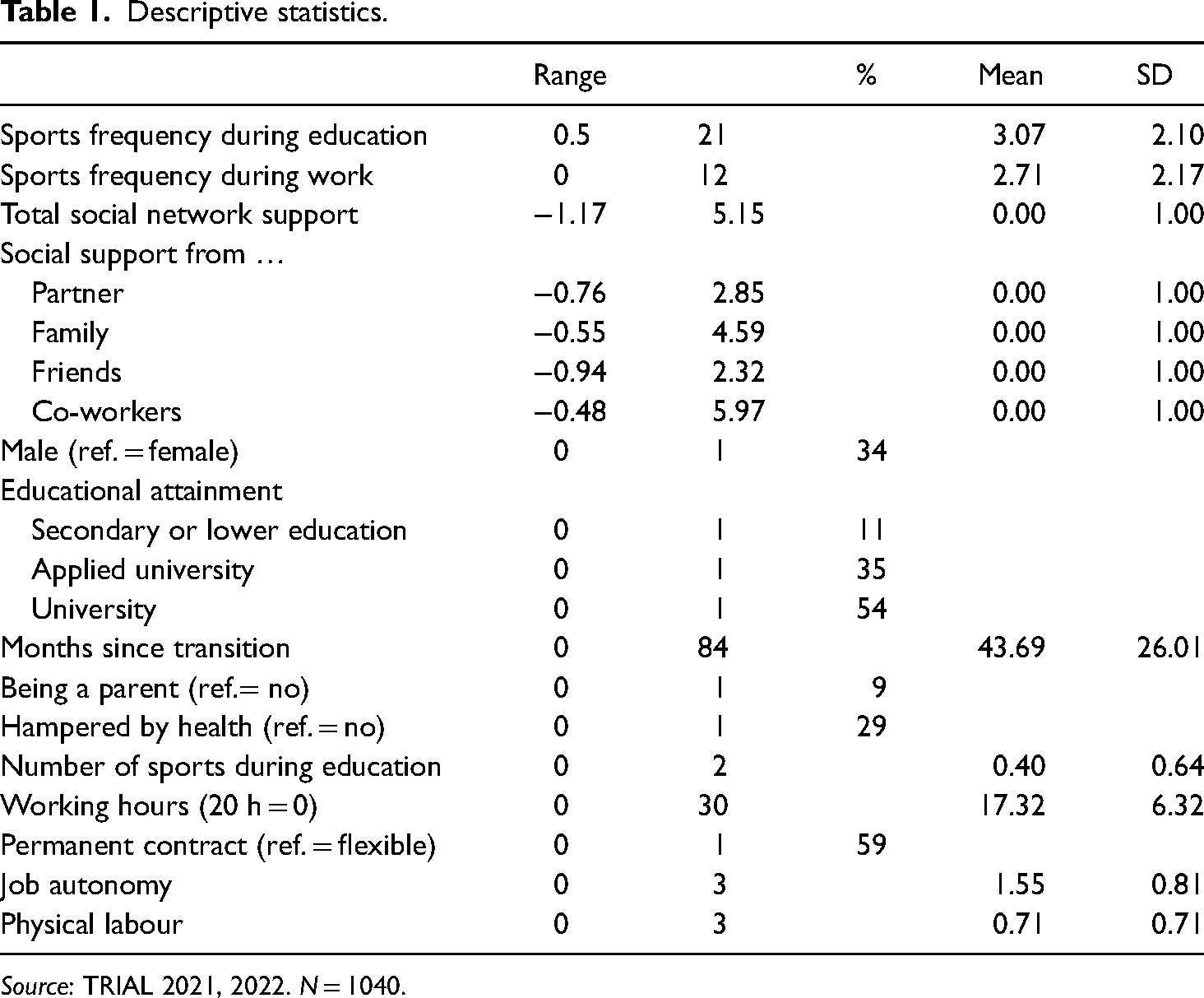
Source: TRIAL 2021, 2022. N = 1040.
Analytical strategy
We first produced descriptive figures to depict changes in sports participation following the transition. Figure 2(a) presents the average sports frequency in education and in employment. Next, we calculated the within-person change in sports frequency from education to employment. Figure 2(b) reports the share of young adults who reduced, increased or did not change their sports participation during the transition period. To test our hypotheses, we transformed the data into a long format with two observations for each respondent: one for sports frequency in education and one for sports frequency in employment (quasi-longitudinal). We included a dummy variable, time, to indicate the moment of observation. All independent variables were measured referring to the current state at the time of the survey, which was 2021 and were thus stable over the two time points.
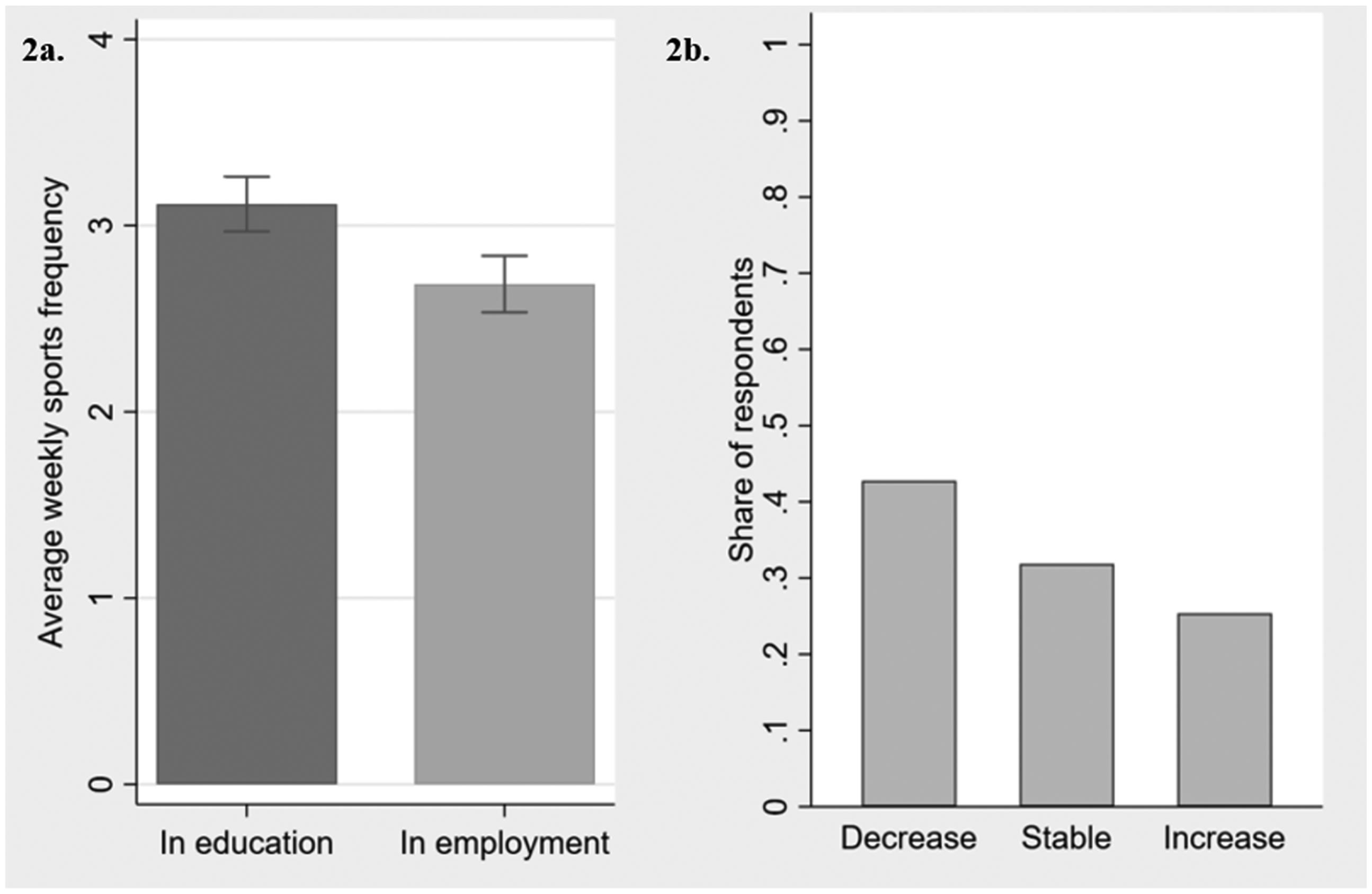
(a) Mean weekly sports frequency in education and in work (including 95% confidence interval). (b) Proportion of respondents that changed sports frequency between education and work.
With sports frequency as a repeated observation of respondents over time, we used fixed-effects panel regression in Stata v17 to analyse the sports frequency change within respondents over time. Fixed-effects panel regression models account for the unobserved heterogeneity between persons–it controls for unobservable variables that may differ across respondents but are constant over time (e.g., genetic predispositions, personality traits). Consequently, the model analyses solely within-person change. It therefore provides more robust estimates of the relationship between sports frequency in education (t0) and in employment (t1) or in other words how the transition has affected young adults’ sports participation. Upon this with-in-person change, we apply interaction models to observe the effects of social support and the control variables (Ramaekers et al., 2024). We employed sports frequency as the dependent variable. In all models, we interacted the time variable (0 = during education, 1 = during work) with respondents’ social support and individual and work characteristics, to determine how they affected changes in sports frequency. No main effects could be reported for these variables as they are time-invariant. First, we tested whether combined social network support affected changes in sports frequency, substantiating the findings by stepwise inclusion of our control variables. We then examined the effects of the sources of social support separately and simultaneously across several models.
Results
As expected, young adults participated in sports more frequently before the school-to-work transition than after the transition (see Fig. 2(a)). In education, young adults participated in sports, on average, a little over three (3.1) times a week. In employment, this average dropped to 2.7 times a week, with confidence intervals indicating this as a significant difference. Likewise, most young adults (43.1%) reduced their sports frequency in the school-to-work transition (see Fig. 2(b)). About a third of the young adults (30.3%) did not change their sports frequency, 4 and one in four (26.6%) increased their sports frequency between education and employment. The distribution of young adults over these categories confirms the tendency to reduce sports frequency in the school-to-work transition, compared to stable or increased frequencies. The estimates in Table 2 also show that young adults participated in sports more frequently before the transition to work than after the transition (B = ‒0.429, SE = 0.082; Table 2). These findings corroborate our first hypothesis (H1).
Estimates of fixed effects regression analysis with complete social network support on weekly sports frequency before and after the transition from school to work.
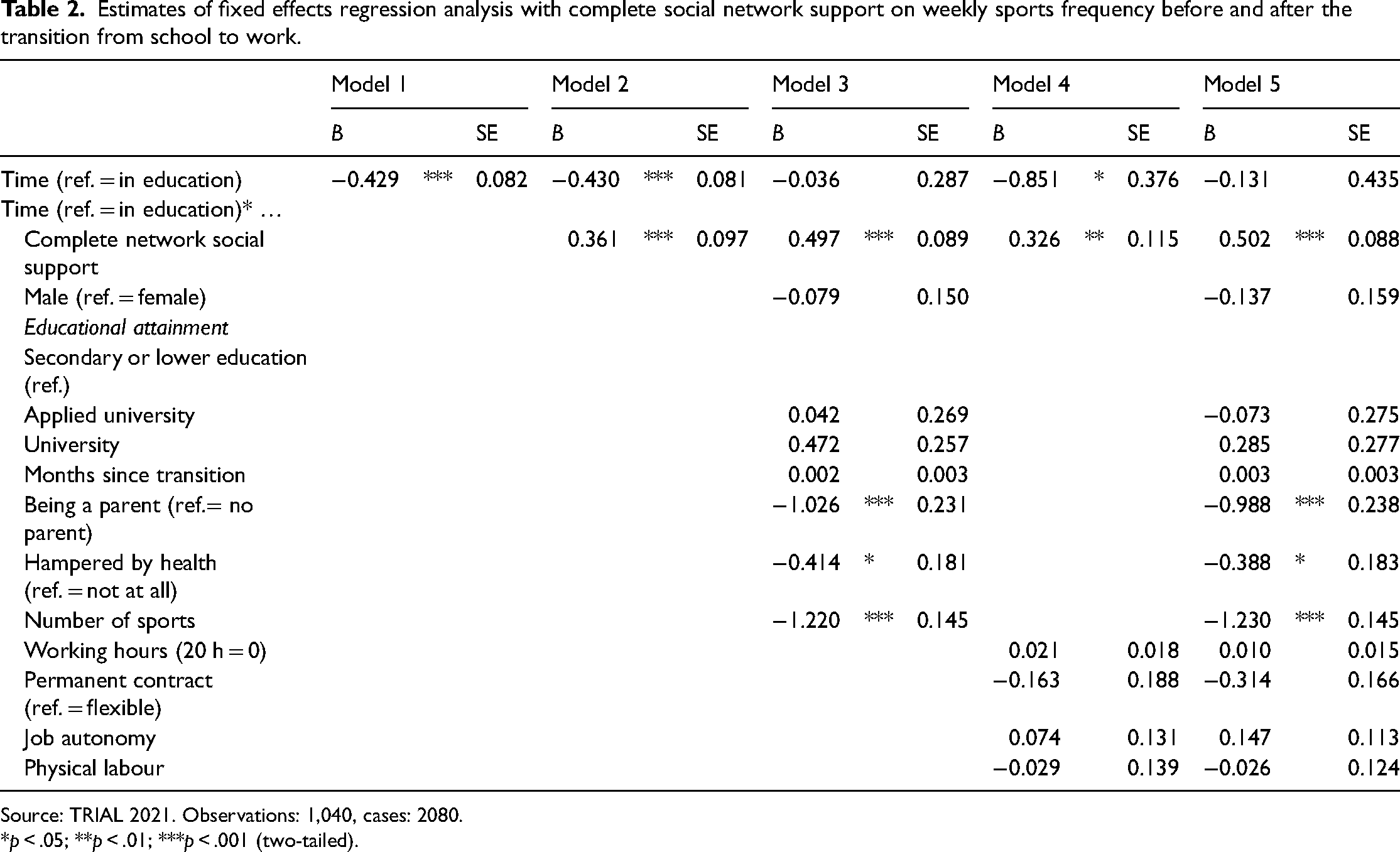
Source: TRIAL 2021. Observations: 1,040, cases: 2080.
*p < .05; **p < .01; ***p < .001 (two-tailed).
Model 2, in Table 2, indicates that a person's combined social network support was associated with a smaller decline in sports frequency between education and employment (B = 0.361, SE = 0.097). The estimated effect of social support increased slightly when the individual control variables were included. Overall, adjusted for individual and work characteristics, more social support for sports was associated with a smaller decline in sports frequency during the school-to-work transition. Respondents who received the most social support from their network even increased their sports participation during the transition, from three to four times a week. In contrast, respondents without social support reduced their sports frequency from about three times a week to two times a week (Figure 3). In other words, receiving social support appears to have combatted the generally negative impact of the school-to-work transition on sports frequency, confirming hypothesis 2.
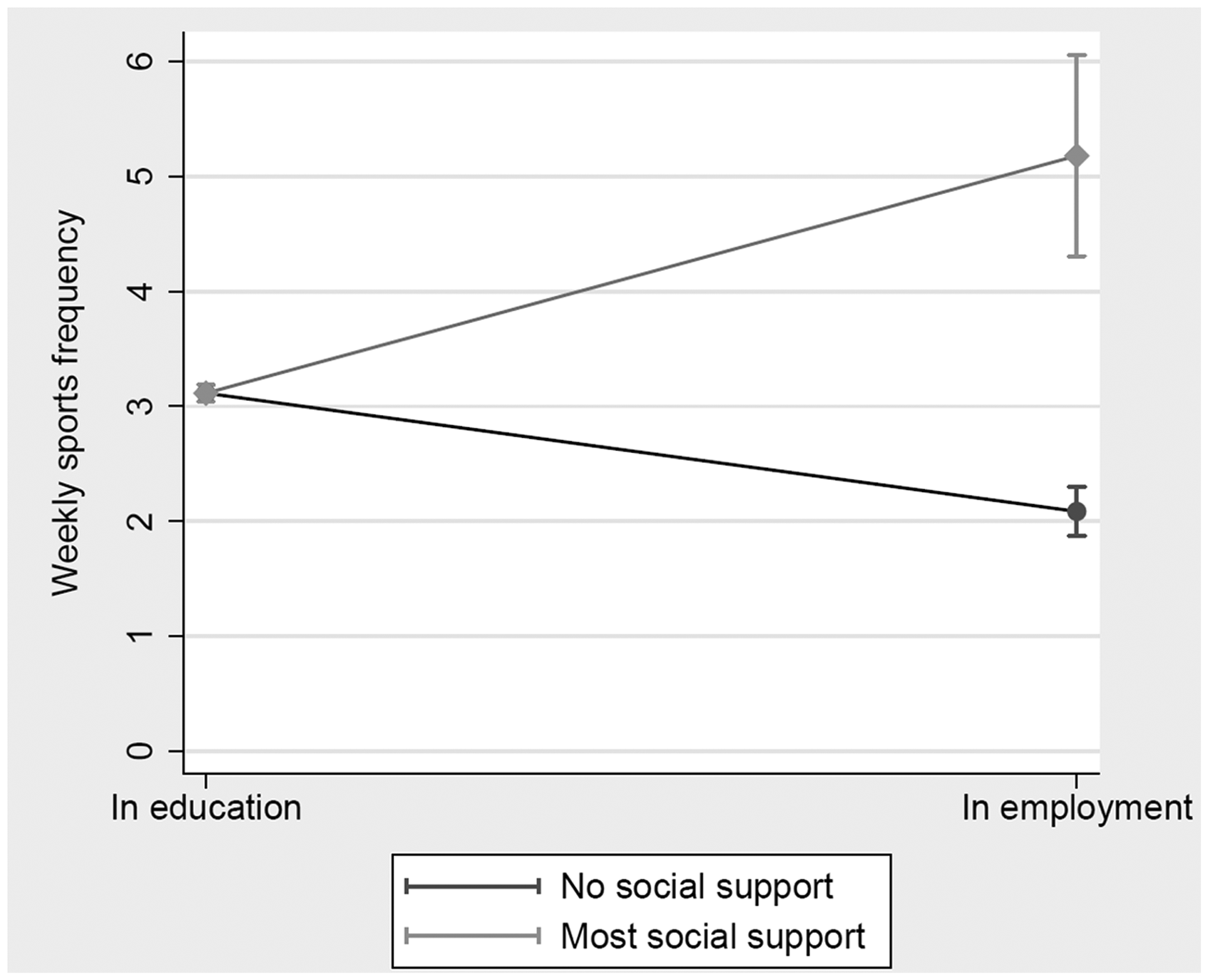
Effect of combined social network support on weekly sports frequency between education and work (including 95% confidence interval).
Regarding the control variables, the individual controls were more influential on changes during the transition than the work-related control variables (Models 4 and 5; Table 2). Respondents with children (B = ‒0.988, SE = 0.238), those who were hampered by health (B = –0.388, SE = 0.183) and those who practised more sports during education (B = –1.230, SE = 0.145) experienced relatively larger decreases in sports frequency between education and employment than their counterparts.
The models in Table 3 distinguish between the various sources of social support. Results indicate that social support for sports from partners, family, friends and coworkers all positively affected sports frequency. Receiving more social support for sports from one's partner (B = 0.155, SE = 0.080), family (B = 0.247, SE = 0.076), friends (B = 0.435, SE = 0.076) and coworkers (B = 0.328, SE = 0.102) buffered the overall decline in young adults’ sports frequency between education and employment. Figure 3 presents the weekly sports frequency of young adults who received no social support compared to the sports frequency of those who received the most support from these sources combined. Receiving substantial social support, indeed, counteracted the general tendency to reduce sports involvement during the school-to-work transition. Figure 4 specifies the impact of support from the different sources. It shows that the respondents receiving the most social support from friends increased their sports participation during the transition from three to four times per week, but respondents without social support from friends reduced their sports frequency from three times to two times a week.
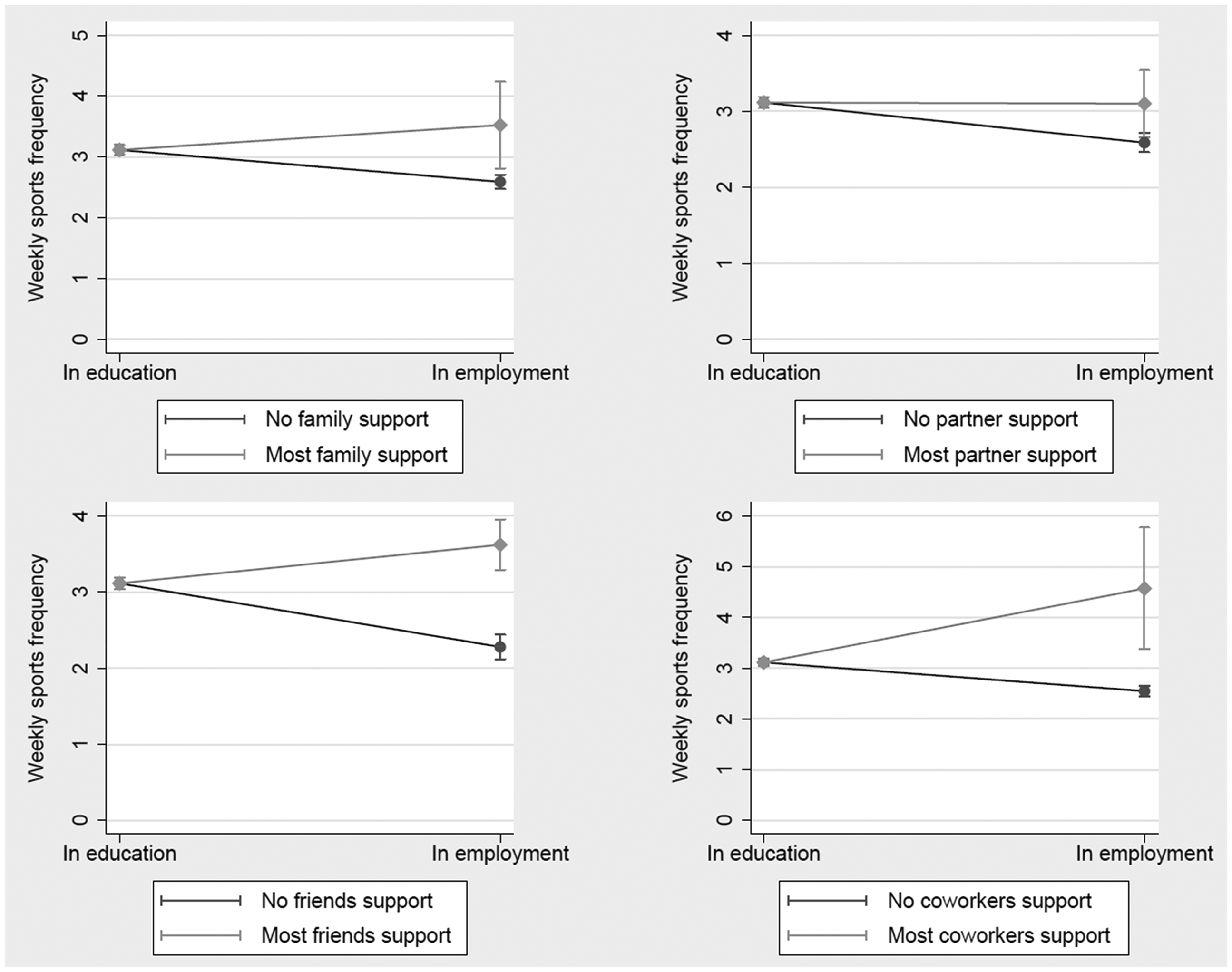
Effect of individual sources of social support on weekly sports frequency between education and work (including 95% confidence interval).
Estimates of fixed effects regression analysis with the sources of social support on weekly sports frequency before and after the transition from school to work.
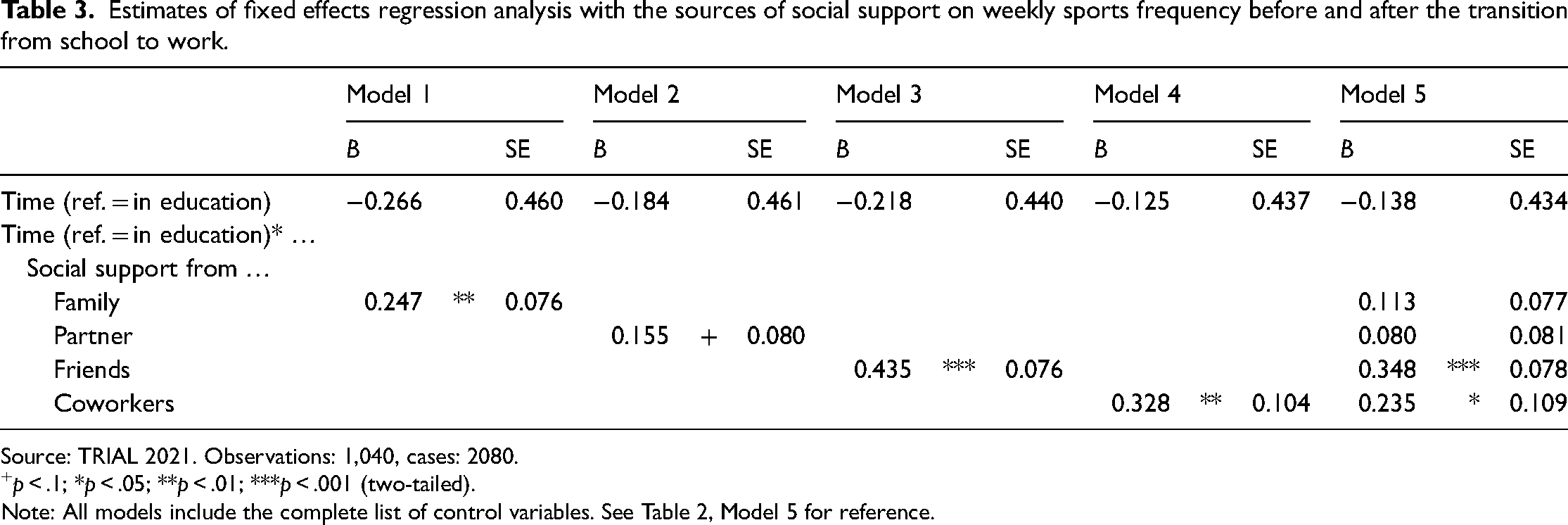
Source: TRIAL 2021. Observations: 1,040, cases: 2080.
p < .1; *p < .05; **p < .01; ***p < .001 (two-tailed).
Note: All models include the complete list of control variables. See Table 2, Model 5 for reference.
The estimates in Table 3 also shed light on the relative importance of the sources of support. When the sources of social support were simultaneously included, in Model 5, the effects of social support from friends and coworkers remained significant. Post-hoc tests indicated that the combined effect of social support from friends and coworkers was significantly different from the combined effect of support from partners and family (not in the table). This suggests that social support for sports from friends and coworkers was more important in maintaining sports frequency during the school-to-work transition compared to support from partners and family. This finding confirms hypothesis 3b while refuting hypothesis 3a.
Additional analyses
We performed several additional analyses to substantiate our claims. The tables can be found in the supplemental materials of this paper. First, playing sports together may be viewed as the greatest form of social support, but some may regard it as less appropriate as an indicator because it is strongly conceptually related to the dependent variable. As a robustness check, we performed our analyses using only two social support items: encouragement of sports participation and invitations to participate in sports together. The estimates from these additional analyses were virtually similar to the main outcomes, but, as expected, with less strong effects for social support (Table A2 in the supplemental material).
Second, we performed additional multinomial logistic regression analyses to test the linearity of the influence of social support on changes in sports frequency (Table A3 in the supplemental material). For this, we used the three categories in Figure 2(b): decreased, stable and increased sports frequency. These additional analyses indicated that the effects of social support on changes in sports frequency were linear over the categories. In other words, the effect of social support was least for those who decreased their sports frequency, while increasing linearly to those who increased their frequency. Estimates were comparable to our main findings, but less strong regarding stable sports frequency and stronger for increased sports frequency. Furthermore, we tested whether participation in club sports, where people always participate in sports with others, would differently affect the relationships we found compared to participation in individual types of sports (Table A4 in the supplemental material). These analyses showed that among young adults who participated solely in club sports during the final year of education, the decline in sports frequency was lower than in the complete sample. The buffering effect of social support is similar to the complete sample but the influence of coworkers is lower. Among the young adults who solely participated in individual sports during education, social support seemed significantly more important to maintain their sports frequency.
Third, we conducted a simple linear OLS regression with sports frequency following the transition from school to work as the dependent variable and social support and sports frequency during the final year of education as predictors (Table A5 in the supplemental material). With the control for baseline sports participation, it mimics the adjustment for changes in panel regression but uses a simpler setup. In conclusion, it shows that the effect of social support is not just an artifact of the interactions in the panel model but that there is a strong association between social support and sports participation in our sample of young adults making the transition from school to work.
Finally, we ran the paper's main analyses separately for women and men because previous work indicated gender differences in the types of sports they practice and work-life balance (e.g., Borgers et al., 2016; Van der Lippe., 2007). The most prominent difference between males and females seems to be that among female young adults social support from friends is the most important source of support that buffers the decline in sports frequency throughout the transition (Table A6 in the supplemental material).
Discussion
An active and healthy workforce is a pillar supporting societal well-being and productivity. Yet, young adults are apt to reduce their sports participation upon entering the labour force. Little is known about how to counter this drop-off. To gain insight into the problem, we used quasi-longitudinal data from the Netherlands to study the role of social support in stimulating sports participation during the school-to-work transition. Our findings confirm the negative impact of the school-to-work transition on the sports frequency of young adults. Nonetheless, receiving social support for engagement in sports does seem to have helped young adults continue, and even increase, their sports participation during this transition. Young adults who did not receive social support were particularly likely to reduce their sports frequency. Theoretically, our findings suggest that social support for sports participation may indeed help to generate and maintain (autonomous) motivation and positive involvement in sports (Ryan and Deci, 2000; Teixeira et al., 2012).
We further studied specific sources of social support. Our findings indicate that social support from friends and coworkers was especially effective in mitigating diminished sports frequencies during the school-to-work transition, compared to support from partners and family. This outcome is in line with the hypothesis of the strength of weaker ties and bridging perspective, in the context of sports participation during the school-to-work transition (Ferlander, 2007; Granovetter, 1973). Whereas a person's partner and family members are likely to share very similar backgrounds and experiences, friends and coworkers may offer new perspectives in their social support, perhaps geared more to navigating the unfamiliar terrain of life in the labour force and the position of sports participation in it.
This study advances the current body of knowledge by shedding light on changes in sports participation in the school-to-work transition, which have hitherto been relatively understudied. It underscores the importance of social support for sports participation, both in general and provided by friends and coworkers. However, the findings should be interpreted considering several limitations. First, we retrospectively examined changes in sports frequency from education to employment. This means we relied on the young adults’ memory dating seven years back. It may thus have occurred that the respondents inaccurately reported on their sports behaviour. Recall bias can be minimized when the recall period is shorter, the activity is salient and the activity is habitual (Bound et al., 2001). Sports participation is often seen as a salient and habitual activity, especially when referring back to a period young adults will remember (i.e., the last year of their daytime education). With a recall period of a maximum of seven years, the recall period is relatively short (Lunn, 2010), with the transition and recall survey occurring in people's twenties (Table A1 in the supplemental material). Furthermore, all independent variables, including social support, were time-invariant and measured during the work period (at t1). The estimates of social support thus should be interpreted with care because causality is unclear as social support might have changed throughout the transitionary period. To study this, new innovative data is needed that thoroughly follows young adults’ life courses regarding sports, health and social support to disentangle the causal structure in more detail.
Second, theories on social support note some negative aspects of support, which were not considered in our analyses. Besides the potential impacts of discouragement, bullying and mocking regarding sports participation, even positive encouragement for sports could undermine motivation if excessive pressure is perceived (Croezen et al., 2012; Umberson and Karas Montez, 2010). Such individual experiences are difficult to deduce from quantitative studies. Therefore, a more qualitative follow-up inquiry into social motivations is recommended, to gain insights into individual processes and both negative and positive influences of social support, which may also differ by source of support.
Third, the transition from school to work often co-occurs with other life course events that may also affect sports frequency and thus may affect our current conclusions (e.g., Van Houten et al., 2017). Information from Statistics Netherlands (2024) shows that residential changes are most often observed among young adults from the ages of 18‒34. Unfortunately, the TRIAL survey does not include such information on residential changes. However, an important distinction should be made regarding residential changes, as one can move to another municipality but also within one's municipality and residential changes within a municipality are less likely to affect sports frequency and social support networks and thus our findings. Dutch statistics show that the younger sector of young adults (18‒22), those who start with a university bachelor's or master's degree, are prone to move from one municipality to another – from their parental home to the (applied) university's city. When young adults make the transition from school to work (ages 23‒34), they are more likely to move within their current municipality (Statistics Netherlands, 2024). Nevertheless, overlapping life events in young adulthood should be considered in future research that studies the impact of social support on sports involvement during young adulthood. Finally, our study examined changes in weekly sports frequency. We acknowledge that more specificity in sports involvement, such as the changes in type of sports or contexts, would have been valuable. For example, previous studies on sports participation during the transition from school to work have focused on drop-out rates and club-organized sports (for example, Van Houten et al., 2019). To further understand the role that social support plays in changes in sports participation during the school-to-work transition, we recommend analyses including other sports variables, such as type of sport and organizational context. Moreover, future research might want to dig deeper into the particular phenomenon of sporting together and in a club context as an expression of inherent social encouragement (Sallis et al., 1987).
The results of our study have several implications for policy and future research. First, they corroborate previous findings that the transition from school to work substantially affects young adults’ sports participation. Organizations, policy advisors and sports federations should take note of this group, as young adults seem to struggle to maintain their sports frequency on their own. Moreover, interventions targeting this category of young adults may have a relatively high chance of success, as individuals going through a life-course transition, like the one from school to work, are more receptive to health-promoting policies and interventions (King et al., 1998; Li et al., 2009). Added to this, our findings suggest that social support may play a vital role in upholding sports participation during the school-to-work transition. Guiding the social support for sports one gets from friends, family or partners through policy is intricate. However, it can also be stimulated through sports itself. For instance, by focusing on team or group sports when offering sports activities. Our study suggests that social support from coworkers can be particularly influential in maintaining sports participation (see also, van der Put and Ellwardt 2022; Sarkar et al. 2016). Our findings thus provide underpinning for the launch of in-company sports promotion programmes that utilize the social support of coworkers to keep young adults active in sports after their school-to-work transition. This seems a promising intervention that could foster sports participation in the Netherlands and contribute to the quest for an active labour force.
Conclusion
Based on our study we conclude that the sports frequency of young adults declines in the school-to-work transition. In the Netherlands, approximately 90.000 young adults take the step from full-time education to paid work each year. 5 This study indicates that the sports participation of the total group of young adults who start to work could yearly decline by (0429 times per week × 90.000=) 38.610 times per week. However, young adults who receive ample social support for engagement in sports may continue or even increase their weekly sports frequency during this life stage. In particular, support from friends and coworkers appears important for upholding or increasing sports frequency. As such, sports promotion in the work context should be considered a promising intervention to tackle sports drop-out and reduced sports frequency among young adults, while striving for an active labour force. The findings presented in the current study advance the scientific debate on the influence of social support on leisure-time behaviour, while also providing paths for tackling the challenges ahead in sports promotion among young workers.
Supplemental Material
sj-docx-1-irs-10.1177_10126902251328439 - Supplemental material for Staying active in sports during the transition from school to work: The role of social support in young adulthood
Supplemental material, sj-docx-1-irs-10.1177_10126902251328439 for Staying active in sports during the transition from school to work: The role of social support in young adulthood by Sara Wiertsema, Gerbert Kraaykamp and Remco Hoekman in International Review for the Sociology of Sport
Footnotes
Consent to participate
Informed consent was obtained from all subjects involved in the study.
Data availability
The data supporting this study are currently not publicly available but will be made accessible in 2025 after the completion of the TRIAL project. For inquiries before then, please contact the corresponding author.
Declaration of conflicting interests
The authors declared no potential conflicts of interest with respect to the research, authorship and/or publication of this article.
Ethical considerations
The study was conducted in accordance with the Declaration of Helsinki and approved by the Ethics Committee of the Radboud University Faculty of Social Sciences (ECSW-LT-2022-11-30-15458).
Funding
The authors disclosed receipt of the following financial support for the research, authorship, and/or publication of this article: This study was funded by the Dutch Research Council (NWO) under grant NWA.1160.18.249.

Supplemental material
Supplemental material for this article is available online.
Notes
References
Supplementary Material
Please find the following supplemental material available below.
For Open Access articles published under a Creative Commons License, all supplemental material carries the same license as the article it is associated with.
For non-Open Access articles published, all supplemental material carries a non-exclusive license, and permission requests for re-use of supplemental material or any part of supplemental material shall be sent directly to the copyright owner as specified in the copyright notice associated with the article.
