




Abstract
This study investigates the alignment between Saudi Arabia's Sports for All (SFA) policy and women's experiences in sports participation. The study employs Bacchi's ‘What Is the Problem Represented to Be?’ (WPR) framework as its theoretical framework. This framework not only enables a policy critique but also provides a lens to uncover unexamined narratives influencing women's experiences in sports. Interviews were conducted with women from diverse social classes and age groups to provide nuanced insights into their participation experiences. The research highlights three main findings. First, the lack of strategies tailored for women points to a gap between the policy goals and their implementation. Second, given that both Saudi women and men exhibit low sport and physical activity (PA) participation rates when compared internationally, the need for nuanced gender and background-specific policies is emphasised. Third, the study provides insights suggesting that policymakers should move beyond numeric targets and focus on women's varied and non-homogeneous experiences. The results call for policy reformulation that recognises women's real-life conditions in Saudi Arabia and recommends setting specific, qualitative targets for women's sports participation. This paper contributes to the relatively limited literature on both Saudi women's involvement in sport and Saudi domestic sport policy.
Introduction
Over the last four decades, women in Saudi Arabia have faced various barriers to participation in sport, including restrictions linked to gender norms, modesty expectations and guardianship practices, limited facilities, lack of infrastructure and absence of school-based physical education (Al-Hazzaa, 2004; Alsahli, 2016; Samara et al., 2015). Recently, however, the importance of gender inclusion in sport policy and regulation has been recognised as part of Saudi Arabia's national development agenda (Al-Shahrani, 2020). In 2016, the Saudi Crown Prince and then Prime Minister Mohammed bin Salman initiated Vision 2030, a strategic framework primarily aimed at diversifying the economy and reducing reliance on oil. Vision 2030 is structured around three primary pillars: a thriving economy, an ambitious nation, and a vibrant society. Since then, Saudi Arabia has made considerable advancements in its sports policy under the ‘vibrant society’ pillar, reflecting broader social, cultural, and political transformations. This progress is demonstrated by Saudi Arabia's active engagement in sport, including investing in international leagues and clubs, the hosting of global sporting events (Taylor et al., 2023) such as Formula 1 and the Dakar Rally, the implementation of sports-focused initiatives, and the establishment of participation platforms such as the Sports for All (SFA) policy.
The SFA policy represents the primary initiative for advancing sports and physical activity (PA) across Saudi Arabia (AlMarzooqi et al., 2023). The published policy uses the general term ‘sports’, which in the Saudi dialect encompasses both organised modern sports (e.g., football, basketball, volleyball) and broader PA. Despite ongoing efforts to promote sport, gender balance in sport in Saudi Arabia remains a developing area. Women's participation continues to face substantial obstacles compared to international standards and practices (Alruwaili, 2020). This raises a critical question: Why do Saudi women continue to experience difficulties in accessing sport and PA despite the existence of the SFA policy, which explicitly recognises women, provides PA sessions in girls’ schools, and deploys community-based motivators aimed at increasing female engagement? This initially suggests that, while the policy is intended to be inclusive, its implementation may not be producing effective outcomes for Saudi women.
To investigate this matter at a deeper level and propose potential strategies moving forward, the present study addresses the following question: How does Saudi Arabia's ‘Sport for All’ policy enhance women's participation in sports, and to what extent is this policy aligned with women's lived experiences?
To answer these questions, the study draws on interviews with Saudi women and a critical examination of two key sport policy documents: the Saudi Sports for All Federation Strategy Document (21 pages) and the Overall Strategy Document (29 pages). In addition, this paper aims to fill a key gap in the literature on women's sports policy in Saudi Arabia. While a few studies, such as those by Albujulaya et al. (2023) and Alruwaili (2020), offer insights into the topic, comprehensive analyses of domestic policies and their relationship to women's participation remain scarce. More specifically, to the best of our knowledge, no existing study has critically examined how SFA policies align – or do not align – with women's actual sporting experiences.
Therefore, by analysing sport policy texts alongside the lived realities of Saudi women, this paper contributes to the growing body of literature on gender inclusivity in sports policy (Amara, 2012; Hamdan, 2005; Pfister, 2010; Walseth and Fasting, 2003). It sheds light on the specific challenges and opportunities within the Gulf region, with a focus on Saudi Arabia, and offers critical insights into the practical implications of sport policies for women.
Review of literature
Women and sport participation
Women's participation in sport has increasingly become an essential point in policy discussions across many regions, including the Middle East, due in part to the perceived potential of sport to advance gender equality and promote wider social development (Albujulaya et al., 2023; Aljehani et al., 2022). In Saudi Arabia, however, participation continues to be shaped by sociocultural expectations, religiously grounded practices that reinforce gender segregation (Alharbi et al., 2024; Almaqhawi, 2022). Prevailing gender norms still associate femininity with modesty and domestic responsibility, positioning sport as secondary to family obligations. Such values are underpinned by interpretations of religious propriety and notions of honour that regulate women's bodily visibility in public spaces. These cultural logics can conflict with reform initiatives that seek to normalise women's public presence in sport and promote mixed-gender visibility, revealing tensions between country-led modernisation and everyday lived realities (Amara, 2012).
While global programmes such as UNESCO's Fit for Life advocate gender equity through sport (see UNESCO, 2021), Saudi policy development must negotiate local customs and values. This raises questions about the extent to which reform efforts align with women's lived experiences and social constraints. Understanding these sociocultural dynamics is therefore essential for developing contextually grounded strategies for women's sport participation (Alharbi et al., 2024; Thorpe et al., 2023). A shift is therefore needed toward what Coalter (2007) terms ‘phenomenal knowledge’, whereby sport polices move beyond discursive commitments and focus on delivering tangible social and cultural outcomes, such as addressing systemic discrimination. However, local cultural and religious norms, for some, may limit women's participation in sport, creating potential tension with reform initiatives. In Saudi Arabia, where public life is strongly shaped by religiously grounded norms, these reforms may not always be received as intended. Indeed, Vision 2030 outlines social reforms to expand opportunities for women in sport, yet their implementation and reception remain uneven (Fakehy et al., 2021), with women's participation continuing to be shaped through everyday negotiations of community expectation, family relationships, and access to inclusive sport spaces (Angerer, 2025).
Saudi Arabia's sports for all policy: Progress and challenges
Saudi Arabia's Vision 2030 framework has spearheaded socioeconomic reforms across multiple sectors, including sports, with a particular emphasis on women's inclusion. The SFA policy under the Vision's Quality-of-Life programme aims to increase PA levels from 20% in 2019 to 40% by 2030 (Stats.gov.sa, 2021). To achieve this, a number of initiatives have been implemented, including the establishment of fitness centres for women, the creation of women's sport leagues, and the hosting of international women's sport events, such as Ladies European Tour events in golf (Almuawi, 2021). These measures indicate significant progress toward inclusivity and the development of women's sport.
Data from the Saudi General Authority for Statistics (GASTAT) show that women's workforce participation increased from 27.6% in 2021 to 30.4% in 2022, reflecting broader trends of greater inclusion across sectors, including sports (General Authority for Statistics, 2023). Empowering women in sport has also become a priority for policymakers, reflected in the growing support for women's participation in organised competitions. In football, for example, the Saudi women's national team, established in 2021, played its first international match in 2022, and was included in the FIFA Women's World Rankings the following year (FIFA, 2022, 2023). These developments signal a shift towards expanding pathways for women's sport and enhancing its visibility both nationally and internationally. These reforms also carry a diplomatic dimension, in which sport contributes to representing Saudi Arabia's ongoing social transformation within regional and global arenas. Imawan et al. (2024) observe that sport policy can support national visibility internationally, aligning with broader strategic goals for global engagement. While Saudi women's visibility on the global sporting stage has expanded, everyday participation continues to be shaped by enduring social and cultural dynamics, which influence the pace and scope of access at the community level (Aljehani et al., 2022; Almaqhawi, 2022). These tensions highlight the need for Saudi policies to go beyond formal commitments and address deeper issues of access, safety, and representation within sport settings.
Leadership, educational reforms, and cultural challenges in women's sports development
Recent reforms in Saudi sport organisations have demonstrated progress in the inclusion of women. For example, several women were appointed to key leadership positions, such as Lamia Bahian as Vice-President of the Saudi Arabian Football Federation in 2023, and Mezna Almarzoqi as Director of the Leader Development Institute in 2022. The latter is a government entity operating under the Ministry of Sport. Educational reforms have also been significant, with physical education introduced for girls in schools and new departments of physical education for women established at seven universities (Albujulaya et al., 2023). Despite institutional reforms, women's representation in decision-making remains limited, and symbolic inclusion often masks the absence of real structural power (Lesch et al., 2023).
Feminist critiques of sport policy argue that meaningful inclusion requires challenging gendered hierarchies, rather than simply expanding formal representation (Thorpe et al., 2023). In Saudi Arabia, such hierarchies often manifest in expectations of modesty and domesticity (Alanazi et al., 2023), which frame sport as either inappropriate or a luxury activity. These gendered moral codes can restrict women's public visibility and participation, requiring an ongoing negotiation of respectability in social settings.
In addition to domestic policy and cultural factors, international influences have also played a critical role in shaping women's sport in Saudi Arabia. The country's engagement in global sporting arenas, such as the Olympic Games, has interacted with domestic policy shifts in complex ways. For instance, the decision to permit two Saudi women to compete in the 2012 London Olympics was made under pressure from international organisations advocating the non-discrimination principle enshrined in the Olympic Charter (Quinn, 2012). While these international organisations set benchmarks, their uptake in Saudi Arabia requires gradual change that considers local law, religion, and social policy. This marked a significant milestone. Gradual change has since followed, with increased participation at subsequent Olympic Games, including Rio 2016 (Bishara, 2016). However, this was not a consistent upward trend, as the number of Saudi women athletes dropped back to two at the Tokyo 2020 Olympics and again at the Paris 2024 Olympics (Saudi Olympic and Paralympic Committee, 2024). To accelerate the development of women's sport participation, policymakers have framed sport as part of a healthy lifestyle and a tool for improving public health, national image, and international standing. These global and local strategies and policies show how women's sport in Saudi Arabia is shaped by an interplay between domestic policy and sociocultural shifts with international demands.
Women's voices and sport policy
Feminist theory provides a vital lens for examining how sport policies both reflect and reproduce gendered inequalities. A central insight is that sport is not a neutral space but one embedded in power relations that often exclude women from meaningful participation and decision-making (O’Hagan, 2020; Thorpe et al., 2023). This critique is particularly relevant to Saudi Arabia, where SFA initiatives are situated within a socio-political framework that simultaneously enables or constrains the ways in which women can engage in sport.
However, applying feminist theory in the Saudi context requires sensitivity to cultural diversity. Western liberal and radical feminist paradigms, rooted in notions of individual autonomy and rights-based discourses (Tong, 2009), do not always correspond to the diverse lived experiences and perspectives of Saudi women (Abu-Lughod, 2002). In the Saudi context, values such as family cohesion, modesty, and religious propriety strongly influence perceptions of sport and what is deemed socially acceptable.
To account for these complexities, this study adopts a critical post-structuralist approach drawing on Bacchi's What is the Problem Represented to Be? (WPR) framework, while selectively incorporating intersectional insights that recognise how social positions such as generation, class, and region shape women's experiences (Ahmad et al., 2020; Crenshaw, 1989, 1991). This dual approach enables Saudi women's voices to be heard without the imposition of external epistemologies by social researchers. As a result, the incorporation of women's lived experiences and personal perspectives into policy analysis is central to this paper. These narratives reveal how gendered barriers operate across social class, geography, and generation. At the same time, they provide a means to assess whether sport policies in Saudi Arabia achieve meaningful inclusivity or continue to reproduce exclusionary practices.
Theoretical framework
This study is underpinned by a post-structuralist approach that interrogates sport policy discourse in Saudi Arabia through Carole Bacchi's WPR framework. Grounded in Michel Foucault's concepts of discourse, power/knowledge, and problematisation, the WPR approach emphasises that knowledge is not fixed or neutral but socially constructed and circulated through discourse (Bacchi, 2009, 2012; Foucault, 1972). As such, WPR is not merely a methodological tool but also a critical epistemological approach that examines how policy constructs ‘problems’ and defines what is considered thinkable and/or actionable.
In Saudi Arabia, gender and policy reforms often reflect existing sociocultural norms. The WPR framework provides a means to interrogate these policies critically, revealing how certain perspectives are legitimised while others – especially those addressing structural gender inequalities – are marginalised. While WPR is rooted in feminist epistemology (Bacchi, 2009), this study does not propose a new feminist model. Instead, it uses WPR as a critical analytical tool adapted to the Saudi context, and attentive to how gender issues are problematised within local cultural and social realities.
Western feminist theories are acknowledged for their analytical contributions but also recognised as limited when applied in the Saudi context. Critical scholarship, including insights from Islamic-informed gender studies, offers valuable tools for examining gendered power relations in culturally situated ways. However, this study adopts the WPR approach to remain attentive to the assumptions embedded in Saudi sport policy. This objectivity helps avoid adoption of Western feminist assumptions that are culturally loaded – such as liberal feminism's emphasis on individual autonomy and rights-based equality (Tong, 2009) or radical feminism's framing of patriarchy as a universal system (Jaggar, 1983) – which may not resonate with the perspectives and lived realities of Saudi women, whose experiences are mediated by local legal, religious, and social frameworks (Abu-Lughod, 2002). By foregrounding these limitations, this study positions WPR as a culturally sensitive approach rather than an imposed feminist framework.
This choice is also justified by the sociopolitical sensitivity surrounding gender discourses in Saudi Arabia, where framing reform requires careful negotiation of cultural and religious legitimacy. WPR has been widely applied in policy analyses, including studies of gender and sport policy in England and Scotland (Meir, 2024) as well as in Norway (Hovden, 2006).
However, its application in Gulf settings remains limited. This study, therefore, extends the use of WPR by adapting it to the Saudi context in ways that respect local frameworks, offering a culturally grounded policy analysis that evaluates how women's sport is represented within national reforms and how these representations align with, or contradict, women's lived experiences.
Finally, while acknowledging that real social issues exist and require policy interventions, the framework's focus is on uncovering the foundational assumptions underpinning policy discourses. This approach highlights how certain narratives privilege particular groups while silencing others (Bacchi, 2009). Applied to both policy documents and interview data, WPR enables a dual-level critique of official discourse and personal narratives, revealing potential discrepancies between official discourse and everyday realities, if there are any.
Methods
A two-phase qualitative study was conducted. The first phase involved a policy analysis of SFA documents. The second phase comprised semi-structured interviews with thirty Saudi women from diverse backgrounds. In the policy analysis stage, two key documents were examined: the 21-page, the Saudi Sports for All Federation Strategy Document, and the 29-page Overall Strategy document for the Saudi sport sector. These documents were selected because they outline the national policy framework for grassroots sport development and explicitly incorporate gender-specific objectives.
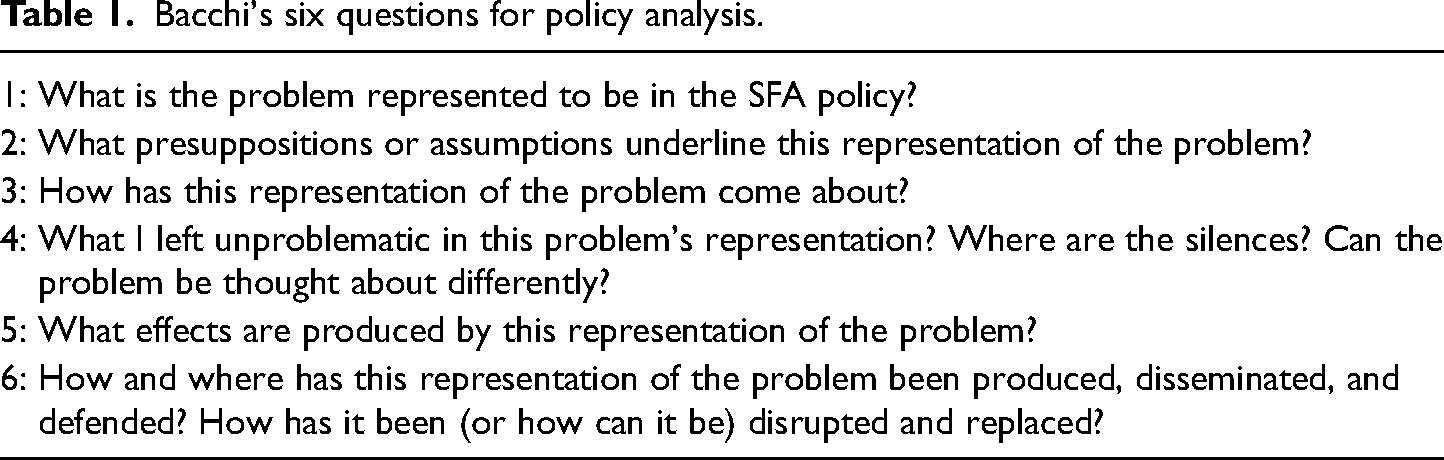
Using Bacchi's (2009) policy analysis, six questions guide the analysis (outlined in Table 1).
Bacchi's six questions for policy analysis.
It is worth noting that other available strategic policy documents, including Vision 2030 and the Quality-of-Life Programme, although they outline overarching goals, were not selected for this study. This decision was due to their lack of objectives and measures that are specific to sport and mass participation (see Vision 2030 and Quality for Life Programme). Even within SFA policy, the material provided can be considered limited; for example, there are no clear operation plans or explicit gender equality measures. Nonetheless, the selected documents serve as a valuable starting point for tracing the current policy direction and examining the development of women's participation in sport.
In the second phase, a semi-structured interview study was conducted to compare local perspectives with the policy framework. Thirty Saudi Women (n = 30) voluntarily took part in the open-ended questions that provided space to freely share their lived experience (Jamshed, 2014). Each interview lasted between 40 and 90 min and was conducted either online or in person, following receipt of participants’ informed consent. Ethical approval for the study was granted by Loughborough University.
Sampling selection strategy
A purposive sampling method was employed to recruit the participants (Creswell, 2002). The lead researcher (listed as the lead author) diversified the participants in terms of age, region and social class. Recruitment took place through fitness centres, public parks, and personal networks. The selection of two different locations aimed to enhance the accuracy and reliability of the data collected.
These inclusion criteria were designed to capture a wide spectrum of engagement with PA. For instance, some participants encountered in public parks – such as older adults accompanying family members – were not engaged in exercise themselves but were included to reflect diverse social roles, perspectives and experiences. This approach enabled a more nuanced understanding of perceptions and attitudes toward sport participation across different levels of PA.
The study was conducted in two major Saudi cities: Jeddah and Riyadh. Jeddah was chosen due to its historical exposure to diverse cultures and influences, which have shaped its relatively liberal and progressive social environment (Saudi Times, 2023). Riyadh, as the capital and most populated city, serves as the political centre of the Kingdom, and is characterised by more conservative interpretations of gender segregation, attire expectations, and public behaviour compared to Jeddah (Le Renard, 2014). These regional differences may have implications for residents’ access to recreational spaces and sport activities, particularly for women and youth.
Participants in this study spanned multiple generations with three main age-based groups:
- first, daughters, aged 18–25 years, are women who grew up largely during the post-2010s reform period. - second, mothers, aged 25–50 years, are women who experienced schooling and early adulthood before the reforms, when female PE was prohibited and sporting facilities for women were limited; many also lived to witness the reforms of the past decade, positioning them at the intersection of both restriction and reform. - third, grandmothers, aged 50+ years, are women who grew up entirely before the introduction of formal opportunities for women's sport in Saudi Arabia, during an era of strict gender segregation and the absence of women's sport.
These categories were used as cultural identifiers rather than strict biological markers, reflecting the social roles and expectations commonly associated with age groups in Saudi society. This approach aligns with the segmentation outlined in the SFA strategy, which defines cohorts as 18–25 (youth adults), 26–50 (adults) and 51+ (older adults).
In our study, these categories were culturally reframed as ‘daughter’, ‘mother’, and ‘grandmother’ to reflect how family and social roles are lived and articulated by participants. While some participants did not literally occupy these roles, they identified with them symbolically (e.g. as stepmother or aunt), which reflects how generational positioning is socially understood in Saudi Arabia. This generational framing is particularly relevant, as exposure to reforms, globalisation and Vision 2030 initiatives differ significantly across cohorts.
Data analysis
After cleaning, translating and transcribing the gathered data, two complementary analytical strategies were employed to ensure both rigour and theoretical coherence.
Stage one, thematic analysis: each interview was inductively analysed using
Braun and Clarke's (2006, 2021) six-step approach. This process involved familiarisation with the data, systematic coding, theme development, and refinement. The aim was to identify recurring patterns that reflected women's lived experiences and meanings related to sport participation within the Saudi context. Five themes were generated, capturing issues such as access to sport spaces, family expectations, cultural negotiation, motivation, and visibility. These themes were subsequently compared with the national Saudi SFA policy documents to examine how women's experiences aligned or diverged from national sport strategies.
Stage two, theoretical interpretation through the WPR framework: to deepen the analysis and enhance the validity of interpretation, Bacchi's (2009) WPR framework was applied as a second analytical layer. This framework conceptualises policy and discourse as sites where ‘problems’ are actively constructed rather than objectively discovered. Applying WPR to both the policy document and interview themes enabled a critical interrogation of how issues such as ‘low participation’ were represented and rationalised. The six guiding questions of the WPR approach helped identify what was problematised, what was left unproblematised, and what subject positions were produced within both policy texts and participants’ narratives.
Through this two-phase model, the thematic analysis provided an inductive foundation grounded in participants’ lived realities, while the WPR framework offered a critical, theoretically informed interpretation of how these realities were positioned within broader policy and cultural discourse. Together, these analytical stages revealed how normative framing around lifestyle, motivation, and health often obscure deeper structural and cultural constraints influencing women's sport participation.
This analytical approach reflects a broader sociological understanding of the interplay between policy discourse and lived experiences, consistent with Amara's (2012) emphasis on contextual and cultural analysis in sport policy within Arab-Muslim societies. It therefore provides a multi-layered and contextually grounded assessment of how national sport strategies intersect with, and at times diverge from, the lived realities of Saudi women.
Table 2 provides an outline of participants’ demographic characteristics.
Demographic profile of participants.
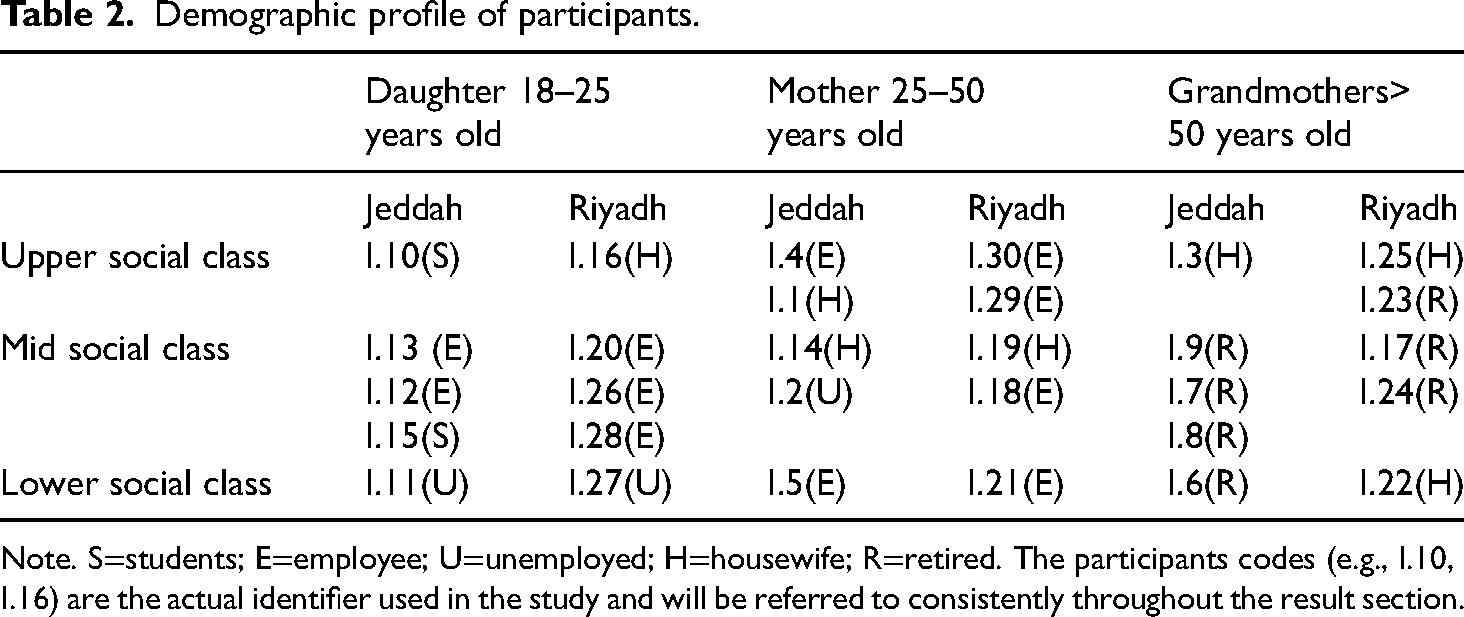
Note. S=students; E=employee; U=unemployed; H=housewife; R=retired. The participants codes (e.g., I.10, I.16) are the actual identifier used in the study and will be referred to consistently throughout the result section.
Reflexivity and positionality statement
The lead researcher is a Saudi woman conducting research with other Saudi women, occupying a dual positionality that shaped the research process. Her insider status – grounded in cultural familiarity, shared language and social norms facilitated access to participants and the building of trust during interviews. This shared positionality often encouraged participants to speak more openly about sensitive issues such as family approval and religious expectations. However, the researcher was also perceived, in part, as an outsider, having lived and studied abroad, and approaching participants not as a friend or family member but as a university-based researcher. This occasional outsider positioning meant that some participants were more cautious when discussing topics they considered socially delicate. Recognising these dynamics, the researcher adjusted her interview prompts and follow-up questions to create additional space for participants to narrate their experiences in their own terms.
At the same time, throughout the process of the research, the lead researcher engaged in active reflexivity to manage the complexities of this dual role, being an insider and an outsider. For example, she remained conscious of the tendency to overemphasise structural constraints during early coding of the data. This was later balanced by acknowledging participants’ strategies of resistance, negotiation, and adaptation. Her cultural proximity also meant she could detect subtle linguistic cues and references – that might have been overlooked, both by an insider and by a complete outsider – which directly shaped the coding framework and interpretation of emergent themes.
Regular peer-debriefing sessions with international colleagues unfamiliar with the Saudi context further helped to bring to the surface any implicit assumptions when developing the findings and ensured that the analysis remained grounded in participants’ lived experiences. This reflexive approach enhanced both the ethical and interpretive integrity of the study, enabling deeper engagement with the policy discourse while remaining attentive to the nuanced realities of Saudi women navigating sport participation within a rapidly changing policy and cultural landscape.
Results
This section presents the findings from the two-phase analysis: first, the examination of SFA strategy documents using Bacchi's WPR framework; and second, a thematic comparison with interview data. The findings are organised according to Bacchi's six guiding questions.
What's the problem represented to be in the SFA policy?
The SFA policy constructs low participation in PA primarily as a public health issue, framed within biomedical and behavioural discourses. Drawing on statistics from GASTAT (2021), it highlights that only 20.3% of women and 36.1% of men meet the World Health Organization (WHO) recommendation of exercising for at least 150 min per week. These figures underpin the framing of PA as a means to prevent non-communicable diseases (NCDs) such as obesity, diabetes, and depression – an approach consistent with global health governance narratives.
At the same time, this health-oriented framing is embedded within the broader Vision 2030 modernisation agendas. For instance, the Vision 2030 strategy document states in the quality-of-life programme a commitment to ‘increase public participation in sport’ (Kingdom of Saudi Arabia, 2016). This demonstrates how PA is linked not only to disease prevention but also to wider goals of women's empowerment, social transformation, and economic growth. This dual framing reflects both the importation of global health discourses and their adaptation within Saudi Arabia's socio-political and cultural reform project.
At the surface level, this representation appears gender neutral. However, going deeper reveals that it masks the gendered nature of participation constraints. For instance, while the SFA strategy highlights individual behaviours such as screen use and lack of motivation (SFA, p.13), it overlooks structural constraints such as women's restricted access to facilities. In doing so, it frames PA as an individual responsibility – a discourse widely critiqued in public health literature (Bacchi, 2009).
While the SFA strategy claims inclusivity, participant accounts revealed limited awareness of the policy and its community-based initiatives, such as running groups and other community sport activities. Only 6 out of 30 interviewees had heard of the SFA strategy, and even fewer understood issues relating to access logistics or associated costs. For some, this lack of awareness translated into reliance on familiar, private forms of exercise. As one participant explained: I’m not too sure about the activities going on; I just stick to going to the gym. I’ve never really exercised in a public space. (I.28) It's our time now, [laughing] not for me—it's for my daughter and granddaughter. The Crown Prince, may God bless him, has given women all the rights and opportunities they deserve. (I.7)
What assumptions underlie this representation of the problem?
The SFA document frames physical inactivity primarily as a behavioural issue rooted in individual choice and motivation. Drawing on national survey data, it highlights excess screen time (53% browse online over two hours daily; 36% watch TV for more than two hours), low exercise frequency (19% never engage in regular sport), and mindset barriers (39% do not prioritise exercise; 10% lack energy) as key obstacles (SFA, p.13). Such framing assumes that inactivity is predominantly a matter of personal behaviour, implying the solution should focus on changing individual attitudes, such as improving health or appearance, rather than also addressing wider structural and cultural factors.
Interestingly, while the SFA showed that 13% of individuals prefer family-based activities, suggesting the importance of social dimensions to participation, the strategy reduces this to an individual behavioural preference rather than examining its broader significance. It ignores how family dynamics, caregiving responsibilities, or cultural expectations around gender roles can constrain or facilitate opportunities for PA. By including relational and social factors within an individualist logic, the policy obscures the structural realities that particularly affect women, such as limited facility access and normative restrictions.
Interviewees highlighted barriers such as cultural norms, logistical obstacles, and familial obligations, which contradict the assumption of free individual choice. For example, transport limitations combined with family approval to shape women's ability to go to gyms: The gym is far away from my home, and my husband will not be happy to send me there unless I have a friend who can drop me off, and my friend is not always free. I have no transportation as well. (I.12) It's about culture as we didn’t used to do sports. In my opinion, the government has [created] all the facilities to encourage us, but still, I think it will take some time for us to play sports [as] a part of our lives. (I.19) We used to be home, doing house chores. It's not easy to leave the house and go exercise. Who will take care of my kids? (I.5) No, I need to get out of the house. I need a break and some time for myself away from the kids. I don’t feel comfortable doing any kind of exercise in front of my family. I need to see the world outside, meet new people, and relax. It's a psychological thing that's hard to explain. (I.21) If you can be in a perfect body shape in a quick way, why not? The price of Ozempic [an anti-diabetes medicine that can aid in weight loss] is reasonable, and you don’t have to eat healthy, which costs a lot because the needle suppresses your appetite. You do not have to pay for a gym membership.
Together, these accounts reveal how transport limitation (I.12), cultural unfamiliarity with sport (I.19), domestic obligations (I.5), and discomfort exercising in shared home spaces (I.21) all complicate the policy assumption that PA is a matter of free individual choice. From a sociological perspective, PA is perceived not merely as beneficial for health reasons but as part of a culture that promotes particular ideal body images and external appearances for women.
How has this representation of the problem come about?
The current strategy to frame the issue is connected to many factors, including public health (SFA, p.11), Vision 2030 ambitions (Vision 2030, p.4) and national productivity goals. By defining the issue as a health concern, the SFA strategy avoids concern with culturally sensitive factors, particularly the historical role of the religious policing of women's visibility in public sport. There has been an easing in the authority of the religious police (Haia) – the Commission for the Promotion of Virtue and the Prevention of Vice – who historically have been empowered to restrict women from exercising in public and to influence their attire. Yet Islamic norms remain deeply embedded and continue to influence local practices. Some participants commented that some community members still resist the idea of women participating actively in public life, citing factors such as modesty, shyness, and tradition as deterrents. To demonstrate the point, participant I.11 stated that: I cannot imagine myself riding a bicycle while wearing an abaya and niqab I.11
The policy frames PA in terms of health to avoid the more controversial dilemma of directly engaging with local beliefs and Islamic teachings. By emphasising universally recognised benefits such as reducing obesity and preventing chronic disease, the initiative secures broader social acceptance and support. This framing aligns with Vision 2030's emphasis on improving quality of life and public health, while giving less explicit attention to gender equity (see Vision 2030).
At the same time, the SFA strategy responds to demands from the international community, e.g. the International Olympic Committee (IOC), United Nations, and Human Rights Watch, which have long advocated gender equality (Human Rights Watch, 2012). Despite this, some participants emphasised the importance of political rather than public health agendas. For instance, I.14 highlighted that: Since Prince Mohammed bin Salman became the crown prince, he made it a priority to empower women across different sectors, so I guess that is why we have this attention being paid to women's sports. Maybe they [decision makers] have been thinking about it [encouraging women to do sports] recently because of the global conversation on gender equality and women's rights.
While this approach does not yet amount to a comprehensive vision of gender equality, it has nonetheless created gradual and tangible opportunities for women's participation in sport and PA, contributing to an incremental reduction in gender disparities.
What is left unproblematic in this problem representation?
The SFA strategy overlooks key cultural, economic, and socio-spatial inequalities that constrain women's participation, particularly in mixed-gender activities. The policy acknowledges the need to expand targeting women by addressing cultural and demographic preferences (SFA, p. 15), yet it provides no clear framework for how such preferences will be translated into practice. While initiatives such as building new sports stadiums may appear inclusive, their impact remains limited if they do not include culturally appropriate provisions such as gender-segregated times or dedicated women-only spaces – an issue raised repeatedly by participants during interviews.
Moreover, the strategy's reliance on numeric performance indicators risks flattening women's diverse experiences. For example, the Vision 2030 goal is to increase overall participation rates to 40% by 2030 (Kingdom of Saudi Arabia, 2016), but these quantitative focuses prioritise headline figures over the deeper qualitative dimensions of inclusion and sustainable change. Without addressing the underlying structural barriers, such gains may remain superficial and unevenly distributed.
The emphasis on key performance indicators and measurable outcomes often overshadows the pursuit of long-term transformation. This tendency is mirrored in the school sector, where formal inclusion of sport in curricula is undermined by infrastructural inadequacies. As one participant observed, even when schools include sport, provision often remains limited to improvised or unsuitable spaces: My friend said her daughter's school does have some sports stuff, but they’re squeezing it into tiny spaces [classroom]. They need more room for the girls to play properly. (I.8)
What effects are produced by this representation of the problem?
The SFA's framing of gender equality – such as by ‘introducing events programmes and activities suitable for female participants in terms of preference, interest and lifestyle’ (SPF,19) – produces visible opportunities but in practice generates uneven effects. While the SFA strategy projects inclusivity and empowerment in line with Vision 2030's modernisation goals, it often obscures deeper social and structural barriers.
Younger women and those belonging to elite families are often receptive to these new opportunities in sports. As one older participant said: My granddaughter always goes to Pilates class with her friend and of course I do not go with them, they are all bzora
1
[kids]. (I.7) A lot is happening in the country when it comes to sport, but you know we need something for women only - just for fun, socialising, and meeting friends. For example, my father wouldn’t be happy for me to join a mixed running group. (I.16) I really want to play football, but my brother thinks it's only for men, so he won’t let me participate or practice. And I know there's a women's football team now, but I’ve never played, so I’m not good at it, and no one supports me. (I.20)
These uneven outcomes reinforce Bacchi's (2009) point that policy representations generate a range of effects. At the discursive level, the SFA strategy narrows the understanding of women's participation by framing inactivity primarily as a lifestyle and behavioural issue, sidelining structural and cultural barriers. At the level of subjectification, women are positioned differently, with younger and elite groups represented as active consumers of sport, while older or less privileged women are implicitly marginalised. Finally, at the level of lived effects, these representations translate into unequal access on the ground, where some women benefit from new programmes while others remain excluded due to a lack of family support or cultural expectations.
How and where has this representation of the problem been produced, disseminated, and defended? How could it be questioned, disrupted, and replaced?
The representation of women's participation in sports and PA within the SFA strategy is constructed through quantifiable metrics aligned with Saudi Vision 2030 (SFA, p 4). Official documents frame low participation as a national health challenge to be addressed by increasing the proportion of adults meeting PA guidelines (SFA, p. 9). This framing is disseminated through top-down platforms, often in the form of statistical reports.
These representations are reinforced by social media, which showcase women's involvement in emerging activities such as walking, cycling, and padel as symbols of a modern Saudi lifestyle. While such imagery promotes sport as an aspirational practice, its impact on actual engagement does not always translate into tangible opportunities on the ground. Women's participation remains constrained by culture expectations, self-regulation, and entrenched gender roles.
Although official media platforms promote these activities as a part of a healthy lifestyle, the message often fails to reach or resonate with its intended audience. As one participant explained: It's hard to figure out when, where and how to join in. And [we don’t know] about the cost, whether it's free or not. (I.14) I’ve really seen a change. You can see a lot of women walking on promenades nowadays, some riding bicycles … a lot are posting their participation in Padel games on Snapchat. (I.11)
Drawing on Bacchi's (2009) WPR lens, these findings suggest that participation is constructed as a technical issue rather than a socially embedded one. This framing obscures the role of power in determining who participates, under what conditions, and with what constraints. Questioning this representation requires shifting focus from numerical targets and promoting campaigns to policies that engage directly with the structural realities of gender, geography and class in Saudi Arabia. Replacing this framing would involve viewing participation as a socially embedded practice rather than a technical target, foregrounding access, local context, and women's agency.
Discussion
This study critically interprets the findings through the lens of Bacchi's (2009) WPR approach, complemented by intersectional and regionally grounded insights. Intersectional analysis is used to capture how gender, class, and generational differences shape Saudi women's engagement with sport. Regionally, the analysis draws on variations between participants from Jeddah and Riyadh, whose contrasting social and cultural settings provide distinct perspectives on policy implementation and lived experience. This combined approach reveals how representations of women in sport policy intersect with broader social hierarchies and regional contexts within Saudi Arabia, exploring how sport policy narratives align with or diverge from women's lived experiences and the structural, cultural, and symbolic forces shaping participation.
From the analysis, five interrelated themes emerged, which structure the discussion that follows. These themes reflect both the strengths and limitations of current sport policy and its implementation: (1) reframing inactivity: from behavioural deficit to structural constraint; (2) socioeconomic and cultural filters: gendered access to sport; (3) symbolic visibility versus material inclusion; (4) the limits of policy logic: quantification over transformation; and (5) towards gender-sensitive policy: aligning discourse with experiences.
Reframing inactivity: From behavioural deficit to structural constraint
The SFA strategy frames low PA as a behavioural issue linked to individual choice and lifestyle, often appealing to public health rationales such as managing non-communicable diseases. While this aligns with global health discourse, it obscures the sociocultural and gendered barriers that constrain women's participation. Through the WPR lens, this framing reflects a form of responsibilisation that masks structural inequalities (Bacchi, 2009).
As participants in this study described, limited autonomy, transport dependency, and gendered domestic roles create difficulties in regular participation. For example, I.12 discussed needing her husband or a friend to access gym facilities, and I.5 highlighted caregiving burdens. These are not motivational gaps but structural constraints, shaped by gendered norms and expectations.
Framing inactivity as a personal failure obscures the broader structural and cultural constraints that women face, reinforcing forms of symbolic exclusion and psychological pressure (Agergaard and Sørensen, 2009; Alharbi et al., 2024).
Socioeconomic and cultural filters: Gendered access to sport
The findings revealed that sport access is stratified by class, geography, and culture. While middle-class urban women may afford gym memberships, others turn to medical shortcuts such as weight-loss injections due to time or financial limitations (I.12). Although cosmetic surgeries are costly, they do not require daily commuting to the clinic. These practices reflect how women's body image, culturally speaking, is treated as a product, placing pressure on women to maintain a socially approved appearance – with or without sport (Khalaf et al., 2015). The SFA policy acknowledges this driver, noting that a key motivator to increase PA is ‘enhancing physical appearances’ (SFA, P.13).
While middle-class women may afford gym access, this does not always translate into freedom of participation. Despite recent legal reforms such as allowing women to drive, many men continue to restrict women's independence, limiting their ability to move freely and engage in PA and sport. This restriction reflects deeply rooted gender ideologies that structure everyday life and reinforce inequalities in sport access, as noted by I.12. This mirrors global patterns, where cultural norms and domestic roles continue to shape women's engagement in sport even in supposedly inclusive environments.
Entrenched cultural expectations further complicate access. For instance, I.11 described the discomfort of exercising publicly while wearing the Niqab. From her perspective, this may result in societal disapproval or reputational damage for her and her family. These accounts highlight broader cultural roles that frame sport as a male domain, reinforcing boundaries around visibility and body control (Aljehani et al., 2022). While the SFA policy briefly acknowledged social constraints, it largely focused on university participation and neglected how cultural codes and family control operate across different segments of society. Without addressing these embodied realities, policies may risk undermining inclusivity.
Symbolic visibility vs material inclusion
An emerging theme was the misalignment between the policy's inclusive discourse and the actual conditions of access. Participants noted that visibility in campaigns (e.g., social media posts) often centred on urban, middle-class women engaged in niche activities such as padel. For women in less-resourced areas, these portrayals projected an idealised image of participation that felt aspirational but not genuinely empowering, as they did not reflect the practical realities of access or opportunity (I.24, I.8).
Participants such as I.14 also expressed confusion about how to access programmes, citing a lack of local information, transport, or affordability. This underscores a key limitation of visibility-driven reforms: they may symbolically include women without meaningfully engaging them (AlKhalifa and Farello, 2021). These findings resonate with critiques of neoliberal inclusion frameworks that prioritise metrics (e.g., participation rates) over relational change. Without adapting to local contexts or investing resources fairly, symbolic reforms may inadvertently reinforce the very exclusions they seek to overcome (AlMarzooqi et al., 2023).
The limit of policy logic: Quantification over transformation
The SFA strategy relies heavily on quantifiable targets, such as percentage increases in women's participation, rather than structural transformation. While such metrics can help benchmark progress, they flatten the diversity of women's needs and overlook underlying social dynamics.
Participants described inadequate school facilities (I.8), unaffordable gym memberships, and lack of community programmes in rural areas. Although some of these structural gaps are acknowledged in national reports, they are rarely disaggregated by gender or region and thus fail to capture the gendered realities of access.
In addition to these material barriers, participants also identified psychological constraints such as shame, fear of judgment and lack of confidence – factors deeply shaped by gender norms and social expectations. These emotional and social dynamics significantly influenced women's ability to engage in PA, yet remain absent from policy discourse. As one participant (I.21) explained, PA was not solely about fitness but also served as a means of psychological escape and personal autonomy. Her discomfort with exercising in front of family, alongside a desire to ‘see the world outside’, illustrates how the home can be experienced as a restrictive environment shaped by domestic responsibilities and societal expectations. Her difficulty articulating this need underscores the internalised gender norms and social pressure that can limit women's agency.
These findings align with Alharbi et al. (2024), who emphasise that addressing negative beliefs – such as fear of injury or social disapproval – is essential to increasing participation. Applying Bacchi's (2009) WPR approach, we argue that the policy's emphasis on participation rates construct the problem as quantitative and individual, thereby masking the sociocultural and structural forces that underpin exclusion.
This technocratic framing of reforms reflects a wider trend in global sport governance, where levels of inclusion are privileged over structural justice. Without addressing deeper gendered power dynamics and policy gaps, such reforms may appear progressive on the surface, producing statistical improvements while lacking sustainability and failing to achieve the transformative social changes that, through Vision 2030, the Saudi government seeks to promote (Agergaard and Sørensen, 2009).
Toward gender sensitive policy: Aligning discourse with experiences
These findings also indicate that women's sport cannot be understood as a single, uniform national experience. Rather, participation is shaped by locally embedded sociocultural environments, with women in Jeddah describing more socially visible and informal modes of engagement, while participants in Riyadh reported more regulated and institutionally organised opportunities. A gender sensitive policy approach, therefore, requires attentiveness to these contextual dynamics, ensuring that implementation strategies reflect regional specificities rather than assuming a universal model of participation. This aligns with ethnographic observations showing that women's participation is negotiated through family support, community acceptance, and access to women-appropriate facilities (Angerer, 2025).
For instance, women's accounts of negotiating reputational risks and navigating uneven policy reception show how reforms are filtered through everyday concerns of family honour and social perception. These narratives resonate with Svoboda et al.'s (2024) observation that sport and PA in Saudi Arabia are framed as part of Vision 2030's sociopolitical transformation, yet they also complicate this framing by exposing the personal negotiations required to embody national ambitions.
Expressions of pride in regional events similarly highlight how sport fosters belonging and collective identity. While Al-Khalifa and Al-Khalifa (2022) demonstrate that competitions promote unity at the national level, women in this study revealed how such pride is rooted in localised and everyday experiences of the community. This suggests that identity formation is as much bottom-up as it is policy-driven. This finding underscores the importance of engaging with local voices in shaping policy, rather than relying solely on a country-led narrative of cohesion.
Hussain and Cunningham's (2023) call to prioritise Muslim women's lived experiences over abstract policy discourse is strongly reinforced by their study. Women's accounts revealed the subtle interplay of barriers and motivations – ranging from reputational risk to opportunities for local pride – that official narratives often overlook. This not only validates their argument but also highlights how externally driven, consultancy-led strategies have limited transformative impact. As participants indicated, meaningful change requires direct involvement of local actors who understand the social fabric and are able to tailor initiatives accordingly.
A number of policy recommendations emerge from this study. These include the need for decentralised planning that empowers local actors to design sport initiatives tailored to the unique needs of their communities. An intersectional lens must also be adopted – one that accounts for differences in class, geography, generation, and gender roles – to ensure that sport policy is inclusive and contextually relevant.
In addition, adopting transparent, clear and accessible communication is vital. The reliance on numerical targets should be complemented with qualitative metrics that capture empowerment, satisfaction, and wellbeing.
The WPR framework proved effective in uncovering unspoken assumptions embedded in policy discourse. It enabled a dual critique, highlighting how official discourse may present symbolic gestures of progress while leaving systemic inequalities unaddressed. Ultimately, this study shows that Saudi women are not passive recipients of reform, but active participants who manage challenges, question dominant views, and create their own ways of engaging in sport. Policy must therefore not only reflect women's voices but also recognise and support their lived experiences.
Conclusion
In conclusion, this study analysed the Saudi SFA policy and its alignment with women's experiences. Using Bacchi's WPR framework, it demonstrated that inactivity is largely framed as a behavioural and health issue rooted in individual choice. This framing marginalises the cultural and gendered barriers that shape women's everyday realities.
Through thematic analysis of interviews and discursive analysis of policy texts, the study contributes to post-structural critiques of sport policy by showing how gender exclusion can persist even within seemingly inclusive reforms. It reveals that while the policy acknowledges women as a distinct group, it overlooks their diverse experiences and needs, as evidenced by the lack of targeted measures to address the gender gap in sport participation.
Although the policy promotes sport and PA as tools to enhance health and achieve national goals, its focus on quantitative outcomes risks overshadowing deeper, more sustainable forms of engagement for women. The findings highlight the need to reformulate policy in ways that consider the real-life experiences and conditions of Saudi women. This includes setting both quantitative and qualitative targets for women's sports participation. Additionally, the study underscores the importance of supporting cultural portrayals with concrete policies that acknowledge and address traditional norms. It is essential to create accessible sport environments and promote campaigns that resonate with women's values and daily realities.
This article fills a significant gap in research regarding women's sports in Saudi Arabia and the SFA policy. By integrating women's voices, the study challenges existing policy narratives and suggests new directions for policy development in Saudi Arabia and the wider Middle East and North Africa (MENA) region. It also contributes to the international field of research on gender inclusivity in sports by providing empirical evidence from a unique non-Western context, thereby broadening the geographical and cultural scope of the literature on women's sports engagement.
Nevertheless, the study has certain limitations. It was conducted in Riyadh and Jeddah, which restricts the generalisability of the findings across all 13 provinces. Recruiting Saudi participants also proved challenging, though for different reasons across generations. Some younger women expressed initial hesitation about taking part, often seeking reassurance regarding confidentiality and the purpose of the study before agreeing to participate. By contrast, several older women showed limited interest in participating, which appears connected to their earlier social experiences, when opportunities for women's sport were far more restricted and less publicly recognised. These constraints underline the exploratory nature of the study and point to the need for future research to include a wider geographical sample and a more diverse participant base.
Future research could build on this work by exploring how women themselves reframe and reshape sport in community-based and informal settings. Such bottom-up practices can provide more culturally grounded insights that can further inform sustainable and gender-responsive sport policies.
Footnotes
Acknowledgment
I am grateful for the constructive feedback provided by supervisors, colleagues and the journal's reviewers, which contributed to improving this manuscript.
Declaration of conflicting interests
The authors declared no potential conflicts of interest with respect to the research, authorship, and/or publication of this article.
Funding
The authors received no financial support for the research, authorship, and/or publication of this article.
