




Abstract
Background:
Parenting refers to the usual approaches that parents use in child rearing and is one of the many aspects that play a role in the development of both adaptive and maladaptive behavior in children and adolescents. Parenting styles may be authoritarian, authoritative, or permissive. Temperament refers to the stylistic aspect of behavior and individual differences in behavioral characteristics. This study aimed to compare maternal parenting styles and childhood temperamental patterns between two socioeconomic classes.
Methods:
This was a cross-sectional study. Sixty mothers from middle and lower socioeconomic status residing in an urban community in Hyderabad were chosen for the study. Data was collected from January to February 2020. Every participant was a mother of two children in the age group 6–12 years. A semi-structured intake proforma was used, along with the Temperament Measurement Schedule and Parental Styles Questionnaire. Factorial ANOVA was used to explore the differences among the different groups.
Results:
In 76% of the participants, the predominant parenting style was found to be authoritative. Statistically significant differences in parenting styles were seen between the middle and low socioeconomic status groups. Parenting styles differed with the gender of the child. The education of the mother influenced the parenting style. Illiterate participants and participants who did not have at least tenth-grade education had an authoritarian parenting style. Second-born children scored high on the sociability factor compared to firstborn children. The difference between first- and second-born children was statistically significant. Socioeconomic status and the gender of the child had a statistically significant association.
Conclusions:
Parenting is a complex phenomenon that is influenced by many factors, social class being one such factor.
Introduction
Parenting refers to the usual approaches that parents use in child rearing and is one of the many aspects that play a role in the development of both adaptive and maladaptive behavior in children and adolescents.1,2 Parenting styles have been observed to play an important role in shaping behavioral and psychological outcomes in children. 3 Parenting styles are influenced by various factors, including culture, personality, parental background, education level, socioeconomic status, family size, and religion. Additionally, a child’s temperament and gender can also influence the type of parenting style they receive. While culture is a significant factor, economic situations and standards of living can also impact parenting. Temperament, which refers to the behavioral characteristics of an individual, is relatively stable from birth but can be modified by environmental factors such as parenting style.
Dr. Diana Baumrind has identified three parenting styles: authoritarian, authoritative, and permissive, with authoritative being considered the most effective for child rearing. An authoritarian parent is less responsive to the child, is highly demanding, and grants low levels of autonomy. An authoritative parent is responsive to the child, is highly demanding, and grants autonomy. A permissive parent is less demanding and grants high levels of autonomy.4,5 Among the three styles, authoritative is considered the best parenting style for rearing a child.
Temperament refers to the stylistic aspect of behavior and individual differences in behavioral characteristics. Malhotra and Jhanda opine, “Temperament is the innate constitutional behavioral tendencies of an individual that characterize his or her unique style of behavior arising from individual differences in the emotional, attentional and motor reactivity, and response patterns.” Temperamental characteristics appear at birth and are relatively stable to a certain extent but can be modified by environmental factors. One such factor is parenting style.6,7
Economic factors, including socioeconomic status, also play a role in parenting. 8 The American Psychological Association defines socioeconomic status as the social standing based on education, income, and occupation. 9 Recent research suggests that economic factors can also shape parenting styles, with greater occupational mobility and lower inequality making authoritarian approaches less effective than in previous generations. 10 Lower family income predicts lower scores in sociability and high negative emotionality in children’s temperamental patterns. 11
In India, parenting has traditionally been quite conservative and rigid, but with the advent of globalization and economic growth, parenting styles have also evolved. Research on parenting styles and children’s temperaments is sparse in India. The study aimed to measure parenting scores using the Parental Styles Questionnaire and temperamental patterns using a Temperament Measurement Schedule and compare the parenting and temperamental scores between two social classes. The secondary objective was to study the variation of parenting style and temperamental patterns with the gender and birth order of the child.
Material and Methods
This was a cross-sectional comparative study to explore the differences in maternal parenting styles and children’s temperament types belonging to two different socioeconomic classes residing in an urban community. The data was collected from January to February 2020. A total of 60 mothers and 120 children belonging to two different socioeconomic classes and living in an urban community in Hyderabad were chosen for the study. The Modified Kuppuswamy Scale was used to group the participants into socioeconomic groups. The study population predominantly consisted of families from low socioeconomic status (LSES) and middle socioeconomic status (MSES). We compiled a list of eligible households and randomly selected 30 door numbers for the LSES and MSES groups. We chose a sample size of 30 in each group because a sample size of ≥30 is recommended to meet the normality assumption for statistical tests. All the participants were explained about the study and the scales that would be administered.
Hypothesis
Null Hypothesis: There is no difference in the parenting styles or a child’s temperament across the two socioeconomic classes, gender of the child, or birth order of the child.
Alternate Hypothesis: There is a difference in the parenting styles and a child’s temperament across the two socioeconomic classes, gender of the child, and birth order of the child.
Inclusion Criteria
Participants who are mothers of at least two children in the age group 6–12 years, belonging to MSES and LSES, and who consented to the study were included.
We focused on mothers’ parenting styles because they spend more time with their children on average, especially in traditional gender roles, where mothers are primary caregivers. Additionally, there may be cultural or societal expectations regarding mothers’ roles in child rearing, which could make their parenting style more salient or influential for child development.
We chose the age group 6–12 years because by the age of 6 years, children have already developed a basic sense of self and have started to interact with their environment in more complex ways. Additionally, children have typically entered formal schooling, which can be a significant source of stress and challenge, making this an important period to study the impact of parenting styles and temperament. Children in this age group are more likely to be able to understand and accurately report on their temperament compared to younger children.
Exclusion Criteria
Participants with a chronic debilitating illness, mental illness, or intellectual disability, and those who refused to give consent, were excluded from the study.
Tools
A semi-structured intake proforma designed for the study was administered to obtain sociodemographic details such as age, sex, religion, SES, birth order, and education.
Temperament Measurement Schedule (TMS): This scale was developed by Dr. Savitha Malhotra for Indian children and was based on the original scale developed by Thomas and Chess. This scale has good reliability and validity. TMS measures nine temperamental variables: approach/withdrawal, adaptability, the threshold of responsiveness, mood, persistence, activity, intensity, and distractibility. It consists of 45 items grouped into nine variables, to be rated on a five-point Likert scale and five factors.12,13 The inter-rater reliability (0.82 to 0.96) and test-retest validity (0.83 to 0.94) have been reported as high in studies by Malhotra S and Malhotra A, 14 and Malhotra et al. 15
Parental Styles Questionnaire (PSQ): This scale was originally proposed by Robinson et al. 16 This scale is a 30-item questionnaire, with each question scored on a six-point Likert scale. Thirteen questions are used to measure authoritative and authoritarian parental styles, while four questions are used to assess permissive parenting styles. The Cronbach’s alpha coefficients of the PSQ for three factors—authoritative, authoritarian, and permissive—were 0.86, 0.82, and 0.64, respectively. 17 The PSQ was administered twice to each mother.
SES was measured using the Modified Kuppuswamy Scale, updated for 2019. 18 This scale, developed by Kuppuswamy in 1976, consists of a composite score that takes into account the household head’s education, occupation, and monthly income to provide a score of 3–29. It classifies the study population into five SESs.
In this study, the PSQ was administered only once to each mother, regardless of the number of children. The mothers reported using the same parenting style for each of their children. In contrast, the TMS was applied individually to each child. The majority of the participants spoke Telugu as their primary language. All authors are fluent in both Telugu and English. The scales used in the study were administered in English to participants who were proficient in the language. However, for participants who were not proficient in English, the authors translated the TMS and PSQ scales into Telugu.
Statistical Analysis
IBM SPSS Statistics for Windows, version 24 (IBM Corp., Armonk, NY, USA) was used to analyze the data. Factorial ANOVA was used to explore the differences in the mean scores on the parenting and temperament questionnaires among the different groups. The chi-square test and Fischer’s exact test were used to find the differences in predominant parenting styles across different sociodemographic variables. All tests were performed at a 0.05 significance level.
Results
Demographic Details of the Participants
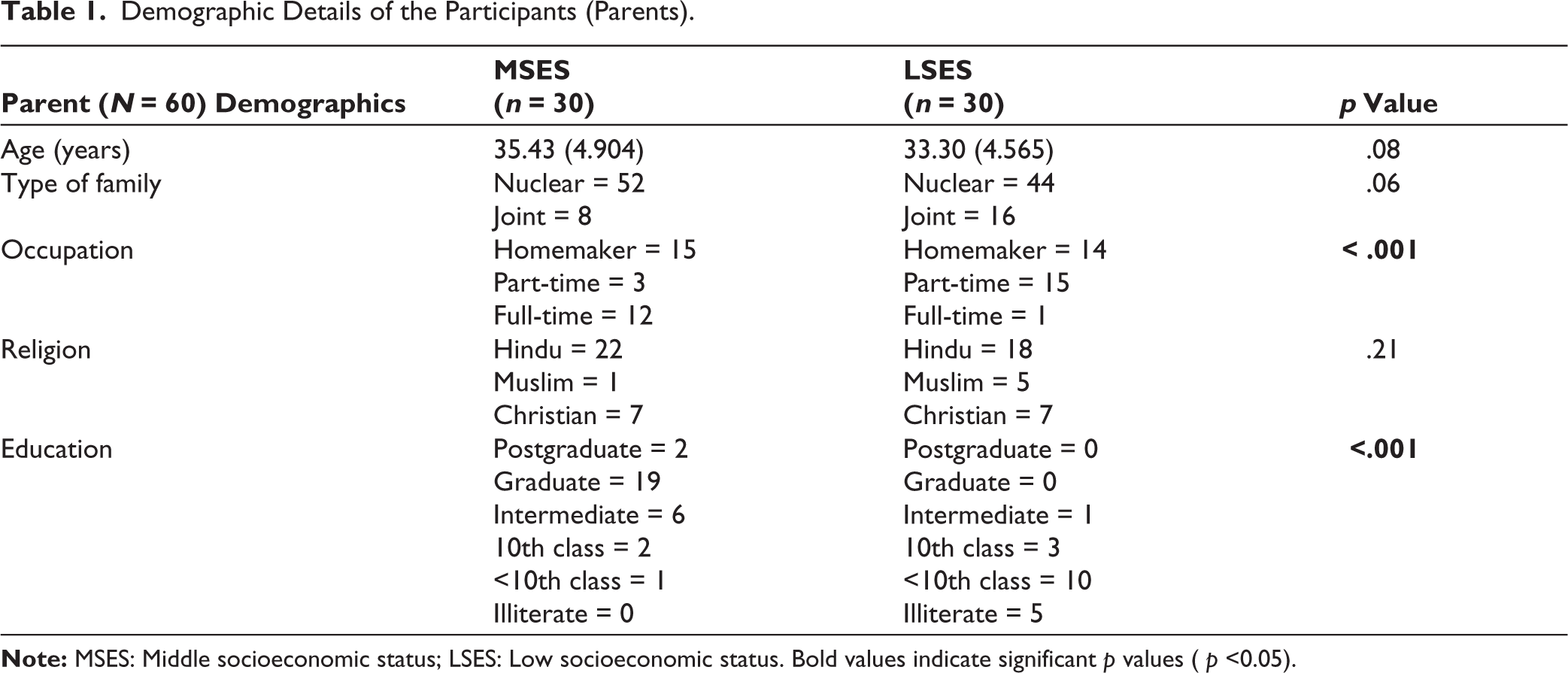
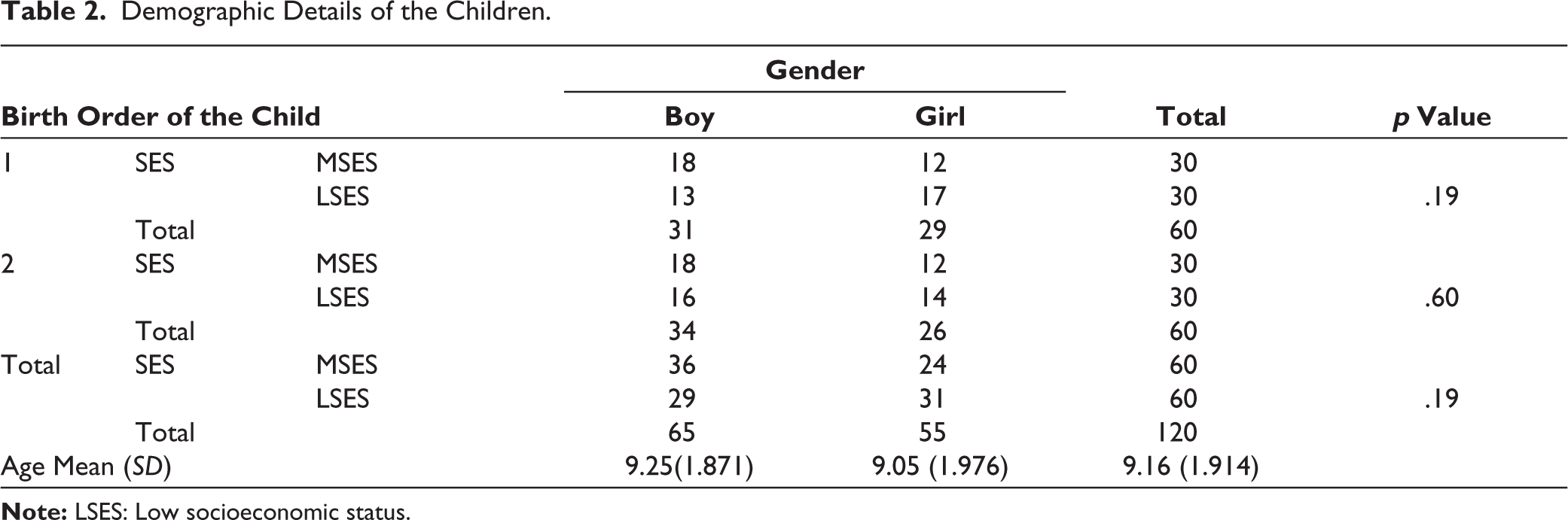
Table 1 summarizes the demographic details of the participants (N = 60). The mean (SD) age of the participants in the MSES group was 35.43 (4.904) years and that in the LSES group was 33.40 (4.565) years. All participants were married and lived with their husbands. There was no statistically significant difference in the age of the mothers between the two groups. (t(58) = 1.7413, p = .08). There was a statistically significant difference in terms of the occupation of the mother (p < .001) and level of education (p = <.001) between the two groups. There was no statistically significant difference in terms of religion or type of family between the two groups. Table 2 gives the demographic details of the children of the participants (N = 120). Sixty-five (54.16%) children were boys, while 55 (45.84%) were girls. The mean age of the children in the MSES and LSES groups was 9.435 (1.72) and 8.855 (1.711) years, respectively, with no statistically significant difference in the age of the children between the two groups. There was no statistically significant difference between the MSES and LSES groups and gender of the children.
Demographic Details of the Participants (Parents).
Demographic Details of the Children.
Predominant Parenting Style Across Different Sociodemographic Variables
Parenting styles were assessed by using a PSQ, which is a 30-item questionnaire to assess the predominant parenting style. Sixty mothers were assessed in the study. In 76% of the participants, the predominant parenting style was found to be authoritative. The differences in parenting styles that were seen between MSES and LSES groups were statistically significant, indicating that SES influences parenting styles (χ2 = 25.981, p value < .001, and phi value = 0.459). The predominant parenting style in both groups was authoritative, which was seen in 29 participants in the MSES group and 17 participants in the LSES group. One participant belonging to the MSES group and 12 participants in the LSES group had a predominantly authoritarian parenting style. One participant in the LSES group had both authoritarian and authoritative parenting styles.
Parenting Styles and Gender
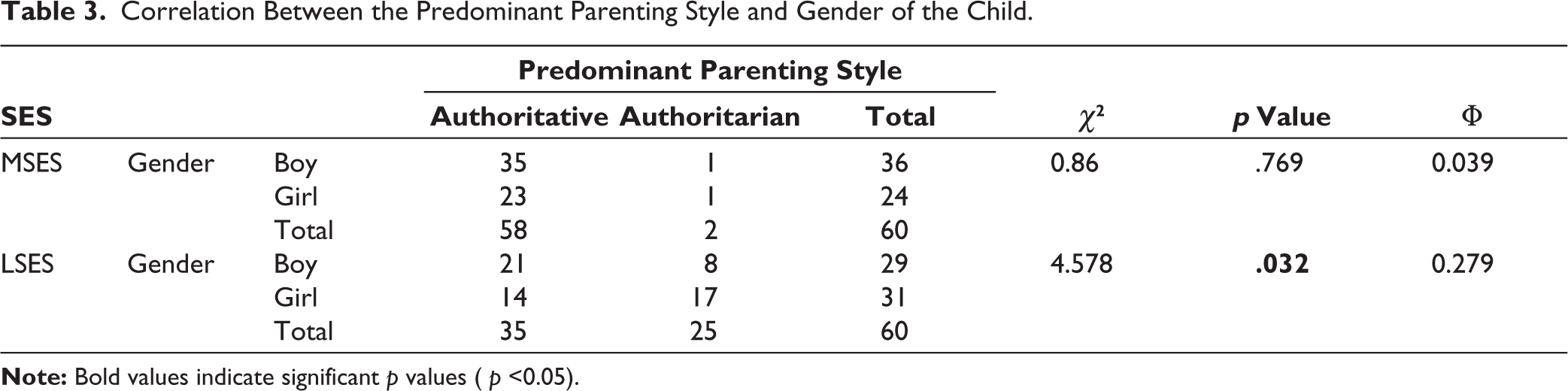
Parenting styles differed with the gender of the child. 67% of girls received authoritative parenting, whereas 86% of boys received authoritative parenting, and the difference was statistically significant (p = .014). We found that parenting styles did not differ with the gender of the child in the MSES group. 97% of boys and 95.88% (χ2 = .086, p = .76) of girls in the MSES group received authoritative parenting, compared to 72.41% of boys and 45.16% of girls in the LSES group (χ2 = 4.578, p = .032). Thus, from the sample, we can say that the gender of the child influenced the parenting style in the lower socioeconomic group (Table 3).
Correlation Between the Predominant Parenting Style and Gender of the Child.
Parenting Styles Across Birth Order
The birth order of the child does not influence the parenting style. In the MSES group, 47 firstborn children received authoritative parenting, while 13 firstborn children received authoritarian parenting. In the LSES group, 46 second-born children received authoritative parenting, and 14 second-born children received authoritarian parenting (χ2 = 0.048, p = .86).
Parenting Styles Across the Level of Education of the Mother
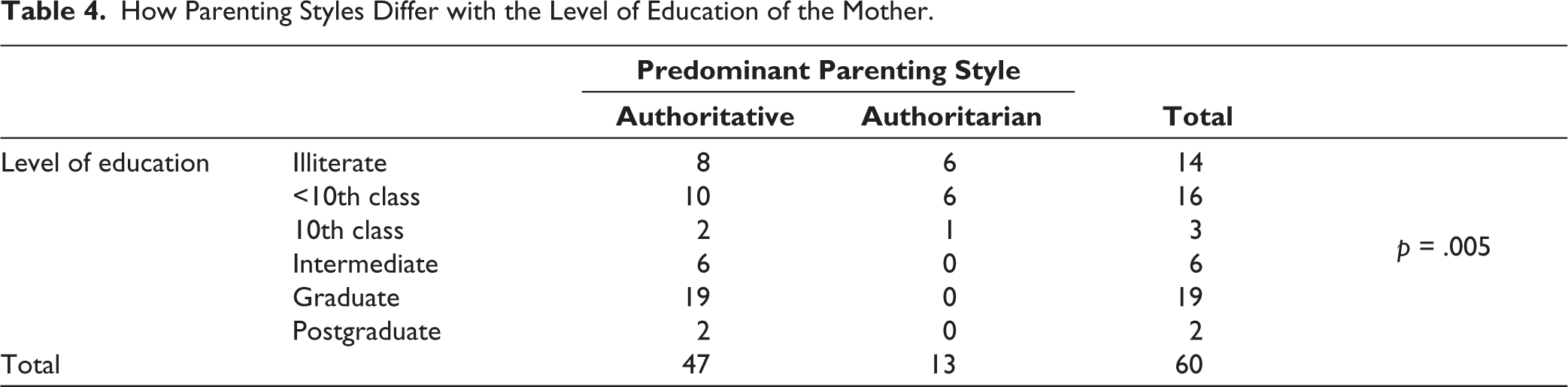
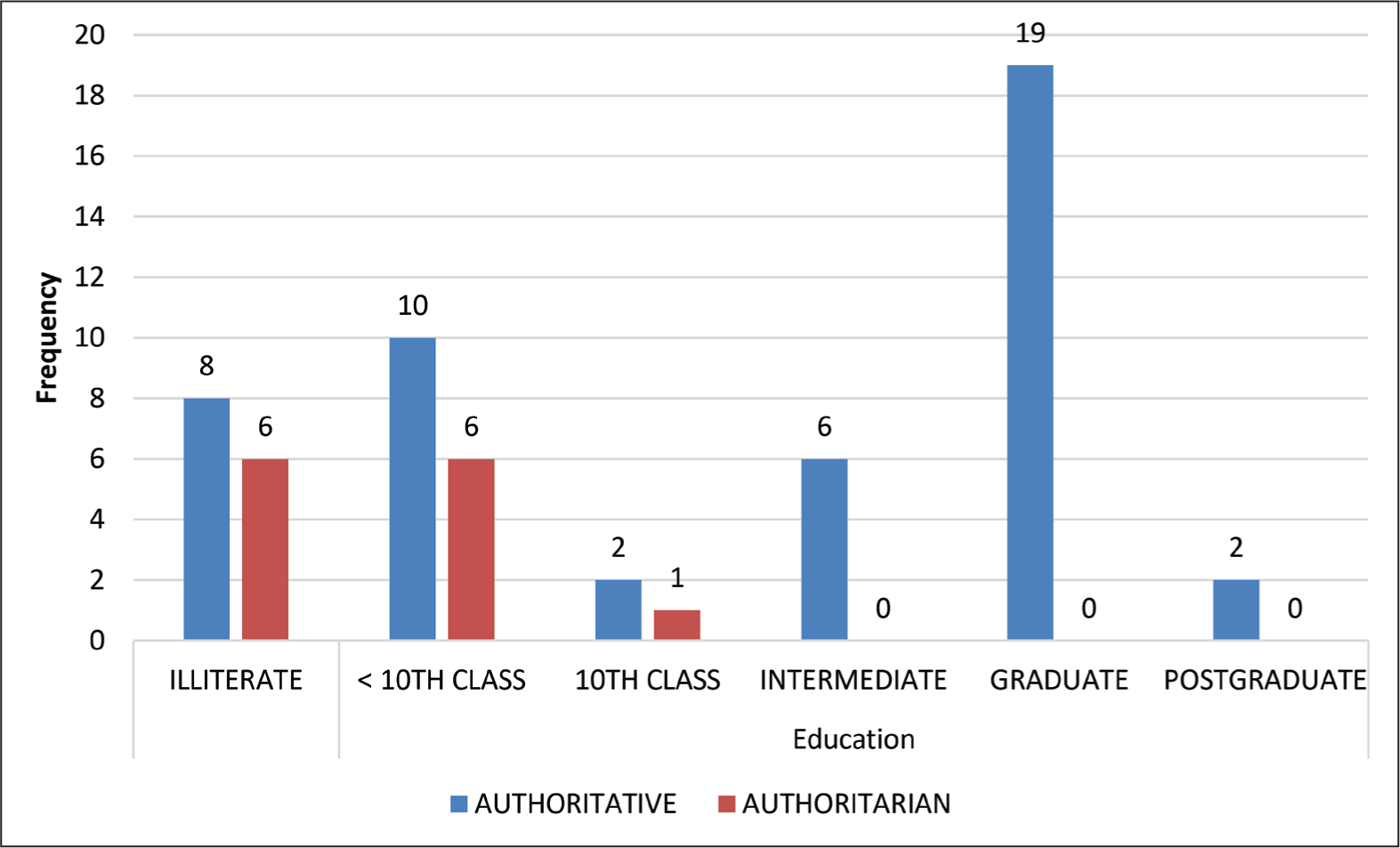
Six illiterate participants and six participants who did not have at least tenth-grade education had an authoritarian parenting style. Twenty-one participants who had a minimum of graduate-level education in the sample had a predominantly authoritative parenting style. (Table 4; refer to supplementary data). Fischer’s exact test was used to determine if there was a significant association between the level of education and the predominant parenting style. There was a significant association between the two variables (p = .005). A bar chart was plotted along with the frequencies of each group (Figure 1). According to Figure 1, the maximum difference was noted in the graduate group.
How Parenting Styles Differ with the Level of Education of the Mother.
Effect of SES, Gender of the Child, and Birth Order of the Child on Authoritarian Parenting
The main effect of SES on authoritative parenting yielded an F ratio = 133, p = <.001 (<p = .05), indicating significant differences between the two socioeconomic groups [MSES mean (SD) = 5.284 (0.88637); LSES mean (SD) = 3.7085 (0.54265)] with a mean difference of 1.411, p < .05 and a partial eta squared score of 0.535, suggesting that 53.5% of the variance is due to differences between the socioeconomic groups. Gender also had a significant effect on authoritative parenting (p = .007). There was no significant interaction effect of socioeconomic status, gender, and BOC (p = .74) on authoritative parenting.
SES*Gender of the Child*Birth Order of Child*Authoritarian Parenting
No significant main or interaction effects were seen on parenting scores. Socioeconomic status had a statistically significant influence on the authoritative and authoritarian parenting scores with large effect sizes, while the gender of the child had a statistically significant influence on authoritative parenting with a small effect size. From the above data, we can infer that the socioeconomic status of a person has direct influence on the type of parenting compared to the gender and birth order of the child.
Comparison of Temperament Characteristics of the Children Across Gender and Birth Order
A temperament measurement schedule was used to capture the child’s detailed temperament characteristics. Table 5 (refer to supplementary data) describes the mean scores of the different factors of temperament across the three categories. Factorial ANOVA was conducted to explore the main effects and interaction effects of independent variables (birth order of the child, gender of the child, and socioeconomic status) on the temperament scores.
Factor I (Sociability), Factor II (Emotionality), Factor III (Energy), Factor IV, (Distractibility) and Factor V ( Rhythmicity).
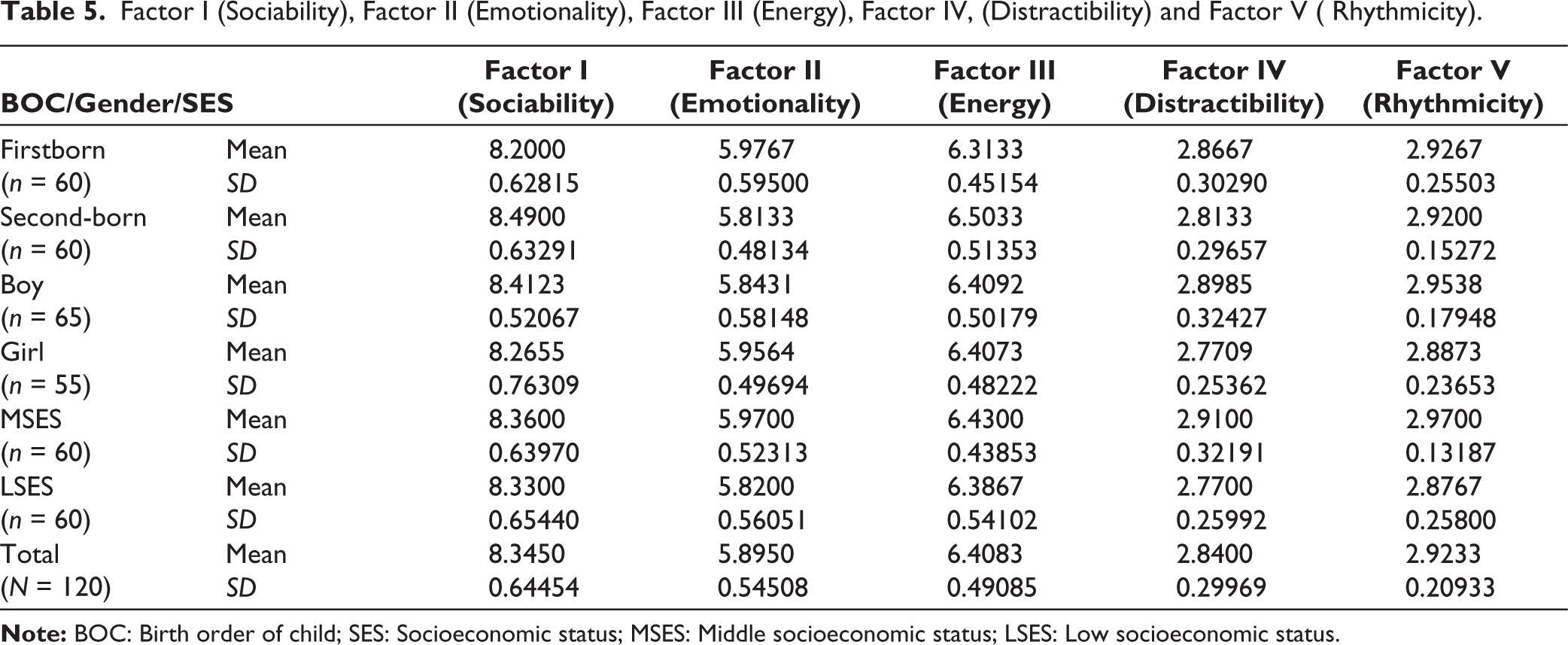
All factors except the birth order of the child do not have significant interactions with the independent variable of sociability. The second-born child scored high on the sociability factor compared to the firstborn child (mean score of the firstborn = 8.2000; mean of the second-born = 8.4900; mean difference = 0.2900). The main effect of the birth order of the child yielded an F ratio of 6.906, which is significant (p < .05) and a partial eta squared value of 0.043 (low effect size).
The mean differences noted in factor II and factor V across different groups were not significant. The mean difference of factor III (energy) scores between firstborns and second-borns (mean difference = −0.208, SEd = 0.64) was statistically significant. The main effect of the birth order of the child yielded an F ratio of 5.278, a p value of .023 (<p = .05), and an effect size of 0.045 (low association).
SES and gender of the child had a statistically significant effect on the distractibility scores (factor IV). Boys scored higher on distractibility scores than girls. The main effect of gender yielded an F ratio of 4.557, p = .035, and a p eta squared value of .039 (low effect size).
The MSES group got a statistically significant higher score in distractibility compared to the LSES group. The main effect of the socioeconomic status yielded an F ratio of 5.162, a p value of .025 (<p = .05), and an effect size of 0.039. Considering the effect size, we can infer that SES had negligible influence on the variations in distractibility scores.
Discussion
In this study, we observed significant differences in parenting styles between the two groups. The majority of MSES participants (96.66%) displayed authoritative parenting, while 58.8% of LSES participants showed authoritative parenting and 42.2% exhibited authoritarian parenting. These findings suggest a substantial variation in parenting styles based on socioeconomic status, reinforcing the influence of socioeconomic factors on parenting approaches. The study also found notable variations in parenting scores between the two groups, with the MSES group scoring high in authoritative parenting and the LSES group scoring high in authoritarian parenting. Socioeconomic status explained 53.5% of the variation in authoritative mean scores and 64.9% of the variation in authoritarian parenting. These findings align with previous studies by Bradley and Corwyn 16 and Conger et al. 11 Hosokawa and Katsura concluded that LSES is linked to reduced use of positive parenting practices and increased use of negative parenting practices, which is consistent with our observations. 19 Similarly, Azad et al. found that higher levels of positive parenting were associated with the mother’s education and income, which aligns with our study’s results. 20 In our study, 13 participants exhibited an authoritarian parenting style and had either no education or an incomplete high school education. The findings of this study and those of previous studies indicate that lower socioeconomic status is associated with a higher likelihood of authoritarian parenting and a lower likelihood of authoritative parenting.
Gender bias in parenting styles has been observed in studies. In our study, significant differences were found in predominant parenting styles between genders in the LSES group. In the MSES group, 97% of boys and 95.8% of girls received authoritative parenting, while in the LSES group, 59% of girls and 27.5% of boys received authoritarian parenting. Furthermore, we found significant differences in mean parenting scores, indicating that boys received more positive parenting compared to girls in terms of authoritative parenting style. However, our findings contradict previous Western studies by McKee et al 21 and Conrade and Ho, 22 which reported that boys received authoritarian parenting and girls received more positive parenting. Instead, our results align with a Pakistani study by Kauser and Shafique, which revealed that girls received more negative parenting than boys. 23 Another study by Vyas and Bano indicated that girls received authoritative parenting on par with boys. 24 Notably, our sample mainly consisted of participants from the MSES group, and we also found no statistically significant difference in parenting between boys and girls within this group. The observed variations in parenting styles between the two groups may be attributed to the prevailing patriarchal family structure, with girls socialized into restrictive gender roles while boys are encouraged to be more autonomous and independent. These results contrast with some Western studies but align with research from Pakistan and South Africa, suggesting that cultural and societal norms play a significant role in shaping parenting practices.
The mean temperamental scores of the child participants tended to be negative, closer to the median score for each factor, except for the energy factor, which slightly exceeded the median score of six. There were differences in mean scores of all factors across the gender of the child and socioeconomic groups, but the differences in factor I, factor II, and factor V were not statistically significant across the gender of the child and socioeconomic status. These findings indicate that temperament characteristics may be influenced by factors other than gender and socioeconomic status.
A longitudinal study in Australia 25 found that children from impoverished communities displayed lower sociability, higher impulsivity, and greater reactivity compared to children from higher social classes. However, our current study did not report significant differences in sociability and energy scores between the two socioeconomic groups. Our findings differ from studies by Hart et al 26 and Lengua, 27 which observed variations in sociability scores based on social class.
In our study, boys scored higher than girls in sociability, energy, distractibility, and rhythmicity, but these differences were not statistically significant, except for distractibility scores. Boys exhibited greater distractibility than girls, but the effect size was small, and both scores were below the cutoff score of 3, suggesting a negligible difference. Regarding birth order, second-born children had a significantly higher mean sociability score compared to firstborns. However, both firstborns and second-borns had scores below the sociability cutoff of 9, and the effect size was low, indicating a potentially insignificant difference.
In a study by Oakland et al, 28 significant differences in temperamental styles were observed between genders, with boys preferring extroverted styles and girls preferring introverted styles. However, a direct comparison with our study is not possible due to the use of different scales to measure temperamental dimensions. A South African study by Yoleri 29 reported no significant differences in approach/withdrawal, persistence, and rhythmicity, which aligns with our findings of no differences in sociability, mood, and rhythmicity temperamental characteristics.
The study found significant differences in parenting styles and scores between participants from different socioeconomic backgrounds. The MSES group displayed higher authoritative parenting, while the LSES group showed higher authoritarian parenting. Gender differences were observed in the LSES group, with boys scoring higher in distractibility. These findings differ from some Western studies but align with research from Pakistan and South Africa.
The study focused on exploring the relationship between parenting styles, temperament, and socioeconomic status in a specific cultural context. More research is needed to understand these relationships across different cultures and regions. Longitudinal studies are necessary to identify effective parenting styles in diverse socioeconomic contexts and their impact on children’s development.
Further research should investigate the role of gender in parenting styles and temperaments. Exploring the link between parenting styles (especially of fathers), temperament, and children’s mental health outcomes could inform interventions in different socioeconomic contexts. The findings of this study can help in educating parents and creating awareness among them regarding healthy parenting practices, which can in turn have an impact on the temperament of the children.
Limitations of the study include a small sample size and potential reporting bias due to self-reported questionnaires. Language barriers were addressed by explaining the questionnaire content in participants’ native language, but communication bias may have occurred.
In conclusion, parenting styles are influenced by various factors, including social class. This study highlights the significant impact of socioeconomic status on parenting styles and scores. Although differences in temperamental patterns were hypothesized, no variations were found between the two socioeconomic groups. This suggests that socioeconomic status may have a limited impact on the development of temperament in children. Gender differences were found in the low socioeconomic group, with boys receiving more authoritarian parenting than girls. This finding indicates that gender biases may influence parenting styles within certain socioeconomic contexts and highlights the need for further exploration of parenting practices and their effects across diverse cultural and regional contexts. Additionally, the need for educating parents and creating awareness among them regarding healthy parenting practices is highlighted, which in turn can have an impact on the temperament of the children.
Footnotes
Acknowledgements
This study was presented at the Indian Psychiatric Society South Zone Conference (IPSOCON 2020) held in Hyderabad, India, in October 2020.
Declaration of Conflicting Interests
The authors declared no potential conflicts of interest with respect to the research, authorship, and/or publication of this article.
Funding
The authors received no financial support for the research, authorship, and/or publication of this article.
Statement of Informed Consent and Ethical Approval
Necessary ethical clearances and informed consent were received and obtained, respectively, before initiating the study from all participants. The study was accorded ethical committee approval by the Institutional Ethics Committee, Osmania Medical College, Hyderabad, vide letter number IEC/2020/0601 dated January 6, 2020, and clearance was obtained before conducting the study. The study was carried out in accordance with the principles enunciated in the Declaration of Helsinki.