




Abstract
Background:
Anxiety disorders are common in children and contribute to adverse developmental outcomes. Although etiological models of child anxiety have identified various environmental factors, very few studies in India have examined these factors in children presenting with anxiety disorders. Therefore, the present study was designed to examine parenting styles, parental personality, and child temperament in children with anxiety disorders in an Indian outpatient setting.
Methods:
In total, 42 children with anxiety disorders and 42 typically developing children, matched on age and gender, were screened using Child Behavior Checklist, Color Progressive Matrices, and Screen for Child Anxiety Related Emotional Disorders Parent version. Their parents were screened using Mini International Neuropsychiatric Interview 5.0, following which they filled the questionnaires for parenting styles, parent personality, and child temperament.
Results:
There were significant differences between the two groups on parenting style, parent personality, and child temperament. Anxiety disorder was positively associated with the father’s permissiveness and negatively with the mother’s authoritativeness and child’s sociability. A combination of parenting styles and child temperament explained 69% of the variances in child anxiety disorders. There were significant associations between parental personality, child temperament, and parenting style. Parent and child characteristics explained 14%–46% of the variances in parenting styles.
Conclusion:
Results of this study are generally consistent with Western studies outlining the influence of child temperament and parenting styles on child outcome and have important implications for clinical management of anxiety disorders.
Father’s permissiveness is a risk factor for child anxiety disorders. Mother’s authoritativeness is protective against child anxiety disorders. Less sociable children have an increased risk for anxiety disorders. Nature of the parent and child influences parenting style.Key Message:
Childhood is a phase where the risk of developing syndromes of anxiety, ranging from transient mild symptoms to full-blown anxiety disorders, is high. 1 Untreated anxiety can have both short- and long-term deleterious consequences in children, which includes difficulties in academic, vocational, and social domains of functioning. These difficulties can even reach into adulthood. 2 In India, comprehensive data on the prevalence of anxiety disorders among children are lacking. Although various older epidemiological studies on children and adolescents have placed the prevalence of anxiety disorders to range from 1.3% to 5%,3–5 a more recent study 6 using DSM-IV criteria reported it to be 14.4%. Anxiety disorders in children are a major mental health priority in India due to high prevalence and associated negative consequences.
Several strands of research have attempted to understand the development of child anxiety. Etiological models of child anxiety have identified vulnerability factors, such as genetic and various environmental factors, including parenting styles.7–9 Several researchers have posited that the parent–child relationship has a direct interaction with a child’s anxiety.10,11 Parenting style is a general caregiving pattern that provides a context for specific episodes of parental child-rearing behaviors and is determined by patterns of control, responsiveness, warmth, and punishment that the parents use most often, across contexts, and, over time, to manage their children’s behavior. Based on parental behaviors, Baumrind 12 categorized parenting style into three types: authoritative, authoritarian, and permissive. Later, the permissive parenting style was differentiated into neglectful and indulgent styles. 13 Parenting may be related to childhood anxiety in at least two ways. 14 First, parenting style provides an environmental context that influences the development of trait anxiety. For example, frequent parental criticism could increase a child’s weariness and negatively influence perceptions of self and the world. 14 Second, among children with high trait anxiety, parenting behaviors that reduce coping or increase avoidance could reinforce children’s experiences of anxiety in certain situations.
Parenting style is determined by different factors, including parent and child characteristics. 15 Parents’ personality is considered the most important determinant of parenting, and parents’ interactions and relationship with their children depend on their own personality and psychopathology.15,16 Furthermore, parental personality traits may influence their children’s psychopathological outcomes, 17 and specific personality traits may promote healthy development into adulthood. 18 However, only a handful of empirical studies detail the developmental interplay between specific personality characteristics of parents, parenting styles, and children’s problem behaviors, which constitutes a major knowledge gap. In addition, certain temperament factors pose as a risk factor for psychopathology.19,20 There are various theoretical models of relationships between temperamental traits and anxiety. In the vulnerability model, it is thought that a child’s temperament predisposes them to the development of an anxiety disorder. In the complication model, anxiety disorder is assumed to cause a permanent change in temperament. In the pathoplastic model, it is believed that temperament influences the manifestation, severity, and/or course of anxiety. In the common cause model, a genetic or environmental factor is thought to influence temperament as well as development of the anxiety disorder. These theories and research findings suggest that temperament traits are risk factors, or at least a marker of risk, for anxiety disorders.
Given the prognostic value of early identification of those at risk for an anxiety disorder, finding factors contributing to the emergence of anxiety amongst children is an important goal. In India, the effects of parenting on children have not been adequately researched. Most of the studies on parenting styles are conducted in the West, and literature available focuses on Western cultural beliefs and images about parenting, assuming that the meaning of parenting is similar across cultures. However, numerous research studies carried out with different cultures have shown that the relationship between parenting practices and child outcome varies widely.21–23 Consequently, although research indicates an authoritative parenting style to produce the most stable child in Western cultures, the effects may vary across different cultures and norms. 24 Therefore, the study was designed with the objective of (a) examining parenting styles, parental personality, and child temperament in children with anxiety disorders, and (b) elucidating parent and child characteristics associated with each of the parenting styles. The findings can help develop interventions for children with anxiety and devise parent training programs for vulnerable children in India.
Materials and Method
Study Design
The study was cross-sectional, with a two-group design, and adopted purposive sampling. The STROBE 25 case-control reporting guidelines were followed.
Participants
The participants included 42 children diagnosed with anxiety disorders and 42 age- (±1 year) and gender-matched healthy control subjects. The sample size with a power of 80% was calculated based on pilot study results. The anxiety group (AG) was recruited from the child guidance clinic of a large tertiary care hospital in an urban city of India (St. John’s Medical College Hospital, Bengaluru, India). The inclusion criteria were as follows: (a) fulfilling DSM-5 criteria 26 for any of the primary anxiety disorders; and (b) age range 8--12 years. Children who had intellectual disability; comorbid psychiatric, serious medical, or neurological disorders; or mood disorder, psychosis, or substance abuse in parents and children exposed to acute stressful or traumatic life events were excluded. The healthy control group (HCG) participants were recruited from the same catchment area through convenient sampling. Those in whom screening revealed psychiatric disorders, serious medical conditions, neurological disorders, mood disorder, psychosis, or substance abuse in parents and children exposed to acute stressful or traumatic life events were excluded.
Tools
Sociodemographic and clinical information was collected on a semi-structured pro forma. Cross-sectional assessments were performed on AG and HCG on the following tools.
Procedure
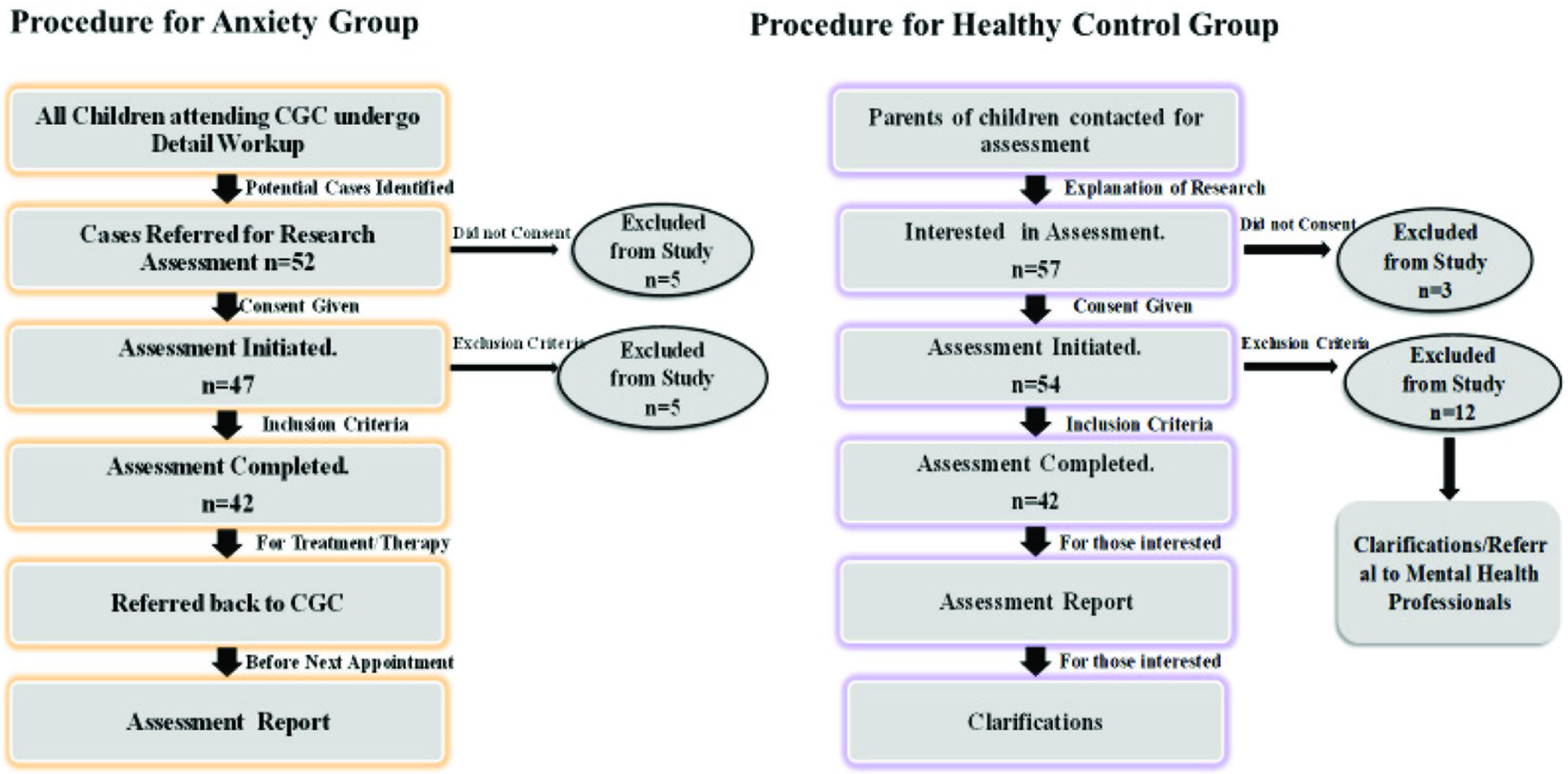
The study was carried out from December 2015 to February 2019 after obtaining the Institutional Ethics Committee’s clearance. Figure 1 shows the procedure followed for each of the groups. All children who came to the child guidance clinic were evaluated in detail by a team of professionals (psychiatrist and consultant clinical psychologist). Children who met the DSM-5 diagnostic 26 criteria for a current anxiety disorder were identified and referred for research assessment before beginning treatment at the clinic and were considered for AG. For HCG, children were recruited from the community. Informed consent was obtained by the parents, and oral assent was obtained by the children. Participants were screened using CPM, CBCL, SCARED-P, and MINI 5.0. Following this, both groups were assessed for parenting styles, parental personality, and child temperament. The tests were administered in one session, which lasted for approximately 1--2 h.
Procedure for Anxiety Group and Healthy Control Group
Statistical Analysis
Data were analyzed using Statistical Package for Social Sciences, Version 20.0, IBM Corp., Armonk, NY, USA. Data were tested for normality using Shapiro--Wilk test and Z test for skewness and kurtosis and was found to be normally distributed in both groups. Group differences in scores were compared on the chi-square test and the Student’s t-test. Pearson’s product-moment correlation was applied to find the association between the variables. Binomial logistics regression and linear regression analysis were used to find the significant independent associations.
Results
Primary anxiety disorders in AG were as follows: panic disorder (7%), separation anxiety disorder (19%), generalized anxiety disorder (26%), social anxiety disorder (26%), and specific phobia (22%). Table 1 summarizes the sociodemographic characteristics of AG and HCG. The two groups were comparable as they were group matched on age, gender, family type, parental education, and occupation.
Sociodemographic Characteristics of the Two Groups
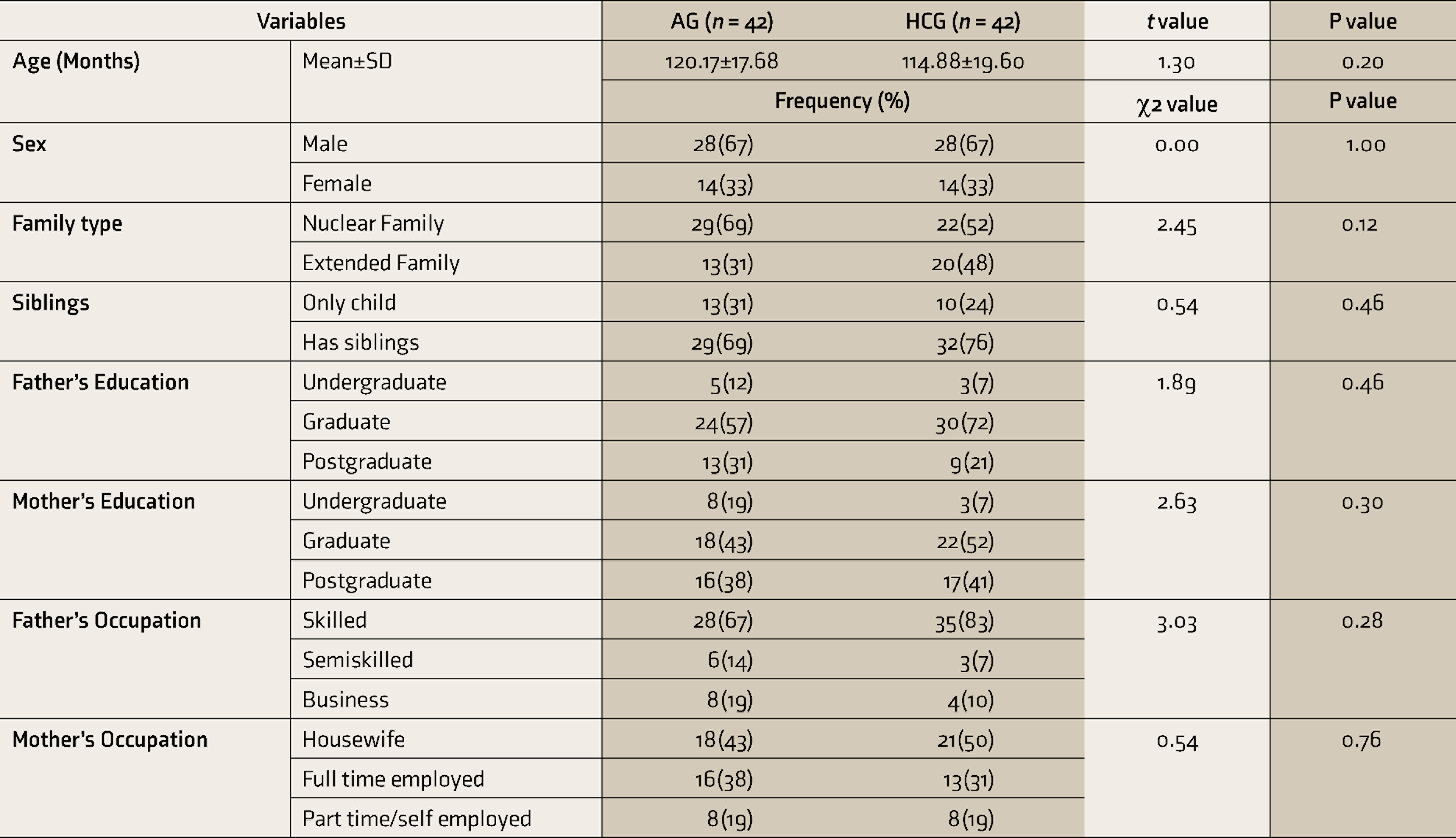
P ≤ 0.05 considered significant. AG: anxiety group, HCG: healthy control group.
Table 2 shows the differences in parenting styles, parental personality, and child temperament between AG and HCG. Fathers and mothers in AG were significantly less authoritative more authoritarian and permissive when compared to fathers and mothers in HCG. The effect sizes for the differences in parenting styles between the two groups were quite large. With reference to parental personality, the two groups differed significantly in father’s neuroticism extraversion and conscientiousness. Mothers differed significantly in neuroticism, openness agreeableness, and conscientiousness. The effect sizes of these differences were medium to large. The children in AG and HCG differed significantly in sociability and rhythmicity.
Comparison of Parent and Child Variables Between the Two Groups
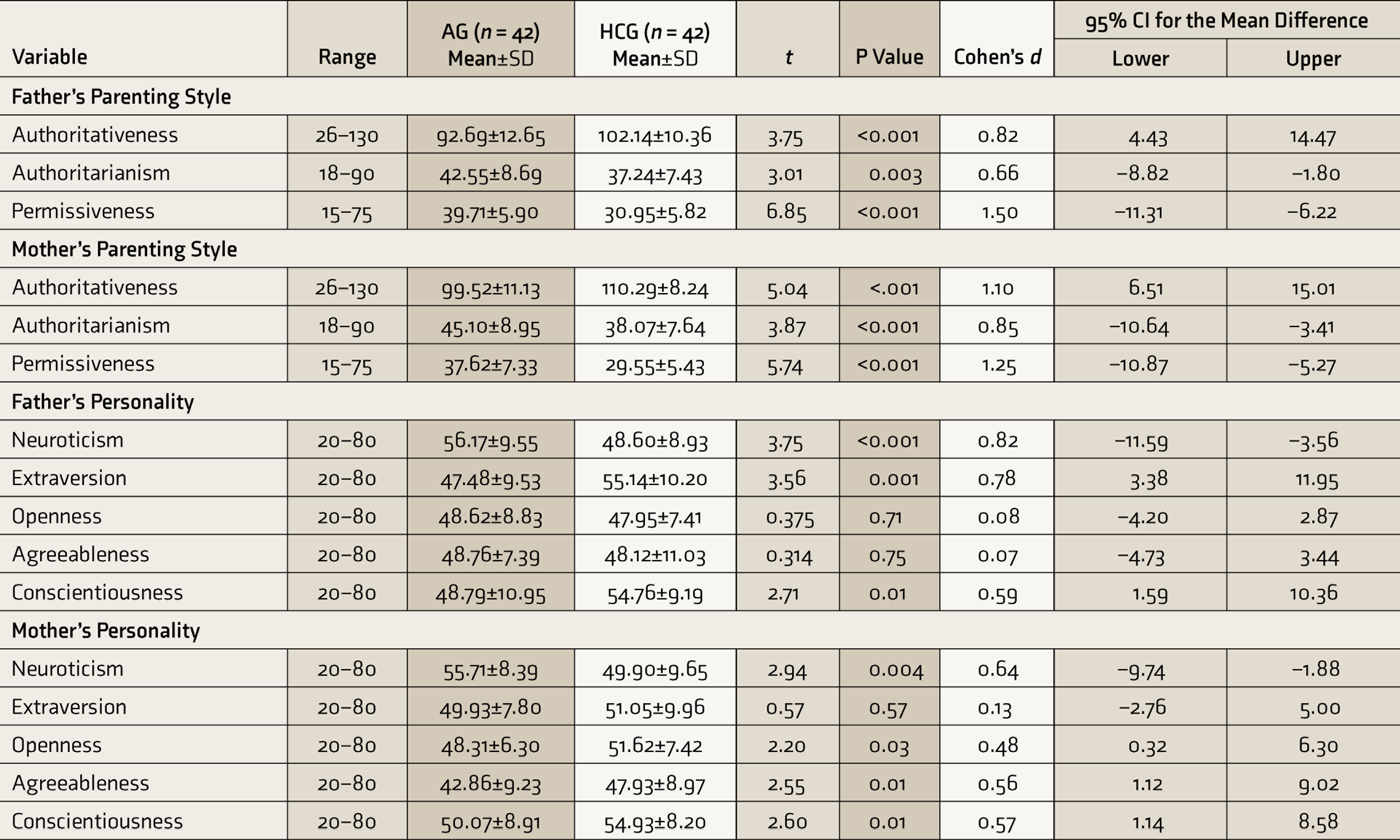

P ≤ 0.05 considered significant. AG: anxiety group, HCG: healthy control group.
In order to examine the additive and interactive effects of variables and anxiety disorders, binomial logistic regression (forward likelihood ratio method) analysis was conducted (Table 3). The model accounted for 69% of the variance (R2 = 0.69, χ2 = 60.68, P < 0.001), and correctly classified 86% of the cases. Results indicated that anxiety disorder was independently associated positively with father’s permissiveness (e B = 1.21, P = 0.004, 95% CI: 1.06–1.37), and negatively with mother’s authoritativeness (e B = 0.90, P = 0.004, 95% CI: 0.83–0.96) and child’s sociability (e B = 0.84, P = 0.001, 95% CI: 0.76–0.93).
Regression for Anxiety Disorders as the Dependent Variable and Parenting Style, Parent Personality, and Child Temperament as Independent Variables

Binomial logistics regression (Method: Forward LR).
Table 4 shows correlation among parenting style, parental personality, and child temperament. Parenting styles were significantly associated with parental personality and child temperament. However, most of the correlations, although highly significant, were weak to moderate in strength.
Correlation Between Parenting Style, Parental Personality, and Child Temperament

Pearson’s correlation (two-tailed), **significant at 0.01 level, *significant at 0.05 level. n = 84, F: father, M: mother, N: neuroticism, E: extraversion, O: openness, A: agreeableness, C: conscientiousness, S: sociability, Em: emotionality, En: energy, D: distractibility, R: rhythmicity.
Regression analysis was performed to find those parental personality and child temperament variables that were independently associated with parenting styles (Tables 5 and 6). Father’s authoritativeness was positively associated with his agreeableness ( β = 0.38, P < 0.001, 95% CI: 0.26–0.75), conscientiousness ( β = 0.43, P < 0.001, 95% CI: 0.29–0.74) and child’s sociability ( β = 0.20, P = 0.05, 95% CI: 0.01–0.61). Father’s authoritarian parenting style was negatively associated with child’s sociability ( β = –0.23, P = 0.04, 95% CI: –0.48 to –0.02) and emotionality ( β = –0.25, P = 0.02, 95% CI: –0.92 to –0.07). Father’s permissiveness was negatively associated with his conscientiousness ( β = –0.24, P = 0.01, 95% CI: –0.30 to –0.04), extraversion ( β = –0.27, P = 0.004, 95% CI: –0.31 to –0.06), sociability ( β = –0.27, P = 0.004, 95% CI: –0.42 to –0.08), and rhythmicity ( β = –0.22, P = 0.012, 95% CI: –1.02 to –0.11) in children.
Regression for Father’s Parenting Styles as the Dependent Variable and Parent Personality and Child Temperament as Independent Variables
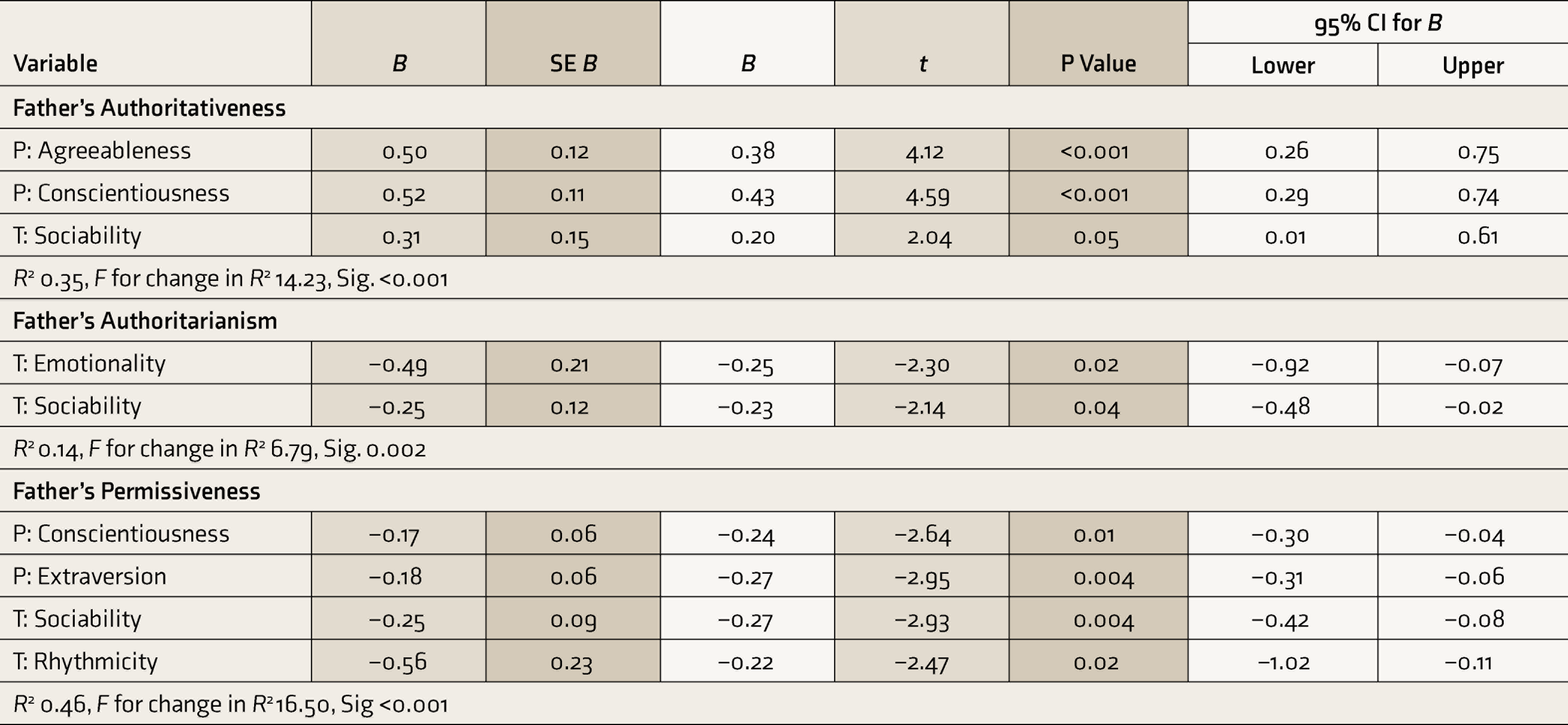
Stepwise linear regression. P: personality, T: temperament.
Regression for Mother’s Parenting Styles as the Dependent Variable and Parent Personality and Child Temperament as Independent Variables
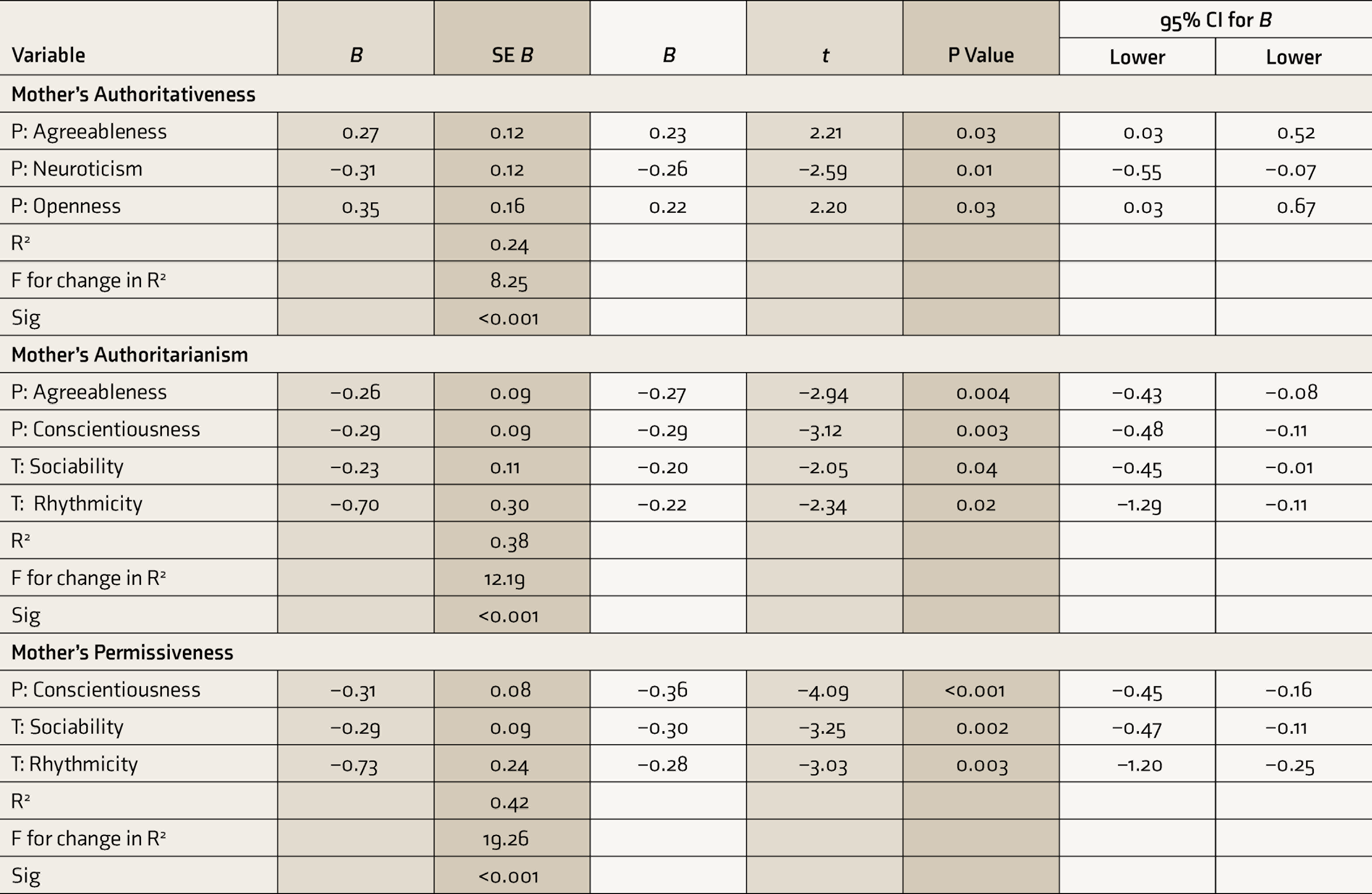
Stepwise linear regression. P: personality, T: temperament. n = 84.
Mother’s authoritativeness was associated positively with agreeableness ( β = 0.23, P = 0.03, 95% CI: 0.03--0.52) and openness ( β = 0.22, P = 0.03, 95% CI: 0.03–0.67) and negatively with neuroticism ( β = –0.26, P = 0.01, 95% CI: –0.55 to –0.07). Her authoritarianism was negatively associated with child’s sociability ( β = –0.20, P = 0.04, 95% CI: –0.45 to –0.01) and rhythmicity ( β = –0.22, P = 0.02, 95% CI: –1.29 to –0.11) as well as her personality traits, such as agreeableness ( β = –0.27, P = 0.004, 95% CI: –0.43 to –0.08) and conscientiousness ( β = –0.29, P = 0.003, 95% CI: –0.48 to –0.11). Low conscientiousness ( β = –0.36, P < 0.001, 95% CI: –0.45 to –0.16) in mothers and low sociability ( β = –0.30, P = 0.002, 95% CI: –0.47 to –0.11) and rhythmicity ( β = –0.28, P = 0.003, 95% CI: –1.20 to –0.25) in children were associated with permissive parenting style in mothers.
Discussion
The present study found significant associations between parenting styles, child temperament, and anxiety disorders in children. Parenting styles were associated with parental personality and child temperament.
Parenting Styles
Authoritative parenting style refers to parental behaviors that involve warmth, reasoning, democratic participation, and good nature or the parents’ easygoing nature. Our results suggest that increased authoritativeness of mothers is associated with lower odds of developing anxiety disorders in children. Meta-analytic studies in the West have also associated mother’s authoritativeness with reduced likelihood of anxiety disorders in children.34,35 A possible explanation of why the authoritative parenting style may be associated with better outcomes in children is that the authoritative parenting style creates a warm, loving, and mutual understanding in the family and fosters stable behavior in children. Authoritative families display distinct boundaries, which allows for a supportive yet independent environment.36,37 This helps the child internalize the importance and rationality of the demands, making the child more confident, socially competent, independent, and behave in a more prosocial manner. Therefore, children raised by authoritative parents tend to be more confident, act out less disruptively, and have more self-control, higher social and cognitive skills, and positive evolutionary outcomes.38,39
In the present study, permissive parenting style refers to parental behavior that involves a lack of follow-through, ignoring misbehavior, and lack of self-confidence in parents. Our results suggest that increased permissiveness of fathers was associated with increased odds of anxiety disorders in children. These findings are consistent with the findings of Dougherty et al. 20 who reported that children with anxiety disorders were more likely to have parents who were observed to be less supportive during a parent–child interaction; they also rated themselves as more permissive. Even in India, Mishra and Kiran 40 observed high social anxiety among adolescents with permissive fathers. These studies, along with the present study’s findings, support associations between anxiety disorders and permissive parenting. One reason why permissiveness may be associated with child anxiety is that lack of parental warmth and neglectful or uninvolved parenting pattern can lead to a sense of insecurity in children. Permissive parents do not monitor their children’s behavior or support their interests. Therefore, these children tend to face difficulty in various areas of emotional development because of a lack of structure and guidance.41,42 Permissive parents also fail to set limits and do not expect developmentally appropriate behavior of their children, limiting the development of children’s social and emotion regulation skills and increasing their sensitivity to anxiety. 43 Permissiveness is probably an important factor in the development of anxiety disorders because it may make the child perceive the environment as fundamentally hostile and threatening, and lead to a sense of low self-worth and competence. 9
Authoritarian parenting style refers to parental behavior that involves hostility, corporal punishment, non-reasoning/punitive strategies, and directiveness. In the present study, although authoritarianism was significantly higher in parents of children in AG, regression analysis did not associate it with anxiety disorders in children. However, authoritarian parenting style has been associated with children’s emotional dysfunction and both internalizing problems and externalizing disorders in the past, 44 and since comorbidity was ruled out in the present study, perhaps, authoritarian parenting style may be associated with more severe disorders, which were out of the scope of the present study. This needs further research.
Parent Personality
The study found significant differences in the personality of parents between AG and HCG, and the effect size of these differences was medium to large. However, when an attempt to identify the independent risk factors for anxiety disorders was made through regression analysis, it was found that parental personality was not associated with anxiety disorder directly; rather, parental personality was associated with parenting styles, which in turn were associated with anxiety disorders in children. Hence, the effect of parental personality on children does not appear to be direct, rather, it is through parenting behaviors. Nevertheless, the high effect size obtained for neuroticism of both the parents suggests that children in AG may have been genetically vulnerable to anxiety, or perhaps the anxiety may have passed down through vicarious learning or maladaptive parental behaviors. Maladaptive personality traits not only affect the way parents behave with children, but also can make the environment stressful through conflicts, impulsive behaviors, poor coping skills, wrong decisions, etc. These have clinical implications such that when children are presenting with problems, and if environmental stressors or parenting styles are due to maladaptive personality traits, then it may be worthwhile to screen the parents for such traits.
Child Temperament
In the present study, children in AG had significantly lower scores on sociability and rhythmicity than children in HCG, and higher sociability was associated with lower odds of anxiety disorders in children. Rapee, 45 and Buss and Kiel 46 have also reported strong relationships between behavioral inhibition and anxiety disorders. However, while the present study used Thomas and Chess 47 classification to study temperament traits, these researchers used Kagan’s 48 taxonomy of temperament, where behavioral inhibition refers to fearfulness and reticence in novel situations, similar to low sociability. Large meta-analytic studies49,50 have also suggested that by mid-adolescence, behaviorally inhibited or less sociable children have a fourfold increase in risk for social anxiety disorders. Such a high incidence of anxiety disorders among children with low sociability is probably because behavior inhibition/low sociability is not just a risk factor for anxiety disorder, rather, a milder form of the disorder itself, characterized by fearfulness, avoidance, and withdrawal from novel or social situations. 51 Very recently, Olino et al. 52 reported that once a child has developed an anxiety disorder, early temperamental fearfulness predicts a more persistent course of anxiety. Although rhythmicity did not appear as a risk factor in our regression analysis, the effect size for the difference between the two groups was large. A possible explanation may be abnormal circadian rhythms seen in anxiety disorders. 53 It may also be hypothesized that low rhythmicity, such as irregular sleep and appetite, could be a manifestation of anxiety symptoms.
Association Among the Independent Variables
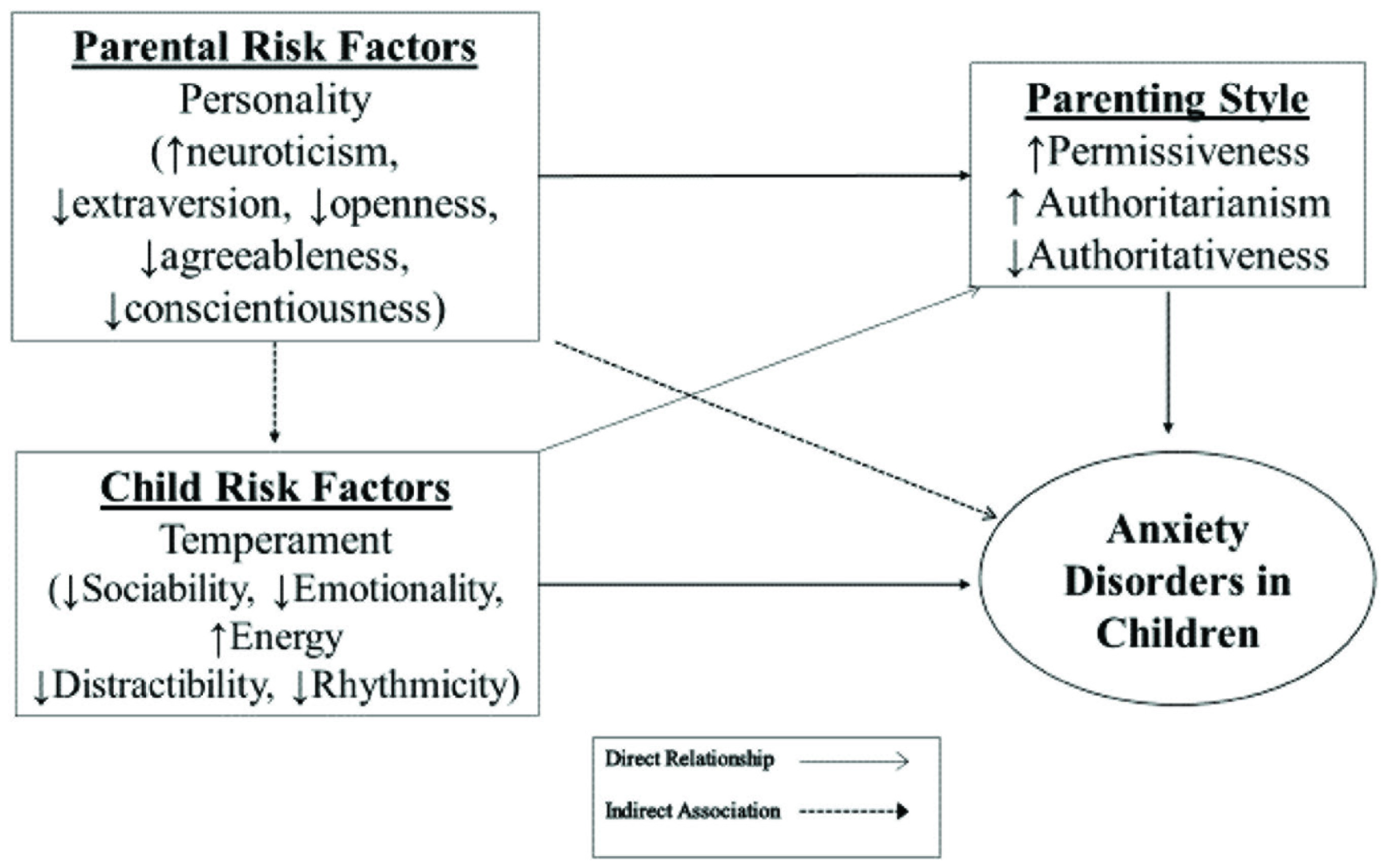
The present study found several associations among parenting styles, parent personality, and child temperament. Easy temperament traits, such as high sociability, and adaptive parent personality traits, such as high agreeableness, extraversion, and conscientiousness, were associated with authoritative parenting styles. In contrast, difficult temperament, such as poor rhythmicity, low sociability and emotionality, and maladaptive personality traits, such as high neuroticism and low conscientiousness and agreeableness, were associated with authoritarian and permissive parenting styles. These findings suggest that the nature of the parent and the child influence the formation of the parent–child relationship, and this interaction may influence the child’s development outcome, which includes the child’s anxiety as well (Figure 2). The easy to soothe or sociable child, coupled with adaptive parental personality traits, elicits warm and responsive parenting. In contrast, a difficult or withdrawing child, along with dysfunctional parental personality characteristics, elicits harsh or neglectful parenting. This is in congruence with past studies that have shown that child temperament and parent personality are among the important factors that influence parenting behavior and child outcome.10,54,55,56 However, the associations among parenting style, parental personality, and child temperament, as seen in correlation analysis, were weak to moderate, and regression models were able to explain less than half of the variances seen in parenting styles. Therefore, it appears that there are perhaps other variables besides parent and child characteristics that influence the parenting styles. This may be explained by findings of a recent meta-analysis, 57 which found that apart from parent personality and child temperament, other factors that influenced parenting styles were parenting stress, which arises when parenting demands exceed the actual resources available to parents; a history of abuse in parents in their childhood; and parent’s attachment style, self-efficacy, perfectionism, etc. Perhaps, future studies on parenting can include these variables for a better understanding of parenting behaviors.
Model Showing Association Between Parenting Style, Parental Personality, and Child Temperament with Anxiety Disorders Based on the Results
Very few studies have focused on parental personality, child temperament, and parenting styles, especially in India. Therefore, the findings from the current study are valuable in understanding the dynamics between parental personality, child temperament, and parenting style, and their association with anxiety disorders. The present study has several merits. Most importantly, it is one of the few hospital-based studies in India that have examined parenting styles and child temperament among children with anxiety disorders. This is also one of the very few studies that have included fathers. Findings from the current study also have important implications for the treatment of anxiety disorders in children, by incorporating the findings in parent training programs. For example, increasing the authoritativeness of mothers and addressing the permissiveness of fathers can have a significant impact on the child.
The study is not without limitations that should be considered in any generalization of the findings. The sample size was small and drawn from an urban area, and therefore, findings should not be generalized to a broader community based on this study alone. Larger sample size may also help in delineating the factors with more confidence. In addition, all the measures were based on parental reports alone. Parents described their child’s anxiety symptoms, behavioral problems, and temperament, as well as their own parenting style and personality, which raises the possibility of bias in the reports, that is, parent descriptions of the child’s behavior may reflect their own personal characteristics and their expectations of their child. Hence, future studies may be planned using different informants, such as school teachers and child reports, when measuring the constructs under interest.
Conclusion
Child temperament and early child-rearing environments can significantly affect the child’s psycho-social development. Father’s permissiveness is a risk factor for anxiety disorders in children, whereas the mother’s authoritativeness and child’s sociability are protective against child anxiety disorders. The present study results are consistent with Western studies on the effect of parenting styles on children. In general, irrespective of culture, permissive parenting styles are associated with negative consequences for the child, and the authoritative parenting style is associated with better child outcome. The study also highlighted the importance of the father’s parenting style, which is quite often ignored in literature and research. The results also revealed the association of parental personality and child temperament with parenting styles, suggesting that both the child and parent characteristics contribute to parenting style. The findings have implications in the clinical management of child anxiety disorders and in parent training programs. To conclude, given the dearth of research in this area in India, the present study findings are important in filling the lacuna in Indian literature concerning child anxiety disorders.
Footnotes
Acknowledgements
We appreciate all who helped us in this research. We are especially thankful to Dr Mariamma Philip, Associate Professor, Department of Biostatistics, NIMHANS, Bengaluru; Dr MV Ashok, Professor, Department of Psychiatry; Dr SM Manohari, HOD, Department of Psychiatry; Dr K Srinivasan, Professor, Department of Psychiatry; and Dr Sumithra S, Department of Biostatistics, St. John’s National Academy of Health Sciences, Bengaluru, for their valuable inputs and time. We are also grateful to the study participants for their involvement in the research study.
Data Sharing Statement
Deidentified individual participant data will be made available in SPSSS format. The data will be made available upon publication to researchers who provide a methodologically sound proposal for use in achieving the goals of the approved proposal. Proposals should be submitted to
The authors declared no potential conflicts of interest with respect to the research, authorship, and/or publication of this article.
Funding
The authors received no financial support for the research, authorship, and/or publication of this article.