




Abstract
Background
Asthma is a chronic respiratory condition by airway inflammation. Traditional Chinese Medicine, is commonly used to treat it. Astragalus is known for its immunoregulation, anti-inflammatory, and antioxidant effects.
Objectives
To systematically evaluate the efficacy of Astragalus in asthma animal models using meta-analysis methods.
Methodology
A systematic search was performed in various databases, such as China National Knowledge Infrastructure (CNKI), WanFang Data, PubMed, Web of Science, and Cochrane Library databases for animal studies on Astragalus intervention in asthma models, with the search period extending up to September 2023. Two researchers performed independent literature screening and data extraction. The quality of the included studies was assessed by the Systematic Review Center for Laboratory Animal Experimentation (SYRCLE) animal experiment bias risk assessment tool. Meta-analysis was performed with RevMan (version 3.6.1).
Results
A total of 25 experiments were included. Meta-analysis indicated that Astragalus can significantly reduce total leukocytes, neutrophils, lymphocytes, and eosinophils in animal models of asthma. It also downregulated the expression levels of interleukin-4 and interleukin-5, while upregulation of interferon-γ and interleukin-10 expression was observed; however, the impact on macrophages was found to be not statistically significant (p > 0.05).
Conclusion
Our systemic review suggested the potential efficiency of Astragalus in asthma treatment in China, although its mechanism is still unclear. The functions of Astragalus may be associated with attenuating airway inflammation through the regulation of immune response.
Introduction
About 358 million people worldwide suffer from asthma, a chronic respiratory disease (Tibrewal et al., 2023). It significantly impacts patients’ quality of life and poses considerable economic loss and negative societal impacts. The pathogenesis of asthma is complex, characterized mainly by persistent airway inflammation, infiltration of eosinophils and T lymphocytes, and the release of pro-inflammatory factors (Barnig et al., 2018). Various phenotypes exhibit different degrees of inflammation, airway hyperresponsiveness, mucus secretion, and airway remodeling. The T helper 2 (Th2) cell-mediated response is considered one of the classical mechanisms of asthma pathogenesis, affecting airway eosinophil expression, mucus secretion, airway hyperresponsiveness, and immunoglobulin E (IgE) synthesis. Asthma treatment primarily focuses on reducing airway inflammation and relieving airway obstruction, often employing inhaled corticosteroids, leukotriene modulators, long-acting β2 agonists for control, rapid-acting β2 agonists, and anticholinergic drugs. However, dependency and compliance issues with these medications affect disease treatment and control (Li & Liu, 2020).
The use of animal models is essential for understanding the molecular processes involved in the development of asthma and for discovering new treatment approaches (Aun et al., 2017; Woodrow et al., 2023). Various animal models, such as mice, rats, guinea pigs, dogs, and others, are utilized in asthma research studies. However, the mouse serves as the predominant animal model utilized in research on asthma. Over the past few decades, numerous studies have utilized animal models to enhance comprehension of the pathophysiology of diseases and their immune mechanisms (Williams & Roman, 2016). Despite some inconsistencies, there has been significant evidence of cell-mediated lung inflammation and different disease mediators. The early 1980s saw a heightened recognition of the significance of inflammation in asthma, spurred by advancements in allergic immunology and observations of pronounced symptoms in human asthmatics following exposure to diverse antigens. The eosinophil was the initial inflammatory cell to be definitively associated with the pathogenesis of asthma, with the T cell following closely thereafter (Bates et al., 2009). Leukocytes and cytokines production are important outcomes assessed and diagnostic indicators in experimental models of asthma. And large number of leukocytes such as neutrophils, lymphocytes, and eosinophils accumulate in bronchoalveolar lavage fluid (BALF) (Woodrow et al., 2023). Sensitization protocols are essential components in developing an animal model of asthma, resulting in elevated levels of total IgE in response to allergens. Airways inflammation mediators were identified in BALF, with BALF inflammatory mediators being evaluated to assess lung inflammation in the animal model of asthma (Kianmeher et al., 2016).
Traditional Chinese medicine (TCM) is frequently utilized as an alternative treatment for various illnesses (Liao et al., 2022). TCM correlates the body’s righteous Qi with immune function, considering recurrent asthma attacks fundamentally due to the deficiency of righteous Qi. Therefore, treating asthma should primarily involve nourishing righteous Qi and regulating immune function (Lv & Gong, 2022). Astragalus, first recorded in “Shen Nong Ben Cao Jing,” is a commonly used tonic in clinical TCM, known for its effects in augmenting Qi, lifting Yang, stabilizing exterior conditions, stopping sweating, nourishing the blood, and promoting fluid production (National Pharmacopoeia Commission, 2020). Recent studies have confirmed that Astragalus enhances immune function and has anti-inflammatory, antitumor, antidiabetic, and antioxidant properties (Wang et al., 2023). Numerous experimental studies on Astragalus intervention in asthma animal models mainly discuss improvements in airway inflammation, airway hyperresponsiveness, reduction in inflammatory cell numbers, and regulation of cytokines and transcription factors. Yet, there is a shortage of systematic reviews linking these factors. Therefore, this study aims to systematically evaluate the intervention effects of Astragalus on asthma animal models, focusing on inflammatory cells and Th cell-related inflammatory factors in BALF, thus enhancing the research’s guiding value and providing a basis for experimental design and clinical practice.
Methodology
Database and Literature Search Strategies
We conducted an extensive literature search utilizing China National Knowledge Infrastructure (CNKI), WanFang Database, PubMed, Web of Science, and Cochrane Library databases. Animal research on Astragalus for asthma was analyzed. All studies were conducted up to September 2023. The following terms were selected: (a) Astragalus; (b) Asthma; (c) 1 AND 2; (d) Animals NOT human; (e) 3 AND 4. References identified in other related studies were also considered.
Eligibility Criteria
Studies meeting the inclusion criteria included a variety of asthma experiments with no limitations on species, age, strain, gender, modeling techniques, or administration methods. The treatment group had to involve Astragalus in any dosage. The control group received either inactive liquid or no treatment; primary outcome measures included leukocyte, neutrophil, lymphocyte, eosinophil, and macrophage counts, as well as levels of interleukin-4 (IL-4), interleukin-5 (IL-5), interferon-γ (IFN-γ), and interleukin-10 (IL-10) in BALF. The criteria for exclusion include (a) duplicate publication; (b) lack of control group; (c) combination with any other medicine; and (d) studies with insufficient data or inaccessible original materials.
Data Extraction
Two researchers independently searched the literature, screened for inclusion/exclusion criteria, and collected data. In cases of disagreement, a third researcher made the judgment. Information collected from the studies included the first author, publication year, study design, sample size, route of administration, animal type/source, body weight, sex, modeling method, treatment duration, and focused outcome indicators. The mean value and standard deviation of outcomes were calculated, with only the final test included for outcomes performed at different time points. The treatment group included multiple doses of Astragalus, with the highest dose being administered.
Bias Risk in Included Studies
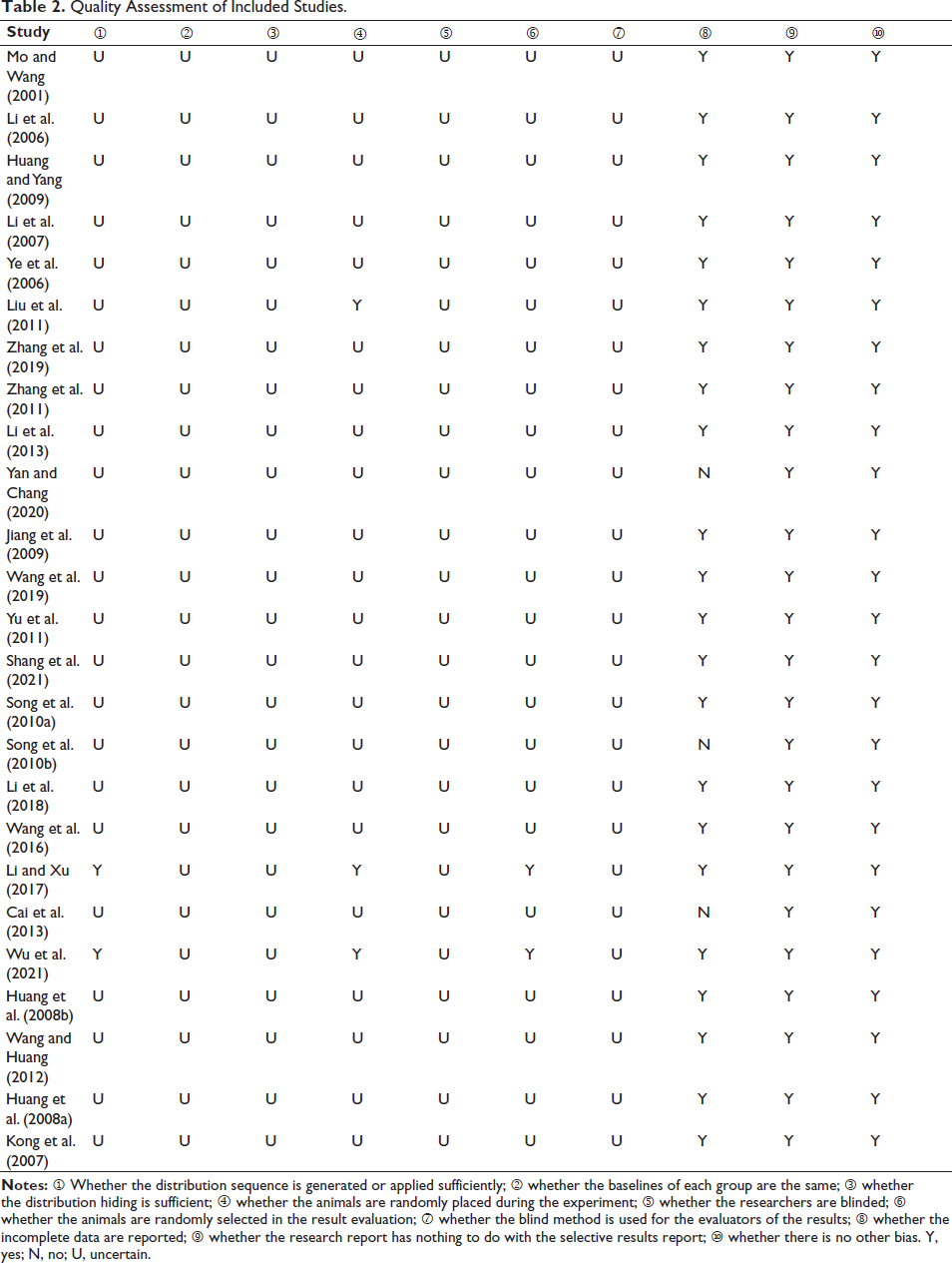
The study used the Systematic Review Center for Laboratory Animal Experimentation (SYRCLE) for bias risk assessment in animal experimental systematic reviews, including 10 items: sequence generation, baseline characteristics, allocation concealment, random housing of animals, implementation bias blinding, random outcome assessment, measurement bias blinding, incomplete data reporting, selective outcome reporting, and other sources of bias. Results are categorized as “yes (Y)” for low risk of bias, “no (N)” for high risk of bias, and “uncertain (U)” for unclear risk of bias.
Statistical Analysis
RevMan (version 3.6.1) was utilized for the statistical analysis. The effect measure employed was the standardized mean difference (SMD), along with a 95% confidence interval (CI) provided. Statistical significance was determined at p value < 0.01. I2 was used to measure heterogeneity. When significant heterogeneity was observed (I2 > 50%), a random effects model was employed for analysis, while a fixed effects model was utilized in other instances.
Results
Literature Selection and Results
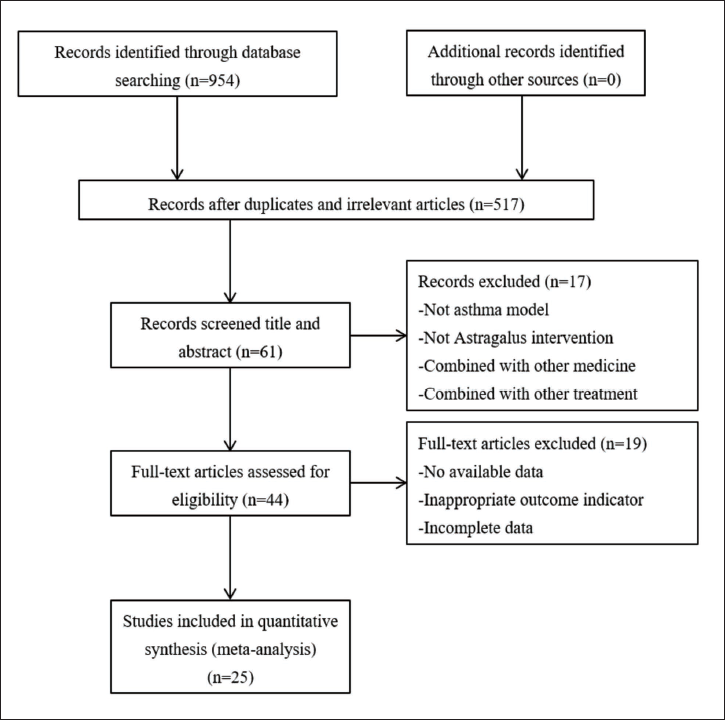
Based on specific criteria for inclusion and exclusion, a preliminary search in databases yielded 954 related articles. After eliminating duplicates, a total of 517 articles were reviewed based on their titles and abstracts. A full-text reading of 44 articles was conducted, and finally, 25 articles were included. Figure 1 displays the selection process and outcomes.
Summary of the Process for Identifying Candidate Studies.
Basic Characteristics and Bias Risk Assessment of Included Studies
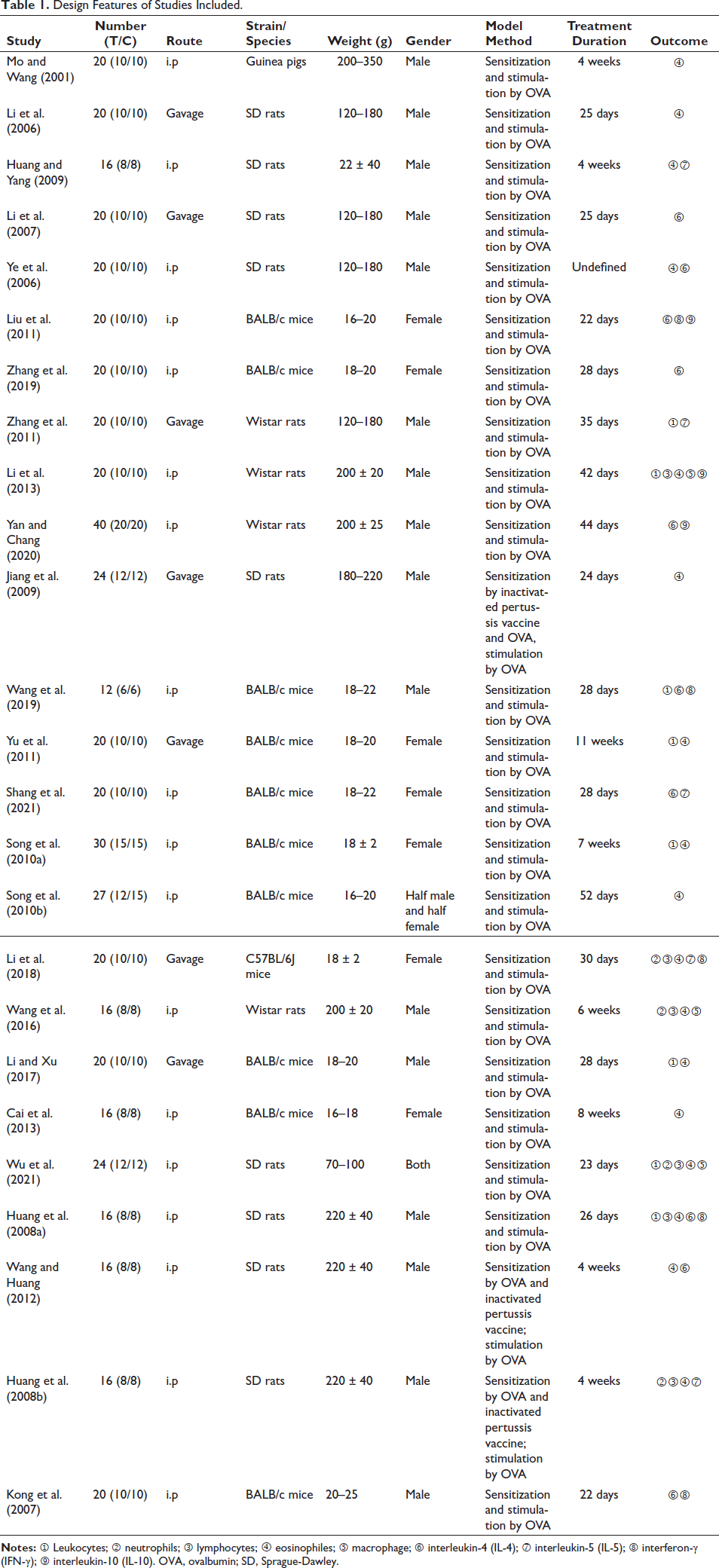
The 25 included animal studies were all Chinese journal articles (Table 1) involving guinea pigs, Sprague-Dawley (SD) rats, Wistar rats, BALB/c mice, and C57BL/6J mice. The experiments included 16 male-only studies, 7 female-only studies, and 2 studies with both sexes. All asthma animal models were sensitized and stimulated with ovalbumin (OVA). The models of administration included intraperitoneal injection in 18 studies and gavage in 7 studies. The treatment duration ranged from 22 days to 11 weeks, and 1 study was not specified. There were no adverse reactions documented in these studies that were included. Bias risk assessment results of the 25 studies, using SYRCLE, are shown in Table 2.
Design of Studies Included.
Quality Assessment of Included Studies.
Meta-analysis Results
Total Leukocytes
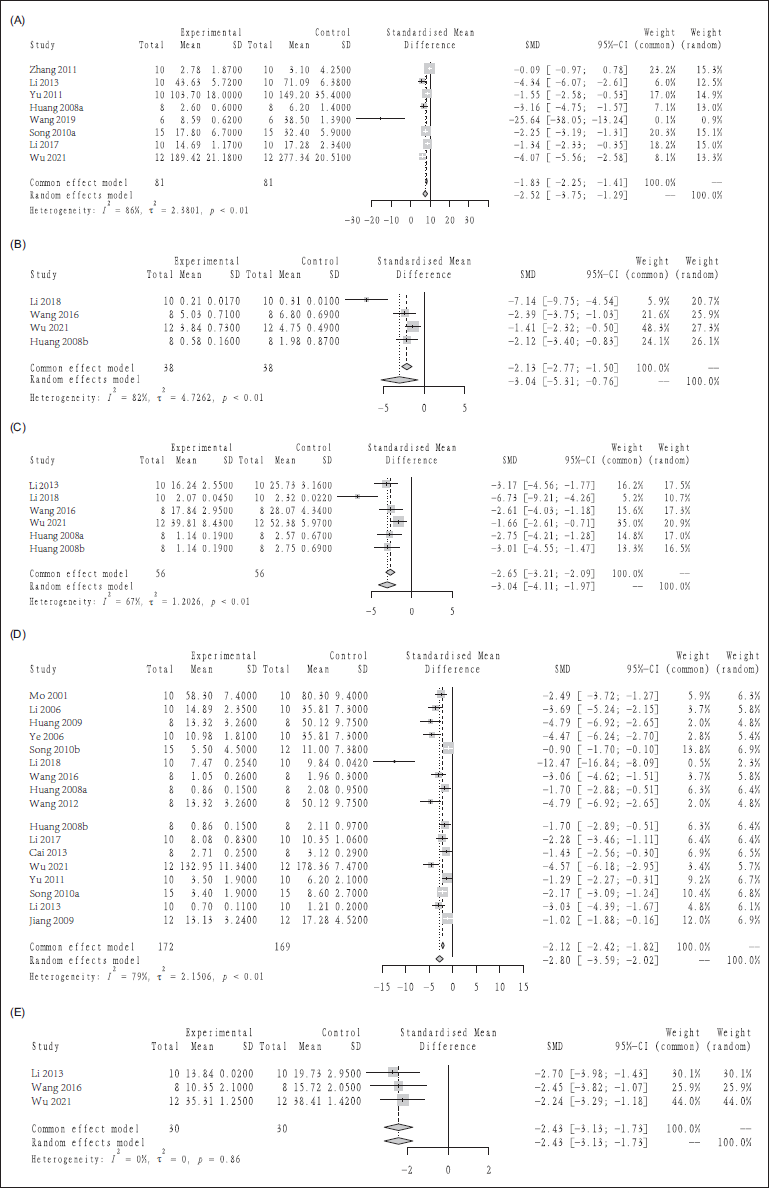
A total of 8 studies (Huang et al., 2008a; Li & Xu, 2017; Li et al., 2013; Song et al., 2010a; Wang et al., 2019; Wu et al., 2021; Yu et al., 2011; Zhang et al., 2011) involving 162 animals examined total leukocytes. A random effects model was used for meta-analysis due to substantial heterogeneity. Results indicated that Astragalus significantly decreased total leukocytes in asthma animal models compared to the control group, with a statistically significant difference (SMD = –2.52, 95% CI = –3.75 to –1.29, p < 0.01) (Figure 2A).
(A) Total Number of Leukocytes. (B) Number of Neutrophils. (C) Number of Lymphocytes. (D). Number of Eosinophils. (E) Number of Macrophages.
Neutrophil Count
Four studies (Huang et al., 2008b; Li et al., 2018; Wang et al., 2016; Wu et al., 2021) involving 76 animals examined neutrophil count. A random effects model was used for meta-analysis due to substantial heterogeneity. Results indicated that Astragalus significantly decreased neutrophil count in asthma animal models compared to the control group, with a statistically significant difference (SMD = –3.04, 95% CI = –5.31 to –0.76, p < 0.01) (Figure 2B).
Lymphocyte Count
Six studies (Huang et al., 2008a; Huang et al., 2008b; Li et al., 2013, 2018; Wang et al., 2016; Wu et al., 2021) involving 112 animals examined lymphocyte count. A random effects model was used for meta-analysis due to substantial heterogeneity. Results indicated that Astragalus significantly decreased lymphocyte count in asthma animal models compared to the control group, with a statistically significant difference (SMD = –3.04, 95% CI = –4.11 to –1.97, p < 0.01) (Figure 2C).
Eosinophil Count
A total of 17 studies (Cai et al., 2013; Huang & Yang, 2009; Huang et al., 2008a; Huang et al., 2008b; Jiang et al., 2009; Li & Xu, 2017; Li et al., 2006, 2013, 2018; Mo & Wang, 2001; Song et al., 2010a; Song et al., 2010b; Wang & Huang, 2012; Wang et al., 2016; Wu et al., 2021; Ye et al., 2006; Yu et al., 2011) involving 341 animals examined eosinophil count. A random effects model was utilized for meta-analysis due to substantial heterogeneity. Results indicated that Astragalus significantly decreased eosinophil count in asthma animal models compared to the control group, with a statistically significant difference (SMD = –2.80, 95% CI = –3.59 to –2.02, p < 0.01) (Figure 2D).
Macrophage Count
Three studies (Li et al., 2013; Wang et al., 2016; Wu et al., 2021) involving 60 animals examined macrophage count. With minor heterogeneity, a fixed effects model was employed in the meta-analysis. Results indicated that Astragalus did not significantly change macrophage count in asthma animal models compared to the control group (SMD = –2.43, 95% CI = –3.13 to –1.73, p > 0.05) (Figure 2E).
Expression Level of IL-4
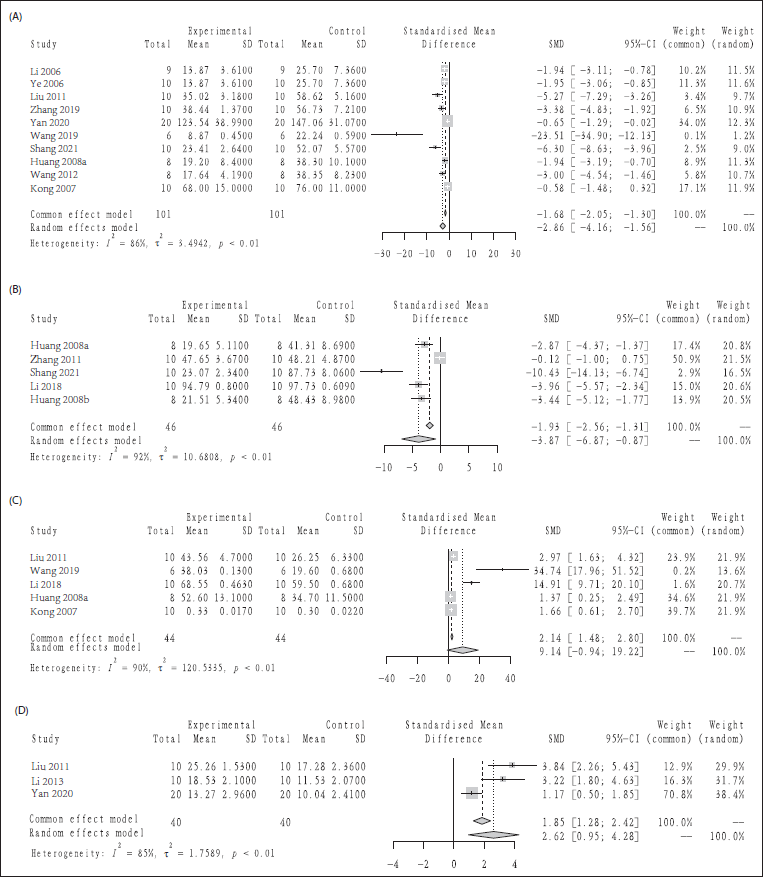
Ten studies (Huang et al., 2008a; Kong et al., 2007; Li et al., 2007; Liu et al., 2011; Shang et al., 2021; Wang & Huang, 2012; Wang et al., 2019; Yan & Chang, 2020; Ye et al., 2006; Zhang et al., 2019) involving 202 animals examined IL-4 expression level. A random effects model was used for meta-analysis due to substantial heterogeneity. Results indicated that Astragalus significantly decreased IL-4 expression level in asthma animal models compared to the control group, with a statistically significant difference (SMD = –2.86, 95% CI = –4.16 to –1.56, p < 0.01) (Figure 3A).
(A) Level of Interleukin-4 (IL-4). (B) Level of Interleukin-5 (IL-5). (C) Level of Interferon-γ (IFN-γ). (D) Level of Interleukin-10 (IL-10).
Expression Level of IL-5
Five studies (Huang & Yang, 2009; Huang et al., 2008b; Li et al., 2018; Shang et al., 2021; Zhang et al., 2011) involving 92 animals examined IL-5 expression levels. A random effects model was used for meta-analysis due to substantial heterogeneity. Results indicated that Astragalus significantly decreased IL-5 expression level in asthma animal models compared to the control group, with a statistically significant difference (SMD = –3.87, 95% CI = –6.87 to –0.87, p < 0.01) (Figure 3B).
Expression Level of IFN-γ
Five studies (Huang et al., 2008a; Kong et al., 2007; Li et al., 2018; Liu et al., 2011; Wang et al., 2019) involving 88 animals examined IFN-γ expression levels. A random effects model was used for meta-analysis due to substantial heterogeneity. Results indicated that Astragalus significantly increased IFN-γ expression level in asthma animal models compared to the control group, with a statistically significant difference (SMD = 9.14, 95% CI = –0.94 to 19.22, p < 0.01) (Figure 3C).
Expression Level of IL-10
Three studies (Li et al., 2013; Liu et al., 2011; Yan & Chang, 2020) involving 80 animals examined IL-10 expression levels. A random effects model was used for meta-analysis due to substantial heterogeneity. Results indicated that Astragalus significantly increased IL-10 expression level in asthma animal models compared to the control group, with a statistically significant difference (SMD = 2.62, 95% CI = 0.95–4.28, p < 0.01) (Figure 3D).
Sensitivity Analysis
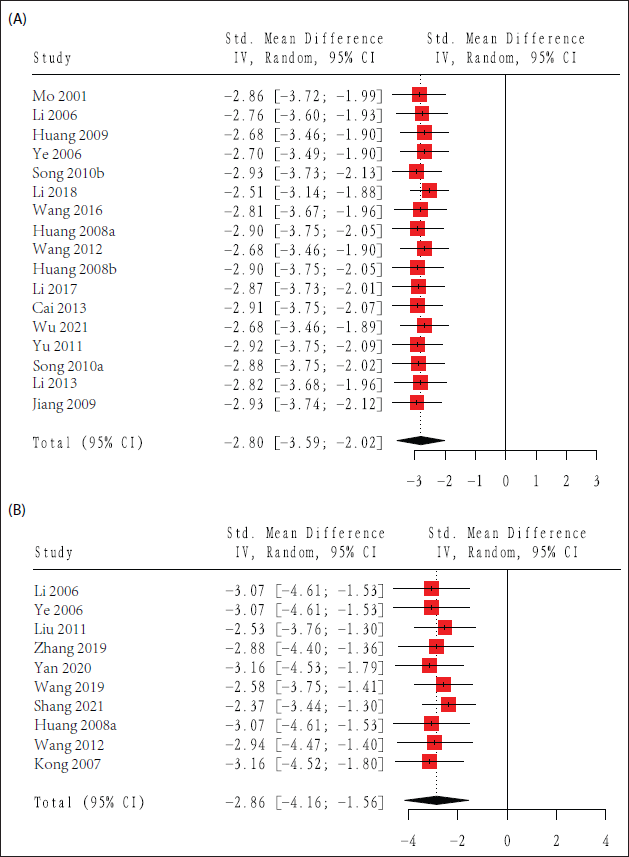
To assess how studies affect meta-analysis results, sensitivity analysis was conducted for two outcome indicators (eosinophil and IL-4) that included 10 or more articles. Excluding each study one by one in a random effects model, the results remained unchanged, indicating the overall reliability of the meta-analysis results (Figure 4A and B).
(A) Sensitivity Analysis of Eosinophil. (B) Sensitivity Analysis of Interleukin-4 (IL-4).
Publication Bias Analysis
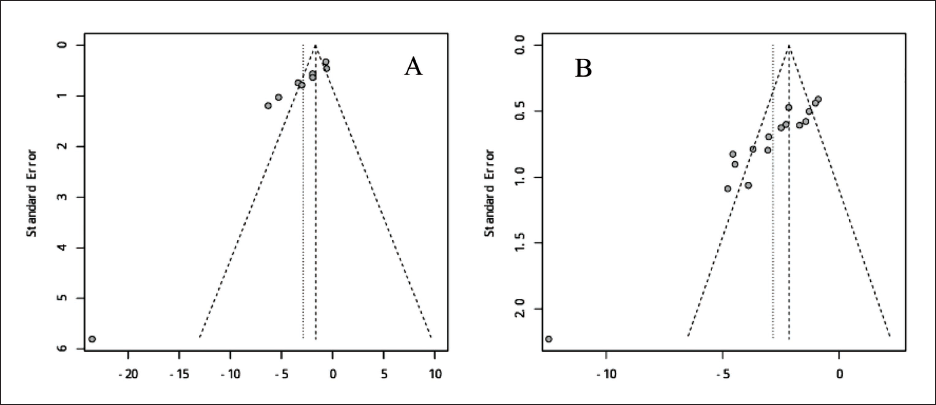
The risk of publication bias was evaluated through the utilization of funnel plots for two outcome measures (eosinophil and IL-4) that included 10 or more articles. The funnel plots exhibited a degree of symmetry; however, the presence of points outside the funnel plot indicates a possible inclination towards publication bias (Figure 5). Other indicators were not analyzed for publication bias due to smaller sample sizes.
Funnel Plot of the Size of Eosinophil (A) and Interleukin-4 (IL-4) (B).
Discussion
With advanced research into the mechanisms of asthma onset and development, asthma is recognized as a multifaceted condition primarily distinguished by inflammation of the airway. Factors such as age, sex, environment, and race can influence physiological and biological characteristics. The pathogenesis of asthma is closely related to innate and adaptive immunity involving inflammatory cells like lymphocyte subgroups, eosinophils, macrophages, mast cells, and cytokines such as interleukins (Lambrecht, 2019). The cells play a crucial role in asthma development, with T helper 1 (Th1) cells and their secreted cytokines like IFN-γ mediating cytotoxic and local inflammatory immune responses (Lin et al., 2022). Enhancement of Th2 specificity is one of the immunological mechanisms in asthma development. Studies have found that the development of IgE and Th2 cytokines, such as IL-4 and IL-5, wase responsible for most childhood and adult asthma cases (León & Ballesteros-Tato, 2021). Therefore, research on asthma-related inflammatory cells, pro-inflammatory cytokines, and other proteins plays a crucial role in prevention, diagnosis, and treatment, providing a basis for the development of targeted drugs.
Astragalus, a key herb in TCM for strengthening Qi, is often used in combination with other herbs, especially in classic formulas like Yu Ping Feng powder and Bu Zhong Yi Qi decoction. It is listed among the initial 100 “Ancient Classic Formulae” released by the National Administration of TCM (Jiang et al., 2023). As basic research advances, Astragalus is widely used in respiratory, digestive, endocrine, and hematological systems, exhibiting immunomodulatory, anti-inflammatory, and antioxidant effects (Jiang et al., 2023). Recent studies on Astragalus in treating asthma have been popular. Astragalus acts on the spleen and lung meridians in TCM, corresponding to the etiology and clinical symptoms of asthma in TCM. Several studies have found that Astragalus reduces inflammation, improves airway remodeling, regulates immune balance, and alleviates drug dependence after steroid use (Zhu et al., 2021). Our group has previously studied the anti-inflammatory and immunoregulatory effects of Yu Ping Feng powder, which contains Astragalus, and Astragaloside IV, an active component of Astragalus, in asthma animal models (Huang et al., 2020; Wang et al., 2017). Our research systematically evaluated the impact of Astragalus intervention in asthma animal models through meta-analysis, to provide evidence-based support for further research.
When developing models of human respiratory disease in non-human animals, it is imperative to take into account a multitude of factors, including lifestyle, lifespan, anatomy, and genetics. Nevertheless, despite these disparities, utilizing animal models has greatly enhanced our understanding of how respiratory illnesses develop. Various inflammatory biomarkers, including BALF, bronchoscope biopsy, and blood cell counts, are used for asthma diagnosis and characterization (Rupani et al., 2021). Many animal model studies on asthma use inflammatory cell counts in BALF. Therefore, this study analyzed inflammatory cells and certain Th-related cytokines in pulmonary alveolar lavage fluid. Leukocytes, including neutrophils, eosinophils, and macrophages, are important indices for evaluating asthma models. In experimental models of asthma, particularly in the airways, a pronounced influx of eosinophils can be observed in pulmonary inflammation (Kurup et al., 2007). Elevated levels of eosinophils are observed in bronchoalveolar lavage fluid, along with increased numbers of lymphocytes, macrophages, and neutrophils (Aun et al., 2017). The prevailing asthma model is characterized by Th2 predominance, resulting in an immune imbalance between Th1 and Th2. The assessment of cytokine production serves as a crucial outcome measure in experimental models of asthma (Akdis et al., 2016). Meta-analysis showed that Astragalus treatment decreased leukocytes, neutrophils, lymphocytes, eosinophils, IL-4, and IL-5, and increased IFN-γ and IL-10. The results indicated that Astragalus can alleviate asthma symptoms by inhibiting inflammatory cells and pro-inflammatory cytokines, exerting anti-inflammatory and immunoregulatory effects. Asthma, a respiratory inflammatory disease with complex mechanisms involving numerous inflammatory mediators, requires anti-inflammatory and bronchodilator treatments, with reduction in inflammation markers being one of the key efficacy assessments (Papi et al., 2018). The exacerbation of asthma is intricately linked to the secretion of cytokines by Th2 cells, particularly those associated with the Th2 subset, leading to eosinophils and neutrophils. IL-4, IL-5, and other Th2 cytokines impact airway eosinophil expression, mucus secretion, airway hyperresponsiveness, and IgE synthesis. IL-4 is vital for sensitization and IgE synthesis, while IL-5 plays a central role in eosinophil production (Lambrecht et al., 2019). IFN-γ, a Th1 cytokine secreted by immune cells following acute inflammatory stimulation, promotes type I immune responses and inhibits type II immune responses (Guo et al., 2023). Increased IFN-γ expression helps alleviate symptoms and restore Th1/Th2 immune balance in asthma animal models. Anti-inflammatory factor IL-10 inhibits inflammatory responses and is an important expression gene in asthma, with lower expression observed in asthma patients, deactivating neutrophils, eosinophils, and mast cells (Kawano et al., 2016). The balance of IL-10/IL-5 also plays a role in alleviating asthma (Tomiita et al., 2015). Asthma models help improve understanding of asthma’s different aspects, with a focus on type 2 (Th2 high) phenotype. There is a scarcity of data available on the T-helper activation profile in relation to cytokine measurement among various species. The Th2 cytokines have been extensively studied in rodent experiments (Aun et al., 2017).
The quality exhibited in these studies pertaining to Astragalus intervention in asthma models is suboptimal. The results may be biased due to not fully complying with SYRCLE’s requirements in design and implementation. In animal experiments, the application of blinding in intervention implementation and outcome measurement differs from randomized controlled trials (RCT) studies. Although blinding is not required for animals, most researchers are also animal caretakers, and if caretakers are not blinded, this may lead to subjective bias in expected results (Chen et al., 2014). Different strains also have different immune responses in animal asthma models. The most common mouse strains utilized are typically BALB/c or C57BL/6. BALB/c demonstrate a heightened IgE response and are classified as Th2 immune responders, while C57BL/6 typically exhibit a preference for a Th1 response and display reduced levels of IgE production (Woodrow et al., 2023).
This research has certain limitations: (a) All included literature has a small sample size, and some studies were included due to inaccessible data, possibly causing publication bias. (b) High heterogeneity in the nine included indicators may be related to animal species and modeling methods, especially medication duration. (c) Due to limited study numbers, subgroup and dosage analyses were not conducted.
In conclusion, this meta-analysis demonstrates that Astragalus effectively decreases the pro-inflammatory cytokines IL-4 and IL-5 in asthma model animals while increasing anti-inflammatory cytokines IFN-γ and IL-10. It has certain anti-inflammatory and immunoregulatory effects, providing evidence-based support for Astragalus intervention in asthma. However, the quality of the studies objectively reduces the scientific nature of animal experiments. Engaging in systematic study and research of the SYRCLE framework for assessing bias risk in animal experiments has the potential to enhance the credibility of findings derived from such experiments. Future inclusion of high-quality experimental studies in systematic reviews, reducing bias risk, can provide more reliable support for animal experiment design, implementation, and guiding clinical medication research. Enhancing the understanding of asthma pathophysiology in humans through the use of animal models is intended to enhance diagnostic and therapeutic approaches. The selection of the most suitable animal model for addressing research inquiries is ultimately at the discretion of the researcher, with each model presenting distinct advantages and disadvantages.
Conclusion
In this research, we have conducted a systematic review of Astragalus in asthma animal models, with the results suggesting that its mechanisms of action may involve the modulation of immune response to reduce airway inflammation.
Abbreviations
BALF: Bronchoalveolar lavage fluid; CI: Confidence interval; CNKI: China National Knowledge Infrastructure; IFN-γ: Interferon γ; IgE: Immunoglobulin E; IL-4: Interleukin 4; IL-5: Interleukin 5; IL-10: Interleukin 10; OVA: Ovalbumin; TCM: Traditional Chinese medicine; Th: T helper; SMD: Standardized mean difference; SYRCLE: Systematic Review Center for Laboratory Animal Experimentation.
Footnotes
Acknowledgments
None.
Declaration of Conflicting Interests
The authors declared no potential conflicts of interest with respect to the research, authorship, and/or publication of this article.
Ethical Approval and Informed Consent
Not applicable.
Funding
The authors disclosed receipt of the following financial support for the research, authorship, and/or publication of this article: This study was supported by the Budget Project of Shanghai University of TCM (2021LK061); Shanghai’s “Rising Stars of Medical Talent” Youth Development Program.
