




Abstract
Background
Curcuma caesia Roxb. (Black turmeric) is a perennial medicinal herb belonging to the Zingiberaceae family that is endangered in Southeast Asia. It is treasured for its high-quality essential oil with tremendous medicinal and aromatic properties. In the present scenario, C. caesia Roxb. is an unexplored plant for drug discovery.
Objectives
The present study was undertaken to compare the bioactivities of Thirty C. caesia rhizomes and leaf oils collected from various eco-regions of Eastern India.
Materials and Methods
The comparative antioxidant and antimicrobial activities of leaf and rhizome essential oils from different eco-regions of Eastern India were assessed. The antioxidant activities were evaluated against standards like butylated hydroxytoluene (BHT) and ascorbic acid by the 2,2-diphenyl-1-picrylhydrazyl and 2,2’-azino-bis(3-ethylbenzothiazoline-6-sulfonic acid) assays. Moreover, the essential oils were also evaluated for their antimicrobial activity using the broth micro-dilution assay for minimum inhibitory concentrations (MIC) against multidrug resistant strains.
Results
Leaf essential oils exhibited a considerable level of antioxidant potential as compared to rhizome essential oils and standard BHT. Furthermore, the essential oils also possessed a significant level of inhibitory activity against three multidrug-resistant (MDR) strains, such as Acinetobacter baumannii, Escherichia coli, and Klebsiella pneumoniae. The rhizome essential oils had shown the most effective antimicrobial activity against A. baumannii (MIC: 0.09 to 6.25 µg/mL) when compared with the positive control, ampicillin (MIC: 25 µg/mL).
Conclusion
The variability in bioactivities was greatly influenced by geographical origin. The identified accessions of C. caesia, that is, Cc 26 with better bioactivity potential, might be useful for formulating drugs in the future.
Keywords
Introduction
Herbs and spices have been recognized for their aromatic and health-boosting properties since time immemorial. The Zingiberaceae family includes plants that are known worldwide for their distinctive organoleptic properties (color, smell, and taste), which are often used as spices in the kitchen. In addition, these are also used in various industries like pharmaceutical, medical, and cosmetics due to their proven biological activities (Zhang et al., 2020). In the folklore medicinal system, the naturopaths used the genus Curcuma to deal with various diseases (Ivanović et al., 2021). Among six commonly used Curcuma species, including C. longa (turmeric), C. caesia (black turmeric), C. zedoaria (zedoary), C. amada (mango ginger), C. angustifolia (east Indian arrowroot), and C. aromatica (wild turmeric), C. caesia is known for its ethnomedical importance in the Northeast region of India (Tushar et al., 2010).
C. caesia Roxb. (black turmeric) belongs to the family Zingiberaceae, a rhizomatous aromatic herb with tremendous therapeutic and commercial value (Sahu et al., 2016). It is characterized by a bluish-black tuberous rhizome e with a strong camphoraceous odor and a deep violet-red patch on leaves that runs throughout the length of the lamina (Mahanta et al., 2023; Singh et al., 2021). Traditionally, rhizomes of C. caesia are used in the treatment of various ailments and metabolic disorders like leukoderma, asthma, tumors, piles, and bronchitis (Das et al., 2013). Moreover, the rhizome paste is also used for rheumatic pains and dysentery (Israr et al., 2012). However, the leaves are also used as plasters for lymphangitis, furunculosis, and adenitis (Donipati & Sreeramulu, 2015). It possesses various promising pharmacological activities like antimicrobial (Borah et al., 2019), antifungal (Banerjee & Nigam, 1976), antioxidant (Rajamma et al., 2012), anti-cancerous (Mukunthan et al., 2017), antiulcer (Tripathy & Afrin, 2016), genotoxicity (Paw et al., 2020), smooth muscle relaxant and antiasthmatic (Arulmozhi et al., 2006), anthelmintic (Gill et al., 2011), and thrombolytic (Fathima et al., 2015).
Essential oils (EOs) are a complex mixture of several constituents, including alcohols, aldehydes, esters, ketones, oxides, and terpenoids, used in the perfumery, aromatherapy, pharmaceuticals, and agrochemical industries (Sahu et al., 2016). EOs are concentrated natural products with ample secondary metabolites to counter pathogenic microbes as their survival strategy (Mahanta et al., 2022). EOs can also be used as a source of medicine in the pharmaceutical industry, as they contain many robust defense systems against pathogenic microbes (Sahu et al., 2016). Several phytochemical studies on EOs led to the identification of sesquiterpenoids and monoterpenoids as significant components that possess a wide variety of pharmacological properties (Mahanta et al., 2022). Therefore, the use of medicinal plants rich in EOs represents a viable source for the control of some diseases and could constitute a possible therapeutic alternative due to their effectiveness. In industries, these oils are widely studied, mainly for their potential applications as agents promoting biological activities (de Oliveira et al., 2018).
In general, oxidative stress-related diseases are more often exposed to mankind (Tanvir et al., 2017). In the field of pharmacology, antioxidants occupy a specific place as inhibitors of oxidative compounds by preventing oxidation (Kalia, 2005). Oxidative stress-related diseases are linked with the formation of strong free radicals, which play a specific role in the pathogenesis of various degenerative human ailments, including cancer, Alzheimer’s, immune deficiency diseases, and asthma (Pham-Huy et al., 2008). Nowadays, people use commercially available synthetic antioxidants to mitigate oxidative stress. But in spite of this, intake of natural dietary antioxidants can also reduce free radical formation without any adverse effects (Sahoo et al., 2013). Given their reasonably safe reports, herbs are mainly used as an alternative source to increase demand and suggest the utilization of EOs as natural antioxidants (Karimi & Moradi, 2015). Moreover, many infectious diseases are difficult to treat due to their antibiotic resistance, which is becoming an alarming situation for humankind to combat infectious diseases. Hence, the necessity of developing effective antimicrobial agents is in rising demand.
Considering the ethnomedicinal importance of C. caesia essential oil, emphasis should be given to evaluate its variability in bioactivities across different geographical regions. As such, no research has been carried out on comparative bioactivities screening of the rhizome and leaf essential oils of C. caesia from Eastern India. Therefore, the current study was designed to screen the antioxidant and antimicrobial potential of C. caesia accessions collected from different eco-regions of Eastern India. This study will also assist in identifying C. caesia accessions with desirable bioactivities to add natural derivatives to cure stress-related diseases.
Materials and Methods
Plant Materials
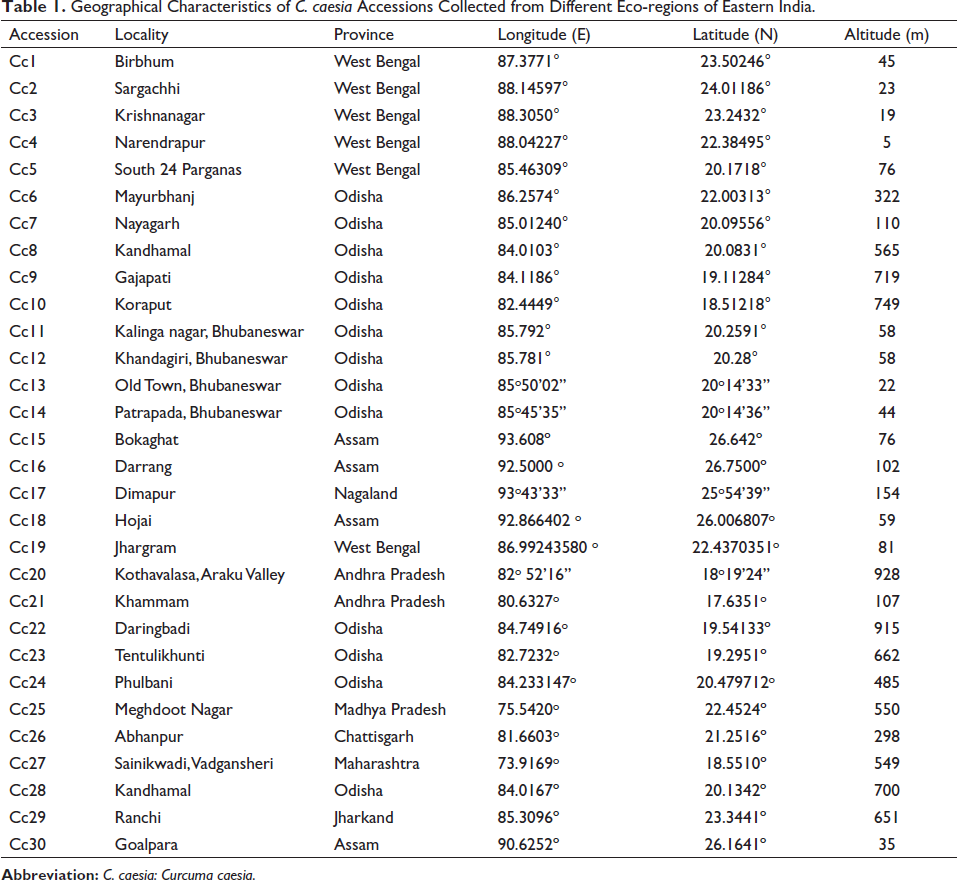
Rhizomes and leaves of C. caesia were collected from different eco-regions of Eastern India (Table 1). Samples were identified by a taxonomist and deposited in the herbarium of the Centre for Biotechnology (CBT), Siksha O Anusandhan University, Bhubaneswar. Rhizomes were planted in the medicinal plant garden of CBT for further study.
Geographical Characteristics of C. caesia Accessions Collected from Different Eco-regions of Eastern India.
Bacterial Strains
Three gram-negative, multidrug-resistant (MDR) bacterial strains (Acinetobacter baumannii, Escherichia coli, and Klebsiella pneumoniae) were isolated from the Department of Microbiology, Siksha ‘O’ Anusandhan (Deemed to be the University), Bhubaneswar.
Essential Oil Extraction
100 g of fresh leaf and rhizome samples of C. caesia were chopped and subjected to hydrodistillation using Clevenger apparatus for 3 and 6 h, respectively. The percentage of oil yield was calculated on the basis of fresh weight. The moisture trace present in essential oils (EOs) was removed by treating it with anhydrous sodium sulfate (Na2SO4) and stored in amber glass vials at 4°C until further analysis.
DPPH Radical Scavenging Activity
The DPPH radical scavenging activities of the obtained essential oils (EOs) were measured according to the protocol of Sahoo et al. (2014). A methanolic solution of EOs at different concentrations (1, 5, 10, 20, and 30 µg/mL) was added to 1 mL of 0.1 mM DPPH. The solutions were properly mixed and were kept at room temperature for 30 mins in the dark. DPPH scavenging activities were measured by taking absorbance at 517 nm in a UV-visible spectrophotometer. Ascorbic acid and butylated hydroxytoluene (BHT) were taken as positive controls. The solution containing methanol and DPPH was taken as control. The scavenging activities were expressed by calculating the percentage of inhibition (% of inhibition) and determined by the following equation:

A graph was plotted showing % of inhibition versus sample concentration (µg/mL) for determining the half-maximal inhibitory concentration (IC50).
ABTS Radical Scavenging Activity
ABTS (2,2ʹ-azino-bis-3-ethylbenzothiazoline-6-sulfonic acid) radical scavenging assay was performed to determine the antioxidant ability of the rhizome and leaf EOs following the method reported by Sahoo et al. (2014). For the preparation of ABTS stock solution, 7 mM of ABTS solution was mixed with 2.45 mM of ammonium persulfate, followed by incubating the mixture for 16 h at 37°C in a dark condition. The ABTS solution was then diluted with methanol to obtain an OD of 0.70 ± 0.02 at 734 nm. Afterwards, 0.3 mL of various concentrations (1, 5, 10, 20, and 30 µg/mL) of oils were prepared by mixing those with 3 mL of ABTS solution. The solution containing methanol and ABTS without the sample was considered blank. Ascorbic acid and BHT were used as positive controls. The percentage of inhibition of the ABTS radical was estimated using the same formula as that of the DPPH assay. The concentration of EO that could inhibit 50% of the ABTS free radical was determined as the IC50 value.
Antimicrobial Activities
Minimum Inhibitory Concentration (MIC)
According to Clinical and Laboratory Standards Institute (CLSI, 2013) guidelines and following the protocol of Dash et al. (2022), the minimum inhibitory concentration (MIC) of extracted EOs against three MDR strains was determined by the broth micro-dilution method. The antimicrobial potential was tested by Mueller Hinton Broth (MHB) against the three MDR strains. EOs (100 µL) with a concentration of 100 µg/mL were prepared by dissolving with dimethyl sulfoxide (DMSO). A bacterial culture with a concentration of 106 CFU/mL was adjusted from the overnight suspension. EOs were analyzed in a concentration range from 25 to 0.048 µg/mL by following a twofold serial dilution method with MHB in a 96-microtiter plate. The microtitre plate wells were suspended with 100 µL of prepared bacterial suspensions (106 CFU/mL). The inoculated plates were kept at 37°C for 24 h. Ampicillin was used as the control. For MIC estimation, 5 µL of 0.5M 2,3,5-triphenyl tetrazolium chloride (TTC) was added to each well and kept for 30 min of incubation at 37°C. The MIC was measured by the lowest concentration of the samples showing no coloration after adding TTC, which corresponds to the absence of visible microbial growth. Each MDR strain was tested in triplicate.
Minimum Bactericidal Concentration (MBC)
The same microdilution method was used to determine the minimum concentration required to kill the bacteria. After 24 h of incubation, a loop of culture from each well of the bacterial plates was inoculated on Mueller-Hinton Agar (MHA) medium and incubated at 37°C for 24 h. The MBC value is estimated as the minimum concentration of EOs resulting in 99.5% death of the inoculum.
Statistical Analysis
Statistical assays were carried out to obtain the mean oil yield and antioxidant potential of thirty different accessions. The mean oil yield and IC50 were calculated using one-way ANOVA followed by Tukey’s HSD test at 95% of the confidence interval to reveal the significant difference in oil yield and antioxidant potential of different growing climates.
Results and Discussion
Essential Oil Yield
The fresh rhizome and leaf samples were hydro-distilled using Clevenger apparatus, and a noteworthy difference in oil yield percentage was observed. The mean oil yield of thirty different accessions was calculated using a one-way ANOVA followed by Tukey’s HSD test at a 95% confidence interval. The mean oil yield of rhizome and leaf samples ranged between 0.15 ± 0.02 to 0.8 ± 0.02% and 0.1 ± 0.02 to 0.41 ± 0.05%, respectively, on a fresh weight basis (v/w) (Table 2). A remarkable difference in the oil yields was observed from the statistical analysis, possibly due to the variation in their growing areas of C. caesia accessions. The highest rhizome EO yield of 0.81 ± 0.02% (v/w) was found in the Cc26 accession, whereas the Cc30 accession showed the highest leaf EO yield (0.41 ± 0.05%). Various reports are available on the oil yield of rhizome samples (both fresh and dry) of C. caesia (Chaturvedi et al., 2021; Mukunthan et al., 2014). But our finding corroborates one of the earlier published studies by Angel et al. (2014), who reported an EO yield of 0.5% in fresh rhizomes from Kerala. However, till date, only one report is available on C. caesia leaf Eos in which a leaf oil yield of 0.7% (dry weight basis v/w) was observed in shade-dried leaves collected from Jorhat district, Assam (Donipati & Sreeramulu, 2015). Meanwhile, numerous research studies have also indicated a notable difference in rhizome EOs collected over different geographic locations (Angel et al., 2014; Chaturvedi et al., 2021; Mukunthan et al., 2014). The C. caesia rhizome EOs collected from Madhya Pradesh exhibited an oil yield of 1.5% (dry weight basis, v/w) reported by Chaturvedi et al. (2021). Likewise, the rhizome EO yield of 0.13% (dry weight basis, v/w) was obtained from Calicut (Mukunthan et al., 2014). This indicates that variability in oil yield depends on the use of fresh or dried samples and their geographical origin. Moreover, it is greatly influenced by various environmental entities (Xie et al., 2012).
Essential Oil Yields of 30 C. caesia Accessions.
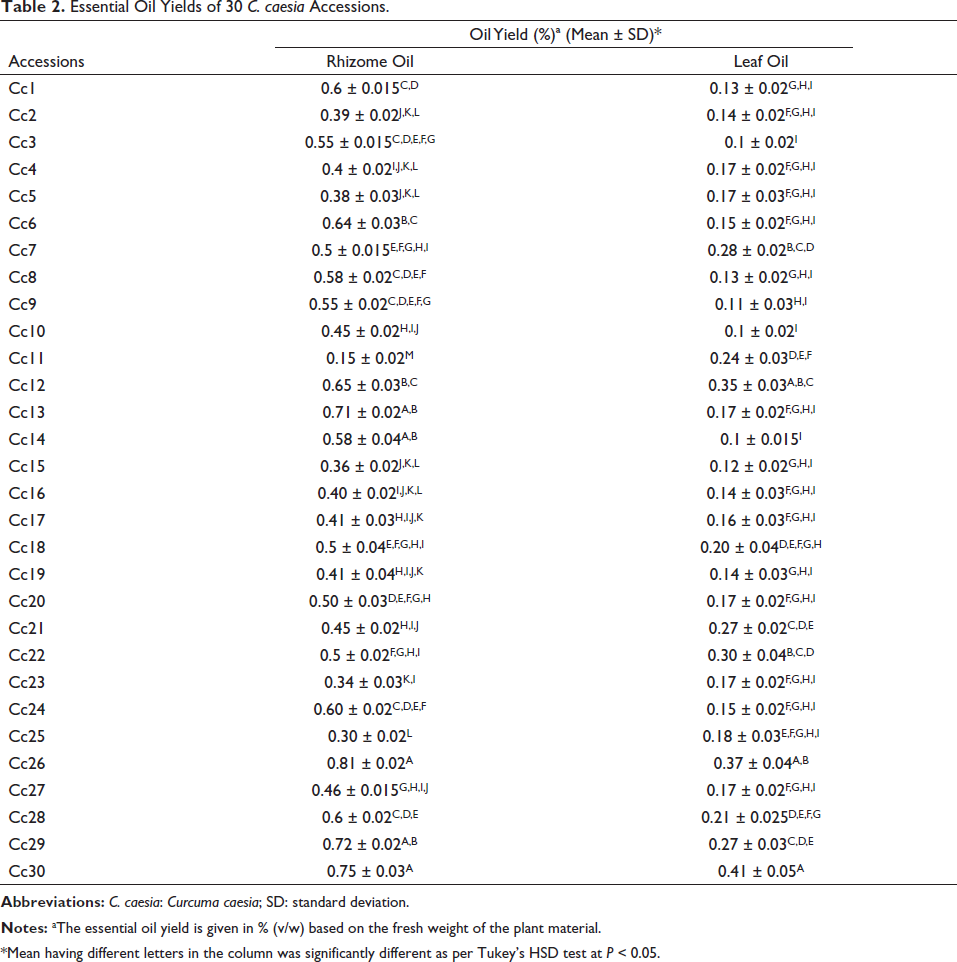
*Mean having different letters in the column was significantly different as per Tukey’s HSD test at p < 0.05.
Antioxidant Activity
Essential oils are complex mixtures of secondary metabolites with different functional groups, polarities, and chemical behaviors. So, relying on the results of the single assay can only give a reductive suggestion for antioxidant properties (Brewer, 2011). Therefore, a multiple-assay approach is highly advisable.
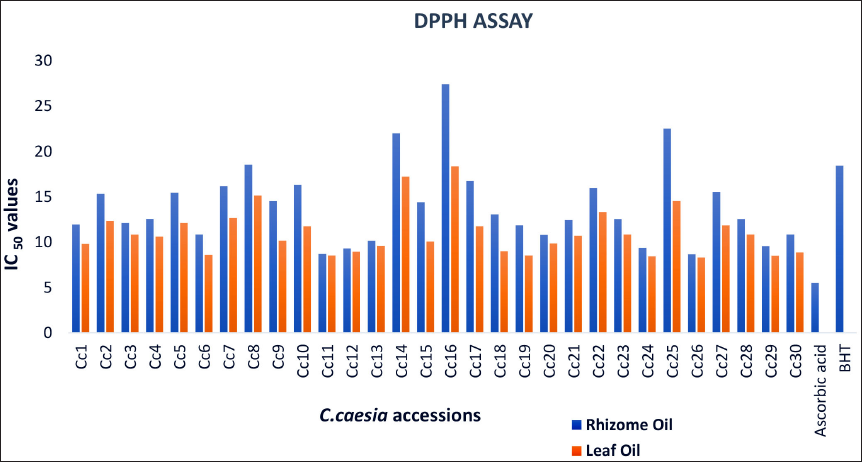
In the present study, the radical scavenging potential of C. caesia rhizome and leaf EOs was evaluated by two different in vitro assays, namely, DPPH and ABTS. The DPPH scavenging activity is based on the decolorization of methanolic DPPH by accepting the hydrogen radical from antioxidants to make DPPH more stable (DPPH-H) (Sahoo et al., 2012). The antioxidant potential is measured in terms of the IC50 value. The lower the IC50 value, the higher the antioxidant potential of EOs. Rhizome and leaf EOs resulted in a considerable variation in their antioxidant potential over thirty accessions. The IC50 values for rhizome and leaf EOs ranged from 8.66 ± 0.02 to 22.53 ± 0.03 µg/mL and 8.31 ± 0.02 to 18.35 ± 0.015 µg/mL, respectively, and it has been observed that scavenging activity increases with an increase in concentration of EOs. The obtained results were represented by the mean ± standard deviation of triplicates using one-way ANOVA followed by Tukey’s HSD test at 95% of the confidence interval (Table 3). Antioxidant potential was evaluated and compared with positive controls, that is, ascorbic acid and BHT, with respective IC50 values of 5.49 ± 0.02 µg/mL and 18.42 ± 0.02 µg/mL. Though, a study conducted by Paw et al., 2020 showed that the rhizome EO of C. caesia has IC50 value 48.08 µg/mL as compared to ascorbic acid (IC50−149.1 µg/mL), which indicates that the rhizome EOs of Eastern India accessions have shown better scavenging activity with less IC50 values from 8.66 ± 0.02 to 22.53 ± 0.03 µg/mL.
IC50 Values of Rhizome and Leaf Essential Oils of C. caesia by DPPH and ABTS Scavenging Assay.
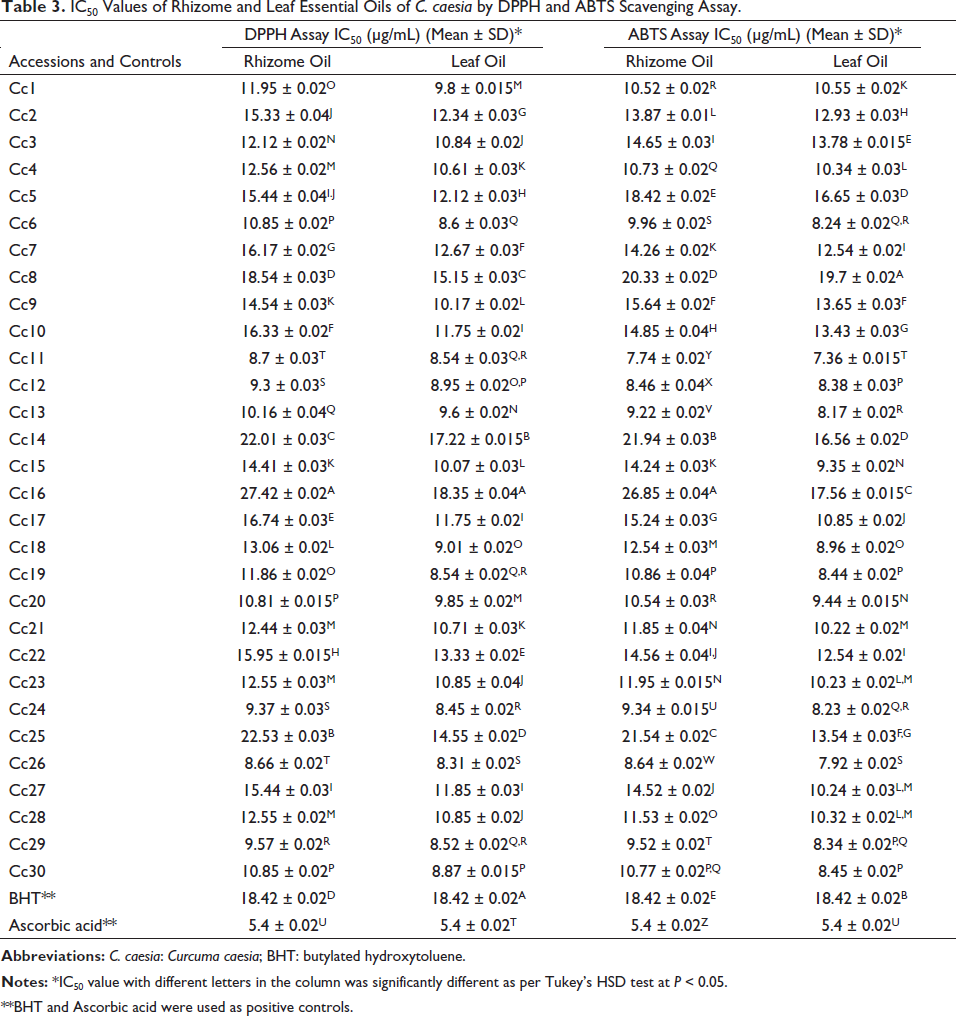
**BHT and Ascorbic acid were used as positive controls.
The leaf EOs have also shown better antioxidant potential, with IC50 values ranging from 8.31 ± 0.02 to 18.35 ± 0.015 µg/mL compared to rhizome EOs and reference standard BHT (Figure 1). However, one report has demonstrated the free radical scavenging activity of C. caesia leaf EOs using the DPPH assay, and they were found to have excellent antioxidant potential, showing an IC50 value of 1.487 µg/mL (Borah et al., 2019). It has also been observed that among all 30 accessions, the Cc26 accession with rhizome and leaf EOs possessed the highest DPPH radical scavenging potential with IC50 values of 8.66 ± 0.02 µg/mL and 8.31 ± 0.02 µg/mL, respectively.
The antioxidant ability of rhizome and leaf EOs was also evaluated using the ABTS scavenging assay, which is based on the decolorization principle of the radical monocation of ABTS (ABTS*+) (Sahoo et al., 2012). This method for screening antioxidant activity applies to both lipophilic and hydrophilic antioxidants, including flavonoids, carotenoids, plasma antioxidants, and hydroxycinnamate (Re et al., 1999). All the accessions showed similar results to those of the DPPH assay. Leaf EOs (7.92 ± 0.02 to 17.56 ± 0.015 µg/mL) have also shown prominent ABTS scavenging activity with low IC50 values as compared to rhizome EOs (8.46 ± 0.015 to 18.4 ± 0.02 µg/mL) and BHT (18.42 ± 0.02 µg/mL) (Figure 2). Even though ABTS and DPPH are based on a similar principle, the IC50 value of ABTS was less than that of DPPH, as illustrated in Table 3. Overall, accession Cc26 showed the best scavenging activity in both assays and may provide a source of natural antioxidants, which need an in-depth study to replace synthetic antioxidants.
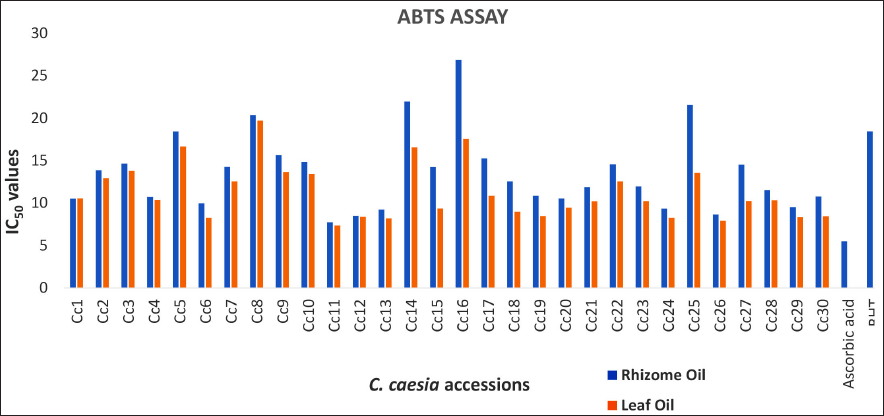
Though limited information was available on the free radical scavenging activity, this study was compared with the rhizome extract of C. caesia. Liu et al. (2013) reported that methanolic extract of C. caesia rhizome showed good antioxidant ability, as compared to C. aeruginosa and C. zedoaria. Krishnaraj et al. (2010) also studied the antioxidant potential of rhizome extract, which is better than that of C. amada. Another study on the antioxidant activity of oleoresin isolated from C. caesia noted an IC50 value of 0.32 mg (Rajamma et al., 2012).
The present study is the first-ever report revealing variation in antioxidant potential among different C. caesia accessions from diverse eco-regions of Eastern India, and the significant variations in antioxidants may be observed due to environmental and seasonal variations (Hussain et al., 2008).
Antimicrobial Activity
The antimicrobial activity of C. caesia rhizome and leaf EOs was tested against three MDR strains (A. baumannii, E. coli, and K. pneumoniae) by measuring MIC and minimum bactericidal concentration (MBC) to compare with the commercially available antibiotic standard Ampicillin (Table 4). Based on the results of MIC and MBC, EOs from various accessions displayed inhibitory growth with variable degrees of antimicrobial activity (Figure 3). The most significant activity was manifested by the rhizome EOs of C. caesia accessions against A. baumannii, with MIC and MBC values ranging from 0.09−6.25 µg/mL to 0.18−12.5 µg/mL, respectively. However, the leaf EOs performed better than the rhizome EOs for K. pneumoniae, with MIC and MBC values ranging from 3.12−6.25 µg/mL to 1.56−12.5 µg/mL. Comparatively, the standard Ampicillin has shown 25 µg/mL of both MIC and MBC values for K. pneumoniae, which signifies that leaf EOs is more susceptible than the antibiotic Ampicillin against this particular MDR strain. However, no report has been available on antimicrobial potential of C. caesia EOs against three MDR strains taken in this study, that is, A. baumannii, E. coli, and K. pneumoniae. So, this study has compared with rhizome and leaf EOs of other bacteria and fungus strains. Borah et al. (2019) reported leaf EOs of C. caesia to have the best bacteriostatic activity against Staphylococcus aureus with a MIC value of 2.5 µL and the fungi Aspergillus niger, with a MIC value of 5 µL. Formerly, a study conducted by Banerjee and Nigam (1976) reported that C. caesia rhizome EOs proved dynamic antifungal activity against Aspergillus niger Caulophillus oryzae, and Aspergillus flavus. Rajamma et al. (2012) found that oleoresins isolated from C. caesia rhizome EOs inhibited the growth of Staphylococcus aureus, Bacillus subtilis, Escherichia coli, and also shown best inhibitory action against B. subtilis.
MIC (µg/mL) and MBC (µg/mL) of C. caesia Rhizome and Leaf Samples against MDR Strains.
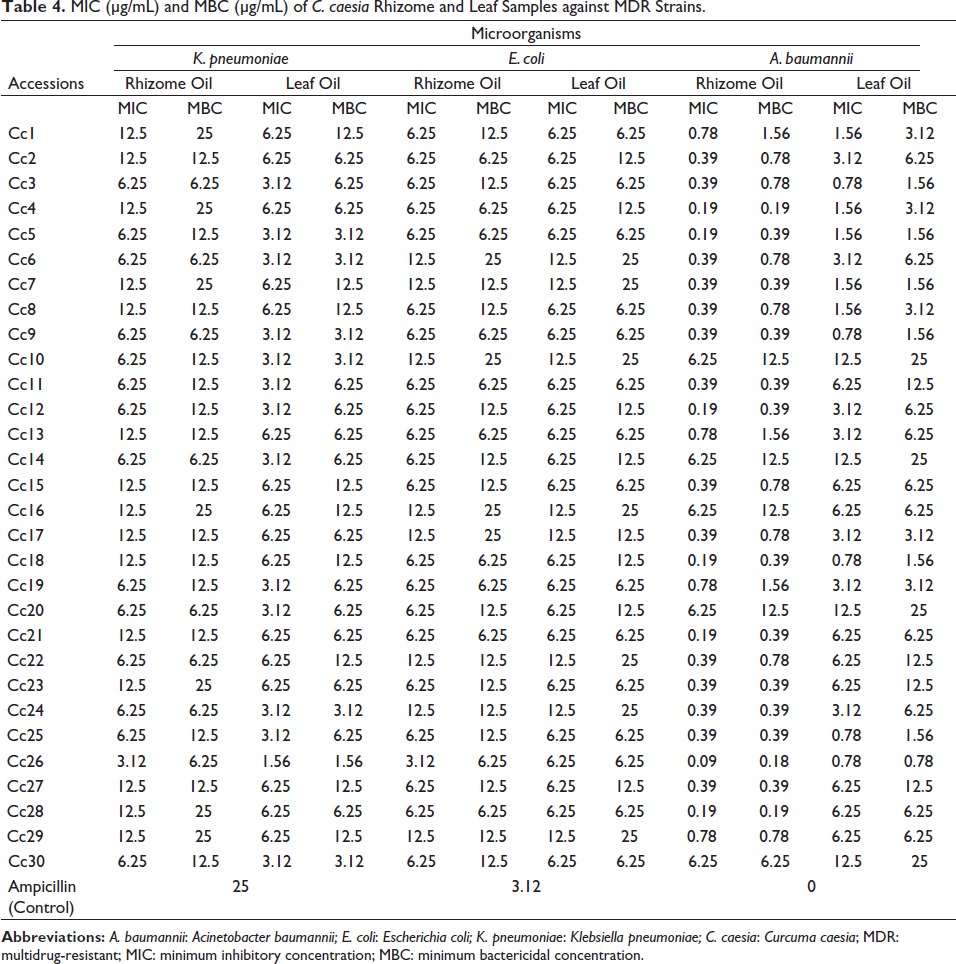
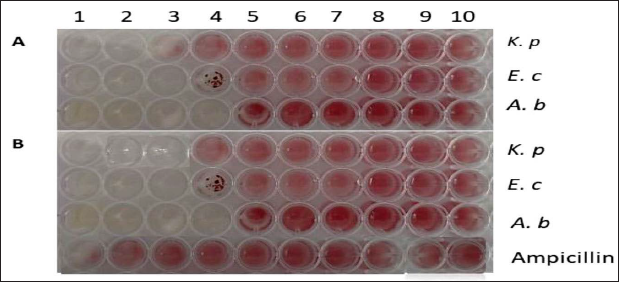
Considering the above results, it can be assumed that C. caesia leaf EOs are more needed for finding antimicrobial agents against K. pneumoniae compared with ampicillin. The MBC values of EOs are almost similar or somewhat close to their respective MICs, elucidating that EOs can be used in order to identify promising bioresources in pharmaceutical products. For the first time, this work has been designed to study the variation with respect to antimicrobial activity among different C. caesia accessions collected from Eastern India. This variation may lead to the discovery of new potent antimicrobial agents for the pharma sector.
Conclusion
As people have become more techno-savvy, their blind dependency on commercial products will never end. But people should become more conscious toward nature to know the therapeutic importance of medicinal plants. Based on anecdotal evidence, C. caesia is the treasurer of incredible medicinal and aromatic properties. So, more focus should be given to its conservation and mass cultivation to fulfill the demands of pharmaceutical companies. The market value and mass cultivation can be increased by exploring its ethnopharmacological importance. Therefore, the current study was performed on the comparative bioactivity screening of C. caesia EOs. The EOs exhibited good antioxidant potential, even more than the commercial standard, that is, BHT and significant antimicrobial activity was also evaluated against three gram-negative MDR strains. It was observed that the rhizome EOs of C. caesia have shown the highest resistance against A. baumannii. Accordingly, this study summarized the importance of EOs, which can be used as a potent natural antioxidant, antimicrobial source, and formulating drug in the near future. It may also provide a new source for the pharma-industrial sectors. So, the ethnobotanical importance of this plant needs to be explored more for global development.
Footnotes
Summary
C. caesia Roxb. (Black turmeric) is known for its high-quality essential oil with tremendous medicinal and aromatic properties. Traditional healers used the genus Curcuma to treat various diseases, but in the present scenario, C. caesia Roxb. is very little known and almost untouched for drug discovery. Therefore, the present investigation has been designed to study the comparative bioactivity of thirty C. caesia rhizome and leaf essential oils (EOs) collected from Eastern India. The extracted essential oils of C. caesia have shown a considerable variation in oil yields, ranging from 0.15 ± 0.02% to 0.81 ± 0.02% and 0.10 ± 0.02% to 0.41 ± 0.05% (v/w, fresh weight basis) for both rhizomes and leaves, respectively. The antioxidant potential was assessed by 2,2-diphenyl-1-picrylhydrazyl (DPPH) as well as 2,2’-azino-bis(3-ethylbenzothiazoline-6-sulfonic acid) (ABTS) and compared with two standards like BHT and ascorbic acid. Leaf essential oils exhibited a considerable level of antioxidant potential as compared to rhizome essential oils and BHT. Thus, essential oils can be an alternative source of natural antioxidants. Furthermore, the essential oils also possessed a significant inhibitory activity against three MDR strains, such as A. baumannii, E. coli, and K. pneumoniae. The rhizome essential oils showed the most effective antimicrobial activity against A. baumannii (MIC: 0.09 to 6.25 µg/mL) when compared with Ampicillin (MIC: 25 µg/mL). Many reports are available regarding the bioactivity study of C. caesia, but no reports are found so far about the comparative evaluation of leaf and rhizome oils from C. caesia accessions collected from different regions of Eastern India. So, the current study has been designed to screen 30 C. caesia accessions for their antioxidant and antimicrobial potential to identify the suitable accessions of Eastern India with desirable bioactivities. As a result, the identified Cc-26 accession (from Abhanpur) with high essential oil yield and better bioactivity potential might be useful for both the grower and pharmaceutical industries.
Abbreviations
C. caesia: Curcuma caesia; EOs: essential oils; DPPH: 2,2-diphenyl-1-picrylhydrazyl; ABTS: 2,2’-azino-bis(3-ethylbenzothiazoline-6-sulfonic acid); BHT: butylated hydroxytoluene; MDR: multidrug-resistance; A. baumannii: Acinetobacter baumannii; E. coli: Escherichia coli; K. pneumoniae: Klebsiella pneumoniae; MIC: minimum inhibitory concentration; DMSO: dimethyl sulfoxide; MHB: Mueller–Hinton Broth; TTC: 2,3,5-triphenyl tetrazolium chloride; MHA: Mueller–Hinton Agar; MBC: minimum bactericidal concentration.
Acknowledgments
The authors are thankful to SERB, DST, Government of India for providing financial support (Ref. No: SRG/2020/002425) for this work. The authors are also thankful to the President of Siksha O Anusandhan Deemed to be University for providing the necessary facilities to carry out this work.
Declaration of Conflicting Interests
The authors declared no potential conflicts of interest with respect to the research, authorship, and/or publication of this article.
Funding
The authors disclosed receipt of the following financial support for the research, authorship and/or publication of this article: SERB, DST, Government of India (Ref. No: SRG/2020/002425)
Statement of Informed Consent and Ethical Approval
Not applicable.
