




Abstract
Background
Kaempferia galanga, commonly known as aromatic ginger, is a potential herb with high medicinal value and is used to treat many diseases like diabetes and asthma. Cancer is a group of diseases characterized by abnormal cells that divide uncontrollably and spread throughout the body. Nowadays, medicinal plants are used for their essential oil activities, including anti-cancerous effects.
Objectives
The aim of this study is to establish a method for screening in vitro oil cytotoxic effects.
Materials and Methods
Murashige and Skoog (MS) medium with growth regulators like benzyladenine, kinetin, indole-3-acetic acid, adenine sulfate, and naphthalene acetic acid was used for plantlet production. The in vitro regenerated plants were studied for rhizome oil extraction using Clevenger’s apparatus and gas chromatography-mass spectrometry (GC-MS) analysis, followed by their cytotoxicity study against human cervical cancer cells (HeLa) and human breast cancer cells (MCF-7) by (3-(4,5-dimethylthiazol-2-yl)-2,5-diphenyltetrazolium bromide) tetrazolium reduction (MTT) assay.
Results
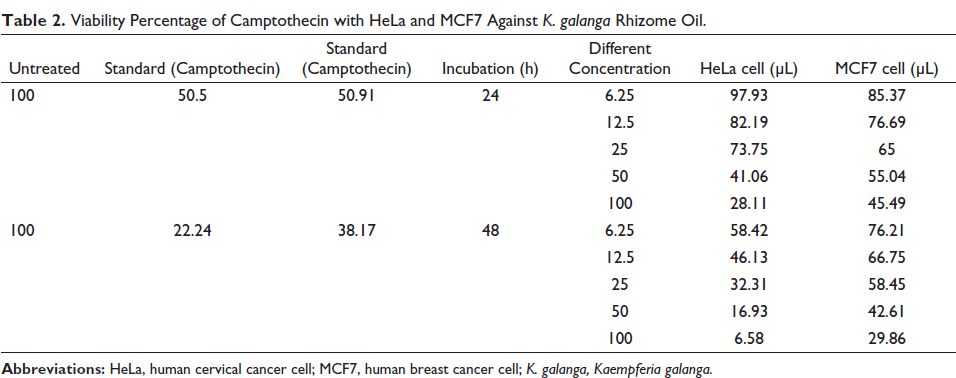
Upon analysis, it has been found that this medicinal plant contains ethyl-p-methoxycinnamate (EPMC) (56.41 ± 0.34%) as a vital compound in its rhizome oil. The validation of cytotoxicity in both cell lines was done by treatment with rhizome oil concentrations ranging from 6.25 to 100 µL, respectively. The IC50 value was found to be 44.18 ± 0.65 µL/mL in HeLa and 72.94 ± 0.26 µL/mL in MCF-7 cells after 24 h of incubation.
Conclusion
The results of this study would be helpful for this important medicinal plant to be used by pharmaceuticals in the treatment of cancer.
Introduction
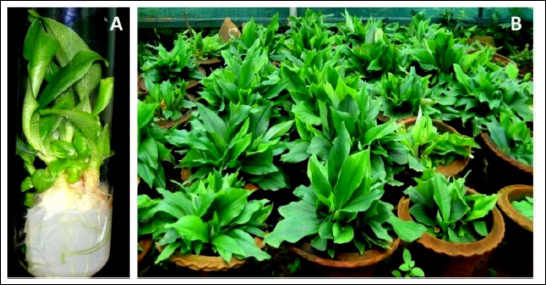
Kaempferia galanga of the Zingiberaceae family emerges from tubed roots; the rhizome is almost white in color with a soft interior and has 4–5 dark green leaves that are slightly flattened. In India, it is widely distributed in states like Andhra Pradesh, Arunachal Pradesh, Assam, Kerala, Karnataka, Meghalaya, Manipur, Odisha, and West Bengal (Kumar, 2020). The English names of the studied plant samples are sand ginger, aromatic ginger, and lesser galanga. This plant is a good source of stimulant, expectorant, carminative, diuretic, and anti-pyretic remedies. It has shown potential to treat diseases like diabetes, hypertension, joint fractures, asthma, vertigo, and intestinal wounds (Khare, 2007; Manohar, 2012; Mukherjee, 2015; Seth & Maurya, 2014). Cancer is a large group of diseases that affect all parts of the body. It occurs due to the alteration of normal cells into tumor cells in a step-by-step process and is the leading cause of death worldwide. The cases are increasing, mainly due to a lack of understanding by people and their ignoring of the early signs of cancer. With the advancement in technology and science, the mortality rate is reduced, but treatments like chemotherapy result in several side effects. To meet their healthcare needs, cancer patients believe in therapies within and outside of allopathic therapy. Also, the survey showed that many plant species have anticancer properties, one of which is K. galanga, whose plant parts are active against a few cancer cells, such as the human lung adenocarcinoma cell line (A549), the colon cancer cell line (COLO-201), the leukemia cell line (K562), and the human epidermal keratinocyte cell line (HaCaT).
Ethyl-p-methoxycinnamate (EPMC) is one of the major bioactive compounds present in this plant and has cytotoxicity on a number of cell lines (Jagadish et al., 2016; Umar et al., 2011). This plant is being used in the preparation of cosmetic products and as a spice. It has various biological activities such as being anti-nociceptive, anti-inflammatory, antioxidant, and is also used to treat migraines, mouth ulcers, rheumatism, and eye infections (Munda et al., 2018; Sulaiman et al., 2008). Reports on rhizome essential oil production are available, yet there are scanty reports on the in vitro oil cytotoxic activity of K. galanga (Vidya et al., 2021). The (3-(4,5-dimethylthiazol-2-yl)-2,5-diphenyltetrazolium bromide) tetrazolium reduction (MTT) assay is the widely accepted method to measure cell metabolic activity, proliferation, viability, and cytotoxicity; hence, MTT assay was conducted. It is a colorimetric assay, which is based on the reduction of yellow tetrazolium salt to purple formazan crystals by metabolically active cells. The resulting solution absorbance is quantified at 500–600 nm using a multiwell spectrophotometer. Thus, the aim of this study was to study the essential oil cytotoxic effects from tissue culture-raised K. galanga rhizomes.
Materials and Methods
Sample Collection and Gas Chromatography-Mass Spectrometry Aanalysis
K. galanga plant samples were collected and explants in sterilized conditions were inoculated on Murashige and Skoog (MS) medium with growth regulators like benzyladenine, kinetin, indole-3-acetic acid, adenine sulfate, and naphthalene acetic acid, with agar (0.8%) and sucrose (30 g/L), following a previous standardized method for plantlet production (Mohanty et al., 2011; Parida et al. 2010). The in vitro regenerated plants with well-developed shoots and roots were transferred to the field for further growth to estimate the percentage of rhizome oil using a standardized protocol (Guenther, 1972). Approximately 500 g of in vitro K. galanga rhizomes were collected in the early morning from the institute’s greenhouse. The Clevenger apparatus was used, in which 500 g of rhizome sample and 1,000 mL of sterile water were heated for 6 h for vapor collection by collecting chamber. Then compounds were identified by the gas chromatography-mass spectrometry (GC-MS) method using HP 6890 series GC coupled with a mass selective detector, HP 5973 series. The molecules were identified by the National Institute of Standards and Technology (NIST) reference library using Mass Spectrum Interpreter Software, version 3.4.
Culturing of Cancer Cell Lines, Groups for Treatment with MTT Viability Assays
The human cervical cancer cells (HeLa) (National Centre for Cell Science, Pune, India) P-32 and human breast cancer cells (MCF-7) (National Centre for Cell Science, Pune, India) P-48 were collected for the present study. Assay controls were only medium, control negative as medium with cells, no experimental compound, control positive as medium with cells, and camptothecin as a standard drug (10 µM). In Dulbecco’s Modified Eagle Medium, cells were subcultured and supplied with a 10% fetal bovine serum, 1% penicillin-streptomycin, 1% glutamine, and incubated in a carbon dioxide (CO2) incubator with carbon monoxide (CO) at 5% and a humidity of 95%. The trypan blue method was then used to determine cell count and viability using a hemocytometer. The 96-well plates were seeded with 200 µL of cell suspension at cell density without cells, and the test agent was left for 24 h to grow. The test samples in 5 concentrations of 6.25, 12.5, 25, 50, and 100 µL/mL were added and incubated at 37°C for 24 h in a 5% CO2 atmosphere. Then spent media were removed from plates, and a final concentration of 0.5 mg/mL MTT reagent was added. The aluminum foil was used to wrap the plates to avoid light and then incubated for 3 h. After incubation, MTT reagent was removed and dimethyl sulfoxide (DMSO) of 100 µL was added. The control and sample absorbance was done in an enzyme-linked immunosorbent assay (ELISA) reader at 630 nm with IC50 value calculation using a linear regression equation from the graph (Gerlier & Thomasset, 1986; MTT, 2022). All the data provided in the experiment were performed on duplicate samples.
Results and Discussion
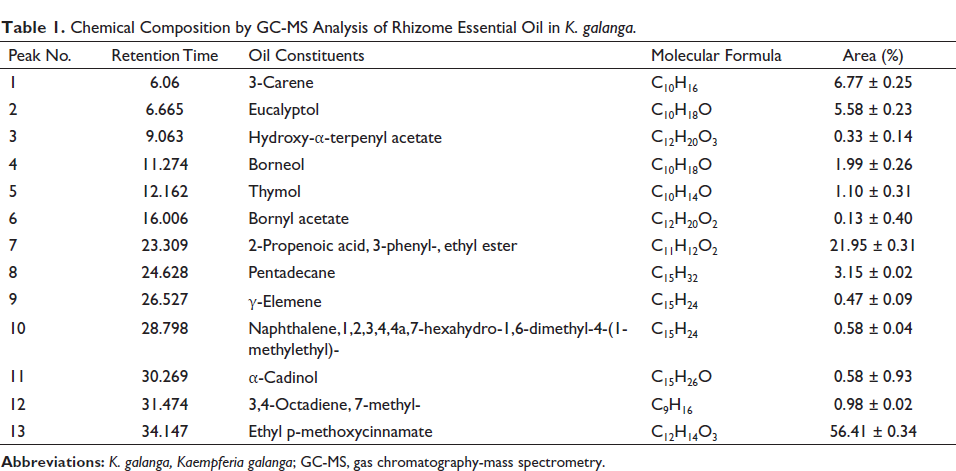
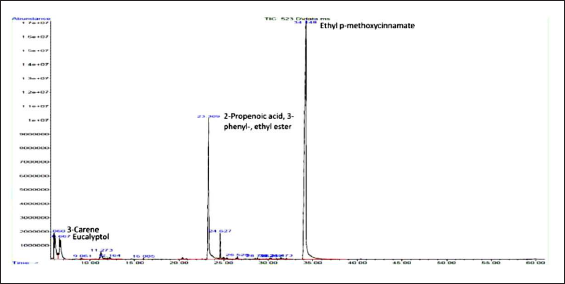
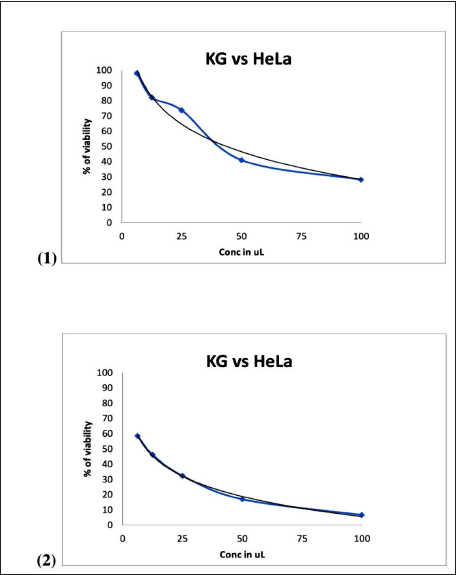
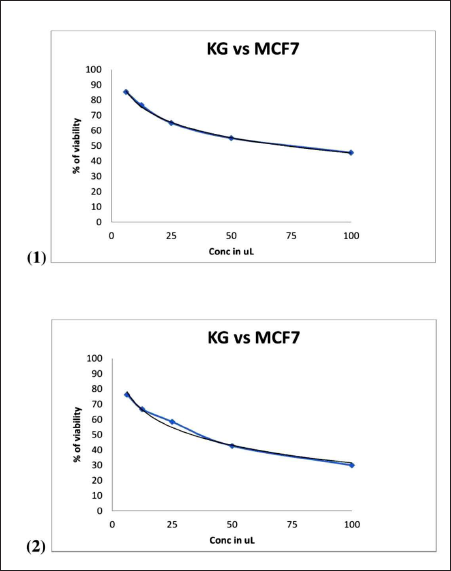
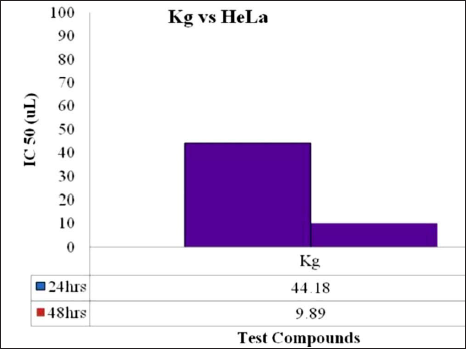
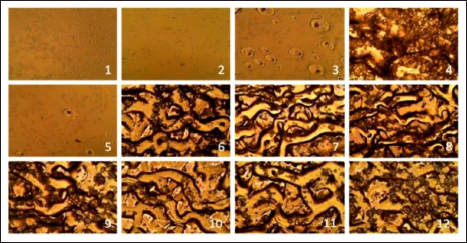
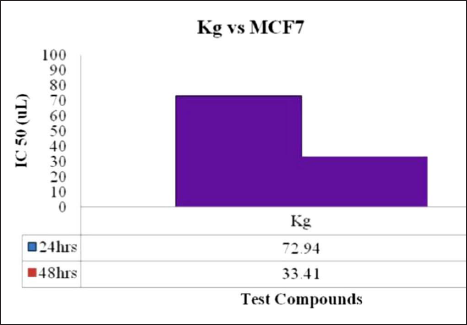
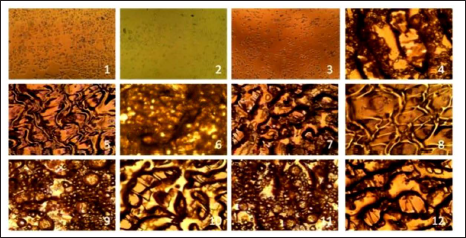
The rhizome essential oil yield in the field-grown plants was 0.8 ± 0.04%, which was transparent in color (Figure 1). A total of 13 compounds were identified, accounting for 100% of the total oil. The rhizome essential oil of K. galanga was predominated by ethyl p-methoxycinnamate (56.41 ± 0.34%). Besides ethyl p-methoxycinnamate, 2-propenoic acid, 3-phenyl, ethyl ester (21.95 ± 0.31%), 3-carene (6.77 ± 0.25%), and eucalyptol (5.58 ± 0.23%) were found to be the other major constituents in the tested essential oil (Table 1, Figure 2). In the study of anti-proliferative activities, positive control as camptothecin, different drug concentrations of oil samples (6.25, 12.5, 25, 50, and 100 mg/mL) against HeLA and MCF-7 cells with viability percentages have been given in Table 2, Figures 3 and 4. The IC50 value of K. galanga oil in HeLa was found to be 44.18 ± 0.65 µL/mL in 24 h and 9.89 ± 0.53 µL/mL in 48 h. Similarly, the IC50 value in MCF-7 was found to be 72.94 ± 0.26 µL/mL in 24 h and 33.41 ± 0.31 µL/mL in 48 h. The 50% HeLa reduction against oil concentrations was effective by MTT assay (Figures 5 and 6). Similarly, MTT assays revealed the effectiveness of the concentration required for 50% of MCF-7 reduction in oil concentrations (Figures 7 and 8).
Chemical Composition by GC-MS Analysis of Rhizome Essential Oil in K. galanga.
Viability Percentage of Camptothecin with HeLa and MCF-7 Against K. galanga Rhizome Oil.
There are several studies reported on GC-MS analysis of this plant in which ethyl p-methoxycinnamate was found to be the major compound as ours, and we have also reported earlier the same in K. galanga (Ajay, 2014; Mohanty et al., 2011; Raina & Abraham, 2016). Some reports are available on the extensive use of K. galanga rhizome extract medicinally as food for its aromatic flavor and other nutritional benefits (Umar et al., 2011). Most of the pharmacological properties found in K. galanga rhizome are due to the presence of EPMC and ethyl-cinnamate as the most vital constituents. There are antitumor properties in K. galanga rhizome extract, which has shown anti-proliferative potential in nine human cancer cells (Srivastava et al., 2019). In their study, K. galanga rhizome was demonstrated as a safe and high-energy medicinal spice with chemo-preventive action and without any toxic phytochemicals. Similarly, our study is in its favor, but we have shown the effects of using rhizome essential oils. There are studies on the antineoplastic activity of EPMC present in Kaempferia, which has proven to have potential in the treatment of oral cancer (Ali et al., 2018; Ichwan et al., 2019; Ichwan et al., 2020). They have examined EPMC, the major constituent of K. galanga, in human lung adenocarcinoma cells. Their study showed EPMC stimulates cytotoxic and apoptotic effects on lung cancer cells. So also in our study, EPMC, being the major constituent in in vitro rhizome oil, might be responsible for anticancer effects against human cervical and breast cancer cells. Other reports are available on the cytotoxic effects of K. galanga essential oil and extracts on the cervical cancer cell line (Omar et al., 2017). But we have studied the same in micropropagated rhizome essential oil. There are various recent reports on K. galanga rhizome extracts exhibiting antiinflammatory and anticarcinoma activities (Amuamuta et al., 2017; Atun, 2014; Dwita et al., 2021). They have studied the ethanolic extract of K. galanga rhizome, EPMC, and 5-fluorouracilfor their cytotoxicity against the CCA cell line using the MTT assay. It concluded that rhizome extract and its bioactive compound EPMC exhibited moderate cytotoxic activity against human CCA tumor cells. The results of others showed the highest level of EPMC in its rhizome extract using the GC-MS method, exhibiting significant anti-inflammatory activity.
Conclusion
The present study investigates the presence of ethyl p-methoxycinnamate as a major bioactive compound in rhizome essential oil, which might be helpful in the treatment of cancer cells. The oil composition and proportions are influenced by geographic, climatic, genotypic, and many other factors. So also, in the study, 50% of HeLa and MCF-7 showed reductions in rhizome oil concentrations, which were effective using the MTT assay. This method could explore drug preparation approaches by utilizing in vitro propagated rhizomes, thereby shortening the demand in the market. However, further studies should be done to evaluate the mechanisms of bioactive compounds that showed potential cytotoxic effects, thereby bioprospecting for cancer treatment. Thus, the outcome of the study would be of sufficient significance to develop a novel method for the extraction of essential oils from micropropagated rhizomes. In addition, the results of the cytotoxicity study of this important medicinal plant will enhance the commercial importance of its use by industries.
Footnotes
Summary
In K. galanga oil, ethyl p-methoxycinnamate was found to be the primary compound present in the in vitro field-grown plants.
Both HeLa and MCF-7 cell lines used against oil concentrations showed effective results by the MTT assay.
It also revealed that the essential oil could be further used by pharmaceutics in the treatment of cancer cells.
Abbreviations
HeLa: human cervical cancer cell; MCF-7: human breast cancer cell; MTT assay: (3-(4,5-dimethylthiazol-2-yl)-2,5-diphenyltetrazolium bromide) tetrazolium reduction assay; EPMC: ethyl-p-methoxycinnamate; K. galanga: Kaempferia galanga; MS medium: Murashige and Skoog medium; GC-MS: gas chromatography-mass spectrometry; NIST library: National Institute of Standards and Technology library; CO2: carbon dioxide; CO: carbon monoxide; DMSO: dimethyl sulphoxide; ELISA: enzyme-linked immunosorbent assay.
Acknowledgments
The authors are grateful to Prof. (Dr.) M.R. Nayak, President and Prof. (Dr.) S.C. Si, Dean, Centre for Biotechnology, Siksha ‘O’ Anusandhan University, for providing facilities and encouraging throughout.
Declaration of Conflicting Interests
The authors declared no potential conflicts of interest with respect to the research, authorship, and/or publication of this article.
Statement of Informed Consent and Ethical Approval
Necessary ethical clearances and informed consent were obtained before initiating the study from all the participants.
Funding
The author received no financial support for the research, authorship, and/or publication of this article.
