




Abstract
Background:
Traditional Chinese medicine (TCM) has clear advantages in stabilizing patients with heart failure (HF) and improving cardiac functions.
Aims:
This study aimed to investigate the role of Cornus officinalis Sieb. et Zucc. (Cor) in HF.
Settings and Design:
Rats with HF were treated with Cor or Cor with an adenosine monophosphate-activated protein kinase (AMPK) inhibitor, dorsomorphin dihydrochloride (Dor).
Materials and Methods:
The weight and echocardiography findings of the rats were examined. AMPK and p-AMPK expression levels were assessed using Western blots, mitochondrial changes were evaluated using transmission electron microscopy (TEM), and adenosine triphosphate (ATP) levels were detected in each group. Finally, the targets of Cor were analyzed using HERB (
Statistical Analysis Used:
A Student’s t-test was used to compare two groups, and a one-way analysis of variance was performed for intergroup comparison. A p < 0.05 indicated that the difference was statistically significant.
Results:
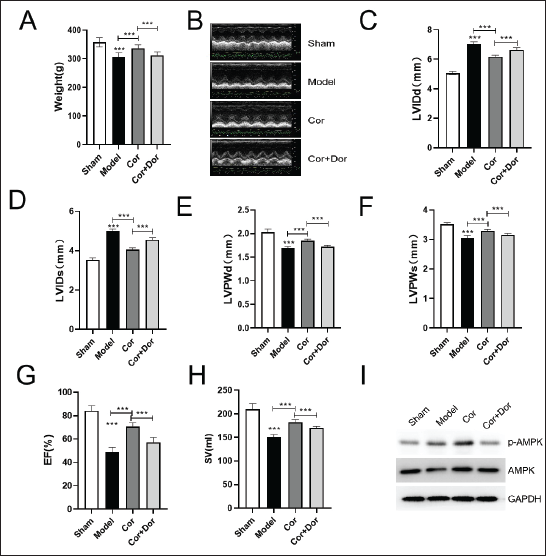
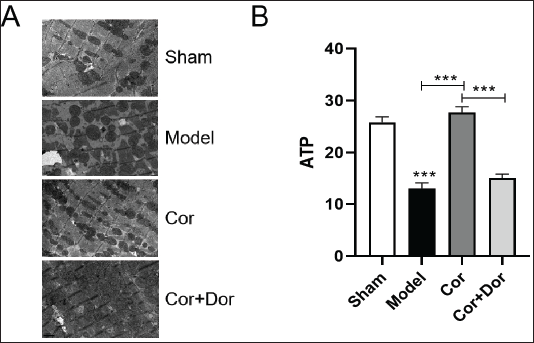
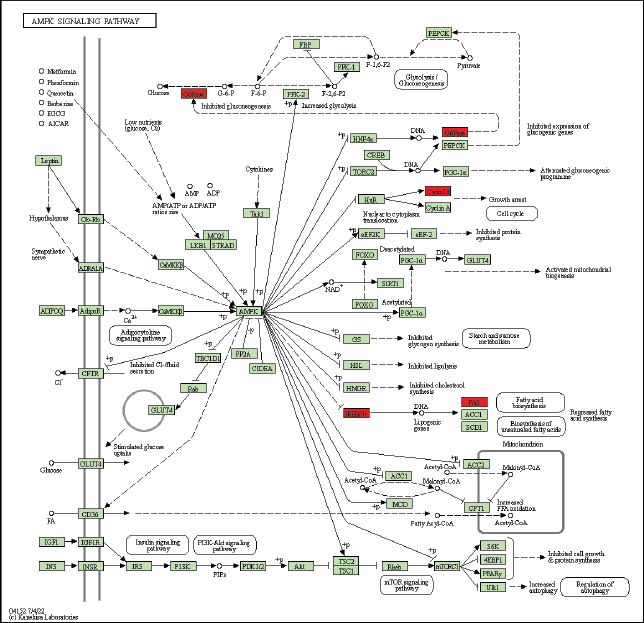
Compared with that of the Sham group, the body weight of the Model group decreased; left ventricular end diastolic diameter (LVIDd) and left ventricular end systolic diameter (LVIDs) increased; and left ventricular end diastolic posterior wall thickness (LVPWd), left ventricular end systolic posterior wall thickness (LVPWs), left ventricular ejection fraction (EF), and stroke volume (SV) decreased. These effects were reversed by the Cor treatment. Western blot analysis indicated p-AMPK levels were higher in the Model group than those in the Sham group. After Cor treatment, p-AMPK levels increased but later decreased after treatment with Dor. In addition, myocardial mitochondrial abnormalities were reduced and ATP levels increased in the Cor group compared with the Model group, which were reversed by Dor. Lastly, Cor was found to target AMPK pathway-related genes.
Conclusion:
Cor exerts protective effects on HF by activating AMPK to improve mitochondrial function.
Key messages
Cor exerts protective effects on HF. Additionally, myocardial mitochondrial abnormalities were reduced and ATP levels increased in the Cor group compared with the Model group. Finally, Cor was found to target AMPK pathway-related genes.
Introduction
Heart failure (HF) is a clinical syndrome characterized by a reduced ability of the heart to pump blood under normal diastolic filling pressure (Chaudhry & Stewart, 2016). As a multifactorial systemic disease, HF activates structural, neurohumoral, cellular, and molecular mechanisms after cardiac injury that act as a network to maintain physiological functions (Tanai & Frantz, 2015). Mitochondrial abnormalities are observed in HF, which lead to the decreasing capability to generate adenosine triphosphate (ATP), cardiomyocyte injury and death, the generation of reactive oxygen species, aberrant cellular calcium homeostasis, and vascular smooth muscle pathology (Brown et al., 2017). Due to the increasing age of the general population and the increase in the incidence of obesity, diabetes, and hypertension, HF with preserved ejection fraction (HFpEF) has become the predominant type of HF worldwide (Borlaug, 2020). The mitochondrial abnormalities may affect muscle and myocardial function in HFpEF, so correction of mitochondrial function may be a therapeutic method (Brown et al., 2017; Kumar et al., 2019). Traditional Chinese medicine (TCM) has evident advantages in improving mitochondrial function, increasing energy metabolism, resisting oxidative stress, and finally improving a patient’s cardiac function and quality of life (Huang et al., 2020; Jia et al., 2020).
TCM has been used for more than 2000 years and is still widely used in clinical settings. It can be used as a supplement and an alternative method for primary and secondary prevention of cardiovascular diseases (Hao et al., 2017). The research and development of TCM have created more possibilities for improving the prognosis of patients with HF (Lin et al., 2020), especially for improving clinical symptoms, controlling disease development, and improving patients’ quality of life (Wang et al., 2020). For example, Ginseng Dingzhi Decoction Intervention regulates mitochondrial homeostasis through increasing superoxide dismutase activity and decreasing the content of malondialdehyde and reactive oxygen species to protect against cardiomyocyte injury (Wang et al., 2022). Cornus officinalis Sieb. et Zucc. (Cor), called Shanzhuyu in Chinese, is commonly used in TCM. It tastes sour and feels astringent and slightly warm. Approximately 300 chemical components are found in Cor, such as flavonoids, tannins, triterpenes, saccharides, monoterpenes and sesquiterpenes, essential oils, organic and phenolic acids, and iridoids (Huang et al., 2018). According to Chinese medicine theories, it has a tonifying effect on the liver, kidney, and essence (Huang et al., 2018). In addition, Cor’s extract and active ingredients have antioxidant, antiapoptotic, anti-inflammatory, neuroprotective, cardioprotective, and other pharmacological effects (Gao et al., 2021). Previous studies found that Cor protects against cerebral ischemic injury by increasing the activities of mitochondrial antioxidant enzymes and mitochondrial respiratory enzymes as well as decreasing the content of malondialdehyde (Jiang et al., 2009). However, there is little research on Cor’s protective effects against HF.
Meanwhile, adenosine monophosphate-activated protein kinase (AMPK), an energy sensor with multiple cardioprotective effects, plays a key role in HF progression (Li et al., 2019a). In addition, mitochondrial dysfunction is related to HF occurrence (Zhou & Tian, 2018). In failing hearts, the major AMPKα subtype, AMPKα2, changes to AMPKα1, accelerating HF (Wang et al., 2018). AMPK activation coordinates many biochemical events, including glucose uptake, glycolysis, free fatty acid oxidation, and mitochondrial biogenesis (Towler & Hardie, 2007), that help increase ATP levels and restore myocardial systolic efficiency and vascular response (Costantino et al., 2016). According to Zhang et al. (2019), tanshinone IIA inhibits apoptosis by activating the AMPK-mTOR pathway, inducing autophagy, protecting myocardial cells, and improving myocardial function. However, it is unclear whether Cor is involved in AMPK-mediated HF protection.
Therefore, in this study, we constructed a rat model of HF and treated the rats with Cor. In addition, an AMPK inhibitor, dorsomorphin dihydrochloride (Dor), was used to explore the potential mechanism underlying Cor-mediated HF prevention and treatment. Our study provides a new strategy for preventing and treating clinical HF.
Materials and Methods
Animal Model
Forty-eight 12-week-old male Sprague–Dawley rats weighing 180–200 g were randomly divided into the Sham, Model, Cor, and Cor + Dor groups, with 12 rats in each group. All the animals were kept in an environmentally controlled room (temperature: 24 ± 2°C, relative humidity: 55 ± 5%) and subjected to a 12-h light/dark cycle. Food and water were freely available. After feeding for 1 week, the left renal artery was ligated and the left kidney was removed for 36 rats. The remaining 12 rats underwent the same procedure, but their kidneys were not removed. The Cor group rats were fed with Cor (6 g/kg/day). The rats in the Cor + Dor group were supplemented with the AMPK inhibitor Dor (10 mg/kg, #1219168-18-9, biolab; Beijing, China). In addition, the rats in the Sham and Model groups were given the same volume of 0.9% normal saline once a day for 4 weeks. Finally, echocardiography was performed 4 weeks after medication, and the same ultrasound technician conducted all examinations.
Echocardiography
After the rats were weighed, they were intraperitoneally injected with 10% chloral hydrate at a dose of 0.3 mL/100 g. After the rats were anesthetized, they were kept in the supine position. A probe was placed at the left sternal margin to measure the maximum diameter of the left ventricular long axis. M-mode ultrasound was used to calculate the left ventricular end diastolic diameter (LVIDd), left ventricular end systolic diameter (LVIDs), left ventricular end diastolic posterior wall thickness (LVPWd), and left ventricular end systolic posterior wall thickness (LVPWs). In addition, the modified Simpson method measured left ventricular ejection fraction (EF) and stroke volume (SV).
Western Blot Analysis
Total protein was extracted from the rats’ tissues according to the manufacturer’s instructions using the radioimmunoprecipitation assay lysis buffer (#P0013B, Beyotime, China) and adsorbed onto a polyvinylidene difluoride membrane with sodium dodecyl sulphate–polyacrylamide gel electrophoresis loading buffer (#MB2479, Meilunbio). The blots were incubated with antibodies against AMPK (#5831S, CST), p-AMPK (#2537S, CST), and GAPDH (#60004-1-LG, Proteintech) overnight at 4°C. Then, the blots were incubated with the secondary antibody at room temperature for 90 min before ECL exposure. In addition, GAPDH was used as an internal reference for detecting the protein levels.
Transmission Electron Microscopy (TEM)
First, the tissues were fixed with 2.5% glutaraldehyde and then washed and fixed with osmium acid (#18456, TED PELLA INC) for 2 h. After the salt reduction treatment, the samples were dehydrated using ethanol and acetone. Embedding slicing was performed using an Eponate 12™ Embedding Kit with DMP-30 (#18010, TED PELLA INC). Then, the samples were permeated with a mixture of acetone and epoxy resin and embedded with pure epoxy resin. They were baked in an oven at 70°C for 24 h and cut into 70-nm sections using a slicer (Leica UC-7, Leica). After the sections were stained with lead citrate, mitochondrial damage was observed using TEM (JEM1400, Japan Electron).
Adenosine Triphosphate (ATP) Detection
The cell lysate was added at the rate of about 100–200 µL lysate per 20 mg of tissue and homogenized. Sufficient homogenization was performed to ensure complete cleavage of the tissues. After lysis, the cell lysate was centrifuged at 12,000g at 4°C for 5 min. Then, the supernatant was collected, and its ATP level was measured using a Beyotime ATP Kit according to the manufacturer’s instruction (#S0026B, China).
Construction of the Kyoto Encyclopedia of Genes and Genomes (KEGG) Pathway Diagram
First, the TCM database HERB (
Statistical Analysis
Graphpad Prism 8.0 was used for statistical analysis. The data were expressed as mean ± standard deviation. Student’s t-test was used to compare two groups, and a one-way analysis of variance was performed for intergroup comparison. A p < 0.05 indicated that the difference was statistically significant.
Results
Cor Alleviated HF Through AMPK
First, we constructed a rat model of HF. The body weight of the Model group decreased compared with that of the Sham group (Figure 1A). After treatment with Cor, the rats gained weight. After treatment with Dor, the weight of the rats decreased again. In addition, the echocardiography findings of the rats in each group were compared (Figure 1B). Compared with the Sham group rats, the LVIDd and LVIDs increased, whereas LVPWd, LVPWs, EF, and SV decreased in the Model group rats. After treatment with Cor, LVIDd and LVIDs decreased, whereas LVPWd, LVPWs, EF, and SV increased; however, these effects were reversed after treatment with Dor (Figures 1C–H). Finally, the AMPK and p-AMPK levels in the rats were compared using Western blot analysis. There was no change in the AMPK levels among the groups (Figure 1G); however, the p-AMPK levels changed significantly. Compared with the Sham group, the p-AMPK levels increased in the Model group. In addition, after treatment with Cor, the p-AMPK levels increased; however, treatment with Dor decreased the p-AMPK levels. These results suggested that Cor alleviated HF through AMPK.
Cor Alleviated Myocardial Mitochondrial Abnormalities and Improved its Functions
Next, we explored the effect of Cor on mitochondrial functions. In the Sham group, the mitochondrial crista-like structures were arranged in an orderly manner (Figure 2A). In the Model group, the mitochondrial membranes were thickened, mitochondria became smaller, and crista-like structures became thicker. In contrast, in the Cor group, the mitochondria were partly damaged, and the mitochondrial damage was improved. In addition, mitochondrial damage was slightly worse in the Cor + Dor group compared with the Cor group. ATP detection analysis showed that the ATP levels decreased in the Model group than those in the Sham group. After treatment with Cor, the ATP levels significantly recovered upregulation. After Dor was added, the ATP levels decreased again (Figure 2B). These results indicated that Cor alleviated myocardial mitochondrial abnormalities and improved its functions.
Cor-Targeted AMPK Pathway-related Genes
Next, we used the TCM database HERB (
Discussion
HF is a complex syndrome, and the leading causes of death in patients with HF are pump failure and ventricular arrhythmia (Xue et al., 2021). Although HF pathogenesis has been extensively studied in the past decade, the mortality and readmission rates of patients with HF remain very high (Jia et al., 2019). TCM is used to treat cardiovascular diseases by improving mitochondrial function, including HF, although it is not well characterized (Yu et al., 2019). In addition, Cor has not yet been shown to have a protective effect against HF. Therefore, in this study, we constructed a rat model of HF, and the rats with HF were treated with Cor. In addition, mitochondria-associated AMPK inhibitor Dor was used to explore the potential mechanism by which Cor prevents and treats HF. We found that Cor prevented against HF by activating AMPK and improving mitochondrial abnormalities and its functions. Our study is critical as it is the first to report the Cor’s protective effects against HF.
For thousands of years, Cor has been one of the most widely used medicinal plants in China and other East Asian countries to treat diseases, such as liver, kidney, and cardiovascular diseases and frequent urination (Hou et al., 2018). According to Chen et al. (2015), the total glycosides and polysaccharides of Cor can improve cardiac function, reduce the area of acute myocardial infarction in rats, and promote the formation of myocardial mitochondria. In addition, Cor fruit core extract can reverse cardiac hypertrophy and improve cardiac functions (Fang et al., 2012). The results of our study are consistent with those of previous studies. Moreover, we found that Cor administration increased ATP levels and improved HF symptoms in rats.
Several pathophysiological and molecular events contribute to HF’s development and eventual deterioration. Among them, defects in myocardial metabolism usually lead to the production of appropriate ATP required to maintain contractile function, which seems to be the leading cause of HF (Kim & Dyck, 2015). Because of the relationship between ATP demand and impaired ATP production, which is caused by cardiac hypertrophy, mitochondrial bioenergy generation must keep pace with the phenotype of cardiac hypertrophy (Rosca et al., 2013). As the heart is an organ with high energy demand, enhancing mitochondrial function is considered a new therapeutic strategy for HF (Fu et al., 2021). Cornuside, a secoiridoid glucoside compound extracted from Cor, can improve mitochondrial energy metabolism, mitochondrial antioxidant enzyme activity, and ATP levels in case of cerebral ischemic injuries (Jiang et al., 2009). Previous studies showed that some of the chemical content isolated from Cor could activate AMPK pathway (Han et al., 2020; Khan et al., 2018). For example, anthocyanin derived from Cor, one kind of bioactive flavonoids, exerts anti-angiogenic activities by activating AMPK pathway in 3T3-L1 cells (Khan et al., 2018). Triterpenoid acids derived from Cor could improve hyperlipidemia and hyperglycemia by activating AMPK pathway and its downstream proteins in diabetic mice (Han et al., 2020). Furthermore, according to Huang et al. (2021), treatment with a combination of Cor and Paeonia lactiflora Pall alleviates rheumatoid arthritis by AMPK-mediated mitochondrial fission regulating synovial cell apoptosis, suggesting that Cor may improve mitochondrial functions by regulating AMPK pathway. Our animal study has shown that Cor alleviates myocardial mitochondrial abnormalities and processes by activating the APMK pathway, thereby prevention of HF. These data suggest that as a TCM, Cor may have protective effects against HF by activating the AMPK pathway to improve mitochondrial functions.
AMPK, and energy sensor, is a key molecule regulating myocardial metabolism under normal and ischemic conditions and a major regulatory kinase controlling various metabolic pathways (Feng et al., 2018). It exerts a protective effect against cardiac hypertrophy and HF (Li et al., 2018). Li et al. (2019b) reported that Shengmai administration activates the AMPK pathway through an energy-dependent mechanism, which leads to rescue mitochondrial function, and inhibits Ang II-induced hypertrophy and cardiomyocyte apoptosis. In addition, Ren et al. (2020) evaluated a TCM, the Yangxinkang tablet, that inhibits autophagy by suppressing the AMPK/mTOR pathway and prevents cardiac dysfunction and myocardial remodeling after myocardial infarction in rats. These suggest that TCM may protect against HF by activating the AMPK pathway to protect mitochondrial function. Here, we found that Cor increased ATP levels and alleviated HF through the activation of AMPK pathway. These data suggest that the pharmacological activation of AMPK by Cor is a promising therapeutic strategy for HF.
G6Pase is the key gluconeogenic enzyme. It was reported that curcumin activated AMPK and suppressed G6Pase gene expression in hepatoma cells (Kim et al., 2009). Baicalin can also inhibit G6Pase gene expression by activating the AMPK pathway in insulin-resistant HEpG-2 cells (Wang et al., 2017), indicating the upstream and downstream relationships between the AMPK pathway and G6Pase. Therefore, TCM may play a role in disease management via the AMPK pathway. Wohlschlaeger et al. (2010) reported that the mean percentage of cardiomyocytes showing immunoreactivity against cyclin D1 significantly increased in patients with congestive HF compared with controls. Additionally, the silencing of lncRNA GAS5 attenuates hypoxia-induced cell death in HF, which is associated with the upregulated expression of the cyclin D1 gene (Du et al., 2019), these findings suggest that cyclin D1 may play a vital role in HF. In addition, naringenin inhibits mammary tumor cell growth, increases AMPK phosphorylation, downregulates cyclin D1 gene expression, and induces cell death (Ke et al., 2017). These observations indicate the upstream and downstream relationships between the AMPK pathway and cyclin D1; however, its detailed mechanism in HF remains to be explored. Also, according to Cheng et al. (2018), diosgenin treatment elevates the levels of lipolysis proteins, p-AMPK, and inhibits the synthesis of lipid synthesis-related proteins, FAS and SREBP1c, in patients with nonalcoholic fatty liver disease. These findings indicate that the genes encoding G6Pase, cyclin D1, FAS, and SREBP1c are downstream genes of the AMPK pathway and play an essential role in disease development. In this study, we used the TCM database HERB (
However, our research is not extensive enough, and further studies on downstream genes and the detail chemical content of Cor in HF are needed in the future.
Conclusion
Our results suggested that Cor exerted protective effects against HF. In addition, Cor alleviated mitochondrial abnormalities and improved mitochondrial functions by activating AMPK. Our study contributes toward increasing the understanding of the molecular mechanism underlying HF occurrence and development and provides new strategies for HF treatment.
Supplementary Material
Supplemental material for this article is available online.
Supplemental Material for Cornus officinalis Sieb. et Zucc. Alleviates Mitochondrial Abnormalities and Heart Failure through AMPK by Liu-Dan Chen, Ke-Fang Chen, Ke Chen, Liang Ai, Meng-Ru Kang, Wei-Min Yi and Jian-Jun Li, in Pharmacognosy Magazine
Footnotes
Summary
HF is a clinical syndrome characterized by a reduced ability of the heart to pump blood under normal diastolic filling pressure. The research and development of TCM have created more possibilities for improving the prognosis of patients with HF, especially for improving mitochondrial function, controlling disease development, and improving patients’ quality of life. For example, Cor, called Shanzhuyu in Chinese, is commonly used as TCM. Meanwhile, AMPK, an energy sensor with multiple cardioprotective effects and a role in promoting mitochondrial biogenesis, plays a key role in HF progression. In this study, we constructed a rat model of HF and treated the rats with Cor. In addition, an AMPK inhibitor, Dor, was used to explore the potential mechanism underlying Cor-mediated HF prevention and treatment. Our study provides a new strategy for preventing and treating clinical HF.
We found that compared with that of the Sham group, the body weight of the Model group decreased; LVIDd increased; and LVPWd, LVPWs, EF, and SV decreased. These effects were reversed by the Cor treatment. Western blotting indicated p-AMPK levels were higher in the Model group than those in the Sham group. After Cor treatment, p-AMPK levels increased but later decreased after treatment with Dor. In addition, decreased levels of ATP in Model group were rescued by Dor. Finally, Cor was found to target the AMPK pathway-related genes encoding glucose-6-phosphatase, cyclin D1, FAS, and SREBP1c.
In conclusion, Cor exerts protective effects on HF by activating AMPK to improve mitochondrial function.
Abbreviations
HF: heart failure; TCM: traditional Chinese medicine; Cor: Cornus officinalis Sieb. et Zucc; Dor: dorsomorphin dihydrochloride; HFpEF: HF with preserved ejection fraction; AMPK: adenonsine monophosphate-activated protein kinase; ATP: adenosine triphosphate; LVIDd: left ventricular end diastolic diameter; LVIDs: left ventricular end systolic diameter; LVPWd: left ventricular end diastolic posterior wall thickness; LVPWs: left ventricular end systolic posterior wall thickness; EF: left ventricular ejection fraction; SV: stroke volume; G6Pase: glucose-6-phosphatase; FAS: fatty acid synthase; SREBP1c: sterol regulatory element-binding protein 1.
Authors Contribution
Wei-Min Yi and Jian-Jun Li: Conception or design of the work. Liu-Dan Chen and Ke-Fang Chen: Acquisition of data and manuscript drafting. Ke Chen, Ai Liang, and Meng-Ru Kang: Analysis or interpretation of data. All authors approved the final manuscript and agreed to be accountable for all aspects of the work in ensuring that questions related to the accuracy or integrity of any part of the work are appropriately investigated and resolved.
Data Availability Statement
All data are incorporated into the article.
Declaration of Conflicting Interests
The authors declared no potential conflicts of interest with respect to the research, authorship, and/or publication of this article.
Ethical Statement
Our study was approved by the committee of Sun Yat-sun University (Approval number: SYSU-iacuc-2020-000223).
Funding
This work was supported by the Guangdong province bureau of traditional Chinese medicine [grant numbers: 20201059 and 20223006].
Informed Consent
Not applicable.

References
Supplementary Material
Please find the following supplemental material available below.
For Open Access articles published under a Creative Commons License, all supplemental material carries the same license as the article it is associated with.
For non-Open Access articles published, all supplemental material carries a non-exclusive license, and permission requests for re-use of supplemental material or any part of supplemental material shall be sent directly to the copyright owner as specified in the copyright notice associated with the article.
