




Abstract
In the current global context, the circular economy has gained significant importance as a pathway towards sustainable development. At the core of circular economy strategies lie circular behaviours, individual and collective actions that support resource efficiency, waste reduction and local consumption. Increasingly, these behaviours are believed to influence and be influenced by individual- and community-level characteristics, particularly resilience. This study aims to deepen the understanding of the existing relations and dynamics through a nationally representative survey conducted in Romania, involving over 1200 respondents. The survey collected data on various circular behaviours and resilience capacity, at both individual and community levels. Findings reveal that both individual and community resilience are positively associated with circular behaviours, particularly the practices of sorting recyclables and reducing household waste. More interestingly, rural and urban environments display different behavioural patterns. In rural areas, the most significant contributor to resilience is the behaviour involving the reduction of resources, while in urban areas, behaviours such as buying local products and sorting waste show the strongest positive associations with resilience. The study also highlights an important generational trend: individuals aged 31–60, the core working-age population, are more actively engaged in circular behaviours than both younger and older cohorts. This suggests that circular engagement, at least for some particular behaviours, is driven less by environmental values and more by economic pragmatism and local ties. Based on these findings, the paper offers a set of recommendations for policymakers aiming to strengthen circular economy strategies through targeted behavioural interventions. Emphasis is placed on initiatives in regional contexts and key demographic segments to maximise impact.
Introduction
In recent decades, the concept of the circular economy (CE) has gained significant traction, emerging as a key component of national and regional strategies that aim to minimise environmental impact and move beyond the limitations of the traditional linear economic model. Central to implementing CE principles are circular behaviours (CBs), defined as everyday practices that support a broader systemic shift towards circularity and resource efficiency (Colley et al., 2024). These behaviours – which include recycling, reducing waste, reusing materials and supporting local economies – not only contribute to environmental sustainability (Ghisellini et al., 2016), but also potentially could enhance personal and collective capacities, such as individual and community resilience (Ibănescu et al., 2020, 2023a; Walker and Salt, 2012). Such behaviours do not occur in a vacuum and are deeply embedded in territorial contexts, reflecting local socioeconomic conditions, infrastructures and cultural norms (Bourdin and Torre, 2025).
Recently, CBs have been linked with other major topics of interest. For example, resilience has become a hot topic in both academic and policy discourse, particularly in the aftermath of global crises such as the 2008–2009 global recession and COVID-19 pandemic (Henry and Smith, 2024; Ibanescu et al., 2023b). As resilience increasingly becomes a policy priority, researchers and policymakers have been debating its drivers and determinants across multiple systems (Trippl et al., 2024). While regional resilience studies often explore innovation, infrastructure and economic prowess in bigger territories, research on individual resilience typically emphasises psychological dimensions. A growing literature stream has been bridging these two levels by suggesting that behavioural variables, particularly CBs, may act as mediators between structural conditions and resilience outcomes (Le et al., 2023; Tang et al., 2022).
It has been hypothesised that individuals who engage in CBs are more likely to demonstrate resilient traits due to their anticipatory and resource-conscious mindset (Luthar et al., 2000). Such behaviours require long-term thinking and adaptability – qualities that closely mirror psychological resilience (Masten, 2018). At the community level, integration of CE principles contributes to a boost in resilience capacity through an increase in social cohesion, reduction of existing reliance on external systems and continuous support for localised economic activity (Kirchherr et al., 2017; Klein et al., 2003). Therefore, existing dynamics suggest that CBs serve as enablers of resilience by reducing vulnerability, promoting sustainability and reinforcing social capital (Rockström et al., 2009). These mechanisms align with place-based approaches to development, which emphasise collective capacities’ embeddedness within local assets and institutional frameworks (Bourdin and Torre, 2025).
Therefore, existing dynamics suggest that CBs may operate as enablers of resilience by reducing vulnerability, reinforcing trust and cooperation and stimulating localised sustainability transitions (Rockström et al., 2009). However, despite this theoretical potential, few empirical studies have examined how CBs interact with resilience across different types of territories. This gap is particularly salient in Central and Eastern Europe (CEE), where socio-spatial inequalities and environmental pressures remain pronounced.
Given CBs’ diversity – from basic waste sorting to sustainable purchasing and reduced consumption – our study aimed to explore their relationship with both individual and community resilience. Adopting a spatial lens, we examined how these behaviours vary across rural and urban contexts and among sociodemographic groups. To what extent do CBs help enhance individual and collective resilience in different territorial settings? How do these relationships differ across demographic profiles and spatial configurations? We consider that a deeper understanding of these complex interactions will provide valuable insights into the behavioural dimension of resilience and will offer practical guidance for more targeted and effective CE strategies.
Accordingly, this study advances three research hypotheses. First (H1), individuals who report stronger engagement in CBs are expected to demonstrate higher levels of both personal and community resilience. Second (H2), different types of circular practices are assumed to vary in their capacity to influence resilience outcomes. Third (H3), we examine whether these relationships display distinct spatial and sociodemographic patterns, anticipating variations between rural and urban contexts, across age cohorts and among socioeconomic groups.
While this study examined relationships, it does not claim a direct causal link. Instead, the analysis focussed on identifying associations, as the available data were not sufficiently detailed or longitudinal to support strong causal inferences. Therefore, the results should be interpreted as correlational, rather than causal.
This paper contributes to the literature in several ways. Theoretically, it strengthens the conceptual bridge between CE and resilience studies by positioning CBs as both individual practices and territorially embedded processes. Empirically, it relies on a nationally representative survey to provide one of the first large-scale quantitative assessments of how CBs relate to individual and community resilience. From a regional studies perspective, it highlights spatial disparities in behavioural patterns, demonstrating how territorial characteristics, such as urban/rural location and regional infrastructure, shape circular engagement and its resilience outcomes. Practically, the results inform place-sensitive policy design by identifying key leverage points for fostering resilience through everyday sustainable practices on local and regional scales.
Literature review
This literature review is divided into two sections. The first section defines CBs’ scope and complexity, with an emphasis on their typologies, drivers and relevance within the CE framework. The second section examines the relationship between CBs and resilience, both at the individual and community levels, by drawing on recent theoretical insights and empirical findings from regional studies.
CBs’ complex construct
CBs, or CE behaviours, are designed to minimise waste and make the most of available resources, thereby contributing to sustainability and environmental health (Ghisellini et al., 2016; Vidal-Ayuso et al., 2023; Walker and Salt, 2012; Wastling et al., 2018). Within the CE framework, wherein the objective is to maintain products at their highest utility and value, consumer behaviour is a core component of systemic efficacy and wide implementation. Typically, CBs are defined as a set of individual and household practices that aim to maintain resources’ value for as long as possible through reuse, repair, recycling and responsible consumption (Colley et al., 2024; Macklin and Kaufman, 2024; Wastling et al., 2018). These behaviours are an important part of the broader CE concept, which contrasts with the traditional linear model of take-make-dispose. In the circular system, waste is minimised through design and consumption choices that keep products, materials and resources in use at their highest utility and value (Alcayaga et al., 2019; Bourdin and Maillefert, 2020; Niang et al., 2020; Tapia et al., 2021).
CBs are core elements regarding the operationalisation of the CE, which aims to decouple economic growth from resource depletion. These behaviours reflect sociocultural practices and individual agency within systemic transitions towards sustainability. Social scientific literature emphasises that CE implementation requires behavioural shifts supported by community engagement, policy frameworks and socio-technical systems (Colley et al., 2024; Zavos and Pyyhtinen, 2024). While new paradigms have been emphasising the role of subjective experiences and local contexts (Iofrida et al., 2024; Padilla-Rivera et al., 2020), the relation between CBs and the CE remains viewed as, for lack of a better word, circular. Thus, CBs are viewed as both drivers and outcomes of CE transformations.
A thorough framework identified 59 distinct user behaviours contributing to the CE, grouped under phases such as acquiring (e.g. buying secondhand), using (e.g. maintaining or repairing items) and passing on (e.g. donating or reselling products) (Macklin and Kaufman, 2024). The 59 CBs identified in the study demonstrate conceptual overlap and were derived from prior theoretical frameworks ingrained in CE principles. Many behaviours remain theoretically suggested, rather than empirically validated, reflecting a normative orientation within sustainability discourse. Thus, the framework functions as a heuristic device for guiding future empirical inquiry and policy design. While the concept seems simplistic, the framework illustrates the scale and variety of behaviours that can be classified as circular, suggesting that circularity involves not just one-time acts but also a systemic shift in how individuals relate to resources (Colley et al., 2024; Gonella et al., 2024; Zoli and Congiu, 2024). Consumer behaviours in the CE include reducing consumption, sharing goods and services, refurbishing products, recycling materials and changing eating habits (Shetye, 2023).
Recent extant research has advanced a person-centred, yet systems-oriented, view of CBs, treating individuals as not mere passive consumers but also citizens, workers, voters and community members whose actions are rooted in wider social, institutional and infrastructural contexts. Within this stream, CBs have been examined through the theory of planned behaviour, which highlights how attitudes, perceived norms and perceived behavioural control shape intentions and practices (Adabre et al., 2023; Arman, 2025; Sharma and Foropon, 2019). This perspective explains variance in individual uptake of CBs while not losing sight of structural frictions (e.g. availability of repair services, pricing, convenience) that condition what is feasible in everyday life.
Simultaneously, a growing body of literature cautions against framing CBs solely as matters of individual choice. The most plausible reading of recent evidence is that adoption depends on interaction between individual dispositions and policy designs adapted to local communities (e.g. infrastructure, incentives, regulations and social programmes) (Muranko et al., 2018; Shove, 2010). For example, Reike et al. (2018) and Kirchherr et al. (2017) demonstrated that the familiar ‘R-terms’ (reduce, reuse, recycle) describe resource-flow processes, rather than discrete one-off actions, highlighting that CBs are enacted within, and often constrained by, systemic arrangements. Accordingly, analyses should view CBs as co-produced by personal capacities and context-specific policy architectures, rather than attributing outcomes to individuals or systems in isolation.
Despite growing awareness, CBs remain inconsistently practised. For example, while practices such as recycling are common, more advanced behaviours such as refurbishing products or purchasing remanufactured goods are less prevalent (de Melo et al., 2022; Vidal-Ayuso et al., 2023), reinforcing discrepancies between social acceptability and adoption between the 10 Rs of the CE (Bourdin and Jacquet, 2025; OECD, 2020). Moreover, the depth of understanding of CBs, as well as the full extent of their adoption, remains limited (Guzmán-Rivera et al., 2024).
Recent studies, particularly during the past decade, have tried to identify inherent factors conducive to adoption of CBs, highlighting that their acceptance is influenced by multiple factors, including socioeconomic status, cultural norms and personal values. For example, a recent study on Polish households found that CBs, while present, varied significantly based on socioeconomic characteristics, such as education and income (Szczygieł, 2021). Adoption is also affected by structural challenges, including lack of access to repair services, unclear labelling on sustainable products, economic barriers (Camacho-Otero et al., 2021; Grafström and Aasma, 2021) or even cognitive biases (Singh and Giacosa, 2019; Terzioğlu, 2021). For CBs to become more widespread, interventions at the policy, community and individual levels are viewed as necessary to address existing barriers and support sustainable consumer choices (Camacho-Otero et al., 2021).
Extant research on the CE in CEE countries remains relatively sparse, with much of the literature still addressing early-stage developments. However, in recent years, tangible progress has been made, particularly in Poland (Szczygieł, 2020, 2021), where several studies have examined CBs and their relationship with quality of life. Emerging findings suggest that specific socioeconomic characteristics shape the frequency and breadth of CBs across the household sector. These results emphasise the potential value of targeted, supportive interventions aimed at increasing household-level circularity.
The relationship between CBs and resilience
As for findings regarding various types of CB adoption, some striking conclusions seem to have been made over the past two decades: CBs seem to increase individual and community resilience consistently (Kennedy and Linnenluecke, 2022; Masten, 2014; Schröder, 2022; Walker and Salt, 2012). It is believed that individuals engaged in CBs are more likely to exhibit resilience due to their proactive approach to resource management and problem-solving (Luthar et al., 2000), as CBs require a mindset oriented towards sustainability and future planning (Figure 1) – a mindset related closely to psychological resilience (i.e. the capacity to cope with and recover from stress or hardship) (Masten, 2018).
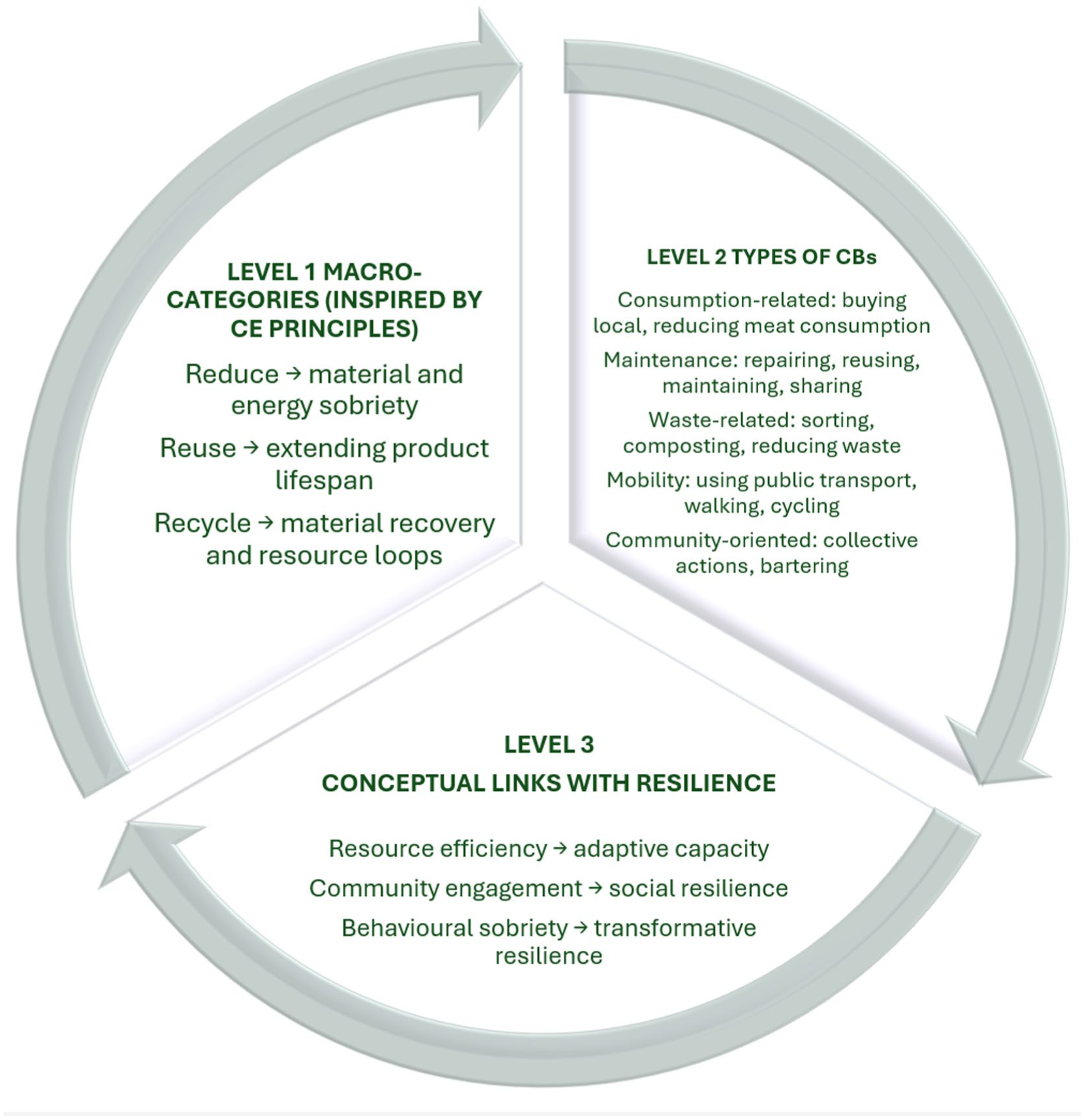
The relationship between CBs and resilience. CBs operate at multiple levels (from individual daily actions to collective territorial practices) and link circular economy principles with resilience capacities (absorptive, adaptive and transformative).
CBs not only support environmental goals but also contribute to resilience at both the individual and community levels (Howard et al., 2022; Karman et al., 2024). Resilience, broadly defined at the individual and community levels as the ability to adapt and recover from stressors, is enhanced by behaviours that promote self-reliance, future planning and resourcefulness (Chaney, 2012; Imperiale and Vanclay, 2021; Norris et al., 2008; Sherrieb et al., 2012).
Given the increased importance of resilience – demonstrated by recent events, such as the global economic crisis and COVID-19 pandemic – it is essential to understand its role in the current global context, marked by rapid change and economic, social and environmental turbulence (Howard et al., 2022). The aforementioned disruptive global events have acted as exogenous shocks, highlighting the fragility of systems, including supply chains, through limited access to essential goods, such as medical equipment, as well as the fragility of human connections within communities (Karman et al., 2024; Kennedy and Linnenluecke, 2022; Li et al., 2025).
Drawing on Manca et al. (2017) and Keck and Sakdapolrak (2013), resilience includes multiple capacities (absorptive, adaptive and transformative) that reflect a system’s ability to respond to shocks of varying intensity and duration. Absorptive capacity enables stability through resistance to disruption, while adaptive capacity involves incremental adjustments to maintain functionality. However, transformative capacity requires systemic reconfiguration when existing structures are no longer viable. CBs such as reuse, repair and sharing may contribute to absorptive resilience by buffering resource shocks, while more radical CBs, such as collaborative consumption or localised production, can generate transformative resilience by reshaping socioeconomic systems.
At the individual level, engaging in CBs generates an increase in preparedness, and actions such as repairing household items, reusing materials, collecting waste selectively and conserving energy develop an individual’s capacity to manage limited resources and respond to disruptions (OECD, 2024). Different studies have argued that a people-centred perspective (concerning individuals in diverse roles, not just as consumers) is an important starting point. Therefore, there is a strong argument for the development of a more integrated theoretical framework combining psychological and social perspectives that could better integrate CBs in everyday life (Colley et al., 2024). These behaviours align with psychological resilience, which is rooted in proactive problem-solving and adaptability (Berry and Isenhour, 2019; Castro et al., 2022; Fletcher and Sarkar, 2013; Haines-Gadd et al., 2018; Masten, 2018; Troy et al., 2023). For example, maintenance and repair of items, as well as economies regarding energy, create a sense of control in uncertain times with various hardships (e.g. economic downturns, supply shortages and climate-related disruptions) (Cobra et al. 2023; Luthar et al., 2000).
At the community level, CBs contribute to collective resilience, resource efficiency and intensification of social cohesion. Community-based initiatives (e.g. tool libraries, repair cafés and cooperative economies) reduce dependency on centralised systems and build local capacities to cope with crises (Berry and Isenhour, 2019; Howard et al., 2022; Massari and Giannoccaro 2024). These shared activities have the side benefit of encouraging trust, mutual aid and a stronger sense of belonging, all of which are components of social resilience (Walker and Salt, 2012).
One of the most significant outcomes of implementing CE models and adopting CBs is the promotion of social cohesion. Through collaborative efforts – such as cooperative waste management, shared resource systems and community-based recycling initiatives – CEs encourage and promote a sense of community ownership and mutual responsibility (Howard et al. 2022; Sisto et al., 2019; Suárez-Eiroa et al. 2021). Cooperatives within the social and solidarity economy have been identified as key drivers in applying CE principles, helping communities develop economically, socially and environmentally in a collaborative manner, as well as increasing their overall resilience capacity (Allimadi et al., 2021). Additionally, CE initiatives promote long-term sustainability planning within communities, as programmes aimed at reducing waste and maximising reuse serve as platforms for environmental education and civic engagement. When communities are engaged in circular practices, they build networks and infrastructures that are better equipped to adapt to disruptions (Colley et al., 2024). In this sense, CEs are often presented as a necessary tool to achieve the United Nations’ Sustainable Development Goals (SDGs), particularly SDG 12, on responsible consumption and production (Perramon et al., 2024; Wijkman, 2021). Local economic development is another critical aspect in which CE principles contribute to resilience through continuous promotion of reuse, refurbishment and recycling of materials (three of the most common Rs of the CE) within local loops and overall reduction in reliance on volatile global supply chains (Kirchherr et al., 2023). This principle was illustrated in a study of small and medium enterprises in Devon and Cornwall, UK, in which place-based circular systems (localised labour practices and natural capital utilisation) contributed to business and community resilience (Howard et al., 2022).
However, the most recognisable impact from CBs is towards environmental resilience, the strongest component of the CE framework, based on waste elimination and designing for long-term resource cycles (Atabaki Fard Tehrani et al., 2025; Desing et al., 2020; Elroi et al., 2023). Kuang et al. (2021) argued that the CE not only delivers sustainable value but also contributes to ecosystems’ natural resilience, as it integrates natural system principles into economic activities. This system-level thinking is particularly important in urban settings, where environmental degradation compromises community health and safety (Howard et al., 2022; Kennedy and Linnenluecke, 2022; Wijkman, 2021; Williams et al., 2021). Moreover, CBs are aligned with climate resilience objectives, as the adoption of circular principles (resource regeneration and reuse) has been demonstrated to result in inclusive and climate-resilient service models, particularly in the Global South (Aithal and Aithal, 2023; Carrard et al., 2024; Khanna et al., 2022; Loza Adaui, 2024; Toșa, 2025; Velenturf and Purnell, 2021).
Furthermore, recent studies have indicated that emerging sectors, like tourism and urban development, also benefit from the adoption of CBs on a large scale. A place-based ecosystem perspective in circular tourism engages long-term sustainability and resilience with the integration of social value creation and reshapes consumer behaviours towards more resilient models (Abulkhair, 2025; de Angelis et al., 2025; Jones and Wynn, 2019; Suárez-Eiroa et al., 2021). Urban areas, particularly smart cities, are integrating CBs in planning frameworks to address challenges in waste, mobility and energy – a transition that contributes to both community and economic resilience while aligning local strategies with SDGs.
Although recent literature has emphasised CBs’ conceptual relevance as potential enablers of individual and community resilience, empirical studies remain scarce and fragmented. Existing contributions often rely on theoretical propositions or case-based observations that do not allow for generalisation across populations or territories. This article addresses this gap by proposing one of the first large-scale empirical investigations into the relationship between CBs and resilience.
Methodology
Our study employed a cross-sectional survey methodology to investigate the relationship between CBs and resilience among individuals and communities in a national context. The survey targeted a representative sample of over 1200 respondents from Romania, ensuring a balanced representation of both rural and urban areas, as well as across age groups, gender and regions (NUTS2). The participants were asked to assess their level of self-reported CBs (recycling, reusing), as well as the perceived level of individual and community resilience. The sample (N = 1205, 51.7% women) was recruited through phone-based interviews conducted by a professional research company (CATI) and randomly allocated through dialling phone numbers, with an average duration of 22 minutes. The regional and urban/rural split can be found in Table 1. A probabilistic sampling method was used to reflect the Romanian population in terms of key demographic variables, such as age, gender and region.
Rural/urban and regional distribution.
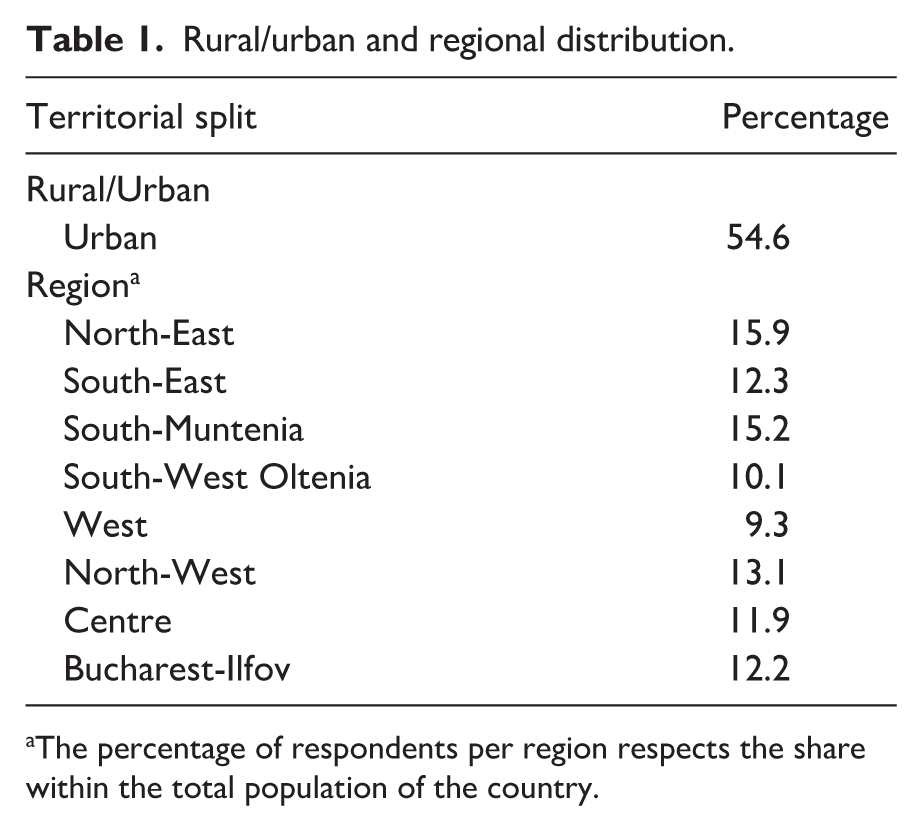
The percentage of respondents per region respects the share within the total population of the country.
A series of pre-identified CBs has been assessed through the survey, with each one covering a key aspect from the circular approach, such as ‘You buy local products or products from the region where you live’, ‘You consume as little water and electricity as possible’, ‘You sort plastic, glass and paper waste for recycling’, ‘You produce little household waste’, ‘You use public transport’, ‘You eat meat daily’ and ‘You engage in actions to protect the environment’. All items were measured on a five-point Likert scale ranging from 1 (never) to 5 (always). Individual resilience was measured on a five-point Likert scale from 1 (not at all) to 5 (almost all the time) through two items: ‘You feel that you have the resources you need to cope with future difficulties’ and ‘You feel that you can correctly anticipate at least some of the future difficulties or problems’. Community resilience was assessed on a five-point Likert scale, ranging from 1 (not at all) to 5 (almost all the time), comprising three items: ‘Your community is prepared for an emergency situation’, ‘People care about each other and help one another’ and ‘You can rely on people in your community to help you when needed’.
Although extant literature has identified up to 59 CBs (Macklin and Kaufman, 2024), this study operationalised only a limited number, guided by methodological and pragmatic considerations. Certain behaviours posed measurement challenges within a survey-based design, while others demonstrated limited relevance in the context of our analytical framework. Instrumental constraints – such as survey length, respondent fatigue and construct validity – necessitated selective inclusion. As an exploratory inquiry, our approach prioritised depth over exhaustiveness, aiming to refine behavioural typologies for future empirical elaboration. This selective strategy aligns with contextual adaptation norms.
Correlation analyses were conducted to explore whether individual and community resilience are linked to CBs. Furthermore, several ANOVAs were run to analyse whether CBs have a regional and/or rural/urban distribution.
Results
As seen in Table A1, CBs correlated with resilience indicators, such as having resources to cope and being able to anticipate future difficulties. Individual and community resilience also correlated with CBs, such as buying locally, consuming fewer water and energy resources, sorting waste and recycling. CBs were interconnected, with respondents who reported higher engagement in one tending to report higher engagement in others as well. For example, those who reported higher engagement in sorting waste (paper, plastic, etc.) also reported producing little waste and higher engagement in other tested CBs, indicating the possible existence of a circular mindset.
When split according to type of territory, urban areas (Table A2) revealed several significant correlations between resilience and CBs in urban contexts, with both individual resilience indicators linked to perceived individual ability to cope with future hardships. Community resilience (‘You can rely on people in the community’) correlated with buying local products (r = 0.13**) and producing less household waste (r = 0.13**), while individual resilience (‘You feel you can correctly anticipate at least some of the future difficulties’) correlated with buying local products (r = 0.12*) and producing less household waste (r = 0.12*).
In rural areas (Table A3), individual resilience, such as anticipating future problems, was also linked to limiting energy and water use (r = 0.26**), waste reduction (r = 0.16**) and recycling behaviours (r = 0.14**). Finally, community resilience (‘Your community is prepared for an emergency’) correlated with recycling behaviours (r = 0.25**) and buying local products (r = 0.13*). When it comes to resilience, individual resilience was related positively to recycling, waste reduction and resource conservation.
If the national analysis and rural/urban split revealed findings close to what was expected from the theoretical coverage and confirmed CBs’ positive role with resilience in both contexts, we wanted to test whether the relation was influenced by territorial bias or age-related components. Several two-way factorial ANOVAs were conducted to examine the impact that the NUTS2 region and rural/urban split might have on the CBs in which the population engages. Further descriptive statistics can be found in Table A4.
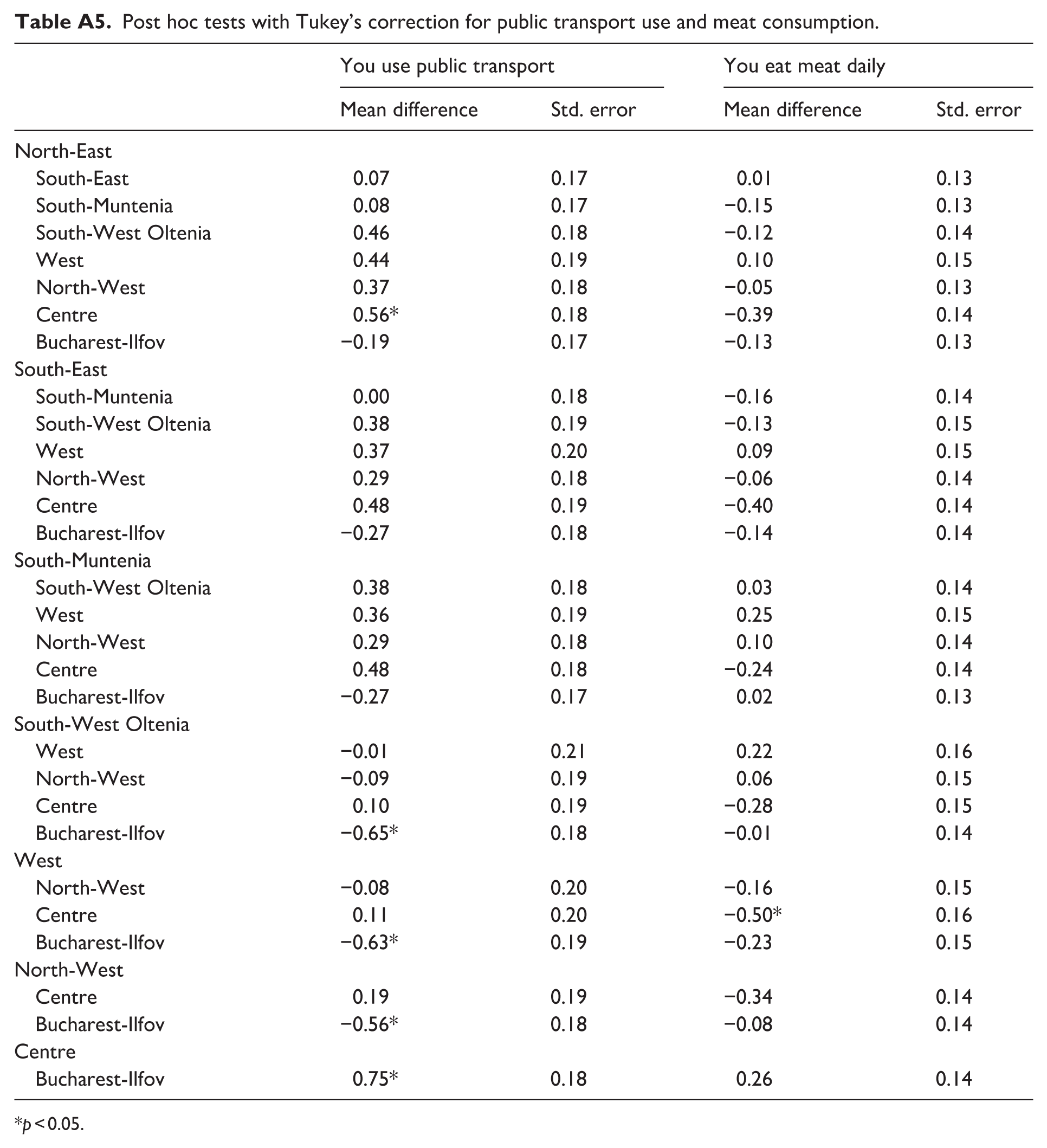
Table 2 highlights how some CBs have no variance across regions or rural/urban areas, such as producing little household waste and buying locally. The rural/urban typology used for this study is based on the Romanian national classification. An interaction effect was observed for resource consumption (water and electricity) and waste sorting (paper, glass and plastic), with simple main effects noticed for public transport use and daily meat consumption. Interaction effects will be studied through a follow-up main effect analysis (Table 3), while direct effects will be investigated by using post hoc tests with Tukey’s correction (Table A5).
Two-way factorial ANOVAs of CBs by region and rural/urban typology.
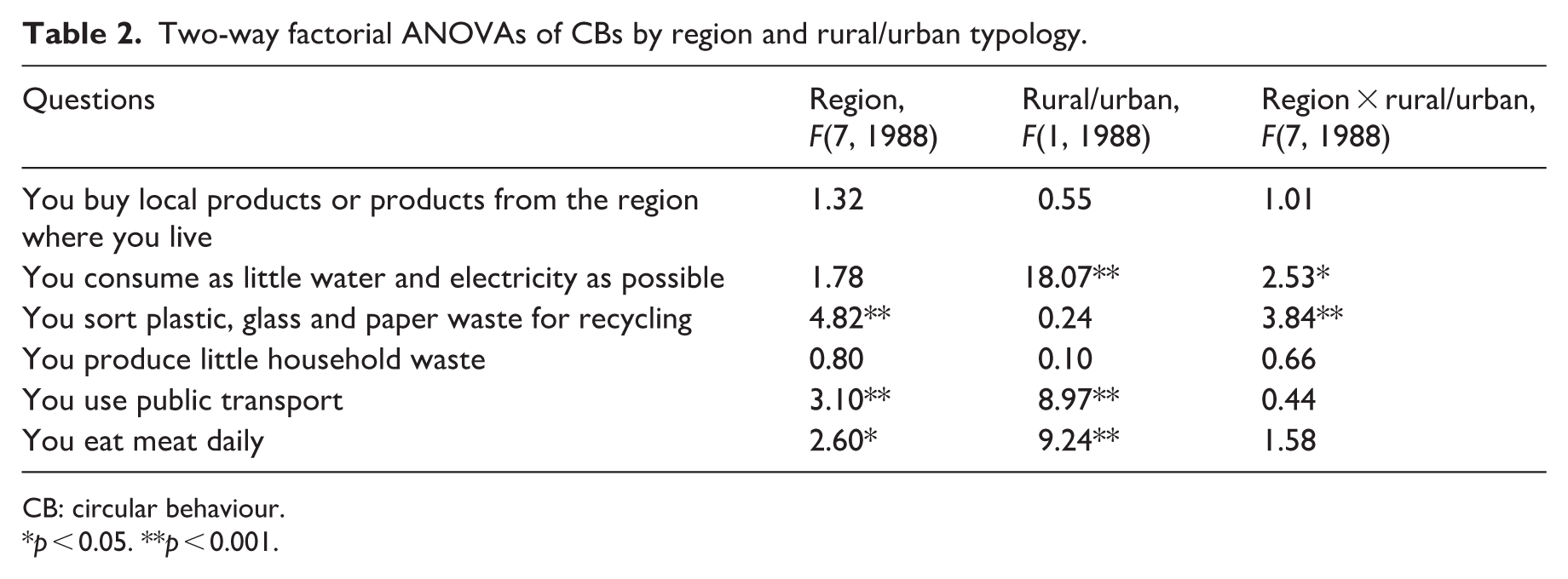
CB: circular behaviour.
p < 0.05. **p < 0.001.
Main effect analysis of regions and rural/urban typology on resource consumption and recycling.
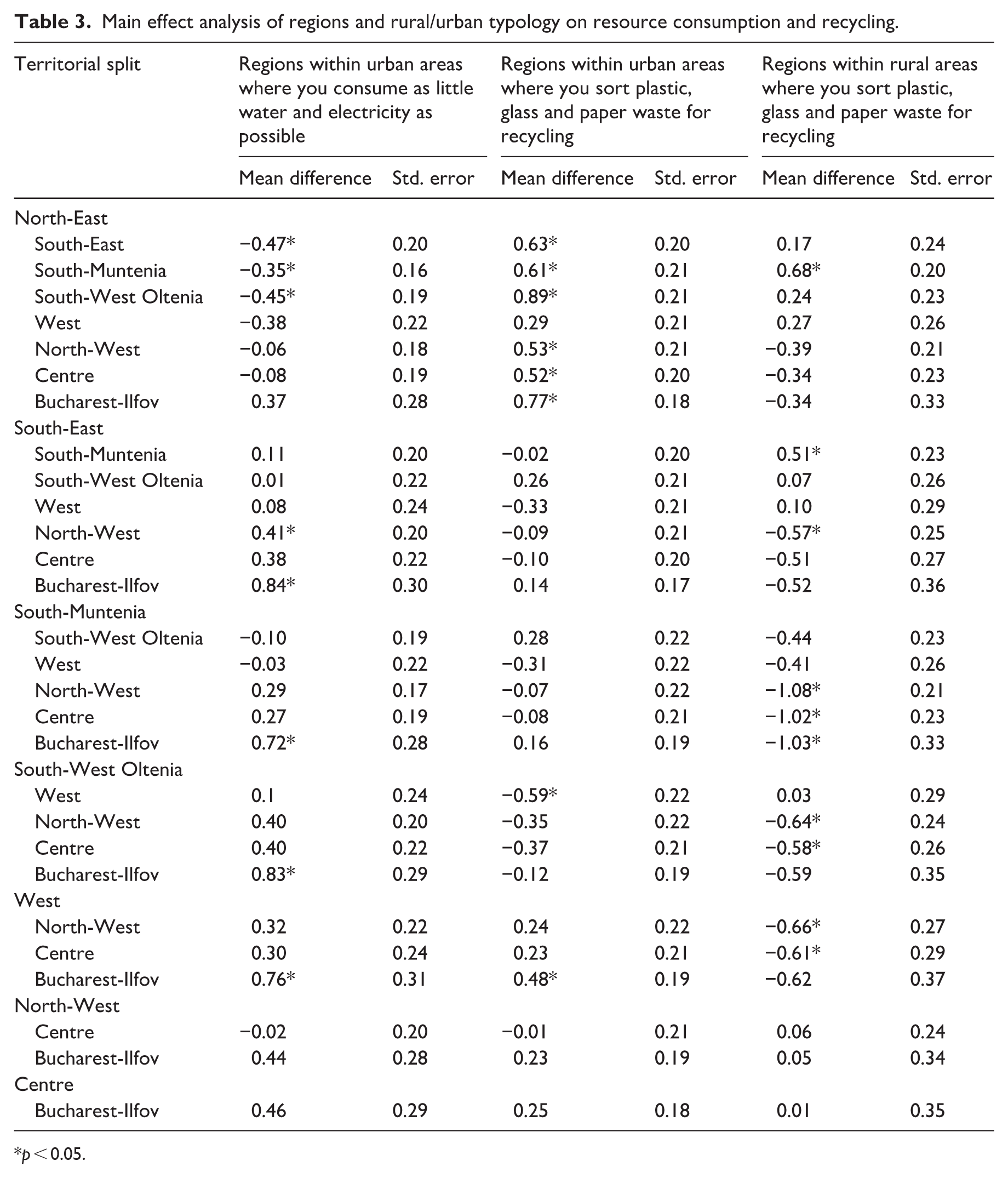
p < 0.05.
As highlighted in Table 3, the interaction effect for ‘You consume as little water and electricity as possible’ revealed a simple main effect from regions within rural areas (F(7, 1988) = 2.61, p < 0.01), with the North-East region displaying significantly lower scores than the South-East, South-Muntenia and South-West Oltenia regions. For ‘You sort plastic, glass and paper waste for recycling’, two simple main effects were revealed for both urban (F(7, 1988) = 3.95, p < 0.01) and rural (F(7, 1988) = 5.33, p < 0.01) areas, with more urban recycling in the North-East region compared with the South-East, South-Muntenia, South-West Oltenia, North-West, Centre or Bucharest Ilfov regions.
Direct effects were observed for both region and rural/urban, noticed in the case of public transport use and meat consumption. More specifically, as seen in Table A5, public transport is used more frequently in Bucharest-Ilfov than in the South-West Oltenia or West regions.
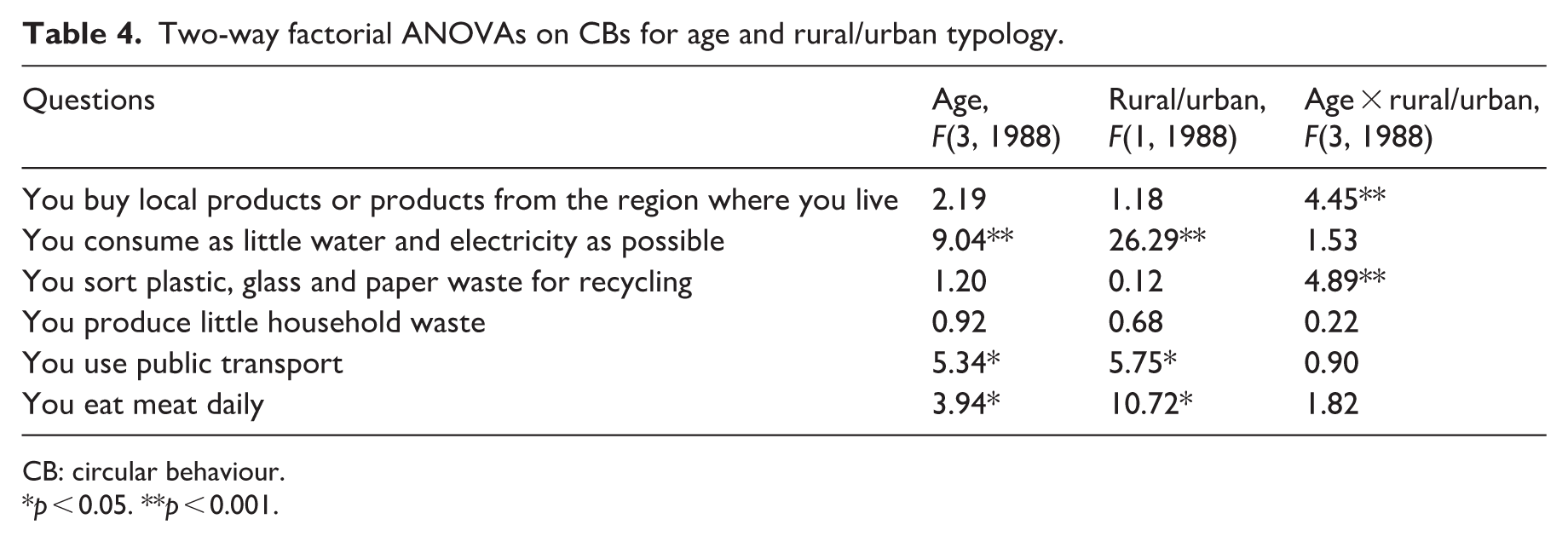
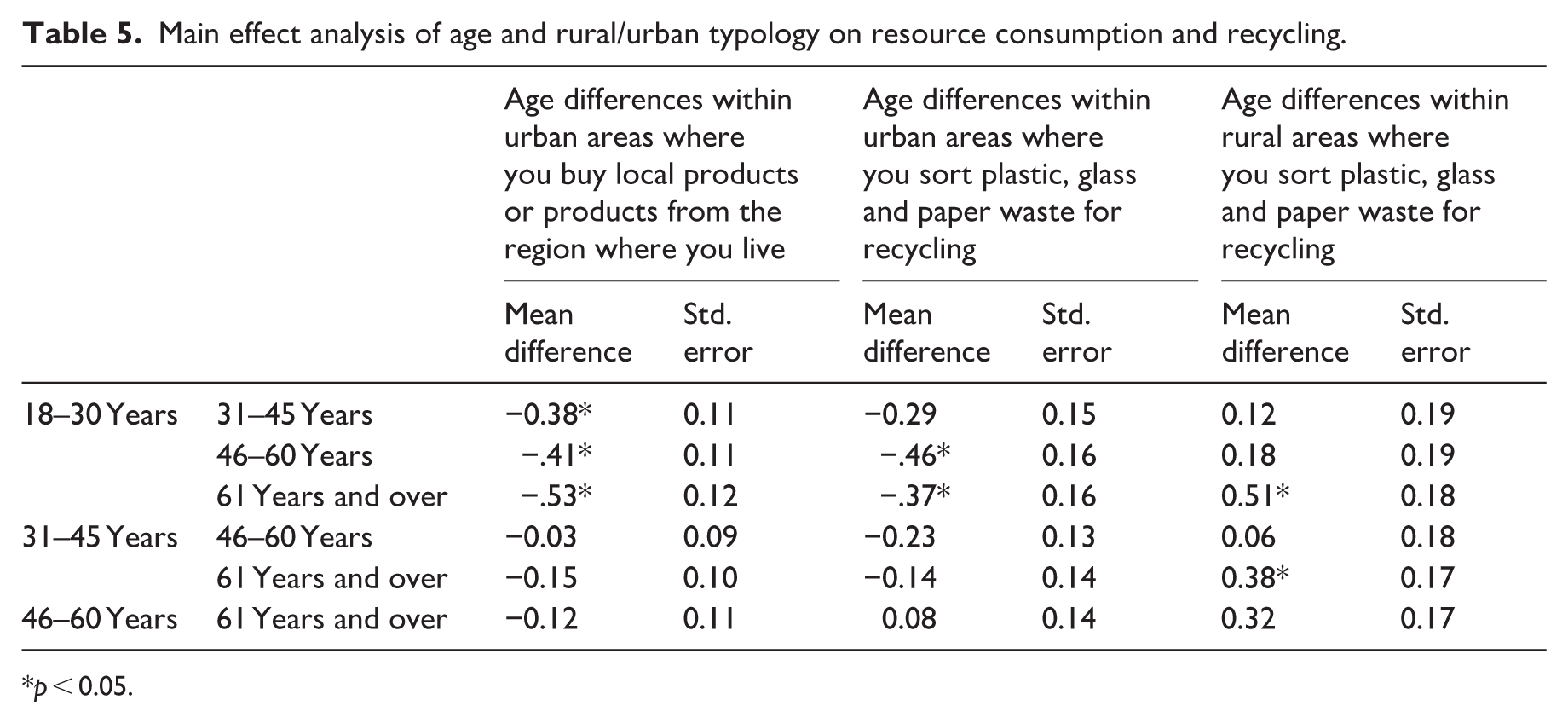
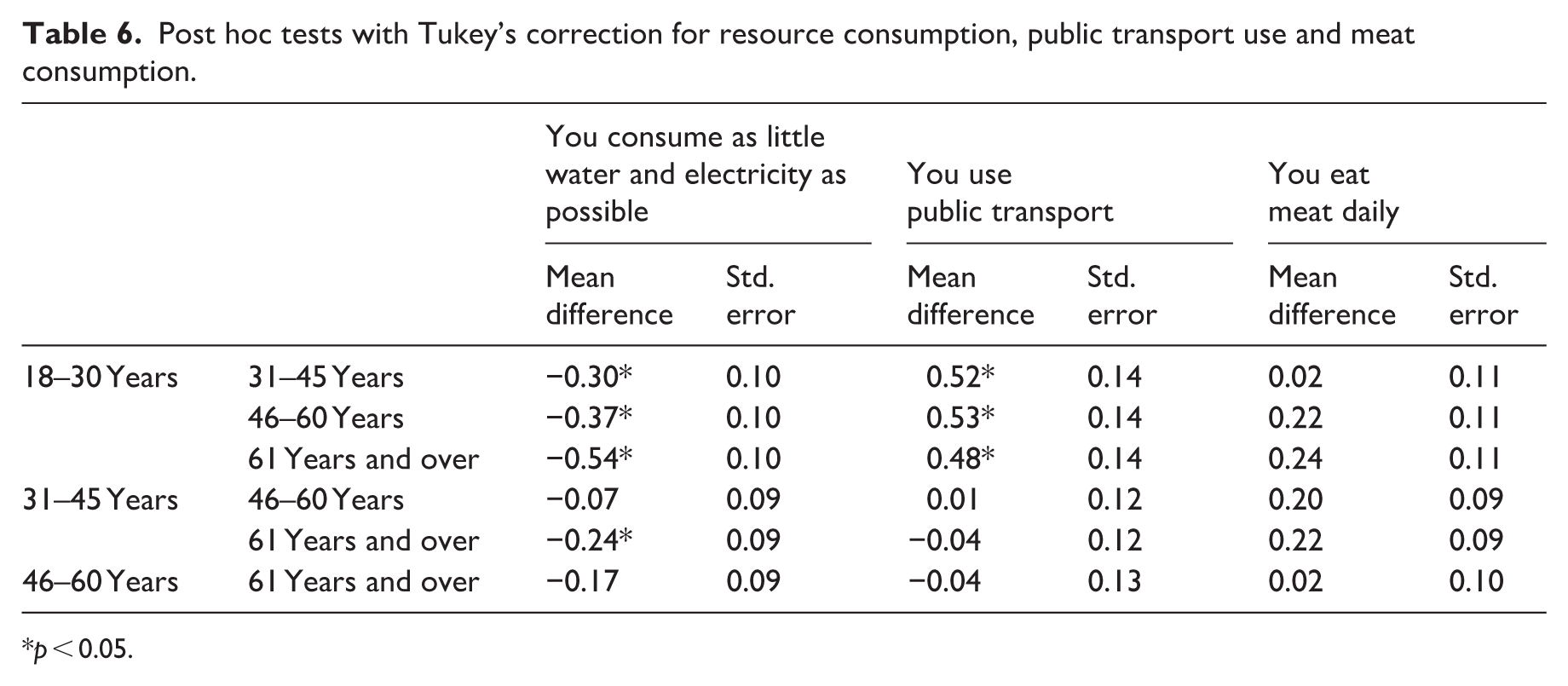
Going forward, the territorial analysis was fulfilled with an analysis on age and urban/rural impact on CBs. Table 4 highlights some CBs that have no significant differences across age or rural/urban split, such as producing little household waste, an indicator that proves to be little impacted by each variable of interest (region, rural/urban split or age). An interaction effect was observed for buying local products and sorting household waste, while simple main effects were observed for public transport use, resource use (water and electricity) and meat consumption. The interaction effects will be studied through a follow-up main effect analysis (Table 5), while the direct effects will be investigated by using post hoc tests with Tukey’s correction (Table 6).
Two-way factorial ANOVAs on CBs for age and rural/urban typology.
CB: circular behaviour.
p < 0.05. **p < 0.001.
Main effect analysis of age and rural/urban typology on resource consumption and recycling.
p < 0.05.
Post hoc tests with Tukey’s correction for resource consumption, public transport use and meat consumption.
p < 0.05.
Furthermore, as highlighted in Table 5, the interaction effect for ‘You buy local products or products from the region where you live’ revealed a simple main effect of age within urban areas (F(3, 1988) = 6.94, p < 0.01), with younger participants reporting lower scores compared with all other age groups. For ‘You sort plastic, glass and paper waste for recycling’, two simple main effects were revealed for urban areas (F(3, 1988) = 3.21, p = 0.02), where younger participants registered lower scores on this behaviour than those ages 46 and older, while in rural areas (F(3, 1988) = 3.16, p < 0.02), participants ages 61 and older registered lower scores than those ages 18–30 and 31–45.
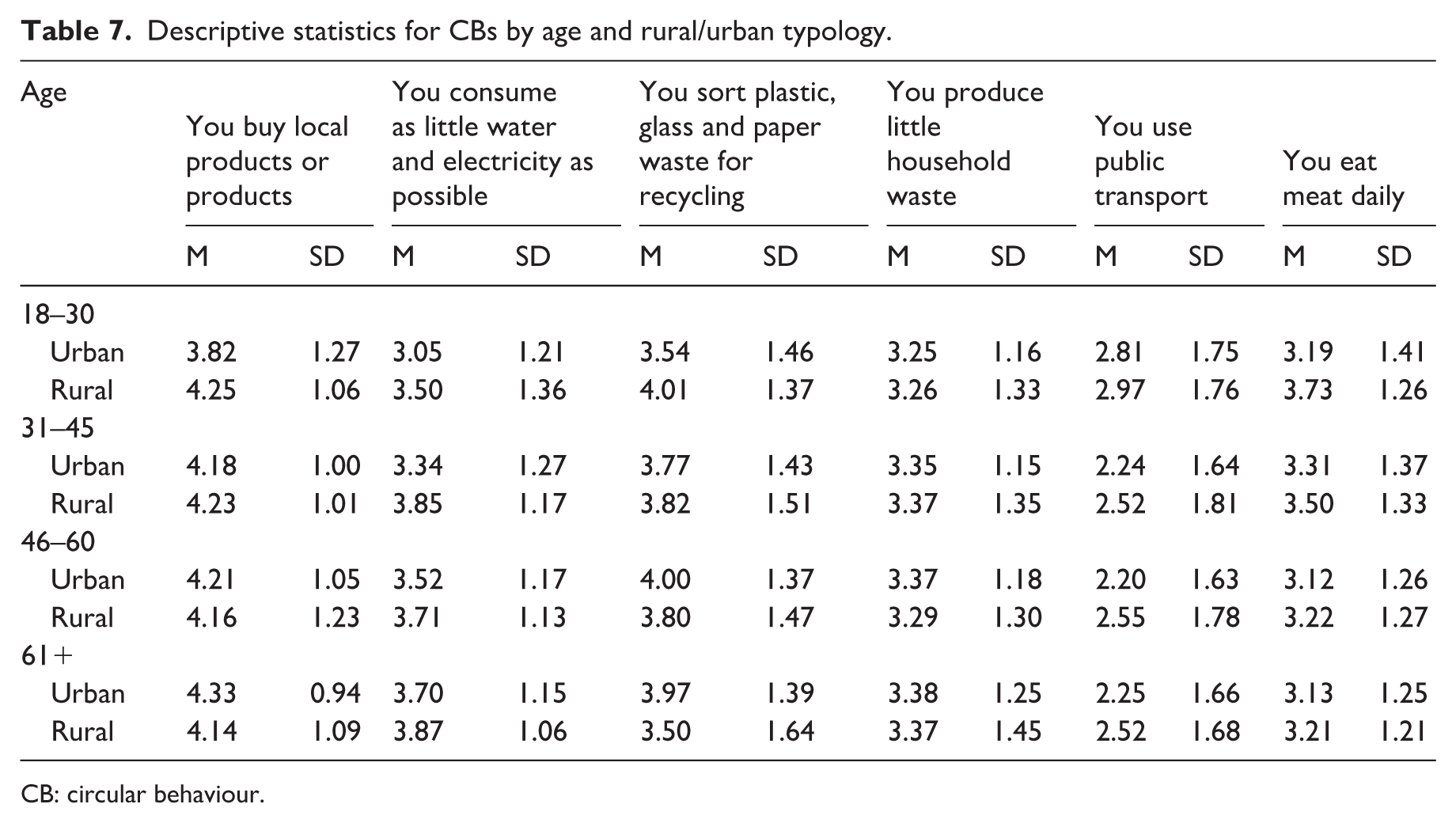
Finally, as an in-depth analysis was conducted on key variables (observed in Tables 6 and 7), younger participants registered lower scores than all other age groups for resource consumption (water and electricity); however, they registered greater use of public transport.
Descriptive statistics for CBs by age and rural/urban typology.
CB: circular behaviour.
Discussion, implications and conclusions
Discussion and contributions
This study clarified how CBs relate to resilience, with explicit attention paid to territorial context. The evidence supports a stable positive association between several CBs and perceived resilience at both the individual and community levels. This result aligns with a research agenda that links CE practices to resilience within organisations and societies (Kennedy and Linnenluecke, 2022), and it remains consistent with established perspectives that define resilience through anticipation, coping resources and adaptive capacity (Masten, 2014; Walker and Salt, 2012). However, the paper’s core value does not lie in the general claim that ‘circularity correlates with resilience’, but rather in the mechanisms suggested by the configuration of associations across behaviours, places and demographic groups, and in these mechanisms’ implications for regional resilience theory (Figure 2).
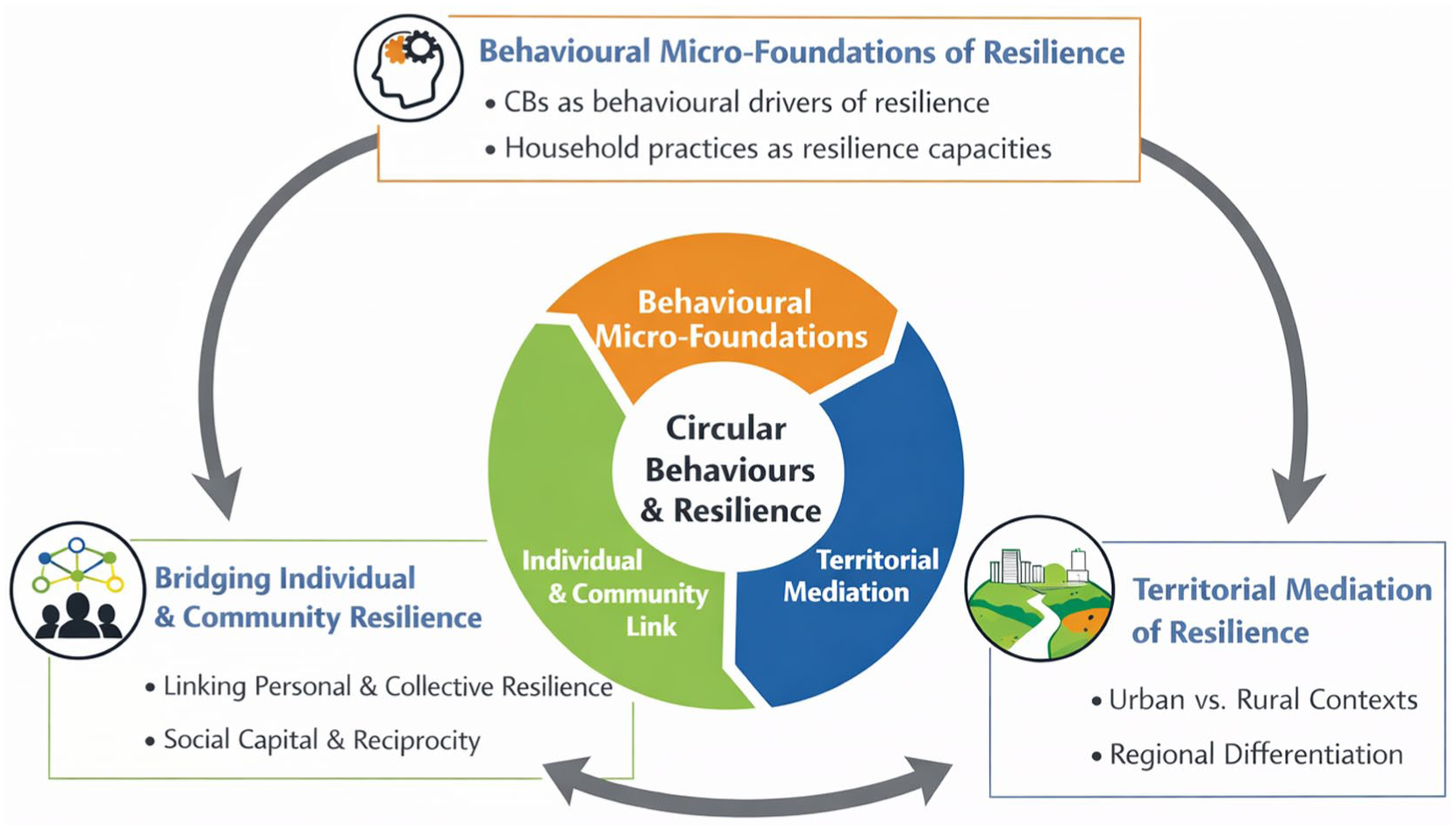
From circular behaviours to resilience: behavioural micro-foundations and territorial mediation.
One theoretical contribution concerns the position of behaviour within regional resilience frameworks. Regional resilience research often privileges structural and meso-level drivers, such as sectoral composition, innovation, institutional capacity and infrastructure. Behaviour tends to appear as a downstream outcome of policy and context. Our results support a complementary reading: CBs operate as behavioural micro-foundations of resilience that interact with structural conditions, rather than merely reflect them. This claim fits the behavioural turn in CE research, which treats the household as a core locus of transition because everyday practices shape resource loops and waste flows (Colley et al., 2024; Ghisellini et al., 2016; Kirchherr et al., 2017). It also resonates with the view that the CE depends on a broad repertoire of user practices far beyond recycling, spanning the acquisition, use and passing-on phases (Macklin and Kaufman, 2024). In our data, CBs that concern sorting, waste prevention, resource moderation and local purchasing relate to resilience indicators at the personal and community levels. This pattern suggests that resilience capacity can arise from repeated practices that support preparedness, resource stewardship and everyday problem-solving.
A second theoretical contribution addresses the articulation between individual and collective levels of resilience, which too often remain separated across disciplinary lines. Our design combines individual resilience indicators (resources to cope and anticipation of future difficulties) and community resilience indicators (preparedness, mutual support and reliance on others). The positive association between CBs and both levels supports an integrated account: CBs can form a practical bridge between psychological resilience and place-based resilience. This bridge speaks directly to literature that defines community resilience through social capital, reciprocity and collective efficacy (Chaney, 2012; Imperiale and Vanclay, 2021; Norris et al., 2008; Sherrieb et al., 2012). It also connects with CE perspectives that emphasise the role of collective initiatives – such as repair cafés, tool libraries and cooperative schemes – in the formation of local capacities (Berry and Isenhour, 2019; Howard et al., 2022). Even though our empirical design does not test specific collective initiatives, the link between CBs and community resilience suggests that everyday circular routines can align with core social mechanisms that underpin resilience.
A third, a central contribution concerns territorial mediation, which speaks directly to regional resilience scholarship. The rural/urban split does not represent a descriptive add-on; it reveals that CBs can follow distinct logics across places. Local purchasing correlates strongly with resilience, yet this relationship remains clearer in urban contexts. In rural contexts, the strongest resilience signal relates to moderated consumption of water and electricity, which plausibly reflects exposure to scarcity and constraint, rather than a stable circular preference. This distinction aligns with social practice accounts that treat behaviour as embedded in infrastructures, routines and socio-technical contexts (Shove, 2010). It also aligns with extant CE research that warns against a narrow individual-choice framing and stresses barriers such as access, convenience and affordability (Camacho-Otero et al., 2021; Grafström and Aasma, 2021; Muranko et al., 2018). As for regional resilience theory, the implication is direct: behaviour constitutes place-embedded capacity, yet the same behaviour can express different mechanisms across territories. In an urban context, local purchasing and sorting can reflect access to services, institutional trust and capacity for routine compliance. In a rural or resource-stressed context, resource moderation can reflect an adaptive response to constraint. Therefore, a resilience framework that integrates circularity needs a territorial interpretation of CBs, rather than a universal reading.
Regional differences in water and electricity moderation reinforce this point. Higher engagement in southern regions, particularly South-West Oltenia, fits resilience perspectives that distinguish absorptive and adaptive capacities (Keck and Sakdapolrak, 2013; Manca et al., 2017). Scarcity can trigger adjustments that resemble adaptation, rather than pro-environmental preference. This interpretation also aligns with research on CE barriers, which has often shown that adoption depends on constraints and enabling conditions, rather than on attitudes alone (Camacho-Otero et al., 2021; Grafström and Aasma, 2021). Conversely, elevated recycling scores in the North-East appear consistent with institutional initiatives, yet the concentration of this advantage in urban areas suggests that regional averages can conceal internal territorial divides – a classic challenge for regional resilience research: uneven service provision produces uneven resilience-relevant capacity inside the same region. The result echoes evidence from CEE nations that indicates CBs track socioeconomic position and infrastructure access (Szczygieł, 2020,2021). It also supports the broader CE argument that uptake depends on interaction between dispositions and policy architectures (Muranko et al., 2018; OECD, 2020).
Another contribution concerns CBs’ structure as a repertoire. The results indicate a cascading pattern: respondents who reported one CB, such as sorting, often reported other CBs, aligning with behavioural models that have treated circular practices as an interconnected set, rather than isolated acts (Colley et al., 2024; Muranko et al., 2018). It also matches CE syntheses that stress the system logic of ‘R-terms’ and the need to move beyond a narrow recycling frame (Kirchherr et al., 2017; Reike et al., 2018). As for regional resilience scholarship, the repertoire structure matters because it signals flexibility and redundancy in household responses, which remain core properties of resilient systems (Walker and Salt, 2012). Where policy and infrastructure support exist, a repertoire can offer alternative pathways under disruption and can reduce dependence on single points of failure in resource access.
Implications
The results suggest that policy should treat CBs as capabilities shaped by place-specific opportunity sets, rather than as moral preferences that policy can ‘activate’ through persuasion alone. This framing aligns with extant CE research that emphasises how adoption depends on service availability, repair provision, price structures and information frictions (Camacho-Otero et al., 2021; Grafström and Aasma, 2021). It also fits calls for behavioural research that keeps people and contexts at the forefront, with attention paid to feasibility conditions and lived routines (Colley et al., 2024). From this perspective, a resilience-oriented circular strategy requires a shift from generic awareness narratives and towards policy packages that expand what households can do realistically in everyday settings under constraints.
A second implication concerns circular policy content itself. Resilience-relevant practices in our evidence extend well beyond recycling. Waste prevention and moderation of resource use evince strong associations with both individual and community resilience. This supports policy portfolios that place greater weight on ‘reduce’ and ‘rethink’, alongside recycling, in line with conceptual work that differentiates circular strategies across resource-value retention options (Bourdin et al., 2024; Bourdin et al., 2025; Kirchherr et al., 2017; Reike et al., 2018), with guidance that stresses enabling conditions for a broader set of circular practices (OECD, 2020). It also resonates with research that links CE practices to resilience in firms and local systems, where resource efficiency and local loops can buffer disruption and reduce exposure to volatile external inputs (Howard et al., 2022; Karman et al., 2024; Pascariu et al., 2021; Perramon et al., 2024). For policymakers, this means that a resilience lens can justify a broader circular agenda because it ties everyday resource stewardship to shock absorption and adaptive capacity.
Territorial differentiation then becomes the central operational implication. The rural/urban contrasts demonstrate that similar behaviours can reflect distinct mechanisms across regions. In urban contexts, the link between resilience and local purchasing or sorting suggests a policy lever that sits in service quality, convenience, institutional credibility and routine stability. In rural and resource-stressed contexts, the strong association between resilience and moderation of water and electricity use suggests a policy lever that sits in security and affordability, with targeted support for efficiency upgrades, fair tariffs and local advisory provision. This reading aligns with practice-based perspectives that locate behaviour with infrastructures, routines and socio-technical contexts (Shove, 2010), and with place-based accounts of circular systems that stress territorial conditions as determinants of feasibility and uptake (Howard et al., 2022). It also implies that ‘one-size-fits-all’ circular programmes can miss the resilience mechanism that is dominant in a given territory. Another corollary concerns intra-regional divides. The North-East pattern indicates that regional performance can reflect an ‘urban effect’, while rural areas remain less served. This calls for paying explicit attention to rural logistics, services’ proximity and collection infrastructures’ reliability because uneven provision can translate into uneven resilience capacity within the same region, a pattern consistent with evidence from CEE nations on the role of infrastructure and socioeconomic position in circular adoption (Szczygieł, 2020,2021).
Finally, the demographic profile suggests that circular policy and resilience policy can gain precision through life-course sensitivity. Higher engagement in some high-impact practices among middle-aged and older cohorts, contrasted with stronger public transport use and resource moderation among younger cohorts, implies that circular engagement relates to purchasing power, housing conditions and ties to place. Policy design can reflect these differences without slipping into stereotypes. For younger cohorts, interventions that strengthen competence, perceived control and durable commitment appear more relevant than reliance on constraint-driven practices. For working-age cohorts, interventions that leverage purchasing power and local embeddedness can support local loops and strengthen community capacity. This implication remains consistent with the broader insight that CBs depend on interaction between dispositions and enabling structures (Colley et al., 2024; Muranko et al., 2018).
Conclusions
This study found that CBs are positively associated with both individual and community resilience in Romania, yet the main focus concerns the link’s territorial and conceptual meaning. The paper advances regional resilience scholarship in three ways. It identifies CBs as empirically grounded behavioural micro-foundations of resilience that complement structural explanations that dominate regional resilience research. It also provides evidence that links individual and community levels through a shared behavioural domain that strengthens the conceptual bridge between psychological resilience (Masten, 2014) and community resilience rooted in social capital and collective efficacy (Imperiale and Vanclay, 2021; Norris et al., 2008). It also demonstrates territorial mediation of behavioural–resilience relations across rural and urban contexts, and across regions, supporting a place-based interpretation of circularity and resilience (Shove, 2010; Szczygieł, 2020,2021).
The findings also clarify that circularity is not reduced to recycling. Waste prevention and resource moderation indicate strong links with resilience, supporting a broader view of CBs that aligns with CE frameworks that stress multiple resource-value retention strategies (Kirchherr et al., 2017; Reike et al., 2018), as well as with literature that calls for behavioural research that covers the full spectrum of user practices (Colley et al., 2024; Macklin and Kaufman, 2024). The clustering of CBs suggests repertoire effects, which matter in terms of resilience because flexibility and redundancy remain core attributes of resilient systems (Walker and Salt, 2012).
However, the study also has limitations that merit discussion. The cross-sectional design does not allow for causal inference, and self-reported measures can introduce reporting bias. Future research can strengthen inference through longitudinal designs, repeated surveys that capture responses to shocks and mixed-methods approaches that clarify mechanisms that connect CBs and resilience. A finer spatial lens can also document intra-regional divides in service access and institutional capacity that shape circular repertoires’ feasibility. These steps can deepen the behavioural foundation of regional resilience research and sharpen policy relevance for place-sensitive CE strategies.
Footnotes
Appendix A
Post hoc tests with Tukey’s correction for public transport use and meat consumption.
| You use public transport | You eat meat daily | |||
|---|---|---|---|---|
| Mean difference | Std. error | Mean difference | Std. error | |
| North-East | ||||
| South-East | 0.07 | 0.17 | 0.01 | 0.13 |
| South-Muntenia | 0.08 | 0.17 | −0.15 | 0.13 |
| South-West Oltenia | 0.46 | 0.18 | −0.12 | 0.14 |
| West | 0.44 | 0.19 | 0.10 | 0.15 |
| North-West | 0.37 | 0.18 | −0.05 | 0.13 |
| Centre | 0.56* | 0.18 | −0.39 | 0.14 |
| Bucharest-Ilfov | −0.19 | 0.17 | −0.13 | 0.13 |
| South-East | ||||
| South-Muntenia | 0.00 | 0.18 | −0.16 | 0.14 |
| South-West Oltenia | 0.38 | 0.19 | −0.13 | 0.15 |
| West | 0.37 | 0.20 | 0.09 | 0.15 |
| North-West | 0.29 | 0.18 | −0.06 | 0.14 |
| Centre | 0.48 | 0.19 | −0.40 | 0.14 |
| Bucharest-Ilfov | −0.27 | 0.18 | −0.14 | 0.14 |
| South-Muntenia | ||||
| South-West Oltenia | 0.38 | 0.18 | 0.03 | 0.14 |
| West | 0.36 | 0.19 | 0.25 | 0.15 |
| North-West | 0.29 | 0.18 | 0.10 | 0.14 |
| Centre | 0.48 | 0.18 | −0.24 | 0.14 |
| Bucharest-Ilfov | −0.27 | 0.17 | 0.02 | 0.13 |
| South-West Oltenia | ||||
| West | −0.01 | 0.21 | 0.22 | 0.16 |
| North-West | −0.09 | 0.19 | 0.06 | 0.15 |
| Centre | 0.10 | 0.19 | −0.28 | 0.15 |
| Bucharest-Ilfov | −0.65* | 0.18 | −0.01 | 0.14 |
| West | ||||
| North-West | −0.08 | 0.20 | −0.16 | 0.15 |
| Centre | 0.11 | 0.20 | −0.50* | 0.16 |
| Bucharest-Ilfov | −0.63* | 0.19 | −0.23 | 0.15 |
| North-West | ||||
| Centre | 0.19 | 0.19 | −0.34 | 0.14 |
| Bucharest-Ilfov | −0.56* | 0.18 | −0.08 | 0.14 |
| Centre | ||||
| Bucharest-Ilfov | 0.75* | 0.18 | 0.26 | 0.14 |
p < 0.05.
Ethical considerations
Ethical approval was not required.
Consent to participate
Not applicable.
Consent for publication
Not applicable.

Data availability statement
Data available on UAIC internal servers, available upon request.
Declaration of conflicting interests
The authors declared no potential conflicts of interest with respect to the research, authorship, and/or publication of this article.
Funding
The authors disclosed receipt of the following financial support for the research, authorship, and/or publication of this article: This work was supported by the project ‘SAGES: Spatial Analysis of Growth, Environment and Sustainable Well-being’, project code CF 20/27.07.2023, financed through National Recovery and Resilience Plan for Romania within project call – PNRR-III-C9-2023-I8 PNRR/2023/Component 9/Investment 8. [Finanțat de Uniunea Europeană – NextGenerationEU].