



Abstract
The packaging industry is undergoing a significant transformation, driven by the pressing need for sustainable and eco-friendly solutions. Bioplastics have emerged as a promising alternative to traditional plastics, offering superior functionalities and environmental benefits for various applications, especially in food and pharmaceutical sector. This review explores the impact of bioplastics on packaging, focusing on their enhanced properties, sustainability and compatibility with stringent regulatory requirements. By extending the shelf life of food and pharmaceutical products, this improved barrier performance lowers waste and ensures product safety. Additionally, bioplastics have good biodegradability; in natural settings, they disintegrate into innocuous molecules, reducing their environmental impact. Reducing carbon emissions is another benefit of using bioplastics in packaging. Bioplastics are made with less greenhouse gas emissions than ordinary plastics, which help with the worldwide effort to fight climate change. Bioplastics may also be recycled and used again, which helps to conserve natural resources and cut down on waste. Moreover, bioplastics can be engineered to meet particular regulatory requirements, guaranteeing their appropriateness for a range of uses. Bioplastics have many benefits, however there are obstacles in the way of their broad use. These include the requirement for specialized recycling facilities, restricted supply, and increased production costs. However, it is anticipated that these issues will be resolved in the near future due to developments in bioplastic technology and rising demand for environmentally friendly alternatives. Bioplastics are expected to have a big impact on how people live in the future as efforts are made to lessen global warming and encourage sustainable habits.
Introduction
Sources, applications and related concerns associated with use of various plastics.
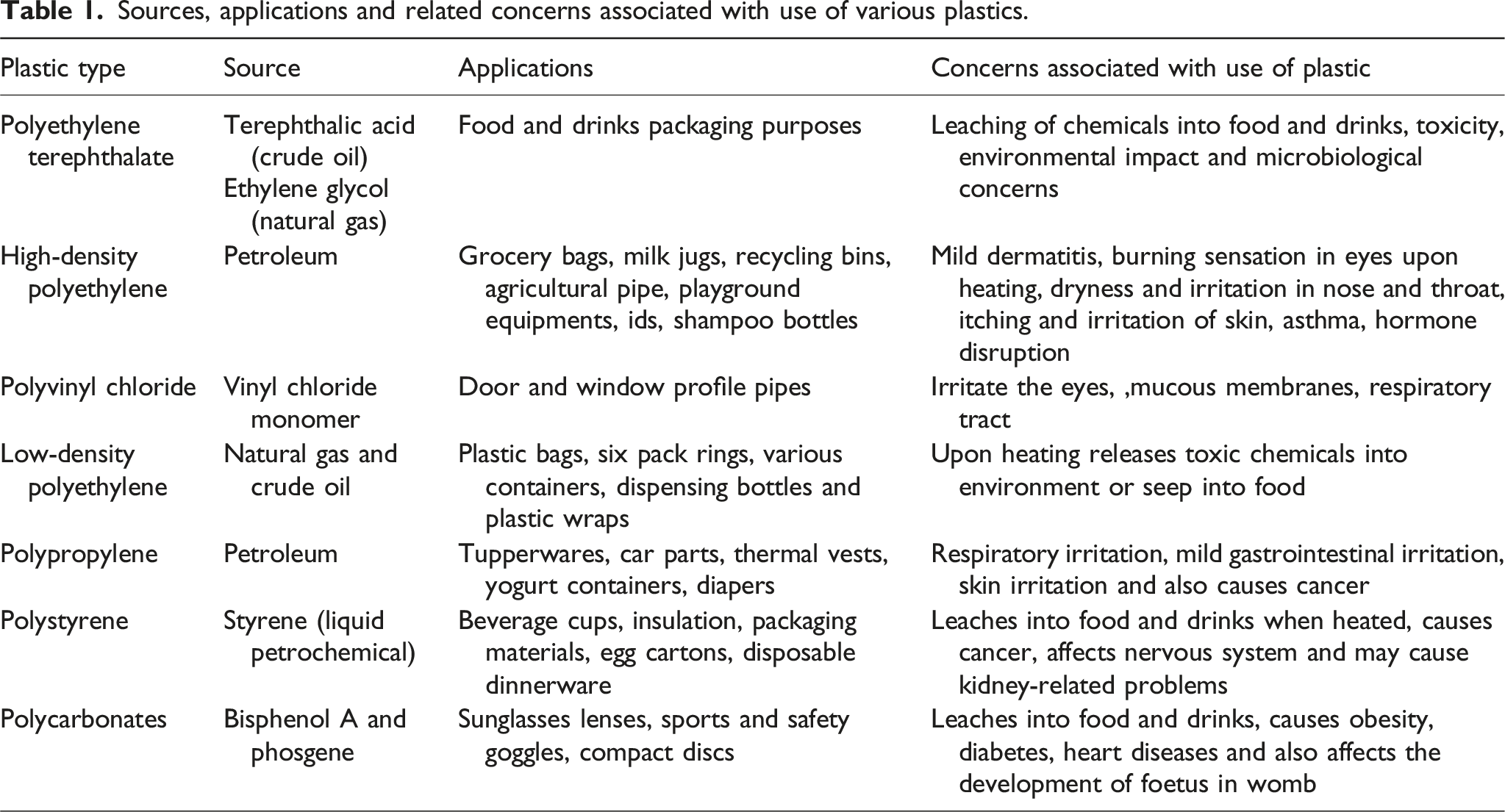
Plastics degradation leads to production of microplastics and nanoplastics that can easily cross the biological barriers and accumulates in food chain 9 Microplastics, due to its smaller size are invading our food chain and have been found in the placentas of developing children for the first time, which is quite concerning. They have potential to enter the food chain through aquatic species, animals and humans.10,11 Thus, researchers are motivated to contribute to plastic research in order to create ecologically friendly and biodegradable materials like bioplastics by the current environmental challenges, as bioplastics have emerged as a promising solution to these challenges.The global market size of bioplastics and biopolymers was USD 11.5 billion in 2022 and is projected to reach USD 27.3 billion by 2027 at a CAGR of 18.9%. 12 Bioplastics are produced from renewable resources like sugarcane or cornstarch. Due to its unique characteristics such as biodegradability, less time for production and lowering the greenhouse gas emissions to reduce environmental pollution, bioplastics are highlighted a lot for further innovation and applications. 13
Bioplastics: A sustainable alternative
Biodegradable or biological materials, such as corn starch, food waste, or even agricultural leftovers, are used to make bioplastics. Plastic made from petroleum, plastic made from biomass decomposes more easily in the environment.
14
In comparison, plastics are produced using crude oil or natural gases and hydrocarbons are extracted from these sources.
15
The hydrocarbons are further polymerised using monomers, catalysts and additives such as plasticizers, stabilizers and colorants.
16
The next step is to process the liquid or semi-solids into extrusion and incorporation into specific moulds, cooled and then the product is preceded for finishing, packaging and distribution. The bioplastics are obtained from plant starch, corn, sugarcane or other.
17
In some cases, microorganisms like bacteria or yeast are used to ferment sugars from plant sources into lactic acid or other bio-based monomer and these bio-based monomers can be extracted directly from plants. Further, it undergoes polymerisation, procession, cooling and finishing process.
18
Figure 1 depicts an overview of plastic and bioplastics production. The creation and widespread use of bioplastics mark a significant step toward minimizing our environmental impact and promoting a more ecologically conscious approach to materials and packaging at a time when the world is increasingly looking for sustainable alternatives. A suitable food packaging plastic is expected to keep its stored product with an acceptable moisture content that prevents microbial growth and spoilage.The food packaging is progressing fast in order to meet the world need for environmentally friendly and sustainable packaging material. These attempts are focused in various fronts which includes (i) improving the performance of natural biodegradable polymers using physical, chemical and enzymatic treatments, (ii) synthesizing new biodegradable polymers, improving the polymer characteristics, and scaling up the processes, (iii) improving the production of bio-based conventional polymers, and (iv) searching for new renewable sources. Various disposal options for both biodegradable and non-biodegradable waste.
Bioplastics besides its advantages such as renewable energy sources, biodegradable or compostable and lower toxicity, has several disadvantages like limited availability, potential durability issues and processing challenges.
19
Bioplastics could be classified into biodegradable bioplastics and non-biodegradable bioplastics. Biodegradable bioplastics are bioresources derived such as poly(lactic acid), poly(hydroxyalkanoate), bio-based poly(butylenes succinate). On the other hand, non-biodegradable bioplastics include bio-based poly(ethylene) (Bio-PE), bio-based poly(propylene) (Bio-PP), and bio-based poly(ethylene terephthalate) (Bio-PET), which are non-biodegradable, although they are derived from renewable resources.
20
The detailed information of bioplastics is discussed below. The various sources of obtaining bioplastics includes biotechnology, biomass products and from microorganism; also shown in Figure 2 diagrammatically. Bacteria’s such as Pseudomonas species is responsible for production of polyhydroxyalkonates and Streptomyces sp. is responsible for synthesizing cellulose, chitin and pullulan via biosynthesis, fermentation, excretion or through genetic engineering. In biosynthesis, microbes can create proteins by linking sugar molecules to form polysaccharides or by polymerizing amino acids into proteins via ribosomes.
21
Fermentation involves the conversion of a substrate by bacteria into monomers like lactic acid or polymers like PHAs when oxygen is present or absent. While excreation, microorganisms also produces extracellular polymeric substances such as cellulose, curdlan, alginate. Polyhydroxyalkonates are one of the most studies bioplastics that are made from bacteria. These polymers are created when the microbe is subjected to stressors in the environment, such as low nutrition, changes in pH and temperature and a lack of electron donors or acceptor, among other things. It is synthesized and stored in the form of granules in the cytoplasm which can be later extracted through cell lysis.
22
Waste hierarchy established for prevention of waste by management.
Strain selection, genetic engineering, substrate preparation, fermentation, synthesis, harvesting, recovery, purification, refinement, formulation, and processing are all steps in the multistep process that goes into making bioplastics from bacteria. To introduce the microbe with the most satisfactory enzymatic activity in terms of substrate concentration and media at which it is immersed to manufacture the polymer, strain selection is crucial. The practice of genetic engineering often involves inserting a certain gene into the bacteria to enhance its ability to produce polymers by altering certain metabolic pathways. The preparation and choice of the substrate can significantly impact the characteristics and manufacturing efficiency of the polymer.
23
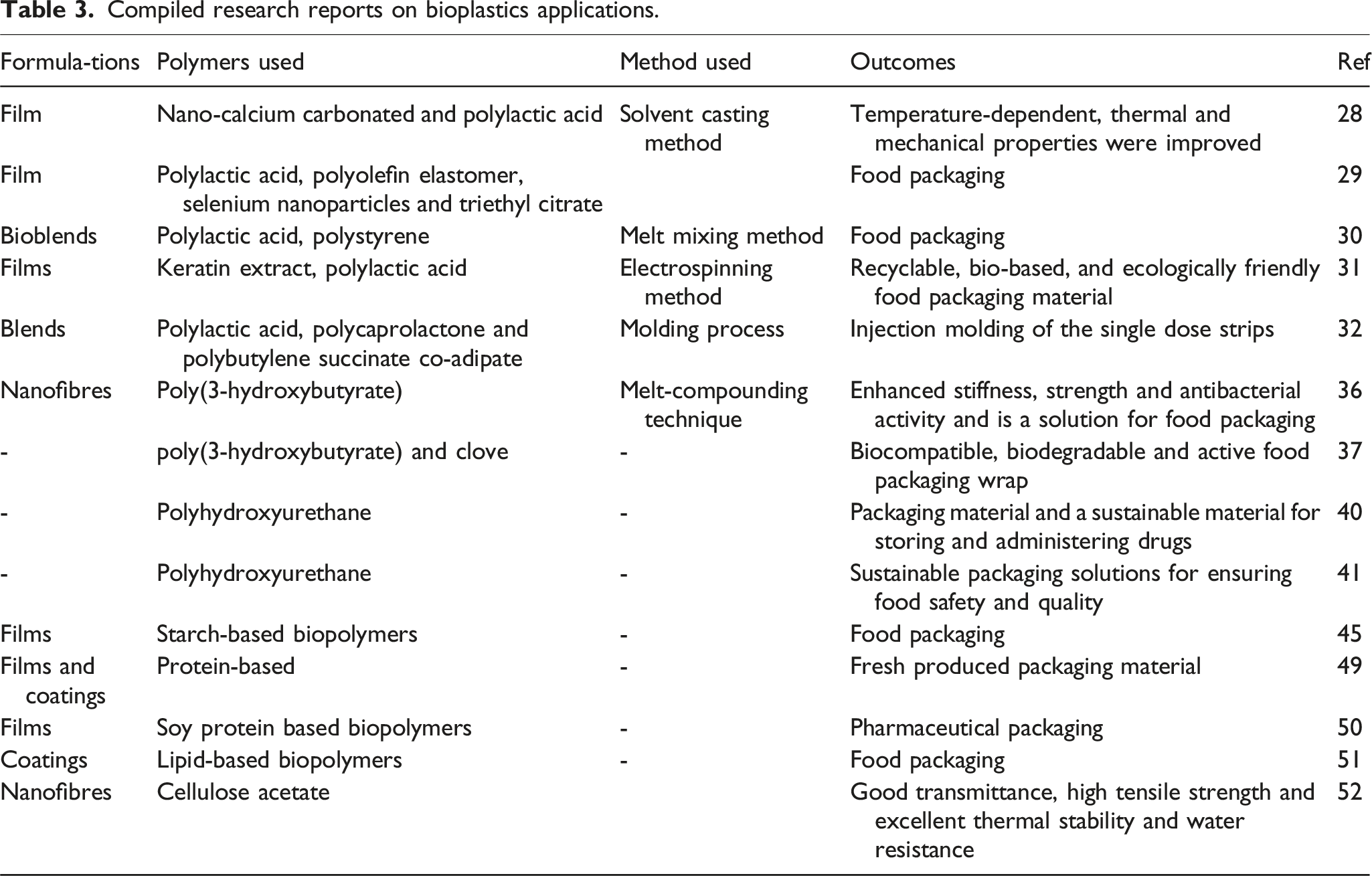
Among many other things, some examples are lignocellulosic biomass, sucrose, glucose, and glycerol. Bacteria should ideally consume a low-value bioproduct or waste as it results in a more convenient and sustainable procedure. One of the biological processes that bacteria use to create the polymer or the monomer that is then utilized in polymerization is fermentation. The pH, temperature, stirring, nutrients, oxygen concentrations, and other factors can all have a significant impact on this stage. Depending on the substrate used, the metabolic process may alter, producing a distinct kind of biopolymer. The biopolymer is extracted and purified using filtration, centrifugation, chromatography, or other purification methods from the fermentation mixture and byproducts during the harvesting, recovery, and purification procedures. Once the biopolymer is produced, it can be processed using a variety of methods, including injection molding, melt extrusion, solvent casting, and 3D printing, to produce the polymer in the required shape.24,25 Researchers produced bioplastic films from a combination of nano-calcium carbonated (nano-CaCO3) and polylactic acid (PLA) synthesized from the Achatina Fulica snail shell using solvent casting method. It was observed that temperature-dependent, thermal and mechanical properties were improved considerably, signifying that the developed bioplastic films could be used for packaging applications.
28
A novel and biodegradable polylactic acid film was fabricated using polyolefin elastomer, selenium nanoparticles and triethyl citrate for its potential use in food packaging with enhanced barrier and mechanical properties.
29
PLA and polystyrene bioblends were prepared by melt mixing method and found its use in food packaging.
30
Researchers prepared films with tunable properties by keratin extracted from chicken feather and PLA. The films were prepared by electrospinning method. This research offers recyclable, bio-based, and ecologically friendly material substitutes with adjustable qualities that can be applied to a wide range of applications, such as environmentally friendly food packaging.
31
Binary blends of PLA and polybutylene succinate co-adipate and ternary blends using PLA, polycaprolactone and polybutylene succinate co-adipate were prepared using molding process for the preparation of single dose strips. The ternary blends show sufficient flexibility during mold ejection and complete filling, making them appropriate for injection molding of the single dose strips. The strips also have notable impact resistance and mechanical strength.
32
A brief introduction of various types of bioplastics along with their sources, applications and advantages over plastics. Compiled research reports on bioplastics applications.

Physicochemical properties bioplastics
The physicochemical properties may vary on the type of bioplastics, but some general characteristics are discussed below:
Bioplastic market
Vantage industry Research states that an increasing emphasis on sustainability and environmental responsibility among consumers and businesses is driving the bioplastics industry, which is poised for significant expansion. In an effort to create a circular economy for plastics, this industry is set to see major advancements in the production of bioplastics as well as a rise in manufacturer-end-user partnerships.
65
A key factor in the plastics industry’s shift from the traditional wasteful linear economy to the more ecologically conscious and sustainable circular economy is the use of bioplastics. Expanding the application of bioplastics has the potential to yield numerous positive effects, including economic, environmental, and functional advantages.
66
Demand has increased since bioplastics have clearly shown themselves to be a viable product, leading customers to actively seek them out when making decisions. In 2023, after a few years of stasis, the world’s total production of plastic is beginning to increase once more. Sophisticated products and applications are emerging, and this is what is driving this progress. The ability to produce bioplastics worldwide is expected to rise dramatically, from 2.18 million tonnes in 2023 to 7.43 million tonnes in 2028.
67
Figure 3 depicts the global production of various bioplastics in 2022 and in upcoming 2028 year. (a) Global production capacities of bioplastics (2023) (b) Global production capacities of bioplastics (2028).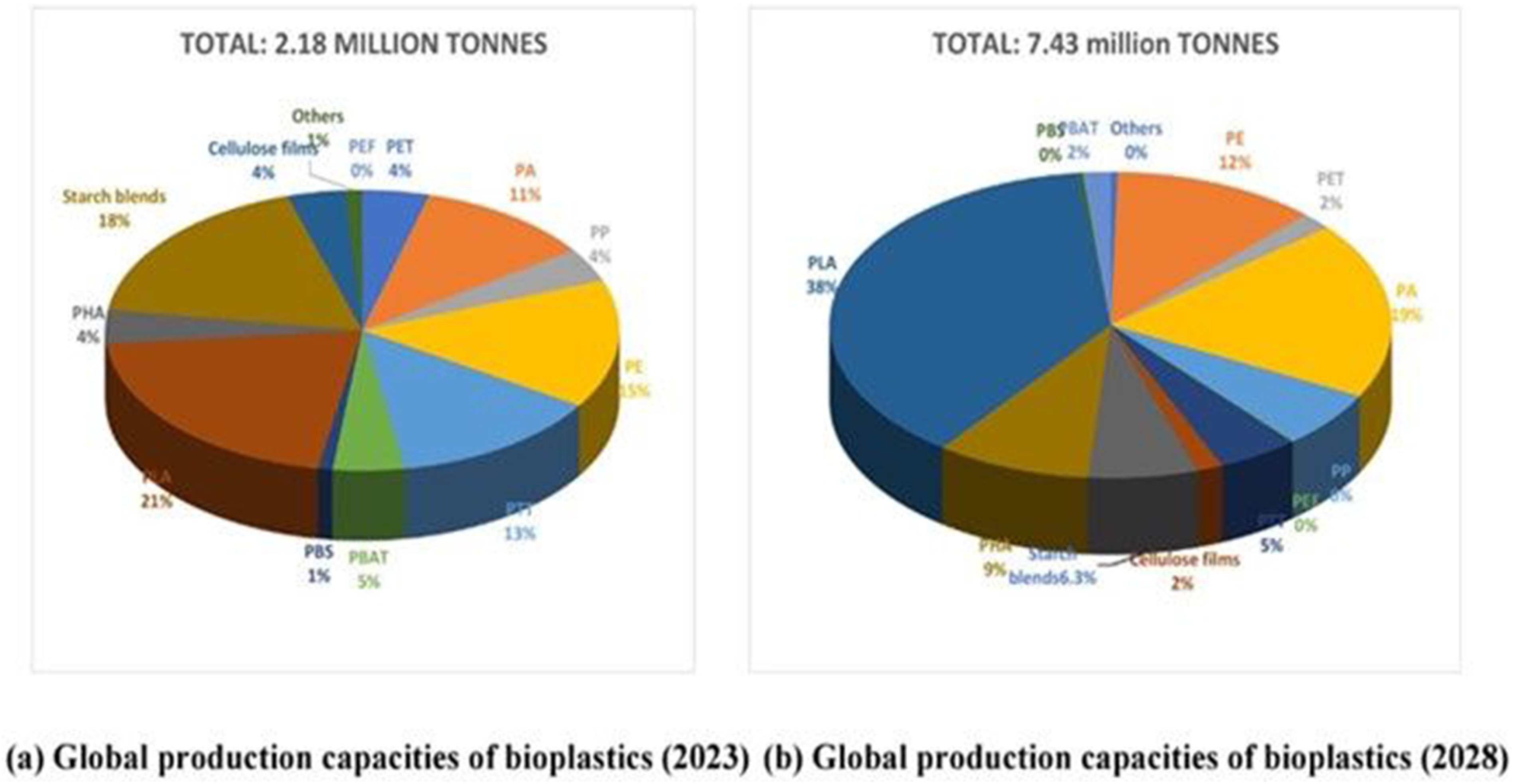
Biodegradability and sustainability of bioplastics
The term “Biodegradability” refers to something that can break down effectively in a natural setting. Bioplastics have several advantages over fossil fuels, including a quicker rate of degradation, the creation of new recycling streams for plastic waste, a smaller footprint for waste management and a lower green house emission rate.
68
According to the literature surveyed, using bioplastics will promote sustainability and national growth, reducing the amount of waste biomass and reducing the amount of greenhouse gases that are released into the atmosphere.
69
Bioplastics have a resident time in natural habitats of 1 to 10 years, which makes it 100 to 1000 times less likely that they will harm living things than plastics that have a residence time of thousands of years. Policymakers are urged to amend current legislation and directives in order to promote the diffusion of bioplastics and combat plastic pollution in view of this. In this regard, the European Regulation on Fertilizers 2019/1009 and the Single Use Plastic Directive 2019/904 may both exempt biodegradable bioplastic products from the ban and the counting of inert components in organic fertilizers, respectively.
70
A number of variables, such as the kind of material, the existence of additives, and the disposal circumstances, affect biodegradability of bioplastics For instance, biodegradability is higher for bioplastics made from biological sources like cellulose or starch than for those made from fossil fuels. Nevertheless, their biodegradability may be impacted by the usage of mixtures of various materials or the addition of additives.
71
Some advantages on sustainability of bioplastics are described in below section: Even though bioplastics have the potential to be more environmentally friendly than conventional plastics, there are a number of variables that affect both their biodegradability and overall environmental impact. To create bioplastics that are more sustainable and to enhance the end-of-life situations for these materials, more research is required.
74
Challenges and limitations associated with bioplastics
As reviewed, it can be concluded that bioplastics have emerged as a compelling and environmentally responsible solution in the realm of pharmaceutical packaging, offering a paradigm shift in the industry’s approach to sustainability. Bioplastics can be engineered to possess characteristics like transparency, flexibility, moisture resistance, and compatibility with various drug formulations, ensuring that they meet the stringent requirements of the pharmaceutical industry. However, the adoption of bioplastics in pharmaceutical packaging is not without challenges. 75 These include cost considerations, mechanical and barrier property limitations, and the need for careful consideration of the end-of-life management of biodegradable bioplastics. Moreover, regulatory standards and certifications for bioplastics in pharmaceutical applications require rigorous adherence to ensure product safety and efficacy.As a result, bioplastics require precise and standardized definitions, labeling, and certifications that enlighten producers and customers about their properties and advantages. In order to facilitate their collection, sorting, recycling, or composting as well as to stop contamination or leakage, bioplastics also require a sufficient infrastructure and processes. 76 Policies and incentives that support the development and uptake of bioplastics while balancing their trade-offs with biodiversity, land use, and food security are also necessary.Innovation and collaboration are essential for overcoming these obstacles and realizing the full potential of bioplastics. The creation of novel and enhanced bioplastics that are more affordable, scalable, useful, and sustainable can be fueled by innovation. Utilizing digital tools to improve the traceability, quality, and efficiency of bioplastics, such as blockchain, artificial intelligence, or sensors, can also be considered innovative. Working together can help various sectors—including academic institutions, business, governments, civil society, and international organizations that support bioplastics—share best practices, resources, and expertise. Local populations that stand to gain from bioplastics, particularly women and young people, may also participate. 77
Waste management options of bioplastics
In order to achieve a truly sustainable plastics economy, the increasing production of bioplastics must be accompanied by efficient end-of-life strategies for bioplastic waste, which is necessary for all bioplastics, regardless of their ability to decompose.
78
While recycling biobased non-biodegradable bioplastics, such as bio-polyethylene terephthalate (bioPET), bio-polyethylene (bioPE), and biopolypropylene (bioPP), is an undeniable necessity, the situation is less clear for biodegradable bioplastics, for which biodegradation is frequently regarded as the only viable end-of-life option; however, biodegradation typically does not have the goal of recovering plastic materials or monomers to be reintroduced in the life cycle of plastic products, whereas this is precisely the goal of other types of recycling options.79,80 The European directive on waste management states that waste management should follow a clear hierarchy that establishes a priority order for waste prevention and management laws and policies: prevention, reuse preparation, recycling, energy recovering and disposal (shown in Figure 4).
81
The steps for the disposal of bioplastics are discussed in below section and diagrammatically, overview of plastic decomposition is given in Figure 5. Various sources of bioplastics. A diagrammatic overview of plastics and bioplastics production.


Conclusions
In conclusion, the use of bioplastics in packaging holds immense potential to revolutionize the food and pharmaceutical industries by offering sustainable alternatives to conventional petroleum-based plastics. Leveraging cutting-edge technologies and renewable resources, bioplastics meet the stringent requirements of modern packaging while minimizing environmental impact. Global bioplastics production reached approximately 2.4 million tons in 2021, and this figure is expected to increase as industries transition toward sustainable materials. The packaging sector alone accounts for nearly 48% of total bioplastics consumption, reflecting the growing demand for eco-friendly solutions. Bioplastics’ adaptability, biodegradability, and compatibility with sensitive products make them an ideal choice for maintaining both environmental stewardship and product integrity. As sustainability becomes a priority across industries and consumer preferences increasingly favor environmentally friendly solutions, the rise of bioplastics signals a broader shift toward a more sustainable future.
Footnotes
Acknowledgments
The authors would like to thank Dr Vimal Arora (Associate Director), Dr Rajiv Sharma (Head of Department) and Chandigarh University for providing us support and facilities.
Author contributions
Priyanshu Singh has contributed for writing the draft, Mr. Ankit Rathee provided the figures included in the manuscript and Dr. Manju Nagpal and Dr. Malkiet Kaur contributed in conceptualization and finalization of manuscript. Dr. Hitesh Chopra and Prof. Tabarak Malik revised and edited the manuscript.
Declaration of conflicting interests
The author(s) declared no potential conflicts of interest with respect to the research, authorship, and/or publication of this article.
Funding
The author(s) received no financial support for the research, authorship, and/or publication of this article.
