




Abstract
With the depletion of conventional resources, it is necessary to enhance the recovery of remaining oil. The tertiary oil recovery chemical flooding is the most promising for enhanced oil recovery (EOR). The use of alkali in chemical flooding produces fouling with the formation, which brings new challenges to chemical flooding EOR. So, alkali-free surfactant-polymer (SP) flooding is used as a new solution for EOR. The polymer makes the displacing fluid have a high viscosity and increases the swept volume. The surfactant can decrease the interfacial tension and emulsify the crude oil while the displacing fluid reaches the corresponding area. The synergistic effect of the two is more conducive to the recovery of the remaining oil. As a result, SP flooding is a more practical approach to enhance oilfield EOR. The research status of several surfactant and polymer types for EOR is reported in this work. According to the study, complex and anionic surfactants are better for EOR. For difficult formations, SP flooding is more suited because of the presence of polymers. Additionally, study analysis demonstrates that SP flooding and alternative polymer injection, when employed at the same cost, can enhance EOR and assist in resolving issues brought on by low oil prices.
Introduction
The need for EOR is very urgent because of the shortage of oil resources, and it is expected that most of the oil will be produced by EOR in the future.1–5 Engineers need to choose a reasonable and effective oil displacement method.6,7 However, the original oil recovery methods, such as primary and secondary oil recovery, are only suitable for shallower reservoirs and lighter heavy oils. 8 After the long-term use of water flooding, secondary oil recovery made the reservoir heterogeneity more prominent. At the same time, the appearance of the oil leakage zone and water channeling channel led to poor sweep efficiency, so secondary oil recovery did not have a high recovery.9,10 However, after these two stages of oil recovery, more than 50% of the crude oil is waiting to be developed.11,12 Therefore, a tertiary oil recovery technology called chemical flooding, which has a higher oil recovery efficiency than primary oil recovery and secondary oil recovery, is gradually emerging.13,14 It includes thermal flooding, gas flooding, and chemical flooding. In too-thin oil layers or too-deep oil layers, thermal recovery faces serious heat loss, excessive carbon dioxide (CO2) emissions, and high heating costs. 15 The problem of poor fluidity control caused by gas flooding leads to low displacement efficiency. 16 Therefore, chemical flooding is widely used to enhance oil recovery and prolong oilfield life.17–19
With the development of technology, alkaline surfactant polymer (ASP) flooding technology has been gradually applied in the field. Because of the good synergistic effect of surfactant and alkali in ASP flooding, the addition of polymer can improve sweep efficiency. However, the presence of alkali will react with ions in the formation to form insoluble sediment, reducing the viscoelasticity of the polymer, thereby greatly reducing the oil displacement efficiency.20–22 In addition to the formation of scale in the oil well, formation corrosion may also occur with the addition of alkali.
14
For polymer flooding, a polymer such as hydrolyzed polyacrylamide (HPAM) is easily degraded in complex formations, which limits its application in oilfields. Subsequently, the bio-based polymer xanthan gum (XG) suitable for high temperature and high-pressure formations, and the environmentally friendly, non-toxic carboxymethyl cellulose (CMC) were developed.
23
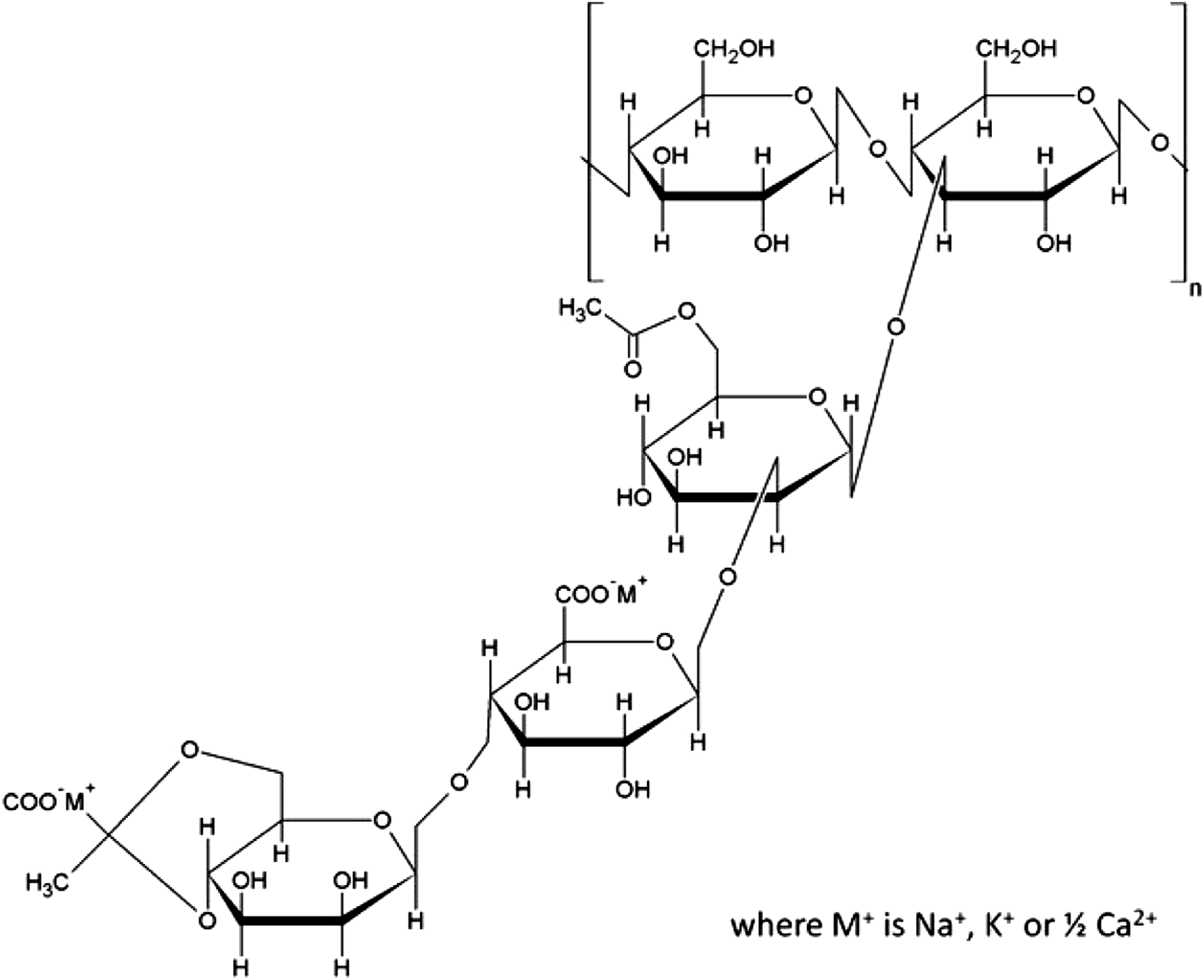
Among them, XG is a commercially available product with the chemical structure formula shown in Figure 1. However, good emulsification requires low interfacial tension (IFT).
24
The use of surfactants alone will lead to their pointing into the oil reservoir and poor sweeping effect. The chemical structure of xanthan gum.
25
The alkali-free surfactant polymer (SP) flooding has gradually attracted the attention of scientific researchers and has become a new hot spot in tertiary oil recovery technology. So, the research on SP binary compound flooding needs further development. 26 The surfactants can greatly reduce the oil-water IFT and lead to good wettability and emulsification.27–32 Because of the viscoelasticity of the polymer, the solution viscosity and sweep efficiency, which allow the surfactant to work better in the target area to recover more residual oil, are improved. Therefore, SP binary compound flooding can not only drive columnar and cluster residual oil but also reduce the film residual oil in pores and roars. It shows that SP flooding has broad prospects for development. 33
The studies of EOR and conventional polymeric systems used for this purpose that are quite generic and comprehensive can be found elsewhere. Here, we will discuss each type of surfactant and polymer’s impact on EOR individually. In addition, we also innovatively discuss different strategies regarding surfactant and polymer injection for EOR in this study. And the mechanism of SP flooding is discussed, and evaluation methods for SP flooding to improve oil displacement performance in experiments are introduced. At the end of the article, the prospect of the future development of the SP drive is given.
Mechanism of SP flooding
Polymers, surfactants, and the synergistic impact between them are the mainstays of EOR. The polymer increases the viscosity of the injected fluid while decreasing aqueous phase mobility, resulting in a fall in the mobility ratio.34–36 The mobility ratio is the ratio of the displaced phase’s mobility to that of the repelled phase. Both the area ripple efficiency and the volume ripple coefficient are affected by the fluidity ratio. Controlling and controlling the flow ratio is an essential direction to increase crude oil recovery in the drive process, since it should be less than or near to 1. Increasing the viscosity of the repellent fluid is the most effective approach to minimize the flow ratio. Water injection fingering is regulated, and sweep efficiency is enhanced, displacing isolated island, column, and film residual oil. The surfactant decreases interfacial tension and has a great emulsifying power, minimizing residual oil adhesion and making it flowable. These oil droplets eventually combine to form a new flowing oil reservoir.
The synergistic impact of surfactants and polymers is primarily responsible for the SP flooding process. The polymer increases the viscosity of the displacement fluid and accumulates at the big pore throat, where it acts as a powerful stopper, allowing the polymer surfactant binary system fluid to reach the smaller pores and displace the leftover oil. 37 Some dead-end residual oil is drawn out due to the polymer’s viscoelastic characteristics. Surfactants and polymers will also promote competitive adsorption, which will improve displacement efficiency. Surfactants induce extremely low IFT, which results in a high capillary number and the formation of emulsions. 38 The emulsion migrates with the displacing medium and can block the pore throat, improve reservoir plane heterogeneity, and increase swept volume.
Surfactants for SP flooding
According to literature research, it is found that most of the polymers are HPAM, and a few are CMC. 39 Most of the surfactants are anionic surfactants, and a small number of nonionic and zwitterionic surfactants are used. 40
HPAM and petroleum sulfonate (KPS) with a total volume of 2.5 pore volume (PV) were added as SP compounds after water flooding in the sand-packed-tube, and oil recovery was improved.
41
In addition, it was reported in the literature that HPAM and sodium dodecyl sulfate (SDS) were selected as SP binary flooding. Compared with water flooding and surfactant flooding, the recovery factor after SP flooding was increased by about 22.78% and 2.78% of the original oil in place (OOIP) respectively.
42
Liao et al.
43
carried out the optimization of different kinds of surfactants for SP flooding. The greater the number of alkyl carbon chains in the surfactant, the greater the shrinkage of the oil film in the reservoir. SP flooding was applied to the target block to improve the recovery of low-permeability reservoirs. Three kinds of surfactants were selected with HPAM to form SP flooding.
44
The experimental results showed that there was a good synergy between the anionic surfactant SDS and HPAM. At high temperatures, HPAM/SDS solutions had high viscosity with an increase in shear rate. And the surfactant molecule SDS produced tighter adsorption at the oil-water interface due to the electrostatic effect between HPAM and SDS, resulting in a lower IFT than the surfactant solution alone, Figure 2. In the micromodel test, the HPAM/SDS combined SP flooding achieved the maximum cumulative oil recovery. The stability of A1 was found to be better than that of D1 by the emulsion stability experiment.
45
Therefore, A1 could promote the viscosity of crude oil and expand the swept area. Finally, HPAM-A1 composite flooding had higher oil recovery than HPAM-D1 and water flooding. Interaction mechanism diagram of electrostatic effect between surfactant SDS and polymer HPAM(44).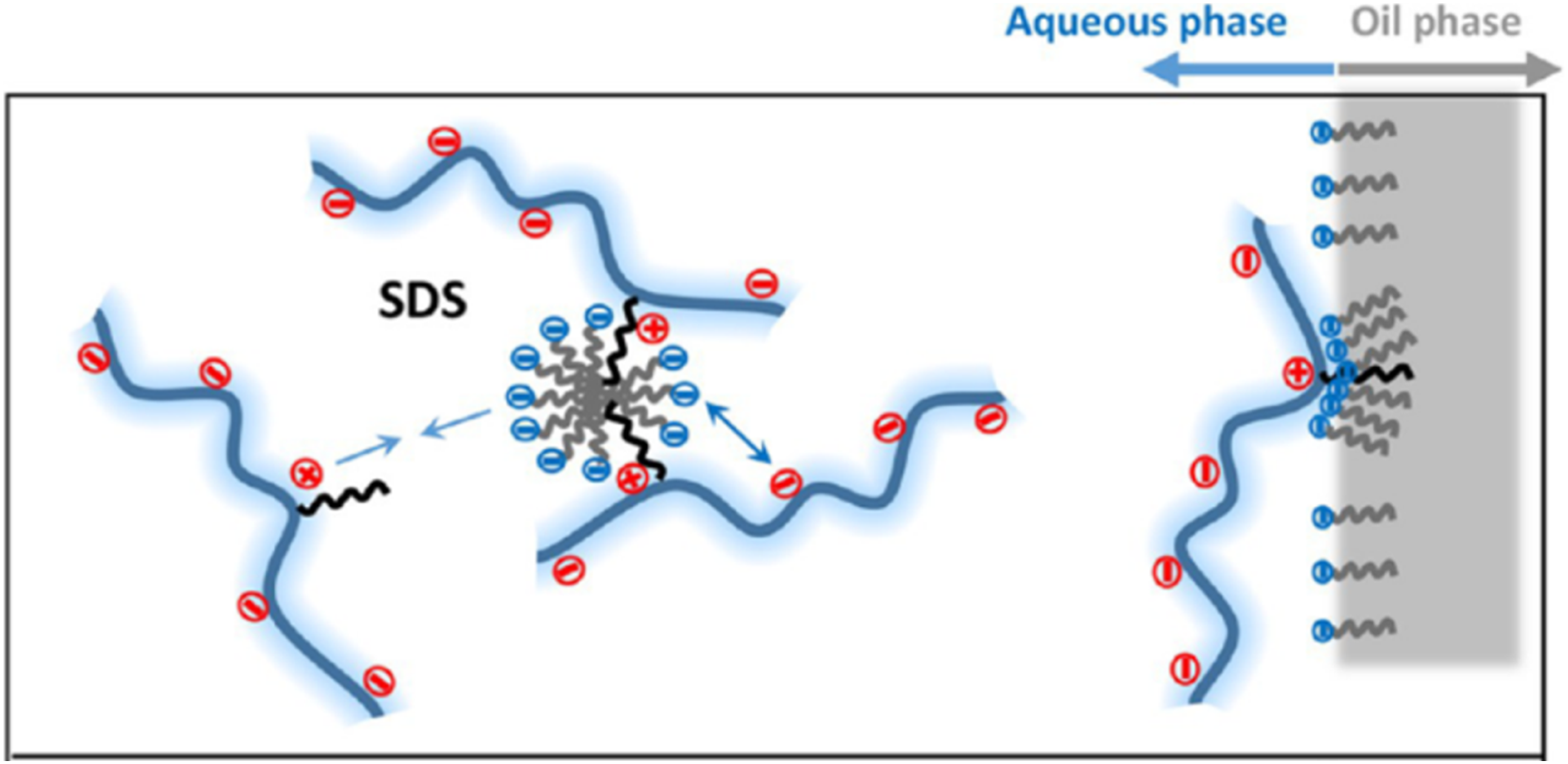
Achieving ultra-low IFT requires that the interaction between the membrane, the water side, and the oil side reach a balance, and the reduction of IFT is affected by temperature, the equivalent number of alkanes in crude oil, and so on.
46
Therefore, the required IFT is usually achieved by compounding the surfactants. It is also common to combine two surfactants for SP floodings, such as the combination of anionic and nonionic surfactants and the combination of anionic and zwitterionic surfactants.
47
Wang et al.
29
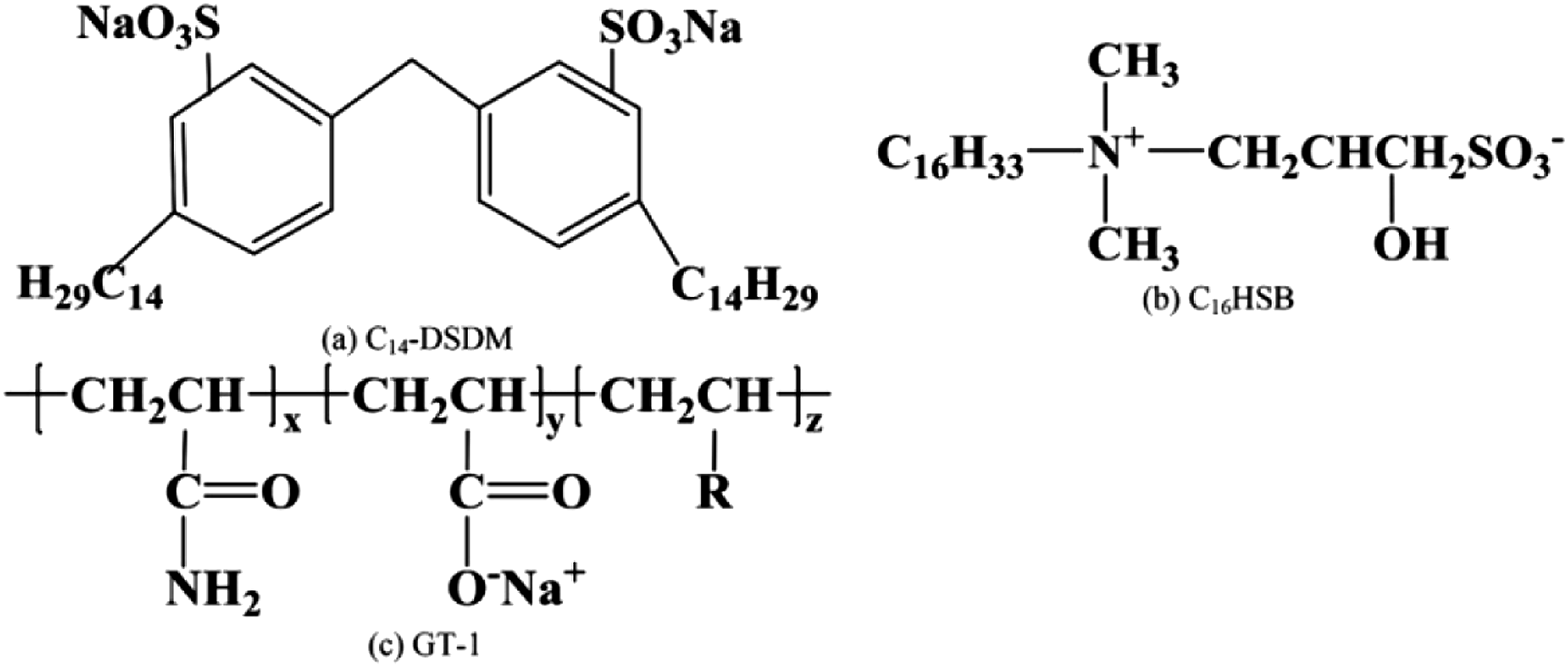
selected linear alkylated diphenylmethane sulfonate (C14-DSDM) to compound with fatty alcohol polyoxyethylene ether (AEO-9) or Hexadecyl dimethyl carboxybetaine (C16HSB) . After compounding, the synergistic effect between different surfactants was investigated. C14-DSDM/C16HSB (with a ratio of 3:1) had a stronger efficiency and ability to reduce surface tension, with a minimum interfacial tension of 7.2 × 10⁻³ mN/m, and it took a shorter time for the IFT to reach equilibrium. Finally, it was combined with GT-1 (Figure 3), a new hydrophobically modified polyacrylamide-based functional polymer with good temperature and salt resistance, to form a SP flooding compound. In the visual displacement experiment, the final oil displacement rate was 31.2% higher than that of water flooding. The combination of weakly basic lignin and oleic acid amide betaine (OAAB) could reduce the adsorption capacity of sandstone by at least 40%.
15
Therefore, surfactants had a better ability to reduce IFT and emulsify ability.
48
Finally, with the gradual increase of the injection amount of SP flooding solution formed by 0.75%lignin, 0.1%OOAB, and 0.1%HPAM, the final recovery factor can reach 53.9% (Figure 4). Molecular structure.
29
Microscopic images of surfactant-polymer flooding: (a) 0.1 PV; (b) 0.15 PV; (c) 0.35 PV; (d) 5,0 PV solution injected.
15

Carboxylate surfactants containing many ethylene oxide groups and large hydrophobes can meet the requirements of SP flooding and are suitable for formations rich in high-concentration divalent ion brine. 49 Although petroleum-derived surfactants have a low cost and simple production process, it is difficult to achieve ultra-low interfacial tension.50,51 Betaine surfactant GAB was developed for SP flooding. 40 The introduction of ethylene oxide functional groups and the combination with Guerbet alcohol greatly enhanced the emulsifying ability of GAB. In synthetic formation water and synthetic seawater, GAB could achieve an ultra-low IFT (10−3 mN/m). The IFT of GAB solutions in synthetic formation brines exhibited stable interfacial activity after 90 days of aging at 95°C. At the same time, GAB solutions exhibited significant wettability-modifying effects in saline formations. Therefore, the SP flooding composed of GAB surfactant and polymer is suitable for complex carbonate reservoirs. Sodium lignosulfonate was obtained in the laboratory by delignification and sulfonation of palm oil fruit bunches. 13 Form SP flooding with polyvinyl alcohol or partially hydrolyzed polyacrylamide increased the recovery by 20%–30%. Cui and co-workers 46 synthesized didodecylmethylcarboxyl betaine (diC12 B) surfactant, which exhibited good solubility when mixed with hydrophilic surfactants . DiC12B reduced the IFT of the target reservoir/connate water to 10−3 mNm−1 within 10 min. The recovery can be increased by 18% OOIP after diC12B was used.
Polymers for SP flooding
In SP flooding, polymers are crucial to the stability of emulsions.52–56 According to the study’s findings, the polymer’s adsorption serves as a sacrificial agent, strengthening the emulsion.
11
The polymer was adsorbed, resulting in a small pore radius, and it acted as a sacrificial agent to reduce the adsorption of the emulsifier and enhance the emulsion stability. Without polymer, the emulsion tended to agglomerate and block the channel, increasing injection pressure (Figure 5). Therefore, SP flooding can move residual oil more easily, resulting in enhanced recovery. Additionally, Wang found that in carbonate reservoirs, the addition of polymers reduced surfactant adsorption by approximately 29.9%–59.4%.
57
As the concentration of polymers rises, the partition coefficient of the surfactant decreased, which ensured that the working distance of SP flooding increases.
58
Schematic diagram of the mechanism of the effect of polymers on emulsion stability.
11

At the same time, polymer microspheres were used for SP compound flooding.
10
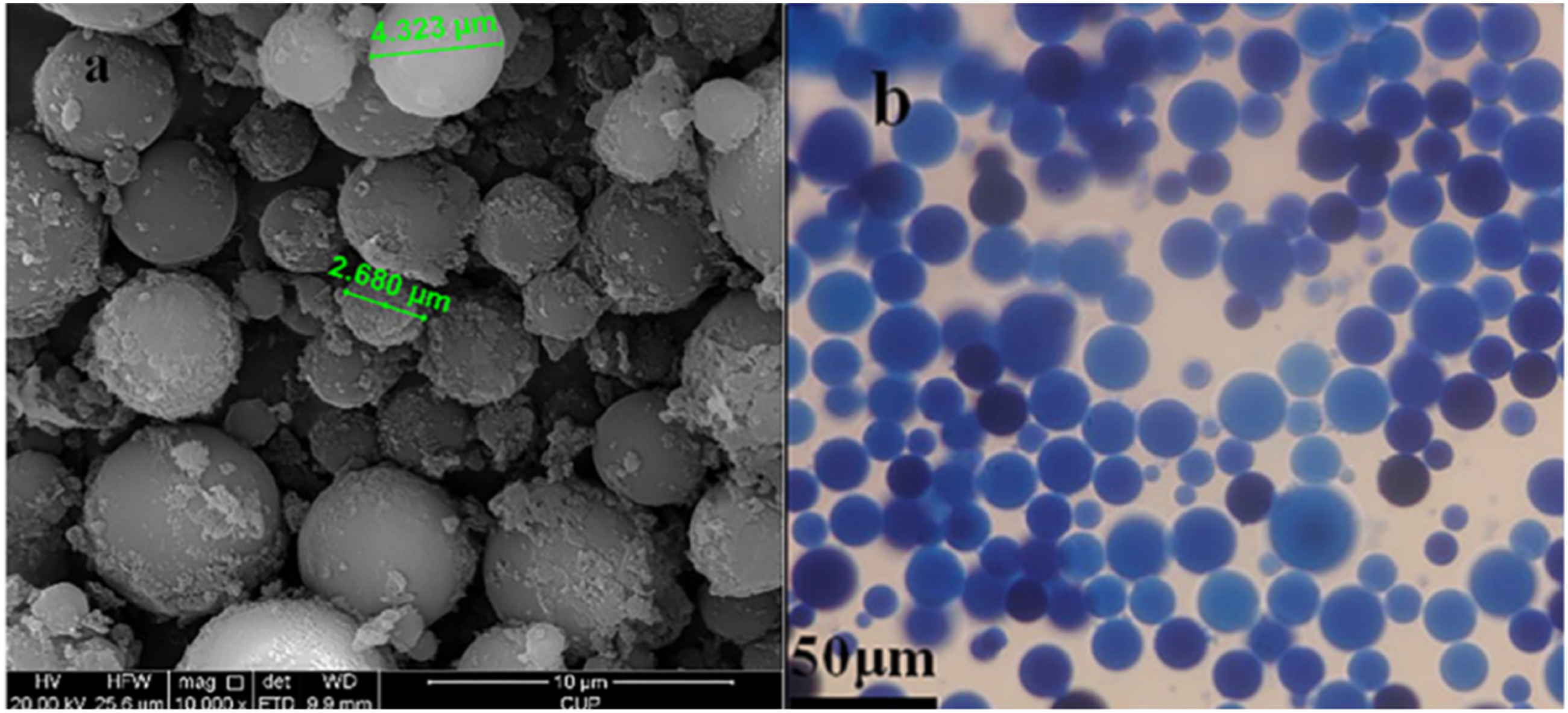
The polymer microspheres have a good blocking effect, as the particle size increases from about 6 μm to 50 μm after swelling (Figure 6). Even after injecting 1.0PV brine, the recovery rate outperformed water flooding by 38.7%. And under the action of shearing, the surfactant has less of an impact on the polymer microsphere solution’s viscosity. As a commonly used polymer for oil displacement, HPAM provides the benefits of low cost and a simple manufacturing method, but it cannot play a stable role in harsh formations.59–61 CMC is easily soluble in seawater and has good viscosity, and it can promote emulsion stabilization. Therefore, CMC is expected to replace HPAM in SP flooding.
62
The application of sodium dodecylbenzene sulfonate and CMC in EOR was investigated.
23
The addition of CMC could prevent the aggregation of emulsion droplets, which promoted the reduction of IFT and the stability of the emulsion. That is, the CMC may promote interface activity. At the same time, CMC exhibited shear-thinning behavior, which was beneficial for flow control. Ultimately, laboratory oil recovery experiments resulted in a 14–20% increase in recovery from SP flooding, showing the same trend compared to commercial sodium dodecylbenzene sulfonate-xanthan gum SP flooding. SEM of polymer microspheres (a) before swelling; (b) after swelling at 65°C for 10 days).
10
The viscosity of the polymer solution under different conditions. 5

Injection strategy for SP flooding
Aiming at improving oil displacement efficiency while considering economic issues, research on different injection strategies at the same cost has been carried out.
64
The experimental results showed that the polymer stored in the porous medium after polymer flooding could promote the EOR performance of the subsequent SP flooding, which increased the recovery increment by an additional 10% OOIP.
65
The SP flooding injection strategy was optimized by He et al.
9
The EOR efficiency attained by different injection procedures was examined in a series of sand-packed flooding tests. The injection strategies were classified as alternating polymer and surfactant-polymer injection and simultaneous surfactant and polymer injection, with an EOR of 39.86% and 30.6%, respectively. It was obvious that the EOR of the alternating injection strategy was improved, and the EOR continues to improve with the increase in the number of alternating cycles. Since the pre-injected polymer blocked the large pores of the high-permeability layer, the SP entered the low-permeability sandbag to recover the remaining oil (Figure 7), and the sweep efficiency improved, which had a significant effect in enhancing the ultimate recovery factor. Schematic diagram of oil displacement process mechanism.
9

Summary and outlook
This paper mainly discussed the recent progress of SP flooding for EOR. The main components of the SP flooding mechanism, surfactants, polymers, and different injection strategies in SP flooding will be introduced and discussed in detail. Most of these SP flooding are suitable for high temperature and salinity conditions.
The SP flooding mechanism may be summed up as follows: The polymer increases the fluid’s viscosity during displacement, lowers the water-to-oil mobility ratio, and increases the swept volume. Because they reduce the IFT between the oil and the water, surfactants emulsify crude oil. Additionally, the synergistic combination of polymers and surfactants can increase the amount of residual oil and enhance oil recovery.
As an important part of SP flooding, surfactants are classified as anionic, cationic, and nonionic surfactants, with anionic and nonionic surfactants being the most widely utilized. Commercially available surfactants are preferred to form SP flooding with polymers. Studies have found that compounding two surfactants has better IFT reduction performance. There is no shortage of self-developed surfactants, which introduce the required excellent functional groups to form SP flooding with polymers, which can be used in complex formations. The compounding of self-developed surfactants and commercially available surfactants has better performance, but the cost is expensive. In addition, study analysis demonstrates that SP flooding and alternative polymer injection, when employed at the same cost, can enhance EOR and assist in resolving issues brought on by low oil prices.
Extracting more of the remaining oil requires better performance of SP flooding. Not only is the surfactant or polymer required to have excellent properties, but also strict requirements are placed on the synergy between the two. This requires detailed studies on the mechanism of action. Entering the era of low oil prices, the SP flooding strategy also needs to be improved for cost reasons. The model test used to measure EOR is affected by the rock type and porosity of the simulated formation and cannot be unified, so there is no comparison between different SP floods. SP drives must comply with environmental protection policies to be successfully applied in the field. It is critical to increasing the recovery of residual oil in aging oilfields, which necessitates the effort of a significant number of researchers.
Footnotes
Acknowledgements
We will thank the financial support from the 2022’s open project foundation from Research and Development Center for the Sustainable Development of Continental Sandstone Mature Oilfield by National Energy Administration for this work.
Declaration of conflicting interests
The author(s) declared no potential conflicts of interest with respect to the research, authorship, and/or publication of this article.
Funding
The author(s) disclosed receipt of the following financial support for the research, authorship, and/or publication of this article: This work was supported by the the 2022’s open project foundation from Research and Development Center for the Sustainable Development of Continental Sandstone Mature Oilfield by National Energy Administration.
