




Abstract
One of the most prominent correlates of trust in science and scientists is education level, possibly because educated individuals have higher levels of science knowledge and thinking ability, suggesting that trusting science and scientists relies more on reflective thinking abilities. However, it is relatively more reasonable for highly educated individuals to suspect authority figures in highly corrupt countries. We tested this prediction in two nationally representative and probabilistic cross-cultural data sets (Study 1: 142 countries, N = 40,085; Study 2: 47 countries, N = 69,332), and found that the positive association between education and trust in scientists (Study 1) and science (Study 2) was weaker or non-existent in highly corrupt countries. The results did not change after statistically controlling for age, sex, household income, and residence. We suggest future research to be more considerate of the societal context in understanding how education status correlates with trust in science and scientists.
Trust in science (i.e. reliance on and confidence in scientific information and practices; Mousoulidou et al., 2022) and scientists (i.e. trust in the knowledge and honesty of those who work in scientific institutions; Chryssochoidis et al., 2009) have become center of attention during the recent COVID-19 pandemic. Trust in science and scientists has had demonstrable effects on daily life, as can be seen in examples of adhering to preventive measures and getting vaccinated during a deadly pandemic (Mousoulidou et al., 2022). A large portion of the COVID-19 conspiracy beliefs include an element of distrust in science and scientists (van Mulukom et al., 2022), which reveals the need to establish the predictors of this (dis)trust. Past research found several individual factors related to trust in science and scientists, including the level of income (Anderson et al., 2012; Borgonovi and Pokropek, 2020), socioeconomic status and poverty (Mousoulidou et al., 2022), religiosity (DiMaggio et al., 2018; McPhetres and Zuckerman, 2018; Mousoulidou et al., 2022; Pullman et al., 2019; Rutjens et al., 2018), political orientation (Pechar et al., 2018; Rutjens et al., 2018), national identification (Gkinopoulos et al., 2022), morality (Rutjens et al., 2018), gender (von Roten, 2004), and science understanding and literacy (Rutjens et al., 2018). In this study, we tested whether education status, which is known to directly predict science beliefs (Bak, 2001; Borgonovi and Pokropek, 2020; Guenther and Weingart, 2016; Mousoulidou et al., 2022; Pullman et al., 2019), has the same effect on trust in science and scientists across several different countries. We argue that the association between education and trust in science and scientists depends on context, namely country-level corruption.
People tend to employ a common heuristic to trust scientists (Hmielowski et al., 2014), a well-established finding called “the Einstein effect” which was recently replicated in a large cross-cultural study that assessed the perceived credibility of a scientist (compared to a spiritual guru) in 24 different countries (Hoogeveen et al., 2022). Other research, for instance, by Zarzeczna and colleagues (2021), using representative samples from various countries (i.e. United Kingdom, United States, Canada, Malaysia, and Taiwan), found similar results: across different countries, respondents had more trust in messages shared by scientific sources than in messages shared by the government (Zarzeczna et al., 2021). Finally, in a study conducted in Germany, it was found that 73% of the population’s views on the COVID-19 pandemic matched the views of scientists (Rothmund et al., 2020). Although trust in science and scientists appears to be a common heuristic, the presence of individuals with high science skepticism on critical issues like pandemics, climate change, anti-vaccination, and engaging in pseudoscientific practices sparked an interest in research on science skepticism and trust in science (e.g. Rutjens et al., 2021, 2022; Scheitle and Corcoran, 2021; Većkalov et al., 2022), and the negative consequences of distrust in science and scientists, such as lower adherence to preventive measures during the COVID-19 pandemic (Dohle et al., 2020; Erisen, 2022; Plohl and Musil, 2020; Sulik et al., 2021) and lower levels of vaccination (Cavojova et al., 2021; Erisen, 2022; Lalot et al., 2021; Zezelj et al., 2023).
One of the most prominent predictors of trust in science and scientists is education level (Bak, 2001; Borgonovi and Pokropek, 2020; Guenther and Weingart, 2016; Mousoulidou et al., 2022; Pullman et al., 2019). A series of studies suggested that a higher educational level is positively linked with general trust and trust in science (Achterberg et al., 2017; Allum et al., 2008; Bak, 2001; Borgonovi and Pokropek, 2020; Gauchat, 2010; Hamilton et al., 2015; Hayes and Tariq, 2000; Hmielowski et al., 2014; Pullman et al., 2019). These findings are compatible with the information deficit model, implying that intellectual gaps between the public and scientists are caused by the public’s lack of sufficient scientific knowledge (Durant, 1993; Gauchat, 2010, 2012; Sturgis and Allum, 2004). For instance, there is evidence that people with a higher level of education are more likely than those with a lower level of education to trust scientists when it comes to combating climate change (Sleeth-Keppler et al., 2017), as well as vaccination (Czarnek et al., 2020; Hamilton et al., 2015, 2021). One explanation could be that people with higher education levels might be more capable of accessing and comprehending scientific information than people with lower education levels (Mousoulidou et al., 2022). Another explanation offered in the literature is that, because formal education improves analytical thinking and cognitive reflection skills, a higher educational level may assist individuals in distinguishing non-scientific misinformation (Achterberg et al., 2017; Fuller, 1996; Guess et al., 2020). There are also findings supporting the idea that scientific knowledge, science education, and formal education levels are associated with trust in science (Bak, 2001; Nisbet et al., 2002; Stewart et al., 2016). Although some studies have also found a weak (or lack of) relationship between education and science skepticism when the scientific topics were related to controversial scientific issues (Gauchat, 2012, 2015; Plohl and Musil, 2021; Scheitle and Corcoran, 2021; Wilgus and Travis, 2019), it is evident that the vast majority of the past research underlines the importance of education.
We argue that this relationship between education and trust in science and scientists is likely to depend on the social context. Past research has demonstrated several contextual factors associated with trust in science and scientists, including country-level scientific trust (Sturgis et al., 2021), cultural context (Borgonovi and Pokropek, 2020), and perception of scientists as “elites” (Kossowska et al., 2021; Nera et al., 2022). We argue that the level of perceived corruption is also one of the important elements that comprise the societal context since the prevalence of corruption can substantially affect citizens’ trust in political and state-owned institutions (Beesley and Hawkins, 2022; Boly and Gillanders, 2022; Kubbe, 2014). Furthermore, findings imply that public compliance with behaviorally based social policies is linked to their trust in government (Chanley et al., 2000). Studies on bureaucratic reputations emphasize the importance of positive political reputations in terms of their credibility and legitimacy in the public eye and adherence to institutional recommendations (Capelos et al., 2016). To illustrate, participants with low trust in COVID-19-related information were found to have lower vaccine acceptance (El-Elimat et al., 2021). Another example is that people who trust their country’s healthcare system are more willing to donate blood (Graf et al., 2022). There is also direct evidence showing that when people believe the idea that science and scientists serve the benefit of society, their public trust in science increases (Benson-Greenwald et al., 2023). It is not unreasonable to assume that a higher level of perceived corruption may harm the perception of science and scientists.
The positive association between education and trust in science and scientists implies that trusting is a reasonable choice and more educated individuals, as a result of their higher levels of knowledge (Durant, 1993; Gauchat, 2010, 2012; Sturgis and Allum, 2004) and thinking ability (Achterberg et al., 2017; Fuller, 1996; Guess et al., 2020), therefore tend to trust science and scientists. However, there might be plausible reasons to be suspicious: the history of science is full of examples of unethical experiments, undisclosed conflicts of interest, and questionable research practices (e.g. Lefor, 2005). Lack of trust in scientists would not be unreasonable back in the 1930s and 1940s in Nazi Germany, for example, considering the horrors of inhumane experiments conducted by scientists like Joseph Mengele (Barondess, 1996). Thus, the societal context might change how plausible it is to trust or distrust science and scientists. We argue that country-level corruption would be an ideal proxy variable to distinguish these contexts because in high-corruption contexts, secretive and malevolent allegiances are common, and people act more dishonestly (Gächter and Schulz, 2016; Muthukrishna et al., 2017). If the expectation of dishonesty is not ungrounded, then an increase in education would not be strongly related to an increase in trust in science and scientists since one would have good enough reasons not to trust in such contexts. Past research showed that country-level corruption is a significant factor in predicting conspiracy beliefs (Alper, 2022; Alper and Imhoff, 2022; Alper et al., 2021), and the negative association between education and conspiracy beliefs is weaker in high-corruption countries because conspiracy beliefs are relatively more plausible in these contexts (Alper, 2022). In this research, we similarly argue that the association of education with trust in science and scientists would be weaker in countries with high corruption. We test our predictions in two studies, both of which are based on large, cross-country data sets. To rule out alternative explanations, in testing these associations, we also adjust for differences in key demographic variables, including age, sex, household income, and urban versus rural residence.
Although we originally based our predictions on social psychological research, our expectations are also consistent with the “rationalist” approach in political science, which posits institutional trust as the outcome of individuals’ evaluation of the procedural and policy performance of the institution in question (Hakhverdian and Mayne, 2012; Noordzij et al., 2021; Van der Meer, 2010; Van der Meer and Hakhverdian, 2017). For instance, Noordzij and colleagues (2021) have found, in an analysis of 24 European countries, that higher-educated citizens report higher levels of political trust in countries with lower levels of corruption compared to countries with higher levels of corruption. Furthermore, Hakhverdian and Mayne (2012) have previously demonstrated that, in more corrupt societies, education is negatively related to trust in political institutions while, in noncorrupt societies, education is positively related to trust in political institutions. Their research shows that context, specifically corruption, can change the relationship between education and institutional trust. Building on this finding, using both individual- and country-level data from 31 different countries, Agerberg (2019) found that the positive relationship between education and institutional attitudes (i.e. external political efficacy and perceptions of system performance) disappears or even becomes negative, as corruption levels become higher. Along with other studies showing that corruption is negatively related to citizens’ trust in political institutions (Anderson and Tverdova, 2003; Linde and Erlingsson, 2013; Mishler and Rose, 2001; Seligson, 2002; Wagner et al., 2009), these findings show that corruption is a relevant factor when assessing institutional attitudes and trust. Similar to the findings in this line of research, we expect that in highly corrupt countries citizens form unfavorable views of the institutions. Perhaps different from the past research, we also argue that such distrust would extend beyond the political realm and influence individuals’ trust in science and scientists.
1. Study 1
Data
We retrieved the data from Wellcome Global Monitor 2018 (Gallup, 2019), a large multisite study investigating how people around the world perceive science and scientists. All samples were probability-based and nationally representative of the adult population (142 countries, N = 40,085) (see https://cms.wellcome.org/sites/default/files/wgm2018-methodology.pdf for detailed methodology). The data set is publicly available at https://wellcome.org/sites/default/files/wgm2018-dataset-crosstabs-all-countries.xlsx.
Measures
Trust in scientists
The Wellcome Global Monitor 2018 (Gallup, 2019) study composed a WGM Index, a composite measure of trust in scientists. A mean score was calculated for the following five items: (1) “How much do you trust scientists in this country?, (2) “In general, how much do you trust scientists to find out accurate information about the world?,” (3) “How much do you trust scientists working in colleges/universities in this country to do their work with the intention of benefiting the public?,” (4) How much do you trust scientists working in colleges/universities in this country to be open and honest about who is paying for their work?,” and (5) “How much do you trust scientists working for companies in this country to do their work with the intention of benefiting the public?”. Participants responded on a four-point scale ranging from a lot to not at all. In the calculation of the index, the responses were reversed in a way that higher scores indicated higher trust in science. Participants who did not respond to more than two items were excluded. Cronbach’s alpha was .831.
Education
Education was measured on a three-point scale (1 = primary, 2 = secondary, 3 = tertiary).
Corruption
Country-level corruption scores were retrieved from the 2018 Corruption Perceptions Index (Transparency International, 2018). The scores were reversed by multiplying with −1, so higher scores correspond to higher corruption. The detailed methodology (https://images.transparencycdn.org/images/2018_CPI_Source_Description.zip) and data set (https://images.transparencycdn.org/images/CPI2018_Full-Results_1801.xlsx) are publicly available.
Control variables
To control for key demographic differences, we included age, sex (1 = male, 2 = female), rural/urban residence (1 = rural, 2 = urban), and household income (1 = poorest 20%, 5 = top 20%) in our models with covariates.
In exploratory analyses, which are reported in detail in the Supplemental Material, we also considered GDP (GDP per capita, purchasing power parity, constant 2017 international $; The World Bank, 2023) and WEIRDness (Muthukrishna et al., 2020) as control variables. WEIRD is an acronym for Western, educated, industrialized, rich, and democratic, which are the characteristic shared by the cultures that are overrepresented in social sciences (Henrich et al., 2010). The WEIRDness measure developed by Muthukrishna et al. (2020) uses cultural distance from the US culture as a proxy to calculate the level of WEIRDness. Cultural WEIRDness and GDP per capita, which capture the cross-country differences in culture and wealth, were included only in the exploratory analyses using them as an alternative to country-level corruption.
Analysis procedure
Corruption scores were standardized by calculating their z scores. All other continuous variables were standardized clusterwise (i.e. standardized based on country-level mean) in each country. For example, the education score of a participant was standardized based on the mean education score in the country in question, not the grand mean across all countries, because a certain level of education might be relatively high in some countries while being relatively low in others. By calculating a clusterwise standardization, we ensured that a one unit increase in education corresponds to a one standard deviation increase compared to the country average in all countries. We applied the same standardization to all continuous measures, except for corruption, which is itself a country-level variable. Sex and rural/urban residence were not standardized, as they were dummy-coded factors.
We conducted linear mixed model analyses using the GAMLj package available in jamovi statistical software (The Jamovi Project, 2021). Linear mixed models enable conducting analyses on multilevel data (individual level measurements as Level 1, and the country-level measurements as Level 2) by grouping data based on the defined clusters (in our case, countries) and allowing both fixed and random effects. We clustered the data based on country. A restricted maximum likelihood estimation was used, and the intercept was considered a random effect to allow the intercept to vary randomly across countries. The criterion variable was trust in scientists. Age, sex, rural/urban residence, household income, education, corruption, and interaction between education and corruption (i.e. Education × Corruption) were the predictors. 1
Results
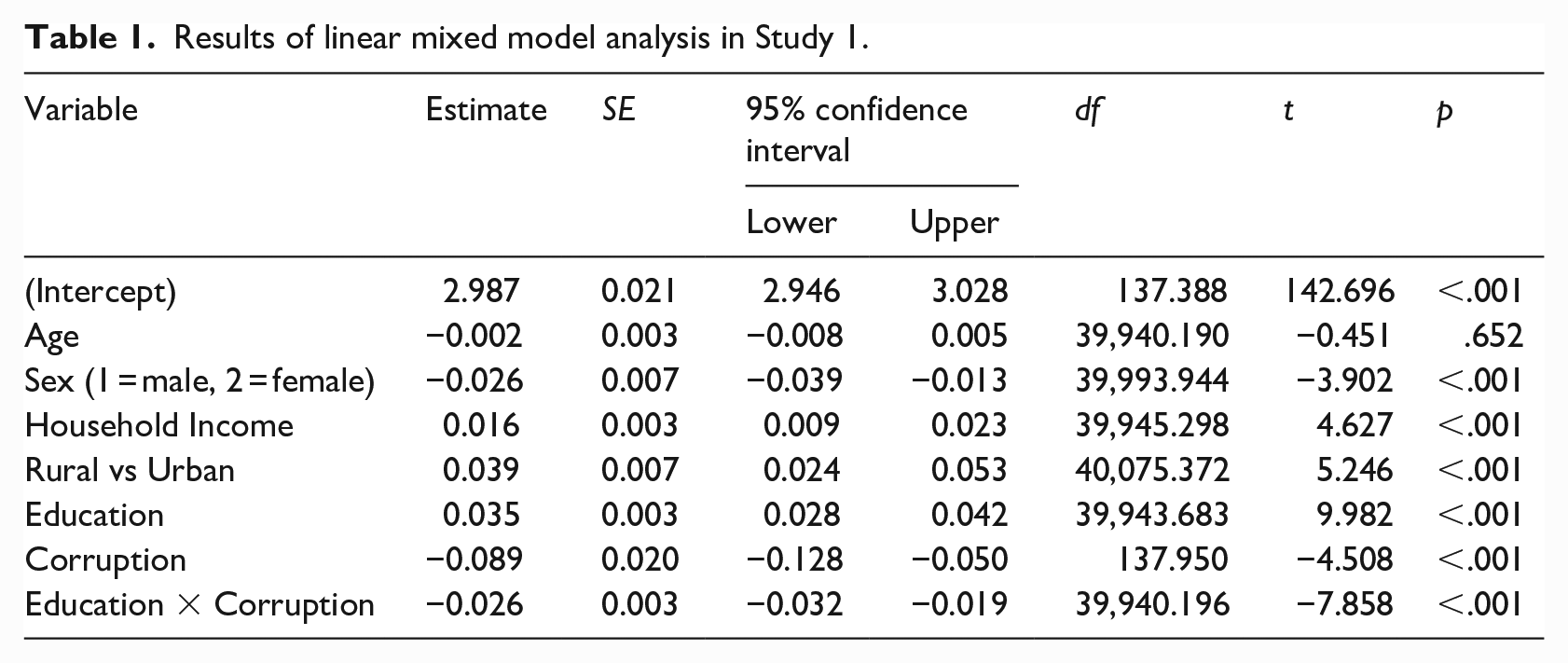
Most of the control variables had significant associations with trust in scientists. Being male, having a higher household income, and living in rural areas were related to higher trust, while age was not correlated with trust (see Table 1). After adjusting for these differences, higher education, b = .035, SE = .003, 95% CI [.028, .042], t(39,943.683) = 9.982, p < .001, and living in a less corrupt country, b = −.089, SE = .020, 95% CI [−.128, −.050], t(137.950) = −4.508, p < .001 were related to higher trust in scientists. There was also a significant interaction between education and country-level corruption, b = −.026, SE = .003, 95% CI [−.032, −.019], t(39,940.196) = −7.858, p < .001.
Results of linear mixed model analysis in Study 1.
In countries with low, b = .061, SE = .005, 95% CI [.051, .070], z = 12.706, p < .001, and moderate corruption, b = .035, SE = .003, 95% CI [.028, .042], z = 9.982, p < .001, higher education was associated with higher trust in scientists whereas the relationship between education and trust in scientists was not significant in countries with high corruption, b = .009, SE = .005, 95% CI [−.000, .019], z = 1.883, p = .060. Thus, as expected, the positive association between education and trust in scientists was significant in low corruption but not high corruption countries (see Figure 1). 2 Figure 2 shows the country-wise associations between education and trust in scientists for all countries included in the analyses.
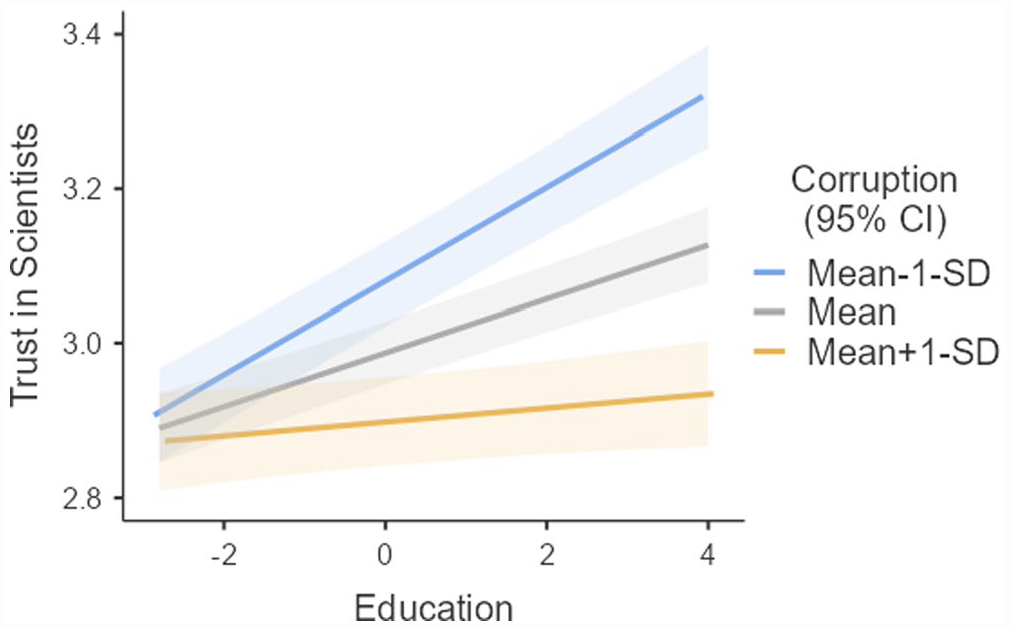
The association between education and trust in scientists in countries with varying levels of corruption.
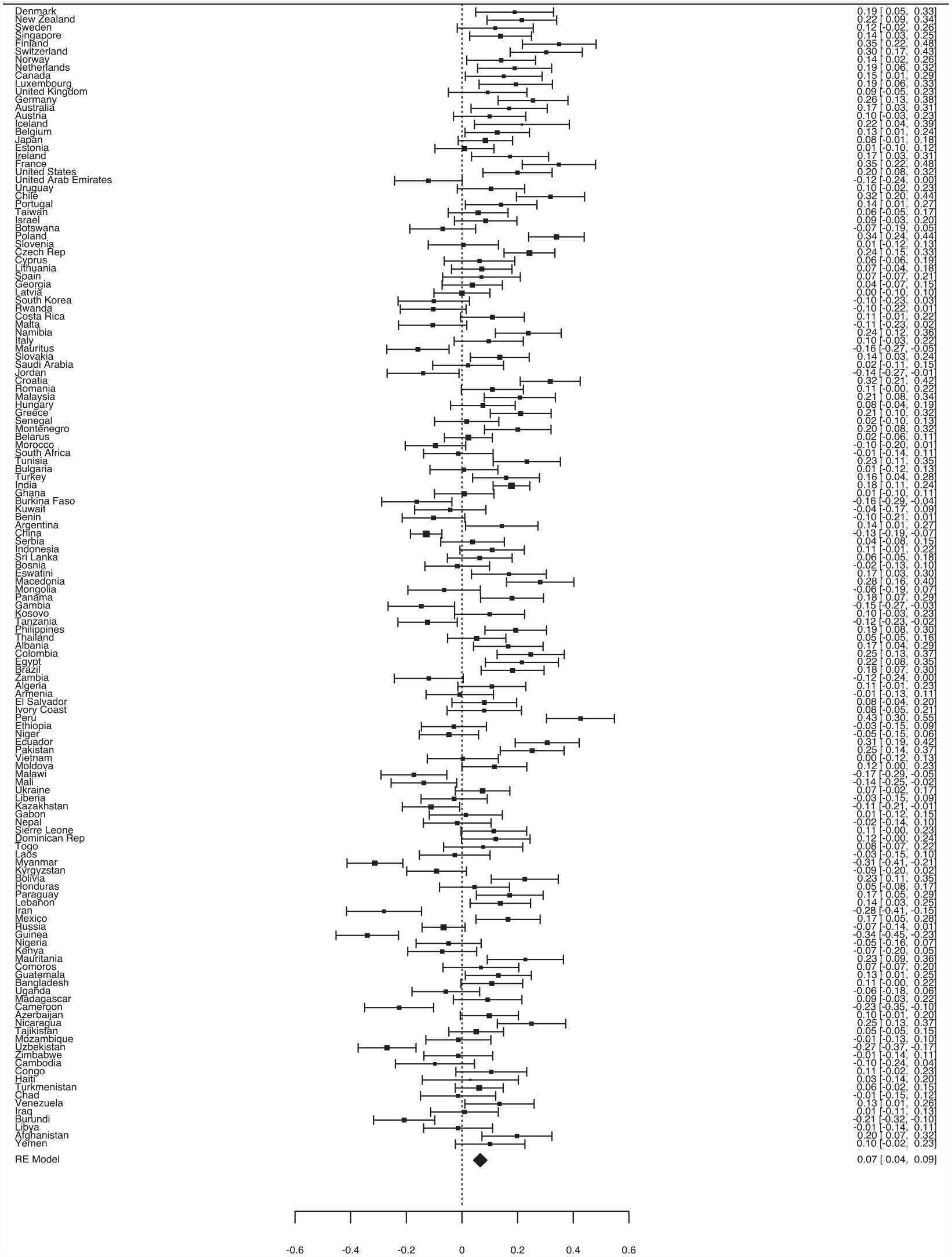
Forrest plot shows the observed correlations between education and trust in scientists. Bars represent 95% confidence intervals. Countries are ranked from the lowest level of corruption to the highest level of corruption.
In Study 1, we investigated how education was related to trust in scientists, in other words, how much people trust in the knowledge and honesty of those who work in scientific institutions, in countries with different levels of corruption. We found that education was positively linked to trust in scientists, but this association was weaker in highly corrupt countries. In Study 2, we explore whether the same would apply to general trust in science (i.e. reliance on and confidence in scientific information and practices).
Exploratory analyses
We included GDP and WEIRDness scores in the model as additional control measures. This did not change the results. We have also tried GDP and WEIRDness as moderators of the association between education and trust in scientists, instead of corruption. Similar to the findings with corruption, we have found that the positive association between education and trust in scientists is weaker in countries with lower GDP and WEIRDness (see the Supplemental Material for the statistics). Results indicated that the moderating effect of corruption is significant even after adjusting for differences in GDP and WEIRDness; however, GDP and WEIRDness also have similar moderating effects.
2. Study 2
Data
The data were retrieved from the World Values Survey Wave 7 (2017–2022) (Haerpfer et al., 2022). All samples were random probability representative samples of the adult population (47 countries, N = 69,332). The data set is publicly available at https://www.worldvaluessurvey.org/WVSDocumentationWV7.jsp.
Measures
Trust in science
We calculated the mean score of three items: (1) “Science and technology are making our lives healthier, easier, and more comfortable,” (2) “Because of science and technology, there will be more opportunities for the next generation,” and (3) “The world is better off, or worse off, because of science and technology.” The Cronbach’s alpha was .709. Higher scores indicated higher trust in science to deliver good outcomes for humanity. 3
Education
Education was measured on an eight-point scale (1 = early childhood education, 8 = doctoral or equivalent).
Corruption
Corruption scores retrieved from the Corruption Perceptions Index were readily available in the World Values Survey data set. We reversed the scores by multiplying them with −1, as in Study 1.
Control variables
To control for key demographic differences, we included age, sex (1 = male, 2 = female), urban/rural residence (1 = urban, 2 = rural), and household income on a 10-point scale (1 = lower step, 10 = tenth step).
Analysis procedure
The analysis procedure was the same as in Study 1.
Results
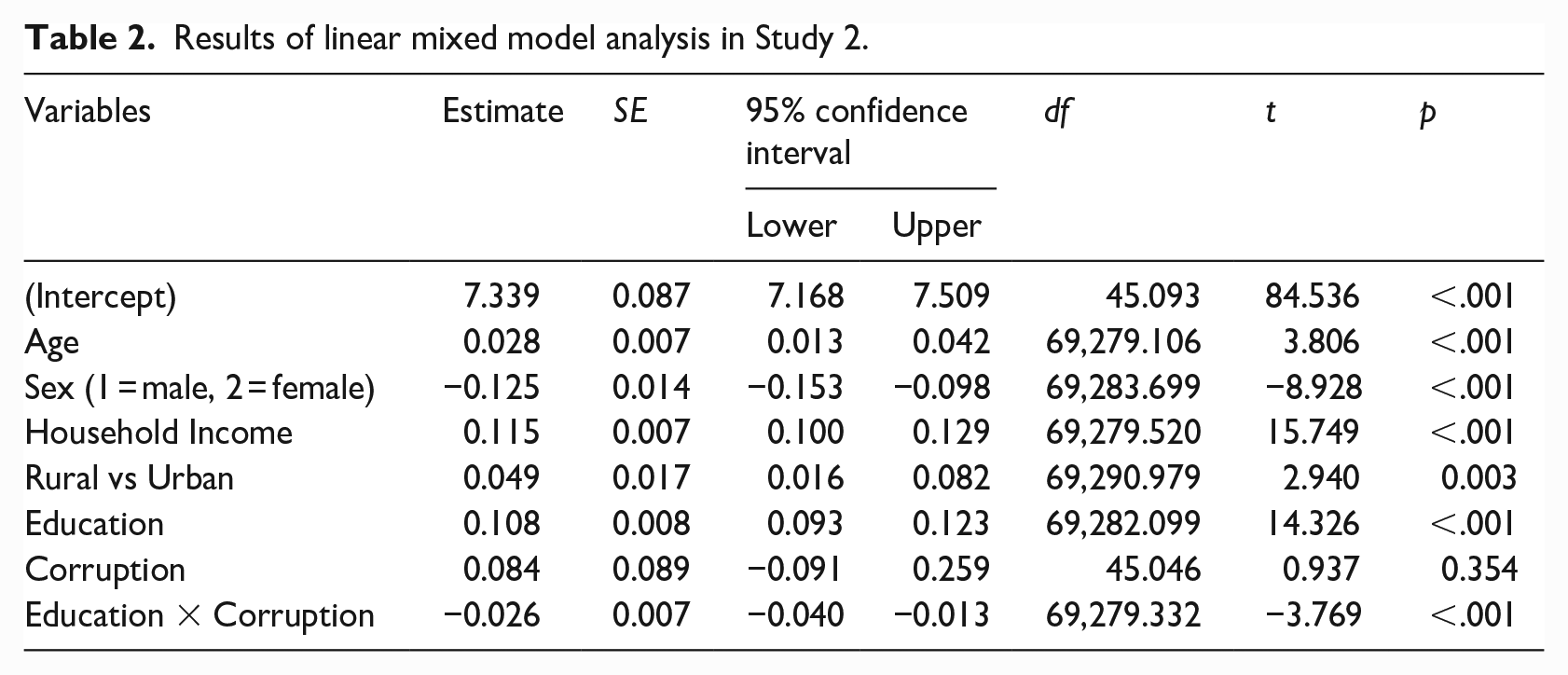
All control variables had significant associations with trust in scientists. Being male, being older, having a higher household income, and living in a rural area were related to higher trust in science, while age was not correlated with trust (see Table 2). After adjusting for control variables, education was positively related to trust in science, b = .108, SE = .008, 95% CI [.093, .123], t(69,282.099) = 14.326, p < .001, while corruption was not, b = .084, SE = .089, 95% CI [−.091, .259], t(45.046) = .937, p = .354. The interaction between education and corruption was significant, b = −.026, SE = .007, 95% CI [−.040, −.013], t(69,279.332) = −3.769, p < .001.
Results of linear mixed model analysis in Study 2.
The positive association between education and trust in science was significant in low, b = .134, SE = .010, 95% CI [.114, .155], z = 13.051, p < .001, moderate, b = .108, SE = .008, 95% CI [.093, .123], z = 14.326, p < .001, and high corruption countries, b = .082, SE = .010, 95% CI [.062, .102], z = 7.948, p < .001, but it was relatively weaker in high corruption contexts as expected, similar to Study 1 (see Figure 3). 4 Figure 4 shows the country-wise associations between education and trust in science, for all countries included in the analyses.
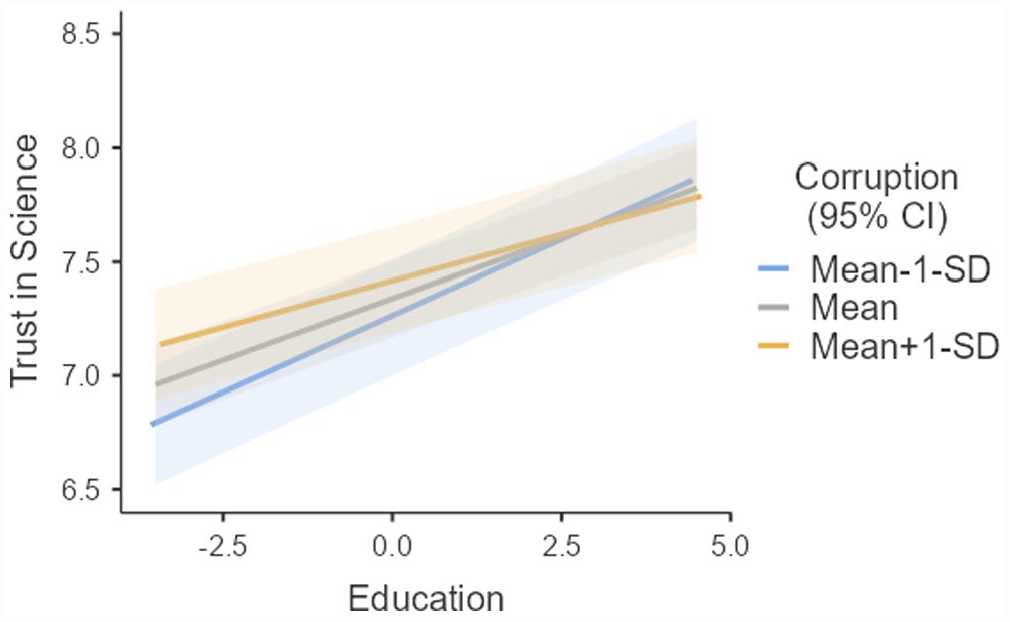
The association between education and trust in science in countries with varying levels of corruption.
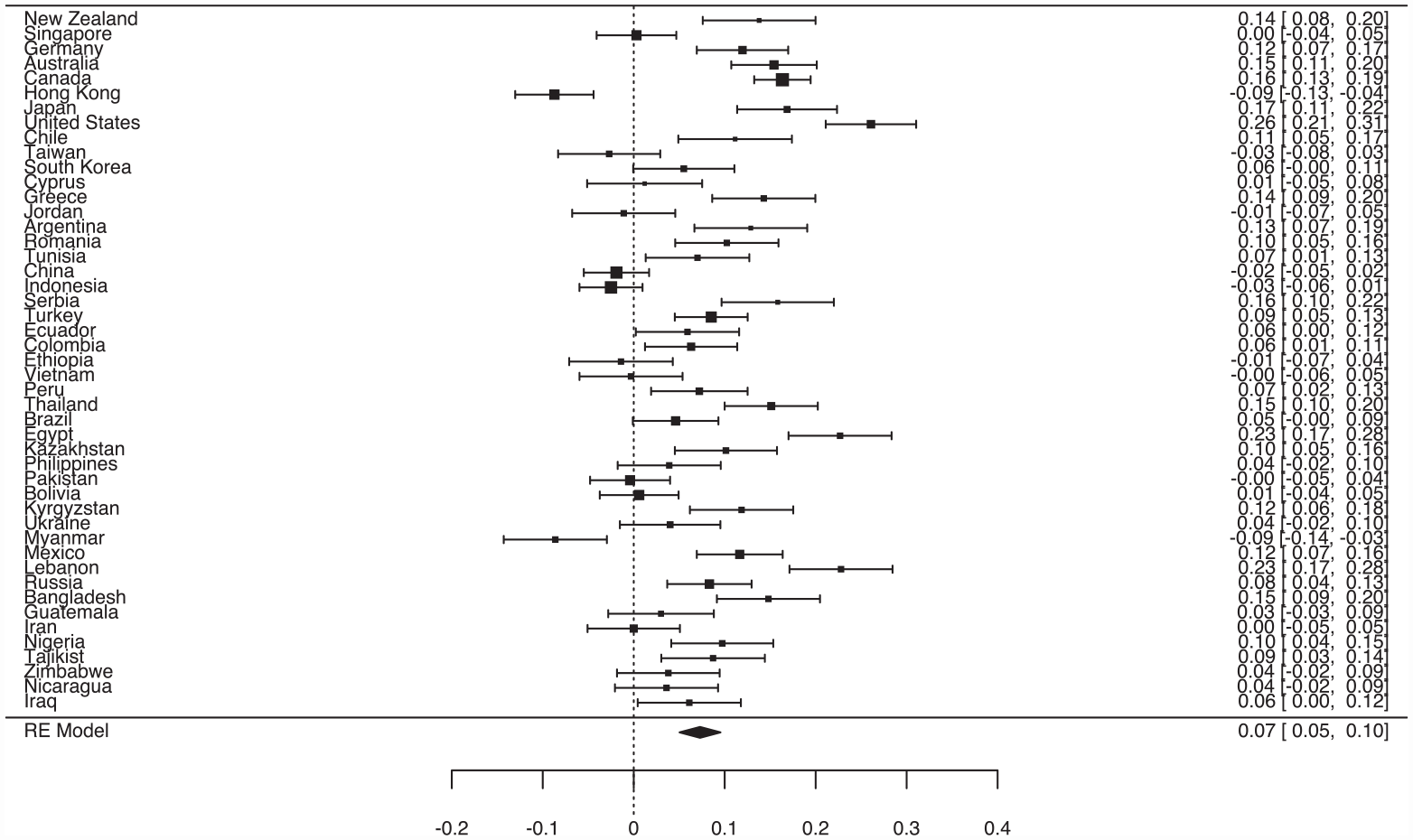
Forrest plot shows the observed correlations between education and trust in science. Bars represent 95% confidence intervals. Countries are ranked from lowest level of corruption to highest level of corruption.
Exploratory analyses
We have included GDP and WEIRDness scores in the model as additional control measures. The pattern was the same: the association between education and trust in science was weaker in highly corrupt countries; however, the interaction between education and corruption did not remain significant. We have also tried GDP and WEIRDness as moderators: in both models, their interaction with education was significant and the association between education and trust in science was weaker in countries with lower GDP and WEIRDness (see the Supplemental Material). The results suggested that, unlike the case of trust in scientists, trust in science could be dependent on other country-level variables, like wealth and cultural differences. However, it should be noted that this difference in results might stem from a lack of statistical power: the number of clusters (countries) is substantially lower in Study 2 (47 countries as opposed to 142 countries in Study 1). The minimum sample size for Level 2 (i.e. number of countries) is ideally higher and more important than the sample size for Level 1 (i.e. individuals in each country) (Arend and Schäfer, 2019). Lower number of countries might be the reason why the association between corruption and education was not robust to the addition of new covariates, which are closely related to the main variable of interest, corruption.
3. Discussion
Trust in science and scientists can have important consequences for our democracy (Devine et al., 2021; Dohle et al., 2020; Erisen, 2022; Lalot et al., 2021; Plohl and Musil, 2020; Sulik et al., 2021). Consequently, uncovering the individual and contextual factors that drive such trust and mistrust is important. Considering this, this study sought to investigate the relationship between education and trust in science and scientists in nationally representative and probabilistic samples while also testing the potential moderating role of country-level corruption in this relationship. Our argument was that although education level increases trust in science in WEIRD (Western, educated, industrialized, rich, democratic) cultures (Henrich et al., 2010) where corruption is low, this may not be reasonable all over the world because even educated people living in places where corruption is high can actually have a belief that scientists are potentially involved in misconduct. To test this argument, two separate studies using publicly available large multisite data sets were carried out (Study 1: 142 countries, N = 40,085; Gallup, 2019; Study 2: 47 countries, N = 69,332; Haerpfer et al., 2022) and, as expected, findings revealed that education was positively associated with trust in scientists (Study 1) and trust in science (Study 2). Namely, as education increased, so did trust in science and scientists. More importantly, this relationship was moderated by corruption, such that the relationship between education and trust in science and scientists was stronger in countries with low corruption, and weaker (Study 2) or even non-existent (Study 1) in countries with high corruption. In other words, as predicted, higher country-level corruption appeared to diminish the positive association between education and trust in scientists and science.
The findings of this article provide two important contributions. First, robust evidence from two large-scale and diverse nationally representative samples is provided, supporting previously found trends in the literature on the relationship between education status and trust in science/scientists. In line with the information deficit model, arguing that education is related to higher trust in science (Durant, 1993; Gauchat, 2010, 2012; Sturgis and Allum, 2004), past research has mainly reported positive associations between education and trust in science/scientists (Achterberg et al., 2017; Allum et al., 2008; Bak, 2001; Gauchat, 2010; Hamilton et al., 2015; Hayes and Tariq, 2000; Hmielowski et al., 2014; Huber et al., 2019). For instance, Huber et al. (2019) found that education status positively predicted trust in science in a sample of 21,321 individuals from 20 countries. Furthermore, Hamilton and colleagues (2015) reported that trust in scientists on issues related to climate change and vaccines was highest among individuals with a postgraduate education and lowest among those with a high school education or less. However, although such findings may appear quite intuitive, it is important to test how well such relations hold in large and nationally representative samples with individuals from around the globe. In addition, there have also been arguments made that the statistical relationships between education and trust in science are fickle (Gauchat, 2012; Plohl and Musil, 2021; Wilgus and Travis, 2019). By reporting the most large-scale cross-cultural data sets to date on the relationship between education and trust in science/scientists, this article provides critical insight into this literature.
Second, and more notably, this article extends previous work by incorporating the role of social context, namely country-level corruption, into assessing how education would be related to trust in science and scientists all over the world. In doing so, it is revealed that the level of corruption in a country affects how education is associated with trust in science/scientists. This novel finding is worth discussing in more detail: why does corruption weaken the relationship between education and trust in science and scientists? Perhaps recent work assessing the role of corruption within the conspiracy beliefs literature (Alper, 2022; Alper and Imhoff, 2022; Alper et al., 2021) may provide important insights into this question. In three large-scale cross-cultural samples, Alper (2022) found that the negative relationship between education and conspiracy beliefs was moderated by country-level corruption, such that this relationship only emerged in low-corruption countries. In other words, the protective role of education against conspiracy beliefs emerged in countries with low corruption, but not in countries with high corruption. A plausible explanation for this is that in highly corrupt countries, individuals’ expectations of secretive alliances are considerably more credible, compared to countries with low corruption, as “real conspiracies” (such as bribery and censorship) often do happen in such contexts (Alper, 2022; Alper and Imhoff, 2022; Alper et al., 2021). Thus, even highly educated individuals may find certain conspiracy theories probable, which makes education status less effective in predicting people’s conspiracy beliefs (Alper, 2022). Likewise, in more corrupt countries, mistrust in science and scientists may not be as unreasonable as it may seem at first glance. Instead, due to the more frequent occurrences of dishonest and fraudulent behavior in many institutions, including scientific ones, being more suspicious of science and scientists might relatively be more sensible in countries with high corruption. Therefore, in such contexts, education status does not appear to influence individuals’ levels of trust in science and scientists since even educated individuals may find it quite hard to trust these institutions.
Such an explanation is consistent with the “rationalist” approach (Hakhverdian and Mayne, 2012; Noordzij et al., 2021; Van der Meer, 2010; Van der Meer and Hakhverdian, 2017), since our results supported the argument that individuals rationally update their trust in the institutions and their actors based on realistic indicators of untrustworthiness, like country-level corruption. We showed that the moderation effect of corruption extends beyond politics and it influences education’s association with not only political institutions, but also science and scientists in general. It could also be argued that our findings contradict with the “reflexive modernization” (see Beck, 1992) approach previously proposed to explain the association between education and vaccination uptake (Makarovs and Achterberg, 2017). According to Makarovs and Achterberg (2017), individuals are more suspicious of the scientific arguments behind vaccination programs in reflexive modernized countries, in which highly educated people are more knowledgeable of the shortcomings of the scientific enterprise and thus more critical of science and technology. Although our data are not sufficient to test the country-level reflexive modernization, it would be safe to argue that our findings are likely to contradict with this proposal. This is because reflexive modernized countries are likely to be highly developed (for example, Makarovs and Achterberg measure reflexive modernization based on the frequency of Internet users, Internet servers and researchers), as well as low-corruption countries. We found an opposite pattern and showed that highly educated people are more suspicious of science and scientists not in low corruption, but in high corruption countries.
Overall, this research indicates that we should not ignore the social context even for an intuitively plausible finding (e.g. positive association between education and trust in science and scientists) and suggest that future research should think more about what the relevant contexts might be.
Limitations and future directions
In both studies, core demographic variables, specifically age, sex, household income, and living in a rural vs urban area, were controlled for. However, other important sociodemographic variables, such as religiosity and political orientation, were not considered. Previous work found both religiosity (Evans, 2013; Gauchat, 2012; Upenieks et al., 2022) and political orientation (Gauchat, 2012; Rutjens et al., 2018) can significantly account for individual variances in attitudes and trust toward science. Therefore, future work should assess how controlling for other sociodemographic variables, especially religiosity and political orientation, may influence the relationship between education and trust in science/scientists and the moderating role of corruption.
Furthermore, this study largely focused on one potential moderator (i.e. country-level corruption) in the relationship between education and trust in science and scientists. In exploratory analyses, we also investigated the role of GDP and cultural WEIRDness and found that these two also have moderating roles, very similar to the case of corruption. To test these alternative explanations, we included them as additional control measures in our main model. The interaction between education and corruption remained significant in Study 1 but not in Study 2. This might (1) simply be due to the lack of clusters in Study 2 (see Exploratory Analyses subsections of Studies 1 and 2 for more detail) or (2) suggest that when it comes to trust in science, unlike the case of trust in scientists in Study 1, corruption is not the main country-level variable of interest. To check which explanation is more likely, we went back to the Study 1 data set, which included more countries, and used a single item on trust in science as the dependent measure. We found that, similar to the case of trust in scientists, education and corruption had a significant interaction in predicting trust in science, even after adjusting for differences in GDP and WEIRDness (see the Supplemental Material). Such a finding was more supportive of the first potential explanation and supported the argument that the role of corruption is not reducible to other country-level factors. However, future research should still look for other such factors and investigate the possibility that multiple country-level factors interact with each other in moderating the effect of education.
Prior research showed that individuals have higher political trust in less corrupt countries, but their political trust is also associated with their political views: if one has similar worldviews to those in power, this predicts higher political trust (Noordzij et al., 2021). Similarly, social psychological research has shown that people’s political views were predictors of their acceptance of science when it comes to politically controversial science topics, like climate change and genetically modified foods (Lewandowsky et al., 2013; Rutjens et al., 2022). Future research on the role of education could investigate the effect of congruence between individuals’ beliefs and how they perceive the political stance of scientists or political implications of specific science topics.
With two high-powered studies using nationally representative samples, this article provides robust evidence showing that education is positively and significantly associated with trust in science and scientists, but this relationship is weaker in countries with high corruption. It is therefore important to understand the underlying mechanisms that drive such trust and mistrust, not only from an individual level (such as via education) but also by taking contextual factors (such as country-level corruption) into consideration because both trust in science and scientists have crucial consequences for any given society.
Supplemental Material
sj-docx-1-pus-10.1177_09636625231176935 – Supplemental material for The positive association of education with the trust in science and scientists is weaker in highly corrupt countries
Supplemental material, sj-docx-1-pus-10.1177_09636625231176935 for The positive association of education with the trust in science and scientists is weaker in highly corrupt countries by Sinan Alper, Busra Elif Yelbuz, Sumeyra Bengisu Akkurt and Onurcan Yilmaz in Public Understanding of Science
Footnotes
Funding
The author(s) received no financial support for the research, authorship, and/or publication of this article.

Supplemental material
Supplemental material for this article is available online.
Notes
Author biographies
References
Supplementary Material
Please find the following supplemental material available below.
For Open Access articles published under a Creative Commons License, all supplemental material carries the same license as the article it is associated with.
For non-Open Access articles published, all supplemental material carries a non-exclusive license, and permission requests for re-use of supplemental material or any part of supplemental material shall be sent directly to the copyright owner as specified in the copyright notice associated with the article.
