




Abstract
Addressing Africa’s intricate urban problems demands that adverse relations be challenged. Building solidarities across class and other social divides is instrumental in driving inclusive urban reforms. This paper aims to contribute to the emerging literature on urban reform coalition-building in Southern cities by expanding our conceptual understanding of the form, purpose and content of coalitions. Through analysing the African Cities Research Consortium’s research reports and online research, the paper identifies key analytical dimensions of urban reform coalitions: form, temporality, goal, degree of formalization, class composition and key outputs. The findings suggest that reform coalitions aiming to benefit the wider segment of the urban population and disadvantaged groups, and reform coalitions that facilitate dialogue and knowledge exchange platforms tend to foster cross-class alliances. Nonetheless, building inclusive reform coalitions is predicated on a well-organized disadvantaged group. The paper proposes five distinct types to invite in-depth analysis of urban reform coalitions in the global South.
Keywords
I. Introduction
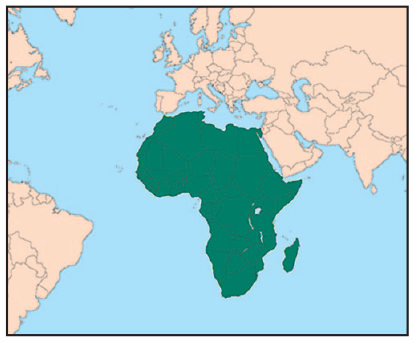
African cities grapple with rapid growth, poverty, unemployment, inequalities, infrastructure deficits and climate vulnerability, all disproportionately harming low-income groups.(1) These challenges are exacerbated by adverse relations that result in the uneven distribution of opportunities based on class, location, political affiliation and other identities.(2) Addressing these intricate urban challenges in the global South demands urban reform anchored in the politics of redistribution and inclusion, as Paller’s(3) work in Accra, Ghana, demonstrates. Building a multi-stakeholder coalition cutting across the power and class divide provides a viable strategy, depending on the local politics, to challenge adverse relations and contribute to inclusive urban reform.(4)
Existing theories explaining the character of urban governance, particularly growth machine(5) and urban regime theories,(6) highlight the central role of coalitions of local government and non-state actors in governing cities. The social movement coalitions literature(7) has analysed the factors contributing to the formation and effectiveness of coalitions. Similarly, the politics of development literature advances the concept of reform coalitions,(8) although it focuses more on state–business alliances. While these bodies of work offer valuable insights, they focus primarily on global North contexts or on elite-led coalitions and are thus limited in their ability to analyse urban reform coalitions involving organized disadvantaged groups, particularly those working and/or living informally in global South cities. Disadvantaged groups are defined in this paper to include those that are disenfranchised or marginalized, excluded from or adversely included within the dominant urban political and economic system based on their socioeconomic and legal status.(9) Addressing the limits of existing literature, there is a recent interest in interrogating reform coalition-building in Southern cities.(10) A framework of analysis is crucial to assist further study.
Despite the growing literature on collaborative strategies to challenge exclusion in African cities, there remains a dearth of research that moves beyond the dominant framing of clientelism in African studies.(11) This study aims to fill the gap by identifying the key dimensions and types of coalition-building initiatives in selected African cities to provide a framework for further in-depth analysis. It undertakes a desk review of 43 research reports from the African Cities Research Consortium (ACRC)(12) urban development domain,(13) identifying 24 urban reform coalition-building initiatives across 10 African cities. Further information about the initiatives was collected through internet searches. It should be noted that these 24 identified coalitions are only illustrative examples, not exhaustive accounts of realities in their respective cities. The paper uses the terms ‘coalitions’ and ‘alliances’ interchangeably, both being understood as groups of diverse stakeholders working together to achieve common goals.(14)
Based on the analysis, the study identifies critical dimensions – including coalition form, temporality, goal orientation, degree of formalization, class composition and key outputs – that facilitate a nuanced understanding and categorization of urban reform coalition-building. The findings suggest that coalitions promoting urban reform agendas benefiting diverse income groups and those focused on disadvantaged groups, as well as coalitions facilitating knowledge exchange and stakeholder dialogue, tend to foster cross-class alliance-building. However, the mere representation of disadvantaged groups within a reform coalition is not enough to build an inclusive cross-class alliance. These groups must be well-organized and capable of mobilizing their members’ social, political and economic power to mitigate exploitative relationships within cross-class coalition. Using goal orientation and class composition as typological dimensions, this study identified five distinct types of urban reform coalitions. While this study provides a foundation for further analysis, it is limited to identifying key dimensions and types to assist context-specific and nuanced analysis of urban reform coalition-building in Southern cities.
The paper has seven sections. The following section draws on existing literature to develop conceptual insights for analysing urban reform coalitions. Section III outlines the methodology. Section IV presents key dimensions of urban reform coalition-building initiatives, and Section V analyses the relations between the class composition of coalitions and other dimensions to deepen the analysis of inclusive urban reform coalition-building. Section VI presents the five distinct types of urban reform coalitions and Section VII concludes.
II. Conceptualization of coalitions
This section briefly reviews how different bodies of literature, namely work on North American urban political economy, on social movements and on the politics of development scholarship (specifically the Development Leadership Programme(15)), have conceptualized coalitions. Building on this literature, the section identifies key themes for analysing urban reform coalitions.
a. North American urban political economy scholarship
Within this body of work, growth machine and urban regime theories highlight the crucial roles of local government entities and private actors, especially businesses, which often collaborate in strategic alliances or coalitions to shape urban governance. Growth machine theory posits that urban governance in North America is dominated by coalitions of city officials and business elites who prioritize economic growth and the intensification of commercial and residential land use. These growth coalitions strategically leverage their power to secure benefits, such as subsidies, permits and infrastructure, from the municipality. The theory also acknowledges the emergence of anti-growth coalitions, primarily environmental movements, which resist the adverse consequences of unchecked growth.(16)
Urban regime theory focuses on the emergence of an urban governing coalition and the key role of city officials. Stone(17) contends that local governments govern cities by bringing together state and non-state actors for a shared purpose through informal and relatively stable arrangements, i.e. urban regimes. While businesses play a crucial role in governing coalitions due to the resources they control, other civil society groups may also be included.(18) Despite resource and power disparities among coalition members, long-term cooperation necessitates a consideration of the interests of all members, potentially leading to redefining their subjectivity/identity.(19) The sustainability of these coalitions also depends on their ability to adapt to changing sociopolitical conditions and to manage conflicts effectively.(20)
Urban regime theory posits that the composition, relationships and resources of governing coalitions determine a city’s policy agenda and the type of urban regime that develops.(21) Stone identified different urban regimes: maintenance regimes focused on the status quo, developmental regimes prioritizing economic growth, and middle-class progressive regimes emphasizing broader social and environmental goals. Middle-class progressive regimes, beyond mobilizing resources needed for development, require what Stone referred to as “organizational capacity to inform, mobilize, and involve the citizenry”.(22) Lower-class opportunity expansion regimes are possible but challenging, requiring the combined efforts of state and non-state actors to mobilize the lower-class constituency and secure support from institutional elites for opportunity expansion investments.(23) Although the theory has been criticized for its limitations in analysing national and regional political economy influences,(24) its failure to explain how to build an inclusive governing coalition(25) and its analytical limits in contexts beyond US cities,(26) it does provide insights on the formation, relations and composition of coalitions in global South cities.
b. Social movement coalitions
Social movements are recognized to rely on class-based or cross-class coalitions to mobilize wider support for their cause.(27) These coalitions are means-oriented arrangements that allow distinct organizational entities(28) to pool resources for change.(29) They can be informal and short-lived, like event coalitions, or more formal and long-lasting, while maintaining organizational autonomy.(30) They involve individuals’ and groups’ interaction across time, are informed by historical relations, existing political opportunities and threats, and may focus on single or multiple issues.(31) Key factors in conceptualizing coalitions involving social movement organizations include resource pooling, conflict management and defining membership.(32)
Research on urban social movements in global South cities has also highlighted the role of alliance-/coalition-building in urban struggle anchored in organized disadvantaged groups. Studies have shown that precarious workers in the global South, from Buenos Aires to the Kerkennah Islands of Tunisia, build solidarities and alliances beyond their workplaces and integrate their social and personal lives into their organizing to contest exclusionary policies.(33) Such solidarities collectively produce alternative territories that transcend state-centric administrative jurisdictions, as in the case of Buenos Aires.(34) Beyond local solidarities, there are work-based solidarities. Informally employed transport workers, for instance, forge alliances with state and non-state actors and engage to improve their working conditions, as in Dar es Salaam.(35) Similarly, trade unions of street vendors and waste pickers mobilize their members to advocate for better livelihoods and rights in urban settings while forming institutional alliances and engaging in international networks.(36) In some contexts, such as Kampala, their struggle may be severely repressed.(37) There is also an increasing role for NGOs in building alliances for environmental and urban development mobilizations, as exemplified in Indian cities.(38) For example, an NGO in Calcutta, India, mobilized squatter settlement communities for political action, facilitated a professional-led national housing legal reform coalition in the 1980s and 1990s and contributed to making housing rights part of the national political agenda.(39) The long-standing presence of slum dwellers(40) and informal workers movements(41) in India contributed to the formation of a multi-agency coalition for reform.
There is also emerging literature that explicitly tackles the concept of the urban reform coalition.(42) Building on her long-term political ethnographic research with the transnational grassroots social movements of informal settlement residents, for instance, Mitlin conceptualized urban reform coalitions as “groups of diverse stakeholders . . . who perceive benefits in coming together . . . to achieve common goals”.(43) Reform coalitions actively involving organized disadvantaged groups have been effectively used to challenge adverse relations by providing what Kamath et al. describe as “intellectual leadership, inputs into government policies and processes, and scalable pilots that triggered and sustained changes”.(44) In doing so, they create what Clara Irazábal(45) calls “spaces of solidarity”, where diverse actors network to produce emancipatory knowledge and enhance the self-expression of disadvantaged groups. However, in some contexts the declining level of national government support for pro-poor reforms and local democratization, as well as the intensive commodification of urban land markets, poses challenges to inclusive reform.(46) Nonetheless, it is crucial to recognize that coalition-building is a strategy for actively influencing the expansion of political opportunities for reform and for expanding democratic spaces and practices within the existing structural limits.(47)
c. Reform coalitions in the politics of development literature
The politics of development scholarship considers elite coalitions an essential component of its analysis.(48) In particular, scholars affiliated with the Development Leadership Programme (DLP)(49) have advanced the concept of reform coalitions. Adrian Leftwich and Steve Hogg(50) provided an instrumental conceptualization of coalitions as “transient or long-lasting” and “formal or informal”, and as associations of “groups and organizations working to resolve a specific problem or specific goals that are beyond the capacity of the individual member of the coalition”. Caryn Peiffer(51) offered a narrower definition of reform coalitions limited to state–business alliances:
“A (formal or informal) political mechanism and process utilized and formed by state and business actors, initiated by either, which enables them to work cooperatively to address specific state and market collective action problems.”
Peiffer,(52) quoting Seekings and Nattrass,(53) identifies two types of reform coalitions: growth coalitions, solely focused on economic development, and developmental coalitions, which facilitate a growth model that primarily benefits businesses and promotes pro-poor policies through job creation and self-employment. Beyond developmental and growth coalitions, Effective State and Inclusive State(54) (ESID)-affiliated researchers have shown social movement–state coalitions’ role in gender equity legal reforms(55) and urban inclusion.(56)
Development Leadership Programme-affiliated scholars’ conception of reform coalitions mainly focuses on business–state alliances and emphasizes the importance of actors calculating cost and benefits during coalition-building.(57) However, as Crossley(58) argues, coalescing for social change requires a broader conception than linking means and ends and weighing up costs and benefits.
d. Emerging themes
Six themes can be identified in the reviewed literature to inform this study’s analysis. First, urban reform coalitions can take the form of either “city knowledge-led platforms” or “issue/problem-focused coalitions”, as Mitlin terms them.(59) Second, Levi and Murphy(60) distinguish between short-lived and long-term enduring coalitions, albeit without considering the temporal dimension of the reform agenda. Third, as noted by Stone and others, composition, mobilization and negotiation shape the policy objectives of coalitions and the specific population segment they benefit.(61) For example, according to Stone(62) “lower-class opportunity expansion” coalitions require mobilized lower-income constituencies. Fourth, Hathaway and Meyer(63) argue that the degree of formalization/institutionalization influences coalition longevity, with loosely institutionalized coalitions tending to be more adaptive to changes in political opportunities and threats.(64) Fifth, coalitions can be class-based or cross-class, with cross-class alliances offering potential benefits but also the risks associated with power asymmetry.(65) Sixth, coalition-building helps to build network/relational capacity,(66) mobilize resources(67) and co-produce what Irazábal calls “emancipatory knowledge” that challenges exclusionary practices and advances the interests of disadvantaged groups.(68) Building on these themes, the paper develops an analytical framework to identify key dimensions and types of urban reform coalitions in Southern cities.
III. Methodology
This study, as noted, undertook a desk review of 43 research reports from ACRC’s urban development domain, focused on 12 large African cities, in order to identify and analyse the reform coalition-building initiatives there. The study is inspired by and contributes to the ACRC theory of change, which draws on political settlement analysis, city of systems and urban development domains analysis,(69) and recognizes the potential contributions of reform coalitions in supporting progressive change towards prosperity, poverty reduction and addressing the climate emergency.(70)
The research documented by these reports examined the 12 African cities to understand how politics and political economy interact with city systems to influence prosperity and poverty reduction.(71) Informed by ACRC’s theory of change, the research adopted a politically informed analysis of the interrelated city systems and eight urban development domains relating to the built environment, economic and social spheres of cities. ACRC conceptualizes these domains(72) as fields of power and influence where diverse actors compete to shape policies and practices, utilizing various strategies to assert authority and advance their interests while also being interconnected with broader urban systems and political settlements.(73) Each urban development domain research focuses on: the scale, key actors (reform coalitions if applicable), governance, challenges, interplay of political factors, systemic issues, potential areas of intervention, and the effectiveness of reforms within the respective domain. Each investigation was led by experts with a long track record of relevant work in the specific city, with support from scholars specialized in the fields and the region, and adopted a mixed approach (qualitative, quantitative and document analysis).(74)
By drawing on the resulting reports, this study aims to contribute to ACRC’s theory of change by advancing the theoretical and strategic understanding of urban reform coalitions gained by systematic analysis of the different dimensions of alliance-building initiatives in African cities. A total of 60 collaborative initiatives were identified in the 43 reports, which were further investigated through an internet search.(75) Of the 60 initiatives, only 24 from 10 of the cities could both qualify as reform coalitions and provide sufficient information for analysis.
The inclusive development focus of most ACRC urban development domain research may have contributed to the disproportionate representation of reform coalitions working with disadvantaged groups. The 24 coalitions, as noted, do not represent an exhaustive account of coalition-building in the 12 ACRC African cities, but are used as illustrative examples.
The framing and analysis of the paper were enriched by the author’s formal and informal conversations during ACRC meetings and workshops.(76) The study employed an iterative thematic analysis to systematically examine the 24 reform coalitions, guided by themes emerging from the literature and report data. The initial step of the analysis involved an in-depth understanding of the 24 urban reform coalitions through reading and re-reading relevant publications. The key themes that emerged from the literature on coalitions more generally (such as the form of coalition,(77) temporality,(78) goal orientation,(79) degree of formalization,(80) class composition(81) and key outputs(82)) were assessed for their relevance in identifying key dimensions of urban reform coalitions in particular. Following this assessment, the 24 reform coalitions were systematically categorized into distinct groups using the themes from the literature and the data. This was not a one-time process but involved continuous revisions and refinement by going back and forth between the literature and the data to ensure relevance, consistency and clear boundaries.
IV. Different dimensions of urban reform coalition-building initiatives in African cities
Building on the preceding conceptual discussion, this section identifies six distinct dimensions (see Figure 1) that emerged from the review of the urban reform coalition-building initiatives, and that support the analysis of the form, purpose and content of the urban reform coalitions.(83)
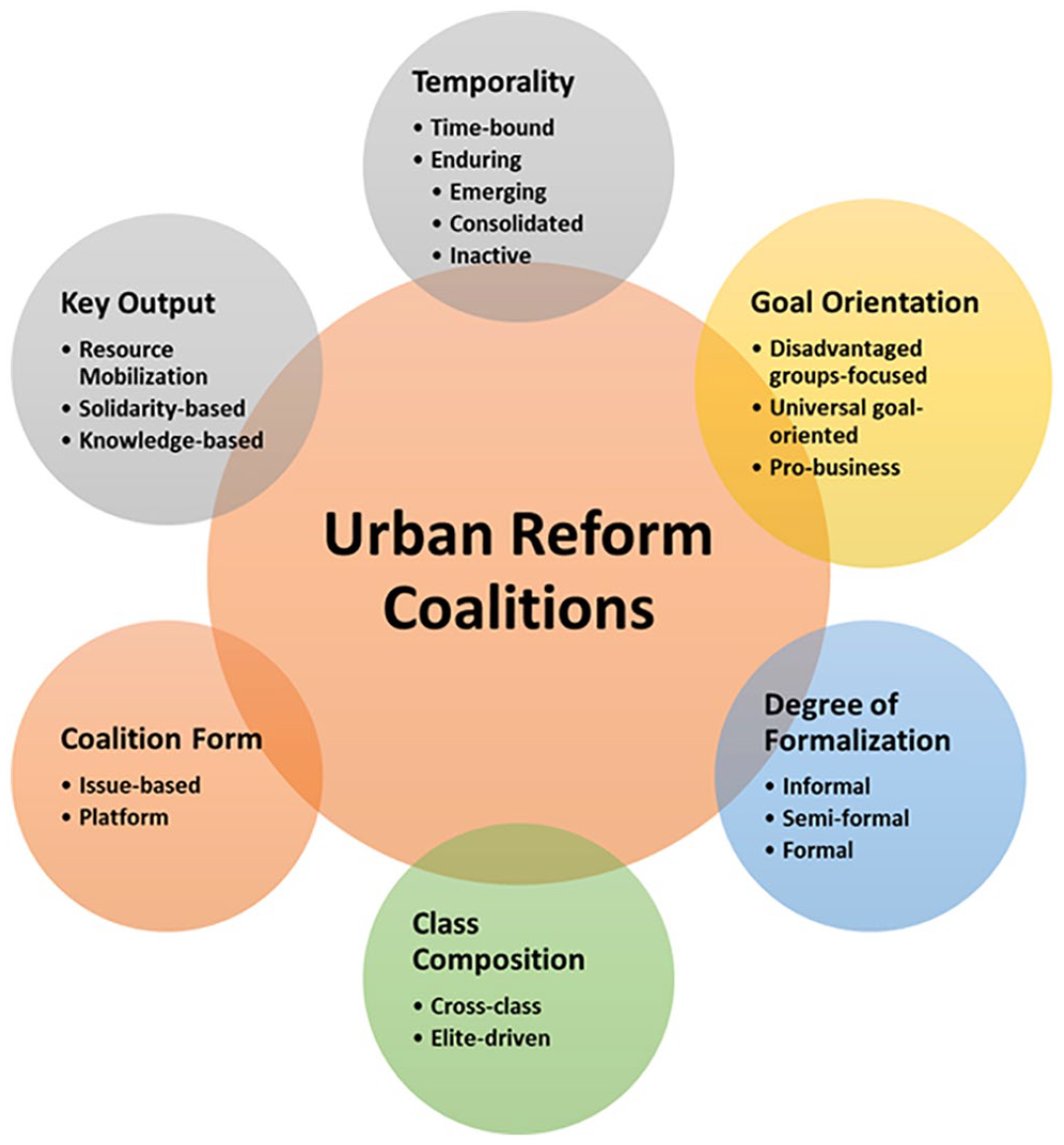
Urban reform coalitions: Dimensions of analysis
a. Forms of coalition
Mitlin(84) distinguishes between two forms of reform coalitions: city knowledge-led platforms and issue-based or problem-focused coalitions. Issue-based coalitions tackle specific social problems or work to achieve a particular reform agenda, and only three such coalitions were identified by the review.
Knowledge-led platform coalitions, on the other hand, “provide knowledge and a convening space to challenge poorly informed politicians, vested real estate interests, international development agencies, consultants and contractors who instigate adverse planning and projects and modify the planning process”.(85) An example from the reviewed African cities is the Sierra Leone Urban Research Centre (SLURC) in Freetown. SLURC curated Freetown’s City and Community Learning Platforms, multi-scale (at community and city levels) and multi-partner (including organized informal settlement residents) platforms that contributed to the dissemination of accurate information and the coordination of responses during the COVID-19 pandemic.(86) The objectives of these platforms are to co-produce knowledge with organized disadvantaged groups, to facilitate reform dialogue and to legitimate the knowledge produced by community groups. Whether these objectives were actually achieved remains to be seen.
The study identified 21 of these platform-based urban reform coalitions. Not all are devoted primarily to knowledge co-production and dissemination, however. Some focus on facilitating dialogue and information exchange in order to nurture issue-based coalitions, mostly by involving organized disadvantaged groups. As Mitlin describes it, platform coalitions can enable “issue-based coalitions with elite participation to emerge with some success”.(87) For example, the Federation of Informal Workers’ Organizations of Nigeria (FIWON), a platform dedicated to improving the livelihood of informal economy operators, facilitated the establishment of various issue-based coalitions. One of them is a coalition dedicated to advocating for domestic workers, organizing them into unions, and providing support through education, conflict resolution and social protection initiatives.(88) Here too, the impact remains to be researched.
b. Temporality
Levi and Murphy(89) categorized coalitions into event-based (or short-lived) and enduring (or long-lived) coalitions. This categorization, however, overlooks the temporal dimension of the reform agenda itself. This study, accordingly, focuses on the reform agenda to distinguish between time-bound coalitions pursuing specific reform agendas and enduring coalitions dealing with broad reform agendas. Enduring reform coalitions were further subdivided into emerging, consolidated and inactive coalitions, depending on their operational status.
Time-bound reform coalitions emerge for specific reform agendas that can be addressed within a specific period. They tend to be issue-based or problem-focused and can vary in duration depending on the complexity of the reform agenda.(90) A case in point is the Mukuru informal settlement SPA (Special Planning Area) coalition, a collaboration of more than 40 organizations that supported the preparation of a participatory and comprehensive upgrading plan for an area comprising 100,500 households living informally on private land. This coalition lasted from 2014 until the planning process ended in early 2020.(91) Other examples include the Lagos Tax Reform Coalition and the Transform Freetown-Lives coalition.(92) Time-bound coalitions may dissolve when they achieve (or fail to achieve) their objectives or they may use the established collaborative momentum to pursue another reform agenda. They may also encourage other actors to coalesce for reform. For example, the Mukuru SPA coalition experience in Nairobi inspired similar initiatives in other informal settlements of Nairobi.(93)
Enduring coalitions tend to be platforms where broad challenges (such as addressing poverty, informality or other sectoral issues) are discussed, activities coordinated and information exchanged. Then specific issue-based coalitions emerge to tackle collectively defined problems.(94) While 21 of the reviewed reform coalitions were platform-based enduring coalitions, they were at different stages of operation: either emerging, consolidated or inactive. It is important to note, however, that the evolution of reform coalitions is not a linear progression but filled with reversals and revivals in response to external and internal dynamics.(95) A case in point is Zimbabwe’s Tripartite Negotiating Forum, initially established in 1998 as a voluntary platform to facilitate social dialogue between its government, labour and business representatives. The platform failed due to mistrust and government repression of labour unions,(96) but was revived and legally re-established in 2019. Its effectiveness remains uncertain however.(97)
Among these enduring coalitions, emerging urban reform coalitions are platforms established to pursue a reform agenda with a long-term horizon and broad issue focus.(98) They are at an early stage of their formation, and their sustainability is predicated on their clear structure, defined membership commitment and potential to advance the collectively identified reform agenda.(99) For instance, the Urban Informality Forum in Harare, Zimbabwe, is a multi-stakeholder platform convened to discuss challenges of urban informality and share best practices.(100) It has been convened since 2018 by Dialogue on Shelter in collaboration with the Zimbabwe Homeless People’s Federation (ZIHOPFE), the Development Governance Institute (DEGI) and the University of Zimbabwe.(101) The platform has allowed organized informal workers and residents to voice their concerns and influence policies.(102)
Consolidated urban reform coalitions are institutionalized platforms established to push for broad reform agendas. Their collaboration is sustained with a structured arrangement for cooperation, either as a distinct organizational entity or instituted within its lead organizations.(103) More than half the reviewed urban reform coalitions fall into this category. For example, the Tax Justice Alliance in Uganda (TJA-U), a legally registered coalition of 35 CSOs, NGOs and networks, has been collaborating since 2014 with the government and campaigning to promote a fair, just and accountable tax system(104) through raising awareness, working with MPs, organizing public actions, and, to a lesser degree, litigation. For example, it influenced the government to halve the mobile money transfer tax(105) in 2018; however, its attempt to repeal the social media tax was unsuccessful due to relatively low popular support and the difficulty of going against the presidential imprimatur.(106)
The review also identified currently inactive platform-based coalitions. For instance, the Drug Control Committee in Maiduguri, a coalition of government security agencies and humanitarian organizations, was established in 2016 to address the drug addiction problems in internally displaced persons (IDPs) camps. The coalition was dissolved in 2022 after the camps in Maiduguri were closed. Drug abuse, however, remains a pressing problem within the city.(107) It is important to note that, although reform coalition functioning could be assisted by financial allocations, their continued functioning does not require significant funding allocations.(108) Instead, these coalitions can be sustained by ensuring their platforms are meaningful to their members through continued interaction, information and knowledge sharing, and collaborative actions in response to emerging issues and opportunities.(109)
c. Goal orientation
This paper categorizes the goal orientation of urban reform coalitions based on the social class their respective reform agendas primarily aim to benefit, whether pro-business, universal goal-oriented or disadvantaged groups-focused.
Pro-business reform coalitions arise, according to Brautigam and colleagues,(110) when business–state relations “take the form of active cooperation towards the goal of policies that both parties expect will foster investment and increases in productivity”. Contrary to business–state collusion for growth-inhibiting rent accumulation, pro-business reform coalitions work for profit maximization for a broad range of formal businesses and facilitate economic growth through pro-market reforms.(111) Only one such coalition was identified, the Uganda Healthcare Federation (UHF), which leads efforts to increase private sector engagement in the health sector in collaboration with the Ministry of Health and other development partners by building private sector capacity and involving itself in different policy platforms.(112)
Universal goal-oriented reform coalitions are geared towards addressing systemic challenges that affect urban residents regardless of income, aiming to foster broad-based reform addressing a specific challenge or to introduce regulatory change.(113) The analysis identified 12 such coalitions focused on tax reform, improving water and sanitation, enhancing urban safety and security, or other broad governance reforms with a wider social impact. A case in point is the Kampala Water and Sanitation Forum (KWSF), a coalition of state agencies, donors and civil society organizations (CSOs) working to coordinate stakeholders’ activities in the WASH sector in Kampala.(114)
Disadvantaged groups-focused reform coalitions specifically target low-income and other marginalized groups.(115) They strive to build the relational capacity of these groups, to enhance their recognition and representation in spatial decision-making, and to improve their access to infrastructure and services.(116) The review found close to half of the identified urban reform coalitions (n=11) are disadvantaged groups-focused. For example, the local-state-led Transform Freetown-Lives initiative in Freetown, a platform involving organized communities, academia, NGOs and government representatives, works to upgrade(117) two flood-prone communities by actively involving residents.(118)
d. Degree of formalization
Another coalition dimension is the degree of institutionalization or formalization.(119) Urban reform coalitions can be categorized as formal, semi-formal or informal. Formal reform coalitions are legally registered coalitions or institutionalized platforms that facilitate dialogue among urban stakeholders and nurture issue-based coalitions.(120) Over half of the reviewed coalitions (n=14) were formally registered or institutionalized within an organization.
Semi-formal reform coalitions are collaborations of various actors guided by rules to govern their relations, and usually coordinated by a lead organization. The rules can be written, such as in a Memorandum of Understanding (MoU) or a programme document, or they can operate according to mutually agreed unwritten arrangements.(121) Of the reviewed reform coalitions, nine are semi-formal coalitions.
Informal reform coalitions are unstructured groups of actors coalescing for a specific reform agenda, mainly growing out of personal and working relationships, usually with limited public visibility. The analysis identified only one informal urban reform coalition, i.e. the Tax Reform Coalition in Lagos, which emerged from a dialogue between organized private sector groups and the Lagos State government to address multiple taxation problems during the Akinwunmi Ambode administration (2015–2019). Although the dialogue was not successful in influencing reform at the time, in February 2023 the state and federal governments agreed to harmonize their taxes and avoid double taxation.(122)
Notably, the intensity of collaboration among coalition partners is not conditional on the degree of formality. Coalitions established as umbrella organizations are often led by representatives of the member organizations, forming steering committees or other such groups. However, sometimes legally registered coalitions might hold autonomous organizational identity with minimal member participation. Thus, the active involvement of member organizations is not guaranteed and requires critical examination.(123) Conversely, coalitions established through personalized and less structured relations might have strong engagement among their members. A case in point is the Urban Informality Forum in Harare, which started in 2018 and built on previous collaborations between organized disadvantaged groups and their support NGO (collectively known as Zimbabwe SDI Alliance) along with academics and government authorities.(124)
e. Class composition
One crucial role of inclusive reform coalitions is providing the opportunity for organized disadvantaged groups to challenge adverse relations by building political solidarity across classes and other group-based exclusions.(125) This study categorizes the reviewed reform coalitions as either elite-driven(126) or cross-class,(127) depending on the involvement of organized disadvantaged groups in the coalition. This categorization makes it possible to assess the priority given to solidarity with organized disadvantaged groups in pursuing inclusive reform agendas.
Elite-driven urban reform coalitions mainly involve relatively powerful or strategically positioned stakeholders without involving organized disadvantaged groups as coalition members. The analysis found only five such coalitions. Although elite-driven coalitions do not include organized disadvantaged groups, some work towards reforms addressing poverty and inequalities. A case in point is the TVET Coalition of Sierra Leone, a coalition of MDAs, NGOs, bi-/multi-lateral agencies and private sector entities working towards enhancing youth employability(128) without involving organized youth to represent their own interests.
Cross-class urban reform coalitions involve alliance-building across the class divide, particularly involving organized disadvantaged groups as coalition members. This group includes most of the urban reform coalitions reviewed (n=19). However, we lack information on the capabilities of the organized disadvantaged groups in navigating the power dynamics within such coalitions. Building cross-class solidarities between organized disadvantaged groups and actors committed to social justice is one of the strategies to challenge adverse incorporation and social exclusion.(129) Fostering cross-class inclusive urban reform coalitions requires alliance-building with capable and well-organized disadvantaged groups. Such groups are better positioned to advance their members’ interests by mobilizing their collective strength, amplifying their political voice, and pooling resources to build a critical mass that other partners cannot ignore.(130) Cross-class urban reform coalitions further support organized disadvantaged groups to gain policy recognition and inclusion in development planning.(131)
Nonetheless, the mere involvement of organized disadvantaged groups within reform coalitions is not a sufficient condition for their inclusion and enhanced capability. It is important to recognize and critically reflect on the relative power asymmetry in these coalitions and to strategize to build the capability and capacity of the disadvantaged groups.(132) One example of a strong network of disadvantaged groups is Muungano wa Wanavijiji, part of the Mukuru SPA coalition. Despite some practical and institutional challenges, this network managed to ensure the agency of marginalized residents in the spatial planning of their settlement by building community groups and taking advantage of political and legal opportunities.(133) Ouma explains that Mukuru SPA is the outcome of the inhabitants’ “history of struggle through protests, petitions, litigation, and engagements with external experts”,(134) which was made possible through their organized and mobilized actions.
f. Key outputs
To push their reform agenda and influence change, coalitions collectively produce various combinations of outputs. Key among these outputs is the relational capital among coalition partners and with powerful external actors.(135) Financial and other resources also help the functioning of coalitions. Knowledge co-production, particularly by coalitions involving action-oriented academics and organized disadvantaged groups, plays a critical role in challenging exclusionary urban policies and experimenting with feasible and pro-poor innovative solutions.(136) Although reform coalitions collectively generate different combinations of mutually intersecting outputs of knowledge, relational capital and resources to drive their reform agenda, the relative significance of these outputs varies from one coalition to the other. Accordingly, we can identify at least three types of coalitions based on the primary output they collectively produce to influence reform: solidarity-based, knowledge-based and resource mobilization coalitions.
Solidarity-based urban reform coalitions mostly use formal and informal connections among the participating partners and external actors to conduct contentious politics and employ collaborative strategies to push their reform agenda. While knowledge co-production and financial resources play a part in their activities, their primary collective output is their ability to mobilize different resourceful actors within the coalition and reach out to other external influential actors by adopting different tactics. About 13 of the 24 reform coalitions were primarily solidarity-based. For instance, the Habitat Forum Tanzania (HAFOTA), a coalition of 25 organizations working in Tanzania, drew on their pre-existing working relationships with the responsible ministry to lobby for more pro-poor housing policy formulation in 2006/7, using various consultative workshops and following up on their recommendations.(137)
Knowledge-based coalitions use knowledge (co-)production and the legitimation of community-produced data in a manner legible to authorities (for instance through policy briefs and development plans) to influence reform.(138) Even though relational capital and financial resources are important, the primary catalysts of the reform strategies for such coalitions are the co-production of, and experimentation with, knowledge and practice. About 10 knowledge-based coalitions were identified in the analysis, and they tend to facilitate cross-class coalition-building involving organized disadvantaged groups. For example, the Urban Action Lab supported community groups in informal settlements to produce briquettes from waste. This intervention was integrated into the urban economy through co-design and co-production involving these organized community cooperatives along with local government, NGOs, policymakers and academics.(139) The initiative has also played a role in legitimizing community-produced knowledge at the city level.(140)
Resource mobilization coalitions are mainly concerned with mobilizing financial and other resources to fund collectively identified programmes or activities. Such coalitions leverage their strategic position, gathering resources from internal and external stakeholders to promote a collectively agreed-upon investment area. For example, the Lagos State Security Trust Fund (LSSTF), a public–private partnership established to mobilize resources for Lagos State security operations, assembled approximately US$ 4.7 million in 2022 alone from donors concerned about the impact of insecurity on business, and incentivized by tax exemptions.(141)
When working with financially struggling actors/organizations and when the collaboration requires investments, development partners willing to commit financial and other material resources play a fundamental role in allowing for the emergence of a reform coalition. In this regard, donor-supported programmes can catalyse the building of reform coalitions involving grassroots organizations, CSOs and authorities operating at multi-level scales of governance.(142) However, donors need to be wary of creating aid dependency and must work towards ensuring local ownership.
V. Key dimensions for building inclusive urban reform coalitions
By capturing emerging tendencies among the various dimensions, this study helps to explain which of these dimensions tend to play important roles in building inclusive urban reform coalitions involving organized disadvantaged groups.
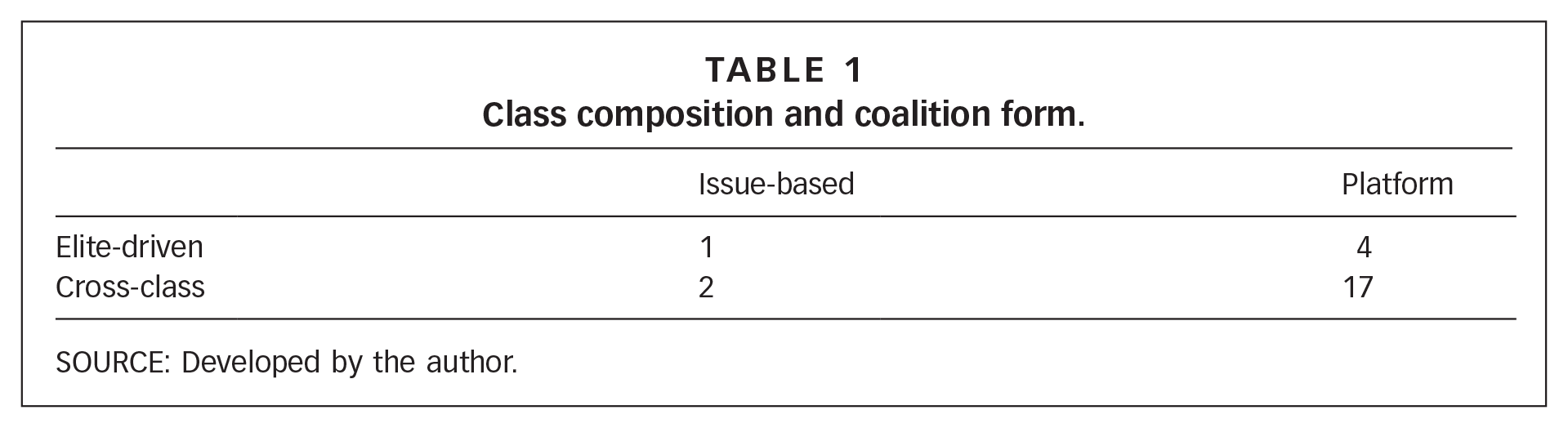
Platform-based urban reform coalitions tend to nurture cross-class alliances that involve organized disadvantaged groups. Of the 21 platform-based reform coalitions, 19 managed to build cross-class alliances involving organized disadvantaged groups (see Table 1). This can be attributed to the role of these coalitions in establishing a space that brings together actors with diverse interests to exchange information and perspectives and potentially to identify overlapping objectives and shared purposes for action.(143)
Class composition and coalition form.
SOURCE: Developed by the author.
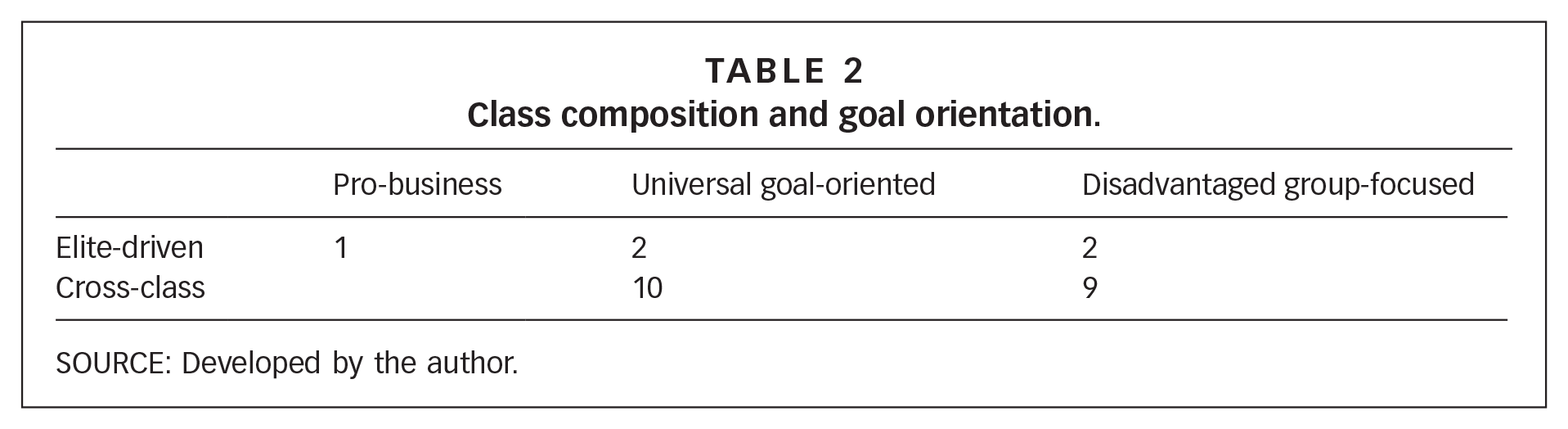
The study also observed a correlation between goal orientation and cross-class alliance-building. Ten of 12 universal goal-oriented reform coalitions and nine of 11 disadvantaged group-focused reform coalitions were cross-class alliances (see Table 2). A reform agenda with a universal or disadvantaged group-focused goal orientation tends to create more incentive to build a cross-class alliance. On the other hand, when a reform agenda primarily benefits formal business interests, there is a limited incentive for organized disadvantaged groups to join.(144)
Class composition and goal orientation.
SOURCE: Developed by the author.
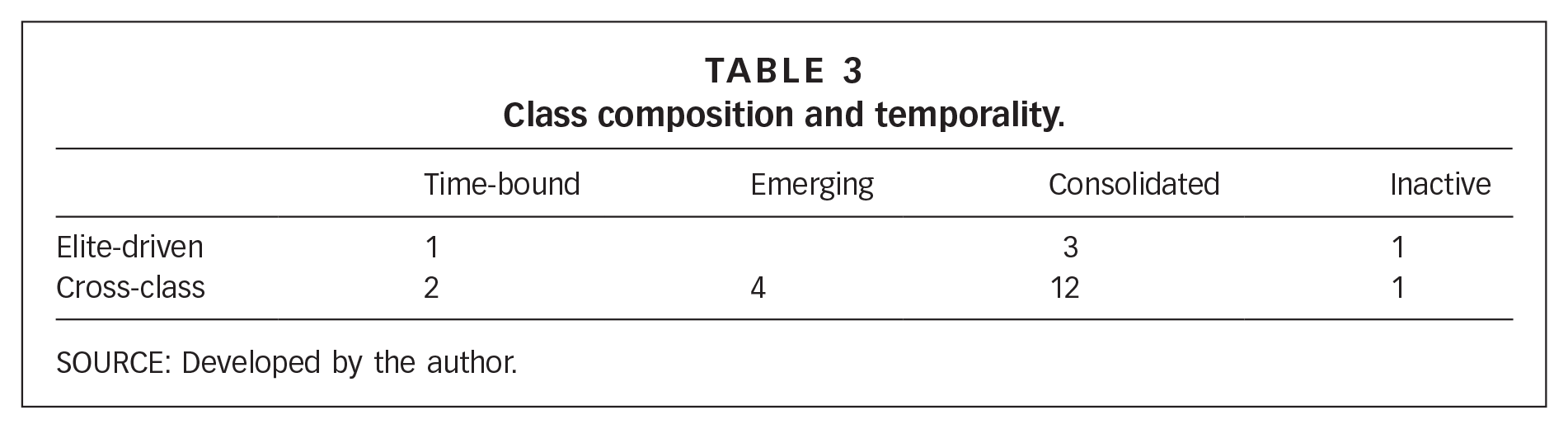
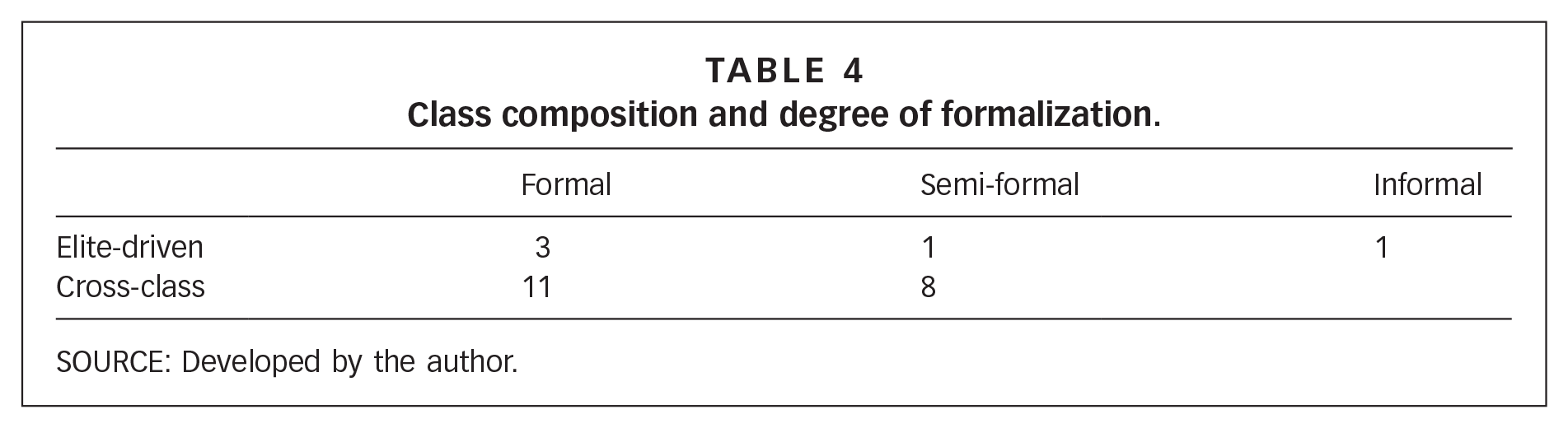
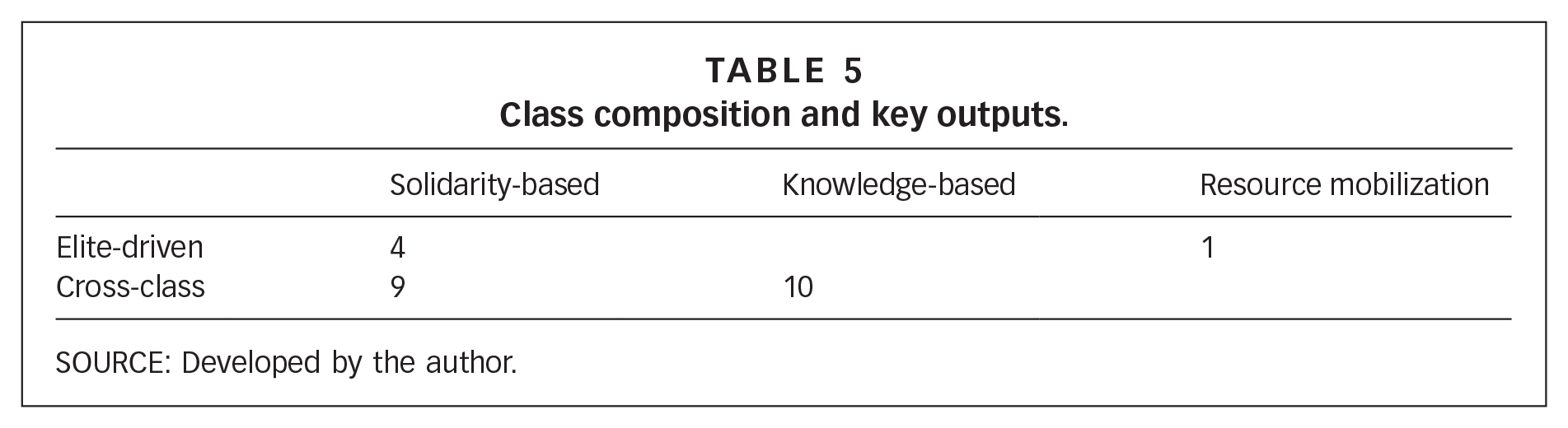
Of the 24 urban reform coalitions analysed here, the cross-class alliances were most likely to be consolidated (see Table 3), formal and semi-formal rather than informal (see Table 4), and to focus on solidarity-based and knowledge-based outputs (see Table 5).
Class composition and temporality.
SOURCE: Developed by the author.
Class composition and degree of formalization.
SOURCE: Developed by the author.
Class composition and key outputs.
SOURCE: Developed by the author.
VI. Emerging types of urban reform coalitions
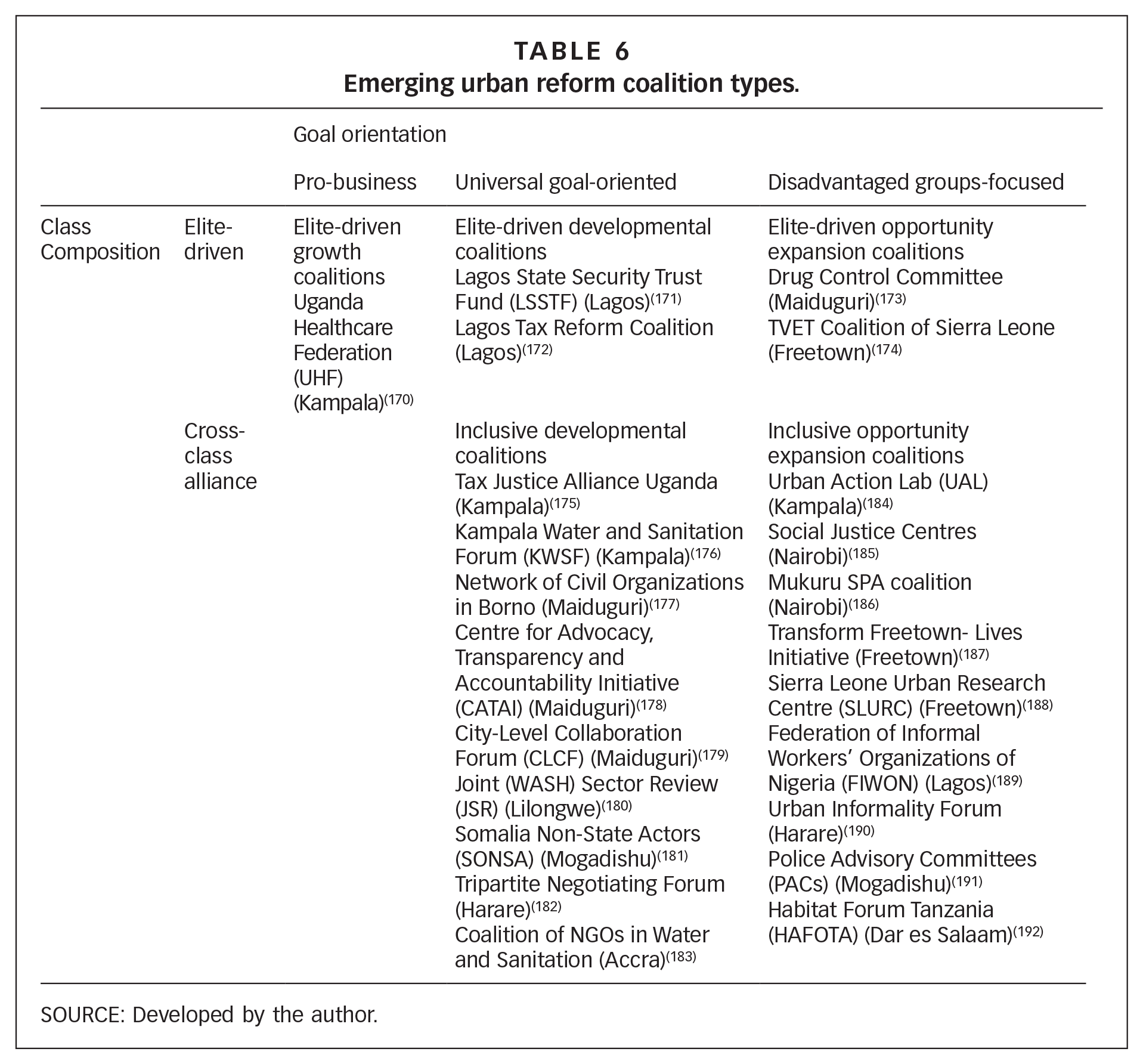
Based on the preceding section, this study uses the goal orientation and class composition dimensions to develop a typology of urban reform coalitions. While the other coalition dimensions are also relevant, goal orientation and class composition are crucial in shaping the formation, dynamics and impact of urban reform coalitions. Goal orientation determines the focus, priorities and target groups, thereby influencing potential coalition partners and strategies.(145) Goal orientation is also shaped by the depth of deliberation, negotiation and mobilization required, particularly if the aim is to promote reforms that benefit disadvantaged groups.(146) Similarly, class composition shapes the coalition’s power dynamics, access to tangible and intangible resources, and potential for mobilization.(147) For example, cross-class coalition-building, involving actors with easy access to power (such as academics and CSOs) and organized disadvantaged groups, as in the case of the Mukuru SPA coalition,(148) enhances the mobilization for inclusive reform. However, cross-class alliance-building may also result in exploitative relationships, which needs to be further understood and mitigated.(149) A typology using the combination of these two dimensions helps researchers to develop a nuanced understanding of how different urban reform coalitions collaborate and manage differences, strategize to manage political opportunities and threats, and assess the efficacy and inclusivity of their strategies. This study identified five distinct types of urban reform coalitions based on the different combinations of class composition and goal orientation features. Table 6 provides examples of each type.
Emerging urban reform coalition types.
SOURCE: Developed by the author.
VII. Conclusion
This study has aimed at mapping urban reform coalition-building initiatives in African cities. Building on ACRC’s urban development domain studies in 12 African cities, the study identified and analysed 24 reform coalitions as illustrative examples. Through iterative thematic analysis, it identified six broad dimensions according to which reform coalitions can be categorized and analysed: their form, temporality, goal orientation, degree of formalization, class composition and key outputs. The analysis found that urban reform coalitions could be issue-focused or platform-based, facilitating multi-stakeholder dialogue and nurturing issue-based coalitions to emerge.(193) While time-bound coalitions address specific reforms within a specific period, enduring coalitions tackle broader issues, usually as a platform, and can be in emerging, consolidated or inactive phases. In terms of goal orientation, urban reform coalitions can be pro-business, universal or disadvantaged group-focused. In their degree of formalization, they can be legally registered or institutionalized within a formal structure, semi-formal with mutually agreed arrangements, or informal/unstructured collaborations. Reform coalitions can be elite-driven or tend to cross social classes. In cross-class coalitions, the involvement of well-organized disadvantaged groups(194) enhances the potential for inclusive change and empowerment.(195) Finally, the outputs of urban reform coalitions include knowledge, relational capital and resource mobilization, which can be combined in different ways to push their agenda. Depending on their primary output, we can categorize them as knowledge-based (e.g. Urban Action Lab), solidarity-based (e.g. Habitat Forum Tanzania), or focused on resource mobilization (e.g. Lagos State Security Trust Fund).
The analysis notes that platform coalitions tend to be more inclusive of organized disadvantaged groups due to their ability to facilitate dialogue among diverse actors. Similarly, coalitions with universal or disadvantaged group-focused goal orientations tended to be inclusive of organized disadvantaged groups. However, building inclusive urban reform coalitions requires alliances with well-organized disadvantaged groups capable of mobilizing the collective political, social and economic resources of their members.(196) The role of organized communities is evident in the history of organized action by informal settlement residents and their federation (Muungano wa Wanavijiji), which paved the way for the Mukuru SPA coalition’s planning for participatory urban upgrading.(197)
This study also identified five typologies based on the dimensions of goal orientation and class composition: elite-driven growth, elite-driven developmental, inclusive developmental, elite-driven opportunity expansion and inclusive opportunity expansion coalitions. These conceptual categories support the in-depth analysis of different forms of urban reform coalition-building and provide practitioners with various modalities of collaboration.
Although the paper proposes these dimensions and types of urban reform coalitions as helpful for analysis, it also acknowledges some limitations that invite further research. First, the study has not provided an in-depth analysis of the internal dynamics of reform coalition initiatives, particularly in terms of the active involvement of organized disadvantaged groups. The role of these groups in framing and pushing the reform agenda, as well as the power dynamics within the cross-class coalitions, needs further investigation. It is vital to understand to what extent inclusive developmental or opportunity expansion coalition-building supports the organizational capacity of organized disadvantaged groups, nurturing their ability to hold other coalition members accountable(198) and enhancing their bargaining power with authorities.(199) Second, this study is limited in its analysis of the relationship between these urban reform coalitions and the political context. Future research could explore how the political context influences urban reform coalition-building and its strategies. Third, this study focused on the form, purpose and content of reform coalition-building. Future research needs to explore further what internal and broader political factors influence the emergence, maintenance and efficacy of urban reform coalitions.
Supplemental Material
sj-docx-1-eau-10.1177_09562478251318167 – Supplemental material for Catalysing urban reform through coalition-building in African cities: key dimensions and typologies
Supplemental material, sj-docx-1-eau-10.1177_09562478251318167 for Catalysing urban reform through coalition-building in African cities: key dimensions and typologies by Ezana Haddis Weldeghebrael in Environment & Urbanization
Footnotes
Acknowledgements
I would like to thank Diana Mitlin for her constructive comments and suggestions in the earlier draft, facilitating platforms to develop my research and sharing her experience and expertise on the topic. I would like also to acknowledge African Cities Research Consortium (ACRC) urban development domain researchers for their insightful and detailed work in capturing and documenting urban reform coalition initiatives in African cities as well as for sharing their perspectives in various ACRC platforms. I also highly appreciate ACRC and University of Manchester Global Urban Future research group colleagues for their constructive comments on the earlier draft presentations of the manuscript. I am also grateful for constructive comments and suggestions of the anonymous reviewers.
Declaration of conflicting interests
I want to disclose that I am the co-editor of the special issue.
Funding
This research was financially supported by the African Cities Research Consortium (GB-GOV-1-300180).
Supplemental material
Supplemental material for this article is available online.
4.
See for example Mitlin (2023);  .
.
5.
10.
12.
13.
ACRC conceptualizes urban development domains as fields of power and influence where diverse actors compete to shape policies and practices, utilizing various strategies to assert authority and advance their interests, while also being interconnected with wider urban systems and political settlements (for example: informal settlement, structural transformation, etc.).
16.
18.
Stone (1993); .
19.
27.
28.
Here organizational entities refer to organizations and groups pursuing or resisting social change, mostly engaged in protest movements.
33.
35.
Rizzo (2013); .
37.
Young (2017, ).
42.
46.
47.
48.
Khan (2018); .
49.
54.
57.
DLP (2012); .
61.
Stone (1993); .
66.
Stone (1989); .
67.
Stone (1989); .
70.
ACRC’s theory of change identified that building and strengthening reform coalitions, along with elite political commitment, enhanced state capacity and mobilized citizens pushing for change, as a catalyst for urban transformation in African cities. See more https://www.african-cities.org/acrcs-approach-to-catalysing-urban-reform/; https://www.african-cities.org/mapping-urban-reform-successes-introducing-the-acrc-urban-reform-database/; .
72.
ACRC domains include those focusing on built environment (housing, land and connectivity and informal settlements), on economic issues (structural transformation, and neighbourhood and district economic development) and on social issues (health, nutrition and well-being, youth and capability development, and safety and security).
74.
See the detailed methodology of urban development domain studies in Maina et al. (2024); Ouma et al. (2024); Adzande, Meth and Commins (2024); Tacoli et al. (2024); Goodfellow et al. (2024); Homonchuk et al. (2024); Danquah, Sen and Gisselquist (2025).
75.
The author acknowledges that while internet searches provide additional information, they may bias the data towards coalitions with an online presence and those that have been the subject of academic study.
76.
The author was a post-doctoral fellow within the ACRC (January 2022 to January 2024) with access to the documentation and frequently participated in discussions on relevant issues. The author co-convened an international conference on urban reform coalition in June 2023, ran mini-series podcast interviews on Urban Reform Coalition in ACRC’s African Cities podcast (https://www.african-cities.org/connect/) and convened webinars on the topic ()
79.
Stone (1993); .
82.
83.
See supplementary material: Key dimension of the 24 urban reform coalitions.
86.
92.
Part of the Mayor Yvonne Aki-Sawyerr’s Transform Freetown Agenda (2019–), Transform Lives Programme, a coalition of Freetown City Council, Centre of Dialogue on Human Settlement and Poverty Alleviation (CODOHSAPA) and five INGOs is also a time-bound coalition focusing on informal settlement upgrading. This is considered urban reform coalition since it is undertaking slum upgrading in the absence of proper legislative and policy frameworks with a potential to set the standard for future similar interventions (Macarthy and Hrdlickova, 2023).
95.
96.
97.
100.
See Masimba (this issue).
102.
Through engaging policymakers the Forum contributed to three key policy processes, two national and one municipal level: the 2020 Zimbabwe National Human Settlements Policy (Government of Zimbabwe, 2020), National Development Strategy (2020–2025) (Republic of Zimbabwe, 2020) and Harare City Council Slum Upgrading Protocol (2022). See .
104.
105.
The government introduced initially a 1 per cent tax on all mobile money transactions and Over the Top (OTT) (popularly known social media tax) daily excise duty of 200 Ugandan shillings (about $0.05) on the use of social media.
110.
Bräutigam, Rakner and Taylor (2002), page 520.
112.
114.
116.
117.
119.
124.
Mitlin et al. (2019); Chitekwe-Biti et al. (2012); Masimba et al. (2023); ; Masimba (this issue).
128.
129.
131.
132.
136.
137.
139.
146.
148.
Horn (2021); .
151.
154.
163.
A hand-operated pump used to empty pit latrines.
164.
165.
Mitlin (2023); ; Sinha, Narahan and Majithia (2022).
195.
197.
198.
References
Supplementary Material
Please find the following supplemental material available below.
For Open Access articles published under a Creative Commons License, all supplemental material carries the same license as the article it is associated with.
For non-Open Access articles published, all supplemental material carries a non-exclusive license, and permission requests for re-use of supplemental material or any part of supplemental material shall be sent directly to the copyright owner as specified in the copyright notice associated with the article.
