




Abstract
This paper describes the challenges facing urban planning higher education institutions in the global South that engage with knowledge production, education and training and the ways they are tackling urban equality concerns. Drawing on interviews with urban pedagogues and practitioners, and examining institutional histories across Asia and Africa, we use a five-point framework to analyse these challenges: what to teach, how to teach, whom to teach, who teaches and where to teach. We find that different institutional arrangements and choices made by educators affect the answers to these questions in different ways. These questions are also closely connected to the questions of planning “for what”, and planning education “to what end”, and relate to concerns regarding values and processes and to outcomes for urban equality in the South. Considering these cases together offers an opportunity to contribute to a Southern dialogue on the evolution of planning education.
I. Introduction
More than 55 per cent of the world’s population now lives in urban regions,(1) up from just 47 per cent in 2000. The rate of urbanization has increased most rapidly in low- and middle-income countries in Asia and Africa, with the urban population in some of these countries expanding more than three- or fourfold over the last 50 years.(2) Over the last two to three decades, urban regions have emerged as global sites for production, innovation and trade. Despite this growth, levels of income inequality in 75 per cent of the world’s cities are higher than they were two decades ago.(3) This problem is exacerbated by persistent challenges around urban growth and employment, affordable housing and access to basic services as well as emerging concerns around global environmental change, increasing insecurity and international migration.
Urban studies research has wrestled with the conceptual nature of equality as well as its everyday manifestations in lived experiences within cities across the North and the South,(4) engaging with a wide range of themes. While research on urban equality and related concerns continues to deepen, this engagement is not yet reflected in the teaching and training of urban practitioners.(5) Funded by UK Research and Innovation (UKRI), the Urban KNOW project aims to address questions of urban equality through multiple lenses, with one work package focusing on urban pedagogy and learning.(6) This work package as a whole addresses a wide range of urban pedagogy-related concerns across Asia, Africa and Latin America. Topics include analysing the curricula of planning schools;(7) understanding how networks of higher education work and translate to practice;(8) mapping student and practitioner trajectories before, during and after their learning journeys;(9) and understanding the knowledges, practices and pedagogies for urban activism.(10)
Situated within this larger body of work, this paper draws on research focusing on higher educational institutions (HEIs) across Asia and Africa that serve as sites of planning education with the potential to shape planning practice. We consider both the structures through which these planning schools reproduce inequalities, but also the potential they offer for change. We acknowledge that urban learning and knowledge production also takes place in the South outside higher education, through social movements and radical and insurgent planning practices.(11) In earlier work by two of the authors of this paper, we have reflected on these practices.(12) However, given the legacies of higher education in shaping planning practice in the South, and both the legitimacy and scale of its influence, we focus here on the possibilities and challenges within HEIs as a site for change, where all these multiple knowledges, pedagogies and practices have the potential to come together.
Although concerns around the teaching of urban equality identified in this paper are faced by HEIs across the world, our focus is on planning education in the global South, where these challenges are amplified, given both the histories of these institutions and the deep structural inequalities that exist in the South. Planning programmes in the South, often rooted in colonial pasts,(13) lack the resources to develop and revise curricula, train educators and access teaching and learning materials, which in turn impacts the creation of a contextually rooted planning education agenda. Beginning with the premise that the education and training of urban practitioners has a bearing on their practice in the city, and that planning practice, in turn, has an impact on urban inequality, we ask: What is the potential of higher education to better equip its learners to challenge urban inequality through planning, and what limitations does it face?
To assess the potential of higher education as a site for rethinking planning education and influencing urban practice for urban equality in the South, we carry out four case studies of HEIs that occupy particular positions within their respective national contexts in Asia and Africa, and that, among them, cover diverse histories and geographies. Juxtaposing these case studies, we draw out both the constraining influences and the generative practices that offer possibilities for change. To understand how different aspects of an institution enable or constrain changes in planning education, we make use of a five-part framework of analysis. This includes a focus on decision-making processes and on pedagogues’ navigation of structures related to:
What to teach;
How to teach;
Whom to teach;
Who teaches; and
Where to teach.
The analysis in the paper shows how different institutional arrangements and choices made by educators affect the answers to these questions in different ways. The questions of “what, how, whom, who and where” are interrelated and respond to the political economy of planning practice and higher education in the respective geographies. These questions are also closely connected to the question of planning “for what”, and planning education “to what end”, and they relate to concerns regarding values, processes and outcomes for urban equality in the South. Considering these cases together also offers an opportunity to contribute to a Southern dialogue on the evolution of planning education.
We situate this work within the larger conversation on decolonizing the university in order to arrive at a set of epistemologies of the South.(14) Within this context, it is important to look at multiple concerns, including access to the university, teaching and learning methods, institutional structures and university governance, and other aspects beyond the curriculum.(15) Speaking more directly to the field of planning education, we aim for our work to speak to literature on decolonizing planning education that highlights the ways that curriculum reproduces inequalities. This is because of curricular assumptions about the nature of the city, deriving theories from Anglo-American contexts and applying them where they may be ill-suited. We also speak to parallel calls for building a Southern urban theory(16) as a response to the limitations of a predominantly Northern frame for realities experienced in Southern cities.(17) We aim to open up these conversations further by bringing in the range of spaces within the political economy of practice and higher education in which planning education is embedded.
The rest of the paper is laid out as follows: the next section provides the context of planning education and practice in the South, and its links to issues of urban inequality. We then describe our methodology and our sites. This is followed by a discussion of how the challenges discussed above play out in our case study sites and how spaces of higher education are attempting to meet them. We conclude with a set of reflections on what we have learnt from these sites.
II. Planning and Urban (In)Equality in the Global South: Concerns and Responses
In relation to urban equality, planning education and practice occupy a contested space in the global South. Concerns have been voiced in the literature around the appropriateness of planning curricula to address contemporary issues of urbanization in the global South.(18) The continued colonial influence in planning education is reflected not only in the degrees and curricula, but also in the values, philosophy and pedagogy,(19) leaving graduates from these programmes ill-equipped for tackling the Southern urban realities of poverty, informality and exclusion.(20) Recognizing the theory–practice divide in the cities of global South, several calls have been made to theorize from the South, and from practice.(21)
Despite inertia and resource constraints in reforming planning curricula,(22) over the last decade or so efforts have been underway to make planning education more responsive. On the one hand, regional associations like the Association of African Planning Schools (AAPS) are facilitating the collaborative development and sharing of more relevant curricular frameworks and pedagogies.(23) On the other hand, planning schools are partnering with community-based organizations and other actors to make the education experience contextually grounded and inclusive.(24) The growing move towards decolonizing the university in response to the continued dominance of Northern knowledge through research and scholarship is also evident in several allied urban disciplines including geography, sociology, urban studies and planning.(25) As Wood argues “nowhere is the opportunity and responsibility of conveying contemporary logics of cities of the global South more important than in our university classrooms”.(26) Juxtaposing the examples of planning education in South Africa and Brazil, Klein and Jenkins suggest that the “decolonial turn” could potentially advance the transformation agenda of planning schools and contemporary planning discourse in these contexts.(27)
The “dark side”(28) of planning is widely acknowledged and criticized. Many scholars have argued that Southern planning practice has largely remained exclusionary in its approach and outcomes, so much so that it often perpetuates inequality and informality rather than addressing it.(29) In contrast, the growing literature on everyday practices of citizens and social movements foregrounds bottom-up responses, ranging from autoconstruction(30) to insurgent planning(31) and co-production(32) – practices that aim to counter the injustices produced by formal planning systems. In essence, there is a parallel system of planning and development practice on the ground that rarely speaks to planning education. Little attention is given to how these systems could work together, and how professional planners could help advance the interests of marginalized communities.(33) Using a comparative analysis of Bangkok and Medellín, Sotomayor and Daniere open up the Euro-American orientation of “equity planning” literature and argue that equity planning practice can emerge in varied global South contexts as well.(34) Furthermore, as Wesely and Allen suggest, “educating planners with the capabilities to address complex socio-economic, environmental and political processes that drive inequality requires critical engagement with multiple knowledges and urban praxes in their learning processes”.(35)
How can we ensure that these multiple knowledges and practices inform what the majority of the formal planning community does? How can we return to the core value of planning “in the public interest”? While higher education and the training of planners is only one aspect shaping this practice, we argue it is critical to reimagining the role of planning in promoting more equal and inclusive cities. Historical legacies of planning education at the university, its mandate to train practitioners at scale and the legitimacy it confers mean that the possibilities and challenges of planning education in HEIs must be interrogated alongside questions for urban equality. Global policy priorities in the New Urban Agenda have also called for a return to “territorial planning” as a core lever and mode of action to inform sustainable urban development, particularly in the South.(36) In this context, we ask: What possibilities and limitations exist in higher education spaces to teach and learn planning in a way that promotes urban equality?
In this paper we unpack planning education in HEIs as a site with the potential to influence future trajectories of planning practice and urban equality, aligned with our own positionalities and pedagogic practices as educators and faculty within HEIs in the South. We draw from the challenges articulated by urban educators teaching and practising in and from the South, building on discussions on decolonizing planning education and extending beyond curricula and questions of what to teach into an interrogation of “structures, institutions and praxis”.(37) In the settings where this study is situated, debates on decolonization are not particularly or equally at the forefront, but are one of the several negotiations that educators speak of, given the range of influences within which urban planning education is embedded. We build on the premise that articulations of decolonization and equality are contextual, and that the terms of the conversation must be embedded in these contexts, with planning situated within a networked field of governance,(38) in what de Souza Santos calls an “ecosystem of knowledges”.(39) Arguing that the challenges of urban planning education are diverse, we posit the five-part framework outlined above to analyse these choices.
III. Methodology
Our research draws largely on primary data collected through conversations with established urban pedagogues and practitioners teaching in and/or from the South who were asked to reflect on their experience of the teaching and inclusion of urban equality. Inequality is not a challenge only in the South, but given the difficulties that Southern cities are navigating, inequalities are arguably amplified in these geographies. Because they are situated within deeply contextual historic, colonial and structural inequalities, we argue that there is value in adopting a Southern lens to interrogate planning education and its potential and limitations in addressing urban inequality.
We interviewed over 35 urban pedagogues and practitioners between 2018 and 2021 within planning and allied fields such as architecture and urban design, but also in disciplines and practices of geography, sociology, activism, architecture and political science.(40) We selected our respondents based on their engagement and experience with planning education as well as for their representativeness across time, geographies and disciplines. Our fieldwork was challenged by the restrictions imposed by the COVID-19 pandemic, which started midway through our research process. Although we were able to conduct in-person fieldwork at all sites, we had to navigate several limitations, including our inability to be embedded in sites as planned before the pandemic.
We started with educators located more widely; then, to situate our research within specific contexts, we identified four key sites of higher education that have been instrumental in shaping planning and urban practice in their settings at different moments across time. We particularly looked at planning education in Asia and Africa, where urbanization is taking place at an unprecedented rate, accompanied by increasing and multidimensional urban inequalities.(41) This amplifies the urgency to build capacities to understand and address these inequalities. Holding together four key HEIs across geographies allowed us to appreciate the differences in planning practice and education in each site, and how common themes manifested differently across sites. This pushed us to open up a broad analytical frame beyond the conversation on decolonizing education and planning. This research was conducted in parallel with work by colleagues on the trajectories of planning alumni,(42) and insights from their research also shaped our understanding of these sites.
Our entry was through higher education sites that might be considered elite institutions, with access to resources and networks. The choice of sites also relates to our involvement in ongoing reflections on the pedagogy of our own institutional academic programmes, and in trying to find these possibilities of transformation within our own pedagogic practices. Our interviews indicated that, while curriculum reform was perhaps the most obvious and immediate task, there were other more deep-rooted challenges that also needed to be addressed within the larger framework of planning education.
IV. Sites of Higher Education
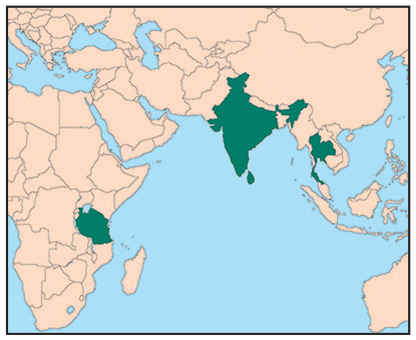
This section profiles the four case sites that we investigated in our research: Ardhi University (Tanzania), Chulalongkorn University (Thailand), University of Moratuwa (Sri Lanka) and the Indian Institute for Human Settlements (India). These institutions were established at different moments in time with varying structures of funding, regulation and planning practices and their planning programmes are embedded in different colonial and postcolonial trajectories and networks. In their own ways, each of these institutions has attempted, through a range of means, to innovate and shift the discourse around planning education in their contexts. Our objective was to understand the generative potential of these institutions to shape discourse and practice on equality, as well as the limitations they faced, as experienced by pedagogues embedded there.
a. Ardhi University, Tanzania
Ardhi University is a significant site of planning education in Tanzania; it has trained most planners in the country in some capacity, as well as planners from further afield in sub-Saharan Africa. Starting as a surveying training school, it was later established as Ardhi Institute in the early 1970s, offering planning courses with strong links to the Ministry of Lands, Housing and Human Settlements, in partnership with UNDP. It became part of the University of Dar es Salaam in the 1990s and was established as a university in its own right in 2007. These institutional transitions have influenced the evolution of its schools and academic units. We focused on two Ardhi academic units – the School of Spatial Planning and Social Studies and the Institute of Human Settlement Studies (IHSS). We interviewed faculty and planners with experience working in civil society organizations, private practice and government.
In its initial years, Ardhi offered diplomas in land surveying, land valuation and urban and rural planning to mid-career professionals, later offering full professional courses to train planners nationally. Programmes have been developed with and funded by government, and through bilateral and multilateral partnerships such as those with UNDP and DANIDA (Danish International Development Agency). Over time, teaching has adapted in response to political and economic changes in the national arena, as well as regional debates on practice and education.(43) Its engagement as a core member of the AAPS has also influenced its curricula, processes and participation in cross-Southern dialogue among planning schools in the Africa region. Ardhi has developed several institutional processes of curriculum review and feedback loops with industry. It has ongoing partnerships and exchanges with several universities – one is the joint MSc in Urban and Regional Planning Management with Dortmund University – enabling exchanges across both North–South and South–South contexts.
Our conversations with educators at Ardhi, some of whom were also partners on other work packages within the KNOW Programme, were highly reflective, and thoughts were shared on the practice of planning and pedagogical challenges in relation to teaching for urban equality. Faculty questioned the place of planning within the changing political economy of urban practice, reflecting on how what was taught was not what was most often practised. They discussed several concerns: the seeming “redundancy” of the discipline of urban planning; its alienation from budgeting; and its failures to adequately engage with pressing challenges, and to effectively translate into practice what was taught in the university. Private planning practice in Tanzania is in a nascent stage. There are limited avenues for monitoring and measuring the outcomes of planning, both in government and private practice, foregrounding the issue of accountability to the public. In this context, faculty reflected on the critical role that higher education should play in pedagogically engaging with the questions of ethics and principles in planning practice.
b. University of Moratuwa, Sri Lanka
For this case study, we interviewed planners who were currently on the faculty at the Department of Town and Country Planning at the University of Moratuwa (UoM) or had previously taught there. We also interviewed visiting faculty with different practice and teaching affiliations – civil society, research, sociology and architecture – as well as planning professionals affiliated to the Institute of Town Planners Sri Lanka (ITPSL), who have taught at UoM and at other universities in Sri Lanka. In this instance, faculty moved quite seamlessly between UoM, the ITPSL and various government and international agencies in Sri Lanka.
With a time frame similar to that of Ardhi University, UoM also built on colonial planning legacies in Sri Lanka. Until the late 1970s, Sri Lankan planners were largely trained at universities overseas; however, with the emergence of larger infrastructural and regional resettlement projects, the need to train a larger cohort of planners led to the establishment of the Department of Town and Country Planning at UoM, which received university status in 1978. The first planning programme was at the Master’s level, and was developed in partnership with faculty from the Development Planning Unit at University College London, building on the postcolonial networks of planners trained overseas.
Our interviews revealed how a national strategic planning mandate, a turn towards participatory housing policy in the 1990s and the sociopolitical impact of civil war on urban development and civil society influenced the practice and pedagogy of planning in Sri Lanka. While a range of universities in Sri Lanka offer courses allied with planning, urban practice and development, UoM is the only university that offers a planning degree accredited by the ITPSL. UoM remains an influential institution for urban planning education in Sri Lanka, with government departments almost exclusive hiring from there, and it has an emerging body of students beginning to work beyond conventional planning practice.
Compared to the other sites we engaged with, planning as a discipline seemed to be less in a state of crisis here (according to the planners themselves), and the challenges faced by the discipline were linked to a lack of knowledge among the public and within the political discourse on the role of planning. Critical reflections on the state of planning were more often articulated by practitioners outside of planning, while planning practice was quite embedded within governance processes. Planners and faculty explained that there was a gap in planning capacities at the level of local municipalities, which were sometimes resistant to plans from higher levels of government. There is an ongoing discussion on the need to pass legislation to build a cadre of planners at the local municipal level to address this gap.
c. Chulalongkorn University, Thailand
In Bangkok, we interviewed faculty at Chulalongkorn University’s architecture and planning departments as well as in other allied disciplines such as political science and urban design. We also met with a range of practitioners, alumni and faculty from other universities in Bangkok.
Chulalongkorn University houses the oldest planning school in Thailand, which emerged from the monarchy’s attempt to resist colonization and set up administrative reforms, improving higher education to train both public and private sector employees. In 1917, Chulalongkorn University was established and affiliated with the Ministry of Education. The Department of Urban and Regional Planning was started in 1963 under the Faculty of Architecture. The initial aim was to train professionals to work in the Ministry of Interior, which housed the Department of Urban Planning – now the Department of Public Works and Town and Country Planning. The initial programme was influenced by American planners and planning frameworks, building on Cold War ties between Thailand and the US. The vision, therefore, was framed by American and Eurocentric discourse, and although Thailand was never colonized, the model for modern education was from the North.
Thailand, consequently, offered us the opportunity to investigate programmes and institutions that did not share explicitly colonial legacies. However, we found several similar concerns in the challenges that they faced as well as in the inclusion of equality concerns. Perhaps more here than in any of our case study sites, planning education was driven by the demands of the market and potential employers. In the last decade or so, there has been a shift towards designing programmes within the Department of Architecture at Chulalongkorn University that cater specifically to the needs of real estate development and urban design as well as towards creating urban strategists/consultants linked to a robust private sector. Planning education as a field of study is facing an identity crisis in the Thai context as well as increased cannibalization from other disciplines such as urban design, business management and architecture.
d. Indian Institute for Human Settlements, India
Our fourth site is the Indian Institute for Human Settlements (IIHS) where we, the authors of this paper, are located. Compared to the other sites, IIHS is a young institution, set up explicitly to build a new generation of urban practitioners to help India navigate its urban transition. At IIHS, we spoke to faculty, founding members, students and alumni as well as drawing on our own reflections based on a decade of practice within the institution.
Planning education in the Indian context has been largely focused on spatial and land-use planning(44) with the planner imagined as a generalist in land-use planning, emerging from the colonial beginnings of planning and following the Anglo-American approach to planning education. In addition, a critical constraint in managing India’s urban transition is the lack of trained urban professionals who can effect meaningful change.(45) IIHS was set up in part to respond to this deficit, but also and importantly to build the kind of interdisciplinary knowledge and practice that is required for a sustainable, equitable and efficient urban transformation in India. To achieve this, IIHS aims to establish an interdisciplinary urban national university. However, in the interim, before this form as a university is fully realized, IIHS has attempted to engage with the current nature of urban education in two key ways: (a) through interdisciplinary research and practice to help build new global knowledge; and (b) by training a new generation of urban professionals through the delivery of a set of transformative new degrees in urban practice.(46)
For this paper, we focus on the IIHS curriculum process, which aimed at curating an interdisciplinary urban curriculum through a global consultation process over two years. More specifically, we focus on the first continued transaction of the IIHS curriculum framework: the Urban Fellows Programme (UFP). In its sixth iteration at the time of writing, the UFP is a nine-month programme that draws on the IIHS curriculum and is an adaptation of the two-year Master’s in Urban Practice. As faculty embedded in the institution, our conversations and reflections aim to highlight the potential opportunities that exist within a new institution but also to note the challenges that this brings. A key aspect of this case is a recognition that the pedagogic experimentation we present in this paper has been possible because this is a relatively young institution, currently outside the frame of government regulation related to curriculum, funding or composition of faculty and student body.
V. Locating the Challenges to Equality in Urban Planning Education
This research began with the premise that contemporary training of urban practitioners has an influence on urban equality through their professional practice. Through this research, we attempt to assess the ways in which higher education can act as a site of change for planning education, equipping practitioners to deal more effectively with questions of urban inequality in their professions. Our initial conversations with urban practitioners and pedagogues focused largely on the challenges of incorporating urban equality more explicitly into the teaching process itself as well as the curriculum. Several respondents particularly emphasised the importance of experiential/field-based learning and the role of pedagogic tools like “studios” to enable learners to actively engage with questions of urban equality. Viewing the four case study sites together enabled us to see both the range of challenges presented by incorporating urban equality concerns into the structure, processes and teaching of planning programmes, and also the kinds of opportunities available to effect meaningful change across multiple pathways in HEIs.
However, over the course of our interviews and field research, it became increasingly apparent that the in-class teaching process, and more specifically the content and form of the curriculum, was only a part of a larger political economy around planning education, of which HEIs are just one component.(47) The content or the material being transacted is important, but also important are how it is taught, who does the teaching, the composition of the class, its location, and how equality is managed through the entire process in terms of access to education and resources and the overall learning journey. Each response in isolation may not seem relevant to the question of urban equality, but actually these elements all operate together.
In response to the larger question (planning education “for what” or “to what end”), it was clear that HEIs’ navigation of these questions is deeply contextual – responding to particular political economies of practice and education.
In this paper, we explore the structural reasons underlying the capacity of HEIs to respond (or not) to urban inequality, and we analyse the ways they have attempted to go about this. To do so, we build on Frank’s review of planning education(48) and work with that five-part framework of analysis, the elements of which emerged through our research process. While we discuss each aspect individually, these dimensions also need to be understood as parts of an integrated system.
a. What to teach
We start with the question of the curriculum and the content of what is being taught and transacted in the classroom. There has been significant attention to curriculum review and reform across the South.(49) However, the choice of material depends on a range of factors within the larger political economy of planning education. In the context of the South specifically, curricula continue to draw on material emerging from Northern/Western perspectives, indicating the enduring colonial influences in teaching. However, curricula also valorize the kinds of knowledge that are assumed to be necessary in each setting for urban practice. In Sri Lanka, for example, UoM has decided to return to a more technical approach to planning education, and a revised curriculum emphasizes mathematical and modelling skills. Indian planning education, meanwhile, continues to be spatially deterministic, often ignoring connections to other urban issues.
Interview respondents indicated that the inclusion of urban equality concerns within the curriculum was typically limited to specific subjects (such the redevelopment of slums(50) or squatter settlements, or access to basic services) and to specific studio-/field-based learning courses. Several pedagogues blamed this on the lack of space within existing curricula. It is rare to find a holistic, contextual, grounded approach to inequality. The politics of planning are critical, and educators can also be challenged by the degree to which some conversations are considered acceptable (or not) within the larger discourse of the classroom and country.
In addition, as we discuss below, there is growing pressure to make courses speak directly to employment opportunities for graduates, and the content of the curriculum is therefore increasingly driven by market-based demands. In the case of Thailand, for example, this has meant a greater emphasis on urban design and project management relevant to the rapidly growing real estate sector. There is also the need to stay globally relevant as urban practice becomes increasingly internationalized and graduates need to be mobile across different contexts.
Another challenge is that of staying relevant in the face of what one of our interview respondents called the “cannibalization of the discipline”. With a range of other related programmes reinventing themselves to focus on the urban, the relevance of planning as a discipline is being challenged. Several of our respondents pointed to a reduction in overall student applications owing to increased competition from programmes such as urban design and architecture, but also business management and engineering. Some planning programme curriculum innovations are a response to this reality.
Each of our case study sites has responded in different ways with different degrees of success. Ardhi University has attempted through regular curriculum review, with input from industry stakeholders and alumni, to address the gaps between practice and education.(51) It has also tapped into faculty across Southern networks, such as AAPS, who have then contributed to curriculum development.
Chulalongkorn University has responded to this challenge in two ways. The first approach was to develop close links to public and private practice-based institutions. However, this pushed the undergraduate and graduate planning programmes closer to an urban design and real estate management focus. Its second approach was to set up an experimental Master’s programme taught in English, focusing on questions beyond immediate market-facing demands, including inequality concerns. This programme aims to have wider appeal to prospective students beyond Thailand, across South-East Asia, with funding support for international applicants. It is unclear how successful this has been, given that the programme was only in its second iteration at the time of our fieldwork.
Faced with a lack of contextually rooted teaching material, IIHS entered into a long-term collaborative curriculum design process across Northern and Southern institutions, while simultaneously setting up interdisciplinary research and practice programmes focused specifically on Southern urban challenges. These cases show the different strategies adopted to navigate the tension between different kinds of relevance – the need to be relevant to such issues as urban inequality in the curriculum, and the need to remain relevant in terms of ensuring graduate employability and imparting market-oriented skills.
b. How to teach
Closely related to the question of content is that of the teaching methods applied. Several interview respondents highlighted this concern, pointing specifically to two key issues: the teaching form (lectures, in-class sessions) and the medium of instruction.
Although the dominant method remains the conventional lecture-based model, respondents across all settings highlighted the importance of experiential learning and bringing the city into the classroom. Faculty at Chulalongkorn University, for instance, told us that students were unable to plan and design for real-world contexts until they had been exposed to these situations in the field – sometimes the only way students can develop an understanding of urban inequality is by engaging with it on the ground. In most instances, this takes the form of studio-/site-based learning where students are exposed to specific locations within the city and the challenges that these sites bring.
Interview respondents focusing on the Indian context pointed out, however, that studio-based courses in India remained rooted in spatial planning and that there was an urgent need to broaden that approach. IIHS faculty have adopted a co-teaching approach as a way to expose students to a range of perspectives, with a diverse set of faculty designing and teaching courses together. However, it is not always possible to co-teach, and IIHS faculty struggle consistently to persist with this approach.
The second concern here is the medium of instruction. With the exception of Chulalongkorn University, almost all of our case study sites use English as a medium of instruction. This ties back into challenges around the availability of material in local languages, but also highlights the challenges facing graduates as they begin to practise in contexts where English is not the primary language. As experiments at both Chulalongkorn University and IIHS have shown, there is tremendous value in a multilingual classroom. While introducing English made Thai graduates more confident and competitive in a job market influenced by global flows of capital and discourse agendas, in the case of IIHS attempting to teach in a few different languages enabled students to engage better in the classroom. This also aligns philosophically with the belief that a more diverse student body has positive implications for more equitable outcomes in urban practice.
c. Whom to teach
The question of class composition is perhaps the most difficult to address and this is tied not only to deep structural inequalities around access to higher education, but also to questions of affirmative action. There are several obstacles to creating a more diverse classroom including financial support and the ability to navigate complex and expensive admissions processes, as well as conditions of entry. Meanwhile, the lack of equality within the classroom continues to reproduce and reinforce inequalities beyond the classroom.
Diversity in the classroom is critical not just in terms of equality in access to education. Different socioeconomic backgrounds and life experiences are also critical to delivering pedagogical excellence. The IIHS admissions process is designed to keep this in mind and it curates a class that is diverse in terms of both disciplinary mix and life experience.(52) This has been contingent, however, on the ability to raise financial support from external donors to support a need-blind admissions process. This will continue to be a core challenge as the programme scales up beyond its current size.
In the case of Sri Lanka, a partnership between UoM and the ITPSL has enabled urban practitioners who may not be qualified as planners through conventional degree courses to obtain planning certification. These courses are specifically designed for non-specialist practitioners and to fit the schedules of working professionals. At Ardhi University, too, the IHSS offers a range of courses that target both full-time students and working professionals. The programmes for working professionals are often structured differently, taking into account the challenges they face. Incentives for learners to join these courses are often tied to promotions in government jobs.
Some of our other work within the KNOW Programme has also explored and implemented pedagogic practices with different groups engaged in everyday forms of urban practice across India, Sierra Leone and Cuba. For example, IIHS’s engagement with housing rights activists in India through a series of workshops is co-designed for a range of community activists and pays particular attention to considerations and tensions of scale, strategic intervention and continuity of learning. Such workshops are often not recognized by institutionalized planning processes, or within conventional educational structures, but are efforts made in partnership with HEIs and diverse spaces of practice.(53)
d. Who teaches
Arguments for a diverse faculty echo many of the concerns raised around a diverse student body. However, this issue also relates to questions about interdisciplinarity, the valorization of specific forms and types of knowledge, and the idea of who counts as faculty. Structural barriers to the creation of a diverse faculty are often even more difficult to overcome than those to creating a diverse student body. There is a range of ways in which institutions have attempted to expand faculty: at IIHS, for example, there is an attempt to invite visiting faculty from diverse spaces of practice, including community leaders and activists, although it remains challenging to expand the pool of full-time faculty.
In Sri Lanka, we spoke to practitioners – both accredited planners and non-planners – who referred to the challenges of bringing their experience into the university. While they are invited into the university through different formats, distinctions tend to be made between them and other faculty, often differentially valorizing kinds of knowledge, even within formal degrees held by the faculty. This affects learners’ engagement and their perception of their scope within disciplinary boundaries of practice.
The experience of the workshops with housing rights activists that we conducted through the KNOW Programme(54) has been extremely valuable in unpacking the question of the kinds of knowledges that are needed for urban practice, how they are transmitted, who counts as faculty and the blurring boundaries of learner and pedagogue, often upending the idea of the classroom itself.
e. Where to teach
The final element of our framework highlights the role of the university itself as a physical space of learning. The idea of the physical classroom has been questioned and challenged over the course of the COVID-19 pandemic, with educators and students being forced to find alternate ways of teaching and learning. However, it has simultaneously highlighted the disparities in access to education and infrastructure for learning and has reinforced the need for interaction with a diverse class and faculty.
The question of where to locate the site of learning also echoes concerns that several respondents had around the mode of teaching. They mentioned an overarching need to bring the city much more into the classroom and vice versa. This can be operationalized in a range of ways: for instance, through such modes of teaching as studios and other forms of experiential learning, as discussed above. It may also be achieved by bringing together conventional graduate and undergraduate students with non-conventional learners and faculty. One illustration is the kinds of interactions that have been made possible by the series of workshops conducted through the KNOW Programme at IIHS with activists in Tier II cities outside our institutional city campus. While “shifting the sites of learning”,(55) the workshops have been a space of “co-learning”(56) for resident activists, researchers, faculty and learners at IIHS’s UFP programme.(57)
VI. Conclusion
Through this paper, we have attempted to identify and analyse both the challenges and possibilities of planning education in higher education spaces to address questions of urban equality in the global South. We enter this analysis by bringing together the experiences of four case study sites – all HEIs in Asia and Africa – and taking into account the particular political economies of planning practice and education in these contexts. Using the five-part framework of what, how, whom, who and where to teach, we have raised a set of questions that were articulated by the pedagogues themselves, and that eventually connect to the larger questions of teaching “to what end” and of the values underlying planning education.
We find that these elements are interrelated and need to be addressed collectively to enable meaningful transformation. The epistemological question, the structural arrangement of the universities and the pedagogical choices made by institutions, departments and educators cannot be delinked. Entering through the reflections of planning pedagogues, we untangle some of these, and learn how educators are negotiating these challenges. The five elements of our analytical framework highlight the broad structural challenges within university spaces, based on their particular contexts. We acknowledge that other questions, not fully addressed, are also important, including the matter of financial support and programme structure at the broader levels of university and other higher education settings.
Our findings also show the importance of contextualizing both planning research and education. For instance, the lack of space within the syllabus for incorporating attention to issues of inequality was dealt with very differently across our four sites. While a new programme was set up in Chulalongkorn University, Ardhi University and IIHS worked to develop/revise their existing curricula. Another issue that cropped up across all four sites was that of entry/access into planning programmes themselves: in Sri Lanka, the ITPSL offers options for non-planners to enter planning practice; IIHS deliberately curates an interdisciplinary class.
Within the negotiations conducted by planning pedagogues, several choices are being made by individual educators as well as institutions, as they grapple with critiques of the university and emerging urban challenges. Concerns about inequality, alongside questions of disciplinary validity and market forces, among others, are considered both for practice and higher education. Within university structures, our respondents had differing degrees of control over the five elements, with much of the discussion being concentrated on the areas of what and how to teach. We hope the analysis presented here can help broaden the conversation to include the other three elements of this framework as well, and that wider aspects of university functioning can be foregrounded in discussions of “Southerning” planning pedagogy. In order for all this to happen, it is also important to recognize that these sites themselves are not static but rather located within a shifting political economy of planning practice.
While we started this research with the assumption that the curriculum is the space of intervention, our interviews with educators at these institutions pointed us to a broader framework. These interviews revealed that “decolonizing” is not always the predominant frame within which educators in the South are negotiating contextual structures of inequality and their interface with planning education. On the basis of these conversations, we argue the challenge for planning education in the South in relation to questions of urban equality is both epistemological and structural. The North–South divide must be addressed, and a range of new concepts, empirics, skills and methods must be developed from the South. But there is also the larger epistemological and intellectual project – the need to re-think the institutional structure of planning education and the university itself.(58)
By placing the case of IIHS, a young and experimental institution attempting to navigate these challenges, alongside those of well-established planning and urban schools with longer histories, we aim to highlight the possibilities for learning and sharing experiences across Southern contexts. While we acknowledge the inherent power structures and disparities that come with HEIs and university frameworks, we are also optimistic that opportunities for change exist and must emerge from these spaces of learning. We hope that this paper opens up a conversation on the practices and the possibilities for change in these university spaces.
Footnotes
Funding
This research was conducted under the Urban-KNOW project, funded by UK Research and Innovation ES/P011225/1.
2.
See reference 1.
6.
The KNOW project (https://www.urban-know.com/wp5-education) developed a working definition for urban equality that cuts across four broad and interrelated dimensions: equitable distribution; reciprocal recognition; mutual care and solidarity; and political parity and participation. See  .
.
7.
See reference 5.
8.
13.
See reference 5.
15.
See reference 14.
16.
17.
18.
See references 17.
23.
24.
Siame (2016); .
26.
See reference 25, page 548.
31.
See reference 11.
34.
See reference 33.
36.
See reference 3.
38.
See reference 35.
39.
See reference 14.
40.
Several of our respondents in each context moved between academia and different forms of practice over different parts of their professional trajectory. This was true for both practitioners that were technically qualified under fields of planning and architecture, as well as other disciplines such as sociology, activism and political science. Given the specialized pool of practitioners in each context, our sample prioritized a breadth of experience over number pool of disciplines and practitioners.
41.
42.
See reference 9.
43.
Frank (2018); .
44.
47.
See reference 12.
49.
See reference 5.
50.
The term “slum” usually has derogatory connotations and can suggest that a settlement needs replacement or can legitimate the eviction of its residents. However, it is a difficult term to avoid for at least three reasons. First, some networks of neighbourhood organisations choose to identify themselves with a positive use of the term, partly to neutralise these negative connotations; one of the most successful is the National Slum Dwellers Federation in India. Second, the only global estimates for housing deficiencies, collected by the United Nations, are for what they term “slums”. And third, in some nations, there are advantages for residents of informal settlements if their settlement is recognised officially as a “slum”; indeed, the residents may lobby to get their settlement classified as a “notified slum”. Where the term is used in this paper, it refers to settlements characterised by at least some of the following features: a lack of formal recognition on the part of local government of the settlement and its residents; the absence of secure tenure for residents; inadequacies in provision for infrastructure and services; overcrowded and substandard dwellings; and location on land less than suitable for occupation. For a discussion of more precise ways to classify the range of housing sub-markets through which those with limited incomes buy, rent or build accommodation, see Environment and Urbanization Vol 1, No 2 (1989), available at .
51.
Ardhi conducts two curriculum reviews: a minor curriculum review every three years, and a major curriculum review every five years. It also conducts a Tracer study every five years focused on alumni, which feeds into the curriculum review.
54.
See reference 12.
55.
See reference 12.
58.
See reference 28.