



Abstract
People’s organized struggles for housing challenge Brazil’s exclusionary urbanization. Occupations of vacant buildings by social movements have been pressing municipalities to guarantee the right to the city. Climate change accentuates the risks associated with exclusionary urbanization, and responses to its impacts demand mitigation and adaptation measures that support transformations tackling inequalities and vulnerabilities. This paper highlights the dimensions of inequality, as well as the role of social movements in setting an agenda on climate justice while reducing vulnerability and creating housing alternatives in vacant central buildings of São Paulo and Natal. To this end, we conducted a review of relevant literature along with participatory action-research on insurgent practices of housing social movements in both cities.
I. Introduction
Social movements’ struggles for housing in the cities of São Paulo and Natal, Brazil, take place as the role of cities in facing climate change comes to the fore. These housing struggles accompany growing concern regarding responses to climate change in the context of poverty and informality. Structural inequalities were made evident by the COVID-19 pandemic, reinforcing the idea that dealing effectively with global challenges depends on providing adequate housing to those most vulnerable in socioeconomic terms.
Our hypothesis in this paper is that the strategy of social movements in occupying and making use of idle properties (vacant, under-used or unused buildings) in central districts can directly contribute to tackling climate change. In undertaking this strategy, social movements play an important role in guiding the agenda on climate change towards more inclusive action as well as directly implementing measures to reduce vulnerabilities. This paper analyses the dynamics of urban occupations and recent insurgent practices of social movements in the cities of São Paulo (São Paulo State) and Natal (Rio Grande do Norte State). The concept of climate justice is brought to the fore to highlight the dimensions of vulnerability and inequality as well as the role of social movements in addressing unequal urban processes. These movements present alternatives for social housing through the use of vacant buildings in central districts, a strategy that can contribute to the climate agenda through both mitigation and adaptation. On the one hand, urban sprawl is usually accompanied by an increase in travel and energy consumption for transport as well as the conversion of rural and green areas into urban space; reducing the need for this travel and the pressure for land conversion is thus a form of mitigation. On the other hand, an increase in population density in urban areas requires adequate infrastructure to cope with the more intense and complex needs that result, thereby also adapting these areas to some of the burdens of climate change. This use of vacant buildings can be seen as an inclusive way of tackling climate change, asserting the right to a just, inclusive, diverse and sustainable city.
The paper is structured in two parts followed by a discussion. First, based on a review of pertinent literature, it discusses the concepts of vulnerability and climate justice as well as considering the use of idle properties in central districts as a strategy for dealing inclusively with climate change. Second, drawing on our participatory action-research (2018–2023) through which we provided technical assistance to movements fighting for housing, it addresses the cases of São Paulo and Natal and the role of social movements in reducing vulnerabilities, and contributing to inclusivity and justice in urban policies related to climate concerns. In São Paulo, our engagement with technical visits to assess risk and negotiations with public authorities supported collective action on progressive measures to increase safety and habitability. In Natal, we monitored two social movements through visits to occupied or reclaimed properties and provided assistance to them during the Master Plan review process (2017–2022). The final section of the paper discusses the two cases, drawing out their common aspects and reflecting on the role of social movements in setting a climate change agenda while reducing vulnerability and creating housing alternatives in vacant central buildings.
II. The Use of Vacant Buildings in Central Districts to Tackle Climate Change in an Inclusive Way
a. Tackling climate change in an inclusive way: Climate justice
The role of cities in coping with climate change has come to the fore. There is increasing evidence of the relevance of cities in terms of potential impacts on climate and responses to change. In that regard, the Intergovernmental Panel on Climate Change (IPCC) has recently paid greater attention to urban issues.(1)
Within the context of poverty, informality and inequality that characterizes the urbanization process in Brazil (as well as that of many other cities in the global South), it is essential to tackle climate change from an inclusive perspective, with a view to reducing the risks and vulnerabilities faced by the poorest among the population.(2) Climate change tends to heighten existing risks associated with patterns of exclusionary urbanization.(3) Thus, the climate crisis demands mitigation measures together with adaptation, to help correct structural inequalities and overcome vulnerabilities(4) as well as tackling urban-environmental problems linked to Brazil’s pattern of urbanization.(5)
Despite the clear need for these measures, many studies on climate change take a paradoxical perspective. Their diagnostics identify, albeit subtly, patterns of inequality, but in the actions they suggest for mitigation and adaptation, inequality and inclusive practices are not necessarily addressed. Instead, there is faith in efficient and clean technology and in solutions that function through market incentives.(6) Thus, there is an urgent need to expand studies showing inclusive ways of tackling climate change.
Through the lens of mitigation, the core issue is reducing emissions and expanding carbon sinks to limit climate change and stop global warming. In urban areas, this issue is translated into actions aimed at the main sources of emissions, such as electric power generation, the stationary energy sector, transport and solid waste management.(7) Adaptation, on the other hand, deals with actions focused on vulnerable systems to mitigate impacts and reduce damage, with a focus on both current and future scenarios.(8) Martins and Ferreira(9) say that the two dimensions are not mutually exclusive, but must be seen as complementary. In both it is possible to adopt an inclusive perspective in coping with climate change, although the dimension of social justice is more evident in adaptation. Adaptation is also more prominent in responding to vulnerability, which is understood as a propensity or predisposition to be adversely affected, a concept that also involves other elements such as susceptibility to damage and the lack of capacity to cope and adapt.(10) We should further note that vulnerability encompasses social, economic, political and biophysical aspects.(11)
Vulnerability is a central aspect in studies that deal with climate change from an inclusive perspective. These studies connect vulnerability with risk and resilience, seeking to propose alternatives that include the population affected in the decision-making process.(12) In these discussions, the Right to the City (RTC) framework is especially relevant as both a theoretical concept and a practical tool for claim-making by residents and social movements.(13) It can promote more inclusive climate action, covering the impact of climate on the set of other rights understood as central components of the Right to the City, namely, the fulfilment of social functions, quality public spaces and services, inclusive citizenship, non-discrimination, diverse and inclusive economies, environmental sustainability and inclusive urban–rural linkages, participatory management, non-regression and the right to adequate housing.(14)
The relationship between the Right to the City, vulnerability and climate change was already present in the 2014 IPCC report. The report argued that reducing deficits in basic services, improving housing conditions and building resilient infrastructure systems could significantly reduce vulnerability and exposure in urban areas.(15) It was made still clearer in the contributions of Working Group II to the current report. The report focuses on impacts, adaptation and vulnerabilities and gathers evidence confirming that “occupants of informal settlements are particularly exposed to climate events given low-quality housing, limited capacity to adapt, and limited or no risk-reducing infrastructure”.(16) The report stresses the risks in maladaptation and its impacts, especially for the urban poor. It also highlights the importance of providing adequate housing and improved infrastructure in order to move towards a pattern of climate resilient development with human health, well-being, equity and justice, in line with the commitments of the New Urban Agenda (NUA).
Empirical studies that show the connection between poverty and vulnerability in the context of climate change also show that a lack of public services and infrastructure provided by the government perpetuates cycles of poverty, vulnerability and inequality.(17) The community efforts undertaken to fight the negative impacts of extreme events may even have some effect on the potential to resume prior living conditions, but they do not suffice to promote meaningful improvements in the quality of residents’ lives. In other words, resilience to weather phenomena must be understood as based on two aspects: resumption of previous conditions (bounce back) and the improvement of living conditions and overcoming of deficits (bounce forward). The intervention of the government through public policies is fundamental for the latter aspect.(18)
We should note that building resilience to the impacts of climate change presupposes an understanding of the mutual dependence of environmental, political and socioeconomic aspects.(19) This interface has been widely recognized in the environmental justice movement since the 1960s in the United States, in the context of complaints against toxic contamination and environmental racism.(20)
In fact, differentiated exposure to risk raises the idea of environmental injustice, a term established to highlight the different impacts imposed on social groups with less financial, political and information resources regarding exposure to environmental risks.(21)
Climate justice can be seen as one of the aspects of environmental justice, putting the problem of social justice at the heart of the issue of climate change. After all, as Rammê explains, “the environmental consequences of climate change are not borne in the same proportion by all portions of the population”.(22) This connects both urban and environmental aspects of the problem to the point that, as Rice, Long and Levenda put it, “there is no climate justice without urban justice”.(23) For these authors, concerned with alternative urban futures, the challenge of creating a “just city in the era of climate change is a normative political commitment that requires radically different forms of urbanization, development, and governance than are currently dominant in many of the world’s cities”.(24)
In terms of regulation, Brazil has a federal law guiding policies on climate change (Law No. 12,187/09). Its connection with urban planning has been gaining ground, but the inclusion of the topic in master plans has been slow, with indirect mentions and contributions, especially regarding principles.(25) There are significant challenges regarding the implementation of climate action within urban policies.(26) The increasing adoption of climate action, especially after large-scale initiatives funded by C40, ICLEI and Global Covenant of Mayors, does not necessarily mean the incorporation of justice and equity concerns within the stated actions.
Brazil’s federal law makes only a timid approach towards climate justice, seeking only to insert it among legal principles. Federal law states the need to balance climate policies with sustainable development in order to seek economic growth, poverty eradication and the reduction of social inequalities (Article 4, sole paragraph, Law No. 12,187/09); it further recognizes the importance of adaptation measures to reduce social and economic vulnerabilities (Article 2, I, Law No. 12,187/09). However, the inclusive perspective stated as legal principle does not find solid ground for operationalization in the planning and financial instruments provided for in Decree No. 9,578/18, which regulates the federal law and creates a National Fund on Climate Change. In 2019, an amendment to the decree included among the climate fund’s priorities some urban issues sensitive to inequalities, such as sanitation and mobility. Nevertheless, the management of the fund’s money is still centralized in the federal government and in confederations that represent the interests of industry, commerce and agriculture. A new amendment in 2023 does not significantly change the power balance in decisions on the use of the money, despite the inclusion of more representatives of social, environmental and Indigenous People’s movements on the fund’s committee.
b. The impact of sprawling urban occupation and the underuse of properties in central districts
It is clear that from a mitigation perspective, reducing greenhouse gas (GHG) emissions is core to fighting climate change. The São Paulo City Greenhouse Gas Emissions Inventory of 2017(27) indicates that the main source of emissions is transport, and specifically a travel system based primarily on motor vehicles, very often private cars, since public transportation fails to meet the needs of many people.
The issue of emissions is closely linked to the shortfall in housing in central districts, where most of the formal jobs are concentrated (see Figure 1). In general, there are three resulting patterns. Some higher-income people live and work in the city centre, where rents are high but jobs are conveniently close. Other higher-income people live towards the periphery and commute to work by private car. Lower-income people, also forced towards the periphery by unaffordable rents, commute to work using public transport or non-motorized transport. There are clear implications for both emissions and social exclusion.
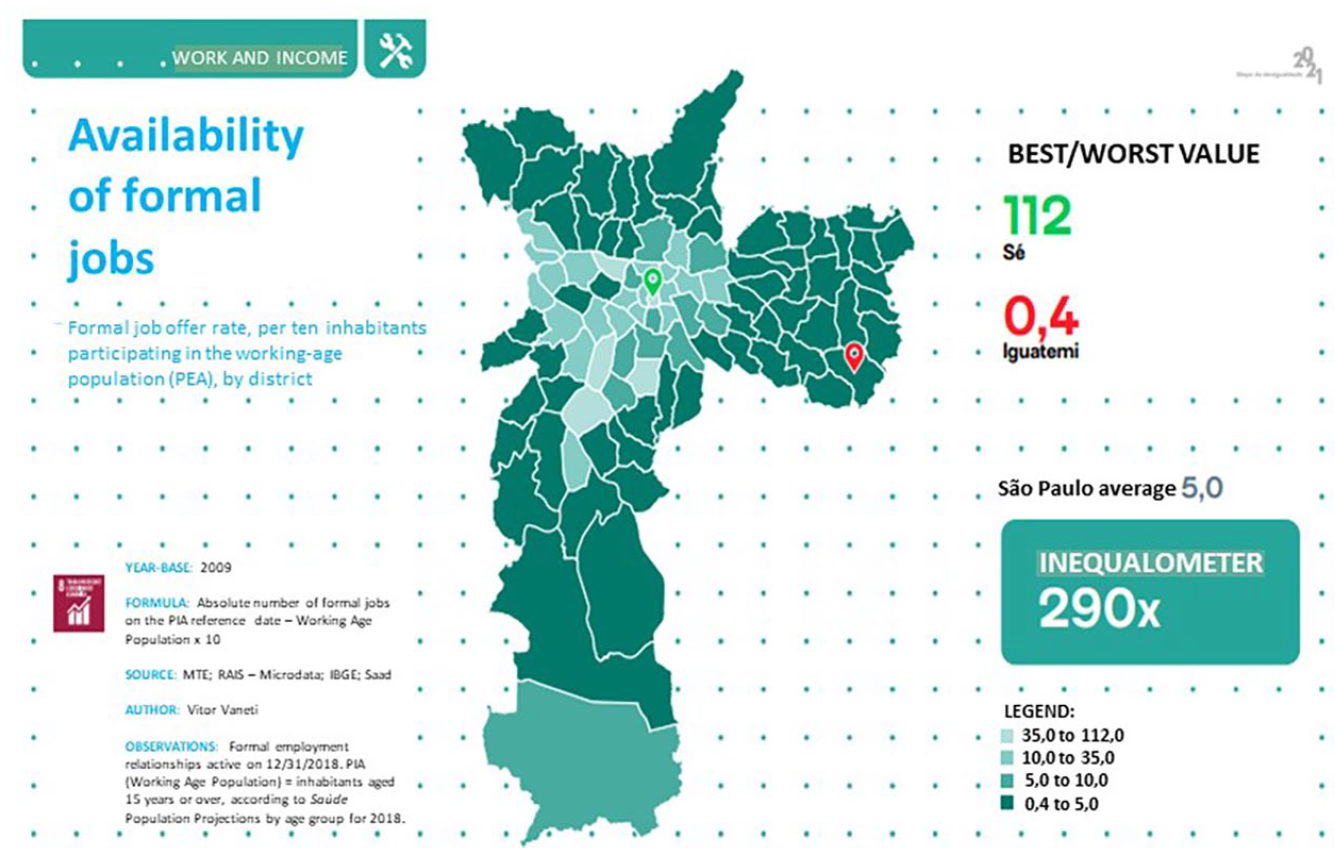
Unequal employment distribution in the territory – São Paulo City
First of all, the dispersion of higher-income people has resulted in the ownership and use of far more private vehicles. As indicated by the Origin-Destination (OD) 2017 survey,(28) between 2007 and 2017 the private car fleet increased by 23 per cent, while the population increased by only 7 per cent. Figure 2 demonstrates the dramatic increase in the resulting trips by motorized and individual forms of transport, an increase that is clearly related to family income (and that also penalizes the environment).
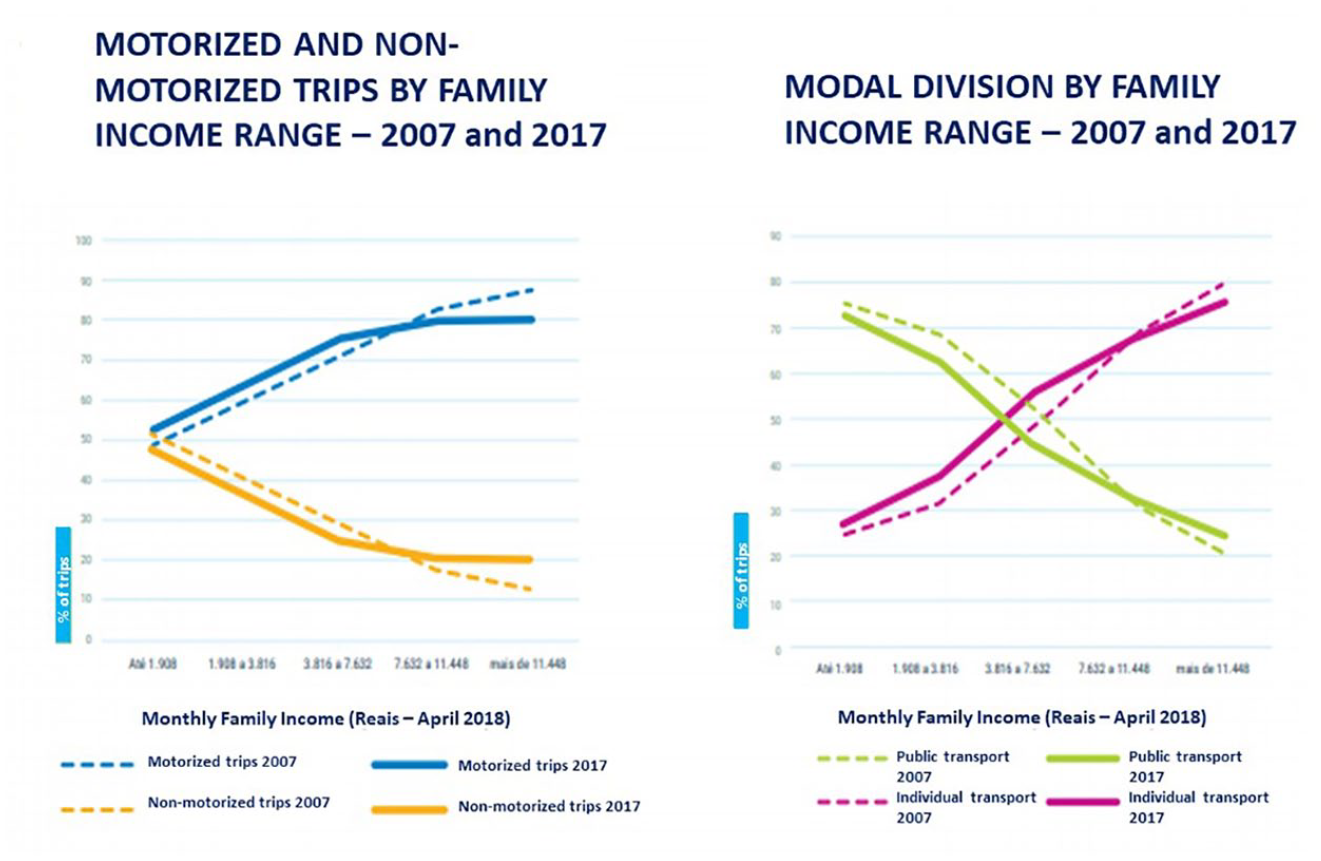
Trips by type and family income
Meanwhile low-income households are also seriously penalized, both in terms of time and health, by their dependence on public transport and unmotorized forms of travel. Trips by public transport take on average three times longer than the same trips by private car. Walking, which makes up almost 32 per cent of all trips in São Paulo, takes longer still.(29) During these longer trips, low-income people commuting to work are disproportionately exposed to pollution. Those who contribute the least, suffer the most.
In this context, mobility and transport act as structuring systems for the socio-spatial relations of housing and work. The possibility of living in housing close to opportunities for work and well served by transport systems would challenge dispersed urbanization and the negative impacts of uneven urban development. In São Paulo, mobility and the availability of infrastructure are the main drivers of the real estate appreciation rationale that has resulted in expelling the poorest from the most accessible regions of the city. This has created a mismatch between housing and places of employment. As Figure 1 shows, the central districts of São Paulo offer far greater employment options. However, these same districts have high rental costs in comparison with those in the distant outskirts where there are relatively few jobs.(30) Ultimately, there are different levels of access to the city, because, as Zandonade and Moretti point out, “those with higher income live in the most strategic places, benefit from accessibility, and travel at greater speed. Those with lower income move more slowly and in a more precarious and uncomfortable way”.(31)
When we look at the relationship between urban mobility and the expenditure of energy, we find that the choice of individual motorized transport consumes much more space, demands higher amounts of energy (fossil fuel), increases traffic jams, pollution and mortality and contributes to dispersed urbanization.(32)
The inclusive confrontation to climate change presupposes setting out principles of fairness and equity and aiming for more compact cities with greater energy efficiency, which require, among other things, shorter trips and more housing in central areas and their immediate surroundings, close to jobs. Such strategies are explicitly promoted in the São Paulo city law on climate change (Municipal Law No. 14,933/09). With regard to land use and occupation, Souza and Sotto argue that “sustainability of population distribution when occupying the territory must be guided by the Principle of the Compact City”.(33) The adoption of this paradigm and the actions it inspires (public policies, planning and projects) could have a positive impact on the fight against dispersed urbanization, which, among other effects, transforms rural areas into urban areas with impermeable surfaces which have an impact on the environment. More compact cities could also make best use of the existing available infrastructure, rather than generating the nonsense of populating areas in distant outskirts that are not yet equipped with infrastructure. Moreover, the environmental impacts of the construction industry need to be stressed: not only in terms of the consumption of materials and energy, but also in the generation of waste and the increase in emissions.(34)
The use of idle properties is a fundamental principle in the discussion of the compact city and the fight against dispersed urbanization. As defined in Brazil’s Constitution (1988) and in the City Statute (2001), “unbuilt, underused or unused urban land”(35) constitutes empty areas. In central districts of Brazilian cities (both in large cities and in smaller urban centres) there is clearly an unused or underused stock of properties, especially empty buildings, which contrasts with the housing deficit. According to the last census,(36) Brazil has 11,400,705 vacant homes,(37) which represent 12.59 per cent of the total number of homes. São Paulo has 589,020 vacant homes (11.78 per cent of the city’s total), and Natal has 52,065 vacant homes (15.44 per cent of the city’s total).
Brazil’s legislation on the use of idle property is underpinned by the principle of the social function of city and property. Instruments to promote this principle, including the PEUC (Compulsory Parcelling, Building and Utilization), contain provisions on compulsory subdivision, construction and land use, which apply to the individual property owners. Sanctions for non-compliance, including incrementally greater land taxation over time and expropriation, are linked to other instruments that play an essential role in the fight against the speculative retention of land. Moreover, there is the Civil Code, Federal Law No. 10,406/02, which defines, in Articles 1,275 and 1,276, the possibility of one’s losing one’s property in the case of abandonment: “it might be collected, as a vacant unit, and become, three years later, property of the municipal government or of the Federal District, if it is located in their respective districts”.(38) Application of the Civil Code may act as an effective instrument in the fight against speculative land retention and the abandonment of degraded buildings. The enforcement of this law may in fact be a more rapid process (taking approximately three years) than the application of PEUC with its subsequent progressive taxation and expropriation, a process that could take 15 years or more.
Unfortunately, the Civil Code is rarely applied and the compliance of municipalities with these instruments of urban policy has been very low. Extensive research carried out by the Brazilian Ministry of Justice found these instruments were effectively applied in only eight municipalities.(39) São Paulo, one of the few cities to establish an institutional arrangement to regulate the PEUC and progressive land taxation instruments, initiated the most significant programme in this regard, notifying unbuilt, underused or unused properties: 1,388 properties were notified between 2014 and 2018 and in 2018, 392 properties were already subject to a progressive land tax over time.(40)
III. Social Movements in São Paulo and Natal: Their Struggles to Conquer the Right to Housing in the Central Districts
The dispute over housing in central districts must be appreciated within the broader context of the evolution of popular struggles for housing and their multiple strategies and actions, whether insurgent or institutional in nature. The case of São Paulo is relevant since the struggle there for social housing in central districts has been consolidated for a long time and with the participation of a wide range of social movements.(41) The process has always been guided by collective and political action aimed at reducing vulnerabilities, bridging everyday care practices with a strong political agenda. The maturity of the movement allows it to be clear about the importance of occupation as a strategy that advances the Right to the City along with climate justice, with the growing engagement of community leaders and residents focused on tackling the effects of climate change in an inclusive way. The case of Natal shows a far more recent struggle for social housing in its central areas, although when the entire city is considered, these kinds of claims go back further. Today, Natal has only a few social movements focused on housing, and mainly on the numbers – i.e., as many homes as possible, and as quickly as possible. But the effort is undergoing some advances and is maturing, as with the Right to the City debate, especially on the right to housing and in terms of its organizational structures and the breadth of its participants, with the inclusion of groups like people experiencing homelessness.
a. A short history of Brazilian housing movements and their strategies
The process of exclusionary urbanization is associated with a peripheral capitalist model, marked by a process of industrialization with low wages.(42) The insufficiency (or absence) of housing policies for the lower-income population has driven the struggle for housing.
The 1970s were marked by an explosion in the development of the periphery of cities, predominantly through the process of self-construction(43) in irregular or illegal land subdivisions. The collective actions of residents took place in response to the need for infrastructure and services, as well as in defence of their rights in the context of land conflicts. This kind of movement, according to James Holston, subverts the concept of citizenship, which is now understood in an insurgent way.(44) As the discourse about the right to have rights grows stronger, it changes the notion of citizenship into a transgressive form(45) with impacts on the movement’s repertoire of actions as well as on its relations with public authorities.(46)
The 1970s also marked the emergence of the first movements organized around the issue of favelas. Movimento de Defesa do Favelado (MDF), the first national movement of this type, stood for favela regularization in defence of the rights to land and urbanization. This movement started to act alongside other older regional movements, such as the Federation of Favelas of Rio de Janeiro.(47) Contributions from technical advisers, universities and professionals linked to public administration strengthened the movement’s struggle against urban inequalities.(48) In this sense, the 1980s marked the consolidation of popular housing organizations and the creation of nationwide movements. Under redemocratization, the Brazilian Movement for Urban Reform supported social participation in the Federal Constitution writing process.(49) According to Bonduki, the “inclusion of many of the claims of movements and technical entities, formulated during the redemocratization process” reflected the political force arising from the popular struggle for housing.(50)
At the executive level, it is worth noting the pressure and mobilization of social movements in the municipal administrations of the 1990s, with their innovative practices and experiments. In more recent years the movements were crucial to the conception and execution of Minha Casa Minha Vida – Entidades (MCMV): a subsidized funding programme for self-building households which created different relationships between housing production and the struggle for the appropriation of the city.(51) The programme made it possible to renovate buildings in central and well-located areas and has provided good examples of quality housing produced at low cost (Figure 3).
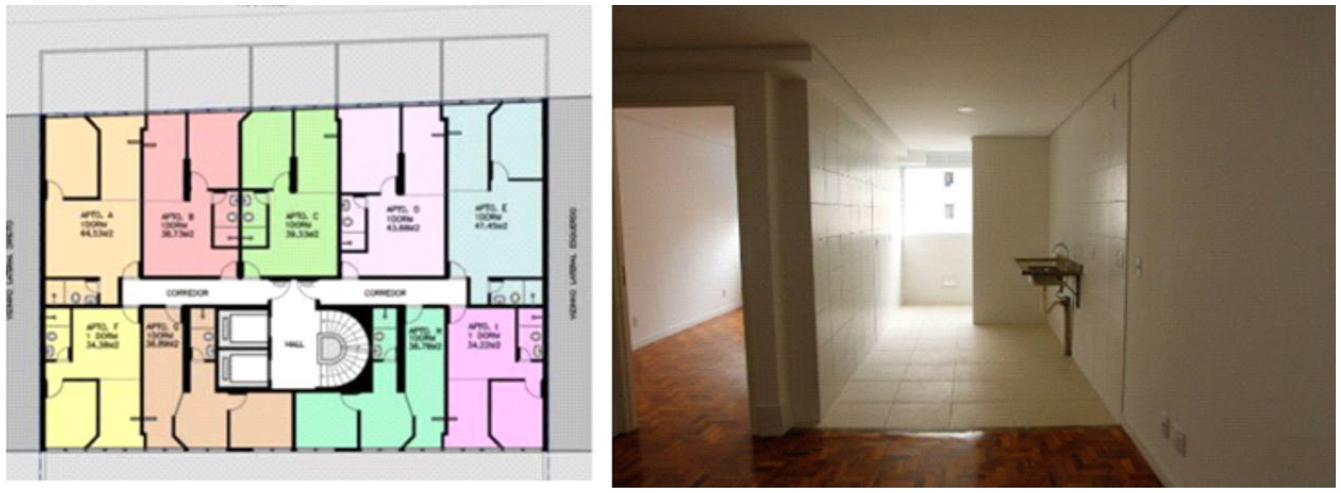
Housing projects: Ipiranga occupation (São Paulo)
The housing movements have never abandoned other grassroots strategies or the use of insurgent actions in urban struggles. Their work relies on discussions, study groups, theatre, organization of protests and occupations, measures that aim towards organization and awareness around rights, duties and citizenship; in short, as Comarú and Barbosa put it, the “development of capacities and abilities to coexist in groups in an organized way – as occurred in the case of occupations of abandoned buildings in central districts”.(52)
Regarding occupations in central areas, in the mid-1990s this strategy was adopted in a more systematic, organized way and at large scale, especially in the city of São Paulo. The act of occupying vacant buildings extrapolates from the strategy of civil disobedience: more than defying the law to highlight an injustice, it uses the law as a justification to legitimize occupation (i.e., these are empty properties that do not fulfil their social function), an act which can be seen as transgressive citizenship.(53) The vacancy of central districts contrasts with the population increase in more peripheral areas. Despite slowing down after the 2000s, vacancy is still a marked feature in São Paulo and Natal. The juxtaposition of the number of vacant properties and the housing deficit is one of many urban contradictions. The pressure exerted by housing movements for the occupation of vacant buildings is huge: occupations are sometimes political acts, as in the numerous iterations of “red April” (ocupações relâmpago) – rapid occupation measures that aim to increase the visibility of the issue.(54) At other times, occupations are consolidated as true alternatives to high rent housing, a most relevant factor in the current responses to the housing deficit.(55)
b. São Paulo: Technical visits for safety improvements after the fire at the Wilton Paes de Almeida building and the approach to public–popular partnerships
A fire on 1 May 2018 at the Wilton Paes de Almeida, an occupied building, and its subsequent collapse, attracted great media coverage and stirred up a commotion. It was a publicly owned property(56) in downtown São Paulo that had been occupied by one of the housing movements fighting for the right to housing in central areas. The disaster gave rise to great pressure for measures to be taken by the municipal government to prevent further such occurrences – measures which, if designed and enacted, had considerable potential for increasing the threat of forced eviction.
The municipal housing secretariat mobilized technicians from the fire department and from several other departments in the municipal administration that deal with the licensing and security of buildings. Leaders of the housing movements were invited for a dialogue, which started with a focus on carrying out inspections in the occupied buildings to identify the degree of existing risk. From the beginning, it was signalled that the municipal government had no housing solution for resettling all of the families that occupied the buildings at risk (so-called “bad buildings”). Scholars and members of technical assistance teams (including some of the authors) supported people from the social movements by showing the need to change the nature of these inspections. The group pointed out that in old buildings, determining the degree of risk based strictly on the normative parameters of current legislation would lead to the interdiction of practically all the occupied buildings. This would create a social problem that would affect thousands of families. Therefore, it was necessary to adopt an approach that emphasized maintenance and progressive measures that would increase security and reduce vulnerabilities.
After extensive discussions, it was concluded that visits should be carried out in order to prioritize measures to improve safety, involving topics such as fire prevention, structural problems and the potential for physical injuries, such as falls. They would assume the character of a visit rather than an inspection, and would be accompanied by leaders of the housing movements and members of their technical assistance teams (organized civil society). There was a reversal of priorities: instead of simply assessing the degree of risk in so-called “bad buildings” according to building codes, the visits would serve to develop a diagnosis, identifying priority actions to minimize problems and progress to safety. A group was also formed to survey and evaluate possible sources of funds to enable the implementation of the priority measures.
The technical work was carried out in 51 occupied buildings from May to June 2018. The information from the visits was consolidated in a technical report issued by the municipal government of São Paulo entitled “Condition of Occupations in São Paulo City”.(57) This document records conditions for an estimated population of 3,500 families, comprising 10,650 people. Among the 51 buildings, 44 per cent had been occupied for over five years (a percentage that has increased since most of these buildings remain occupied today, six years on from the data gathering). The 2018 report made it clear that this occupation was not an act of civil disobedience or a transitory situation, but a way of living and promoting the right to a just, equitable, diverse and sustainable city through direct action. The report also showed that 57 per cent of the occupied buildings are linked to some type of social movement, and it stresses the importance of such social organization. The report clarified that physical conditions in the occupied buildings were not so bad. The practice of social organization and experience with collective actions had a positive impact in reducing risks and improving living conditions, thereby reducing vulnerabilities.
Parallel to the visits, discussions were held with the Public Prosecutor’s Office of the State of São Paulo in order to clarify the nature and purpose of these visits. Representatives of social movements argued that, in the absence of housing solutions to ensure a constitutional right, people often had to choose between maintaining basic living conditions (like eating) or paying rent. They made the case that the occupation of vacant buildings was not only an attempt to enforce the social function of property, but also a way to offer permanent housing options to the most vulnerable.
Meanwhile, 44 of these properties in the inner city were the subject of lawsuits and for 16 of them there had been a provision for immediate repossession in 2018. Their advocates argued that actions for repossession with eviction orders, and without any alternative accommodation on offer, was not only a violation of the right to adequate housing but also failed to reduce risks. The eviction would serve only to change the type of risk or the postal address of vulnerable families at risk.(58) Some of the residents who experienced the fire at the Wilton Paes de Almeida building, for example, had previously been evicted from properties located in Campos Elíseos neighbourhood as a result of lawsuits pursued by the municipal government.
Unfortunately, with the COVID-19 pandemic, the efforts to create a public policy focused on improving living conditions and safety in occupied buildings came to a halt. Visits reverted to the original approach of assessing potential risk based on health and safety legal standards usually intended for new buildings according to the building code. The residents themselves made efforts to find technical assistance support, especially to address recommendations made on the first round of visits, which were prioritized according to complexity and costs. The recommendations that were considered to be both urgent and low cost were put into place. Projects and proposals to address more complex and medium-term actions were elaborated according to a participatory methodology that involved residents organized in working groups alongside which they were provided with technical and legal advice, and reliant on budget amendments approved by municipal councillors. Projects focused on electricity, fire security, hydraulics, building structure and housing habitability were made available to ensure provision of basic services and defend the residents from evictions and criminalization.(59) Unfortunately, a new municipal ordinance (Municipal Law No. 17,577/21), which envisions a renewed central neighbourhood and is encouraging private investments in retrofitting buildings in the central districts, may dismantle these efforts made by a new and participatory governance structure.
At the same time, there have been continuing efforts to establish the bases for government–popular partnerships.(60) The goal, in the case of publicly owned property, is that the group of residents be committed to and responsible for the gradual implementation of a set of measures to improve the safety and habitability of the building over time, based on the findings of the regular technical visits. In exchange, these residents would be granted the right to use the building for a period of 20 or 30 years. The property would continue to be publicly owned, thus ensuring fulfilment of its social function as a public property and responding to the demand for housing through subsidized lease or rent, managed by the social movement and to the benefit of the vulnerable population.
Finally, it is worth noting that after the collapse of the Wilton Paes de Almeida building, the Public Prosecutor’s Office opened investigations into money collection from residents of occupied buildings, which led to the arrest, in 2019, of several leaders of the housing movements, many of whom had not even participated in the occupation of the building that collapsed. This reaction shows the extent of the process of criminalization of social housing movements, but also highlights the importance and visibility that these movements have acquired.
c. Natal: Recent actions by social movements in the struggle for permanence and use of empty areas in the central districts
The entire territory of Natal Municipality, on the coast of northeast Brazil, is nowadays legally considered urban land.(61) The urbanization process grew intensively during the twentieth century, in an advanced process of conurbation with other municipalities in its metropolitan area. This occupation process did not happen in a continuous and homogeneous way but was affected by the social and morphological characteristics of the territory, which marked its extension into different urban empty areas.
Natal’s urban occupation process began on the River Potengi’s banks, next to the port, where the first economic activities took place – in what is nowadays the Ribeira neighbourhood. At the beginning of the twentieth century, Natal started to expand according to the “Cidade Nova Plan” (New City Plan), which boosted growth eastwards. From the 1970s onwards, expansion was linked to the construction of housing projects on the outskirts at that time. Expansion towards the north began with the construction of popular housing, while to the south, projects were aimed at the higher-income population, consolidating neighbourhoods along the coast in an area originally characterized by farms and second homes.(62) The expansion to the south was also driven by other important facilities, such as the Federal University and the State Government Administrative Centre.(63)
Up to 1970, Ribeira still maintained important elements of its infrastructure, such as the bus and railway stations, the port, as well as government buildings. In the 1980s, the bus station was transferred to another neighbourhood, and this resulted in the withdrawal of railway activity, which caused many buildings to lose their function: the city’s expansion caused Ribeira to decrease in population and buildings became vacant or even abandoned. Little by little, Ribeira lost its identity.(64)
The physical expansion of the city also boosted the expansion of the formal real estate market and the beginning of verticalization, which increased the price of empty areas left along the urban expansion axes.(65) In the 1990s and 2000s, real estate development went beyond the limits of Natal with the construction of buildings and housing complexes. This consolidated the southeast axis and intensified its verticalization. This expansion was boosted by investments in tourism, towards both the south and north coasts. This trend was strengthened in 2014, when the new airport was built, with FIFA Football World Cup investment.(66)
The expansion process throughout the twentieth century resulted in numerous urban empty areas all along the expansion axes. Although these areas were already equipped with infrastructure, they failed to attract the production of housing of social interest (HIS). A large-scale housing programme aimed at the low-income population (defined as those earning up to three times the minimum wage) was mostly located on the northern and western outskirts of the city and in the municipalities of Natal Greater Area (RMN). At the same time, some social movements argued in favour of the occupation of empty areas in central districts.
In Natal’s Master Plan (PDN), the urban empty areas remain defined as in the federal legislation (i.e., “unbuilt, underused or unused urban land”), without precise definitions and without implementing the urban instruments that had been provided to address this reality. Despite the recommendations made by several groups during the review, including the authors of this paper,(67) neither a definition nor a map of urban empty areas in Natal were included. The text has thus remained the same as that in force since 2007, which will compromise, once again, the implementation of urban instruments. Neither the topic of climate change nor the urgent discussion of coastal erosion pointed out by several studies were included.(68) The consequence is that the new text of the master plan runs counter to Brazilian regulations, provided for in Law No. 12,187/09 which, as pointed out earlier, has been only slightly included in master plans throughout Brazil.
Nor are there comprehensive surveys of urban empty areas in Natal. Marinho(69) and Cavalcante(70) contributed to the analysis and classification of urban empty areas for the neighbourhoods of Lagoa Nova and Ponta Negra, respectively, identifying vacant and unused land as significant areas of real estate speculation and development for the middle and upper classes. Silva,(71) in turn, analysed the potential for transforming urban empty areas in the Mãe Luiza neighbourhood, a coastal city area of special social interest.
Currently, two of the authors of this paper have been coordinating a research project called “Vacant Areas in Natal/RN”,(72) contributing to a comprehensive survey of urban empty areas in the city, based on theoretical foundations and methodological accuracy in categorizing such spaces. The project has also prepared some case studies, one of them on historic downtown Natal. In the last decade there has been significant pressure in this area from the real estate market, especially an attempt to lighten the burden of municipal regulation with regard to verticalization. Developers are attracted by the remarkable number of vacant lots and buildings left unused or underused, related either to the constant emptying out of industrial activities (railway and port included), or to the deterioration of old buildings (many with significant historical value). In addition, we can see the presence here of some areas or buildings that have been occupied for social housing purposes.
In 2010, the housing deficit in Natal amounted to 22,185 housing units(73) and, as the decade progressed, by 2015 the production of social housing accounted for a total of just 2,864 new units by the MCMV programme. In addition to this insufficient production of new units, the empty buildings in the neighbourhoods of the city’s centre, already provided with infrastructure, were not considered in this policy. Recently, in view of the growing need for housing and discussions about the emissions impacts of travel in the city, social movements like Movimento Nacional da População em Situação de Rua (MNPR, Movement for the Homeless Population)(74) and Movimento de Luta nos Bairros, Vilas e Favelas (MLB, Movement in Neighbourhoods, Villages and Slums) began to pressure the municipality for housing and social assistance in accessible areas with infrastructure, questioning the urban vacancy in central neighbourhoods, especially in Ribeira. We believe that this agenda, although more spontaneous, provokes a direct discussion about social housing in the central districts (something new in Natal), encouraging people to face some of the vulnerabilities mentioned above. Indirectly, this agenda also pertains to the Right to the City and climate justice themes.
In 2018, the Municipal Social Housing Council (CONHABINS) received a demand from the National Movement for the Homeless Population. The council prepared a document on this group and forwarded their requests to the Public Prosecutor’s Office of Rio Grande do Norte (MP/RN). The homeless movement was requesting the right to use empty buildings in centrally located neighbourhoods, where infrastructure is already available and where a number of homeless people were already concentrated. The request focused on two of the properties owned by the Federal Government in Ribeira, currently vacant, which they asked to have assigned to the municipality for use as a facility for the National Movement for the Homeless Population.(75)
The first building is located at 76 Esplanada Silva Jardim (Figure 4, left). Although the Prosecutor’s Office agreed to the proposal, the municipality turned it down, claiming that it did not have funds to adapt and maintain the building and, in a letter dated 4 May 2020, the building “was offered to the Associação Centro Católico de Evangelização Reviver pela Misericórdia”,(76) which had already submitted the necessary documents for such purpose. The other property is a set of warehouses belonging to the now-defunct railway company (RFFSA) located at 21 Rua Almino Afonso (Figure 4, right). These sheds were accepted by the municipality, but according to the official letter, “it was offered to the municipal government of Natal/RN, to be used as a parking lot for public servants”.(77)
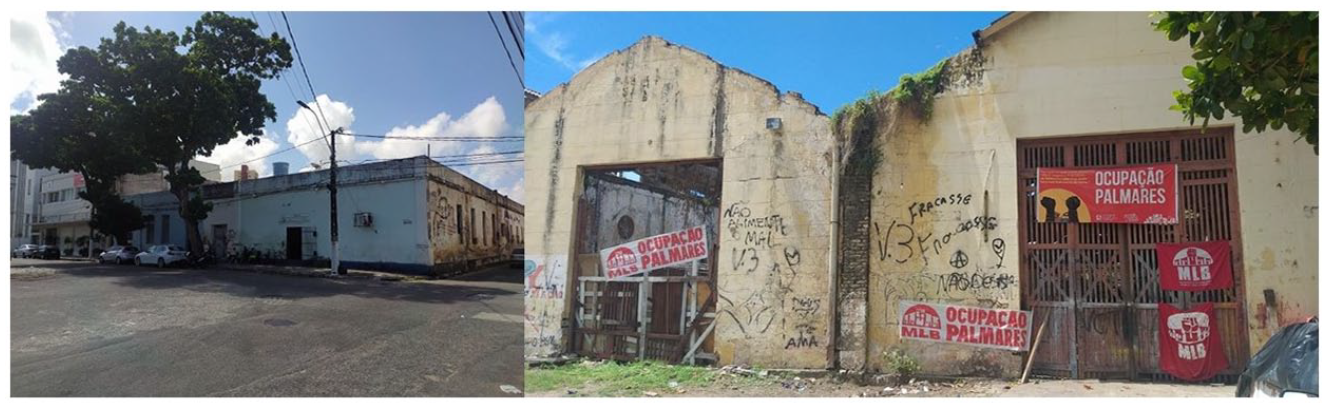
The Federal Government buildings requested by the National Movement for the Homeless Population
Another effort involved an attempt by one of the housing movements (MLB), on behalf of residents who since 2015 had occupied a plot also owned by the Federal Government (RFFSA, Figure 5). The occupation Padre Sabino housed almost 150 families, and MLB’s objective was to pressure the municipality to engage in a discussion of their housing conditions.
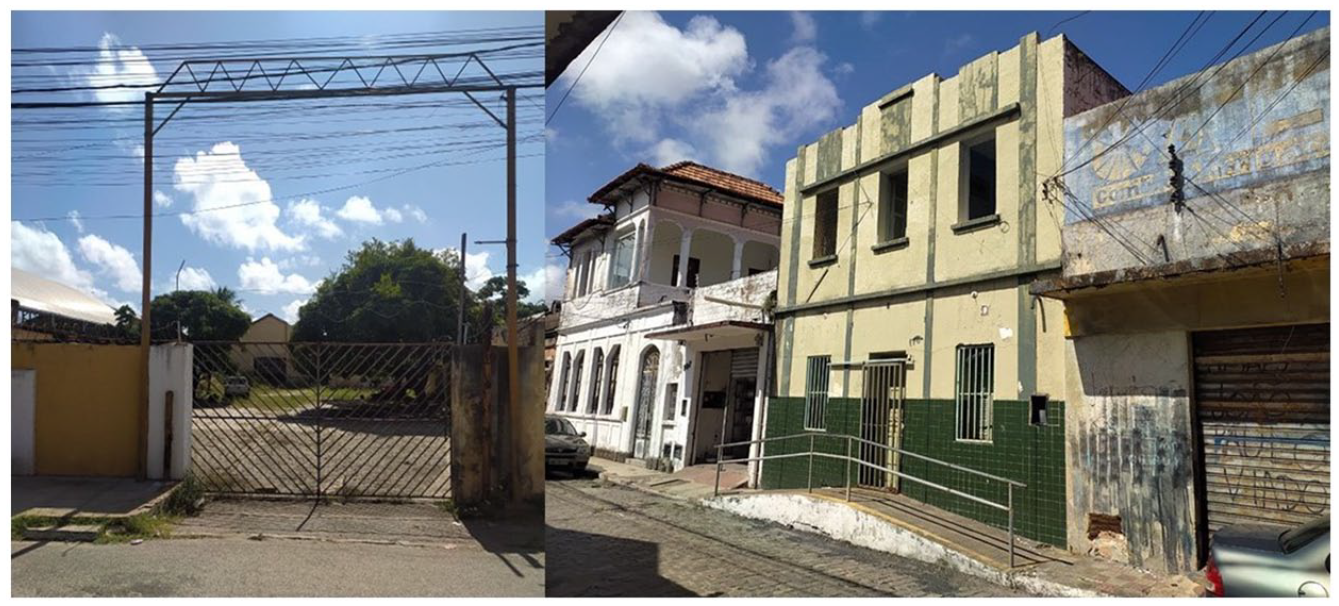
Plot of land occupied by the MLB (left) and the building of the former municipal government hostel also occupied by the MLB (right)
The municipality negotiated with the families to vacate the land, and 110 of them were included in the MCMV housing programme and housed at the Village de Prata Complex, in the distant Planalto neighbourhood. The families that were not included occupied another building – this one an old vacant hostel belonging to the municipality, on Câmara Cascudo Street, also in Ribeira (Figure 5). This occupation, called Pedro Melo, had 21 families, 39 people altogether, and was established on 22 December 2018. Each family, in general, occupied a single room and they all shared a bathroom and a laundry room. Kitchens were improvised inside the rooms. The entire building adaptation was carried out by the movement,(78) including water and electric power connections and sanitary sewage solutions, all of them improvised. There is a risk, however, that a claim by the owners to repossess the property, currently in progress, will be approved.
The ongoing discussions, highlighted by the actions of these two movements, show the need for and possibility of using urban empty areas in the city’s centre. However, governmental traditional policy of building new units in peripheral areas prevails, intensifying dispersed urbanization.
IV. Final Discussion: Parallels Between the Conditions in the Cities of São Paulo and Natal
São Paulo and Natal are cities of different size, with differing cultural, social and economic structures, but they present several points of similarity when it comes to their dynamics of expansive, peripheral, unequal urban occupation. There are also similarities in the insurgent (or transgressive) attempts of social movements to confront hegemonic urbanization processes and policies, giving visibility to inequalities, and especially to the problem of central vacant properties.
Despite the existence of an important regulatory framework that should support the inclusive use of vacant buildings, urban policies have not been fully capable of addressing this agenda in tune with ideas of urban reform and climate action. Housing provision policies such as MCMV continued to produce peripheral housing complexes in places where work is in low supply and there are poor public services and infrastructure.(79) This reinforces a pendular movement from house to work and boosts urban sprawl, which has a significant impact on people’s mobility and, consequently, on GHG emissions. It also demands the conversion of more green areas and the expansion of already fragile urban infrastructure, to the detriment of the adaptation and mitigation measures that are necessary within a frame of inclusivity and climate justice.
The legal, urban and financial obstructions to improving security and reducing vulnerabilities in occupied buildings are a pressing issue that has not yet been resolved and that increases threats of removal of residents.(80) The social movements, however, continue trying to give visibility to the problem of the number of vacant properties in central areas and to influence public policies, building alternatives for the use of these properties in a practice of transgressive citizenship.(81) The movements’ resistance takes the law as a starting point for dialogue with the government authorities and their public policies, and in contributing to new governance (and more participatory) arrangements.
In both cities, these social movements fight for the constitutional right to housing, struggling to use empty properties in central districts by occupying them. In this regard, they adhere to the principle of the social function of property, which is present both in federal legislation and in the master plans of each of these cities.
For decarbonization, it is essential to have urban policies that allow for a pattern of land use and occupation that reduces urban sprawl and the impacts of new construction as well as generating fewer trips. From the perspective of adaptation, there is an urgent need to enhance the use of available infrastructure and existing buildings. Climate justice is at the heart of the social movement mission to improve already vulnerable infrastructure and to guarantee adequate housing and universal access to services – as is seen in the occupied buildings.
In sum, vulnerability is reduced by occupation since people are less likely to be adversely affected by climate change when they are housed. Any house is better than being homeless. Moreover, when people are housed in central areas, they are provided with better infrastructure and services. Social movements also strengthen livelihoods and progressively turn occupied buildings into safer locations through their collective action. Their political practices, furthermore, exert pressure to redefine the urban agenda towards a more sustainable future for all, pointing out strategies for tackling climate change in an inclusive way. Making their voices heard and including them in the decision-making process is still a challenge.
Footnotes
2.
3.
Examples of the impacts of climate change on people living in informal urban centres and street vendors are higher mortality and an increase in diseases resulting from thermal fluctuations (heatwaves and colder days) aggravated by high density conditions, the low thermal quality of construction materials and exposure (especially for workers) to bad weather. Landslides and more frequent flooding (caused by changes in the rainfall regime, recurrent extreme events and sea level rise) also result in damage to life, property and infrastructure. This situation can also compromise sources of drinking water supply and cause an increase in disease vectors (such as mosquitoes) (Dodman et al., 2019).
4.
The ‘‘Relatório Especial do Painel Brasileiro de Mudanças Climáticas’’ (a special report on cities and climate change) places great emphasis on urban infrastructure as aspects of Brazilian cities vulnerable to climate change (Ribeiro and Santos, 2016).
6.
The ‘‘Relatório Especial do Painel Brasileiro de Mudanças Climáticas’’ (Ribeiro and Santos, 2016) is emblematic in this sense. It recognizes that climate change accentuates existing risks arising from a pattern of urban development with deficits in infrastructure. It also mentions, for each infrastructure sector, weaknesses associated with lack of access. However, the mitigation and adaptation alternatives presented do not have an inclusive approach and the inequalities are far from the vocabulary and actions proposed in the report.
8.
Such concepts are defined in Law No. 12,187/09 and Decree No. 9,578/18 which deal with the Brazilian Policy on Climate Change, with mitigation being “technological changes and replacements that reduce the use of resources and emissions per unit of production, as well as the implementation of measures that reduce greenhouse gas emissions and increase carbon sinks” (Article 2, VII, Law No. 12,187/09) and adaptation defined as “initiatives and measures to reduce the vulnerability of natural and human systems in the face of current climate change and expectations thereof” (Article 2, I, Law No. 12,187/09).
14.
Alfonsin et al. (2017); GPR2C ( ).
).
17.
27.
The inventory is not yet available to the public but was reported on the website of the municipal government of São Paulo (Prefeitura São Paulo, 2019).
35.
37.
41.
For more detail on the key movements and occupations as well as the contemporary landscape of the housing movement in Sao Paulo see Paterniani (2016) and .
43.
Peripheral self-construction served capital, reducing the costs of workforce reproduction and allowing for a reduction in wages and, in this way, the Federal Government’s authorities own failure to control land use in a large part of the territory of the cities can be considered an intentional absence suited to the interests of industrial expansion and colluding with the elite’s desire to maintain segregation in the city, a process that became known as “urban spoliation”, in the well-known expression coined by Lúcio Kowarick (Earle, 2012).
56.
The property belonged to the Federal Government and had been empty since the early 2000s when it ceased to be the Federal Police headquarters. Since then, it has only been occupied by an agency of the Brazilian Institute of Social Security (INSS) and its degraded condition and abandonment ended up frustrating attempts to give a purpose to the building. Currently, an agreement has been signed between the Federal Government authorities and São Paulo City’s authorities for low-income housing to be built on the land where the building used to be.
60.
. With a different approach, but also reinforcing local initiatives, a legislative bill (PL) on Public–Private Partnership is being processed in the House of Representatives. PL 4517/19 allows the transfer of public funds to residents of a block or complex to carry out small urban improvement works, such as paving, renovation of public facilities, creation of leisure spaces or green areas. It is possible to assign public areas to have work and/or services carried out there. These can be performed with a possible return in the form of reduced taxes levied on the applicants’ properties. The PL also provides for more expanded partnerships, through Operações Urbanas Consorciadas (OUCs, consortium operations), without specifying the details of the improvements. Allocating funds and public assets (such as parking and community security) can be controversial because they would imply restriction of access and collection, without going through bidding procedures. In any case, the conditions for direct transfer of resources to the population make the application quite limited, as the instrument can only be used in municipalities with up to 200,000 inhabitants and for works costing up to 150,000 Reais (US$ 30,588 – conversion rate January 2024).
61.
Most Brazilian municipalities have both urban and rural land/zones according to the prevailing economic activity (agriculture, industry or commerce/services). However, especially in the state capitals, when primary activities have ceased, the entire territory is considered urban, as in the case of Natal.
65.
67.
The writers of this article (Emanuel Cavalcanti and Amíria Brasil) participated in the review of the Plan as members of the expansion Project “Fórum Direito à Cidade” (Right to the City Forum), with proposals, within other changes/incorporations, definitions and classifications for urban empty areas.
68.
72.
Coordinated by authors Emanuel Cavalcanti and Amíria Brasil, developed in the Departamento de Arquitetura (DARQ), Universidade Federal do Rio Grande do Norte (UFRN).
73.
74.
We understand homeless people as “a heterogeneous population group, but that has in common extreme poverty, broken or weakened family ties and lack of regular conventional housing” (Silva, 2006, page 22), that is, the most vulnerable stratum of society (Natal, 2018). In Natal, the exact number of the homeless population is not known, but according to the Social Assistance Municipal Secretariat (SEMTAS) there are over 1,000 social records (Natal, 2018). Central neighbourhoods have the highest concentration of homeless people. Currently, there are few support facilities: three hostels which house around 60 people and a centre specializing in assistance to homeless people, which was recently closed and reopened.
78.
Notes on the adaptation of the building for temporary housing for families of the movement were made during a visit to the occupation in 2019.
79.
In that sense, see the efforts made by Teresina City Lab – Edgar Gayoso (see https://urbancoalitions.org/pt-br; Gatti et al., 2023).