



Abstract
Not all the challenges of informal settlement upgrading programmes can be anticipated from the start. It calls for cumulative learning within the programme’s timeline. This paper investigates the role of organizational learning in influencing programme outcomes. The analysis of the Kenya Informal Settlement Improvement Programme (KISIP) shows that a lack of organizational learning routines can lead to reduced programme success, and that programme learning can improve programme outcomes. Well-conceptualized processes that include participation, coordination, communication and the synthesis of information are essential, though insufficient alone. Additional barriers, including a sudden increase in the number and diversity of actors and projects, their deteriorating commitment, inequitable incentives and inadequate tools to support programme learning, can further exacerbate the absence of established programme learning routines. There is a need for explicit and transparent programme learning procedures across organizational levels in order to improve overall programme success.
Keywords
I. Introduction
In the context of the current century, awareness of the challenges posed by informal settlements has been increasing. Despite widespread efforts to improve these settlements, there remains a dire need to scale local projects to citywide and national levels for the over one billion affected residents.(1) There has been progress. Some countries have established (and continue to establish) nationwide upgrading programmes to improve the living conditions of the urban poor.(2) In recent years, UN-Habitat has also advocated for citywide programmes linked to nationwide strategies(3) and it actively engages in conferences to seek strategies for improving and scaling upgrading interventions.(4) These programmes aim strategically at achieving scale, addressing citywide issues and overcoming needs beyond individual settlements. Such programmes can involve multiple and spatially separate local projects, but their outcomes are characterized by their aggregated performance. Programme management teams have to manage inherent challenges associated with multiple processes and related to issues both familiar and unfamiliar.(5) How these teams can best forecast and resolve such challenges remains an open question, especially for upgrading programmes that take place in unpredictable informal settlement contexts.
This paper investigates the opportunities for programme learning as a means for programme management teams to navigate the challenges and influence the outcomes of upgrading programmes. Such programmes are generally established to manage multiple projects with the intent of achieving cumulative strategic benefits.(6) Programmes that include multiple projects face many challenges related to their complexity, and the processes undertaken are often inefficient in terms of their timelines, costs, scope, quality and effectiveness. Project designs often fail to take account of the impact for residents, for instance the implications for their livelihoods or children’s need for play space, and may be adapted by end users in unanticipated ways.(7) The barriers encountered by implementers, individually or collectively, can hinder a programme from achieving its goals.(8)
Most of the component processes of upgrading projects and programmes that are decisive for outcomes can be assessed and evaluated independently. We find it helpful to classify them here into sequential and recursive processes. Sequential processes refer to prescribed tasks with actors and set rules and structures that can be evaluated individually and without which, at any given time, upgrading cannot proceed. They form a chain of linked processes critical for the project timeline and can be planned and sequenced linearly. They include processes such as project design, procurement, infrastructure construction, supervision and monitoring at scheduled intervals, and the project termination process, among others.(9) Recursive processes, on the other hand, occur concurrently with the sequential processes throughout the project timeline but occur in short and frequently unpredictable cycles on a needs basis. These include participation, coordination, communication, collaboration and cooperation, and although they are often structured, their time of occurrence cannot be predetermined. They are essential for responding to deficiencies and offering the means to effect solutions for sequential processes. They can also be deficient themselves, and subsequently can delay adequate knowledge of deficiencies in the sequential processes. Due to the concurrent relationship between recursive and sequential processes, it is difficult for programme management teams to fully forecast when, how and where (spatially) these processes might fail. They have to grapple with these failures when they unexpectedly occur.
The classification of processes (as above) is useful as a means to aggregate, systematize and understand the many challenges that occur in programmes. It can help to clarify the points at which challenges occur, how they occur, whether they can be addressed and resolved promptly, and how they influence the implementation process and outcomes of projects and overall programmes. This is a gap that has not been explored in the literature, as studies on upgrading largely focus on the effect of an individual process (such as participation) on upgrading outcomes.(10) A core question arises: how can implementers identify deficient processes, improve their efficiency and, subsequently, overall programme outcomes? To answer this question, we explore concepts from the field of organizational learning. Organizational learning considers the means by which an organization gains experience while performing a process and converts that experience into knowledge. This in turn alters the way the organization performs the said process and others with the intention of improving its performance.(11) Based on this organizational learning approach, we define programme learning as a means (rather than an end) by which programme implementers improve the performance of upgrading processes, leading to better outcomes of projects for the cumulative benefit of the overall programme. Programme learning introduces additional learning processes that are often overlooked during the implementation of programmes but that can be beneficial in improving their outcomes.
To identify what the contribution of programme learning could be in informal settlement upgrading programmes, we study typical deficient processes that could have been improved in the Kenya Informal Settlements Improvement Programme (KISIP), where programme learning was not planned for. More details about the programme are provided in Section III and in the online Supplementary Material. This focus on KISIP deficiencies is not to imply that the programme failed at large. Projects under KISIP took place simultaneously in different settlements all over Kenya but often with different start and completion dates, and with varying levels of success. All were focused on improving the living standards in informal settlements.(12)
II. Literature Review
Empirically, the challenge of successfully implementing informal settlement upgrading projects and programmes has been daunting and implementers have grappled to find a balance between the efficient completion of planned programmes (or outputs) and the effectiveness of programme outcomes.(13) Many programmes have performed sub-optimally due both to deficits in implementation and the poor suitability of project components to resident needs, leading to their limited contribution to residents’ lives and well-being.(14) Those programmes termed successful often report on outputs rather than outcomes, for instance, the number of households connected to water infrastructure but not those households receiving the water consistently.(15) This output information is certainly useful, as the efficient completion of a project is critical to the improvement of living conditions. Successful projects and programmes are characterized by their implementation efficiency, including completion within planned cost and timeframe and with the desired scope and quality. But the way these outputs actually affect residents’ lives is also critical, and programme teams ideally aim to maximize both efficiency and effectiveness despite their often competing nature. For slum upgrading programmes, a focus on the outcomes for residents includes, among other things, attention to reduced costs, limited disruptions in service delivery, and increased time and space for livelihoods. Both efficiency and effectiveness are the product of successful processes.
a. Programme processes
Programme implementers cannot fully predict all deficiencies/challenges likely to occur in different processes before the implementation of projects begins.(16) Especially in upgrading programmes, processes face challenges due to complexities associated with diversity, interdependence, dynamicity and the uncertainty of such programmes.(17) Diversity relates to the different types, varied numbers and heterogeneity of stakeholders and the variety of geographical and social contexts of projects within the programme, including management hierarchies. Interdependence relates to the interactions and connections among elements in programmes that have to be coordinated. Dynamicity relates to time aspects such as the rate of delivery or the compounding of challenges in the evolution of programmes. Last, uncertainty relates to the unknowns in the programme related to novelty, experience and the availability of information. Such challenges cannot always be anticipated but have to be resolved to ensure the achievement of programme goals, while at the same time serving the needs of stakeholders.
The outcomes of programmes deteriorate if either recursive or sequential processes are deficient, and certain processes are regularly reported as deficient in upgrading programmes. Sequential deficiencies include complex and rigid procurement processes,(18) limited infrastructure adoption(19) and poor quality infrastructure construction.(20) Recursive processes that are regularly reported as deficient include the establishment and management of modalities for the participation of the programme team and other stakeholders in resolving challenges and making project decisions;(21) the collaboration (albeit implicit) among actors co-creating knowledge to achieve solutions to challenges;(22) the coordination of information flows to and from relevant stakeholders in a project;(23) communication and the exchange of information;(24) and overall management.(25) These studies, among others, commonly highlight the individual challenges in the process and offer recommendations for resolving them, but without reference to how each process interacts with others. Researchers often fail to analyse how or whether programme management teams identify and attempt to resolve the challenges, presenting instead a perspective that overlooks their efforts. To expand on this limited perspective, organizational learning literature provides useful insights.
b. Organizational learning and link to programmes
Organizational learning literature outlines interconnected concepts that include knowledge search, creation, retention and transfer.(26) These concepts have not been explored in the context of slum upgrading. However, they have provided useful insights in their nexus with project management literature.(27) Researchers, including Kotnour,(28) recommend that learning within and between projects is useful for project managers to increase project success. Others, including Duffield and Whitty,(29) suggest that learning is useful for promoting safety in projects. Ahern et al.,(30) among others, demonstrate the importance of organizational learning concepts for complex projects where knowledge of project tasks is always incomplete at commencement. These concepts have also been used to develop the means for improving complex infrastructure projects.(31) We argue that this literature has the potential to deliver insights for complex upgrading programmes.
Knowledge search is the intent of the organization to seek solutions for current or anticipated challenges that may act as hindrances in achieving objectives.(32) The search process can be orientated towards other organizations, for instance in benchmarking exercises. On the other hand, it can be orientated within the organization, for instance when an organization seeks to refine existing known knowledge stocks.(33) Knowledge search in programmes is anchored in the participation and capabilities of programme and project staff and stakeholders in identifying and communicating relevant deficiencies without distortion, and the core intent of the management team to actively pursue and address them.(34)
The knowledge creation process involves insight-synthesis – extracting, structuring and organizing insights from deficient processes to improve organizational outcomes.(35) It requires collaboration, coordination and communication among programme team members as well as the capacity to understand and integrate different types of insights and their relevance to the programme.(36) Subsequently, the knowledge created within organizations is often retained in knowledge management systems that can comprise technological and human management aspects. The knowledge retention process involves storing and maintaining knowledge in repositories such as individual routines and manuals, or as accessible memory and associated knowledge management systems.(37) To access retained knowledge, communication as well as team member attributes, such as their willingness to participate and trust each other, play a key role.(38) Finally, the knowledge transfer process can be intentional or unintentional and involves passing knowledge between units of the organization or over to other organizations to improve the overall organizational performance.(39) This also requires collaboration, communication and coordination.
Based on this literature, programme learning has identification, transmission and resolution components. It is a means to improve programme outcomes whereby a programme team (all programme and project staff) identifies deficient processes, and communicates these to the programme management team through the programme structure. The programme management team collaboratively devises solutions to the deficiencies, and subsequently communicates them back to the overall programme team members, including those who have not been involved in the identification of the deficiency. In addition, the solutions are retained within the programme for subsequent reference. The devised solutions could be within the parameters outlined in the programme design, or come from knowledge generated from previous experiences in the programme.
With this definition of programme learning in the background, the following can be posited. Programme learning has a role in improving programme outcomes by enabling the programme management team to rapidly identify deficient processes (both recursive and sequential), even when they occur unexpectedly, and to address them within programme timelines. Through the case study of KISIP, we demonstrate how programme learning, as defined here, could have contributed to improving processes and delivering better programme outcomes.
III. The case Study and Methodology
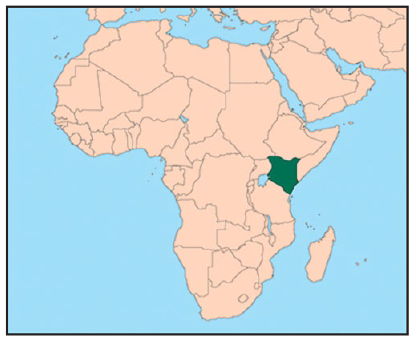
KISIP was selected as an exemplary case of a nationwide upgrading programme that was relatively successful in a rapidly urbanizing country. Its goal was to improve the living conditions in selected informal settlements in Kenya through improvements to infrastructure, tenure and governance,(40) although our focus was solely on the infrastructure component. KISIP was chosen from among other nationwide programmes in other countries(41) because it was recently completed, its implementers were open to a study being carried out, and it was rated satisfactory by the World Bank, implying that “there were minor shortcomings in the operation’s achievement of its objectives, in its efficiency, or its relevance”.(42) It was also selected because it aimed for minimal resettlement, involving only traders with temporary structures, which were moved a few metres away from the roads that would be constructed, a process that was meant to be facilitated financially by the coordinating team and executed by residents. The programme did not explicitly intend to stop residents from operating their businesses along the roads even after their construction.
The programme has close similarities to other recent upgrading programmes and follows the scaling trajectory that applies to plans for future World Bank programmes. It was a significant pilot programme for the World Bank, which provided US$ 165 million in funding for the first phase, which was also supported operationally by the Kenyan government. Conceptualized in 2009, it was expected to run until 2016, but its first phase was only completed in 2020 due to an increase in its scope and challenges.(43) The programme’s timeline is explained in the online Supplementary Material. The programme is currently in its second phase, which began in 2021 and is planned to culminate in 2025.
While the case offered sufficient insights for understanding programme learning in infrastructure-led programmes, it was limited in terms of insights for other kinds of programmes that favour other interventions, such as direct improvements to livelihoods. We focused only on the infrastructure investments aspect of the programme because the largest proportion (over 70 per cent) of the total funds for the programme were directed towards this component.(44) Basic service infrastructure, in addition, has been proven to be key in catalysing the securing of livelihoods for slum residents.(45) This infrastructure focus is not to discount the value of other upgrading interventions.
KISIP presented an exemplary case through which to engage with the complexities faced by urban development programmes in many low- and middle-income countries for a number of reasons. First, it was very diverse, covering projects in 80 informal settlements in 15 major urban areas in Kenya that differed geographically and socially. Diversity was also manifested in the different infrastructure interventions carried out under each project. At least three of seven infrastructures – water reticulation, roads, footpaths, drainage, security lights, ablution blocks and solid waste management units – were implemented in each settlement simultaneously. The average was five infrastructure elements for the settlements visited, implying that in total about 400 construction works were undertaken up to the end of the programme. The execution of each project included the preparation, implementation and post-implementation phases.
Second, the programme team structure was complex and diverse. Each of the 80 settlements had its own community representative committee, with at least 15 diverse members at the start of projects. Within a given county, these committees were coordinated by a county team, which reported to the national coordinating team. The county teams consisted of seconded government employees and their KISIP role was just one among other roles they performed for their respective county governments. They were actively involved in KISIP only after 2014, when the effects of the 2010 Kenyan constitution brought about the devolution of administrative units and authorities from previously centralized models. The national team, in charge of all programme management activities and decision-making, consisted of fewer than 10 key personnel. The national coordinating team, the county teams and the community representatives also had to interact with other stakeholders, including the communities, World Bank technical assistants, government auditors, politicians, consultants and contractors, who influenced or contributed to the programme as the need arose.
Third, there was considerable uncertainty in how residents would react to the upgrading process, given the mistrust that characterized their relations with the government.
Fourth, Kenya is a complex country for upgrading. There can be legal tussles and tenure challenges as well as the previously mentioned governance changes associated with the introduction of the 2010 constitution. This could entail challenges in project implementation that could not be anticipated and that influenced the processes. All these factors made KISIP a very rich case in terms of mechanisms, complexities and needs for programme learning.
The study followed a qualitative methodology and employed an abductive approach to case research.(46) This approach allows for constant iteration between theory and empirical observations, thus enriching explanations of different phenomena. Both primary and secondary data were collected by the first author in two waves in late 2019 and from August to November in 2021. The data sets included 37 interviews with informants selected through snowball sampling. They included two female funders, six members of the KISIP national team (three female and three male), four male county team members, 23 community representatives (14 male and nine female) and two female consultants.
In addition to the interviews, we examined 33 reports specific to KISIP, including 19 annual implementation status reports, seven annual audit reports, two completion reports and five design phase reports. Field observations were then conducted in 16 informal settlements where projects had already been implemented in order to verify claims from secondary documents and interviews. These field visits also allowed us to observe how residents were using the infrastructure completed under the project. The study was approved by the National Commission for Science, Technology and Innovation of Kenya under Licence number NACOSTI/P/19/1250 and consent to conduct interviews was sought verbally from all interviewees.
Interview data were translated, transcribed and analysed, along with the reports, using thematic analysis. Deficiencies during the implementation of KISIP’s projects were identified through granular level codes, aggregated according to the specific upgrading processes. How these challenges were resolved or not was also coded. The codes were then aggregated into themes related to the barriers to programme learning for the national coordinating team. The goal was to identify how or whether the national coordinating team learned of these deficiencies in KISIP’s processes in time to address them, how they resolved them and what challenges were associated with this.
IV. Findings: Challenges Encountered in Kisip Processes
The national coordinating team and programme designers had not envisioned or planned for programme learning procedures in the specific sense defined in this paper. The closest they got was identifying challenges during quarterly monitoring and evaluation reporting, and biannual field missions, which were entirely focused, however, on reporting progress. They expected that participation and event logbooks (explained in the paragraphs that follow) would solve challenges more at the community level.(47) One of the interviewees in the national coordinating team reported this as follows:: “If I were to propose a change, it would be to have scheduled [implying that this was missing] [in the form of] county-to-county learning programmes. Shared with the committee-to-committee learning or coordinator-to-coordinator learning, which are scheduled and where formal learning points are taken and shared, you know, and documented. That would assist.”
As observed in the programme, structured programme learning processes could have contributed to the identification and resolution of a number of challenges that occurred in various processes, and that are outlined here.
To begin with, the national coordination team and the auditors immediately identified and recorded challenges with procurement delays. They also pointed to the rigidity related to the structure of the procurement process and the way it limited the capacity of the national coordinating team to implement the World Bank guidelines. These concerns were repeatedly documented and communicated, especially by the auditors, between 2014 and 2016, and were further acknowledged in later reports by the World Bank(48) and the national coordinating team. However, the national coordinating team had been unable to resolve these problems, since national and World Bank guidelines could not be altered. This subsequently lengthened the process, leading to delayed timelines for projects. While the procurement problems were common knowledge within the national coordinating team, other actors in the programme were not aware of this and misinterpreted the delays to imply that the projects had stalled:: “The time delays may not have been anticipated because they came about due to the procurement process, not necessarily lengthy, but a process that did not flow.” (Member of the national coordinating team)
Questions posed by the community representatives to the county teams about these delays went unanswered since the county teams were often unaware of the reasons for the delays. County team members often had short periods in office and were implicitly in conflict with previous municipal officials who had been sidelined due to political differences:: “. . .we had high turnover of staff. Like in the first two years, a different person was handling the project, then fast forward to a different person, like, there was a lot of changes. And these, most of the times occasioned the lack of full communication . . . communication happens, but does not land to the right person to do what needs to be done.” (County team member)
The residents became sceptical about whether the projects would ever commence. To some extent this entrenched their belief that the project was just another empty government promise. Some even absconded from their duties:: “Because the job [construction works] is delayed, they think that you and the executive [the community representatives] have misappropriated the money with the contractor because no information reaches them. Even if you try to tell them that you are not getting any information [from the county team], they don’t believe it. The secretary withdrew, the organizing secretary withdrew.” (Community representative)
The procurement rigidity and delays further limited the choice of consultants or contractors, with implications for their quality. The people who were hired were often those who best manoeuvred the procurement process rather than those with optimal capacity. Some of the contractors, for instance, lacked either technical or financial capacity, as well as previous experience working in informal settlements. This was exacerbated by the fact that they were operating in several settlements concurrently in a given municipality. Subsequent processes reflected this lack of capacity and were thus deficient, for instance in terms of supervision (as reported by a national-level interviewee, backed by a county-level interviewee). The national team addressed some of the concerns by terminating contractors, as in the case of settlements in Naivasha, or, in cases where consulting supervisors ordered extended works beyond the scope of the projects, by absorbing the extra costs.(49)
In addition to the procurement problems, the grievance redress process was deficient and the national coordinating team realised this only towards the end of the programme. Community residents were encouraged to record issues in logbooks and communicate them in meetings or directly to the county team and the national coordinating team for resolution. It was evident that many challenges were recorded by the residents as planned. However, they did not reach the coordinating team on time, and sometimes not at all. These logbooks, initially supplied by the programme to the community representatives, were still being used by the residents at the time of the fieldwork, but there was no evidence that the challenges they reported were reviewed, integrated or synthesized. This communication breakdown was largely due to a failure in participation and interest on the part of the frequently reshuffled county teams and the fact that they were only seconded to the programme. A second reason was that joint monitoring and field missions by the national coordinating team only took place biannually. They would learn of a challenge as late as six months after it had occurred, if at all. Addressing these grievances, including facilitating the resettlement of shopkeepers, often took too long despite the presence of guidelines and structures for making this happen. Actual facilitation of the process sometimes only occurred much later, after residents had already reconstructed their relocated small shops, using their own funds. As explained by one community representative:: “Some of the residents who deserved facilitation to move in 2015 only received it in 2020 when the programme was ending.”
This problem occurred among the first batch of projects in the programme. It disrupted the relations between some of the community representatives and some of the aggrieved residents, who felt that the representatives were embezzling the funds. It also contributed to the negative attitude and declining trust of affected residents towards particular projects.
A third problem was that the infrastructure construction process was riddled with challenges that the national coordinating team often learned about quite late in the programme. Thus the challenges were not addressed until the consequences they were having were already severe. These problems were a combination of inherent procurement deficiencies, as noted, with coordination and communication challenges. In some cases, for instance, instructions from supervising consultants to contractors were not communicated to the national coordinating team promptly or not communicated at all, despite the instructions regarding financial implications that could only be authorized by the coordinating team. This communication breakdown barred the national coordinating team from learning about and resolving these challenges promptly.
Communication delays and omissions meant that significant events, including accidents, work stoppages and poor quality of work went unreported to the national coordinating team for extended periods, as expressed in the quote that follows:: “A key finding in that mission [2018] was that there was local-level awareness to document and report severe injuries and fatalities to resident engineers, contractors and law enforcement, but there was a systemic failure of reporting to KISIP high-level management [suggesting that the national coordinating team was often unaware of such occurrences in the projects] and the World Bank.”(50)
During the construction process, the involvement of community representatives by all the teams, including contractors and consultants, was very restricted. For example, in settlements in Nakuru and Eldoret, among others, there were many times when the community representatives were locked out of project meetings, the justification being that these meetings were too technical for them or that they only slowed down the construction progress. This implied that most of the challenges community representatives might have reported went unheard and unresolved. Subsequently, many representatives withdrew from their duties, leaving an average of two per settlement rather than the average of 18 as originally conceived. A lack of facilitation contributed to this. Communication was also deficient, and often conflicted, between the community representatives, contractors and the county team. Contractors largely avoided the community representatives, who often sought help from the county team, but to limited avail. The community representatives ended up bypassing them and contacting the national coordinating team directly. This often overwhelmed the coordinating team, given their limited capacity to absorb all the separate communications from different settlements in a context of deficient coordination, especially at the county level and when the projects were rapidly increasing in number.: “They [community representatives] have had challenges. When they started, they were many. As time went by they dropped out, and a few were left, so they have had problems because contractors would not listen to them, they were told to report directly to the county. So you find if people on the ground [in the settlement] want to report something they have to go to the county!” (County team member) “There are times when you try to talk to the contractor. They won’t give you any response to support. You try [a] county official. They are compromised. They side with the contractor. So, you don’t address anything. Now we were left with calling direct to Nairobi [the national coordinating team] and telling them this is what is happening. And we’re not going to do these, we’re not going to allow these. Now the community is now taking position. It was push and pull, that’s only when they [the national coordinating team] come in and then pushed the consultant and contractors. But at the beginning it was working. Not very well. But later it became the worst.” (Community representative)
A final reason was that the infrastructure handover process was deficient. The respective county governments were expected to own, operate and maintain the infrastructure. The national coordinating team had no mandate or responsibility for projects after they were complete, even when the larger programme was still active. Programme learning could not occur once the projects were handed over and considered closed, since there were no further open channels along which learning might occur. Some of those at the county level who had formal responsibility did not feel compelled to address any project-related issues that arose. In some settlements, residents did not use the infrastructure at all, claiming that what was provided was not what they needed or had agreed on at the start of the project. One such example was the ablution blocks built in Munyaka settlement in Eldoret, which were not useful since the residents already had toilets in their households. This pointed to challenges with participation at the preparation and implementation stages of the projects. Another reason given for lack of use was that there was no clarity on how infrastructure would be managed or who would be responsible for it once built. This was especially the case with the solid waste units in most settlements where they were installed. There were also cases where residents used infrastructure for unintended purposes – for instance, roads were used as market spaces or for children’s play, or drainage ditches were used as waste disposal points, with residents claiming that this was the only space available for these purposes, and that is how they were using it before upgrading.: “These people [informal settlement residents], they look at the drains as dumping sites for waste. And that is a problem that we’ve grappled with. We’ve tried to do community sensitization, tried to do enforcement, but still the challenges are there.” (County team member) “It is very common and it’s a lesson to KISIP too. You will find the residents are using the walkways and even the road itself for doing business. The roads have become the market, and simply because we failed to provide for them. You see before we went in, there were no spaces. The little spaces that were there were places for business. Once we consulted with people about building the road and compensated them for having to move their shops, we helped them move out. But now that the road is there, still people want to do business. They still want to earn a living and the only activity they know is selling. So they just bring their wares to the road because they don’t have structures or space within the settlement. So we have that challenge. They are doing business on the drain covers and roads, clogging the drains, because most of these are vegetable vendors and charcoal sellers. As they do business, they drop their waste into the drains. When the contractors are there of course it’s a requirement – they must keep maintaining the drains, and ensure that they are running and they are not blocked. But now that the programme is coming to the end, you see it’s going to be an issue.” (National coordination team member)
V. Discussion
Challenges during the implementation of KISIP occurred randomly in time and space, and the national coordinating team could only predict some of the problems. Even when challenges could be foreseen, there was no way of knowing the full extent of their impacts, let alone administering prescribed solutions. Programme learning was necessary if the full extent of the challenges was to be understood and resolved. To some extent learning was expected in the preparation and implementation of projects, and during post-implementation in accordance with the design of the programme. The findings indicate, however, that this did not occur, especially during implementation and post-implementation. Challenges were either not identified by local actors or were not communicated and transmitted along the hierarchical chains to the national coordinating team. In other cases, the national coordinating team either did not synthesize the concerns or failed to communicate and implement solutions proposed. Below we elaborate further on the findings.
In the case of the deficient procurement process, the national coordinating team was aware of the challenges and knew the consequences for the projects with regard to extended project timelines, but they failed to inform residents of the delays. Withholding this information, even without intending harm, led to mistrust as projects were halted for over two years at the settlement level without any updates. The problems associated with this scenario – awareness of a challenge among the top management and little communication to stakeholders on the ground – is a key insight for implementers. The importance of clear communication and sharing information has been emphasized in other studies.(51)
The deficiency in the grievance redress process presents a scenario where programme learning occurs but with a significant time lag, which negatively affects stakeholder attitudes. The lag between the transmission of identified challenges (recorded grievances in the logbooks) and effecting the solution (paying facilitation fees for grievances) was not taken well by the residents. This is a recognized dimension in organizational learning literature, where time lags in programme learning are known to increase the severity of challenges.(52) It is key to note that there were more recorded grievances in the 80 logbooks throughout the projects than the coordination team of fewer than 10 permanent staff could reasonably absorb.
Second, county teams often felt out of place due to their later entrance into the programme and their role in the programme as seconded staff. Their frequent reshuffling made the coordination of information and tasks problematic. This kind of instability has been known to cause communication breakdown and hamper programme learning, leading to repeated failures.(53) Bypassing the county teams only created more communication barriers, especially in cases where they were custodians of key information or where the national coordinating team were overwhelmed by having to take up their roles. Coordination has been known to be influenced by similar factors in other domains.(54)
Programme learning was hampered further by the limited capacity of the coordinating team in integration and synthesis, by the technocratic tendencies of most implementers towards the residents, and by the limited efforts of the consultants to communicate to the national coordinating team during the infrastructure construction process. Beyond improving the capacity of the national coordinating team to integrate and synthesize varieties of information, there is need for a change among implementers to more collaborative approaches that acknowledge and incorporate views of residents in the resolution of challenges. In addition, there should be clear and efficient channels of communication for those stakeholders that interact directly with the national coordinating team to avoid inadequate communication, especially regarding instructions for project changes that have financial implications. This is useful for both programme learning and the overall implementation of the programme.
The decline in participation by community representatives as the projects progressed limited the identification and reporting of challenges. Participation was essential in order for the national coordinating team to learn about challenges. The community representatives were not sufficiently embedded in the programme from the onset, resulting in communication disconnects. Other studies have positively associated participation with improved organizational learning and better outcomes of upgrading projects.(55) Failure by the national coordinating team to pay any attention to the dynamics of infrastructure use after construction, but within the programme timeline, led to a missed learning opportunity about which infrastructures worked and which did not.
It is key to note that even if all the recursive processes had been optimized, the retention of the knowledge of how to resolve the challenges would still have been limited. The national coordination team had no knowledge management system. Platforms for peer exchange were also limited. These would have been useful for reference and exchanges, especially for county teams which were decentralized and faced similar challenges at different times while projects progressed. This, therefore, limited the programme’s capability to transfer knowledge to other projects within the programme.
Based on the findings, the following recommendations would be useful for KISIP and similar future programmes. First, while awareness of challenges is essential, if these challenges cannot be solved within the means provided by a programme, the national coordinating team ought to inform the stakeholders of the possible effects. In this case, they could have informed the residents of the delays due to procurement and retained their trust, which they had invested heavily in building during earlier phases of the projects. Effective communication between implementers, residents and other stakeholders is essential to complete the resolution aspect of programme learning.
Second, for programme learning to occur, all actors need to be well embedded into the programme to ensure communication and coordination, which are essential for the information transmission aspect of programme learning. For KISIP, this required more permanence in the roles of the county teams and the community representatives, rather than secondment and voluntary action. As it was, the KISIP project work was an addition to team members’ regular daily responsibilities. A core lesson for programme designers and implementers is that community representatives are essential to a programme. There must be clear guidelines for their activities and involvement, and a budget for their remuneration and activities carried out as part of the programme. There should also be a realistic awareness of the capacities of these stakeholders and the extent of the commitment that they can afford to make to the programme.
Third, the capacity of all actors to actualize programme learning needs to be frequently assessed and improved. Specifically for the coordinating team, it is also essential to establish their capacity for synthesizing and aggregating information to improve its absorption, which will in turn improve the rapid resolutions of challenges. For KISIP this would include the capacity for qualitative and quantitative analysis of the information in logbooks, and the adoption of a digital grievance recording and resolution system. Finally, it is essential for management teams, such as that represented by the national coordinating team, to allow for programme learning as a part of all the component projects throughout the programme timeline, rather than limiting programme learning to the preparation and implementation stages while excluding post-implementation.
We have identified some aspects of KISIP that could have been improved by programme learning; other processes can equally face challenges at different times within similar programmes. An overall recommendation for programme designers is to ensure that the essential recursive and learning processes, including coordination, communication, participation, information integration and synthesis, are designed to allow for adaptability to programme contexts and are monitored, assessed and evaluated regularly throughout the programme. Programme implementers need to approach projects with an experimental mindset, paying close attention to the processes detailed above, and altering them where the context calls for it. This is recommended elsewhere for organizations more generally.(56) A caution is that programmes require adequate programme-wide structures to enable projects to plan for clear, flexibly designed and budgeted participation, communication and coordination, with realistic incentives for actors, and tools and platforms for knowledge creation and management. In the recruiting of consultants and contractors, it is important to assess their capacity to aggregate, integrate and synthesize reported challenges during their interactions with residents. This is an essential add-on to other key technical qualifications.
Notably, programme learning is a means to effect quick identification, understanding and resolution of challenges beyond the normal monitoring and evaluation exercises, especially for higher cadre teams. This is not a silver bullet for all challenges, however, as it is the implementers eventually who have to solve the challenges, sometimes without the means to do so. Programme learning, however, plays a clear role – one that is necessary to systematically organize challenges and their resolution, and to retain this knowledge for tackling similar challenges for multiple projects. It should especially be encouraged for large programmes such as KISIP. All actors in programmes do learn, however implicit this learning might be. It is the institutionalization of their insights that organizational learning concepts help to achieve in order to improve processes without delays.
VI. Conclusion
This study situated the potential of programme learning in improving programme processes and outcomes beyond standard monitoring and evaluation practices. The findings offer key conclusions that are generalizable for other slum upgrading programmes. To start with, the paper introduces a means to systematize the many challenges likely to be encountered in upgrading programmes, distinguishing between recursive, learning and sequential processes, and outlining the role of each process in identifying challenges to improve programme outcomes. The paper further uses concepts from organizational learning to define and specify programme learning which is useful beyond slum upgrading and infrastructure programmes.
Second, the study establishes recursive processes, including participation, communication and coordination, that are necessary for programme learning to occur and that subsequently influence programme outcomes. These recursive processes become more complex as programmes progress and are core in anchoring projects to programmes. Conceptualizing them requires accounting for the likely increase in project stakeholders and wider spatial distribution of projects over time. The study shows that these recursive processes can fail due to an increase in the number and diversity of actors (especially county teams and community representatives) involved in the programme, and the subsequent deterioration of their interest, trust and commitment to the programme. In addition, the rigidity or ineffectiveness of structures guiding recursive processes, along with inequitable incentives for the involvement of different programme team members, and insufficient tools to support them, also contribute to their failure. While participation is key for programme managers to enable programme learning, it is only a first step and has to align with other recursive processes such as communication, coordination and eventual collaboration to achieve knowledge creation for the resolution of challenges, in ways relevant to a context.
Third, while the recursive processes are necessary for programme learning, they are not sufficient. Additional tools are necessary for information management, storage and transaction. The capacity of the management team to use available tools, resources and platforms productively is also essential in ensuring that the overall programme team and stakeholders share the vision of the programme and avoid technocratic tendencies. Finally, trust building and maintenance are key for programme learning to occur.
These insights have implications for policy and programme management. Programme leads should ensure that recursive processes are clearly defined and flexible in order to avoid programmes that are designed to fail. There should also be funding for rapid programme learning processes from programme onset.
Supplemental Material
sj-pdf-1-eau-10.1177_09562478231175041 – Supplemental material for The lack of organizational learning in slum upgrading success: the case of the Kenya Informal Settlement Improvement Programme 2011–2020
Supplemental material, sj-pdf-1-eau-10.1177_09562478231175041 for The lack of organizational learning in slum upgrading success: the case of the Kenya Informal Settlement Improvement Programme 2011–2020 by George Kiambuthi Wainaina, Bernhard Truffer, Christoph Lüthi and Peris Korir Mang’ira in Environment & Urbanization
Footnotes
Funding
This research was funded by Eawag Discretionary Funds. The authors are grateful to Eawag, informal settlement residents in Kenya and all the anonymous reviewers and editors who were very resourceful throughout the publication process.
Supplemental material
Supplemental material for this article is available online.
2.
10.
See e.g. Patel (2013);  .
.
11.
20.
23.
30.
45.
51.
55.
Lines (2005); .
References
Supplementary Material
Please find the following supplemental material available below.
For Open Access articles published under a Creative Commons License, all supplemental material carries the same license as the article it is associated with.
For non-Open Access articles published, all supplemental material carries a non-exclusive license, and permission requests for re-use of supplemental material or any part of supplemental material shall be sent directly to the copyright owner as specified in the copyright notice associated with the article.
