




Abstract
This paper describes the survey and enumeration held in Joe Slovo, an informal settlement of about 8,000 inhabitants located along one of the major highways in Cape Town. The residents of Joe Slovo had faced years of uncertainty as the national government was planning to redevelop their settlement as part of its preparations for the 2010 FIFA World Cup. They had also suffered a series of devastating fires and floods. The inhabitants were suspicious of any survey, fearing that this was part of the plan to evict them. This paper describes how these fears were overcome and how an enumeration was planned and implemented – using enumeration teams that included residents and that were tasked with talking to a member of each household in the settlement as well as numbering each shack. The enumeration served to highlight the likely negative impacts of the proposed resettlement, as many residents faced difficulties affording transportation and relied on being able to work nearby. The enumeration also opened up the possibility of in situ redevelopment as the population of Joe Slovo was found to be much smaller than expected. The enumeration process and data were then used to facilitate cluster upgrading and improved sanitation within the settlement.
Keywords
I. Introduction
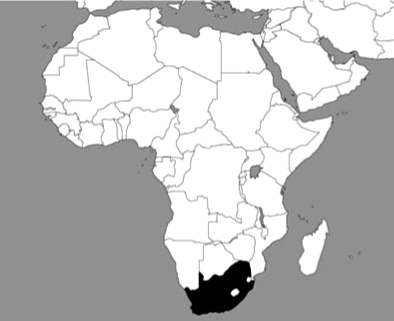
Joe Slovo is an informal settlement of about 8,000 residents located less than eight kilometres from the centre of the city of Cape Town, South Africa. It is situated along the N2 national freeway that links Cape Town to the international airport and to the rest of the country. In September 2004, the National Department of Housing (renamed the Department of Human Settlements in 2009) launched a major development project called the “N2 Gateway” initiative. This was intended to be a milestone housing project, which would demonstrate a new approach to subsidy-driven housing delivery for low-income families in South Africa. It was also directly related to preparations being made for the 2010 FIFA World Cup, as the main settlements it covered were along transportation routes that would be heavily used during the tournament. The N2 project had a side purpose, then, namely to clean up these relatively visible settlements in advance of the World Cup.
The upgrading of the Joe Slovo informal settlement was one of the first projects identified as part of the N2 Gateway development. Unfortunately, this project was designed in such a way that it allowed no space for public consultation on the proposal, creating an atmosphere of mistrust and hostility between the government and the community. The proposed development would be on the same site as the current settlement and it coupled the provision of low density housing with a significant segment for non-subsidy based, middle-income housing. During the first phase of the project in 2005−2006, about 1,000 households were relocated to transit camps and dormitory neighbourhoods about 20 kilometres away in Delft. While they were promised new houses within the redevelopment in Joe Slovo in exchange for this temporary relocation, very few households were actually allowed back. Frequent floods and fires were also used as opportunities to impose relocation on families who were generally very reluctant to leave. These evictions and disasters had the effect of forcing the community to organize itself and begin to collectively resist the N2 Gateway project. In 2007, residents organized a protest against the project, closing down the N2 expressway as a sign of their discontent and frustration at the prospect of having another group of households evicted as part of the second phase of the project. As part of this resistance, the remaining residents also lodged a legal challenge to the relocations, resulting in a prolonged court battle with the National Department of Housing. This court battle was ultimately lost. In 2008, the constitutional court decided in favour of the N2 project, stipulating that relocations could take place, with the vague provision that the level of community participation should be increased and that residents should have a guarantee that a certain proportion of the new houses would be built on the site. However, it remained to be seen how this verdict would translate into action.
While the court battle was in progress, and then in response to its result, some of the leaders in the community decided that they needed to conduct an enumeration to gather accurate and current data about their settlement. The court battle had succeeded in delaying the second phase of relocations and it was hoped that the community could demonstrate through an enumeration that in situ upgrading was a viable and more participatory alternative to the N2 Gateway project proposal. Joe Slovo hadn’t been surveyed in a long time; a census had been completed in 1996 and the city council had estimated the size of the settlement at one point, but detailed data had not been collected in the recent past. The leaders of Joe Slovo had already developed relationships with community-based organizations such as the Community Organization Resource Centre (CORC) and a SDI affiliate, the Federation of the Urban Poor (FEDUP). Through these organizations they had been introduced to the idea of enumerations.
II. History of Joe Slovo
The first residents of Joe Slovo moved there in the early 1990s. They were mainly the families of men who had been migrant labourers to the city and who had previously been housed in state and private hostels that bordered on open land serving as a buffer zone between the hostels and the national highway. In the early 1990s, the apartheid government relaxed the influx controls that regulated migration to the cities, allowing squatting on open land in the city. This resulted in the establishment of Joe Slovo on the open land next to the older hostels. The collapse of apartheid saw a rapid acceleration of this urban in-migration and the number of shacks in Joe Slovo grew rapidly.(1) It is difficult to assess the size of the community during its early years due to the lack of surveying, but from census data, at its peak during the late 1990s and early 2000s, Joe Slovo was home to around 20,000 people.
In January 2005 a major fire broke out, claiming about 3,000 shelters and leaving around 12,000 people homeless.(2) As a result of this fire, the first contact was made between the community and iKhayalami, a community-based organization working on incremental housing that would later play a role in the enumeration. In October 2007, the first Federation savings groups were started, linked to CORC and FEDUP.
“However, due to a general lack of understanding around FEDUP’s operations, coupled with suspicions by leadership, opposition blocked FEDUP’s activities by discouraging membership and meetings within the community.”(3)
Federation savings schemes continued in a limited capacity until February 2008, when a second, smaller fire occurred, claiming 150 shelters. The second fire acted as a catalyst for the growth of the federation in Joe Slovo, encouraging residents to hammer out some of the previous misunderstandings and crystallizing the rationale behind daily savings for community members. In the aftermath of the fire, iKhayalami offered to help the community build new shelters, on the condition that the residents came to a consensus regarding identifying the most vulnerable households who were in need of emergency shelter. The process of identifying these families helped open a channel of communication between savings groups’ members and other groups within the community, and spread understanding of the federation’s processes and purpose. As a result, membership of the daily savings groups increased considerably during the following year.
Another fire occurred in March 2009, which claimed 513 shelters and left 1,500 people homeless. But the destruction also opened up a significant amount of space within the settlement, creating an opportunity to rebuild by “blocking” new plots, marking out new boundaries in the spaces opened up by the fire, and re-arranging the space in a more thoughtful and efficient way. According to an SDI blog post:
“Blocking is a way of addressing the larger concept of spatial reconfiguration versus the simple delineation of sites. The difference is between focusing on individual households or space that is used by whole communities. The space can be used for communal amenities or to create lanes for installation of services such as water, sanitation and electricity.”(4)
Blocking started the day after the fire. iKhayalami provided blocking and construction materials and the community worked together to guard the clear space until a new spatial arrangement for the houses could be determined and laid out.
“The first batch of iKhayalami materials was delivered at noon [the day after the fire], just enough for four shelters, but enough to show the community what was involved and what the upgraded areas might look like. The arrival of these materials proved to be a key turning point, as people now had a clear understanding of what iKhayalami and the leadership were describing. Support for the project soared as residents began to approach iKhayalami directly with requests to support ‘blocking’ in their areas… By 20:00 that night, 15 families had shelters in various stages of completion. The community, now more mobilized, also organized nightly patrols, aimed both at guarding the building materials from theft and to keep order in Joe Slovo while people slept in tents. This resulted in almost no materials going missing, even when considering the high degree of hands-on involvement by the community.”(5)
By the end of the month, 120−125 new shelters had been built, in new “blocked” arrangements. While the project was successful in many ways, there were also several significant challenges. Some residents didn’t want to participate and refused to go along with the blocking; also, owing to the speed at which the project developed it was sometimes difficult to maintain quality; and the materials supplied by the city of Cape Town and iKhayalami didn’t match, resulting in buildings that looked a bit haphazard. For iKhayalami, this blocking project was an important learning experience in those respects. For the residents of Joe Slovo, the 2009 fire provided an immediate context for the enumeration that they were hoping to conduct. The enumeration was undertaken in conjunction with the blocking project, with the support of CORC, FEDUP and the Poor People’s Movement (PPM), beginning on 6 May 2009. The Kenyan federation Muungano Wa Wanvijiji also provided support during this process, and in particular in preparation for the data analysis and mapping of the community.(6)
Before the 2009 enumeration, the community of Joe Slovo had never been surveyed. A shack-counting exercise had been conducted by the city council to estimate the population, but nothing specific or comprehensive had ever been attempted. While an older census had put the population at 20,000 individuals, the fires and evictions resulting from the N2 Gateway project had a significant effect on the size of the settlement, with one estimate reducing its size by half.(7) It was hoped that the enumeration would provide the community with data to inform their negotiations with government regarding the N2 Gateway proposal and also act as a tool to help shape a more inclusive outcome in terms of planning and decision-making. The enumeration was also envisioned as part of the process of community building in Joe Slovo, another step in their growth process as a community and as individuals.
III. The Enumeration
To plan the enumeration, CORC began holding mass community meetings in April 2009, to develop a broad agreement on the meaning, purpose and objectives of the enumeration. The logistical aspects and distribution of tasks were also agreed upon. A survey questionnaire was revised and adopted, based on a framework developed by CORC in Cloetesville in 2008. It was adapted by the community to be more comprehensive and relevant to the situation at hand. An enumeration team was selected and divided into groups to administer the mapping, shack numbering and data collection parts of the surveying process. The community itself was also divided into 24 sections, and numbered alphabetically for clarity and organizational simplicity. Each house was numbered according to an enumeration code, identifying its section and number. The enumeration teams were given training to make sure they understood how to administer their tasks.
“Enumerators were instructed to collect information from people in their structures, which were numbered and measured only by the enumeration team in order to avoid confusion. Enumerators were instructed to speak personally to a member of every household. For this reason, the Joe Slovo enumeration leaders built up three teams made up of Joe Slovo community volunteers who had some knowledge about the community and all its sections. This increased the level of accuracy in the survey and helped ensure general community support and ownership of the process. This was in sharp contra-distinction to other information-gathering efforts in the settlement, where external actors, linked and sponsored by the state, were suspected of hidden agendas. (These efforts notwithstanding, there was a small section of the community that withheld information on the grounds that, even in this case, the information may be used to facilitate eviction. While these doubts have now disappeared and the few score outstanding families are in the process of being surveyed, this reaction underscores the suspicion and hostility that an upgrading and relocation process tends to generate.)”(8)
The enumeration unfolded over a period of three weeks. In addition to collecting the data, it was also verified and entered into a database using Microsoft Excel.
a. Results of the survey
In addition to producing a comprehensive set of socioeconomic and demographic information about the settlement, the Joe Slovo enumeration also shed some light on the economic contributions of this community and the possible impacts of resettlement. In terms of basic demographic and infrastructure data, the population of Joe Slovo comprised about 7,950 individuals, or 2,748 households. Sixty-four per cent of the population were adults of working age and 35 per cent were children or teenagers aged 17 and under. Sixty-two per cent of the households were led by a man. There were 896 toilets, of which 706 were functional; this meant that every toilet was shared by at least nine to 11 people. There were 38 water taps, all of which were functional. Everyone in Joe Slovo lived in a shack; there were no formal houses or backyarders.(9)
The most interesting results of the survey pertained to the residents’ economic situation, particularly in light of the proposed relocations under the N2 Gateway project. Of those residents who were migrants to Cape Town, most were economic migrants from other parts of the Eastern Cape province. Not only was there a great variety of businesses within the slum, but the households derived their livelihoods from a diverse set of activities, with the majority of the employed population working outside the slum in service jobs, government employment, construction or factory work. A minority of the employed population worked within the settlement, operating corner shops, small bars or working as traditional healers. Only about 10 per cent of the community depended on government grants for their livelihood, although more than 60 per cent of the adult population were unemployed. With all of this economic activity and varied forms of occupation, it is perhaps not surprising that Joe Slovo has a fairly high local economic impact, estimated by CORC to involve the circulation of around Rand 2.7 million (US$ 330,500) per month.(10)
In terms of income and expenditure, currently nobody in Joe Slovo has to pay for water or sanitation; monthly incomes are almost entirely taken up by the costs of food, electricity, school fees and transportation. The average monthly household income in Joe Slovo ranges from Rand 800–1,500. “Most of the employed household heads currently find their workplaces adjacent to their community. Thanks to the[ir] proximity to the train station, about 57 per cent of the households can benefit from relatively cheap train services. If the Joe Slovo residents had to devote a bigger portion of their income to transport, the poverty cycle would worsen. Only 10.7 per cent are spending more than Rand 200 on transport at the moment. This already equates to a staggering 20 per cent of the average household income. This will dramatically increase if and when people are relocated 20 kilometres away.”(11)
In addition to highlighting the possible negative impacts of resettlement, the enumeration also revealed that since the population was so much smaller than previously estimated, in situ redevelopment might be feasible.
“The power of community-driven enumerations was highlighted in an account from Mzwanele Zulu, a community leader from Joe Slovo. He explained to the group how their particular enumeration proved that there were less people than originally thought within the settlement. This meant that upgrading could be done in situ without having to relocate people to the periphery.”(12)
IV. The Current Situation
Despite having lost the case, the practical outcome of the court hearings was an immediate moratorium on all relocations. A subsequent decision to revisit the development plan for Joe Slovo settlement was influenced significantly by the findings of the 2009 enumeration. The 2009 blocking and enumeration amounted to a certain regularization of Joe Slovo, which caught the attention of the Cape Town Informal Settlements Department. The department arranged to visit Joe Slovo after the enumeration and began to facilitate a dialogue between the residents of Joe Slovo, SDI, CORC and the Cape Town Informal Housing Department.(13) At the same time, political changes at local and provincial government levels and the emergence of a new parastatal, the Housing Development Agency (HDA), to deal (inter alia) with urban land, opened some space for consultation between government and community groups.
These discussions had disappointing outcomes, even though they were extensive and detailed. They were underscored, like so many other engagements around development in South Africa, by the paternalism of a development state and the short-term activism of a community that is organized to resist an external threat but not to contribute actively to tangible alternatives. The community leadership tended to regard long-term solutions as nothing more than entitlements that state institutions were obliged to deliver. Opportunities to invest time and energy in community action planning and grassroots layout design, house plans and increased densities were undermined by divisions in the leadership and by a complacent expectation that government-appointed professionals were going to deliver acceptable solutions. Despite these frustrations, one outcome of the discussions with the Cape Town Informal Settlements Department was an agreement to work on 11 pilot informal settlement upgrades.(14)
When the planning process yielded a solution that was based on further relocations to the city’s periphery, the leadership began to react. The enumeration data were revisited, this time with a community-driven focus that had sometimes been erratic in the past. Based on the enumeration data, the provincial government created a revised redevelopment plan for Joe Slovo that included higher densities as a way of accommodating housing for all of the current residents. After these changes were finalized, the N2 Gateway redevelopment project was indefinitely postponed and the provincial Minister of Housing announced in the fall of 2009 that the settlement would instead be upgraded in situ.(15) In 2010, the leaders of Joe Slovo began focusing on sanitation in the settlement, pushing for the construction of an ablutions block, with toilet and washing facilities, and a live-in caretaker to keep up maintenance. As part of the ablutions block project, the Joe Slovo residents brokered a new relationship with the Cape Town Water and Sanitation Department within the City of Cape Town Informal Settlements Department. It is hoped that through this partnership, there will be greater acceptance within those departments of this new approach to basic service provision in informal settlements, setting a positive precedent for other informal settlements in the city.
V. Conclusions
The case of Joe Slovo provides an interesting example of the complexities of informal settlement redevelopment and the pressures that mega events can put on the residents of these types of communities. Joe Slovo was significantly reshaped by the N2 Gateway project, losing more than half of its population to evictions during the initiative. More positively, for those who remained the project provided a cause to unite against, and in response the community found ways in which to bridge their differences and work together to try and avoid further displacements. Even though the residents of Joe Slovo lost the legal challenge against the N2 Gateway project, their regularization efforts – blocking plots and enumerating the settlement − made an ultimately successful case for in situ upgrading.
Broadly speaking, discussion of “inclusive cities” can sound somewhat simple minded without proper explanation. What we mean is that urban poverty is the result of institutional exclusion − exclusion from formal markets and finance, beginning with formal land markets. Yet the dominant usage of the term “poverty” tends to describe some kind of technical problem, focusing on local material deprivations, not a situation that has actively been caused by exclusionary forces − such as a capital-driven, “development” state combined with the market itself, both woven into the tapestry of a long history of colonial and/or racial oppression.
An opportunity is unfolding in Joe Slovo, where accountability for this urban exclusion is coupled with, and in fact driven by, people’s own actions and choices. Through community organization, mobilization and enumeration, the remaining residents of Joe Slovo have shifted from being the victims of state action to being empowered actors able to forge their own solutions, setting new precedents for housing and infrastructure provision in Cape Town. Through this process of community organizing, blocking and enumerating, the upgrading of Joe Slovo has shifted from being the sole responsibility of the representatives of power to being a physical expression of the real power of the urban poor – the power to define, design and develop their own built environment. These types of local level successes form the building blocks of the bigger challenges needed to alter the larger institutional exclusions currently present in South Africa; challenges that can only be brought by organized communities of the poor themselves, who are able to both challenge and work within the current systems of governance.
The 2009 enumeration helped to underline the state’s responsibility towards an apartheid-type spatial exclusion and the inability of market forces to address exclusion. The community’s decision to revisit its capacities to gather and manage its own information will contribute ideally to an inclusive planning process that prioritizes the decision-making authority of those who will have to live with the consequences of those decisions.
Footnotes
2.
iKhayalami (2009), “The Joe Slovo blocking project: a diary of events”, iKhayalami, Cape Town, March, 10 pages; also, Legassick, Martin (2007), “N2 Gateway and the Joe Slovo informal settlement: the new crossroads?”, Pambazuka News, 19 September, accessed 16 November 2011 at  .
.
4.
Bradlow, Benjamin (2011), “Between the ‘informal’ and the ‘formal’: slum upgrading in South Africa”, SDI blog, 28 June, accessed 16 November 2011 at .
6.
See reference 1.
7.
Bolnick, Andrea (2010), “From the politics of protest to the politics of redress. The planning of a sanitation unit in a South African slum”, CORC, available at .
8.
See reference 1, page 8.
9.
A backyarder is someone living in an informal structure in the backyard of a formal house.
10.
See reference 1.
11.
See reference 1, page 11.
12.
Dobson, Skye and Charlton Ziervogel (2011), “Reflecting on the enumeration process in Cape Town”, SDI blog, 4 August, accessed 16 November 2011 at .
13.
See reference 7.
14.
See reference 7.
15.
See reference 7.