




Abstract
This paper examines the dominant knowledge paradigms that have underpinned planning over time in Freetown, Sierra Leone and their implications for urban equality. Looking at the history of the informal settlement upgrading agenda, it presents this analysis through a historical mapping, outlining the knowledge paradigms that have informed planning approaches from the colonial era to the present day. It then outlines three strategic moments over the past 13 years, in which organized informal settlement residents and wider coalitions have mobilized diverse forms of knowledge. By engaging both with long-term trajectories and the intimacy of more recent experiences, it outlines what we refer to as the “slow anatomy of change” through which diverse knowledges have been consolidated. The paper offers reflections on the temporalities and geographies of change; the role of knowledge production as a historical site of power disparities; and what these strategies tell us about the negotiation of power and knowledge through planning towards urban equality.
I. Introduction
Historically, planning practices have been complicit in the reproduction of inequalities, as well as providing a tool for addressing them. In tracking these differential outcomes, understanding the kinds of knowledge and assumptions that inform planning practices is crucial. However, this relationship between knowledge production, urban planning processes and the reduction of inequalities is complex. The recognition of what constitutes knowledge, the knowledge producers that are seen as valid, which forms of knowledge, and from which geographies, have been examined by feminist and decolonial thinkers as important and contested questions of justice and equality.(1) Likewise, the link between knowledge and the extension of power has been examined through the discipline of planning, with authors exploring how the misrecognition of marginalized groups is materialized through planning practices, procedures and policies.(2)
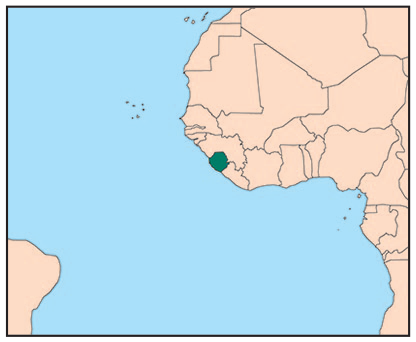
This paper focuses on the city of Freetown, Sierra Leone, to examine the dominant knowledges and assumptions that have underpinned planning paradigms over time, and their implications for urban equality, especially for residents of informal settlements. The history of modern urban policy and planning in Freetown is marked by multiple and distinct phases.(3) From spatial segregation inherited from colonial-era planning, to modernist ideals that informed the post-independence era, to spatial transformation and reconstruction linked with the 1991–2002 Civil War, urban policy and planning in the city have played a key role in shaping the experience of urban (in)equalities. In the present-day context, with some 35 per cent of the population residing in informal settlements,(4) organisations such as FEDURP (the Federation of Urban and Rural Poor in Sierra Leone, a primary focus of this discussion) in collaboration with coalitions of key urban actors, have sought to advance a progressive informal settlement upgrading agenda; in the process, challenging assumptions about how and by whom planning knowledge is produced. Focusing on wider planning trajectories of the city, as well as on key moments in the current context, this paper traces how the knowledge paradigms which underpin planning approaches have shaped (in)equalities in the city, and the strategies of organized groups in articulating alternative planning futures. To do so, it focuses on the opportunities for and barriers to advancing inclusive informal settlement upgrading – that is, interventions to improve the physical, social and environmental conditions in areas characterized by informal or insecure tenure – as an entry point to investigate urban equality.
This focus on the mechanisms for just forms of knowledge production resonates with a rich set of empirical works, across a variety of contexts, that have explored the tactics of urban poor, marginalized or excluded groups to contest exclusionary planning processes, building on the “everyday”, “local”, or “insurgent” knowledges.(5) These works have extended the varieties of activities and city-making practices that are understood as planning, highlighting the value of engaging from the lived experience of groups on the margins, and reshaping ideas of who produces knowledge and how this can inform policy and planning. Such accounts often focus on the tactics through which these groups mobilize, drawing out a rich analysis of how they have advanced on particular issues around upgrading, rights and recognition.(6) They have revealed the ways in which particular contexts create different possibilities for advocacy and action, and a deep understanding of the situated strategies that emerge.
Building on these works, this paper investigates the tactics of coalitions of actors – including organized urban poor groups, civil society organizations, researchers and local and national policymakers – in advancing an inclusive “informal settlement upgrading” agenda in Freetown. It presents a history of the ways in which diverse knowledges have emerged and been consolidated within the city; how knowledge built from the grassroots interacts with other forms of urban expertise; and how the strategies employed by these coalitions intersect with the wider trajectories of urban equality in the city. This analysis is presented through a historical mapping, entailing a close tracking of key moments through which planning knowledges were disrupted, extended or consolidated within the wider urban development trajectories of Freetown, and looking at how institutional understandings of planning have changed or been expanded over time. This paper terms this the “slow anatomy of change” – in acknowledgement of the halting, uncertain and multi-layered nature of advocacy and action. In doing so, this paper contributes to existing literature through the methodological approach of a long analysis over time; moving beyond key “crisis” moments of disruption or experiences of collaboration, to trace the multi-faceted and layered experiences. While individually these experiences may not have generated significant change, together they demonstrate the complexity of slow processes of transformative action and advocacy.
The paper opens with a conceptual and methodological reflection, engaging with key tensions emergent from this approach to researching knowledges. Secondly, it briefly traces the history of urban planning trajectories in Freetown: outlining different institutional planning approaches over time, the knowledge paradigms which underpinned them, and their implications for urban equality. Third, this paper engages with a more detailed analysis of the range of strategies used by a particular coalition of actors including FEDURP, the Sierra Leone Urban Research Centre (SLURC) and the local NGO Centre of Dialogue on Human Settlement and Poverty Alleviation (CODOHSAPA), along with other allies, from the formation of FEDURP in 2008 to the present day in 2021, to mobilize diverse forms of knowledge in ways that challenge the institutional boundaries of planning. Through three vignettes, it presents key moments through which knowledge was produced, translated and mobilized, as well as describing the tensions and challenges inherent in the recognition of multiple knowledge claims. It closes with reflections on the overarching strategies through which these coalitions have sought to produce and mobilize alternative planning knowledges, and their role in advancing an informal settlement upgrading agenda as a pathway to urban equality.
II. On Methodology and Researching “Knowledge”
Given the orientation of this paper on the values underpinning knowledge production, we open with brief methodological reflections on our own assumptions. This work is conducted through the Knowledge in Action for Urban Equality (KNOW) programme, focused on co-producing research, building capacities, and action with partners, to inform policy, planning and practice for more equitable cities. In Freetown, research has been led by SLURC, a research institute that seeks to enhance the well-being of residents of informal settlements, in partnership with researchers based in universities and research institutes in London and Melbourne.
This collaboration has focused on processes of “knowledge translation”: multi-scalar and nonlinear encounters between practices, research and multiple forms of knowing and doing; acknowledging that how and by whom knowledge is produced, validated and mobilized has implications for urban equality.(7) In Freetown, KNOW/SLURC research activities focused on key experiences which have advanced an inclusive informal settlement upgrading agenda across time and scales. This focus was identified by SLURC as a proxy for urban equality, building on previous work undertaken in partnership with FEDURP and other actors.(8)
Research activities entailed six in-depth interviews in 2019 with key informants identified by SLURC, including representatives of local and national authorities, civil society actors and community leaders; site visits and focus groups in two informal settlements, Cockle Bay and Dworzack, in 2018 and 2019; the review of policy and secondary documents; and a collective workshop with 15 key actors from city institutions in 2020. Analysis focused on key moments in which knowledge has been produced, translated and mobilized towards advancing an informal settlement upgrading agenda, building a historical mapping (see Figure 1) to capture these processes.
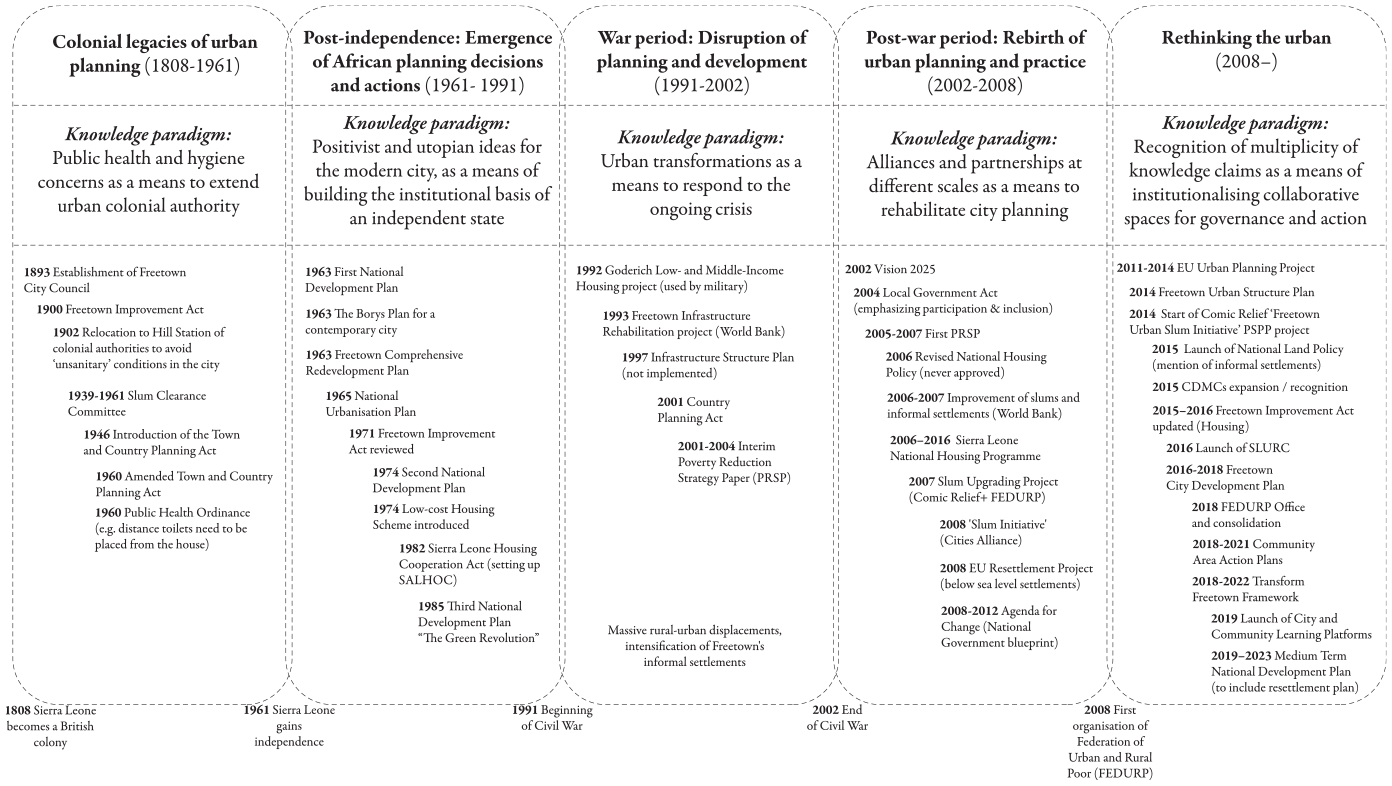
Historical mapping: Freetown urban trajectories and knowledge paradigms
This task of researching knowledges is at once conceptual and methodological. Conceptually, this research starts from the assertion that urban inequalities are experienced not only in terms of material deprivations – a lack of adequate income, shelter, infrastructure or services – but also by structural conditions which shape the possibilities for the reciprocal recognition of multiple identities, political participation and the strengthening of solidarity and care practices across diverse social groups.(9) It is this multidimensional character of inequalities that places knowledge questions at the centre, entailing questions of: which experiences of material deprivation are treated as evidence for redistributive actions; whose perspectives and aspirations are recognized and validated; which voices are able to shape decision-making; and how relations of solidarity and care are recognized and supported.(10)
This approach follows epistemological reflections from feminist and southern traditions, which have outlined knowledge as partial, emergent from diverse spaces, including lived experience, practice, or cultural traditions, and deeply imbricated in the extension of power.(11) Within planning, this entails unpacking the historical and structural contexts of colonialism, capitalism and patriarchy, which have shaped how urban planning issues are framed, what is considered relevant or reasonable, and how trade-offs, risks and vulnerabilities are distributed.(12)
Methodologically, our work is guided by the collective commitment of the research team to support residents of informal settlements in their ongoing activities. In line with feminist and southern epistemological traditions, this research enquiry cannot be understood as neutral or objective. This work requires a reflexive approach that acknowledges the positionality of the team and how this informed our research questions, interpretation and analysis. In particular, the choice to adopt a focus on advancing an informal settlement upgrading agenda within planning frameworks generated at least three key tensions.
The first of these was reckoning with the non-linear and messy process of change, in which progress might be uncertain or reversed, or might become meaningful only later in time. This realization prompted a change in our initial methodology from a linear timeline towards what we are calling a historical mapping, recognizing the slow and contested nature of advocacy, action and impact. This shift implied a focus on the thick clusterings of diverse activities – moving beyond a focus on key significant or crisis events – to document the overlapping experiences which contributed to processes of change. Doing this entailed situating the intimacies of personal and institutional histories within the longer planning trajectories of the city, and tracing the conditions that facilitated or hindered collective action over time.
The second tension is the bounded nature of this enquiry – focused tightly on tracing the dominant professionalized or policy-led forms of planning that have occurred in the city, as well as the more recent collaborations between SLURC, CODOHSAPA and FEDURP to expand the remit of planning. In undertaking this enquiry we recognize that there may be multiple other trajectories of knowledge that have shaped planning in the city. However, our aim is to track the slow successes and enduring challenges faced by these collaborations in expanding the possibilities of planning to advance urban equality.
Finally, there were blind spots in the use of the term “informal settlement upgrading”. As a term that was widely adopted within Sierra Leone only in the early 2000s – linked with changing discourse within the international development sector – this concept hindered reflections on alternative urban development trajectories and practices that have shaped informal settlements. For instance, this term did not meaningfully allow for discussion of the legacies of colonial-era planning, and its role in the ongoing spatial development of the city. Thus, initial interviews, which were focused on actions over the last 13 years, were supplemented with additional workshops, policy analysis and the review of historical documents to provide a longer-term portrait of informal settlement development in the city.
It is precisely in response to these three tensions that we present the notion of the “slow anatomy of change”, representing the non-linear, contextual and historically-situated ways in which diverse knowledges have been built and mobilized towards urban equality. This is done through two approaches that structure this paper. The first engages with longer-standing urban development trajectories in the city, going beyond contemporary narratives of “slum upgrading” to acknowledge sociopolitical and urban structures emerging from colonial history, the process of independence and more recent conflict and reconstruction in the city. The second deepens the analysis of the detailed processes shaping knowledge paradigms in the past 13 years, engaging with three layered stories, as a way of providing a nuanced understanding of the different actors, tensions, tactics and instruments used to mobilize diverse knowledges in the city.
III. Knowledge Paradigms, Planning and Urban Equity: Historical Trajectories of Freetown Urban Development
The current experience of urban inequalities must be understood as part of a longer trajectory of urban change. In this section, we examine five eras of distinctive knowledge paradigms shaping approaches to informal settlements, and their implications for urban equality.
The first era covers the period before Sierra Leone’s independence, what we have called
After independence, Sierra Leone saw the adaptation of local urban planning institutions, in a period we have called
In this context, the main knowledge paradigm shaping planning practices was of positivist and utopian ideas for the modern city, as a means of building the institutional basis of an independent state, with diverse implications for urban equality. On the one hand, this period advanced the notion of planning as a universal discipline. However, the lack of localized formal planning education institutions meant an overreliance on international planning standards, disengaged from local processes.(16) This limited the capacity of planning tools to respond to the actual urban issues of Freetown, as in many postcolonial contexts.(17) These inappropriate planning visions and tools based upon “the very Britain that had colonised us” as articulated by a participant in one of the focus groups, coupled with an emphasis on cities as “growth centres” as a part of a modernist industrialization project, led over time to resource scarcity and deepened the inherited colonial legacy of racial and spatial segregation, particularly in the provinces and informal areas.
The decade-long Sierra Leone Civil War undoubtedly marks a distinctive era for Freetown’s urban trajectory, in what we have called
This extraordinary era was dominated by knowledge paradigms that saw urban transformations as a means to respond to the ongoing crisis. The implications for urban equality were shaped by the major disruption in people’s life and livelihoods, the destruction of physical infrastructure, but also the pausing of planning and development. Therefore, planning actions focused on maintaining the status quo, responding to the crisis as best as possible.
After the end of the armed conflict, Freetown and Sierra Leone began a process of rearticulation we have termed
Across these experiences, the knowledge paradigm shaping planning approaches focused on building alliances and partnerships at different scales as a means to rehabilitate city planning. Wide-scale international involvement, matched with the emerging infrastructure for local-level development, saw new urban upgrading narratives and infrastructural projects. In this era, planning processes were not only driven from the national level, but also through local initiatives and authorities, in partnership with coalescing civil society groups.
In parallel with international discourses on participation and upgrading, important processes were taking place within and across informal settlements, in what we define as a fifth era,
Although the next section will expand upon the multiple layers of this period, there are a few experiences that help account for this era. Collaborative initiatives led by actors at different scales, including city government, NGOs, community organizations and research institutions, began to refer explicitly to the multiplicity of knowledges, identities and claims as a way to advance urban agendas. These initiatives have been critical in dealing with the urban impacts of several crises marking this period, such as the Ebola outbreak (2014–2015), mudslides and flooding and the impacts of the ongoing COVID-19 pandemic. From civil society, collaborations such as the Pull Slum Pan Pipul (Pull the Slums from the People) consortium (2014) linked to the Freetown Urban Slum Initiative, actively looked to articulate the voices of FEDURP, NGOs and researchers, setting a seminal precedent for the later creation of the Freetown City Learning Platform.(20) The emergence and consolidation of FEDURP has been accompanied by active efforts to widen the diversity of representation of identities, through initiatives such as the Community Learning Platforms (CoLP), or organization around risk, sustainability, disabilities or upgrading. From the city government, efforts at systematizing spatial knowledge emerged through the EU Urban Planning Project (2011–2014); later, the new mayor’s Transform Freetown Framework (TFF, 2019–2022) established new governance tools that rely on the knowledge of multiple actors. And at the national level, acknowledgements of informal settlements have been found in crucial planning documents such as the National Land Policy (2015).
In this diversity of planning processes we identify a knowledge paradigm that relies on the recognition of the multiplicity of knowledge claims as a means of institutionalizing collaborative spaces for governance and action. The urban equality consequences of this paradigm are wide and developing, as discussed in the vignettes that follow. Certainly, the recognition of the multiplicity of voices in shaping planning frameworks is an important aspect of urban equality. This process, however, brings important challenges, as the conscious efforts to draw on different knowledges and capitalize on existing frameworks have not always translated into long-term policy or planning changes, or succeeded in unsettling deep structural inequalities.
IV. Three Stories of Knowledge Translation: Expanding Planning for Urban Equality
This section reflects on processes that have occurred since 2008, the start of coordinated efforts by urban actors in recognizing the limitations of formal planning and constructing new knowledge paradigms to challenge inequalities in the city. It explores three vignettes to illustrate key moments of knowledge translation that have sought to advance an inclusive informal settlement upgrading agenda in Freetown. The analysis presented here is deeply reflective of the concerns and values of the SLURC/KNOW collaboration, focusing specifically on a few collaborative actions undertaken by FEDURP, CODOHSAPA and SLURC. As such, the vignettes are not a comprehensive overview of the range of alternative planning actions that have taken place, but are rather representative moments that demonstrate how this particular consortium has sought to recognize and mobilize knowledge to expand notions of planning in Freetown’s urban development trajectory. Likewise, these experiences are not linear, but are rather overlapping in time, building on prior legacies and reflective of the slow and unstable movement of change. They represent three “thick” moments through which clusters of activities and experiences have coalesced to change the nature of knowledge production in sometimes unexpected ways (see Figure 2). Each story draws on the recollections of actors closely involved, highlighting both the progressive and contested nature of knowledge translation, and the implications for equality.
a. Moment 1: Emergence and mobilization of community knowledges – Raising of advocacy, research and action
The emergence of community action in Freetown is deeply reliant on the groundwork of previous civil society partnerships, including the long-established work of organizations such as Y Care International and the Young Men’s Christian Association (YMCA). A significant event solidifying these relationships was the 2007–2011 UK-funded Comic Relief Slum Upgrading Project, which saw the establishment in 2008 of a national network of savings groups: the Federation of the Urban and Rural Poor (FEDURP). This process was supported by the international network Slum/Shack Dwellers International (SDI) and the establishment in 2011 of the Centre of Dialogue on Human Settlement and Poverty Alleviation (CODOHSAPA) as the local SDI affiliate and support NGO.
The growth of the FEDURP/CODOHSAPA partnership saw the extension of structures and rituals (commonly employed by SDI members) throughout Freetown’s informal settlements: setting up savings groups and networks, building information through enumerations and neighbourhood profiling and engaging with local authorities. As recounted by the Federation leader, Yirah O Conteh: “we started moving, forming saving groups and their local networks in all communities. . . . We look at the rituals. We are collecting information and using that to advocate. We are mobilizing groups.” As described by Francis Reffell, founder and director of CODOHSAPA, this represented the first moment when informal settlement residents were officially seen as capable of producing valuable forms of knowledge:
“From the beginning [informal settlement residents] were considered unprofessional, disorganized. So we started collecting community information and using this data as a critical resource to engage. From that point the authorities started realizing they are not dealing with unschooled people, but that they have certain resources.”
Simultaneously, at the city level, this period saw the first systemization of urban data through GIS mapping and capacity-building of municipal officers through the 2011–2014 EU Urban Planning Project. This project marked a significant shift in planning approaches, looking: “not just from a socioeconomic point of view, but also from a spatial point of view” (Abdul Karim Marah, Freetown City Council). This project was an important step in institutionalizing urban planning instruments, with data sourced from different ministries, departments and agencies and from hired field researchers, as a part of preparing the Freetown Structure Plan (FSP). The FSP acknowledged challenges due to the growth of informal settlements, and advocated for: “a long-term strategic urban renovation and slum-upgrading plan” which engaged with “Freetown population at all levels”,(21) establishing separate guidelines for resettlement.
This moment is therefore characterized by the production of data to inform planning – whether Federation-produced enumeration data, or spatial data held by the Freetown City Council (FCC) – as well as the acknowledgement of the need for long-term planning within informality. However, the EU Planning Project represented a very different form of urban expertise from that producing the FEDURP data – occurring through separate spheres and processes – without many opportunities for intersection or translation. Likewise, despite the significant efforts of these groups to generate information on previously unrecognized groups and places, the validity of FEDURP/CODOHSAPA-produced data often remained questioned by authorities. While this moment saw the production of alternative planning knowledges, it was not always mobilized and translated into policy or planning actions.
Within this context, an important shift occurred with the 2014 Pull Slum Pan Pipul (Pull the Slums from the People) programme (PSPP).(22) This project was explicitly designed to strengthen partnerships across six organizations – BRAC Sierra Leone, YMCA, Youth Development Movement (YDM), Restless Development and CODOHSAPA – in their efforts to improve the living conditions of slum dwellers in Freetown. The opportunities for coordinated action were strengthened through the establishment of SLURC in 2016. As a respected research institute linked with Njala University, SLURC has played a key role in validating existing knowledge and curating spaces and outputs for the exchange of ideas, producing knowledge which is “useful, usable and used” (Braima Koroma, SLURC) in policymaking and urban planning. In doing so, it has responded to concerns that community-produced data were “unrecognized and underused” in policy and planning, seeking to facilitate a deeper engagement between grassroots actors and the FCC. This translation role played by SLURC has entailed authoring reports and policy briefs,(23) attending conferences and working groups, convening platforms for discussion and leveraging key institutional frameworks; locally, such as the TFF, and globally, within the SDG framework. SLURC has also played a crucial role in building the capacities of FEDURP and CODOHSAPA in research methodologies, helping to improve the quality of their research and public confidence in their outputs. CODOHSAPA’s director recounts SLURC’s critical intermediary role:
“Even though we were doing data collection before SLURC, most authorities took our data with a pinch of salt. Like – thank you, but you are not professionals. Then SLURC came in, and naturally SLURC’s work was considered professional since it’s from a university. Because they started referencing our data . . . the authorities started realising that we are very good players in this game.” (Francis Reffell, CODOHSAPA director)
This moment highlights the importance of layered collaboration across multiple institutions in supporting the production, translation and scale-up of diverse knowledge sources. This includes the establishment of strong grassroots organizations with clear methodologies for data production. However, while this corresponded with a wider shift within local government towards spatial data, in these early stages the FEDURP/CODOHSAPA collaboration experienced challenges in having this knowledge recognized and used by authorities. This demonstrates the particular role played by research organizations in supporting the translation of knowledge into formats that are legible to authorities. The production of reports, policy briefs and workshops represents opportunities to consolidate spaces for these multiple knowledges to influence each other, and for new insights to grow.
b. Moment 2: Raising recognition of knowledges – Eruption and confrontation of strategic knowledge claims
This second story reflects the contested and fraught nature of working across different knowledges; particularly how questions of risk, resettlement and upgrading are negotiated in contexts of power imbalances. If the previous experiences demonstrate the slow process through which alternative knowledge sources were built and ultimately recognized by local authorities, this story reveals the contested nature of divergent knowledge claims, and the continuous negotiation required for claims-making activities.
Following on from the Freetown Structure Plan, the 2015 National Land Policy provided for the first time a national framework for safeguarding tenure rights for informal settlement residents, calling for the development of a slum upgrading and resettlement programme in a participatory fashion.(24) However, as outlined by Dr Alphajor Cham (Ministry of Lands, Housing and Country Planning) the realization of these rights in planning procedures was still managed in a piecemeal fashion.
The lack of a consistent approach to the appropriate management of informal settlements – that is, whether to adopt an upgrading or resettlement approach – is significant given considerable environmental risks, including frequent flooding events impacting coastal settlements, and mudslides in hillside settlements.(25) These issues came to a head in 2015 during torrential rains and unprecedented levels of flooding. In response, the Office of National Security (ONS) issued a 90-day ultimatum of eviction, impacting 29 coastal settlements. While there had been previous eviction threats linked with risk, this case was significant because of the scale of the disaster event, and also the ability of the Federation to contest these threats through the strategic mobilization of information.
As described by Federation leader Yirah, this was done through leveraging local media and international attention linked with World Habitat Day. Yirah recounts using a public radio debate with a representative from the Disaster Management Department of the ONS, utilizing community-produced data to demonstrate the diversity of people, services and value that would be impacted through eviction:
“I had all my data with me: the amount of people living in Kroo Bay, Thompson Bay, Susan’s Bay, Marbella, Magazine, Colbot and so on. And the land size, the facilities, the ones built by the government, by NGOs, and by the community… I asked if ONS could tell me the amount of people living in Kroo Bay. How many children under five? How many people from six to eighteen years old? … How many houses? What is the land size? Evicting or relocating people, you need to know.”
This use of media to share systematized data and contest figures put forward by the central government was described by Francis Reffell of CODOHSAPA as the “breaking point” when the ONS realized the strategic value of engaging with the Federation more seriously:
“This acceptance of ‘relocate where necessary’ actually came from the use of data. Previously, state officials thought, Kroo Bay for example, had just 1,000 people. Let’s just throw them out. But then, when we did those enumerations and came up with figures that are way above their expectation, they suddenly realized that they have a much bigger problem on their hands.”
Despite this knowledge effectively shifting the narrative from seeing blanket evictions as the solution to disaster risk to an approach of “upgrade where possible”, this process of translation was highly contested. On the one hand, these events supported the recognition from the ONS of the value of engaging with informal settlement communities to manage risk responses. As described by the Director of Disaster Management, at this time the ONS sought to create and multiply Community Disaster Management Committees (CDMCs), through the identification of leaders in the settlement, and the setting up of structures to serve as the first line of crisis defence:
“The first thing that occurred to us was to ensure we identify those that are trainable, that have potential to provide leadership in those communities. The second thing was to develop some form of structure in those communities. And third, systems for how they link with us to be in communication.”
However, as described by Yirah, this focus on establishing new structures overlooked the already-existing organization: “we are expecting them to work with the Federation so we can have a role in taking care of this, but [the ONS] want to do it on their own”.
Despite this recognition of the value of engaging with local communities, this experience also demonstrates the misrecognition of the capacities and structures that already existed within the settlement. In this case, the strong internal communication mechanisms that existed within the settlement meant that slowly a more collaborative approach between the Federation and ONS was eventually established, incorporating the CDMCs. This relationship building has been supported through the curation of platforms by SLURC and allies for the respectful exchange of ideas, which has helped change the narrative from the focus on eviction to resettlement and upgrading, creating opportunities to collectively “look at the problem, diagnose it properly, and arrive at the consensus” (Abdul Karim Marah, FCC).
c. Moment 3: Institutionalization of systems of representation – “looking valid and acting valid”
This third story reflects the processes through which systems of representation have solidified across various coalitions of actors. Since 2016, FEDURP, in partnership with SLURC and CODOHSAPA, has used knowledge to leverage planning opportunities and consolidate spaces of representation in local government. This reflects the increased legitimacy of these institutions within planning spaces at different levels, but also the increased planning literacy of communities themselves.(26) Simultaneously, new policy and governance openings emerging through the election of a progressive mayor, and the establishment of the mayor’s Transform Freetown Framework (TFF), have created opportunities for engaging with the concerns of informal settlement residents. Within this changing political opportunity context, there has been a strengthening of democratic spaces of deliberation and action, with informal settlement communities and their allies standing as valid experts in a range of governance spaces.
SLURC has played an active role in this process in several ways. In 2018, it initiated the Community Area Action Planning (CAAP) process in partnership with Architecture Sans Frontières-UK and FEDURP. Trialled first in two settlements, Cockle Bay and Dworzark, the CAAP process has entailed the production of a portfolio of alternative community plans for redevelopment and reblocking, as a way of leveraging policy opportunities, particularly Local Area Action Plans stipulated in the Freetown Structure Plan (2014) and its ancillary, Assessment and Evaluation of the Functioning Laws of Significance for Urban and Land Use Planning and Development Control in Sierra Leone (2014). Through the participatory co-production of community plans, the CAAP process demonstrated innovative methodologies as a “practical first step” (Francis Reffell, CODOHSAPA), to operationalize Local Area Action Plans through participatory approaches.
Also significant was the establishment in 2019 of two sets of platforms as part of an expanded version of the Steering Committees set up by the CAAP process: the Community Learning Platforms (CoLP), and the City Learning Platform (CiLP). These two interconnected structures seek to build a space for dialogue and action on the challenges impacting informal settlement residents. The CiLP is an open consortium, with representation from local and national government, civil society groups, private sector actors, professional bodies, researchers, a few faith-based organizations and social groups (e.g. women, youth and religious groups) and informal settlement dwellers, represented by members of the CoLPs. Both the CAAP process and the CoLP/CiLP structures have benefited significantly from the previous experiences, which have built spaces of dialogue and planning capacities in the spatialization of data. Though still in their nascent stages, these platforms have continued to grow in significance: from the rapid uptake of CoLPs across new communities, to the co-chairing of the platform by SLURC, the FCC and CODOHSAPA.
SLURC and its partners have also been able to influence key policy developments. This includes, for instance, joining the urban planning and environmental working groups as a part of the TFF process, contributing to the development of the 2019–2023 Medium Term National Development Plan (which has components on slum upgrading), and sitting on the Land-Use Planning Committee for the Western Area, a committee established by the Ministry of Lands and Housing. As described by John Vandi Rogers, the Deputy Director General of the National Disaster Management Agency (NDMA),(27) the organization has been able to “add value” to local and national policy, providing recommendations on: “processes and procedures of responding to disasters … and as an international institution that is adding credibility to our engagements”.
During this time, FEDURP members have also increasingly been invited to act as valid experts; for instance, facilitating training on disaster management in informal settlements with the FCC and international organizations such as the World Bank. Also notable is the changing relationship with support organizations such as the Catholic Relief Services (CRS), with the Federation now considered capable of acting as a “semi-autonomous institution” (Francis Reffell, CODOHSAPA); it is also now physically represented, following the 2018 opening of the FEDURP office in Dworzark. This capacity has likewise been strengthened internally and collectively. Members of the Cockle Bay CoLP, for instance, referenced the role of mapping not just in generating data that are useful for local authorities, but also in helping build a collective consciousness about shared risks and issues facing informal settlement residents, such as the impacts of land banking. Similarly, leader Yirah references the role of small-scale precedent-setting projects, such as the construction of a bridge in Dworzark, as a way of solidifying a sense of community capacity. In other words, the value of small projects is not just about building concrete solutions and relations with authorities, but also bolstering residents to build confidence in their own capabilities – what Yirah calls “ideology transfer”.
Despite the clear consolidation of pathways for these coalitions of progressive actors, some tensions and imbalances across settlements remain. For instance, in Cockle Bay, a coastal settlement that has undergone a history of flooding events and eviction threats, a representative of the CoLP expressed less certainty on their influence, observing: “we have the knowledge, but not the power”. Deep legacies of mistrust, risk and participation fatigue remain hard to shake, highlighting the different contexts and histories across settlements, which condition the possibilities for the continuous engagement in collective action. Likewise, while the institutionalization of spaces of representation – whether through the TFF working groups, or Learning Platforms – is a key example of consolidation, sustaining this change requires long-term investment in capacities and resourcing for authorities to engage meaningfully with knowledge produced by informal settlement residents and their allies. While there is an openness to collaborate in the current political and institutional environment, examining the long history of advocacy that was required to build productive working relationships highlights the slow and potentially reversible nature of this change.
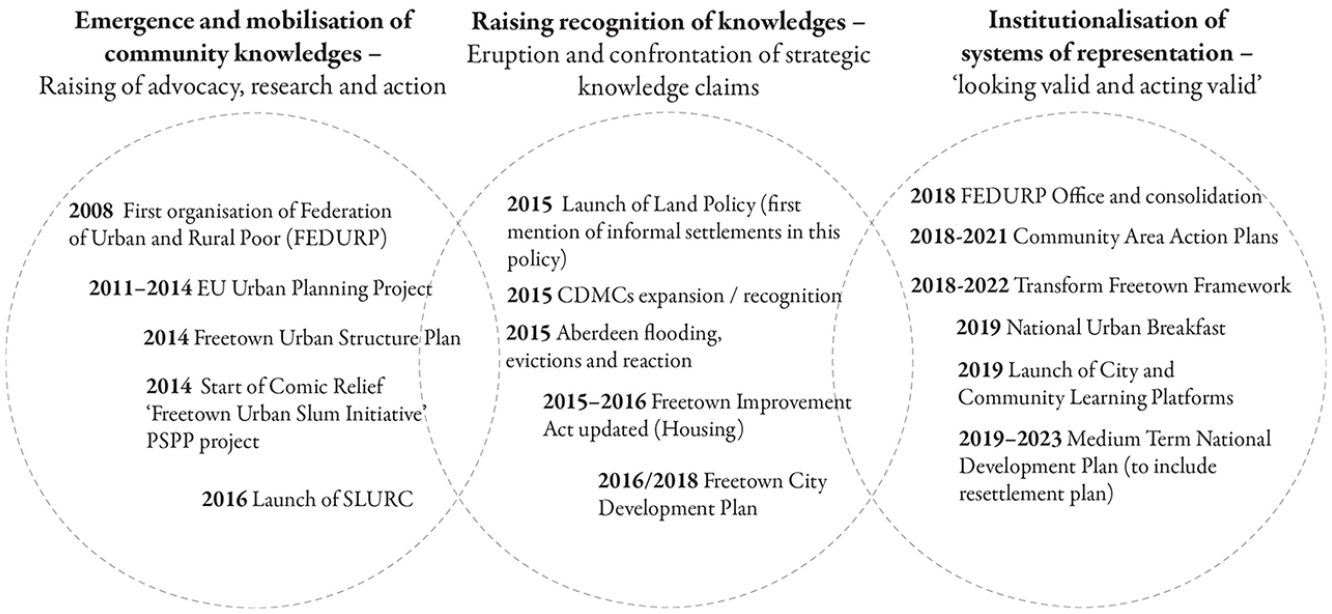
Three stories from the last 13 years
V. Conclusions
In tracing both the long-term urban development trajectories of the city, as well as more recent actions, we recognize that even though the development of Freetown has been shaped by a series of planned interventions, official planning approaches have often served to intensify socio-spatial segregation and urban inequalities. This outcome raises important questions about the kind of planning that is needed to stop the reproduction of unequal outcomes.
Highlighting this “slow anatomy of change” over the past years of advocacy and action, we have sought to capture the kinds of strategies that have been meaningful over time for the SLURC, FEDURP and CODOHSAPA alliance in order to translate knowledge to advance an informal settlement upgrading agenda, and transform planning practices. These strategies include: building alliances to ensure the mutual validation of knowledge; mobilizing knowledge through scale and space; leveraging existing frameworks and governance structures to establish durable structures of representation; and building reflexivity and the capacities of different actors to engage in new methodologies and diverse knowledge sources. The halting, slow and potentially reversible nature of this change over time reveals the importance of engaging both with the structural trajectories that have shaped inequalities in the city, as well as remaining attuned to the “thickness” and layered nature of advocacy and action.
Crucially, in adopting these layered strategies, we argue that the scope of planning has changed. The landscape described here opens up new possibilities in terms of what is understood by planning, the sites where it happens, and how and by whom it is practised. In Freetown, the key question becomes: what does this expanded notion of planning mean for addressing multidimensional experiences of urban inequalities? We finalise this reflection with possible answers in two different realms.
First, we acknowledge that processes of decentralization since 2004 have opened up the scale of planning in terms of citizen participation and spatial issues, while the necessity and value of working with urban poor residents has been increasingly recognized by both local and national authorities. Locally, the Transform Freetown Framework (TFF) has opened up governance spaces for informal settlement dwellers and their advocates to influence policy and planning, while Federation-produced data, increasingly validated, have underpinned the adoption of the ethos to “upgrade where possible, relocate where necessary”. Nationally, the rights of informal settlements have been recognized within the 2015 Land Policy, while CDMCs have become important first responders in managing crises, with organizations such as CODOHSAPA and SLURC occupying a similar position in contributing to national and local development planning. Such changes indicate the willingness within governance structures to engage with informal settlement residents, challenging recognitional and representational power asymmetries. Likewise, within informal settlements, important shifts have occurred in terms of the internal ideologies – with the range of small-scale material improvements solidifying a sense of community capacity and an increased confidence in research methods and advocacy. These shifts represent important pathways for advancing urban equality.
Second, however, this examination also reveals the uneven ways in which authority and power can be challenged and actually redistributed. These moves towards inclusion have not always led to a rethinking of planning from a rights-based or equality perspective. The rise of participatory discourses has long been identified as a key strategy of managerial approaches to governance when participation is bounded to limited spaces and topics: as a means of citizen control, rather than of efforts towards transformation. Nor are these limitations always linked with questions of political will. They also reflect important challenges linked with technical capacity or long-term resourcing. In Sierra Leone, this is complicated by incomplete processes of decentralization, in which national ministries continue to act as the main planning authority, meaning local councils may not have adequate resources and authority to respond to the voices of the grassroots, even as they are being included in new governance spaces.
The recognition of these complex systems lies at the heart of the concept of the “slow anatomy of change”. In Freetown, these strategies of knowledge translation have opened up the possibilities of planning – diversifying the portfolio of practices by which coalitions of actors are trying to make change. Over the last 13 years, these alliances have generated important changes, including a rising recognition and empowerment of communities, the adoption of new considerations in planning for informality, and a shifting acknowledgement in policy and planning documents, developing what can be understood as epistemic communities of practice that seek to advance knowledges towards upgrading and equality. Even if deep power asymmetries continue to condition the possibilities for achieving structural transformation, these trajectories have been more visible as a first step in challenging and reorienting power, and building pathways to urban equality.
Footnotes
Funding
This article was written with the support of the research project Knowledge in Action for Urban Equality (KNOW), funded by the UK Research and Innovation through the Global Challenges Research Fund (GCRF), Project No. ES/P011225/1.
2.
4.
5.
9.
11.
12.
Roy (2009);  .
.
15.
See reference 14.
16.
To date, there is no formal planning education provided in any higher education institution in Sierra Leone. There are, however, a few planning-related courses that are taught within disciplines such as geography, development studies and rural development.
18.
Cociña et al. (2019). Also, for instance, the 1993 World Bank report Housing: Enabling Markets to Work outlined the value of market mechanisms in encouraging housing supply. See .
21.
22.
Through further funding from Comic Relief-UK.
27.
The Disaster Management Department of the ONS has as of 2021 been transformed into the National Disaster Management Agency (NDMA).