




Abstract
Drawing on the Mukuru Special Planning Area in Nairobi (Kenya), this article analyses enabling conditions for scaling participatory planning in otherwise exclusionary urban political environments. It contributes to debates that focus on qualitative changes required to enhance citizen participation and on the integration of low-income residents’ needs, demands and innovations into city-wide planning practices around informal settlement upgrading. The article identifies three conditions that are key to enable and enhance the success of scaling efforts. First, moving to scale requires identifying, generating and making strategic use of political opportunities and building political momentum around them. Second, in addition to mobilizing, organizing and connecting stakeholders at different levels, successful scaling efforts must also promote qualitative changes in the way these stakeholders see themselves, and how they interact with and relate to each other. Third, going to scale requires the capacity to manage conflict successfully and prevent attempts to disrupt, co-opt or halt a scaling process.
I. Introduction
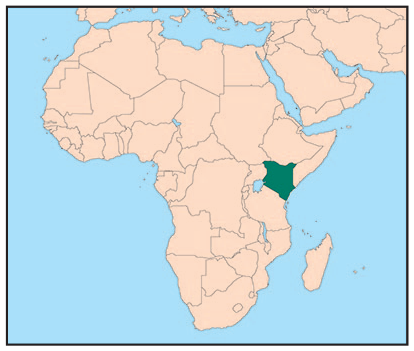
Approximately 60 per cent of Kenya’s urban residents live in informal settlements. A large proportion are tenants who live on private or illegally subdivided lands and experience insecure tenure, inadequate housing and access to basic services, and lack of influence within city-wide governance and planning.(1) It is widely acknowledged that more participatory forms of planning and urban development can increase the efficiency and effectiveness of upgrading projects and service provision schemes in a way that better responds to low-income residents’ needs.(2) Following constitutional reforms in 2010, Kenya’s government incorporated citizen participation as a core principle for urban governance and planning and showed a growing commitment to address the needs of low-income residents.(3) Yet stated intentions by Kenya’s government around citizen participation have often not been realized, as planning practice remains exclusionary and fails to comply with new legislation, leading to the production of irrelevant plans and settlement policies.(4)
In this context, participatory efforts towards informal settlement upgrading remain limited in scale and scope, and often restricted to donor-supported interventions.(5) Otherwise, low-income residents are left with clientelist and patronage politics, deploy their own community-based practices to further their objectives, or mobilize for more inclusive urban governance from below.(6) Insufficient attention has been paid to how such bottom-up community practices and innovations can be scaled “within” from one household to another in the same informal settlement, scaled “out” to other low-income communities, scaled “across” into other policy areas, and scaled “up” into higher levels and institutional practices of the state. In addition to exploring different types of scaling, more knowledge is required on “scaling by”, which refers to the agencies and processes that enable scaling in the first place.(7) This is especially relevant in urban settings where civil and political society are both highly fragmented and hostile towards disruptions of planning business-as-usual.
This article starts to address this knowledge gap. It offers a critical analysis of efforts to scale participation as part of a planning process in Nairobi’s informal settlements of Mukuru Viwandani, Mukuru Kwa Njenga and Mukuru Kwa Reuben. Following years of advocacy by local residents and support organizations such as the Muungano Alliance – comprising Muungano wa Wanavijiji (a social movement of residents of informal settlements) and the professional partners SDI Kenya (a technical assistance agency) and Akiba Mashinani Trust (a loan fund) – as well as action research on local living conditions,(8) these adjacent informal settlements were gazetted in August 2017 as a Special Planning Area (SPA) by the Nairobi County Government.
The SPA designation is significant as it leads to the suspension of conventional planning regulations, acknowledging their inadequacy in addressing local challenges, and provides space for innovation. Notable innovations of this SPA have included the following: First, by focusing on an area of 689 hectares with approximately 300,000 residents, 90 per cent of them tenants, the SPA has aimed to achieve informal settlement upgrading at scale. Second, Mukuru is situated on privately owned land, providing a unique opportunity for informal settlement upgrading that, to date in Kenya, has focused on less risky public lands. Third, the SPA has introduced a new model of community organization and representation, seeking to involve every resident in all stages of the participatory planning process. Fourth, the SPA has relied on interdisciplinary consortia, which generate new partnerships among government, civil society and the private sector. Consortia members work pro bono and are tasked to plan for multi-sectoral interventions addressing challenges holistically for Mukuru’s diverse residents.
I was tasked by the Muungano Alliance to contribute to the SPA process by documenting lessons learnt from different stages of community participation and consultation.(9) This article draws on insights generated from this research and offers an analysis of the processes that enabled and enhanced the success of scaling efforts in Mukuru, contributing to debates on qualitative changes required to enhance citizen participation, and on the integration of local resident needs, demands and innovations into city-wide planning practices around informal settlement upgrading. It argues that, in otherwise exclusionary urban political environments, successful scaling efforts directly engage the state and push for political and institutional changes.
The analysis of the Mukuru SPA process reveals three distinct, yet complementary, approaches that have enabled the scaling of participatory planning; these have built on and further nuanced tactics proposed by Fox in 1996,(10) as will be clarified in the next section. First, enabling a scaling process requires identifying, generating and making use of political opportunities. In Nairobi, this was achieved, for example, by framing Mukuru’s informal settlements as a KSh 7 billion (approx. US$ 63.5 million) economy composed of residents capable of paying for public services. In doing so, activists managed to incentivize an array of public and civil society stakeholders to engage with local residents and invest time and resources in the SPA process.
Second, in addition to building relevant support organizations by mobilizing, organizing and connecting stakeholders at different levels, successful scaling efforts must also promote qualitative changes in the way these stakeholders see themselves and relate to each other. In the Mukuru SPA, such qualitative changes were introduced through the formation of new models of resident organization, interdisciplinary planning consortia and community planning forums that connect residents with professionals.
Third, going to scale requires not only embracing conflict but managing it successfully by preventing attempts to disrupt, co-opt or halt a participatory planning process. In the Mukuru SPA, the Muungano Alliance played a particularly important role in conflict management, acting as an intermediary between multiple organizations with often distinct agendas, and between local residents and other, often hostile, stakeholders such as land and structure owners.
While the processes analysed here are unique to the Mukuru SPA context, the strategic use of political opportunities, the building of support organizations and relational capital, and successful conflict management are considered to be important conditions that, in combination, can enable and enhance the success of scaling efforts in other urban settings.
The paper is structured as follows: Section II positions the discussion within literatures on Southern, and especially African, urban governance and participatory planning in exclusionary urban political environments. Section III provides some background on methods. Section IV provides a brief overview of the Mukuru SPA process, focusing on how it contributed to scaling efforts. Section V offers an analysis of the processes that enabled and contributed to the success of the scaling process. Section VI concludes by outlining the wider lessons on scaling participatory planning that have emerged from this study.
II. Scaling Participatory Planning in Exclusionary Urban Political Environments
For participatory planning to be successfully scaled, both quantitative and qualitative changes are required. As colleagues and I described in an earlier paper, in quantitative terms, scaling refers to “expanding participatory planning horizontally into other policy areas (eg from water and sanitation to drainage and health) and/or communities (eg from one neighbourhood to another) and vertically into higher institutional levels”.(11) In qualitative terms, efforts to scale should “promote collective priorities and political voice, community self-organization in the production of goods and services, and peer support and solidarity”, as well as “enhance the levels of inclusion and empowerment of low-income residents and thereby improve democratic control over urban policy and planning decisions”.(12) A sympathetic political society, a strong, capacitated civil society, and a willingness to adopt multi-stakeholder collaboration are generally considered enabling conditions for participatory planning, whether at the neighbourhood or city level.(13) As already noted, and further elaborated in part a of this section, such conditions are generally absent in Kenyan cities. Part b of this section, therefore, considers practices that can confront, alter, and transform political and institutional processes to enable scaling of participatory planning for informal settlement upgrading.
a. The limits of planning and citizen participation in Nairobi
Previous research demonstrates that urban planning practice in Nairobi, reflecting wider trends in urban governance in Africa, remains top-down in nature, driven by elite interests and rent seeking, and characterized by patron–client relations and corruption.(14) City-wide planning was introduced in Kenya by the colonizers for purposes of racial segregation and zoning, and was subsequently adopted after independence by central governments for land-use regulation and development control. This approach to planning remains exclusionary in nature, characterized by institutional path dependencies, and, as described by Bassett, “top-down, technocratic and exclusively spatial in its conceptualisation”.(15) Physical plans may outline land-use regulations but are often not implemented by planning agencies, which lack technical expertise and regulatory capacity, and operate in a land market dominated by corrupt bureaucrats, politicians and their supporters, and private financiers.(16) Mwau and Sverdlik emphasize the dualistic nature of planning in Nairobi, where formal planning turns a “blind eye” to informal settlements, only granting planning approvals “to developers with proof of legal landownership”. At the same time, formal planning excludes “developers operating in the informal system, where ‘approvals’ are typically granted by local administration (e.g. area chief) or community leaders”.(17)
Mechanisms for citizen participation in urban planning processes are historically weak, amorphous, and not clearly provided for in Kenyan legislation. This leaves ordinary residents with little influence and control over land allocation, settlement planning, and service and infrastructure provision. Previous research on government-funded community development projects, such as the 2001 Local Authority Service Delivery Action Plan (LASDAP), or donor-sponsored initiatives such as the Kenya Slum Upgrading Programme (KENSUP) or the Kenya Informal Settlement Improvement Project (KISIP), highlights gaps between participation rhetoric and actual planning practices by local authorities. These projects often failed to involve low-income residents and instead selectively engaged specific stakeholders such as ward chiefs, local political leaders or private investors.(18) The ratification of Kenya’s new constitution in 2010 and subsequent legislative reforms,(19) which enhance the power of local authorities and call for participation at all levels of urban governance, are generally seen as offering opportunities for more inclusive and equitable planning. Yet, as argued by Bassett, historical path dependencies need to be considered and “no legal institutional reform will be sufficient to alter entrenched behaviour without renewed pressure from a broad-based land justice/ human rights movement demanding real change”.(20) Or, as argued in this article, without efforts around scaling as defined at the outset of this section, participatory planning in Kenya is likely to remain exclusionary – failing to engage informal settlement residents who, echoing observations made by Chatterjee on India, are at most “tenuously rights-bearing citizens”.(21)
b. Enabling participatory planning to be scaled
Within exclusionary urban political environments such as Nairobi, low-income communities often follow several approaches to advance their needs. These are often complementary and may be iterative or simultaneous,(22) addressing different dimensions for scaling. For example, low-income communities can operate outside formal planning remits and develop their own grassroots solutions, build alliances with other low-income residents, establish socioeconomic support networks such as savings groups, and engage in citizen- or movement-led planning.(23) Such approaches can enable scaling “within” low-income communities (i.e. by connecting different households) through learning exchanges, civil society coalition-building or local precedent settings. However, due to their lack of engagement with the state, such approaches often struggle to scale “up” local innovations into formal policy and planning processes.
It is also possible to operate within formal remits of planning by complying with existing rules of a specific political system. As observed in other cities in the global South,(24) in Nairobi this often entails engaging in patron–client relations such as exchanges of political votes for favours, or reliance on local brokers like ward chiefs, structure owners or informal service providers to access housing, infrastructure and services.(25) Acquiescence with clientelism can indeed allow low-income residents to scale “up” activities as it often represents the only route to connections with actors at higher institutional levels.(26) However, such efforts are unlikely to lead to empowerment, enhance levels of inclusion or contribute to improvements around democratic control – qualitative changes that, as outlined above, are considered key for successful scaling.
For scaling to be successful it is necessary to go beyond compliance with existing rules and to push for changes within political society “slowly, painfully, unsurely”, as Chatterjee puts it.(27) In particular, as Miraftab explains, qualitative changes are required in how different actors involved in formal city-wide planning processes “see their roles, responsibilities, power, objectives” and to “how well prepared they are for changes (intra-organizational and inter-organizational) in their power structures”.(28) What remains unclear in the current literature, however, is how such changes can be achieved in practice. More attention needs to be paid to the processes and agencies that enable scaling in the first place – what was referred to above as “scaling by”. To make sense of what can actually be done, insights from the literature on state– civil society relations and social movement tactics are useful. In its definition of tactics, this article follows de Certeau: “The space of the tactic is the space of the other. Thus it must play on and with a terrain imposed on it and organized by the law of a foreign power. [. . .] It is a manoeuvre “within the enemy’s field of vision”. [. . .] It operates in isolated actions, blow by blow. It takes advantage of “opportunities” and depends on them.”(29)
While not writing directly on the topic of scaling participatory planning, but rather on strengthening collective action and state–civil society coalition-building in authoritarian settings, Fox(30) provides useful conceptual insights on tactics that can contribute to achieving qualitative changes around participation in otherwise exclusionary urban political environments.
Each of these tactics, outlined briefly in the introduction, merits further elaboration around its potential for enabling and enhancing the success of scaling efforts. First, political opportunities refer, in Tarrow’s words, to “changes in opportunities that lower the costs of collective action, reveal potential allies and show where elites and authorities are vulnerable”.(31) According to Fox, political opportunities can emerge in any context, even in less democratic or otherwise exclusionary settings. This builds upon an understanding of the state and society as composed of diverse actors who hold distinct interests, operate in a context characterized by uneven power relations, form part of different actor coalitions, and advocate different agendas,(32) with some willing to give in to efforts of low-income communities and associated demands for scaling. Less is known about how different actors identify, generate and use political opportunities to achieve more inclusive political outcomes. Subsequent sections address this knowledge gap by showing how civil society activists in Nairobi generated enabling conditions for scaling through tactics such as frame extension,(33) identifying and creatively using relevant legislative openings, and securing buy-in for the SPA from government authorities at politically opportune moments prior to elections, when politicians sought broad popular support.
Second, according to Fox, pushing for change at higher levels in exclusionary urban environments requires establishing support organizations that “facilitate collective action in defence of shared interests”.(34) For efforts that seek to scale participatory planning, this means establishing horizontal and vertical support networks that connect multiple stakeholders at distinct levels as well as from different policy sectors. To achieve this, both quantitative and qualitative changes must be promoted (i.e. both the number of different stakeholders involved in a process as well as how they see themselves and relate to each other). Subsequent sections contribute to a more fine-grained understanding of how to achieve the relevant qualitative changes. In addition to scaling “up” to higher levels, evidence from Mukuru highlights the equal importance of scaling “within” informal settlements in order to unite residents around a common agenda. This can best be achieved by mobilizing around common goods such as land, or collective consumption such as basic services. These help to bring residents together, but also form a basis to engage with actors at different levels and in distinct policy sectors.(35) The findings further suggest the need to connect local priorities and innovations to formal policies and plans, through fostering collaboration and building relational capital(36) between other actors (within civil society or the public or private sector) that support more inclusive, participatory upgrading of informal settlements.
Finally, Fox(37) also warns that openings made possible through political opportunities or new collaborative efforts can easily be closed down by political shifts, institutional setbacks and opposing actors, leading to situations where one may move two steps forward, and one step back. This links to the third component, the need to accept that setbacks and conflict will emerge and must be embraced. This aligns with approaches that view planning as agonistic and guided by conflicting rationalities.(38) Building on such perspectives, this article considers conflict a central element of any effort to confront exclusionary dynamics and advocate for change, including attempts to scale participatory planning. As outlined in later sections, conflict cannot be avoided but must be managed successfully for scaling to unfold. In the Mukuru SPA, this was achieved through several tactics including confrontation, protecting communities from repression, and incentivizing conflicting parties to change their attitudes.
III. Case Study and Methods
In Nairobi, the Muungano Alliance, a civil society organization, follows this third approach to scaling. Over more than two decades Muungano, according to Lines and Makau, has “challenged the state directly and indirectly; taken advantage of opportunities and spaces created by the state’s actions; and worked to create or encourage new practice and policy”.(39) Where a lacuna was observed, Muungano sought to introduce new practices that addressed the needs of low-income residents and positioned informal settlements as a central concern for the state. In recent years, Muungano pushed for incorporating participatory informal settlement upgrading into city-wide planning. This was in direct response to the 2010 constitution and new legislation that calls for participation at all levels of urban governance, but without operational guidelines to facilitate practical implementation. This situation was considered an opportunity for precedent setting, attempted through efforts to scale participatory planning as part of the Mukuru SPA. This article therefore focuses on the Mukuru SPA as an illustrative case to examine how scaling can be enabled in urban environments that are otherwise considered exclusionary, fragmented and hostile.
The findings presented here form part of a broader study that documented the community participation and consultation process as part of the Mukuru SPA. Data collection activities were undertaken collaboratively with staff and activists linked to the Muungano Alliance. Additional research support came from two research assistants. The Alliance has worked with Mukuru communities for decades and, as will be outlined below, has played a central role in the making and running of the SPA process. Working with the Muungano Alliance provided me with unprecedented access to activities and stakeholders involved in the different planning stages. But it is also important to reflect on some of the limitations of this collaborative research approach. For example, my perceived association with the Alliance perhaps restricted access to stakeholders that opposed the SPA or held more negative opinions about the planning process and institutions involved. While this was a difficult issue to resolve, it was nevertheless possible to capture relevant information in interviews with SPA supporters, for example through the inclusion of questions on strategies around managing conflict and opposition.
Primary data collection took place during four visits to Nairobi between March 2018 and February 2020, and the analysis presented below mainly focuses on activities within this time frame. Of 27 key informant interviews, 14 targeted NGO professionals and county government officials involved in SPA consortia; 13 targeted community representatives and activists associated with the Muungano Alliance and involved in processes of community mobilization and organization, as well as in SPA community planning forums. Interviews were complemented with:
observations during data collector training sessions, community mobilizer workshops, and community planning forums run by SPA consortia
transect walks through Mukuru with professional staff from SDI Kenya and Akiba Mashinani Trust (AMT)
analysis of unpublished reflective logs, concept notes and SPA progress reports, along with early drafts of sector plans and the integrated development plan
collaborative analysis during reflection workshops with members of the Muungano Alliance
IV. The Mukuru Spa: A Brief Overview
This section provides background on the Mukuru informal settlements and an overview of the SPA. It focuses on the different types of scaling associated with this participatory planning process, which were briefly defined in the introduction.
a. A profile of Mukuru
Mukuru is a belt of informal settlements, including Kwa Njenga, Kwa Reuben and Viwandani (Map 1). According to research undertaken by the Muungano Alliance with support from the University of Nairobi, Strathmore University, Katiba Institute and University of California, Berkeley,(40) these three informal settlements are home to 100,561 households (with approximately 240 households per acre) on 647.8 acres of land. Virtually all the land in the Mukuru informal settlements is privately owned by approximately 230 landowners. As with wider trends around land grabbing reported in Kenya since the 1960s,(41) land acquisition processes in Mukuru are irregular.(42)
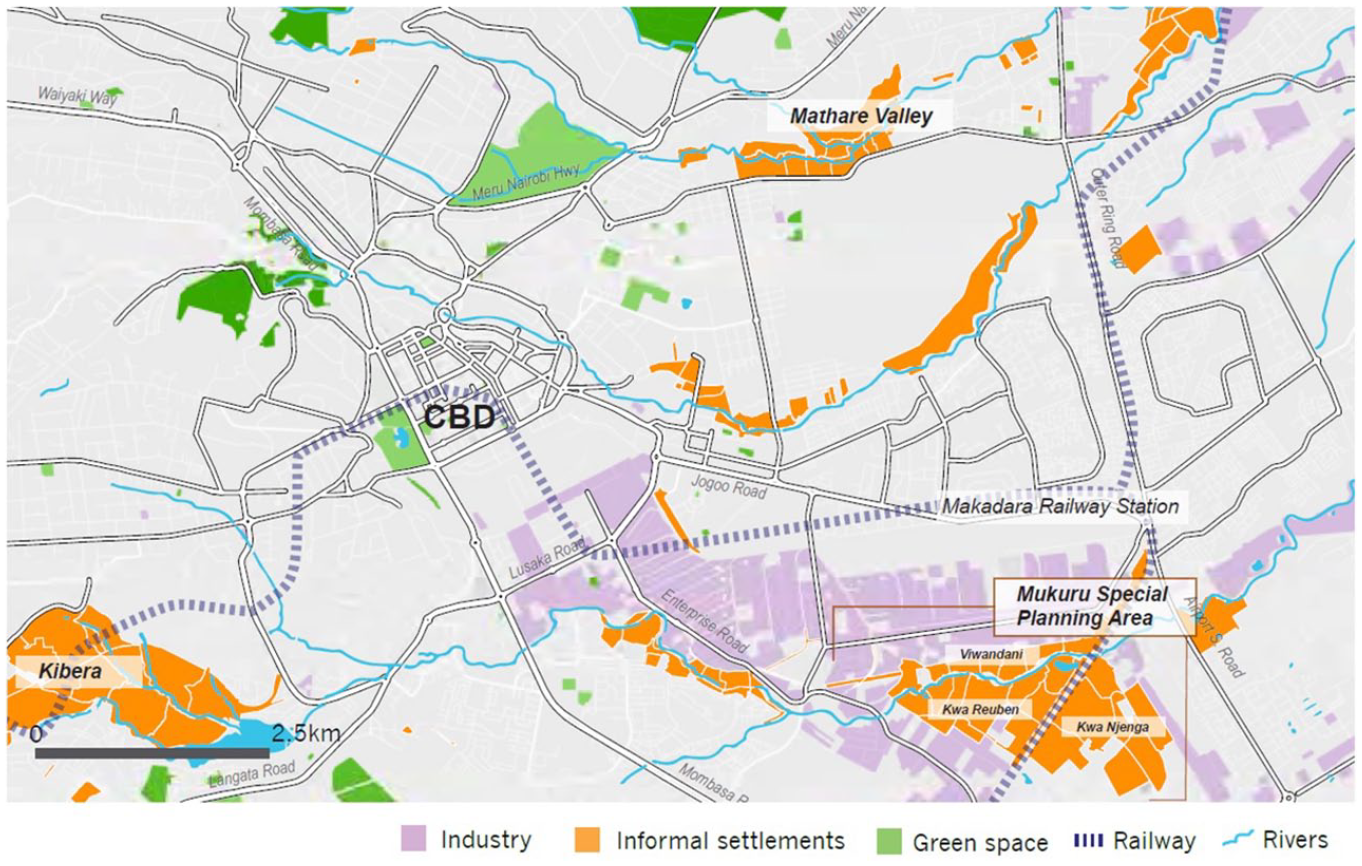
Mukuru and other major informal settlements in Nairobi
Most residential structures are owned informally, and 94 per cent of residents are tenants. More than 30 per cent of structures contain two or more storeys, reflecting a wider shift in Nairobi’s informal and tenement rental housing.(43) Informal providers control service provision and residents face a poverty penalty, paying nearly four times more for water, two times more for electricity, and 20 per cent more for rent per square metre than middle- and upper-class residents in formal housing.(44) Mukuru is situated in an industrial zone and residents are exposed to elevated levels of air, water and soil pollution.
Given the severe challenges facing residents, the Mukuru informal settlements were declared a Special Planning Area (SPA) on 17 August 2017, leading to a halt of development activities for an initial two years. Within this period, which was later extended to 2022,(45) Nairobi City County is required to prepare an integrated development plan (IDP) for upgrading the Mukuru settlements.
b. The multiple dimensions of scaling within the Mukuru SPA
The Mukuru SPA process (see Figure 1 for an overview) is ground-breaking for Kenyan planning as it emphasizes community participation throughout all stages; urges novel partnerships between government, civil society, residents and other stakeholders; and recognizes that informal settlement upgrading is a challenge for the whole city, addressing obstacles to inclusive development in a multidisciplinary and multi-sectoral manner. Each of these points links to different yet interrelated types of scaling.
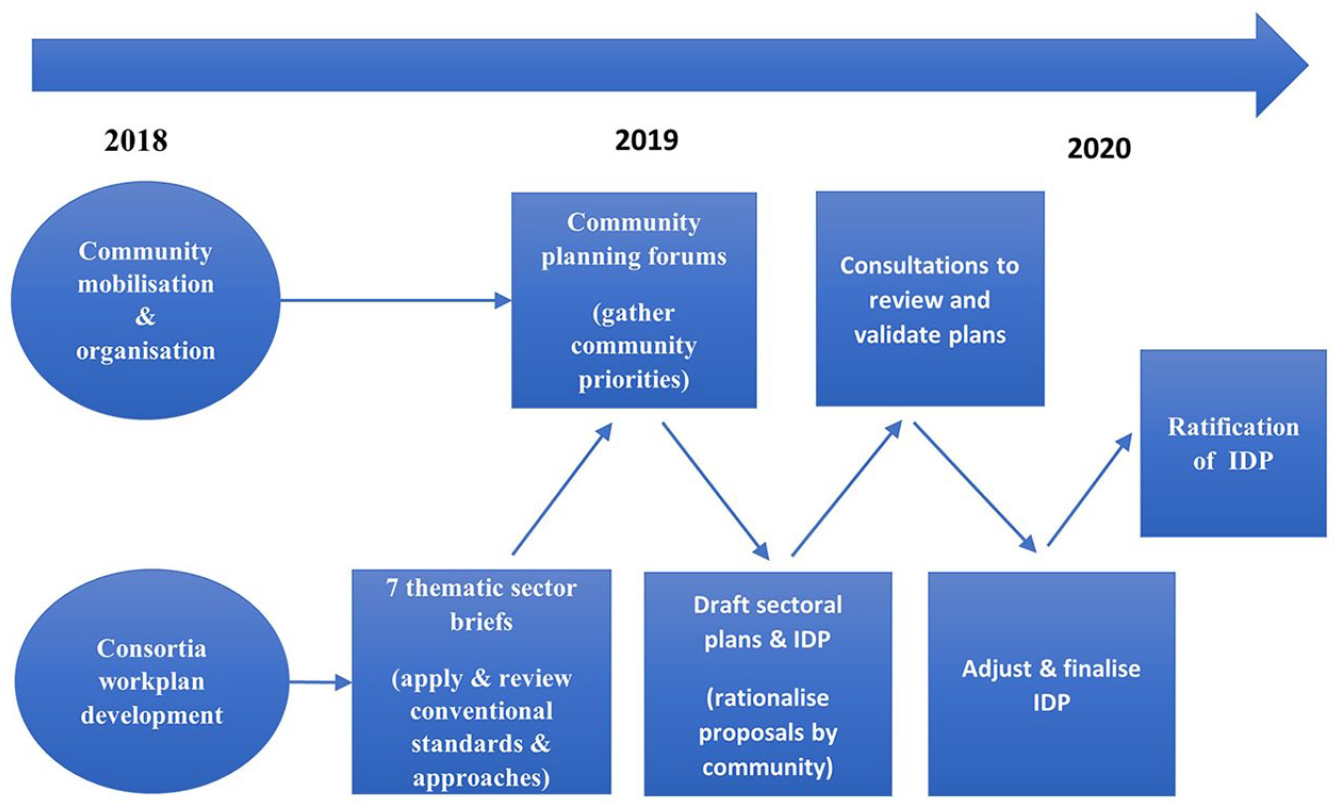
An overview of the SPA process
First, unlike previous participatory slum upgrading initiatives such as KENSUP and KISIP, which selectively involved residents,(46) or previous initiatives by grassroots organizations,(47) the Mukuru SPA scales “within” informal settlements, aiming to reach out and involve every resident in the different stages of the planning process. This has been achieved through a local adaptation of SDI’s enumeration approach,(48) which targets every household, creating a list of participants and forming the basis of bringing people together. Enumerations were combined with a strategy of geographic mobilization that established multiple levels of community representation, starting at the level of the household, and then connecting representatives from 10 adjacent households through the formation of cells. A sub-cluster then brings together 10 adjacent cells, and approximately 80 sub-clusters form a total of 13 segments/neighbourhood associations (Figure 2). This model of resident organization is complemented by the formation of savings groups,(49) which accumulate economic resources to make investments and finance activities addressing issues identified as part of the SPA planning process.
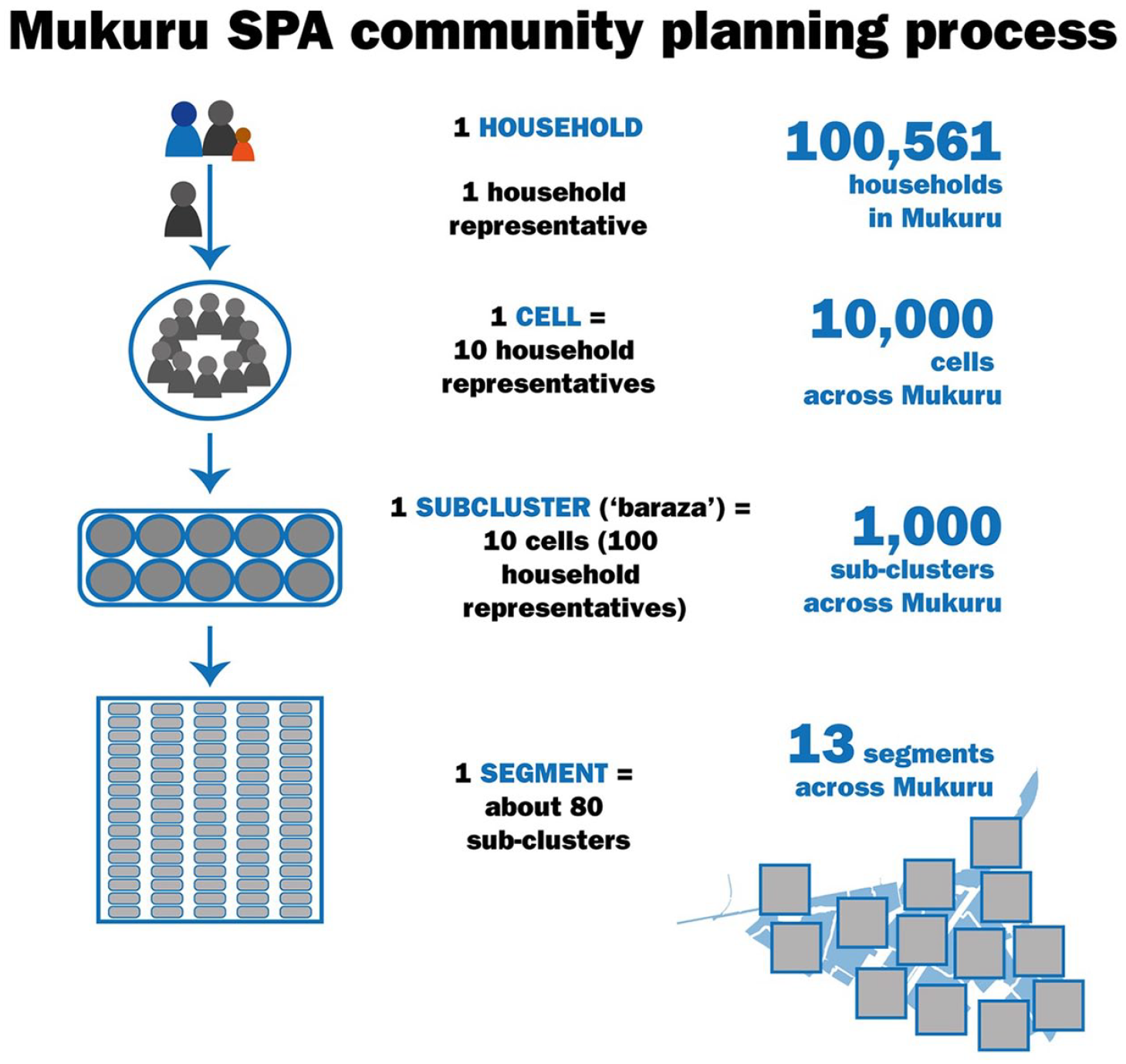
Results of the Mukuru SPA community mobilization process
Second, recognizing the multiple challenges facing residents in Mukuru, the SPA scales “across” to multiple policy areas and promotes collaboration among different public, private and civil society organizations with relevant thematic expertise. This has been achieved through a multi-sectoral and consortia-based planning model, with seven thematic sector consortia and one responsible for coordinating community organization and communication among the different consortia (Figure 3). Each sector consortium is composed of technical experts associated with 46 organizations representing local government, academia, and international and local NGOs. Five sector consortia(50) undertook two rounds of community consultations, organizing community planning meetings at the sub-cluster or segment/neighbourhood level. This provided a basis for information sharing and more collaborative planning between residents and technical experts.
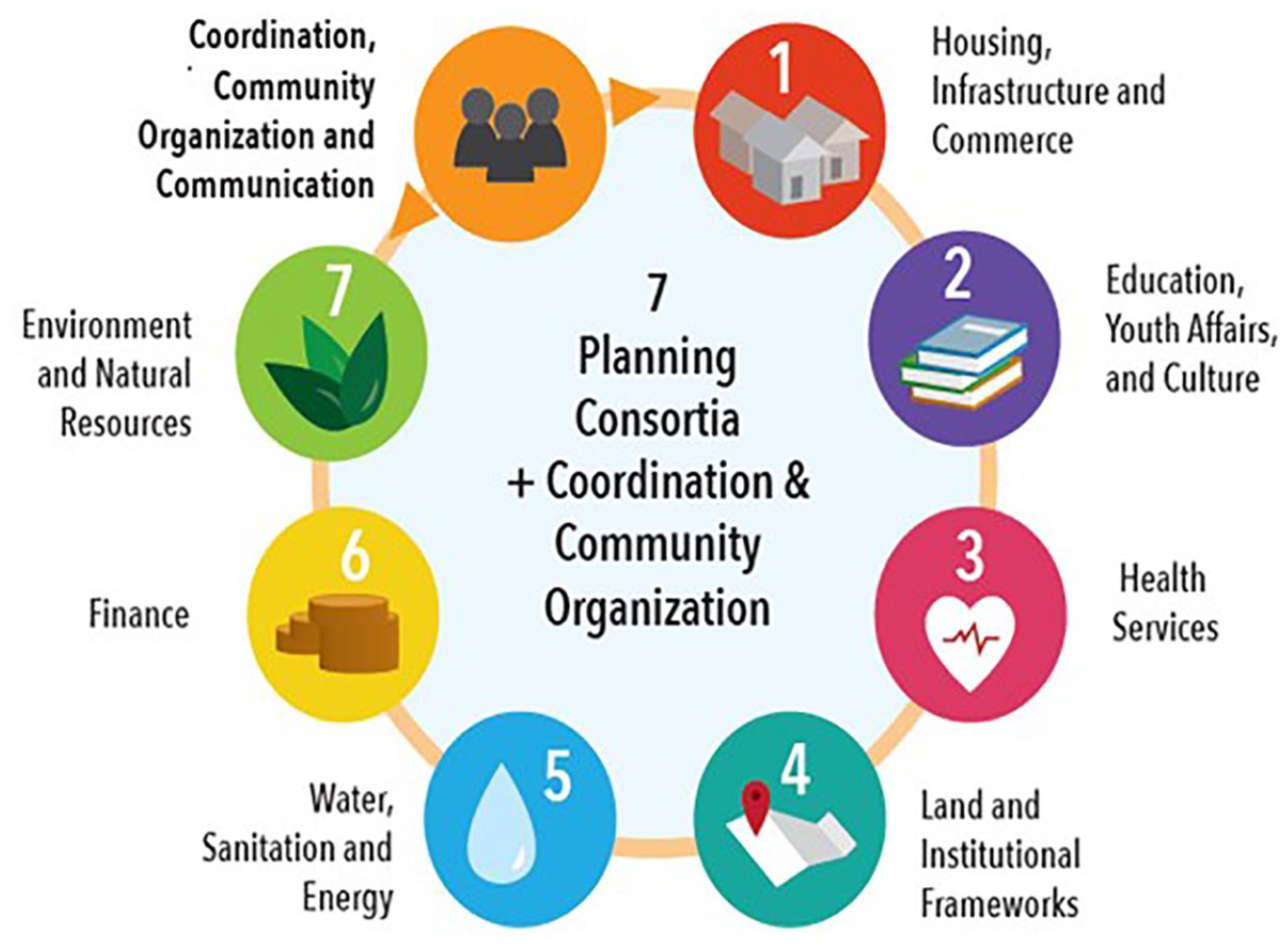
The multi-sector consortia model for the Mukuru SPA
Third, the SPA seeks to scale “up” to higher institutional levels by incorporating lessons learnt in the SPA process within the practices of relevant public, private and civil society institutions, as well as within strategic plans and city-wide policies, thereby setting incentives to scale “out” by running similar processes in other informal urban settings in Nairobi or Kenya. Successful efforts to scale “up” have already been noted by consortia representatives who highlighted that their engagement with informal settlement residents has changed as part of the SPA process.(51) Scaling “up” is also likely to be achieved through the ratification of the IDP, subsequently to be integrated into Nairobi City County’s Strategic Plan. It is too early to draw conclusions on the potential to scale “out”, as no similar initiative has yet emerged elsewhere, though preparations for a new SPA are already underway in Mathare, another large informal settlement in Nairobi.
V. Tactics to Enable Scaling in Mukuru
The scaling processes associated with the Mukuru SPA are particularly impressive as they take place in an urban political environment considered to favour the interests of political and business elites.(52) This section offers a critical analysis of a set of interrelated tactics that were introduced in previous sections and that are considered crucial in enabling and enhancing the success of scaling participatory planning in the context of Mukura.
a. Scaling by identifying, generating and making strategic use of political opportunities
Political participation is generally considered to be determined by institutional and politico-legal contexts and conditioned by changes in political opportunities.(53) While confirming such trends, evidence from Mukuru suggests it is not enough to wait for political opportunities. Instead, committed actors (local residents, activists, researchers, supportive government officials) need to engage in long-term mobilization to build political momentum around a topic, identify or generate political opportunities, and make strategic use of them. This section illustrates this through an analysis of activities that led to the ratification of the SPA.
To understand the emergence of the SPA, it is necessary to go back to at least 2010, when different residents living in the Mukuru informal settlements approached the Muungano Alliance about eviction threats. Investigations revealed a common pattern – landowners put residents under pressure to purchase previously illegally subdivided plots of land or face eviction. Based upon this finding, Muungano activists followed an Alinsky-style approach,(54) organizing people around a common problem (land insecurity/eviction threats) and a clear opponent (landowners). This was achieved through the organization of the Jubilee Campaign, which raised awareness about evictions and unjust land transactions. A high court order, supported by the NGO Katiba Institute, sued titleholders over illegal land management practices and demanded an injunction to stop evictions. Despite a favourable ruling by the high court, Muungano’s experience in other Nairobi informal settlements suggested that preventing evictions does not by itself resolve land conflicts between residents and landowners.
Other avenues were therefore explored to provide tenure security and improved living standards. A key activity included collaborative research on living conditions in Mukuru between 2013 and 2017, which led to findings that confirmed the landownership situation, as well as other neighbourhood problems. Activists lobbied Nairobi City County officials to push for Mukuru’s integration into public service provisioning, making use of frame extension by presenting the poverty penalty as a political opportunity. Highlighting Mukuru’s KSh 7 billion (approx. US$ 63.5 million) economy, they made it clear that residents were capable of paying utility bills. This led the county to increasingly see the benefits of upgrading informal settlements.(55)
Activists with legal expertise from the Muungano Alliance and Katiba Institute also engaged with government legislation on participation, especially the 2010 Constitution and Section 23 of the revised 2012 version of Kenya’s Physical Planning Act, which includes the option of a Special Planning Area. Under the Act, county governments can designate an area as a SPA if it faces unique development problems but also presents significant urban design and environmental challenges and opportunities, as is the case in Mukuru. The SPA, hence, served as a useful legal entry point through which to lobby government authorities. Activists initially approached Nairobi City County officials who had previously been receptive to community-led upgrading. Lobbying activities were expanded shortly before the general elections in August 2017 – the month the SPA was gazetted – when national and local government officials sought electoral support from informal settlement residents.
These events highlight that moving to scale requires careful combinations of distinct, yet complementary, tactics. These include mass mobilization and resistance (i.e. by linking up local residents through anti-eviction campaigns), exercises in research and politico-legal learning to identify and make use of political opportunities (i.e. legislative openings or pre-election cycles), and attempts to generate political opportunities and secure buy-in by government officials (i.e. by framing issues to appeal to or align with political interests and priorities). These diverse tactics seek to connect people, communities, organizations and different political agendas. However, attention also needs to be paid to further deepen, broaden and sustain such collaborative efforts to enable the scaling of participatory planning to unfold in practice.
b. Scaling by building support networks and relational capital
The scaling of participatory planning refers to practices at multiple levels that require cooperation among civil society, and public and private sector stakeholders. As outlined previously, in addition to involving more stakeholders, successful scaling requires qualitative changes in how stakeholders see themselves and relate to each other. This subsection offers a critical analysis of tactics and processes that contributed to these qualitative changes.
To establish local buy-in and trust, foster alliances and peer solidarity, and enhance the bargaining power of residents in the Mukuru informal settlements, it was necessary to scale “within” by connecting and uniting residents around shared problems and promoting collective action.(56) This was achieved through SDI’s enumeration approach(57) and the community representation model outlined in Section IV. Involvement in these processes helped residents build trusting relations, exchange knowledge, and identify common problems and pathways for collective action.(58) A core aim was to promote the transition from mobilization (a purposeful process making residents aware of the need to confront their problems collectively) to organization (the autonomous capacity of communities to act collectively on their own devices and to hold others to account).(59) Such a transition is required to deepen and sustain relational capital in communities and to enhance residents’ ownership and control of a participatory planning process.
Participatory planning at scale further means moving beyond planning efforts undertaken by local communities, or what Frediani and Cociña(60) refer to as “participation as planning”. This requires connecting local efforts and innovations to formal planning procedures and policies, engaging with external stakeholders, and ensuring their buy-in, collaboration and support. To achieve this in Mukuru, SPA activities were aligned with frameworks and policies that guide the work of government and international agencies. For example, it was decided to use the principle of “leaving no one behind” as a SPA leitmotif, thereby making strategic connections to the New Urban Agenda and to commitments outlined in Kenya’s Vision 2030. The reconfiguration of Mukuru into neighbourhood associations was also a purposeful attempt to generate a connection with the 2016 Neighbourhood Associations Act, as the longer-term aim is to involve these residential organizations in overseeing public service provision at the ward level.
The SPA consortia model was designed to mirror departments in Nairobi City County to further encourage local government officials to lead and take ownership of the planning process. Consortia membership was also open to interested organizations. Members volunteered their time without renumeration. According to Sophia Yiega (of the NGO Women Educational Researchers of Kenya and a member of the education consortium), such an approach “puts commitment before money and brings together people who really want to make a difference”.(61) Like the community mobilization model, the consortia model facilitates knowledge exchanges around innovative upgrading solutions that meet residents’ needs. For example, members of the housing, infrastructure and commerce consortium identified and discussed county planning standards for road widths and catchment areas for hospitals and schools that, if applied in dense settlements like Mukuru, would lead to destruction of houses and displacement – something local residents opposed during consultations. Drawing on previous experiences from consortia members such as the Indian SDI affiliate and planners from CEPT University in Ahmedabad,(62) more flexible planning standards were introduced, and it was decided to follow principles of minimal displacement.
For scaling processes to be successful, it is also important to connect, generate relations of trust, and build accountability channels between local residents and professionals at different levels. The Mukuru SPA achieved this through community planning forums. Residents selected representatives who would participate in these but also often hold pre-consultation meetings at the cell or sub-cluster level to gather community priorities, as well as follow-up meetings for feedback, thereby generating horizontal accountability channels. Community involvement in planning meetings helped to enhance relations with government authorities and other organizations, thereby fostering vertical accountability. Such interactions increased residents’ bargaining power and boosted their confidence to speak up and approach government authorities and other professional bodies. According to community mobilizer Doris: “engaging with the consortia gave me power to talk to the government. Since the first round of consultations I have approached our ward administrator to get his support for the SPA. In the past, I would have been scared to approach these people.”(63)
Representatives of county government also noted an improvement in state–citizen relations. Jane Wamuguru from Nairobi City County explained: “Consultations make us interact with local residents more. The community is no longer scared to approach us, and we are getting used to interact with them. I can say we are becoming friends.”(64) Community planning forums changed consortia members’ perceptions of socioeconomic dynamics in Mukuru, and pushed them to respond to local demands. Or as Jane Wairutu, a SDI Kenya staff member and part of the health consortium, noted: “People from the community were really pushing us. They asked us what we are doing? When will we share our report? When will we implement? You know, pressure from below makes you act.”(65) Community planning forums hence generated important accountability channels, developing the capability of different stakeholders to relate to each other, while also deepening their understanding of their role in the planning process and their ability to design solutions that respond to local needs.
c. Scaling by embracing setbacks and successfully managing conflict
Scaling requires mobilizing and working with a large group of stakeholders. Despite attempts to build relational capital and embrace difference, efforts towards scaling in the Mukuru SPA were far from the ideal collaborative consensus-building exercise, but characterized by setbacks, clashes of interests, opposition and conflict. This subsection discusses tactics that helped to manage conflict successfully and prevent disruptions to different scaling processes.
Attitudes and commitment to the SPA varied among stakeholders and changed over time. For example, recruitment of data collectors focused on diversity, with particular emphasis on underrepresented groups such as youth and women.(66) It was difficult, however, to ensure reliability. According to community activist Doris, “some mobilizers were quite corrupt. They’d bring five data collectors to a meeting and later you find that they ask these people to pay KSh 100 [approx. US$ 0.90] from their monthly payment.”(67) Interviews with different community activists revealed that tactics such as providing clear, transparent instructions around payment, holding frequent follow-up meetings where mobilizers can raise concerns, and investigating rumours around corruption helped to resolve some problems. Some community mobilizers also had to stop engaging with the SPA process due to changes in personal circumstances. Consistent consortia leadership was also an issue, as department directors in Nairobi City County, who also directed SPA consortia, changed frequently. To ensure continuous county engagement it was helpful to rely on lower-tier bureaucrats, as these remained in office and, according to Jane Wairutu, managed to bring senior staff up-to-speed. Commitments towards the SPA also changed amongst other consortia members who worked pro bono while juggling other work commitments.(68) Some organizations left consortia after the SPA was extended beyond the initial two-year period as they could no longer spare time and staff. Meanwhile, other organizations joined the SPA process during later stages.
The Mukuru SPA not only dealt with procedural setbacks, but also had to confront opposition, mainly from national and county government officials, informal service providers, and both resident and non-resident structure owners. These people associated land regularization and informal settlement upgrading with a number of risks, including a reduction in opportunities to generate personal benefits through illegal land transactions, charging bribes, or collecting rents and service fees as well as threats of criminal conviction, and possible dispossession and displacement.(69) Opposition around these topics was pre-empted by SPA consortia, and the following measures helped to minimize conflict.
First, it was decided to follow a resident-based participatory model that favours people living in the Mukuru settlements – mostly tenants – to become involved in SPA decision making. This generated what Fox called anti-negative incentives(70) and prevented opposing stakeholders from obstructing the SPA process while providing a safe space for residents and other committed stakeholders to come together. Second, to pre-empt violent attacks against community mobilizers, they decided to start enumeration and mobilization activities in certain parts of Mukuru, namely villages in Kwa Reuben and Viwandani, that were less resistant to the SPA. Third, due to the politically sensitive nature of land tenure, the land and institutional framework consortium opted against public consultations. Instead, and following the request of Mukuru residents to resolve the complex land situation and to make the land public once more, this consortium explored various legal options and negotiated with county and national government authorities.(71)
Despite efforts to buffer risk, conflict and opposition could not be completely avoided. As different participatory planning activities unfolded, points of tension became visible, and structure owners and their strongmen especially tended to disrupt the SPA process. They did this by threatening community mobilizers, stealing enumeration sheets, spreading “fake news” about the SPA, lobbying local chiefs and county or national government officials to halt SPA activities, or voicing opposition in consultation meetings. While it was impossible to resolve conflict completely, tensions could often be relieved by following the principles of full disclosure of planning objectives, negotiation, dialogue and non-violent contestation.(72) Involvement of Nairobi City County officials in planning meetings further helped to assuage opposition and correct misinformation. As one county official stated: “By engaging directly with these people, myself and other senior staff from the County could ensure local political buy-in.”(73)
Particular attention was also paid to convince opposing stakeholders about SPA benefits, for example by emphasizing how future interventions would improve the wellbeing of residents (including resident structure owners) or by strategically aligning SPA-related interventions with self-interested motives (e.g. highlighting to structure owners that housing improvements would encourage tenants to stay and pay rent). Such experiences highlight that conflict and opposition are not static but dynamic, as attitudes can change, buy-in to a process can occur at any point, and former opponents can turn into allies.
VI. Conclusions
One pathway towards achieving more inclusive cities is to scale participatory planning. While academic literatures acknowledge that participation at any level benefits from certain conditions, such as the presence of a strong civil society and a supportive political society,(74) so far insufficient attention has been paid in the academic literature to how such conditions can be generated in otherwise exclusionary urban political environments. This article addresses this gap by analysing an array of tactics that enabled and enhanced the success of scaling efforts as part of the Mukuru SPA initiative, and within a city – Nairobi – whose planning and governance approach is conventionally considered to be exclusionary, fragmented and hostile towards low-income residents.(75) While the Mukuru experience is not treated here as a “best practice” case, the findings presented in this paper may well be of relevance for other cities in the global South where “ideal conditions” for participation are not in place.
The Mukuru SPA experience sheds light on the key role of non-state actors such as organized low-income communities and social movements in pushing for efforts to scale participation “within”, “out” and “up”. The findings presented in this article also reveal that non-state actors cannot act alone. To achieve change in city-level policies and planning processes, they need to engage with government authorities, aiming to change their attitudes and practices. Making strategic use of political opportunities, such as legislative openings or pre-election cycles, can serve as one useful tactic. The findings from Mukuru further suggest that any effort to push for changes at higher levels must be accompanied by establishing horizontal support structures. The more residents support a scaling process, the more likely it is that such an initiative can be successfully implemented. It is therefore important to continue working locally by promoting efforts to scale within informal settlements. Confirming previous findings, this analysis indicates that this can best be achieved by mobilizing and organizing residents around common goods or collective consumption, as these not only provide a route to join up multiple residents with similar needs but allow for an engagement with the state.(76) Findings from the Mukuru SPA also suggest that achieving mass mobilization requires moving beyond models of organization that favour community representation by elites such as local political or religious leaders. Instead, emphasis should be given to involving every local resident – independent of their personal background. The model of resident-based organization in Mukuru, which starts at the unit of the household and then scales within informal settlements, provides one example of how this can be achieved.
Another key lesson from the Mukuru SPA is that most problems in informal settlements cannot be resolved locally and require external support. The multi-sector consortia approach of the SPA provides useful examples of how this can be achieved. It managed, for instance, to connect committed stakeholders from the private, public and civil society sectors and to facilitate learning exchanges among them, and to establish horizontal and vertical accountability channels through community planning forums. Another way of achieving external buy-in and support is to strategically frame local problems or innovations in such a way that they align with state priorities and frameworks. In Mukuru, for instance, activists presented the poverty penalty as an opportunity to local authorities and labelled newly established segments as neighbourhood associations, thereby making a connection to Nairobi’s 2016 Neighbourhood Association Act. Such representations helped to enhance the legitimacy of local issues and innovations. What requires further longitudinal research in Mukuru as well as elsewhere, though, is the extent to which local authorities will take up such innovations, whether they will replicate them in other informal settlements, and what this will mean for the inclusion of local residents in plan implementation.
Finally, the analysis of the Mukuru SPA suggests that efforts to move to scale will have to confront and manage conflict successfully. To a certain degree, conflict can be pre-empted and controlled – for example, by establishing safe spaces where residents can interact without the intrusion of local troublemakers. But conflict cannot be completely avoided, especially because scaling means moving from known into unknown terrains. When moving to scale, opposition may emerge in one situation of a participatory planning process and be resolved (or not) in another moment, leading to changes that may produce a new cycle of conflict and/or opportunities for collaboration. This confirms the need to treat conflict and collaboration as complements.(77) For residents, activists and practitioners interested in enabling scaling, as well as for academics involved in documenting such efforts, this means acknowledging that such processes are never static, but are dynamic and in constant flux, requiring the capacity to make spontaneous adjustments to unexpected changes in real time. To conclude, then, in the Mukuru SPA the combination of identifying, generating and making strategic use of political opportunities, building support networks and relational capital, and successfully managing expected and unexpected conflict represented complementary tactics that enabled participatory planning to be scaled. Further research should explore whether such tactics can also help to advance scaling processes in other cities of the global South.
Footnotes
Acknowledgements
I would like to thank the following researchers and SDI Kenya as well as AMT staff for their valuable comments and contributions during the research: Joseph Kimani, Jack Makau, Diana Mitlin, Patrick Njoroge, Sammy Muinde, Lilian Odongo, Evans Otibine, Jane Wairutu and Jane Weru. I also deeply appreciate the insights of community mobilizers in Mukuru and SPA consortia representatives.
Funding
The study received financial support from the Faculty of Social Sciences at the University of Sheffield and from the Leverhulme Trust (International Network Grant “Achieving Inclusive Cities through scaling up participatory planning in Africa”).
