



Abstract
Taking advantage of our existing dataset of 6,721 slum households in two Indian cities, we undertook six rounds of follow-up phone interviews on the impact of COVID-19 between July and November 2020 with three key informants in each of 40 diverse slums. These cities showed contrasting health effects resulting from the first major wave of the COVID-19 pandemic – no deaths and nearly no illnesses were reported in Patna, while there was widespread low-intensity sickness and a cluster of deaths in Bengaluru. We found no clear pattern in the links between outbreaks and city or neighbourhood characteristics. Livelihood effects, however, were devastating across both cities. All but a few slum dwellers lost their jobs for several months and survived by cutting back on essentials, incurring loans, liquidating assets, and seeking help from neighbours. Government assistance, generous in the early part of the lockdown, dwindled rapidly. Many will likely become chronically poor.
I. Introduction
It seemed only natural when news of the COVID-19 pandemic broke to infer that slums(1) would require special protection. Slum residents face disproportionate risks and disease burdens due to built environment characteristics and inadequate access to crucial resources.(2) Slums are not only densely populated, but are also in many cases located in environmentally hazardous areas.(3) Moreover, slum dwellers face substantial challenges in accessing fundamental resources like clean water and sanitation and safe housing.(4) These conditions – inadequate service provision combined with crowding and environmental hazards – cumulatively increase health risks to slum residents from infectious diseases, injury, fire, weather-related issues and more,(5) making these high-risk areas in the eyes of public health officials.
During the first wave of the pandemic, beginning in March 2020, lockdowns were imposed in India with the intention of protecting these and other fragile populations. Since the situation was so new and dire and the need for a public response so immediate, the health concern overrode everything else. The lockdowns lasted months, unanticipated, with important consequences for economic outcomes. Early studies predicted that profound economic stress would result from pandemic policies,(6) and the World Bank estimated that the pandemic had contributed to an increase in global extreme poverty for the first time in 20 years.(7)
Given that the pandemic entered countries via their cities, one might have expected deep health and economic effects in urban areas, particularly in cities’ most vulnerable neighbourhoods. Indeed, a rapidly emerging body of literature argues that slum settlements are likely to experience large adverse effects, given that vulnerability to COVID-19 infection is directly related to various slum characteristics, including density, shared amenities, and crowding within homes.(8) Other emerging work emphasizes that COVID-19 poses specific health and economic challenges that expose existing slum vulnerabilities(9) or provides a roadmap for emergency assistance and long-term policy improvements in these spaces.(10)
Continuing in the same vein, this paper contributes to an identified gap in “city-to-city learning” in this literature by chronicling the direct and indirect impacts of COVID-19 in informal settlements in two cities during the first wave in 2020.(11) Given the continued burden of the pandemic since November 2020, this can in no way be considered more than a partial assessment of the impact in these cities. However, our fortuitous capacity to build on an earlier household dataset allowed for an informative comparison from this particular point in time.
Drawing on a sample of 40 neighbourhoods in Bengaluru and Patna, India, where we previously conducted representative household surveys, we conducted repeated phone interviews with 120 key informants between July and November 2020, collecting a record of near-real-time perceptions of the evolution of the virus and associated lockdowns in these slums. We combined these key informant reports with the extensive household survey data collected before the pandemic to trace the health and economic effects of the first wave across neighbourhoods with a wide range of baseline characteristics.
We found limited reports of hospitalizations and deaths during the first wave of the pandemic. Based on our data, the most severe health effects were concentrated in a few neighbourhoods in Bengaluru, while a larger share of Bengaluru slums described a lower level of less serious cases. In Patna slums, by contrast, deaths and illnesses attributed to the virus were almost non-existent in this period. We explored various hypotheses to explain these differences across cities, but were unable to establish patterns in the links between neighbourhood characteristics and health effects across the two cities.
Livelihood shocks, however, were deep and widespread in both cities, even during the first phase of the pandemic. Across neighbourhoods, slum residents coped by cutting back on food, liquidating assets, borrowing money and food, and – crucially – relying on their neighbours for support. However, neighbourhoods in Patna, which were already worse off prior to the pandemic, experienced particularly deep economic shocks, and were slower to recover than those in Bengaluru. Even before facing the second wave of the virus, people’s coping capacities were seriously eroded – with increasing debts and assets liquidated – pushing many deeper into poverty. Helping slum residents cope more effectively with the later wave of the pandemic and any future crises requires, as Gupte and Mitlin(12) observe, attending to diverse social and institutional conditions that combine to make for a precarious existence.
This article proceeds in six sections. In the next section, we briefly describe our methodology. In the third section, we review four key characteristics of slums that contribute to their vulnerability, which provide the backdrop against which the effects of the pandemic’s first wave and the response can be better understood. Recognizing that phone interviews have several weaknesses, we cautiously present our conclusions on observed health and livelihood effects in Sections IV and V. Section VI concludes.
II. Methodology
We built on a body of prior research carried out by our team for over 10 years.(13) We drew on our previous survey data not only to select the settlements and key informants for this study, but we also merged these data with key informant reports to analyse relationships between neighbourhood characteristics and the reported effects of the virus.
We found when we commenced these investigations in 2010 that many slum settlements – particularly the most vulnerable – were omitted from official data sources.(14) To locate and study a representative sample of slums in each of three cities (Bengaluru, Jaipur and Patna), including those that were unlisted in official data sources, we built on an innovative approach that scholars have recently begun implementing: analysing satellite images to detect these settlements.(15) We iterated between manual analysis of publicly available Google Earth images and ground verifications to inductively develop a short list of criteria to identify and map a continuum of slums in each city, ranging from “blue-polygon” settlements composed of tented accommodation, to neighbourhoods of multi-storey concrete structures at the top end. Between 2015 and 2017, we gathered information on 4,566 households in 135 diverse slums of Bengaluru and 2,155 households in 43 diverse slums of Patna.(16) In each slum that we studied, we conducted focus group discussions on neighbourhood-level infrastructure and settlement histories. In addition – and most directly linked to the current inquiry – we interviewed key informants and local leaders and retained their mobile phone numbers. Building upon this baseline information, we conducted additional research during the first wave of the pandemic and the associated lockdown period.
Collecting information at different points during this pandemic period was fraught with difficulties. We certainly could not go into these slums ourselves, nor send anyone on our behalf. We could have tried to replicate household surveys by doing phone interviews with a representative sample of households, but we had substantial concerns about whose phone numbers would still be valid and whether response rates would be biased. Concluding that phone interviews with key informants was the least-bad way of getting reliable information under these difficult circumstances, we conducted several rounds of phone interviews with the key informants we had located earlier, taking care to speak independently with multiple informants within each locality.
We selected a sample of 20 settlements each in both Patna and Bengaluru to represent the full range of slum living conditions. A small percentage of the sample that we had initially selected, less than 20 per cent, had to be replaced by other similar slums, because we were unable to reach the key respondents at these settlements at the telephone numbers they had given us some years earlier.
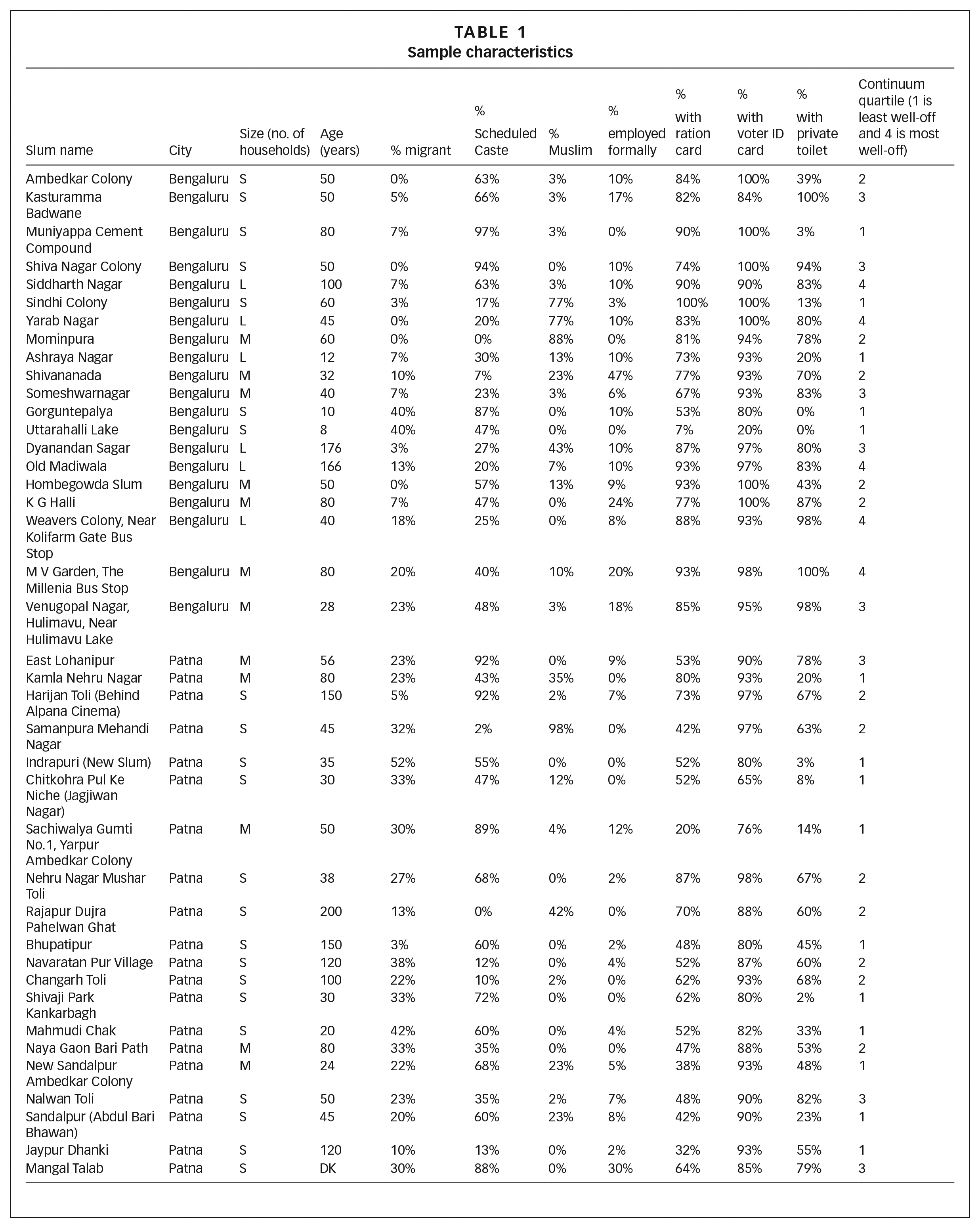
Table 1 lists features of the 40 selected slums. Though they vary in size from small (fewer than 300 households) to large (>1,000 households), all the settlements are compact and densely occupied. They lie at different distances to commercial centres, some in the very heart of these cities and others at the outskirts. The proportion of Scheduled Caste (or Dalits, sometimes formerly referred to as “untouchables”) residents is high on average, exceeding 90 per cent in some settlements. In 10 per cent of the sample (four slums), residents are majority Muslim.
Sample characteristics
In each of the 40 slums, three key informants were selected, including at least one area leader and one female respondent, all of them well connected and broadly knowledgeable about neighbourhood occurrences. An initial phone call provided information about the study and screened interested respondents for their knowledge of the community. In a small number of cases – fewer than 6 per cent – respondents were replaced due to attrition between interview waves.
The 120 key respondents were 35 years old on average and ranged from 20 to 65. A little under two-thirds were men. Most respondents had spent their entire life in the same slum – even living in the same house. The average length of stay was 33 years in Patna and 26 years in Bengaluru. This is consistent with the fact that most slum households in these cities have lived there for multiple generations.(17) The selected key respondents were given telephone airtime worth INR 250 (US$ 3.50) for each completed interview, which lasted, on average, 30 minutes.
We started phone interviews in the last week of July 2020, three months into the pandemic, and conducted six waves of structured interviews, ending in the first half of November 2020. Two trained investigators in Bengaluru, and one in Patna, each of whom we had worked with previously, carried out these interviews in the local languages. Each interview round had a common core set of questions – concerned with health and livelihood impacts – and a rotating set specific to that round. The rotating topics in different rounds included education, local governance, gender and migration. Responses to closed-ended and short open-ended questions were recorded on tablets using SurveyCTO. We also followed up with detailed, open-ended interviews with 23 selected key respondents from a subset of 12 settlements.
A method that relies principally on key respondent phone interviews is heavily dependent upon secondary information. Aware of this shortcoming, we restricted our inquiries to readily observable and commonly experienced occurrences. For instance, we asked about deaths, hospitalizations, and the number of neighbours sick at home, but we did not ask about the incidence of infection, which we did not expect to be reliably observed. When asking about deaths in the past fortnight, we asked separately about total deaths, COVID-19 deaths, deaths due to other known causes, and deaths of no known cause. We consider the information about deaths to be reliable, since deaths are infrequent and widely talked about – and since COVID-19 deaths were certified and became grave and widely noted events. By independently asking the three separate respondents in each settlement, we were able to isolate unusual responses and follow up with additional investigations.(18)
We want to emphasize that these responses are more order-of-magnitude assessments than precise estimates. The greater precision that is allowed for by more extensive household surveys was unavoidably unobtainable. Lacking more precise means of information during the pandemic, these order-of-magnitude data nevertheless help reveal important aspects of lived experiences and coping strategies.
The data collected were subjected to three types of analysis. First, to describe trends over time, we averaged key informant estimates of the outcomes of interest for each neighbourhood and each time period.(19) Second, to examine correlations between those outcomes of interest and neighbourhood characteristics, we merged the baseline household survey data with the key informant data. We then regressed the pooled key informant observations (N=720) on average neighbourhood characteristics, clustering by neighbourhood, to check for associations between neighbourhood characteristics and the effects of the pandemic. We report p-values from these regressions to indicate whether there is suggestive evidence of correlations. However, given the approximate nature of the data, we do not present regression coefficients. Finally, to the extent that space permits, we draw on follow-up interviews to provide detailed illustrative vignettes.
Overall, the data expose evidence of widespread economic devastation that few slum residents managed to escape. Certain characteristics of slums contribute to reduced resilience; vulnerability and volatility tend to be considerable in the presence of such conditions.
III. Overview: Key Characteristics of Slums
Although slums come in different shapes and sizes, we argue that four underlying characteristics, shared to varying extents, describe their common condition: variety, informality, volatility and persistence. This section outlines each characteristic in turn.
a. Variety
Far from being uniform, slums span a variety of living conditions. In terms of quality of housing stock, they constitute the lower end of the city spectrum. But the lower end is very diverse, comprising a continuum. Living conditions, access to legal documents, and policy needs vary based on a neighbourhood’s position on this continuum.(20)
The bottom of the slum continuum is made up of the flimsiest settlements – “blue-polygon” slums, so termed because of how these homes, made of poles topped by blue tarps, show up on satellite photos.(21) In these settlements, incomes are low and inconsistent, there is no drainage or water supply, and children rarely go to school. At the other end of the continuum, however, residents “live in sturdily constructed houses with piped water, metered electricity, closed drainage systems and private toilets”.(22) Between the top and the bottom of the continuum is a variety of living conditions.
We computed a “slum score” adapted from the UN-Habitat definition of a slum.(23) To calculate this score, we ran a principal components analysis on several indicators, including durability of housing, sufficiency of living space, access to safe water and sanitation, and economic resources (see Table S3 in the online supplement).(24) “Households in slums with higher scores have sturdier roofs, better toilets, better water and drainage infrastructure, more spacious and taller homes, and they hold more assets on average.”(25) Based on these scores we placed each slum within a particular quartile of the slum continuum. Our sample represents the full variation across this continuum (Table 1). Recognizing diversity in conditions is important because the same shock can have different effects for people in different living conditions.
b. Informality
Perhaps the central defining feature of slums is the pervasive informality that people experience and its multiple forms. Many slum residents are “triply informal,” with informal jobs, informal (i.e., untitled) properties, and informal (or no) identity papers.(26)
Nearly every slum resident experiences one or more of these three kinds of informality. Informality reduces slum residents’ capacity to withstand adverse shocks,(30) and the greater the degree of informality experienced, the greater, in general, is the vulnerability.
c. Volatility
In light of these vulnerabilities, slum dwellers’ economic trajectories are highly volatile. One step forward is followed too often by two steps back. The combination of low and fluctuating average wages and highly uncertain situations makes it difficult to amass savings, reducing the capacity to weather shocks or make investments in human capital.(31) Many households live only one health shock away from chronic poverty.(32)
Rather than supporting an image of slums as conveyor belts to the urban middle class,(33) our earlier extensive studies in three Indian cities found limited evidence of sustained upward mobility across the slum continuum.(34) Slum settlements rarely develop into formal, non-slum areas. Moreover, while some households experience an increase in purchasing power over time, the vast majority remain poor. Any upward gains remain precarious, as residents experience high levels of risk that leave them vulnerable to downward mobility. Living conditions fluctuate, and many end up at the same level or even worse off than they were the decade before.
d. Persistence
Another misconception holds that slums are ephemeral and that, occupied primarily by migrant workers, they disperse or are upgraded when these workers become middle class. In fact, most slums, our earlier studies revealed, are established settlements, many of which have been around for multiple generations.
It is hard to date slums precisely as no official records are in existence for most of them. Oral histories abound, however, and the creation stories are sometimes backed by community-maintained records.(35) Table 1 provides the ages for these slums that we ascertained through oral history investigations. They vary in age from eight years to an estimated 200 years, with an average age of more than 40 years.
Residents of the 40 slums where we conducted follow-up phone interviews had lived in their current homes for over 20 years on average, according to the surveys we conducted prior to the pandemic. Most families (66 per cent) had lived in the same slum for multiple generations. First-generation migrants constitute a small percentage: on average, fewer than 20 per cent and not more than 52 per cent in any of these 40 slums.
Circular migrants, also large in numbers, are largely a different demographic group (though a small number of circular migrants reside in slums, almost entirely at the lower end of the continuum). The belief that slum residents could escape elsewhere, to some long-forgotten village homes perhaps, to escape the brunt of a pandemic afoot in the city, is misinformed.
Enhancing slum residents’ resilience for dealing with ongoing crises, whether brought on by climate change or the continued depredations of this pandemic, will require heeding these four fundamental characteristics. We return to this point after presenting our findings.
IV. Examining Health Effects
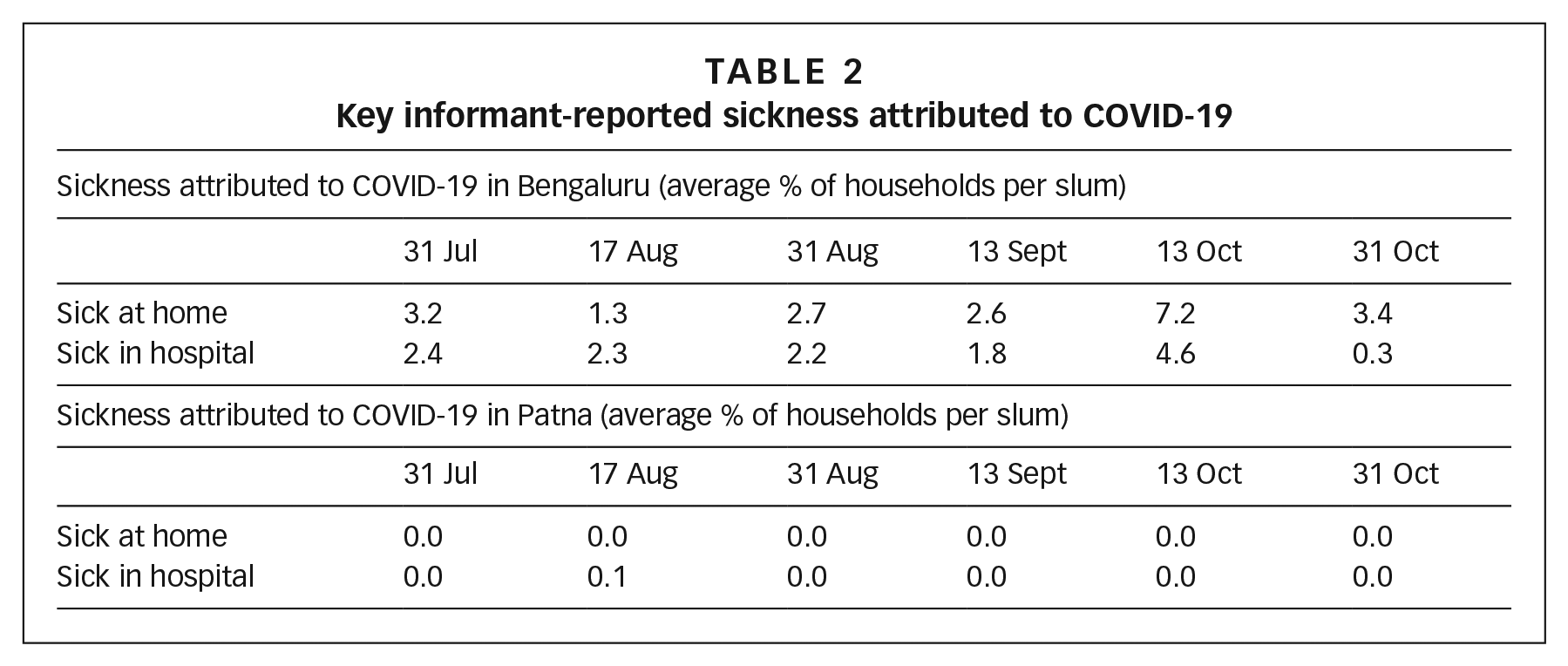
Scholars have estimated that about half of residents in some Mumbai and Bengaluru slums tested positive for COVID-19 antibodies by July 2020, yet deaths remained low.(36) We do not have antibody data for this study, but we draw on key informant reports of deaths, hospitalizations and symptomatic illnesses. Overall, our data from 40 slums depict widespread low-level COVID-19 incidence in Bengaluru slums during the first wave of the virus, with consistent and concentrated COVID-19 clusters in six larger-than-average slums. In Patna slums, by contrast, deaths and illnesses that can be attributed to the virus are almost non-existent.
In Patna, only one death was reported over any of the six rounds of interviews conducted between the end of July and mid-November. In Bengaluru, however, 40 per cent of neighbourhoods reported at least one death from COVID-19 during the interview period. Almost all of these deaths were clustered within six slums, where key informants reported that a total of 28 residents died from COVID-19 (ranging from 0.3 to 1.3 per cent of the settlement populations).
We observed similar patterns in reported rates of hospitalization and symptomatic illnesses (Table 2). There were almost no reported COVID-19 sicknesses in Patna at any given point during that period of time. Not a single respondent reported a household with members sick at home from COVID-19 in any week, and just a few reported cases of hospitalization – all within the same week. In Bengaluru, 70 per cent of neighbourhoods reported at least one hospitalized member, and 85 per cent reported at least one member sick at home with presumed COVID-19 over the six rounds of interviews. Most of the reported illnesses were again heavily clustered within the same six slums where we observed COVID-19 deaths.
Key informant-reported sickness attributed to COVID-19
These data sources admittedly miss those who were infected but asymptomatic and others who successfully hid their illnesses from their neighbours. However, it is worth noting that reports of death and illness in these slums point commonly to the same limited occurrence within the same small cluster of communities.(37)
The differences between the numbers of illnesses and deaths in Bengaluru and Patna are statistically significant at the 95 per cent confidence level. Importantly, though, we fail to satisfactorily explain the differences between these cities. For instance, it is contestable whether the better health outcomes in Patna slums occur because of, or in spite of, the longer lockdown period in Patna, nearly two months longer than the one in Bengaluru. However, it should be noted that when the lockdown was simultaneously in force in both cities, Bengaluru slums reported more deaths and illnesses than Patna slums.
Moreover, we found no significant association between these COVID-19 clusters and a range of predictors, whether the use of shared amenities like toilets or water pumps, the number of households in the slum, the proximity to Bengaluru’s city centre or to each other, the share of Scheduled Caste or migrant households, or the type of employment.
Alternative hypotheses about disease spread also failed to explain inter- and intra-city differences. Early explanations, including climatic differences,(38) differences in demographic features,(39) or differences in regional connectivity,(40) either run contrary to observed differences between Patna and Bengaluru, or are incomplete. One study found that the countryside around Patna witnessed high incidences of COVID-19, reportedly spread by returning migrants.(41) And yet, our data suggest that Patna slums were less affected.
Variations in precautionary practices, like testing and masking, were also not associated with COVID-19 clusters. In our initial interview waves, we found high and comparable rates of masking in both cities, both of which gradually fell over time. In Patna, these precautions had nearly disappeared by the end of October 2020. We leave it to a later time and to other investigators to probe these differences and others that may have arisen during the more recent phase of the pandemic.
V. Widespread Livelihood Losses
While the health effects during the first wave were far from the worst-case scenario that some had feared, livelihood effects were deep and widespread. Slum residents in both cities faced serious economic hardship as a result of the first wave of the pandemic.
Slum residents’ livelihoods depend on meagre resources. They make a living when richer people require their services. But when those richer residents reduce expenses or furlough their staff, which they did during the first wave of the pandemic, slum dwellers’ incomes fall steeply. Every action a government takes to control the pandemic – lockdowns, curfews, restrictions on weddings and celebrations, bans on construction – tends to affect slum residents’ livelihoods adversely.
In response, we found in both cities that slum residents spent down their savings, cut back on food, borrowed money and liquidated assets. As of April 2020, the first month after the lockdown began, roughly 50 per cent of household heads in Bengaluru and 82 per cent in Patna had lost their primary source of income. After the lockdowns ended, people faced widespread job losses and wage reductions. Those employed informally, the majority, suffered the most.
By mid-November 2020, our informants reported that one-quarter of pre-pandemic income in Bengaluru and one-third in Patna had still not been recovered. Figure 1 depicts the reported pattern of income recovery, with acute losses exhibited over an extended period, a recovery that remained incomplete at the time of writing in February 2021. The few key respondents we spoke with later, during and after the second wave of the pandemic, reported that the lockdowns were not as strictly enforced as in the first wave, probably resulting in fewer and lesser livelihood losses.
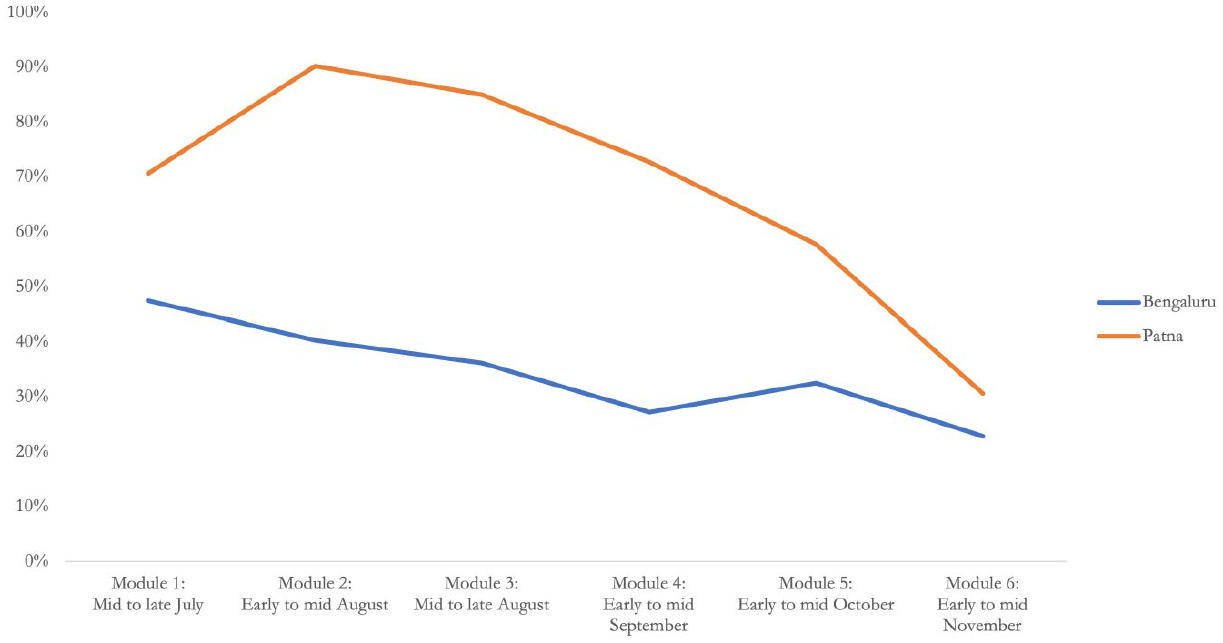
Per cent of pre-pandemic income still not recovered
During the first wave, people in slums coped with the more substantial livelihood shocks in a variety of ways, with different degrees of desperation. Key informants from 60 per cent of these settlements during at least one interview round reported that their neighbours liquidated assets. In all but one neighbourhood, residents reported borrowing money during at least one interview round. Finally, substantial numbers from every settlement were reported as cutting back on food during at least two of our six interview rounds. Each of these methods of coping further limited a household’s ability to cope with a future crisis, particularly one like the second wave that followed soon after.
The severity of the economic distress was greater in the slums of Patna. Not only was the lockdown longer in Patna than in Bengaluru – people began getting back to work by July 2020 in Bengaluru and September 2020 in Patna – but slum residents in Patna were also less likely to possess documents needed to access formal government assistance both before and during the pandemic. Paper informality was greater in Patna, restricting access to public assistance.
We look first at the situation in Bengaluru. Figure 2 illustrates changes over time in coping strategies and government assistance. Around half of Bengaluru neighbourhoods reported that at least 10 per cent of households began cutting back on food and increasing borrowing in the early stages of the lockdown. In about 10 per cent of neighbourhoods, residents liquidated assets such as jewelry in these initial months. As government assistance began to dwindle by the end of May, with slum residents still largely out of work, households began to borrow and cut back on food in larger numbers. After July, as residents were able to get back to work, the rates of borrowing began to decrease, and eventually, the number of those cutting back on food and liquidating assets began to decrease as well.
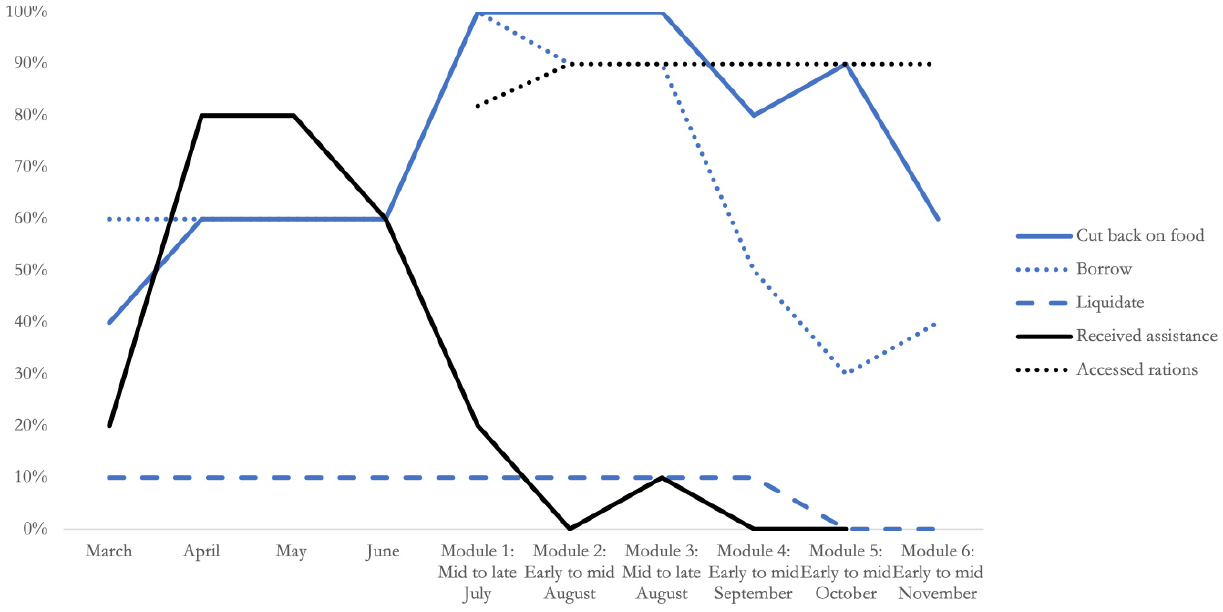
Per cent of Bengaluru neighborhoods reporting at least 10 per cent of residents relying on various coping strategies
We observed this temporal pattern not only from the repeated information in key informant modules but also from in-depth follow-up interviews with a subset of key informants, in which we inquired about both their own experiences and those of other families in the neighbourhood that fared particularly well or poorly during the pandemic.
For example, 38-year-old Ravi is a key informant living in Ashraya Nagar, Bengaluru. Before the pandemic, he earned around 15,000 rupees (~US$ 200) per month as a construction worker. He was unable to work during the lockdown (from the end of March through June) and said his family suffered during April and May because he had no savings going into this period. Government assistance helped substantially with food insecurity in his neighbourhood at the beginning of the lockdown. The local Member of the Legislative Assembly (MLA) distributed dry food rations at the end of March and in April 2020, and continued to distribute prepared meals until the end of June. The local municipal office provided free milk in April and May. By May, however, assistance from government sources had ended, and Ravi began liquidating assets to make ends meet. He sold his wife’s gold jewelry.
In Patna’s slums, initial earnings and savings were lower than was the case in Bengaluru, and coping patterns looked quite different (Figure 3). Slum neighbourhoods immediately responded to the lockdown by cutting back on food and rushing to liquidate assets. A few months into the lockdown, as assets declined, borrowing began to exceed liquidating. As in Bengaluru, key informants reported that government and NGO assistance had dwindled by June, leading to a sharp increase in the proportion of neighbourhoods with residents liquidating, borrowing, and cutting back on food. These coping strategies begin falling off around mid-August and early September, when the lockdown eased and people began returning to work. Access to food rations also began to increase sharply at this point. While access to food rations was relatively high and stable in Bengaluru (residents from 80 to 90 per cent of neighbourhoods reported they were consistently able to access rations), this pattern appears quite different in Patna. In mid-July, residents from only 5 per cent of neighbourhoods were accessing food rations from the government, principally through MLAs, but access increased substantially in early September.
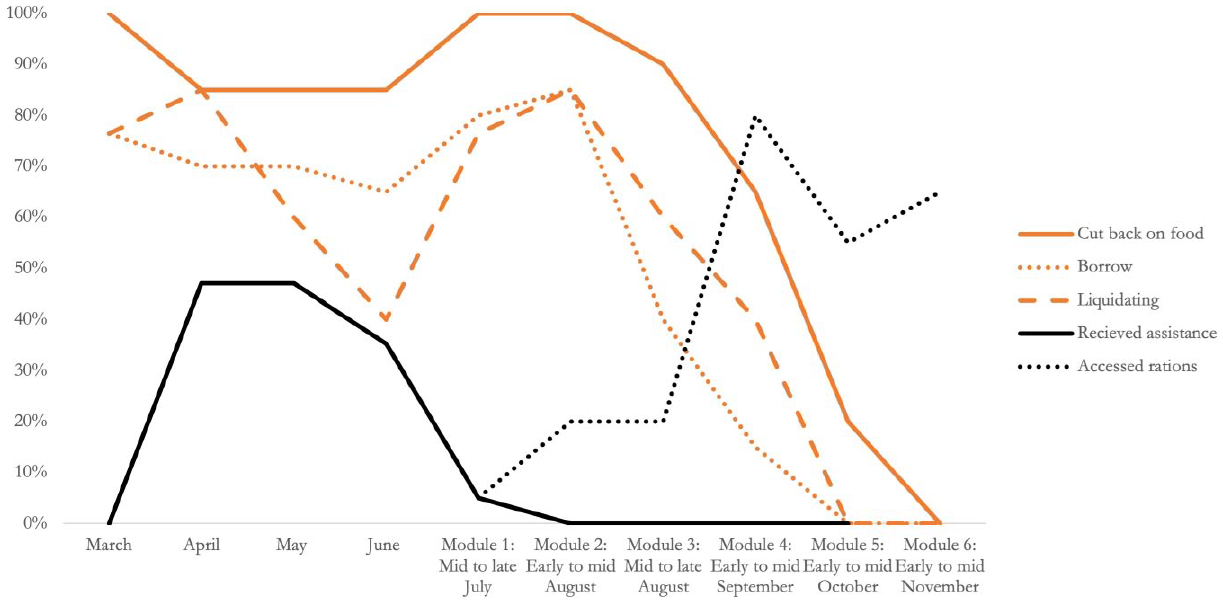
Per cent of Patna neighborhoods reporting at least 10 per cent of residents relying on various coping strategies
Auguring poorly for future earning ability as well, we found that education was severely disrupted in both cities, with greater disruptions for children in Patna. Formal education experienced a near-total shutdown here: while 89 key informants had one or more children attending school before the lockdown (nearly 200 children total across all respondents), just two had children at school during the lockdown. In Bengaluru, many students were able to keep up with their studies through some alternative means, typically through self-study, through their mobile phones, and, to a lesser degree, computer access. Respondents in slums higher on the continuum were somewhat more likely to indicate that students kept up with their studies. In Patna, students across the continuum failed to keep up with their studies. The few who did keep up in Patna relied on their parents’ help, or, less often, on paid-for coaching sessions or lessons provided over a mobile phone.
Consistent with the different livelihood and education effects, we find that expectations about the future varied substantially between the two cities. Seventy-seven per cent of key informants in Patna expected that economic conditions would continue to worsen three months after initially being interviewed, compared to what they were before the pandemic, but only 18 per cent in Bengaluru reported the same. Fifty per cent of key informants in Patna expected that conditions would be worse six months after being interviewed than they were prior to the pandemic; the comparable figure was 3 per cent in Bengaluru. The earlier revocation of the lockdown in Bengaluru, together with the faster revival of jobs, had a great deal to do with the more optimistic expectations there.
In addition to observing differences across cities, we found variation in economic impacts across neighbourhoods within cities. In Patna, residents of slums across the continuum were likely to cut back on food during the early period of the pandemic, but in Bengaluru, the estimated proportion cutting back on food was weakly associated with being lower on the slum continuum (p-value = 0.085) and with having fewer savings before the pandemic (p-value = 0.001). While three-quarters of settlements in both cities reported having received assistance, such as food or cash, from government and non-government agencies during the early months of the pandemic, this assistance had dwindled almost entirely by June 2020.
We found that, holding estimated income losses constant, areas with stronger leadership were more likely to receive cash assistance in Patna (p-value = 0.020) and other assistance, such as food rations, in Bengaluru (p-value = 0.066).(42) These findings are consistent with another study from two other Indian cities that found that slum leaders actively sought neighbourhood assistance during the lockdown, but varied substantially in their levels of efficacy.(43) Our evidence suggests that government assistance in this early period helped residents delay borrowing in Patna and liquidating assets in Bengaluru. Receiving assistance in one month is associated with higher levels of borrowing in the next month in Patna. The same is true for liquidating in Bengaluru.
To extend our analysis to the medium term, we examined the relationship between neighbourhood characteristics and financial distress between mid-July and mid-November, after government assistance dwindled and residents began to return to work. We found that during this period in Bengaluru, there was no longer a relationship between the estimated proportion of residents cutting back on food and the position on the slum continuum or the baseline savings levels. However, we found that reported borrowing continued to be higher in neighbourhoods with fewer formally employed workers (p-value = 0.024). Moreover, in neighbourhoods with more renters (relative to homeowners), we found that residents continued to liquidate assets at higher rates (p-value = 0.002).
In Patna, where the lockdown lasted longer, we found that where residents had lower pre-pandemic savings, key informants reported that residents continued to cut back on food more over this period (p-value = 0.083). Labour formality also appeared to have an effect. Fewer residents had to cut back on food in neighbourhoods where more people were formally employed (p-value = 0.065), as could be expected.
Within neighbourhoods, households that had been most severely affected tended to share a common set of characteristics. We asked the key informants to identify and describe the experiences of the households that they believed had been most severely impacted by the first wave of the pandemic. In all but three of these interviews, the household heads described were widowed, elderly or experiencing ongoing health challenges. Notably, our interviews also revealed that neighbours – more than the government or NGOs – provided crucial support to these most vulnerable residents. Local community members not only offered loans and food to the most severely impacted households, but also lobbied on their behalf for permission from landlords to forestall rent payments and negotiated with the government and NGOs to provide additional assistance to those households.
For example, Nita is a 38-year-old widow who lives with her two children in Patna’s East Lohanipur settlement. Prior to the pandemic, she earned a total of 7,000 rupees (approx. US$ 96) per month working as a maid across four houses. Early in the pandemic, three of her four clients dismissed her, and it became challenging to pay her rent of 2,500 rupees (approx. US$ 34) per month. Nita did not have a ration card and she received no support from political parties, government departments or NGOs during the lockdown. Instead, her neighbours provided support. They negotiated rent deferral with her landlord and gave her some food rations and low-cost loans. The local shopkeeper provided food as well. After the lockdown ended, Nita began working in a second home and was earning around 4,000 rupees (approx. US$ 55) per month by September.
This was a common pattern in the two cities: the neediest were cared for by the local community. This pattern is consistent with our survey findings prior to the pandemic. In our earlier household surveys, we had found that fewer than 4 per cent of respondents borrowed primarily from banks. Instead, they were more likely to rely on one another, and their friends and neighbours were their principal sources of support and assistance. The majority of households (69 per cent) also reported that their neighbours occasionally or regularly helped each other to cope with problems, such as caring for sick family members or lending money. In four Patna settlements that spanned a range of conditions, where we conducted additional social network surveys in 2016, 95 per cent of residents said they could turn to a neighbour for help in the event of a household health emergency. Similarly, 92 per cent of residents said they could turn to a neighbour if they suddenly needed to borrow 1,000 rupees for a day.
Community support is a crucial resource for slum residents, who are relatively disconnected from formal institutions.(44) The most helpless in slums were kept afloat during the pandemic by the generosity of their neighbours.
VI. Building Back Better
Knowledge about slums has increased in recent years, but still across the global South there is, as Mitlin and Satterthwaite note, an “astonishing lack of data about informal settlements”.(45)
The emergent research has made it clear, however, that slum residents have fragile livelihoods, because the underlying conditions of slum existence make lives precarious. Upward mobility is a slow-moving train while downward mobility is a daily reality. Any sudden and extended crisis spells disaster in situations where people live without safety nets at the margins of society.
Our findings suggest that in coping with the situations faced during the first phase of the pandemic, slum residents may have spent down their small savings, liquidated their meagre assets, and used up much of their debt-taking capacity, making it exceedingly difficult to deal with the next crisis. Importantly, their neighbours, upon whom they relied heavily for weathering shocks, were similarly afflicted. With debts coming due in the months ahead, households were most likely pushed further into poverty.
In their current situations, many slum households teeter on the edge of poverty. The worst effects of the pandemic are yet to be revealed, after a reckoning is made with the effects of later waves of the pandemic. It will be a long time before these households are able to recover their former economic standing. Repeated downturns before recovery has been fully achieved could pitch many slum households into chronic poverty.
Supplemental Material
sj-docx-1-eau-10.1177_09562478211048778 – Supplemental material for A threat to life and livelihoods: examining the effects of the first wave of COVID-19 on health and wellbeing in Bengaluru and Patna slums
Supplemental material, sj-docx-1-eau-10.1177_09562478211048778 for A threat to life and livelihoods: examining the effects of the first wave of COVID-19 on health and wellbeing in Bengaluru and Patna slums by Harlan Downs-Tepper, Anirudh Krishna and Emily Rains in Environment & Urbanization
Footnotes
Acknowledgements
The authors would like to thank the International Growth Centre for financial support and analytical feedback. We would like to thank the anonymous reviewers for their helpful feedback, as well as Amit Basole, Rosa Abraham and Adam Auerbach, who commented on earlier versions of this article. Sujeet Kumar provided excellent research assistance.

Supplementary Material
Supplemental material for this article is available online.
Notes
References
Supplementary Material
Please find the following supplemental material available below.
For Open Access articles published under a Creative Commons License, all supplemental material carries the same license as the article it is associated with.
For non-Open Access articles published, all supplemental material carries a non-exclusive license, and permission requests for re-use of supplemental material or any part of supplemental material shall be sent directly to the copyright owner as specified in the copyright notice associated with the article.
