




Abstract
Many of the people who are most vulnerable to the effects of climate change live in low-income and informal settlements in and around urban centres in Africa, Asia and Latin America. While there is a growing recognition of the importance of urban resilience, there is little documented evidence of how collective actions undertaken by residents of these communities can contribute to this. This paper describes the processes adopted by the National Slum Dwellers Federation of Uganda for responding to a variety of challenges – and explains how these not only address the immediate needs of these communities but also contribute to building resilience at the scale of the individual, household, community and city. It links the experiences of manufacturing matoke briquettes, developing new construction materials for low-income housing, and improving drainage and freshwater supplies to some of the key features of an urban resilience agenda, and makes the case for broader international support and funding to these local responses to climate change.
Keywords
I. Introduction
Many of the people who are most vulnerable to the effects of climate change live in low-income and informal settlements in and around urban centres in Africa, Asia and Latin America. The Intergovernmental Panel on Climate Change (IPCC) Fifth Assessment Report highlights the ways that age, health status, gender, and location of residence shape vulnerability of urban residents, and concludes that “for each of the direct and indirect impacts of climate change, there are groups of urban dwellers that face higher risks”.(1) At the same time, it is increasingly recognized that grassroots initiatives in informal settlements are effective in addressing poverty and underpin effective climate change adaptation.(2)
Although climate change adaptation in urban areas is increasingly recognized as a priority for funding and programming by local authorities, national governments and international agencies, relatively little attention is paid to the ways that the organized and collective activities of low-income residents can contribute to this (although there is a growing body of evidence of more individual or household-based responses).(3) As a consequence of this, there is limited financial or technical support for these collective actions,(4) which limits the extent to which they can make a meaningful contribution to urban resilience. This is a particularly serious concern in Africa, where informal settlements are the home of up to 60 per cent of the urban population – and where the risks facing these residents will need to be understood and addressed if meaningful adaptation is to be achieved.
This paper describes the ways that actions taken by the National Slum(5) Dwellers Federation of Uganda (NSDFU) are contributing to climate-resilient and low-carbon development by simultaneously addressing concerns of greenhouse gas emissions and sustainability and building resilience to climate-related shocks and stresses. Through this, it is intended to strengthen the case for supporting the activities identified, planned and implemented by residents of low-income and informal urban settlements that involve not only coping with adverse weather conditions, but also achieving more long-lasting resilience. First, the paper outlines the nature of urban risk and resilience, then explores the ways the federation’s “rituals”(6) of savings and profiling and enumeration have been applied in Uganda and how they contribute to urban resilience. It then examines a selection of federation activities that demonstrate how low-income urban residents are deploying innovative technologies to meet their needs, which at the same time contribute to building resilience and adaptive capacity in their communities. Finally, it assesses how these different initiatives contribute to participatory resilience and suggests how they can be supported most effectively by actors at a range of scales.
a. Climate risk and urban risk in Uganda
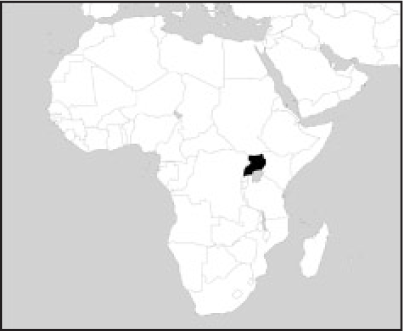
Uganda’s tropical climate is naturally highly variable, and floods and droughts have presented considerable challenges to the population throughout history. According to the country’s Second National Communication to the United Nations Framework Convention on Climate Change (UNFCCC), Uganda’s key economic sectors, including agriculture, water resources, fisheries and tourism, are dependent on and sensitive to climate variability and climate change. Thus climate change will have serious direct and indirect impacts on social and economic development.(7)
This same report concludes that Uganda has already experienced “significant evidence of global warming”,(8) with observed rises in both minimum and maximum temperatures. All the general circulation models used for future projections show continued temperature increases throughout the 21st century, while the majority of models predict varied magnitudes of precipitation increase throughout the country. These climatic shifts have implications for food security, water access, human settlement and health (particularly communicable disease)(9) in both rural and urban communities.
Although only 15.8 per cent (or 6.1 million) of Uganda’s total population of 38.8 million people live in urban areas, this proportion has grown rapidly – from 7.5 per cent in 1980 to 11.1 per cent in 1990 and 12.1 per cent in 2000. Overall, the country’s urban population is growing at about 5.4 per cent per year, much faster than the national population, growing at 3.3 per cent.(10) A high proportion of these urban residents – some estimates suggest up to 60 per cent of the total(11) – live in low-income and informal settlements, which are exposed to a range of climate-related hazards including flooding. In the capital city of Kampala, one assessment suggests that “slum areas” represent 21 per cent of the total city area, and house 39 per cent of the total city population.(12) Secondary impacts of climate change for residents of these areas will include more competition and higher prices for clean drinking water, and possible increases in the price of food if production is negatively affected.
b. Understanding urban resilience
A central argument of this paper is that building resilience in African urban centres, where the bulk of the population are slum dwellers, is dependent upon the active participation of the urban poor and their partnership with local authorities. True resilience will not be designed and achieved by government alone, but will need the active partnership of marginalized rural and urban residents in the definition of vulnerability and the strategies for combatting it. Vulnerability is not only shaped by the extent or severity of climate-related hazards, but is equally an outcome of the sensitivity of social or ecological systems to harm, and the capacity of these systems to cope and to adapt to reduce future harm.(13)
Resilience is an increasingly used concept in understanding and developing responses to climate change-related risk. Unlike the more narrowly defined focus of “climate change adaptation”, which addresses only the risks associated with changes in climate, “resilience” tends to be applied more broadly to efforts aimed at reducing the consequences of a range of shocks and stresses. Whereas earlier definitions of resilience focused on the ability of systems to retain their same basic structure and ways of functioning, more recent understandings (including from the IPCC) have expanded this focus to include efforts “to anticipate, absorb, accommodate, or recover from the effects of a hazardous event in a timely and efficient manner, including through ensuring the preservation, restoration, or improvement of its essential basic structures and functions”.(14)
Various models have been developed to propose the key elements of urban resilience. These frequently include reference to both the physical and social dimensions of resilience – identifying both resilient physical structures and resilient institutional systems as being critical. Of particular relevance to the focus of this paper, Tyler and Moench(15) highlight the role of resilient “agents” (including residents of low-income and informal settlements) in contributing to urban resilience, alongside urban “systems” (infrastructure) and “institutions”. Similarly, the “City Resilience Framework” developed by da Silva and Morera(16) stresses four particular elements of urban resilience: health and wellbeing; economy and society; urban systems and services; and leadership and strategy. Of these, the element of health and wellbeing is particularly relevant to the issues facing residents of low-income and informal urban settlements, since it relates to actions that also affect human vulnerability, livelihoods and employment, and safeguards to human life and health.
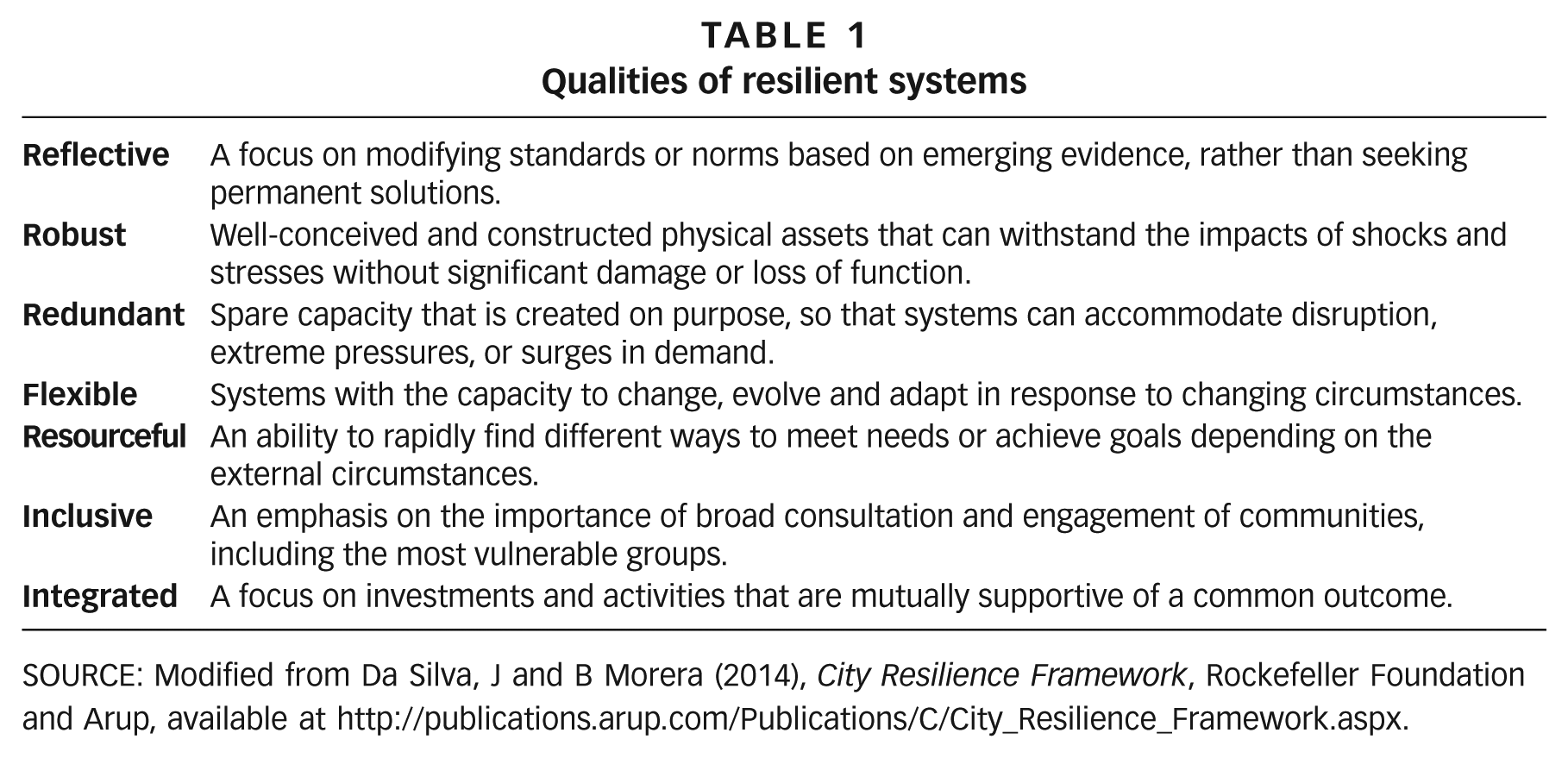
The programmes and projects of the NSDFU that address everyday needs and priorities also engage with many of these factors that not only shape the resilience of the organization’s members, but also influence the resilience of the country’s towns and cities more broadly. The following sections describe some of these actions and the contribution that they make, in light of some of the “qualities” of resilient systems that have been defined (Table 1).
Qualities of resilient systems
SOURCE: Modified from Da Silva, J and B Morera (2014), City Resilience Framework, Rockefeller Foundation and Arup, available at http://publications.arup.com/Publications/C/City_Resilience_Framework.aspx.
II. Responding to Urban Challenges: The National Slum Dwellers Federation of Uganda(17)
The NSDFU is a member of the Shack/Slum Dwellers International (SDI) network of urban poor federations, which spans 33 countries. In Uganda, the federation was established in 2002 when federation members from Kenya and India visited a few savings groups, after which these groups decided to unite and form a Ugandan federation. After this, the NSDFU spread from Kampala and Jinja to Mbale, Mbarara, Arua and Kabale. Next it spread to Wakiso, followed by Hoima, Gulu, Lira, Moroto, Tororo, Masaka, Entebbe, Soroti and Fort Portal. With close to 93,000 members in December 2014, the NSDFU has evolved into a national slum dweller movement that works closely with government to improve the lives of the urban poor and create more inclusive cities. Federations use a number of “rituals” or tools to mobilize communities and generate an urban poor movement capable of pursuing a grassroots urban agenda – rooted in savings and profiles and enumerations – which then forms the basis for moving from pilot activities to activities at a more substantial scale. Increasingly, these organized communities are accessing government funds for livelihoods and upgrading, which supports community efforts toward improved resilience. While the infrastructure upgrading funds are still in the pilot stage, the livelihood funds are well established – most notably, funding for community-driven development (CDD)(18) has been a long-standing government programme benefitting over 25,000 community micro-projects. Through federation organizing and monitoring, the funds are now disbursed more transparently to groups that have a greater capacity to utilize them for resilience-building projects.
a. Savings
While SDI federations are comprised of savings groups, they are much more than a collection of self-help micro-credit groups. The individual savings of low-income urban residents function as a cushion for individuals and households in times of shock – but when these are taken collectively and invested in slum upgrading projects, they can make a significant contribution to long-term collective resilience. The federating of savings groups transforms them from being inward-looking collectives with a member-focused agenda to a united movement with a city agenda that has much more significant resilience-building capacity.
In Uganda, this process started in Kampala and Jinja, then later spread to other towns and cities through community peer-to-peer learning exchanges. The issue-based committees that are established in each savings group, such as health and hygiene, loaning, auditing, and enumeration and profiling, are replicated at the network, regional, and national levels of federation governance. Leaders mentored at the savings group level, who have demonstrated their capacity and dedication, have risen to positions of leadership at higher levels, where they can provide guidance to others in the context of the city-wide agenda that is firmly rooted in the priorities of those in the savings groups. Although obtaining precise figures on savings is difficult (owing to the decentralized governance structure of savings management in federations), the Uganda federation estimates that its 1,227 savings groups have saved approximately US$ 498,698 in their daily savings accounts and US$ 39,178 in SUUBI (Urban Poor Fund) savings as of December 2014.
With this governance system in place, federation savings are used as leverage to attract partners for the urban poor upgrading agenda. The Uganda federation uses these funds to invest in upgrading projects (usually 20 per cent of the initial project costs), which then form the basis for leveraging loans and in-kind resources from other partners, with a special focus on government. The benefits of communities investing in their own development interventions have been well documented and range from increased “ownership” to better management, better targeting and greater potential for scalability. The generation and management of these funds demonstrate elements of resourcefulness, inclusivity and integration that are seen as being central to urban resilience.
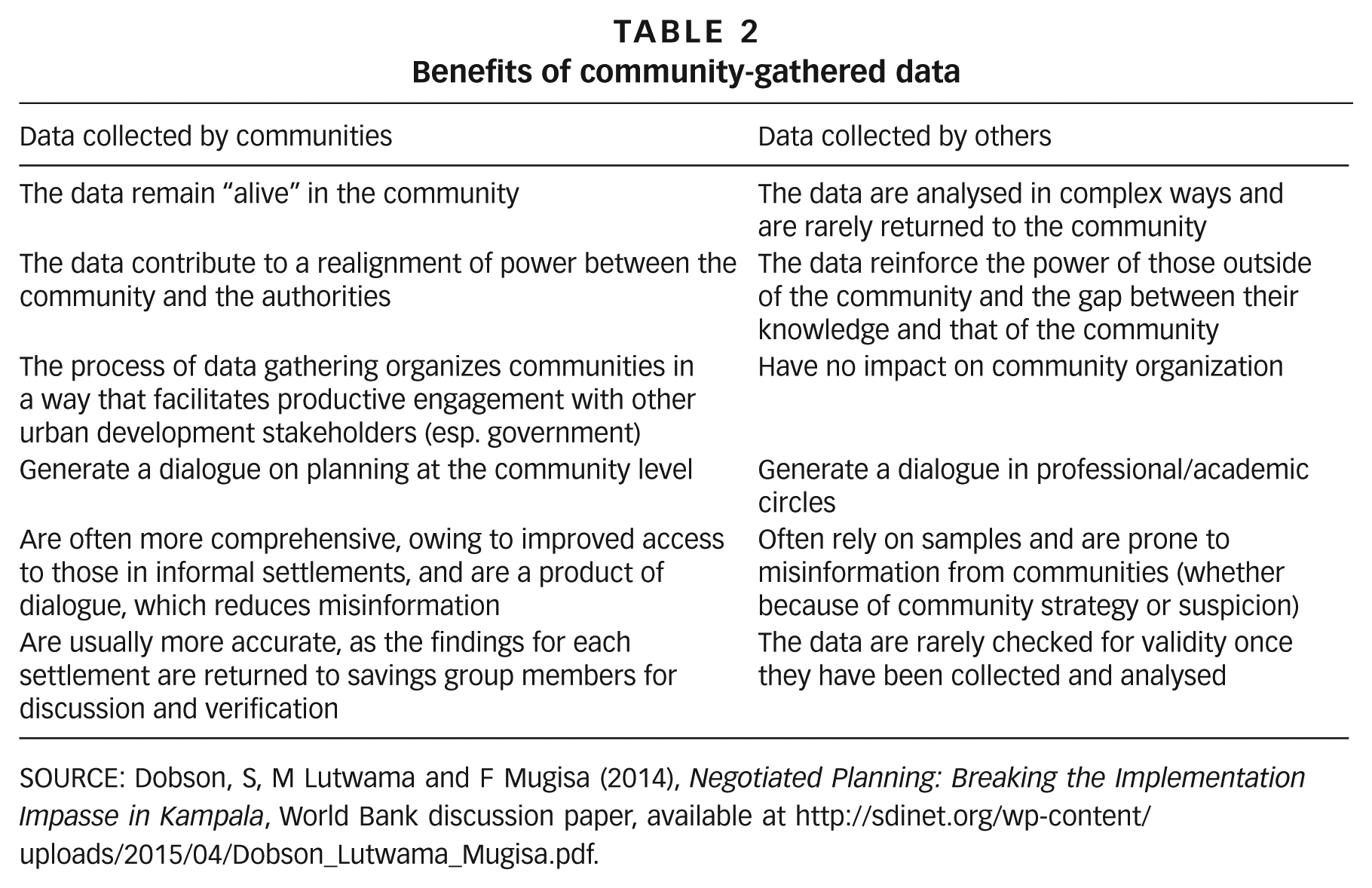
b. Profiling and enumeration
A key ritual in the SDI toolkit involves slum dwellers coming together to gather information on the settlements in which they live. This not only catalyses a discussion within the federation of the concrete problems they face and, at the grassroots level, of collective priorities for action, but also provides a critical source of information for planning and enhances the quality of negotiations that the federation is able to have with local authorities (Table 2). The process of profiling and enumeration(19) unearths particular details of a settlement, thereby enabling communities to understand themselves. It spurs reflection in the community about who belongs to the community, what resources the community has, and what resources are lacking. Since the federation collects its own information, it automatically owns the information. Experience has shown that the findings are also more accurate than when collected by outsiders, who at times conduct surveys and calculate projections and estimates. Between 2002 and the end of 2014, the NSDFU conducted 95 settlement profiles, enumerated 50 settlements, and mapped 93 settlements.
Benefits of community-gathered data
SOURCE: Dobson, S, M Lutwama and F Mugisa (2014), Negotiated Planning: Breaking the Implementation Impasse in Kampala, World Bank discussion paper, available at http://sdinet.org/wp-content/uploads/2015/04/Dobson_Lutwama_Mugisa.pdf.
The paucity of data on the scale and characteristics of urban poverty and vulnerability in the global South is one key factor that impedes the ability to build resilience. Federation profiling and enumeration processes thereby fill a critical need. When the urban poor gather this information for themselves, it can be utilized as the foundation for more participatory approaches to planning resilience, which requires up-to-date information on the entire urban space (not only the formal areas of the city) and significant buy-in from low-income and marginalized groups. Approaches to urban resilience that utilize data from profiling and enumerations will be more inclusive and integrated – and, if they take into account the priorities identified by these processes, are likely to be more resourceful as well.
c. Moving from pilots to scale
One of the key features of federations is their efforts to move from small projects to programmes of work that generate benefits at the community and city scales. When the NSDFU started gathering data, it set in motion a number of pilot projects around sanitation. In Kampala, for instance, settlement profiling in Kampala Central, Nakawa and Kawempe led communities to conclude that sanitation was the first priority, and they began negotiating with local authorities and local residents to construct public toilets (often with a community hall on top) to meet the challenge. While these projects faced challenges in terms of replicability because of their large size, they were invaluable in demonstrating the following: 1) profiling enabled the community to identify collective priorities; 2) profiling facilitated a more substantive level of engagement with local authorities; and 3) profiling united the community and established collective capacity for project planning, implementation and learning. A similar process took place in five municipalities outside of Kampala and with time there was a national base of experience from which the federation could strategize on city-wide – rather than pilot-specific – interventions.
As part of an effort by the city to improve sanitation access for the urban poor, the Kampala Capital City Authority (KCCA) and National Water and Sewerage Corporation (NWSC) recruited consultants from Fichtner Water & Transportation GMbH to conduct a feasibility study to develop an appropriate sanitation concept for Kampala’s informal settlements. This was for implementation by NWSC with financial support from the government of Uganda, the German (KfW) and French (AFD) development agencies, and the European Investment Bank (EIB). Thanks to lobbying and advocacy in 2013, the National Slum Dwellers Federation of Uganda and its support NGO, ACTogether, were invited to sit on the steering committee for the project – the only NGO/community representatives to do so. The international consultants were concerned by the lack of current information on slums. Official population data are 13 years old, gathered during the 2002 census, and it became clear that this had resulted in a serious underestimation of the present size of slums and a failure to understand the population shifts that have taken place as a result of eviction or displacement.
When ACTogether and the NSDFU presented their information from the city-wide profiling, the consultants immediately recognized its value. It was the first time the information gathered by Ugandan slum dwellers had been appreciated on such a highly technical level, and for immediately practical purposes. The consultants requested ACTogether and the NSDFU to share their slum maps so they could overlay them with maps from KCCA and NWSC, in order to generate agreement on the extent of slum settlement and prioritize the areas of operation for the project. It was clear this was a concrete opportunity for the information the federation had gathered to influence planning for the whole city and target planned improvements to service delivery to the most vulnerable. As a result of this information, priority areas for the project were altered to reflect on-the-ground realities – a major achievement for the federation. The consultants were able to advise the government that the scope of the initiative needed to be expanded to 40 parishes and that administrative boundaries were not appropriate for identifying slums, as some parishes are comprised of both informal and formal settlements.
The development of the feasibility study rested on conceptual guidelines including “placing the communities at the center of the decision framework with a view to improve the quality and sustainability of services and reduce costs”.(20) In maturing federations, shifting to this scale of influence is critical, but must be rooted in local learning at the settlement level if it is to be meaningful. Improving the quality of sanitation for low-income urban residents is obviously a central piece of the “health and wellbeing” component of urban resilience – and addressing it in this way highlights the qualities of inclusion and resourcefulness.
Federation members in Kawempe, Kampala
III. Building Low-Carbon, Climate-Resilient Cities: The Contribution of NSFDU Activities
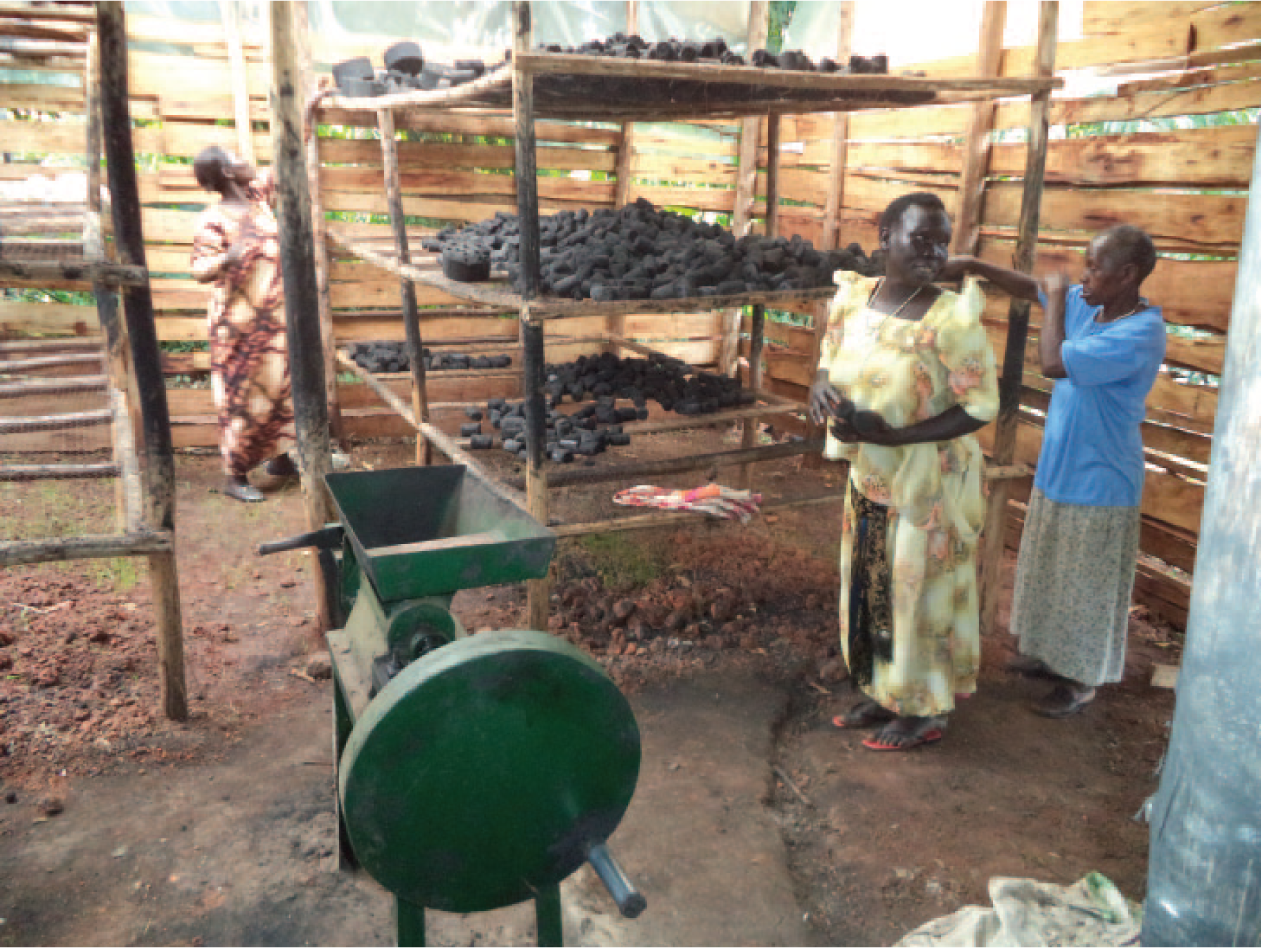
The NSFDU processes of savings and enumerations demonstrate several of the key attributes that are required to build urban resilience. In addition, several of the specific activities undertaken by groups in different towns and cities can be seen as both contributing directly to low-carbon development and building resilience to shocks and stresses, including those arising from climate change. Three such activities are described here: the manufacture and use of matoke briquettes (Photo 1); the development and use of innovative materials for building low-income houses; and activities that improve the availability and efficient use of water in informal settlements.
a. Matoke briquettes
Residents of low-income and informal urban settlements often face challenges relating to the availability and cost of fuel, and also have few livelihood-generating options available. In Uganda, the vast majority of the population uses charcoal for cooking, which has contributed to the rapid depletion of forest reserves in Uganda. The National Forestry Authority projects that the entire forest cover will disappear by the year 2040 if something is not done to change course. Rapid population growth is resulting in a charcoal demand increase of approximately 6 per cent per annum.(21) As a result of increased demand and wood scarcity, charcoal is becoming more and more expensive, which also places a strain on the urban poor and their food security. In 2008, for instance, the average price of a 40-kilogram charcoal sack was UGX 15,000 (US$ 6), and by 2009 a sack cost UGX 25,000 (US$ 10), an increase of 66 per cent in just 12 months. Prices increased substantially again by 2011, with the cost of a sack in the capital, Kampala, reaching UGX 60,000 (US$ 24).(22) In 2014 a sack of charcoal in Kampala went for UGX 70,000 (US$ 27).
In order to build the resilience of the urban poor and the country at large, alternative fuel sources for the urban poor will be essential. Briquettes are a charcoal substitute made largely from banana skins, locally known as matoke (Box 1), which are left over after the (green) bananas themselves have been cooked and eaten. Other components used in their production include cassava flour, cow dung, clay, paper and ash. Through the “peer-to-peer” exchange rituals, Kampala federation members were exposed to the briquette-making concept and began experimenting and sharing lessons with each other. Some groups began making briquettes for their own use, while others began small businesses for income generation.
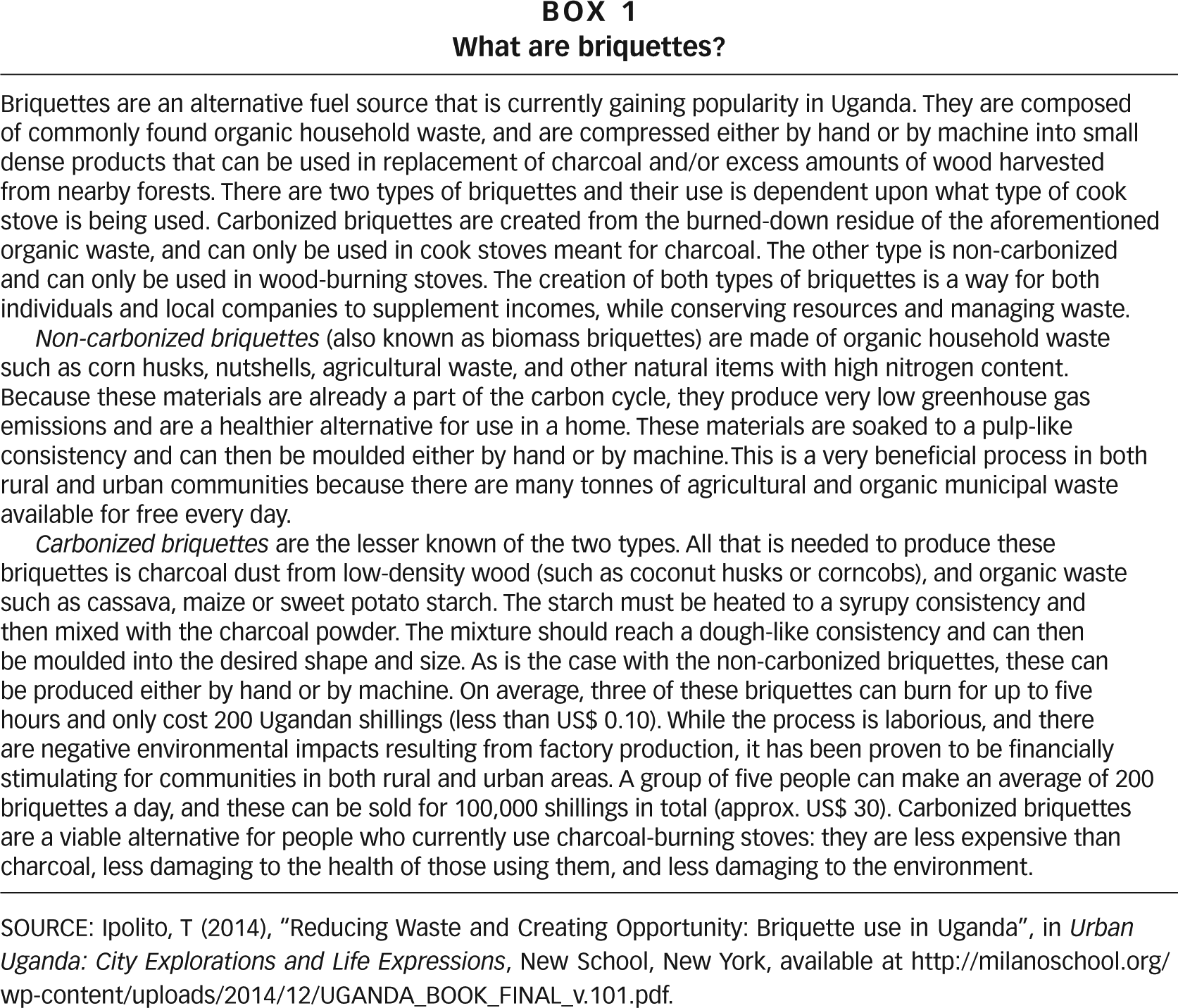
Eleven groups in the federation are engaged in the production of charcoal briquettes (for a specific example, see Box 2). Most of these groups have between 20 and 30 people involved in the briquette production. Much of the production by the federation is done manually (moulding the briquettes by hand) because of the lack of appropriate briquette-making machines. In addition to the production of briquettes, federation groups conduct regular community general settlement cleanups, which also contribute to the improvement of community sanitation and the reduction of disease outbreaks that result from dirty surroundings. By using waste as a useful resource, communities have helped to curb the problem of clogged drainage channels, where such waste was often dumped.
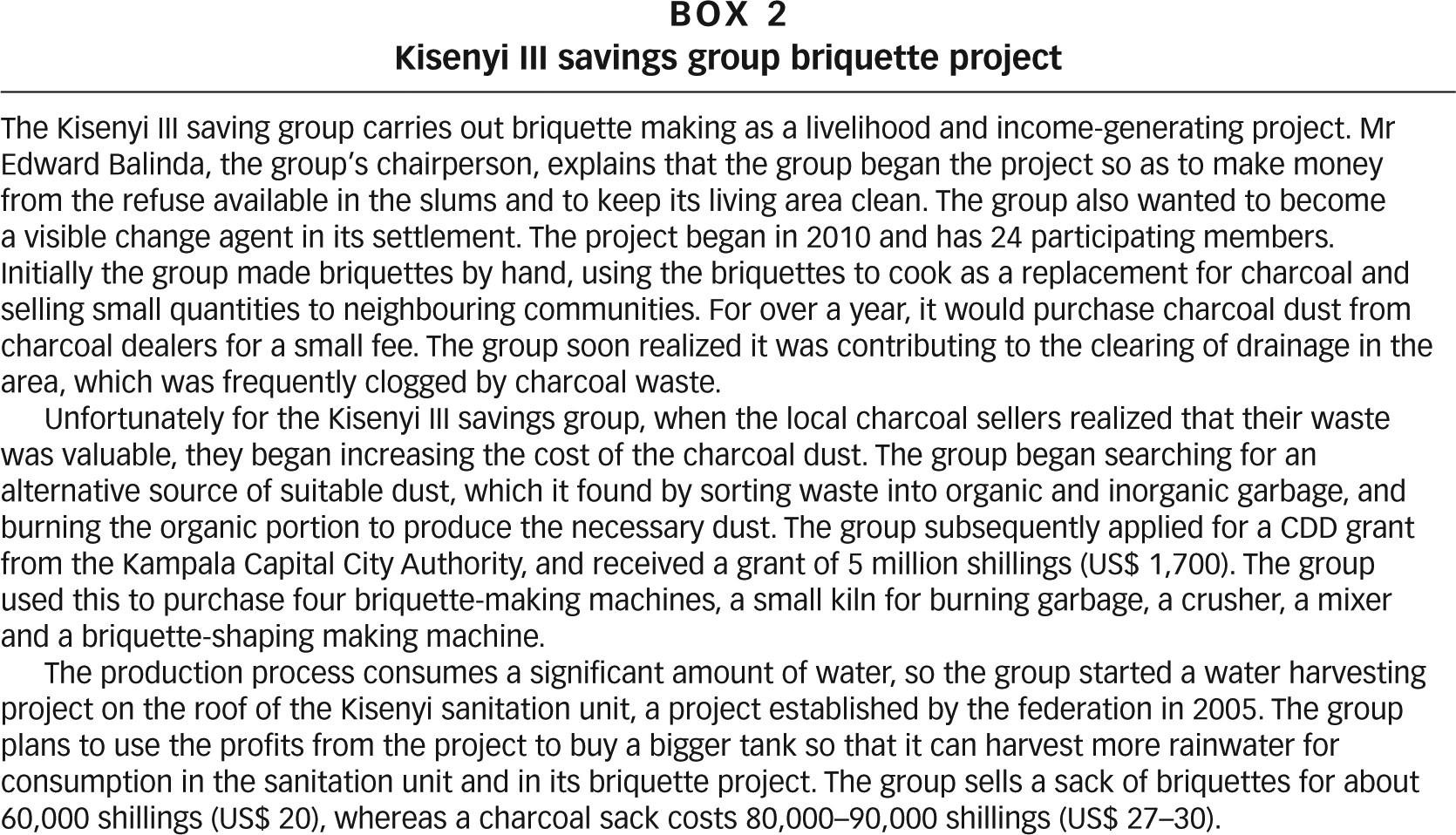
As can be seen in the example of the Kisenyi III savings group, the production and use of matoke briquettes generate a range of benefits that contribute to low-carbon, climate-resilient development – and to sustainable development more generally. By enabling low-income urban residents, including women, to generate income, the process helps enable these people to make investments that strengthen their own resilience. By utilizing waste materials in the production process, solid waste that blocks drainage channels is removed more effectively. By reducing the cost of fuel for cooking, matoke briquettes can contribute to energy and food security. And by reducing dependence on charcoal, rates of deforestation in Uganda can be reduced – with positive outcomes for low-carbon development.
b. Jinja Materials Workshop
One of the main interventions that can make low-income households more resilient is improving the quality of shelter and housing. The Jinja Materials Workshop is a project, launched by the NSDFU in 2013, that produces low-cost and environmentally friendly building materials such as soil-stabilized interlocking bricks, precast slabs, t-beams, laadis (precast mini slabs) and concrete blocks. These materials provide an alternative to burnt bricks (which are more expensive, and which also contribute to deforestation because of the need for fuel to fire the bricks) and other cement-dependent materials. The interlocking bricks also help to provide structural integrity to buildings without the need for large volumes of cement, and brick design insulates the buildings from high or low outside temperatures.
The increased affordability of building materials is critical to incremental upgrading of informal settlements. ACTogether engineer Waiswa Kakaire explains the savings: One square metre of regular burnt clay brick costs UGX 35,000 (US$ 14), but we sell a square metre of compressed-soil bricks for about UGX 28,000 (US$ 11). Those savings are significant when you talk about building a whole sanitation unit or house. Then, when you construct a conventional slab you will need about UGX 120,000 per square metre (US$ 48), but with our laadis [precast concrete mini slabs] you can buy a square metre for about UGX 90,000 (US$ 36) because we use about 1/3 less cement while maintaining the same strength.
The project was launched in 2013 with a capital injection of US$ 10,000 and the contribution of land for the project from the municipal council. These funds were used to construct a building shed and curing pit, to extend water to the site, and to purchase one interlocking brick-making machine and site fencing. In 2014, another US$ 10,000 was secured from SDI as investment capital. With these funds the project moved to phase two, in which a demonstration house and a two-stall toilet facility were constructed to demonstrate the potential of the materials being sold and the potential for new technologies to not only reduce cost (opening up the space for the urban poor to make incremental permanent improvements to their dwellings), but also build resilience through the use of local, more environmentally friendly materials. The funds were also used to purchase an “egg-layer” concrete brick machine for manufacturing blocks of various sizes and shapes. Training young people in producing the materials and constructing houses with them is a central part of the project. Like the briquette projects, therefore, the Jinja Materials Workshop project contributes to resilience through economic livelihood support and skill development.
The centre has generated profits from the sale of materials since it commenced operations in 2014, which are used to service the loan and to reinvest in materials for the project. It has also been a centre for innovation, constantly testing new technologies for sanitation systems and building. Greater resilience in communities of the urban poor will depend upon incremental upgrading of housing, and affordable building materials will be critical. In addition, the partnership between the local authority and the community is an encouraging sign of the potential for partnerships in resilience-building initiatives, and the innovations of the community to meet affordability and livelihood demands can be harnessed to forge part of a larger municipal/city-level resilience strategy.
As is the case with the matoke briquettes, the activities of the Jinja Materials Workshop contribute to low-carbon climate-resilient development in several ways. The reduced dependence on wood for firing bricks helps contribute to mitigation goals, while the stronger, more comfortable buildings will help residents to cope with both present and future climatic conditions.
c. Clean water and improved drainage
The NSDFU has also worked to expand access to clean water and to improve community drainage. Using funds from the government of Uganda’s Community Upgrading Fund (CUF), communities in Jinja and Mbale constructed stone pitched(23) drainage channels to address the issue of flooding in low-lying settlements. The drainage projects have reduced stagnant water and flooding – both major causes of disease in the settlements.
In Arua, CUF funding was used to address both flooding and water shortages. Arua generally has a hot and dry climate, but it has a rainy season in late August during which heavy rains can cause floods in settlements such as Pajulu-Prison Adiko, Bazaar and Mutu. The community planned a culvert bridge to divert the water to an appropriate drain, as well as a number of water projects to harvest water in times of plenty and store it in tanks for sale when water is scarce. In total the Arua federation initiated seven water projects that have saved the community from paying the exploitative prices for water charged during the dry season: whereas in the past members had to pay 700 shillings (US$ 0.25) per jerry can, they now pay only 100 shillings (US$ 0.03) for the same amount. In Kampala and Mbarara, the federation has also incorporated a water harvesting design into large sanitation units, which reduces operational costs and takes water that would otherwise contribute to flooding and puts it to good use.
Reducing the threats to health posed by climate change in informal settlements will depend upon greatly improved sanitation infrastructure. The initiatives of the federation, outlined above, are demonstrating the kind of technological and social innovation required to combat some of the key impediments to making basic services accessible and resilient – affordability, management, ownership, partnership and scalability. Specifically in relation to the characteristics of resilience outlined in Table 1, the approaches to fresh water and drainage exhibit robustness, redundancy and flexibility.
IV. Conclusion: A Participatory Approach to Community and Urban Resilience
Through building the collective capacity of the urban poor and generating authentic partnerships between communities and local government, the activities and projects described above set the stage for a more participatory approach to building urban resilience. True resilience will not be designed and achieved by government alone, but will need the active partnership of marginalized rural and urban residents in the definition and assessment of vulnerability, and the development of strategies to reduce exposure to hazards, to reduce sensitivity to these impacts, and to strengthen the capacity to cope and adapt. The urban poor in Uganda have demonstrated that they can organize themselves, gather critical planning data, use these to design their own solutions and negotiate with other urban stakeholders, and test and manage implementation of these solutions. Hard (infrastructure) investments in urban resilience need to be matched by soft (behavioural and regulatory) investments in the institutional systems required to maintain and expand them. Flexible and resourceful institutions and organizations are better able to respond to unexpected threats; if they also take a more inclusive approach to planning, they are more likely to invest in risk-reducing infrastructure that meets the needs of all urban residents, including those who have historically been marginalized.
The NSDFU and ACTogether approach to resilience building aims to create a bottom-up and pragmatic process that is driven by communities, but supported adequately by government and other urban partners. The approach can be summarized as follows:
Communities come together and form
Savings groups are
Communities are supported to
At the settlement and municipal levels, the federation can then begin to
Communities plan interventions and contribute their savings as a source of
The federation then
The actions of the NSDFU demonstrate the ways that residents of low-income and informal urban settlements are not passive subjects in the face of structural and environmental changes, but rather are active agents whose knowledge and interventions are actively contributing to building resilience. The initiatives that have been undertaken because they provide immediate benefits for low-income urban residents (incomes from briquette making, cheaper fuel, cheaper building materials and components, improved drainage, and water harvesting) can also be assessed positively in terms of their contribution to reducing greenhouse gas emissions and building resilience. In contrast to some approaches to urban resilience that are top-down, externally driven, and expensive, the approach taken by the NSDFU – and similar groups in other countries – is low-cost, contextually appropriate, and participatory. This type of approach ought to be more widely recognized and supported by the international organizations charged with addressing climate change risk, including the institutions that determine flows and types of funding.(24) The government of Uganda must recognize the comparative advantages of investing in communities rather than expensive international consultants, and the value of their information and capacity to bridge the implementation gap between policy and practice in the urban sector. Livelihood and infrastructure upgrading funds should be expanded to reach more communities in a way that is integrated into the resilience planning of the state. In addition, the Green Climate Fund and other emerging international mechanisms for funding climate change responses(25) ought to consider how they disburse funds in a way that recognizes the resilience potential of these actions, and the financial management and implementation capacities of organized groups of low-income urban residents.(26) While many climate funds are limited to paying for activities specifically labelled as “climate change adaptation”, the activities undertaken by members of the NSDFU engage in a detailed way with the underlying drivers of risk, and addressing these is a highly effective approach to building resilience for some of the world’s most vulnerable people.
Footnotes
Acknowledgements
The authors wish to acknowledge the support of the National Slum Dwellers Federation of Uganda and ACTogether staff Isaac Ssonko and Silver Owere for their support in gathering information for this report.
Funding
This research was funded by UK aid from the Department for International Development. Its conclusions do not necessarily reflect the views of the UK Government.
1.
Revi, A, D E Satterthwaite, F Aragón-Durand, J Corfee-Morlot, R B R Kiunsi, M Pelling, D C Roberts and W Solecki (2014), “Urban areas”, in C B Field, V R Barros, D J Dokken, K J Mach, M D Mastrandrea, T E Bilir, M Chatterjee, K L Ebi, Y O Estrada, R C Genova, B Girma, E S Kissel, A N Levy, S MacCracken, P R Mastrandrea and L L White (editors), Climate Change 2014: Impacts, Adaptation, and Vulnerability. Part A: Global and Sectoral Aspects, Contribution of Working Group II to the Fifth Assessment Report of the Intergovernmental Panel on Climate Change, Cambridge University Press, Cambridge and New York, pages 535–612.
2.
Satterthwaite, D and D Mitlin (2014), Reducing Urban Poverty in the Global South, Routledge, Abingdon, pages 10–11.
3.
Jabeen, H, C Johnson and A Allen (2010), “Built-in resilience: learning from grassroots coping strategies for climate variability”, Environment and Urbanization Vol 22, No 2, pages 415–431; also Haque, A, D Dodman and M Hossain (2014), “Individual, communal and institutional responses to climate change by low-income households in Khulna, Bangladesh”, Environment and Urbanization Vol 26, No 1, pages 112–129.
4.
Smith, B, D Brown and D Dodman (2014), “Reconfiguring urban adaptation finance”, IIED working paper, available at  .
.
5.
The term “slum” usually has derogatory connotations and can suggest that a settlement needs replacement or can legitimate the eviction of its residents. However, it is a difficult term to avoid for at least three reasons. First, some networks of neighbourhood organizations choose to identify themselves with a positive use of the term, partly to neutralize these negative connotations; one of the most successful is the National Slum Dwellers Federation in India. Second, the only global estimates for housing deficiencies, collected by the United Nations, are for what they term “slums”. And third, in some nations, there are advantages for residents of informal settlements if their settlement is recognized officially as a “slum”; indeed, the residents may lobby to get their settlement classified as a “notified slum”. Where the term is used in this journal, it refers to settlements characterized by at least some of the following features: a lack of formal recognition on the part of local government of the settlement and its residents; the absence of secure tenure for residents; inadequacies in provision for infrastructure and services; overcrowded and sub-standard dwellings; and location on land less than suitable for occupation. For a discussion of more precise ways to classify the range of housing sub-markets through which those with limited incomes buy, rent or build accommodation, see Environment and Urbanization Vol 1, No 2 (1989), available at .
6.
For an explanation of why these tools are referred to as rituals, and what these entail, see Patel, S, C Baptist and C D’Cruz (2012), “Knowledge is power – informal communities assert their right to the city through SDI and community-led enumerations”, Environment and Urbanization Vol 24, No 1, pages 13–26.
7.
8.
See reference 7, page xxxi.
9.
Kovats, S, S Lloyd and N Scovronick (2014), “Climate and health in informal urban settlements”, IIED working paper, available at .
10.
United Nations Department of Social and Economic Affairs (2014), World Urbanization Prospects, the 2014 revision, available at .
11.
Werikhe, M (n.d.), “Rapid Urbanization and the Challenge for Secondary Cities”, Unpublished Cities Alliance document, available at .
12.
13.
, “Glossary”, in C B Field, V R Barros, D J Dokken, K J Mach, M D Mastrandrea, T E Bilir, M Chatterjee, K L Ebi, Y O Estrada, R C Genova, B Girma, E S Kissel, A N Levy, S MacCracken, P R Mastrandrea and L L White (editors), Climate Change 2014: Impacts, Adaptation, and Vulnerability. Part A: Global and Sectoral Aspects, Contribution of Working Group II to the Fifth Assessment Report of the Intergovernmental Panel on Climate Change, Cambridge University Press, Cambridge and New York, pages 1757–1776.
14.
, “Summary for Policymakers”, in C B Field, V Barros, T F Stocker, D Qin, D J Dokken, K L Ebi, M D Mastrandrea, K J Mach, G-K Plattner, S K Allen, M Tignor and P M Midgley (editors), Managing the Risks of Extreme Events and Disasters to Advance Climate Change Adaptation, A Special Report of Working Groups I and II of the Intergovernmental Panel on Climate Change, Cambridge University Press, Cambridge and New York, pages 1–19, page 3.
15.
Tyler, S and M Moench (2012), “A framework for urban climate resilience”, Climate and Development Vol 4, No 4, pages 311–326.
16.
da Silva, J and B Morera (2014), City Resilience Framework, Rockefeller Foundation and Arup, available at .
17.
Makau, J, S Dobson and E Samia (2012), “The five-city enumeration: the role of participatory enumerations in developing community capacity and partnerships with government in Uganda”, Environment and Urbanization Vol 24, No 1, pages 31–46.
19.
For information about the differences between profiling and enumeration, and what each entails, see Beukes, A (2014), “Know Your City: community profiling of informal settlements”, IIED briefing, available at .
20.
JV Fichtner W&T – GFA – M&E Associates (2014), LV WatSan Project – Water Supply and Sanitation in Informal Settlements Inception Report 02/14 National Water and Sewerage Corporation (NWSC), page 23.
21.
FAO-FOSA (2001), FOSA Country Report - Uganda, Forestry Outlook Studies in Africa, Food and Agriculture Organization, available at .
22.
Ferguson, H (2012), Briquette Businesses in Uganda: The Potential for Briquette Enterprises to Address the Sustainability of the Ugandan Biomass Fuel Market, GVEP International, London.
23.
Stone pitched drainage binds stones together using mortar and uses this to line drainage channels so that they do not erode. Due to the high cost of cement in Uganda, this method is often used instead of concrete drainage.
24.
See reference 4.
25.
See reference 4.
26.
Mitlin, D (2013), “Locally managed funds: a route to pro-poor urban development”, IIED briefing, available at .