




Abstract
How are civil society organizations responding to COVID-19’s impacts on informal settlements? In Latin America, civil society organizations have developed a repertoire of collective action, seeking to provide immediate and medium-term responses to the emergency. This paper aims to map these initiatives and identify strategic approaches to tackle the issues, given the strengths of those undertaking the initiative, and the scope, purpose and sphere of intervention. Using direct contact, a survey, and a virtual ethnography with social organizations has allowed us to identify and characterize the initiatives. The repertoire focuses on emergency measures around food security, and pedagogies for prevention, sanitation and income relief at the neighbourhood and district levels. We argue that the civil society response repertoire is diverse in form and resources but limited in scope; meanwhile the urgency of the situation and the mismatch with state action mean that crucial spheres of informality, vital to cultivating grounds for a healthy recovery phase, are being neglected.
I. Introduction
The multidimensional vulnerability of informal settlements exposes them disproportionately to the effects of the COVID-19 pandemic. The novelty of the disease and the scope of the pandemic have challenged all sectors of society and have required fast-paced reaction to prevent mortality rates from spiking and health infrastructures from collapsing. In record time, several multilateral organizations, national and local-level governments, universities and research centres have tried to track the spread of the virus as well as to link public health impacts with the multiple spheres of social life affected by the pandemic. The urgency of the attention became a generalized state of exception where different political agendas have deepened, and the role of local governments has been tested in terms of their efficacy. As Wilkinson explains, “the organizational challenges of epidemic control are always intensive and dependent on meaningful local involvement”.(1) Initiatives to track responses to COVID-19 have focused mainly on state-led responses to serve as examples and inspirations for other governments, while less attention exists to responses from civil society and grassroots organizations. This paper focuses on understanding how bottom-up organizations develop responses to the challenges related to COVID-19 in Latin American informal settlements. We present preliminary findings of our campaign “Synergies for Solidarity”,(2) which aims to map citizen-led initiatives to respond to COVID-19 and imagine the post-pandemic situation in informal settlements. We look for links between researchers’ organizations and initiatives. Using the perspective of repertoires of collective action makes it easier to track, identify and classify initiatives, as explained below.(3)
The repertoires of collective action constitute the recurrent tactics of response in the face of insufficient state capacity and in the long-term processes of territorial self-management. Collective action is the joint action of groups of people to achieve common interests. Informal settlement communities are, by definition, effective collective action organizations; they need to exist.(4) The essential factors that define collective action are common interest, organizational structure, group mobilization and the opportunity for action. To understand how collective action is shaped, we need to take into account both the external causative forces that prompt the response and the intentions of the group that aims at producing the actions, themselves based on creativity and solidarity.(5) The repertoire is, according to Tarrow, “at once a structural and cultural concept, involving not only what people do when they are engaged in conflict with others but what they know how to do and what others expect them to do”.(6) New repertoires arise in the emergence of crisis as one of the macro-political factors that define the new formation of collective action. The repertoires vary as a function of changing political opportunities, identities of the organizations, and the cumulative history of the collective struggles.(7)
With the Synergies for Solidarity campaign, we aim at making visible, analysing and connecting initiatives that have emerged from different sectors and scales of civil society that seek to respond to the emergency in informal neighbourhoods. The guiding question we explore here is: How are civil society organizations responding to the COVID-19 impact on informal settlements? We argue that the repertoire of collective action from civil society in/for informal settlements has focused at a neighbourhood level on emergency measures around food security, pedagogies for prevention and self-care, sanitation and income relief. A secondary effort has focused on how alliances were forged during the pandemic. Are these initiatives the result of existing collaboration, or do the conditions imposed by the pandemic force organizations to create new alliances? The urgency of state action(8) has meant that crucial spheres of informality, vital for the resilience of informal settlements, have been neglected. These include mobility, human security, waste collection and citizen participation, and their neglect impedes the more coordinated action that is the basis for a healthy recovery phase.
The article has three main sections. Section II describes the key features of Latin American cities, where informal settlements are a by-product of long-term multidimensional inequality. Section III explains the methodological strategy used to trace the civil society responses in/for informal settlements. Section IV analyses the repertoires of collective action found in the preliminary data gathered. We conclude in Section V with some ideas about the implications of the findings and directions for future research.
II. Informal Settlements’ Vulnerabilities and COVID-19 in Latin American Cities
Since the declaration of the pandemic at the beginning of March 2020, experts from different fields have warned of the particular and disproportionate vulnerability of informal settlements in the global South in the face of COVID-19.(9) According to the United Nations,(10) more than a billion people globally inhabit informal settlements. In Latin American and the Caribbean, most of the population is urban (84 per cent); and more than one-fifth (21 per cent) inhabit informal settlements (Figure 1). More than 100 million people are thus exposed to overlapping structural, epidemiological, transmission, health system and control measure vulnerabilities.(11) As of June 2020, the region reports over 2 million confirmed COVID-19 cases,(12) and some urban outbreak hotspots correspond to overcrowded settlements where on average more than three people live per room.(13) Access to adequate housing is a fundamental condition to protect the right to life, and the effectiveness of mortality prevention relies on the speed with which the most vulnerable population is protected.(14)
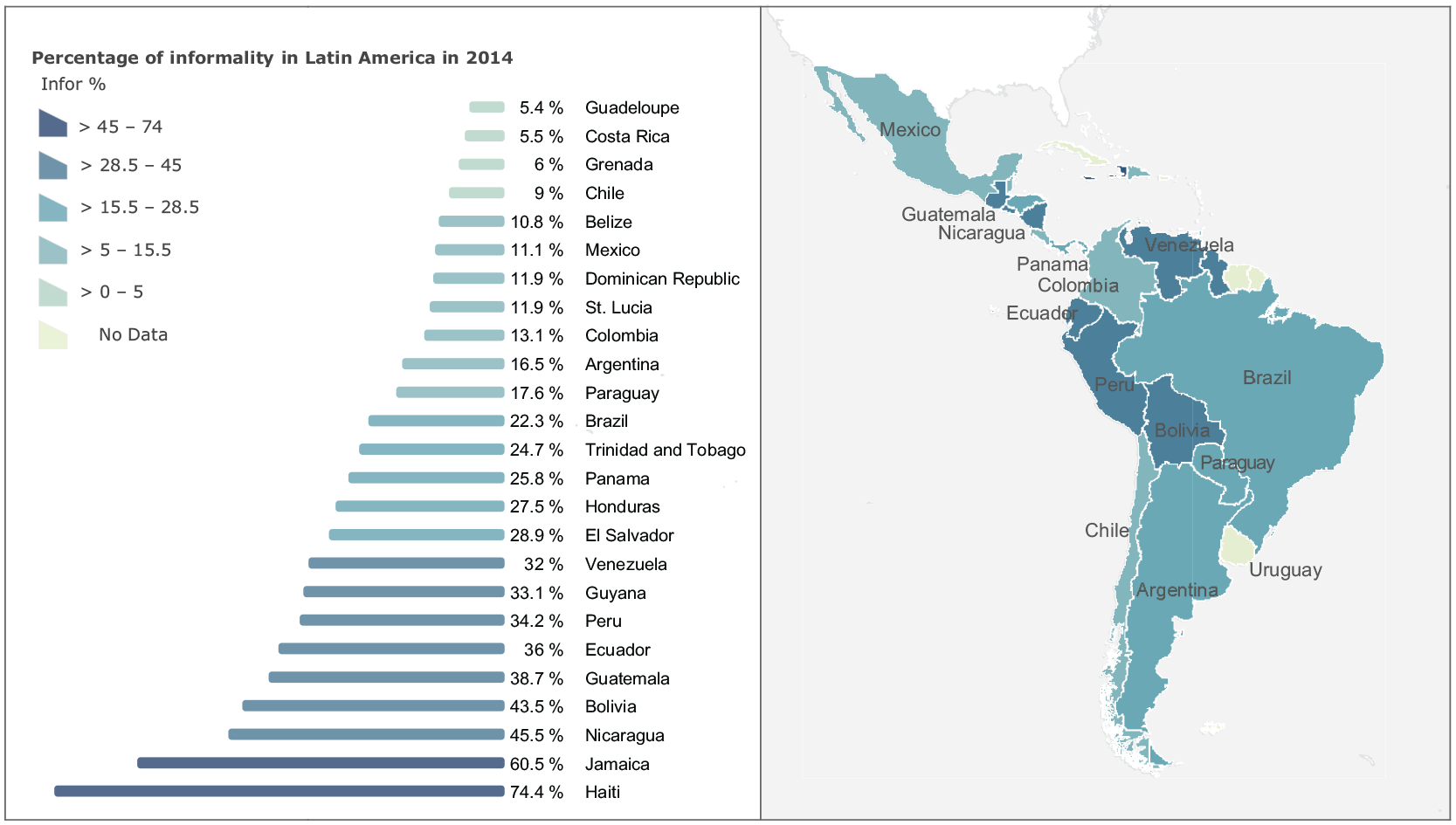
Urban population living in informal settlements, marginal neighbourhoods or inadequate housing in Latin America in 2014
Conditions within informal settlements exacerbate exposure to the multiple impacts of the pandemic. The key enduring features include historical stigma, low incomes, restricted accessibility, high risks, climate change hazards, limited services and infrastructure (i.e. water, sanitation, electricity, information and communications technologies [ICTs], waste), high residential densities, limited access to health services, and insecurity of tenure.(15) The research uses as an analytical structure seven spheres of informality (SI): housing (quality, tenure, overcrowding); income (informal labour and irregular earnings); health (care systems, pedagogies for self-care, physical and mental health measures); food security (food distribution and access); infrastructure (water and sanitation); human security (control of the actions of non-state armed actors, racketeering and violence); and political participation (recognition in deliberative processes). Considering these spheres, scholars suggest that the more effective ways to tackle the pandemic in informal settlements include: a) a moratorium on evictions; b) engaging directly with community groups and their emergency/planning committees; c) ensuring social protection by securing basic income and financial support for self-managed community networks; d) meeting standards for water, sanitation and hygiene; e) implementing a solid waste strategy and food distribution; and f) tailoring a plan for mobility, digital connectivity and healthcare, including community health workers and protective equipment.(16) We will describe and compare how the emergent responses meet these expert recommendations.
The pre-existing health conditions in informal settlements increase their chances of becoming pandemic hotspots. According to epidemiologists, exposure to pollution, rates of respiratory infections, and nutrition deficits are higher in these areas, elevating the risk of contagious diseases.(17) Despite these conditions, illegality and lack of recognition make health data scarce. Yet reliable data are essential to track the spread, identify those at risk, and provide timely attention. Governments have been working against the clock to provide reliable public data for tracking and preventive mitigation. Yet several informal areas are not captured in the geostatistics and are invisible in official maps. In fact, as Wilkinson suggests, “the informal or illegal status of many deprived settlements often undermines both the collection of data and the implementation of policies to improve health”.(18)
The pandemic exposes and deepens the crisis of existing systems of care. The policy of implementing lockdowns and social distancing, promoted with varying severity in Latin American cities, has placed housing at the centre as the chief infrastructure of care.(19) The Economic Commission for Latin America and the Caribbean (ECLAC)(20) warns that gender inequalities have increased in low-income households as women, already managing an excessive share of domestic and care work, now face the additional burden of COVID-related management. The overcrowded domestic space where this unpaid work takes place makes quarantine even harder to cope with.(21) The economic impact also hits women harder, given disparities in income. But their occupations also leave them more exposed to the virus – they constitute 72.8 per cent of health system workers(22) and 77.5 per cent of the informal domestic labour force.(23) Gender-based violence exacerbates their vulnerability. According to Plan International, 81 per cent of the cases of gender-based violence worldwide are concentrated in Brazil, Mexico, Argentina, Peru, El Salvador and Bolivia.(24) In Bogotá, calls to victims’ hotlines have increased by 225 per cent and in Lima more shelters for abused women have had to be opened. The WHO member states have reported a 60 per cent increase in emergency calls from April 2019 to April 2020.(25)
Policies on social isolation challenge communities’ dependence on informal labour. Forty-seven per cent of the labour force in urban areas lack stable incomes and social security, and rely on daily earnings.(26) Lockdowns expose them to two intertwined risks: on the one hand, insufficient means to survive; on the other hand, risking their own health, their family’s and their community’s if they work. Yet this only expresses a part of the long-term structural inequalities in the region, which prompted a wave of protests and political crises in 2019. According to the World Bank, “after months of social unrest in many of the countries and a new oil shock, the COVID-19 epidemic and its impact on the world economy raise the prospect of a calamitous year for 2020”.(27) The pandemic has amplified economic uncertainty and eroded the usual democratic accountability mechanisms such as physical mobilization, fuelling even more social discontent.(28)
The lockdown measures also threaten food security. Informal settlement dwellers refer to the dilemma of risking their lives by either “contagion or hunger”.(29) The Food and Agriculture Organization (FAO) highlights that among the hardest-hit countries are Venezuela, El Salvador, Guatemala, Honduras, Nicaragua and Haiti, which were already experiencing food insecurity due to economic and climatic factors.(30) Before the pandemic, the FAO estimated that the region had 42.5 million inhabitants suffering chronic hunger, and 52 million suffering food insecurity. Because of the pandemic, over 20 million additional inhabitants may fall into chronic hunger.(31) National and local governments have had to manage public finances and private donations to support families in need, using cash transfers, exchangeable bonuses or direct food distribution. However, these efforts are insufficient and have motivated protests in some cities, including Santiago, Bogotá and Medellín, where families in need raise red flags from windows, doors and balconies to call for help to get something to eat.(32) Given the income loss and dependency on regular food provision, markets are experiencing high demand given the lower prices they offer. These markets are the spine of local economies and play an essential role in the culture and economy of Latin American cities, but they struggle to enforce social distancing and sanitary measures, and have become one of the most significant vectors of infection.(33)
Sanitation is vital to prevent the pandemic from spreading. Informal settlements are exposed to multiple environmental hazards and sanitary constraints, and basic sanitary measures to control the virus are challenging where housing quality, overcrowding and limited sanitary infrastructure prevail. In Latin America and the Caribbean, 96 per cent of the urban population had piped water to their premises in 2015, but only 77 per cent had “safely managed” water (the top WHO category). Only 27 per cent had safely managed sanitation although 72 per cent had sewer connections, the difference being mostly the lack of sewage treatment.(34) The WHO recommendation of 50 litres of water per person per day (in non-emergency contexts) is not achievable.(35) UN-Habitat has claimed that “without access to safe drinking water, people are at higher risk of water-borne diseases and therefore more susceptible to becoming seriously ill if infected by COVID-19”.(36) Local governments have taken urgent measures to distribute drinkable water in trucks, guarantee a minimum consumption amount free of charge, and reconnect to the households in debt to the utility companies.(37) Other barriers to sanitary attention and social distancing include the exposure of frontline workers, the highly dense labyrinthic morphologies and restricted public space.(38)
Digital connectivity has become essential to cope with lockdown measures. Limiting the circulation in public spaces is crucial to restrict the spread of COVID-19, but this requires communication among neighbours. At least 76 per cent of informal settlements have some level of social organization, and community leaders are credible channels of communication about sanitary prevention measures, emergency assistance and psychological support.(39) Sustaining their interactions online in times of crisis is essential to coordinate local responses.(40) But in Latin America, only 45.5 per cent of households (urban and rural) have internet access; in Bolivia, El Salvador and Peru, fewer than 30 per cent of urban households do.(41) According to the Inter-American Development Bank, only 4 in 10 households have a broadband connection, only about 50 per cent have access to individual mobile internet, and 45 per cent lack access to digital services such as telemedicine, online education, online banking and e-government.(42) Digital segregation has a profound impact, particularly in informal settlements with the disruption of educational activities for children and adolescents (5 to 17 years old), as 72 per cent of them lack an internet-enabled device.(43) Thus, digital segregation is yet another layer of vulnerability in informal settlements.
Latin American cities are becoming the epicentre of the pandemic, with catastrophic effects for informal settlements. According to São Paulo’s city government, the COVID-19 mortality rate is 10 times higher in the lowest-income areas.(44) In Rio de Janeiro, official data claim 17,062 people diagnosed with COVID-19, of whom 4 per cent are favela inhabitants. Redes da Maré – a civil society organization – denounces the figure, pointing to the lack of testing, and claims that sub-registers show as many as 40 per cent more than are officially reported.(45) In Buenos Aires, as of 20 May, 37 per cent of the cases were identified in informal settlements (“villas”), concentrated in Barrio Carlos Mugica – Villa 31/31bis and Barrio Rodolfo Ricciardelli – Villa 1.11.1.(46) In Bogotá, the lowest-income districts, such as Kennedy, Suba and Engativa, have the highest numbers of cases.(47) As the situation evolves, we see more evidence of the conditions of informal settlements accelerating the spread of the infection and the impacts on these marginal communities.
III. Mapping Civil Society Responses to COVID-19 from/for Informal Settlements
This paper is born out of the campaign Synergies for Solidarity,(48) and focuses on the question: How are civil society organizations responding to the impacts of COVID-19 on informal settlements in Latin American cities? The paper draws from a virtual ethnography and spatial analysis of initiatives. Data collection took place with a survey using a snowball process to reach bottom-up organizations. The use of a georeferencing process aimed at understanding the impact of initiatives by looking at the spatial correlation among practices, informal settlements, and the spread of COVID-19 in Latin America. The second part of the analysis focused on coding how myriad organizations have shaped their repertoires of collective action according to the main spheres of informality: housing, income, health, food security, infrastructure, public security and political participation. To operationalize the repertoire of collective action here, we explored four dimensions in which each initiative develops: a) the promoters, b) purpose, c) scale and scope, and e) means and resources.
Our interest is to synthesize the implications of the pandemic for fragile communities living in conditions of extreme poverty in informal settlements. However, the global pandemic is an evolving situation. New cases emerge every day, and national strategies vary from country to country, making comparability and up-to-date information difficult. COVID-19 response comparability is a challenge for many researchers, for both understanding the pandemic and determining responses.(49) In this study, to cope with these limitations, we have focused on specific geographic locations, types of strategies, and a temporal framework that includes the initial stage of the 2020 epidemic up to 30 May.
We searched for a correlation between local COVID-19 response initiatives and the spatial locations of informal settlements. We geolocated the Synergies for Solidarity initiatives employing three datasets: the Atlas of Informality, a global survey of informal settlements at the neighbourhood scale;(50) the cumulative COVID-19 cases reported by countries and territories in the Americas from the Pan American Health Organization;(51) and the geolocation of the survey initiatives (Figure 2). We used direct mapping to geolocate initiatives, using cities, neighbourhoods or addresses of the organizations or initiative strategies when possible. Data collected are accessible on the project website at https://www.synergiesforsolidarity.org. For the survey, we created an online form with our partner institutions to reach organizations across Latin America; we disseminated the campaign on several online platforms to try to reach the most actors possible. Additionally, we used digital media to reach and understand organizations(52) and conducted a digital ethnography(53) to see how organizations use digital media. We further attempted to contact programmes and organizations that were not captured by the survey. In total, after evaluation of all 300+ submissions and web searches,(54) we had 205 initiatives across 14 countries that met the requirements of the study.
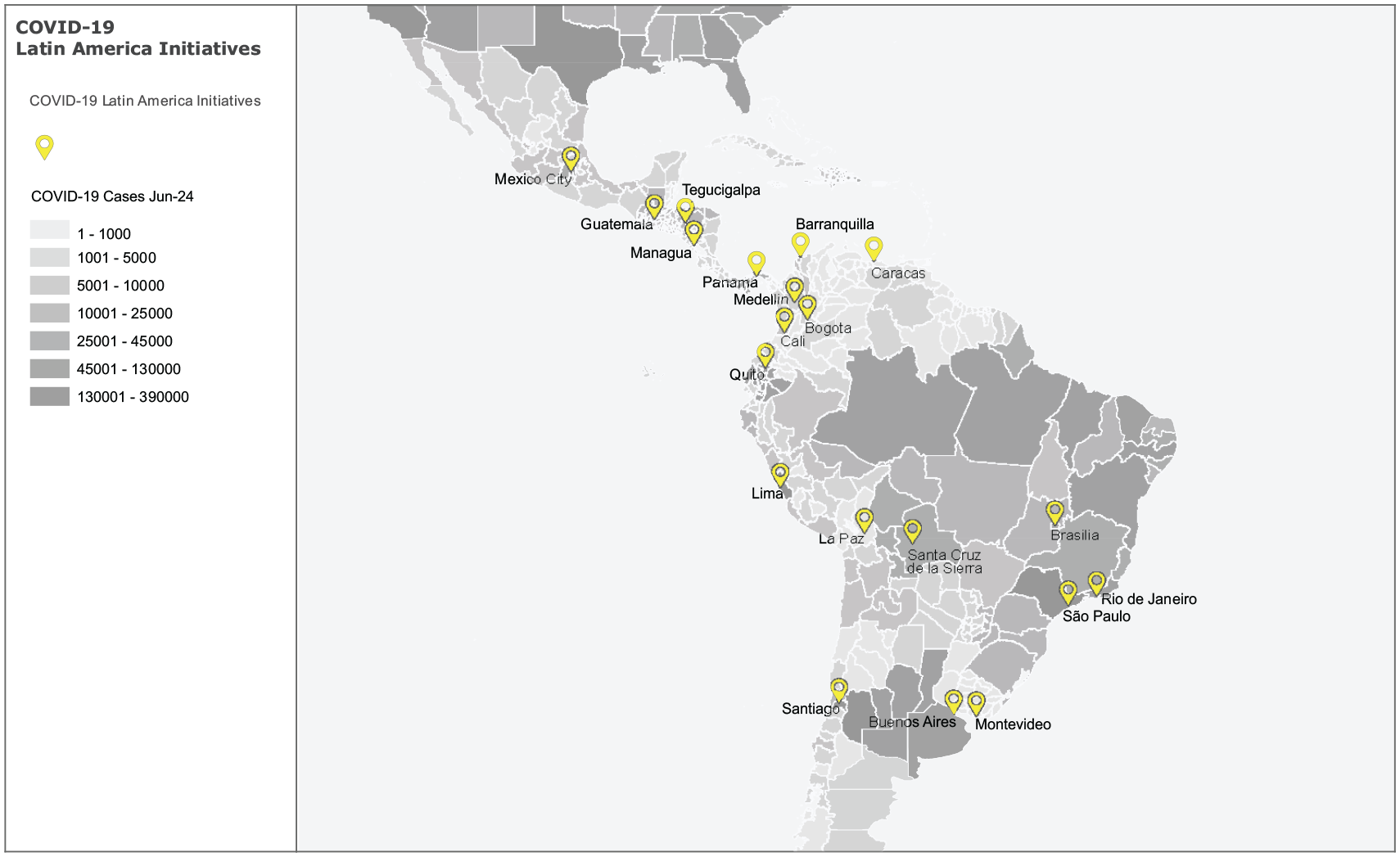
Local COVID-19 initiatives in Latin America mapped by the Synergies for Solidarity project
The research survey was designed to understand the relationship between the promoters of collective action by exploring which organizations had developed initiatives, and how they relate to others in the networks that support the different spheres of informality (SI). A key question was how organizations forge alliances during the pandemic. Are these initiatives the result of existing collaboration, or do the conditions imposed by the pandemic force them to create new partnerships? To explore these questions, we employed two modes of inquiry: using the platform https://kumu.io, we created a network analysis of the initiatives to understand the relationship among places, initiatives and actors (Figure 3). We followed this with a digital ethnography, analysing individual initiatives, their stated partnerships, and their histories to create a complete picture of how those relations came to be.
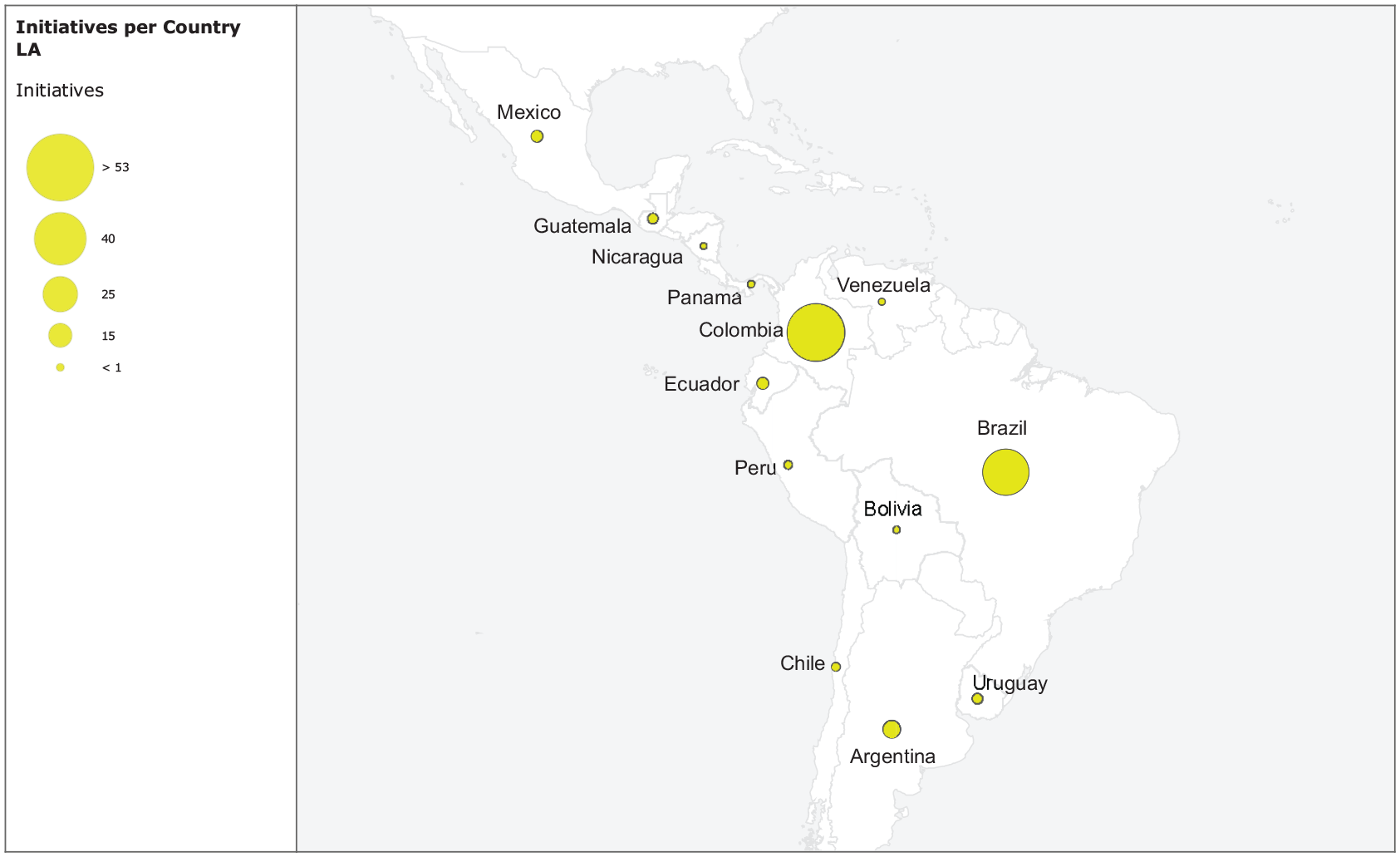
Sample distribution of initiatives across countries, part of the project Synergies for Solidarity
IV. Repertoires of Collective Action and Spheres of Informality
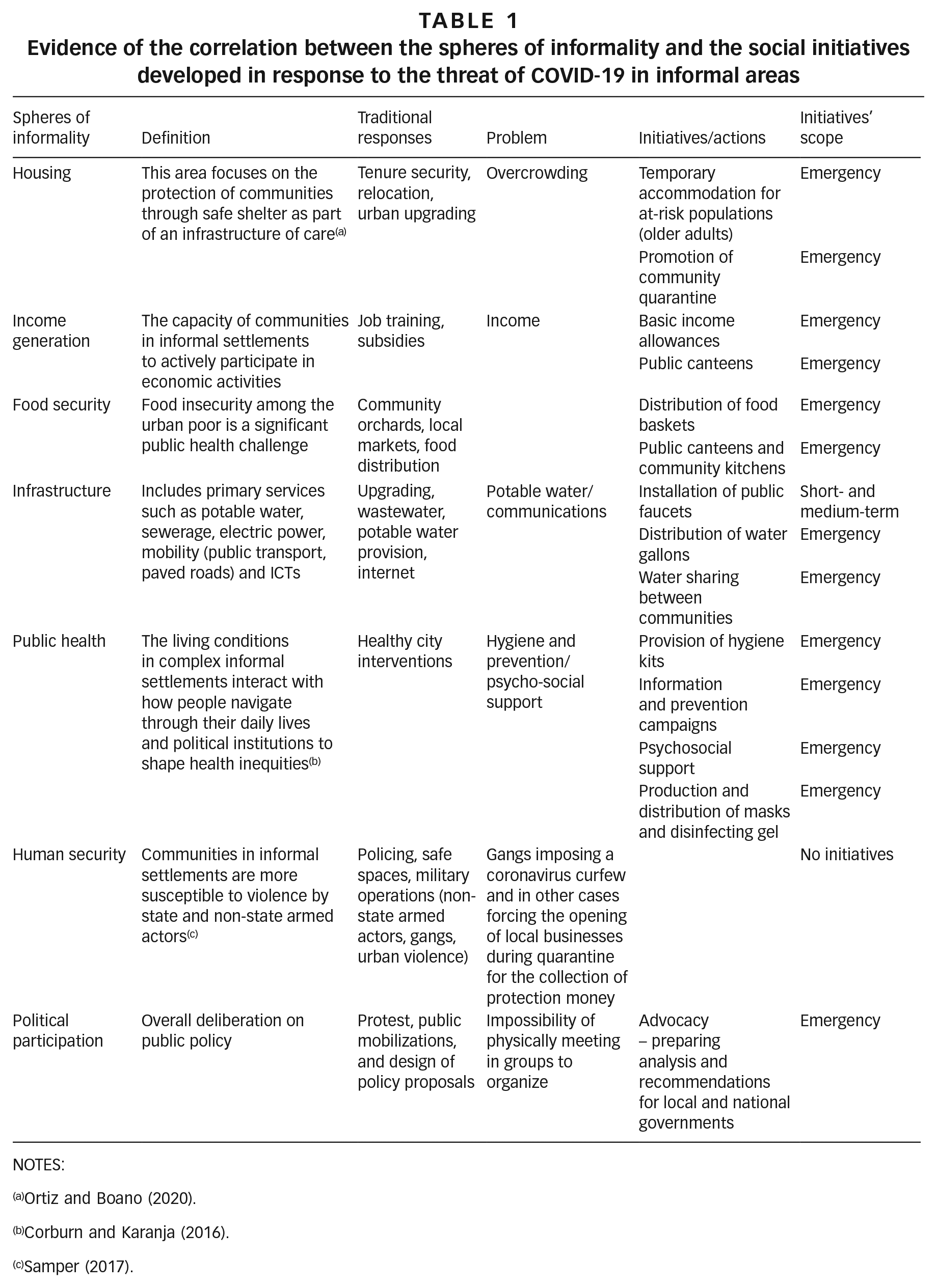
To understand how initiatives engage the repertoires of collective action, we divided them by the spheres of informality (SI) they dealt with. Each initiative was coded according to their involvement with those spheres (Table 1), defined as their priority areas of work in informal settlements to engage with urban poverty alleviation and combat the structural challenges of housing,(55) income generation,(56) food security,(57) human security,(58) public health,(59) infrastructure,(60) and political participation in issues related to habitat.(61)
Evidence of the correlation between the spheres of informality and the social initiatives developed in response to the threat of COVID-19 in informal areas
NOTES:
a. Reach and scale of collective action initiatives
In this research, we define three analytical dimensions: time, project diversity and geographical scale:
Regarding how initiatives relate to their deployment in time, organizations performed most initiatives with urgency in the short term. Most organizations directed initiatives towards alleviating the social and economic effects of the social distancing and shelter-in-place policies.
Regarding project diversity, efforts focused mainly on food security, basic income support and health prevention campaigns against the spread of COVID-19.
For the geographical scale, meaning the area of influence of the initiatives, we found that most programmes operated at the scale of the neighbourhoods and districts (a total of 41 per cent). In second place were initiatives at the city scale, focused on the most critical informal settlements. This was followed by initiatives for regions (like metropolitan areas) and at national scales (Figure 4).
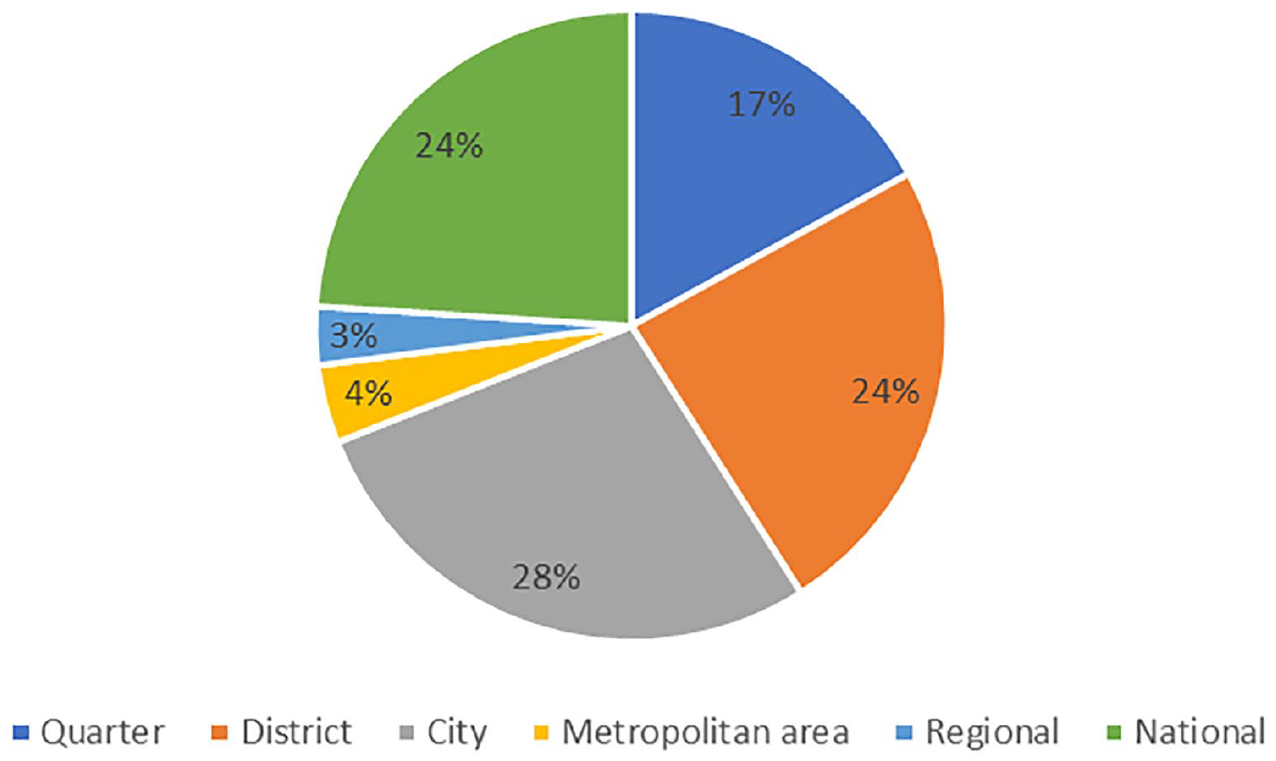
Initiatives distributed by geographical scale
b. Promoters of collective action: organizations, networks and alliances
Initiatives identified were developed by a broad spectrum of social actors, which shows the richness of Latin America’s associative fabric. In Brazil, for example, the first civil society organizations settled in the informal settlements precisely to demand public services. After the democratization of the country in the 1980s, a large number of community associations emerged that have been decisive in the fight for the rights of favela residents.(62) Hence, most COVID-19 initiatives in Brazil are led by movements and groups that emerged in the favelas and have a remarkable reach (networks, neighbourhood groups, unions or federations). In Colombia, the social fabric is varied in terms of agenda, association and territorial scope;(63) this reflects the diversity of initiatives and organizations promoting such initiatives. In Argentina, among the different kinds of organizations that are dealing with COVID-19, two are especially significant. The first, curas villeros, is a movement of Catholic priests that since the 1970s has supported the physical construction of informal settlements (villas) in Buenos Aires.(64) The second set of organizations are community kitchens, some of them linked to political parties. The current alignment of the political party in power and these organizations has facilitated the synergy of local and state initiatives.
The existence, before the crisis, of this associative fabric in different cities has been fundamental to the rapid response by civil society. Proof of this is that most of the identified initiatives are promoted by organizations with an already excellent track record on responding to the needs of informal settlements. Organizations reacted first by developing strategies independently or associating with other organizations to reach a broader spectrum in terms of diversity of actions, higher visibility, resources, number of families and neighbourhoods. The previous experiences of organizations and alliances allow greater knowledge of the vulnerabilities of the population and the type of care required, as well as greater ease with gathering information on the effects of confinement and the evolution of the pandemic. Associations without a physical presence in settlements, but with greater recognition and management capacity, ally with neighbourhood organizations that know local dynamics in order to reach areas in need.
The initiatives also demonstrate the generation of synergies with the private and business sectors. Social organizations channel aid from companies in the financial sector (traditional banks and digital banking), food industry, retail trade (supermarkets, malls and pharmacies), or corporate social responsibility offices of large companies. The Mães da favela initiative promoted by the Central Única das Favelas (CUFA), with more than 120 partners, illustrates very well the complexity of the ties between the associative sector and the private sector. Besides initiatives spearheaded by existing organizations, new organizations have emerged and continue growing as a result of the health emergency. New collectives informally associate using personal social networks, as in Apoyo Mutuo Mérida-Contingencia COVID-19 in Mexico, Valdivia Solidaria in Chile, Solidaridad Bolivia or Ser Ponte in Fortaleza-Brazil.
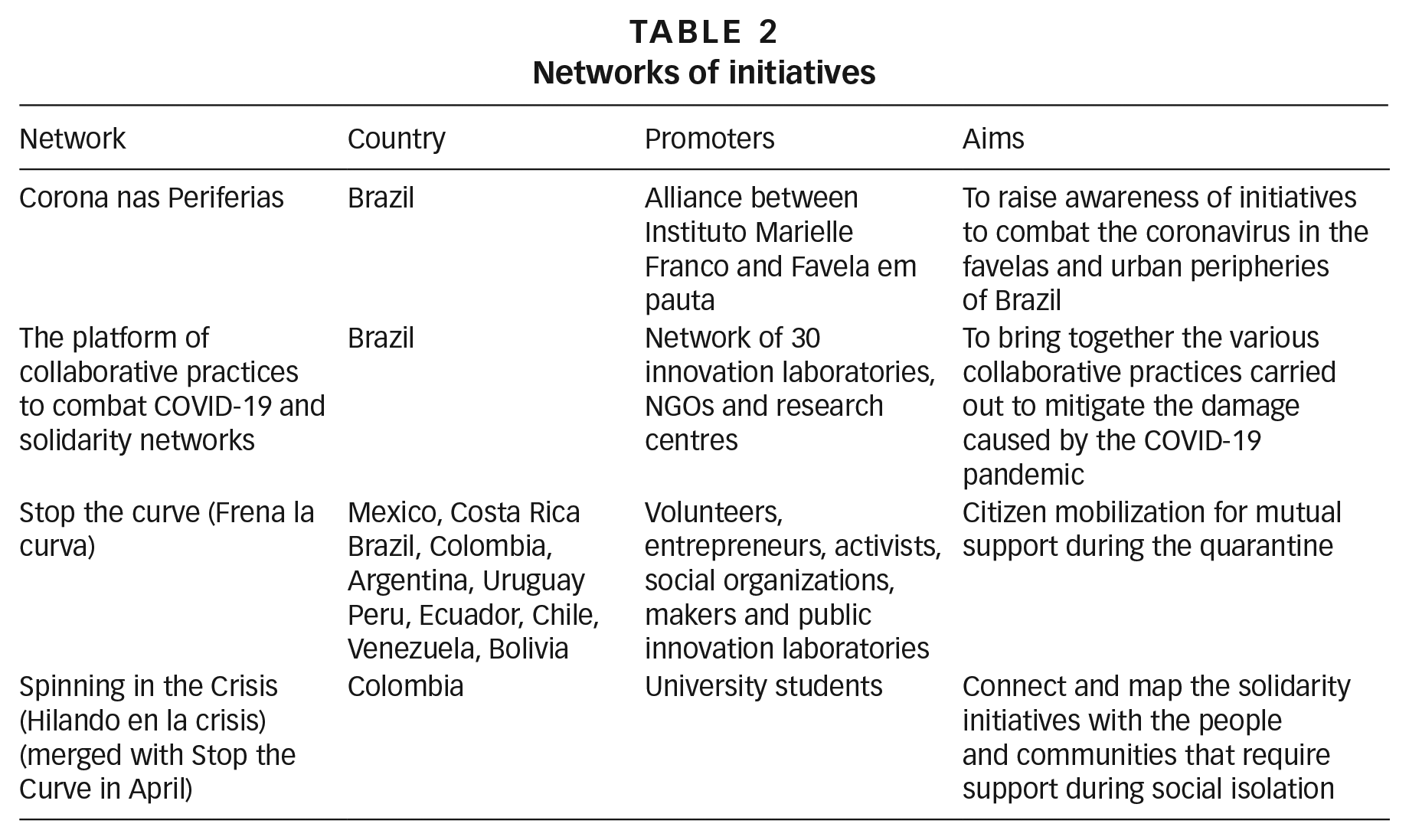
Initiatives emerged through collaborative work, seeking to make existing efforts visible and facilitate access to resources and contributions, as well as establish connections between needs and offers of aid or services (Table 2). We call these “networks of initiatives”; they constitute an example of collective production of knowledge and social innovation in the context of the pandemic. However, among initiatives of this nature, only the collaborative map of Corona nas Periferias of Brazil focuses on informal settlements. The other “networks of initiatives” have a broader focus. One of them is “Frena la curva”. This platform emerged in early March in Aragon, Spain, as an open government proposal to channel civil society initiatives, with input by citizens and organizations throughout the country. It was later adopted in other European countries and Latin America. This initiative specialized in boosting trade and the local economy during confinement; data collected relate to shops, restaurants and service providers.
Networks of initiatives
c. Repertoires of collective action associated with spheres of informality
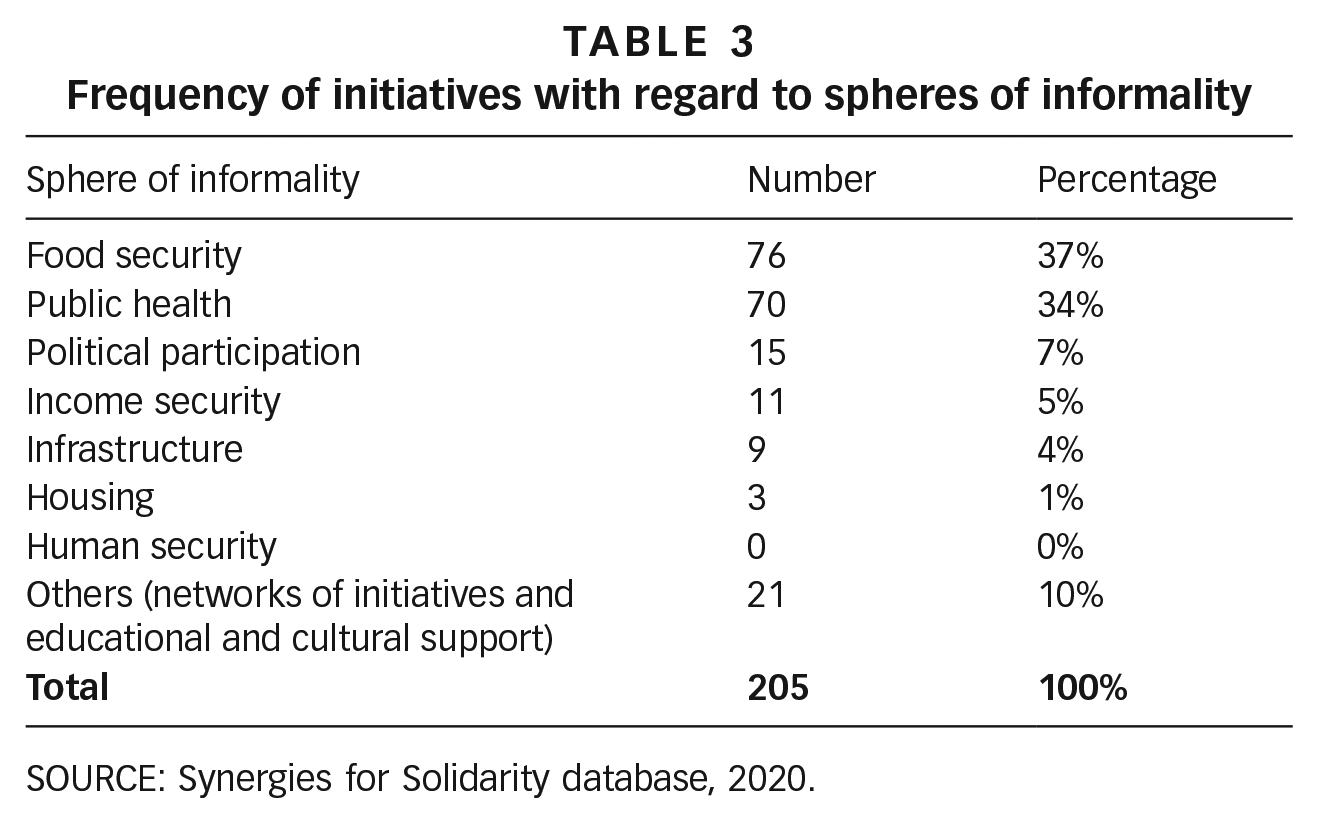
The most impoverished families are the most impacted by the socioeconomic effects of the pandemic. Shelter-in-place regulations have a devastating impact on families dependent on the informal market. We include an analysis of how the identified initiatives linked to the key spheres of informality that reveal the exacerbation of long-term inequalities (Table 3).
Frequency of initiatives with regard to spheres of informality
SOURCE: Synergies for Solidarity database, 2020.
Food security
The data highlight access to food as the households’ most basic need and the priority activity during the state of emergency (37 per cent of the initiatives). Food security coordination, logistics and access to information, which before the pandemic already represented a challenge, became more complicated. The two most common modalities of food security identified were the delivery of food products to families (food baskets) and the support of communal kitchens (comedores populares or ollas populares), a principal space of solidarity and community interaction.(65) The use of these places has increased since the start of the pandemic, and new ones have opened.(66) These kitchens are not distributed evenly over Latin America; more common in Argentina, they emerged there during the country’s economic crises in 1998 and 2018. The kitchens are a sociopolitical phenomenon supported by religious, cultural, social and political organizations. In the Colombian cities of Medellín and Cali, communal kitchens have been hosted weekly in collaboration with NGOs and academic networks, with priority given to women and children. In Medellín, for example, community pots or ollatones were held in popular settlements for the most vulnerable families. This initiative, led by academic networks in the University of Antioquia in collaboration with community leaders, initially aimed to deliver essential products to families identified as having children and elderly members. Later the approach was expanded to food as a collective construction in times of social distancing. The ollatón, or popular kitchen in Colombia, centres on the making of soups in big pots. According to Palacio Úsuga, “soup sustains plurality, comforts and proposes to build from a distance, ways out of adversity”.(67)
Public health
Hygiene and prevention campaigns are among the areas of higher mobilization during the pandemic (34 per cent of the initiatives). These initiatives distribute hygiene kits and information on how to protect and prevent disease spread. The campaigns use varied and creative forms to inform about quarantine guidelines, social distancing, self-care and hygiene. Interestingly, music – including popular rhythms such as funk and bossa nova in Brazil or cumbia and rap in Argentina – is a direct and effective method to raise awareness of the gravity of the situation and the importance of staying at home and respecting the lockdown orders.
Social media has also been useful in the diffusion of preventive measures to avoid contagion and the spread of the disease. Social media is instrumental in reaching many people; however, at the neighbourhood scale, community organizations have used more traditional methods, including the distribution of pamphlets house to house, posters, billboards and murals. With the evolution of the pandemic and limited capacity of local government health systems to reach all of the population, new programmes have emerged beyond information campaigns. In the most vulnerable neighbourhoods, city health brigades have appeared, formed by student and health professional volunteers. Volunteer programmes have also been cleaning and disinfecting public spaces. The initiative Morador Monitor deployed in Rio de Janeiro favelas uses daily house-to-house visits to promote pandemic information and identify symptomatic and/or at-risk households.
In addition to hygiene and prevention campaigns, the research identified psychosocial support initiatives related to mental and emotional healthcare, some targeted particularly at women. In Colombia, the Ernestina Parra Foundation and the Feminist Legal Network have made it clear that households are not always the safest places for women, let alone when quarantined. They are developing information and prevention campaigns on gender-based violence. They also offer psychological and legal assistance to female victims of any violent situation.
Housing and infrastructure
Inadequate housing is one of the most critical issues for informal settlements. “Stay-at-home” orders are ineffective when implemented in a context of insecure tenure, overcrowding, and the lack of adequate basic sanitation infrastructure.(68) Structural housing issues intersecting with shelter orders have exposed the vulnerability of populations in informal settlements. The current situation highlights how acting on the right to housing is the first line of defence for community care and protection against the virus. Such initiatives during COVID-19 focus on public policy regarding the suspension of evictions, rent freezing, and support for the payment of rent, the suspension of public service fees such as water and electricity, and the improvement of precarious houses. In Buenos Aires, after a video went viral showing how despite the legal quarantine in the “villas” there was still intense social interaction around basic livelihood activities, community priests (curas villeros) had a dialogue with the president. In response, both the government and civil society had to change from a house-based to a community-based lockdown, acknowledging the precarity of the housing conditions.(69) Following this decision, the NGO ACIJ (Asociación Civil por la Igualdad y la Justicia) promoted a protocol to manage villas and settlements during the pandemic.
Beyond these areas of advocacy and public policy, the research identified efforts at the neighbourhood and district scales, focusing on those key issues of overcrowding and access to potable water in informal settlements during lockdown orders. Also there, the curas villeros offer the use of chapels for the temporary shelter of at-risk populations like community elders living in conditions of overcrowding. In regard to the lack of potable water in several countries, there were programmes for the delivery of water containers and the upgrading of settlements’ water infrastructure, including community wells and abandoned tanks, plus the building of new infrastructure such as containers in strategic locations to reach several neighbourhoods. In Brazil, two initiatives focus on water provision through the placement of wells (pias de rua in Portuguese) within informal neighbourhoods, not just during the pandemic, but also afterward.
While most identified responses focused on short-term response, long-term struggles over evictions and protection of tenants have been championed by regional networks. Anti-eviction campaigns have been led by Global Platform for the Right to the City(70) and its declaration to face COVID-19 and the Zero Evictions for Coronavirus campaign led by the International Alliance of Inhabitants.(71) In Mexico, for instance, Habitat International Coalition-Latin America gathered the support of 100 civil society organizations to advocate for adequate housing, combat evictions and regulate rental prices.(72) In similar fashion the collective Habitar Argentina has been discussing with the government a proposal for a national policy on habitat emergency in the context of the pandemic and for the exit from lockdown.(73) In some cities, for instance Medellín, several community-led organizations led by Con-Vivamos have proposed a series of plans tailored to informal settlements and rooted in a long tradition of community planning.(74) These plans have ranged from early warnings to detailed proposals of a humanitarian response at the municipal level to a recovery and reparation plan focusing on the peripheral neighbourhoods of the city. In sum, these multiple initiatives demonstrate not only the multiscalar nature of housing rights-based advocacy, but also the scant responses at local level focused on long-term struggles around tenure and visions of recovery.
Income security
As responses to the lack of access to income, most initiatives focus on food and income provision, and are complex in terms of resources, information and logistics. Organizations open bank accounts for collecting donations or use the novel method of crowdsourcing platforms.(75) They identify initiative beneficiaries by targeting their own members and households identified by them. Other organizations have created new criteria for identifying and prioritizing families. Organizations build their data drawing on community knowledge, base organizations, volunteers and informal settlement leaders.(76) These same actors are fundamental in setting up the logistics of the distribution of funds and resources, particularly food supply distribution.
There are three essential aspects of income security. First, gender plays a vital role in the prioritization of resources; basic rent initiatives have focused on female heads of household as recipients of aid. The organizations’ criterion in this regard reflects the fact that women are more vulnerable as they depend more on low-paid informal jobs, and they carry the burden of unpaid family care. Also, resources focused on women have demonstrated a higher positive impact on families and communities in general.(77) Second, the initiatives that address income security provide considerable autonomy for families and stimulate the local economy; families can buy products at local stores. Third, the conditions of the pandemic have further entrenched digital currency as a method to distribute economic aid. This relatively new modality allows families without bank accounts to access money transfers, pay bills from home, and buy at local stores and markets, decreasing physical contact with paper money and reducing contagion.(78)
Spheres of informality not covered by the initiatives
An important area of discussion is the spheres of informality not covered by the initiatives. Crucial areas vital for the resilience and subsistence of informal settlements are absent, including efforts around mobility, human security, waste collection and citizen participation. This absence is important because there is evidence of felt needs in these areas as a result of the health crisis. However, local organizations lack the capacity or resources to establish initiatives in these areas.
With regard to mobility, the dependence on informal transportation networks that are not accessible during the pandemic limits access to health services. The absence of waste collection leads to unclean areas that are sources of virus propagation. Also, we recorded no initiative that prioritizes human security during the pandemic, a crucial concern for the resilience of communities.(79) In Brazil, we have seen reports of non-state armed actors locking down favelas.(80) And in Medellín, the Observatory on Human Security highlights that during lockdown, informal communities have suffered from the actions of non-state armed groups (NSAG), which continue the collection of interest related to non-legal lending (known as pagadiarios), evicting families that cannot continue payments. They also force businesses to stay open to run market rackets, challenging lockdown regulations. Furthermore, there is an increase in femicides and domestic violence that is correlated with lockdown measures.(81)
In terms of citizen participation, the capacity of communities to use traditional means of collective action is limited by lockdown policies that extend across the region. These unaddressed concerns could become important areas of cooperation, or action by state actors or international agencies, as the pandemic continues.
d. ICTs and social media for mobilization
Although ICT infrastructures and social media are crucial for mobilization, we found no proposals on the provision of internet access in informal settlements. Scholars have stressed the importance of social networks, and ICTs in general, for topics such as telework, telemedicine, virtual education, relationships between family and friends, and the circulation of news related to COVID-19.(82) Similarly, ICTs and social networks have been decisive in the social mobilization against the pandemic and its effects. Castells(83) suggests that in the internet age, social movements build on the interaction between the space of flows and the space of places. The pandemic and confinement have redefined this interaction, conferring greater relevance to the space of flows and the formation of online networks, where social initiatives are promoted and circulated placing vulnerable populations at the centre.
Social initiatives have used ICTs and social networks in various ways. Some organizations have managed solidarity and prevention campaigns from their websites. Others have activated unused social network accounts such as Facebook and Twitter. Yet others have extended their online presence by opening new accounts on Instagram, YouTube and WhatsApp groups. Social networks have operated as mobilization channels for reporting on the state’s actions, ensuring accountability for the results achieved, or recognizing people benefitting from the initiatives. Community digital media (radio and press) have contributed to supporting quarantine compliance, education on prevention measures and campaigning to prevent disinformation. For example, in Rio de Janeiro, the newspaper Voz das Comunidades updates information on the COVID-19 pandemic with reporters in each favela. The newspaper app presents the evolution of cases (infected, deceased and cured) in favelas every day.
ICTs have also been useful in addressing cartographic gaps and the exclusion of informal settlements from official maps. In some cities, including Buenos Aires, Rio de Janeiro and Quito, collaborative mapping and spatial data generation have made it possible to locate settlements, points of interest (schools, public kitchens, markets, hospitals) and potential spaces of care. Spatial data have also enabled the georeferencing of relevant issues, vulnerable families, and the evolution of the pandemic in settlements. Finally, ICTs have made possible solidarity campaigns such as crowdfunding, and the delivery of basic incomes through mobile money.
e. The spatial patterns of distribution of initiatives
We searched for a correlation between local initiatives as a response to COVID-19 and the spatial locations of informal settlements. Brazil and Colombia have larger numbers of initiatives (Figure 3). The research found a correlation between historical capacity for social organization in a country and the number of initiatives in that country. We argue that the concentration of organizations promoting the different tactics of collective action is linked to the history and strength of social mobilization in each country. Additionally, at the scale of the city, social initiatives concentrate in informal areas. For example, in Bogotá, it is clear that a large percentage of initiatives are located within informal settlements (Figure 5). Some initiatives’ bases of operation are not recorded as being inside an informal settlement because they use meeting places or official organization locales in the city’s formal areas.
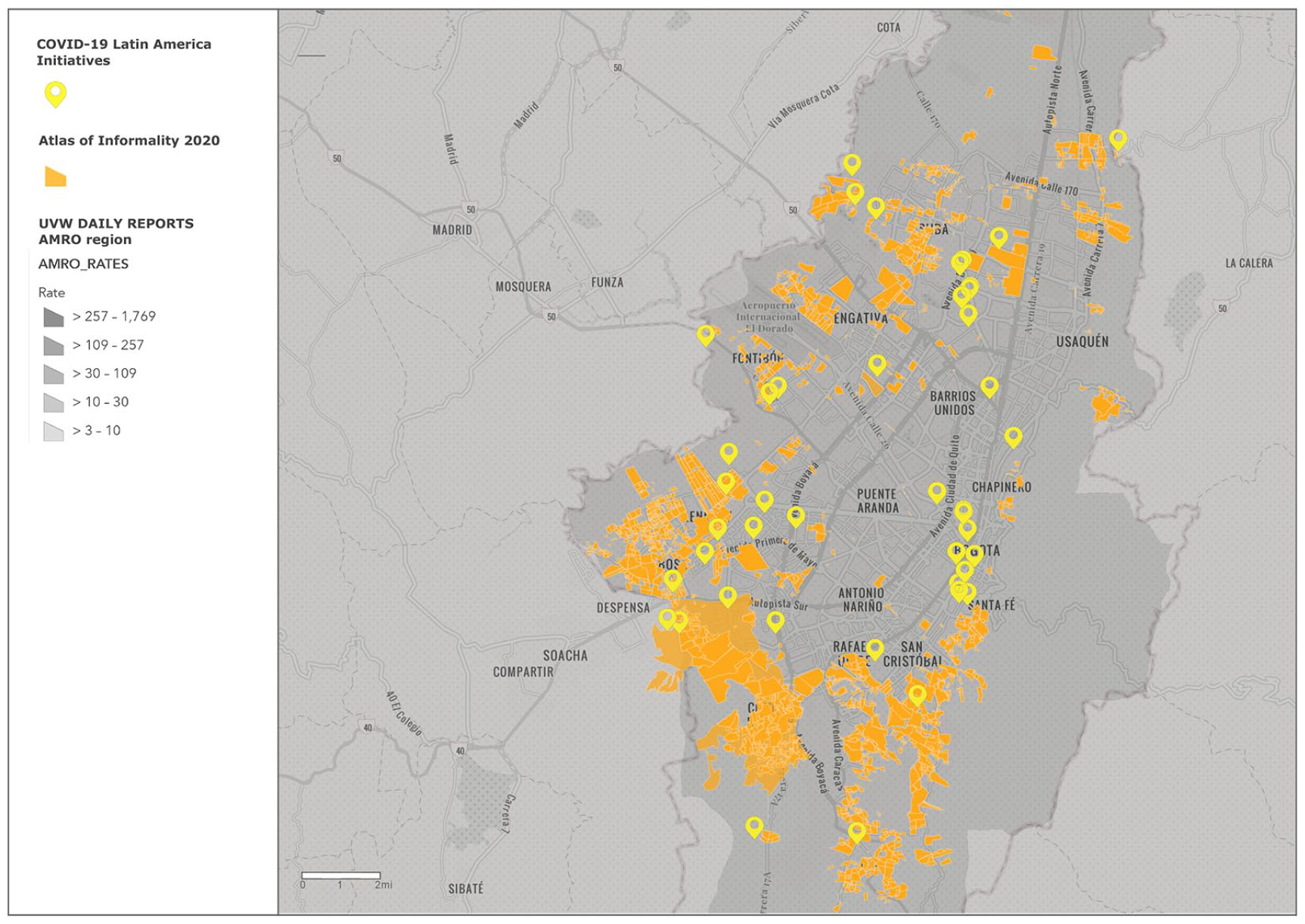
Spatial distribution of Synergies for Solidarity initiatives in Bogotá informal settlements
V. Discussion and Conclusions
In this article, we have analysed the repertoires of collective action promoted by civil society organizations to face the impacts of COVID-19 in informal settlements in Latin American cities. The key finding is the quantitative and qualitative intensity of the creative energy and solidarity that these organizations have displayed in the context of the pandemic, while national and local state responses have shown an incapacity to effectively reach the lowest-income households. We have argued that the repertoire of collective action from civil society in informal settlements has focused at the neighbourhood and district levels on emergency measures around food security, pedagogies for prevention and self-care, sanitation and income relief. Meanwhile the urgency of the situation and the mismatch with state action mean that crucial spheres of informality, vital to cultivating grounds for a healthy recovery phase, are being neglected. We also found that shelter-in-place regulations have motivated the activation of collective action through the use of ICTs as a positive externality of the pandemic response. The current pandemic has burdened community groups working in informal settlements with difficult trade-offs, in which priority projects that guarantee survival during the crisis have the negative effect of stopping or hindering social mobilizations for structural struggles.
We found that the number and history of the actors promoting different tactics of collective action are strictly linked to the history and strength of social mobilization in each country. In the same light, we have shown that networks and multi-level alliances, both among organizations and also with the private sector, have built synergies and developed more effective responses in informal settlements. Nonetheless, the crucial data gaps that hamper assertive and prompt responses still require massive efforts in order that decision-making can be grounded in epidemiological evidence, territorial data, and the knowledge of social groups and organizations about vulnerability conditions and structured capacity to coordinate effective actions. Castells(84) and other scholars have emphasized the importance of the internet for current social movements, and we consider that the confinement has effectively propelled the speed and reach of the repertoires of collective action using social media. This fact has generated a renewed and innovative social mobilization in the digital space, notwithstanding the deep digital divide in the region.
The initiatives tracked are diverse in terms of the tactics and resources used for collective action. Still, their purpose and scope are limited as they tackle short-term needs that are the by-product of long-term territorial inequalities. The deep territorial and organizational knowledge of civil society makes it vital for states, when responding to this emergency, to guarantee civil society participation in the design, implementation and evaluation of the response and the recovery. We still need to understand if the initiatives mapped in this paper will become durable manifestations and contribute to long-term transformations required on the part of housing policies and within the public budgets. Thus far, the lack of intersectoral and regional alliances prevents a more coordinated effort that could set the groundwork for a healthy recovery phase. Finally, we concur with Ortiz and Di Virgilio(85) that the speediest strategy for capitalizing on an immediate response and contributing to long-term post-pandemic recovery is to generate an intersectoral regional alliance to catalyse and renew agendas on healthy and integrated neighbourhood upgrading.
Footnotes
Acknowledgements
We want to thank all the organizations and collectives for sharing their initiatives with the partners of the campaign Synergies for Solidarity: the Development Planning Unit-University College London (DPU-UCL), Habitat International Coalition (HIC), the Global Platform for the Right to the City (GPR2C), the Platform for Urban Habitat and Housing Practices (UHPH), the National University of Colombia, the University of the Andes, the University of Colorado Boulder and the group “COVID-19 and Precarity”. We also want to thank the students of the Geography Department of the Universidad Nacional de Colombia for their support in the identification and mapping of initiatives.
8.
This situation is epitomized by Brazil, the country with the second-most cases of COVID-19 (as of 30 May 2020). Yet the national government has minimized its relevance and has exacerbated the tension with local governments, which has spurred vast mobilization of civil society, generating an inverse relationship between the governmental action and social initiatives.
29.
46.
Jofré (2020);  .
.
48.
This campaign is promoted by the alliance among the partner organizations of the COiNVITE project of the Development Planning Unit-University College London (DPU-UCL), Habitat International Coalition (HIC), the Global Platform for the Right to the City (GPR2C), the Platform for Urban Habitat and Housing Practices (UHPH), the National University of Colombia, the University of the Andes, the University of Colorado Boulder and the group “COVID-19 and Precarity”.
54.
The analysis includes the initiatives identified between 30 March and 30 May.