



Abstract
In 2019, Cuba approved a new political constitution that calls for deepening citizen participation to strengthen local governance. The emerging decentralization processes and the role of new actors in urban development open new possibilities for inclusive planning. While citizen participation is widely documented in the global South and under Western liberal democracy regimes, participatory urban planning in the context of Southern socialist cities such as Havana has been less scrutinized. This paper aims at mapping the framings, trajectories and legacies of such participatory planning initiatives. Based on mapping workshops and desktop research, we find that participatory initiatives within Havana are spatially dispersed, sporadic, lacking at the city level, and occurring in isolation at the neighbourhood level. We argue that establishing sustained participatory urban planning practices in Havana requires decision makers to scale outwards and upwards the lessons learned from existing initiatives to foster a city-wide participatory planning strategy.
I. Introduction
Cuba’s new 2019 Constitution and the national guidelines for implementing the New Urban Agenda (NUA) aim for deepening citizen participation to strengthen local governance. These emerging decentralization processes, along with new actors in urban development, open new possibilities for shaping inclusive citizen participation. The two main documents setting out the country’s strategic development trajectory, the Conceptualization of the Cuban Socio-Economic Model and National Plan for Social and Economic Development to 2030,(1) point to the need to: “Improve democratic participation at all levels, especially popular control and citizen involvement in the solution of the problems that affect each territory, work place, or community”, and “achieve effective social communication, emphasizing its quality and timely access to public information”.(2) These objectives reiterate a commitment to citizen participation for advancing Cuba’s socialist society. This commitment, along with the needed post-pandemic recovery, paves the way to envision new participatory initiatives shaping the city’s future.
The “socialist city”(3) is defined under the premise that a distinctive mode of production should produce a distinctive form of urbanization.(4) In this view, Scarpaci, in the same vein as some other authors, argues that “antiurbanism has manifested itself [as] socialist planning, especially in the Soviet Union, Vietnam, and Cuba”.(5) Sheppard, meanwhile, contends that the notion of “socialist cities” fails to encompass the wide array of urban genealogies and myriad governance.(6) Morris, considering other former socialist countries, argues that the specific characteristics of the Cuban case explain why, “despite contradictions and difficulties, it is possible to incorporate market mechanisms within a state-led development model with relatively positive results in terms of economic performance and social outcomes.”(7) These perspectives suggest that the singularities of Havana make the city worth exploring on its own terms to understand the dynamics here of urban governance and the role of citizen participation in urban planning.(8) In the last six decades, the city has grown little and slowly, leaving untouched – although deteriorated – a unique urban cultural heritage landscape.
While there is considerable literature on citizen participation in city-making processes, decentralization and bottom-up strategies in the global South and under Western liberal democracies,(9) existing repertoires of participatory urban planning in the context of Southern socialist cities, such as Havana, have been less scrutinized. This paper aims to contribute to addressing this gap. Although in Cuba the role of local governance and popular participation have been well documented, participatory urban planning initiatives in Havana have received scant attention. The city has prolific experiences of participation, but there has been no systematic documentation of its role in the transformation of urban space. This paper aims to illustrate the framings, trajectories and legacies of existing participatory planning initiatives, in order to inform the city’s new challenges. We argue that fostering a city-wide participatory strategy in Havana requires decision makers to scale outwards and upwards, building on the lessons learned from existing citizen engagement initiatives.
We identify a series of diverse and active experiences whose continuity throughout recent decades constitutes a legacy for Havana, despite variations in impact and scale. We suggest that a renewed approach to participatory planning at the city level can be drawn from the patchwork of coexisting legacies identified below. In keeping with this textile metaphor, we attempt to weave some of the key learnings of the framings, trajectories, types and initiatives operating differently across time, space and scale.
The article is structured in six sections. Following this introduction, Section II presents the different framings of citizen participation within Cuban scholarship. Section III describes the methodological approach taken here in documenting the legacies of participatory initiatives. Section IV reviews the moments of recalibration, and the types and spatial patterns of the participatory initiatives in Havana. Section V characterizes the salient initiatives and their legacies. Section VI discusses the potential for scaling the patchworked legacies upwards and outwards to inform a city-level citizen engagement approach. Section VII concludes with some key summary points and lists further challenges to addressing scaling-up processes.
II. Framing Cuban Citizen Participation
Citizen participation is a historicized notion that can be interpreted in different ways according to its context. In the global South, participatory planning has been widely depicted within a discussion of invited and invented spaces;(10) and several authors have attempted to capture the spectrum of these spaces using myriad types or degrees of citizen engagement.(11) On the one hand, it has been widely documented as an experiment with deliberative planning in ongoing decentralization processes.(12) On the other hand, this literature has shown the extent to which urban governmentality is shaped by networks of globalization from below,(13) most recently moving away from the bottom-up/top-down dichotomy and focusing on the shift from participation to co-production of services and knowledge.(14) Importantly, scholars have warned about the uses and abuses of participation in development processes(15) and the disempowering effects of neoliberal “empowerment”.(16) Although this literature brings key insights to an understanding of the benefits, the contradictions and even the harms that participatory planning can produce, it has still not fully clarified the ways the Cuban experience has unfolded. Understanding the role of citizen participation in urban planning requires not only an understanding of the relationship between the state and society in Cuba (Figure 1), but also the most salient framings of the concept of participation itself.
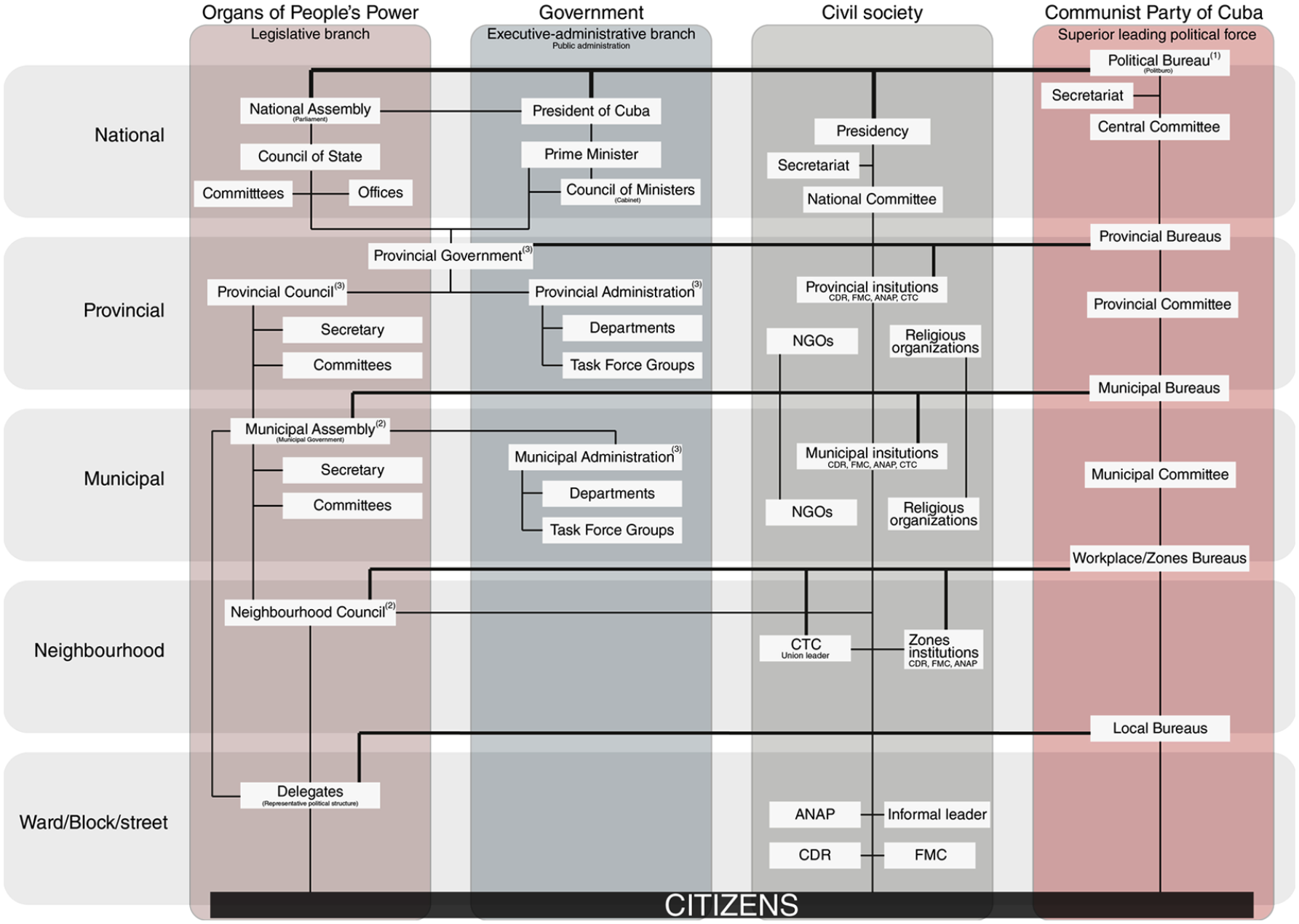
Cuba’s state–society structure
The current Cuban model of participation emerged in the 1960s within a single-party political system: the Cuban Communist Party (PCC). A key foundational principle of Cuba’s political and social project is the promotion of popular participation, central to which is the “Popular Power” system, which refers to “an intricate network of decision-making bodies at various levels”.(17) This system has been characterized by experimentation. Its other key feature is the tension between a vertical model of central planning(18) and what Collins refers to as a “culture of localism, conferred by a long history of municipal government and a tradition of mutual aid and self-reliance”.(19)
Drawing from Cuban scholars and from our study participants (whose role will be more fully described in the next section on methodology), we find three interrelated framings for citizen participation in planning. The first posits that participation should be understood as a goal of a socialist society, whose highest emancipatory potential relies on self-management and self-governance.(20) Taking this view, Valdés Paz notes: “Participation is key and an asset to the Revolution. Political participation meshes with education to engender knowledge. . . Consequently, democratic participation should not be conceived as a socialist-transitional strategy; it should be seen as a goal.”(21) One of our participants noted, in the same vein: “Participation is a learning process of citizen-building. Nobody is born knowing how to participate: therefore, it is inherent to a citizen education that needs to start at early ages” (Gina Rey, academic and long-term champion of participatory planning).
From this perspective, participation is a strategy to galvanize new social relations that requires the acknowledgement of citizens’ opinions and the aggregation of their demands and proposals into decision making, democratic control, and the evaluation of any policy or intervention.(22) This framing suggests the building of a democratic pedagogy(23) inasmuch as participation involves, in the words of another participant, “. . .the ability to physically transform something . . . and includes a psychosocial transformation. People when participating rebuild themselves” (Carlos García Pleyán, consultant planner). Crucial to this perspective is the permanent and systematic education of both community actors and local governments alike.(24) An illustration of this in the context of Havana are the territorial entities of the neighbourhood councils that channel local participation at the level of neighbourhood streets and blocks.(25)
The second framing states that participation is a prerequisite for local development.(26) This perspective highlights participation as a complex process that requires inquiry into the transcendence, levels, objective, subject and object of participatory processes.(27) That is why nowadays the constitutional call for decentralization is linked to the refinement of participatory mechanisms. According to Rodríguez Alomá, “. . .the possibility of citizen participation will be more viable when the administration is more decentralized.”(28) Similarly, Jiménez and colleagues note: “The deepening towards territorial decentralization needs to favour municipal autonomy for the planning and management of local development. This becomes a key element to achieve the enhancement of an effective social participation.”(29)
In this framing, participation refers to devolving the control over the conception and implementation of decision making in planning.(30) As one participant puts it, “participation goes with power, the distribution and access to power and the decision making, that is something that needs to be managed” (Ailena Alberto, NGO representative). Notwithstanding the intricate network of participation in decision-making bodies at various levels within the Popular Power system, Guzón identifies “a disarticulation between planning processes or the structures of coordination at the heart of the system and an inadequate definition of enterprise-community relations”.(31) In that view, participant Gina Rey notes, “participation is a process of pushing back against power”, and Rebellato sees it as a territory of ethical contradictions.(32) This framing refers to a perspective of vertical inclusion from the national to the local state and from the local state to the citizens. An illustration in the context of Havana is the Plan Maestro office in the historic centre (Section Vb addresses this case).
The third framing sees participation as co-responsibility and social inclusion of the plurality of actors and vulnerable populations.(33) This approach envisions processes of participation as the ensemble of actions and communicative practices deployed by multiple levels and multiple stakeholders for the integration of economic and social actors in the construction of a social project.(34) This is illustrated by the statements of two of the most notable female planners in Havana. According to Rey in 1995: “With the acceleration of the economic crisis in Cuba, the Group for the Comprehensive Development of the Capital [GDIC] has become deeply engaged in the elaboration of a strategic plan for Havana to combat the negative effects of the crisis. Its work incorporates the participation of universities, urban planning institutions, scientists, NGOs, businesses and local governmental representatives.”(35)
More recently, Rodríguez Alomá notes, “Residents shall pass from a passive posture to an active one inasmuch as they know deeply their rights and duties. . .they are the most complex actor given their diversity. . .that is why, it requires a policy of social inclusion, that understands the citizen as protagonist of the cultural sphere and with the full right to universal access to cultural services as means and option to improve their quality of life.”(36)
This framing acknowledges the existing social differentiation, inequalities and barriers to citizen inclusion in planning as well as the social response to crisis. Hansing and Hoffmann argue that an in-depth social restratification has taken place in Cuba, with Afro-Cubans as a group having lower incomes than whites.(37) Along the same lines, Jiménez and colleagues, in a systematic assessment of citizen participation and equality between 2008 and 2018, assert that youth and women experienced more obstacles to engagement in participatory processes.(38) These analyses suggest the need to attune participation strategies to address the asymmetries of social diversity and its impact on planning the future of the city. This framing suggests a more horizontal inclusion, where local governance is only possible through alliances with different actors and addressing the diversity of social identities. An illustration of this in the context of Havana is the talleres de transformación integral del barrio (comprehensive neighbourhood transformation workshops, TTIBs – Section Va addresses this case).
III. Methodology
We devised a three-phase methodology for data collection in order to answer the question: How does citizen participation in planning operate in Havana? The first phase entailed a collaborative workshop with multiple urban practitioners; the second involved a set of semi-structured interviews with key informants; and the third a desk review of secondary data to triangulate the main findings and distinguish the main conceptual framings of citizen participation in Cuba. The workshop brought together a collaborative multi-generational, interdisciplinary and multi-agency group of 19 participants to exchange knowledge on the participatory initiatives in Havana. The workshop was conducted over a two-day session in June 2017, and included urban scholars, NGO representatives, local and national government officials, UN-Habitat consultants and architecture students.
In the first day’s session, the workshop started with the use of basic tools to guide an incremental, flexible process of interaction with the participants. Small groups discussed participatory planning initiatives at both the national and city levels. An inventory of participatory initiatives was composed of maps and diagrams, which revealed how these projects emerged and were concentrated in time and space. This process allowed us to identify not only the types of initiatives based on scale and the lead organization, but also the emergence of initiatives and their patterns of continuity and disruption.
In the second day’s session, participants selected initiatives to illustrate different types of initiative, and formulated a systematic analysis of their legacies and potentials. The initiatives selected were recognized as paradigmatic to different degrees: some had impacts in both the physical and social spheres; some had historical continuity and remain active, despite adapting to recalibration. We agreed to analyse four variables to understand the enabling conditions of each initiative and their lessons: actors, resource management, knowledge and information management, and regulatory frameworks.(39)
In the second phase, as part of our fieldwork, in November 2017 we visited some sites where the selected initiatives had been deployed, including Cayo Hueso, Centro Habana and Artecorte. We also used semi-structured interviews with six key informants overall who were championing the selected initiatives, to deepen an understanding of the context and operation of the initiatives. Finally, in phase three we deepened our understanding of Cuban citizen participation and triangulated the findings with local and international secondary data. This study is restricted in scope – limited resources meant we could not conduct research on the other initiatives identified and make wider comparisons. We could have missed relevant experiences from other examples in our inventory, and participants were aware of this. Therefore, the collaborative mapping process should be considered a preliminary overview rather than a geographically exact picture or comprehensive account of all the initiatives.
IV. Mapping Trajectories Of Urban Participatory Processes
In Cuba, the trajectories of citizen participation in urban planning have been shaped by several recalibration moments. These moments are understood as broader socioeconomic, political, constitutional or geopolitical changes driving major measures to contain, adapt or upgrade the Cuban political, economic and/or social model, in which participation was used to seek legitimacy of those processes. Moments of recalibration have included:
The 1959 Revolution, when spatial practices were implemented to reduce rural–urban disparities and socio-spatial inequalities in securing access to the basic resources of social reproduction.
The 1976 enactment of the socialist Constitution, another milestone, where the “People’s Power” system was introduced to fill the existing gap in popular participation in decision-making processes, which remained highly centralized and lacking in citizen participation in urban planning.
The 1990s socioeconomic crisis following the collapse of the socialist bloc, called the “special period”,(40) when austerity measures were adopted, and decentralization processes started the “planning municipalization”.(41) This was intended to allow community participation in the planning process and to establish neighbourhood councils to connect municipalities and neighbourhoods.(42)
The suspension of decentralization in the 2000s, when the economy stabilized and Cuba and Venezuela became allies.
The updating of the socioeconomic model in 2011, when a partial opening to private entrepreneurship was observed.
The current moment of recalibration, marked by the 2019 Constitution’s approval of the role of local governments regarding citizen participation.
Most recently the impact of the COVID-19 pandemic.
We find participatory initiatives to have varied in their degree of consolidation and geographical impact. Participatory processes have been mostly concentrated at the national and neighbourhood levels, with fewer new initiatives at the municipal level and no participatory urban planning initiatives at the whole-city level. We identified six types of initiatives in the preliminary inventory, based on the scale of the lead organizations, the administrative location of the initiatives’ implementation, and, when further detail was required, the lead organizations themselves (Figure 2).
a)
b)
c)
d)
e)
f)
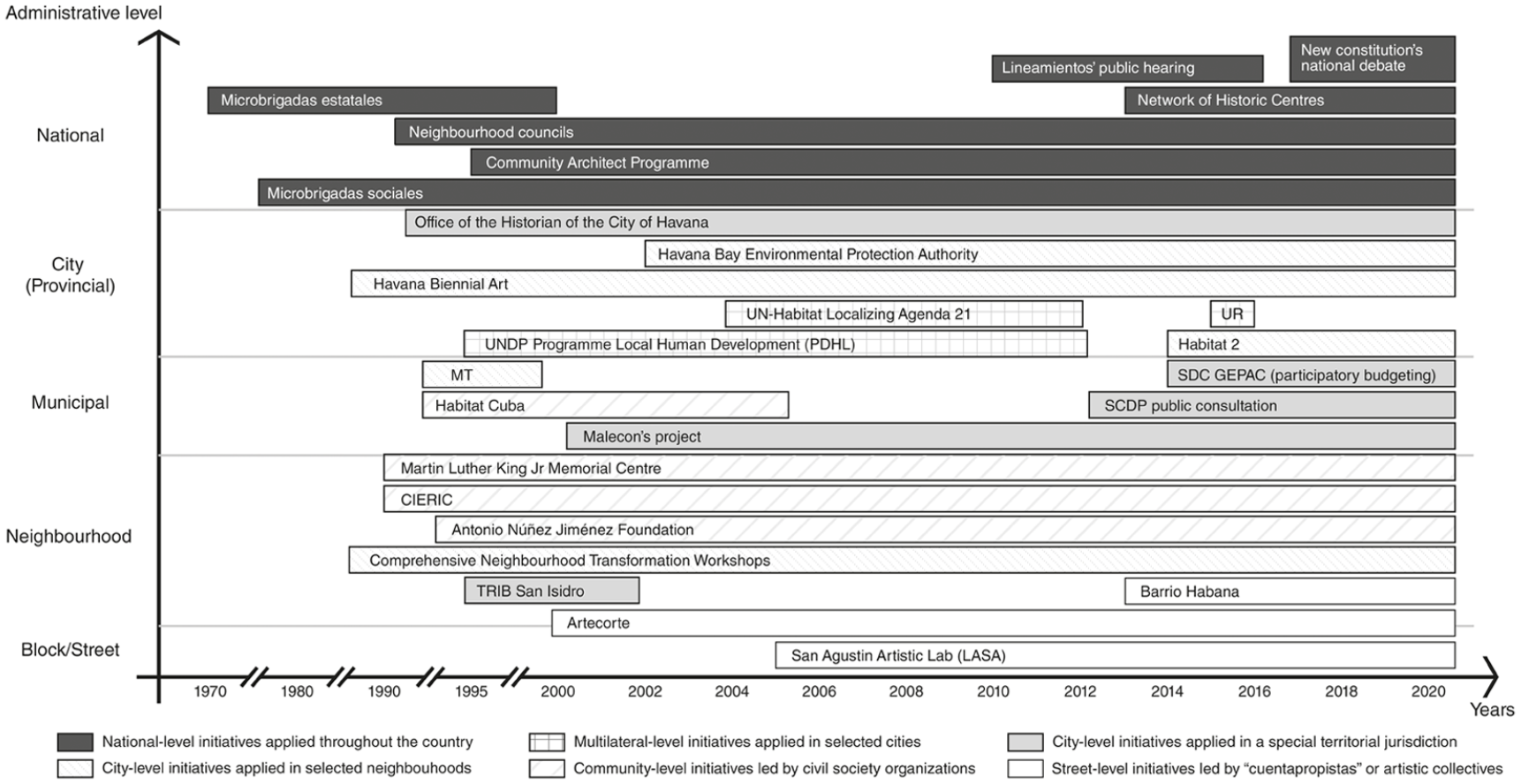
Timeline of citizen participation initiatives across administrative levels
These initiatives have some cross-cutting characteristics. Their aim is “holistic” rather than thematic; they are experimental, searching continuously for innovation; and they respond to moments of recalibration. Although the majority of these identified initiatives are state-led, NGOs(43) have also played a significant cultural role in shaping citizen engagement across scales. For instance, the Martin Luther King Jr Memorial Centre has developed an interesting bridge between popular education and liberation theology;(44) CIERIC has focused on territorial and culture-based community development projects;(45) and the Antonio Núñez Jiménez Foundation has focused on environmental education and urban agriculture based on permaculture principles.(46) These organizations have developed innovative methodologies to foster self-management and culture-based empowerment locally, while maintaining an active relationship with international cooperation actors.
Participatory initiatives are unevenly distributed across the city. Most of these initiatives are concentrated in the historic centre and along the coastal strip up to the Almendares River; the remainder are dispersed throughout the city, although they are relatively absent or ephemeral in some of the more peripheral municipalities (Figure 3). The neighbourhoods that have not been addressed are arguably some of those that most need interventions – San Miguel del Padrón,(47) for instance, where indicators for living standards are below those in the rest of the city; or Havana Bay,(48) which is under high pressure for transformation. Given the importance of decisions about the development of the Havana Bay area for the future of the city as a whole, this area may deserve further investigation and analysis. In sum, we find that participatory initiatives within Havana are spatially dispersed, short lived, sparse at the city level and occurring mostly in isolation at the neighbourhood level.
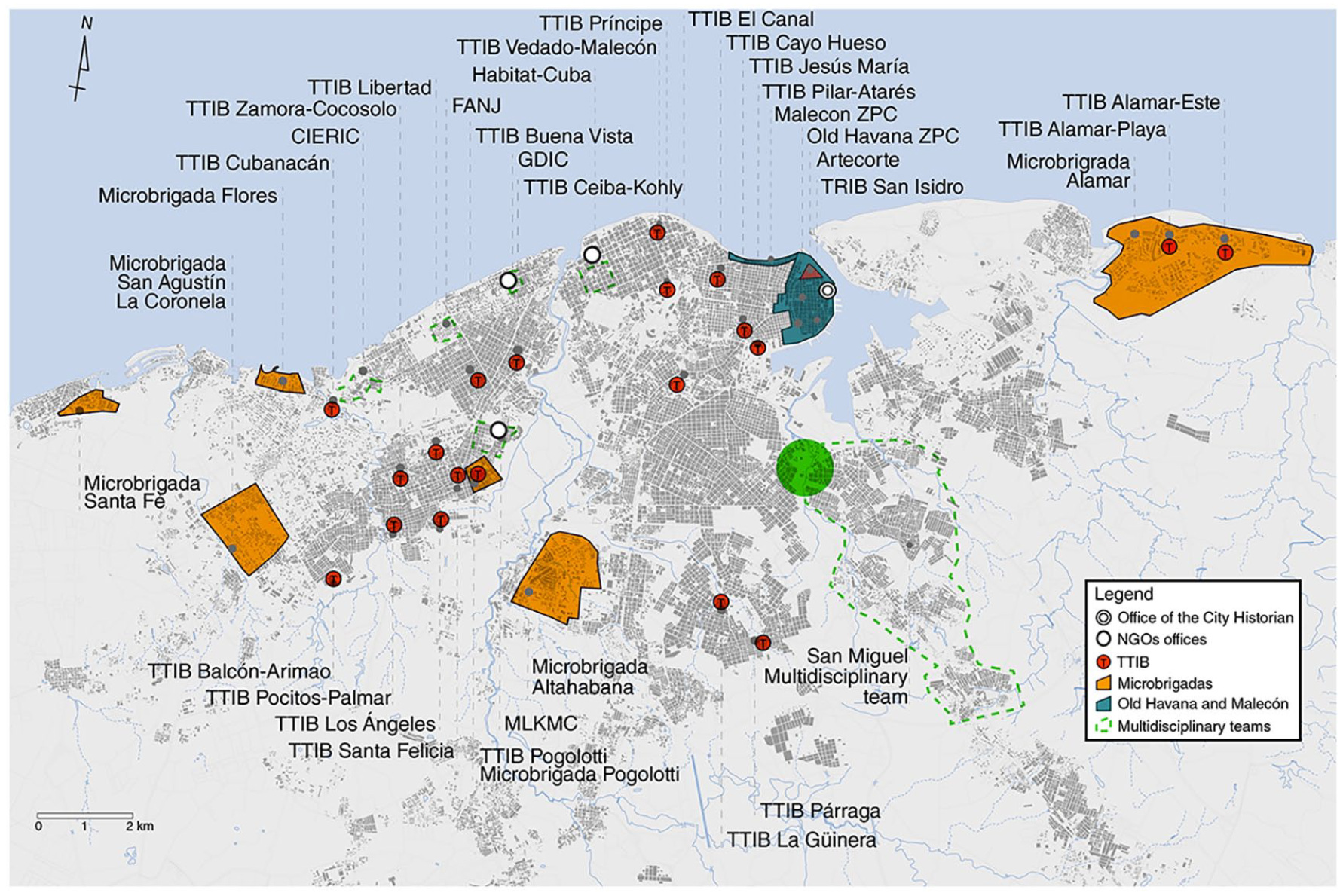
Map of participatory planning initiatives in Havana
V. Tracing Legacies Of Citizen Participation In Planning
After mapping the participatory initiatives temporally and spatially, we identified a couple of key milestones within a longer tradition of participatory urban governance in Cuba, stemming from the 1970s, that are worthy of mention: Microbrigadas(49) and the La Güinera project.(50) While the former operated under a logic of collective self-help housing,(51) the latter worked within the framework of participatory action research and popular education, focused on the collective construction of knowledge and a critical reflection of the praxis.(52) Both of these precursors underscore the active role of both national-level policy and neighbourhood-level organization as the basis of community work and direct citizen engagement. The following three “legacy” cases, which have benefitted from both of these earlier experiences, illustrate different types of participatory initiatives, and inform the legacies and potential of different approaches to scaling upwards and outwards.
a. Talleres de transformación integral del barrio (comprehensive neighbourhood transformation workshops)
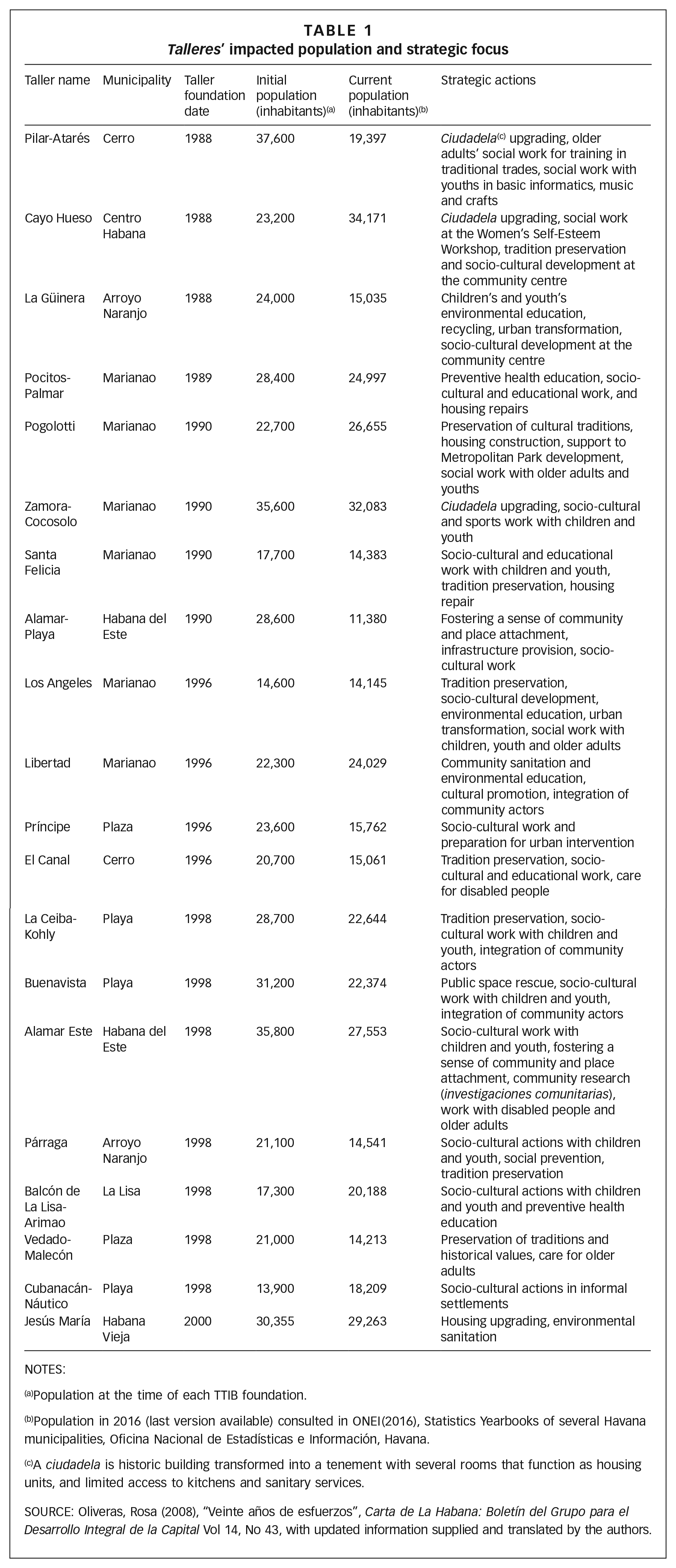
The talleres are an example of a city-level initiative applied in selected neighbourhoods. This initiative is considered in Cuba a paradigm for community development and unique in its theoretical and methodological contribution.(53) This initiative is rather influenced by the framing of participation as a learning process as well as a tool for including vulnerable populations in the planning process. Established in 1988, the talleres were first created in three low-income marginalized neighbourhoods in the city of Havana: Cayo Hueso and Atarés, inner-city neighbourhoods, and La Güinera, a peripheral informal settlement. More talleres were gradually created in low-income neighbourhoods, reaching 20 by the mid-2000s (Table 1). The talleres’ aim was the community’s physical, social and environmental transformation, undertaken in conjunction with municipal government and neighbourhood councils.(54) Local interdisciplinary teams were composed of around six professionals, mainly from the neighbourhood itself, with different backgrounds that included sociology, psychology, history, education, economy, geography, ecology, architecture and engineering. Applying the GDIC’s “strategic community planning” methodology, local teams engaged residents in all stages of the process, starting from diagnosis and the strategic selection of priority actions, and continuing on through the design of the plan, the implementation of the actions and, finally, the evaluation of each intervention and the measurement of citizens’ satisfaction.(55) The methodology aimed to reach out and involve all possible actors in the participatory process. The talleres’ work focused on training and capacity building; the needs of children and older adults; and cultural, environmental and gender-related programmes and projects.(56) The talleres’ staff provided training to the people involved in the planning process and in some cases, in community-based health interventions.(57) Table 1 shows a detailed list of the work developed in each taller.
Talleres’ impacted population and strategic focus
NOTES:
Population at the time of each TTIB foundation.
Population in 2016 (last version available) consulted in ONEI (2016), Statistics Yearbooks of several Havana municipalities, Oficina Nacional de Estadísticas e Información, Havana.
A ciudadela is historic building transformed into a tenement with several rooms that function as housing units, and limited access to kitchens and sanitary services.
SOURCE: Oliveras, Rosa (2008), “Veinte años de esfuerzos”, Carta de La Habana: Boletín del Grupo para el Desarrollo Integral de la Capital Vol 14, No 43, with updated information supplied and translated by the authors.
The talleres built alliances with many actors to strengthen their operations and address some gaps affecting their work. These actors included formal and informal community leaders and representatives from GDIC, neighbourhood councils, local governments, political and mass organizations,(58) universities, national and international NGOs, and international cooperation agencies.(59) Because the talleres had no communication strategy, they depended on alliances with the representatives of mass organizations to carry out social mobilization; they also relied on citizens informally mobilizing themselves, mostly led by women, via word of mouth.(60) Furthermore, they had alliances with NGOs and international cooperation agencies to mobilize resources internationally, and with universities and national NGOs to provide training and capacity building to the community and the talleres’ staff.(61) In the late 1990s, the social relevance of this initiative and its innovations were the focus of four annual workshops that gathered Cuban urban sociologists to discuss participatory urban development experiences.(62)
Financial resource constraints have been constant since the talleres began and became critical during the 1990s economic crisis.(63) This meant that physical transformations were extremely limited and the focus was reoriented towards social and environmental transformations.(64) The physical aspects could only be partially addressed through state-led projects(65) and through international cooperation.(66) The daily lives of the talleres’ staff and activities have relied on the municipal budget. Meanwhile, endogenous resources have partially made up for the financial resource limitations and have supported the social and environmental transformations.(67) These assets have been rooted in community networks, and have included women’s and men’s time, capacity, place attachment and sense of community; NGOs engaged with the talleres’ work and the very existence of the talleres as collective space.
The talleres are not endorsed by any legislation, and hence have no legal status, but are subject to municipal government jurisdiction. Chaguaceda’s assessment of the talleres suggested that “the state played a contradictory role, providing material resources and support to the personnel while blocking legal recognition and the consolidation of self-management in the popular economy, and trying to co-opt local productive initiatives”.(68) Nonetheless, an important spatial intervention has been the creation of community centres in the neighbourhoods, functioning both as places to socialize and as the talleres’ headquarters.(69) This community centre initiative has been scaled out to other low-income neighbourhoods throughout the city.(70)
b. Plan Maestro (Master Plan of the Office of the City Historian)
Plan Maestro, the name of the department within the Office of the City Historian (OCH) in charge of the Master Plan for Comprehensive Rehabilitation of Old Havana,(71) is the sole example of a city-level initiative applied in a special territorial jurisdiction. This is a unique case, developed as an experiment in participatory planning for comprehensive community development in the context of heritage rehabilitation. It was rather influenced by the framing of participation as vertical inclusion in decision-making processes, working for co-responsibility of the range of actors in the territory. After Old Havana(72) and its fortification system were acknowledged as a national monument in 1978, and as a UNESCO World Heritage site in 1982 led by the OCH, the Plan Maestro office was established in 1994 as a planning unit to preserve the exceptional value of the place. The UNESCO designation of Old Havana and the international prestige of OCH, led by Eusebio Leal Spengler,(73) provided national and international political legitimacy for this historic preservation.(74) The Plan Maestro was established based on an understanding that the historic centre encapsulated tangible and intangible heritage that it was important to preserve, but also that this could activate the aspirations and imaginaries of its inhabitants. Learning from this experience, we found that the greatest concentration of participatory initiatives was in the historic centre (Figure 4), the most recent ones being the public consultation (2011–2016) on the current plan, and the pilot project for participatory budgeting (2014–2017).
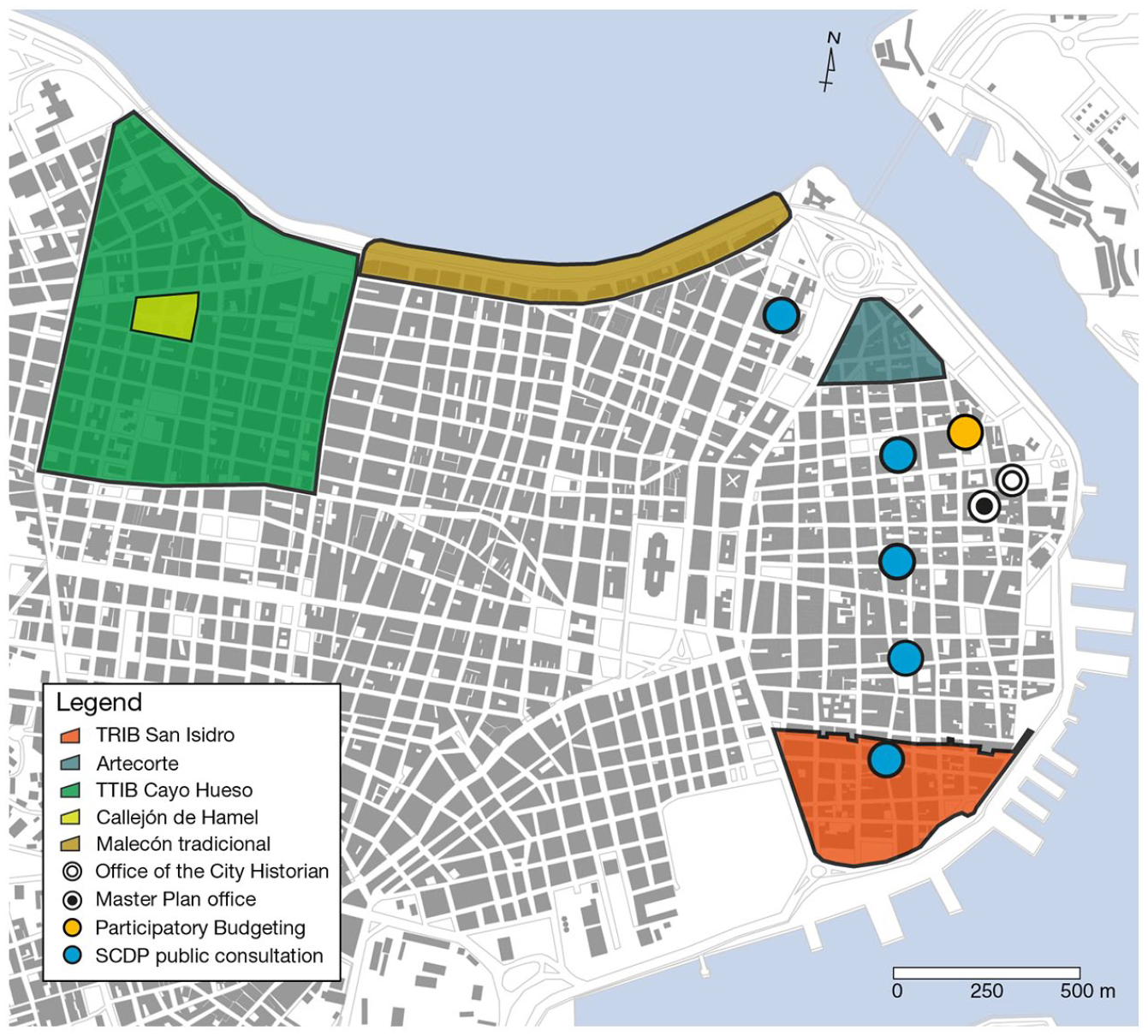
Map of participatory planning initiatives in Old Havana and Havana Centre
The Plan Maestro developed a community development planning framework, supported by a census to produce its own data about people’s priorities and the most critically threatened built heritage. Based on this process, the Comprehensive Development Plan (CDP) was launched in 1998, paving the way for the institutionalization of subsequent citizen participation in planning, and breaking with any preconceived planning practice and discourse in Havana at the time. This plan provided mechanisms for accessing information and consultation for decision making, and an ideas bank for potential projects and their implementation was co-produced by planners and citizens.(75) The CDP allowed for resident participation in self-build schemes, but had a limited impact on decision making.
The next plan was drafted in 2011 under Rodríguez Alomá’s “TESIS” methodology,(76) adopting its current name – the Special Comprehensive Development Plan (SCDP) – and confirming its participatory essence when a wide-scale public consultation with citizens and institutions was held for the modification of the plan. This public consultation was an initial step in involving the whole municipality, through social mobilization by mass organizations in all neighbourhood councils and through an advertising campaign using the OCH’s media department and local media. This participatory planning initiative included 23 workshops with 637 participants (201 of whom were officials and civil servants, the remainder being citizens). It also served as a learning process for both the Plan Maestro and citizens, allowing Plan Maestro members to familiarize themselves with the methodological and organizational aspects for future processes, such as establishing a permanent public consultation called Opening Spaces, a more recent experience with knowledge co-production.
Its territorial financial autonomy makes Old Havana a special jurisdiction with unique internal resources.(77) Law Decree 143-93 enabled the OCH to enter into profitable commercial activities(78) and to control its own finances in carrying out its heritage preservation functions.(79) It became a self-financing agency and contributed to the national budget through taxation rather than relying on state grants. This made it what Monreal called “the most powerful local public corporation in Cuba”.(80) The OCH has three income sources, descending by size of revenues: businesses, the “restoration contribution” tax and international cooperation. The “restoration contribution” tax is a unique prerogative for Cuba, allowing the OCH to retain and allocate 100 per cent of the taxes collected.(81) International cooperation agencies were among the first donors to heritage preservation, and this support has been stable over recent years. This process has supported the rehabilitation of a third of the buildings in the OCH’s domain in the last 20 years, mainly those located in plazas(82) and along commercial corridors.(83) More recently, the first participatory budgeting in Cuba was tested, funded by the Swiss Agency for Development and Cooperation (SDC) and carried out by the OCH with the municipal government’s support.(84) This suggests that it might be useful to explore the possibility of experimenting with greater revenue retention and autonomy in other neighbourhoods.
The OCH mandate and strong regulatory framework allow it to interact with actors in a sui generis and multilevel fashion that extends from grassroots citizens to United Nations organizations. The OCH’s network of actors also includes those at both the national(85) and provincial levels,(86) and at the local level it interacts with all governmental bodies, mass and political organizations, universities and NGOs. In its joint work with the Old Havana municipal government,(87) the two bodies pursue different agendas but share tasks and support each other.(88) In addition, the OCH works closely with the NGO SPCMA (Sociedad Patrimonio, Comunidad y Medio Ambiente) founded by OCH staff to support its socio-cultural programme.
c. Artecorte
Artecorte is an example of a street-level initiative led by cuentapropistas,(89) or artistic collectives. This initiative, although sui generis, can be linked to the framing of participation as a learning process and as a platform that aims to lead to self-management. It could be considered a comprehensive community development initiative focused on entrepreneurial solidarity.(90) Started in 1999 by an informal leader, a barber named Gilberto Valladares (aka Papito) in the Santo Ángel neighbourhood, north of the historic centre, the project sought to train dropout youngsters in hairdressing and hospitality skills and to create job opportunities within the area or in the rest of the city. He decided to dignify the barber and hairdresser professions by creating a living museum displaying their traditional paraphernalia. The idea was to show the social relevance of the know-how that had contributed to the cultural and historic reactivation of the vicinity. In 2009, in conjunction with the City Historian, the aims of the project were expanded to reach a more holistic engagement for community transformation, including the physical upgrading of public space and housing, along with capacity building and a focus on entrepreneurship. Artecorte has been described as a social innovation initiative involving small businesses and community development approaches.(91) According to Henken, it merges “(1) economic development (via private entrepreneurship as a licensed cuentapropista) with (2) social responsibility (via a variety of community development initiatives) and (3) cultural preservation (through an important alliance with the Office of the City Historian). Artecorte embraces an ethic of [collaboration] over competition,(92) combining bottom-line-oriented private enterprise with neighborhood uplift, community outreach, and collaborative synergy—alternately independent from or in sync (and occasional partnership) with the government’s “party line”.”(93)
Artecorte’s operation strengthened the thick network of neighbouring relations and densified the linkages among neighbours to cultivate a sense of community.(94) Neighbours, rather than acting as mere passive subjects benefitting from the upgrading of public and private spaces, participated in the decision-making and implementation processes. Community transformation required a funding scheme, which in this case was a sort of self-organized savings called a “collection box” where neighbours – mainly private entrepreneurs – contributed to their own saving capacity, and neighbours collectively decided upon the allocation of these savings. Furthermore, Artecorte has carried out several meetings for the management of the Santo Ángel neighbourhood, supported by the Plan Maestro’s methodological guidance, where the main purpose is to achieve participatory and comprehensive neighbourhood management.(95)
Artecorte has developed a strategy of intersectoral alliances and support networks as forms of social innovation.(96) The main actors involved are the private entrepreneur community – small businesses(97) in the Callejón de los Peluqueros – with people from the community,(98) the OCH and national-level institutions.(99) Artecorte had built a strategic alliance with the OCH because the OCH represents the local development authority jointly with the municipal government, and is the approval office for operational licences to cuentapropistas.(100) Many proposed projects have the endorsement of the OCH, which has helped them with resources or technical assistance, and donations to Artecorte can be channelled through the OCH’s Department for International Cooperation.(101) Artecorte has also developed alliances with state-owned enterprises such as Habaguanex, San Cristobal, SELECMAR and Havana Club to foster the creation of job opportunities in the hospitality sector, and has hence also served the purpose of livelihood generation. In addition, Artecorte has established alliances with universities, which have provided pro-rata technical support and capacity building to bridge the gaps in entrepreneurship, and other enterprise-related affairs.
While the OCH is regulated under Law Decree 143-93, according to Henken, Artecorte’s participants “are simply a group of people working to do some non-profitable work within a community, by their own efforts, without having a regulatory framework”.(102) This suggests that it had had some flexibility to generate new partnerships and alliances, but also that these alliances were built to cover the vulnerabilities left by non-existent regulation. At the same time, while the economic activities that animate the socio-spatial programmes of this initiative are well supported within the microenvironment of the historic centre, they have also experienced structural barriers from within the economic macro-environment such as over-centralized decision making and limited autonomy. Thus, private ventures – cuentapropistas and the like – are relatively new phenomena, and are likely to become a more common feature of urban transformation. While they play a positive role in introducing ideas of entrepreneurial solidarity and social innovation, they also run the significant risk of eventually pricing out the local population.(103)
VI. Patchwork Legacies And Future Challenges For Scaling Participation Up And Out
This overview of initiatives reveals the different ways in which participation has been enacted in Havana – as emancipatory self-management, as a prerequisite for local development and as a strategy of co-responsibility. It must be acknowledged, however, that, as Chaguaceda explains, “participation, as it is defined in practice, has a consultative bias in the sense that citizens’ discussions take place on courses of action that have already been outlined or determined at higher institutional levels, such as the State Council and Politburo”.(104) While the central government has led most of the initiatives, however, many others are led “from the bottom” by community groups, NGOs or private individuals, and all have complex arrangements with international cooperation agencies and central and local governments. In the workshops we conducted, we found that most of the initiatives documented were generated by actors at the neighbourhood level, with strong linkages to relevant levels of public administration, to the neighbourhood councils, and in collaboration with actors operating across scales. Even though the impact of these participatory initiatives is spatially limited, the wealth of experience and accumulated knowledge can inform the deepening of participatory planning, given that Havana has no city-wide participatory planning strategy as yet. The main scaling-up mechanism pertains to the participatory “ecology” of the City of Havana, which is highly diverse in terms of the type of actors involved and their scale of operation. In the analysis of these patchworked legacies, we find a set of distinctive enabling and constraining mechanisms for scaling up and outwards:
a. Enabling conditions for scaling up/out
From the Plan Maestro: The direct support of the national level, along with the recognition of the multilateral organizations (i.e. UNESCO), increases the initiative’s political leverage and supports strong multilevel and intersectoral alliances. The importance of securing support from both the highest level (i.e. the Council of Ministers) and the local level ensures the institutionalization of initiatives. The OCH’s general structural principles have subsequently been institutionalized nationwide, with a nascent network of nine city historian offices in nine cities.
From the talleres: The key objective of partnering with local universities is to develop comparable and socially relevant research processes. A methodological approach that seeks to engage residents in all stages of the decision-making process promotes the active involvement of citizens.
From Artecorte: The alliance with state-owned firms opens livelihood generation opportunities for local residents that can be replicated in other sectors of the city. The alliance with the OCH allows street-level interventions to be aligned with the broader vision of urban change defined in the local plan.
From the Plan Maestro: The legal recognition of participatory planning and a negotiated regulatory framework to support municipal autonomy helps to sustain experiments in citizen engagement at different scales.
From the talleres: The absence of a fixed regulatory framework has meant flexibility for their operation, allowing them to adapt to the local context and to maintain the creativity envisioned in their creation.
From Artecorte: The cuentapropista-led initiative is not inscribed in a particular regulatory framework, which to some degree protects the independence of the citizen engagement process.
From the Plan Maestro: The availability and constant updating of cultural and territorial data in open-source platforms supports transparency and easy public access. The documentation of participatory methods that focus on intersectional identities is also valuable to foster into a city-wide participatory strategy. On a larger scale, there is the budding development of city historian offices in nine more cities, based on information about Havana’s OCH.
From the talleres: The case showed how a commitment to popular education, focusing on the most vulnerable populations and a shared interdisciplinary methodology, is important to achieve coherence and flexibility across myriad neighbourhoods. The rich documentation of the case and its reputation at the international level have helped to inspire the creation of research centres for local and community development across several other cities in Cuba.
From Artecorte: The focus on capacity building for job generation and culture preservation creates pedagogical assets that could be learnt from in other economic sectors.
From the Plan Maestro: The international prestige of the OCH provides political legitimacy for channelling international funding for the preservation of strategic historic and cultural assets of the country. The fiscal decentralization confers a high degree of autonomy of the public expenditure (i.e. the OCH retains 100 per cent of the “restoration contribution” tax). The current piloting of participatory budgeting in one sector of the historic centre has the potential to be replicated in other neighbourhoods or in a city-wide space.
From the talleres: The continuity of the interdisciplinary teams is a relevant endogenous resource. The incremental growth and networked operation with periodic meetings helps to consolidate the institutional memory across neighbourhoods.
From Artecorte: Testing different models of social responsibility for cuentapropistas (for instance, the self-organized savings called “collection box”) could open a variety of avenues to strengthen local economic development at a wider scale. The exploration of entrepreneurial solidarity schemes allows for the expansion of opportunities for job generation while also upgrading public space.
b. Constraining conditions for scaling up/out
From the Plan Maestro: The very uniqueness of the OCH presents limitations in terms of institutional scaling, given the lack of opportunity for strategic alliances with other municipalities.
From the talleres: The intermittent nature of collaboration with international cooperation agencies limits the sustainability of the projects proposed. The organizational structure also risks becoming stagnant as a bureaucratic space with limited manoeuvrability to partner with non-state organizations.
From Artecorte: Even though this initiative remains active, that is not the case for several other autonomous initiatives that have been cut short. This suggests, as Chaquaceda puts it, “the Cuban bureaucracy’s profound and instinctive rejection of autonomous social practices (known as autonomofobia)”.(109)
From the Plan Maestro: Overly rigid institutional structures and regulations can inhibit the growth of new initiatives and the flexibility for them to flourish.
From the talleres: The absence of a regulatory framework inhibits their legal recognition and the consolidation of self-management schemes, and hinders their institutionalization at a broader scale.
From Artecorte: The absence of a regulatory framework for shaping the role of cuentapropistas in participatory planning limits the possibilities for a more plural citizen engagement.
From the Plan Maestro: The expertise required to shape open-source geographic data, not currently present across municipalities, limits the emergence of digital geographic platforms at the city level.
From the talleres: The restricted access to longitudinal data on territorial features, transformation and interventions at the neighbourhood level limits public access in the digital sphere.
From Artecorte: Prejudice against non-state actors could undermine efforts to scale the current training capacity to other locations or sectors.
From the Plan Maestro: Outside the OCH jurisdiction, the devolution of territorial competences without financial resources inhibits the motivation of citizens to engage in deliberative processes, as there is limited potential for impact on the built environment.
From the talleres: The lack of autonomy and the loss of any direct allocation of financial resources weaken the potential impact in the physical space and deepen the dependence on municipal budgets, NGOs or international cooperation agencies, undermining territorial impact and continuity.
From Artecorte: Despite the promotion of livelihoods, the current structural barriers in the macro-environment erode the potential to scale out economic impact across the city. The upgrading of the built environment poses the risk of eventually pricing out local residents.
VII. Conclusions
This paper has presented Havana’s framings, trajectories and legacies of citizen participation in planning. We have argued that, in the absence of a strategy of participatory planning at the city scale, decision makers might learn from existing initiatives at the neighbourhood or municipal level to harness the existing endogenous resources that foster participatory processes. In order to increase the deliberative power of neighbourhood councils, it is necessary to expand the recognition of intersectional disadvantages and the distribution of resources for material transformation of urban space. A plural vision of the city and its future requires a city-wide strategy that prioritizes the most disadvantaged municipalities. Useful learning can be drawn from:
the creative agency and interdisciplinary methodology of the talleres’ strategic community planning;
the existing experimentation capacity and territorial finances of the Plan Maestro;
and the intersectoral alliances and entrepreneurial solidarity of Artecorte.
New participatory initiatives have tended to emerge at moments of recalibration within the state, when there are opportunities to impact these processes. In the current phase of recalibration, some of the new activities take the form of neighbourhood initiatives led by the private sector, which present new challenges for participatory urban development. The need to ensure local citizen participation in creating and implementing a community vision for urban development is complicated by the uncertainty around the post-pandemic recovery, as well as by developments that affect the availability of financial resources for urban improvement – from both national and international sources, with both budgeted and project-based funding.
Footnotes
Acknowledgements
We want to thank the UCL Global Engagement Office (GEO) grant for making possible the initial exploratory work that led to this article and to all the main workshop participants for contributing their time and rich experience. We are also very grateful to the anonymous reviewers for their valuable comments and suggestions, and to Sheridan Bartlett and Christine Ro for their helpful advice and careful reading throughout the process.
1.
Within the framework of the Seventh Congress of the Communist Party of Cuba, held in 2017, the Conceptualization of the Cuban Socio-Economic Model and the Bases of the National Development Plan for the Country until 2030 were widely discussed across the country. Within the latter, the strategic axis on “Human Development, Equity and Social Justice” states the aim: “[t]o achieve effective levels of popular participation in all the spheres of the economic, political, social, and cultural life, as an essential principle to advance in building a socialist society”.  , page 27.
3.
4.
Forbes and Thrift (1987); also Szelenyi (1983, ).
5.
Scarpaci (2000a), page 663; .
13.
15.
White (1996); .
20.
24.
30.
39.
a) Actors: Involves the definition of lead organizations, institutional and personal alliances that sustain the initiative, and the participants involved, to galvanize collective action;
b) Resource management: Involves not only the funding strategies but the endogenous resources that include human, social and cultural assets, and the residents’ innovation capacity [see ];
c) Knowledge and information management: Involves the approaches and methods to bridge the “professional knowledge” with citizens’ knowledge and experiences, as well as the ways in which the urban data are understood, mobilized and archived for decision-making purposes;
d) Regulatory framework: Involves the state architecture for decision making, i.e. the regulatory tools that have propelled and hindered the citizen engagement in planning processes according to the different competencies, jurisdictions and degrees of institutionalization of the initiatives.
42.
Uriarte (2002), page 47; .
43.
contends that the concept of Cuban civil society is contested. One group views civil society in Cuba as not detached from the state – therefore, not acting against the state as a democratizing power, like in other countries. Another group argues there is no civil society, but just enabling mechanisms in place for their formation. The state, through the Ministry of Foreign Investment and Economic Cooperation, “approves and conditions the relationships between Cuban and foreign NGOs” (page 53), and Cuban NGOs are closely monitored by the state through budget planning and expenditure control.
46.
explains that urban agriculture is considered, together with the achievements in health and education, a success of the revolution. The revolution is linked to the urban agriculture movement because although at the start agriculture was a means of survival initiated by individuals, “it did not take long for the government to realise the potential of local food production, and appropriate the initiatives of urban gardeners” (page 48). The state promotes this mass movement that provides food security and creates jobs, linking it to its public health system. For instance, the Movimiento de Patios y Parcelas (Movement of Patios and Plots), which carried out a census of existing gardens, was created in 2000 by the Ministry of Agriculture to promote urban agriculture, but also to take control over it.
47.
San Miguel del Padrón, located on the south side of Havana, is a municipality dating back to the 17th century that was unpopulated in the 1940s and now has more than 150,000 inhabitants, many of whom are migrants living in informal settlements.
48.
Most of the oldest buildings and infrastructure, the earliest of which date back to the late 15th century, are around Havana Bay in the Habana Vieja (Old Havana) and Regla municipalities. From there, the city grew outwards, with the latest major expansion in La Habana del Este since the completion of a tunnel under the bay in the late 1950s.
49.
The Microbrigadas movement initiated in the 1970s arose to relieve the existing housing problems. The units built by 30,000 Microbrigadistas were allegedly distributed according to needs and merit among the workers at their own workplace, reaching 82,000 dwellings in 1978, many in the form of satellite cities around the capital. Mathey (1989a); .
50.
58.
Mass organizations are characterized by massive membership and social mobilization capacity, and are considered contested members of civil society, which include the Committees for the Defence of the Revolution (CDR), the Federation of Cuban Women (FMC), the Cuban Labour Union (CTC) and the National Association of Small Farmers (ANAP).
62.
These are the proceedings of the four Talleres de Desarrollo Urbano y Participación (Urban Development and Participation Annual Workshops): Vázquez and Dávalos (1996); Vázquez and Dávalos (1997); Dávalos (1998); and .
65.
A governmental project, commonly known as Plan Cayo Hueso, sought to repair and rehabilitate most of the housing and infrastructure in that neighbourhood, but sometimes this was only for cosmetic purposes.
66.
The scope of international cooperation influenced the sustainability of its contributions. In some cases, international cooperation agencies implemented projects that were restricted in time and scope, scarcely achieving a few outcomes. In other cases, national NGOs have worked with the talleres to raise funds from international aid, achieving better outcomes than the talleres alone. On this basis, NGOs were catalysers of funds for the talleres. Oxfam-Canada, UNICEF, Norwegian People’s Aid and European Official Development Assistance have been the main funders.
67.
Further detail on social transformation in Cayo Hueso is in Fernandez (2003); and on environmental transformation in Anguelovski (2014); also see .
69.
For example, in the Cayo Hueso neighbourhood, three community centres were founded, targeting different social groups: namely, Casa del Niño y La Niña (children), Casa Comunitaria San José (women and older adults), and Casa Comunitaria San Miguel (young adults). See the detailed community centre description in Fernandez (2003); and .
71.
The Office of the City Historian was founded by Dr Emilio Roig de Leuchsenring in 1938, during his tenure as the city historian, a position he had held since 1925. In 1967, on Roig’s death, Dr Eusebio Leal Spengler took over the position to continue Roig’s legacy of heritage preservation and conservation until 2020, when he passed away.
72.
Old Havana has a population of 85,000 inhabitants, an area of 437 hectares, and a population density of 193 people per hectare.
73.
76.
77.
Old Havana’s cultural heritage, Havana Bay landscape and natural environment, along with its centrality, national identity and well-formed human capital, all together are the true initiators of the OCH’s work. The OCH put in practice what called “valuing heritage”, restoring its former glory to urban and building heritage, which became assets in these processes, and preserving historic memory, cultural traditions and folklore for present and future generations.
78.
The OCH created organizations to support its heritage conservation and preservation works, addressing the Cuban opening up in the 1990s economic crisis, i.e. tourism, foreign direct investment and US dollar legalization. In doing so, the OCH founded Habaguanex S.A. (tourism, services and retail commerce), Fénix S.A. (real estate), San Cristobal S.A. (travel agency) and Puerto Carenas Construction Co. (construction). Also, the OCH deployed funding mechanisms for partially funded self-help housing.
81.
In 2008 alone this tax reached a gross total of US$ 27.4 million.
83.
85.
The OCH has collaborated closely with the Cuban Ministry of Culture, because of its aim of heritage preservation and conservation.
86.
The Havana Department of Physical Planning approves the OCH’s proposed plans.
87.
The municipality receives income from tax collection, and its expenditures are used to cover public services and public administration. On the other hand, the OCH’s public administration functions cover a wide network of museums and cultural centres, some public services, and the bulk of the construction and maintenance activity.
89.
refers to cuentapropismo as self-employment in businesses that were recognized and propelled legally by Raúl Castro (2008–2018). These economic activities also imply an urban space reorganization given the emergence of new commercial spaces in former residential spaces, as well as a shift in many domestic spaces now adapted to house economic activities.
92.
An ethic of collaboration, in this context, means fostering new businesses in the same street rather than competition, promoting other values such as solidarity and cohesion.
97.
The small businesses – six restaurants, three art galleries, one coffee shop and a craft stand – contribute to the costs and knowledge to upgrade the local area and reach out to local families.
98.
This initiative particularly empowered women, cared for older adults, worked with children and youth, and supported disabled people.
99.
The cultural and wellbeing agenda is run with the Municipal Department of Culture and the National Institute of Sport and Recreation.
100.
Businesses operating in the historic centre contribute 1 per cent of their income if operating in national currency and 5 per cent if they operate in international currency. Cuentapropistas need to contribute 10 per cent of the fee defined by the Tax Administration Office. However, the new changes to currency may change this distribution soon.
101.
The SDC, UNICEF and the European Union have also supported some of the key social programmes.
103.
The state needs to adapt its institutions and regulatory frameworks and strengthen communities’ participation capacity to manage private developers’ interests in processes of urban development.
Funding
This article is part of the research project KNOW, funded by the UK’s Economic and Social Research Council (ESRC) under the Global Challenges Research Fund (GCRF) [grant number ES/P011225/1].