




Abstract
Urban extreme poverty has long been regarded as a vital challenge for policy and practice, but how might we research it? In this article, we set out a two-step approach to identifying and understanding the nature of urban extreme poverty (UEP). We experiment with an approach that does not define UEP in advance but seeks to examine it through a series of dimensions and approaches. Drawing on the long history of research on UEP, we argue that research would benefit from early scoping in context. This scoping begins by examining how UEP surfaces in relation to five dimensions: material, economic, political, spatial and emotional–subjective. From that base, we argue for a focus on the causes and form of UEP through dialogue among four epistemic approaches: political economy, political ecology, feminist urbanism and postcolonial urbanism. We illustrate this approach in relation to two quite distinct cities: Mumbai and Lima.
Keywords
I. Introduction
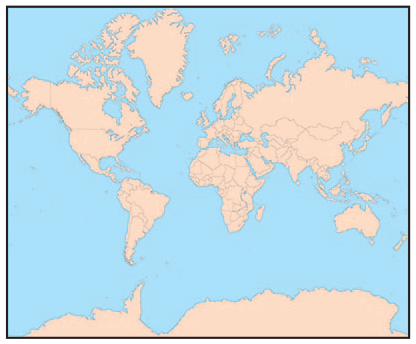
Across the world, the relationship between the city and poverty is increasingly at the forefront of research, policy, practice and activism. There are good reasons for this. By 2050, 68 per cent of the global population will live in urban centres; cities increasingly define and drive global economies, national politics and cultures, and ecological processes.(1) Poverty, too, is increasingly urban and urbanizing. Cities represent not only spatial concentrations of poverty, but often the economic, political and social opportunities necessary to reduce it.
A fundamental question, then, for research, policy and practice is how to understand and identify urban poverty. With regard to this question, urban extreme poverty represents a particular challenge. While in some quarters there remains a rather narrow conception of urban poverty as a question of income, the direction of travel is towards more nuanced and context-specific understandings of what urban poverty is, what causes it, and how it might be addressed.
Despite these advances, the understanding of extreme poverty remains fraught with difficulty; inevitably, any attempt to characterize it reveals some issues more clearly than others. But rather than critique existing approaches or argue that one is necessarily superior to another, our aim is to consider how extreme poverty is revealed from different perspectives. The contribution of this article is to outline an approach to identifying and understanding urban extreme poverty (UEP) that avoids defining it in advance. Rather, the approach we outline here allows the nature of UEP to emerge in context. UEP, then, is itself a lens through which we try to understand how the most intractable urban challenges impact on the most vulnerable urban populations. By focusing on cities in the global South, where the vast majority of UEP is to be found, we ask: What is urban extreme poverty? How does it appear in cities? And how might we conceptualize and research it?
There is, as we will show, a long history of different approaches to understanding the poorest groups in cities, which are often seen by policymakers, locally and globally, as the “hardest to reach”. There is a recognition too that tackling UEP sometimes requires different tools and approaches to other poverty reduction strategies. It would be quite incorrect to suggest, then, that UEP has not been the focus of research, policy and practice. Yet what has been less explored is the value and potential of pursuing multiple, different epistemological approaches to UEP and, in particular, to how those approaches might reveal what UEP is and what, then, needs to be prioritized to address it.
Our starting point is that UEP is contingent and manifests in different cities, and sometimes within the same city, in quite distinct ways. This means that we can use no one indicator or model to distinguish UEP from poverty in general. We argue that understanding UEP is primarily a question of attending to context, and in particular to the spatial and temporal dimensions of poverty in the city. To this end, this article develops and explores the potential of a two-step approach to understanding UEP in context. Rather than reduce UEP to pre-established parameters – for instance around income or food consumption – we argue for using multiple lenses on UEP and for working flexibly among them. It is in this sense that we refer to our approach as, at once, conceptual and methodological.
The first step involves using a typology of five dimensions, based on existing literature, to begin to identify the configuration of UEP in a particular urban site. In some cases, what pushes people into UEP is the operation of all of these five dimensions at once. In other cases, it may be the severity of just one of the dimensions that tips people into UEP in the shorter or longer term.
The second step involves keeping these dimensions in mind but looking at UEP through distinct epistemological lenses. We identify four approaches in particular as important urban traditions for understanding, identifying and researching UEP: urban political economy, urban political ecology, feminist urbanism and postcolonial urbanism. Each of these, we argue, draws attention to some aspects of UEP while marginalizing others. We explore the potential of allowing dialogue among the multiple dimensions, lenses and the local context to contribute to the understanding of how UEP manifests in cities.
In the following section we present an overview of how UEP has been characterized and researched across academic and policy discourses. In Section III we outline the first step of our two-step approach, the dimensions of UEP. In Section IV we outline how the four bodies of critical urban theory might help us to research and understand UEP. And in Section V we put our two-step approach to work, by drawing on previous research conducted in the cities of Lima, Peru and Mumbai, India. In the final section we reflect on the potential of our approach for researching UEP and we return to the issue of context.
II. Discourses of Urban Extreme Poverty
There exists a long history of debate and international target setting around urban poverty and urban extreme poverty.(2) Many of these debates have focused on the relationships between simple, measurable definitions and targets – particularly around income – and more nuanced accounts of how poverty is actually experienced in cities. Sustainable Development Goal 1 aims to eradicate extreme poverty – defined as living on less than US$ 1.90 per day – everywhere, by 2030. There has been progress, particularly in relation to rural poverty, but evidence suggests that poverty is increasingly urban and, with most global population growth projected to take place in cities and towns in Africa and Asia, we are likely to see the urbanization of poverty continue.(3)
Global poverty reduction statistics do not account for disparities in the cost of living between urban and rural areas. Mitlin and Satterthwaite have argued convincingly that urban poverty is frequently misunderstood or mischaracterized. As they have written, income-based poverty lines are spurious indicators of poverty that do not reflect its multiple dimensions in the city.(4) At worst, poverty lines can hide as much as they reveal. As Levy and colleagues argue: “Set a poverty line low enough and much of the poverty will disappear. In applying the US$1.25 poverty line, there appears to be virtually no urban poverty in China, the Middle East, North Africa, and Central Asia, and very little in Latin America.”(5) Yet this measure continues to be used to communicate the scale of poverty around the world.
One response to the limitations of income-based poverty lines has been the development of increasingly nuanced, multidimensional poverty indexes. For example, the Alkire-Foster Method provides a valuable means of understanding poverty by examining multiple types of deprivation and aggregating the resulting data, which can be broken down by categories such as ethnicity, gender or geographical area.(6) We might also think of other approaches that focus on household nutritional intake, calculated in terms of either the minimum food and energy requirements, such as the Foster-Greer-Thorbecke Method(7) or the minimum income required to meet these costs, which shifts with context.(8) Of course, these approaches also have their critics – for instance, those who point out that income does not necessarily correlate with a household’s capacity to obtain sufficient food and energy to meet its nutritional needs.(9) However, these approaches speak to a wider effort to better understand and respond to poverty.(10) The shift towards more plural and relational accounts of poverty is vital for a better appreciation of what poverty is and how it might be reduced.(11)
In the mid-1990s, a number of scholars began to focus specifically on the “urbanization of poverty” and the distinctly urban character of poverty in cities.(12) In this context, Wratten’s pivotal article in this journal became one of the first to present a distinct conceptualization of urban poverty, arguing that four characteristics distinguish it from other forms of poverty: urban environmental and health risks; vulnerability arising from commercial exchange; social diversity, fragmentation and crime; and vulnerability arising from the intervention of the state and police.(13) Satterthwaite, amongst others, built upon Wratten’s conceptualization, setting out eight dimensions of urban poverty: inadequate income; inadequate, unstable or risky asset base; inadequate shelter; inadequate provision of public infrastructure; inadequate provision for basic services; limited or no safety net; inadequate protection of poor groups’ rights through the operation of law; and poorer groups’ voicelessness and powerlessness.(14)
The concept of extreme poverty has also journeyed through these discourses in different ways. Look across the now vast academic and policy literature and a diversity of relevant terms quickly surfaces, including: severe, absolute, concentrated and chronic poverty, ultra-poor, poorest of the poor, indigence and destitution. There exists, for example, a considerable literature on the idea of chronic poverty, defined as a persistent state of extreme poverty, which in turn is defined in terms of capability deprivation, low levels of material assets, and sociopolitical marginality, for five years or more.(15) Some scholars have emphasized the role of cumulative processes in compounding extreme poverty,(16) including the cumulative nature of asset depletion.(17) Others have recognized the contribution of cyclical urban risk traps.(18) Godinot argues that due to these cumulative effects and the often enduring nature of the condition, extreme poverty should be considered as a distinct phenomenon from other forms of poverty.(19)
Approaches emphasizing destitution position extreme poverty as the total, or near-total, absence of resources.(20) Other scholars argue that one can be extremely poor but not destitute in this sense.(21) While all this work has generated insight, it can mask from view how people move into and out of extreme poverty periodically, or find themselves in extreme poverty due to sudden or temporary changes caused by policy or economic shifts, by war or violence, or by events such as floods, landslides or earthquakes.(22) As is the case with much of the literature on chronic poverty and multidimensional poverty indexes, there is little exploration of how destitution manifests in urban contexts, meaning that UEP remains curiously under-conceptualized. What is needed, we argue, is an approach that:
engages critically with the urban, the extreme and the poverty in UEP;
is flexible enough to allow us to see the distinct ways UEP emerges within and between cities;
builds on efforts to see UEP as multidimensional; and
examines how different approaches reveal UEP in context.
III. Dimensions of Urban Extreme Poverty
To investigate how UEP emerges in context, we propose a focus first on dimensions of UEP, and second – in the next section – on epistemic approaches. This section outlines a typology of dimensions that can serve to initially anchor and guide research into UEP: the material, economic, political, spatial and emotional–subjective. These dimensions do not constitute an UEP index or an analytical framework for researching UEP. Rather, they are a starting point and a guide for thinking about UEP based on what has already been identified in literature. Our intention is to emphasize the breadth and interconnectedness of dimensions of UEP. Important themes, such as health, education and labour, exist within and between the dimensions.
There is no one model that enables us to distinguish urban poverty from UEP. It is possible that UEP manifests across each of these dimensions, while urban poverty manifests in some dimensions and not others, but this is not always the case. Our larger point is that UEP is contingent, and its causes and forms will vary within and between cities. Thus, the effort to identify it by moving between dimensions and lenses, and in dialogue with residents themselves, is a useful research approach.
The
The
The
With the
Our final dimension is the
All of these dimensions, of course, interrelate. UEP research can benefit, we suggest, by working with each of these five dimensions early on as part of the effort to understand how UEP emerges in the city. Inevitably, they shape one another. For example, the material will impact the emotional, and the spatial is often closely connected to the political. Inevitably, also, these dimensions will be informed in practice through existing research and data, and through conversation with local partners.
If UEP is understood as a condition that can manifest at different times in different places through a combination of the dimensions outlined here, then it is important to understand UEP as a dynamic and shifting set of processes embedded within other, interrelated, processes. From this perspective, “the urban” is understood not as a spatial or material construct, but an assemblage of social, political, economic and ecological processes. In the following section we demonstrate how critical urban lenses can reveal or hide important issues for conceptualizing, contextualizing and responding to the challenge of UEP.
IV. Approaching Urban Extreme Poverty: Epistemic Lenses
The second step in identifying and understanding UEP in context is to approach it through different epistemic lenses. We present four examples of critical urban lenses, each of which differently reveals the dimensions described above: urban political economy, urban political ecology, feminist urbanism and post-colonial urbanism. Our choice of these four is based on the broad epistemological approaches that tend to emerge in research on poverty in the city. They operate at a level of generality above the specific poverty discourses outlined above. We do not position any one of these lenses as most important, nor do we claim that they will always be equally relevant in different cities. Our concern is less with being exhaustive – we do not, for instance, say much here about poststructuralist approaches – than with exploring how different lenses can both reveal and obscure the nature of UEP. The discussion then is offered as a critical, heuristic thought experiment that we hope contributes towards an approach to UEP that is grounded, nuanced and reflexive, and that can operate in a spirit of pluralist dialogue with other approaches to UEP.
a. Urban political economy
An urban political economy approach to UEP emphasizes the relationships between economic processes – production, exchange and capital flows – and the political and social forces shaping poverty. Here, urbanization plays vital roles in driving the global economy, absorbing surplus wealth, and unequally distributing resources and provisions across the city. Harvey, for example, has brilliantly elucidated the spatial and social destruction caused by capitalist urbanization,(37) while Lefebvre’s examination of the production of urban space has exposed the close interplays of ideology, labour processes, sociospatial polarization, the built form and everyday life.(38) Key here, in relation to the global South, is the informalization of housing and labour. This has led to precarious conditions, often without safety nets, in which UEP is often expressed through heavily casualized, dangerous, low-paid work; rudimentary housing materials; and deeply limited access to infrastructure and services.
While a locally grounded urban political economy approach might enable us to better understand how modes of capitalist urbanization cause UEP, a macroeconomic perspective could also hide important aspects of UPE as a lived experience. The challenge here is to connect large-scale accounts of urbanization with the politics of difference critical for understanding UEP as a lived phenomenon across gender, race and ethnicity – to focus, in short, on the lived nature of poverty in the city.(39) For example, in his work on food security in Kampala and Accra, Maxwell employs a political economy perspective to examine how the urban poor self-organize to protect their access to food at the household and community levels, challenging the individual-oriented approaches to poverty reduction established by the state.(40)
These accounts demonstrate how applying an urban political economy lens at the household and community levels can enable an understanding of the daily challenges that push people into UEP, or the hidden safety nets that protect them. These approaches help us to think about UEP as defined by a lack of material assets, social capital or political agency, but also to attend to the ways residents in UEP are social, economic and political actors in the city.
b. Urban political ecology
The field of urban political ecology is primarily concerned with the urbanization of capital and nature, and how the entanglements between the two transform relations among bodies, materials, ecologies, economics and politics. Urbanization is only possible because of the multiple geographies and temporalities that enter into the metabolization of water, waste, energy, bodies and other resources, and urbanization processes in turn become central to the metabolization of a host of other materials, from fast food and traffic to construction materials and air pollutants.(41) As research in this tradition has demonstrated,(42) “a focus on metabolic inequalities is a powerful way to reveal the dominant relations of power and capital that shape the production of environments”.(43)
Poverty too is metabolized; capitalism registers itself not just in the distribution of capital, opportunity and provision, but in the biophysical. In practice, the implications for critical research on UEP are stark. This calls for a focus not just on UEP in place, but as a relational product that connects the urban and the rural, including the agricultural, as well as the climatic, the infrastructural, and political—economic relations globally. Yet urban political ecology research has often remained focused on the global North and has been relatively slow to respond to the particularities of contexts in the global South.(44)
This approach identifies, then, how people experience extreme poverty as a kind of metabolization: the profound lack of water or food, the struggle with absent or very unreliable sanitation, or being forced to work in dangerous circumstances with urban wastes or other contaminants. Here, urban political ecology helps us to see how UEP emerges through inadequate, failing, stuttering or nonexistent “urban life support” systems, including water infrastructure, food rationing, waste removal, or electricity and healthcare provision. The approach drives our focus onto malnutrition, dehydration, illness, disease and health, but does so in ways that relationally connect with a wider global set of economic, political and ecological processes. This is an extraordinarily rich and invaluable tool, yet as Truelove has argued, this metabolic lens can sometimes lose sight of the powerful role of social vectors like gender, ethnicity and religion in UEP.(45) What this means is that a relational lens on metabolic poverty and inequality needs to also be self-critical in terms of how the subject might slip from view in those expansive relations.
c. Feminist urbanism
A feminist urban lens urges us to consider the impact of broad gender-related trends in urbanization – such as the “femininization of poverty”(46) – but also the ways that these processes influence and are influenced by micro-level politics, power and experience. Women and girls are disproportionately vulnerable to becoming locked into UEP.(47) There exists a large body of literature unpacking the gendered nature of productive and “invisibilized” reproductive labour,(48) as well as the “gendering of spatial difference”(49) that implicitly underpins how the urban is conceptualized and organized, from the often gendered rural–urban dichotomy to the gendered nature of urban transport inequalities.(50)
Much of this scholarship brings feminist approaches into dialogue with other theoretical traditions to contribute to an understanding of urban inequalities and poverty. For example, Truelove has urged us to bring together urban political ecology and feminist theories to understand the micro-politics and everyday practices of urban poverty.(51) She argues that everyday water practices are productive of particular urban subjectivities and inequalities. This argument puts identity and power at the centre of urban struggles and pushes us to put them at the centre of our conception of UEP.
An urban feminist lens is a powerful route to understanding the dimensions of UEP as shaped through individual and collective acts of domination and oppression. It positions the politics of difference and social injustice as central to conceptualizations of UEP. It draws attention, for example, to how UEP is produced and lived through patriarchy, or through the additional daily labour of both production and reproduction that so often falls on women and girls, and to the vulnerabilities of female bodies to abuse, harassment and violence. It also drives a focus on how those relations are being contested and transformed, for example through social movements, community groups, or in some cases, progressive urban or state policies.(52)
d. Postcolonial urbanism
Postcolonial thinking has had significant impacts on urban research. We might, for example, consider two broad influences: first, as part of a wider influence of postcolonial thought on urban and development research;(53) and, second, as a more specific attempt on the part of urban researchers to work with particular postcolonial theorists or conceptualizations.(54) In relation to the first, the last couple of decades have witnessed growing efforts to focus on the politics of representation and the legacies of colonialism, and to connect development to genuinely participatory approaches.(55) In relation to the second, urban researchers have sought through this perspective to rethink some of the basic tenets of urban life. For the purposes of our argument, the potential of this lens for researching UEP lies less with identifying UEP and more with how UEP is represented and understood, the importance of focusing on the specificities of local contexts and ways of knowing and experiencing UEP (rather than simply importing perspectives from Anglo-American traditions), and the potential of comparative learning within and between different cities.
Chattopadhyay,(56) in her reconceptualization of infrastructure in India, argues that “subaltern practices” exist on the “edges of visibility”, beyond representation and in excess of authority, but can become visible to the state and capital as they become agents of social change. Roy,(57) while sympathetic to research that locates the subaltern in the megacity “slum”, looks to shift subaltern urbanism beyond forms of thinking that “assign unique political agency to the mass of urban subalterns”. The subaltern, she argues, is not located in any predetermined territory, nor simply to be found in politically subversive practices. Instead, the subaltern here is a more generalized category that “marks the limits of archival and ethnographic recognition”.(58)
In these and other accounts, there is first a concern with the importance of representation, including who does the representation as much as who/what is being represented, and, second, a concern with what those representations might mean for how we understand contemporary urbanism. This means taking a critical approach to assumptions about how those experiencing UEP are identified and represented. It means exploring whether the voices and concerns of those living with UEP shape and become present in research, and recognizing that the representation of UEP will always be partial and will always fail to account for the nuance and complexities of people’s lives with and beyond UEP.
There is another strand of thinking around postcolonial urbanism that is important for researching UEP, and in particular for the account we advance here, and that has to do with comparison and context. There is now a pervasive recognition that approaches to poverty and development are too often based on models and ideas from the West, and that the histories, knowledges and voices of “ordinary cities” in the South have had marginal roles in shaping agendas.(59) As part of this, there is a conceptual, ethical and methodological focus on comparison. There is a growing literature on comparison that focuses on its potential to reveal urban context and heterogeneity, and to promote learning within and between cities.(60) This work stresses the importance of driving an understanding of UEP from particular places, but without collapsing into particularism.
As with the other approaches, a postcolonial approach is also situated and limited. While its strength is partly its insistence on self-reflection and analysis of how we come to understand and represent UEP, it has historically lacked a focus on more material concerns connected to poverty and inequality,(61) as well as the role of ecologies that we find in urban political ecology accounts.(62) However, postcolonial critiques provide an indispensable provocation to think through difference and the nature of knowledge production; it gathers force in dialogue with other approaches to understanding the production, experience and responses to UEP across different contexts.
We do not propose that these different lenses “add up” to a holistic theory, but that there can be an important creative dialogue among them. Our central point throughout this article is that rather than adopt a particular approach, we take these dimensions and approaches to places and projects as part of the first “scoping” of UEP in context. In the next section, we examine how we might apply this two-step approach in relation to two cities we know and have worked in. It is beyond the scope of this article to systematically apply our framework in great depth. What we offer here, then, are inevitably just snapshots of the ways that this approach might be operationalized.
V. Researching Urban Extreme Poverty in Practice
Given that our aim is to allow UEP to emerge in context, rather than in advance, it is important to state initially that the first step then is not to distinguish among poverty, UEP and non-poverty. However, as we say above, it would be wrong to begin by ignoring the data and research that already exist on a given city or site, which may provide different forms of insight into and definitions of UEP, poverty and non-poverty. The distinctions among poverty, UEP and non-poverty then emerge in practice through the data produced. This would involve two steps: first, using the dimensions and lenses, we would arrive at an understanding of the key drivers and experiences of poverty. The next step would be to distinguish among those living in poverty, those living in UEP, and those in non-poverty. Doing so demands – inspired by the feminist and postcolonial approaches in particular – dialogue with residents and analysis of their everyday lived experiences, so that these differences are identified through an element of co-production.
Let us consider, first, Mumbai, India. Most of “Mumbai’s poorest residents live in the northeast of the city, especially in M-East ward. While M-East is a large and varied urban area, it has been identified with the lowest scores for human development and the highest rates of infant mortality”,(63) and the situation is worsening: “if anything has changed, it is the deterioration in the health and sanitation conditions and the increasing social trauma of visible inequity”.(64) Rafinagar, a “non-notified” neighbourhood – lacking legal recognition – in M-East, contains some of the poorest residents in the city. The neighbourhood juts up against the city’s largest garbage ground, Deonar, where most residents make a living.
Using our approach, understanding UEP here involves the following: first, a particular area of the city is selected where there is a high concentration of poverty. In this case, existing data – such as the Human Development Report – help shape the choice, but in some cases, data will be lacking and informed decisions about where to start can only be made through discussion with local actors (residents, NGOs, community groups, researchers, etc.). The next step is to apply the five dimensions.
In relation to the material, fragmented infrastructure – especially metabolic infrastructure like sanitation and water – emerges as important. In Rafinagar, residents often build infrastructure, such as hanging latrines, on their own or through loose coalitions with city officials, politicians or NGOs. The infrastructure and services that do exist in this dense neighbourhood are fragmented and hugely inadequate for daily needs. The economic dimension draws attention to the often-volatile income of local residents. For example, family budgets for food, water and school books might be adjusted from one day to the next as income streams vary for a father who, as an auto-rickshaw driver for instance, is subject to sometimes wildly variable daily earnings.
The political would also quickly emerge as vital, because Rafinagar is a predominantly Muslim neighbourhood and is politically marginalized in terms of access to basic provisions and rights as a result. It is also deemed “illegal” by the municipality. The spatial would reveal the archipelago of provision across the neighbourhood, and the political and material connections through which some have greater access to, for instance, water and sanitation, than others. Moreover, some people are forced to use whatever available space they can. When they use toilets or open spaces, including near railway tracks and under bridges and riverbanks, women and girls especially are often at great risk, and routinely suffer harassment and abuse.(65) And the emotional–subjective would point to the impact on wellbeing. This includes, for instance, responses to the daily struggle to stay hydrated, get by and make a living. A mother may decide she needs to wake her infant daughter in the middle of the night to stop her wetting the bed because, for reasons of cost or water pressure, there may be insufficient water for the next day to both wash the bedlinen and keep the family hydrated. By examining how UEP emerges across these dimensions, this first step draws attention to the multiple, causal and compounding factors that drive and sustain it. While sanitation and water are particularly urgent material dimensions of UEP in the area, UEP manifests through multiple interrelated processes across the five dimensions.
The next step would then be to examine these issues through the four lenses discussed above. The political economy lens would reveal the forms of state investment and disinvestment in Rafinanagar as compared to other areas of the city, and the networks among residents, the private sector and the state that govern the fragmented provision of such essential services as water and sanitation infrastructure. The political ecology focus would reveal the intimate relations among bodies, wastes, water and food as central to the production of UEP. The feminist lens would reveal the power of male voices and practices, and the impact of UEP on women and girls, especially in relation to the labour of collecting water, cleaning, cooking and maintenance, and to the suffering associated with harassment and violence in efforts to access toilets. It would also draw attention to the perspectives, knowledge and concerns of women and girls in the formulation of their responses to UEP. Finally, the postcolonial lens would focus attention on both the voices of those struggling with UEP, including their differences and concerns, and the ways in which different groups are represented through labels like “UEP” itself, as well as identifiers of religion, caste, gender or class.
Each of these lenses draws attention to some aspects of UEP while marginalizing others. In the case of Rafinagar, the political ecology lens, for example, is useful for exploring the metabolic relationships among bodies, waste and the city, but less useful for helping us to unpack the ways that these relationships impact differently on different groups in the neighbourhood, or individuals within the household. However, by working among these lenses, a raft of compounding processes are revealed that create and sustain UEP, including: the role of the municipal government in the spatial concentration of vulnerability in Rafinagar; how those experiencing UEP are excluded from decisions regarding provision and management of water; and how gendered, unwaged labour can exacerbate the subjective experience of UEP.
Our approach reveals a form of urban poverty that is particularly connected to sanitation and waste infrastructures, as well as investment differentials across the city and the political stigmatization of the area. Muslim women and girls are particularly vulnerable to falling into UEP in this context. The next step would be to distinguish among those living in poverty, those living in UEP, and those in non-poverty. Doing this is best pursued in discussion with residents and through investigation of their everyday lived experiences – and here the feminist and postcolonial traditions have been historically important.
Our second example is Lima, Peru. Peru employs definitions of poverty and extreme poverty that are based on the minimum amount of money needed to cover basic household goods and services. The 2017 level for extreme poverty was calculated at 221 nuevo soles (approximately US$ 67) per capita per month, a figure that placed 0.7 per cent of Lima’s population in the category of extreme poverty.(66) However, the reality is more complex. The Ministry of Economy and Finance’s “Unsatisfied Basic Needs” method finds that 8.2 per cent of Lima’s residents were unable to meet at least one of five basic needs, as defined by the state of housing, overcrowding, access to sewerage, economic dependence, and whether children attended school.(67) Moreover, in 2011, it was estimated that informal settlements covered 70 per cent of the surface area of Metropolitan Lima,(68) with highly variable provision of basic services.
José Carlos Mariátegui (JCM) is a settlement in San Juan de Lurigancho, the poorest district in Metropolitan Lima, located in the periphery. The settlement has grown through successive expansions onto unoccupied land – what have been termed “land invasions” – which began in the 1990s. Drawing then on our first step, the material draws attention to the often makeshift infrastructure and self-built housing made from improvised materials, as well as the everyday risks such as landslides and rockfalls that characterize life in the settlement. The economic points towards the precarious employment situation of many of the residents, the economic consequences of community efforts to mitigate everyday risk,(69) and the vulnerability to market exploitation of those with the lowest access to water. For example, residents without access to water in their homes pay up to 10 times as much per litre to purchase water from delivery trucks.(70)
The political dimension encourages us to consider issues of political voice and the distribution of resources. Despite being home to around 10 per cent of the urban population, San Juan de Lurigancho received only 3.8 per cent of the total risk-mitigation investment made across the whole of Metropolitan Lima from 2011 to 2015.(71) The spatial draws attention to the distribution and reproduction of risk as the settlement expands onto the steep and seemingly uninhabitable slopes on the edge of the city; everyday risk both shapes and is shaped by the spatial expansion of the settlement. And the emotional–subjective encourages us to engage with issues of identity among those living in extreme poverty, as well as the anxiety of living with persistent precarity, the indignity of political marginalization, the uncertainty surrounding unpredictable water access, and the psychological impacts of threats of violence and eviction from land traffickers.
The next step is to draw on our epistemic lenses. Political economy perspectives draw attention to the ways that ongoing issues of governance and power relations between groups of urban actors have resulted in the concentration of risk and poverty in particular areas of the city and for particular groups, as well as the ways that residents needed to organize into agrupaciones familiares in order to become visible to city authorities and negotiate access to basic services.(72) Moreover, this lens points to disparities in city budgets across Lima’s 50 districts, further exacerbating intra-urban inequalities.
Political ecology perspectives draw attention to the ways that climatic and geographical conditions contribute to the formation of risk traps that disproportionately impact the urban poor. Examples include water poverty as well as periodic flooding – conditions that are exacerbated by poor land-use planning and infrastructure development. The informal expansion of the city onto the lomas costeras – coastal slopes that trap humidity – affects the territory’s capacity to mitigate climate variability and recharge its aquifers. The metabolic relationship between water and poverty in the city of Lima is also influenced by issues including economies (and metabolisms) of waste, which represent areas for further study. A feminist perspective demands that we investigate whether and how gendered preconceptions of productive and reproductive labour influence manifestations of extreme poverty, where and for whom, while a postcolonial lens draws attention to the role of spatial divisions that are a legacy of Lima’s colonial-era practices in producing today’s conditions, as well as to how marginalized groups participate in, or are excluded from, the UEP research and policy discourse in the city.
While extreme poverty in Lima can be understood in terms of unsatisfied basic needs, as proposed by the Ministry of Economy and Finance, our approach reveals that UEP could also be conceptualized in terms of vulnerability to the cumulative effects of the dynamics of informal urban expansion, differential state investment, and exploitation by markets. Again, distinguishing among poverty, UEP and non-poverty would demand, however, dialogue with residents living at the intersection of informal expansion, state disinvestment and market exploitation.
While the ways that UEP manifests in JCM and Rafinagar differ in terms of the daily challenges facing residents, the lenses reveal some common relationships between UEP and broader urban dynamics. Both neighbourhoods receive comparatively little investment from the municipal government and both have only partial legal recognition. In both, city-level governance of water and sanitation severely impacts the most vulnerable at the neighbourhood and household levels, and so plays a particularly important role in the nature of UEP. The postcolonial lens draws attention to the political barriers that limit the inclusion of diverse and particularly marginalized voices in urban policy decisions. Both cases also reflect specific historical processes, colonial legacies and contemporary urban dynamics, and UEP cannot be understood in either city without engaging with these trajectories.
It is beyond the scope of this article to offer a more systematic comparison of these case studies, but these examples demonstrate the potential of our approach for comparative inquiry. Recognizing that we can only go so far in initiating comparison without dialogue and engagement with local partners, including groups living in poverty, our epistemic lenses offer some useful entry points. We might begin by formulating questions about, for example, how metabolisms of waste, colonial-era spatial practices, or gendered divisions of labour contribute to the incidence of extreme poverty in JCM and Rafinagar today. The development and operationalization of this form of comparative inquiry is the subject of ongoing research.
VI. Conclusions
Our focus has been on how we might conceptualize and research UEP without a predetermined definition of this term. This does not mean that the parameters are entirely open. We have tried to draw, albeit inevitably selectively, on the rich history of research on poverty and cities; not to do so would be to deny what we already know. We have set out an approach to UEP that advocates a patient, reflexive dialogue among dimensions of poverty, epistemic lenses and context.
We have argued that the distinctions between urban poverty and UEP are contingent, shifting and determined by context. In this sense, UEP is not only an extension of urban poverty, nor is it an entirely distinct ontological category. Rather it is, itself, a lens through which we might better understand how the most intractable urban challenges impact on the most vulnerable urban populations.
Our hope is that the approach explored here promotes a pluralism that, first, allows sight of different kinds of UEP; second, is driven by context; and third, enables learning across different dimensions and approaches. We hope this approach will be of value to researchers, policy professionals or practitioners as a resource for planning, in particular, the early stages of research on UEP.
We accept that this approach is time-consuming and not always feasible in tight, time-limited research projects, which are often already predefined in terms of their concerns and timelines. However, the advantage of this expansive scoping approach is a more robust conception of how UEP might surface, as well as a healthy modesty about the limits of any particular approach. Understanding UEP begins, as we see it, from a provisional understanding of what any particular dimension and epistemology can reveal and its limitations. This does not mean that our focus on dimensions and epistemic lenses leads to an accurate picture, as if there were a positivist and holistic view of the urban that could be obtained. Instead, we hope that this approach can give an appreciation of what different ways of seeing can reveal or hide about UEP, while building on different traditions of the rich inheritance of critical urban work on poverty.
Finally, as we began to show in relation to Mumbai and Lima, in identifying how UEP surfaces differently within and between cities, there is a compelling comparative element to this approach that we have alluded to but not fully drawn out here. Comparison – between dimensions or lenses of poverty, or within and between cities – emerges as a potentially fruitful methodological tool to explore the similarities and differences of UEP within and between cities. Comparison enables, on the one hand, a specifying of particular issues and contexts, and, on the other hand, a more general discussion of UEP across space. This allows a fidelity to context and to resonances that build into a larger discussion and agenda on UEP, including through dialogue with relevant actors (in policy, practice, activism, etc.) at the level of the city, regional, national or global scale in order to formulate interventions. Moving through these steps in turn – dimensions, epistemic lenses, comparison, dialogue – could potentially provide a guide or infrastructure for understanding and responding to the spatial and temporal contextuality of UEP and its more general forms.
Footnotes
Acknowledgements
We wish to thank the Knowledge in Action for Urban Equality (KNOW) project team, with whom we have shared and discussed the ideas presented in this article. We are especially grateful to Vanesa Castán Broto and Allan Lavell for their helpful comments on early drafts. We are also very grateful to the anonymous reviewers for their constructive comments, and to the Environment and Urbanization editors for their careful reading and support throughout the process.
Funding
The authors disclosed receipt of the following financial support for the research, authorship, and/or publication of this article: This article is part of the research project KNOW, funded by the UK’s Economic and Social Research Council (ESRC) under the Global Challenges Research Fund (GCRF). Project number: ES/P011225/1.
1.
Amin (2013);  .
.
2.
7.
12.
23.
26.
27.
37.
38.
43.
McFarlane (2013), page 500; Heynen et al. (2006); Truelove (2011); Loftus (2012); .