




Abstract
In Kibera, an informal settlement in Nairobi, Kenya, major development efforts are underway – namely, the Kenya Slum Upgrading Programme (Kibera Pilot), the Nairobi Railway Relocation Action Plan, and the National Youth Service-led Kibera Slum Upgrade Initiative. This paper assesses how such interventions affect the social contract and social cohesion, and hence the resilience of Kibera residents. We examine the extent to which different types of slum upgrading efforts address risks in Kibera, particularly around conflict and flooding. Our findings show that these interventions can reduce conflict, crime, insecurity and flood risks, and subsequently strengthen resilience in highly dense and complex urban environments, if they do three things: first, include processes that build the social contract (such as meaningful consultation of residents and social accountability mechanisms); second, build bridging social capital between ethnic groups and avoid reducing bonding capital within groups; and third, integrate different sectoral interventions.
I. Introduction
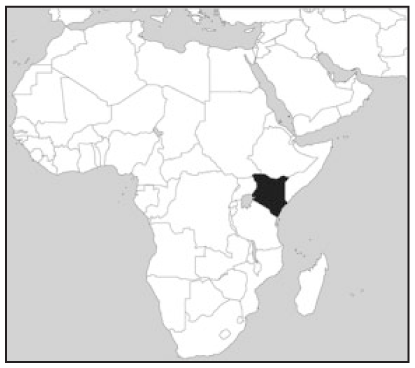
Kibera, located in the centre of Kenya’s capital Nairobi, is one of the largest informal settlements in Africa. Population estimates for the large 225-hectare settlement, adjacent to the Ngong River, vary between 200,000 and 700,000, while around 235,000 to 270,000 seems to be the most realistic estimate.(1) Kibera residents face many challenges including unemployment, poverty, insufficient water and sanitation infrastructure, poor housing, and high rates of crime and insecurity. Kibera was a hotspot of the post-election violence in late 2007 and early 2008. Most Kibera residents are also subject to significant localized flooding due to poor drainage and solid waste management, as well as riverine flooding in areas adjacent to the Ngong River and its major tributaries.(2) Global climate change is likely to aggravate flood risk in Kibera as the intensity of extreme-rainfall events in East Africa is projected to increase,(3) combined with the effect of increased urbanization in the settlement and upstream.
In the last five years, major development efforts to improve the living conditions in Kibera have included: 1) the Kenya Slum Upgrading Programme (KENSUP) Kibera Pilot, 2) the Nairobi Railway Relocation Action Plan (hereafter Railway Project), and 3) the National Youth Service (NYS)-led Kibera Slum Upgrade Initiative. These three interventions reflect different approaches to slum upgrading.(4) KENSUP and the Railway Project have introduced multi-storey housing to the largely single-storey settlement, with temporary relocation of residents. NYS is a multi-sectoral initiative, targeting the involvement of youth in road widening and paving, water and sewerage, solid waste management, income-generating opportunities.
Despite the magnitude of these efforts in Kibera, limited analysis has been carried out on the extent to which slum-upgrading efforts can address fundamental risks, and the implications for broader resilience building. A number of studies are available on gender-based or post-election violence,(5) health risks(6) and flooding in Kibera.(7) Lüthi(8) draws general lessons from the “slum improvement” efforts in Nairobi and Kibera. Against this background, it is the aim of this paper to assess how slum-upgrading interventions affect the social contract and social cohesion, and hence the resilience of residents in Kibera.
The following section describes the methods used. This is followed by results and a conclusion that considers the role played by slum-upgrading interventions in building resilience.
II. Methods
a. Conceptual framework
Figure 1 shows our conceptual framework, which in turn guides our methodology, the structure of the paper and our line of argument.
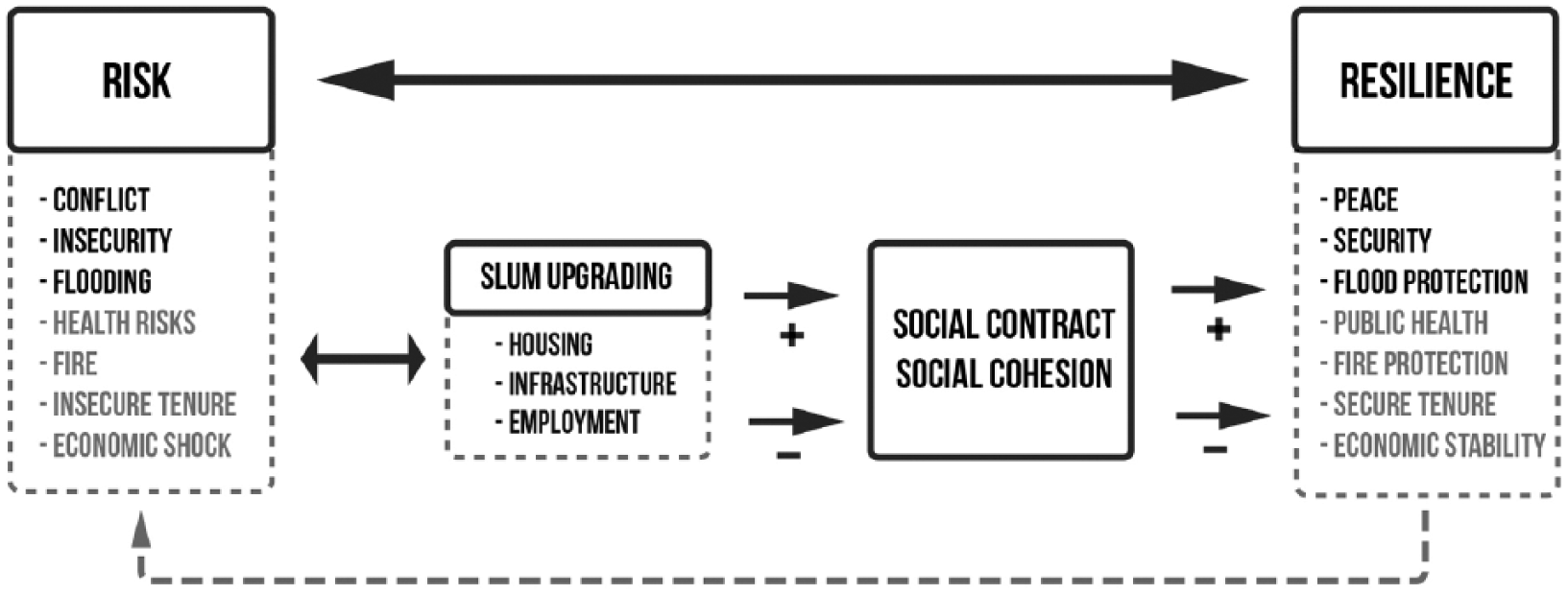
Conceptual framework
We first examine the effects of slum-upgrading projects on flood and conflict risks. We subsequently analyse how these projects can build resilience to these risks via strengthening the social cohesion and social contract.
In this paper, drawing on the Interagency Resilience Working Group (IARWG) definition, we consider resilience as “the ability of countries, communities and households to anticipate, adapt to and/or recover from the effects of potentially hazardous occurrences (natural disasters, economic instability, and conflict) in a manner that protects livelihoods, accelerates and sustains recovery, and supports economic and social development”.(9) We specifically reference resilience to conflict,(10) insecurity(11) and flooding, given that these are the risks that residents of Kibera face significant exposure to. We discuss resilience at the community level, based on local perceptions of livelihood opportunities, social networks and access to basic services.
Social contract and social cohesion are conceived as mediating variables in the link between risk, slum upgrading and resilience (Figure 1). This is supported by extensive research on conflict, and specifically the literature on urban fragility, resilience building(12) and social vulnerability in urban contexts,(13) which demonstrates the importance of strong bonds both within and between communities, and between communities and governance providers, for resilience and sustainable peace.(14)
We understand the social contract as a process by which everyone in a political community consents to state authority, thereby limiting some freedoms, in exchange for the state’s protection of their universal human rights and security and for the adequate provision of public goods and services.(15) The social contract emerges from the interaction between the following key factors: a) expectations that a given society has of a given state; b) state capacity to provide services, including security, and to secure revenue from its population and territory to pay for these services; and c) elite will to direct state resources and capacity to fulfil social expectations.(16)
Social cohesion, as Stanley describes it, is “the willingness of members of a society to cooperate with each other to survive and prosper”.(17) Social capital, a core component of social cohesion,(18) refers to the networks and relationships among people that enable a community to function effectively. This contributes to community resilience by providing an informal buffer to those affected by disaster, “overcoming challenges to adaptation through coordinated local processes, and enabling transformative change by strengthening the community’s collective voice”.(19) There are different types of social capital. “Bonding social capital” refers to social capital within an identity group, and is based on kinship, geography, religion or ethnicity. Marginalized communities often rely on bonding social capital to collectively gain access to resources.(20) “Bridging social capital” pertains to the building of cohesion between groups. It is based on external ties across distinct groups and can link these groups to outside assets and socioeconomic identities.(21)
b. Research area
The research was carried out in the Kibera villages Gatwekera, Lindi, Makina, Silanga and Soweto East and the “decanting sites” Langata and Magade, located on the southwest and northeast fringes of Kibera (Map 1). Decanting sites are temporary housing sites where residents of Kibera deemed entitled to new housing can move and stay until their new housing units are completed in Kibera. The research sites were chosen to be broadly representative of the villages of Kibera, to cover the different types and levels of (flood, security and conflict) risk experienced in different areas, and to overlap with the slum-upgrading efforts (Table 1).
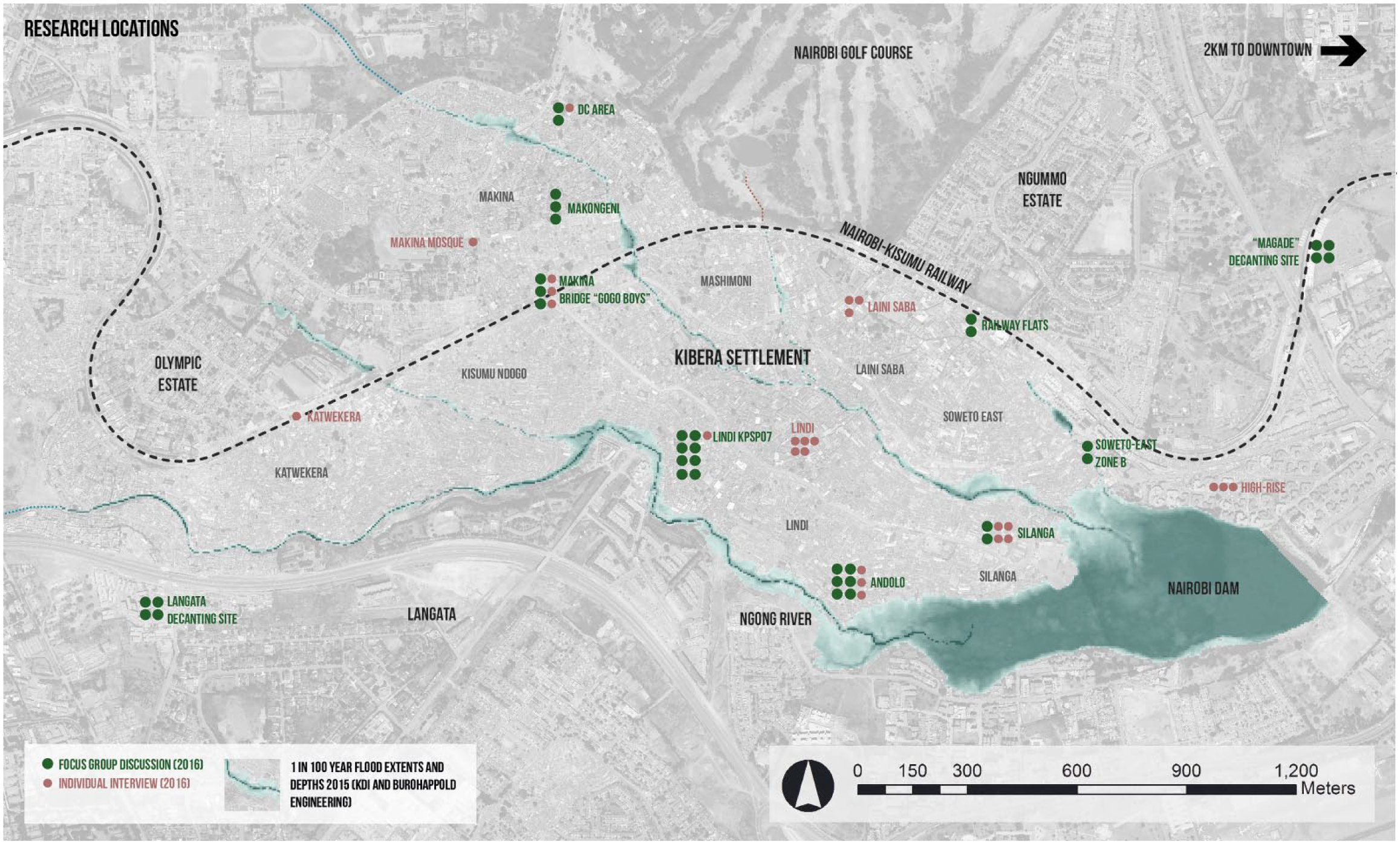
Research locations
Characteristics of research sites
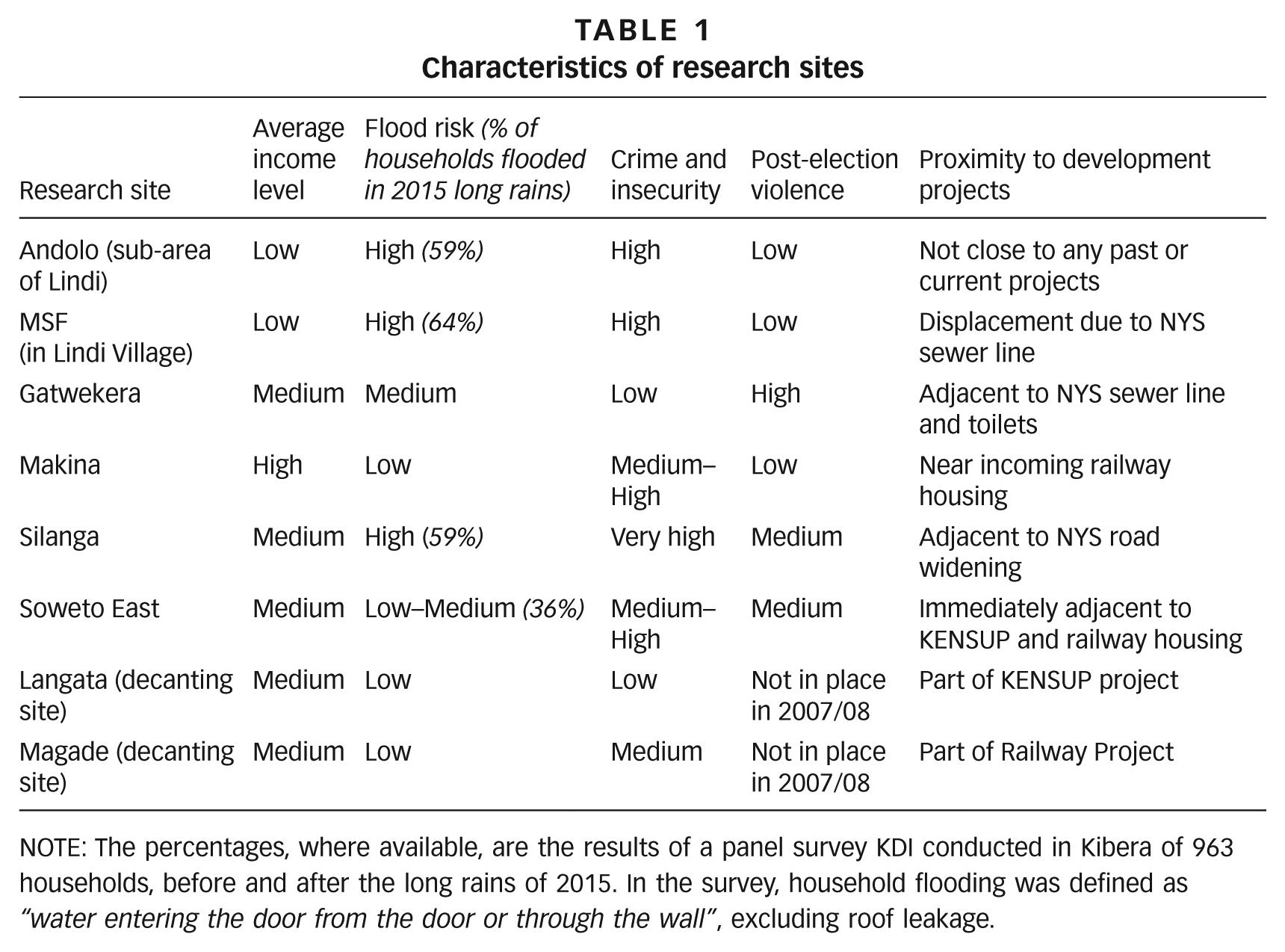
NOTE: The percentages, where available, are the results of a panel survey KDI conducted in Kibera of 963 households, before and after the long rains of 2015. In the survey, household flooding was defined as “water entering the door from the door or through the wall”, excluding roof leakage.
Table 1 shows that the level of crime and insecurity varies significantly across the research sites in Kibera. In addition, two major types of conflict can be identified: that between structure owners and tenants, and intercommunal conflicts. Factors that lead to tensions, and in some cases to violent altercations, between tenants and structure owners include an inability or unwillingness to pay rent, rent increases without consultation or without commensurate refurbishments, and disputes over who shoulders responsibilities for repairs of houses. Relations between structure owners and tenants are particularly strained during periods of flooding when structure damage is at its highest. Intercommunal conflicts run along ethnic lines, predominantly between Luos and Kikuyus. While the perceived rigging of the presidential elections in 2007 triggered violence across Kenya, with Kibera as a hotspot, the spread of conflict in the informal settlement reflected longer-term frustrations and grievances between the Kikuyus and Luos.
Two types of flood risk are apparent in Kibera. Firstly, riverine flooding is characterized by overflow of the Ngong River and its major tributaries. Secondly, localized flooding is prevalent across the settlement and is caused by insufficient or blocked drainage, usually associated with poor waste management.
c. Data collection
In November 2015 and February 2016, we interviewed a total of 339 respondents in 36 focus group discussions (FGDs) and 55 individual interviews. Expert interviews were conducted with representatives of the Kenyan government (chiefs, members of parliament, county commissioners), development organizations (such as UN-Habitat), community organizations (such as Muungano wa Wanavijiji), the district peace committee and security providers (police). The FGDs were organized in close cooperation with respected community representatives (youth leaders, elders, representatives of community organizations, etc.) in each location. Participants were self-selected through open invitations. FGDs were conducted with men only, women only, youth and mixed groups, in sizes from 5 to 12 participants. About the same number of FGDs was carried out in each research location. We first asked respondents to identify positive and negative changes they had experienced over the past years in Kibera and then facilitated a ranking exercise of the issues identified. Only following this exercise did we discuss conflict and flood risks, the slum-upgrading projects and resilience as they related to the positive and negative changes identified by the group. Individual interviews were selected by KDI and International Alert based on level of involvement in issues related to the research focus.
III. Results
In this results section, we first examine the effects of the three development efforts on resilience building, particularly relating to conflict and flood risks (IIIa), before we discuss the impacts in more detail with respect to the local social contract and social cohesion (IIIb).
a. Slum upgrading and resilience building
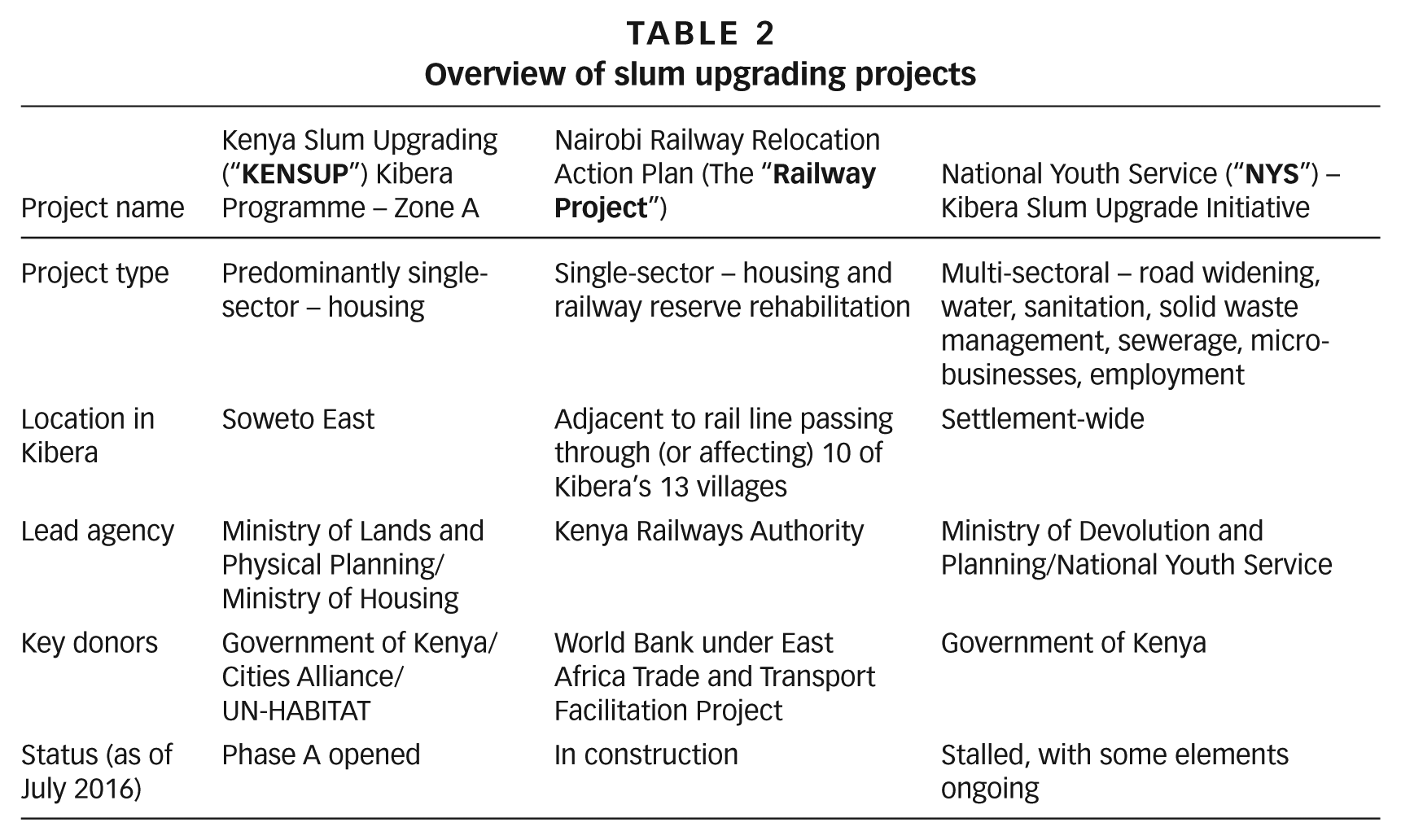
A number of slum-upgrading efforts are underway that are intended to address some of the underlying development challenges of Kibera – Table 2 and Map 2 introduce the projects and show their respective locations. Through their design and implementation, these projects to varying degrees affect the different types of conflict (crime and insecurity, intercommunal tensions, and structure owner versus tenant conflicts) and the flood risks (localized and riverine) that Kibera residents face, amongst other risks. These projects are not expressly framed as enhancing resilience or addressing flood or conflict risks. However, in aiming to reduce poverty and youth unemployment, reduce environmental hazards, deliver improved-quality housing (in the case of KENSUP and the Railway Project), and ensure better water and sanitation service provision, they can and do impact upon resilience.
Overview of slum upgrading projects
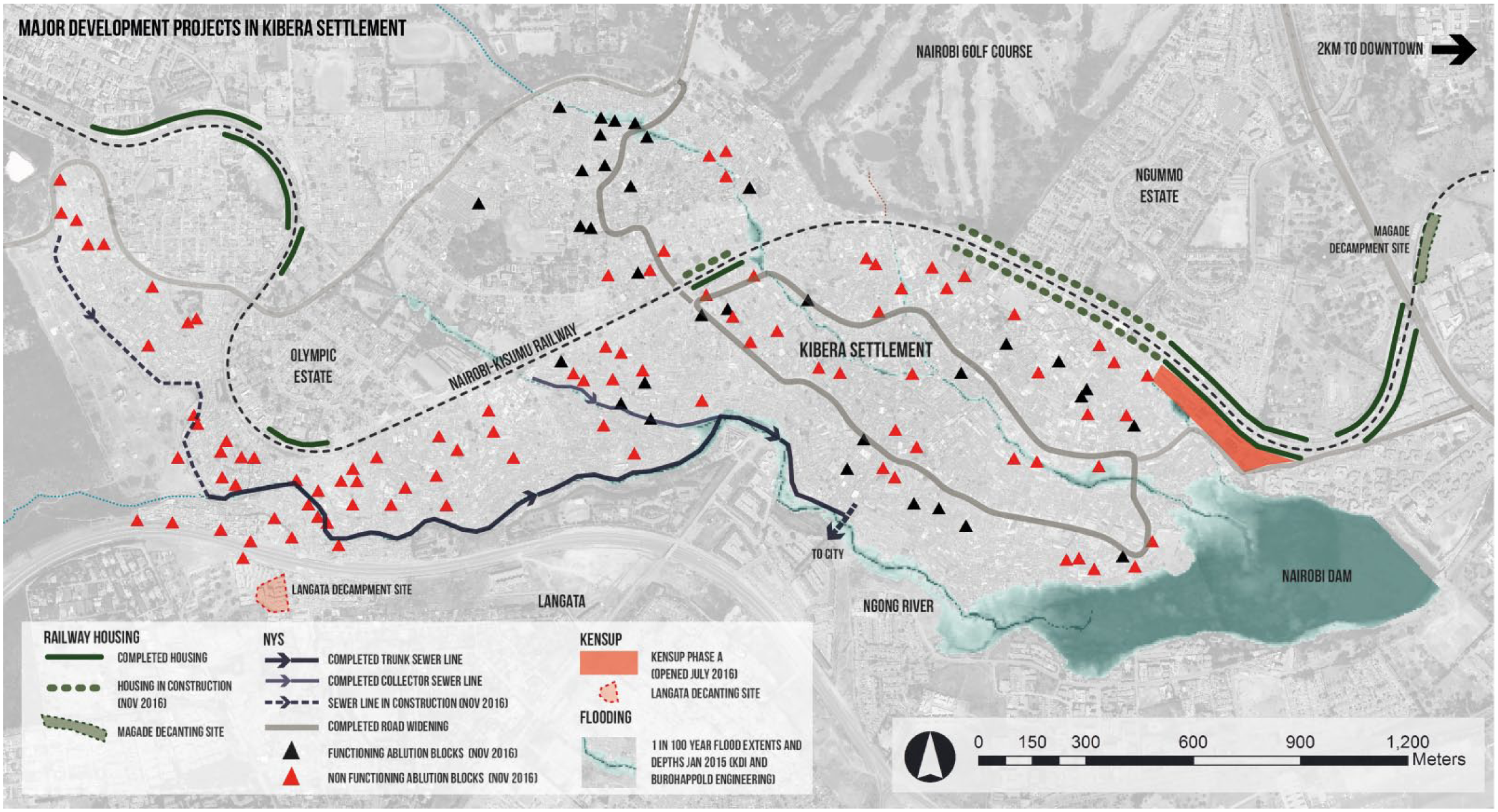
Locations of the slum upgrading projects (relative to areas of riverine flood risk)
Kenya Slum Upgrading Programme (KENSUP) – Kibera Zone A
KENSUP, a project by the Kenyan government and UN-Habitat, aims to improve the livelihoods of people living and working in Kenya’s informal settlements through the provision of security of tenure, housing improvement, income generation, and physical and social infrastructure.(22) Soweto East was selected as the pilot for the project for three reasons: first, it has good road access; second, Soweto East is a “cosmopolitan” village with high ethnic diversity and economic stability; and third, there are development efforts that the new project could connect to, including water and sanitation facilities, youth empowerment and sports initiatives.(23)
Enumeration began in 2004, and Soweto East was divided into four zones (A to D). The plan was to start in Zone A and then expand the project to the remaining zones. Through household questionnaires, the residents living in Zone A were incorporated into the master register but they did not play a significant role in the planning and implementation of the project. All houses were numbered and all registered residents were given unique identification cards. The accuracy of this process was limited by the absence of many Zone A residents when the registration was carried out. Those registered were not consulted further before they received notice to relocate from Zone A to the 632 housing units in the temporary decanting site in Langata (Map 2).Thereafter, demolition of the structures began.
The project faced several challenges. Structure owners in Soweto East opposed the project because they would lose their source of income (the rent from the tenants) without being compensated. During the period of initial notices and relocation in 2009, structure owners filed complaints and lawsuits that delayed project implementation (demolition and construction).(24) In March 2012, the court injunction was dismissed, and final clearances of structures were completed to make space for the new six-storey houses.(25)
The process of relocation was also problematic. According to our respondents in Soweto East and Langata, rent in Langata is similar to that in Soweto East. However, since residents of Langata were expected to save money through housing cooperatives to make the down payment on the new housing in Soweto East, respondents reported additional financial pressure. The down payment is 10 per cent of the cost of the new housing unit, where a one-room unit costs 600,000 Kenyan shillings, or KSh (approx. US$ 6,000) and a three-room unit KSh 1.35 million (approx. US$ 13,500). Affordability has been a significant drawback of KENSUP. Some people have opted out of the relocation process by illegally sub-letting their temporary housing unit in Langata for a higher price and moving to a different place within Kibera instead.(26)
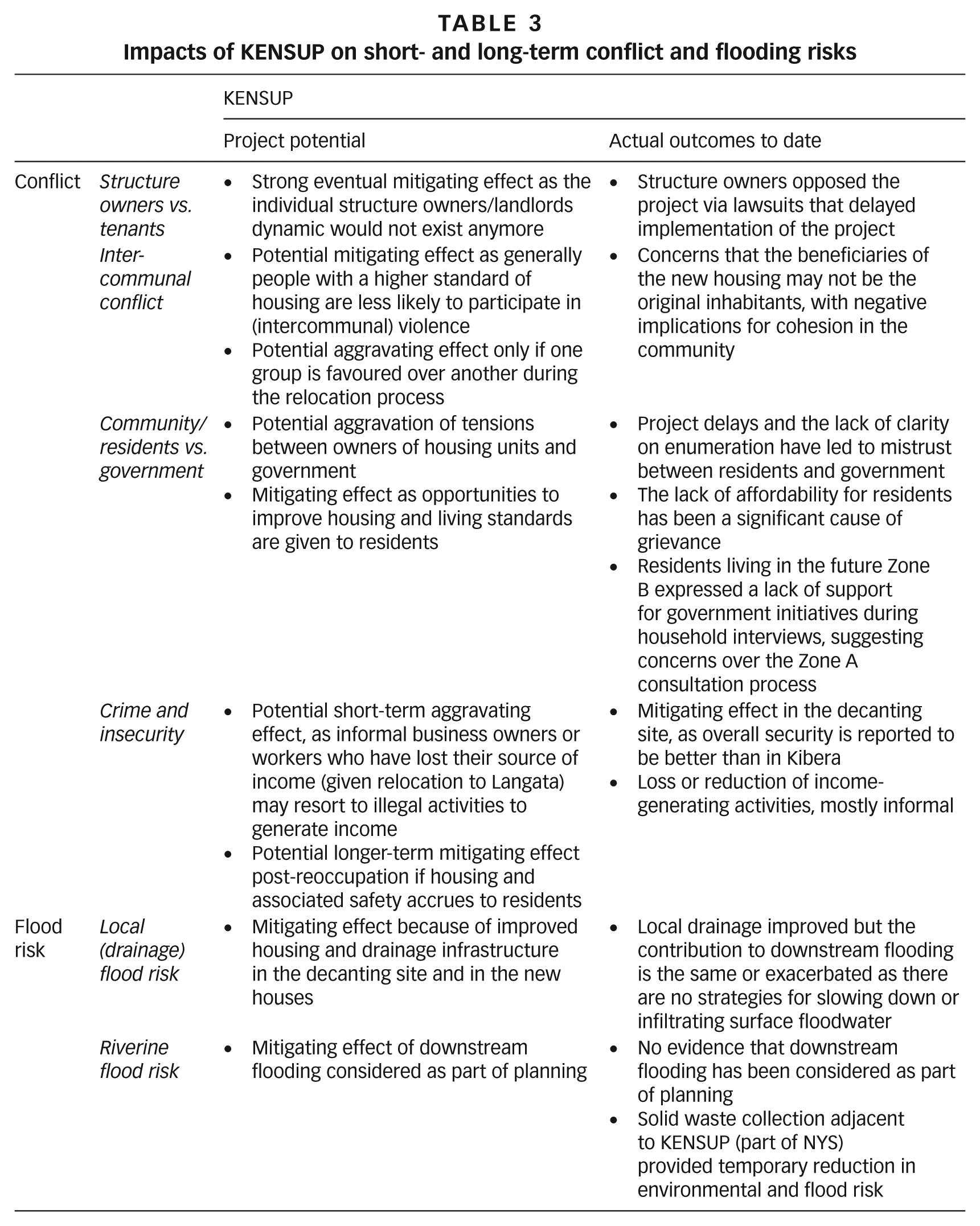
In terms of resilience, the decanting site in Langata offers improved housing, hygiene, security, and local drainage in the interim period. The key disadvantage of living in the decanting site, located outside of Kibera, is the negative impact on people’s social and business networks and access to income-generating opportunities.(27) Some respondents reported that their social cohesion had been better in Soweto than it was in Langata. “Togetherness was better in Soweto East. In Soweto East you can borrow from a friend”, said a woman in an FGD in Langata. The number of people enumerated also far exceeds the capacity of the new housing units.(28) While no one had moved into the new houses in Soweto East at the time of the research (14 years after the launch of the project), residents started being rehoused into completed homes in Zone A in July 2016. Details about the impacts of the project for flooding, security and conflict risks are provided in Table 3, in terms of both the potential of the project once fully realized, and the actual outcomes to date.
Impacts of KENSUP on short- and long-term conflict and flooding risks
Nairobi Railway Relocation Action Plan (“Railway Project”)
The Railway Relocation Action Plan (RAP) originated from the need of the Kenya Railway Corporation to recover the railway reserve and establish an extended safety corridor for railway operations and maintenance in Nairobi. The railway reserve land in Kibera has been encroached upon by a large number of residents, who have established housing structures, shops, schools, and places of worship on both sides of the railway line, with the railway track itself functioning as a path for pedestrians. The project consists of building housing and business units and social institutions for residents living along and in the reserve of the Nairobi to Kisumu railway that passes through Kibera. Map 2 shows the Railway Project housing that is completed or under construction at the time of writing.
The RAP identified eligibility through two community enumerations – in 2005 and in 2010. As delays resulted in the failure to initiate construction, after the 2005 enumeration and newly arrived residents and businesses were not allowed to register as project affected, a second enumeration, led by Muungano wa Wanavijiji (the Kenya Slum Dwellers Federation) with technical and financial support from Akiba Mashinani Trust (AMT), occurred in 2010.(29) For both enumerations, the core enumeration team consisted of representatives from all the affected villages.(30) The inclusion of residents in the enumeration process was designed to ensure that those affected had confidence in the process of resettlement.(31) The Federation and AMT ensured that the RAP made concerted efforts to mediate the different interests, whether between structure owners and tenants or among residential, business and institution uses. The project followed the principle of one project-affected person (per household) receiving one new unit – be it a house or shop. Structure owners living along the lines similarly received one unit, regardless of their original number of structures. To mitigate conflicts, particularly with the structure owners, continuous negotiations were required and one-off financial payments were given to structure owners as compensation based on the number of structures they previously owned. This approach recognized tenants as being the most vulnerable.(32)
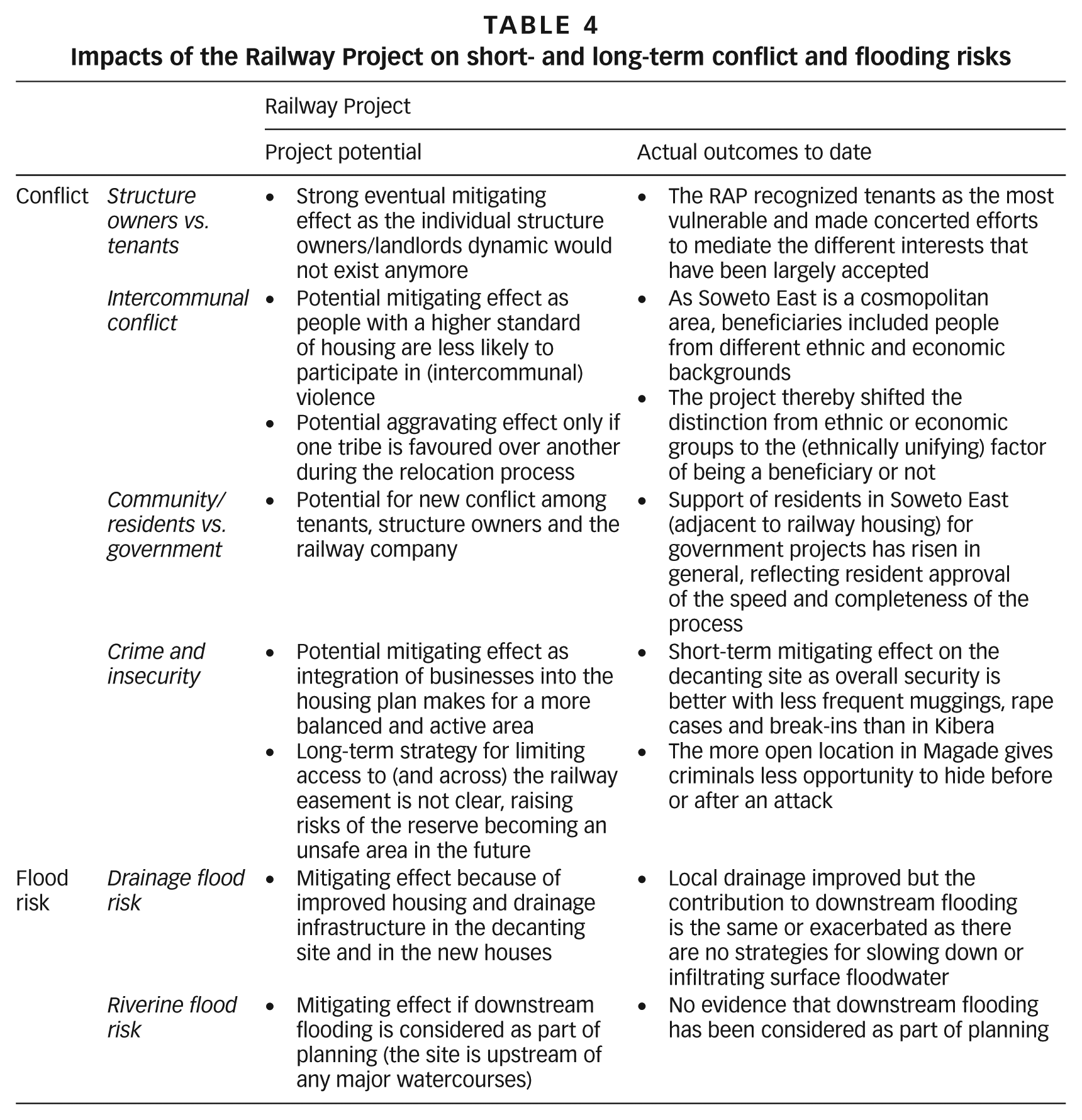
In June 2014 project-affected persons in Soweto East were issued notices,(33) and the project arranged for a decanting site in Magade for those residents living and/or operating businesses closest to the railway track (Map 2). In Magade, people do not pay rent, although they pay on average KSh 500 (approx. US$ 5) per month for water and electricity depending upon individual consumption (significantly less than the average rent in Soweto East). Down payments for the new housing units in Soweto East are not needed, as people will rent these rather than own them. Given the close proximity to Soweto East, livelihoods of those relocated to Magade have not been significantly disrupted. Children did not need to change schools. The quality of houses, sanitation and exposure to flood risk in Magade is generally perceived positively. On security, responses were more ambivalent but overall security was stated to be better than in Soweto East. Local organizations have expressed concerns about the long-term strategy for access across the railway tracks and for security within the reserve once the housing is complete, that the reserve might become an unsafe area in the future, and that connectivity and cohesion between different villages might be affected. More details about the risk-related impacts of the project are provided in Table 4.
Impacts of the Railway Project on short- and long-term conflict and flooding risks
National Youth Service (NYS) – Kibera Slum Upgrade Initiative
The National Youth Service, originally established in 1964, aims “to help the youth discover and develop their potential.”(34) NYS was re-launched by President Uhuru Kenyatta in 2013, and a major new programme of works was initiated in 2014 under the Ministry of Devolution and Planning – The Kibera Slum Upgrade Initiative.
Activities in Kibera under NYS fall into three main categories: youth employment and micro-businesses, road construction, and sanitation (including household rubbish collection, drainage cleaning, and construction of sewerage and ablution blocks). Youth receive a weekly sum of KSh 1,650 (approx. US$ 16.50) through mobile banking for work done under NYS. They are also a part of savings and credit cooperatives (locally called SACCOs), through which they save approximately KSh 350 (approx. US$ 3.50) per week.(35) Money from the SACCOs is lent to members to start businesses.
A majority of respondents reported on the numerous benefits of NYS for communities. Several respondents, for example in Silanga, Laini Saba and Lindi, drew a direct connection among NYS, its level of youth engagement, and reduced levels of crime and insecurity. According to a respondent in Lindi, “It’s a good programme because the youth are working for something. They are not worried about something to eat or buying clothes. It helped them forget evil things.” A woman in an FGD in Andolo stated, “Crime went down during NYS, even in Andolo. The youth was tired after working all day.”
Despite road widening requiring structure owners to remove structures adjacent to the new construction, this element of NYS was also overwhelmingly supported by residents. It has been transformative for access within and to Kibera, and subsequently for business and security (new lighting and police security posts were introduced along the road side). Some respondents also noted that the cleaning of open drainage channels and solid waste collection have reduced the local flood risk from overflowing drains, in the short term at least.
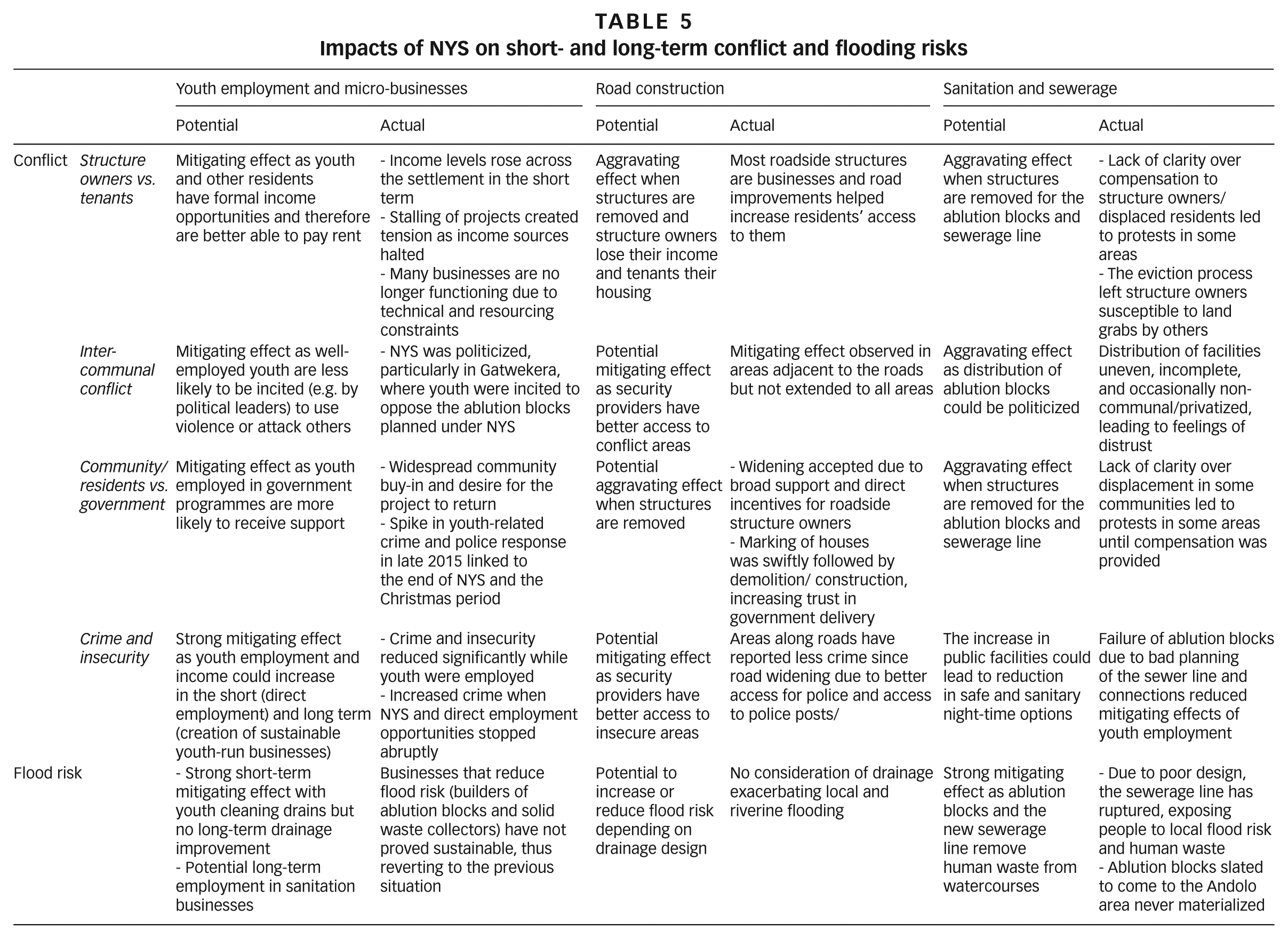
The NYS initiatives were not immediately welcomed in all target communities, however, and initially faced resistance in Gatwekera – an opposition stronghold.(36) There were concerns that NYS was a smokescreen for the government to buy votes by employing youth. According to one respondent in Gatwekera, “We only embraced it [NYS] after seeing its impact in other places”. Beyond the implementation challenges in Gatwekera, the NYS initiative had some fundamental shortcomings, which have limited the potential long-term development impact.(37) Significant corruption allegations emerged in 2015 and NYS activities in Kibera were largely stalled by the end of the year.(38) Several key persons in NYS and the Ministry of Devolution and Planning were accused of misappropriating KSh 1.4 billion (approx. US$ 14 million).(39) Recently, the NYS Director General stepped aside when the Director of Public Prosecutions ordered his prosecution.(40) In addition to financial irregularities, technical challenges have plagued the initiative, in particular with the sewer line, which has ceased to function since the first stages were completed in 2015. A facilities survey by KDI in November 2016 showed that of the 125 ablution blocks completed to date, 94 (75 per cent) are currently not functioning, many due to the non-completion of the main line, or to poor connections. The locations of the functioning and non-functioning blocks were geotagged and are shown in Map 2.The stalling of works and the failure of ablution blocks as viable businesses have subsequently removed many of the new employment and income sources for youth. The number of ablution blocks functioning is unlikely to increase significantly in the future, even when the remaining sewer line is completed, due to ongoing flooding and blockages of the main sewer line. These shortcomings and the implications for resilience building are discussed further in Table 5 and the following sections.
Impacts of NYS on short- and long-term conflict and flooding risks
b. Impacts of slum upgrading on resilience via the local social contract and social cohesion
For slum-upgrading efforts to be effective in building resilience to risks such as flooding and conflict risks in complex political environments such as Kibera, the findings of this study suggest three things that are important for success.
First, projects need to involve communities in consultation and secure community buy-in – this will ensure a robust understanding of the local context, including its risk dynamics, and enable transparency and accountability. Securing community buy-in through strong trust-building components will help strengthen the social contract between those implementing the intervention and the beneficiaries. The marked difference between the process for KENSUP and that for the Railway Project illustrates this clearly. In the Railway Project, stringent criteria for eligibility, awareness campaigns, dialogue, consultation and community meetings helped mitigate the risks of obstruction and conflict from local residents. Government acquiescence to community involvement in enumeration in the Railway Project ensured accountability and was a key component of the effectiveness of this relocation project. The community-led, relatively transparent and inclusive process of the Railway Project allowed Kibera residents to assert themselves in the relocation process and helped build the social contract with the government. The relative speed and momentum maintained among enumeration, reporting and re-housing built trust in the process. By contrast, the lack of transparency in housing allocation and limited buy-in led to structure owners opposing KENSUP via lawsuits that delayed the implementation of the project and undermined relations between the government and project beneficiaries.
Where the social contract is already weak, projects need to be particularly sensitive to the political context. In the dense, heterogeneous, complex political environment of Kibera, technical interventions that lack consultation have less likelihood of take-up. In Gatwekera, low levels of trust in government-led projects have led to them being politicized and opposed. Despite NYS being a Kibera-wide initiative, youth in Gatwekera were incited to oppose the project, and they set fire to the ablution blocks and physically harmed project supporters.(41) The political resistance to the sewerage and sanitation initiatives, due to the perception that this was a government vote-procurement strategy, led in effect to the rejection of a major new public health system with associated public health risks in the longer term.
Second, projects that build social cohesion and social capital have positive outcomes for resilience. Social cohesion can be strengthened if programming balances interests across different groups transparently and equitably. The Railway Project, via Muungano wa Wanavijiji and AMT, organized a series of consultations and meetings between residents of Kibera and railway officers to bring clarity and build confidence in the relocation process.(42) This process helped mediate between the interests of structure owners and tenants as well as those of residential, business and institution uses. The community-led enumeration process concluded that tenants were the most vulnerable. Continuous negotiation with structure owners, whose multiple units were not considered for commensurate structure compensation, helped mitigate conflict and the manipulation of allocations.
NYS mandated youth to be part of SACCOs, which are owned, governed and managed by their members. These have been key in helping youth to save and manage their finances while becoming part of a supportive economic and social network. Membership in such groups is important in helping youth cooperatively and collectively to address their vulnerabilities related to unemployment. The SACCOs are forums for youth to support each other through exploring small business opportunities as well as to jointly identify and resolve community needs. Slum-upgrading efforts that enable youth empowerment through such group formation, cooperation and trust building have the potential to strengthen the social capital of members. Under NYS, youth convened in these groups tended to be from the same village/community, thereby strengthening bonding capital. Bridging capital was also realized across networks, as formal NYS graduates/recruits from different communities trained and led community youth volunteer teams throughout villages within Kibera. The networked nature of much of the infrastructure introduced (road, water and sewerage) required working across several villages, bringing youth and residents into communities they might previously have avoided.
A comparison of the two relocation sites, Langata for KENSUP and Magade for the Railway Project, demonstrates the importance of social capital and networks to Kibera residents, who rely on them to access information and livelihood opportunities. The proximity to Kibera, making it possible to access these networks and livelihood and business opportunities, was critical to the success of the relocation to Magade. Respondents from Magade felt they were able to continue their livelihoods as before. Residents relocated to Langata experienced a disruption in their access to information and networks, and struggled to continue their income-generating activities at the same level. This was particularly problematic because they were expected to not only pay rent in the decanting site but also save a significant amount to make the down payment on the new housing units in Soweto East. In Langata, these higher costs even caused some people to opt out of the project by illegally sub-letting their housing units for higher prices to “middle class people”, essentially non-Kibera residents. Respondents from Kibera still living in Langata found it difficult to build ties with these new residents, who have (or own) cars and could drive to shopping malls and did not patronize the small shops and markets they had set up in Langata, affecting the cohesion among those living there.
Third, we find that projects that are multi-sectoral and integrated have stronger potential to effectively address multiple risks compared to single-sector interventions. NYS, an urban networked infrastructure and livelihoods project, was designed to enable community-scale projects to connect to formal systems, lessening the gap between the formal and informal parts of Nairobi. Road widening under NYS facilitated improved services without large-scale displacement, and largely with support from affected people and the wider community. This will be a long-term and transformative legacy of NYS.
Our research indicates that in the short term, NYS strengthened community resilience by providing income opportunities for youth, and contributed positively to the reduction of crime and insecurity in Kibera. These benefits, however, were not sustainable. After NYS was discontinued as a result of the corruption allegations, several respondents in Soweto East and Makina reported an increase in crime and insecurity. As one respondent explained, “When NYS ended, youth were going back to being gangsters again. Youth were now used to the money but the money stopped coming.” Levels of crime returned to (at least) pre-NYS levels, with a significant peak at than pre-NYS levels during the Christmas period in 2015, in particularly marginalized areas such as Andolo. Violent altercations between youth and the police led to the police instituting a “shoot to kill” policy aimed at youth suspected of bearing arms.
NYS also had the potential to address through improved sanitation, solid waste management and major new sewerage. However, a failure to understand riverine flood risk hindered this potential impact. Flooding of the new trunk line for collecting sewage, constructed under the NYS programme immediately adjacent to the Ngong River, contributed to blockages and pipeline breakages. A lack of consultation with residents led to illegal connections and dumping in the sewer line, exacerbating blockages. Poor design of the connector pipes from the ablution blocks to the main sewerage left them exposed and susceptible to damage. As noted, 75 per cent of the ablution blocks that connected to the sewer line are not functioning at the time of writing (Map 2) – a figure unlikely to decrease significantly due to ongoing flooding and blockages in the main sewer line.
In conception, NYS had the strongest potential to build community resilience compared to KENSUP and the Railway Project; it aimed to address multiple risks that Kibera residents face, namely livelihood insecurity among youth, crime and instability, and lack of access to basic services, public health and infrastructure. The gap between design and implementation, however, undermined the potential impact of the initiative, as evident in the sewer line and ablution block example. Despite these shortcomings, and the widely known corruption allegations, the majority of our respondents across all our research sites highly valued elements of the project, particularly the youth employment and road-widening components, and were keen for its return. When functional, the youth employment components were strongly valued for increasing incomes and for positively addressing crime and insecurity. Road widening has already the opportunity, enterprise and access to services in the settlement. The improvement in access to Kibera has enabled the functioning of many small businesses (e.g. local shops) that have also engaged and benefited youth (in particular matatu (minibus) SACCOs). The support for the road widening and formalization, and the speed with which it occurred, built trust in the government’s ability to deliver projects and will leave a transformative legacy in Kibera.
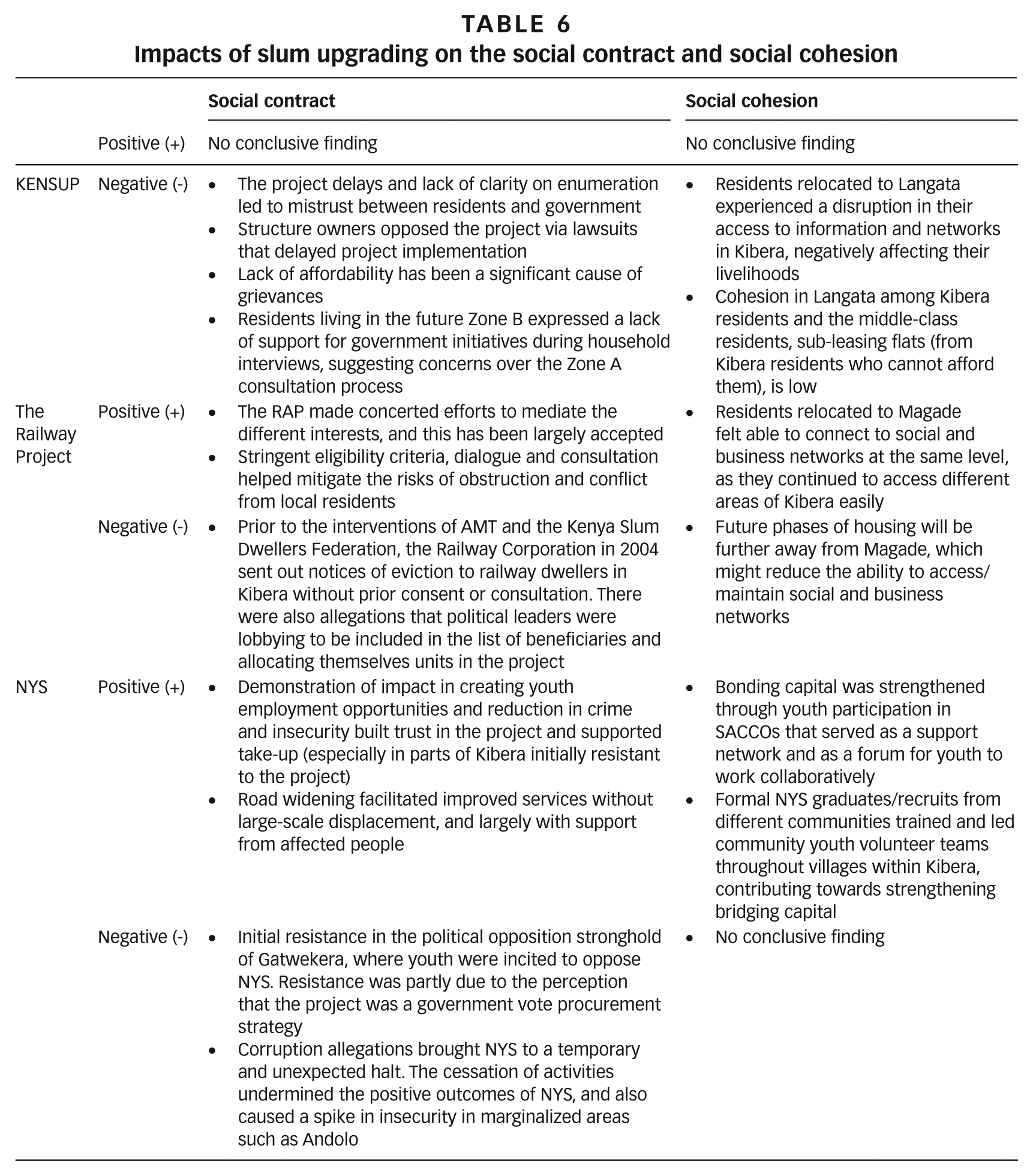
Table 6 summarizes the positive and negative outcomes of the three projects.
Impacts of slum upgrading on the social contract and social cohesion
IV. Conclusions
The aim of this paper was to assess how slum-upgrading interventions affect the social contract and social cohesion, and hence the resilience of residents in Kibera.
Our findings show that slum-upgrading interventions have the potential to reduce conflict and flood risks in highly dense and complex urban environments if they do three things. First, they need to include processes that build the social contract, such as meaningful consultation of residents and social accountability mechanisms like channels to air and resolve grievances. Second, they need to actively build bridging social capital between ethnic groups and not reduce bonding capital within groups. And third, projects that are multi-sectoral by design have a higher potential for impact and effectiveness.
For example, KENSUP significantly reduced flood risks for residents in the decanting site and in the new houses in Kibera. However, project-affected people faced diminished access to their networks and income opportunities in Kibera through the relocation process and therefore found themselves with lower resilience in the medium term. The Railway Project adopted a consultative approach to identifying project-affected persons, determining compensation for displaced residents, and mediating the conflicting interests of tenants and structure owners. This approach promoted a positive perception of the project, building trust between community and government. NYS by design has the greatest potential for success compared to KENSUP and the Railway Project because it addresses the multiple risks that are at the heart of what make Kibera residents vulnerable – livelihood insecurity among youth, crime and instability, and lack of access to basic services, public health and infrastructure. The project had numerous failings and was temporarily discontinued due to corruption allegations. Despite the project’s shortcomings, the majority of respondents across all our research sites valued the project, particularly the youth employment and road-widening components, and were keen for it to recommence.
Overall, we conclude that slum-upgrading projects in particular, and by extension development projects in general, can become a tool for strengthening resilience to risks such as flooding, conflict and security through building trust – both horizontal, between communities, and vertical, between communities and governance providers. Finally, development interventions adopting an integrated, multi-sector, consultative approach have stronger potential to increase resilience in multi-risk environments compared to single-sector projects.
Footnotes
Acknowledgements
We thank the communities in Kibera, every person who volunteered information for this study, and the local KDI Kenya team, including Pascal Kipkemboi, Amos Wandera, Ibrahim Maina, Boniface Omwanda and Prisca Okila.
Funding
This research is supported by the Economic and Social Research Council–UK Department for International Development (ESRC–DFID) programme Urban Africa Risk Knowledge, the Swiss Re Foundation and the University of Hamburg.
1.
UN-Habitat (2003), The challenge of slums: Global Report on Human Settlements 2003, Earthscan, London, 344 pages; also Lüthi, Christoph (2016), “Slum improvement lessons in Africa: Kibera”, in Bolay, Jean-Claude, Jérôme Chenal and Yves Pedrazzini (editors), Learning from the slums for the development of emerging cities, Springer International Publishing, Cham, pages 115–124.
2.
Mulligan, Joe, Jamilla Harper, Pascal Kipkemboi, Bukonola Ngobi and Anna Collins (2016), “Community-responsive adaptation to flooding in Kibera, Kenya”, Proceedings of the Institution of Civil Engineers– Engineering Sustainability. 13 pages.
3.
Rowell, David P, Catherine A Senior, Michael Vellinga and Richard J Graham (2015), “Can climate projection uncertainty be constrained over Africa using metrics of contemporary performance?”, Climatic Change Vol 134, No 4, pages 621–633.
4.
The term “slum” usually has derogatory connotations and can suggest that a settlement needs replacement or can legitimate the eviction of its residents. However, it is a difficult term to avoid for at least three reasons. First, some networks of neighbourhood organizations choose to identify themselves with a positive use of the term, partly to neutralize these negative connotations; one of the most successful is the National Slum Dwellers Federation in India. Second, the only global estimates for housing deficiencies, collected by the United Nations, are for what they term “slums”. And third, in some nations, there are advantages for residents of informal settlements if their settlement is recognized officially as a “slum”; indeed, the residents may lobby to get their settlement classified as a “notified slum”. Where the term is used in this journal, it refers to settlements characterized by at least some of the following features: a lack of formal recognition on the part of local government of the settlement and its residents; the absence of secure tenure for residents; inadequacies in provision for infrastructure and services; overcrowded and sub-standard dwellings; and location on land less than suitable for occupation. For a discussion of more precise ways to classify the range of housing sub-markets through which those with limited incomes buy, rent or build accommodation, see Environment and Urbanization Vol 1, No 2 (1989), available at  .
.
5.
Dercon, Stefan and Roxan Gutiérrez-Romero (2010), “Triggers and characteristics of the 2007 Kenyan electoral violence”, World Development Vol 40, No 4, pages 731–744; also Kihato, Caroline Wanjiku (2015), ““Go back and tell them who the real men are!” Gendering our understanding of Kibera’s post-election violence”, International Journal of Conflict and Violence Vol 9, No 1, pages 13–24; and Smedt, Johan de (2009), “‘No raila, no peace!’ Big man politics and election violence at the Kibera grassroots”, African Affairs Vol 108, No 433, pages 581–598.
6.
e.g. Gallaher, Courtney Maloof, Dennis Mwaniki, Mary Njenga, Nancy K Karanja and Antoinette M WinklerPrins (2013), “Real or perceived: The environmental health risks of urban sack gardening in Kibera slums of Nairobi, Kenya”, EcoHealth Vol 10, No 1, pages 9–20.
7.
See reference 2.
9.
IARWG (2012), “The characteristics of resilience building”, Interagency Resilience Working Group discussion paper, accessed 10 September 2016 at .
10.
Conflict is a situation where “two or more parties believe that their interests are incompatible, express hostile attitudes or take action that damages other parties” (, How to guide to conflict sensitivity). It becomes violent when parties no longer seek to attain their goals peacefully, but resort instead to violence in one form or another.
11.
Insecurity is a situation where people fear for their human security; see Vivekananda, Janani, Janpeter Schilling and Dan Smith (2014), “Climate resilience in fragile and conflict-affected societies: Concepts and approaches”, Development in Practice Vol 24, No 4, pages 487–501.
12.
Aldrich, Daniel P (2012), Building Resilience – Social Capital in Post-Disaster Recovery, University of Chicago Press, Chicago, 248 pages.
13.
Pelling, Mark (2003), The vulnerability of cities, Earthscan, London, 212 pages.
14.
Boer, John de, Robert Muggah and Ronak Patel (2016), Conceptualizing City Fragility and Resilience, United Nations University Centre for Policy Research, 24 pages.
15.
16.
17.
Stanley, Dick (2003), “What do we know about social cohesion: The research perspective of the federal government’s social cohesion research network”, The Canadian Journal of Sociology/Cahiers canadiens de sociologie Vol 28, No 1, pages 5–17, page 5.
18.
19.
See reference 12, page 13.
20.
Adger, W Neil (2009), “Social Capital, Collective Action, and Adaptation to Climate Change”, Economic Geography Vol 79, No 4, pages 387–404.
21.
See reference 20.
23.
Interviews with the Settlement Executive Committee.
26.
Interviews with the Settlement Executive Committee and residents of Langata.
27.
See reference 26.
28.
See reference 26.
29.
31.
See reference 30.
32.
Weru, Jane (2004), “Community federations and city upgrading: the work of Pamoja Trust and Muungano in Kenya”, Environment and Urbanization Vol 16, No 1, pages 47–62.
33.
See reference 29.
34.
GoK (2014b), “National youth service”, Government of Kenya, accessed 2 September 2016 at .
35.
NYS group leader in Gatwekera.
36.
See reference 35.
37.
For example, FGDs in Laini Saba, Lindi, Soweto East and Makina.
38.
Community interviews in Laini Saba and Soweto East.
39.
Maina, Carole and Zipporah Weru (2016), “11 NYS scandal suspects charged with money laundering”, The Star, 22 August, accessed 4 November 2016 at http://www.the-star.co.ke/news/2016/08/22/11-nys-scandal-suspects-charged-with-money-laundering_c1407511; also Wafula, Paul (2016), “Up to Sh1.4b was stolen in NYS scandal, new audit now reveals”, The Star, 8 June, accessed 1 November 2016 at .
40.
Standard (2015), “NYS Director Nelson Githinji steps aside after DPP ordered his prosecution”, 16 November, accessed 9 November 2016 at .
41.
For example, the former NYS group leader in Gatwekera.
42.
See reference 30.