




Abstract
Processes of globalization and neoliberal reforms of local governance in Indian cities have created distinct patterns by reshaping the physical and social landscapes of India’s cities, triggering contestations between the privileged and the dispossessed. This paper addresses the consequences for poor households of mega-urban renewal and infrastructure projects and the processes of displacement and resettlement in Ahmedabad, India. The findings indicate that the displaced poor households have been further impoverished in the course of current practices as a result of limited attention to the risk of impoverishment both in policy and in local government practices. Contrary to the state’s rhetoric of inclusive governance, the urban poor are completely excluded from planning for infrastructure development and resettlement processes, leading to a lack of understanding of their needs by the state and their subsequent impoverishment after resettlement.
Keywords
I. Introduction
Contemporary urban development and city-making in India have been largely based on the national government’s flagship investment programme, the Jawaharlal Nehru National Urban Renewal Mission (JNNURM), India’s largest single infusion of public funds to urban local governments for slum(1) upgrading, transport and other infrastructure. The objectives were both rapid economic growth through large-scale infrastructure projects and the inclusion of the urban poor in economic growth. Within JNNURM, the Ministry of Urban Development (MoUD) has focused on infrastructure investment through its Urban Infrastructure and Governance (UIG) programme; the Ministry of Housing and Urban Poverty Alleviation (MHUPA) focused on the integrated development of slums through the Basic Services for Urban Poor (BSUP) programme. However, this two-pronged approach belies a strategy of deliberate confusion and the dispersion of accountability and responsibility.(2)
Under the UIG programme, city morphology and functions were being altered by forced land acquisition for infrastructure projects such as road widening, the Bus Rapid Transit System (BRTS), flyovers, and waterfront-based development, causing large-scale displacement of poor households living in informal self-built neighbourhoods, as witnessed in all major cities(3) including New Delhi, Mumbai, Chennai, Ahmedabad, Hyderabad, Visakhapatnam and ironically also Kolkata.(4) Displaced households that could prove their “eligibility” in theory got compensatory shelter, mainly under BSUP; others were left to fend for themselves. “Eligibility” criteria are based on state-approved documentary residence proof for an arbitrary cut-off date that varies from city to city: in Delhi 1998; in Mumbai 1995; while Ahmedabad set two cut-off dates, 1976 and 2002, for two categories of project-affected people.
Contrary to JNNURM rhetoric, limited space and resources have been allocated for the urban poor.(5) BSUP resettlement projects are often implemented in the city peripheries, distant from peoples’ workplaces, schools and hospitals, and thus not meeting the criteria of adequate shelter.(6) Contrary to the objective of providing in situ basic services to poor households, in most cities BSUP projects have funded off-site rehabilitation housing for project-affected people whose replacement housing should have been budgeted for within the profit-making projects that displaced them, thereby depriving the intended urban poor beneficiaries of outreach.(7) The Final Monitoring Report for JNNRUM indicates the ineffectiveness of BSUP,(8) showing that only 52 per cent of the almost one million approved dwelling units were constructed and only 36 per cent of those approved were actually occupied. A low level of occupancy, attributed to the isolated and inhospitable locations of BSUP housing projects, is reported across all the cities, including Bengaluru (43 per cent occupancy) and Greater Hyderabad (10 per cent occupancy).(9)
Within this context this paper examines the consequences of the nexus between urban renewal projects and new local governance arrangements and the processes of the displacement and resettlement of poor households under BSUP as it occurred in Ahmedabad, India. Though BSUP will come to a close in April 2015, it paved the way for Rajiv Awas Yojna (RAY) in 2013, which is again a central government-subsidized programme for provision of housing, improvement of basic civic infrastructure and social amenities in situ or in relocated slum sites. The lessons from BSUP should contribute towards restructuring of RAY so that better outcomes can be achieved.
II. Understanding Development-Induced Displacement and Resettlement In India
The state generally rationalizes concerns around large infrastructure development with rhetoric about the greater good, maintaining that the rehabilitation of the displaced to prior levels of wellbeing can be achieved, thereby justifying avoidable ills. Critics of displacement posit that those displaced are inevitably exposed to multiple impoverishments, and many researchers have demonstrated social, economic and cultural consequences, raising issues of social justice and equity.(10) Displacement in developing countries mostly affects people living below the poverty line, rendering the poor even more impoverished.(11)
Cernea proposes eight interlinked forms of impoverishment (landlessness, homelessness, joblessness, marginalization, food insecurity, loss of access to common property, morbidity and mortality, and social disarticulation) in his Impoverishment Risks and Reconstruction (IRR) model.(12) These have been empirically reconfirmed in the past two decades,(13) largely in the context of rural displacements. Other forms have also been identified, including psychological marginalization(14) and loss of access to services,(15) schooling(16) and civil rights.(17) “Impoverishment” is defined by Cernea to refer to situations in which people’s welfare and livelihoods worsen as a result of a specific intervention; and “risk” as the possibility that adverse effects such as losses, destruction, functionally counterproductive impacts, and deprivations of future generations will be triggered.(18) Impoverishment risks, he argues, can be controlled through a policy response that mandates participation of potentially affected communities from the onset.(19) Dysfunctional communication between decision-makers and affected communities and the consequent lack of understanding of the latter’s needs and aspirations have been emphasized as the key cause of resettlement failure and impoverishment of displacees.(20)
Most studies on development-induced displacement and resettlement (DIDR) have used Cernea’s framework in the context of rural displacement. Research on urban DIDR, relatively unstudied(21) until the last decade, is currently emerging, especially in the Indian context, in three areas: governance aspects and displacement processes, the implications of resettlement for displacees, and both of these topics in the specific context of JNNURM and BSUP.
Most of this research focuses on displacement processes and governance. Ramanathan discusses the role of the judiciary in effecting large-scale demolitions and displacement of urban poor in the process of “cleaning up” Delhi and also in the emerging notion of “illegality” of slums.(22) Desai discusses how authorities in Ahmedabad officially represented their urban mega-project as inclusive despite profoundly disregarding issues of social justice.(23) Dupont discusses the creation of new squatters and densification of existing slums after displacements in Delhi.(24) A small body of research is emerging related to the implications for those displaced. The research of the Society for the Promotion of Area Resources Centres (SPARC) on Mumbai, where about 60,000 people living along railway tracks were resettled to a site about four stations away, describes this as a successful resettlement that did not impoverish the displaced.(25) The research attributes the success to the realignment of roles among state agencies, NGOs and the community, with the latter fully involved in designing, implementing and managing the resettlement. However, this case is exceptional; most evidence from Indian cities points to the negative consequences of displacement. Menon-Sen and Bhan’s New Delhi research indicates how eviction and resettlement related to the Commonwealth Games eroded the rights and undermined the livelihoods of 3,000 resettled families, marooning them in a distant site and leaving them in a state of “permanent poverty”.(26) HRLN’s compiled evidence from many Indian cities points to demolition sprees and de-housing of the urban poor under various mega-infrastructure projects with minimal support for the displaced poor.(27) The extent of the impact is not indicated in qualitative or quantitative terms.
Both the governance aspects of displacement processes and the implications for the urban poor are increasingly discussed in the context of JNNURM and BSUP. Research shows that, although large-scale displacements are evident across Indian cities, only “meagre” rehabilitation has occurred since JNNURM began,(28) largely through BSUP. In the absence of appropriate guidelines in most cities, BSUP has been implemented through off-site rehabilitation projects in isolated city peripheries, resulting in poor access to jobs and amenities. Through extensive research on BSUP implementation in 11 cities, Patel indicates increased impoverishment of the poor emerging from the exclusion of slum dwellers in design, planning and decision-making.(29)
III. Development-Induced Displacement and Resettlement In Ahmedabad
Adding to this emerging body of research on urban DIDR in India, this paper considers the consequences in Ahmedabad of various projects that caused major displacement and resettlement, mainly under JNNURM and BSUP. We specifically seek to answer three questions.
Are the poor further impoverished after resettlement?
Are there gaps in policy pertaining to impoverishment risks? And where policy exists, are there gaps between policy rhetoric and the reality of practice by local government?
Was there effective community participation in critical decisions related to displacement and resettlement in Ahmedabad?
a. Background
Ahmedabad has a legacy of Gandhian values, a strong economic base of textile industries (until their collapse in the mid-1980s), and vigorous civil society organizations (CSOs), initiated by Gandhi through establishment of the Textile Labour Association. For many years, Ahmedabad nurtured inclusive and peaceful development, with a local government functioning as a welfare state in collaboration with CSOs. Two important products of the partnership were the Slum Networking Programme (SNP), focused on in situ upgrading of slums and granting of de facto tenure rights,(30) and the Nirmal Gujarat Sanitation Plan, focused on large-scale provision of basic services to the poor at rates much higher than in other cities of India.(31) This history stands in sharp contrast to Ahmedabad’s response to globalization and neoliberal reforms since 2000, with rapid economic growth, large-scale infrastructure projects, the consequent displacement of the urban poor from prime locations in the city, and the infringement of social justice. The communal riots of 2002 between the two major communities, Hindus and Muslims, formed a significant part of this remaking of the city. They were the result of a perceived threat of invasion of the Muslim “other” in the city’s life spaces, shrinking rapidly under the effects of globalization and collapse of the textile industry.(32) As a consequence, the first large-scale displacement was of Muslim families in 2002–03 from the riot-affected areas in the city core to other parts of the city.(33)
Simultaneously, Ahmedabad’s vision of being a world-class city paved the way for many iconic urban renewal projects such as the Sabarmati River Front Development (SRFD), the Kankaria Lakefront Development (Figure 1A and Figure 1B), the Bus Rapid Transit System (BRTS), flyovers, road projects, and reclamation of public reservations inhabited by the urban poor. Such projects have caused large-scale displacement of the urban poor to the city’s periphery. Estimates are that about 28,000 houses in 47 slums were demolished from 2003 to 2010, followed by another 1,000 houses from 20 slums along the Sabarmati riverfront in May 2011.(34)

Satellite images of 2001 and 2010 showing a slum displacement under the Kankaria Lakefront Development, Ahmedabad
The first resettlement allotment(35) was offered only in 2005 on a site and services area on the outskirts of the city, adjacent to the city’s solid waste disposal site. The Ahmedabad Municipal Corporation (AMC) claimed that permanent arrangements would be provided within 18 months,(36) but many households continued to reside on the interim site seven years after their resettlement.
Though labelled a “site and services option”,(37) the site was undeveloped and had only a few common water taps and a block of common-use toilets. BSUP construction commenced in 2007, and in 2009 the first dwelling units were allotted to SRFD project-affected people by order of the high court of Gujarat. Desai explains that the AMC implemented eviction and resettlement in such a fragmentary manner in order to limit community mobilization and resistance and consequent judicial intervention.(38)
b. Methods
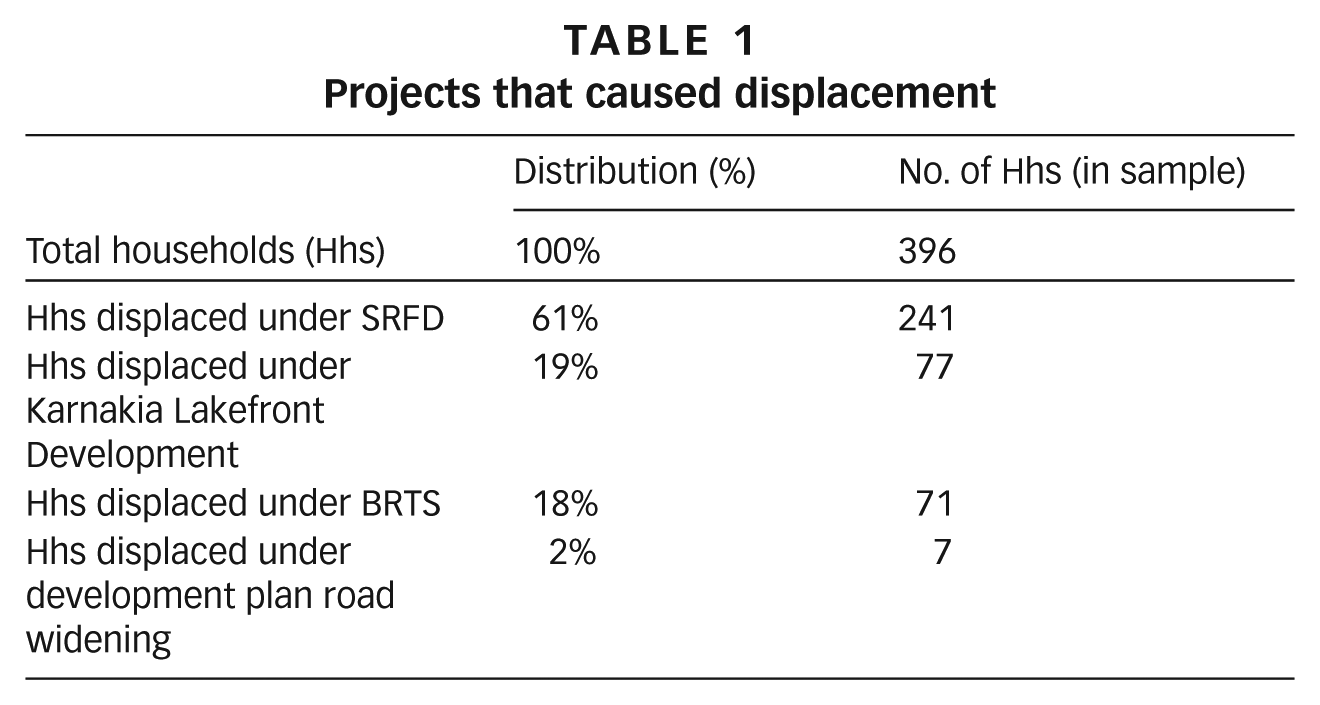
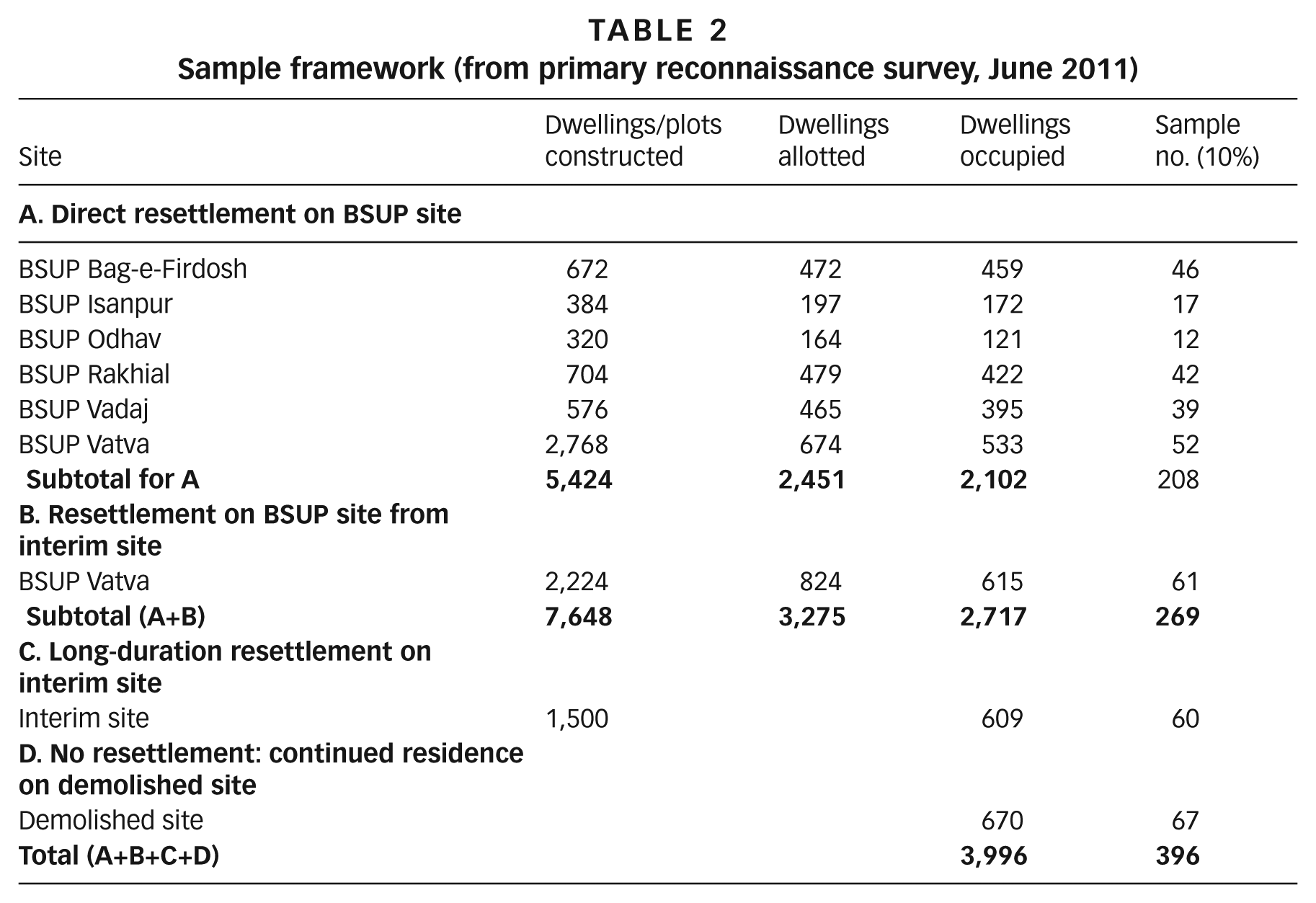
The study collected and analysed primary and secondary data on policy and the effects of DIDR on affected households. Semi-structured interviews were conducted with key AMC personnel and civil society actors; and the BSUP guidelines, BSUP project appraisal toolkit and report, SRFD master plan, and media reports were analysed as sources to construct the official “claims”. We analysed the master plan of SRFD, as it caused major displacements (Table 1), and BSUP policy as it is relevant to resettlement. Because data on actual resettlement of displaced households were not publicly available when research commenced in May 2011, we conducted a household survey from June to August 2011 using a two-step process. Of 28,000 households displaced from 2003 to 2010, 3,275 were identified as resettled on BSUP sites and 609 on the interim resettlement site at Piplaj. From an additional 1,000 houses demolished in May 2011, only 670 households could be traced. Four categories of resettlement emerged: direct resettlement in a BSUP dwelling unit, resettlement in a BSUP dwelling unit after a short stay on the interim site, prolonged stay on the interim site, and no resettlement, with households continuing to reside on demolished slum sites in makeshift shelters. To estimate impoverishment amongst displacees in the four categories, a stratified random survey (10 per cent sample size or 396 households) was conducted (Table 2), with displacees on each site stratified according to their departure slum sites (Figure 2). One house was randomly identified as a starting point for the survey; thereafter every third house in each sub-stratum was selected.
Projects that caused displacement
Sample framework (from primary reconnaissance survey, June 2011)
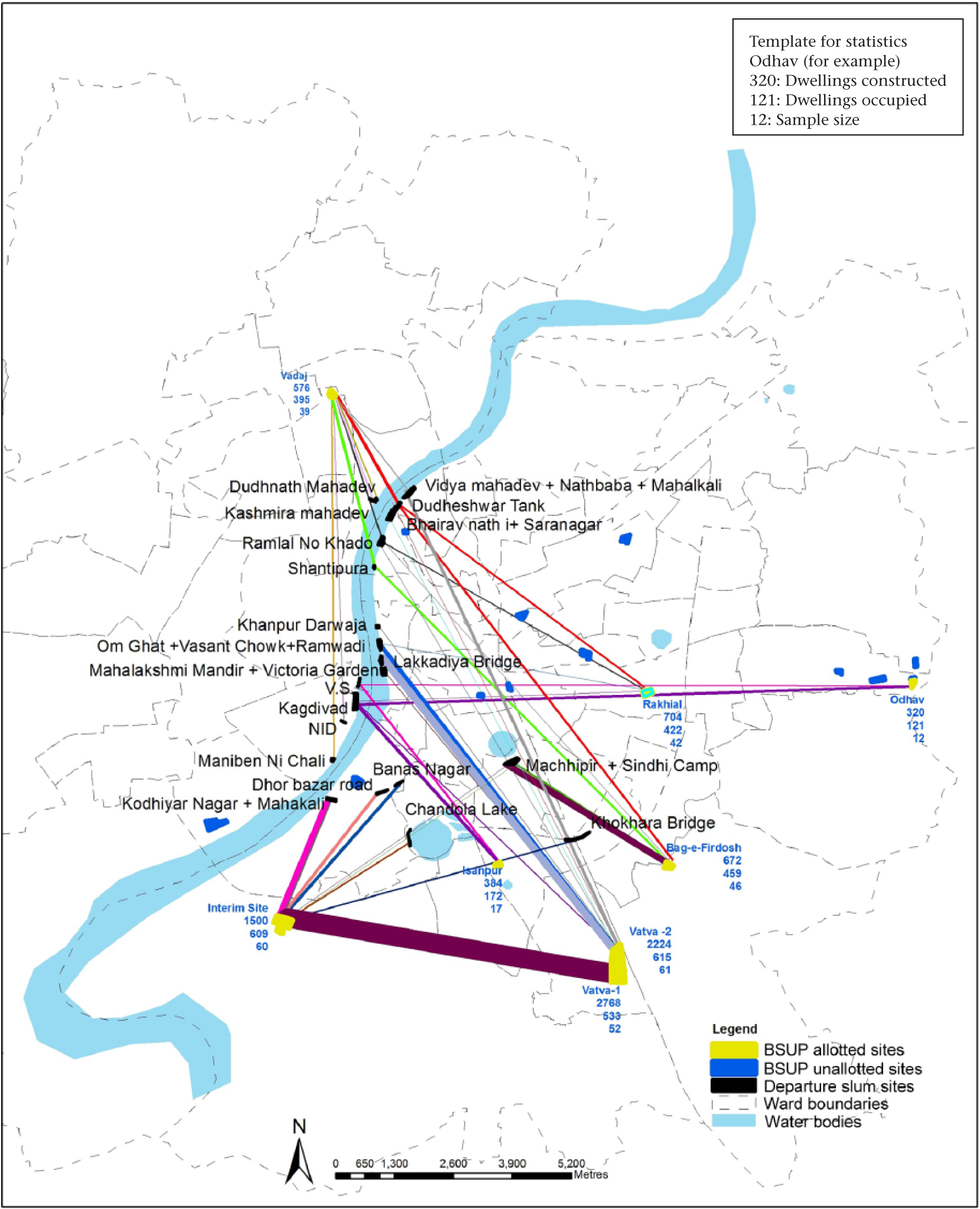
Displacement and resettlement patterns on interim and permanent (BSUP) sites and sample distribution
For indicators to assess impoverishment, Cernea’s impoverishment risks were reinterpreted based on the context of Ahmedabad (Table 3).
Specific indicators employed in Ahmedabad, based on Cernea’s impoverishment risks
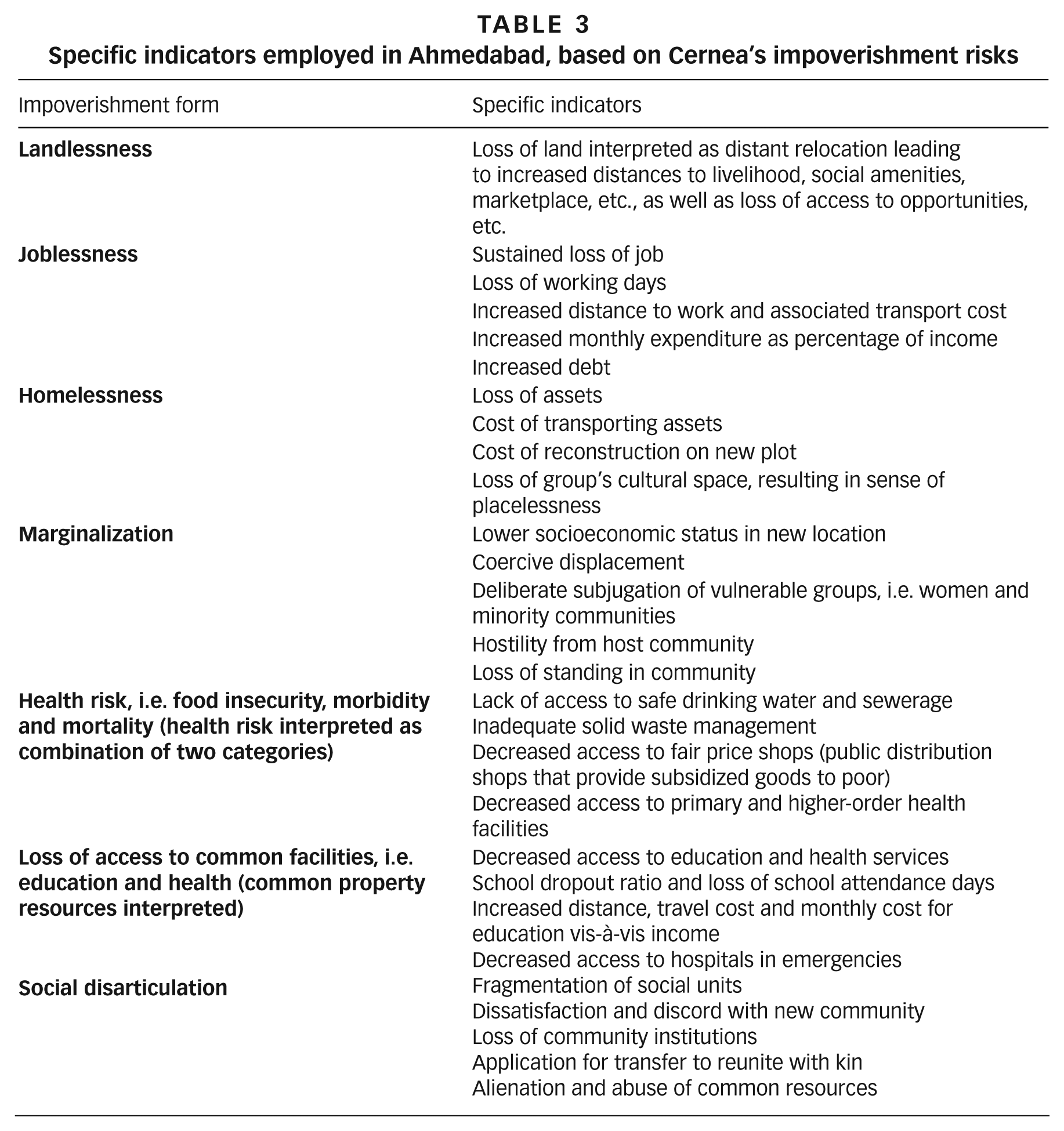
The data related to conditions of beneficiaries before and after resettlement were captured quantitatively and qualitatively in the questionnaire from the recall of the residents. Recall of such quantitative measures as distance, income and loss of assets was triangulated through other means. The recall of qualitative data such as community bonding, feelings of inclusion, etc. was solely based on memory.
To corroborate survey findings, we used semi-structured interviews that involved civil society actors, focus group discussions with the displaced communities, field observations and documentary analysis of media reports, judicial rulings, academic reports and official AMC notices to displacees at various stages of displacement. Field observations were carried out from May to December 2011 on slum sites that were to be displaced, BSUP sites, the interim resettlement site, and still-occupied post-demolition slum sites.
IV. The Gap Between Impoverishment Risks and Policy in DIDR in Ahmedabad
This section discusses our findings related to the gap between policy and the reality of impoverishment. For each form of impoverishment, whether based on Cernea’s framework or a new emergent form, we discuss the policy claims and actual practice as revealed through our survey.
a. Landlessness
Land is the principal foundation for people’s livelihoods, commercial activities, social networks and productive systems, and its expropriation is a principal form of impoverishment and de-capitalization.(39) In the urban context, the key importance of land is its location with respect to opportunities for livelihoods, social networks, and amenities for health and education.
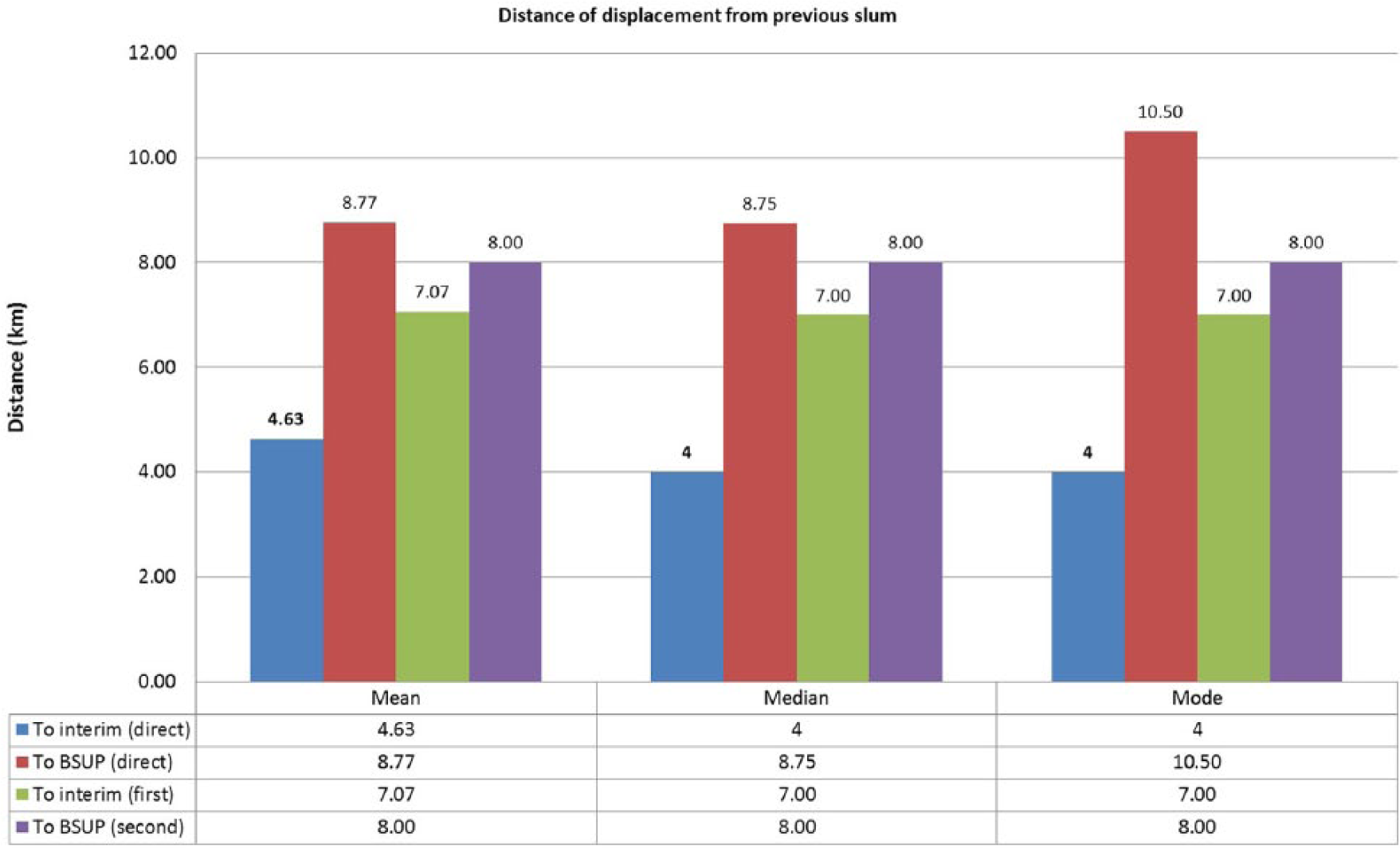
Mean, median and mode of distance of relocation of slum households from departure slums to interim and BSUP sites
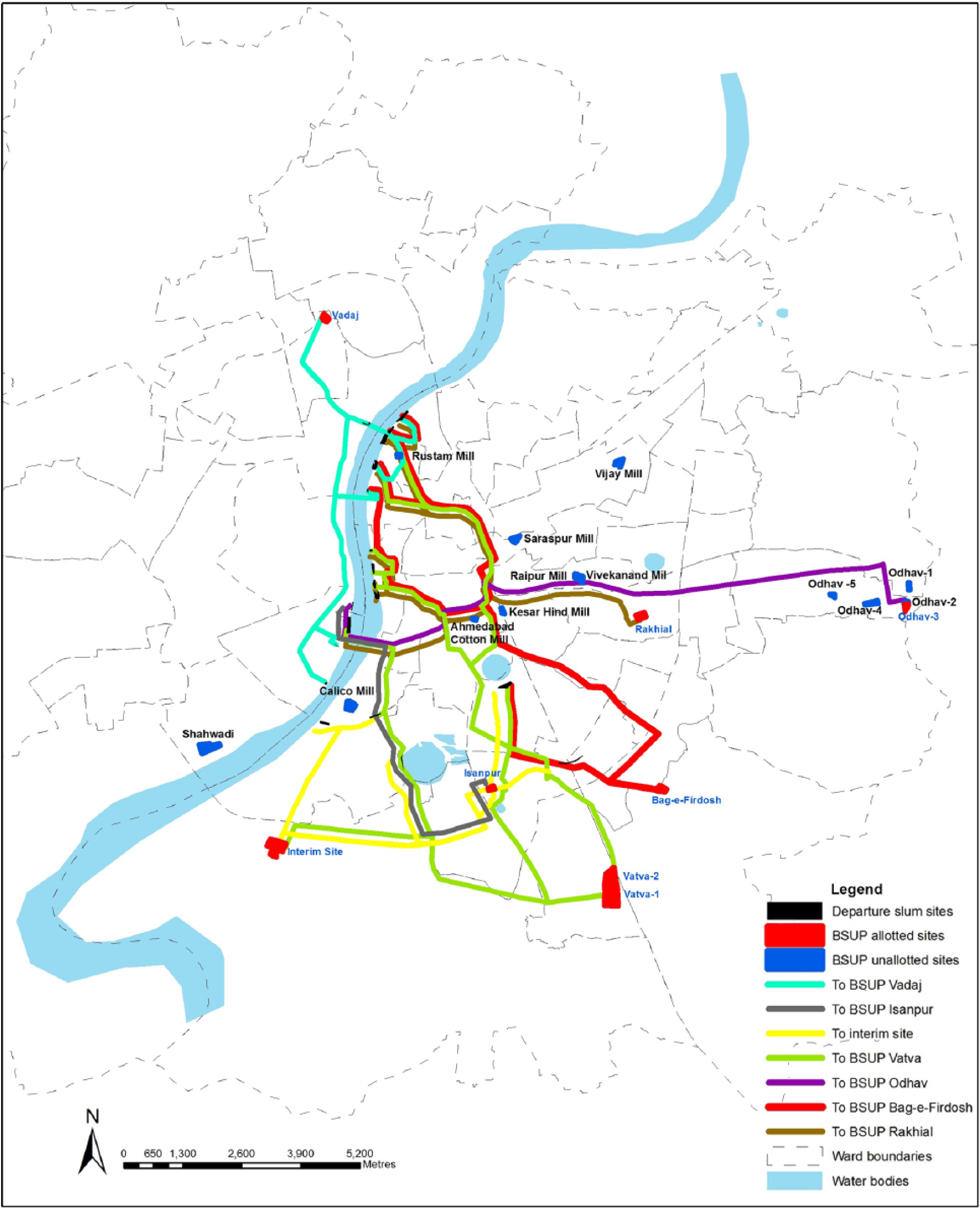
Mapping of pattern and distance of relocation of displaced households to interim and BSUP sites
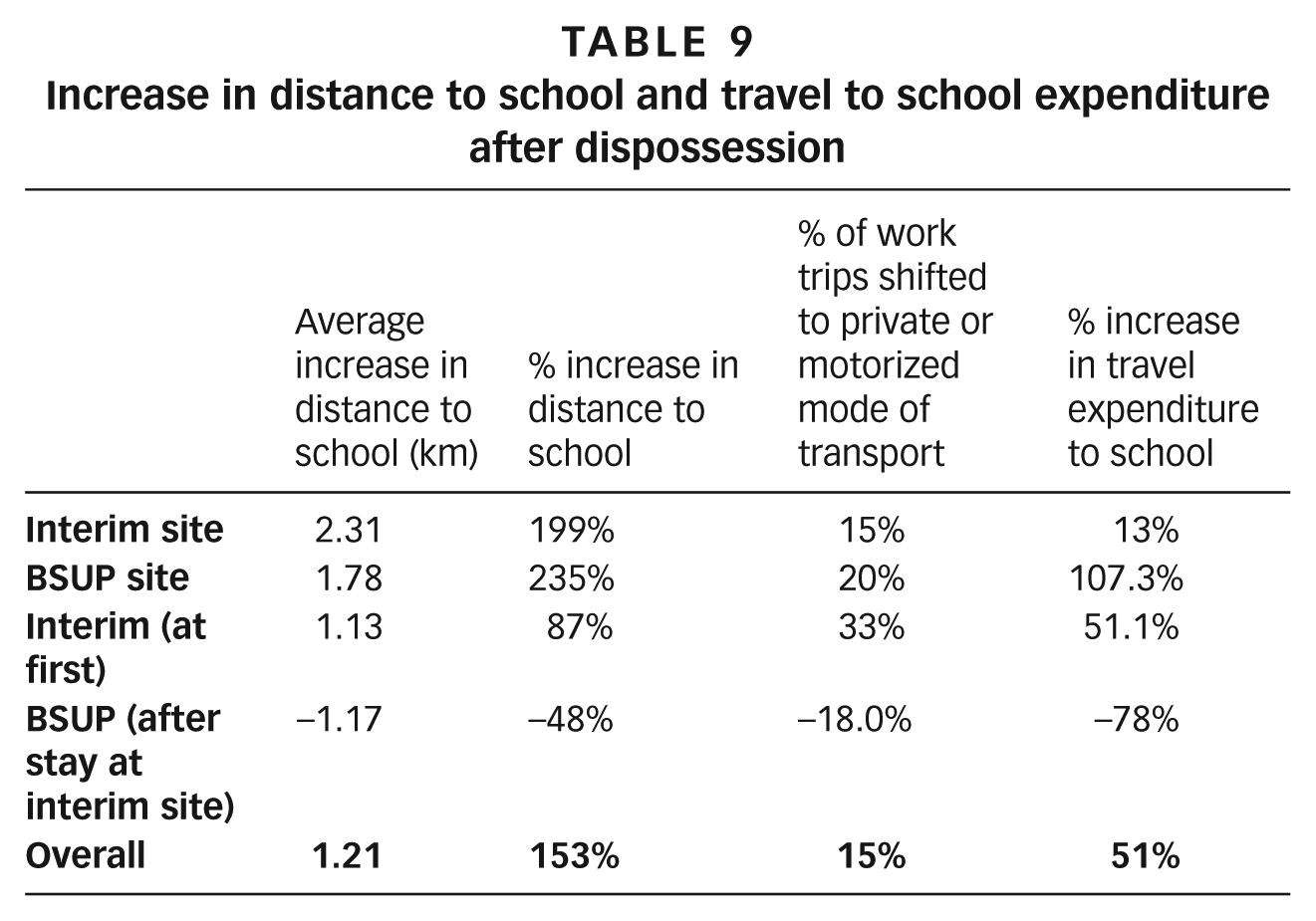
Travel distance to school increased by an average of 1.2 kilometres, and cost increased by 50 per cent. Access to public hospitals was hampered due to increased distance and inadequate access to public transport. Those households that stayed on demolished sites were the worst off and many resorted to begging. Our findings thus show a trend towards greater impoverishment as a result of more distant, off-site resettlement.
There was actually scope for AMC to resettle a large number of displaced households within the same ward or within 3 kilometres as promised. Our analysis shows one BSUP site to be within 4 kilometres of most of the evicted slums. For example, about 164 households from two slums in the west riverbed were relocated early in 2011 to the Odhav BSUP site, 14.5 kilometres away on the eastern periphery of the city, even though two fully built BSUP sites were located within 6 kilometres of these two slums, with over 1,000 unallotted units.
b. Joblessness
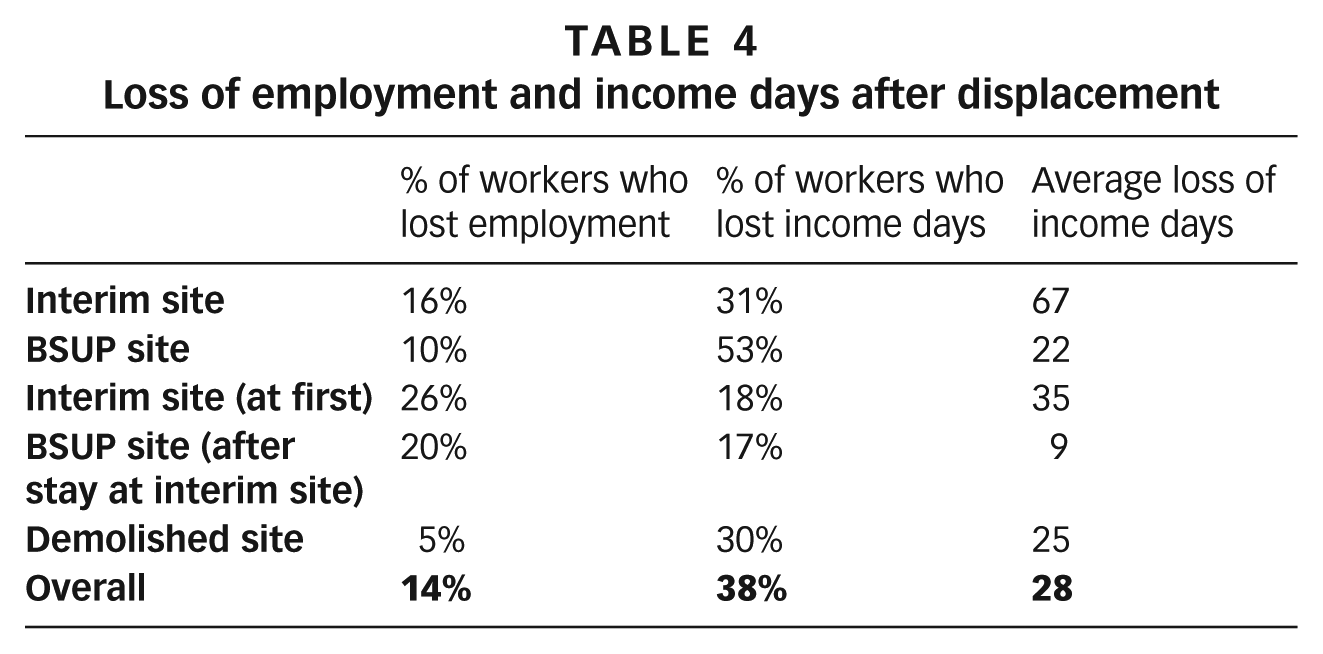
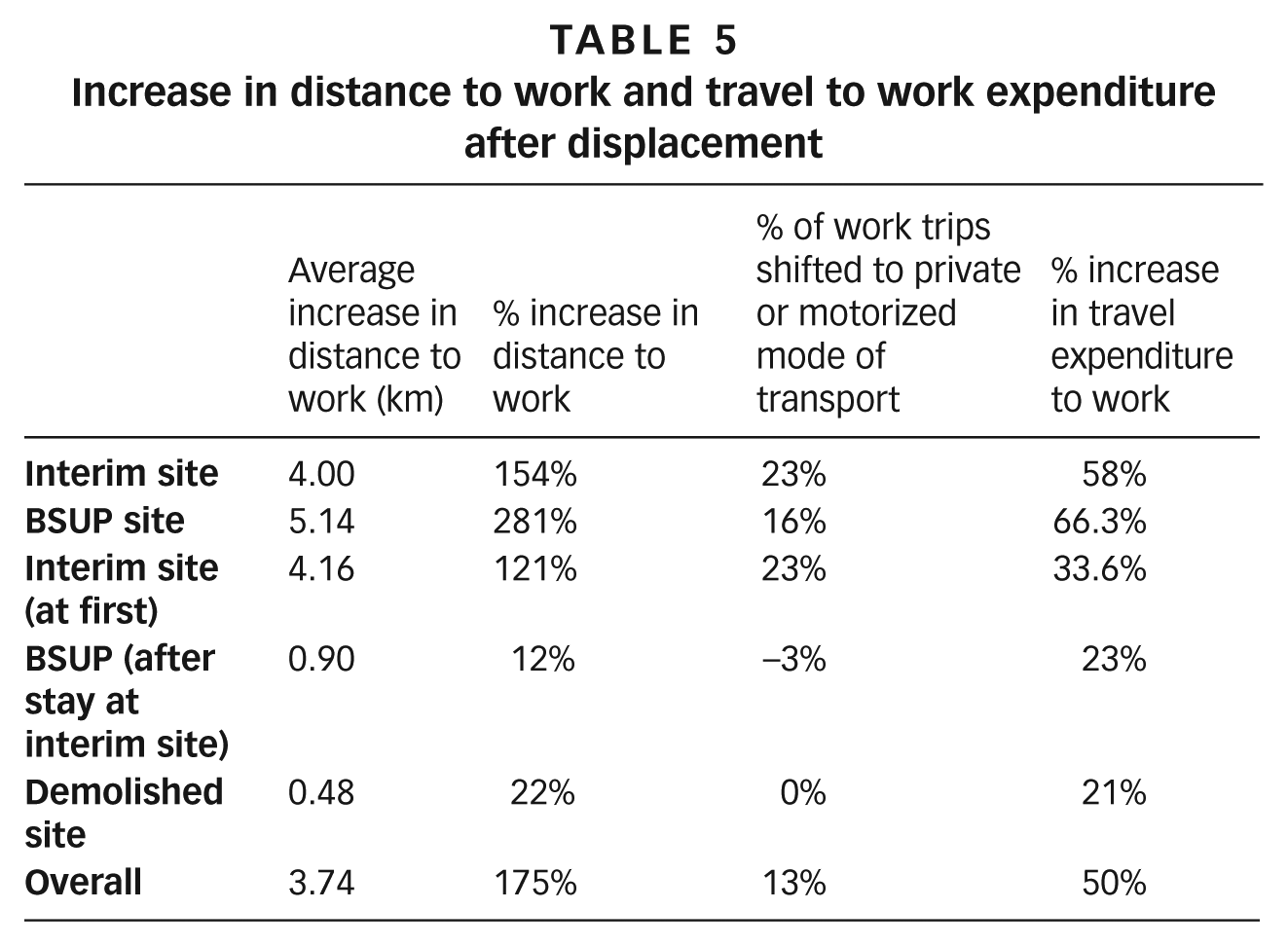
Loss of employment, a major issue linked to displacement, can be temporary or sustained. Even those who find employment after relocation may not find jobs matching their skills and former income levels. If the distance and cost of travel to work increases significantly, reduced earnings and higher expenditures may lead to debts and aggravate impoverishment.
Loss of employment and income days after displacement
Increase in distance to work and travel to work expenditure after displacement
c. Homelessness
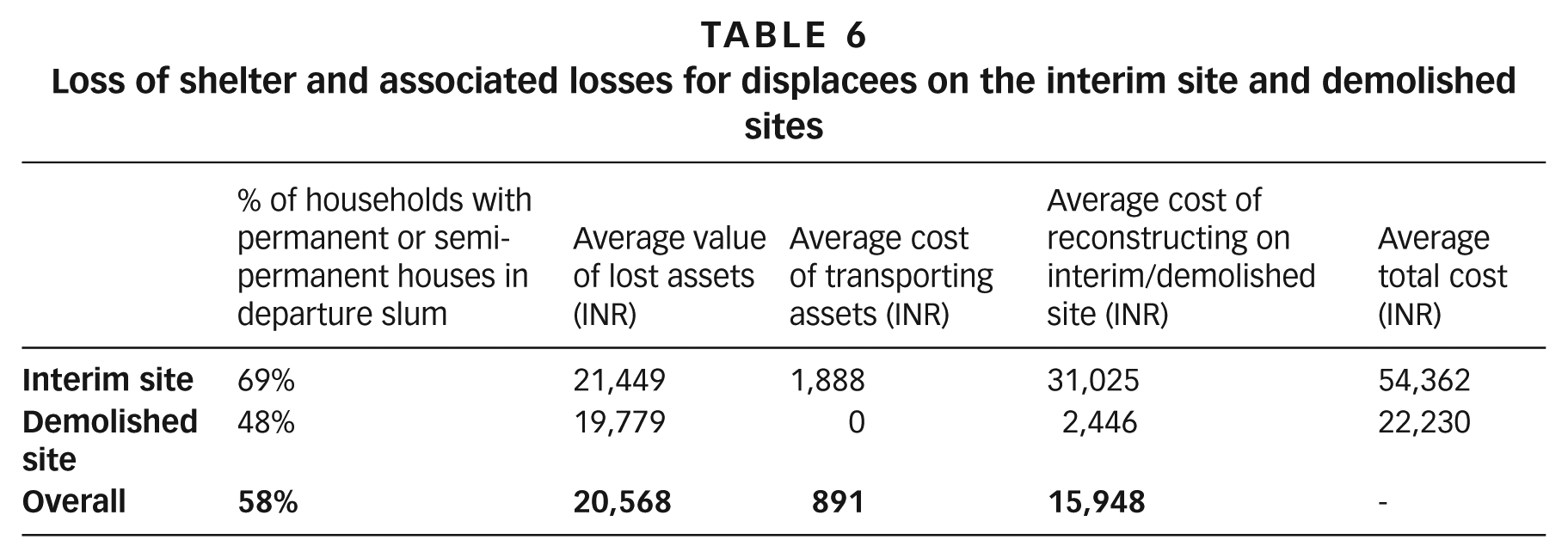
Loss of shelter means loss of physical assets; cost of transporting assets; cost of reconstruction on a new site; increased deprivation of water, sanitation, education and health services; and loss of cultural space and identity, leading to alienation, status deprivation and impoverishment.(44)
Loss of shelter and associated losses for displacees on the interim site and demolished sites
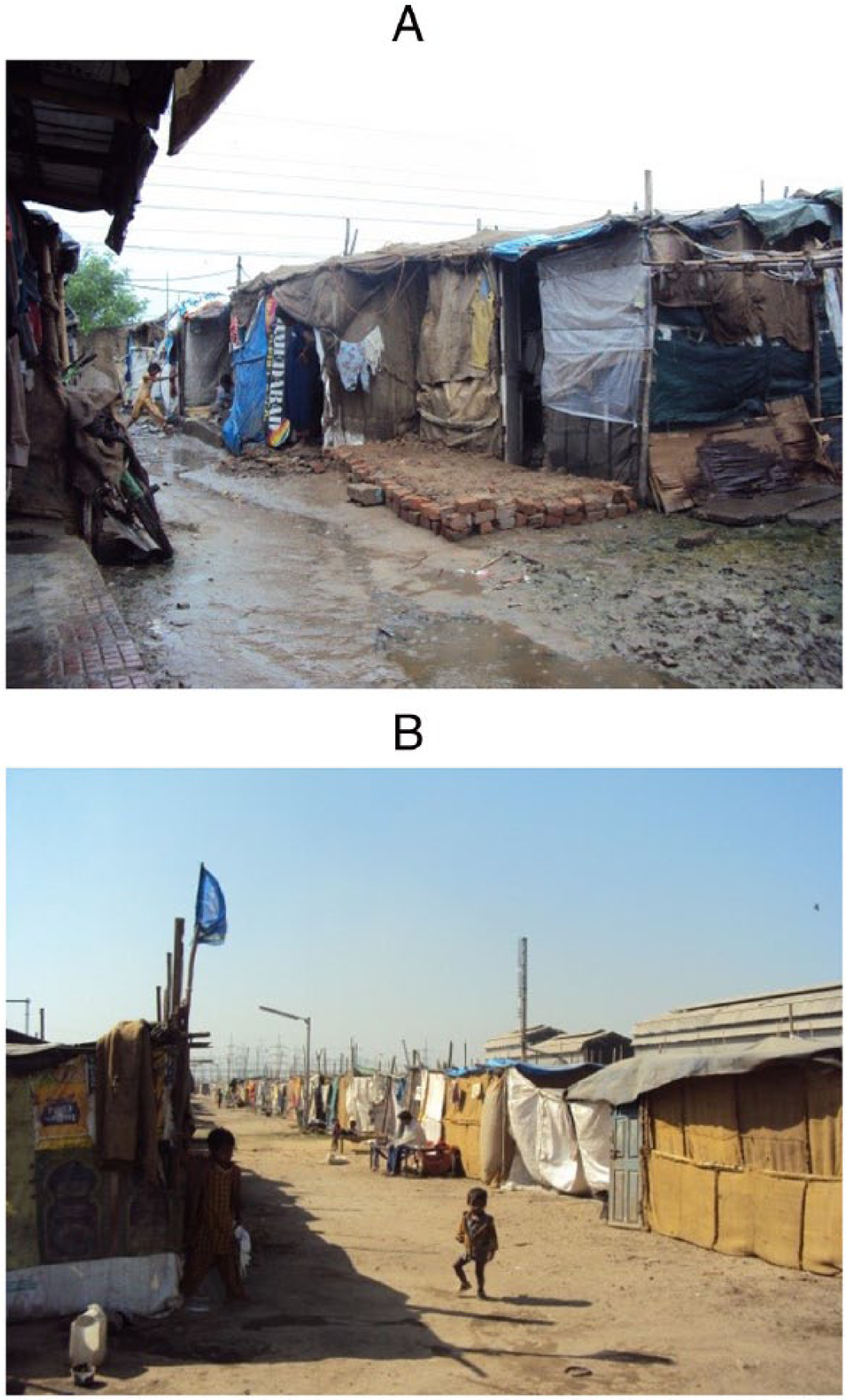
Quality of the interim site and its services and shelter
Displacement to the interim site has also meant increased deprivation of water, sanitation, education and health services. According to a civil rights activist, “The water supply is irregular. Sometimes there is no supply even for two days. Water taps are dirty and contaminated water is being supplied in the area, with no cleanliness.”(46) For many households that have endured seven years at this interim site, loss of shelter has become sustained rather than transitory impoverishment.
For households that continued to reside on demolished sites, deprivation was even worse; they squatted on open land on or near the demolished site, without permanent shelter or access to water and sanitation. Municipal guards patrolled the sites to prevent re-occupation, adding to feelings of insecurity. The average cost to these households from the loss of assets was US$ 444 (INR 22,230), and they were denied relief compensation for transfer or reconstruction elsewhere.
d. Loss of access to community facilities (education and health)
Access to common property, listed by Cernea, is interpreted in the urban context of Ahmedabad as access to facilities such as public schools, public health centres and public hospitals. Loss of access to such facilities may lead to significant deterioration in the economic and human wellbeing of the resettled.
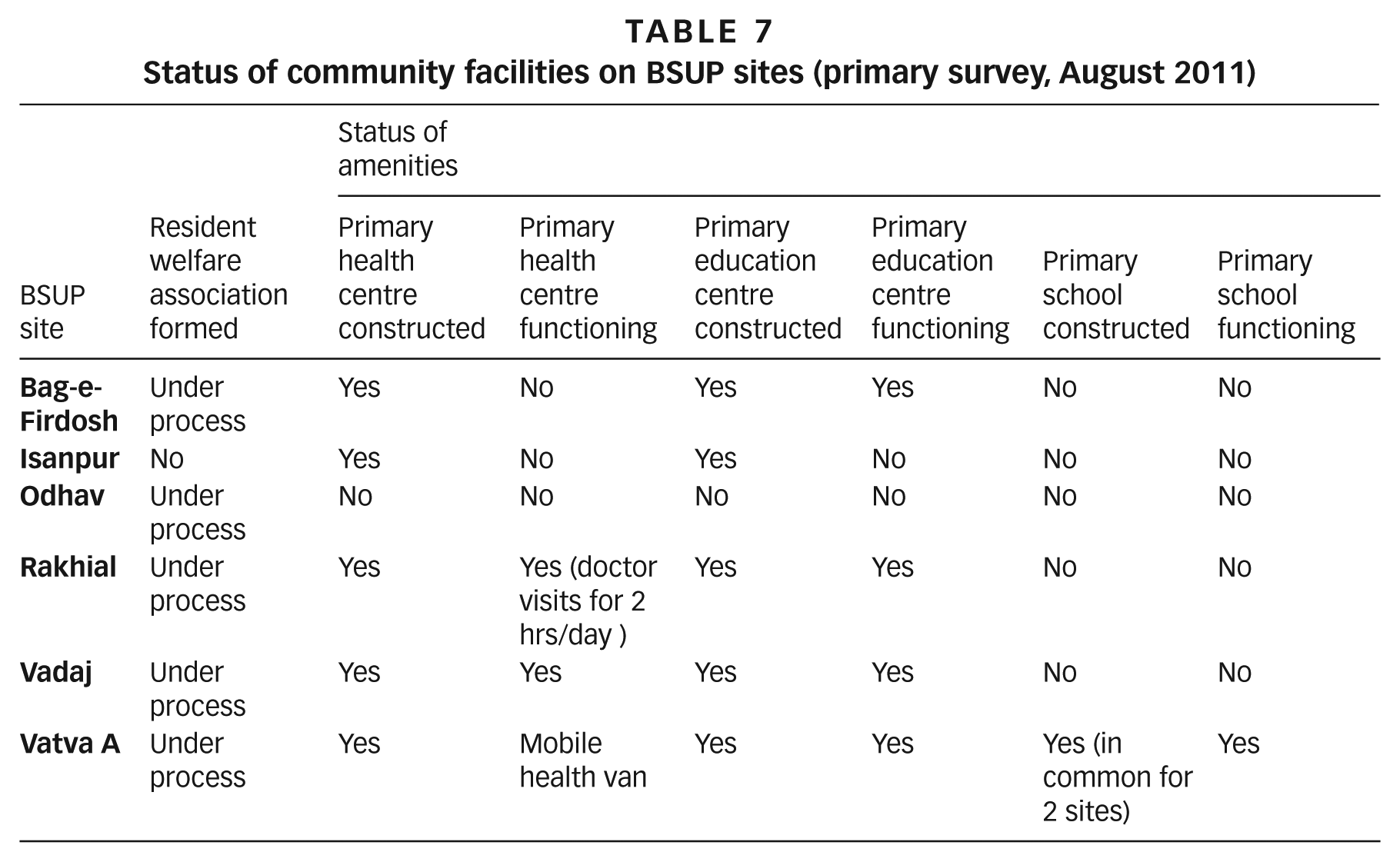
Status of community facilities on BSUP sites (primary survey, August 2011)
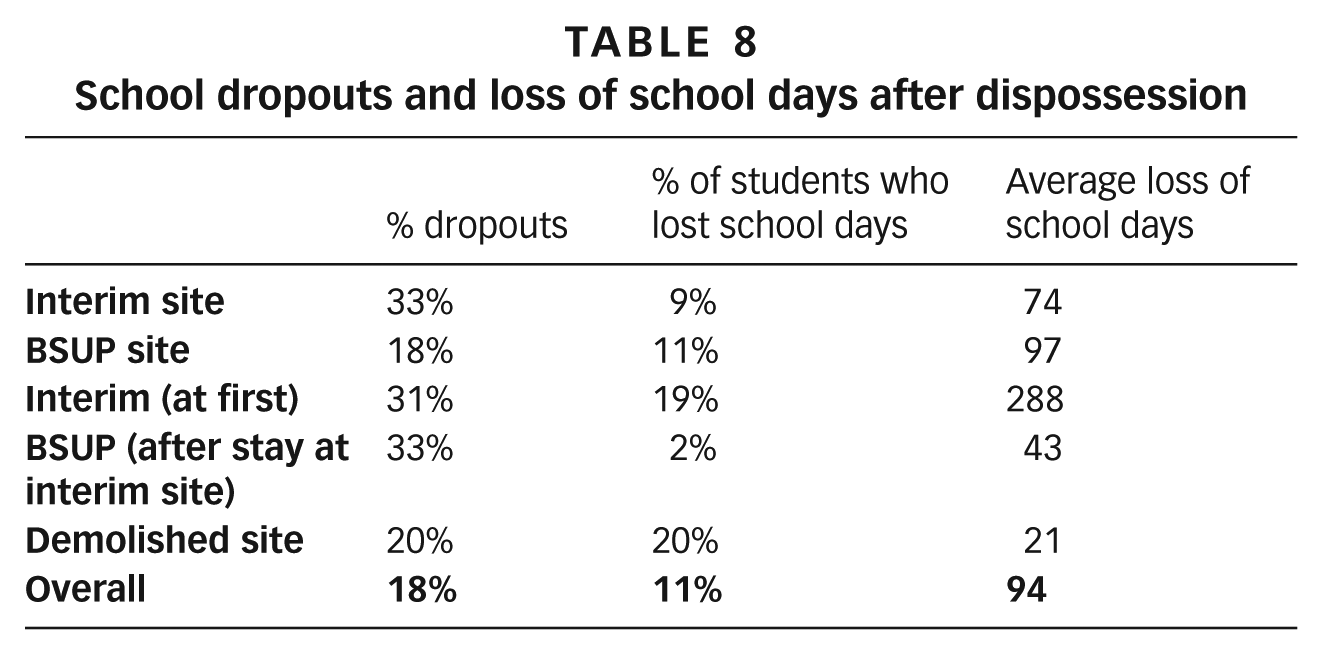
Resettlement has a major impact on education (Table 8 and Table 9). After dispossession, 18 per cent of students dropped out of school; an additional 11 per cent lost school attendance, with an average of 94 days lost. Households that relocated twice suffered the most. The increased distance to public schools, lack of adequate access to public transport, and needed funds and time for reconstruction and readjustment to the new site were cited by 80 per cent of households as reasons for chronic or temporary loss of school attendance. Most students who resumed school faced longer travel at much higher expense.
School dropouts and loss of school days after dispossession
Increase in distance to school and travel to school expenditure after dispossession
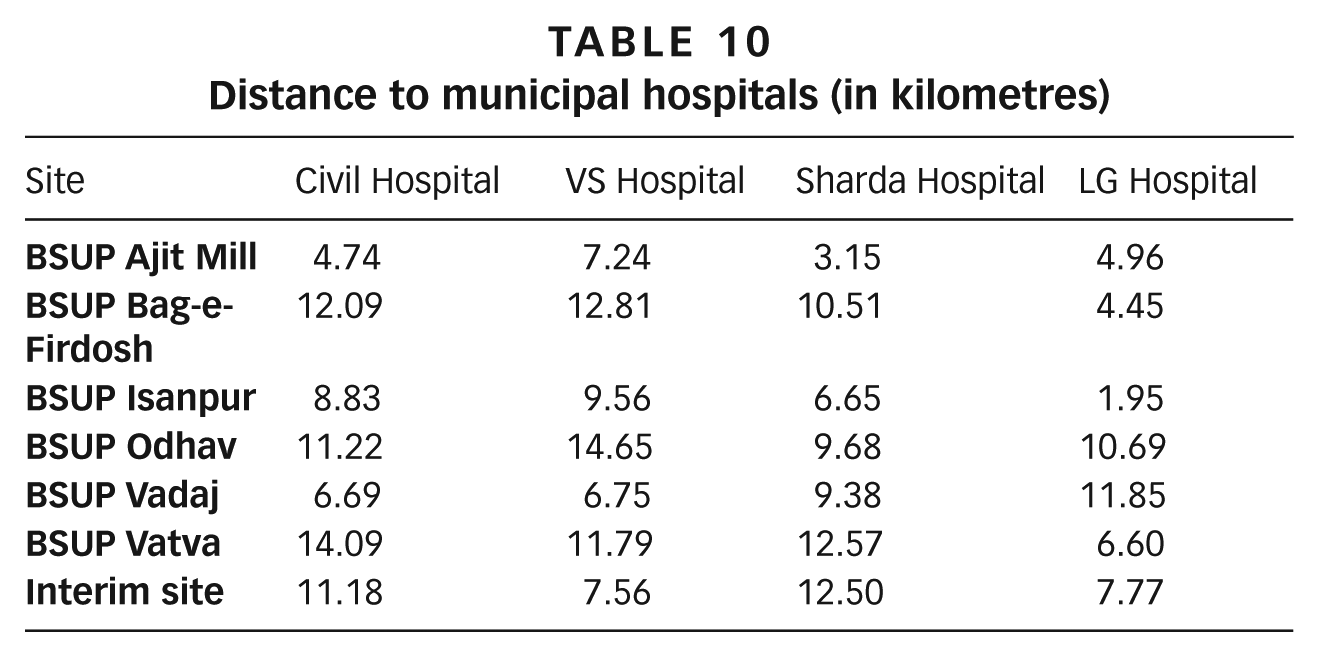
Access to health facilities is similarly poor. Although primary health centres were constructed on almost all occupied BSUP sites, only two were functional; at the other sites mobile health vans were operated by AMC (Table 7). At the interim site a weekly mobile health service was provided only in 2010 following civil society, media and judicial pressure. This is insufficient for a large population with significant health issues, nor do these mobile services respond to emergency needs. The four AMC multi-specialty hospitals are on average 5.7 kilometres distant, and only three BSUP sites have a hospital closer than 6 kilometres away (Table 10).
Distance to municipal hospitals (in kilometres)
e. Health risks (morbidity and mortality, food insecurity)
Health risks on resettlement sites are exacerbated by such factors as poor access to safe drinking water, sanitation and waste management, and fair price shops or below poverty line identity cards for subsidized food rations.
Food insecurity exacerbates health risks. Only 20 per cent of displacees have been issued the Below Poverty Line identity cards that allow access to the fair price shops, which in any case are not available in the new localities. Others bought food at market prices. Unlike in the departure slums, no shopkeepers offered staple foods on credit. The loss of employment also means lowering essential food intake and can lead to undernourishment.
Stress from the general insecurity adds to the risks. According to one woman,(49) “There is no electricity here. The area becomes dark at night and very unsafe for us, especially women and children… Women constantly fear being molested.” Even suicide has been reported.
f. Marginalization
The marginalization of those displaced is experienced in economic, social and psychological terms, and expressed through loss of human capital, loss of confidence and feelings of vulnerability. The coercive nature of the displacement and frequent hostility from host communities contributes further to what is often a pre-existing sense of exclusion.
Our study shows that vulnerable religious minority groups and oppressed castes were disproportionately represented amongst the displacees; 25 per cent were Muslims, compared to 12 per cent in the city, and a striking 88 per cent belonged to scheduled castes, scheduled tribes or other backward classes.
Eviction without prior notice and subjugation of minority households have been reported. According to a newspaper report, “…when they [slum dwellers] asked officials to show some mercy on at least the women and children, they behaved rudely with the women. The hutment [hut encampment] dwellers allege that one official struck a woman with a stick”.(50) James reports a displaced Muslim garage owner’s plea, “All of a sudden the AMC bulldozers came and demolished our houses. I don’t know what do to. I have been standing here searching for my belongings which are buried under the debris.”(51) On some BSUP sites located within relatively prosperous neighbourhoods, settlers were labelled chapprawala (a pejorative for one living under a tin roof or “slumdog”). At one site they were barricaded from entering the adjoining neighbourhood park.
g. Social disarticulation
Displacement fragments the social fabric of a community, including its spatial, temporal and cultural determinants.(52) As kinship groups, voluntary associations and mutual help groups become scattered, the capacity for collective action or social capital is lost. The resulting alienation remains unperceived and unrecorded and has long-term consequences.(53)
There was no policy attention to averting social disarticulation by planning for group relocation based on kin units, extended families, neighbourhoods, ethnic groups, etc.
Resettlement pattern of slum communities on various resettlement sites
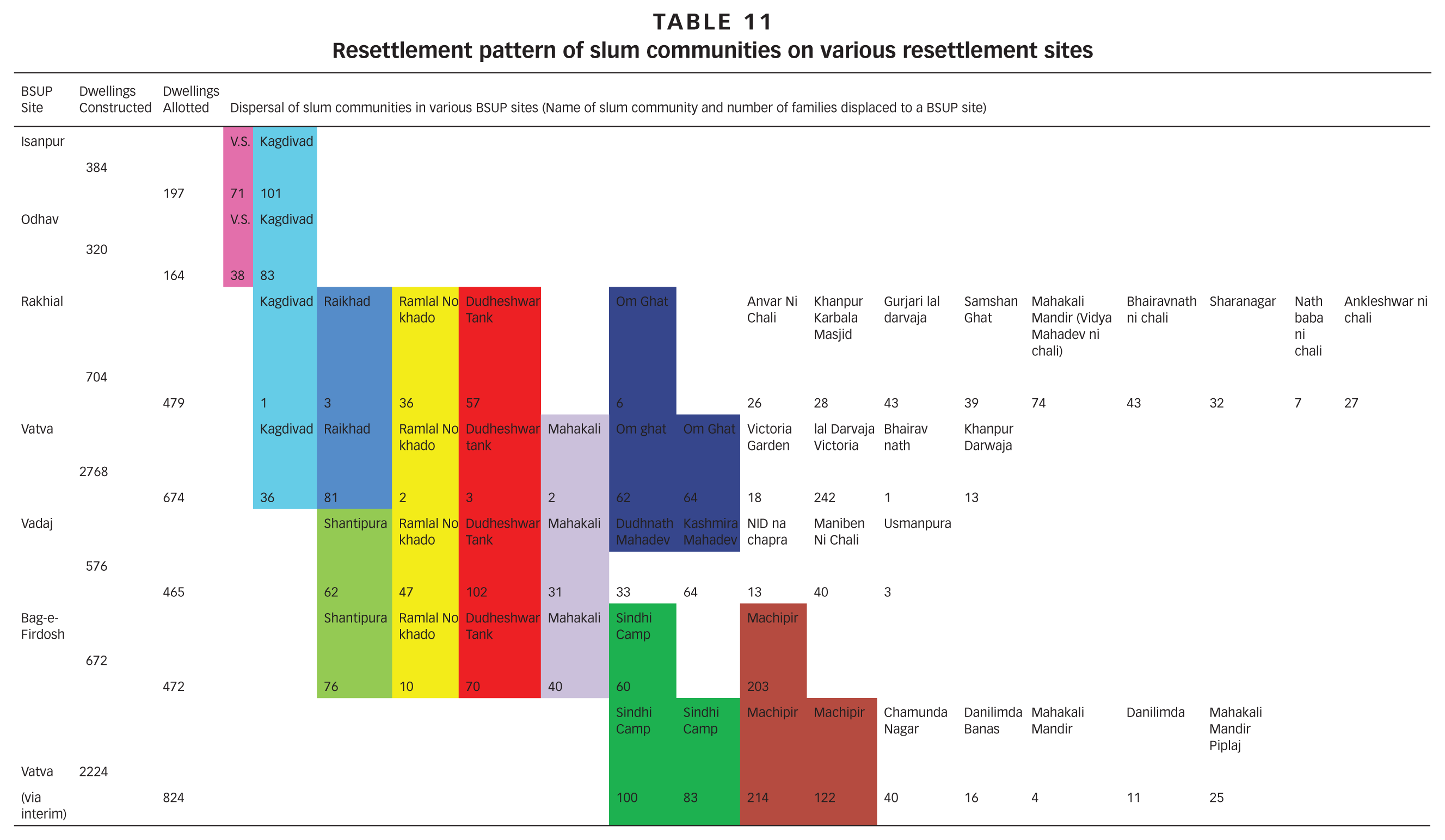
On BSUP sites where communities have been resettled in fragments, social disarticulation was strikingly evident. In Vatva, where groups from nine slums were relocated, participation of households in the upkeep of common property resources and their interpersonal harmony was virtually absent. Most common spaces were covered with garbage, water pilferage from common tanks had become routine, and fights between neighbours over common property issues were frequent (Photo 2A and Photo 2B). Former slum leaders were unwilling to create structures for self-administration, citing lack of interest and identification with the new community. Residents expressed a sense of powerlessness and dependency on AMC intervention to prevent further decay of common property.(56)
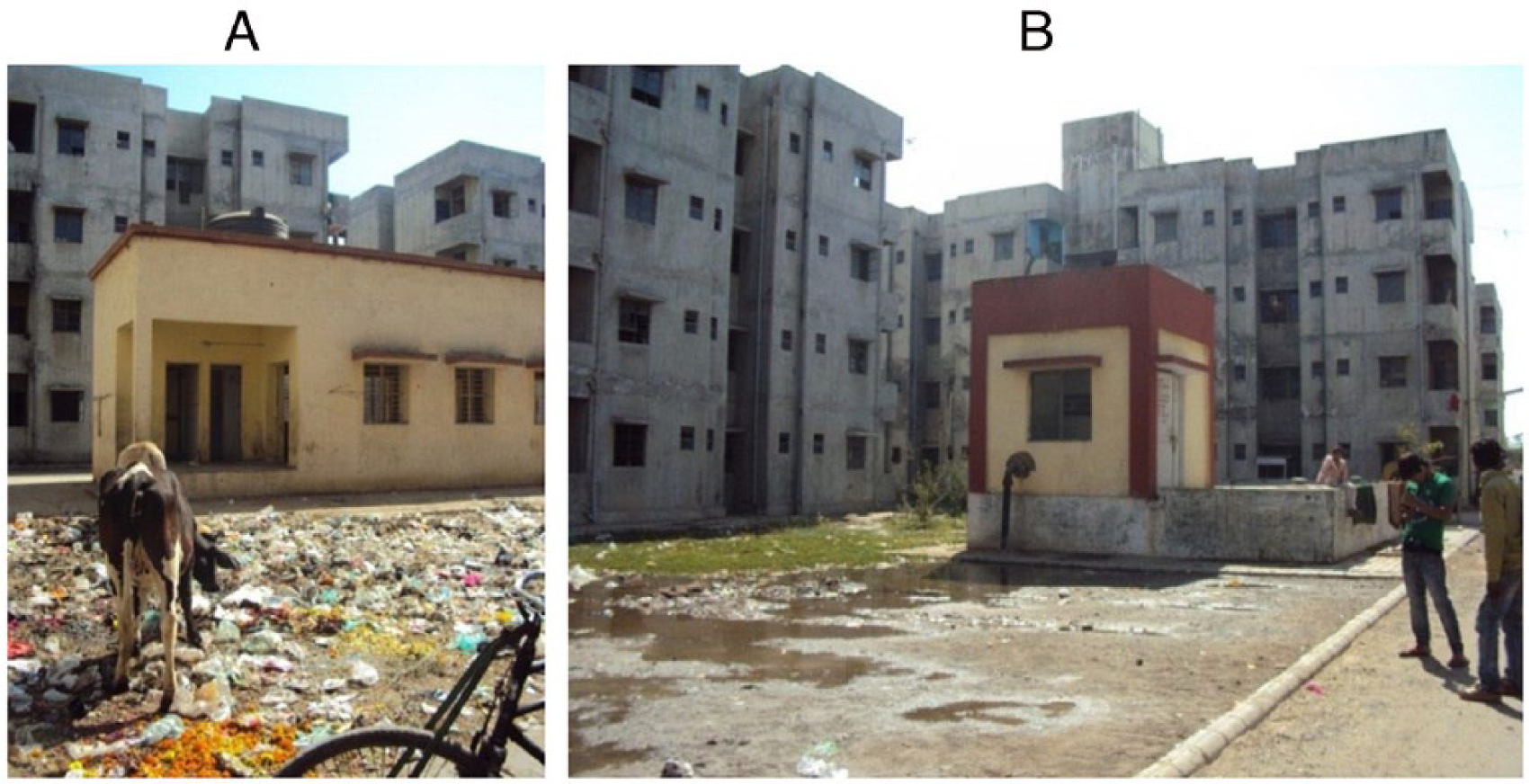
Physical manifestations of social disarticulation: abuse of common property and infrastructure on the newly constructed BSUP site at Vatva
h. Uncertainty (in the pre-dispossession processes)
Uncertainty has emerged in our research as an additional form of impoverishment. As initially proposed by de Wet,(57) we suggest that exclusion from the planning of the resettlement processes and lack of transparent information lead to uncertainty in the community even prior to dispossession, enhance the perception of risk, distract people from pursing their economic activities and contribute to impoverishment.
“Even slum leaders were bypassed in the consultation process. The result being that decisions like identification of project-affected people, location of resettlement sites, dwelling unit size and cost, beneficiary contribution and affordability, and the relocation criteria, which were critical decisions for the affected slum dwellers, were taken without a rigorous understanding of their needs, demands and affordability.”
There is nothing in the BSUP guidelines on the subject of eviction notices and eligibility criteria, and states and local governments were allowed to define these. The consequences in Ahmedabad are discussed below.
Issue of notice prior to demolition and resettlement
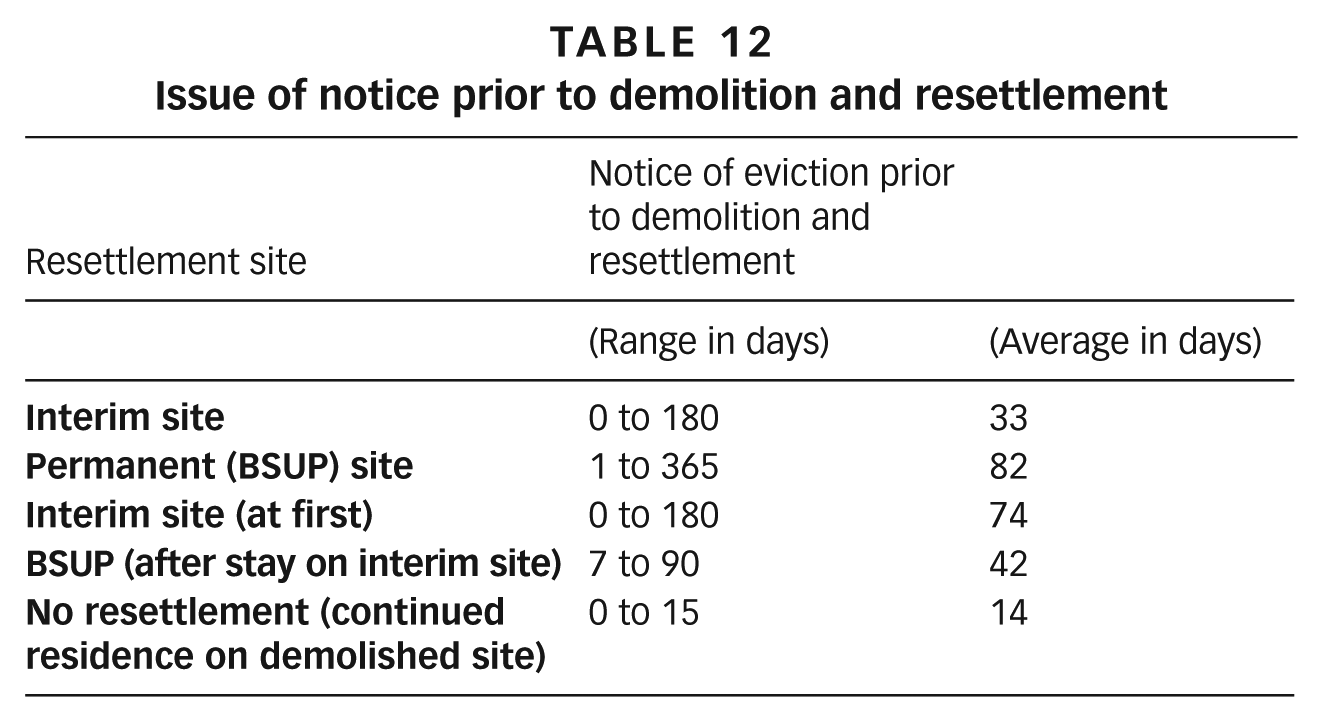
Our study shows 40 per cent of the sampled households were informed about stakeholder consultations but only 8 per cent attended them, mostly because of inconvenient venues and times and additional travel costs. Our evidence suggests that limited dissemination of information and the design of the time and venue were intentional on the part of AMC to limit attendance at the consultations. At the very least, AMC has shown little regard for the opportunity costs of attending such consultations. Moreover, AMC practised discriminatory approaches to eligibility, for which households had to present prescribed documents, either survey identity cards issued in 2002 for the SRFD project-affected people or identity cards issued by the slum listing from 1976 for others. Only 10 per cent of surveyed households possessed one of these documents, more in the case of SRFD than others. Desai describes such discriminatory practices as “flexible governing”, aimed to constrain community mobilization and opposition.(60) These practices could also in part be attributed to a deficit of BSUP units relative to the number of households to be displaced – as few as one to every five households in need, depending on the estimate of those to be displaced. This exacerbated people’s perception of risk and uncertainty.
V. Discussion
Our research shows that all the forms of impoverishment proposed by Cernea have emerged, in varying degrees, in all the four categories of displaced households in Ahmedabad. Many households have also experienced very high levels of “uncertainty”, which we propose should be seen as an additional form of impoverishment, and recognized in risk mitigation plans through promotion of high levels of community participation throughout the entire resettlement process.
Our findings clearly indicate that relocation distance is the most significant cause of post-displacement impoverishment and must be adequately addressed in rehabilitation policy. Most of the impoverishment found amongst Ahmedabad’s displaced populations (i.e. joblessness, lack of access to community facilities, health risks and social disarticulation) derives from displacement distance along with other factors. Similar research on Indore(61) has demonstrated that those resettled on-site were substantially less impoverished than those resettled off-site. Despite a large body of evidence on the impoverishment of displacees, there was little in BSUP policy that specifically acknowledged or targeted the various components of impoverishment. For instance, BSUP policy included only token reference to such impoverishment risks as landlessness or relocation distance, joblessness, homelessness, loss of access to community facilities, health risks and social disarticulation; and food security and social marginalization were completely ignored. In some instances where there was relevant policy, the realities of implementation did not match the rhetoric. This evident gap between the rhetoric and practice of local government has led to impoverishment risks becoming a reality.(62) As impoverishment increases on the inhospitable and distant resettlement sites, where people live in abject poverty,(63) the displaced defect and return to the old slums or vicinities,(64) leading to low occupancy levels on BSUP sites across Indian cities(65) and to higher densities in the vicinity of old slum sites.(66) In Ahmedabad also, during the time of our field visit in May 2011we found only 35 per cent occupancy of the units constructed, with most of them still unallotted; of those units that had actually been allotted, 83 per cent were occupied.
The failure of resettlement is usually attributed to dysfunctional communication between decision-makers and affected communities and the consequent lack of understanding of the latter’s needs and aspirations, leading to the further impoverishment of displacees. There are clear signs that this is also true for Ahmedabad. Emphasizing the need for community participation, Patel et al. have shown how full community participation and empowerment in critical decision-making underpins a successful resettlement process.(67) Many of the BSUP programme’s inadequacies and failures in Ahmedabad are undoubtedly partly attributable to the exclusions of the affected communities from all aspects of planning and implementation.
VI. Conclusions
Development-induced displacements and resettlements in the rapidly developing cities of the South are an important socio-political issue. In India, evidence of large-scale displacements of the urban poor in all major cities is emerging, spurred by gentrification and infrastructure projects to create world-class cities. It is critical to focus more attention on research on urban DIDR and its consequences for the urban poor and to search and advocate for more sensitive approaches and mitigation policy measures. Our analysis of DIDR in Ahmedabad has clearly indicated that the current practices of local government have led to impoverishment amongst the dispossessed and the displaced. In the absence of appropriate guidelines, the urban poor are virtually excluded from the design, planning, implementation and management of resettlement processes under BSUP. Although BSUP has come to a close it has paved the way for RAY. Ideally, the lessons learnt from BSUP should contribute to better conceptualization of RAY to avoid, for example, an over-emphasis on off-site resettlement options rather than in situ upgrading, or the adoption of exclusionary practices, all of which lead to impoverishment of the so-called beneficiaries. The price of not building on these lessons will be high, especially for those targeted by DIDR projects and for public funds spent on such subsidized rehabilitation housing programmes.
Footnotes
1.
The term “slum” usually has derogatory connotations and can suggest that a settlement needs replacement or can legitimate the eviction of its residents. However, it is a difficult term to avoid for at least three reasons. First, some networks of neighbourhood organizations choose to identify themselves with a positive use of the term, partly to neutralize these negative connotations; one of the most successful is the National Slum Dwellers Federation in India. Second, the only global estimates for housing deficiencies, collected by the United Nations, are for what they term “slums”. And third, in some nations, there are advantages for residents of informal settlements if their settlement is recognized officially as a “slum”; indeed, the residents may lobby to get their settlement classified as a “notified slum”. Where the term is used in this journal, it refers to settlements characterized by at least some of the following features: a lack of formal recognition on the part of local government of the settlement and its residents; the absence of secure tenure for residents; inadequacies in provision for infrastructure and services; overcrowded and sub-standard dwellings; and location on land less than suitable for occupation. For a discussion of more precise ways to classify the range of housing sub-markets through which those with limited incomes buy, rent or build accommodation, see Environment and Urbanization Vol 1, No 2 (1989), available at  .
.
2.
Mahadevia, D (2011), “Branded and Renewed? Policies, Politics and Processes of Urban Development in the Reform Era”, Economic & Political Weekly Vol 46, pages 56–64.
3.
George, S and S Nautiyal (editors) (2006), Eviction Watch India-II, Human Rights Law Network (HRLN), New Delhi.
4.
Kolkata is the capital of West Bengal; it has been governed by the Communist Party and therefore it is ironic that it is no exception to this trend.
5.
6.
See reference 5.
7.
Mahadevia, D, A Datey and A Mishra (2013), Foisting Mass Housing on the Poor: Lessons from Social Audit of BSUP, Center for Urban Equity, CEPT University.
8.
9.
See reference 7.
10.
Cernea, M (2000a), “Impoverishment or Social Justice? A Model for Planning Resettlement”, in H M Mathur and D Marsden (editors), Development Projects and Impoverishment Risks: Resettling Project-Affected People in India, Oxford University Press; also Cernea, M (2000b), “Risks, Safeguards and Reconstruction: A Model for Population Displacement and Resettlement”, in M Cernea and C McDowell (editors), Risks and Reconstruction: Experiences of Resettlers and Refugees, World Bank, Washington, DC; Downing, T E (1996), “Mitigating Social Impoverishment when People are Involuntarily Displaced”, in C McDowell (editor), Understanding Impoverishment Providence, Berghahn Books, Oxford; Fernandes, W (2000), “From Marginalisation to Sharing the Project Benefits”, in M Cernea and C McDowell (editors), Risk and Reconstructing Livelihoods, World Bank, Washington, DC; and Mathur, H M (2006), “Urban Development and Involuntary Resettlement”, in H M Mathur (editor), Managing Resettlement in India: Approaches, Issues, Experiences, Oxford University Press, New Delhi.
13.
Bartolome, L (1993), “The Yacrela Experience with Urban Resettlement: Some Lessons and Insights”, in M Cernea and S Guggentreim (editors), Anthropological Approaches to Resettlement: Policy, Practice and Theory, Westview Press, Boulder/San Francisco/Oxford; also de Wet, C (2006), “Risk, Complexity and Local Initiative in Forced Resettlement Outcomes”, in C de Wet (editor), Development-induced displacement: problems, policies, and people, Berghahn Books, Oxford; Fernandes, W (1991), “Power and Powerlessness: Development Projects and Displacement of Tribals”, Social Action Vol 41, pages 243–270; and Mathur, H M (1998), “Impoverishment Risk Model and its Use as a Planning Tool”, in H M Mathur and D Marsden (editors), Development Projects and Impoverishment Risks: Resettlement Project-Affected People in India, Oxford University Press, Delhi.
16.
Mahapatra, L K (1999), Resettlement, impoverishment, and reconstruction in India: Development for the deprived, Vikas Publishing House, New Delhi.
20.
See reference 10, Cernea (2000b); also Bartolome, L, C de Wet and H Mander (1999), Displacement, Resettlement, Rehabilitation, Reparation and Development, World Commission on Dams, Cape Town.
22.
Ramanathan, U (2006), “Illegality and the Urban Poor”, Economic & Political Weekly Vol 41, pages 3193–3197.
23.
Desai, R (2012), “Governing the Urban Poor: Riverfront Development, Slum Resettlement and the Politics of Inclusion in Ahmedabad”, Economic & Political Weekly Vol 47, pages 49–56.
24.
Dupont, V (2008), “Slum Demolitions in Delhi since the 1990s: An Appraisal”, Economic & Political Weekly Vol 43, pages 79–87.
25.
Patel, S, C d’Cruz and S Burra (2002), “Beyond evictions in a global city: people-managed resettlement in Mumbai”, Environment and Urbanization Vol 14, No 1, pages 159–172.
26.
Menon-Sen, K and G Bhan (2008), Swept off the Map: Surviving Eviction and Resettlement in Delhi, Yoda Press, New Delhi.
27.
See reference 3.
28.
See reference 7; also Patel, S (2013), “Upgrade, rehouse or resettle? An assessment of the Indian government’s Basic Services for the Urban Poor (BSUP) programme”, Environment and Urbanization Vol 25, No 1, pages 1–12.
30.
Dutta, S (2000), “Partnerships in urban development: a review of Ahmedabad’s experience”, Environment and Urbanization Vol 12, No 1, pages 13–26.
31.
32.
Mahadevia, D (2002), “Communal Space over Life Space: Saga of Increasing Vulnerability in Ahmedabad”, Economic & Political Weekly Vol 37, pages 4850–4858.
33.
34.
See reference 33.
35.
Allotment letter issued by the AMC Estate Division, South Zone, mentioning the project under which the household is displaced and resettled, the date, the number of the plot/block allotted through a lottery, and the grant of possession rights of an open plot.
36.
Interview with a resident slum dweller on the Piplaj interim site, awaiting BSUP allotment, 17 June 2011.
37.
Notice for transfer to a Piplaj site and services plot, issued by an assistant estate officer of the South Zone of AMC to the households to be displaced and resettled on this interim site.
38.
See reference 23.
40.
MHUPA (2009a), Check-List for Preparation/Appraisal of DPR in Basic Services to the Urban Poor (BSUP), Ministry of Housing and Urban Poverty Alleviation, Government of India, available at .
41.
42.
Focus group discussion with resettled community members at the BSUP Vadaj site, 6 July 2011.
43.
MHUPA (2009b), Modified Guidelines for Sub-Mission on Basic Services to the Urban Poor (BSUP): Jawaharlal Nehru National Urban Renewal Mission (JNNURM), Ministry of Housing and Urban Poverty Alleviation, Government of India, available at .
45.
As per the exchange rate of 1 USD = INR 50 prevailing in March 2012, when the research and analysis concluded (http://www.xe.com/currencytables/?from=INR&date=2012-03-12).
46.
Dave, D P (2012), “The dirty picture”, Ahmedabad Mirror, 21 June.
47.
See reference 40.
48.
See reference 46.
51.
James, H (2011), “Demolition takes toll on ‘legal’ houses”, Ahmedabad Mirror, 21 November.
52.
See reference 10, Cernea (2000b); see also reference 10, .
53.
See reference 10, Cernea (2000a); also Serageldin, I (2006), “Involuntary Resettlement in World Bank Financed Projects: Reducing Impoverishment Risks for the Affected People”, in H M Mathur (editor), Managing Resettlement in India: Approaches, Issues, Experiences, Oxford University Press, New Delhi.
54.
Interview with senior AMC official, 1 September 2011.
55.
Interview with senior staff member of NGO, 5 May 2011.
56.
Focus group discussion with resettled community at the BSUP site Vadaj, 6 July 2011.
58.
MoUD (2011), Jawaharlal Nehru National Urban Renewal Mission – Overview, Ministry of Urban Development, Government of India, available at .
60.
See reference 23.
61.
Patel, S and R Mandhyan (2014), “Impoverishment assessment of slum dwellers after off-site and onsite relocations: a case of Indore”, Commonwealth Journal of Local Governance Issue 15.
63.
See reference 26.
64.
See reference 24.
65.
See reference 7.
66.
See reference 24.
67.
See reference 25.