




Abstract
Most research on the mobility outcomes of violence focuses on Internally Displaced Peoples (IDPs) or refugees displaced in response to armed conflict. The influence of everyday urban violence on population movements has been largely invisible, especially transnationally. This paper addresses these issues in relation to transnational migration and displacement among Colombians in the United Kingdom. Cities in the global South have porous violence boundaries in terms of rural–urban linkages but also with regard to the more neglected dimension of transnational migration, a crucial response to everyday urban violence and less directly influenced by armed conflict. The paper also highlights transnational linkages between countries, forged and maintained especially through remittances that fund security infrastructure back home as well as further migration. The notion of displacement also encapsulates how fear and security in cities in the South are often transformed into anxiety and the experience of discrimination among those with no legal papers in cities such as London.
I. Introduction
This paper explores the important transnational outcomes of everyday urban violence, in the form of international migration and the creation of transnational linkages relating mainly to remittances. The focus on everyday urban violence is especially significant. Research to date on the relationship between violence and mobility has focused mainly on how armed conflict has prompted population movement, whether internally, mainly from rural to urban areas, creating large populations of Internally Displaced Peoples (IDPs) in cities, or internationally as people move across (often immediate) borders as refugees. As conflict shifts from the state to the city scale and everyday urban violence burgeons in cities of the global South, there is still very little research on the transnational outcomes of such daily violence beyond some consideration of the emergence of transnational gangs.(1) Focusing on a population residing in the global North who have moved from the South, this paper therefore addresses these processes with specific reference to the nature of transnational migration and linkages among Colombians in the United Kingdom (UK).
The paper argues that cities in the global South have porous violence boundaries not only in terms of rural–urban linkages but also with regard to the more neglected transnational mobilities. It suggests that everyday urban violence is largely invisible in work accounting for the emergence of transnational migration from cities, while also acknowledging that armed conflict plays a role, albeit an exaggerated one. These movements are referred to as “displacements”, given that, whether voluntary or involuntary, they are underpinned by threats to personal security and safety. In turn, the notion of displacement also encapsulates how fear and security in cities of the South are often transformed into anxiety and the experience of discrimination among those with no legal documentation papers in cities such as London. These movements are also termed transnational displacements to denote how linkages between countries are forged and maintained through financial and social ties that fund security infrastructure back home as well as further migration.
II. Conceptualizing the Transnationality of Urban Violence through Displacement
The role of crisis in generating population movements has been long established, yet much research on “crisis migration”(2) has tended to make invisible everyday urban violence at the expense of highlighting forced migration of Internally Displaced Persons (IDPs) within nation states, and refugee migration beyond borders. The International Organization for Migration (IOM) defines “crisis migration” as “… large-scale, complex migration flows due to a crisis, which typically involve significant vulnerabilities for individuals and communities affected. A migration crisis may be sudden or slow in onset, can have natural or man-made causes, and can take place internally or across borders.”(3) Yet in reality, most research focuses on armed conflict-induced migration. Even where the relationships between conflict, environmental and development-induced migrations are acknowledged, they continue to ignore everyday urban violence as part of the picture.(4) For instance, the notion of “survival migration” introduced by Betts refers to international migration resulting from various environmental crises, livelihood insecurities and state fragilities.(5) But again, urban violence remains invisible as a factor prompting population movement. Similarly, while research on armed conflict now acknowledges that social and economic livelihood factors also underpin decisions to move away from a conflict area,(6) urban violence is rarely considered.
However, despite a paucity of empirical and especially qualitative research on the issue, the situation is changing. Although still in its infancy as a research agenda, there is increasing evidence to show that everyday urban violence is a major force underpinning transnational migration.(7) With reference to migration from Latin America to the United States, and based on quantitative analysis of the Latinobarometro survey between 2002 and 2006, Wood et al. show that 16 per cent of people identified “crime and personal insecurity” as the main problem affecting their country, above “poverty” (identified by 10 per cent).(8) In turn, they found that crime victimization was positively and significantly correlated with intentions to migrate abroad. For example, the conditional probability of considering migration to the United States was 30 per cent higher among those who said that they or a member of their family had been a victim of crime in the year before the survey. This kind of research indicates that direct victimization in cities and the accompanying fear and insecurity have combined to generate population movements abroad. In the case of Mexico, Rubio Díaz-Leal and Albuja show how the current drugs wars and their associated violence, much of which is urban based, are prompting migration mainly within the country, but also internationally.(9)
The other core conceptualization developed here relates to “transnational displacement”. Although population displacement as a term is usually associated with coercion, de-territorialization and forced movement, especially in the context of IDPs and refugees,(10) more recently it has encompassed all types of migratory movement, voluntary and involuntary, in recognition of the varied motivations for migration.(11) Displacement involves a process of rupture, dislocation and movement from one place to another.(12) Although it often refers to people with few or no assets, it can also include those who are wealthier yet want to exit some form of immediate actual or imagined danger. Indeed, as is well established within migration research, it is invariably the wealthier who migrate abroad.(13) The term “displacement” is useful here because it can encompass voluntary and involuntary population movements, while recognizing that these are underpinned by threats to personal security and safety; this therefore allows for a consideration of urban violence, and not just the forced migration of those fleeing conflict. The transnational dimension of displacement is also crucial here as it encapsulates the ways in which the “geographies of displacement” are recognized as stretching across borders, in ways that are continuously connected by flows of people, resources and ideas or information.(14) In particular, the role of remittances is critical in underwriting these ties. While there is a huge debate on the role of remittances in fuelling development processes at a macroeconomic level(15) as well as on the micro-level effects on the ground in terms of investments in production and consumption inputs at the household level,(16) there remains little research on the use of remittances for issues relating to urban violence.
III. Urban Violence and Transnational Displacement from Colombia to the UK
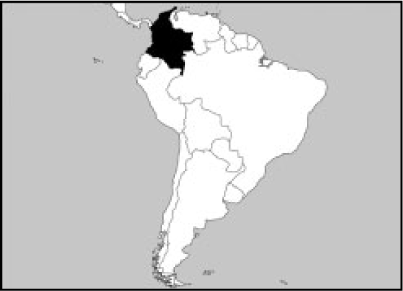
In the case of Colombia, analyses of the relationship between violence and migration focuses primarily on armed conflict, which has affected the country in some form or other since the 1940s with the first conflict known as La Violencia and that has subsequently taken a range of guises, as left-wing guerrilla groups, right-wing paramilitaries and the army have fought over land, drugs and power.(17) Given that Colombia is a highly urbanized country with 75 per cent of its population living in cities, it is especially significant that 78 per cent of violent deaths occurred in cities in 2011. Although this is not disaggregated by type of violence, it can be reasonably assumed that the majority of this relates to everyday violence. The figure represented an increase of five per cent since 2009, with a decline of 20 per cent in the countryside. Indeed, of the 50 most violent cities in the world, six were in Colombia.(18) These figures corroborate earlier research on the importance of urban everyday violence in Colombia vis-à-vis armed conflict and war.(19)
The way in which urban violence dominates the realities of living in Colombia is at odds with the predominant discourse on migratory responses. Indeed, most attention to the effects of violence on population movement in Colombia focuses on the ways in which armed conflict has created an exceptionally large IDP population. By 2014, the number of IDPs had reached 4.7 million,(20) representing approximately 10 per cent of the total population and placing it second in size only to Sudan’s IDP population globally.(21) Most of this movement has been rural–urban, although there has been some cross-border migration to Venezuela and Ecuador, with flows to the latter also linked with coca fumigation.(22) While this scale of population movement is obviously incredibly serious and worthy of concern, it makes invisible other types of migration caused by everyday violence in cities. Although everyday violence has led to some internal migration to the large cities or between cities, much of this type of movement has been transnational. By the end of the 2000s, emigration from Colombia was increasing, with one in 10 Colombians living abroad, mainly in Venezuela, the United States, Spain and the United Kingdom.(23) This is not to suggest that armed conflict has not had an effect on transnational migration patterns, but that it is rarely the over-arching influence.
In terms of Colombian migration to the UK, the majority of the migrant population is concentrated in London. Despite some early arrivals in the 1960s and 1970s as exiles fled political violence, the most significant flows began in earnest in the 1970s. Arrivals came under the “work permit system”,(24) with most ending up employed in catering and cleaning in London and the surrounding areas. Once this channel had been established, movements increased in the 1990s and 2000s, especially after 1986 when the armed conflict in Colombia worsened and Colombians began to claim asylum. Once visa requirements were introduced in 1997, asylum applications decreased substantially.(25) Although it is difficult to ascertain exactly how many Colombians reside in the UK, the 2011 Census reported 25,182 in the UK with 19,338 in London.(26) However, while there is a broad correlation between the worst years of the armed conflict in Colombia and an increase in migration to the UK and an associated claiming of asylum, research has shown that everyday urban violence and economic insecurity intersect with political violence to encourage movement abroad.
Empirical research conducted since 2004(27) with more than 300 Colombian migrants in London corroborates the argument that it is everyday urban violence, rather than armed conflict, that promotes transnational displacement. This work was based on three projects with Colombian migrants conducted by the author between 2004 and 2011. The first was carried out between 2004 and 2005 and consisted of in-depth interviews with 35 Colombians; the second between 2006 and 2007, with 28 Colombians; and the third between 2009 and 2010, and included a questionnaire survey with 249 Colombians together with 11 in-depth interviews. Of particular importance in terms of the context of migration is that the surveyed migrants originated overwhelmingly from urban areas (96 per cent), indicating that these migrants had not fled the conflict that has plagued the countryside in Colombia, at least not directly. It also emerged that the primary reasons for migrating were rooted in economic considerations (36 per cent), followed by education or the desire to learn English (27 per cent) and family (15 per cent). Political factors accounted for only seven per cent.
However, these figures hide a more complex picture, where different types of insecurity, some political in nature, intersect to prompt people to move. There were those who were not directly involved in the armed conflict, but whose livelihoods or well-being were nevertheless undermined indirectly by generalized violence with roots in political violence. Sebastian from Palmira, who had previously worked as a taxi driver, provides one such example. Although he was not involved in politics, he had distributed some leaflets for the Liberal Party and, as a result, was threatened by paramilitaries. On one occasion, he was chased in his taxi by a gang who he thought were the paramilitaries, resulting in an accident that led to his taxi being written off. With no way of making a living, and fearful of the level of delinquency in the city as a whole, Sebastian and his wife decided to move abroad. In the words of Edilma, his wife: “My husband was a taxi driver and he had many problems, which meant he lost his taxi, he was threatened, our son had problems too. For these reasons we decided to come here, because there were so many security issues in our city.”(28) Although displacement was to some extent voluntary, both Sebastian and Edilma felt that they had little choice but to look for opportunities abroad in order to make a better life free from insecurity.
Such tensions between coercion and voluntarism in the process of displacement, which was itself the result of intersecting factors, affected people from all strata of life in urban Colombia. Eduin from Bogotá, a former journalist and university lecturer, had fled persecution not from the paramilitaries or guerrillas, but from an organized crime ring. As part of his work at the university, he had become involved in a project on the rehabilitation of sex workers in Bogotá, with the result that he had been repeatedly threatened by the organized crime group that ran the sex work in the area. He noted: “I received a letter that invited me to leave the project (the rehabilitation of sex workers) and said that if I didn’t leave they would take violent measures against me.”
Although many had experienced fear as a result of threats and perceived violence, some had experienced more direct violence, either themselves or family members. For example, Javier from Pereira recounted how both his brothers had been killed in urban conflicts with legal and illegal actors. His younger brother had been killed on police orders by a local gang (although no one was ever brought to justice) after he had worn a khaki military jacket that he had previously used when doing national service. He was detained and then found three days later in the coffee fields outside the city with three bullets in his head and burnt with acid. Javier stated controversially, also reflecting the ways in which violence has become normalized in Colombia: “It’s OK to kill people when they deserve it, but like this, murdering a decent honest person who respected the law is not right.”
The violence and insecurity that led to transnational displacement was not confined to the public sphere of the city but also extended to the private arena of the home. Perhaps the most invisible of all types of everyday violence in cities is gender-based violence, especially perpetrated against women. Indeed, previous research has shown that in low-income urban communities in Colombia, intra-family violence, most of which is against women, was the single most common type identified by people.(29) In light of its severity, it is not surprising, therefore, that such violence was cited by several women as the primary reason for migrating abroad. In some cases, women left behind abusive partners in an effort to start a new life on their own, free from such violence. In other cases, couples with a history of violence decided to move in order to try and address their problems through migration. However, there was little evidence of any success, and in most cases the pressures of migration led to the intensification, rather than reduction, of gender-based violence.(30) For example Olga, from Bogotá, decided to move to the UK at the invitation of a friend who was already living in London. Olga had been very unhappy, partly because her father-in-law had been killed; he had been mixed-up in “street problems” and a gang had shot a bullet at the door of their house. In addition, Olga and her husband were on the point of separating because he had repeatedly beaten her and she felt that moving to London with her two small children would allow her to leave the abuse behind. She noted: “It’s really hard to experience such danger and violence and then to have to leave behind so much, to live so far from your family, but I got accustomed to it and I am safer in London.”
Transnational displacement from Colombia to the UK is therefore a complex process underpinned by a range of different factors, many of which relate to daily violence and insecurity in both public and private spheres. Even if the armed conflict is the backdrop to some movement, it is clear that it is the security challenges of everyday life that encourage or coerce people into moving abroad.
IV. Transnational Linkages between Colombia and the UK
Although transnational displacement can cause ruptures, in this context it was much more common for connections to be forged. Yet these linkages are also relevant for understanding the transnationality of urban violence, given that remittances, in particular, either prevent or bolster further urban violence or international migration. Once in the UK, Colombians maintain strong transnational connections that also relate to the wider realities of urban violence back home. Indeed, the survey showed that 96 per cent kept in touch with family back home on a regular basis, mainly once a week (74 per cent), although a quarter spoke daily. They also had strong economic connections through remittances and gifts, with 54 per cent sending money back at least once a month or more frequently (although this figure is lower compared to 64 per cent of Latin Americans as a whole).(31) A median of UK£ 2,000 was sent home annually, which represented eight per cent of personal weekly income.
Most people sent money home for family maintenance (56.5 per cent), highlighting the importance of remittances for the daily survival of families and individuals. However, while this was the main use of remittances, the most common secondary uses were paying off debts, educational expenses and house-building. The latter also included funding a range of security measures such as gates and grilles, as a form of “infrastructural violence”.(32) For example, Hernan from Cali was making huge sacrifices for his wife and daughter back home by living in a situation of effective homelessness and sending most of his earnings back home, not only to pay for their living expenses but also, over three and a half years, for his wife to build a new house with an extra storey that was being rented out in order to provide extra income. Hernan also spoke of the fact that he wanted the house to be secure as he was concerned about his wife and daughter living there on their own: “I made sure it [the house] had a large steel gate out front and that all the windows had bars. I want them to feel safe.”
Remittances were also used to fund the migration of other family members to the UK, which in some cases was also linked with facilitating migration of those wishing to escape insecurity and violence. For example, Marcelo from Pereira not only paid for his wife’s education in Colombia with remittances (she trained to be a teacher) but also for his son’s fare to join him in London. He was especially keen for his son to join him because he had been in trouble with a local gang, and Marcelo and his wife felt that a move to London was essential in physically removing him from bad influences.
As noted in the case of Hernan, many migrants made huge sacrifices in order to send money home, and there was much evidence of hardship among those working in low-paid jobs such as cleaning. For example, Tomas noted that he had worked really hard in the past in order to send money to his ex-wife and children in Colombia: “I worked tremendously hard. Not anymore, but in the past I killed myself. I used to get up at 4am and work all day and all night … I worked to support them and because of this I have nothing here because I sent it all to them. I also sent to my brothers and my family. For me, December signified millions as I gave presents to everyone.”(33) This relates to the final issue of how transnational displacement can lead to shifting insecurities at the local level even after people move.
V. Transnational and Local Well-Being: Shifting Insecurities from Colombia to the UK
As discussed, freedom from everyday urban violence and insecurity was a primary motivation behind transnational displacement. Indeed, there was a general consensus among Colombians that living in London was much more peaceful, as Tomas from Pereira noted: “I like the calm and security of life here. Like everywhere, there is delinquency, but not like I have seen. If you go out in the street, there’s a 90 per cent chance that you will get home safely; in contrast, in Colombia if you go into the street, there’s a 90 per cent chance that you will be attacked.” However, echoing a point made by Sanchez in relation to migration from Latin America to the United States,(34) it is often the case that migrants replace one type of insecurity for another. In the case of Colombians, the fear and insecurity linked with urban violence back home was transformed into the experience of various forms of discrimination as well as anxiety among those living in London without legal papers.
Discrimination was perceived to be an issue by 67 per cent of Colombians in the survey, with the most common type being workplace exploitation. This was linked with the concentration of many Colombians in low-skilled, low-paid elementary jobs, where they worked as office and domestic cleaners, kitchen assistants, porters, waiters and waitresses, hotel chambermaids and security guards.(35) It also reflects a marked decline in occupational status and widespread de-skilling, which was invariably linked with a lack of English language proficiency as well as limitations in transferring qualifications. Such de-skilling was especially challenging for men. Edgar from Pereira, who had owned a bookshop and book distribution company in Colombia stated: “Unfortunately, because I didn’t know the language, I had to clean, this was really hard. In my life, I had never done cleaning, but to arrive and to have to dust, to wipe, to brush-up, it affects your self-esteem, you feel really, really bad, bad because you come with the idea of improving your life … not that the work is dishonourable, it’s fine, it’s a job, but the truth is, it’s very difficult when you have a certain status in life, a good standard of living, and having to clean is very difficult.”(36)
Labour exploitation was especially marked among those without legal immigration papers given that they had no recourse to the authorities when they experienced discrimination. This reflects a wider anxiety among irregular migrants that severely undermines their well-being in London and counterbalances the benefits they have accrued from leaving behind urban violence in Colombia. For example, Alejandro, who had spent 14 months in a detention centre before being deported and re-entering using a false Spanish passport, noted: “Because we don’t have papers, because we’re irregular, we are totally marginalized. We live in fear and then the stress appears, stress about having no papers.” This anxiety was exacerbated by the criminalization of irregular migrants despite the fact that, ironically, they are usually the most law-abiding of all migrants because of their fear of being apprehended or deported.(37)
Also important in terms of the gendered nature of well-being is that while gender-based violence prompted migration from Colombia in the first place, the pressures of living in a city such as London, with all the associated challenges, also led to increases in such violence. This was partly linked with the disempowerment experienced by men such as Edgar (see above), whereby violence against women was a backlash against their own sense of inadequacy. In some cases, it was especially severe. Violeta, for example, migrated to the UK on a tourist visa to join her mother, stepfather (a UK resident) and their child. Soon after her arrival she was abused and repeatedly raped by her stepfather, and eventually became pregnant. Because of her irregular status, she was unable to secure assistance until she contacted a specialist Latin American migration association that managed to arrange counselling, a specialist solicitor who obtained an occupation order to remove the stepfather from the house, and a court ruling for her abuser to pay maintenance and rent for the children.(38)
One final point relates to the influence that everyday urban violence in Colombia has on people’s desire to return. Although migrants spoke movingly about how they wished to go home and how much they loved their country, many spoke of waiting until the security situation improved in terms of both the incidence of urban violence and the ways in which the authorities dealt with it. For example, Sergio from Medellín stated that: “There is still so much insecurity in the streets, I won’t go back until that improves. Also, in Colombia, you are guilty until proven innocent. The police, the courts, they are not very fair. Even when you go into a shopping centre you are searched. Until that changes, I will stay here.”
While there are many benefits for Colombians migrating to London in terms of freedom from the urban violence back home as well as the opportunities that living in London affords, for many the insecurities of their lives shift transnationally from one place to another and mutate into alternative forms.
VI. Conclusions
This paper has highlighted an under-studied outcome of urban violence that is manifested transnationally in relation to population movements and displacement. It has argued that attention to the mobility outcomes of violence tend to concentrate on IDPs and refugee populations in relation solely to armed conflict and war, thereby making invisible the role of urban violence in cities of the global South in generating important population flows across borders. With specific reference to transnational displacements from Colombia to the UK, the paper has illustrated not only how the effects of urban violence extend beyond the porous borders of the city in transnational ways, but also that everyday violence rather than armed conflict predominates in the reasons why displacement occurs at this scale. However, such displacements are not ruptures, and the transnational linkages that develop between migrants and countries are crucial in wider urban violence reduction measures in countries of origin, albeit at an individual level in terms of remittances funding infrastructural violence and further transnational migration. One final, yet critical, issue relates to the fact that transnational migration is not a panacea for those fleeing urban violence in cities of the South. As this paper clearly shows, the experiences of migrants in Northern cities can be just as alienating, in relation to widespread discrimination and anxiety surrounding immigration status, as the fear and insecurity that prompted them to leave in the first place. While this paper does not suggest that transnational migration is a solution to the challenges of urban violence in the global South, it needs to be taken into account as a growing reality affecting the lives of ever-growing populations in cities today.
Footnotes
Acknowledgements
I would like to thank the Latin American Women’s Rights Service and the Trust for London, the Leverhulme Trust (Grant No. RF/7/2006/0080) and the British Academy (Grant No. SG-37793) for funding this research; also the Carila Latin America Welfare Group, Juan Camilo Cock, Brian Linneker, Carolina Velasquez and the team of community researchers. I am also grateful to Sheridan Bartlett for her editorial work.
1.
Winton, Ailsa (2014), “Gangs in global perspective”, Environment and Urbanization Vol 26, No 2, available at  .
.
2.
See Lindley, Anna (editor) (2014a), Crisis and Migration: Critical Perspectives, Routledge, Abingdon and New York, 224 pages.
3.
Cited in Lindley, Anna (2014b), Exploring crisis and migration: concepts and issues”, in Anna Lindley (editor), Crisis and Migration: Critical Perspectives, Routledge, Abingdon and New York, page 13.
4.
See Muggah, Robert (2003), “A tale of two solitudes: comparing conflict and development-induced internal displacement and involuntary resettlement”, International Migration Vol 41, No 5, pages 5–31 on development and conflict; also Black, Richard, W Neil Adger, Nigel W Arnell, Stefan Dercon, Andrew Geddes and David Thomas (2011), “The effect of environmental change on human migration”, Global Environmental Change Vol 21S, No 1, pages S3–S11, on the environment.
5.
Betts, Alexander (2010), “Survival migration: a new protection framework”, Global Governance Vol 16, pages 361–382.
6.
See Williams, N E (2013), “How community organizations moderate the effect of armed conflict on migration in Nepal”, Population Studies Vol 67, No 3, pages 353–369; also Moser, Caroline O N and Cathy McIlwaine (2004), Encounters with Violence in Latin America: Urban Poor Perceptions from Colombia and Guatemala, Routledge, London, 288 pages.
7.
See Sanchez, Magaly (2006), “Insecurity and violence as a new power relation in Latin America”, ANNALS of the American Academy of Political and Social Science Vol 606, pages 178–195.
8.
See Wood, Charles H, Chris L Gibson, Ludmila Ribeira and Paula Hamsho-Diaz (2010), “Crime victimization in Latin America and intentions to migrate to the United States”, International Migration Review Vol 44, No 1, pages 3–14.
9.
Rubio Díaz-Leal, Laura and Sebastián Albuja (2014), “Criminal violence and displacement in Mexico: evidence, perceptions and politics”, in Anna Lindley (editor), Crisis and Migration: Critical Perspectives, Routledge, Abingdon and New York, pages, 73–92.
10.
See reference 4, Muggah, Robert (2003).
11.
Black, Richard (2003), “Breaking the convention: researching the ‘illegal’ migration of refugees to Europe”, Antipode Vol 35, No 1, pages 34–54.
12.
Malkki, Liisa (1995), Purity and Exile, University of Chicago Press, Chicago, 352 pages.
13.
Van Hear, Nick (2004), “‘ I went as far as my money would take me’: conflict, forced migration and class”, Centre on Migration, Policy and Society, Working Paper No 6, University of Oxford, Oxford, 37 pages.
14.
Bailey, Adrian J, Richard Wright, Alison Mountz and Ines Miyares (2002), “(Re)producing Salvadoran transnational geographies”, Annals of the Association of American Geographers Vol 92, pages 125–144.
15.
Datta, Kavita, Cathy McIlwaine, Jane Wills, Yara Evans, Jo Herbert and Jon May (2007), “The new development finance or exploiting migrant labour? Remittance sending among low-paid migrant workers in London”, International Development Planning Review Vol 29, No 1, pages 43–67.
16.
Goldring, Luin (2004), “Individual and collective remittances to Mexico: a multi-dimensional typology of remittances”, Development and Change Vol 35, No 4, pages 799–840.
18.
See Franco Bernal, Liliana and Claudia Navas Caputo (2013), “Urban violence and humanitarian action in Medellin”, Humanitarian Action in Situations Other than War, Discussion Paper 5, Rio de Janeiro, accessed 12 June 2014 at http://www.hasow.org/uploads/trabalhos/103/doc/1258280755.pdf; also , accessed 12 June 2014.
19.
Moser, Caroline O N and Cathy McIlwaine (2006), “Latin American urban violence as a development concern: towards a framework for violence reduction”, World Development Vol 34, No 1, pages 89–112.
21.
See Ibañez, Ana María and Andrés Moya (2010), “Vulnerability of victims of civil conflicts: empirical evidence for the displaced population in Colombia”, World Development Vol 38, No 4, pages 647–663.
22.
See reference 7.
23.
McIlwaine, Cathy and Anastasia Bermudez (2011), “The gendering of political and civic participation among Colombian migrants in London”, Environment and Planning A Vol 43, pages 1499–1513.
24.
These were granted by the British government between 1974 and 1979 to those working in specific sectors of the labour market where there were shortages, such as in hotels, catering and hospitals.
25.
See reference 21.
26.
See ONS (2014), Census 2011, accessed 14 June 2014 at .
27.
See McIlwaine, Cathy, Juan Camilo Cock and Brian Linneker (2011), No Longer Invisible: The Latin American Community in London, Trust for London, London, 142 pages, accessed 16 June 2014 at http://www.geog.qmul.ac.uk/docs/research/latinamerican/48637.pdf; also McIlwaine, Cathy (2012), The Colombian Community in London, Queen Mary University of London, London, 44 pages, accessed 16 June 2014 at .
28.
This quotation is taken directly from transcribed in-depth interviews with research participants. All unattributed quotations in this paper refer to such material.
30.
McIlwaine, Cathy and Frances Carlisle (2011), “Gender transformations and gender-based violence among Latin American migrants in London”, in Cathy McIlwaine (editor), Cross-Border Migration among Latin Americans: European Perspectives and Beyond, Palgrave Macmillan, New York, pages 157–174.
31.
See reference 27, McIlwaine, Cock and Linneker (2011), page 86.
32.
See Rodgers, Dennis and Bruce O’Neill (2012), “Infrastructural violence: introduction to the special issue”, Ethnography Vol 13, No 4, pages 401–412.
33.
See reference 15; also Wills, Jane, Kavita Datta, Yara Evans, Jo Herbert, Jon May and Cathy McIlwaine (2010), Global Cities at Work: New Migrant Divisions of Labour, Pluto, London, 234 pages.
34.
See reference 7.
35.
Thirty-five per cent worked in elementary jobs, which is much higher than for the foreign-born and the London population as a whole (17 per cent of foreign-born people and 14 per cent of all people living in London). See reference 27, McIlwaine, Cock and Linneker (2011), page 54.
36.
McIlwaine, Cathy (2010), “Migrant machismos: exploring gender ideologies and practices among Latin American migrants in London from a multi-scalar perspective”, Gender, Place and Culture Vol 17, No 3, pages 281–300.
37.
McIlwaine, Cathy (2014 forthcoming), “Legal Latins: creating webs and practices of immigration status among Latin American migrants in London”, Journal of Ethnic and Migration Studies.