




Abstract
Despite an increased focus on entrepreneurship as a means of promoting development, there has been limited discussion of the conceptual and methodological issues related to researching entrepreneurship in low-income countries. Drawing on experiences from Uganda, this paper presents a study of entrepreneurship conducted in a low-income settlement, which combined participatory quantitative and qualitative approaches, highlighting the strengths and challenges of using participatory methods. The paper demonstrates how drawing on a range of participatory methods can contribute to creating more engaging research relationships and generate a deeper and more contextualized understanding of entrepreneurship.
I. Introduction
A recent issue of Environment and Urbanization (April 2012) focused on the importance of documenting informal settlements and highlighted the benefits of engaging communities in the process.(1) Cases from a range of settings illustrated the advantages and difficulties of engaging local residents and their organizations in the processes of mapping and enumeration.(2) This paper contributes to this effort by discussing our experiences with the use of participatory research methods to generate knowledge about entrepreneurship among young people in low-income settlements of sub-Saharan Africa.
Africa has the world’s youngest population, and for its large and growing numbers of young people a major challenge is finding appropriate work.(3) As there are limited possibilities for formal wage employment, a growing number of young people have to create their own jobs in the informal economy,(4) a task that often requires an entrepreneurial spirit.(5) Job creation through entrepreneurship is currently being promoted by many international organizations, governments and NGOs as a key solution to youth unemployment, despite a dearth of knowledge about people’s perceptions and experiences of entrepreneurship.(6) With this increasing focus on entrepreneurship as a means of achieving higher levels of development, resolving the youth unemployment crisis and indicating a pathway out of poverty, discussions are overdue on how best to research entrepreneurship in low- and middle-income countries.
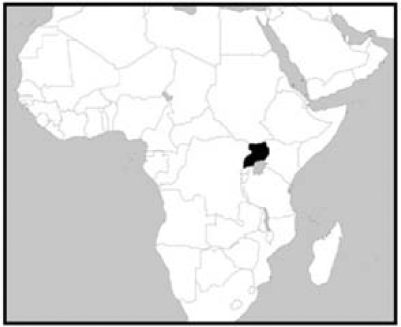
This paper stems from a cross-national, collaborative and inter-disciplinary research project examining the role that entrepreneurship is playing in generating employment in sub-Saharan African economies. Focusing on young people (aged between 15 and 35 in line with common African definitions of youth rather than the UN 15−24 definition), the project is exploring the income-generating activities young people are engaged in, the incentives and barriers they face when setting up a business, and their experiences of and attitudes towards entrepreneurship. A team of geographers and business studies and development studies experts are working collaboratively to conduct research in urban and rural areas of Ghana, Uganda and Zambia. Drawing on our experiences of conducting research in Uganda, we present the strengths and challenges of the quantitative and qualitative methods used in a participatory study to investigate entrepreneurship among young people in a low-income area of Kampala. Our aim is not to add to the critique of conventional research practice, nor to extol the virtues of participatory research. Rather, it is to focus on the challenges of carrying out entrepreneurship research in low-income countries. Our analysis shows that drawing on participatory methods can contribute to creating more engaging research relations and generating a broader and more contextualized understanding of entrepreneurship.
II. Researching Entrepreneurship
The study of entrepreneurship has its origins in Europe and North America and it is only relatively recently that researchers have started to examine the levels and characteristics of entrepreneurship in low- and middle-income countries.(7) Although there is no common definition of entrepreneurship, it is generally agreed that at the core of the entrepreneurial process is the creation and/or recognition of opportunities followed by an initiative to seize these opportunities.(8) Reference is often made to Schumpeter,(9) who perceives the entrepreneur as the special agent who introduces new products, implements new production techniques, finds new sources of raw materials and discovers new organizational forms. Other definitions emphasize the willingness of entrepreneurs to take risks and the ability to pursue opportunities despite resource scarcity. While some observers delimit entrepreneurship as applying to a few select individuals, more expansive definitions describe entrepreneurship as being enacted by “ordinary” people, including low-income people in the global South who run businesses. As Jeffrey and Dyson note, “… ordinary people across the global South engage in forms of business that involve considerations of risk and profit and entail long-term planning.”(10)
In the context of low-income countries, there has been considerable discussion regarding whether self-employment in the informal sector, which dominates business activity in many cities, really qualifies as entrepreneurship. In this paper, we follow Spring and McDade’s(11) recommendation for a broad and inclusive definition of entrepreneurship that includes a multitude of entrepreneurial dimensions and expressions from small-scale street-trading and everyday creative manoeuvring in the informal economy to larger-scale innovations in the formal economy. In this regard, Steyaert and Katz’s(12) notion of “entrepreneuring” as an everyday “societal phenomenon” is useful, as it widens the understanding and conceptualization of entrepreneurship. It directs attention to the processual character of entrepreneurship and shifts the perspective from a focus on a select elitist group of business people towards inclusion of all kinds of people who engage in economic activities in their daily lives. The individualistic focus of much of the discussion about entrepreneurship has also been increasingly challenged by research in the global South, which has revealed that not only are most entrepreneurs socially embedded and rely on their social networks,(13) but that different groups, such as families and communities, may take entrepreneurial action. Another key issue in many low-income countries is the occurrence of “pluri-activity”, i.e. the running of numerous businesses simultaneously, a common practice that enables poor households to spread their risk-taking; if one business fails then there is the chance that another will succeed.(14) Hence, in low-income urban areas one can find a hairdresser who also sells clothes and oranges, and a self-employed taxi driver who also rears goats and chickens.(15)
Although a range of definitions have been applied within entrepreneurship studies, empirical research is focused predominantly on the formal sector. One major example is the World Bank Group Entrepreneurship survey. This survey, designed to be comparable across countries, is a measure of formal sector entrepreneurship, calculated as the number of new, officially registered, limited liability corporations in a country.(16) In most low-income countries, however, a sizeable proportion of businesses operate in the informal sector. Consequently, these businesses do not meet the required criteria, such as having business premises or a trading licence, and hence are not included in the national business registers. Relying on such registers, therefore, provides only a partial view of entrepreneurship activity. The Global Entrepreneurship Monitor (GEM)(17) survey, another major survey on entrepreneurship, has remedied this flaw by focusing on interviewing individuals at the household level rather than organizations. Thus, the activities and opinions of those running home-based enterprises and roadside businesses, which are common in low-income countries, are captured.
The use of structured surveys within entrepreneurship studies, however, raises methodological questions. Using a questionnaire initially designed for high-income countries can cause problems when used in low-income countries. Questions that might seem simple to a European or American audience, for example, can prove highly problematic elsewhere. As Chambers(18) claims, relying on “professional categories” such as “employment”, “unemployment”, “job”, “workplace” or “workforce” derived from the industrial experience of high-income countries can be highly inappropriate in low-income countries where a sizeable part of the population works in the informal economy. Moreover, as Sommers states, the “… technically illegal …” character of much urban economic activity may be “… shielded from official view.”(19) Hence, entrepreneurial activity may frequently be under-reported in large surveys. Another concern for the design of these surveys is the pluri-activity described above, which raises the question of when should business activities be recorded collectively as one business or individually as separate businesses.(20)
Due to the complex and dynamic nature of entrepreneurship, its investigation requires, as noted by Neergaard and Ulhøi, “… a methodological toolbox of broad variety.”(21) Despite numerous calls within entrepreneurship studies for more qualitative approaches and methodological pluralism, these have had relatively little impact on entrepreneurship research in general.(22) Although it could be argued that the need to use multiple methods is greater in low-income countries, there is a tendency even here for the range of methods used to be limited to structured surveys and semi-structured interviews. There are a few exceptions, however, that have drawn on qualitative or mixed methods, including studies of family businesses,(23) social networks,(24) institutional entrepreneurship,(25) microfinance(26) and female entrepreneurship.(27) Such research is still relatively scarce and there has been little discussion of the impact of methodology on the findings. Also lacking has been the use of participatory methods in this area of enquiry.
Participatory research emerged as a reaction to dissatisfaction with top-down and elitist approaches to development and their failure to take into account local priorities, processes and perspectives. Participatory research is an umbrella term covering approaches that seek to redress issues of unequal power relations, positionality and ethnocentricity in research in low-income countries.(28) In its simplest definition, participatory research, as explained by Kindon et al., “… involves researchers and participants working together to examine a problematic situation or action to change it for the better.”(29) One of the earliest advocates in a development context was Robert Chambers, whose book Rural Development: Putting the Last First became a classic.(30) Subsequent participatory approaches to development research include Participatory Rural Appraisal (PRA), Participatory Action Research (PAR), Rapid Rural Appraisal (RRA) and Participatory Learning for Action (PLA). Regardless of the precise name, these approaches typically involve using a range of methods including focus group discussions, life histories, storytelling and visual methods. However, as Cornwall and Jewkes claim: “What is distinctive about participatory research is not the methods but the methodological contexts of their application.”(31) Participatory research, in other words, is less about using particular methods than being an approach to development research that calls for a different way of relating to research subjects. In this regard, it has been found particularly appropriate for conducting research with marginalized or vulnerable people.(32)
Participatory research emphasizes the need to adapt research methods to the context of the investigation, using a variety of methods to capture the importance of context. As noted by Kindon et al., participatory research can be seen as an “… orientation to inquiry …” demanding “… methodological innovation if it is to adapt and respond to the needs of specific contexts, questions or problems, and the relationships between researchers and research participants.”(33) Participatory research, however, is not unproblematic. In execution, it can be challenging to ensure that all participants are included on an equal footing and to counter cultures of silence. Carrying out this kind of research can be very time-consuming and unpredictable. Participatory methods have also been critiqued for being naïve in their aims and intentions and for overlooking inherent power relations, despite a rhetoric of inclusion. When carried out without adequate attention to these power relations, they can entrench rather than destabilize relations between the researcher and the researched, and reinforce existing structures of oppression.(34)
III. Participatory Research on Entrepreneurship in Kampala
A participatory study, combining quantitative and qualitative methods, was conducted by the authors in a low-income settlement in Kampala to investigate entrepreneurship. The settlement studied was Bwaise, located on the outskirts of Kampala. Bwaise is a predominantly low-income area, parts of which suffer from severe flooding. It is typically characterized as having widespread poverty and social problems such as crime, prostitution and unruly youth. These characteristics are to some extent true of the lower-lying parts of Bwaise, where the residents live in overcrowded, insanitary conditions, but in the higher-lying areas the overall quality of housing is better and the population less dense. A wide range of businesses in Bwaise operate in the market places, along the roadsides and in people’s homes.
Bwaise was selected for the study because of the presence of a local youth organization, Uganda Youth Welfare Service (UYWS), with whom the authors (two European and one Ugandan) had prior contact. UYWS is run by young people who organize a range of activities aimed at empowering youth, including offering vocational and entrepreneurship training to vulnerable and disadvantaged young people. The research was a collaborative process with UYWS, which participated in all stages of the research process. Both quantitative and qualitative methods were employed in a participatory manner. The aim here is to highlight the strengths and challenges of using participatory methods for researching entrepreneurship in a low-income settlement.
a. Questionnaire survey using peer researchers
In order to get an overview of the level and types of entrepreneurship among youth in Bwaise, we decided to collect quantitative data by using a questionnaire to survey 400 young people. We elected to make the research participatory, as we believed this would result in a greater understanding of local entrepreneurship, and to this end, we recruited young people from Bwaise to work as peer researchers. Using peer researchers has become an increasingly popular method in recent years, particularly in research with vulnerable groups, minorities, children and young people.(35) Peer researchers are trained in research methods, and help to identify key issues, develop research tools and carry out fieldwork, enabling individuals from the research group in question to work alongside professional researchers to investigate issues central to their lives.
UYWS selected 12 young people living in Bwaise who worked together with the authors for four weeks. All of the peer researchers spoke local languages and English. They were paid at a suitable local rate and were provided with lunch. The questions included in the survey, their framing and sequencing went through many rounds of scrutiny and modification, first by the researchers and representatives of UYWS, then by the peer researchers during training, and subsequently following a pilot survey. This process made it possible for questions to be tailored to suit the local context. Despite all these modifications, the questionnaire was not without its difficulties. Finding locally relevant terms at times was problematic and it was difficult to avoid using some etic categories, such as “informal sector” and “wage employment”, which created some confusion among the peer researchers and research participants. In the field, each author supervised a team of four peer researchers and occasionally conducted a questionnaire. Most of the questionnaires were conducted in a local language, although in a few cases English was used.
There were a number of advantages to using peer researchers to conduct the questionnaire survey. As Bwaise is a relatively stigmatized area in Kampala, people from other parts of the city are wary of going there and tend to arrive with an attitude of superiority and distrust that is counterproductive to the process of creating a good rapport with respondents. The peer researchers, on the other hand, are used to navigating the narrow pathways and, as they engage with the local residents on a daily basis, the distance between researcher and respondent was reduced. Furthermore, since previous researchers have conducted surveys in Bwaise without the residents feeling that they had gained anything from it, this can result in research fatigue and high refusal rates. Working with peer researchers, who presented themselves as young people living in Bwaise doing research for UYWS and Makerere University Business School (MUBS), contributed to a very high response rate.
Not only did the research benefit from using peer researchers, but they themselves also gained from the experience. As they were all either unemployed or underemployed, engaging in the research gave them the opportunity not only to earn some money but also to gain new skills, confidence and a network that they can use in their search for work or educational opportunities. At the end of the research, they were presented with certificates. In an evaluation of the research process, the peer researchers indicated that they had gained many useful skills and considerable knowledge. They had learned about research methods, about how to talk to people from different backgrounds, and about businesses and different opportunities in the area. During the process, the young people said that they had become more confident, were inspired by business owners and had made new friends.
Using peer researchers is not without its drawbacks, however. As they had no prior experience of conducting research, more time had to be set aside for their training and supervision than would have been the case with experienced research assistants. There were also power inequalities within the group of peer researchers; some young men, especially those holding positions within UYWS or the neighbourhood, tried to dominate the process at times. Moreover, access to residents of a community is not guaranteed by using peer researchers, neither does the involvement of a small number of peer researchers automatically facilitate the participation of the wider community.(36) Despite this, our experience of using peer researchers in this situation was overwhelmingly positive and, for the reasons highlighted above, we believe it generated data of a higher quality than would have been the case if we had employed research assistants from outside.
The questionnaire data showed that more than one-quarter (27 per cent) of young people in Bwaise were entrepreneurs, most of whom (72 per cent) had set up their businesses following employment in the informal sector. The vast majority of businesses run by young people in Bwaise are service and retail (90 per cent), with only a few engaged in manufacturing (six per cent) or farming (four per cent). Common businesses include small shops selling basic foodstuffs; food preparation and sale; trading of textiles and shoes; sale of mobile phones and accessories; hairdressing; carpentry; and boda boda (motorbike taxis). Almost all of the young people had established their businesses with funds from their savings and/or with support from family members or friends; a few had turned to informal money lenders. None had received any financial support from formal sources. Almost all (91 per cent) were hoping to expand their businesses, although many felt unable to do so because of a range of factors, including inadequate infrastructure, high levels of competition and a lack of capital.
b. Participatory focus group discussions and life story interviews
While the use of focus groups is most commonly associated with marketing research, it has been widely used in the social sciences, including in the field of development, especially to capture community dynamics and viewpoints.(37) One major advantage of using focus group discussions when working in impoverished settings is that the participants can find strength in numbers and feel less intimidated than during face to face interviews. Moreover, group discussions have the potential to be participatory and provide a good platform for using PRA/PLA techniques.(38)
Recruitment to focus group discussions, however, can be difficult, not least when dealing with people who run businesses and whose time is valuable. In our research, participants were recruited with the help of UYWS. The discussions were led by the Ugandan researcher supported by two peer researchers, and were held in a local language (Luganda). The time spent by the focus group participants was compensated for with a small amount of money at the end of the discussions, which the participants had not been led to expect.
Focus group discussions can be challenging, as they can be distorted by peer pressure or by certain participants who, because of their personality, interest or competence in discussions, may dominate a group.(39) In societies characterized by relatively high levels of distrust, some people can find the public nature of group discussions intimidating, and the differing views and disagreements between participants may be hidden from the researcher. In our research, we tried to counteract these potential problems by gathering groups of relatively homogeneous participants, i.e. of the same sex and with similar levels of education and running enterprises of a similar size. In order to ensure that all participants could engage in the participatory methods, the groups were kept quite small, with five to seven young people in each.
During group discussions, the meaning of the concept of entrepreneurship was examined along with what participants understood by successful entrepreneurship. Perceptions of young entrepreneurs in the local context were discussed, as well as the opportunities and challenges entrepreneurs face, the resources they draw on and the institutional support/barriers for entrepreneurship. In order to stimulate reflection and discussion on who is a successful entrepreneur, photographs of business owners − including entrepreneurs known from the media, the owners of large companies and small/microenterprise owners − were used. Generally, the focus group participants equated entrepreneurship with having a business that is managed alone or with others. Although they expressed differing understandings of what successful entrepreneurship encompasses, most of them emphasized the capacity of small business owners to progress in their business despite starting very small and having scarce resources. A vendor of second-hand curtains, for example, said that a successful entrepreneur is “… one whose livelihood has improved due to business growth after starting small”; a shoe trader claimed that “… a successful entrepreneur is one who started with little capital and now has grown the capital and has high profits and an increasing level of stock.” There was general agreement, however, that although there are many entrepreneurs in Bwaise, few are successful and youth especially are struggling: “Young people are just trying, they are not yet in the bracket of successful entrepreneurs”, one female trader asserted.
Inspired by PRA techniques, a ranking and scoring system was devised to determine the key factors that participants thought had an influence on entrepreneurship. During a guided brainstorming session, participants listed the challenges that entrepreneurs face. Each item was then visualized by using available objects, for example social networks with a mobile phone, flooding with a bottle of water, education with a note pad and finance with coins. Each participant was given 10 peas, which they distributed between the different items in order to rank them in importance for their influence on the success or failure of a business. This exercise and the ensuing discussion proved to be highly revealing. While there were some minor differences in the views of the groups, success factors emerged as being access to capital, education and social networks. Interestingly, although access to capital was always mentioned first, when participants were asked to rank these factors in order of importance, education and social networks were ranked first and second, before finance.
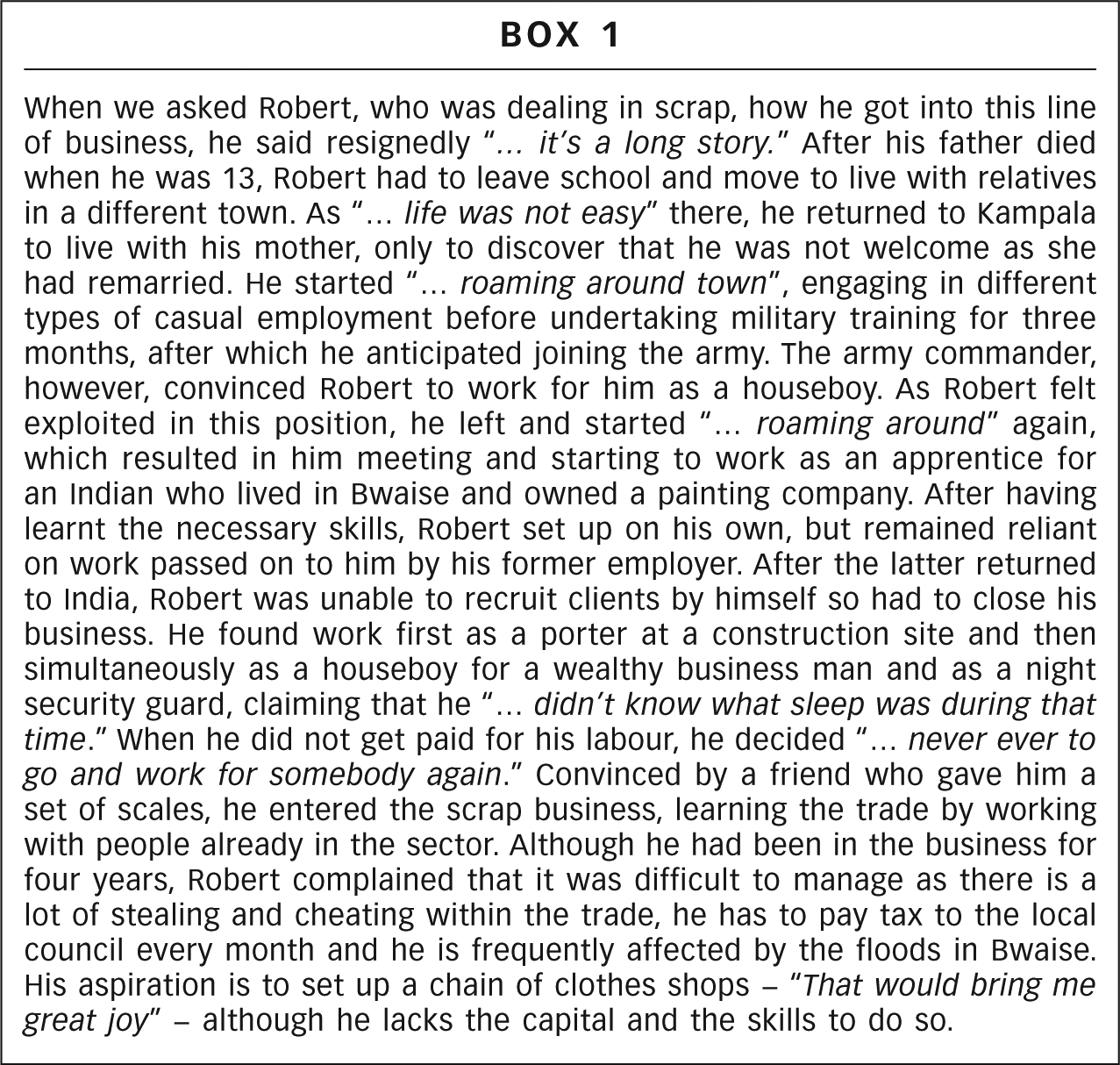
As individuals establish businesses for multiple reasons, and their experiences of running their businesses are complex, in-depth qualitative interviews were also carried out with 20 business owners. These participants were purposely selected from the survey sample to encompass different types of businesses and a range of socioeconomic backgrounds. The interviews were conducted by one of the authors together with a peer researcher, who acted as a translator where needed and asked supplementary questions. An open-ended approach was adopted, which started with the research participants narrating their life story. Key issues covered included their decision to start an enterprise, the developments in their business over time, important turning points in their lives and their aspirations for the future. Together with the focus group discussions, these interviews generated a wealth of knowledge regarding the social, cultural, economic, life course and institutional factors that have had an impact on people’s employment paths, thus providing detailed knowledge that could not have been obtained using quantitative methods. The interviews revealed how employment trajectories, entrepreneurship motivations, practices and aspirations are closely intertwined with changes in the socioeconomic environment, social networks and family relations. The story of Robert (Box 1) is illustrative of how young entrepreneurs “zig-zag”(40) in their attempts to set up a sustainable and profitable business.
c. Participatory videos
The use of participatory videos (PV) has gained in popularity in recent years in community development projects, especially, but not exclusively, in low-income countries. It is perceived as an effective way to include the most powerless who typically lack a voice, and it has been used in processes of public consultation, advocacy, policy dialogue and to communicate the results of participatory development processes.(41) More recently, it has also come to be regarded as a valuable research tool.(42) As Johansson et al. assert, they cannot “… imagine a more effective method to quickly comprehend the often complex perceptions and discourses of local people than to produce, watch, discuss and analyze PV material together with them.”(43) Advocates of participatory videoing argue that an advantage of the method is that the knowledge is produced for and by the participants. This has the potential to challenge dominant outside representations as well as reduce the distance between the researcher and research participants.(44)
In order to add to our understanding of entrepreneurship, participatory videoing was carried out with two groups of 10 young people each, who were tasked with making a short film on a topic of their choice about young entrepreneurs in Bwaise. Around one-third of the young filmmakers were entrepreneurs themselves. We partnered with the Kampala branch of Slum Cinema, a youth organization that trains young people in low-income areas to report their own stories using film. Over a period of four days, the young people were taught by Slum Cinema how to use a video camera, make a script, use images to tell a story, film their own story, and to edit and screen the film.
One of the groups decided to make a video on the topic of innovation and imitation in businesses, and interviewed business owners to see how they try to make their businesses unique. This film highlights the ways in which young people endeavour to provide good customer service, find cheaper sources of supply, and make original products of high quality as a way of combatting fierce competition. The other group made a video about the reasons why many microenterprises fail to grow and often change their line of business activity. As their point of departure, they used statistics showing that while Uganda has one of the highest rates of business start-ups in the world, it also has one of the highest rates of business failure.(45) They interviewed a range of entrepreneurs and employees as well as representatives from local institutions. The key messages emerging from this video were that businesses have problems surviving and growing because of difficulties making a profit and financing their enterprises. These difficulties, in turn, were related to such factors as lack of access to affordable and flexible loans, poor infrastructure, and expenses related to licences and taxes. The video also displayed the resilience and perseverance of young people who work in a very challenging environment, often having to take up precarious work and earning very little.(46)
When engaging in the making of participatory videos, it is essential to have knowledge of local conventions and ethics regarding photography.(47) In Uganda, many people fear cameras and are reluctant to be filmed by strangers. In the process of making the videos, some resistance was met in the field but this was fully respected by the teams. The subsequent publication or dissemination of visual material generates questions of ownership and permission to screen in public. Who should be responsible for deciding if an image should enter public life? Should the subjects of a video see their edited images and give their consent before a film enters the public domain? For videos and other visual material, this issue becomes particularly critical as it is impossible to protect the anonymity of the participants.(48) In our study, the purpose of the video was explained to all participants, who gave their permission for public screening in advance.
The making of the participatory videos in Bwaise served a number of purposes. It allowed the research participants to produce a visual representation of entrepreneurship from their own perspectives. Through the process of making the videos, the participants themselves decided what they wanted to communicate in the images and added the words they considered most appropriate. Although the films themselves constitute interesting data on entrepreneurship, the process of making the films was equally informative. During the process and the subsequent screenings, many reflections and discussions took place regarding the meanings and manifestations of entrepreneurship in the neighbourhood. The discussions included reflections on the different factors that impede and facilitate entrepreneurship in a particular neighbourhood, as well as recommendations on how entrepreneurship could best be supported. Particularly striking was the message that entrepreneurs not only require improved access to finance and/or business support in the narrow sense, but also need better infrastructure in general, better education and skills and mentorship in order for their businesses to flourish.
The participatory videoing was much enjoyed by the participants, who gained a new skill and in the process grew in confidence. This is not to claim, however, that participatory video methods are without problems. Participatory videoing is a relatively time-consuming method that requires access to expensive equipment, knowledge of the techniques of video filming and editing, as well as good facilitation skills. As highlighted above, issues of representation and power also need to be addressed.
d. Training entrepreneurs
As the research proceeded, it became clear that the majority of young business owners had never received any training in entrepreneurship or business management but had a real wish to participate in some form of entrepreneurship education. Based on suggestions from both the research participants and peer researchers, a training session was organized in cooperation with the Entrepreneurship Centre at MUBS, which has expertise in training micro-entrepreneurs in local languages. The training was tailor-made to the needs that emerged from the questionnaire survey and consisted of a session on financial management, including record-keeping, and a session on business management, including issues of ethics, customer care and innovation. Two sessions were held in a central location in Bwaise and were kept relatively short in order to not take too much of the entrepreneurs’ time.
In the event, only around one-third of the invited entrepreneurs showed up. Several reasons lie behind this low take-up of the offer. Although the training sessions were held on a Monday, which is generally regarded as the slowest day for businesses in the area, and was kept brief, some business owners were reluctant to attend because of the potential loss of income. Others, we subsequently learnt, thought that it was a scam as they had been invited by mobile phone, which has become a common way of trying to trick people in Uganda. It is also possible that some entrepreneurs who had stated in the questionnaire that they needed training did so because they felt that it was the right thing to say, whereas in practice it was not a major concern, especially when many other issues have to be attended to.
The teaching was done in an interactive and participatory manner and was led by the concerns of the participants. As few of the entrepreneurs in Bwaise participate in business associations, the session gave them a rare chance to exchange their views and experiences with other business owners. The entrepreneurs who attended claimed to have benefitted not only from the input of the teaching but also from their discussions with fellow entrepreneurs. The interactive nature of the session also meant it actually contributed to the research findings, as new views and experiences were generated. One example was the discovery of how widespread the belief is that witchcraft affects business. When the trainers proposed that the entrepreneurs could benefit from synergies if they worked together, the participants were reluctant. The reason they gave was the belief that competitors often practised witchcraft to make other businesses fail, with result that it was impossible for them to work together. This contrasted with the findings from the questionnaire survey, where only a few respondents claimed that witchcraft could have an impact on businesses. This highlights the advantage of using multiple methods when dealing with controversial issues around entrepreneurship.
e. Disseminating findings from participatory research
Although there is now a considerable amount of participatory research, ethical practices around the dissemination of findings are rarely discussed.(49) Like van Blerk and Ansell,(50) we wanted to move beyond the common method of mailing out a report, since this is a passive form of feedback that rarely reaches most participants. In order to disseminate our findings to as wide a group as possible, we organized a three-hour workshop together with UYWS to which the participants, peer researchers and key public and private institutions and organizations were invited. The workshop was held one month after the end of the field research, to facilitate contact with the research participants while allowing enough time for an initial analysis of the data to be made. The preliminary findings of the research were presented in a power point presentation and the peer researchers screened one of the videos, which ensured that the voices of at least some of the research participants were represented.
Following the formal presentation and video screening, the participants discussed the implications of the research in small groups. They were asked to discuss what struck them as being the major challenges and opportunities for youth entrepreneurship, to identify one challenge facing entrepreneurs and suggest how it could be resolved, and indicate one opportunity and suggest how it could be seized. The outcomes of the discussions were summarized and discussed further in a plenum. In this way, the workshop participants not only acted as recipients of the findings but also actively analyzed them, which in turn contributed to our knowledge of entrepreneurship. One example was a heated discussion regarding the role of government institutions in supporting entrepreneurs, relative to the responsibilities of the young entrepreneurs themselves. This discussion highlighted the extent of disagreement on this issue and provided a rare opportunity for young entrepreneurs and organizations working to support them to exchange their views. There was general agreement, however, that the major challenge facing entrepreneurs is a lack of good entrepreneurship education. The need for innovative content and delivery methods to make entrepreneurship training relevant and attractive to the youth is thus paramount; as highlighted by the training sessions offered as part of this project, teaching in a formal classroom setting may not be the best way of researching young entrepreneurs. The participating organizations claimed to have been inspired by the workshop, and will hopefully use the knowledge in their development of future plans, strategies and projects for supporting entrepreneurship.
IV. Conclusions
By drawing on the experience of conducting a study on youth entrepreneurship in a low-income settlement in Kampala, this paper has shown how participatory methods can contribute to creating a deeper understanding of entrepreneurship. The use of peer researchers in the design and execution of the methodology, and the combination of a range of methods, including a questionnaire survey conducted by peer researchers, participatory focus group discussions, life story interviews and participatory videos, generated a wealth of knowledge on entrepreneurship. The study confirmed the usefulness of working with an expansive definition of entrepreneurship that is not confined to elite groups operating businesses in isolation from the society of which they are part. Letting research participants be involved in deliberating the concept revealed how much entrepreneurial activity takes place. It also showed, however, the importance of not uncritically celebrating entrepreneurial activity, without also demonstrating the challenges that surround it. As well as documenting that creativity and endurance are part of everyday entrepreneurial activities, the study also allowed the young people to voice the hardship and sufferings they face and to identify the areas where support is most needed. Moreover, as Jeffrey and Dyson argue: “There are ideological risks attached to celebrations of youth entrepreneurialism. The notion that people can ‘pull themselves up by their own bootstraps’ can serve as an ideological fig leaf for non-investment in core services.” (51) Through the use of participatory methods, this study provided a space for the young people together with stakeholders from the state and other key institutions to debate and challenge such ideas and discuss relevant support measures.
As illustrated in this paper, participatory methods have many strengths, including their adaptability, flexibility, reflexivity and contribution to learning.(52) Despite the fact that all of the methods discussed have their limitations and are challenging to put into practice, when combined they contribute to providing a more contextualized understanding of entrepreneurship compared with standard quantitative surveys. Although participatory methods are primarily used in research on low-income countries, they could also be useful in entrepreneurship research in other contexts. Finally, we would like to stress that there does not have to be a contradiction between the use of standardized questionnaire surveys and participatory methodologies, and that the knowledge generated by both can be usefully combined. We hope that readers of this paper who are more familiar with using surveys will be inspired by our experiences of using participatory methods, resulting in them becoming more widespread and thus generating a better understanding of entrepreneurship worldwide.
Footnotes
Acknowledgements
This research forms part of the project Youth and Employment: The Role of Entrepreneurship in African Economies (YEMP) funded by the Consultative Research Committee for Development Research (FFU) under Danida (Project No 09-059KU). We would like to thank UYWS in Kampala for facilitating our entry into Bwaise and supporting the research at all stages, in particular Adrian Kalemeera, John-Paul Matovu, Geoffrey Nsubuga and the peer researchers. We are very grateful to all the research participants in Bwaise for engaging in the research and sharing their experiences with us.